Vol. 117
Latest Volume
All Volumes
PIERB 117 [2026] PIERB 116 [2026] PIERB 115 [2025] PIERB 114 [2025] PIERB 113 [2025] PIERB 112 [2025] PIERB 111 [2025] PIERB 110 [2025] PIERB 109 [2024] PIERB 108 [2024] PIERB 107 [2024] PIERB 106 [2024] PIERB 105 [2024] PIERB 104 [2024] PIERB 103 [2023] PIERB 102 [2023] PIERB 101 [2023] PIERB 100 [2023] PIERB 99 [2023] PIERB 98 [2023] PIERB 97 [2022] PIERB 96 [2022] PIERB 95 [2022] PIERB 94 [2021] PIERB 93 [2021] PIERB 92 [2021] PIERB 91 [2021] PIERB 90 [2021] PIERB 89 [2020] PIERB 88 [2020] PIERB 87 [2020] PIERB 86 [2020] PIERB 85 [2019] PIERB 84 [2019] PIERB 83 [2019] PIERB 82 [2018] PIERB 81 [2018] PIERB 80 [2018] PIERB 79 [2017] PIERB 78 [2017] PIERB 77 [2017] PIERB 76 [2017] PIERB 75 [2017] PIERB 74 [2017] PIERB 73 [2017] PIERB 72 [2017] PIERB 71 [2016] PIERB 70 [2016] PIERB 69 [2016] PIERB 68 [2016] PIERB 67 [2016] PIERB 66 [2016] PIERB 65 [2016] PIERB 64 [2015] PIERB 63 [2015] PIERB 62 [2015] PIERB 61 [2014] PIERB 60 [2014] PIERB 59 [2014] PIERB 58 [2014] PIERB 57 [2014] PIERB 56 [2013] PIERB 55 [2013] PIERB 54 [2013] PIERB 53 [2013] PIERB 52 [2013] PIERB 51 [2013] PIERB 50 [2013] PIERB 49 [2013] PIERB 48 [2013] PIERB 47 [2013] PIERB 46 [2013] PIERB 45 [2012] PIERB 44 [2012] PIERB 43 [2012] PIERB 42 [2012] PIERB 41 [2012] PIERB 40 [2012] PIERB 39 [2012] PIERB 38 [2012] PIERB 37 [2012] PIERB 36 [2012] PIERB 35 [2011] PIERB 34 [2011] PIERB 33 [2011] PIERB 32 [2011] PIERB 31 [2011] PIERB 30 [2011] PIERB 29 [2011] PIERB 28 [2011] PIERB 27 [2011] PIERB 26 [2010] PIERB 25 [2010] PIERB 24 [2010] PIERB 23 [2010] PIERB 22 [2010] PIERB 21 [2010] PIERB 20 [2010] PIERB 19 [2010] PIERB 18 [2009] PIERB 17 [2009] PIERB 16 [2009] PIERB 15 [2009] PIERB 14 [2009] PIERB 13 [2009] PIERB 12 [2009] PIERB 11 [2009] PIERB 10 [2008] PIERB 9 [2008] PIERB 8 [2008] PIERB 7 [2008] PIERB 6 [2008] PIERB 5 [2008] PIERB 4 [2008] PIERB 3 [2008] PIERB 2 [2008] PIERB 1 [2008]
2026-06-07 Latest Published
By Denys I. Zaikin
Progress In Electromagnetics Research B, Vol. 117, 198-213, 2026
Abstract
This work presents a unified analytical and full-wave investigation of the monostatic radar cross section (RCS) of trihedral corner reflectors (TCRs) and their arrays, covering both metallic and dielectric configurations. Accurate analytical prediction of the monostatic RCS of trihedral corner reflector arrays (TCRAs), particularly for tightly packed mosaic geometries and dielectric materials, remains challenging due to the lack of general closed-form models accounting for multiple reflector orientations and array effects. To address this gap, closed-form RCS expressions are derived for single reflectors and mosaic arrays incorporating two distinct reflector orientations. The proposed formulation extends classical geometrical-optics models through a corrected complex-target phase treatment and explicit inclusion of multi-orientation effects. The analytical results are validated using full-wave finite-element simulations in COMSOL Multiphysics®. For metallic reflectors, geometrical optics is shown to be accurate for electrically large elements, whereas diffraction, resonance, and phase-distortion effects emerge as the reflector size decreases. Dielectric TCRAs exhibit strongly non-symmetrical scattering and reversed boresight offsets in the φ = π/2 plane; nevertheless, grating-lobe locations remain predictable using the metal-array analytical model. The study concludes with practical design guidelines for mosaic TCRAs, including peak-RCS scaling, grating-lobe placement, and the transition from corner-reflector to plate-like scattering.
2026-06-07
PIER B
Vol. 117, 198-213, 2026
download: 42
Analytical Modeling and Full-Wave Simulation of Metal and Dielectric Trihedral Corner Reflectors and Their Arrays
Denys I. Zaikin
This work presents a unified analytical and full-wave investigation of the monostatic radar cross section (RCS) of trihedral corner reflectors (TCRs) and their arrays, covering both metallic and dielectric configurations. Accurate analytical prediction of the monostatic RCS of trihedral corner reflector arrays (TCRAs), particularly for tightly packed mosaic geometries and dielectric materials, remains challenging due to the lack of general closed-form models accounting for multiple reflector orientations and array effects. To address this gap, closed-form RCS expressions are derived for single reflectors and mosaic arrays incorporating two distinct reflector orientations. The proposed formulation extends classical geometrical-optics models through a corrected complex-target phase treatment and explicit inclusion of multi-orientation effects. The analytical results are validated using full-wave finite-element simulations in COMSOL Multiphysics®. For metallic reflectors, geometrical optics is shown to be accurate for electrically large elements, whereas diffraction, resonance, and phase-distortion effects emerge as the reflector size decreases. Dielectric TCRAs exhibit strongly non-symmetrical scattering and reversed boresight offsets in the φ = π/2 plane; nevertheless, grating-lobe locations remain predictable using the metal-array analytical model. The study concludes with practical design guidelines for mosaic TCRAs, including peak-RCS scaling, grating-lobe placement, and the transition from corner-reflector to plate-like scattering.
Analytical Modeling and Full-Wave Simulation of Metal and Dielectric Trihedral Corner Reflectors and Their Arrays
2026-06-05
PIER B
Vol. 117, 182-197, 2026
download: 52
Design and Analysis of a Novel Switched Reluctance Motor Utilizing Embedded Permanent Magnets for Torque Enhancement
Matin Rahimi, Seyed Hamid Shahalami and Esmaeil Fallah Choolabi
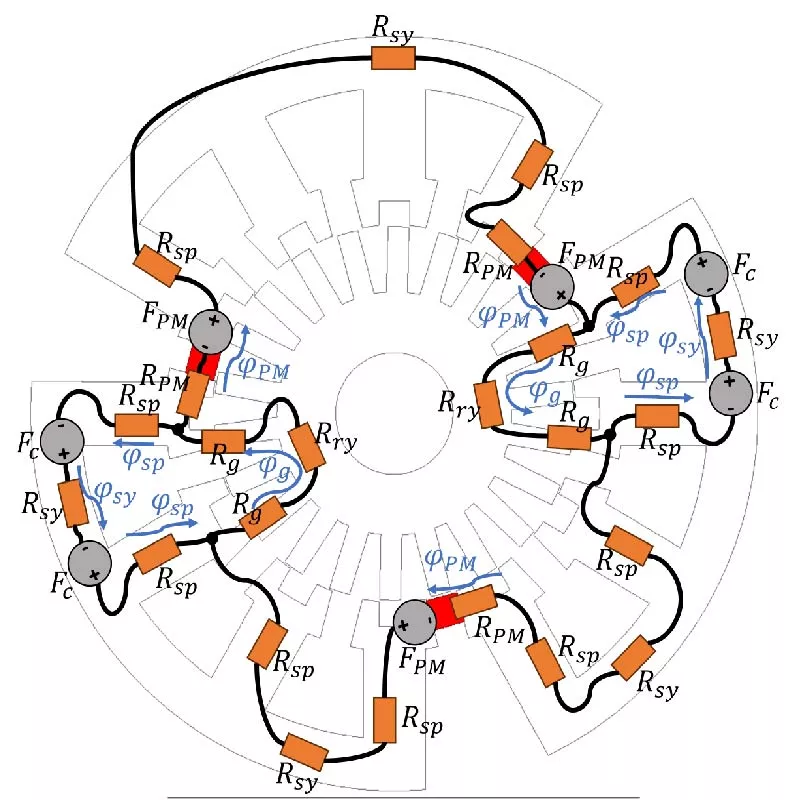
This research presents a high-performance 24/22 hybrid-excited switched reluctance motor (HESRM) featuring a modular C-core, dual-tooth topology engineered for superior torque density and efficiency. The proposed architecture utilizes a strategic flux-concentration mechanism by embedding permanent magnets (PMs) exclusively within the inter-tooth spaces. This targeted integration establishes a dual-path flux enhancement that intensifies air-gap flux density while suppressing stator yoke saturation. To ensure methodological rigor, structural parameters were optimized using a Multi-Objective Genetic Algorithm (GA) to maximize average torque. Additionally, a Magnetic Equivalent Circuit (MEC) model was derived to analytically interpret the PM-assisted torque enhancement. The design is rigorously validated through Three-Dimensional Finite Element Analysis (3D FEA), accounting for end-leakage effects. The 3D FEA results yield an average torque of 3 Nm, exhibiting excellent agreement with the 2D FEA estimation (2.98 Nm). Detailed evaluations of losses and efficiency mapping reveal that the HSSRM 24/22 achieves a 43% increase in average torque and significantly higher efficiency than the reference HSRM 12/10. Ultimately, this study offers a robust, cost-effective solution with an enhanced torque-per-PM-volume ratio for advanced electric drive applications.
Design and Analysis of a Novel Switched Reluctance Motor Utilizing Embedded Permanent Magnets for Torque Enhancement
2026-06-03
PIER B
Vol. 117, 165-181, 2026
download: 78
Analytical Modeling of Metamaterial Antennas and Their Equivalent Properties: A Characteristic Mode Approach
Mouad El Moudden, Badiaa Ait Ahmed and Otman Aghzout
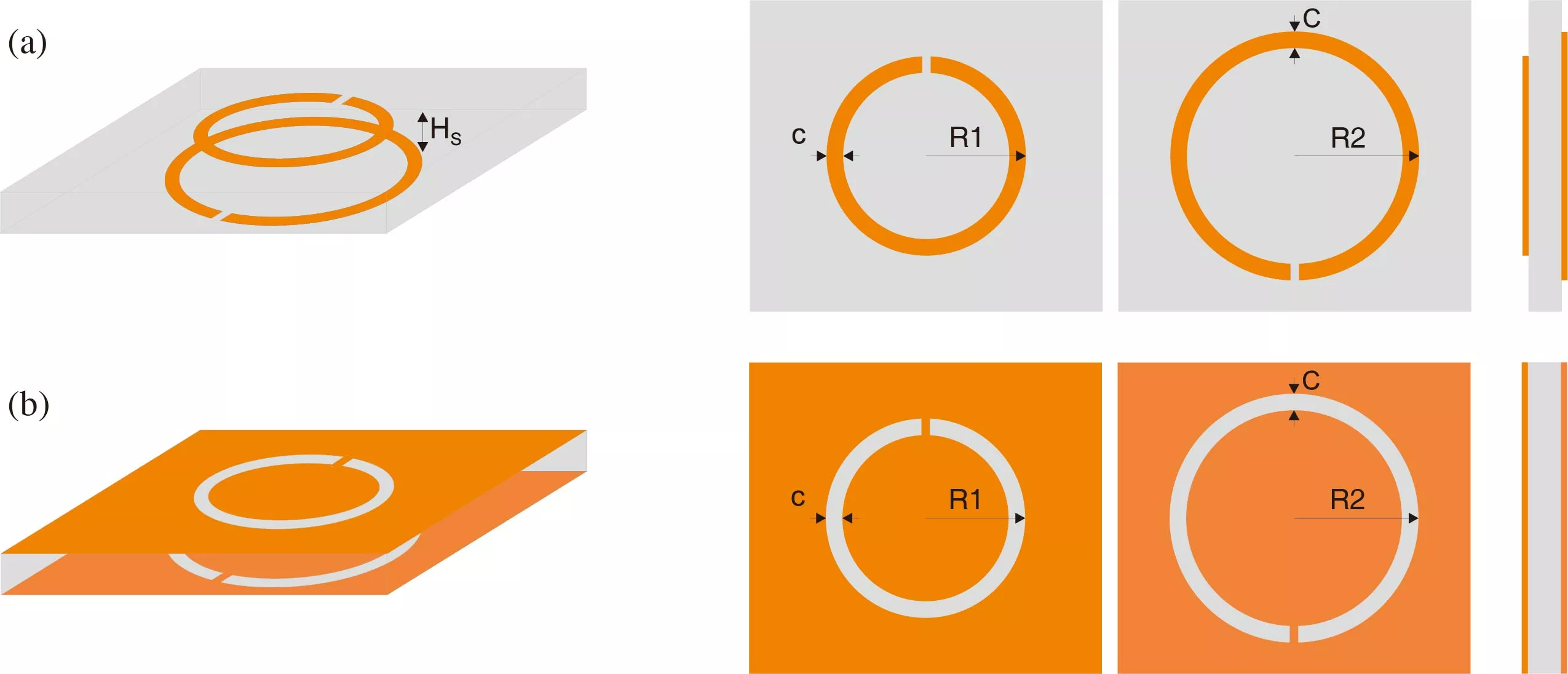
This paper examines approaches to improving metamaterial antennas using the Theory of Characteristic Modes (TCM). We investigate the electromagnetic resonant modes of antenna elements, with a focus on how their material properties interact with their geometric configurations. The main goal is to enhance key features, such as bandwidth and radiation efficiency, in the electromagnetic modes of metamaterials. The study also examines how structural features, such as slots and metamaterial shapes, affect antenna performance. Splitring resonators (SRRs) and complementary split-ring resonators (CSRRs) are considered to analyze how electric and magnetic modes can contribute to radiation efficiency using the approaches proposed in this paper. Important parameters, including characteristic angles, current distribution, bandwidth, and radiation patterns, are compared across different designs to identify the most efficient configurations. Notably, the analysis shows that when the SRR and CSRR structures are optimized, they can achieve similar radiation efficiency for electric and magnetic modes, respectively. Consequently, the TCM predictions are strongly corroborated by the S-parameter results. Overall, this paper provides practical insights into the design of compact and efficient metamaterial antennas and offers useful guidance for future wireless communication systems.
Analytical Modeling of Metamaterial Antennas and Their Equivalent Properties: A Characteristic Mode Approach
2026-05-18
PIER B
Vol. 117, 150-164, 2026
download: 132
Time-Domain Analysis of Dual Bandpass Negative Group Delay of RLC-Network Based Lumped Passive Topology
Idiris Aweis Hussein, Florent Manorosoa Tsivery Anjara, Habachi Bilal, Robert Wieser, Fayu Wan, Lagouge Tartibu, Marcellin Atemkeng, Glauco Fontgalland, Sébastien Lallechere and Blaise Ravelo
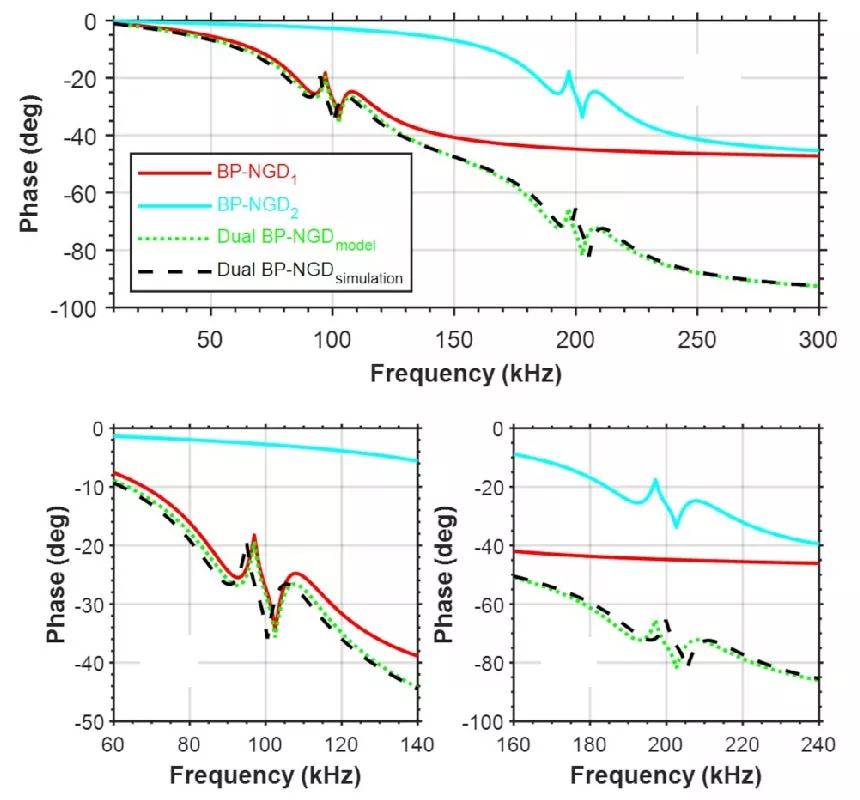
An innovative analysis of a negative group delay (NGD) circuit exhibiting a dual bandpass (BP) characteristic is presented. The passive BP-NGD topology consists, essentially, of parallel RLC resonant networks. The BP-NGD topology is characterized by the NGD value, the NGD center frequency, and the attenuation, as functions of the constituent RLC resonant networks. The dual BP-NGD topology is designed using series impedances, which are composed of two distinct parallel RLC networks. After considering the reduced-order model of the passive cell within the NGD frequency range, which enables the determination of component values for the dual BP-NGD circuit, the circuit is formulated as a function of the desired NGD values and center frequencies. The feasibility of the design theory is verified through a proof-of-concept (PoC), designed to operate with the following specifications (1 MHz, -20 μs, -8 dB) and (2 MHz, -20 μs, -8 dB). First, a frequency-domain analysis of the PoC demonstrates the dual BP-NGD behavior, exhibiting an attenuation of approximately 8 dB. Subsequently, time-domain analyses were conducted using input signals with amplitude modulation on sinusoidal carriers at frequencies of 1 MHz, 1.5 MHz, and 2 MHz. The obtained results highlight the possibility of generating output signal envelopes that exhibit a temporal advancement relative to the input ones, provided that the input signal spectrum falls within the NGD bandwidth. However, the output envelope exhibits a positive delay when the input signal spectrum lies outside the NGD frequency band. A potential application principle for the dual BP-NGD circuit is discussed, specifically for the compensation of delay dispersion in electronic and communication systems.
Time-domain Analysis of Dual Bandpass Negative Group Delay of RLC-network Based Lumped Passive Topology
2026-05-13
PIER B
Vol. 117, 135-149, 2026
download: 84
Unified Analytical and Numerical Evaluation of Axial Magnetic Force in Coaxial Air-Core Coils
Ali Jebelli, Nafiseh Lotfi, Arezoo Mahabadi and Mustapha Yagoub
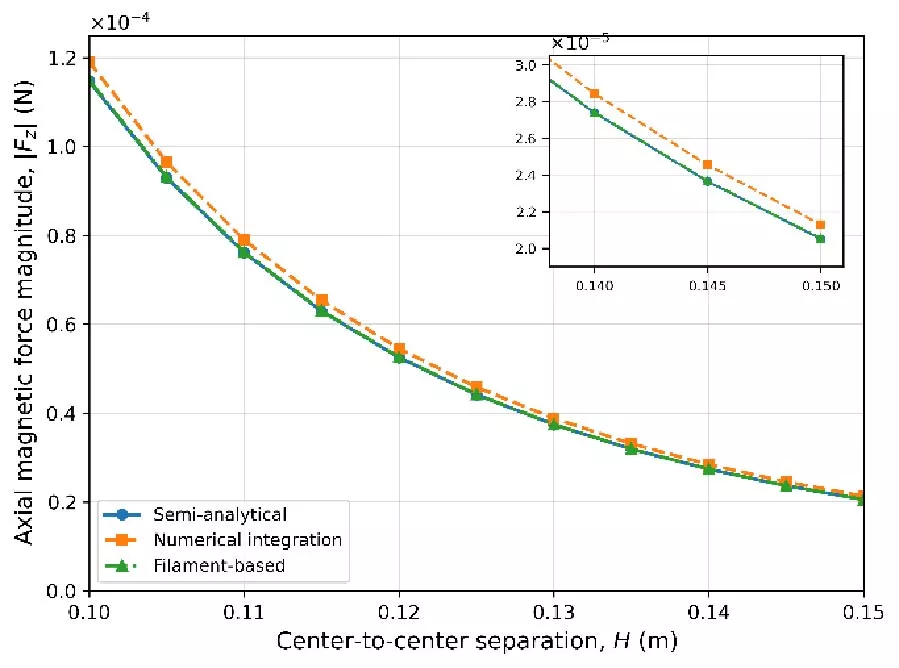
Accurate prediction of magnetic interaction forces is important for electromagnetic actuators, inductive coupling systems, and calibration devices. This paper presents a unified analytical and numerical framework for evaluating the axial magnetic force between two finite-dimensional, perfectly coaxial, air-core cylindrical coils under steady currents. The model assumes uniform purely azimuthal current density and neglects radial and axial current components, winding-pitch effects, magnetic materials, misalignment, and transient phenomena. Starting from the Biot-Savart law and Lorentz force formulation, the coil-coil interaction integral is derived and reduced using cylindrical symmetry, leaving only the axial resultant force. Three complementary methods are developed in MATLAB: a semi-analytical elliptic-integral formulation, a direct trapezoidal numerical-integration method, and a filament-based mutual-inductance method. The methods are computationally benchmarked for representative thin-wall, moderate finite-radius, mixed-radius, and large finite-radius coil geometries. The results show consistent force predictions, with relative half-spread values below approximately 4% for the cases considered. Discretization sensitivity and error-source analysis are included to clarify numerical accuracy and convergence. The proposed framework provides a transparent benchmark for axial force evaluation in idealized coaxial air-core coil systems.
Unified Analytical and Numerical Evaluation of Axial Magnetic Force in Coaxial Air-Core Coils
2026-05-10
PIER B
Vol. 117, 123-134, 2026
download: 83
EM Field Comparison of Five Lightning Types: A Distance-Dependent Behavior with Implications for Protection Design
Imane Ghlib, Mohamed Omari and Abdenbi Mimouni
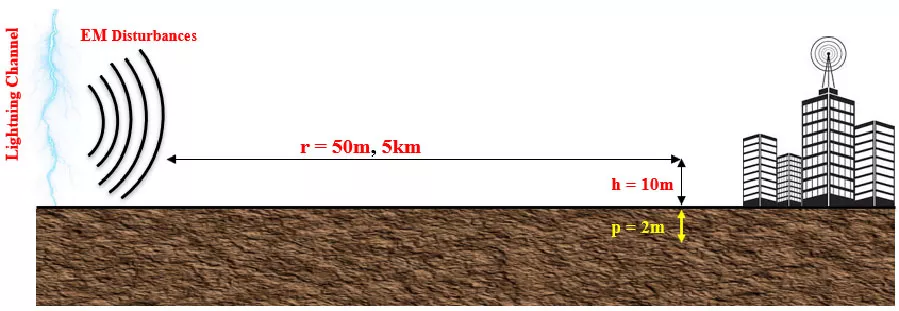
Lightning electromagnetic fields are essential inputs for protection system design, electromagnetic compatibility analysis, and lightning location system calibration. Although most computational studies rely on a single ``typical'' current waveform, real lightning exhibits significant variation in peak current, rise time, and temporal characteristics. This paper presents a systematic investigation of how return stroke current parameters influence radiated electromagnetic fields using the finite-difference time-domain (FDTD) method. Five representative waveforms are examined: typical subsequent stroke (12 kA, 40 kA/µs), first return stroke (28 kA, 12 kA/µs), severe subsequent stroke (25 kA, 80 kA/µs), fast-rising subsequent stroke (20 kA, 120 kA/µs), and rocket-triggered lightning (16 kA, 20 kA/µs). Simulations are performed over homogeneous ground (σ = 0.001 S/m, εr = 10). Electric and magnetic field components are computed at near-field (r = 50 m) and far-field (r = 5 km) distances, both underground (d = 2 m) and above ground (h = 10 m). Results show strongly distance-dependent behavior: at 50 m, current rise rate (di/dt) dominates, with fast-rising 16 kA strokes producing fields comparable to slower 22 kA events. At 5 km, peak current governs all components, with 28 kA first strokes producing fields 1.5-2× higher than subsequent strokes. Field attenuation from 50 m to 5 km varies from 130× to 3000× depending on waveform frequency content. The azimuthal magnetic field exhibits uniform attenuation (225-350×) and ground independence, supporting its use in lightning location systems. Triggered lightning underestimates severe natural strokes by 40-60% at 50 m, narrowing to 20-30% at 5 km. These findings indicate that worst-case protection scenarios must be distance-specific: fast-rising strokes govern buried infrastructure within 100 m, while first strokes dominate overhead systems beyond 1 km.
EM Field Comparison of Five Lightning Types: A Distance-Dependent Behavior with Implications for Protection Design
2026-05-07
PIER B
Vol. 117, 109-122, 2026
download: 93
Study on the Transmission Characteristics of a WPT System with Double Semicircular Coplanar Coils
Suqi Liu, Changxin Guo, Xinying Zhou, Gang Wang and Yuping Liu
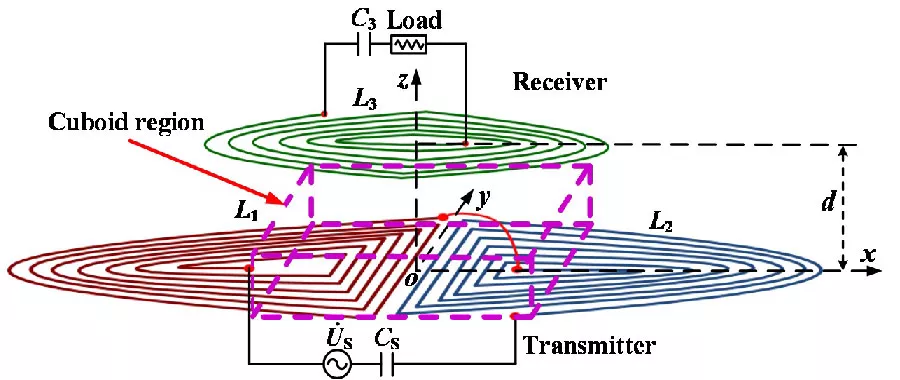
For small, low-power wireless power transfer (WPT) devices, maintaining constant output power and high transmission efficiency over a wide range of coupling variations remains a significant challenge. The double semicircular coplanar (DSC) coils, featuring unique magnetic field distribution, provide a potential solution for enhancing misalignment tolerance. This paper analyzes the transmission characteristics of a WPT system employing DSC coils. A circuit model for the WPT system with DSC coils is first developed, and its fundamental transmission characteristics are studied. The tolerance of output power and transmission efficiency to positional offsets (X, Y, Z) over various frequency bands is then evaluated. Finally, an experimental DSC coil system that features a stable frequency bandwidth and is largely insensitive to frequency shifts is built. Its misalignment tolerance forms a cuboid spatial zone. Within this zone, namely when the offset of the receiver in X and Y is under half its diameter, the output power and transmission efficiency remain constant, supported by a uniform magnetic field. When the receiver offset is greater than half its diameter, the magnetic field uniformity and mutual inductance change abruptly, leading to a sudden variation in output power and transmission efficiency.
Study on the Transmission Characteristics of a WPT System with Double Semicircular Coplanar Coils
2026-04-15
PIER B
Vol. 117, 94-108, 2026
download: 203
Dual-Tuned Wideband Parasitically Loaded with Split-Ring Resonator Corner-Truncated Antenna for Sub-6 GHz Applications
Atul Varshney, Deepak Sharma, Jitendra Raghuwanshi, Rajesh Kumar Upadhyay, Dunya Zeki Mohammed, Abdul Kayum Muhammad Zakir Hossain and Ahmed Jamal Abdullah Al-Gburi
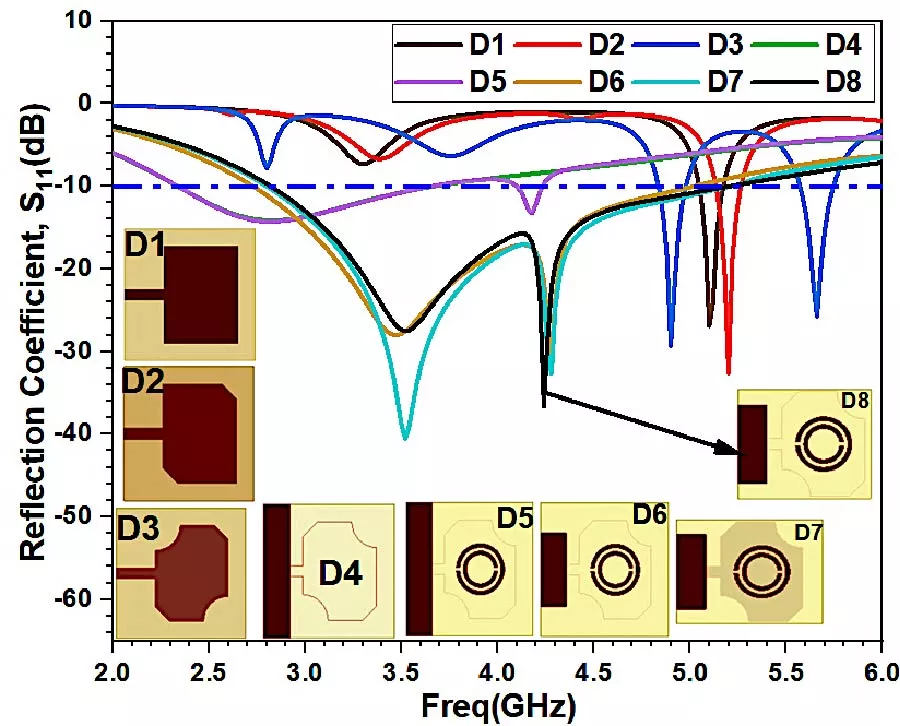
A corner-truncated (linear and circular) antenna with a compressed reduced ground and parasitically loaded with a single unit of SRR was successfully designed, fabricated, tested, and investigated for 5G wireless communications. The truncated corner with a full ground shifted the narrow bandwidth and resonating frequency (5.10 GHz) from right to left (2.81 GHz). The ground-reduced length and compressed width enable a transition from a narrow band to a wide band, and the antenna is tuned to approximately 3.5 GHz. The antenna is parasitically loaded with an SRR that provides an additional resonating frequency within a wide bandwidth (2.82-5.21 GHz). The antenna achieves wideband with dual tuning frequencies within the band. The antenna has gains of 3.93 and 4.25 dBi at the tuned frequencies, respectively. The truncated ground enhances the antenna gain (3.33 to 4.25 dBi) and impedance bandwidth from narrow band (5.07-5.17 GHz) to wideband. The truncation of the corner and reduced ground length degrades the radiation efficiencies, while ground and substrate dimension (length and width) compression compensatea for the reduced values of efficiencies. The proposed antenna is best suited for Wi-Fi 5 (IEEE 802.11ac), Wi-Fi 6 (IEEE 802.11ax), n48, n77, n78, and n79 applications. The antenna was measured and compared with the simulated results and radiation patterns. They were found in approximations, which helped confirm the antenna design and investigations.
Dual-Tuned Wideband Parasitically Loaded with Split-Ring Resonator Corner-Truncated Antenna for Sub-6 GHz Applications
2026-03-10
PIER B
Vol. 117, 78-93, 2026
download: 580
Energy Efficiency Maximization for IRS-Assisted UAV-D2D Cooperative MEC Offloading
Chenwei Feng, Haojun Xing, Jun Zhou, Zhenzhen Lin, Huangjie Guo and Ruilong Chen
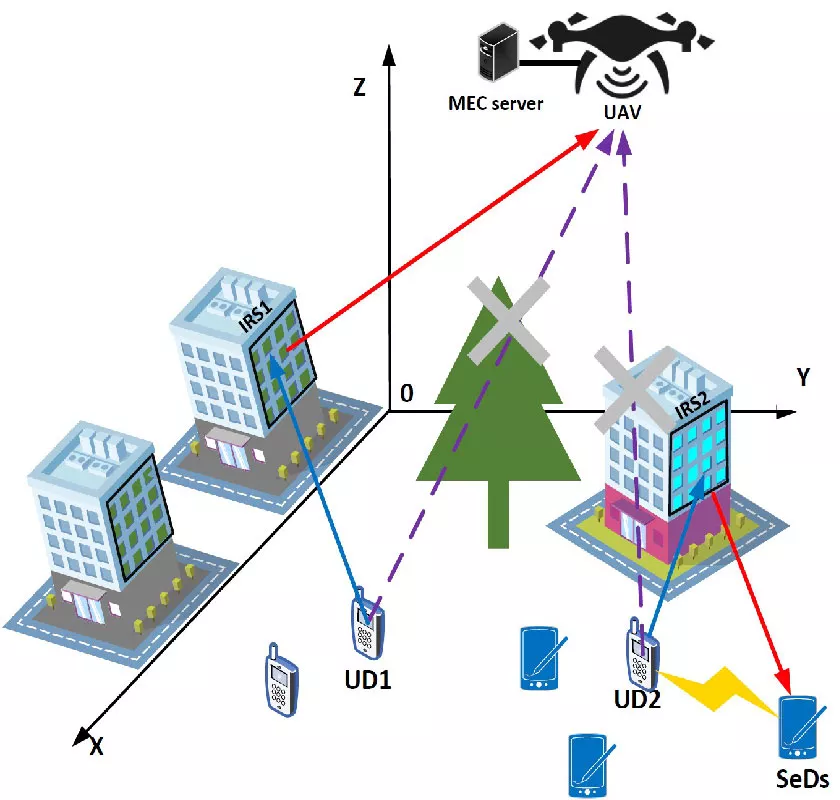
With the rapid development of technologies such as Big Data, Cloud Computing, Artificial Intelligence (AI), and Internet of Things (IoT), there is an increasing demand for real-time computing and low-latency data transmission. Mobile Edge Computing (MEC) technology has been proposed to reduce data transmission latency and alleviate the burden on the core network, but MEC still faces the problem of limited computational resources and bandwidth in high-density device environments. To address these issues, this study proposes a joint optimisation energy-efficiency maximisation strategy for Intelligent Reflective Surface (IRS)-based Unmanned Aerial Vehicle (UAV) and Device-to-Device (D2D) collaborative Mobile Edge Computing (MEC) systems. The strategy integrates optimisation of task offloading decisions, UAV trajectory planning, computational resource allocation and IRS phase regulation to maximise the energy efficiency of the system. The highly coupled and non-convex optimisation problem is solved iteratively by designing a twoloop iterative optimisation framework combining Dinkelbach's algorithm with the block coordinate descent (BCD) method using the Lagrange multiplier method and the successive convex approximation (SCA) technique. Simulation results show that the optimisation strategy in this study significantly improves the energy efficiency of the system compared to the conventional scheme, especially in IRS phase optimisation and UAV trajectory adjustment.
Energy Efficiency Maximization for IRS-Assisted UAV-D2D Cooperative MEC Offloading
2026-02-28
PIER B
Vol. 117, 59-77, 2026
download: 2601
A Delay-Compensated Predictive Current Control for PMSM Using a Luenberger Observer
Xuchen Wang and Chenxuan Zhu
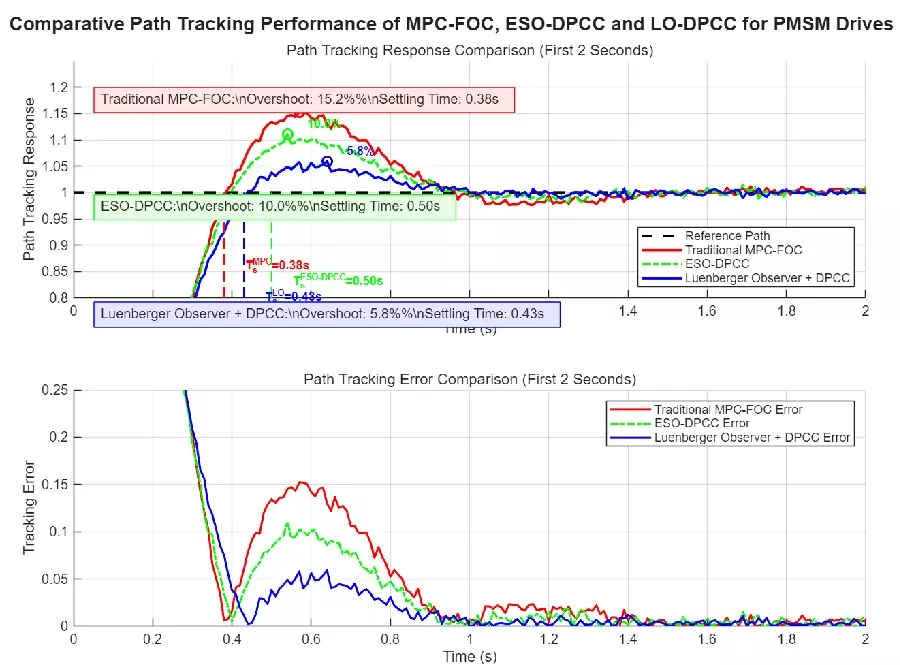
This paper proposes a Luenberger-observer-assisted deadbeat predictive current control (LO-DPCC) scheme to compensate the inherent one-sample sampling/computation/PWM delay in embedded PMSM drives. A discrete time Luenberger observer is designed for the dq-axis current dynamics to provide a one-step-ahead current estimate, which is embedded into a closed form deadbeat predictive control law under a unified timing configuration. The method is evaluated by MATLAB/Simulink co-simulation using multi wheel steering actuator profiles (front wheel independent + rear wheel cooperative) and by DSP-based bench experiments at 10 kHz PWM. Compared with a tuned MPC-FOC baseline and an ESO-assisted DPCC benchmark under identical constraints, LO-DPCC consistently improves speed regulation and torque smoothness, indicating that observer based one-step prediction is an effective and implementation friendly approach for delay-compensated predictive current control of PMSM drives.
A Delay-Compensated Predictive Current Control for PMSM Using a Luenberger Observer
2026-02-03
PIER B
Vol. 117, 43-58, 2026
download: 363
Design and Optimization of an FPCB-Based Multi-Transmitter Single-Receiver Wireless Power Transfer System for Implantable Medical Devices
You Fu, Jianan Luo, Xinguang Chen and Dequan Jiang
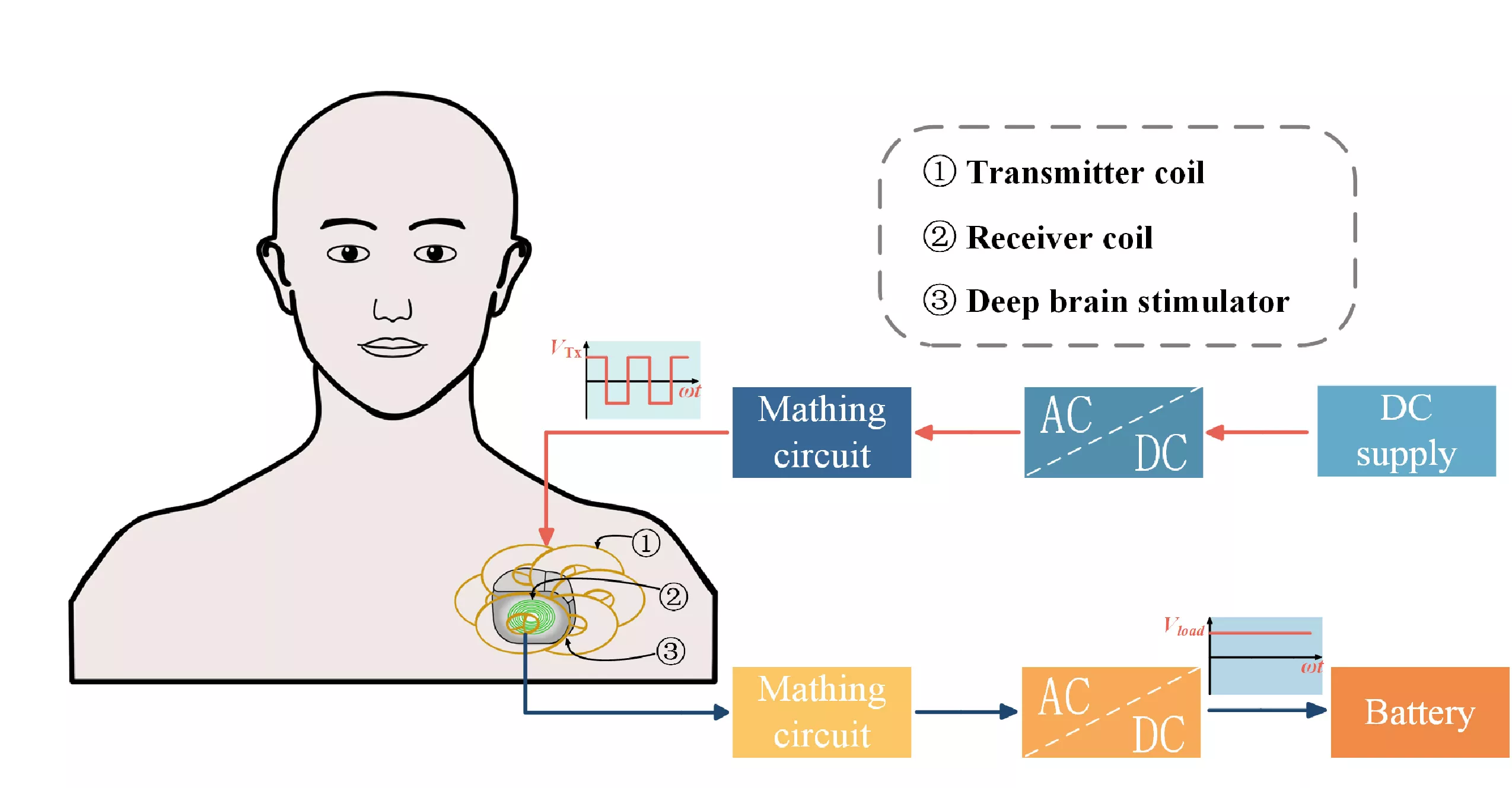
The focus of this study is the design of a multi-transmitter single-receiver wireless power transfer (MTSR-WPT) system, particularly for implantable medical devices such as brain pacemakers. Conventional charging methods rely on invasive surgery or frequent battery replacement, posing significant challenges for patients. To address this issue, this work proposes an MTSR-WPT system based on a flexible printed circuit board (FPCB). The designed small-coil array topology leverages the mechanical flexibility of FPCB to conform to complex biological surfaces, significantly enhancing two-dimensional omnidirectional anti-misalignment capability while reducing magnetic leakage during operation. To further compensate for misalignment between the transmitter and receiver, a backpropagation neural network optimized by the Seagull Optimization Algorithm (SOA-BP) is introduced for receiver coil position prediction, combined with a fuzzy PID control strategy for dynamic output voltage regulation. Simulation and experimental results demonstrate that under a fixed load condition, the proposed system achieves stable energy transfer within a 120 mm charging area, maintaining an output power exceeding 1 W when the receiver coil is positioned at a height of 20 mm. Compared with traditional single-coil systems, the optimized multi-coil array exhibits superior performance in both misalignment tolerance and magnetic leakage suppression. These results verify the effectiveness of the proposed MTSR-WPT system and highlight its potential for implantable medical devices and other power electronic applications, providing a novel solution for achieving efficient and reliable wireless energy transfer.
Design and Optimization of an FPCB-Based Multi-Transmitter Single-Receiver Wireless Power Transfer System for Implantable Medical Devices
2026-01-21
PIER B
Vol. 117, 29-42, 2026
download: 274
Adapting Operational Volume Scanning to Low-Power FMCW: System Development and Physically-Informed ML Calibration
Asif Awaludin, Dwiyanto, Rahmat Triyono, Yunus Subagyo Swarinoto, Erwin Makmur, Beno Kunto Pradekso, Oktanto Dedi Winarko, Muhammad Farras Archi Maggaukang, Liarto, Donaldi Sukma Permana, Roni Kurniawan, Rezky Yunita, Mohamad Husein Nurrahmat, Thahir Daniel Foreigner Hutapea, Agung Majid, Muhamad Rifki Taufik, Warjono, Ferdinandus Edwin Penalun, Bobby Harnawan, Dodi Dian Patriadi, Muhammad Rendi Anggara, Hastuadi Harsa, Alfan Sukmana Praja, Fatkhuroyan, Wido Hanggoro, Muhammad Najib Habibie, Welly Fitria, Rahayu Sapta Sri Sudewi, Asteria Satyaning Handayani, Sri Noviati and Vestiana Aza
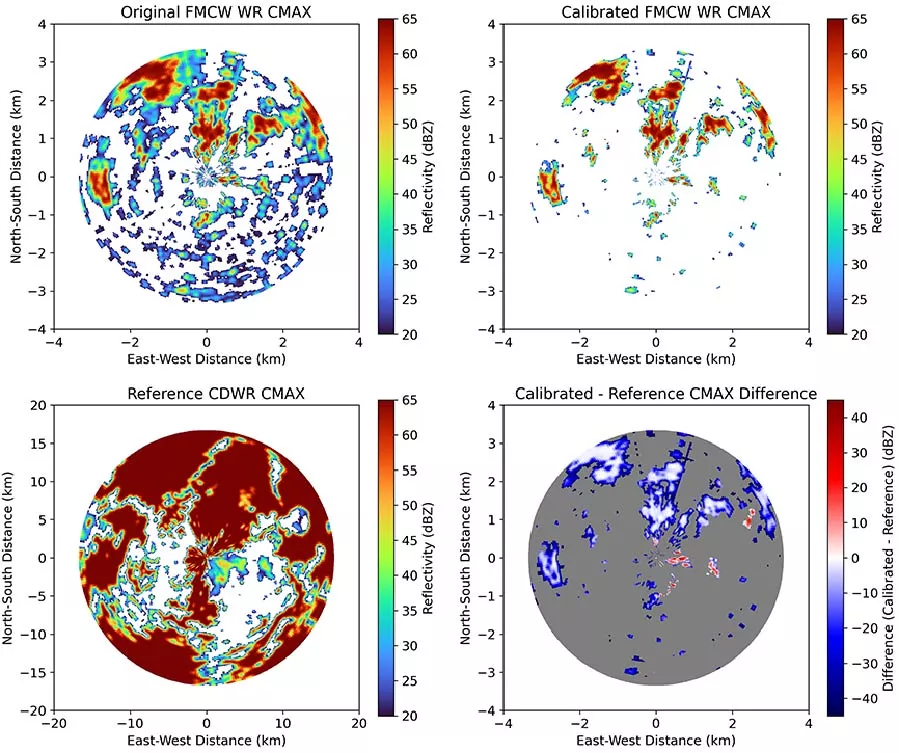
This study presents the development and evaluation of a transportable X-band frequency-modulated continuous-wave (FMCW) weather radar (WR) that successfully adapts operational volumetric scanning strategies typically reserved for high-power to low-power pulsed systems. The radar integrates a complete radio-frequency chain, a carbon graphite antenna, and a dedicated real-time processing unit designed for operational volumetric scanning. It performs rapid 4-minute volume scans across seven elevation angles (0.00˚-15.88˚) with non-uniform spacing optimized for low-level atmospheric sampling, while a 2 RPM rotation provides full azimuthal coverage every 30 s. The resulting Column Maximum (CMAX) product synthesizes reflectivity from all elevation angles to depict three-dimensional precipitation structure, demonstrating a spatial observational capability distinct from traditional profiling FMCW radars. A three-stage hierarchical physically-informed architecture calibration framework was implemented to ensure quantitative accuracy in the FMCW WRs measurements, using collocated C-band Doppler Weather Radar (CDWR) observations as reference data. Validation through internal five-fold Group K-Fold cross-validation, Leave-One-Pair-Out (LOPO) testing, and external evaluation using independent radar pairs demonstrated the frameworks robustness. The case study of localized urban convection observed by the FMCW WR shows that the developed low-cost radar offers much finer range resolution and can reveal detailed structures within convective cells.
Adapting Operational Volume Scanning to Low-Power FMCW: System Development and Physically-Informed ML Calibration
2026-01-14
PIER B
Vol. 117, 16-28, 2026
download: 272
Multispectral Optical Emission Modeling of Sprites Using Plasma Streamer Simulations: A Computational Electromagnetics Approach for Remote Sensing Applications
Carlos Antonio Gómez Vargas and Francisco José Román Campos
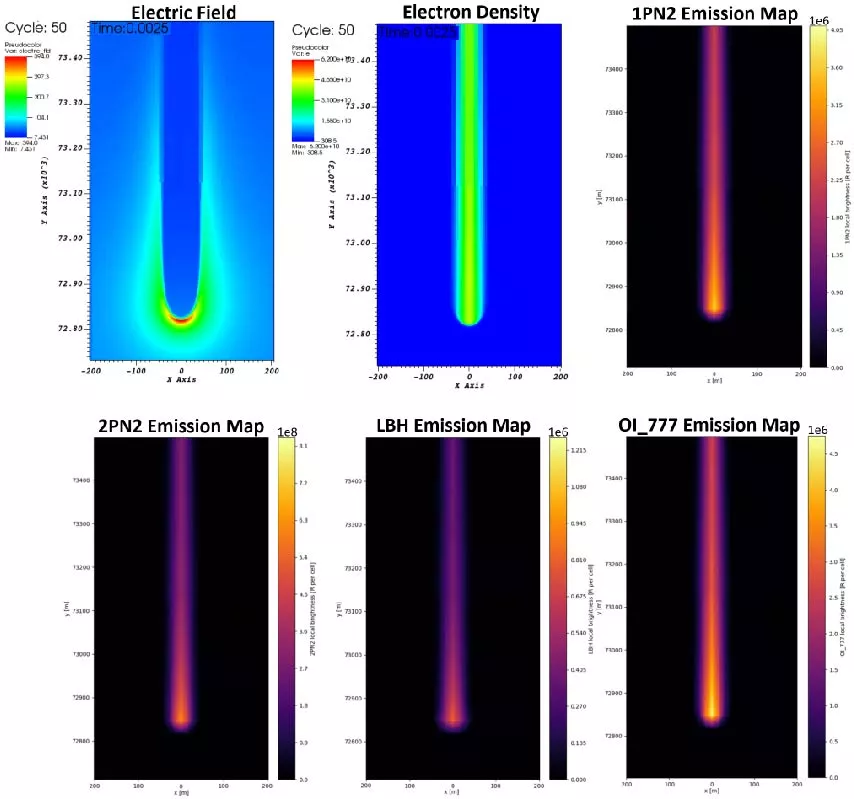
We present a computational framework for the multispectral synthesis of optical emissions in Transient Luminous Events (TLEs), specifically sprites, based on plasma fluid simulations obtained with the Afivo Streamer tool. Using the simulated electric field and electron density, we compute quasi-stationary excitation, quenching, and radiative emission rates for four key spectral bands: first positive 1PN2 and second positive 2PN2 band systems of nitrogen, Lyman-Birge-Hopfield (LBH) band system, and Optical emission images OI (Ionized Atomic Oxygen) at 777.4 nm (OI 777.4 nm). The model incorporates electron-impact excitation coefficients k(E/N), non-radiative losses due to collisional quenching Q = Σiαini, and atmospheric attenuation (especially relevant for LBH). It also produces 2D emission maps and vertical brightness profiles, showing the spatial localization of each band as a function of the reduced electric field, electron density, and non-radiative losses. The results capture the temporal evolution of the discharge, from the early propagation phase to advanced branching, enabling direct comparisons with spaceborne instrumentation (e.g., ASIM). The developed scheme provides a reproducible diagnostic tool that links plasma physical variables with observed signals across multiple spectral bands.
Multispectral Optical Emission Modeling of Sprites Using Plasma Streamer Simulations: A Computational Electromagnetics Approach for Remote Sensing Applications
2026-01-12
PIER B
Vol. 117, 1-15, 2026
download: 449
Bandwidth Reconfigurable Circularly Polarized Antenna with Beam Steering Ability Using Phase Gradient Metasurface
Naveen Jacob, Muralidhar Kulkarni and Krishnamoorthy Kandasamy
A bandwidth tunable, circularly polarized (CP) patch antenna, with complementary split ring resonator (CSRR), embedded on the ground plane is presented in this paper. The antenna is capable of switching between ultra-wide band (UWB) frequency response, spanning through 2.6 GHz to 12 GHz and a narrowband (NB) frequency response at 6 GHz. Excitation of CSRR results in negative permittivity medium, producing notch band response at its designed frequency. This notch band is shifted by varying the arm length of CSRR using PIN diodes. This will result in tuning the bandwidth (BW) of the NB response of antenna, spanning from 1 GHz to 4.4 GHz, by retaining the central frequency at 6 GHz. The fractional bandwidth can be varied in a range of 16% to 73.3%, exhibiting an increase by a factor of 4.58. The antenna also exhibits switchable circular polarization (LHCP/RHCP) at 6 GHz for both UWB as well as narrowband responses. A compact tunable multiband Artificial Magnetic Conductor (AMC) unit cell is also designed and is used to construct a Phase Gradient Metasurface (PGM). The radiating beam of the antenna is steered using the PGM as a reflector to obtain a beam steering angle of +36° for LHCP and -44° for RHCP radiations. The antenna is a promising solution for applications which demand bandwidth switching & beam steering, such as cognitive radio services.
Bandwidth Reconfigurable Circularly Polarized Antenna with Beam Steering Ability Using Phase Gradient Metasurface