A Flexible Passive Metasurface Reflector for Absorption, Linear-to-Linear, and Linear-to-Circular Polarization Conversion
Ke Wang,
Haofei Zhang,
Longsheng Li,
Chunlei Xu,
Yichao Zhou and
Shijie Xie
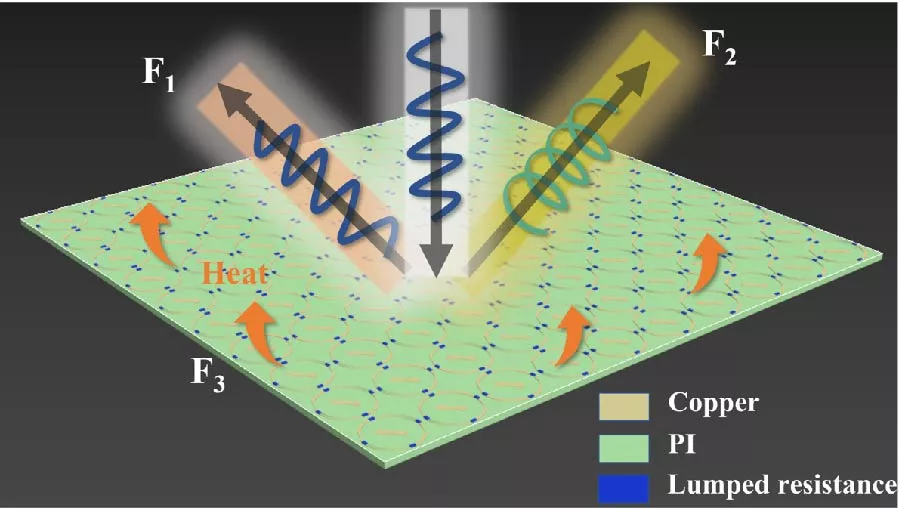
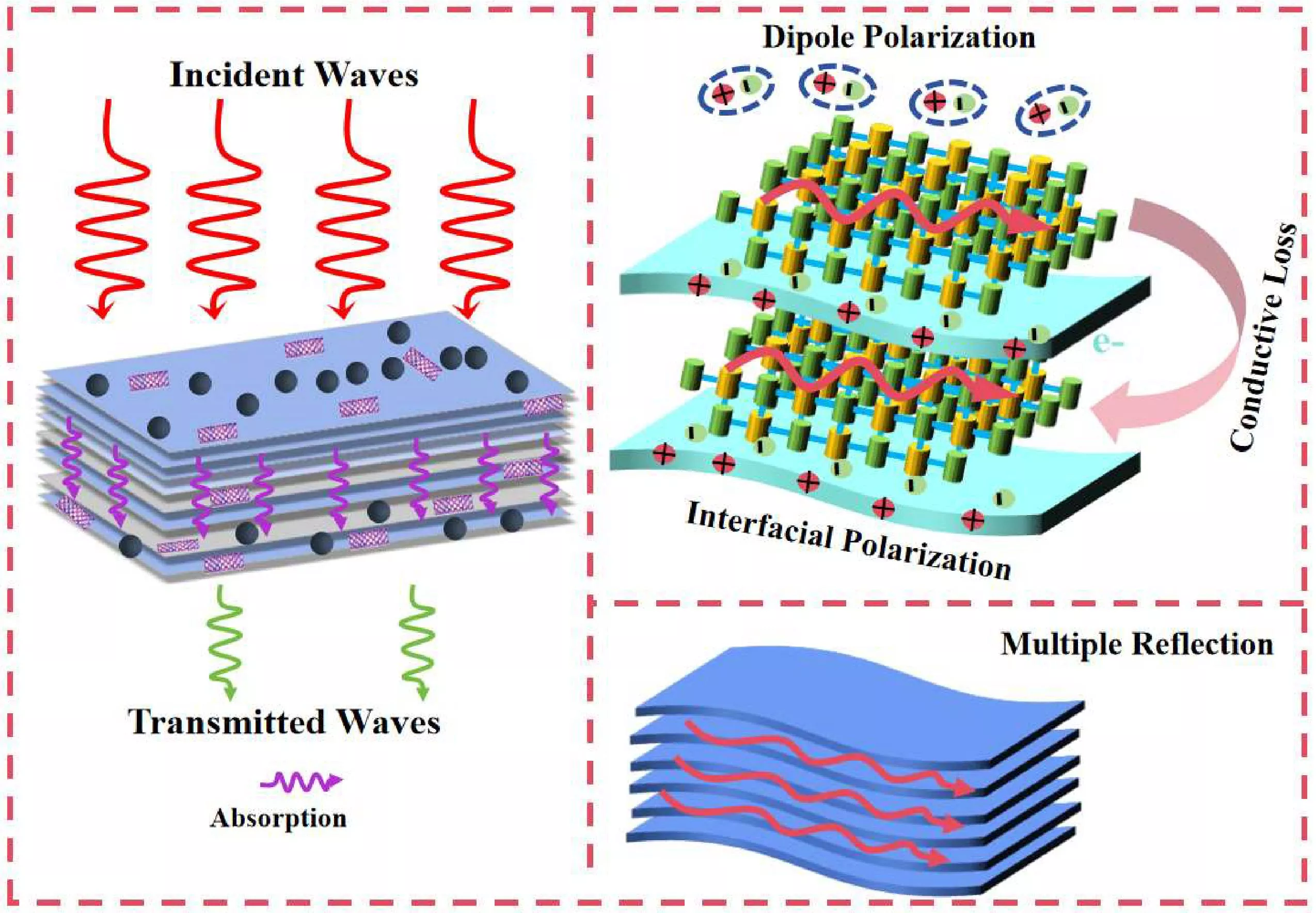
A flexible multifunctional passive metasurface reflector is proposed, which integrates broadband absorption, linear-to-linear polarization conversion, and dual-band linear-to-circular polarization conversion on a single passive platform. The proposed unit cell consists of a circular split-ring resonator and X-shaped metallic patches loaded with lumped resistors. The metallic patterns were fabricated on a flexible polyimide (PI) substrate, followed by a polymethacrylimide (PMI) spacer layer and a metallic ground plane. Without employing any active components, the metasurface achieves an absorptivity higher than 90% over the 4.45-8.46 GHz band. In the 12.1-15.2 GHz frequency range, the polarization conversion ratio exceeds 90%, enabling efficient linear-to-linear polarization conversion. Furthermore, within the frequency bands of 16.5-17.3 GHz and 17.7-18.2 GHz, the proposed metasurface converts incident linearly polarized waves into right-handed circularly polarized (RHCP) and left-handed circularly polarized (LHCP) waves, respectively, while the output handedness can be interchanged by rotating the incident polarization by 90°. Conformal measurements demonstrate that the proposed metasurface maintains stable absorption performance under moderate bending, with only slight degradation in polarization conversion performance and a small frequency shift in the circular polarization conversion bands. Experimental measurements show good agreement with the simulated results, verifying the effectiveness of the proposed design. Owing to its simple configuration, low cost, multifunctional integration, and conformal capability, the proposed metasurface provides a promising solution for multifunctional electromagnetic manipulation in conformal integrated electromagnetic systems.