Vol. 172
Latest Volume
All Volumes
PIERC 172 [2026] PIERC 171 [2026] PIERC 170 [2026] PIERC 169 [2026] PIERC 168 [2026] PIERC 167 [2026] PIERC 166 [2026] PIERC 165 [2026] PIERC 164 [2026] PIERC 163 [2026] PIERC 162 [2025] PIERC 161 [2025] PIERC 160 [2025] PIERC 159 [2025] PIERC 158 [2025] PIERC 157 [2025] PIERC 156 [2025] PIERC 155 [2025] PIERC 154 [2025] PIERC 153 [2025] PIERC 152 [2025] PIERC 151 [2025] PIERC 150 [2024] PIERC 149 [2024] PIERC 148 [2024] PIERC 147 [2024] PIERC 146 [2024] PIERC 145 [2024] PIERC 144 [2024] PIERC 143 [2024] PIERC 142 [2024] PIERC 141 [2024] PIERC 140 [2024] PIERC 139 [2024] PIERC 138 [2023] PIERC 137 [2023] PIERC 136 [2023] PIERC 135 [2023] PIERC 134 [2023] PIERC 133 [2023] PIERC 132 [2023] PIERC 131 [2023] PIERC 130 [2023] PIERC 129 [2023] PIERC 128 [2023] PIERC 127 [2022] PIERC 126 [2022] PIERC 125 [2022] PIERC 124 [2022] PIERC 123 [2022] PIERC 122 [2022] PIERC 121 [2022] PIERC 120 [2022] PIERC 119 [2022] PIERC 118 [2022] PIERC 117 [2021] PIERC 116 [2021] PIERC 115 [2021] PIERC 114 [2021] PIERC 113 [2021] PIERC 112 [2021] PIERC 111 [2021] PIERC 110 [2021] PIERC 109 [2021] PIERC 108 [2021] PIERC 107 [2021] PIERC 106 [2020] PIERC 105 [2020] PIERC 104 [2020] PIERC 103 [2020] PIERC 102 [2020] PIERC 101 [2020] PIERC 100 [2020] PIERC 99 [2020] PIERC 98 [2020] PIERC 97 [2019] PIERC 96 [2019] PIERC 95 [2019] PIERC 94 [2019] PIERC 93 [2019] PIERC 92 [2019] PIERC 91 [2019] PIERC 90 [2019] PIERC 89 [2019] PIERC 88 [2018] PIERC 87 [2018] PIERC 86 [2018] PIERC 85 [2018] PIERC 84 [2018] PIERC 83 [2018] PIERC 82 [2018] PIERC 81 [2018] PIERC 80 [2018] PIERC 79 [2017] PIERC 78 [2017] PIERC 77 [2017] PIERC 76 [2017] PIERC 75 [2017] PIERC 74 [2017] PIERC 73 [2017] PIERC 72 [2017] PIERC 71 [2017] PIERC 70 [2016] PIERC 69 [2016] PIERC 68 [2016] PIERC 67 [2016] PIERC 66 [2016] PIERC 65 [2016] PIERC 64 [2016] PIERC 63 [2016] PIERC 62 [2016] PIERC 61 [2016] PIERC 60 [2015] PIERC 59 [2015] PIERC 58 [2015] PIERC 57 [2015] PIERC 56 [2015] PIERC 55 [2014] PIERC 54 [2014] PIERC 53 [2014] PIERC 52 [2014] PIERC 51 [2014] PIERC 50 [2014] PIERC 49 [2014] PIERC 48 [2014] PIERC 47 [2014] PIERC 46 [2014] PIERC 45 [2013] PIERC 44 [2013] PIERC 43 [2013] PIERC 42 [2013] PIERC 41 [2013] PIERC 40 [2013] PIERC 39 [2013] PIERC 38 [2013] PIERC 37 [2013] PIERC 36 [2013] PIERC 35 [2013] PIERC 34 [2013] PIERC 33 [2012] PIERC 32 [2012] PIERC 31 [2012] PIERC 30 [2012] PIERC 29 [2012] PIERC 28 [2012] PIERC 27 [2012] PIERC 26 [2012] PIERC 25 [2012] PIERC 24 [2011] PIERC 23 [2011] PIERC 22 [2011] PIERC 21 [2011] PIERC 20 [2011] PIERC 19 [2011] PIERC 18 [2011] PIERC 17 [2010] PIERC 16 [2010] PIERC 15 [2010] PIERC 14 [2010] PIERC 13 [2010] PIERC 12 [2010] PIERC 11 [2009] PIERC 10 [2009] PIERC 9 [2009] PIERC 8 [2009] PIERC 7 [2009] PIERC 6 [2009] PIERC 5 [2008] PIERC 4 [2008] PIERC 3 [2008] PIERC 2 [2008] PIERC 1 [2008]
2026-08-05 Latest Published
By Arun Raj Velraj Benny Hinn Margoschis Johnson Merlise Rajan
Progress In Electromagnetics Research C, Vol. 172, 195-205, 2026
Abstract
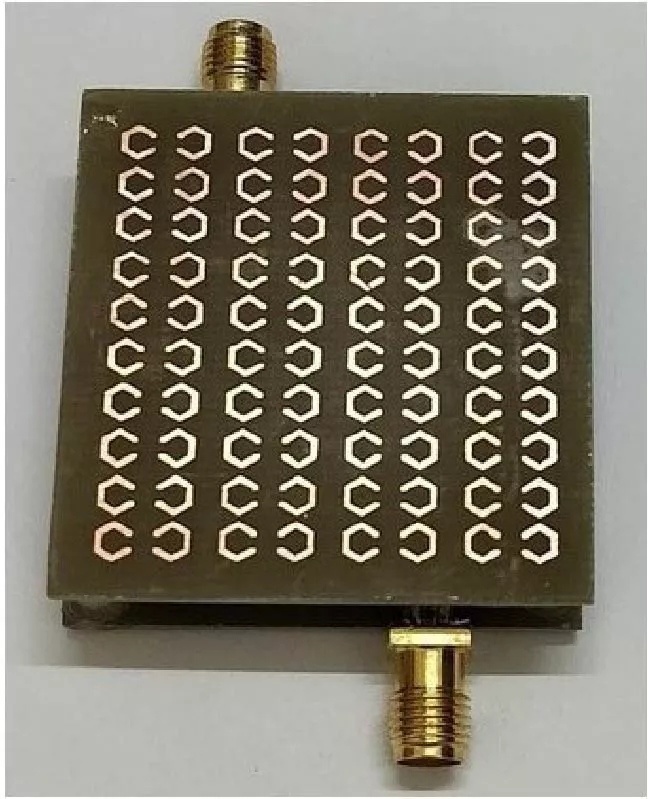
This paper presents the design, simulation, fabrication, and comprehensive measurement of a compact dual-port multiple-input multiple-output (MIMO) microstrip patch antenna integrating a split-ring resonator (SRR) superstrate with a hybrid defected ground structure (DGS) for multiband C/X-band satellite uplink and radar applications. The antenna is implemented on an FR-4 substrate (εr = 4.4, tanδ = 0.02, h = 1.6 mm) with a compact footprint of 40 × 40 mm2. A 10 × 8 array of SRR unit cells positioned at 7 mm air gap above the radiating patches serves as a periodic frequency-selective superstrate to enhance gain via Fabry-Perot cavity resonance and suppress surface waves. Hybrid H-shaped and dumbbell-shaped DGS slots etched on the ground plane provide high isolation between ports by disrupting ground current paths and introducing bandstop characteristics. The simulated antenna resonates at 7.20, 8.62, and 10.66 GHz with return loss below -10 dB and isolation better than -15 dB in the operating bands. The fabricated prototype was tested using a vector network analyzer, and the measured $S$-parameters show good agreement with the simulations, with small shifts due to fabrication tolerances, SMA soldering, FR-4 dielectric variation, and air-gap alignment. Radiation patterns and gain are reported from HFSS simulation, whereas S-parameters are experimentally validated.
2026-08-05
PIER C
Vol. 172, 195-205, 2026
download: 29
Compact Dual-Port MIMO Microstrip Patch Antenna with SRR Superstrate and Hybrid Defected Ground Structure for Multiband C/X-Band Applications
Arun Raj Velraj, Benny Hinn Margoschis Johnson and Merlise Rajan
This paper presents the design, simulation, fabrication, and comprehensive measurement of a compact dual-port multiple-input multiple-output (MIMO) microstrip patch antenna integrating a split-ring resonator (SRR) superstrate with a hybrid defected ground structure (DGS) for multiband C/X-band satellite uplink and radar applications. The antenna is implemented on an FR-4 substrate (εr = 4.4, tanδ = 0.02, h = 1.6 mm) with a compact footprint of 40 × 40 mm2. A 10 × 8 array of SRR unit cells positioned at 7 mm air gap above the radiating patches serves as a periodic frequency-selective superstrate to enhance gain via Fabry-Perot cavity resonance and suppress surface waves. Hybrid H-shaped and dumbbell-shaped DGS slots etched on the ground plane provide high isolation between ports by disrupting ground current paths and introducing bandstop characteristics. The simulated antenna resonates at 7.20, 8.62, and 10.66 GHz with return loss below -10 dB and isolation better than -15 dB in the operating bands. The fabricated prototype was tested using a vector network analyzer, and the measured $S$-parameters show good agreement with the simulations, with small shifts due to fabrication tolerances, SMA soldering, FR-4 dielectric variation, and air-gap alignment. Radiation patterns and gain are reported from HFSS simulation, whereas S-parameters are experimentally validated.
Compact Dual-Port MIMO Microstrip Patch Antenna with SRR Superstrate and Hybrid Defected Ground Structure for Multiband C/X-Band Applications
2026-08-05
PIER C
Vol. 172, 183-194, 2026
download: 28
Coordinated Control of Common Mode Voltage Suppression and Neutral Point Voltage Balance for NPC Three-Level Inverters
Dingdou Wen, Zijie Yan, Dengliang Xia, Li Yang and Yuanyuan Xiao
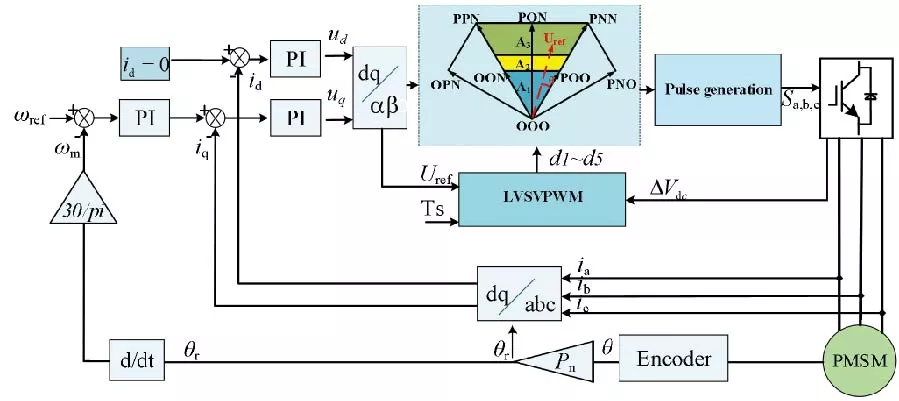
To address high common-mode voltage (CMV) and neutral-point voltage (NPV) imbalance issues in practical neutral-point-clamped (NPC) three-level inverters, a logic virtual space vector pulse width modulation (LVSVPWM) strategy is proposed. Based on the conventional virtual space vector pulse width modulation (VSVPWM), the proposed method first eliminates vectors with large CMV and redivides small sectors to reduce sector switching, limiting the CMV to ±Vdc/6. Second, it uses a logical judgment for the initial variable duty-cycle distribution to reduce the number of switching actions. Then, it redistributes the duty cycles according to NPV balancing requirements to achieve NPV balance. Finally, experiments validate the accuracy and effectiveness of the proposed strategy.
Coordinated Control of Common Mode Voltage Suppression and Neutral Point Voltage Balance for NPC Three-Level Inverters
2026-08-04
PIER C
Vol. 172, 174-182, 2026
download: 25
A Compact CPW-Fed Slotted Patch Antenna with Defective Ground for Wideband RF Energy Harvesting
Vijetha Rajappa, Kadsur Mudalagiriyappa Sudharshan and Sandeep Kumar Amera
A compact wideband antenna suitable for RF energy harvesting applications is presented in this paper. The proposed antenna consists of a slotted rectangular radiating patch excited by a coplanar waveguide (CPW) feed and implemented on an FR4 substrate with overall dimensions of 40 × 40 × 1.6 mm3. A wide impedance bandwidth is achieved through the combined use of a hybrid hexagonal defective ground structure (DGS) and multi-slot loading of the radiating patch, where the patch is embedded within the slotted ground plane to achieve size reduction and enhanced impedance matching. The antenna exhibits a measured impedance bandwidth of 3.61 GHz (|S11| ≤ -10 dB) ranging from 2.18 GHz to 5.79 GHz, covering the Wi-Fi and sub-6 GHz 5G frequency bands. Stable radiation characteristics are observed across the operating band, with a figure-of-eight radiation pattern, a peak gain of 3.67 dB at 3 GHz, and a minimum gain of 2.73 dB at 5 GHz. The antenna exhibits radiation efficiency greater than 95% throughout the operating band, with a maximum value approaching 98%. The antenna is designed and optimized using ANSYS HFSS and experimentally validated through Vector Network Analyzer and anechoic chamber measurements, showing good agreement between simulated and measured results. Owing to its wide bandwidth, compact size, and stable radiation performance, the proposed antenna is well-suited for wideband RF energy harvesting, with future integration into a rectenna system.
A Compact CPW-Fed Slotted Patch Antenna with Defective Ground for Wideband RF Energy Harvesting
2026-08-04
PIER C
Vol. 172, 166-173, 2026
download: 38
A Novel SIW Bandpass Filter Employing Inset and Rectangular-Slot Defects in the Ground Plane
Natesan Ramya and Boopathi Rani Rajasekar
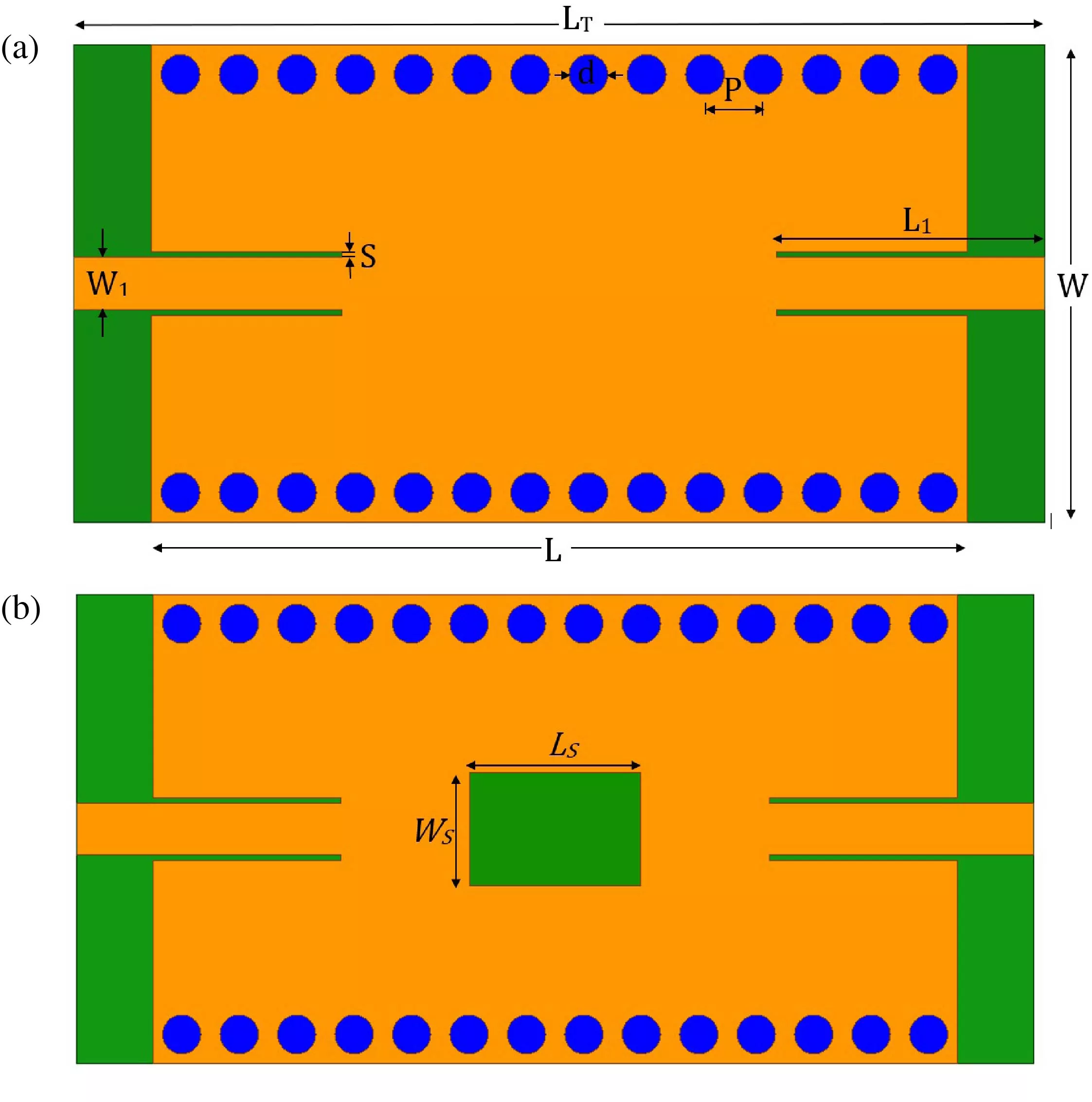
This manuscript investigates the design and implementation of a Substrate Integrated Waveguide (SIW) bandpass filter using an inset feed as a defect and a rectangular slot defect in the ground plane. In this research, the feed line is also used as a defect by replicating the inset feed line on the ground. The inset-feed structure on both conducting layers improves filter performance and reduces size. To further enhance the filter's passband characteristics, a simple rectangular slot is introduced in the ground plane. This Defected Ground Structure (DGS) modifies the current distribution and improves the impedance bandwidth. The proposed filter operating at a center frequency of 10.5 GHz with a bandwidth of 500 MHz and offering a return loss better than 30 dB is designed, fabricated, and experimentally validated. The measured results show good agreement with simulations. The filter exhibits good performance, featuring appropriateness for single-channel satellite communication applications.
A Novel SIW Bandpass Filter Employing Inset and Rectangular-Slot Defects in the Ground Plane
2026-08-03
PIER C
Vol. 172, 156-165, 2026
download: 35
A Dual-Band Reconfigurable Active Antenna for IoT-Enabled Health Monitoring Systems
Ramar Ahila Priyadharshini, Ganesan Prema, Nellaiappan Ramanan and Venkatesan Sathyan
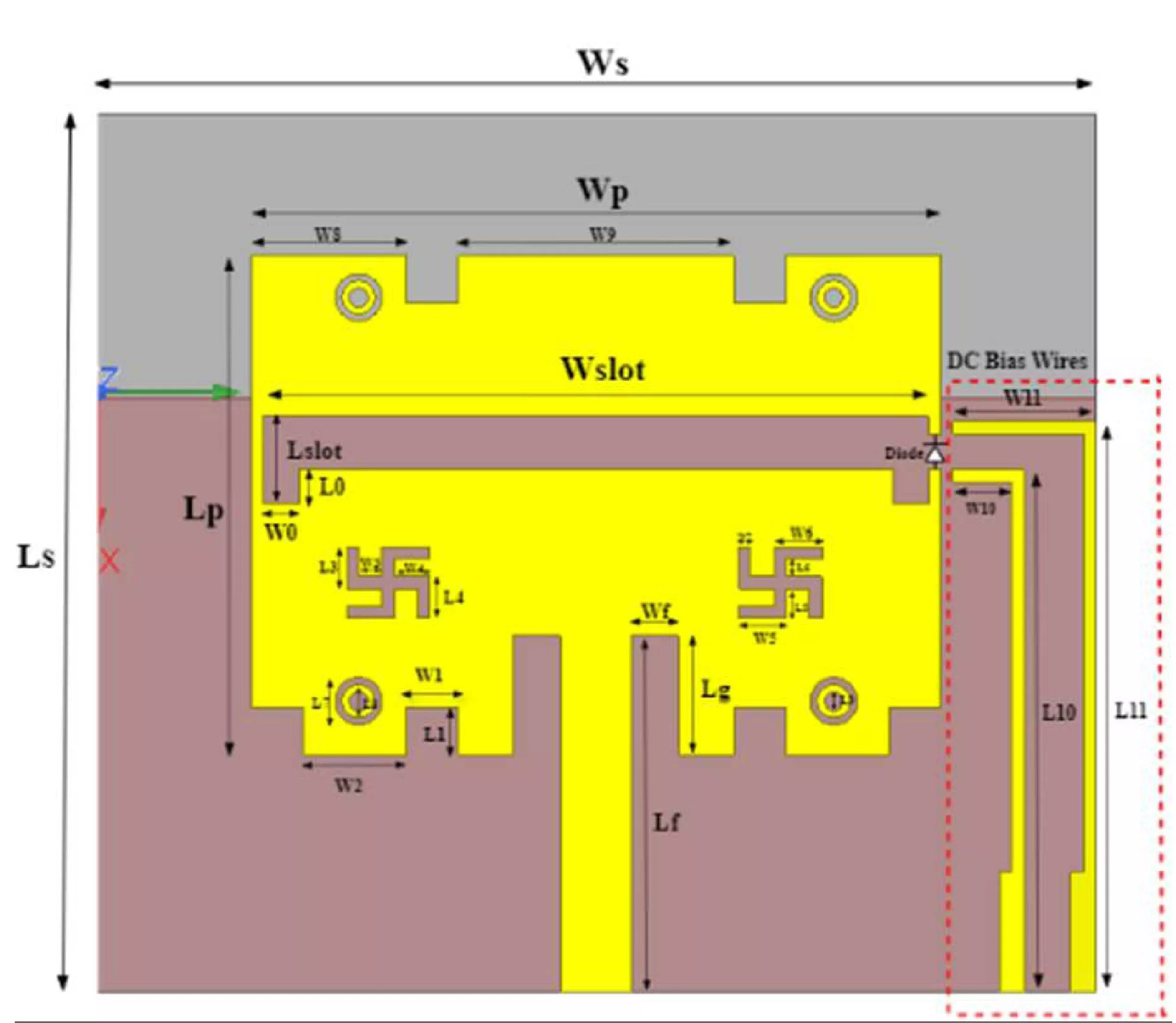
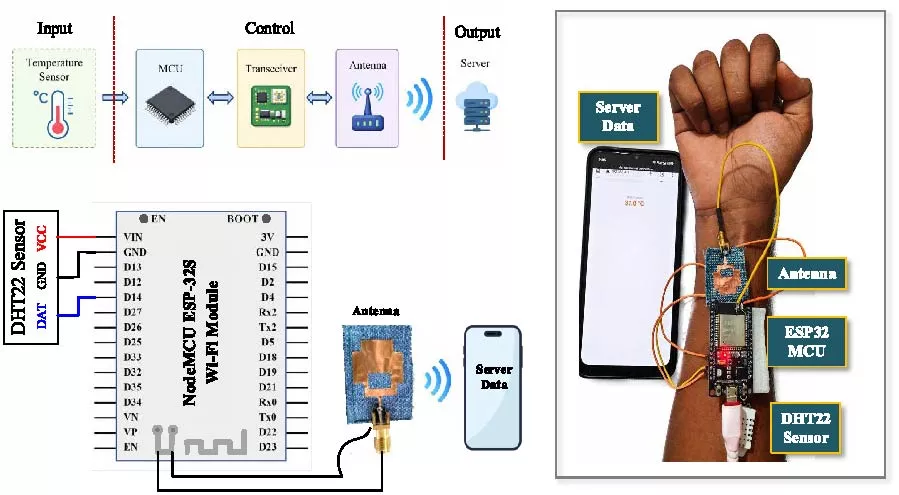
In this study, a dual-band active antenna integrated with an IoT healthcare monitoring system for measuring body temperature, heart rate, and SpO2 is presented. A MAX30100 sensor and NodeMCU ESP32-CAM enable data acquisition and cloud-based monitoring through Ubidots. The antenna, fabricated on a Rogers Duroid RO3003TM substrate (37 × 42 × 1.52 mm3), operates at 2.4 GHz and 5.8 GHz using an inverted U-shaped slot and a PIN diode for frequency reconfiguration. Received Signal Strength Indicator (RSSI) measurements showed improved signal strength from -35 to -40 dBm compared to -40 to -45 dBm for the on-board antenna. Experimental evaluation on three volunteers aged 21, 36, and 55 years demonstrated reliable physiological monitoring, with heart rate values of 84-90 BPM and temperature readings of 30-36°C. The results validate the suitability of the proposed antenna for reliable IoT-based healthcare applications.
A Dual-Band Reconfigurable Active Antenna for IoT-Enabled Health Monitoring Systems
2026-08-03
PIER C
Vol. 172, 146-155, 2026
download: 19
Design of Compact Ultra-Wideband Filter with Triple Notch Bands Based on Cross-Shaped Anti-Shorted Coupled Lines
Haihang Xu, Yubo Liu, Lirong Qian, Cui-Ping Li, Dan Li, Honglang Li and Litian Wang
In this paper, a compact ultra-wideband (UWB) bandpass filter (BPF) with triple-notch bands (TNBs) is proposed and demonstrated. We present a cross-shaped anti-shorted coupled-line structure employing a single coupled multi-mode resonator (MMR), whose resonant characteristics and intrinsic transmission zeros are investigated by employing the even-odd mode analysis method. In addition, the three notch bands are generated from the resonator's intrinsic transmission zeros without requiring any additional notch circuits. At the same time, their center frequencies can be quasi-independently controlled by properly adjusting the microstrip electrical lengths. For demonstration, the proposed filter is designed, fabricated, and measured. Simulated and measured results are in good agreement. The measured results agree well with theoretical predictions, which exhibit superior performance, such as triple-notch bands, high skirt selectivity, an ultra-wide passband from 2.8 to 12.5 GHz with a fractional bandwidth of 138%, a compact size of only 7.7 mm × 9.2 mm, and effective notched-band suppression levels.
Design of Compact Ultra-Wideband Filter with Triple Notch Bands Based on Cross-Shaped Anti-Shorted Coupled Lines
2026-08-03
PIER C
Vol. 172, 135-145, 2026
download: 14
Optimal Configuration of ac Filters in Hybrid Multi-Infeed HVDC Systems Based on Sensitivity Analysis
Wenxing Sun, Lihua Liu, Weixi He, Xueliang Liu, Jiawen Lai and Junju Lai
To address the challenges of coordinating local reactive power compensation with cross-station harmonic interaction suppression in hybrid multi-infeed HVDC (HMIDC) systems, this study proposes an optimal AC filter configuration method based on sensitivity analysis. A harmonic impedance equivalent model was established for a hybrid three-infeed HVDC system, and a comprehensive harmonic interaction index was constructed based on harmonic current interaction influence coefficients. Normalized sensitivity analysis was then performed on the AC filter impedance, receiving-end AC system impedance, and tie-line impedance at the 11th and 13th harmonics. The results indicate that the AC filter impedance serves as the dominant adjustable factor. On this basis, a discrete optimization model was developed, with the number of DT11/24 and DT13/36 double-tuned filter groups in service as decision variables. In addition, this model considers equipment limits, minimum filtering requirements, reactive power compensation, and harmonic voltage constraints. Case study results show that the optimized configuration reduces the overall harmonic coupling among HVDC infeed systems; in particular, the interaction strength from the second conventional HVDC link to the modular multilevel converter-based high-voltage direct current (MMC-HVDC) link at the 13th harmonic decreases by approximately 32%. The proposed method provides a practical reference for coordinated AC filter switching in HMIDC.
Optimal Configuration of AC Filters in Hybrid Multi-Infeed HVDC Systems Based on Sensitivity Analysis
2026-08-03
PIER C
Vol. 172, 126-134, 2026
download: 33
A Low-Profile Flexible UWB Wearable Antenna Loaded with Patch Slots and Defected Ground Structure for Wireless Body Area Networks
Md. Ariful Islam, Md. Masud Rana, Amrito Paul, Abdul Kayum Muhammad Zakir Hossain and Noor Badariah Asan
This study introduces a compact, low-profile ultra-wideband (UWB) wearable antenna designed for wireless body area network (WBAN) applications. The antenna incorporates a rectangular patch on a flexible jeans substrate, incorporating one patch slot, four identical edge slots, and a defected ground structure (DGS) with a compact dimensions of 23 mm × 30 mm × 1.5 mm. These slots and DGS enable the UWB operation with an excellent bandwidth while maintaining a good balance among the key performance parameters such as efficiency, gain, and SAR, which is the main contribution of this study. The antenna performance was analyzed using a four-layer human body phantom model that includes skin, fat, muscle, and bone layers. It operates across the frequency range of 2.82-11.25 GHz, covering the UWB range for wearable devices, and achieves a peak gain of 3.79 dBi, an average gain of 2.36 dBi, a peak efficiency of 63.36%, and an average efficiency of 52.88%. In addition, the obtained SAR values are 0.549 W/kg and 0.391 W/kg at 5 GHz, and 0.0727 W/kg and 1.97 W/kg at 9 GHz for 1 g and 10 g tissue standards, respectively, complying with SAR regulatory standards. Moreover, bending analysis validated its stable performance under various angles and deformation conditions. The fabrication and on-body testing of the proposed antenna exhibited a bandwidth of 1.38-12 GHz, demonstrating compliance with simulations. Finally, a human body temperature monitoring prototype was developed, which validates its suitability for wearable WBAN applications.
A Low-Profile Flexible UWB Wearable Antenna Loaded with Patch Slots and Defected Ground Structure for Wireless Body Area Networks
2026-08-03
PIER C
Vol. 172, 115-125, 2026
download: 32
Broadband SIW Slot Antenna Based on Split Magnetic-Electric Dipole Multimode Coupling
Mingming Gao, Bowen Tao, Ruize Huang, Xuan Du and Shibo Sun
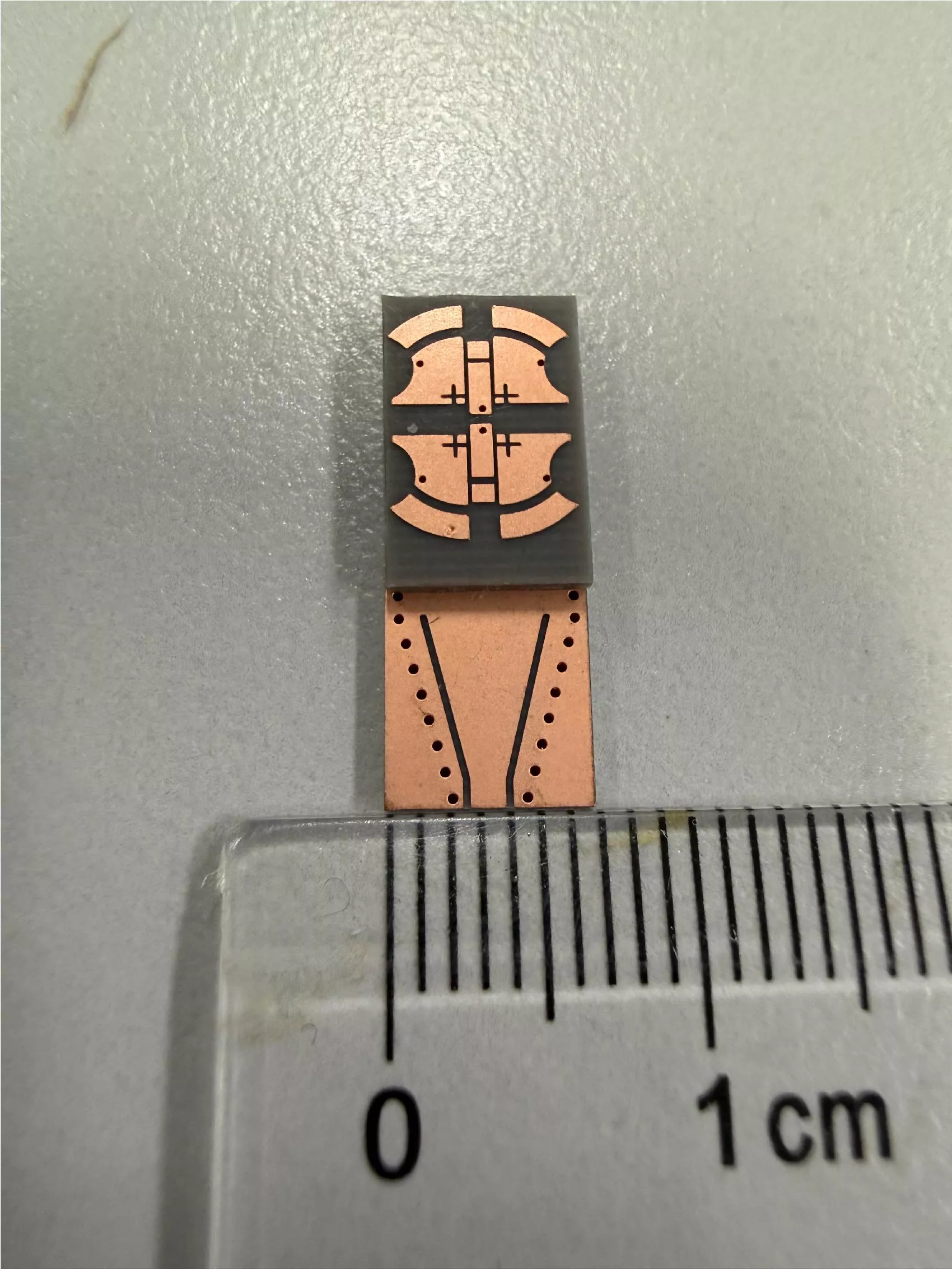
To realize a compact and low-profile Ka-band SIW antenna with continuous wideband operation, a wideband SIW slot antenna based on split Magnetic-electric dipole multi-mode coupling is proposed. The central design idea is to transfer electromagnetic energy from the lower SIW cavity to the upper radiating layer through aperture coupling and to merge two adjacent resonant modes generated by the electric- and magnetic-dipole components. The antenna employs a dual-layer configuration. The lower layer consists of an SIW feeding cavity and a coupling slot, and the upper layer incorporates split arc-shaped patches, a central coupling patch, metallized vias, and a cross-shaped perturbation structure. The split patches mainly generate the high-frequency electric-dipole mode, while the central coupling patch and metallized vias introduce an adjacent lower-frequency magnetic-dipole mode. The cross-shaped perturbation structure further optimizes the impedance transition between the two modes. The simulated results show that the antenna achieves an impedance bandwidth of 26.35-29.20 GHz for |S11| < -10 dB and a peak realized gain of approximately 8.15 dBi at 28 GHz. The fabricated prototype exhibits a measured impedance bandwidth of approximately 26.8-29.1 GHz. In addition, the simulated multifrequency radiation patterns and efficiency results demonstrate relatively stable broadside radiation characteristics within the operating band. The proposed antenna provides a compact and readily integrated solution for Ka-band millimeter-wave communication systems.
Broadband SIW Slot Antenna Based on Split Magnetic-Electric Dipole Multimode Coupling
2026-08-01
PIER C
Vol. 172, 103-114, 2026
download: 50
Improved Full-Order Model-Free Sliding Mode Control for PMSM Considering Complex Time-Varying Disturbances
Xingkai Huang, Xiangfei Li, Kaihui Zhao, Meiyun Luo and Lihua Zou
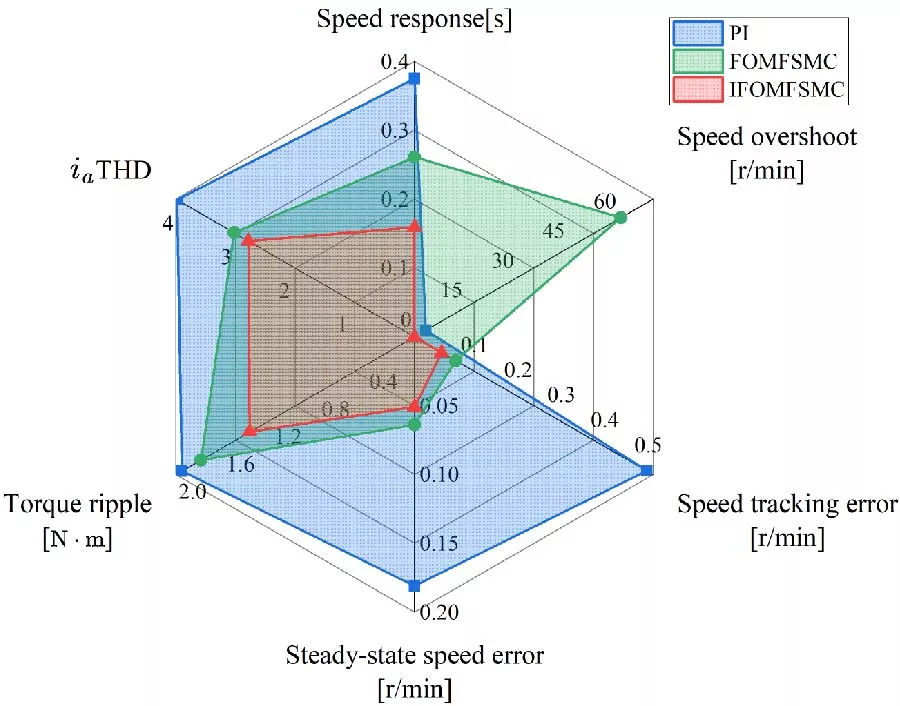
To address the problems of low speed control accuracy and performance degradation caused by time-varying disturbances in conventional control methods for high-precision speed regulation of permanent magnet synchronous motors (PMSMs), an improved full-order model-free sliding mode control (IFOMFSMC) method based on full-order sliding mode control (FOSMC) is proposed. First, a novel ultra-local model under parameter perturbations is established. Based on this model, the IFOMFSMC is designed by combining a second-order full-order sliding mode surface with an improved double-power reaching law, which improves the speed control accuracy of the PMSM. Subsequently, a full-order extended sliding mode disturbance observer (FOESMDO) is developed by incorporating FOSMC into the extended disturbance observer. The FOESMDO estimates unknown disturbances more accurately, thereby compensating the IFOMFSMC and enhancing system robustness under complex time-varying disturbances. Finally, simulation results confirm accurate speed tracking with the proposed method. Under complex time-varying disturbance conditions, compared with the conventional control method, the IFOMFSMC improves speed response and tracking performance by 57.6% and 88.2%, respectively, while reducing steady-state speed error and torque ripple by 71.8% and 29.2%. The proposed method effectively enhances steady-state and dynamic performance as well as disturbance-rejection capability.
Improved Full-Order Model-Free Sliding Mode Control for PMSM Considering Complex Time-Varying Disturbances
2026-08-01
PIER C
Vol. 172, 89-102, 2026
download: 55
Open-Circuit Fault Diagnosis of Quasi-Z-Source Inverter Systems Based on IST-NFTSMO and ALLR-SCR Hybrid Features
Yang Zhang, Moutao Li, Shaoziyi Wu, Jiahao Zhang and Qianghui Xiao
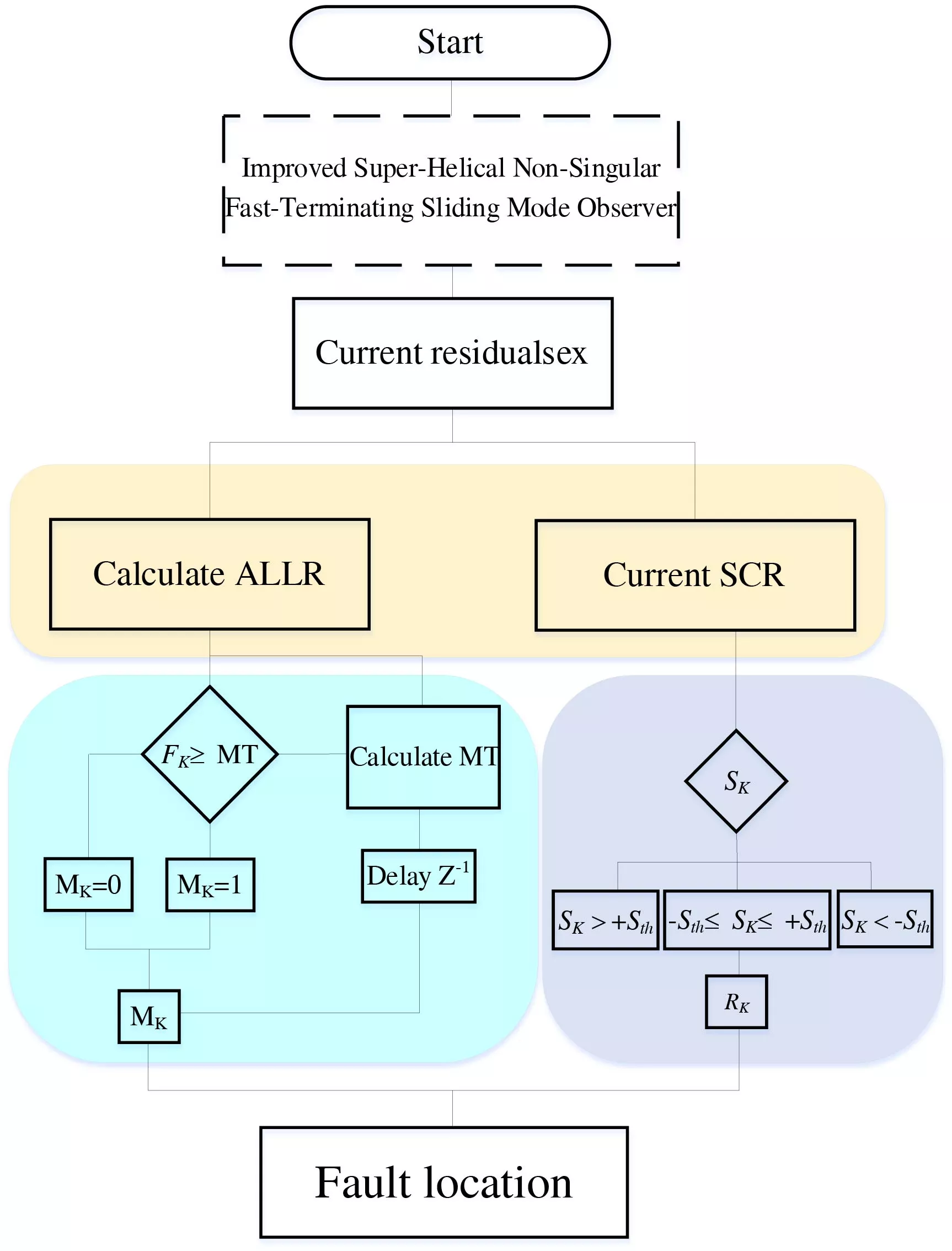
The open-circuit fault diagnosis of switches in quasi-Z-source inverters (qZSI) is challenging. Existing methods struggle to simultaneously achieve high robustness and low computational complexity without additional sensors. In this study, an open-circuit fault diagnosis method based on an improved super-twisting non-singular fast terminal sliding-mode observer (IST-NFTSMO) and hybrid features is proposed. The stator currents were estimated in real time by the IST-NFTSMO, and residuals were generated accordingly. By analyzing differences in the statistical distributions of residuals between healthy and faulty conditions, two features were extracted: average log-likelihood ratio (ALLR) and signed cumulative ratio (SCR). The ALLR is used for rapid fault detection, whereas the SCR is used for accurate localization of faulty switches. The proposed method was implemented entirely based on existing current sensors. No additional voltage sensors were required. Moreover, the diagnostic thresholds are adaptively adjusted according to variations in speed and load. The experimental results demonstrate that both single-switch and dual-switch open-circuit faults can be diagnosed rapidly and accurately. Compared with conventional methods, higher robustness and lower computational complexity were achieved.
Open-Circuit Fault Diagnosis of Quasi-Z-Source Inverter Systems Based on IST-NFTSMO and ALLR-SCR Hybrid Features
2026-07-31
PIER C
Vol. 172, 79-88, 2026
download: 46
Research on Vibration Suppression of Flux-Switching Permanent Magnet Machine
Libing Jing, Longxiang Han, Yeming Zhu, Mingji Yin, Yuhui Huang and Zeyu Min
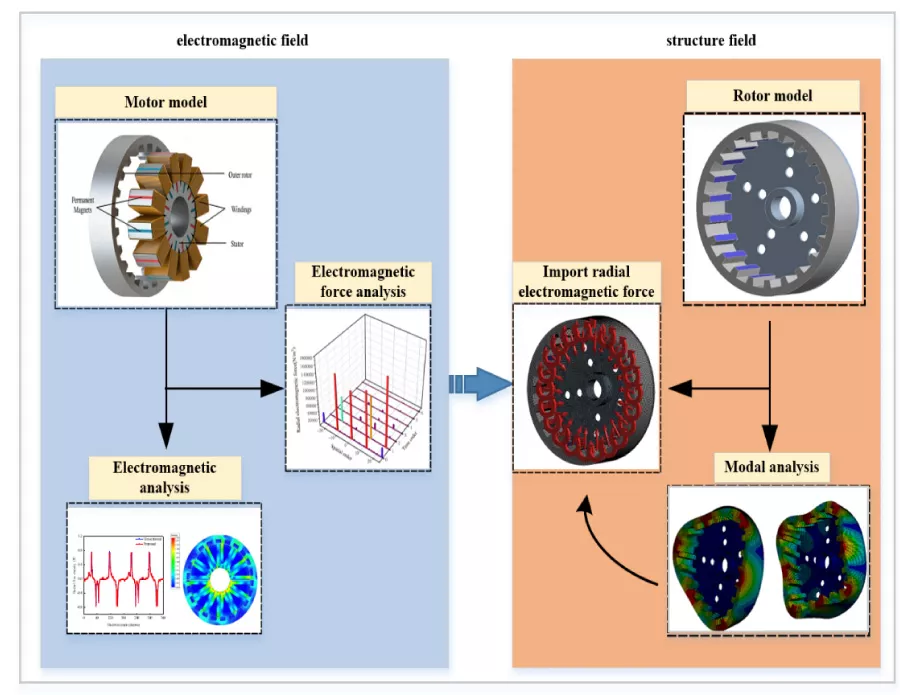
To address vibration and noise issues in outer-rotor flux-switching permanent-magnet (OR-FSPM) machines for high-precision applications, radially magnetized PMs are placed between regular tangentially magnetized PMs, forming a U-shaped structure. An air-gap magnetic barrier is introduced between the two types of PMs to achieve magnetic isolation. Then, the spatiotemporal distribution of radial electromagnetic force density (EFD) waves is derived based on the magnetomotive force permeance model. Modal and harmonic response analyses are then conducted for both the conventional and proposed U-shaped machine topologies using electromagnetic-structural field simulations to reveal vibrational characteristics. The results demonstrate that the proposed U-shaped topology effectively suppresses second-order resonance while maintaining superior electromagnetic performance.
Research on Vibration Suppression of Flux-Switching Permanent Magnet Machine
2025-07-30
PIER C
Vol. 172, 68-78, 2026
download: 45
Torque Ripple Suppression for a Novel Asymmetric External Rotor Permanent Ferrite-Assisted Synchronous Reluctance Motor
Chaozhi Huang, Wen Kuang, Fangrong Wang, Ji Zhang and Zhihong Liu
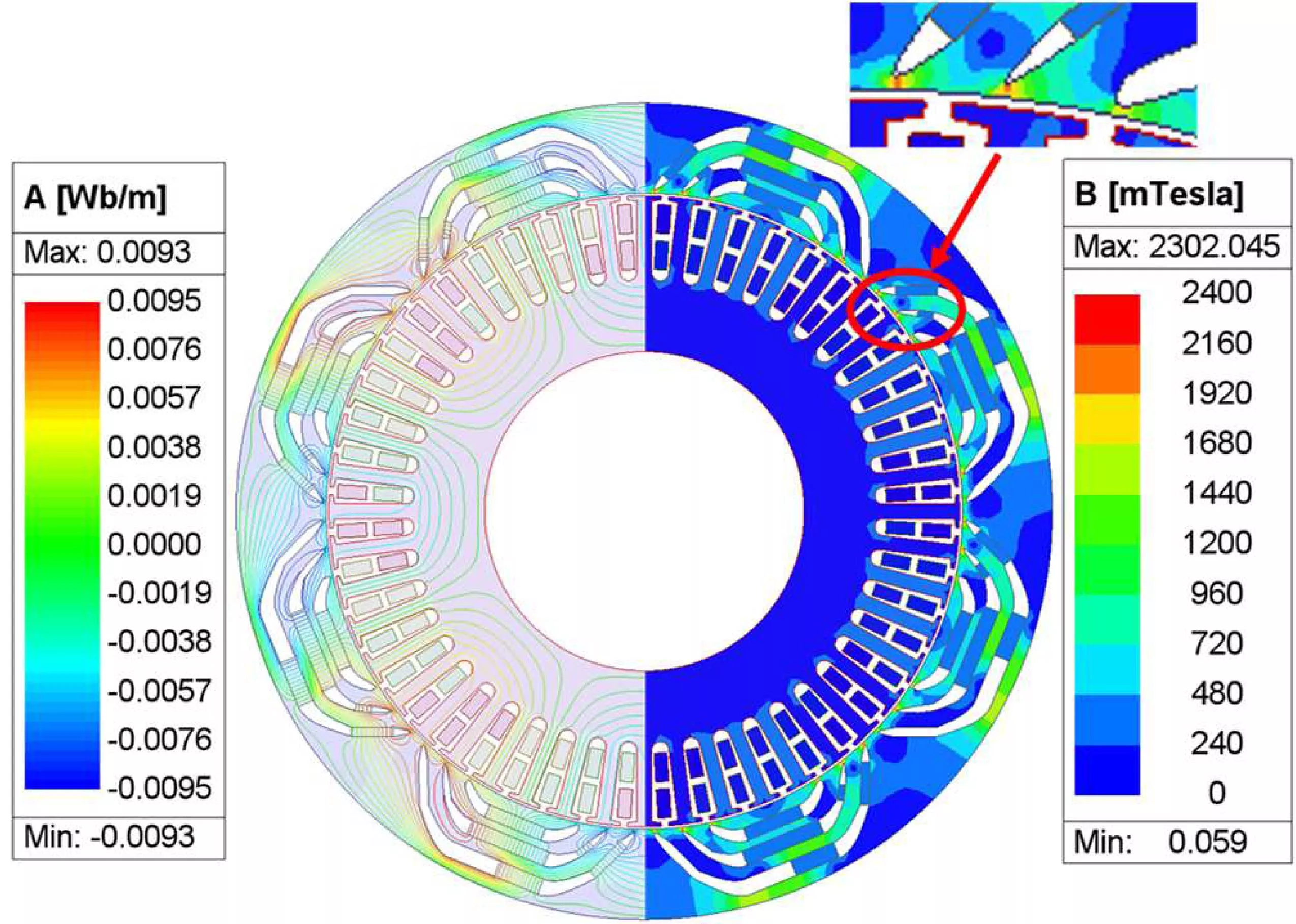
To address the problems of flux barriers' excessive torque ripple and complicated multi-parameter optimization in conventional permanent magnet-assisted synchronous reluctance motors (PMa-SynRMs), this paper proposes a novel asymmetric external-rotor ferrite-assisted synchronous reluctance motor (AERFa-SynRM). By adopting an asymmetric magnet shifting arrangement, the magnetic circuit configuration is optimized, which improves air-gap flux density and permanent magnet torque without increasing material and manufacturing costs. The magnetic circuit characteristics and torque generation mechanism of symmetric and asymmetric rotor structures are compared and analyzed by establishing mathematical and electromagnetic models. Taking key rotor geometric parameters as design variables and average torque, torque ripple, and efficiency as multi-objective optimization indices, a BP-Kriging hybrid surrogate model is constructed, and the NSGA-II algorithm is adopted for global parameter optimization. The finite element simulation results demonstrate that the proposed asymmetric rotor structure can effectively enhance air-gap flux density and no-load back-EMF performance. After multi-objective optimization, the average torque and motor efficiency are greatly improved, while the torque ripple is sharply reduced. The asymmetric angle adjustment realizes the peak-valley mutual cancellation between permanent magnet torque and reluctance torque, which fundamentally suppresses electromagnetic torque ripple. The proposed topology and collaborative optimization strategy provide an effective solution for the performance improvement and torque ripple reduction of low-cost ferrite PMa-SynRMs.
Torque Ripple Suppression for a Novel Asymmetric External Rotor Permanent Ferrite-Assisted Synchronous Reluctance Motor
2026-07-29
PIER C
Vol. 172, 58-67, 2026
download: 36
Model Predictive Duty Cycle Control for Switched Reluctance Motors Based on Sliding Mode Compensation
Huiying Yu, Aide Xu and Wanping Zhao
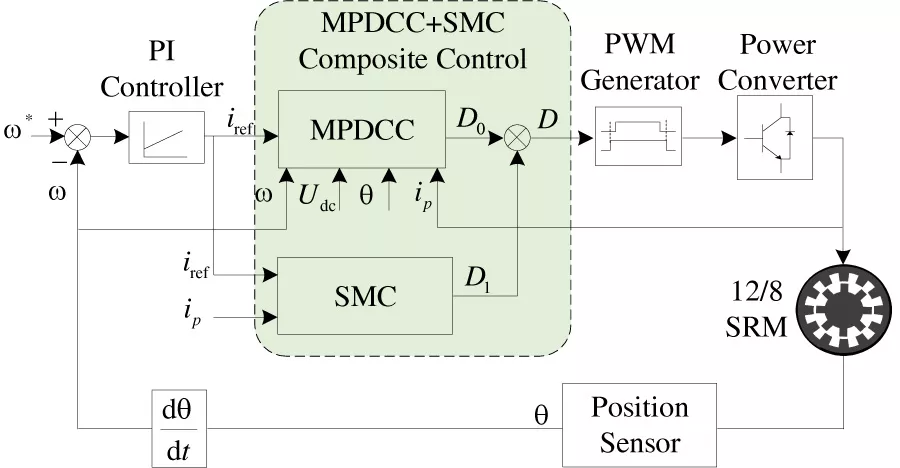
In fixed switching frequency pulse-width modulation (PWM) drive systems for switched reluctance motors (SRMs), the duty cycle directly affects current-tracking precision and torque output performance. To address the slow dynamic response of conventional PI control and the model dependence and limited robustness of conventional model predictive duty-cycle control (MPDCC), this study proposes a robust duty-cycle control strategy based on double-power sliding mode compensation. This strategy constructs a duty-cycle generation mechanism by combining model predictive feedforward with sliding-mode compensation. It utilizes MPDCC to generate a base duty cycle, whereas a double-power sliding mode generates a compensation duty cycle to correct deviations. Simulated and experimental results demonstrate that the proposed strategy generates accurate PWM duty cycles, keeps the current tracking error bounded within a small quasi-sliding-mode band, and improves current-tracking accuracy and torque-ripple suppression under parameter-mismatch conditions, validating the robustness of the system against parameter mismatches.
Model Predictive Duty Cycle Control for Switched Reluctance Motors Based on Sliding Mode Compensation
2026-07-29
PIER C
Vol. 172, 46-57, 2026
download: 40
A Data-Driven Framework for the Efficient Design of Dual-Notched UWB Antennas via Surrogate-Assisted Nutcracker Optimization
Huawei Zhuang, Zijian Zhang, Fei Wang, Haonan Tian, Xiaoyang Liu and Fanmin Kong
The design of ultra-wideband (UWB) band-notched antennas is highly sensitive to geometric dimensions. Consequently, traditional metaheuristic algorithms incur prohibitive computational costs from massive full-wave electromagnetic (EM) simulations. An efficient co-design framework, termed the Surrogate-Assisted Nutcracker Optimization Algorithm with Gaussian Process (SANOA-GP), is proposed. By leveraging a GP surrogate for epistemic uncertainty quantification with a lower confidence bound (LCB) prescreening strategy, SANOA-GP balances exploration and exploitation, overcoming high-dimensional multimodal traps. Moreover, intelligent early stopping is achieved through a performance-driven dual-termination criterion with a progressive reward mechanism. Sobol global sensitivity analysis is incorporated to quantitatively evaluate geometric influences, enhancing black-box interpretability and verifying the independent tunability of the dual notches. Measurement results confirm that the optimized antenna achieves precise and deep notches (S11 > -5 dB) at the 5G N79 and X-band frequencies. Remarkably, SANOA-GP converges with an average of only 69.3 full-wave EM simulations. Compared to surrogate-free algorithms, it reduces computational time by over 50%, while still ensuring high optimization accuracy and physical reliability. The proposed framework offers an efficient and reliable paradigm for the automated design of complex radio frequency (RF) and microwave components.
A Data-Driven Framework for the Efficient Design of Dual-Notched UWB Antennas via Surrogate-Assisted Nutcracker Optimization
2026-07-29
PIER C
Vol. 172, 38-45, 2026
download: 38
Multi-Region Efficiency Optimization of Hybrid Electric Vehicle Traction Motors Considering Driving Cycles
Zhijia Jin, Xinyu Gao, Guanghua Li and Kaikai Diao
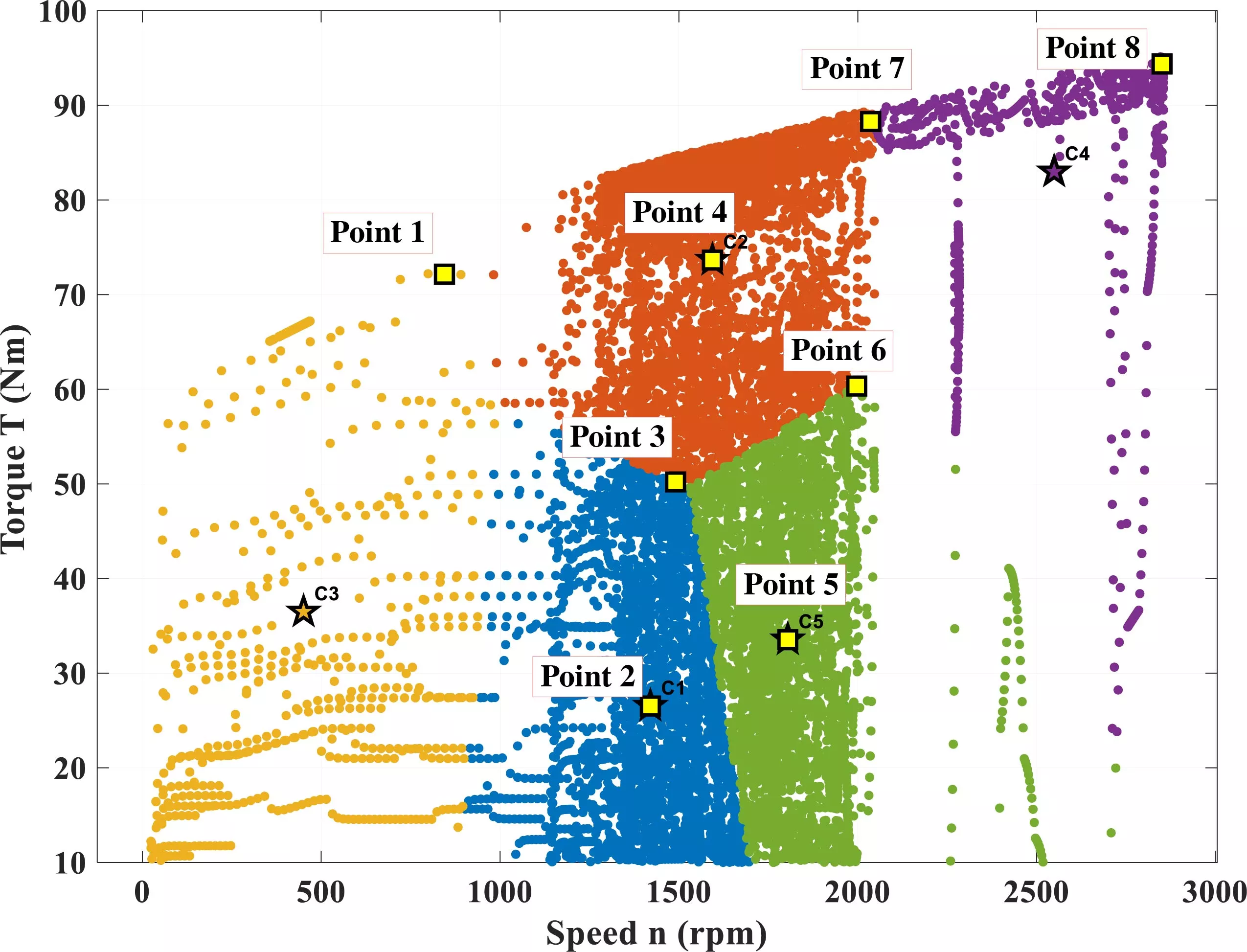
The conventional optimization of permanent magnet synchronous motors (PMSMs) for hybrid electric vehicles (HEVs) often neglects the dynamic nature of real-world driving cycles, resulting in suboptimal overall energy efficiency. To address this issue, this study proposes a multi-region efficiency optimization strategy that fully integrates actual driving cycles. First, motor operating points were extracted from the WLTC and CLTC standard driving cycles and identified as key operating regions via cluster analysis. A variance-based sensitivity analysis is then employed to quantify the contribution of each rotor parameter, thereby reducing the optimization dimension. The NSGA-III algorithm, coupled with finite element analysis (FEA), performs multi-objective optimization, targeting average efficiency and permanent magnet cost. A new method that comprehensively considers the average efficiency of both the cluster centers and boundaries of the operating points was proposed as an optimization objective. The results show that the optimal candidate improves the average efficiency to 96.77\%. Depending on the practical requirements, different candidate points are ultimately selected by balancing efficiency, cost, and driving comfort.
Multi-Region Efficiency Optimization of Hybrid Electric Vehicle Traction Motors Considering Driving Cycles
2026-07-28
PIER C
Vol. 172, 30-37, 2026
download: 39
A Novel Subarray Division Optimization Algorithm for Sparse Arrays in Microwave Wireless Power Transmission
Jie Wang and Jianxiong Li
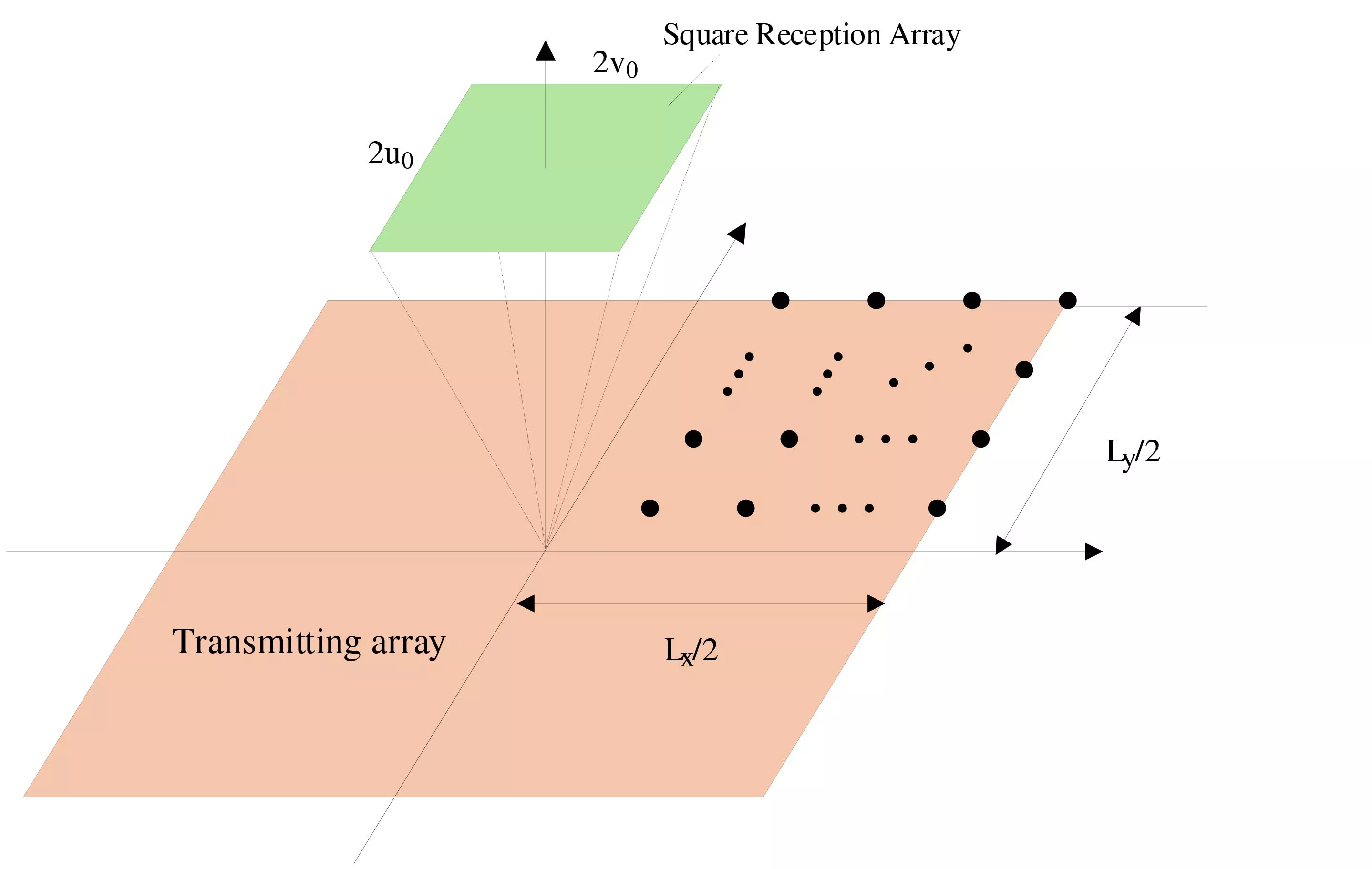
To improve beam collection efficiency (BCE) while suppressing sidelobes and limiting implementation complexity in microwave wireless power transmission (MWPT) transmitting arrays with a small number of subarrays, this paper proposes an axially symmetric sparse planar array (SDASPA) model and a one-step subarray-division algorithm named RT-DWCFPSO-SD. The proposed model exploits axial symmetry to reduce search dimension and facilitate a simplified feeding structure. The proposed algorithm jointly optimizes element positions, element excitations, and subarray boundary parameters by combining a constriction factor, dynamic inertia weight, and ring topology. Numerical simulations on an 8 × 8 array with an aperture of 4.5λ × 4.5λ show that, when the array is divided into three subarrays, the proposed method achieves a BCE of 93.42% and a CSL of -13.19 dB. These results indicate that the proposed method is a promising design tool for MWPT transmitting arrays under limited subarray-division conditions.
A Novel Subarray Division Optimization Algorithm for Sparse Arrays in Microwave Wireless Power Transmission
2026-07-28
PIER C
Vol. 172, 18-29, 2026
download: 56
Performance and Complexity Analysis of Group-Connected Beyond-Diagonal RIS in Multi-User MIMO System
Huda A. Al-Tayyar, Omar M. Ali, Reyam H. Ali and Ali H. Saeed
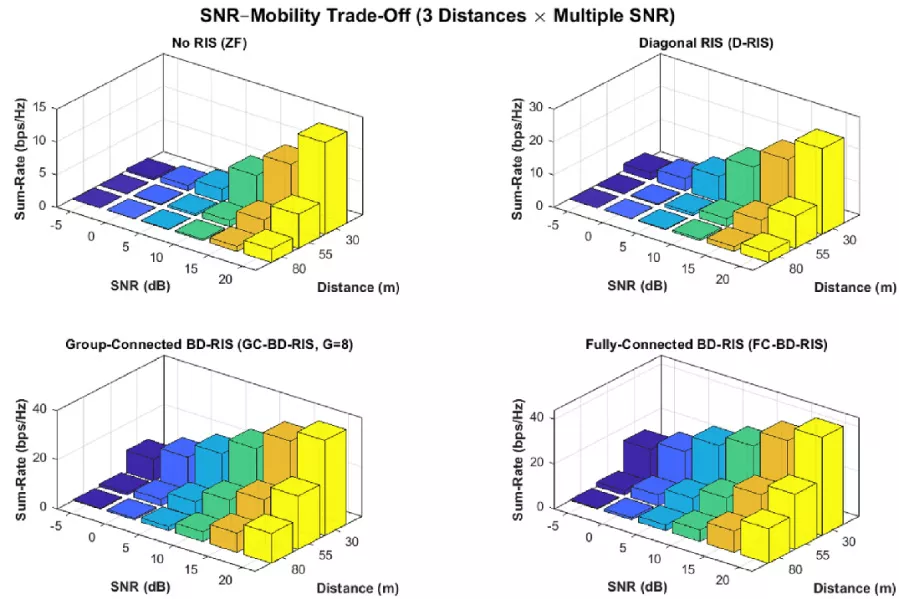
Reconfigurable Intelligent Surfaces (RIS) have become a trend recently and represent a revolutionary development in wireless communications. Although RIS is utilized to enhance spectrum efficiency, particularly in Multi-User Multi Input Multi Output (MU-MIMO) environments, the conventional diagonal RIS(D-RIS) architecture represents a significant limitation. Beyond-diagonal RIS designs, such as fully-connected (FC-BD-RIS) and group-connected (GC-BD-RIS), are effective in controlling scattering and performance due to their use of reflective RIS elements. This research analyzes in detail the simulation of FC-BD-RIS, GC-BD-RIS, D-RIS and baseline NO-RIS architectures assuming a real communication environment. The results show that the FC-BD-RIS architecture achieves the best performance and highest rate under all operational conditions, while the GC-BD-RIS architecture showed balanced and efficient performance relative to the computational complexity compared to the FC-BD-RIS. Ultimately, the behavior of per-user rate has demonstrated the ability of beyond-diagonal BD-RIS architectures to suppress interference and achieve fairness within MU-MIMO scenarios. Based on the results of this work, GC-BD-RIS is the most practical and suitable for future large-scale 6G applications. This work draws attention to the trade-off among design, optimization, and achievement of RIS-enabled MU-MIMO systems.
Performance and Complexity Analysis of Group-Connected Beyond-Diagonal RIS in Multi-User MIMO System
2026-07-25
PIER C
Vol. 172, 7-17, 2026
download: 96
A Miniaturized 5.8 GHz WLAN Pentagonal Microstrip Antenna with Fractal DGS and FSS Reflector for Gain Enhancement
Nagari Naveen Kumar and Dupakuntla Vishnu Vardhan
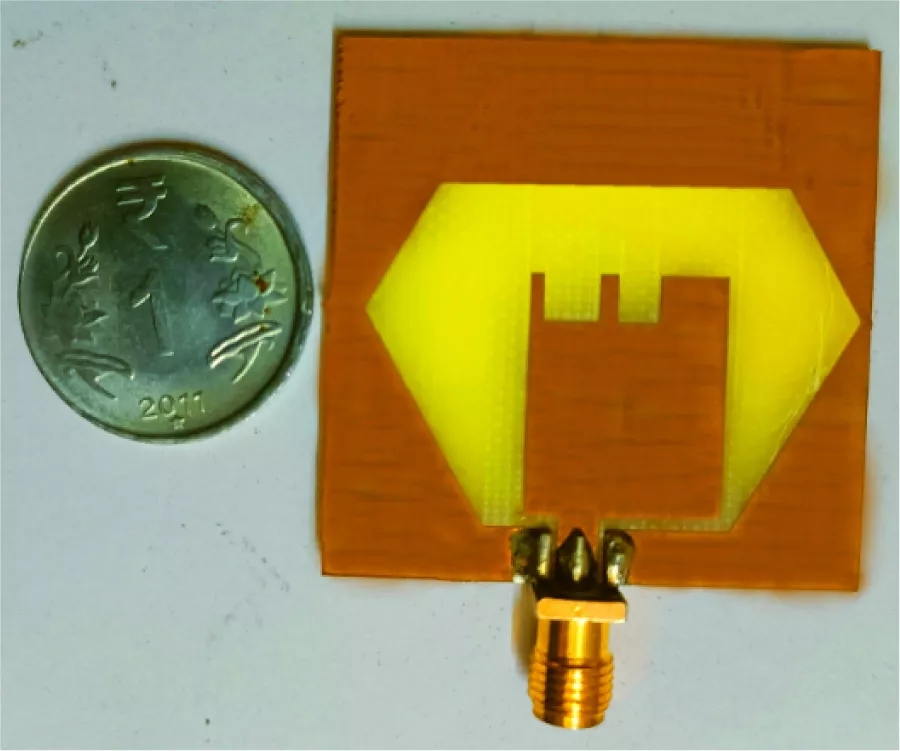
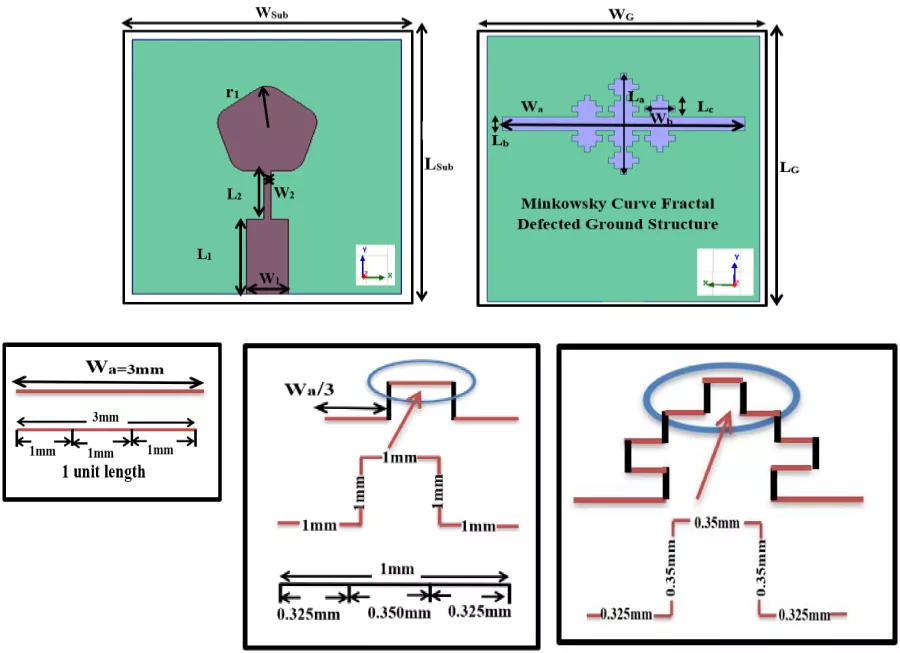
In this article, a Miniaturized Pentagonal Antenna (MPA) with a Minkowski Curve, Fractal Defected Ground Structure (MCF-DGS) and Frequency Selective Surface (FSS) is proposed for 5.725-5.875 GHz WLAN application. The performance of a λ/4 transmission line-fed pentagonal patch antenna is examined using an iterated MCF-DGS etched on the ground plane. In the beginning, a fundamental antenna (Antenna-1) is designed and measured at 13.2 GHz with a S11 of -32.45 dB. After that, the resonant frequency of the fundamental MPA has been reduced from 13.2 GHz to 5.8 GHz by employing MCF-DGS (Antenna-2) with 56% miniaturization. The S11 of MCF-DGS measured for single-band frequency 5.8 GHz is -33.36 dB. The performance attributes of an MPA with improved efficiency, peak directivity, and peak gain via MCF-DGS and FSS (Antenna-3) are also analysed. The proposed antenna of 15 × 16 mm2 (or 0.29λ0 × 0.30λ0 mm2) with a height of h1 = 1.6 mm is designed, produced, and tested on a substrate of FR4 epoxy. The peak gain and peak directivity at 5.8 GHz are elevated from 1.74 to 7.40 dBi and 3.53 to 7.95 dBi by using an FSS composed of FR4, with a thickness of h2 = 1.6 mm, situated under the MPA at a height of h3 = 8.5 mm. The prototype model's test results are validated by the predicted outcomes of the proposed model.
A Miniaturized 5.8 GHz WLAN Pentagonal Microstrip Antenna with Fractal DGS and FSS Reflector for Gain Enhancement
2026-07-24
PIER C
Vol. 172, 1-6, 2026
download: 46
Cylindrical Conformal Electrically Small Antenna with Quasi-Isotropic Radiation Pattern for Mine Gob Communication
Qiushou Liu, Kunshan Mo, Jin Wu, Lin Peng and Rui Fang
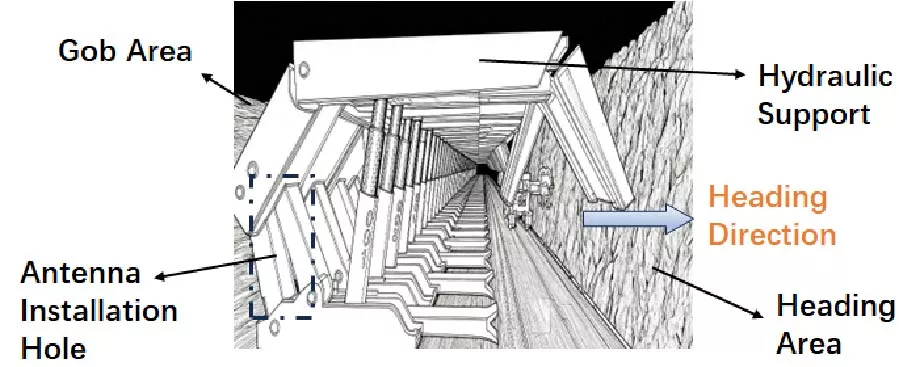
Wireless communication nodes in the underground mine gob area are often disturbed by different orientations; therefore, antennas with quasi-isotropic radiation are critical for reliable wireless communication. To address this challenge, a compact, cylindrical, conformal, quasi-isotropic antenna operating in the VHF band is proposed. The design integrates a shorted-patch structure with orthogonal dipole radiation, formed by a shorting post and patch aperture, to realize nearly isotropic Radiation. A capacitive-coupling feed is employed to enhance impedance matching, yielding an impedance bandwidth of about 1.02 MHz (S11 < -10 dB) at 170 MHz. The fabricated prototype, with dimensions of 120 mm × 120 mm × 110 mm (0.068λ0 × 0.068λ0 × 0.063λ0), was validated through full-wave simulations and experimental testing. The two results show excellent agreement, demonstrating a measured maximum-minimum gain variation of only 2.74 dB, confirming the antenna's good quasi-isotropic characteristics. Owing to its compact volume, stable matching, and consistent omnidirectional coverage, the proposed antenna is a good candidate for underground mine gob area communication nodes.
Cylindrical Conformal Electrically Small Antenna with Quasi-Isotropic Radiation Pattern for Mine Gob Communication