Search Results(13808)

2008-01-08
PIER
Vol. 81, 99-119
A Moment Method Simulation of Electromagnetic Scattering from Conducting Bodies
Saeed Hatamzadeh , Mohammad Naser-Moghadasi and Zahra Masouri
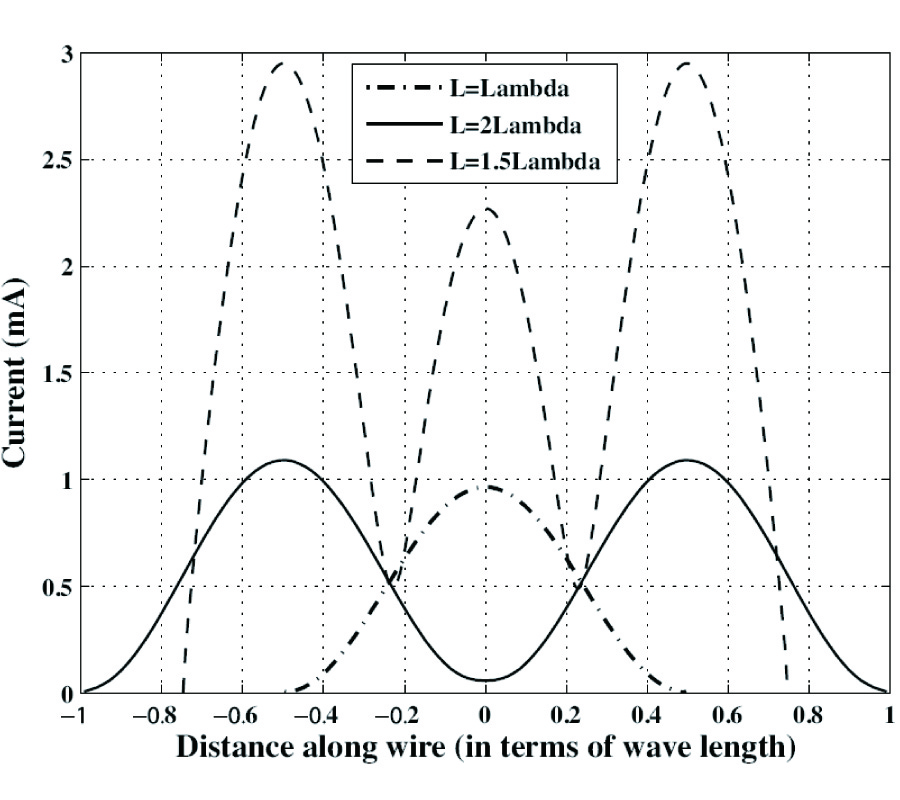
In this paper a moment method simulation of electromagnetic scattering problem is presented. An effective numerical method for solving this problem based on the method of moments and using block-pulse basis functions is proposed. Some examples of engineering interest are included to illustrate the procedure. The scattering problem is treated in detail, and illustrative computations are given for some cases. This method can be generalized to apply to objects of arbitrary geometry and arbitrary material.
A MOMENT METHOD SIMULATION OF ELECTROMAGNETIC SCATTERING FROM CONDUCTING BODIES
2008-01-08
PIER
Vol. 81, 73-97
Truncated Cosine Fourier Series Expansion Method for Solving 2-d Inverse Scattering Problems
Abbas Semnani and Manouchehr Kamyab
Truncated cosine Fourier series expansion method is applied for reconstruction of lossy and inhomogeneous 2-D media by using inverse scattering method in time domain. In this method, the unknown parameters are expanded in a cosine Fourier series and coefficients of this expansion are optimized in particle swarm optimization (PSO) routine with the aid of finite difference time domain (FDTD) method as an electromagnetic (EM) solver. The performance of the algorithm is studied for several 2-D permittivity and conductivity profile reconstruction cases. It is shown that since only a limited number of terms are retained in the expansion, using the proposed method guarantees the well-posedness of the problem and uniqueness of the solution and various types of regularization may be used to only have more precise reconstruction. It is also shown that the number of unknowns in optimization routine is reduced more than 75 percent as compared with conventional methods which leads to a considerable reduction in the amount of computations with negligible adverse effect on the precision of reconstruction. Sensitivity analysis of the suggested method to the number of expansion terms in the algorithm is studied, as well.
TRUNCATED COSINE FOURIER SERIES EXPANSION METHOD FOR SOLVING 2-D INVERSE SCATTERING PROBLEMS
2008-01-08
PIER
Vol. 81, 61-72
Characterization of the Susceptibility of Integrated Circuits with Induction Caused by High Power Microwaves
Sun-Mook Hwang , Joo-Il Hong and Chang-Su Huh
This paper examines malfunction and destruction of semiconductors by high power microwaves. The experiments employ a waveguide and a magnetron to study the influence of high power microwaves on TTL/CMOS IC inverters. The TTL/CMOS IC inverters are composed of a LED circuit for visual discernment. A CMOS IC inverter damaged by a high power microwave is observed with power supply current and delay time. When the power supply current was increased 2.14times for normal current at 10 kV/m, the CMOS inverter was broken by latch-up. The CMOS inverter damaged by latch-up returned its original level of functioning, because parasitic impedance inside the chip increased with the elapse of time. Three different types of damage were observed by microscopic analysis: component, onchipwire, and bondwire destruction. Based on the results, TTL/CMOS IC inverters can be applied to database to elucidate the effects of microwaves on electronic equipment.
CHARACTERIZATION OF THE SUSCEPTIBILITY OF INTEGRATED CIRCUITS WITH INDUCTION CAUSED BY HIGH POWER MICROWAVES
2008-01-08
PIER Letters
Vol. 2, 103-114
An Support Vector Regression Based Nonlinear Modeling Method for SiC Mesfet
Yuehang Xu , Yunnchuan Guo , Lei Xia and Yunqiu Wu
An approach for the microwave nonlinear device modeling technique based on a combination of the conventional equivalent circuit model and support vector machine (SVM) regression is presented in this paper. The intrinsic nonlinear circuit elements are represented by Taylor series expansions, coefficients of which are predicted by its support vector regression (SVR) model. Example of a SiC MESFET nonlinear model is demonstrated, and good results is achieved.
AN SUPPORT VECTOR REGRESSION BASED NONLINEAR MODELING METHOD FOR SIC MESFET
2008-01-08
PIER Letters
Vol. 2, 95-102
Waveguide Structures for Generation of Terahertz Radiation by Electro-Optical Process in GaAs and Zugep2 Using 1.55μm Fiber Laser Pulses
Tianxin Yang , Shupeng Song , Hongtao Dong and Rongsheng Ba
By discussing the basic schemes of the terahertz generation methods based on the 1550-nm ultrafast lasers briefly, GaAs and ZnGeP2 are likely to be promising nonlinear optical crystals for terahertz waves generation by using optical rectification process. However, the mismatches of velocities between the terahertz waves and optical pulses are so large that the phase-matching coherent lengths are quite short, for example, the coherent length of 0.7mm for GaAs and 0.5mm for ZnGeP2 at 2 THz around, respectively. That limited extremely the applications of these bulk excellent nonlinear optical crystals in terahertz regime. In this paper, we demonstrated theoretically that the dielectric planar waveguide could be used to enhance the coherent length of optical rectification process in THz regime. And for the first time, a dielectric planar THz waveguide that has potential applicable value in THz generation by optical rectification method was proposed. We predicted that the effective coherent length could be extended to 4mm at 2 THz in a GaAs/ZnGeP2 dielectric planar waveguide during optical rectification process pumped by ultrafast optical pulses at wavelength of 1550 nm.
WAVEGUIDE STRUCTURES FOR GENERATION OF TERAHERTZ RADIATION BY ELECTRO-OPTICAL PROCESS IN GaAs AND ZuGeP<sub>2</sub> USING 1.55μm FIBER LASER PULSES
2008-01-05
PIER B
Vol. 3, 315-329
Autofocus Algorithms Performance Evaluations Using an Integrated SAR Product Simulator and Processor
Tien Sze Lim , Chee Siong Lim , Voon Koo , Hong-Tat Ewe and Hean-Teik Chuah
The design and development of synthetic aperture radar (SAR) system for a particular application often requires redesign of software and hardware to optimize the system performance. In addition, evaluations of the performance of existing autofocus and image formation algorithms are required for the SAR system designers to select a most suitable algorithm for a given image quality requirements. This is a time-consuming taskwithout a reconfigurable and comprehensive software package. Thus, a comprehensive SAR integrated simulator and processor software is needed to aid the system designers in optimizing all the system parameters and performance. This paper presents an integrated SAR simulator and processor (iSARSIMP) software package and the performance of three selected SAR autofocus algorithms has been evaluated as examples to demonstrate the usefulness of the iSARSIMP for SAR system designers. In the performance evaluation, simulated and actual SAR raw data were used for further analysis and comparison of the three selected autofocus algorithms.
AUTOFOCUS ALGORITHMS PERFORMANCE EVALUATIONS USING AN INTEGRATED SAR PRODUCT SIMULATOR AND PROCESSOR
2008-01-05
PIER B
Vol. 3, 295-314
Optimizing Included Angle of Symmetrical V-Dipoles for Higher Directivity Using Bacteria Foraging Optimization Algorithm
Biswa Binayak Mangaraj , Iti Misra and A. Barisal
Recently the social foraging behavior of E. coli bacteria has been used to solve optimization problems. This paper presents an approach involving Bacterial Foraging (BF) to find appropriate included angle (ψ) and there by two other slant angles (θ1, θ2) for which the V-dipole provides higher directivity in comparison to straight dipole. Symmetrical V and Straight dipole is analyzed completely using Method of Moments (MoM). MoM codes in MATLAB environment have been developed both for straight dipole and Vdipole to obtain impedance, directivity, and radiation patterns in both E-plane and H-plane. Then MoM codes is coupled with well known Bacteria Foraging Algorithm (BFA) to get best included angle. Moreover, some modification of BFA is done for the faster convergence.
OPTIMIZING INCLUDED ANGLE OF SYMMETRICAL V-DIPOLES FOR HIGHER DIRECTIVITY USING BACTERIA FORAGING OPTIMIZATION ALGORITHM
2008-01-05
PIER Letters
Vol. 2, 89-94
A Concept of Moving Dielectrophoresis Electrodes Based on Microelectromechanical Systems (MEMS) Actuators
Lijie Li and Deepak Uttamchandani
A concept of moving dielectrophoresis electrodes (MDEP) based on Microelectromechanical Systems (MEMS) actuators is introduced in this letter. An example design of tuneable dielectrophoresis filter is presented. Finite Element Analysis of the electrostatic field of the tuneable filter has been conducted. Results show that the trapping force can be adjusted by actuating the MEMS actuators.
A CONCEPT OF MOVING DIELECTROPHORESIS ELECTRODES BASED ON MICROELECTROMECHANICAL SYSTEMS (MEMS) ACTUATORS
2008-01-03
PIER
Vol. 81, 21-39
Vector Finite Element Analysis of Multicomponent Induction Response in Anisotropic Formations
Xiangyang Sun and Zai-Ping Nie
Multicomponent induction logging responses are simulated by using hierarchical mixed order vector finite element method (FEM). In order to modeling three orthogonal magnetic dipoles, we adopt the method that the total field is separated into incident field and secondary field, and only the secondary field is computed by FEM. In addition, two techniques are applied to improve the modeling accuracy and computational efficiency: 1) Hierarchical mixed order vector basis functions are applied to FEM. Different order basis functions are used in different elements in accordance with the changing speed of the field. The mixed order scheme reduces greatly the number of unknowns without reducing accuracy, and can attain much higher computational efficiency. 2) The systemof the FEM equations is solved by Distributed-SuperLU, and the results of multiple measure points can be got simultaneously. The FEM result is validated against volume integral equation method and the approach of planar layered media Green's functions, and the comparisons show very good agreement. Finally, the multicomponent induction response in anisotropic formations involving eccentric tools and dipping beds is included to demonstrate the flexibility of the method.
VECTOR FINITE ELEMENT ANALYSIS OF MULTICOMPONENT INDUCTION RESPONSE IN ANISOTROPIC FORMATIONS
2008-01-03
PIER
Vol. 81, 1-19
From Cpu to GPU: GPU-Based Electromagnetic Computing (GPUECO)
Yu Bo Tao , Hai Lin and Hu Bao
In this paper, we provide a new architecture by using the programmable graphics processing unit (GPU) to move all electromagnetic computing code to graphical hardware, which significantly accelerates Graphical electromagnetic computing (GRECO) method. We name this method GPUECO. The GPUECO method not only employs the hidden surface removal technique of graphics hardware to identify the surfaces and wedges visible from the radar direction, but also utilizes the formidable of computing power in programmable GPUs to predict the scattered fields of visible surfaces and wedges using the Physical Optical (PO) and Equivalent Edge Current (EEC). The computational efficiency of the scattered field in fragment processors is further enhanced using the Z-Cull and parallel reduction techniques, which avoid the inconsistent branching and the addition of the scattered fields in CPU, respectively. Numerical results show excellent agreement with the exact solution and measured data and, the GPUECO method yields approximately 30times faster results.
FROM CPU TO GPU: GPU-BASED ELECTROMAGNETIC COMPUTING (GPUECO)
2008-01-03
PIER B
Vol. 3, 283-293
Compact UWB Bandnotch Antenna with Transmission-Line-Fed
Mahdi Naghshvarianjahromi
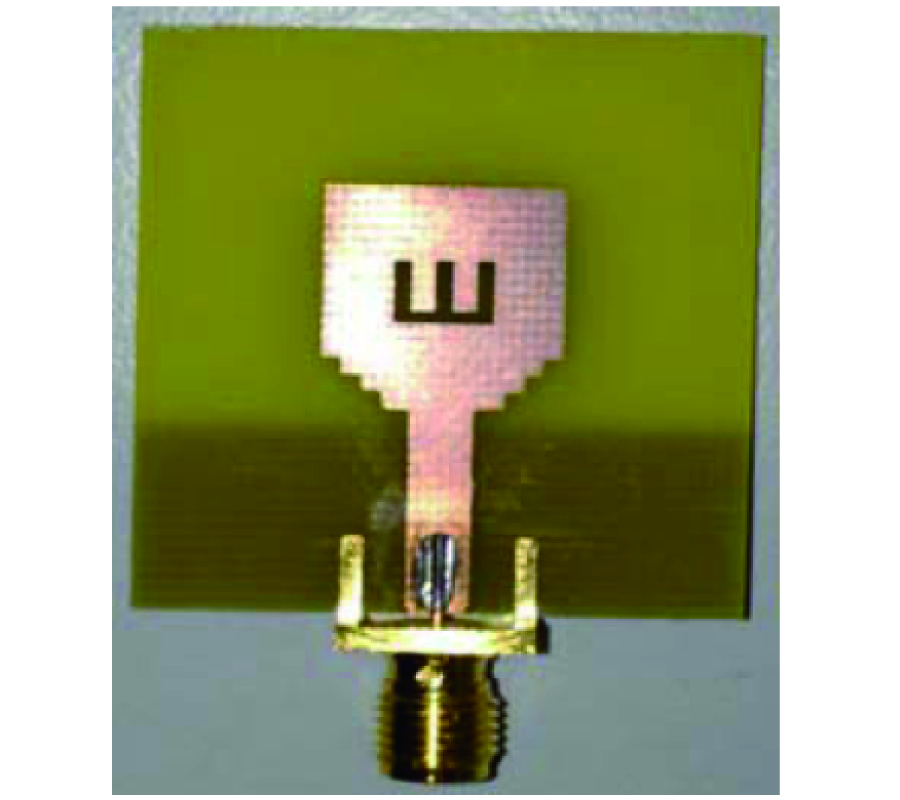
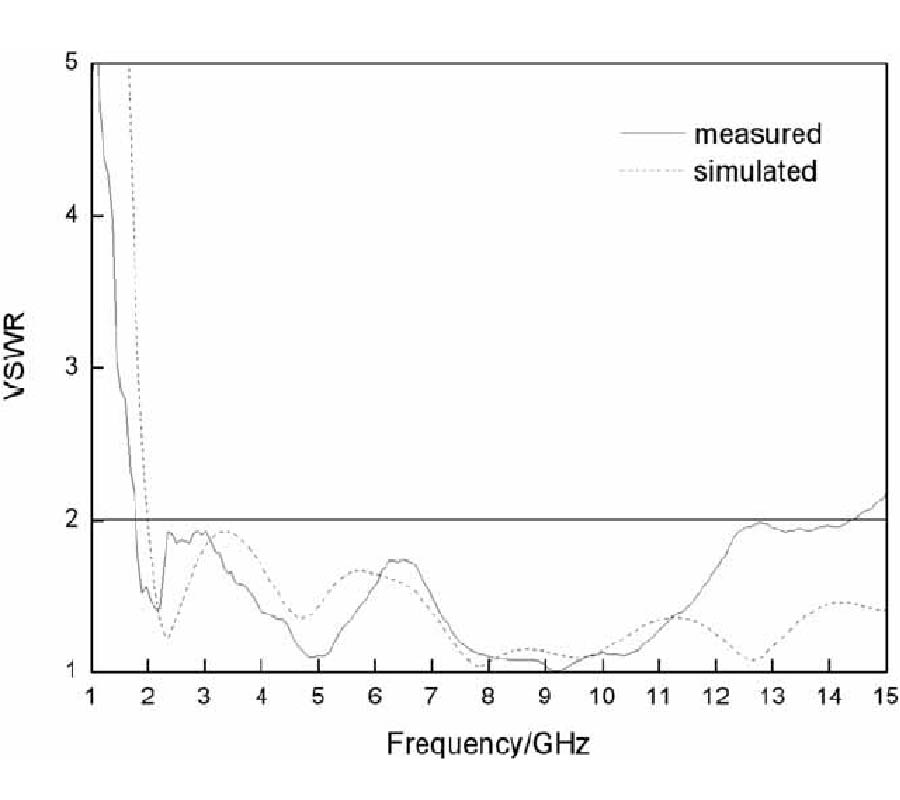
Abstract-In this paper, a compact band-notched UWB planar antenna with Transmission-Line-fed is presented and I'm using a new technique by etching a narrowband resonance H-shape slot in the ground plane of the antenna. This antenna is capable reducing the interference at the WLAN bands by eliminating the 4.85-6.17 GHz band. The proposed antenna has compact size of 16 × 22mm2 including the ground plane and because of miniature dimensions, good radiation patterns with monopolar characteristics are obtained in the frequency band of interest i.e., at least 10 dB isolation exists between co-polarization and cross-polarization. The gain is suppressed very well in WLAN bands. The maximum suppression is in 5.4 GHz that is 13.6 dB less than the gain of normal antenna.
COMPACT UWB BANDNOTCH ANTENNA WITH TRANSMISSION-LINE-FED
2008-01-03
PIER Letters
Vol. 2, 81-87
Transport Properties of Delta-Doped Field Effect Transistor
Outmane Oubram and Luis Manuel Gaggero-Sager
The first calculation of mobility and conductivity between source and drain as function of gate voltage in a δ-doped Field Effect Transistor is presented. The calculation was performed with a model for the δ-FET that was shown in [1]. The mobility was calculated using a phenomenological expression that was presented in [2]. That expression does not have empirical form, neither empirical parameter. For the first time a phenomenological expression of the conductivity is presented, which is derived from the mobility expression. The conductivity shows three different regions: a parabolic region and two linear regions. The parabolic region represents the region at which the conduction channel begins to close. On the other hand, the mobility shows a more different behavior. In the mobility there are four regions. These regions correspond to the disappearance of the different conduction channels that form the subbands of the deltadoped quantum well. The different behavior between mobility and conductivity relies on the depletion of the delta-doped quantum well as the gate potential grows.
TRANSPORT PROPERTIES OF DELTA-DOPED FIELD EFFECT TRANSISTOR
2008-01-03
PIER Letters
Vol. 2, 73-79
Harmonic Suppression of Branch-Line and Rat-Race Coupler Using Complementary Spilt Ring Resonators (CSRR) Cell
Jian Zhang and Xiao-Wei Sun
In this paper, complementary spilt ring resonator (CSRR) is applied to design harmonic suppression microstrip rat-race and branch-line coupler. As the CSRR cell is etched on the ground plane of the substrate, the frequency selective properties have a considerable relation with its geometry parameters, which has been analyzed detailedly. As demonstration, a rat-race and a branch-line coupler are designed and fabricated using conventional printed-circuit board fabrication process. The proposed couplers show the performance as good as that of the corresponding conventional structures, but deep harmonic suppression in addition. The design and simulation have been performed using full-wave EM TOOLS ADS Momentum.
HARMONIC SUPPRESSION OF BRANCH-LINE AND RAT-RACE COUPLER USING COMPLEMENTARY SPILT RING RESONATORS (CSRR) CELL
2008-01-03
PIER Letters
Vol. 2, 63-71
Estimation of Relative Permittivity of Shallow Soils by Using the Ground Penetrating Radar Response from Different Buried Targets
Lorenzo Capineri , David J. Daniels , Pierluigi Falorni , Olga Lucia Lopera and Colin G. Windsor
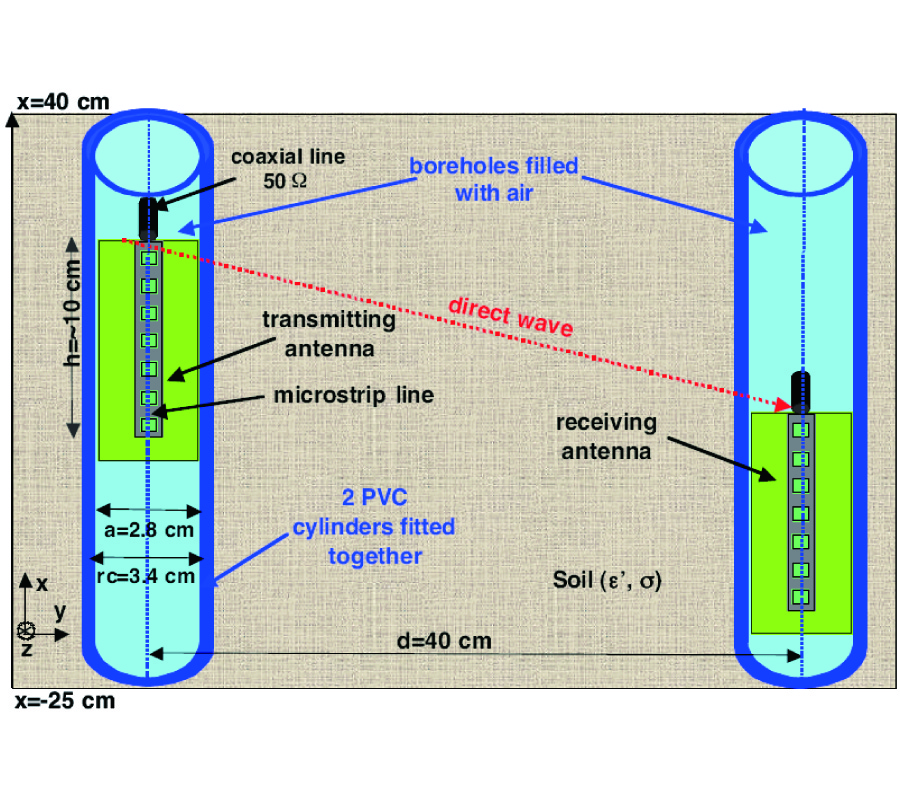
Combined ground penetrating radar and metal detector equipment are now available (e.g., MINEHOUND, ERA Technology- Vallon GmbH) for landmine detection. The performance of the radar detector is influenced by the electromagnetic characteristics of the soil. In this paper we present an experimental procedure that uses the same equipment for the detection and calibration by means of signal processing procedures for the estimation of the relative permittivity of the soil. The experimental uncertainties of this method are also reported.
ESTIMATION OF RELATIVE PERMITTIVITY OF SHALLOW SOILS BY USING THE GROUND PENETRATING RADAR RESPONSE FROM DIFFERENT BURIED TARGETS
2008-01-03
PIER Letters
Vol. 2, 53-61
Finite Element Method Simulation of Photoinductive Imaging for Cracks
Cheng-Chi Tai and Yen-Lin Pan
In this paper, the numerical simulations of photoinductive imaging (PI) method have been performed using the finite element method (FEM) with the 2D transient to characterize corner cracks at the edge of a bolt hole. The PI imaging results have higher spatial resolution in the area of the defect in 2D models as compared with the conventional eddy current (EC) images. The FEM simulation results of 0.5-mm rectangular defects are showed and analyzed. The dependencies of PI signals on EC frequencies and temperature of the thermal spot are also examined. The results demonstrate that the PI method is applicable to examine the geometric shape of corner cracks.
FINITE ELEMENT METHOD SIMULATION OF PHOTOINDUCTIVE IMAGING FOR CRACKS
2008-01-03
PIER Letters
Vol. 2, 45-52
Stark Effect in P-Type Delta-Doped Quantum Wells
Adelina Miteva , Stoyan Vlaev and Vesselin Donchev
In this work tight binding calculations in Be δ-doped GaAs quantum wells with an electric field applied along the [001] growth direction are presented. The Stark shifts of the hole electronic states for different impurity concentrations and electric field strengths are calculated. The δ-potential is treated as an external potential following the approach described earlier. A comparison with Stark effects in rectangular and graded-gap quantum wells is made.
STARK EFFECT IN P-TYPE DELTA-DOPED QUANTUM WELLS
2008-01-03
PIER Letters
Vol. 2, 37-44
CPW-to-Stripline Vertical via Transitions for 60ghz LTCC Sop Applications
Young Chul Lee
In this work, CPW-to-stripline (SL) vertical via transitions using gradually stepped vias and embedded air cavities are presented for V-band LTCC System-on-Package (SoP) applications. In order to reduce radiation loss due to abrupt via discontinuities, gradual via transitions are proposed and investigated. In addition, in order to reduce increased parasitic shunt capacitance due to stepped via structures, air cavities are embedded below the transition vias. Using a 3-D EM simulation tool, the proposed transitions are designed and analyzed, compared to the conventional transition. Three-segment transmission lines (CPW-SL-CPW) in 7-layer LTCC dielectrics were fabricated and measured. The two stepped via (STV2) transition embedding air cavities shows an insertion and return losses of 1.6 dB and below -10 dB, respectively, over 60 GHz. The transition loss per one STV2 transition is 0.7 dB at 60 GHz.
CPW-TO-STRIPLINE VERTICAL VIA TRANSITIONS FOR 60GHZ LTCC SOP APPLICATIONS
2008-01-03
PIER Letters
Vol. 2, 29-36
Hybrid CT-BEM Method Analysis of Unscreened Slab Lines
Qinhong Zheng , Fuyao Xie , Bin Yao and Wude Cai
A hybrid method of boundary element method (BEM) combined with conformal transformation (CT) is presented to calculate the capacitance of the unscreened slab lines. Conformal transformation transforms the infinite boundary boundary-value problem with the unscreened slab line into a finite boundary one that can be solved by the BEM, then the capacitance of the unscreened slab line is obtained by the BEM. Three representative computational examples, unscreened cylindrical single-bar slab line, unscreened rectangular single-bar slab line and unscreened cylindrical-bar coupled slab line, are given to validate the accuracy and efficiency of the CT-BEM hybrid method.
HYBRID CT-BEM METHOD ANALYSIS OF UNSCREENED SLAB LINES
2008-01-03
PIER Letters
Vol. 2, 21-28
Model of Man-Made Target Beneath Foliage Using Polinsar
Bin Zou , Hongjun Cai , Lamei Zhang and Maoliu Lin
Polarimetric SAR Interferometry can be used for parameter inversion of ground. An appropriate model is of most importance for parameters inversion. This paper derives a series of scattering model that can be used for parameter inversion of forestry area, such as RV, RVoG, OV and OVoG. These models can reveal the characteristics of forestry area as well as establish the relationship between observed data and parameters of test area. Finally, a multi-layer random scattering model that can be used for parameter inversion of forestry area containing a man-made target is derived. An improved model is examined by the simulated data of the singlebaseline polarimetric SAR interferometry. The result turns out that the improved RVoG scattering model is correct.
MODEL OF MAN-MADE TARGET BENEATH FOLIAGE USING POLINSAR
2007-12-29
PIER B
Vol. 3, 271-281
Design of Band-Pass Waveguide Filter Using Frequency Selective Surfaces Loaded with Surface Mount Capacitors Based on Split-Field Update FDTD Method
Seyed Mohammad Amjadi and Mohammad Soleimani
A new band-pass narrow-band, miniaturized and single resonance within a wide range of frequency band frequency selective surface structure with lumped capacitors suitable for low frequency and narrowband waveguide filter applications is presented. The filter structure consists of five unit cells in one direction with notch square ring elements each consists of two lumped capacitors placed on the transverse plane of the rectangular waveguide. To reduce the simulation time in design procedure, split-field update FDTD method is used for the analysis of the unit cell of the analogous infinite frequency selective surface at different oblique incidence of plane waves to predict the FSS performance in the waveguide. As an application, a waveguide filter has been designed to be used in an easy to fabricate and inexpensive S-band band-pass filter. By using lumped capacitors, several undesirable higher order resonance frequencies near the dominant resonance frequency are eliminated and the waveguide filter dimensions are reduced considerably in one direction compared with the analogous waveguide filter without lumped capacitors.
DESIGN OF BAND-PASS WAVEGUIDE FILTER USING FREQUENCY SELECTIVE SURFACES LOADED WITH SURFACE MOUNT CAPACITORS BASED ON SPLIT-FIELD UPDATE FDTD METHOD