Search Results(13878)

2005-08-23
PIER
Vol. 56, 195-232
Global Optimization and Antennas Synthesis and Diagnosis, Part One: Concepts, Tools, Strategies and Performances
Amedeo Capozzoli and Giuseppe D'Elia
This is the first of two companion papers on global optimization and antenna analysis and synthesis. In Part I, an analysis of the problems involved in Global Optimization is presented by critically discussing the basic concepts and tools, the performances to be expected, the required computational complexity and the guidelines to select algorithms solving efficiently the problem at hand. The relevance of stochastic techniques is enhanced and the role of double phase algorithms is stressed. The proof of the convergence property of an idealized version of a simplified evolutionary algorithm is provided. In Part II, the selected algorithm, a hybrid evolutionary algorithm, is tested against two real world problems relevant in electromagnetics, the power synthesis of contoured beam hybrid reflector antennas and the reflector antenna diagnosis from only amplitude data. The results of an extensive numerical analysis are presented.
RETRACTED: A NEW 90-DEGREE BEND IN A TWO-DIMENSIONAL PHOTONIC CRYSTAL WAVEGUIDE USING TOPOLOGY OPTIMIZATION
2005-08-23
PIER
Vol. 56, 163-182
Microstrip Line and CPW Fed Ultra Wideband Slot Antennas with U-Shaped Tuning Stub and Reflector
Ricky Chair , Ahmed Kishk , Kai-Fong Lee , Charles Smith and Darko Kajfez
Wideband printed rectangular slot antennas backed with reflectors for unidirectional radiation patterns are investigated. A U- shaped tuning stub is used to improve the matching. Two different feeding mechanisms are introduced. A rectangular slot excited by microstrip line feed with a U-shaped tuning stub gives an impedance bandwidth of 110% ( |S11| < −10 dB). When the rectangular slot is excited by a coplanar waveguide (CPW), it gives an impedance bandwidth of 120%. Both slot antennas radiate broadside across the matching band, with front-to-back ratios of 20 dB.
MICROSTRIP LINE AND CPW FED ULTRA WIDEBAND SLOT ANTENNAS WITH U-SHAPED TUNING STUB AND REFLECTOR
2005-08-23
PIER
Vol. 56, 151-162
Microstrip - Fed Low Profile and Compact Dielectric Resonator Antennas
Mohammad Saed and Rohini Yadla
This paper presents a novel broadband, low-profile dielectric resonator antenna using relatively low dielectric constant substrate material. The rectangular DRA is fed with a stepped microstrip feed to ensure efficient coupling. Bandwidths in excess of 17% are obtained. In addition, the paper investigates methods to miniaturize the antenna using metallic strips or patches. Substantial size reduction is demonstrated while maintaining a reasonable bandwidth. Simulations as well as experimental results are presented.
MICROSTRIP - FED LOW PROFILE AND COMPACT DIELECTRIC RESONATOR ANTENNAS
2005-08-23
PIER
Vol. 56, 129-150
On the Problem with Intermodal Dispersion When Using Multiconductor Transmission Lines as Distributed Sensors
Martin Norgren
The inverse problem of using an unshielded multiconductor transmission line (MTL) as an distributed sensor is considered. The MTL is analyzed by means of the quasi-TEM mode theory and a propagator formalism. In the inverse problem, the focus is on the problem with intermodal dispersion, due to the possibility of more than one propagating mode. Reconstruction results, from both measured and simulated reflection data, are presented for a three conductor MTL that has been used for diagnosing soil and snow. Both the case when one mode propagates, and the case when two modes propagate are considered. For the latter case it is demonstrated that intermodal dispersion deteriorates the resolution in the reconstruction, due to corruption of the high frequency part of the spectrum.
ON THE PROBLEM WITH INTERMODAL DISPERSION WHEN USING MULTICONDUCTOR TRANSMISSION LINES AS DISTRIBUTED SENSORS
2005-08-23
PIER
Vol. 56, 109-128
Electromagnetic Coupling to a Wearable Application Based on Coaxial Cable Architecture
Michel Chedid , Ilja Belov and Peter Leisner
A radiated susceptibility problem has been identified and solved by means of simulations for a wearable computer system in the frequency range 30 MHz-1 GHz. Simulation strategy is presented for analyzing the effects induced by an electromagnetic plane wave within the system comprising infra-red sensors connected by coaxial cables. A procedure of creating a TLM model of the coaxial cable with controlled electromagnetic coupling characteristics on a coarse grid is proposed. Results are verified by means of theoretical calculations. Different sensor enclosures and filtering circuits are analyzed and implemented to meet the hard electromagnetic compatibility requirements while not interfering with the functionality of the wearable application.
ELECTROMAGNETIC COUPLING TO A WEARABLE APPLICATION BASED ON COAXIAL CABLE ARCHITECTURE
2005-08-23
PIER
Vol. 56, 81-92
Multiple-Scale Analysis of Plane Wave Refraction at a Dielectric Slab with Kerr-Type Nonlinearity
Kiarash Aghaie and Mahmoud Shahabadi
Multiple-scale analysis is employed for the analysis of plane wave refraction at a nonlinear slab. It will be demonstrated that the perturbation method will lead to a nonuniformly valid approximation to the solution of the nonlinear wave equation. To construct a uniformly valid approximation, we will exploit multiplescale analysis. Using this method, we will derive the zerothorder approximation to the solution of the nonlinear wave equation analytically. This approximate solution clearly shows the effects of self-phase modulation (SPM) and cross-phase modulation (XPM) on plane wave refraction at the nonlinear slab. In fact, the obtained zeroth-order approximation is very accurate and there is not any need for derivation of higher-order approximations. As will be shown, the proposed method can be generalized to the rigorous study of nonlinear wave propagation in one-dimensional photonic band-gap structures.
MULTIPLE-SCALE ANALYSIS OF PLANE WAVE REFRACTION AT A DIELECTRIC SLAB WITH KERR-TYPE NONLINEARITY
2005-08-23
PIER
Vol. 56, 67-80
Aspects on the Phase Delay and Phase Velocity in the Electromagnetic Near-Field
Johan Sten and A. Hujanen
The phase of a complex field and its speed of propagation are fundamental concepts of electromagnetic wave motion. Although it seems to be well-known that faster than light propagation of the phase may occur in, e.g., waveguides and certain dispersive media, it is often ignored that a similar phenomenon, in fact a very marked one,presents itself in the near-field of an arbitrary oscillating current in vacuum. Connected herewith is the observation that the phases of the transverse field components of a dipole approach kr - π/2, and not kr, in the radiation zone. This article illustrates these phenomena by theoretical and numerical examples as well as indicates their consequences for broad-band wireless communication over short distances.
ASPECTS ON THE PHASE DELAY AND PHASE VELOCITY IN THE ELECTROMAGNETIC NEAR-FIELD
2005-08-23
PIER
Vol. 56, 53-66
A New Technique to Find the MEI Coefficients in the Time Domain: Self-Metron Technique
Reza Pazoki and Ahmad Cheldavi
Measured equation of invariance in the time domain (TD-MEI) has been used as an FDTD-ABC. The TD-MEI coefficients, are derived using a new technique named "self metron". Unlike the traditional MEI, in this technique there is no need to use metrons to find the MEI coefficients. The real field values of the same FDTD problem but with a PEC surface instead of a radiation boundary condition are sampled and used to find the MEI coefficients. The key is to locate the PEC mesh truncation, farther away than the MEI truncation boundary, such that during the sampling time interval, no wave reflects into the MEI truncation boundary. After the MEI coefficients are found, according to the "time invariance" property of the TD-MEI coefficients, the MEI boundary absorbs the wave for all times. The proposed technique is very fast and the results show that the accuracy is much higher than traditional absorbing boundary conditions and some other ABC's.
A NEW TECHNIQUE TO FIND THE MEI COEFFICIENTS IN THE TIME DOMAIN: SELF-METRON TECHNIQUE
2005-08-23
PIER
Vol. 56, 33-51
Analysis of Transmission of a Signal through a Complex Cylindrical/Coaxial Cavity by Transmission Line Methods
Charles Bopp III and Chalmers Butler
The transmission of time-harmonic and transient signals through a complex cylindrical cavity is investigated by methods akin to microwave circuit techniques. The cavity may consist of multiple overlapping cascaded coaxial and circular cylindrical sections whose walls are perfect electric conductors. The sections may have different axial and radial dimensions and may be filled with material having different magnetic and electric properties. The first and last sections of the cavity are coaxial regions where only TEM modes exist, which allows measurements to be performed with proper excitation and termination. The cavity sections may support both a TEM mode and additional higher order modes or may support one or the other. If two sections have a common junction and each supports only one mode, then the junction is modeled by a simple two-port network. When additional modes are present, they are modeled by addition ports at the network junction. Corresponding equivalent transmission lines are associated with each mode at a physical junction. At each junction, scattering parameters are calculated and used to model the interaction of the various modes that exist. The S-parameters at each junction are determined separately by solving a simple integral equation that accounts for the structure of the junction and adjoining sections of coaxial and/or cylindrical guide. The cavity fields are, thus, associated with equivalent currents and voltages on transmission lines. A transmission line network is developed from which the input fields, fields at the cavity termination, and junction fields can be found by microwave circuit techniques or by the BLT transmission line analysis. The results from the transmission line method are compared with results calculated from a coupled integral equation analysis which has been carefully validated experimentally and with measured values on laboratory models.
ANALYSIS OF TRANSMISSION OF A SIGNAL THROUGH A COMPLEX CYLINDRICAL/COAXIAL CAVITY BY TRANSMISSION LINE METHODS
2005-08-23
PIER
Vol. 56, 19-32
A Complete Variational Method for Capacitance Extractions
Weng Cho Chew and Lijun Jiang
In the past, coupling capacitances between conductors was extracted using charge distributions directly. In this paper a set of new generalized variational formulas are derived. They are complete since they are valid not only for self-capacitances, but also for mutual capacitances. As for the realistic numerical implementation, elastance matrices become asymmetrical because of numerical method used. Then a more general variational formula is derived to account for the asymmetrical elastance matrix case. By these novel formulas the computational accuracy can be significantly improved compared to the conventional capacitance extraction method.
A COMPLETE VARIATIONAL METHOD FOR CAPACITANCE EXTRACTIONS
2005-08-23
PIER
Vol. 56, 1-18
Characteristics of a Microstrip-Fed Miniature Printed Hilbert Slot Antenna
Abu T. Sayem and Mohammod Ali
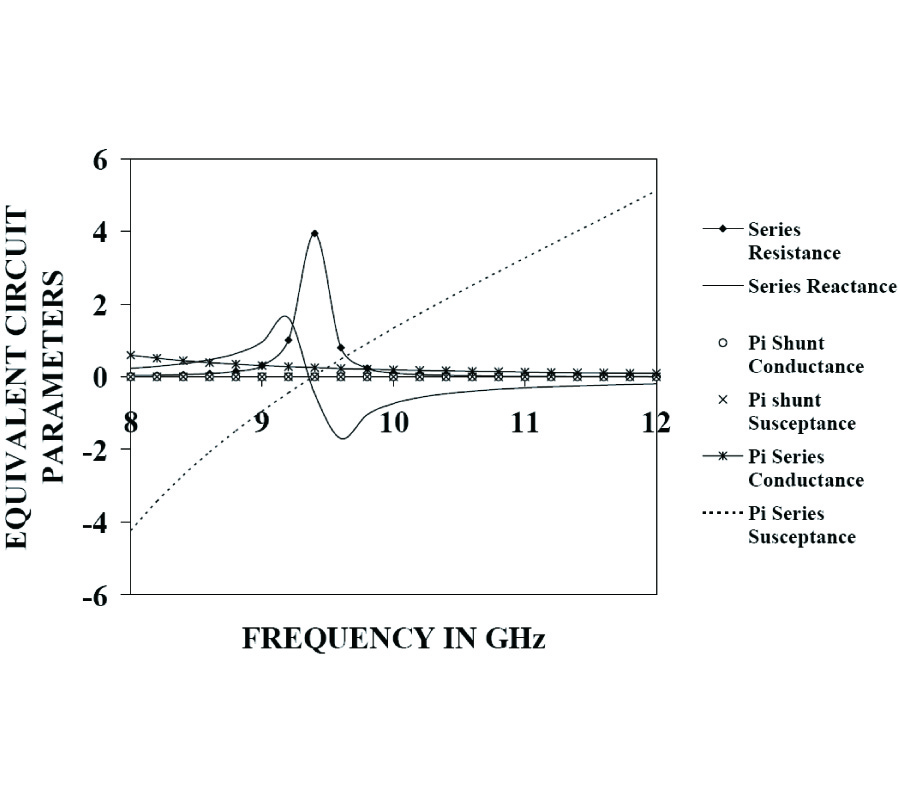
The resonant frequencies and input impedance of a microstrip-fed third order Hilbert slot antenna are studied as function of antenna and substrate parameters. A distinct dualband characteristic is observed. Findings from HFSS simulation are validated by prototype fabrication and experimental measurement. The two resonant frequencies maintain a ratio of approximately 1.4 for narrow slots. A design parameter, Lax is identified which needs to be about 0.80λg at the lowest operating frequency. The Hilbert slot provides a unidirectional pattern when operated against a metallic ground plane while maintaining dual-band characteristics.
CHARACTERISTICS OF A MICROSTRIP-FED MINIATURE PRINTED HILBERT SLOT ANTENNA
2005-06-25
PIER
Vol. 55, 307-333
Microwave Scattering Models for Cylindrical Vegetation Components
Paolo de Matthaeis and Roger Lang
This work is intended to investigate the accuracy of modelling simple cylindrical vegetation structures for microwave remote sensing applications. Plane wave scattering by dielectric cylinders of finite length and circular cross section is examined. Cylinders with a radius that varies linearly along the cylinder length — hereafter referred to as tapered cylinders — are also considered. Exact expressions for the scattering cross section do not exist for those objects. Numerical methods can provide accurate results, but they are computationally intensive and therefore less suitable when calculations on a large number of scatterers of different sizes and orientations are necessary. In this paper the scattering cross section of finite cylinders is computed by physical optics methods, which are faster and often employed in microwave vegetation models. Tapered cylinders are modelled by a number of coaxial finite cylinders stacked on top of each other. To check the validity of the results, the problems are also solved numerically by the moment method. For cases often encountered in vegetation studies, the results of the application of the approximate analytical methods are then compared with the corresponding numerical solution. For both constant-radius and tapered cylindrical structures, a good agreement with the numerical solution is found in the region of the main scattering lobe, which is the one of interest when considering complex media such as vegetation canopies. However, the accuracy of the approximate solutions decreases as the angle of the incident wave approaches the end-on angle.
MICROWAVE SCATTERING MODELS FOR CYLINDRICAL VEGETATION COMPONENTS
2005-06-25
PIER
Vol. 55, 285-306
Input Admittances Arising from Explicit Solutions to Integral Equations for Infinite-Length Dipole Antennas
George Fikioris and Constantinos Valagiannopoulos
When one uses integral equations to determine the input admittance of dipole antennas, one must choose between two kernels, the exact and the approximate kernel, and also between (at least) two types of feed, the delta-function generator and the frill generator. For dipole antennas of infinite length, we investigate—analytically and numerically—the similarities and differences between the various admittance values. Particular emphasis is placed on the fact, discussed in detail in recent publications, that certain combinations lead to non- solvable integral equations.
INPUT ADMITTANCES ARISING FROM EXPLICIT SOLUTIONS TO INTEGRAL EQUATIONS FOR INFINITE-LENGTH DIPOLE ANTENNAS
2005-06-25
PIER
Vol. 55, 249-283
Exact Formulas for the Lateral Electromagnetic Pulses Generated by a Horizontal Electric Dipole in the Interface of Two Dielectrics
Kai Li , Yi-Long Lu and Wei-Yan Pan
The Sommerfeld integrals for the electromagnetic field due to a delta-function current in a horizontal electric dipole located on the planar boundary between air and a homogeneous dielectric are examined in detail. Similar to the case of the vertical dipole, the tangential electric fields consist of a delta-function pulse travelling in the air with the velocity c, the oppositely directed delta-function pulse travelling in the dielectric with the velocity c1/2 for the component Eρ and the velocity cε1/2 for the component Eφ, and the final static electric fields due to the charge left on the dipole. The appearance of the vertical magnetic field is similar to that of the tangential electric field. It is pointed out that the amplitude of the pulsed field along the boundary is 1/&rho2, which is characteristic of the surface-wave or lateral pulse.
EXACT FORMULAS FOR THE LATERAL ELECTROMAGNETIC PULSES GENERATED BY A HORIZONTAL ELECTRIC DIPOLE IN THE INTERFACE OF TWO DIELECTRICS
2005-06-25
PIER
Vol. 55, 241-248
Optimal Scattering Polarization Characteristic for Cylinder Target in Rain at Millimeter Wave Band
Ji-Ying Huang , Shu-Hong Gong and Fang Wang
Scattering characteristic of target in rain is studied in this paper, which calculates scattering matrix of rain area and that of cylinder target in rain, taking the effect from rain into account by substituting rain media for random media with equivalent complex permittivity. SCR (ratio of scattering signal induced by target in rain to clutter from rain) is computed, and the relation between SCR and polarization status of transmitting and receiving antennas is deduced. By optimizing the SCR, optimal polarization status of transmitting and receiving antennas are found. And, the results found in this paper are serviceable for communication system design [2, 4].
OPTIMAL SCATTERING POLARIZATION CHARACTERISTIC FOR CYLINDER TARGET IN RAIN AT MILLIMETER WAVE BAND
2005-06-25
PIER
Vol. 55, 227-239
Reconfigurable Broadband Microstrip Antenna Fed by a Coplanar Waveguide
Mohammad Saed
In this paper, a novel reconfigurable two-layer microstrip antenna fed using a coplanar waveguide through a slot/loop combination is investigated. The slot/loop combination allows for easy reconfigurability of the frequency band of operation by incorporating switches in the feed network. Furthermore, broad impedance bandwidths were obtained by using two substrate layers consisting of a high-εr substrate that contains the feed network and a low-εr substrate that contains two patches, one patch on either side of the substrate. The two substrates are not separated by a ground plane. Impedance bandwidths of about 23% were obtained for two selectable frequency bands using two switches. The two frequency bands obtained for the parameters chosen in this paper are 8.73-10.95 GHz and 7.68-9.73 GHz.
RECONFIGURABLE BROADBAND MICROSTRIP ANTENNA FED BY A COPLANAR WAVEGUIDE
2005-06-25
PIER
Vol. 55, 209-226
Scattering of Multilayer Concentric Elliptical Cylinders Excited by Single Mode Source
Susan Hill and John Jarem
The Electromagnetic (EM) fields of a concentric, mismatched-material, elliptical system are studied when excited by an interior or exterior electric surface current. The interior or exterior surface current is assumed to be proportional to a single, angular Mathieu mode. It is shown that despite the fact that the system is concentric, that a single Mathieu mode surface current excites EM Mathieu-mode fields of all orders. A derivation of the EM fields due a single mode electric surface in an infinite, homogeneous media is given, as well as the matrix formulation from which the EM fields of the mismatched-material, elliptical system may be determined. Validation of numerical results and comparison with other research work is given for both interior and exterior single-mode, current sources. Detailed numerical examples of the EM fields that result for a single-mode, exterior source excitation are given for the first time. Discussion of the EM mode coupling that results by single-mode excitation on a mismatched elliptical system is given.
SCATTERING OF MULTILAYER CONCENTRIC ELLIPTICAL CYLINDERS EXCITED BY SINGLE MODE SOURCE
2005-06-25
PIER
Vol. 55, 189-208
Beam Transform Method for Plane Wave Response Matrices
Robert Adams , Francis Canning , F. Mev and Bradley Davis
A single-level compression algorithm is described for the plane wave response matrix, which defines the current excited on the surface of a scatterer by a spectrum of incident plane waves. The reported method is based on the physical principle that it is often possible to organize plane waves originating from a given angular region to form incident beams which excite localized currents on the surface of an electrically large target. The properties of the method are illustrated for several scattering problems in two dimensions.
BEAM TRANSFORM METHOD FOR PLANE WAVE RESPONSE MATRICES
2005-06-25
PIER
Vol. 55, 175-188
The Performance of Polarization Diversity Schemes in Outdoor Micro Cells
Ting-Chieh Tu , Chao-Min Li and Chien-Ching Chiu
The application of polarization diversity reception at the mobile terminal in micro cells at 2 GHz is presented in this paper. Ray-tracing tool is used to study effects of electric field polarization on the received power in outdoor environments. The performance of diversity schemes with vertical/horizontal polarization and +45°/−45° slanted polarization are compared in different line-of-sight (LOS) and nonline- of-sight (NLOS) environments. Based on the evaluation of cross polarization discrimination (XPD) parameters, it is clarified that different environments will affect XPD values in micro cells. Then, the vertical/horizontal polarization diversity and +45°/−45° slanted polarization diversity are chosen to compare with space diversity. Several different combining techniques of polarization and space diversity schemes are also compared in different environments. It is found that dual-polarized antennas for mobile terminal are a promising alternative for two spaced antennas.
THE PERFORMANCE OF POLARIZATION DIVERSITY SCHEMES IN OUTDOOR MICRO CELLS