Search Results(13878)

2005-11-19
PIER
Vol. 58, 301-317
Detection and Localization of RF Radar Pulses in Noise Environments Using Wavelet Packet Transform and Higher Order Statistics
Omar A. Alyt , Abbas Omar and Atef Elsherbeni
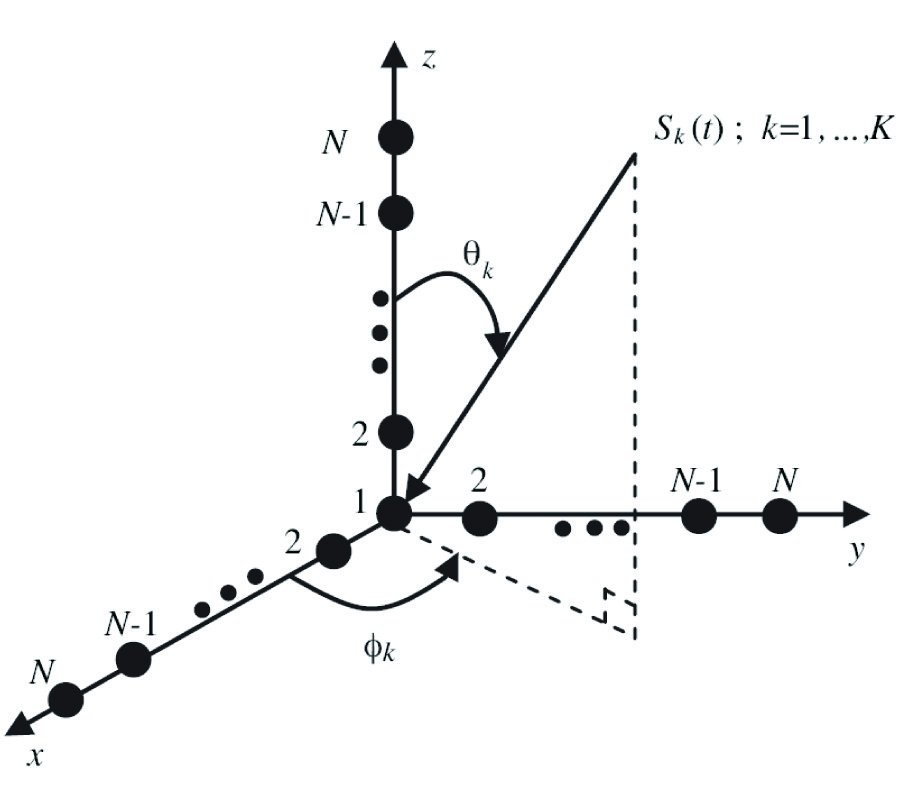
Weak signal detection and localization are basic and important problems in radar systems. Radar performance can be improved by increasing the receiver output signal-to-noise ratio (SNR). Localizing the received signal is an important task in the detection of signal in noise. Distorting the localization of the received signal can leads to incorrect target range measurements. In this paper an algorithm is described for extracting and localizing an RF radar pulse from a noisy background. The algorithm combines two powerful tools: the wavelet packet analysis and higher-order-statistics (HOS). The use of the proposed technique makes detection and localization of RF radar pulses possible in very low signal-to-noise ratio conditions, which leads to a reduction of the required microwave power or alternatively extending the detection range of radar systems.
DETECTION AND LOCALIZATION OF RF RADAR PULSES IN NOISE ENVIRONMENTS USING WAVELET PACKET TRANSFORM AND HIGHER ORDER STATISTICS
2005-11-19
PIER
Vol. 58, 187-198
Analysis of Coupled or Single Nonuniform Transmission Lines Using Step-by-Step Numerical Integration
Mohammad Khalaj-Amirhosseini
A method is proposed for analysis of arbitrarily loaded lossy and dispersive nonuniform single or coupled transmission lines. In this method, the transmission lines are subdivided to several uniform sections, at first. Then the voltage and current distributions are obtained using second order step-by-step numerical integration (second order finite difference method). The accuracy of the method is studied using analysis of some special types of single and coupled transmission lines.
ANALYSIS OF COUPLED OR SINGLE NONUNIFORM TRANSMISSION LINES USING STEP-BY-STEP NUMERICAL INTEGRATION
2005-11-16
PIER
Vol. 58, 285-299
An Electromagnetic Topology Approach: Crosstalk Characterizations of the Unshielded Twisted-Pair Cable
Phumin Kirawanich , Naz E. Islam and Susumu Yakura
The inductive effect of near-end crosstalk for a category five unshielded, twisted-pair cable has been verified using the electromagnetic topology simulation method. Crosstalk reduction and its dependency on such parameters as driving signals, circuit configuration and impedance, are studied. The simulation results are consistent with analytical analysis. Results show that the straight- through, differential-generator, twisted-pair receptor model is the most effective configuration to control the near-end crosstalk level. This is due to the influences from both the neutralizing mutual inductance and the single current generator. The simulation results also show that electromagnetic topology-based predictions are valid only for cables that are electrically short. Simulations are carried out using a compaction scheme with a single equivalent circuit. As a result, the unshielded, twisted-pair cable portion of the circuit can be combined with a larger network for analyzing the overall response of the entire network system.
AN ELECTROMAGNETIC TOPOLOGY APPROACH: CROSSTALK CHARACTERIZATIONS OF THE UNSHIELDED TWISTED-PAIR CABLE
2005-11-16
PIER
Vol. 58, 271-283
Asymptotic Analysis of a Line Source Diffraction by a Perfectly Conducting Half-Plane in a BI-Isotropic Medium
Wasiq Hussain
This paper is concerned with the diffraction of an electromagnetic wave by a perfectly conducting half-plane in a homogeneous bi-isotropic medium (asymptotically). Similar analysis in a source-free field is done in S. Asghar and A. Lakhtakia (1994), Planewave diffraction by a perfectly conducting half-plane in a homogeneous bi-isotropic medium. Int. J. Appl. Electromagnetics in materials, 5, (1994), 181-188. In this paper attention is focused on the wave coming from a line source. The objective is to study the scattering of an electromagnetic wave from the boundary of a half-plane and thereby to provide a theoretical framework for the line source diffraction asymptotical ly. In far field approximation it is shown that an incident wave coming from a line source behaves like a plane wave. The scattered field is calculated by using the Fourier transform and the Wiener-Hopf techniques. The scattered field in the far zone is determined by using contour integration.
2005-11-16
PIER
Vol. 58, 243-269
Forward Propagation Modeling Above Gaussian Rough Surfaces by the Parabolic Shadowing Effect
Vincent Fabbro , Christophe Bourlier and Paul Combes
In this paper, a fast method is presented to model the forward propagation above Gaussian rough surfaces and taking into account atmospheric refraction. The method is based on the Discrete Mixed Fourier Transform (DMFT) solved by the Parabolic Wave Equation, in which the Ament boundary condition with shadowing effect is used at grazing angle. In this model, for a bistatic configuration, the surface height PDF of the illuminated points is derived and it is introduced in the boundary condition. Examples demonstrate the capacities of the method to compute propagation factor above rough surfaces following Gaussian statistics and Gaussian height correlation and the proposed method is validated by comparison to a Monte Carlo approach.
FORWARD PROPAGATION MODELING ABOVE GAUSSIAN ROUGH SURFACES BY THE PARABOLIC SHADOWING EFFECT
2005-11-16
PIER
Vol. 58, 223-241
Dyadic Green's Functions for an Electrically Gyrotropic Medium
Abdullah Eroglu and Jay Kyoon Lee
The complete set of dyadic Green's functions (DGFs) for an electrically gyrotropic medium is obtained using a new formulation technique, which consists of a matrix method with dyadic decomposition in the k-domain. The analytic expressions for DGFs are represented in a unique form in terms of characteristic field vectors that exist in an electrically gyrotropic medium. It is shown that the dyadic decomposition greatly facilitates the calculation of an inverse operation, which is crucial in derivation of Green's functions. The DGFs found here can be used to solve electromagnetic problems involving the ionosphere and new types of anisotropic materials such as ceramics and advanced composites.
DYADIC GREEN'S FUNCTIONS FOR AN ELECTRICALLY GYROTROPIC MEDIUM
2005-11-16
PIER
Vol. 58, 199-222
About the Interference Induced by Electrons Why Does the Electron Behave Like a Wave
Antonio Puccini
One of the most interesting and peculiar phenomena of Quantum Mechanics is the interference (I ) induced by the electrons. Strangely enough, though the electrons are real particles, they often behave just like waves. From the point of view of the classical mechanics the I induced by the electrons is unexplainable, however it is solved mathematically using the formalism of quantum mechanics and applying Schrödinger's equation. The quantum solution of the problem is clear and elegant, especially from a mathematical point of view, however it still leaves some perplexities as to understand how exactly the phenomenon happens. We will make a hypothesis trying to understand the undulation phenomenon of the electron: it is really a strange and mysterious phenomenon. Maybe if we consider that the electron, just as the baryons and the mesons, might be made of smaller particles (saving the integrity of the unity of the negative electrical charge and the other Laws of Conservation), we could understand more easily how a single electron can go through two close holes at the same time. Analogously we could better understand another very particular quantum phenomenon carried out mainly by electrons, that is the tunnel effect. In this case, though the particle does not have enough energy to go through the potential barrier, though it does not have any material possibility to pass through a layer which does not have any hole, after several "attempts" the particle will manage to pass through the barrier anyway, as it had dug a tunnel, or as it had managed to find a "breach" in the wall. In this phenomenon too, though we can explain it from a mathematical point of view, using the equations of the quantum mechanics, it is still not clear how actually the electron manages to have an undulation behaviour.
ABOUT THE INTERFERENCE INDUCED BY ELECTRONS WHY DOES THE ELECTRON BEHAVE LIKE A WAVE
2005-11-16
PIER
Vol. 58, 171-185
Novel Gabor-Based Gaussian Beam Expansion for Curved Aperture Radiation in Dimension Two
Alexandre Chabory , Jérôme Sokoloff and Sylvain Bolioli
In this article, we propose to apply the Gabor expansion to describe magnetic and electric currents given on a regular curved interface in dimension 2. From this description, we show that the computation of the current radiation can be performed by the introduction of a new kind of gaussian beams. We call them the conformal gaussian beams. Their analytic formulation is obtained using an asymptotic evaluation of the radiation integrals. Their properties are discussed and an application example is presented.
NOVEL GABOR-BASED GAUSSIAN BEAM EXPANSION FOR CURVED APERTURE RADIATION IN DIMENSION TWO
2005-11-16
PIER
Vol. 58, 149-169
Active Microwave Imaging for Breast Cancer Detection
Gopinathan Nair Bindu , Santhosh Abraham , Anil Lonappan , Vinu Thomas , Chandroth K. Aanandan and K. Mathew
Active microwave imaging is explored as an imaging modality for early detection of breast cancer. When exposed to microwaves, breast tumor exhibits electrical properties that are significantly different from that of healthy breast tissues. The two approaches of active microwave imaging - confocal microwave technique with measured reflected signals and microwave tomographic imaging with measured scattered signals are addressed here. Normal and malignant breast tissue samples of same person are sub jected to study within 30 minutes of mastectomy. Corn syrup is used as coupling medium, as its dielectric parameters show good match with that of the normal breast tissue samples. As bandwidth of the transmitter is an important aspect in the time domain confocal microwave imaging approach, wideband bowtie antenna having 2:1 VSWR bandwidth of 46% is designed for the transmission and reception of microwave signals. Same antenna is used for microwave tomographic imaging too at the frequency of 3000 MHz. Experimentally obtained time domain results are substantiated by finite difference time domain (FDTD) analysis. 2-D tomographic images are reconstructed with the collected scattered data using distorted Born iterative method. Variations of dielectric permittivity in breast samples are distinguishable from the obtained permittivity profiles.
ACTIVE MICROWAVE IMAGING FOR BREAST CANCER DETECTION
2005-11-16
PIER
Vol. 58, 135-148
Multi-Band Characteristic of Open Sleeve Antenna
Jian-Ying Li and Yeow-Beng Gan
The open-sleeve antenna is analyzed using the method of moment. Emphasis is given to the analysis of the VSWR of the antenna. The multi-band characteristic of the sleeve antenna are investigated. The 1st and the 3rd frequency bands come from the driven dipole, and the 2nd frequency band is due to the length of parasitic elements and the distance between the driven element and the parasitic elements. Some useful results are presented and discussed in this paper.
MULTI-BAND CHARACTERISTIC OF OPEN SLEEVE ANTENNA
2005-11-16
PIER
Vol. 58, 115-133
Radiation Pattern of Aperture Coupled Prolate Hemispheroidal Dielectric Resonator Antenna
Yunpeng Song and Abdel Sebak
An analytical solution for the radiation by a prolate hemispheroidal dielectric resonator antenna (DRA) over an infinite ground plane excited by a rectangular slot is presented. The dyadic Green's functions pertaining to a magnetic-current source are used in a form convenient for numerical computations. The dyadic Green's functions are then employed to formulate the electromagnetic fields radiated by the DRA. The electromagnetic far field is expressed analytically in a compact form. The far field patterns for different design parameters are computed and plotted.
 RADIATION PATTERN OF APERTURE COUPLED PROLATE HEMISPHEROIDAL DIELECTRIC RESONATOR ANTENNA
2005-11-16
PIER
Vol. 58, 101-114
Implementation of Mur's Absorbing Boundaries with Periodic Structures to Speed Up the Design Process Using Finite-Difference Time-Domain Method
Guiping Zheng , Ahmed Kishk , Allen Wilburn Glisson and Alexander Yakovlev
The finite-difference time-domain (FDTD) method is used to obtain numerical solutions of infinite periodic structures without resorting to the complex frequency-domain analysis, which is required in traditional frequency-domain techniques. The field transformation method is successfully used to model periodic structures with oblique incident waves/scan angles. Maxwell's equations are transformed so that only a single period of the infinite periodic structure is modeled in FDTD by using periodic boundary conditions (PBCs). When modeling periodic structures with the transformed fields, the standard Mur second-order absorbing boundary condition cannot be used directly to absorb the outgoing waves. This paper presents a new implementation of Mur's second-order absorbing boundary condition (ABC) with the transformed fields in the FDTD method. For designs that require multi-parametric studies, Mur's ABCs are efficient and sufficient boundary conditions. If more accurate results are needed, the perfectly matched layer (PML) ABC can be used with the parameters obtained from the Mur solution.
IMPLEMENTATION OF MUR'S ABSORBING BOUNDARIES WITH PERIODIC STRUCTURES TO SPEED UP THE DESIGN PROCESS USING FINITE-DIFFERENCE TIME-DOMAIN METHOD
2005-11-16
PIER
Vol. 58, 71-100
2D Magnetic Photonic Crystals with Square Lattice-Group Theoretical Standpoint
Victor A. Dmitriev
We consider possible magnetic symmetries of two-dimensional square lattices with circular ferrite rods magnetized by a uniform dc magnetic field. These structures can be used as tunable and nonreciprocal photonic crystals. Classification of eigenmodes in such crystals is defined on the basis of magnetic group theory and the theory of (co)representations. Some general electromagnetic properties of the magnetic crystals such as change in the basic domain of the Brillouin zone, change of symmetry in limiting cases, bidirectionality and nonreciprocity, symmetry relations for the waves and lifting of eigenwave degeneracies by dc magnetic field are also discussed.
2D MAGNETIC PHOTONIC CRYSTALS WITH SQUARE LATTICE-GROUP THEORETICAL STANDPOINT
2005-11-16
PIER
Vol. 58, 51-70
Broadband Spatiotemporal Differential-Operator Representations for Velocity-Dependent Scattering
Dan Censor
A novel approach based on spatiotemporal differential- operators is developed here for broadband, velocity-dependent scattering. Unlike the spectral-domain representations, the new method facilitates a compact formulation for scattering by arbitrary excitation signals, in the presence of moving objects. In free space (vacuum), relativistically exact formulas are developed. After developing the general theory, analysis of relativistically exact free-space scattering by cylinders, and a half-plane, are examined. For cylinders the analysis shows that in the far field pulses are located on circles in the co-moving reference-frame where the ob ject is at-rest. In other reference frames this feature is valid only as an approximation. These results apply also to the diffractive part of the half-plane scattered field. The geometrical-optics contribution is associated with plane-waves and obeys the appropriate transformations. The various zones for these fields in an arbitrary reference-frame are analyzed.
2005-11-16
PIER
Vol. 58, 21-49
Analytical Lower and Upper Bounds of Power Absorption in Near-Field Regions Deduced from a Modal-Based Equivalent Junction Model
Benoit Derat and Jean-Charles Bolomey
Due to the proximity of mobile phones to users' heads and resulting interrogations on potential health effects, as well as to the development of promising medical applications of electromagnetic waves such as non-invasive RF Hyperthermia treatments, near-field interactions between antennas and lossy scatterers, such as human beings, have been a topic of growing interest over the last decade. More generally, for various kinds of radiating sources and targets, much scientific effort has been done to answer the following question in particular configurations: what is the minimal/maximal power that can be absorbed in a lossy ob ject located in the reactive field region of an antenna? The aim of this paper is to propose a general and analytical solution to this problem, applicable to any source-scatterer system. To this purpose, a method, allowing to describe power deposition mechanisms in near-field regions, is introduced. This approach is based on an equivalent junction/circuit model which is shown here to result from an appropriate modal expansion of the radiated field. The dual interpretation of this model in terms of localized circuit and lumped junction is used to demonstrate how trends and bounds in power absorption phenomena can be derived. Firstly, the analogy with the microwave circuit theory provides the concepts of available power and load factor for electromagnetic fields, which allow to highlight the parameters influencing power dissipation and to analyze consequent trends. Secondly, the junction matrix formalism is used to obtain analytical lower and upper bounds of the power absorbed in a lossy object, located in the near field region of any radiating source. Those bounds give a clearer insight of the relationship between the total radiated power due to the antenna and the minimal or maximal power potentially dissipated in any scatterer exposed to such a radiated field. An example of bounds in a simple source-load configuration is finally provided, showing the link, to be further investigated, between the near-zone electric-field pattern of the antenna and the total dissipated power. This example also suggests that the power dissipated in a given object can be rapidly increased or reduced as the modal complexity of the source increases.
ANALYTICAL LOWER AND UPPER BOUNDS OF POWER ABSORPTION IN NEAR-FIELD REGIONS DEDUCED FROM A MODAL-BASED EQUIVALENT JUNCTION MODEL
2005-11-16
PIER
Vol. 58, 1-19
Electromagnetic Radiation from Moving Fractal Sources: a Plane-Wave Spectral Approach
Walter Arrighetti , Peter DeCupis and Giorgio Gerosa
In this work the solution to the problem of electromagnetic radiation from (pre-)fractal antennas is performed by means of Plane- Wave field representation based on closed-form Fourier transforms of the self-similar current patterns. The generalization to the case of uniformly translating antennas is then accomplished through the Frame-Hopping Method by exploiting special-relativistic covariance properties of Plane-Wave spectra.
ELECTROMAGNETIC RADIATION FROM MOVING FRACTAL SOURCES:  A PLANE-WAVE SPECTRAL APPROACH
2005-11-01
PIER
Vol. 57, 237-252
A Parallelized 3D Floating Random-Walk Algorithm for the Solution of the Nonlinear Poisson-Boltzmann Equation
Kausik Chatterjee and Jonathan Poggie
This paper presents a new three-dimensional floating random-walk (FRW) algorithm for the solution of the Nonlinear Poisson-Boltzmann (NPB) equation. The FRW method has not been previously used in the numerical solution of the NPB equation (and other nonlinear equations) because of the non-availability of analytical expressions for volumetric Green's functions. In the past, numerical studies using the FRW method have examined only the linearized Poisson-Boltzmann equation, producing solutions that are only accurate for small values of the potential. No such linearization is required for this algorithm. An approximate expression for a volumetric Green's functions has been calculated with the help of a novel use of perturbation theory, and the resultant integral form has been incorporated within the FRW framework. The algorithm requires no discretization of either the volume or the surface of the problem domains, and hence the memory requirements are expected to be lower than approaches based on spatial discretization, such as finite-difference methods. Another advantage of this algorithm is that each random walk is independent, so that the computational procedure is inherently parallelizable and an almost linear increase in computational speed is expected with increase in the number of processors. We have recently published the preliminary results for benchmark problems in one and two dimensions. In this work, we present our results for benchmark problems in three dimensions and demonstrate excellent agreement between the FRW- and finite-difference based algorithms. We also present the results of parallelization of the newly developed FRW algorithm. The solution of the NPB equation has applications in diverse branches of science and engineering including (but not limited to) the modeling of plasma discharges, semiconductor device modeling and the modeling of biomolecular structures and dynamics.
A PARALLELIZED 3D FLOATING RANDOM-WALK ALGORITHM FOR THE SOLUTION OF THE NONLINEAR POISSON-BOLTZMANN EQUATION
2005-10-07
PIER
Vol. 57, 253-264
Full-Wave Modeling of Stripline Structures in Multilayer Dielectrics
Konstantinos Nikellis , Nikolaos Uzunoglu , Yorgos Koutsoyannopoulos and Sotiris Bantas
A novel computational method based on full-wave analysis of stripline planar structures with vertical interconnects in multilayer dielectric media is presented. The method is based on the electric-field integral-equation solved with the Method of Moments (MoM). The special characteristics of stripline structures facilitate the extensive use of semi-analytical techniques to analyze the multilayer structures, limiting significantly the use of purely numerical techniques. The accuracy of the proposed modeling method is examined thoroughly with extensive numerical tests and the results are compared with results generated by commercial simulators for simple stripline structures.
FULL-WAVE MODELING OF STRIPLINE STRUCTURES IN MULTILAYER DIELECTRICS
2005-10-05
PIER
Vol. 56, 283-298
Ventilating Hornets Display Differential Body Temperature
Jacob Ishay , Marian Plotkin , Natalya Ermakov , Alon Goren and David J. Bergman
Our investigation entailed a thermal analysis of hornets engaging in ventilation activity at the nest entrance. In the hot summer months, between July-October, ventilating worker hornets are seen just outside the nest entrance, where they assume a typical stance, namely, with their feet erect and fastened to the substrate, their abdomen bent downward at a 90o angle to the thorax, their antennae vibrating, and their wings beating rapidly for minutes at a time. Eventually these hornets leave their position, either to retreat into the nest or else to fly off to the field, and are replaced by new hornets that assume the ventilation task. Infra-red (IR) photography reveals that in the course of the ventilation activity, the warmest region in the ventilating hornet body is the anterior upper part of the thorax, and the coolest regions are the wings, limbs, antennae and abdomen. This study involved precise and repeated measurements via IR photography of the temperature in the various body parts of the ventilating hornets, and it also offers a preliminary, tentative explanation for the observed differential body temperature. The communication value of the color of the hornet body when ventilating is discussed.
VENTILATING HORNETS DISPLAY DIFFERENTIAL BODY TEMPERATURE
2005-09-27
PIER
Vol. 57, 311-333
Applying Divergence-Free Condition in Solving the Volume Integral Equation
Maokun Li and Weng Cho Chew
Applying divergence-free condition to volume integral equation solver will be discussed. Three schemes are available: basis reduction scheme, minimal complete volume loop basis set and expanded volume loop basis set. All of them will generate smaller matrix equations than the SWG basis. The first two schemes generate poorly-conditioned matrices that are hard to solve by iterative solvers. The expanded loop basis set is easier to solve iteratively in spite of the existence of a null space in the matrix. Moreover, the construction of the expanded loop basis set is much easier than the other two schemes.
APPLYING DIVERGENCE-FREE CONDITION IN SOLVING THE VOLUME INTEGRAL EQUATION