Search Results(13802)

2010-12-22
PIER
Vol. 111, 447-465
Experimental Breast Tumor Detection Using Nn-Based UWB Imaging
Saleh Ali AlShehri , Sabira Khatun , Adznan B. Jantan , Raja Syamsul Azmir Raja Abdullah , Rozi Mahmud and Zaiki Awang
This paper presents a system with experimental complement to a simulation work for early breast tumor detection. The experiments are conducted using commercial Ultrawide-Band (UWB) transceivers, Neural Network (NN) based Pattern Recognition (PR) software for imaging and proposed breast phantoms for homogenous and heterogeneous tissues. The proposed breast phantoms (homogeneous and heterogeneous) and tumor are constructed using available low cost materials and their mixtures with minimal effort. A specific glass is used as skin. All the materials and their mixtures are considered according to the ratio of the dielectric properties of the breast tissues. Experiments to detect tumor are performed in regular noisy room environment. The UWB signals are transmitted from one side of the breast phantom (for both cases) and received from opposite side diagonally repeatedly. Using discrete cosine transform (DCT) of these received signals, a Neural Network (NN) module is developed, trained and tested. The tumor existence, size and location detection rates for both cases are highly satisfactory, which are approximately: (i) 100%, 95.8% and 94.3% for homogeneous and (ii) 100%, 93.4% and 93.1% for heterogeneous cases respectively. This gives assurance of early detection and the practical usefulness of the developed system in near future.
EXPERIMENTAL BREAST TUMOR DETECTION USING NN-BASED UWB IMAGING
2010-12-20
PIER Letters
Vol. 19, 163-169
High Selectivity Broadband Bandpass Filter with Dual-Mode Folded-T-Type Resonator
Hong-Wei Deng , Yong-Jiu Zhao , Xue-Shun Zhang , Wen Chen and Wei Liu
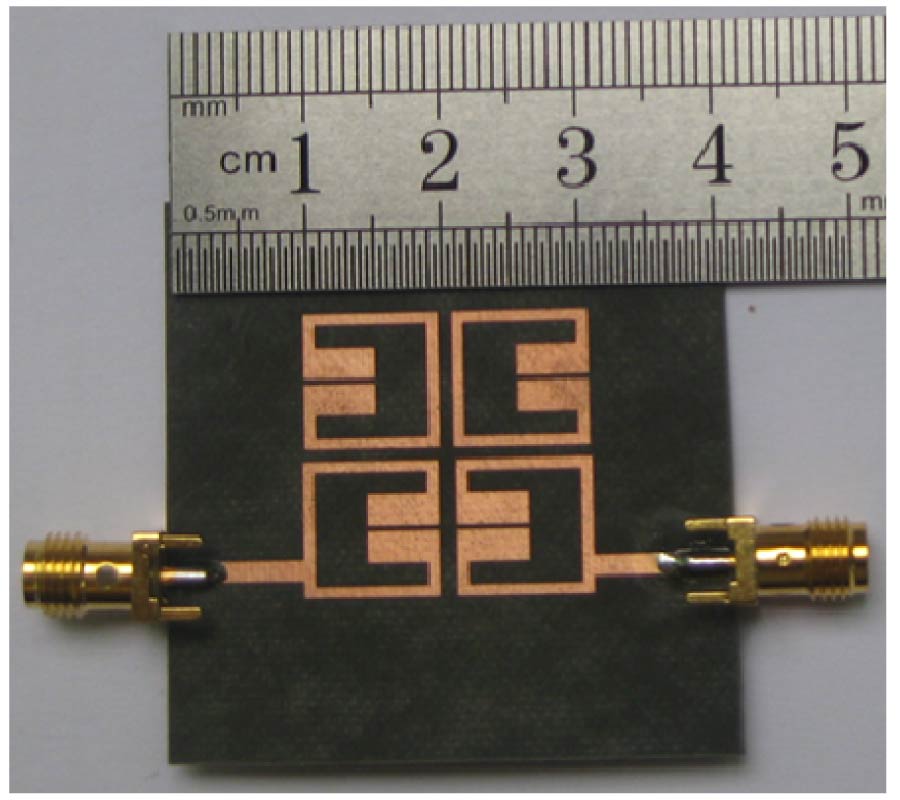
In this letter, a compact and high selectivity broadband bandpass filter (BPF) is proposed using the dual-mode folded-T-type resonator and the short stub loaded parallel-coupling feed structure. The resonator can generate one even-mode and one odd-mode in the desired band. Two resonant frequencies can be adjusted easily to satisfy the bandwidth of the BPF. A parallel-coupling feed structure with a cross coupling has been applied to generate two transmission zeros in the lower and upper stopband. Furthermore, the loaded short stub can create two transmission zeros near the upper cut-off frequency and in the upper stopband. Simultaneity, the transmission zero in the lower stopband moves towards the cut-off frequency. One filter prototype with the fractional bandwidth 57% is fabricated for experimental verification of the predicted results. The size for the resonator is only 0.156λg×0.303λg in which λg is the guided wavelength of 50 Ω microstrip at the center frequency.
HIGH SELECTIVITY BROADBAND BANDPASS FILTER WITH DUAL-MODE FOLDED-T-TYPE RESONATOR
2010-12-20
PIER C
Vol. 18, 231-244
Power Splitter Architectures and Applications
Majid Jalalifar and Jasim Uddin
In order to use power splitter for communication and real world applications (e.g., telephony performances, antenna designs, wireless communications, digital communications, optical communications, CATV transmission systems, airborne systems), studying the nature and characteristics of the splitter is important. The purpose of this paper is to review and discuss various techniques aimed to develop the power splitters component and remove its interference. This paper further focuses on the review of future implementation techniques and performance comparison along with their applications. Some of the applications are illustrated at the end of the paper, and recommendation for further study is also outlined. This review serves as a comparative studies and reference beneficial for power splitter researchers and for future implementation of the technology. This review paper opens a corridor for researchers to perform future comparative studies between different architectures and models as a reference point for developing more powerful, flexible and efficient applications.
POWER SPLITTER ARCHITECTURES AND APPLICATIONS
2010-12-20
PIER C
Vol. 18, 221-229
Spurious Response Suppression in Hairpin Filter Using DMS Integrated in Filter Structure
Mohammad Naser-Moghadasi , Mahmoud Alamolhoda and Bahman Rahmati
In this paper several Defected Microstrip Structure (DMS) are used to suppress the first and second spurious responses in microstrip hairpin filters. The DMSs are integrated in filter structure, and therefore this method keeps the filter size unchanged. The DMS interconnection disturbs the current distribution only across the strip, thereby giving a modified microstrip line with certain stop band. The undesired spurious harmonics are suppressed through multiple transmission zeros which are added at these frequencies by designed DMSs. Experimental results verify that 25 dB suppression for the first harmonic and 40 dB suppression for the second harmonic, respectively, without affecting the main passband response. There is a good agreement between the simulated and measured results.
SPURIOUS RESPONSE SUPPRESSION IN HAIRPIN FILTER USING DMS INTEGRATED IN FILTER STRUCTURE
2010-12-19
PIER Letters
Vol. 19, 155-161
A Broadband Microstrip Antenna for Ieee802.11.a/ WiMAX/Hiperlan2 Applications
M. S. Nishamol , Valiyaveettil Sarin , Devassy Tony , Chandroth K. Aanandan , Pezholil Mohanan and Kesavath Vasudevan
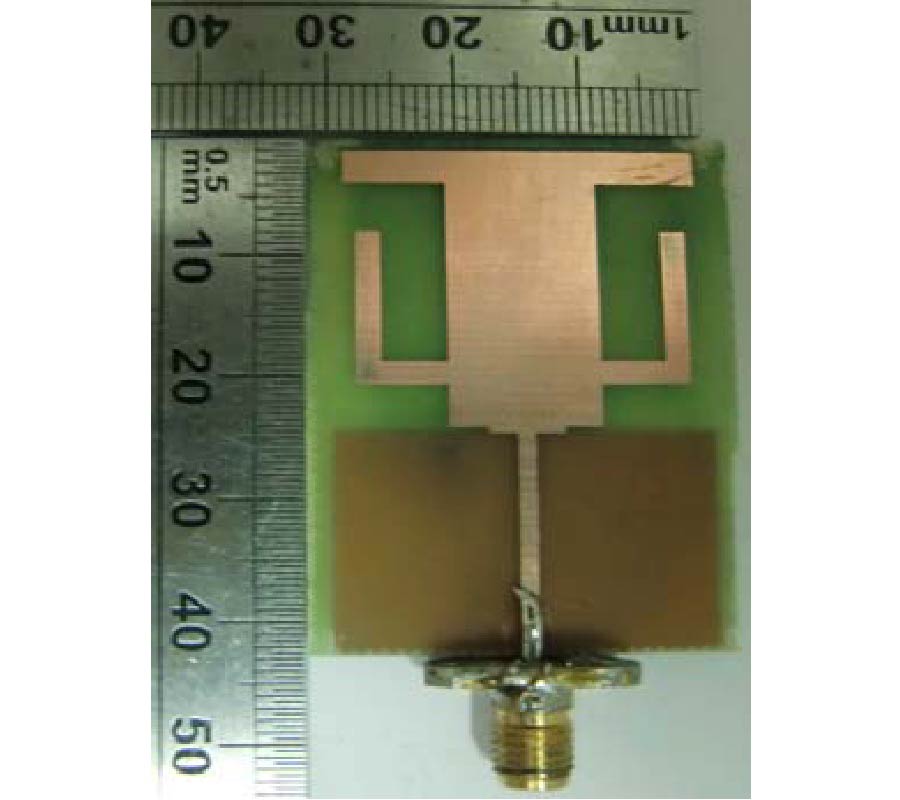
A simple electromagnetically coupled broadband printed microstrip antenna suitable for multifunctional wireless communication bands is presented. V-slots and corner notches are employed in a rectangular patch to achieve broadband operation. The proposed antenna has a 2:1 VSWR bandwidth of 51% from 3.75 GHz to 6.33 GHz. The simulated and measured reflection characteristics of the antenna along with the radiation patterns and gain are presented and discussed.
A BROADBAND MICROSTRIP ANTENNA FOR IEEE802.11.A/ WIMAX/HIPERLAN2 APPLICATIONS
2010-12-19
PIER
Vol. 111, 433-445
Microwave Properties of a High-Temperature Superconductor and Ferromagnetic Bilayer Structure
Chien-Jang Wu and Yao-Li Chen
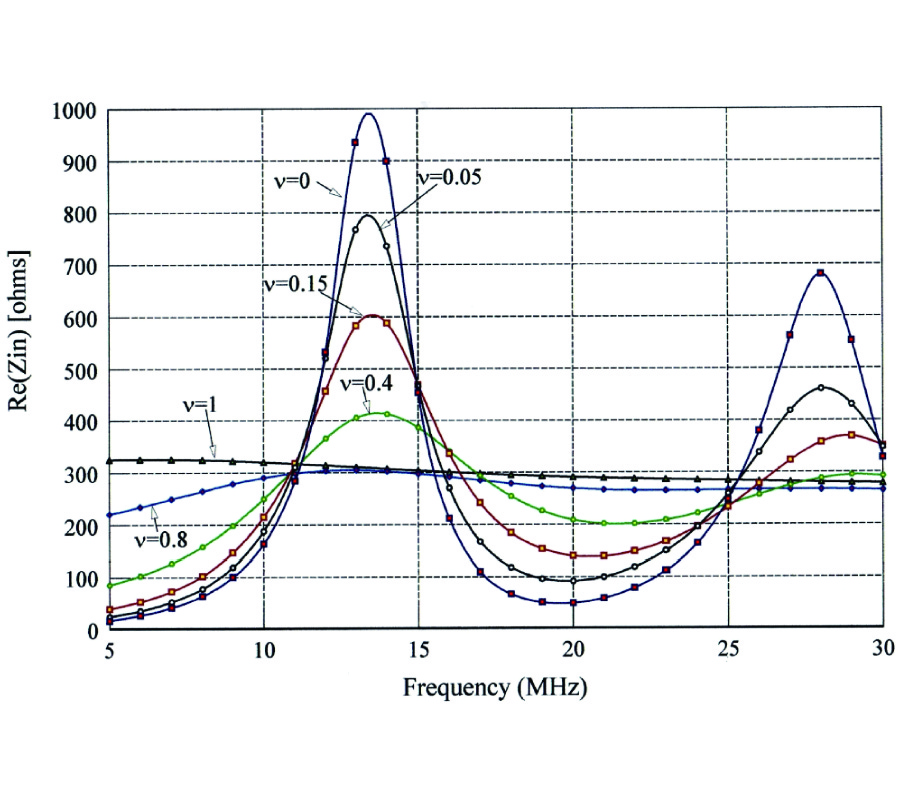
Microwave properties for a bilayer structure made of the high-temperature superconducting and the ferromagnetic materials are theoretically investigated. The properties are explored through the effective surface impedance calculated by using the enhanced two-fluid model for high-temperature superconductors together with the transmission line theory. The calculated effective surface impedance will be numerically analyzed as a function of the frequency, the temperature, and the thicknesses of the constituent layers. It is found that, for a thinner superconducting film, the effective surface resistance is a strong function of the frequency, and the effective surface reactance exhibits a peak and a dip in the frequency-domain. In the study of the effect of thickness in ferromagnetic substrate, there is a peak frequency in the surface reactance for a thinner substrate. There is also a threshold thickness for the ferromagnetic substrate such that it behaves like a bulk substrate when its thickness is larger than this threshold value. In the temperature dependence of surface reactance, the peak near critical temperature is shifted to lower temperature and broadened as the film thickness decreases.
MICROWAVE PROPERTIES OF A HIGH-TEMPERATURE SUPERCONDUCTOR AND FERROMAGNETIC BILAYER STRUCTURE
2010-12-19
PIER
Vol. 111, 419-432
Evanescent-Mode Substrate Integrated Waveguide (SIW) Filters Implemented with Complementary Split Ring Resonators
Qiao-Li Zhang , Wen-Yan Yin , Sailing He and Lin-Sheng Wu
A new type of evanescent-mode substrate integrated waveguide (SIW) bandpass filter is presented in this paper, with complementary split ring resonators (CSRRs) introduced on the top or bottom metal planes of the waveguide. Both positive and negative couplings are obtained between the CSRRs by changing their locations and orientations. In comparison with conventional SIW filters, the proposed filters are compact since their passbands are below the cutoff frequency of SIW. A third- and a fourth-order cross-coupled filter prototypes were designed using standard PCB technology. They operate at the same central frequency of 3.8 GHz, with their fractional bandwidths of 15% and 20%. The proposed filters have a wide upper stopband as the cutoff frequency of TE10-mode in the SIW is much higher than the central frequency. Their good performance is demonstrated by both the simulated and measured S-parameters.
EVANESCENT-MODE SUBSTRATE INTEGRATED WAVEGUIDE (SIW) FILTERS IMPLEMENTED WITH COMPLEMENTARY SPLIT RING RESONATORS
2010-12-17
PIER
Vol. 111, 407-418
Achieving Large Effective Aperture Antenna with Small Volume Based on Coordinate Transformation
Dexin Ye , Sheng Xi , Hongsheng Chen , Jiangtao Huangfu and Li-Xin Ran
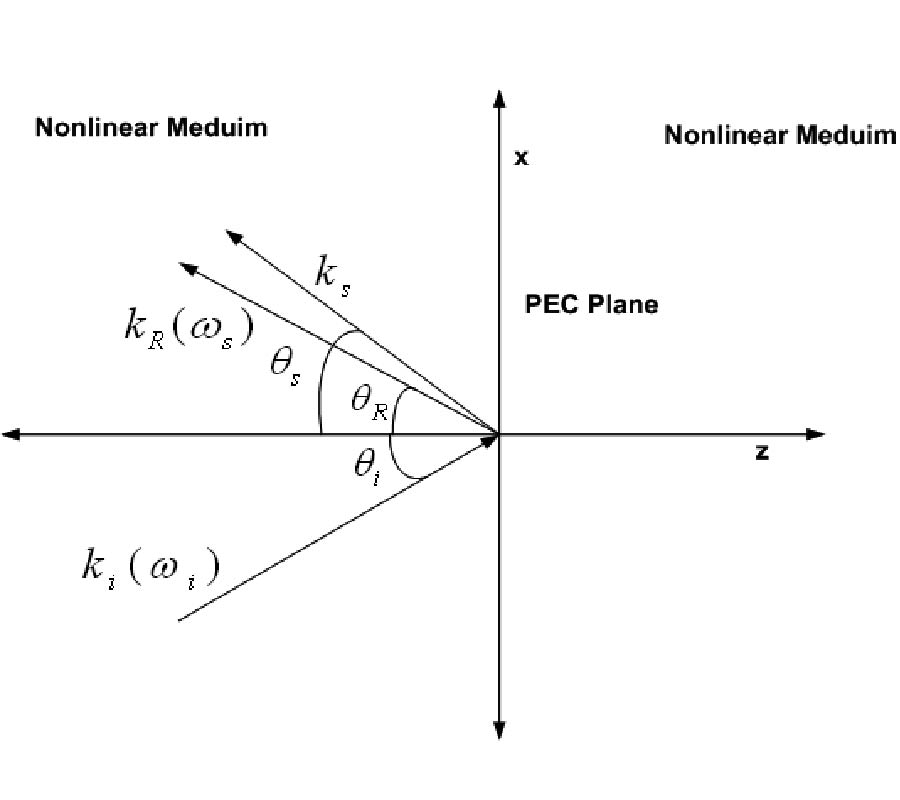
The size of an antenna should be relatively large in order to get high radiation directivity. However, in some applications, the antenna is restricted in small region, while high directivity is still required. In this paper, we propose the method of realizing antennae with large effective apertures using arbitrary shaped small PEC reflectors and small volumes of left-handed materials based on coordinate transformation. Using this method, antennae with effective large parabolic apertures are designed using both a small parabolic reflector and a planar reflector. This design method is validated by the numerical simulations based on the Finite Element Method (FEM).
ACHIEVING LARGE EFFECTIVE APERTURE ANTENNA WITH SMALL VOLUME BASED ON COORDINATE TRANSFORMATION
2010-12-17
PIER
Vol. 111, 381-406
A Study of an Inversion Model for Sea Ice Thickness Retrieval in Ross Island, Antarctica
Yu Jen Lee , Wee Keong Lim and Hong-Tat Ewe
In this study, an inverse microwave scattering model for sea ice has been developed for the purpose of sea ice thickness retrieval using radar backscatter data. The model is loosely based on the Radiative-Transfer-Thermodynamic Inverse Model for Sea Ice Thickness Retrieval from Time-Series Scattering Data. The developed inverse model is a combination of the Radiative Transfer Theory with Dense Medium Phase and Amplitude Correction Theory (RT-DMPACT) forward model and the Levenberg-Marquardt Optimization algorithm. Using input data from ground truth measurements carried out in Ross Island, Antarctica, together with radar backscatter data extracted from purchased satellite images, the sea ice thickness of an area is estimated using the inverse model developed. The estimated sea ice thickness is then compared with the ground truth measurement data to verify its accuracy. The results have shown good promise, with successful estimation of the sea ice thickness within ±0.15 m of the actual measurement. A theoretical analysis has also revealed that the model faces difficulty once the sea ice thickness exceeds 1.7m. This can be considered in the future development and improvement of the model.
A STUDY OF AN INVERSION MODEL FOR SEA ICE THICKNESS RETRIEVAL IN ROSS ISLAND, ANTARCTICA
2010-12-15
PIER B
Vol. 27, 289-306
Design of Medical Radiometer Front-End for Improved Performance
Oystein Klemetsen , Yngve Birkelund , Svein K. Jacobsen , Paolo F. Maccarini and Paul R. Stauffer
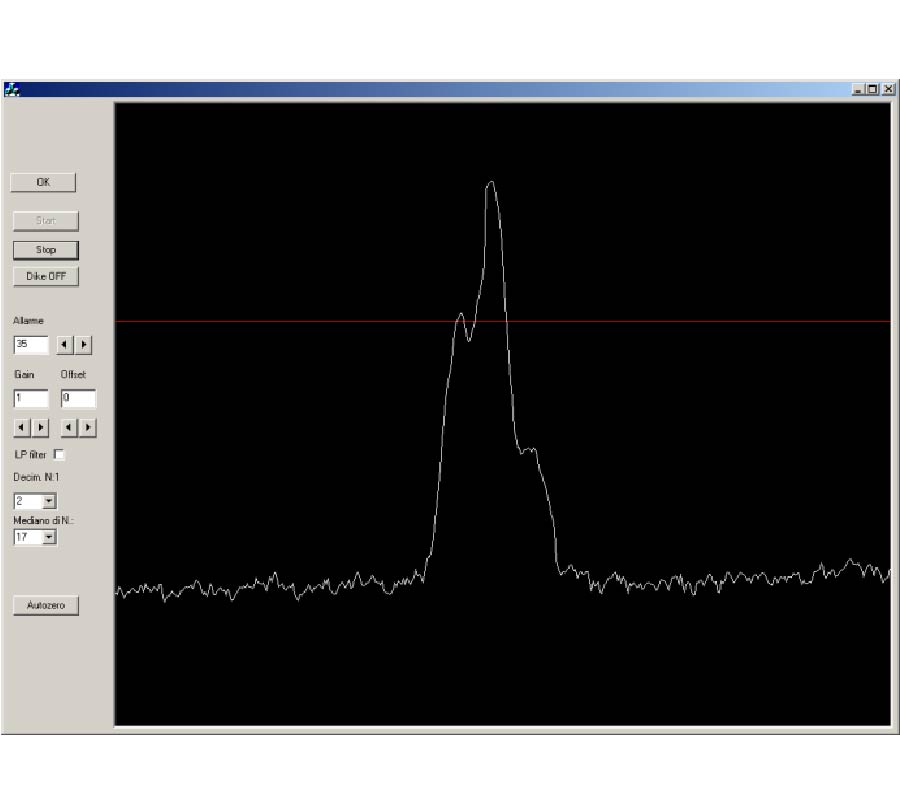
We have investigated the possibility of building a singleband Dicke radiometer that is inexpensive, small-sized, stable, highly sensitive, and which consists of readily available microwave components. The selected frequency band is at 3.25--3.75 GHz which provides a reasonable compromise between spatial resolution (antenna size) and sensing depth for radiometry applications in lossy tissue. Foreseen applications of the instrument are non-invasive temperature monitoring for breast cancer detection and temperature monitoring during heating. We have found off-the-shelf microwave components that are sufficiently small (<5 mm×5 mm) and which offer satisfactory overall sensitivity. Two different Dicke radiometers have been realized: one is a conventional design with the Dicke switch at the front-end to select either the antenna or noise reference channels for amplification. The second design places a matched pair of low noise amplifiers in front of the Dicke switch to reduce system noise figure. Numerical simulations were performed to test the design conceptsbefore building prototype PCB front-end layouts of the radiometer. Both designs provide an overall power gain of approximately 50 dB over a 500 MHz bandwidth centered at 3.5 GHz. No stability problems were observed despite using triple-cascaded amplifier configurations to boost the thermal signals. The prototypes were tested for sensitivity after calibration in two different water baths. Experiments showed a superior sensitivity (36% higher) when implementing the low noise amplifier before the Dicke switch (close to the antenna) compared to the other design with the Dicke switch in front. Radiometer performance was also tested in a multilayered phantom during alternating heating and radiometric reading. Empirical tests showed that for the configuration with Dicke switch first, the switch had to be locked in the reference position during application of microwave heating to avoid damage to the active components (amplifiers and power meter). For the configuration with low noise amplifier up front, damage would occur to the active components of the radiometer if used in presence of the microwave heating antenna. Nevertheless, this design showed significantly improved sensitivity of measured temperatures and merits further investigation to determine methods of protecting the radiometer for amplifier first front ends.
DESIGN OF MEDICAL RADIOMETER FRONT-END FOR IMPROVED PERFORMANCE
2010-12-15
PIER B
Vol. 27, 273-288
Design of 35 GHz Gyrotron for Material Processing Applications
Nitin Kumar , Udaybir Singh , Anil Kumar , Hasina Khatun , T. P. Singh and Ashok Kumar Sinha
The complete design of 35 GHz, 200 kW gyrotron for various material processing and heating applications is presented in this article. The components of the device, such as Magnetron Injection Gun, interaction cavity, collector and RF window, are designed for the TE03 mode. Various in-house developed codes (GCOMS, MIGSYN and MIGANS) and commercially available codes (MAGIC, EGUN and CST-MS) are used for the design purpose. A thorough sensitivity analysis of the gyrotron components are also carried out. The designed device shows the capability to generate more than 200 kW of output power with more than 40% of efficiency.
DESIGN OF 35 GHZ GYROTRON FOR MATERIAL PROCESSING APPLICATIONS
2010-12-15
PIER C
Vol. 18, 211-220
A Comact Microstrip Patch Antenna for Wireless Communication
Ujjal Chakraborty , Samiran Chatterjee , Santosh Kumar Chowdhury and Partha Pratim Sarkar
A single feed compact rectangular microstrip antenna is presented in this paper. A triangular slot is introduced at the upper edge of the patch to reduce the resonant frequency. A small piece of triangular patch is grown within the triangular slot to improve the gain bandwidth performance of the antenna. The antenna size has been reduced by 46.2% when compared to a conventional square microstrip patch antenna with a maximum of 160 MHz bandwidth and -27.36 dB return loss. The characteristics of the designed structure are investigated by using MoM based electromagnetic solver, IE3D. An extensive analysis of the return loss, radiation pattern, gain and efficiency of the proposed antenna is presented. The simple configuration and low profile nature of the proposed antenna leads to easy fabrication and make it suitable for the applications in Wireless communication system. Mainly it is developed to operate in the WiMax frequency range of 3.2--3.8 GHz.
A COMACT MICROSTRIP PATCH ANTENNA FOR WIRELESS COMMUNICATION
2010-12-15
PIER M
Vol. 16, 105-115
Combination of Inverse Fast Fourier Transform and Modified Particle Swarm Optimization for Synthesis of Thinned Mutually Coupled Linear Array of Parallel Half-Wave Length Dipole Antennas
Narendra Nath Pathak , Banani Basu and Gautam Mahanti
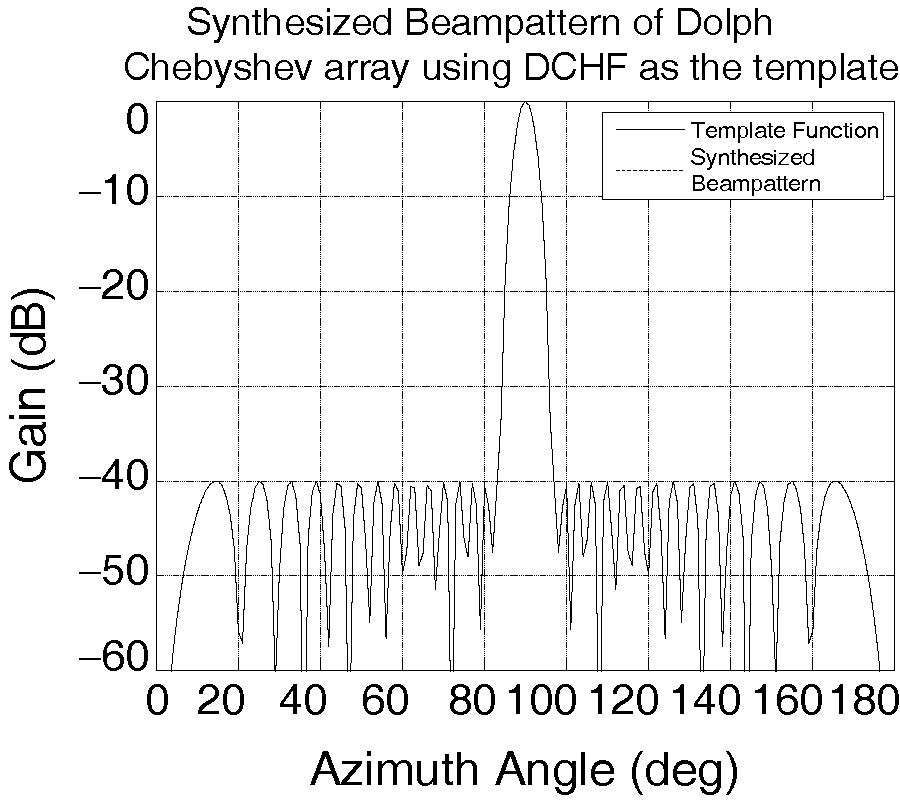
In this paper, the authors propose a method based on the combination of inverse fast Fourier transform (IFFT) and modified particle swarm optimization for side lobe reduction of a thinned mutually coupled linear array of parallel half-wave length dipole antennas with specified maximum return loss. The generated pattern is broadside (φ=90 degree) in the horizontal plane. Mutual coupling between the half-wave length parallel dipole antennas has been taken care of by induced emf method considering the current distribution on each dipole to be sinusoidal. Directivity, first null beamwidth (FNBW), return loss of the thinned array is also calculated and compared with a fully populated array. Two cases have been considered, one with symmetric excitation voltage distribution and the other with asymmetric one. The method uses the property that for a linear array with uniform element spacing, an inverse Fourier transform relationship exists between the array factor and the element excitations. Inverse Fast Fourier Transform is used to calculate the array factor, which in turn reduces the computation time significantly. The element pattern of half-wave length dipole antenna has been assumed omnidirectional in the horizontal plane. Two examples are presented to show the flexibility and effectiveness of the proposed approach.
COMBINATION OF INVERSE FAST FOURIER TRANSFORM AND MODIFIED PARTICLE SWARM OPTIMIZATION FOR SYNTHESIS OF THINNED MUTUALLY COUPLED LINEAR ARRAY OF PARALLEL HALF-WAVE LENGTH DIPOLE ANTENNAS
2010-12-15
PIER
Vol. 111, 365-380
Self-Calibration for Fault or Obstacle Correction in Continually Rotating Array Antennas
Rafael Ayestaran , Jesus A. Lopez-Fernandez and Fernando Las Heras Andres
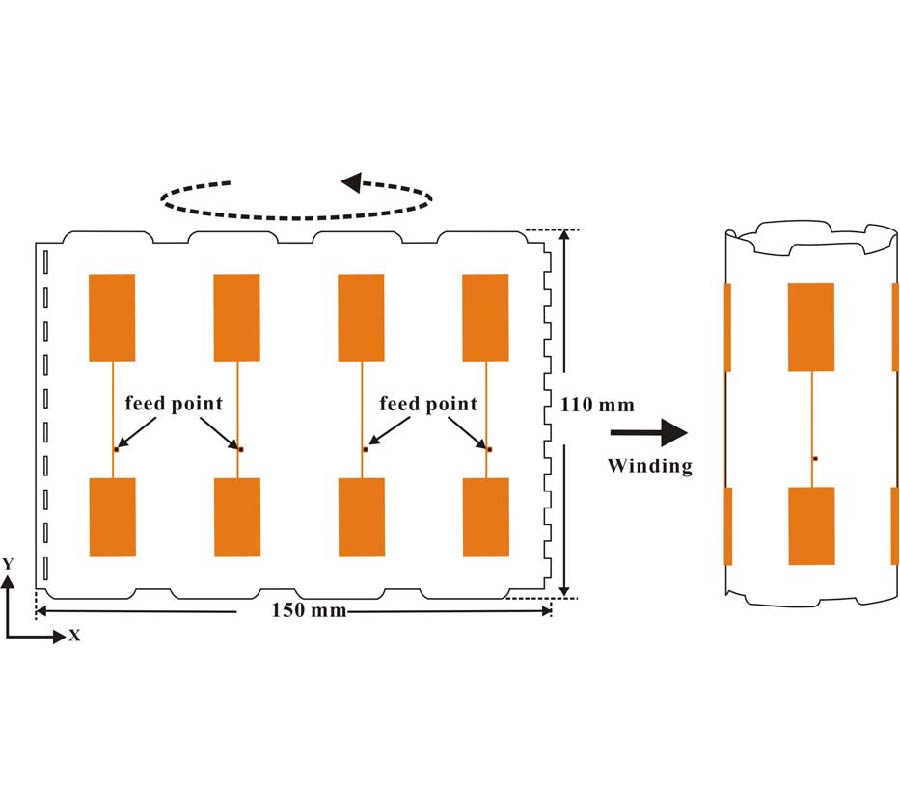
A novel self-calibration scheme for rotating array antennas is proposed. It is based on the acquisition of some near field samples using a static probe providing information about the actual behavior of the antenna. If any error, fault or obstacle modifies the desired behavior, the weights applied to the feedings of the array elements are modified so that specifications are fulfilled again. Additionally, coupling between the elements of the arrays is also accounted for. Different disciplines such as near field to far field transformation, antenna modeling, adaptive filtering or automatic learning are involved in this system. Some significant results are also presented.
SELF-CALIBRATION FOR FAULT OR OBSTACLE CORRECTION IN CONTINUALLY ROTATING ARRAY ANTENNAS
2010-12-15
PIER
Vol. 111, 331-364
An FFT-Accelerated FDTD Scheme with Exact Absorbing Conditions for Characterizing Axially Symmetric Resonant Structures
Kostyantyn Sirenko , Vadim Pazynin , Yuriy K. Sirenko and Hakan Bagci
An accurate and efficient finite-difference time-domain (FDTD) method for characterizing transient waves interactions on axially symmetric structures is presented. The method achieves its accuracy and efficiency by employing localized and/or fast Fourier transform (FFT) accelerated exact absorbing conditions (EACs). The paper details the derivation of the EACs, discusses their implementation and discretization in an FDTD method, and proposes utilization of a blocked-FFT based algorithm for accelerating the computation of temporal convolutions present in nonlocal EACs. The proposed method allows transient analyses to be carried for long time intervals without any loss of accuracy and provides reliable numerical data pertinent to physical processes under resonant conditions. This renders the method highly useful in characterization of high-Q microwave radiators and energy compressors. Numerical results that demonstrate the accuracy and efficiency of the method are presented.
AN FFT-ACCELERATED FDTD SCHEME WITH EXACT ABSORBING CONDITIONS FOR CHARACTERIZING AXIALLY SYMMETRIC RESONANT STRUCTURES
2010-12-14
PIER Letters
Vol. 19, 147-154
Electromagnetic Wave Scattering by a Thin Layer in Which Many Small Particles Are Embedded
Alexander G. Ramm
Scattering of electromagnetic (EM) waves by many small particles (bodies), embedded in a thin layer, is studied. Physical properties of the particles are described by their boundary impedances. The thin layer of depth of the order O(a), with many embedded small particles of characteristic size a, is described by a boundary condition on the surface of the layer. The limiting interface boundary condition is obtained for the effective EM field in the limiting medium, in the limit a→0, where the number M(a) of the particles tends to infinity at a suitable rate.
2010-12-13
PIER B
Vol. 27, 253-272
Complex Image Method Analysis of a Plane Wave-Excited Subwavelength Circular Aperture in a Planar Screen
Krzysztof A. Michalski
A complex image method is presented for the analysis of a subwavelength circular aperture in a perfectly conducting screen of infinitesimal thickness illuminated by a plane wave. The method is based on the Bethe-Bouwkamp quasi static model of the aperture field and uses the spectral domain formulation as the point of departure. Closed-form expressions are obtained for the electromagnetic fields valid for all observation points. Sample numerical results demonstrate the accuracy and efficiency of the method for both normal and oblique illuminations, including an evanescent wave. In the latter case, the results show a circulating power flux and enhanced field confinement near the aperture.
COMPLEX IMAGE METHOD ANALYSIS OF A PLANE WAVE-EXCITED SUBWAVELENGTH CIRCULAR APERTURE IN A PLANAR SCREEN
2010-12-13
PIER Letters
Vol. 19, 137-146
The Wave Equation and General Plane Wave Solutions in Fractional Space
Muhammad Zubair , Muhammad Junaid Mughal and Qaisar Abbas Naqvi
This work presents the analytical solution of vector wave equation in fractional space. General plane wave solution to the wave equation for fields in source-free and lossless media is obtained in fractional space. The obtained solution is a generalization of wave equation from integer dimensional space to a non-integer dimensional space. The classical results are recovered when integer-dimensional space is considered.
THE WAVE EQUATION AND GENERAL PLANE WAVE SOLUTIONS IN FRACTIONAL SPACE
2010-12-13
PIER C
Vol. 18, 197-210
UWB Printed Slot Antenna with Improved Performance in Time and Frequency Domains
Mithilesh Kumar , Ananjan Basu and Shiban Kishen Koul
A microstrip-fed slot antenna is proposed for short-range UWB communication. First, the characteristics of a circular monopole UWB antenna, as a representative of a class of UWB antennas seen in the literature, are examined in time (pulse-shape) and frequency (reflection and transmission coefficients) domains. From these measurements, certain limitations of this class of antennas are brought out, which are not widely recognized. We then demonstrate that with proper optimization the traditional microstrip-fed slot antenna overcomes these defects and is an excellent candidate for UWB communication systems. This claim is justified with measurements in time domain and frequency domain.
UWB PRINTED SLOT ANTENNA WITH IMPROVED PERFORMANCE IN TIME AND FREQUENCY DOMAINS
2010-12-13
PIER C
Vol. 18, 185-195
On the Use of Gegenbauer Prototypes in the Synthesis of Waveguide Filters
Lorenzo Cifola , Antonio Morini and Giuseppe Venanzoni
Filter prototypes derived from Gegenbauer polynomials can represent a useful trade-off between amplitude and phase behavior. This paper discusses the main features of this prototype through a comparison with the more classical Chebyshev and Butterworth solutions; it shows, in the case of an X-band waveguide realization, how its intermediate characteristics, with respect to both amplitude and phase responses, can be very useful in satisfying particular filter performance requirements without increasing filter order.
ON THE USE OF GEGENBAUER PROTOTYPES IN THE SYNTHESIS OF WAVEGUIDE FILTERS