Search Results(13802)

2010-12-03
PIER Letters
Vol. 19, 93-102
A Planar d-CRLH and Its Application to Bandstop Filter and Leaky-Wave Antenna
Chuan-Yun Liu , Qing-Xin Chu and Jian-Quan Huang
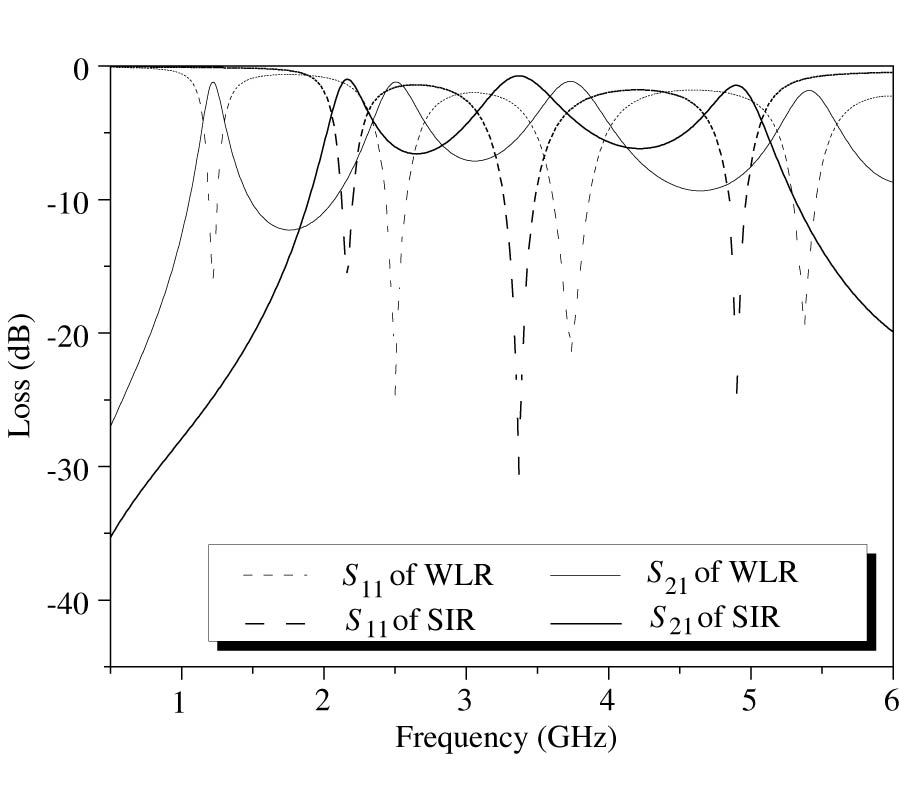
A planar dual-composite right/left-handed (D-CRLH) transmission line (TL) structure is proposed. The characteristics such as dispersion relation and frequency response of this D-CRLH TL are analyzed by equivalent circuit analysis, Bloch-Floquet theory, full wave simulation and experiment. To demonstrate applications of the proposed structure, both bandstop filter and leaky-wave antenna are designed and implemented by the conventional print circuit board technology. The fabricated filter has a broad application because of its planar structure, small size and tunable stopband. The measured results also suggest that the leaky-wave antenna based on the D-CRLH concept can offer a scanning angle covering almost backfire-to-endfire directions.
A PLANAR D-CRLH AND ITS APPLICATION TO BANDSTOP FILTER AND LEAKY-WAVE ANTENNA
2010-12-02
PIER B
Vol. 27, 187-212
Magnetic Field and Current Are Zero Inside Ideal Conductors
Miguel C. N. Fiolhais , Hanno Essén , Constanca Providencia and Arne B. Nordmark
We prove a theorem on the magnetic energy minimum in a system of perfect, or ideal, conductors. It is analogous to Thomson's theorem on the equilibrium electric field and charge distribution in a system of conductors. We first prove Thomson's theorem using a variational principle. Our new theorem is then derived by similar methods. We find that magnetic energy is minimized when the current distribution is a surface current density with zero interior magnetic field; perfect conductors are perfectly diamagnetic. The results agree with currents in superconductors being confined near the surface. The theorem implies a generalized force that expels current and magnetic field from the interior of a conductor that loses its resistivity. Examples of solutions that obey the theorem are presented.
MAGNETIC FIELD AND CURRENT ARE ZERO INSIDE IDEAL CONDUCTORS
2010-12-02
PIER
Vol. 111, 141-161
Setup and Results of Pyramidal Microwave Absorbers Using Rice Husks
Hassan Nornikman , Mohd Fareq Bin Abd Malek , Manjur Ahmed , Fwen Hoon Wee , Ping Jack Soh , Azremi Abdullah Al-Hadi , S. A. Ghani , A. Hasnain and M. N. Taib
Agricultural wastes are considered not useful and are commonly dumped or burned after crop harvesting. Rice husks from paddy (Oryza sativa) are example of agricultural wastes. Rice husks have been investigated as the material for the pyramidal microwave absorbers. The setup for the fabrication and measurement of the rice husks pyramidal microwave absorbers are discussed. An 8×8 array of pyramidal microwave absorber using the rice husks-polyester-MEKP mixture has been designed and fabricated. There are four main stages in this work: the collection of the raw rice husks materials, the mould fabrication, the pyramidal microwave absorber fabrication and the experiments performed to determine the reflection loss performance of the rice husks pyramidal microwave absorbers. Experimental results show close agreement with the simulation results (using CST Microwave Studio). Results so far have indicated that rice husks have great potential to be used as the material for the pyramidal microwave absorbers.
SETUP AND RESULTS OF PYRAMIDAL MICROWAVE ABSORBERS USING RICE HUSKS
2010-12-01
PIER B
Vol. 27, 165-186
Design and Simulation of Membrane Supported Transmission Lines for Interconnects in a mm-Wave Multichip Module
Novak E. S. Farrington and Stavros Iezekiel
Investigations are conducted into low-loss, low-dispersion fully shielded membrane-supported striplines designed for use in a millimeter-wave multi-chip-module. Two types of transmission line are studied: a membrane-supported shielded stripline and a novel variation of this where the membrane material is removed in areas of little mechanical importance to reduce attenuation and dispersion. The latter is possible through the exploitation of a versatile micromachining technique using SU-8 for both the membrane and the shielding. The micromachining techniques used for the fabrication of the micro-shielding allows for the conformal packaging of lines and devices, with the ultimate aim of the realization of novel components for 3D system-in-a-package type modules. Extensive simulated results obtained from rigorous electromagnetic modeling are presented that fully characterize both types of line and, where possible, are compared to measured results. Loss mechanisms are investigated for both line types and simulations suggest that losses as low as 0.39 dB/cm and effective relative permittivities of less than 1.05 are possible at a frequency of 100 GHz, comparing well with other demonstrated membrane supported transmission lines. The methods used for investigation of line characteristics and analysis of single-mode, non-leaky frequency range are applicable to any variety of membrane supported transmission line. The basics of line fabrication are given along with measurement results and de-embedding techniques used at V-band.
DESIGN AND SIMULATION OF MEMBRANE SUPPORTED TRANSMISSION LINES FOR INTERCONNECTS IN A MM-WAVE MULTICHIP MODULE
2010-12-01
PIER M
Vol. 16, 73-84
Analysis and Synthesis of Radar Cross Section of Array Antennas
Bao Lu , Shu-Xi Gong , Shuai Zhang and Jin Ling
Our previous work has proved that the Monostatic Radar Cross Section (MRCS) of array antennas can be decomposed into the multiplication of array MRCS factor and element MRCS factor. The principle was derived in a special case that the array only had dipole antenna elements. However, many array antennas have more general antenna elements whose current is aperture distributed along the antenna structure. Obviously it encounters limited application problem when the principle is used to analyze more general array antennas other than dipole arrays. Therefore, the principle is extended into the more general array with arbitrary aperture antenna elements in this paper. In deriving the principle, the devices in the feed are assumed to have identical transmission and reflection coefficients. In order to validate the principle the scattering pattern of a waveguide slot array and an array with helix antenna elements are synthesized utilizing the array RCS factor. The simulation and calculation results prove that the principle is correct for the RCS pattern synthesis of general arrays with aperture antenna elements.
ANALYSIS AND SYNTHESIS OF RADAR CROSS SECTION OF ARRAY ANTENNAS
2010-12-01
PIER
Vol. 111, 119-139
Fast Computation of the Forward Solution in Controlled-Source Electromagnetic Sounding Problems
Mauro Parise
The forward problem of calculating the electromagnetic (EM) field of a circular current loop in presence of a layered earth structure, given the geometrical and EM parameters of the layers, is solved fast. Efficient computation is obtained through a quasi-analytical procedure that allows to transform the field integrals into expressions involving only a known Sommerfeld Integral. The final explicit forms of the fields are in terms of modified Bessel functions. To validate the method, the magnitudes of the EM field components versus induction number and versus frequency are calculated assuming two- and three-layer earth models. The achieved results are in good agreement with the ones provided by the commonly used digital filter algorithms. The computational time taken by the application of this technique is shown to be much less than that required by both digital filters and other recently developed integration techniques for similar problems. This paper is an extension of an earlier conference paper.
FAST COMPUTATION OF THE FORWARD SOLUTION IN CONTROLLED-SOURCE ELECTROMAGNETIC SOUNDING PROBLEMS
2010-12-01
PIER
Vol. 111, 105-117
One-Dimensional Photonic Heterostructure with Broadband Omnidirectional Reflection
Jesus Manzanares-Martinez , Raul Archuleta-Garcia , Paola Castro-Garay , Damian Moctezuma-Enriquez and Efrain Urrutia-Banuelos
In this work we report the modeling of an one-dimensional photonic heterostructure which presents a giant omnidirectional photonic band gap. This omnidirectional reflector is made by the union of lattices with the same filling fraction and index contrast, but with different lattice periods. Using the scalability of the electromagnetic wave equation we present a simple manner to enlarge ---as large as desired--- the omnidirectional mirror. We apply our method to design an omnidirectional reflector for all the visible range.
ONE-DIMENSIONAL PHOTONIC HETEROSTRUCTURE WITH BROADBAND OMNIDIRECTIONAL REFLECTION
2010-11-30
PIER B
Vol. 27, 151-163
Three-Dimensional Axisymmetric Invisibility Cloaks with Arbitrary Shapes in Layered-Medium Background
Yong-Bo Zhai and Tie-Jun Cui
Three-dimensional (3D) axisymmetric invisibility cloaks with arbitrary shaped in layered-media background are presented using the transformation optics. The inner and outer boundaries of the cloaks can be non-conformal with arbitrary shapes, which considerably improve the flexibility of the cloaking applications. However, such kinds of 3D cloaks cannot be simulated using the commercial softwares due to the tremendous memory requirements and CPU time. By taking advantage of the rotationally symmetrical property, we propose an efficient finite-element method (FEM) to simulate and analyze the 3D cloaks, which can greatly reduce the CPU time and memory requirements. The method is based on the electric-field formulation, in which the transverse fields are expanded in terms of second-order edge-based vector basis functions and the azimuth components are expanded using second-order nodal-based scalar basis functions. The FEM mesh is truncated using the absorbing boundary condition. Excellent cloaking performance of the 3D cloaks in layered-media background has been verified by the proposed method.
THREE-DIMENSIONAL AXISYMMETRIC INVISIBILITY CLOAKS WITH ARBITRARY SHAPES IN LAYERED-MEDIUM BACKGROUND
2010-11-30
PIER B
Vol. 27, 127-149
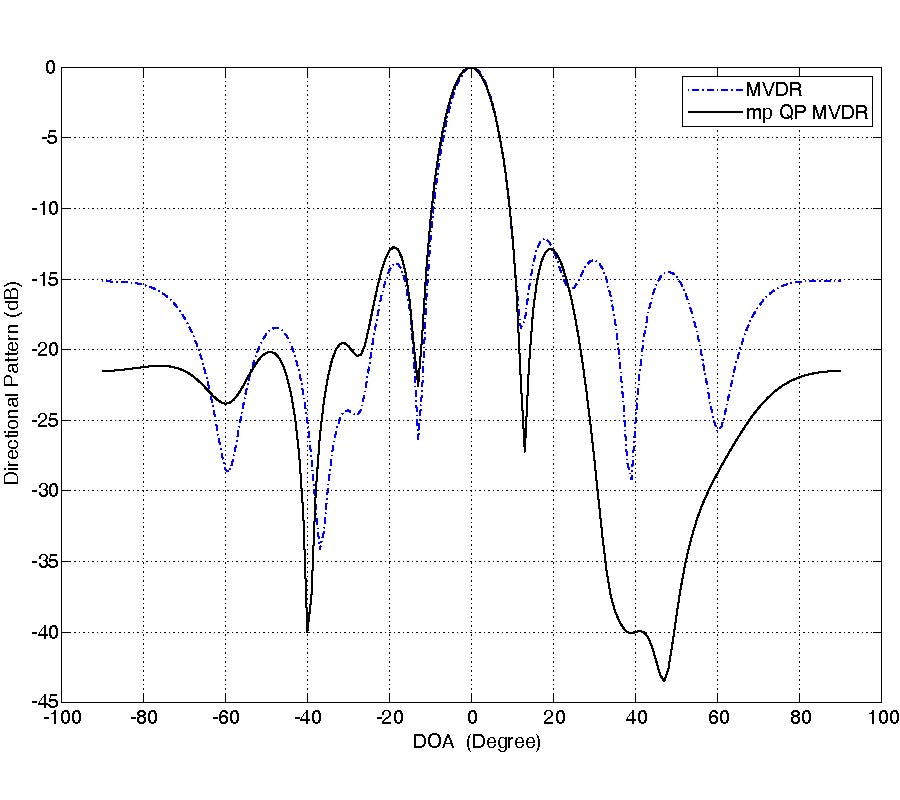
Direction of Arrival Estimation of Humans with a Small Sensor Array Using an Artificial Neural Network
Youngwook Kim and Hao Ling
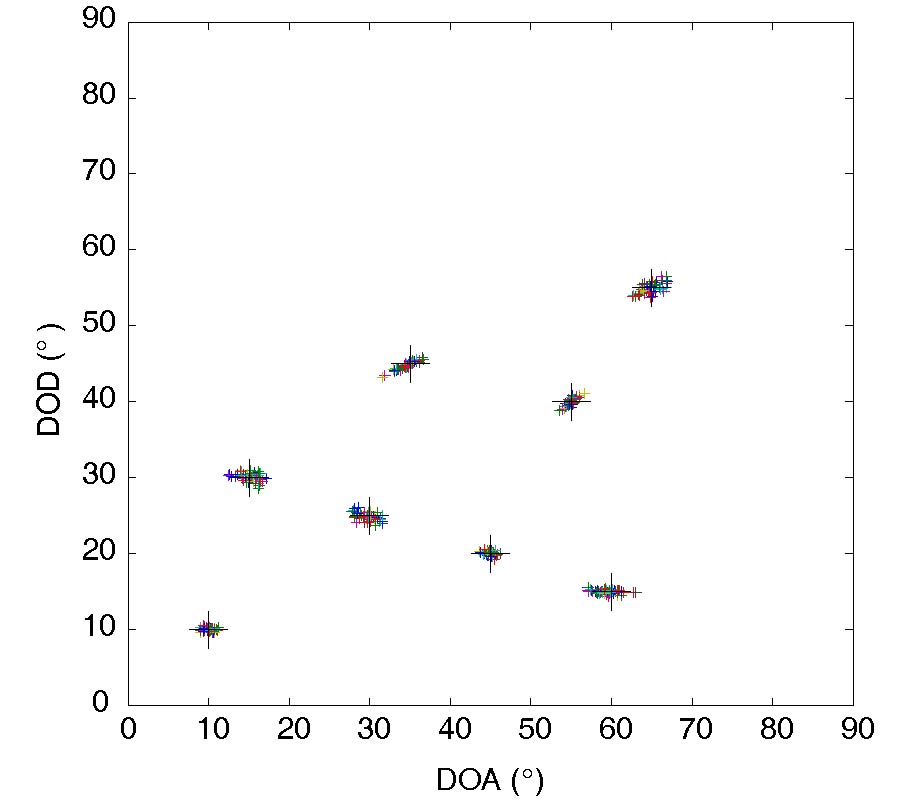
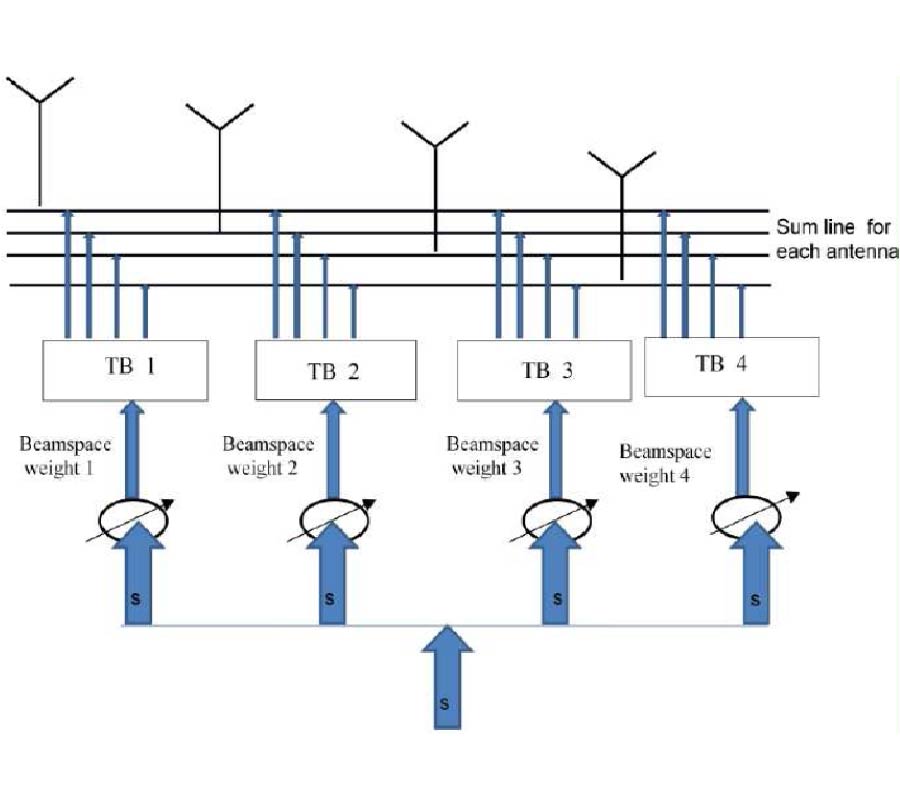
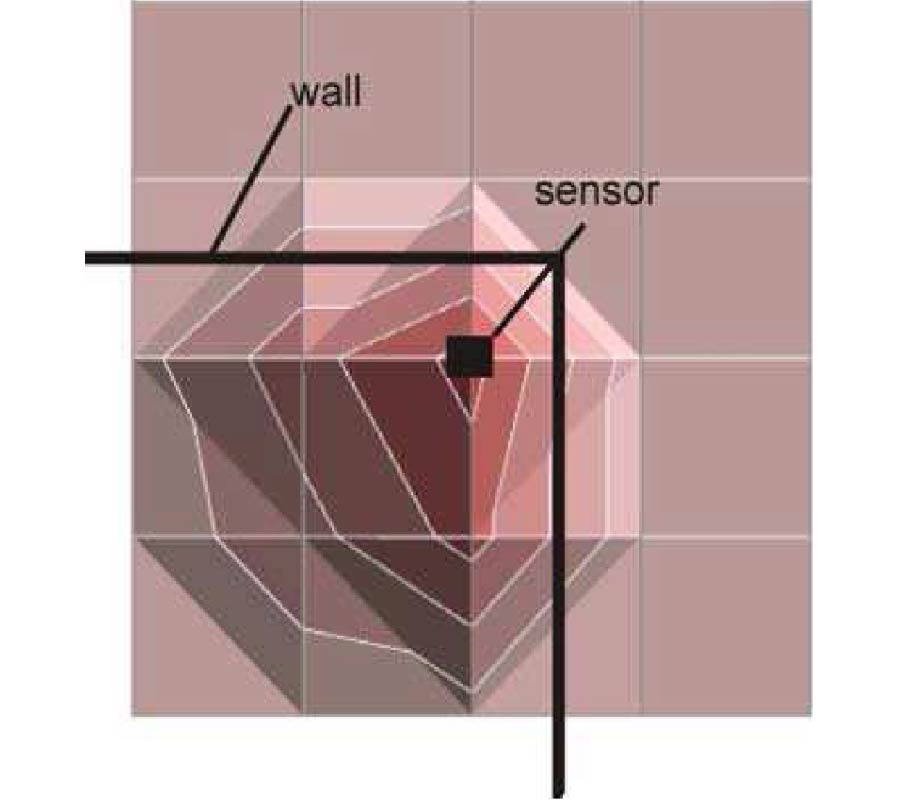
An array processing algorithm based on artificial neural networks (ANNs) is proposed to estimate the directions of arrival (DOAs) of moving humans using a small sensor array. In the approach, software beamforming is first performed on the received signals from the sensor elements to form a number of overlapping beams. The received signals from all the beams produce a unique "signature" in accordance with the target locations as well as the number of targets. The target tracking procedure is handled by two separate ANNs in sequence. The first ANN determines the number of targets, and the second ANN estimates their respective DOAs. The ANNs are trained using simulation data generated based on a point scatterer model in free space. The proposed approach is tested using measurement data from two loudspeakers and two walking humans in line-of-sight and through-wall environments.
DIRECTION OF ARRIVAL ESTIMATION OF HUMANS WITH A SMALL SENSOR ARRAY USING AN ARTIFICIAL NEURAL NETWORK
2010-11-30
PIER
Vol. 111, 91-104
Experimental Study on a Flanged Parallel-Plate Dielectric Waveguide Probe for Detection of Buried Inclusions
Huiyu Zhang , Soon Yim Tan and Hong Siang Tan
This paper presents an experimental study of a flanged parallel-plate dielectric waveguide (PPDW) probe for detecting dielectric inclusions in a dielectric host medium, with different electrical properties from the inclusions. The S-parameter signals from an inclusion (modelled as a conducting sphere) are shown to have resonant characteristics, from which the size and location of the inclusion can be deduced. As an example of a possible application for this technique, we use parameters of host medium and inclusions relevant for detection of tumors in body tissues. An experimental study was performed on solid tissue-simulating phantoms with embedded conducting dielectric inclusions. The measurements show promising results.
EXPERIMENTAL STUDY ON A FLANGED PARALLEL-PLATE DIELECTRIC WAVEGUIDE PROBE FOR DETECTION OF BURIED INCLUSIONS
2010-11-30
PIER
Vol. 111, 71-90
Experimental Investigation and Optimization of Permanent Magnet Motor Based on Coupling Boundary Element Method with Permeances Network
Said Touati , Rachid Ibtiouen , Omar Touhami and Abdesselem Djerdir
In the first part of this work, we develop a model to compute linkage fields in Outer Rotor Permanents Magnets synchronous machines (OR-PMSM), a structure which is often used in the automotive traction motors. To carry out such a design, we usually employ Finite Element analysis (FEA) software even if it is time consuming. Other designers prefer the Permeances Network Method (PNM) which is less accurate and needs offline FEM results to evaluate the unknown air-gap permeances. Comparatively, between FEM and BEM, the first method is more precise whereas the second is faster in computing times. We propose here a new technique using the hybridization of both the methods in order to gain the advantages of the two techniques, i.e., a relatively accurate and fast methods, so the high ratio fast of running/computing errors has been checked out. The second part deals with the multi-objective design optimization of the studied motor. To do this, we choose the decrease of cogging torque and the increase of torque as objectives applied to multi-objective optimization (MO) process.
EXPERIMENTAL INVESTIGATION AND OPTIMIZATION OF PERMANENT MAGNET MOTOR BASED ON COUPLING BOUNDARY ELEMENT METHOD WITH PERMEANCES NETWORK
2010-11-29
PIER B
Vol. 27, 101-126
Detection of Massive Numbers of Dvds by a UHF RFID System
Zhonghao Hu and Peter Cole
This paper aims to provide an effective solution to the problem of detecting a large number of densely stacked DVDs. The number is in the range of 2000. In order to achieve that goal, firstly the structure and the properties of materials comprising a DVD disc and a DVD case are investigated. The effect of the metal layer in the disc on the interrogating wave is evaluated via theoretical analysis and simulation. Based on that analysis and simulation, and on numerous experiments on either a single labeled DVD in free space or multiple labeled DVD in a DVD stack, two solutions are proposed whereby over 95% DVDs in a great portion of a 2000 DVD stack could be detected. Eliminating the tags which have weak performance, the percentage can be 100%. This paper not only expands the range of categories detectable by UHF RFID systems but also provides a process and method for item-level tagging in which the number of the items is in the range of thousands.
DETECTION OF MASSIVE NUMBERS OF DVDS BY A UHF RFID SYSTEM
2010-11-29
PIER Letters
Vol. 19, 83-92
Fiber Optical Parametric Oscillator with Switchable and Wavelength-Spacing Tunable Multi-Wavelength
Bing Sun , Daru Chen and Sailing He
We propose a switchable and wavelength spacing tunable multi-wavelength fiber optical parametric oscillator (MW-FOPO) with two cascaded fiber Bragg gratings (FBGs). The MW-FOPO can operate at two multi-wavelength lasing modes with different wavelength spacings, which can be switched by adjusting some polarization controllers (PCs). Stable multi-wavelength lasing at those two different operation modes at room temperature is achieved due to the four wave mixing (FWM) effect and the broadband gain of the fiber optical parametric amplifier (FOPA) based on a highly nonlinear fiber. The wavelength spacing of the proposed MW-FOPO can be tuned by adjusting the wavelength of the pump light or the central wavelength of the FBG at the two multi-wavelength lasing modes.
FIBER OPTICAL PARAMETRIC OSCILLATOR WITH SWITCHABLE AND WAVELENGTH-SPACING TUNABLE MULTI-WAVELENGTH
2010-11-29
PIER
Vol. 111, 43-70
A Novel Spherical-Wave Three-Dimensional Imaging Algorithm for Microwave Cylindrical Scanning Geometries
Weixian Tan , Wen Hong , Yanping Wang and Yirong Wu
With the increasing threat of terrorism in recent years, the detection of concealed weapons, plastic bombs and other contraband at secure locations attracts more and more countries' attention all over the world. Three-dimensional (3D) microwave imaging surveillance systems, allowing for acquisition of full 3D microwave images of volumetric scatters of human body, have been developed for security applications. In this paper, we firstly propose a 3D imaging algorithm which not only accounts for the free space propagation losses and wavefront curvature but also avoids 3D interpolation in the 3D wavenumber domain without suffering from any approximations and truncation errors. Then, the sampling constraints and the resolution issues associated with proper and alias-free implementation of the 3D reconstruction are analyzed. Finally, the focusing capabilities of our proposed imaging algorithm are investigated and verified by means of numerical simulations as well as theoretical analysis, and an approach for better displaying projected images is examined.
A NOVEL SPHERICAL-WAVE THREE-DIMENSIONAL IMAGING ALGORITHM FOR MICROWAVE CYLINDRICAL SCANNING GEOMETRIES
2010-11-28
PIER B
Vol. 27, 83-99
On Simulating the Radio Signal Propagation in the Reverberation Chamber with the Ray Launching Method
Kamil Staniec and Adam J. Pomianek
The modeling of the reverberation chamber with the use of deterministic techniques, one of which is the Ray Launching (RL) method, requires a careful tuning with measurements. A few factors that most severely influence the simulation results are: the minimum number of stirrer rotations to produce representative outcomes, the number of reflections of each traced ray and, finally, the size of the receive probe and the wall reflection loss. In the course of investigations it was demonstrated that these factors have a different, and in some instances --- even opposite, impact on the simulated results in the electromagnetic (EM) power domain and in the time domain (the time delay spread). A simple procedure consisting of a few steps has been proposed for tuning deterministic RL models to the measured data.
ON SIMULATING THE RADIO SIGNAL PROPAGATION IN THE REVERBERATION CHAMBER WITH THE RAY LAUNCHING METHOD
2010-11-28
PIER Letters
Vol. 19, 75-82
Tunable Coplanar Waveguide (CPW) Line Integrating Bismuth ZINC Niobate (Bzn) Thin Films
Young Chul Lee and Kyung Hyun Ko
In this paper, a tunable coplanar waveguide (CPW) line using the bismuth zinc niobate (BZN) thin film has been proposed and demonstrated for low-voltage phase shifter applications. In order to reduce the operation bias voltage the air gaps between the signal strip and ground plane are filled with the tunable thin films. At low E-fields of 1.3 kV/cm, the fabricated CPW line shows the phase difference of 10 degree at 10 GHz.
TUNABLE COPLANAR WAVEGUIDE (CPW) LINE INTEGRATING BISMUTH ZINC NIOBATE (BZN) THIN FILMS
2010-11-28
PIER Letters
Vol. 19, 67-73
A Miniaturized UWB BPF Based on Novel Scrlh Transmission Line Structure
Ji-Kang Wang , Yong-Jiu Zhao , Li Qiang and Quan Sun
A miniaturized ultra-wideband (UWB) bandpass filter (BPF) with U-slot etched around the metallic via in the ground is proposed based on a simplified composite right/left-handed transmission line (SCRLH TL) structure. The U-slot etched in the ground makes it feasible to reduce the overall size. A demonstration of FCC standard UWB bandpass filter (BPF) is designed, fabricated and measured. Very good agreement is shown between measurement and simulation.
A MINIATURIZED UWB BPF BASED ON NOVEL SCRLH TRANSMISSION LINE STRUCTURE
2010-11-28
PIER C
Vol. 18, 73-86
An Iterative Technique to Compensate for Positioning Errors in the Nf-Ff Transformation with Helicoidal Scanning for Long Antennas
Francesco D'Agostino , Flaminio Ferrara , Claudio Gennarelli , Rocco Guerriero and Massimo Migliozzi
An effective procedure is developed in this paper to compensate the probe positioning errors when using a near-field to far-field transformation technique with helicoidal scanning for long antennas. It is based on a prolate ellipsoidal modelling of the antenna under test and makes use of an iterative scheme to retrieve the uniformly distributed helicoidal near-field data from the irregularly spaced acquired ones. Once these data have been recovered, those required to perform a standard near-field--far-field transformation with cylindrical scanning are efficiently determined via an optimal sampling interpolation algorithm. Some numerical tests are reported to assess the accuracy of the approach and its robustness with respect to random errors affecting the data. At last, the validity of the developed technique is further confirmed by the experimental tests performed at the Antenna Characterization Lab of the University of Salerno.
AN ITERATIVE TECHNIQUE TO COMPENSATE FOR POSITIONING ERRORS IN THE NF-FF TRANSFORMATION WITH HELICOIDAL SCANNING FOR LONG ANTENNAS
2010-11-28
PIER C
Vol. 18, 59-72
Design of Fully Digital Controlled Reconfigurable Dual-Beam Concentric Ring Array Antenna Using Gravitational Search Algorithm
Anirban Chatterjee , Gautam Mahanti and Priya Ranjan Sinha Mahapatra
In this paper, we propose an optimization method based on Gravitational Search Algorithm (GSA) for design of reconfigurable dual-beam concentric ring array of isotropic elements with phase only control of five-bit digital phase shifters. The problem is to find a common radial amplitude distribution using four-bit digital attenuator that will generate three different types of broadsided beam pair in vertical plane: a pencil/pencil beam pair, a pencil/flat-top beam pair and a flat-top/flat-top beam pair sector pattern) with desired value of side lobe level, first null beam width and ripple. The two patterns differ only in radial discrete phase distribution while sharing a common discrete radial amplitude distribution. The optimum sets of four-bit discrete radial amplitude distribution generated by four-bit digital attenuators and five-bit discrete radial phase distribution generated by five-bit digital phase shifters for obtaining dual radiation patterns are computed by Gravitational Search Algorithm.
DESIGN OF FULLY DIGITAL CONTROLLED RECONFIGURABLE DUAL-BEAM CONCENTRIC RING ARRAY ANTENNA USING GRAVITATIONAL SEARCH ALGORITHM
2010-11-28
PIER M
Vol. 16, 63-71
Piecewise Surface Impedance Boundary Conditions by Combining Rytov's Perturbation Method and Level Set Technique
Afif Bouzidi and Taoufik Aguili
In this paper we propose a computational method for constructing variable surface impedance, based on combining Rytov's perturbation method and level set technique. It is well-known that the choice of the most appropriate order of Rytov's expansion is important both for accuracy and implementation. By using level set method, we constructed a piecewise distribution of low- and high-order surface impedance boundary conditions on the surface of an arbitrarily shaped conductor. It is found that the proposed method is able to give good results both in terms of accuracy and implementation cost.
PIECEWISE SURFACE IMPEDANCE BOUNDARY CONDITIONS BY COMBINING RYTOV'S PERTURBATION METHOD AND LEVEL SET TECHNIQUE