Search Results(13899)

2011-01-06
PIER
Vol. 112, 93-107
Design of the Ultrawideband Antenna with a Quadruple-Band Rejection Characteristics Using a Combination of the Complementary Split Ring Resonators
Dang-Oh Kim , Nam-I Jo , Hyun-Ah Jang and Che-Young Kim
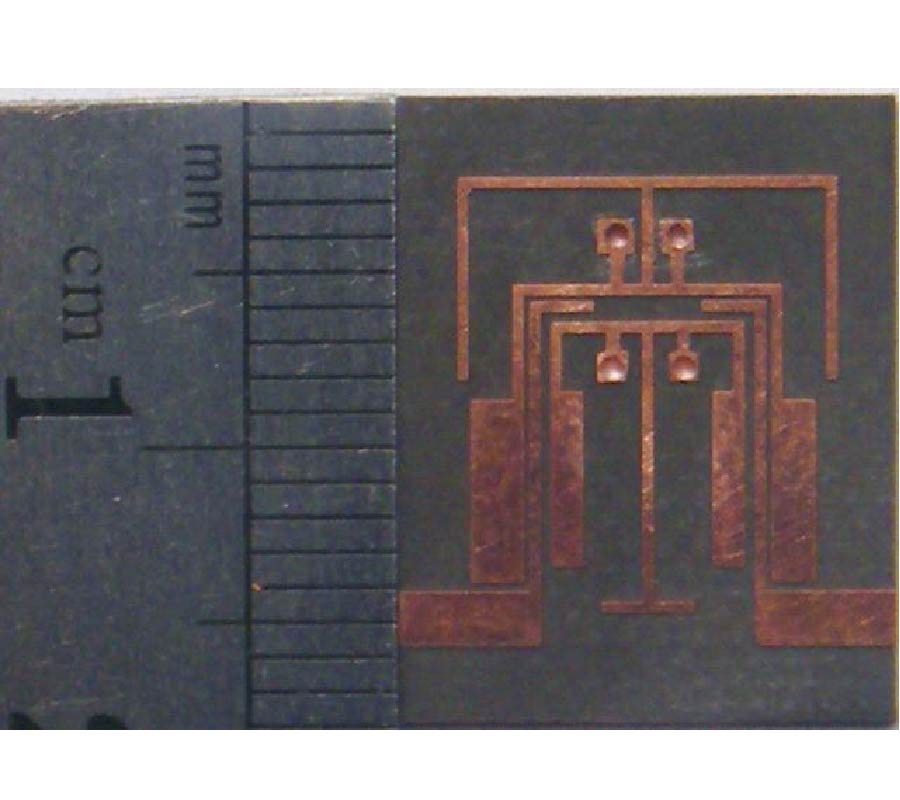
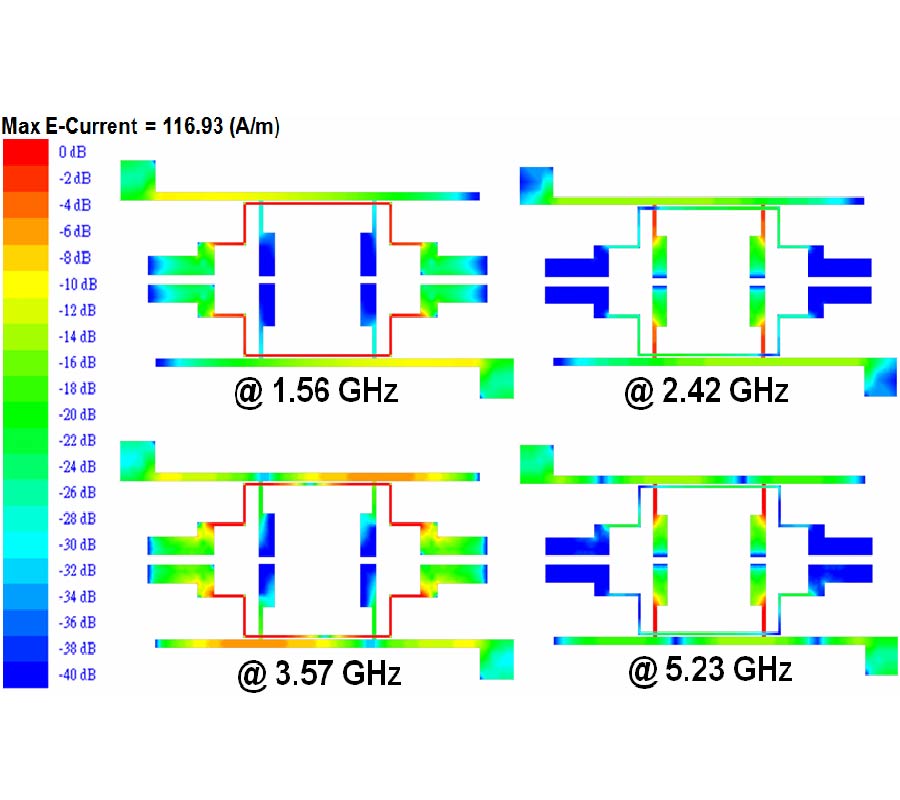
In this paper, the design method of a quadruple-band rejection ultra-wideband (UWB) antenna with three co-directional complementary split ring resonators (CSRRs) is proposed. Within the design step, individual antennas corresponding to each rejection band is first designed, and then a finalized structure is determined by assembling these individual antennas altogether. The shape of the final antenna achieves both the impedance matching of ultra-wideband and the respective resonances at four rejection bands. Here, the mutual coupling among the band rejection elements is minimized, and the placement of the resonators is optimized. The fabricated antenna is compact enough to be integrated into the UWB system, and also the measured results show the validity of the proposed design strategy.
DESIGN OF THE ULTRAWIDEBAND ANTENNA WITH A QUADRUPLE-BAND REJECTION CHARACTERISTICS USING A COMBINATION OF THE COMPLEMENTARY SPLIT RING RESONATORS
2011-01-06
PIER
Vol. 112, 77-92
Microwave Radiometry Imaging for Forest Fire Detection: A Simulation Study
Stefania Bonafoni , Federico Alimenti , G. Angelucci and G. Tasselli
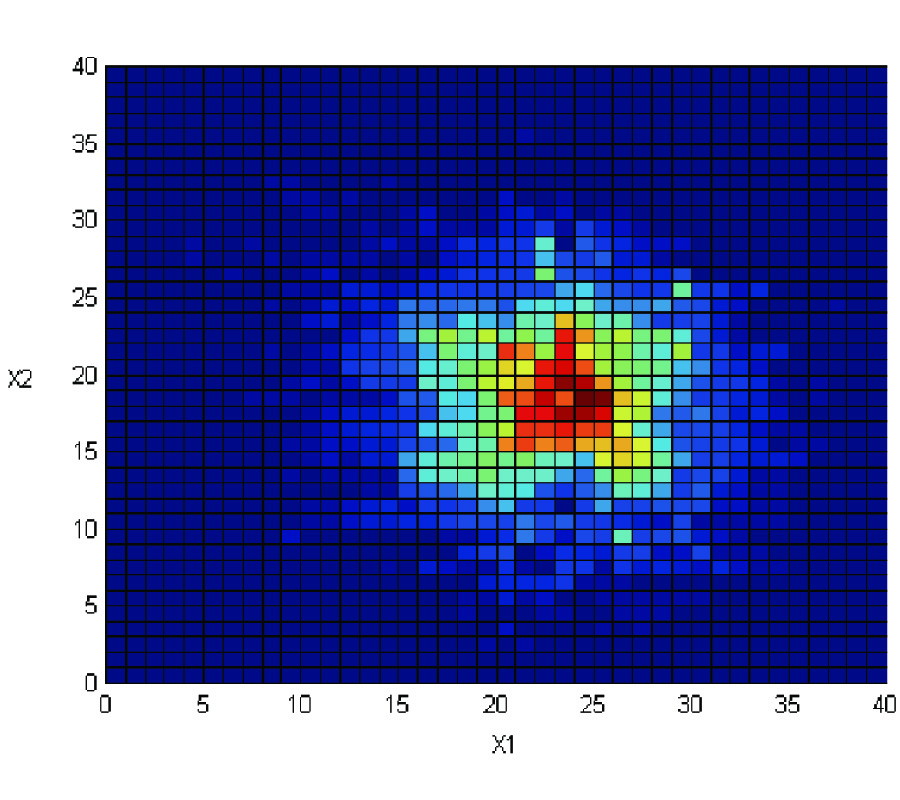
This paper deals with passive microwave imaging for fire detection by means of a single-channel ground-based radiometer. The simulation of images sensed in the presence of fire spots under different environmental and operative conditions will be presented. We will refer to a low-cost ground-based radiometer operating at 12.65 GHz. Scenarios with fires where visible and IR sensors are not useful with respect to a microwave imager will be investigated in deep, such as in the presence of vegetation canopy optically masking fire sources and smoke plumes in the early stage. These simulations will assess limits and capabilities of microwave imaging for the identification of little fires masked by forest areas.
MICROWAVE RADIOMETRY IMAGING FOR FOREST FIRE DETECTION: A SIMULATION STUDY
2011-01-05
PIER M
Vol. 16, 117-131
Effects of Random Errors Upon Effective Permittivity of a Composite Containing Short Needles
Zeshan Akbar Awan and Azhar Abbas Rizvi
A composite medium containing perfectly conducting short needles can have a range of frequency for which the real part of the effective permittivity of the composite is negative. Such a range of frequency can be taken as negative bandwidth. This negative bandwidth for a composite medium is dependent upon parameters like positioning, orientation, length and needle density of short needles. Effects of random errors in positioning and orientation of short needles upon the ensemble averaged effective permittivity are analyzed. It is studied theoretically that increasing error in positioning and orientation of short needles reduces negative bandwidth.
EFFECTS OF RANDOM ERRORS UPON EFFECTIVE PERMITTIVITY OF A COMPOSITE CONTAINING SHORT NEEDLES
2011-01-05
PIER
Vol. 112, 63-75
Depolarization of Metric Radio Signals and the Spatial Spectrum of Scattered Radiation by Magnetized Turbulent Plasma Slab
George Jandieri , Akira Ishimaru , Vakhtang Jandieri and Natalia N. Zhukova
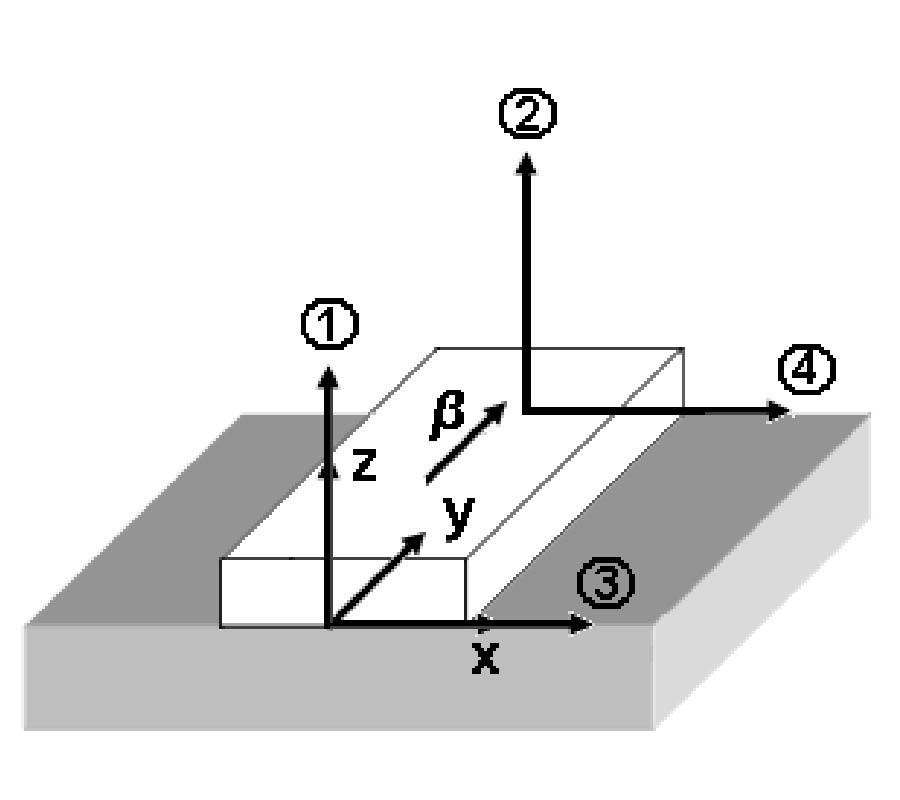
The mutual correlation function of the phase fluctuations of scattered ordinary and extraordinary waves by the magnetized plasma slab with electron density fluctuations and the variance of the Faraday angle is calculated by the perturbation method. Analytical expression of broadening of the spatial spectrum of scattered radiation is obtained for arbitrary fluctuation spectrum. Numerical calculations are carried out for the anisotropic Gaussian fluctuation spectrum at different anisotropy factor and the angle of inclination of prolate irregularities with respect to the external magnetic field. Isolines of the normalized root mean square deviation of the Faraday angle nonlinearly depends on the angle of inclination of prolate irregularities and increases in proportion to the anisotropy factor; two receiving antennas are located in orthogonal planes. It is shown that the broadening of the spatial spectrum of scattered electromagnetic waves by turbulent magnetized plasma slab in the principle plane (location of an external magnetic field) is less than in the perpendicular one.
DEPOLARIZATION OF METRIC RADIO SIGNALS AND THE SPATIAL SPECTRUM OF SCATTERED RADIATION BY MAGNETIZED TURBULENT PLASMA SLAB
2011-01-03
PIER B
Vol. 27, 349-363
A New Fast Method of Profile and Wavefront Reduction for Cylindrical Structures in Finite Elements Method Analysis
Youcef Boutora , Rachid Ibtiouen , Smail Mezani , Noureddine Takorabet and Abderrezak Rezzoug
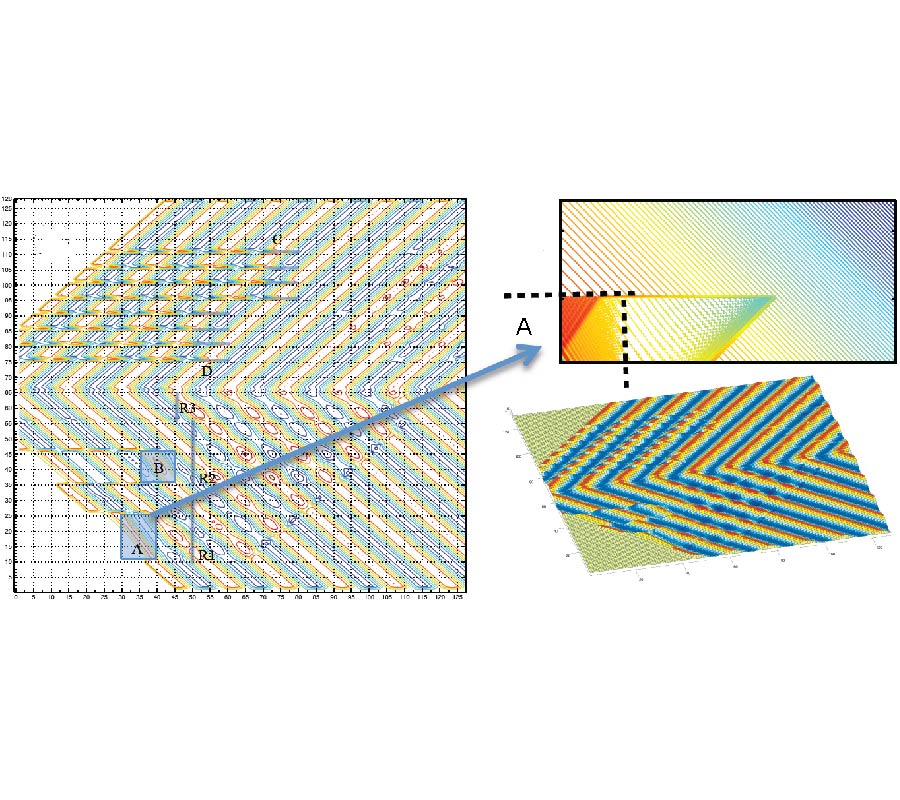
We present a new accurate node's renumbering method for minimizing the profile of stiffness matrix arising in finite elements problems. This method is suitable for cylindrical structures like electrical rotating machines and is especially intended for movement consideration by the moving band method. The structure is divided into sectors classified in a special way. The nodes contained in each sector are classified according to their radius value in regressing order. We show that the performances of the method are better than the most popular ones proposed in the literature. Application for a permanent magnet synchronous machine is presented. Application for finite elements analysis of a permanent synchronous machine in motion is achieved.
A NEW FAST METHOD OF PROFILE AND WAVEFRONT REDUCTION FOR CYLINDRICAL STRUCTURES IN FINITE ELEMENTS METHOD ANALYSIS
2010-12-24
PIER Letters
Vol. 19, 179-185
Design of Open-Loop Dual-Mode Microstrip Filters
Lakshman Athukorala , Djuradj Budimir and Milka M. Potrebic
This paper presents the design of compact second-order bandpass filters based on dual-mode open-loop resonator. A filter design procedure is provided to facilitate the design process. The paper also describes the nature of the inherent transmission zero associated with the structure and presents a method of generating two additional zeros for improving stop-band performance. Finally, a filter design example is presented to validate the argument.
DESIGN OF OPEN-LOOP DUAL-MODE MICROSTRIP FILTERS
2010-12-24
PIER C
Vol. 19, 25-35
Printed Loop Antenna Integrated into a Compact, Outdoor WLAN Access Point with Dual-Polarized Radiation
Saou-Wen Su
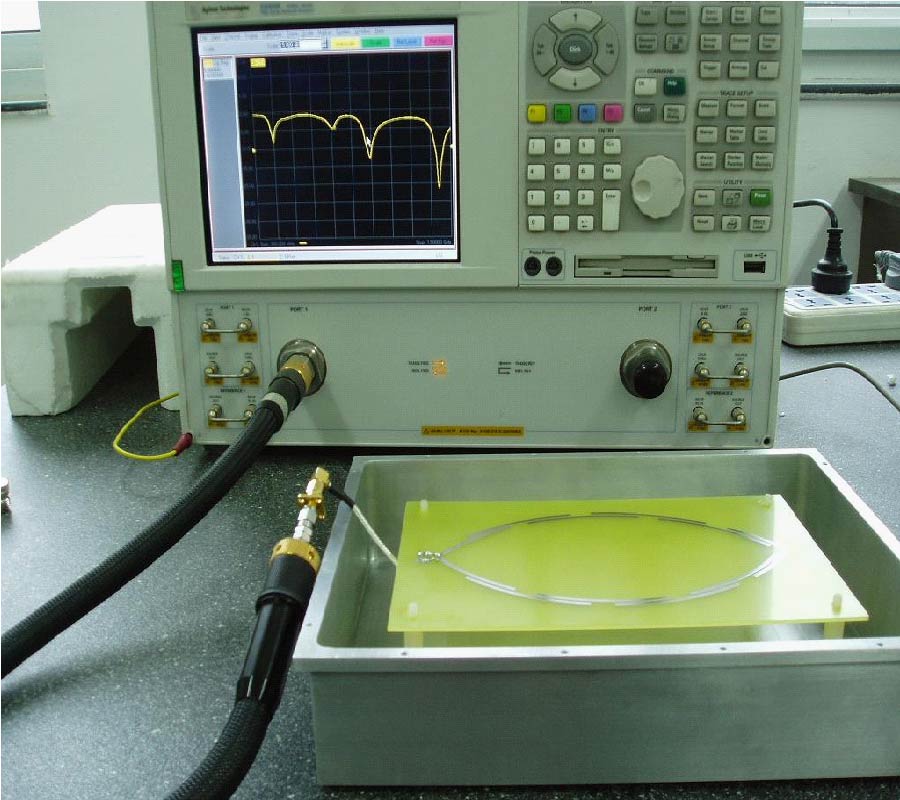
A printed loop antenna for integration into a compact, outdoor WLAN access point (AP) is presented. The loop design has a one-wavelength, resonant structure with respect to the center operating frequency of the 2.4 GHz band and is formed on a 1.6-mm thick FR4 substrate. The antenna substrate is further stacked above a system (PCB) of an outdoor AP by a small distance. In this study, the proposed design integrates the system printed circuit board PCB serving as an efficient reflector for the loop into an internal AP antenna solution. The results showed that by feeding the proposed square loop at one corner and adding the tuning portion at the diagonal corner, the dual-polarized radiation in the two major planes and good impedance matching over the band can be attained. High gain, directional radiation patterns were also obtained.
PRINTED LOOP ANTENNA INTEGRATED INTO A COMPACT, OUTDOOR WLAN ACCESS POINT WITH DUAL-POLARIZED RADIATION
2010-12-24
PIER
Vol. 112, 41-62
A New Efficient Method for Calculation and Suppression of Simultaneous Switching Noise with the Time-Domain Impedance Function for High-Speed Circuit Design
Tong-Hao Ding , Yu-Shan Li , Xu Yan and Yong-Zhe Qu
In this paper, a new method is proposed to calculate the simultaneous switching noise (SSN) in order to reduce the complexity of SSN circuit models and computational burden based on the rational function (RF) in time domain. The time-domain impedance function of a power delivery network (PDN) is calculated by approximating the impedance frequency response of a PDN with a rational function, and the SSN is calculated based on switching current characteristics. It is also found that the SSN can be suppressed through adjusting the period of time-domain impedance function and switching current. Compared with the results of lumped and distributed PDNs, the performance of the new method for calculating and suppressing the SSN is verified, and the simulation time of SSN is reduced effectively.
A NEW EFFICIENT METHOD FOR CALCULATION AND SUPPRESSION OF SIMULTANEOUS SWITCHING NOISE WITH THE TIME-DOMAIN IMPEDANCE FUNCTION FOR HIGH-SPEED CIRCUIT DESIGN
2010-12-24
PIER
Vol. 112, 23-40
A New Low SAR Antenna Structure for Wireless Handset Applications
Andi Hakim Kusuma , Abdel-Fattah Sheta , Ibrahim Elshafiey , Zeeshan Siddiqui , Majeed Alkanhal , Saeed Aldosari , Saleh A. Alshebeili and Samir Mahmoud
This paper proposes a new mobile handset antenna structure to reduce the value of the specific absorption rate (SAR). The antenna is based on the PIFA structure and operates at dual-bands of 0.9 GHz and 1.8 GHz. The chassis current is reduced using a metallic shim-layer inserted between the patch and chassis. This shim-layer is connected to the handset chassis through posts whose number and positions are determined using optimization techniques. Sidewalls are attached to increase the gain of the antenna and reduce the radiation towards human head. Simulations in the cheek mode show that the SAR reduction factor (SRF) of the proposed structure averaged over 10-g is more than 75% at 0.9 GHz and 46% at 1.8 GHz. The SRF values obtained using simulations and measurements are found to be better than 51% and 76% at 0.9 GHz and 1.8 GHz, respectively.
A NEW LOW SAR ANTENNA STRUCTURE FOR WIRELESS HANDSET APPLICATIONS
2010-12-24
PIER
Vol. 111, 467-481
Design of Subwavelength Tunable and Steerable Fabry-Perot/Leaky Wave Antennas
Filippo Costa and Agostino Monorchio
The design of a thin tunable and steerable Fabry-Perot antenna is presented. The subwavelength structure is analyzed both by an efficient transmission line model and by full-wave simulations. The tunable antenna consists of a low profile resonant cavity made up of a Partially Reflecting Surface (PRS) placed in close proximity of a tunable high-impedance surface. The active ground plane is synthesized by loading the high-impedance surface with varactor diodes. Such design allows both tuning the high-gain operational frequency and obtaining a beam steering/shaping for each resonant frequency. The transmission line model here presented includes averaged analytical expressions for modelling the tunable high-impedance surface and the frequency selective surfaces. All the theoretical speculations are verified by full-wave simulations on a finite size structure.
DESIGN OF SUBWAVELENGTH TUNABLE AND STEERABLE FABRY-PEROT/LEAKY WAVE ANTENNAS
2010-12-23
PIER B
Vol. 27, 327-348
Acceleration of Vortex Methods Calculation Using Fmm and Mdgrape-3
Tarun Kumar Sheel
The present study discusses some numerical techniques on the simultaneous use of the Fast Multipole Method (FMM) and specialpurpose computer (MDGRAPE-3) to make the impractically expensive calculation feasible without the loss of numerical accuracy. In the present calculations, the impingement of two identical inclined vortex rings has been studied, and the computation time has been reduced by a factor of 1000 at N=1.18 × 10⁶ where N is the number of vortex elements. The direct and MDGRAPE-3 calculations both have a scaling of O(N2), and the use of the FMM brings them both down to O(N). The global kinetic energy, enstrophy and energy spectra have been investigated to address the numerical accuracy and have good agreement with other similar works.
ACCELERATION OF VORTEX METHODS CALCULATION USING FMM AND MDGRAPE-3
2010-12-23
PIER B
Vol. 27, 307-325
Design, Implementation and Performance of Ultra-Wideband Textile Antenna
Mai A. R. Osman , Mohamad Kamal Abd Rahim , Muhamad Azfar Abdullah , Noor Asmawati Binti Samsuri , Farid Zubir and Kamilia Kamardin
Communication technology is increasingly pervading everyday life. The rapid progress in wireless communication besides the increasing interest in wearable antennas and electronics in civil, medical, sport wear and military domains promises to replace wiredcommunication networks in the near future in which antennas are in more important role. Recently, there has been growing interest in the antenna community to merge between wearable systems technology, Ultra-Wideband (UWB) technology and textile technology. All these together have resulted in demand for flexible fabric antennas, which can be easily attached to a piece of clothing. In this paper, three different structures of UWB antennas using clothing materials and suitable for wearable application were fabricated and presented. The substrate of the designed antennas was made from jeans textile material, while radiating element and ground plane are made out of copper tape. The operating frequency of all three designs is between 3 GHz and 12 GHz. Measured results are compared with simulations and good agreement was observed.
DESIGN, IMPLEMENTATION AND PERFORMANCE OF ULTRA-WIDEBAND TEXTILE ANTENNA
2010-12-23
PIER Letters
Vol. 19, 171-178
A 28-40 GHz Doubly Balanced Monolithic Passive Mixer with a Compact IF Extraction
Chih-Ming Lin , Yi-Chang Lee , Shih-Han Hung and Yeong-Her Wang
A doubly balanced monolithic microwave passive mixer using novel configurations is designed and fabricated through a 0.15 μm GaAs pHEMT process. The configuration of the doubly balanced mixer (DBM) can eliminate the use of two dual baluns for application in the conventional star mixer, as well as make the mixer more compact and simplify IF extraction to obtain wider IF bandwidth up to 15 GHz. From the measured results, the fabricated DBM exhibits wideband performance, superior isolations and high dynamic range.
A 28-40 GHz DOUBLY BALANCED MONOLITHIC PASSIVE MIXER WITH A COMPACT IF EXTRACTION
2010-12-23
PIER C
Vol. 19, 15-24
Analysis and Design of Wideband Planar Yagi- and BI-Yagi Arrays with Photonic Band Gap
Maher M. Abdel-Razzak
In this work, the analysis and design of wideband microstrip yagi and bi-yagi antenna arrays with photonic band gap (PBG) is presented. By using the bi-yagi planar array, a high directive gain and a high frontto-back ratio are achieved in comparison with that of the single microstrip yagi structure. The current distribution, the return loss, the radiation pattern, and the input impedance are calculated. For a single yagi, wide bandwidth up to 12.81% at 10.15 GHz is obtained. However, a high directive gain is achieved with the bi-yagi. The PBG structures force the antennas to have stop band at the higher end of the operating band. In addition, it increases the front-to back (F/B) ratio. The finite difference time domain (FDTD) with the perfect matched (PML) and a numerical package based on the method of moment (MOM) are used in the present analysis and design. A closed form based on an approximate equivalent circuit is used to get approximate dimensions of the PBG structures.
ANALYSIS AND DESIGN OF WIDEBAND PLANAR YAGI- AND BI-YAGI ARRAYS WITH PHOTONIC BAND GAP
2010-12-23
PIER C
Vol. 19, 1-14
Circuit-Based Analysis of Tapped-in Coupling Between Combline Resonators Applicable in Wideband Filter Designs
Baharak Mohajer-Iravani and Mahmoud A. El Sabbagh
We showed that creating coupling between resonators through transverse electromagnetic transmission line directly tapped into both resonators provides a viable solution for the design of wideband microwave components where strong coupling values are required. However, more analysis is needed to explain the coupling mechanism and its limitation. In this work, we present the developed equivalent circuit model which is comprised only of lumped elements for comprehensive analysis of the tapped-in coupling between planar or cavity combline resonators. The effects of lumped elements which are in correspondence to physical parameters on coupling value and resonant center frequency are derived. The circuit model predicts that this coupling mechanism by adjusting the design parameters of coupling section simply realizes any required strength of coupling between resonators, i.e., from weak values close to zero up to strong values close to unity. Therefore, wideband filters are easily designed and their bandwidth can be controlled based on inter-resonator tapped-in coupling. This fact is validated through measurements for two-coupled resonators with unloaded resonant frequency of 1.45 GHz. The bandwidth is extended to 90% via tapped-in method. The total dimensions of structure are λ/4 × λ/18 × λ/72.
CIRCUIT-BASED ANALYSIS OF TAPPED-IN COUPLING BETWEEN COMBLINE RESONATORS APPLICABLE IN WIDEBAND FILTER DESIGNS
2010-12-23
PIER
Vol. 112, 1-21
The Diagonal Tensor Approximation (Dta) for Objects in a Non-Canonical Inhomogeneous Background
Mengqing Yuan and Qing Huo Liu
A non-canonical inhomogeneous background medium is one whose Green's function cannot be obtained by an analytical method. Electromagnetic scattering from objects embedded in a non-canonical inhomogeneous background medium is very challenging because of the computational complexity with the calculation of its Green's function and the multiple scattering between objects and the background. This work applies the Diagonal Tensor Approximation (DTA) to calculate the scattering from arbitrary objects in a noncanonical inhomogeneous background. Previously, the DTA has only been applied to a canonical background such as a homogeneous or layered background media. This approach employs a numerical method to obtain all Green's functions required in the calculation; an accurate DTA is used to calculate the scattering properties. In order to reduce the large number of simulations, we employ the symmetry and reciprocity in the Green's function calculation. Furthermore, considering that most realistic imaging measurements are made through a voltage probe usually represented by a wave port, we develop a method to convert the scattered field on the probe (the antenna) to the measured wave port voltage. Numerical results show that this method can obtain accurate scattering characteristics from arbitrary objects in a non-canonical inhomogeneous background medium in a microwave imaging system.
THE DIAGONAL TENSOR APPROXIMATION (DTA) FOR OBJECTS IN A NON-CANONICAL INHOMOGENEOUS BACKGROUND
2010-12-22
PIER C
Vol. 18, 245-255
A Novel Diagonal Loading Method for Robust Adaptive Beamforming
Wenyi Wang , Renbiao Wu and Junli Liang
The diagonal loading method is a simple and efficient method to improve the robustness of beamformers. However, how to determine the ideal diagonal loading level has not been adequately addressed. In this paper, it is observed in the simulation that the peak of the main beam is moved with the diagonal loading level when there exists a Direction of Arrival (DOA) estimation error. Based on the observation, a novel diagonal loading method is proposed, and a tradeoff exists between the robustness and the interference suppression capability by controlling the peak location of the main beam. As long as the DOA estimation error is less than the half of the width of main beam, the proposed beamformer will not suppress the Signal of Interest (SOI) as interference. Numerical experiments prove the effectiveness of the proposed method.
A NOVEL DIAGONAL LOADING METHOD FOR ROBUST ADAPTIVE BEAMFORMING
2010-12-22
PIER
Vol. 111, 447-465
Experimental Breast Tumor Detection Using Nn-Based UWB Imaging
Saleh Ali AlShehri , Sabira Khatun , Adznan B. Jantan , Raja Syamsul Azmir Raja Abdullah , Rozi Mahmud and Zaiki Awang
This paper presents a system with experimental complement to a simulation work for early breast tumor detection. The experiments are conducted using commercial Ultrawide-Band (UWB) transceivers, Neural Network (NN) based Pattern Recognition (PR) software for imaging and proposed breast phantoms for homogenous and heterogeneous tissues. The proposed breast phantoms (homogeneous and heterogeneous) and tumor are constructed using available low cost materials and their mixtures with minimal effort. A specific glass is used as skin. All the materials and their mixtures are considered according to the ratio of the dielectric properties of the breast tissues. Experiments to detect tumor are performed in regular noisy room environment. The UWB signals are transmitted from one side of the breast phantom (for both cases) and received from opposite side diagonally repeatedly. Using discrete cosine transform (DCT) of these received signals, a Neural Network (NN) module is developed, trained and tested. The tumor existence, size and location detection rates for both cases are highly satisfactory, which are approximately: (i) 100%, 95.8% and 94.3% for homogeneous and (ii) 100%, 93.4% and 93.1% for heterogeneous cases respectively. This gives assurance of early detection and the practical usefulness of the developed system in near future.
EXPERIMENTAL BREAST TUMOR DETECTION USING NN-BASED UWB IMAGING
2010-12-20
PIER Letters
Vol. 19, 163-169
High Selectivity Broadband Bandpass Filter with Dual-Mode Folded-T-Type Resonator
Hong-Wei Deng , Yong-Jiu Zhao , Xue-Shun Zhang , Wen Chen and Wei Liu
In this letter, a compact and high selectivity broadband bandpass filter (BPF) is proposed using the dual-mode folded-T-type resonator and the short stub loaded parallel-coupling feed structure. The resonator can generate one even-mode and one odd-mode in the desired band. Two resonant frequencies can be adjusted easily to satisfy the bandwidth of the BPF. A parallel-coupling feed structure with a cross coupling has been applied to generate two transmission zeros in the lower and upper stopband. Furthermore, the loaded short stub can create two transmission zeros near the upper cut-off frequency and in the upper stopband. Simultaneity, the transmission zero in the lower stopband moves towards the cut-off frequency. One filter prototype with the fractional bandwidth 57% is fabricated for experimental verification of the predicted results. The size for the resonator is only 0.156λg×0.303λg in which λg is the guided wavelength of 50 Ω microstrip at the center frequency.
HIGH SELECTIVITY BROADBAND BANDPASS FILTER WITH DUAL-MODE FOLDED-T-TYPE RESONATOR
2010-12-20
PIER C
Vol. 18, 231-244
Power Splitter Architectures and Applications
Majid Jalalifar and Jasim Uddin
In order to use power splitter for communication and real world applications (e.g., telephony performances, antenna designs, wireless communications, digital communications, optical communications, CATV transmission systems, airborne systems), studying the nature and characteristics of the splitter is important. The purpose of this paper is to review and discuss various techniques aimed to develop the power splitters component and remove its interference. This paper further focuses on the review of future implementation techniques and performance comparison along with their applications. Some of the applications are illustrated at the end of the paper, and recommendation for further study is also outlined. This review serves as a comparative studies and reference beneficial for power splitter researchers and for future implementation of the technology. This review paper opens a corridor for researchers to perform future comparative studies between different architectures and models as a reference point for developing more powerful, flexible and efficient applications.
POWER SPLITTER ARCHITECTURES AND APPLICATIONS