Search Results(13802)

2010-11-08
PIER C
Vol. 17, 131-144
Performance Comparison of Pyramidal Horns Loaded with Metal Baffle or with Metamaterial
Chin Yeng Tan , Krishnasamy Selvan and V. Venkatesan
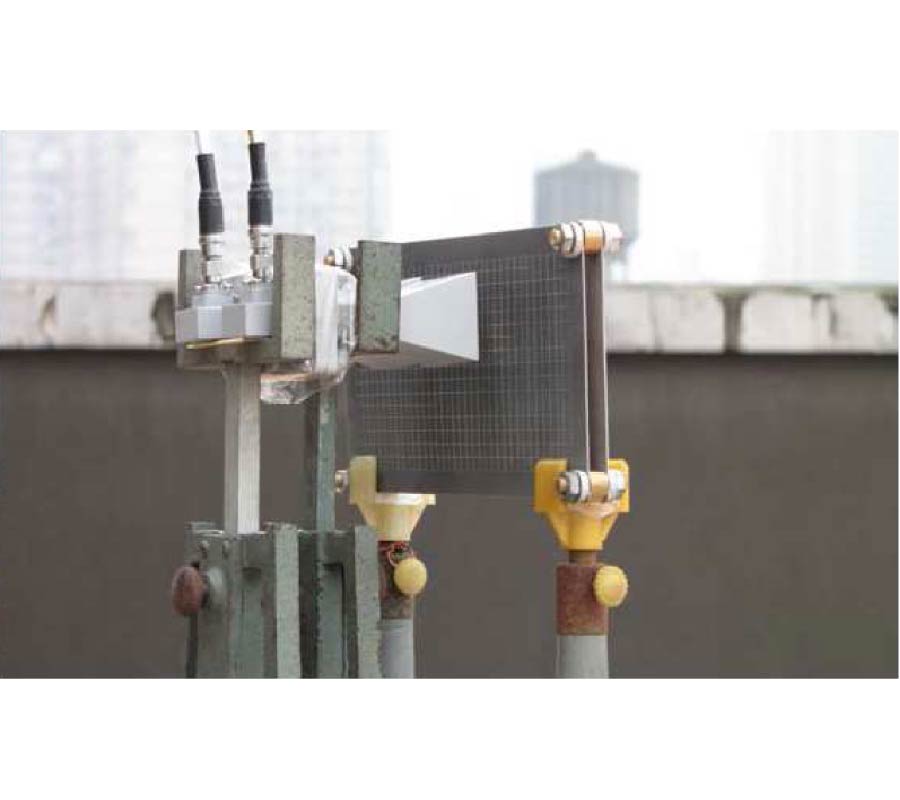
Two recent methods that have been reported in the literature to improve the performance of pyramidal horns are metal baffle loading and the use of epsilon-near-zero metamaterial. In this paper, a comparative study of the two methods is undertaken for the case of Ku- and X-band horns. In addition to the simulation study, a C-band metal baffle loaded horn was fabricated and rigorously characterized. It emerges from the study that E-plane metal baffle loading improves the radiation characteristics of the horn much better than the loading by metamaterial. Furthermore, the baffle loading nearly retains the construction simplicity, weight and cost of the normal pyramidal horn.
PERFORMANCE COMPARISON OF PYRAMIDAL HORNS LOADED WITH METAL BAFFLE OR WITH METAMATERIAL
2010-11-08
PIER C
Vol. 17, 121-130
Harmonics Measurement on Active Patch Antenna Using Sensor Patches
Dawei Zhou , Raed A. Abd-Alhameed , Chan Hwang See , Nazar T. Ali and Mohammad S. Bin-Melha
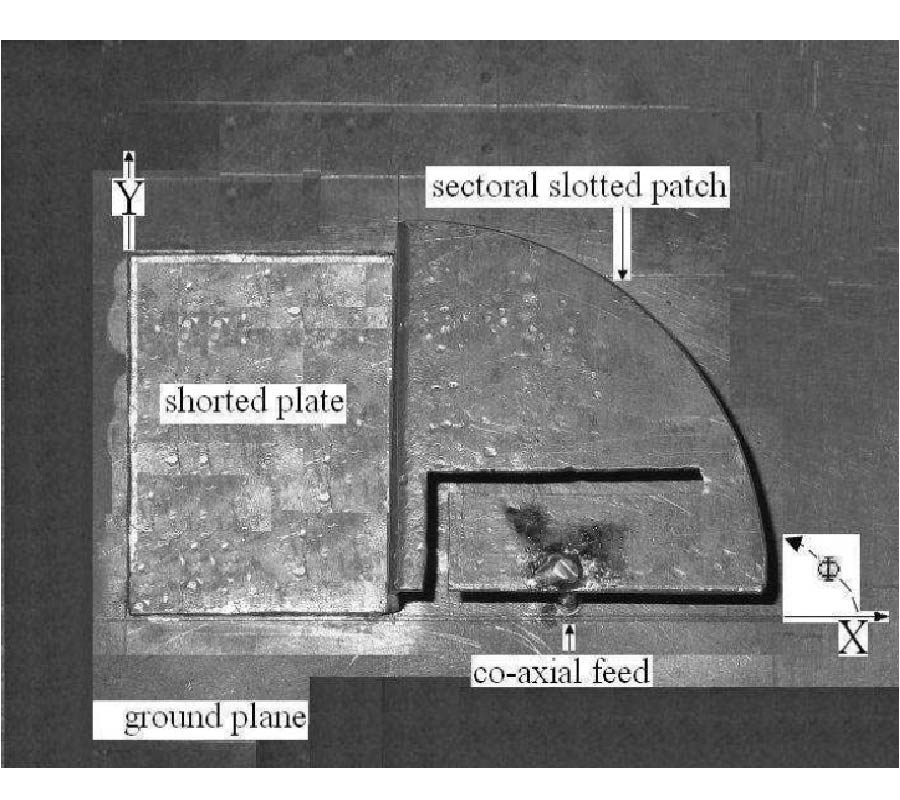
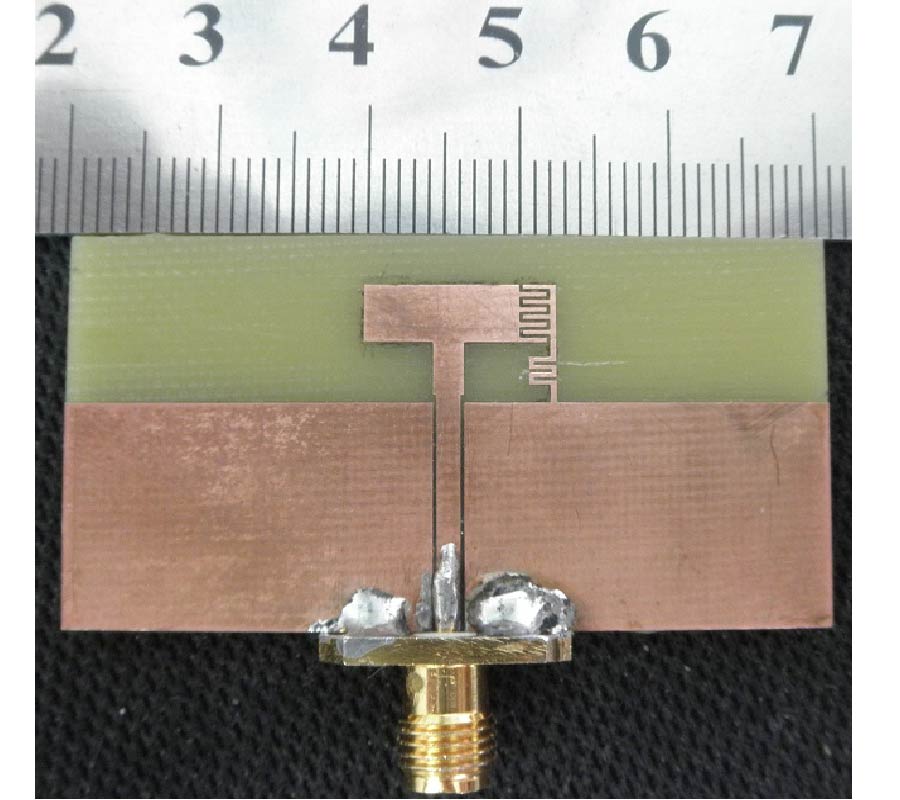
Performance of the sensing patch technique for measuring the power accepted at the antenna feed port of active patch antennas has been evaluated at harmonic frequencies. A prototype antenna, including two sensors at appropriate locations, was fabricated and tested at the fundamental and two harmonic frequencies to estimate the power accepted by the antenna, including determination of the sensor calibration factor.
HARMONICS MEASUREMENT ON ACTIVE PATCH ANTENNA USING SENSOR PATCHES
2010-11-08
PIER M
Vol. 14, 233-245
Acceleration of Slowly Convergent Series via the Generalized Weighted-Averages Method
Athanasios G. Polimeridis , Ruzica M. Golubovic Niciforovi and Juan Mosig
A generalized version of the weighted-averages method is presented for the acceleration of convergence of sequences and series over a wide range of test problems, including linearly and logarithmically convergent series as well as monotone and alternating series. This method was originally developed in a partitionextrapolation procedure for accelerating the convergence of semiinfinite range integrals with Bessel function kernels (Sommerfeld-type integrals), which arise in computational electromagnetics problems involving scattering/radiation in planar stratified media. In this paper, the generalized weighted-averages method is obtained by incorporating the optimal remainder estimates already available in the literature. Numerical results certify its comparable and in many cases superior performance against not only the traditional weighted-averages method but also against the most proven extrapolation methods often used to speed up the computation of slowly convergent series.
ACCELERATION OF SLOWLY CONVERGENT SERIES VIA THE GENERALIZED WEIGHTED-AVERAGES METHOD
2010-11-08
PIER M
Vol. 14, 221-231
Using the Oscillating Dipoles Model to Study the Electromagnetic Radiation Induced by Fracture of Rocks
Zhen Chen and Kama Huang
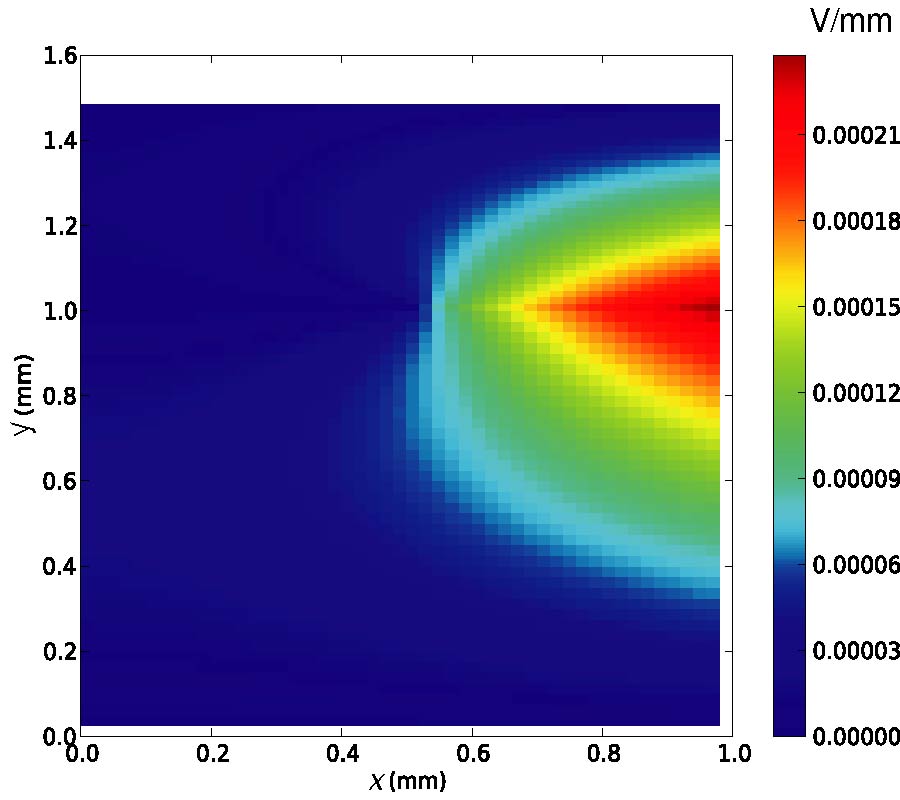
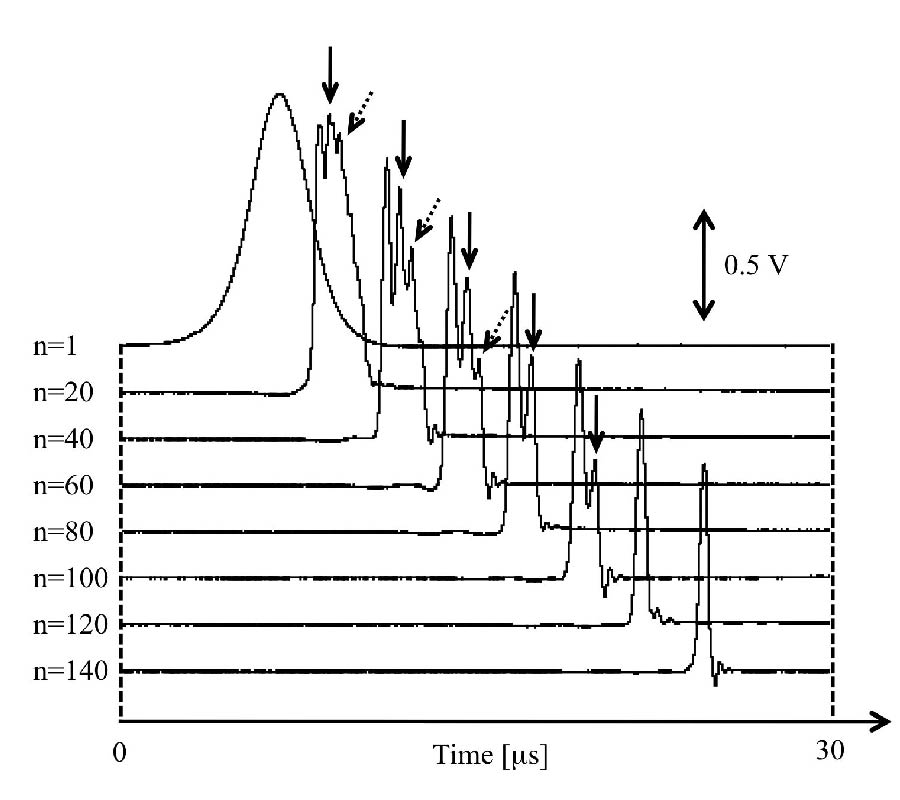
In this paper, we make an assumption that the inertia vibrations of the electron groups in the rock fragment of the crack tips generate EMR pulses during the fracture of rocks. Based on this assumption we develop an oscillating dipoles model to analyze and simulate the EMR phenomena induced by the rock fractures. Then we use this model to simulate the EMR pulses recorded in the Rabinovitch's compression experiments on granite and chalk. Our simulations indicate a comparable accordance with Rabinovitch's experimental results. From our simulation results, we also find that the crack width associates with the maximum EMR voltage peak value.
USING THE OSCILLATING DIPOLES MODEL TO STUDY THE ELECTROMAGNETIC RADIATION INDUCED BY FRACTURE OF ROCKS
2010-11-08
PIER
Vol. 110, 43-58
Sensor Area Network for Active Rtls in RFID Tracking Applications at 2.4ghz
Ana Vazquez Alejos , Manuel Garcia Sanchez , Inigo Cuinas and Jose Carlos García Valladares
Power strength or Received Signal Strength Indicator (RSSI), a primary technique used in Real Time Location Systems (RTLS), is analyzed in this paper for RFID tracking applications. Critical issues are studied and hardware novelties are introduced in order to improve its performance. The main novelty is the accomplishment of an RFID RTLS through a mesh of individual active radiofrequency (RF) barriers composed by active emitter and receiver nodes/tags that cover only small individual areas. The result is a Sensor Area Network (SAN) that offers some advantages over classical tracking systems, which are based on Wireless Sensor Networks (WSN), especially in the multipath impairment mitigation, such as a controlled power emission, and the chance to warrant privacy regarding the exchange of RFID information. Experimental measurements were done to estimate the influence of the transmitted signal type and the receiver end architecture in the detection of the RF barrier presence. The parameterization of the coverage area of a SAN cell in terms of power is derived for both free-space and log-distance propagation models. The Kalman filtering technique is introduced as a valid tool to severely mitigate the multipath propagation effects that can affect the accurate operation of the proposed SAN for indoor operation conditions. Outcomes show a promising performance for this wireless network design, which has not received enough attention in literature.
SENSOR AREA NETWORK FOR ACTIVE RTLS IN RFID TRACKING APPLICATIONS AT 2.4GHZ
2010-11-07
PIER Letters
Vol. 18, 179-186
Design of Compact Microstrip Low-Pass Filter with Ultra-Wide Stopband Using SIRs
Lei Wang , Hong-Chun Yang and Yang Li
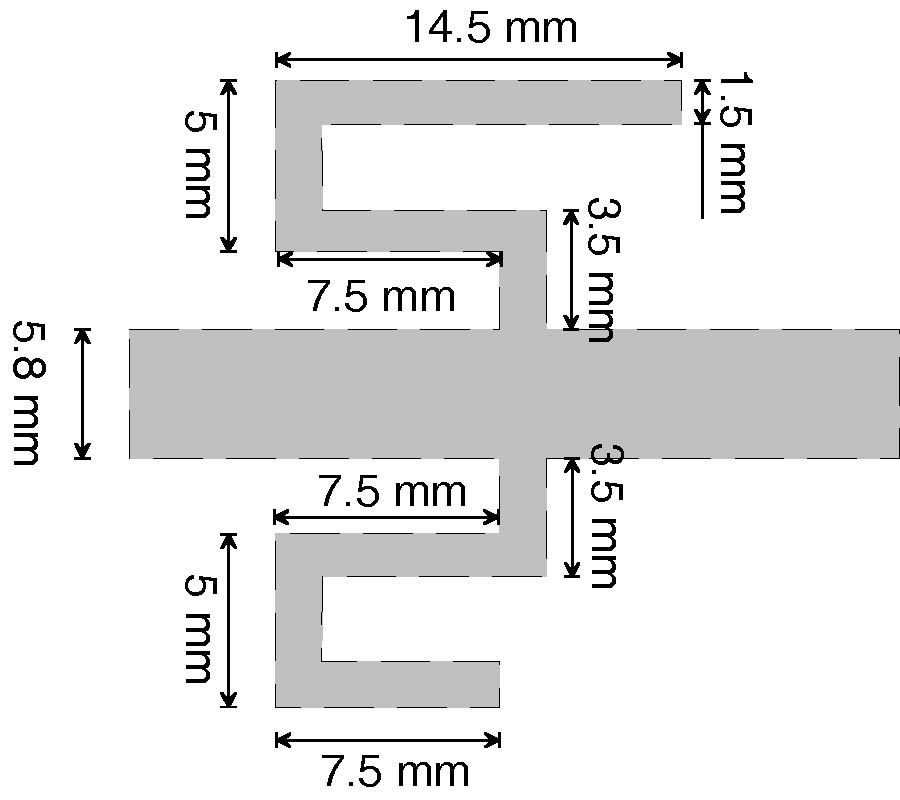
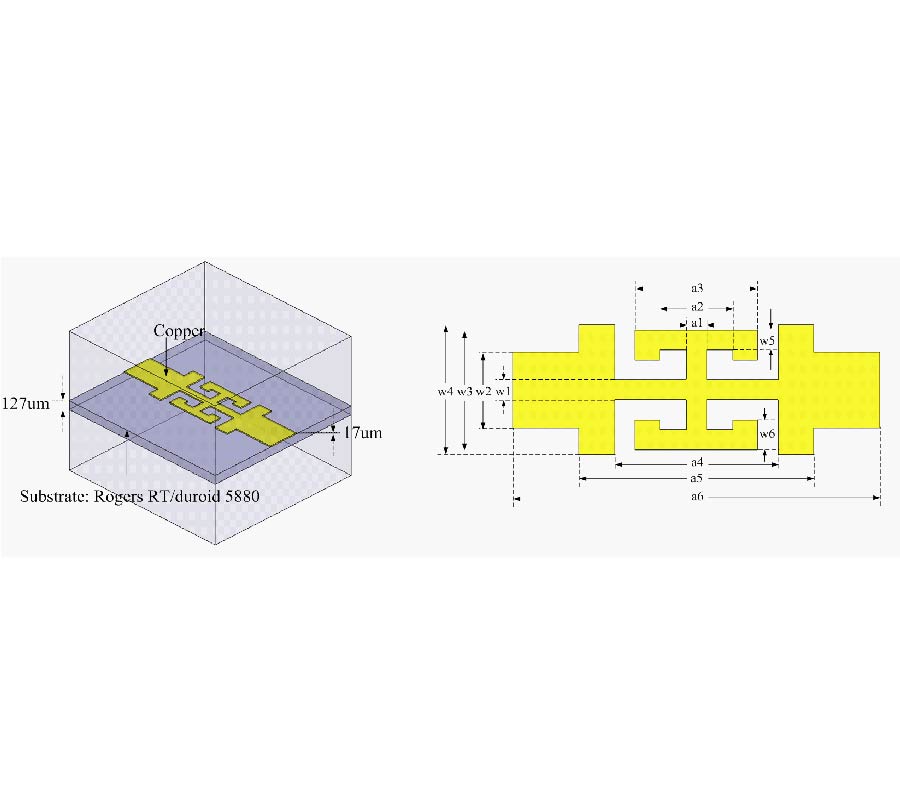
A novel low-pass filter (LPF) is designed and fabricated based on stepped-impedance resonator (SIR). Semi-circles are used to reduce the size of the filter. The open-circuited stubs are used in the filter, and its simplified equivalent circuit is also proposed. The measured 3 dB cutoff frequency is 5.2 GHz with no more than 0.3 dB ripple level in the pass-band. From 5.5 to 14 GHz, the investigated LPF has a rejection level batter than 20 dB. Measured results show good agreement with simulated ones.
DESIGN OF COMPACT MICROSTRIP LOW-PASS FILTER WITH ULTRA-WIDE STOPBAND USING SIRS
2010-11-07
PIER C
Vol. 18, 103-110
Wideband Traveling Wave Koch Dipole Antenna
Sukh Das Ahirwar , Y. Purushottam , Khumanthem Takeshore and Chandana Sairam
In this paper, a traveling wave Koch dipole antenna is proposed. The antenna is an amalgamation of traveling wave antennas that require large elctrical lengths and fractal curves that are known for excellent form factor characteristics. The antenna is analyzed using a Mom code. The antenna exhibits an impedance bandwidth that is more than 10:1 for VSWR < 3:1. A comparision of simulated and measured results are presented. The traveling wave fractal antenna has many potential applications in communications and electronics warfare.
WIDEBAND TRAVELING WAVE KOCH DIPOLE ANTENNA
2010-11-07
PIER C
Vol. 17, 105-119
Numerical Analysis of the Influence of Stir on Water During Microwave Heating
Jian Yan , Xiaoqing Yang and Kama Huang
In order to study the information of temperature with stir during microwave heating on fluid, the coupled Maxwell's equations, fluid field equations and heat transport equations were solved using Finite-Element Method (FEM). The microwave heating on fluid was analysed with high power, different dynamic viscosities and relative complex permittivities. The results show that the highest temperature occurs on the interface of the fluid and air. When the fluid is heated under high microwave power, speeding up the stir can improve the uniform of temperature, but if the rotate speed is fast enough, going on speeding up the stir cannot decrease the temperature difference any more. When the value of the imaginary part of relative complex permittivity which accounts for dielectric losses or the dynamic viscosity increases, the temperature in the water rises very quickly, and the temperature difference is very large even if the rotate speed is fast enough.
NUMERICAL ANALYSIS OF THE INFLUENCE OF STIR ON WATER DURING MICROWAVE HEATING
2010-11-07
PIER M
Vol. 14, 207-220
Characteristics Analysis of Repetition Frequency High-Power Microwave Pulses in Atmosphere
Tao Tang , Cheng Liao and Wenbin Lin
A semi-analytical model for the propagation of the repetition frequency high power microwave (HPM) pulses is established. The effects of different parameters of the repetition frequency HPM pulses on air breakdown are analyzed. A critical repetition frequency for the HPM pulse is presented under which the electron density does not exceed that of the air breakdown when the individual pulse arrives. The prediction for the critical repetition frequency and the threshold of the air breakdown due to the repetition frequency HPM pulses is demonstrated with several numerical simulations.
CHARACTERISTICS ANALYSIS OF REPETITION FREQUENCY HIGH-POWER MICROWAVE PULSES IN ATMOSPHERE
2010-11-06
PIER Letters
Vol. 18, 165-177
EMC Management: How to Compare Electromagnetic Environmental Measurements and Equipment Immunity Levels
Wilson Valente Junior , Matheus Hammes Amaral and Adroaldo Raizer
The straightforward comparison between electromagnetic environment measurements and immunity levels for industrial, scientific, and medical equipment has been used in the technical literature as an ordinary method to provide electromagnetic compatibility management within critical areas, such as hospital and industrial environments. This paper addresses a theoretical discussion concerning emission and immunity test features to focus the aforementioned problem. Finally, a more reliable comparison method is proposed, the environmental compatibility level definition, using analytical analysis and measurement results.
EMC MANAGEMENT: HOW TO COMPARE ELECTROMAGNETIC ENVIRONMENTAL MEASUREMENTS AND EQUIPMENT IMMUNITY LEVELS
2010-11-06
PIER
Vol. 110, 23-42
Hybrid Finite-Difference/Mode-Matching Method for Analysis of Scattering from Arbitrary Configuration of Rotationally-Symmetrical Posts
Adam Kusiek and Jerzy Mazur
In this paper, the hybrid approach to the analysis of electromagnetic wave scattering from arbitrary configuration of body-of-revolution (BOR) posts is presented. The proposed approach is based on the representation of each scatterer or set of scatterers by an effective sphere with the known boundary conditions defined by transmission matrix. In the analysis of each single axially-symmetrical post with irregular shape we utilize the finite-difference frequency-domain/mode-matching technique (FDFD/MM). Then the scattering parameters of investigated set of posts are obtained utilizing the analytical iterative scattering procedure (ISP). This work is an extension of our previously published results where the proposed technique was defined in cylindrical coordinates and was limited to configurations of infinitely long parallel cylinders with arbitrary cross-section. In this paper we extend this method by formulating it in spherical coordinates. This allows us to significantly increase the versatility of the developed approach and in result to include in the analysis the sets of arbitrary located and oriented rotationally-symmetrical posts. The accuracy and efficiency of the proposed technique are discussed. The presented numerical results are verified with the ones obtained from commercial software.
HYBRID FINITE-DIFFERENCE/MODE-MATCHING METHOD FOR ANALYSIS OF SCATTERING FROM ARBITRARY CONFIGURATION OF ROTATIONALLY-SYMMETRICAL POSTS
2010-11-06
PIER
Vol. 110, 1-21
On the Calibration of a Multistatic Scattering Matrix Measured by a Fixed Circular Array of Antennas
Amelie Litman , Jean-Michel Geffrin and Herve Tortel
The calibration of the multistatic scattering matrix plays an important part in the construction of a quantitative microwave imaging system. For scattering measurement applications, the calibration must be performed on the amplitude and on the phase of the fields of interest. When the antennas are not completely identical, as for example with a multiplexed antennas array, a specific calibration procedure must be constructed. In the present work, we explain how a complex calibration matrix can be defined which takes advantage of the geometrical organization of the antennas. Indeed, for arrays of antennas positioned on a circle, the inherent symmetries of the configuration can be fully exploited by means of an adequate reorganization of the multistatic scattering matrix. In addition, the reorganization permits to detect antenna pairs which are not properly functioning and to estimate the signal-to-noise ratio. Experimental results obtained within a cylindrical cavity enclosed by a metallic casing are provided to assess the performance of the proposed calibration procedure.This calibration protocol, which is described here in detail, has already been applied to provide quantitative images of dielectric targets [1, 2].
ON THE CALIBRATION OF A MULTISTATIC SCATTERING MATRIX MEASURED BY A FIXED CIRCULAR ARRAY OF ANTENNAS
2010-11-06
PIER
Vol. 109, 475-491
Novel Two-Layer Millimeter-Wave Slot Array Antennas Based on Substrate Integrated Waveguides
Ahmad Bakhtafrooz , Amir Borji , Dan Busuioc and Safieddin Safavi-Naeini
A novel slot array antenna with two layers of substrate integrated waveguides (SIW) is presented for millimeter-wave wireless applications. Unlike conventional SIW-based slot arrays, in this structure a feed waveguide is placed underneath the main substrate layer containing the slot array and is coupled to the branches of the array via slanted slots. The proposed feeding structure results in a considerable reduction in size and eliminates unwanted radiations from the feed network. Experimental results for two slot arrays with 4×4 and 6×6 elements operating at 60 GHz are presented showing 14.8 dB and 18.5 dB gain, respectively. Furthermore, a novel doubly tapered transition between SIW and microstrip line is presented which is particularly useful in mm-wave applications.
NOVEL TWO-LAYER MILLIMETER-WAVE SLOT ARRAY ANTENNAS BASED ON SUBSTRATE INTEGRATED WAVEGUIDES
2010-11-06
PIER
Vol. 109, 441-474
Indoor Localisation with Wireless Sensor Networks
Stelios Mitilineos , Dimitris M. Kyriazanos , Olga E. Segou , John N. Goufas and Stelios Thomopoulos
Wireless Sensor Networks (WSNs) have attracted a great deal of research interest during the last few years. Potential applications make them ideal for the development of the envisioned world of ubiquitous and pervasive computing. Localization is a key aspect of such networks, since the knowledge of a sensor's location is critical in order to process information originating from this sensor, or to actuate responses to the environment, or to infer regarding an emerging situation etc. Indoor localization in the literature is based on various techniques, ranging from simple Received-Signal-Strength (RSS) to the more demanding Time-of-Arrival (ToA) or Direction-of-Arrival (DoA) of the incoming signals. In the context of several EU research projects, various WSN platforms for indoor localization have been developed, evaluated and tested within real-world emergency medical services applications. These platforms were selected in order to deal with all principal localization techniques, namely RSSI, ToA and DoA. Deployment and real-world considerations are discussed, measurements results are presented and overall system evaluation conclusions are drawn regarding indoor localization capabilities of WSNs.
INDOOR LOCALISATION WITH WIRELESS SENSOR NETWORKS
2010-11-06
PIER
Vol. 109, 425-440
A High Accuracy Conformal Method for Evaluating the Discontinuous Fourier Transform
Chun-Hui Zhu , Qing Huo Liu , Yi Shen and Lijun Liu
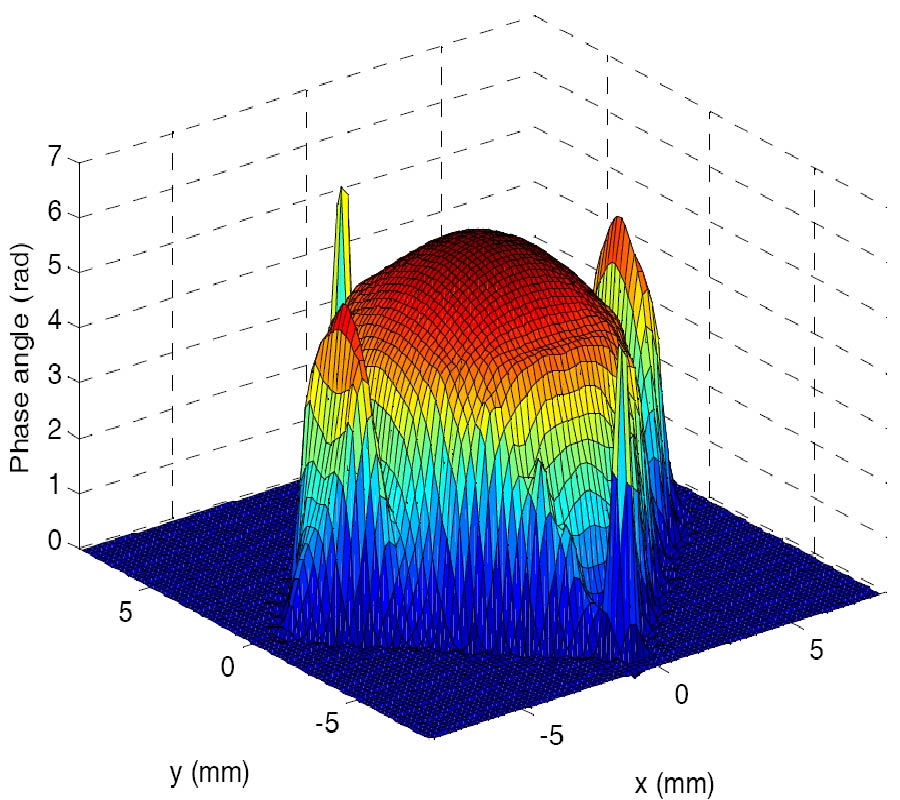
A highly accurate, fast algorithm is proposed to evaluate the finite Fourier transform of both continuous and discontinues functions. As the discretization is conformal to the function discontinuities, this method is called the conformal Fourier transform (CFT) method. It is applied to computational electromagnetics to calculate the Fourier transform of induced electric current densities in a volume integral equation. The spectral discrimination in the CFT method can be arbitrary and the spectral range can be as large as needed. As no discretization for the Fourier exponential kernel is needed, the CFT method is not restricted by the Nyquist sampling theorem, thus avoiding the aliasing distortions that exist in other traditional methods. The accuracy of the CFT method is greatly improved since the method is based on high order interpolation and the closed-form Fourier transforms for polynomials partly reduce the error due to discretization. Assuming Ns and N are the numbers of sampling points in the spatial and frequency domain, respectively, the computational cost of the CFT method is O((M + 1)N log2L), where M is the interpolation order and L=(Ns−1)/M. Applications in spectral analysis of electromagnetic fields are demonstrated.
A HIGH ACCURACY CONFORMAL METHOD FOR EVALUATING THE DISCONTINUOUS FOURIER TRANSFORM
2010-11-05
PIER B
Vol. 26, 401-423
The Dipole Impedance of an Aperture
Russell A. Stoneback
The dipole impedance of an aperture in a plane conductor is obtained by modifying the general network formulation of electromagnetic apertures presented by Mautz and Harrington. The derived dipole impedances are combined in parallel to form an effective circuit description of low frequency aperture diffraction. Power transmitted into the aperture by an incident wave is determined by incorporating standard techniques for the transfer of wave power at an impedance mismatch. This transmitted power is divided into forward and backward scattered fields based upon the behavior of image currents surrounding the aperture, leading to a peak in forward scattered power above unity, consistent with known aperture behavior. The presented aperture circuit maintains an excellent correspondence with measurements of radiated power for an aperture excited by high energy electrons and with the numerically calculated impedance of a circular aperture using the finite element method.
THE DIPOLE IMPEDANCE OF AN APERTURE
2010-11-05
PIER C
Vol. 17, 95-104
A k-Band SIW Filter with Bypass Coupling Substrate Integrated Circular Cavity (SICC) to Improved Stopband Performance for Satellite Communication
Boren Zheng , Zhiqin Zhao and Youxin Lv
A novel method of using bypass coupling SICC resonator to generate transmission zeros in filter stopband to improve stopband attenuation is presented. A SIW quasi-elliptic function filter for Satellite Communication application with bypass coupling SICC resonator is designed and fabricated to validate the method. The results show that the method is effective on improving the filter stopband performance.
A K-BAND SIW FILTER WITH BYPASS COUPLING SUBSTRATE INTEGRATED CIRCULAR CAVITY (SICC) TO IMPROVED STOPBAND PERFORMANCE FOR SATELLITE COMMUNICATION
2010-11-04
PIER Letters
Vol. 18, 155-163
Analysis of Focal Region Fields of PEMC Gregorian System Embedded in Homogeneous Chiral Medium
Muhammad Qasim Mehmood and Muhammad Junaid Mughal
This paper presents the high frequency electromagnetic field expressions for perfect electromagnetic conductor (PEMC) Gregorian system. In this Gregorian system both the reflectors are PEMC and are embedded in homogenous chiral medium. Depending upon the values of chirality parameter (kβ) two cases are analyzed. In the first case, chiral medium supports positive phase velocity (PPV) for both the left circularly polarized (LCP) and right circularly polarized (RCP) modes. In the second case, chiral medium supporting PPV for one mode and negative phase velocity (NPV) for the other mode is taken into account. Since geometrical optics (GO) fails at the focal point, so Maslov's method is used to find the field expressions at the focal point. Field plots for different values of admittance (M) of the PEMC and the chirality parameter (kβ) are given in the paper.
ANALYSIS OF FOCAL REGION FIELDS OF PEMC GREGORIAN SYSTEM EMBEDDED IN HOMOGENEOUS CHIRAL MEDIUM
2010-11-04
PIER C
Vol. 17, 79-94
Spiking Neural Networks for Breast Cancer Classification Using Radar Target Signatures
Brian McGinley , Martin O'Halloran , Raquel Cruz Conceicao , Fearghal Morgan , Martin Glavin and Edward Jones
Recent studies have shown that the dielectric properties of normal breast tissue vary considerably. This dielectric heterogeneity may mean that the identification of tumours using Ultra Wideband Radar imaging alone may be quite difficult. Significantly, since the dielectric properties of benign tissue were shown to overlap with those of malignant, breast tumour classification using traditional UWB Radar imaging algorithms could be very problematic. Rather than simply examining the dielectric properties of scatterers within the breast, other features of scatterers must be used for classification. Radar Target Signatures have been previously used to classify tumours due to the significant difference in size, shape and surface texture between benign and malignant tumours. This paper investigates Spiking Neural Networks (SNNs) applied as a novel tumour classification method. This paper will describe the creation of 3D tumour models, the generation of representative backscatter, the application of a feature extraction method and the use of SNNs to classify tumours as either benign or malignant. The performance of the SNN classifier is shown to outperform existing UWB Radar classification algorithms.
SPIKING NEURAL NETWORKS FOR BREAST CANCER CLASSIFICATION USING RADAR TARGET SIGNATURES
2010-11-04
PIER C
Vol. 17, 67-78
Theory and Applications of High Impedance Wires
Marwah Shafee , A. M. Mahmoud and Amr M. E. Safwat
This paper presents the theory, properties, types, and applications of high impedance wires (HIWs). The effective permeability of a transmission line that consists of an HIW and a second conductor has a resonating behavior. Consequently, slow-wave and stop-band regions appear in the dispersion relation. In the slow wave regions, a new implementation for dual-mode filter is presented. The proposed filter size is reduced by 33%. In the stop band region, a new application is presented; dual-band balun where the common mode is rejected by the HIW. The novel design has a total area of 4 x 2.4 cm2 and exhibits reliable performances at 2.75 GHz with a 40% bandwidth (2.2--3.3 GHz) and at 4.75 GHz with a 15% bandwidth (4.4--5.1 GHz) with an amplitude imbalance less than 1 dB, a return loss better than 13 dB, and phase imbalance less than 5°. Theoretical expectations were confirmed by EM simulations and measurements.
THEORY AND APPLICATIONS OF HIGH IMPEDANCE WIRES