Search Results(13802)

2010-10-25
PIER Letters
Vol. 18, 105-113
Dual-Wideband Box-Shaped Antenna with a U-Shaped Slot
Li Jin , Xiao-Miao Zhang , Zhen Zhang , Rui Guan and Bo Yang
In this paper, a study on the dual-frequency box-shaped antenna is presented. With a 5-branch feeding strip and two plates of shorting strips, the antenna shows broadband and compact property. Then a U-shaped slot is etched for dual-band operation. Simulated and measured results all show that this antenna exhibits dual-wideband characteristic, covering several present wireless communication systems, such as GSM800/900 (824--960 MHz), WLAN11b (2.4--2.5 GHz), WiMax802.16 (2.5--2.7 GHz), and Bluetooth band (2.4--2.8 GHz). The simulated impedance bandwidth (2:1 VSWR) is 21.5% and 37.2% in the lower and higher band, ranging from 790MHz-980MHz and 2.3 GHz--3.35 GHz. Then details of the antenna are described and the prototype is fabricated and tested. A measured bandwidth of 19.8% and 38.9% in the two bands, ranging from 820 MHz--1000 MHz and 2.28 GHz--3.38 GHz, is observed, shown good agreement with simulated results. Moreover, the antenna has a coaxial feed with a compact size of 0.27λ×0.22λ×0.036λ (λ is the wavelength referenced to the lowest edge of the operating band 820 MHz).
DUAL-WIDEBAND BOX-SHAPED ANTENNA WITH A U-SHAPED SLOT
2010-10-25
PIER
Vol. 109, 325-343
A Novel Method for Magnetic Resonance Brain Image Classification Based on Adaptive Chaotic PSO
Yudong Zhang , Shuihua Wang and Lenan Wu
Automated and accurate classification of magnetic resonance (MR) brain images is an integral component of the analysis and interpretation of neuroimaging. Many different and innovative methods have been proposed to improve upon this technology. In this study, we presented a forward neural network (FNN) based method to classify a given MR brain image as normal or abnormal. This method first employs a wavelet transform to extract features from images, and then applies the technique of principle component analysis (PCA) to reduce the dimensions of features. The reduced features are sent to an FNN, and these parameters are optimized via adaptive chaotic particle swarm optimization (ACPSO). K-fold stratified cross validation was used to enhance generalization. We applied the proposed method on 160 images (20 normal, 140 abnormal), and found that the classification accuracy is as high as 98.75% while the computation time per image is only 0.0452s.
A NOVEL METHOD FOR MAGNETIC RESONANCE BRAIN IMAGE CLASSIFICATION BASED ON ADAPTIVE CHAOTIC PSO
2010-10-25
PIER
Vol. 109, 301-324
Fast Analysis of Microstrip Antennas Over a Frequency Band Using an Accurate MoM Matrix Interpolation Technique
Yikai Chen , Shiwen Yang , Shiquan He and Zai-Ping Nie
A novel method based on the hybrid volume-surface integral equation (VSIE) and the impedance matrix interpolation technique is presented for the fast analysis of microstrip antennas in frequency sweeps. A novel impedance matrix interpolation scheme is extended to the impedance matrix associated with VSIE, thus providing high accuracy, high efficiency, and large interpolation bandwidth for metal-dielectric composite problems. To demonstrate the effectiveness and accuracy of the proposed technique, numerical results for typical rectangular patch antennas and a broadband U-slot rectangular patch antenna are presented. Good agreement among the interpolation results, the exact method of moments (MoM) solutions, the finite element method (FEM) solutions, and measured data is observed over the bandwidth. The interpolation bandwidth is further investigated through a scattering problem. Numerical results show that high accuracy is obtainable within 10:1 bandwidth.
FAST ANALYSIS OF MICROSTRIP ANTENNAS OVER A FREQUENCY BAND USING AN ACCURATE MOM MATRIX INTERPOLATION TECHNIQUE
2010-10-25
PIER
Vol. 109, 279-299
Optimal Sub-Arraying of Compromise Planar Arrays through an Innovative ACO-Weighted Procedure
Giacomo Oliveri and Lorenzo Poli
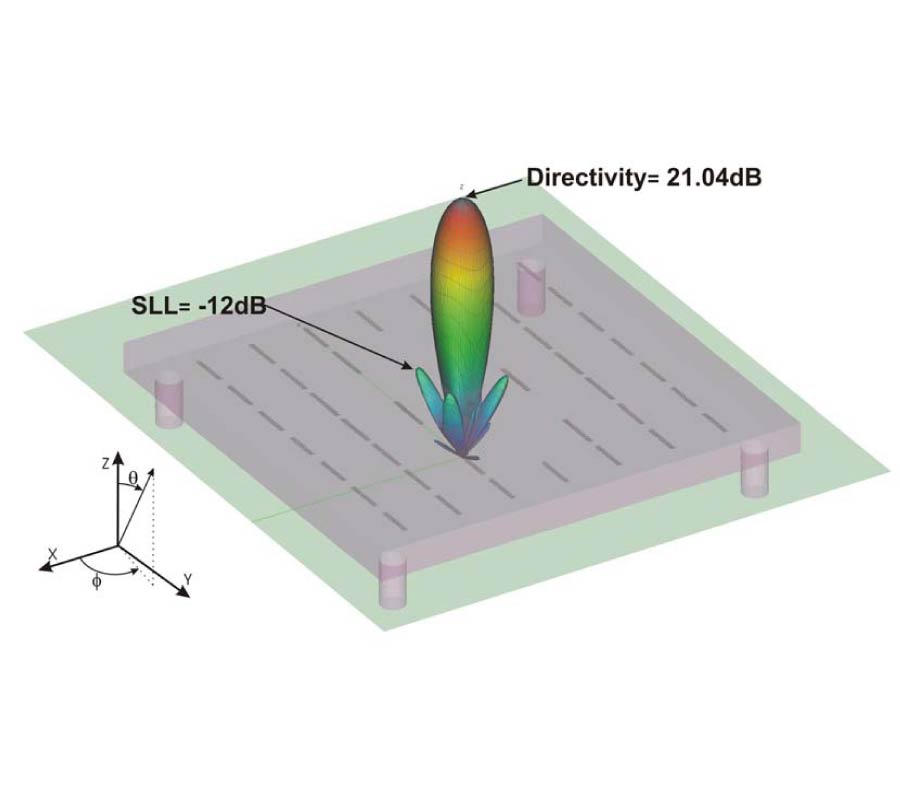
In this paper, the synthesis of sub-arrayed monopulse planar arrays providing an optimal sum pattern and best compromise difference patterns is addressed by means of an innovative clustering approach based on the Ant Colony Optimizer. Exploiting the similarity properties of optimal and independent sum and difference excitation sets, the problem is reformulated into a combinatorial one where the definition of the sub-array configuration is obtained through the search of a path within a weighted graph. Such a weighting strategy allows one to effectively sample the solution space avoiding bias towards sub-optimal solutions. The sub-array weight coefficients are then determined in an optimal way by exploiting the convexity of the problem at hand by means of a convex programming procedure. Representative results are reported to assess the effectiveness of the weighted global optimization and its advantages over previous implementations.
OPTIMAL SUB-ARRAYING OF COMPROMISE PLANAR ARRAYS THROUGH AN INNOVATIVE ACO-WEIGHTED PROCEDURE
2010-10-25
PIER
Vol. 109, 263-278
Measurements of Planar Microwave Circuits Using an Improved Trl Calibration Method
Yu Liu , Ling Tong , Yu Tian and Bo Gao
In this paper, an improved TRL (Thru-Reflect-Line) calibration method is presented. This method is based on ten-term error model of a two-port vector network analyzer(VNA) measurement system. Eight error terms induced by fixtures as well as two leakage errors are derived directly from the S parameters of the calibration standards measured from the coaxial reference plane without converting S parameters to T parameters. To validate our algorithm, a microstrip device with a via hole and a coplanar waveguide transmission line are fabricated and calibrated using the present TRL calibration method and Engen's algorithm, respectively. The magnitudes and phases of S11 and S21 of the devices are compared. The consistency of the de-embedded results with those calibrated by Engen's TRL algorithm illustrates the validity of the TRL algorithm in this paper.
MEASUREMENTS OF PLANAR MICROWAVE CIRCUITS USING AN IMPROVED TRL CALIBRATION METHOD
2010-10-23
PIER B
Vol. 26, 257-290
Mode Stirred Reverberation Chamber (Msrc): a Large and Efficient Tool to Lead High Frequency Bioelectromagnetic in Vitro Experimentation
Sébastien Lallechere , Sebastien Girard , David Roux , Pierre Bonnet , Francoise Paladian and Alain Vian
An important aspect of the studies undertaken in bioelectromagnetism relates to the choice of the exposure facility, the characteristics of a real electromagnetic environment are far more complex compared to the one plane wave irradiation set-up used in the majority of bioelectromagnetic studies. Moreover biological requirements should represent the starting point in the design of an in vitro exposure system. Indeed it is important to avoid altering the electromagnetic properties of the exposure system in the presence of the biological equipments. Related to these two essential points, this article contributes to show the advantages of a Mode Stirred Reverberation Chamber (MSRC) to guarantee a controlled electromagnetic environment around biological material for in vitro experimentation. An example of irradiation of in vitro human skin cells cultures will be considered to illustrate this paper. In order to show that the biological conditions and physical requirements for in vitro experiments are checked, two aspects are described. Firstly the characterization of the electromagnetic field generated around the biological system (both equipments and cultures) is achieved. Secondly the analysis of the Specific Absorption Rate (SAR) inside the biological medium is evaluated both numerically and experimentally. Initially, the statistical properties of fields inside the MSRC were checked with or without biological devices in order to verify their electromagnetic transparency with respect to the reverberating properties of the electromagnetic environment (inside MSRC) and the good agreement of the experimental electromagnetic power distribution with the theoretical one. The second part of this work corresponds to the determination of the SAR distribution. The computation of electromagnetic energy absorbed by biological medium (SAR) was based upon Finite Difference in Time Domain (FDTD) technique. A numerical analogy was achieved between MSRC behavior and a free-space finite sum of random plane waves. Simulations are able to provide both an estimation of SAR distribution inside each biological culture dish and a computation of the coupling effects between dishes. Relying on the previous conclusions, temperature measurements were led to evaluate the experimental SAR levels and its time variations inside the MSRC. Two high-frequency (900 MHz) environments were considered: a 10 minutes exposure with standard field amplitude inside the biological incubator of 7.87 V/m and 30 minutes with 41V/m (SAR ranged from 2.6 mW/kg to 73 mW/kg, mean values). Numerical and experimental results prove the ability of MSRC to provide a large and efficient tool to achieve bioelectromagnetic experiments at high frequencies.
MODE STIRRED REVERBERATION CHAMBER (MSRC): A LARGE AND EFFICIENT TOOL TO LEAD HIGH FREQUENCY BIOELECTROMAGNETIC IN VITRO EXPERIMENTATION
2010-10-23
PIER C
Vol. 16, 233-239
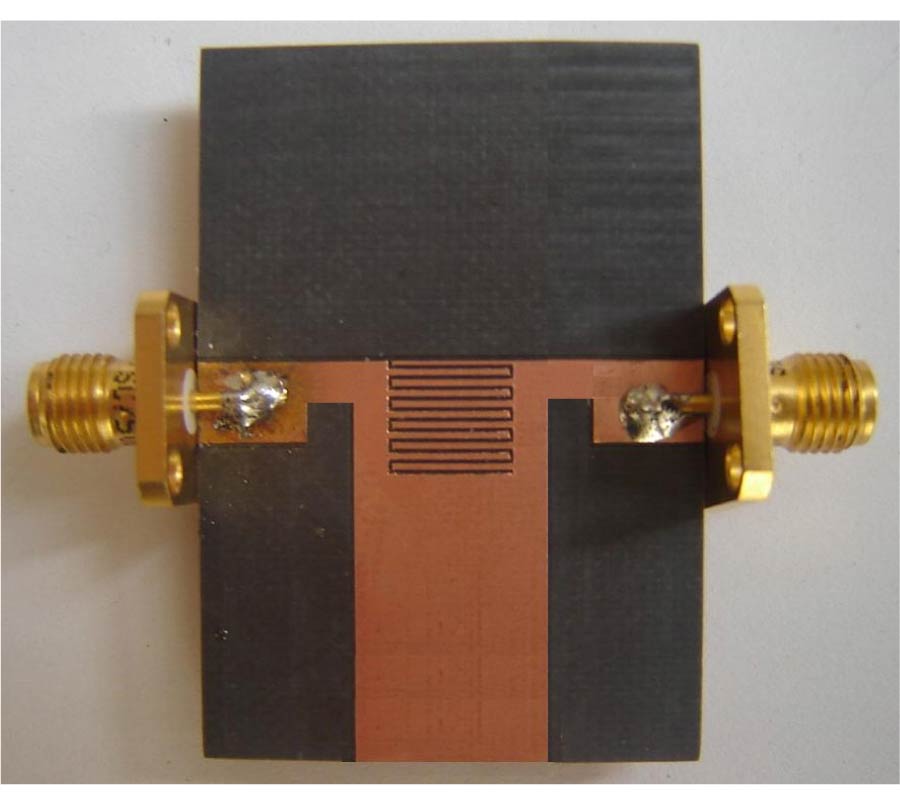
Compact Branch-Line Coupler for Harmonic Suppression
Jong-Sung Kim and Ki-Bok Kong
This paper presents the modified design that can reject harmonic components in the branch-line coupler. After adding open stubs at the center of branch lines of the traditional design, their new network parameters can be found in order to maintain the conventional function at an operating frequency and suppress its harmonic terms chosen. Experimental results show the second and third harmonic suppressions to be -28.3 and -39.6 dBs, while maintaining its traditional performance at the fundamental frequency.
COMPACT BRANCH-LINE COUPLER FOR HARMONIC SUPPRESSION
2010-10-23
PIER
Vol. 109, 245-262
Limitations of Approximations Towards Fourier Optics for Indoor Active Millimeter Wave Imaging Systems
Feng Qi , Vahid Tavakol , Dominique Schreurs and Bart K. J. C. Nauwelaers
To simulate imaging systems, Fourier optics has been applied very successfully to optics for decades. However, when simply moving to indoor millimeter wave imaging systems, some assumptions underlying the Fourier optics may break down, which contribute to the errors by applying Fourier optics. During the review of mathematical derivation of the Fourier optics, we point out how the errors are introduced by making the Fresnel approximation and omitting the phase factors. To distinguish from much literature, we discuss the accuracy of Fresnel approximation rather than plane wave. Moreover, we check the simulation results for millimeter wave imaging systems working in both pixel scanning mode and focal plane array mode and compare them to the results predicted by Fourier optics. It is shown that the difference can be 28% for the speckle contrast when the object is with certain roughness. The optical routine is that when the lens is four times'larger than the object, the imaging system can be considered as isoplanatic, thus Fourier optics can hold. Our simulation results imply that it may not be valid in indoor millimeter wave imaging systems. The goal of this paper is to draw some attention to the possibly large errors when modeling or designing the indoor millimeter wave imaging systems by Fourier optics directly. The mathematical discussions of the inaccuracies due to some approximations in Fourier optics can serve to understand and deal with aberrations.
LIMITATIONS OF APPROXIMATIONS TOWARDS FOURIER OPTICS FOR INDOOR ACTIVE MILLIMETER WAVE IMAGING SYSTEMS
2010-10-22
PIER B
Vol. 26, 237-256
Vectorial Structure of a Phase-Flipped Gauss Beam in the Far Field
Jia Li , Yanru Chen , Shixue Xu , Yongqing Wang , Muchun Zhou , Qi Zhao , Yu Xin and Feinan Chen
Based on the vectorial angular spectrum representation and the method of stationary phase, internal vectorial structures of a phase-flipped Gauss (PFG) beam diffracting in the far field are derived in analytical forms. The energy flux for the TE term, TM term and the whole beam are derived and depicted by numerical examples. Influences of the f parameter on the whole energy flux distributions are analyzed. Discrepancies of the whole energy flux distributions between the paraxial and non-paraxial cases are shown in detailed manners. Furthermore, influences of the f parameter on discrepancies between two cases are also studied.
VECTORIAL STRUCTURE OF A PHASE-FLIPPED GAUSS BEAM IN THE FAR FIELD
2010-10-22
PIER Letters
Vol. 18, 97-103
Total Difference Based Partial Sparse Lcmv Beamformer
Yipeng Liu and Qun Wan
Recent research demonstrates that sparse beam pattern constraint can suppress the sidelobe level of the linear constraint minimum variance beamformer. Here we improve the standard beam pattern by replacing it with a combination of a total difference minimization constraint on the mainlobe and a standard C1 norm minimization constraint on the sidelobe. As the new constraint matches the practical beam pattern better, the sidelobe level is further suppressed, while the robustness against the mismatch between the steering angle and the direction of arrival (DOA) of the desired signal, is maintained.
TOTAL DIFFERENCE BASED PARTIAL SPARSE LCMV BEAMFORMER
2010-10-22
PIER M
Vol. 14, 193-206
Electromagnetic Wave Scattering by Many Small Particles and Creating Materials with a Desired Permeability
Alexander G. Ramm
Scattering of electromagnetic (EM) waves by many small particles (bodies), embedded in a homogeneous medium, is studied. Physical properties of the particles are described by their boundary impedances. The limiting equation is obtained for the effective EM field in the limiting medium, in the limit a → 0, where a is the characteristic size of a particle and the number M(a) of the particles tends to infinity at a suitable rate. The proposed theory allows one to create a medium with a desirable spatially inhomogeneous permeability. The main new physical result is the explicit analytical formula for the permeability μ(x) of the limiting medium. While the initial medium has a constant permeability μ0, the limiting medium, obtained as a result of embedding many small particles with prescribed boundary impedances, has a non-homogeneous permeability which is expressed analytically in terms of the density of the distribution of the small particles and their boundary impedances. Therefore, a new physical phenomenon is predicted theoretically, namely, appearance of a spatially inhomogeneous permeability as a result of embedding of many small particles whose physical properties are described by their boundary impedances.
2010-10-22
PIER
Vol. 109, 229-243
Beam-Present Analysis of Disc-Loaded-Coaxial Waveguide for Its Application in Gyro-TWT (Part-2)
Vishal Kesari
The earlier developed combined beam-absent analysis of the disc-loaded-coaxial waveguide in two-configurations (part-1) has shown promise for wideband gyro-traveling-wave tube (gyro-TWT) if the configurations are used as interaction structure. In the present paper, the beam-present dispersion relation and small-signal gain equation in Pierce's format for the disc-loaded-coaxial waveguide were developed. A broadening of the device bandwidth was presented by disc-loading the coaxial waveguide interaction structure of a gyro-TWT with a comparison against the circular cylindrical waveguide, coaxial waveguide, and disc-loaded circular waveguide in their respective gain-frequency responses obtained by using a numerical computer code on the basis of the present beam-present analysis.
BEAM-PRESENT ANALYSIS OF DISC-LOADED-COAXIAL WAVEGUIDE FOR ITS APPLICATION IN GYRO-TWT (PART-2)
2010-10-22
PIER
Vol. 109, 211-227
Beam-Absent Analysis of Disc-Loaded-Coaxial Waveguide for Application in Gyro-TWT (Part-1)
Vishal Kesari
The electromagnetic field analysis of the disc-loaded-coaxial waveguide in two configurations was developed in TE-mode for its potential application in the fast-wave regime using the field matching technique at the cylindrical interface between disc-free and disc-occupied structure regions. The space harmonics were considered for the axial periodicity and the azimuthal harmonics were ignored for azimuthal symmetry of the present configurations. The dispersion and azimuthal interaction impedance characteristics obtained by present analysis were validated against those obtained by simulation software --- HFSS within 0.1% and 0.5%, respectively. In special cases, the disc-loaded-coaxial structure reverts to well known conventional structures. The effect of structure parameters on the shape of dispersion characteristics was investigated in order to obtain a wideband-coalescence between the beam- and waveguide-mode dispersion characteristics, required for the wideband device performance, without deteriorating the impedance value.
BEAM-ABSENT ANALYSIS OF DISC-LOADED-COAXIAL WAVEGUIDE FOR APPLICATION IN GYRO-TWT (PART-1)
2010-10-21
PIER B
Vol. 26, 213-236
Arranging Overhead Power Transmission Line Conductors Using Swarm Intelligence Technique to Minimize Electromagnetic Fields
Mohammed Al Salameh and M. A. S. Hassouna
Although there is no certain known mechanism of how the electromagnetic fields (EMFs) at power frequency (50/60 Hz) can affect human health, it has been epidemiologically shown that they have many hazards on human health. Also the power frequency fields may interfere with the nearby electrical and electronic equipment. In response to the precautionary principle, it might be needed in some situations to reduce the magnetic and electric fields of a high voltage line segment when it passes in close proximity to a populated area or may interfere with sensitive equipment. In other words, new arrangements of high voltage "green lines" are needed. This paper introduces a numerical solution based on Particle Swarm Optimization (PSO) technique, to reduce both magnetic and electric fields of high voltage overhead transmission line by rearranging the conductors. The horizontal, vertical, and triangular configurations of both single circuit and double circuit transmission lines were investigated. The examples presented in this paper show that the rearranged line configurations can introduce up to 81% reduction in magnetic field and up to 84% in electric field when the effects of ice and wind are considered, and up to 97% reduction in both magnetic and electric fields when these effects are neglected. A comparison is made between the cost of reducing EMFs of a line segment in a suburban area in Amman in Jordan, and the cost of not-reducing EMFs, where it is found that the cost of reducing the fields is outweighed by the "possible health costs" otherwise.
ARRANGING OVERHEAD POWER TRANSMISSION LINE CONDUCTORS USING SWARM INTELLIGENCE TECHNIQUE TO MINIMIZE ELECTROMAGNETIC FIELDS
2010-10-21
PIER Letters
Vol. 18, 85-95
Probe-Fed Patch Antenna with an Inclined Patch for on-Wall WLAN Access Point
Yung-Tao Liu
A probe-fed air-substrate patch antenna with an inclined radiating patch for generating a downtilt main beam for WLAN operation in an on-wall access point is presented. The proposed antenna has a simple structure and consists of two major parts: an L-shaped ground plane and an inclined radiating patch, which is easy to implement. Constructed prototypes suitable for operating in the 2.4 GHz WLAN band are demonstrated. Results indicate that, simply by varying the inclination angle of the radiating patch, a downtilt main beam with a wide range of downtilt angles can be achieved. In addition, by selecting the proper inclination angle of the radiating patch, the proposed antenna shows a narrower 3-dB beamwidth in the elevation plane, resulting in an enhanced antenna gain, which is very suitable for on-wall 2.4 GHz WLAN access point applications. Details of the proposed antenna design are described, and experimental and simulation results are presented.
PROBE-FED PATCH ANTENNA WITH AN INCLINED PATCH FOR ON-WALL WLAN ACCESS POINT
2010-10-21
PIER Letters
Vol. 18, 71-84
Nucleation and Growth Behaviors of Primary Phase in Al-Cu Hypereutectic Alloy in High Magnetic Fields
Chuanjun Li , Zhongming Ren , Weili Ren , Yuqin Wu , Yunbo Zhong and Kang Deng
The nucleation and growth of primary Al2Cu phase in the Al-34.3wt%Cu hypereutectic alloy without and with a 12 T magnetic fields have been investigated by differential thermal analysis (DTA). The DTA curves indicated that the nucleation temperature of primary phase was significantly reduced in a magnetic field. The X-ray diffraction (XRD) patterns confirmed that the c-axes of primary Al2Cu crystals oriented along the direction parallel to a magnetic field. The microstructures showed that primary crystals aligned along a magnetic field and that their number distinctly increased with increasing a magnetic field as well. The suppression of nucleation in a magnetic could be caused by the increase of the interfacial energy between the liquid and nucleus and the reduction of atom diffusion rates while the orientation of primary crystals were mainly attributed to both of the magnetic toque and the thermoelectric magnetohydrodynamic (TEMHD) flows.
NUCLEATION AND GROWTH BEHAVIORS OF PRIMARY PHASE IN AL-CU HYPEREUTECTIC ALLOY IN HIGH MAGNETIC FIELDS
2010-10-21
PIER M
Vol. 14, 177-192
GPU-Accelerated Fundamental Adi-FDTD with Complex Frequency Shifted Convolutional Perfectly Matched Layer
Wei Choon Tay , Ding Yu Heh and Eng Leong Tan
This paper presents the graphics processing unit (GPU) accelerated fundamental alternating-direction-implicit finite-difference time-domain (FADI-FDTD) with complex frequency shifted convolutional perfectly matched layer (CFS-CPML). The compact matrix form of the conventional ADI-FDTD method with CFS-CPML is formulated into FADI-FDTD with its right-hand-sides free of matrix operators, resulting in simpler and more concise update equations. Using Compute Unified Device Architecture (CUDA), the FADI-FDTD with CFS-CPML is further incorporated into the GPU to exploit data parallelism. Numerical results show that a much higher efficiency gain of up to 15 times can be achieved.
GPU-ACCELERATED FUNDAMENTAL ADI-FDTD WITH COMPLEX FREQUENCY SHIFTED CONVOLUTIONAL PERFECTLY MATCHED LAYER
2010-10-21
PIER
Vol. 109, 191-209
Angle and Time of Arrival Statistics of a Three Dimensional Geometrical Scattering Channel Model for Indoor and Outdoor Propagation Environments
Mohammad Alsehaili , Sima Noghanian , Abdel Sebak and Douglas A. Buchanan
In this paper, a three dimensional geometrical scattering channel model for indoor and outdoor wireless propagation environments is introduced. It is based on the assumption that the scatterers are distributed within a spheroid, in which the mobile station and base station are located at the spheroid's foci. This model captures both the spatial and temporal statistical distributions of the received multipath signals. Several angle of arrival and time of arrival probability density functions of the received multipath signals are provided in compact forms. The angle of arrival probability density functions are obtained in terms of both the azimuth and elevation angles. Numerical results are presented to illustrate and verify the derived expressions. To validate the model, it has been compared against some available two dimensional models and measured data.
ANGLE AND TIME OF ARRIVAL STATISTICS OF A THREE DIMENSIONAL GEOMETRICAL SCATTERING CHANNEL MODEL FOR INDOOR AND OUTDOOR PROPAGATION ENVIRONMENTS
2010-10-21
PIER
Vol. 109, 175-190
Microwave Diffraction Characteristic Analysis of 2D Multilayered Uniaxial Anisotropic Cylinder
Juozas Bucinskas , Liudmila Nickelson and Viktoras Shugurovas
Here we present the rigorous electrodynamical solution of microwave scattering by a multilayered electrically or (and) magnetically anisotropic circular cylinder. The number and thickness of layers may be arbitrary. We present the solution when all area of multilayered cylinder can be made of different uniaxial anisotropic or isotropic materials. The multilayered cylinder media can be of strongly lossy materials. The signs of the complex permittivity and permeability tensor components can be positive or negative in different combinations. Here we present the numerical dependencies of the Poynting vector radial component Pρ that is responsible for the scattered and absorbed powers when the incident microwave impinges on the anisotropic Lithium Niobate (LiNbO3) cylinder as well as on two single isotropic cylinders. The permittivity tensor components of the anisotropic cylinder are εt=43-i0.0005, εp=28-i0005 as well as for the isotropic cylinders the permittivities are εtp=43-i0.0005 and εtp=28-i0.0005. We show here the pattern of the value Pρ inside and outside of the LiNbO3 and two isotropic cylinders when the polar angle changes from 0 to 360 degrees with the step equal to one degree. We present here our calculations when the incident microwave has perpendicular or parallel polarization at three frequencies 65 GHz, 92.5 GHz and 120 GHz. We found that the values Pρ for the anisotropic cylinder have the opposite behavior of dependencies on the permittivity tensor components for the incident microwaves of different polarizations.
MICROWAVE DIFFRACTION CHARACTERISTIC ANALYSIS OF 2D MULTILAYERED UNIAXIAL ANISOTROPIC CYLINDER
2010-10-19
PIER C
Vol. 16, 223-232
A Sleeve Monopole Antenna with Wide Impedance Bandwidth for Indoor Base Station Applications
Yingsong Li , Xiao-Dong Yang , Cheng-Yuan Liu and Tao Jiang
A sleeve monopole antenna, which has a wide impedance bandwidth for indoor base station applications, is successfully realized experimentally and numerically. The proposed antenna consists of dual sleeves, loaded circular disc and two shorted pins which are connected to the circular ground plane. The antenna possesses 14-dB impedance bandwidths of 30.3% and 46.5% at the lower and higher bands, respectively. And the 10-dB return loss bandwidth of the antenna is 128.2%, which is about 48 times that of the traditional monopolar wire-patch antenna. The antenna is successfully simulated, designed, and measured, showing dual-band and wide band characteristics, stable gain and good omni-directional radiation patterns.
A SLEEVE MONOPOLE ANTENNA WITH WIDE IMPEDANCE BANDWIDTH FOR INDOOR BASE STATION APPLICATIONS