Search Results(13802)

2010-11-15
PIER C
Vol. 17, 219-227
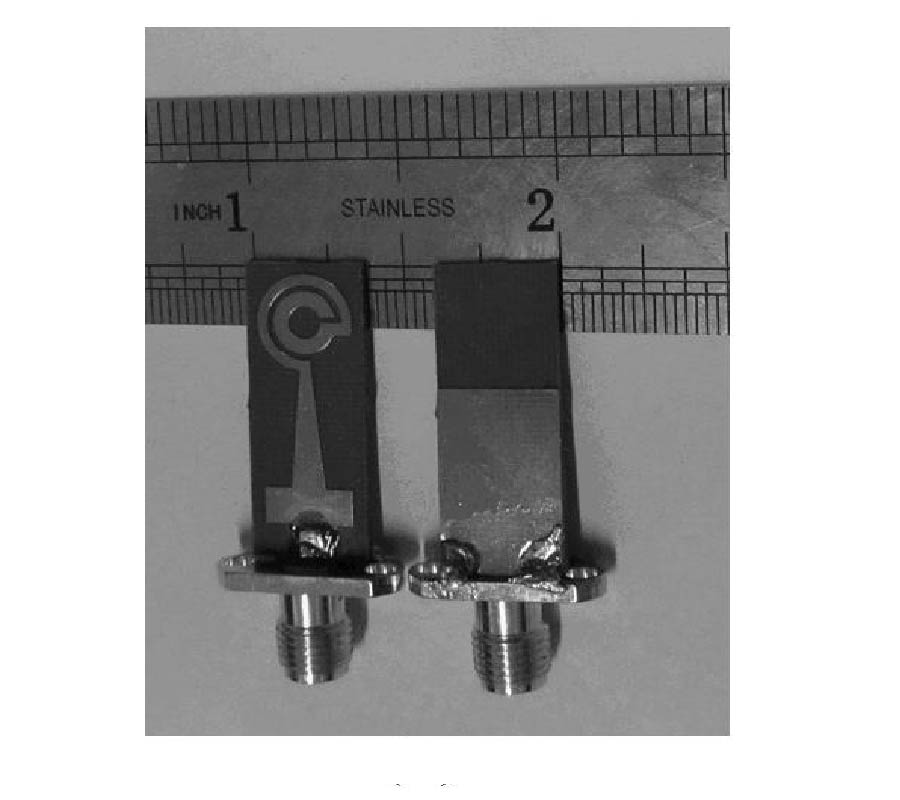
Miniaturized Microstrip-Fed Circular Split Ring Resonator Antenna
Abdelnasser Eldek
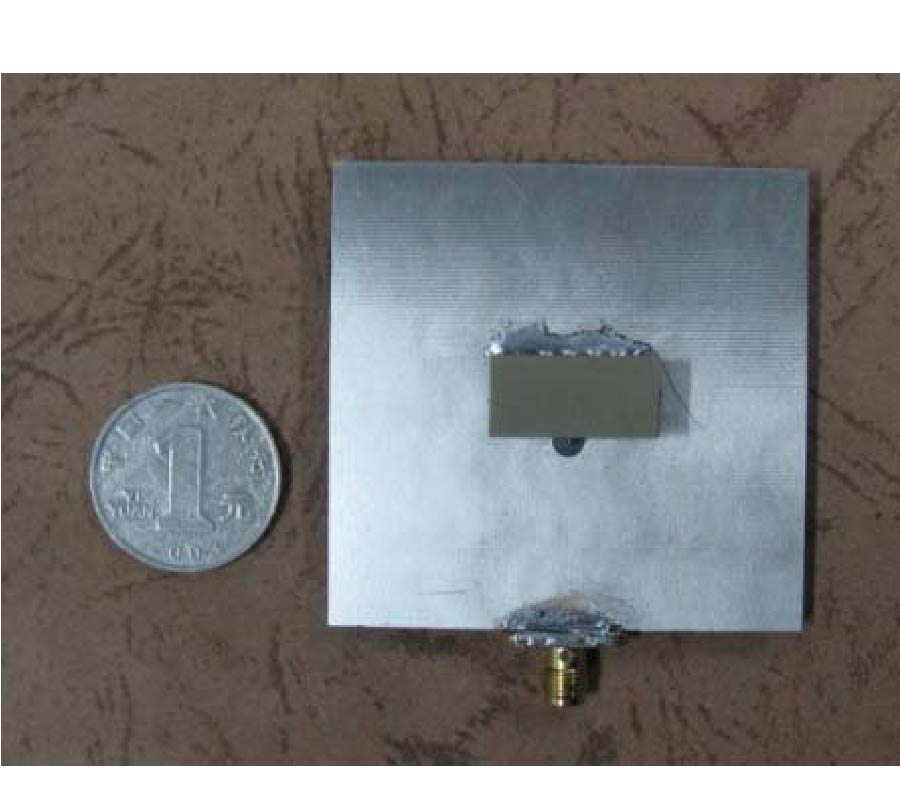
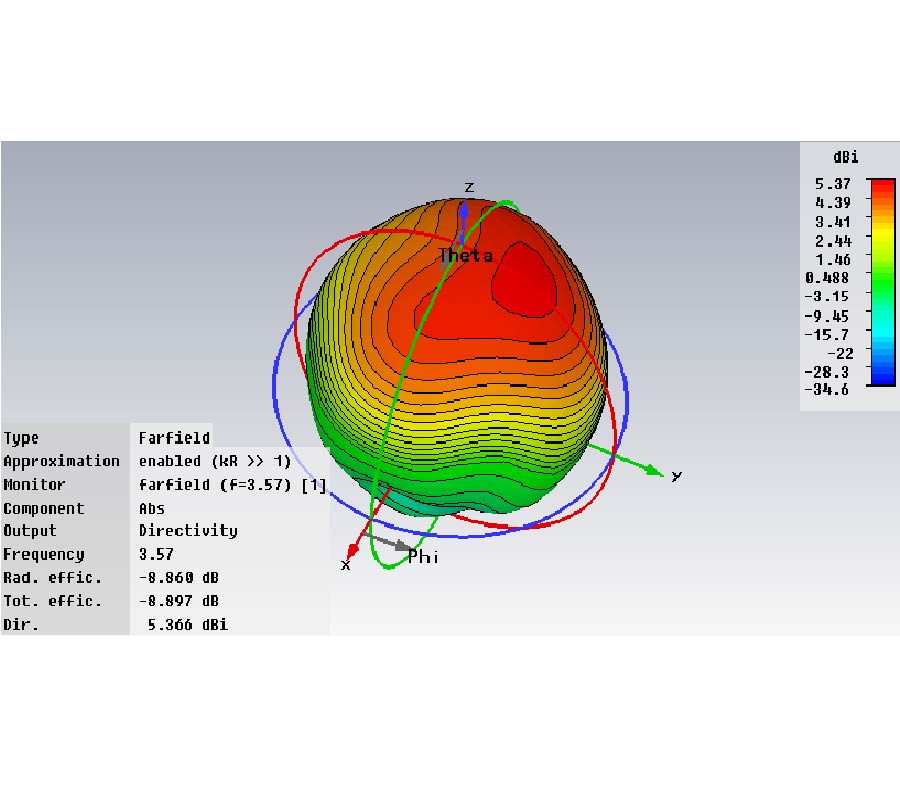
A miniaturized microstrip-fed antenna composed of a broadside coupled split ring resonator and an excitation arc-shaped monopole is presented. Numerical and experimental results are presented for an antenna configuration of 1/25 wavelength in diameter (ka~0.126). The antenna size including the ground plane is 60×38.5 mm2 and it is operating at 200 MHz. Its resonant frequency can be tuned over a good range of frequency without changing the antenna size, which can increase its usable bandwidth using reconfigurable antenna techniques.
MINIATURIZED MICROSTRIP-FED CIRCULAR SPLIT RING RESONATOR ANTENNA
2010-11-12
PIER Letters
Vol. 18, 187-194
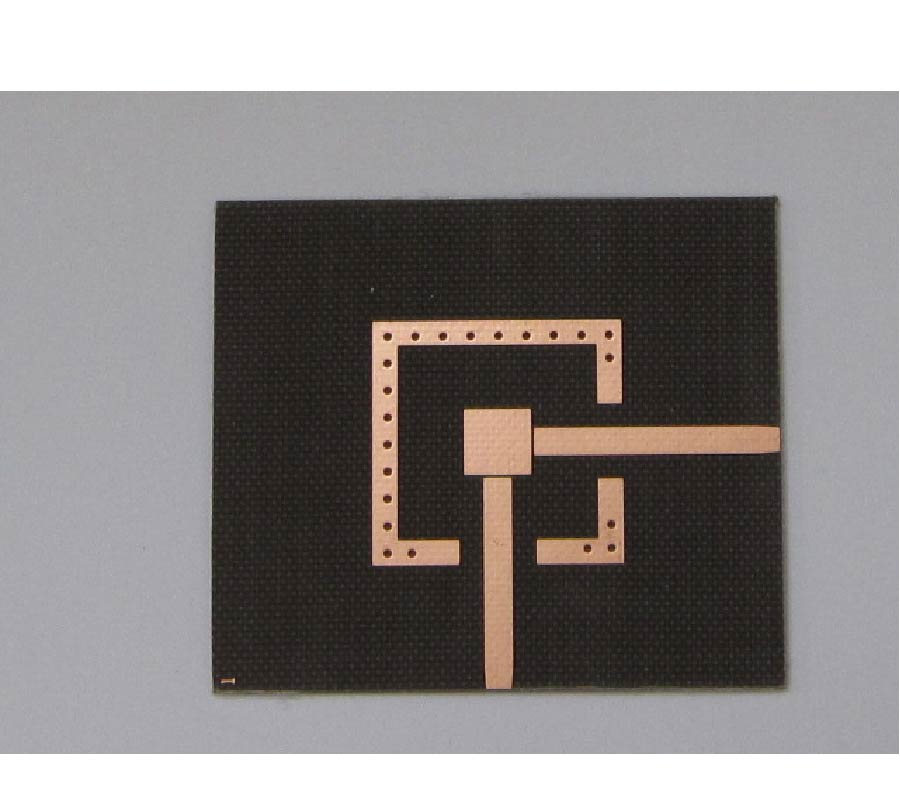
High Selectivity Dual-Mode Bandpass Filter with Source-Loaded Coupling
Xue-Shun Zhang , Yong-Jiu Zhao , Hong-Wei Deng , Lu Zhang and Wen Chen
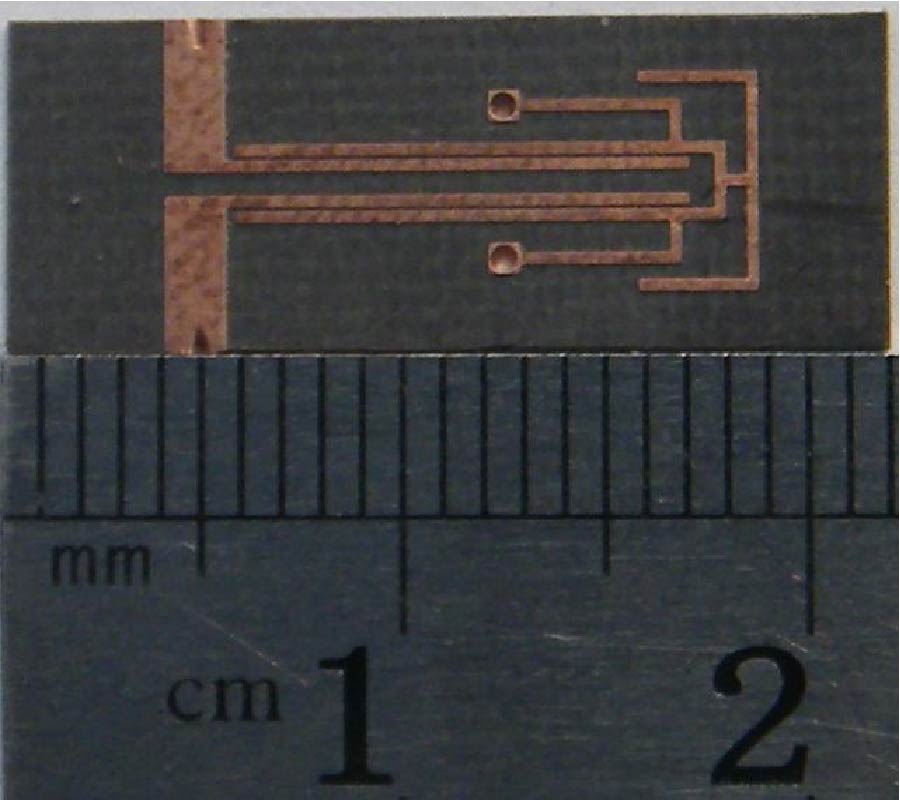
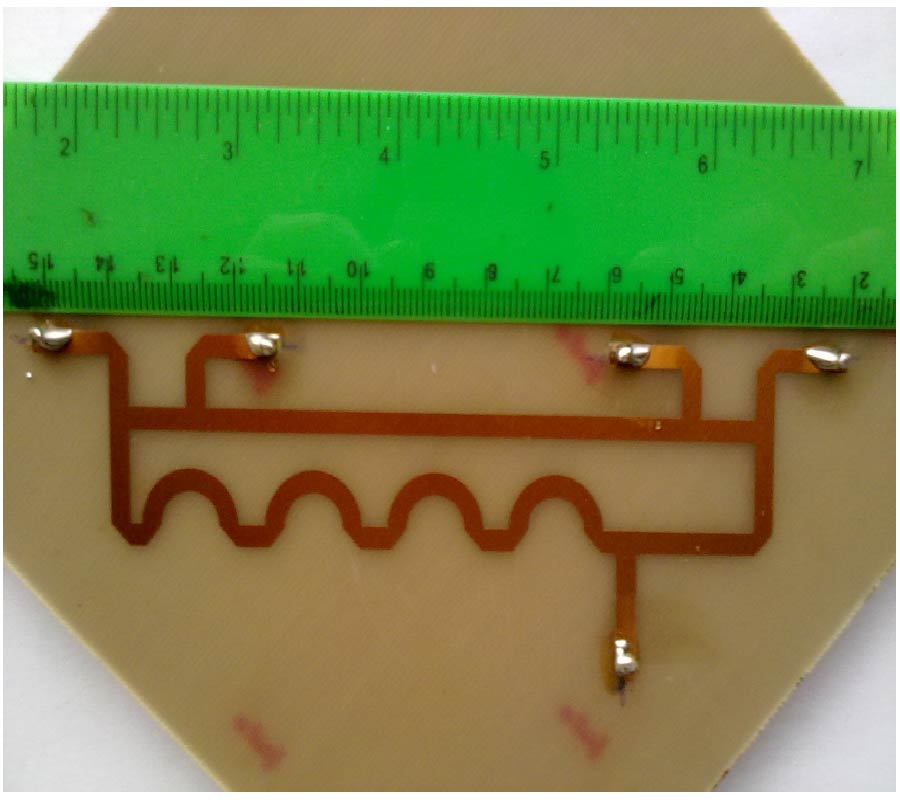
In this letter, a novel high selectivity microstrip filter with source-loaded coupling is proposed using the dual-mode resonator. The resonator can generate one odd mode and one even mode in the desired band. The folded stepped-impedance open stub at the central plane can control the even mode resonant frequencies, whereas the odd mode ones are fixed. A transmission zero is created near the lower cut-off frequency due to the main path signal counteraction. Two additional transmission zeros attributed to source-loaded coupling are generated near the upper cut-off frequency and in the upper-stopband. A dual-mode filter prototype is simulated, fabricated and measured. The EM simulated and measured results are presented and excellent agreement is obtained.
HIGH SELECTIVITY DUAL-MODE BANDPASS FILTER WITH SOURCE-LOADED COUPLING
2010-11-12
PIER C
Vol. 17, 203-218
Computer-Aided Design of Y-Junction Waveguide Diplexers
Felice Maria Vanin , Fabrizio Frezza and Dietmar Schmitt
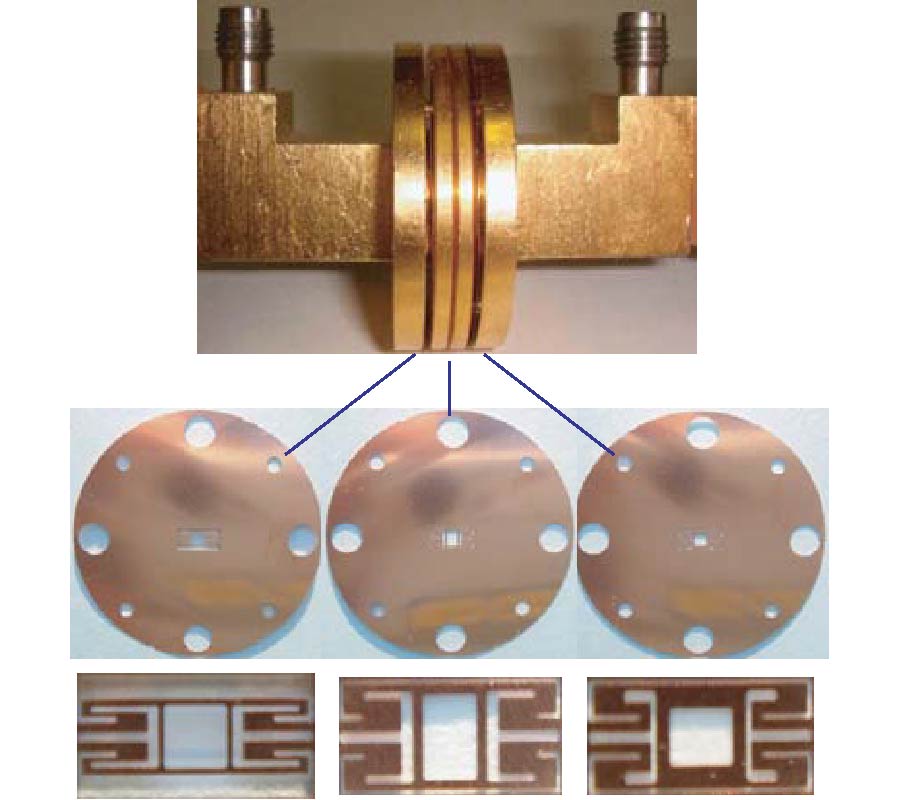
Waveguide diplexer designs are widely used for telecommunications, space, and terrestrial applications. Although mathematical models and design procedures for waveguide filters are known, diplexer designs still remain complex and time consuming. This paper describes how to obtain an equivalent circuit network model and a complete design of non-contiguous diplexers using a computer-aided approach with a classic Y-junction. Results are satisfactory in terms of reduced design time and performance. Examples including physical dimensions are provided.
COMPUTER-AIDED DESIGN OF Y-JUNCTION WAVEGUIDE DIPLEXERS
2010-11-12
PIER M
Vol. 16, 1-18
A New Algorithm of 3D Image Reconstruction of Radar Targets from Ramp Responses in Low Frequency
Janic Chauveau and Nicole de Beaucoudrey
Low frequency imaging in radar domain can have applications for stealthy or buried targets. The transient scattering response from a ramp waveform is related to the profile function of the target, namely its transverse cross-sectional area along the line-of-sight, and thus provides information about the target size, orientation and geometrical shape. Such ramp responses can be used to generate a 3-dimensional image of the global shape of the target. Former imaging algorithm uses approximate limiting surfaces and is therefore limited to single convex objects. Here is proposed a new algorithm able to reconstruct non-convex as well as separated targets, from their ramp response signatures.
A NEW ALGORITHM OF 3D IMAGE RECONSTRUCTION OF RADAR TARGETS FROM RAMP RESPONSES IN LOW FREQUENCY
2010-11-12
PIER M
Vol. 14, 263-277
Halbach Structures for Permanent Magnets Bearings
Romain Ravaud , Guy Lemarquand and Valerie Lemarquand
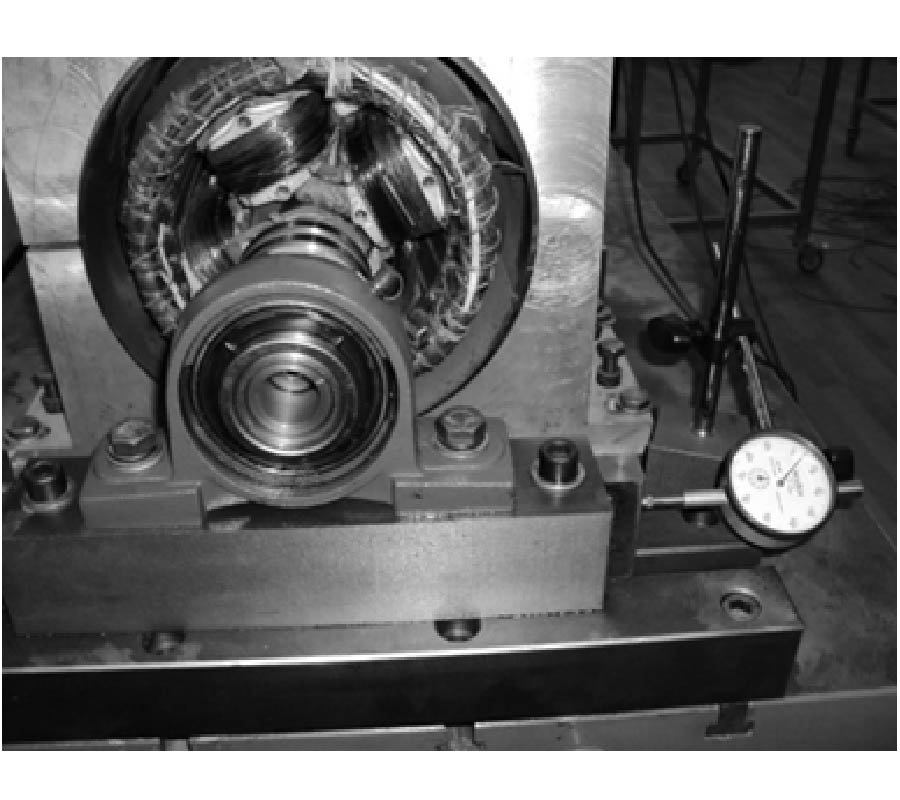
This paper is the third part of a series dealing with permanent magnet passive magnetic bearings. It presents analytical expressions of the axial force and stiffness in radial passive magnetic bearings made of ring permanent magnets with perpendicular polarizations: the inner ring polarization is perpendicular to the outer ring one. The main goal of this paper is to present a simple analytical model which can be easily implemented in Matlab or Mathematica so as to carry out parametric studies. This paper first compares the axial force and stiffness in bearings with axial, radial and perpendicular polarizations. Then, bearings made of stacked ring magnets with alternate polarizations are studied for the three kinds of polarizations, axial, radial and perpendicular. The latter correspond to Halbach structures. These calculations are useful for identifying the structures required for having great axial forces and the ones allowing to get great axial stiffnesses.
HALBACH STRUCTURES FOR PERMANENT MAGNETS BEARINGS
2010-11-12
PIER
Vol. 110, 147-162
A Novel Integrated Mathematical Approach of Ray-Tracing and Genetic Algorithm for Optimizing Indoor Wireless Coverage
Ahmed Wasif Reza , Md. Sumon Sarker and Kaharudin Dimyati
While designing wireless networks, it is crucial to obtain the maximum coverage by using minimum number of transmitting antennas. This paper proposes a new algorithm for determining the minimum number of transmitting antennas as well as their appropriate locations to provide the optimized wireless coverage in the indoor environment. The proposed algorithm uses a ray-tracing method to predict the signal distribution among the sampling points in the indoor area due to one or more transmitters and the genetic algorithm (GA) incorporated with the Breath First Search (BFS) terminology to determine the minimum number of transmitters and their corresponding locations to achieve the optimum wireless coverage. The proposed method outperforms the existing method in terms of both space and time complexities. The results obtained from this study also show that the computation time using the proposed algorithm is much less than that of the existing algorithm.
A NOVEL INTEGRATED MATHEMATICAL APPROACH OF RAY-TRACING AND GENETIC ALGORITHM FOR OPTIMIZING INDOOR WIRELESS COVERAGE
2010-11-12
PIER
Vol. 110, 125-145
The Analysis of 3D Model Characterization and Its Impact on the Accuracy of Scattering Calculations
Andrew Hellicar , John Kot , Geoff James and Gregory Keith Cambrell
When employing computational methods for solving problems in electromagnetic scattering the resulting solutions are strongly determined by the geometry of the scatterer. Careful consideration must therefore be given to the computational geometry used in representing the scatterer. Here we show that the solution for a problem as simple as plane wave scattering off a PEC sphere is sensitive to the computational geometry used to represent the sphere. We show this by implementing 4 higher-order computational geometry schemes over 3 different tessellations resulting in 45 different representations of the sphere. Two methods for solving the scattering problem are implemented: the boundary-element method (BEM) based on the MFIE, and the physical optics (PO) method. Results are compared and insights are obtained into the performance of the various schemes to model surfaces accurately and efficiently. The comparison of the different schemes takes into consideration the required computational resources in implementing the schemes. Some unexpected results are discovered and explanations given.
THE ANALYSIS OF 3D MODEL CHARACTERIZATION AND ITS IMPACT ON THE ACCURACY OF SCATTERING CALCULATIONS
2010-11-11
PIER C
Vol. 17, 193-202
A Dual-Mode Aperature-Coupled Stack Antenna for WLAN Dual-Band and Circular Polarization Applications
Ji-Chyun Liu , Bing-Hao Zeng , Chin-Yen Liu , Hui-Chi Wu and Chung-Chi Chang
A compact stack antenna consisting of square loop resonators, aperture couples, feed line and the perturbation for dual-band and circular polarization (CP) applications is proposed in this paper. This perturbation applies both dual-mode and orthogonal mode effects existing in the square loop resonator to present wide-band and CP characteristics simultaneously. The stack antenna presents the desired bands of 2.46 GHz with bandwidth (BW) = 160 MHz (6.58%) and 5.28 GHz with BW = 450 MHz (8.52%). The circular polarizations for dual-band are demonstrated with axial ratio (AR) spectrum and orthogonal modes. The proposed antenna is successfully simulated and measured with frequency responses, radiation patterns and current distributions.
A DUAL-MODE APERATURE-COUPLED STACK ANTENNA FOR WLAN DUAL-BAND AND CIRCULAR POLARIZATION APPLICATIONS
2010-11-11
PIER M
Vol. 14, 247-261
Numerical Evaluation of the Magnetic Field Exposure Near the Transition Tower of an Overhead-Underground Hv Line
Wojciech Krajewski
The paper deals with the analysis of the magnetic field distribution near the transition tower of an overhead-underground transmission line of 110 kV. The current density induced in the human body due to this field is also estimated. A hybrid numerical technique combining both the boundary element method and the charge simulation method is employed for this purpose. This technique is implemented in the author's own software package dedicated to the analysis of electromagnetic exposure in the vicinity of power objects. A simplified numerical model of the human body of dimensions recommended by the IEC/EN standards is employed in computations. Obtained numerical results are related to the appropriate regulations regarding the human exposure to the electromagnetic fields.
NUMERICAL EVALUATION OF THE MAGNETIC FIELD EXPOSURE NEAR THE TRANSITION TOWER OF AN OVERHEAD-UNDERGROUND HV LINE
2010-11-11
PIER
Vol. 110, 103-124
Comparative Study of Rma and Pfa on Their Responses to Moving Target
Xinhua Mao , Dai-Yin Zhu , Lan Ding and Zhao-Da Zhu
The synthetic aperture radar (SAR) signatures of moving target are the basis of ground moving target indication and imaging (GMTI&Im) in the framework of SAR systems. However, previous studies are mainly based on the 2-D separable SAR processing, and little work has been done to investigate the signatures of moving target after the application of a particular fine resolution SAR image formation algorithm. In this paper, we derive the image spectrum of moving target after two representative fine resolution SAR image formation algorithms, i.e., the range migration algorithm (RMA) and polar format algorithm (PFA), respectively. Based on the spectrum derived, detailed analysis on the SAR signatures of moving target, including the geometric displacement, residual range migration, and defocusing effect in both the range and azimuth dimensions are performed. The presented work might be helpful when considering a SAR system with the capability of ground moving target indication and imaging (GMTI&Im).
COMPARATIVE STUDY OF RMA AND PFA ON THEIR RESPONSES TO MOVING TARGET
2010-11-11
PIER
Vol. 110, 81-101
A Novel Lanczos-Type Procedure for Computing Eigenelements of Maxwell and Helmholtz Problems
Bruno Carpentieri , Yan-Fei Jing and Ting-Zhu Huang
We introduce a novel variant of the Lanczos method for computing a few eigenvalues of sparse and/or dense non-Hermitian systems arising from the discretization of Maxwell- or Helmholtz-type operators in Electromagnetics. We develop a Krylov subspace projection technique built upon short-term vector recurrences that does not require full reorthogonalization and can approximate simultaneously both left and rigth eigenvectors. We report on experiments for solving eigenproblems arising in the analysis of dielectric waveguides and scattering applications from PEC structures. The theoretical and numerical results reported in this study will contribute to highlight the potential and enrich the database of this technology for solving generalized eigenvalue problems in Computational Electromagnetics.
A NOVEL LANCZOS-TYPE PROCEDURE FOR COMPUTING EIGENELEMENTS OF MAXWELL AND HELMHOLTZ PROBLEMS
2010-11-10
PIER C
Vol. 18, 137-151
Optimal Design of Dipole Antennas Backed by a Finite High-Impedance Screen
Giacomo Bianconi , Filippo Costa , Simone Genovesi and Agostino Monorchio
The performance of a short dipole antenna closely located above a finite High-Impedance Surface (HIS) is addressed. The antenna behavior is thoroughly analyzed in the frequency range up to the HIS resonance within the region where the propagation of the TE surface waves is not allowed. In the first part of the paper the analysis of a dipole antenna above a grounded dielectric slab is considered, and then it is extended to the case of a substrate with a frequency selective surface printed on it. For all configurations, the radiation pattern of the structure and Front-to-Back Ratio (FBR) are reported and compared. It is shown that the presence of a suitable frequency selective surface, regardless of the shape of the periodic elements, guarantees the antenna matching but does not influence the behavior of the radiation patterns and the front-to-back ratio in the frequency range where only TM modes are allowed to propagate. The front-to-back ratio has been found to be maximum when the size of the generic HIS is around 0.8λg (with λg the TM guided surface wave wavelength). All the speculations are supported by simulated and measured results.
OPTIMAL DESIGN OF DIPOLE ANTENNAS BACKED BY A FINITE HIGH-IMPEDANCE SCREEN
2010-11-10
PIER C
Vol. 17, 181-192
A Hybrid Optimized Algorithm Based on Ego and Taguchi's Method for Solving Expensive Evaluation Problems of Antenna Design
Nan Sheng , Cheng Liao , Wenbin Lin , Lei Chang , Qinghong Zhang and Haijing Zhou
In this paper, we propose a hybrid optimization approach that combines the Efficient Global Optimization (EGO) algorithm with Taguchi's method. This hybrid optimized algorithm is suited for problems with expensive cost functions. As a Bayesian analysis optimization algorithm, EGO algorithm begins with fitting the Kriging model with n sample points, and finds the (n+1)th point where the expected improvement is maximized to update the model. We employ Taguchi's method in EGO to obtain the (n+1)th point in this paper. A numerical simulation demonstrates that our algorithm has advantage over the original EGO. Finally, we apply this hybrid optimized algorithm to optimize an ultra-wide band (UWB) transverse electromagnetic (TEM) horn antenna and a linear antenna array. Compared to Taguchi's method and the Integer Coded Differential Evolution Strategy, our algorithm converges to the global optimal value more efficiently.
A HYBRID OPTIMIZED ALGORITHM BASED ON EGO AND TAGUCHI'S METHOD FOR SOLVING EXPENSIVE EVALUATION PROBLEMS OF ANTENNA DESIGN
2010-11-10
PIER
Vol. 110, 59-80
Transport and Electronic Properties of Two Dimensional Electron Gas in Delta-Migfet in GaAs
Outmane Oubram , Luis Manuel Gaggero-Sager , Ali Bassam and German A. Luna Acosta
The objective of this work is to analyze electronic transport phenomena, due to ionized impurity scattering in δ-MIGFET (Delta-Multiple Independent Gate Field Effect Transistor). In this work, we report theoretical results for electronic transport in a delta-MIGFET using the device electronic structure and analytical expression of mobility and conductivity. The results show that the analytical mobility and conductivity are a good way to analyze transport in this device. We find the relative mobility as a linear and increasing function in different modes; also, we find transconductance as an almost flat function in all the evaluated interval. Finally, we analyze the differential capacitance and resistivity, and we report regions where this device is operating in digital and analogue mode. These regions are delimited in terms of intrinsic and extrinsic parameters of this device in symmetrical mode.
TRANSPORT AND ELECTRONIC PROPERTIES OF TWO DIMENSIONAL ELECTRON GAS IN DELTA-MIGFET IN GAAS
2010-11-09
PIER B
Vol. 27, 21-36
New Implementation of the Conjugate Gradient Based on the Impedance Operator to Analyse Electromagnetic Scattering
Haifa Belhadj , Sonia Mili and Taoufik Aguili
An original iterative method based on the conjugate gradient algorithm is developed in this paper to study electromagnetic scattering. The Generalized Equivalent Circuit (GEC) method is used to model the problem and then deduce an electromagnetic equation based on the impedance operator. For validation purposes, the developed method has been applied to various iris structures. Results computed using the new implementation of the conjugate gradient are similar to theoretical values. The field and current distribution are identical to the ones obtained with the moment method. Moreover, the memory resources required for storage are significantly reduced.
NEW IMPLEMENTATION OF THE CONJUGATE GRADIENT BASED ON THE IMPEDANCE OPERATOR TO ANALYSE ELECTROMAGNETIC SCATTERING
2010-11-09
PIER B
Vol. 27, 1-19
Transient Adjoint Sensitivities for Discontinuities with Gaussian Material Distributions
Ahmed Gomaa Radwan , Mohamed H. Bakr and Natalia K. Nikolova
We present a novel approach for adjoint transient sensitivity analysis with respect to discontinuities with space-dependent materials exhibiting known distribution. Our approach integrates the Time Domain Transmission-Line-Modeling (TD-TLM) with the Adjoint Variable Method (AVM). Using only one extra TD-TLM simulation, the sensitivities of the observed response with respect to all the parameters of the Gaussian distribution are obtained. The accuracy of our sensitivity analysis approach is illustrated through a number of different 2D and 3D examples. Using the previous sensitivities, gradient-based optimization technique is applied to exploit in the location and profile of various inhomogeneous material Gaussian distribution for inverse problems. This method can be repeated for any continuous or discontinuous distributions that exist in electromagnetic imaging for space dependent materials like cancer detection.
TRANSIENT ADJOINT SENSITIVITIES FOR DISCONTINUITIES WITH GAUSSIAN MATERIAL DISTRIBUTIONS
2010-11-09
PIER C
Vol. 17, 173-180
A Ka-Band Third-Order Cross-Coupled Substrate Integrated Waveguide Bandpass Filter Base on 3D LTCC
Zhengwei Wang , Shirong Bu and Zheng-Xiang Luo
This paper presents a novel third-order cross-coupled rectangular cavity filter by using standard low-temperature co-fired ceramic (LTCC) technology, in which the multilayer substrate integrated waveguide (SIW) is implemented. Particularly, the desired filter has a single finite frequency attenuation pole at j4.0 with asymmetrical frequency selectivity. An experimental band pass filter (BPF) has been fabricated and measured. The insertion loss of the filter is better than 4.2 dB, and the 1 dB bandwidth is about 1 GHz at the center frequency 35.8 GHz. Good agreement is obtained between the simulated and measured S-parameters of the proposed filter. This filter can be used in millimeter wave secondary surveillance radars.
A KA-BAND THIRD-ORDER CROSS-COUPLED SUBSTRATE INTEGRATED WAVEGUIDE BANDPASS FILTER BASE ON 3D LTCC
2010-11-08
PIER B
Vol. 26, 425-450
Simulation of Electromagnetic Diffusion in Anisotropic Media
Jose M. Carcione
I present an algorithm to simulate low-frequency electromagnetic propagation in an anisotropic earth, described by a general (non-diagonal) conductivity tensor. I solve the electric formulation by explicitly imposing an approximate form of the condition ∇·J = 0, where J is the current density vector, which includes the source and the induced current. The numerical algorithm consists of a fully spectral explicit scheme for solving linear, periodic parabolic equations. It is based on a Chebyshev expansion of the evolution operator and the Fourier and Chebyshev pseudospectral methods to compute the spatial derivatives. The latter is used to implement the air/ocean boundary conditions. The results of the simulations are verified by comparison to analytical solutions obtained from the Green function. Examples of the electromagnetic field generated by a source located at the bottom of the ocean illustrate the practical uses of the algorithm.
SIMULATION OF ELECTROMAGNETIC DIFFUSION IN ANISOTROPIC MEDIA
2010-11-08
PIER C
Vol. 17, 163-172
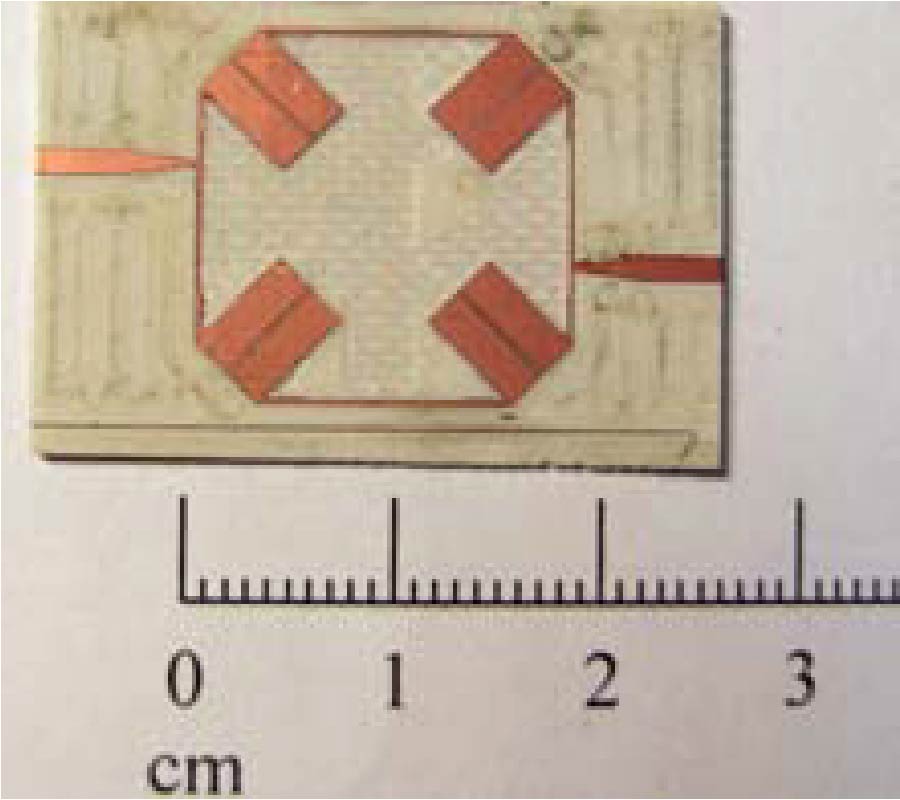
A Low Insertion Loss and High Selectivity UWB Bandpass Filter Using Composite Right/Left-Handed Material
Tung-Chia Chou , M.-H. Tsai and Chu-Yu Chen
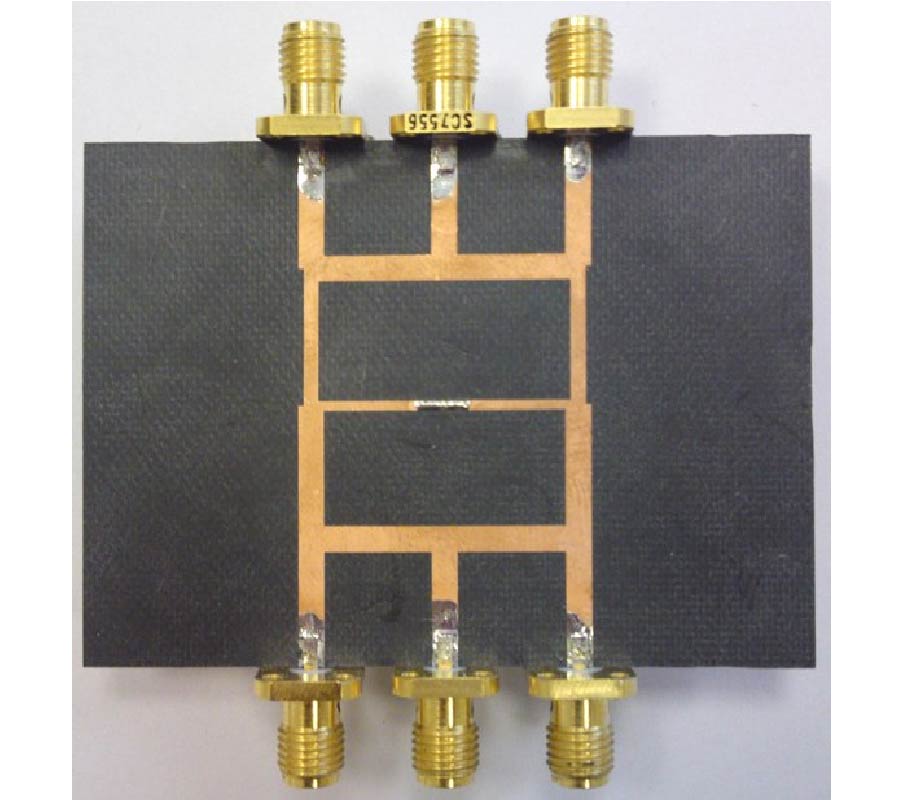
A novel UWB bandpass filter (BPF) based on the composite right/left-handed (CRLH) material and 0° feeding structure is proposed. With multiple unit-cells cascaded, the new section comprises the series interdigital capacitors and the shunt short-circuited stub inductors in the symmetric configuration. The circuit is designed to be unbalanced, a tunable gap between left handed and right handed modes in the β-ω diagram can control out of band performance. With careful design, a bandpass filter with wide rejection band can be achieved. Furthermore, by using the 0° feeding associated structure, two extra transmission zeros are created just outside the intended passband. Finally, a three cells bandpass filter has been designed and fabricated with 1.1 dB insertion loss at the center frequency of 4.2 GHz. Two transmission zeros are located at 2.95 GHz and 6.18 GHz with attenuations of -44.1 dB and -37.3 dB, respectively. Also, a wide rejection band from 5.4 to 9 GHz is obtained.
A LOW INSERTION LOSS AND HIGH SELECTIVITY UWB BANDPASS FILTER USING COMPOSITE RIGHT/LEFT-HANDED MATERIAL
2010-11-08
PIER C
Vol. 17, 145-162
Wideband on-Chip k-Band RF Front-End for Vehicular FMCW Radar Applications in 0.18 μm CMOS Process
Han-Yeol Yu , Sung-Sun Choi and Yong-Hoon Kim
In this paper, we present a wideband on-chip K-band RF front-end including a transmitter and a receiver for vehicular FMCW radar applications using a 0.18 μm CMOS process. To achieve wideband performance, an RC feedback circuit is applied to the input stage of amplifiers, as well as wideband passive circuits such as Marchand type baluns and Wilkinson type power dividers to the mixer LO port and transmitter output, respectively. The designed chip shows a 3-dB bandwidth of 6 GHz and 4.8 GHz for the receiver and transmitter, respectively. The receiver represents a gain of 18 dB and an input-referred 1 dB compression point of -9 dBm at an RF frequency of 24.15 GHz and an IF frequency of 100 kHz. The transmitter shows a power gain of 8.9 dB and an output power of 6.8 dBm at a frequency of 24.15 GHz. The total chip has a size of 1500 μm x 1270 μm while consuming 71 mA with a supply voltage of 1.8 V. Further, the designed RF front-end chip, also, has been verified by radar performance tests such as the Doppler shift and range detection. The test result for range information shows good agreement with theoretical expectation.
WIDEBAND ON-CHIP K-BAND RF FRONT-END FOR VEHICULAR FMCW RADAR APPLICATIONS IN 0.18 μM CMOS PROCESS