Search Results(13802)

2010-12-13
PIER C
Vol. 18, 169-183
Improving the Performances of a High Tc Superconducting Circular Microstrip Antenna with Multilayered Configuration and Aniso Tropic Dielectrics
Fadila Benmeddour , Christophe Dumond , Fatiha Benabdelaziz and Farid Bouttout
The moment method technique has been improved to investigate the scattering properties of high Tc Superconducting circular antennas with anisotropic substrate in multi-layered configuration. In this method, the electric field integral equation for a current element on a grounded dielectric slab of infinite extent was developed by basis functions involving Chebyshev polynomials. An improved analytical model is presented taking into account anisotropic substrate, superconducting material for the circular patch and multilayered structure. To validate the theoretical results, an experimental study has been performed for a perfectly conducting circular patch on a single layer, with and without air gap. Good agreements were obtained between our theory and measurements. Effects of temperature and thickness of a superconducting film are also reported and discussed. The performances of high Tc superconducting circular antennas were improved by the use of uniaxial anisotropy substrate and multilayer configuration.
IMPROVING THE PERFORMANCES OF A HIGH TC SUPERCONDUCTING CIRCULAR MICROSTRIP ANTENNA WITH MULTILAYERED CONFIGURATION AND ANISO TROPIC DIELECTRICS
2010-12-13
PIER C
Vol. 18, 153-168
Circular Slot Antennas Using L-Shaped Probe for Broadband Circular Polarization
Ronald Joseph , Syuhei Nakao and Takeshi Fukusako
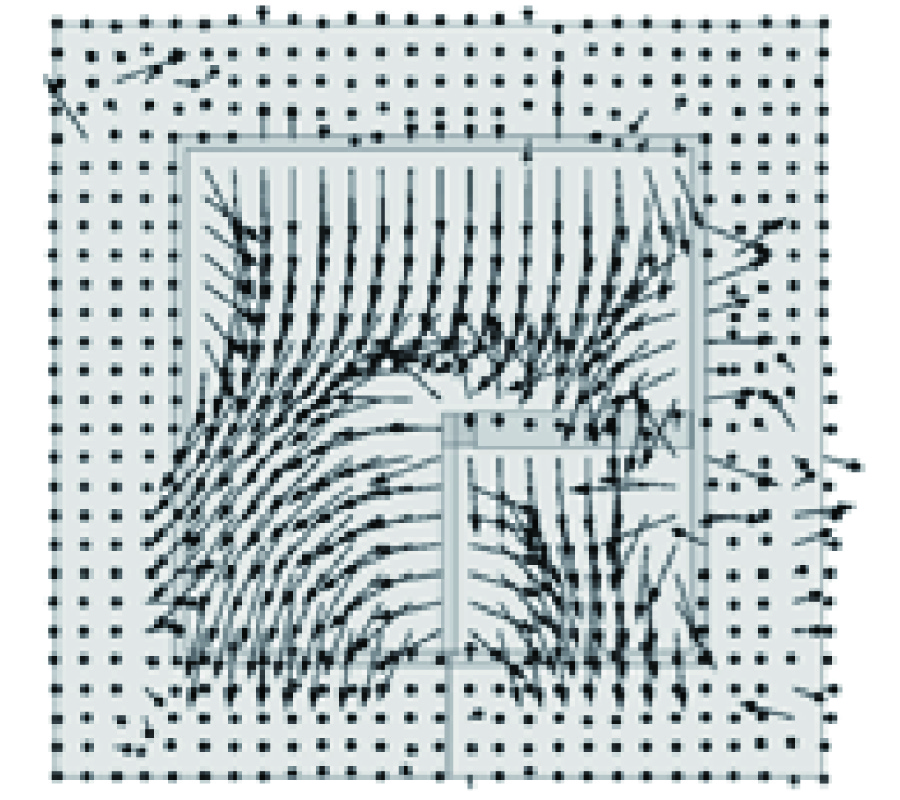
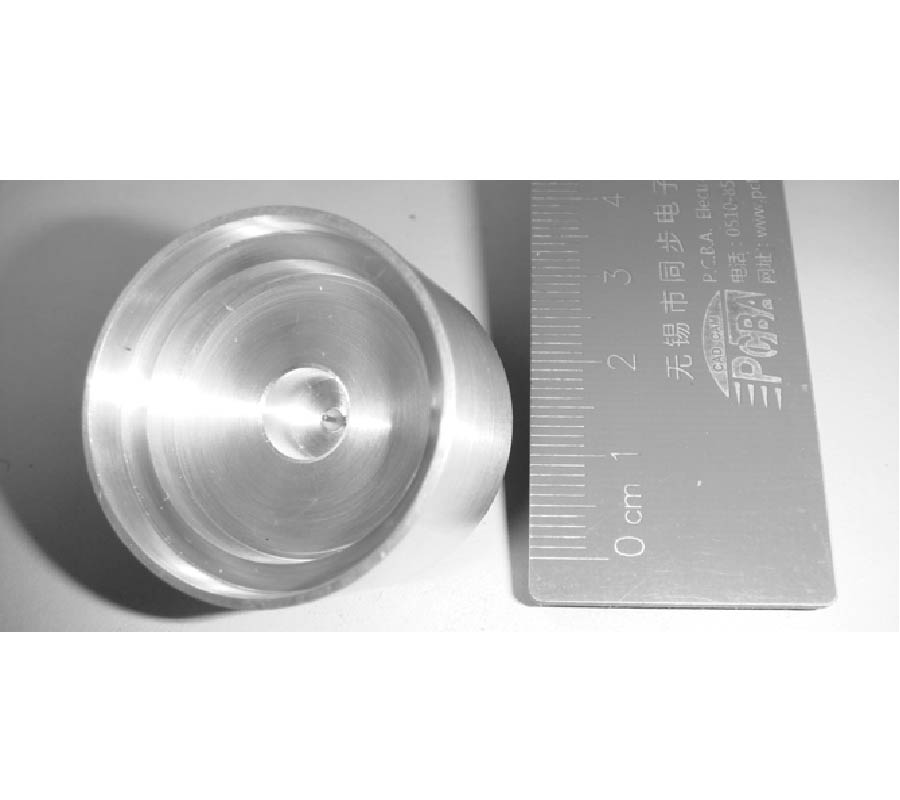
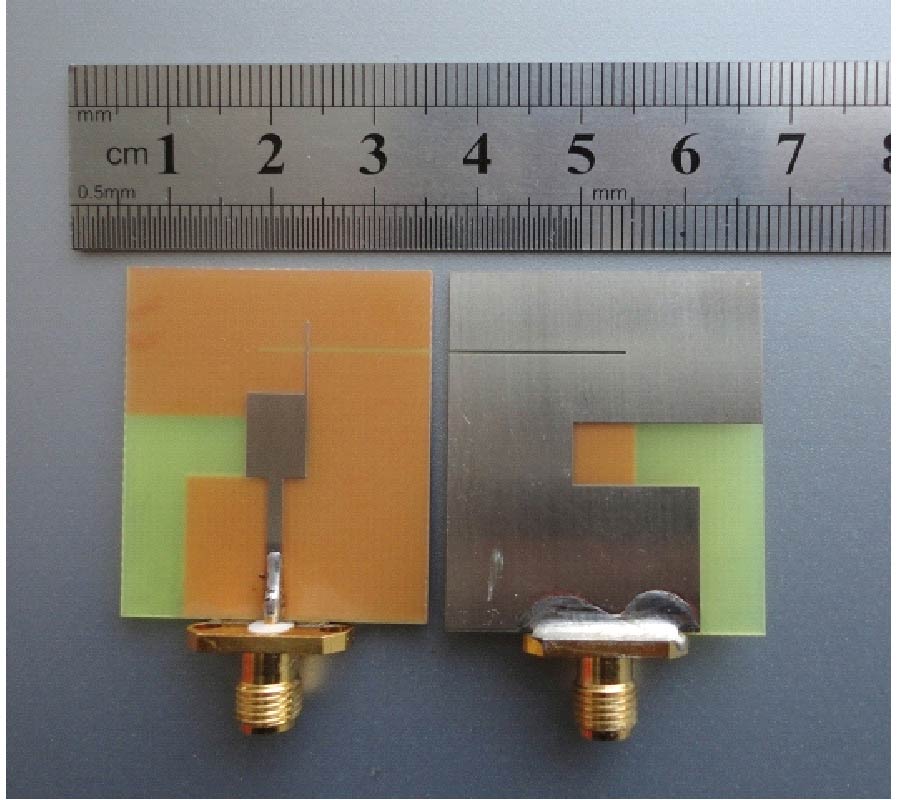
Novel circularly polarized antennas with a circular radiating aperture for broadband characteristics are presented in this paper. The vertical and horizontal components of the L-shaped probe are separated and placed at the front and back side of the substrate. The antennas are excited by a microstrip line which is connected to the vertical component of the L-shaped probe and electromagnetically couples the signal to the horizontal component of the L-shaped probe. A novel concept of placing stub in the slot of a planar antenna, by observing the electric field vector behaviour in the slot, is proposed to enhance the axial ratio (AR) bandwidth by around 10%. Unidirectional patterns can be obtained by having a cylindrical cavity of height λg/4 behind the antenna and is effective when no stubs are placed in the slot. A < 3 dB AR bandwidth of 39.5% with cavity and 41.18% without cavity but with stub in the slot is obtained in simulation and the results well match with the measurement.
CIRCULAR SLOT ANTENNAS USING L-SHAPED PROBE FOR BROADBAND CIRCULAR POLARIZATION
2010-12-10
PIER B
Vol. 27, 235-251
Wide Beam Tapered Slot Antenna for Wide Angle Scanning Phased Array Antenna
Ashutosh Kedar and K. Beenamole
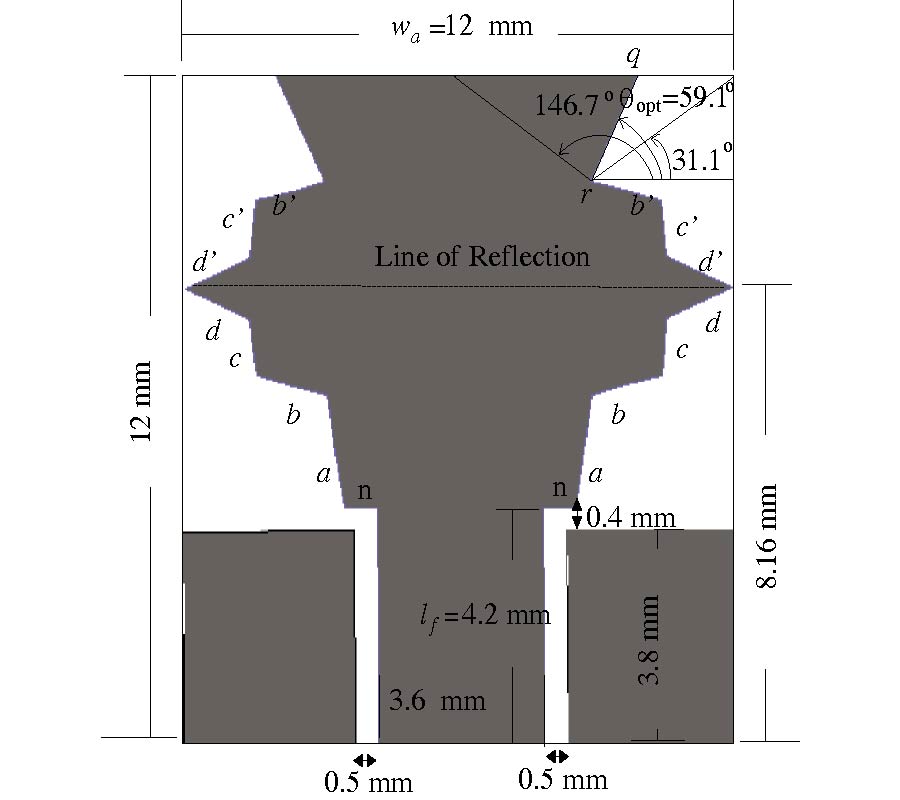
Design and development of a low profile, compact, wide beam and wide band printed double layered exponentially tapered slot antenna (DTSA) with a coplanar waveguide (CPW) feed meant for wide scan active phased array antenna in X-band has been presented. DTSA satisfies the requirements on the maximum reflection coefficient of Γ ≤ -10 dB for ±60o and ±45o scan from broadside in H- and E-planes, respectively with a moderate gain of 4-7 dBi. Realized antenna has shown a symmetric pattern together with moderately high gain, low cross-polarization and 3 dB beam width better than ±60o and ±45o in H- and E-planes, respectively. The designed structure is expected to find applications in mounting platforms with limited RF real estate available to it like in military aircrafts, owing to its easy integration with the uni-planar monolithic millimeter-wave integrated circuits.
WIDE BEAM TAPERED SLOT ANTENNA FOR WIDE ANGLE SCANNING PHASED ARRAY ANTENNA
2010-12-09
PIER C
Vol. 18, 123-135
Design of a Balun for a Bow Tie Antenna in Reconfigurable Ground Penetrating Radar Systems
Raffaele Persico , Nicola Romano and Francesco Soldovieri
This paper deals with the design of a reconfigurable antenna that resembles a monolithic UWB bow-tie antenna for Ground Penetrating Radar (GPR) applications. In particular, the attention is focussed on the design of the balun system able to work in the frequency band 0.3--1 GHz; the effectiveness of the design is shown by examining the behaviour of the scattering parameters S11 for both the reference monolithic antenna and the designed reconfigurable antenna. Also, an analysis of the radiation pattern of both the monolithic and reconfigurable antennas is presented and confirms the effectiveness of the designed balun system.
DESIGN OF A BALUN FOR A BOW TIE ANTENNA IN RECONFIGURABLE GROUND PENETRATING RADAR SYSTEMS
2010-12-09
PIER M
Vol. 16, 95-104
Eletromagnetic Simulation of Initially Charged Structures with a Discharge Source
Ji Heon Ryu
A methodology for electromagnetic simulation of initially charged structure with a discharge source (ICSWDS) has been investigated. The ICSWDS can be applied to a lot of areas such as high power electromagnetic (HPEM) radiators. As a method of electromagnetically simulating the ICSWDS, converting initially charged structures into equivalent transient structures and modeling discharge sources by using step voltage sources have been found. A Blumlein pulse forming line (PFL) has been simulated, manufactured and tested to validate this approach. A measured waveform from the test has a good agreement with a simulated waveform.
ELETROMAGNETIC SIMULATION OF INITIALLY CHARGED STRUCTURES WITH A DISCHARGE SOURCE
2010-12-09
PIER
Vol. 111, 311-330
Microwave Noise Field Behaves Like White Light
Jiri Polivka , Pavel Fiala and Jan Machac
This paper presents various applications where wide-band signals are the dominant factor. The approaches applied here are based on the present knowledge in the field of white light theory (the THz band), the particle theory of light, and the wave theory of light. White light theory is used to investigate wide-band applications of non-coherent electromagnetic waves in the GHz range represented by noise. In addition, the theoretical approaches to the field of white light are confirmed by various experiments with noise fields applied in the GHz range. These experiments show clear advantages of measurements performed by means of noise fields. The most important feature of these fields is the absence of interference effects.
MICROWAVE NOISE FIELD BEHAVES LIKE WHITE LIGHT
2010-12-09
PIER
Vol. 111, 291-309
Experimental Dynamical Evolution of the Brillouin Precursor for Broadband Wireless Communication through Vegetation
Ana Vazquez Alejos , Muhammad Dawood and Luis Medina
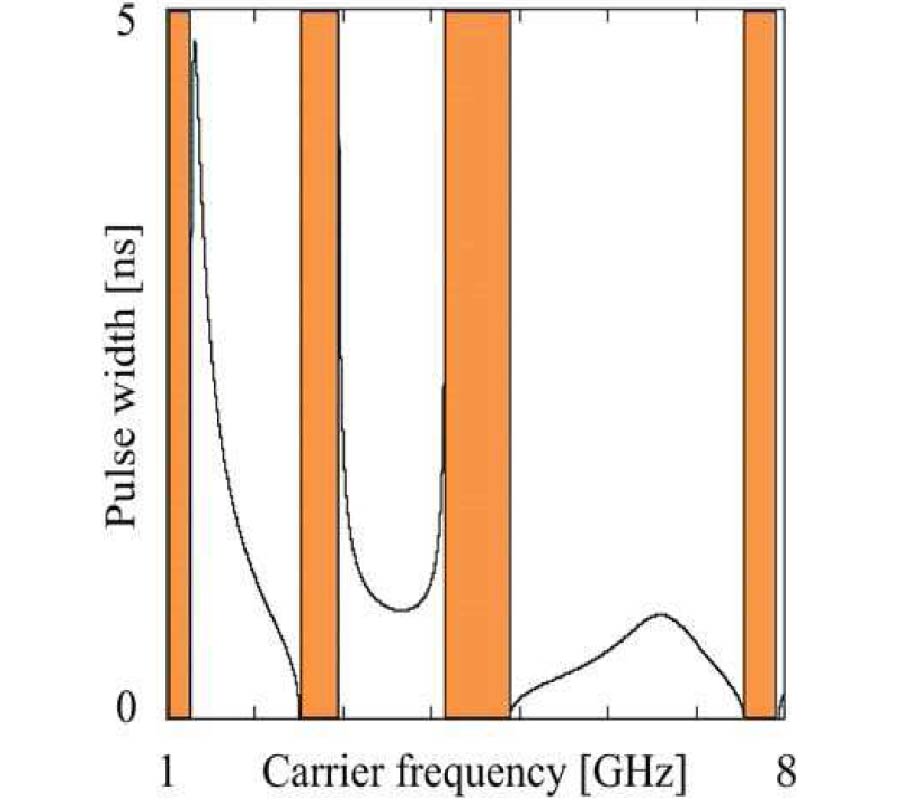
In this paper, we report experimental results on detecting and analyzing the Brillouin precursor through vegetation at frequencies from 100MHz to 3GHz. An experimental method to collect data is reported. The outcomes in terms of energy and time-spreading are presented using modulated rectangular and Gaussian pulses, as well as a sequence of rectangular pulses. Using field-collected data, this study shows the estimated dynamical evolution of the Brillouin precursor fields for wideband wireless systems, such as those represented by IEEE 802.16. The advantages of Brillouin precursors in terms of power spectrum density and bit energy are discussed. Complex relative permittivity is extracted from the experimental data and is used in theoretical formulation to analyze dispersive propagation for any kind of input waveform. Finally, a near-optimal pulse is proposed to achieve maximum propagation distance and/or signal-to-noise ratio for the transmission of bit stream sequences through vegetation.
EXPERIMENTAL DYNAMICAL EVOLUTION OF THE BRILLOUIN PRECURSOR FOR BROADBAND WIRELESS COMMUNICATION THROUGH VEGETATION
2010-12-09
PIER
Vol. 111, 271-290
Error Control of the Vectorial Nondirective Stable Plane Wave Multilevel Fast Multipole Algorithm
Ignace Bogaert , Joris Peeters and Daniel De Zutter
Novel formulas are presented that allow the rapid estimation of the number of terms L that needs to be taken into account in the translation operator of the vectorial Nondirective Stable Plane Wave Multilevel Fast Multipole Algorithm (NSPWMLFMA). This is especially important for low frequencies, since the L needed for error-controllability can be substantially higher than the L required in the scalar case. Although these formulas were originally derived for use in the NSPWMLFMA, they are equally useful in at least three other fast matrix multiplication methods.
ERROR CONTROL OF THE VECTORIAL NONDIRECTIVE STABLE PLANE WAVE MULTILEVEL FAST MULTIPOLE ALGORITHM
2010-12-09
PIER
Vol. 111, 253-269
Analysis of a Circular Waveguide Loaded with Dielectric and Metal Discs
Vishal Kesari and Jaishanker Prasad Keshari
A circular waveguide loaded with dielectric and metal discs was chosen to evaluate its dispersion characteristics and dispersion shaping with change of structure parameters for wideband coalescence of beam- and waveguide-mode dispersion characteristics for wideband gyro-TWT performance. The azimuthally symmetric TE-mode analysis of the structure was carried out in field matching technique by considering the propagating wave in cylindrical free-space region having radius equal to the hole-radius of metal disc, and the stationary waves in free-space and dielectric regions between two consecutive metal discs. The dispersion relation and, in accordance, a computer code were developed. Further, the roots of the dispersion relation for various sets of the structure parameters were obtained using the developed computer code; the dispersion characteristics were plotted; and the dispersion shaping was projected for typically chosen TE01-, TE02- and TE03-modes. The analytical results were validated against those obtained for the conventional and earlier published structures, and also those obtained using commercially available simulation tool. Finally, a study on azimuthal electric field available over the radial coordinate was carried out to show the control of structure parameter on the gyrating electron beam position for the chosen operating mode of a dielectric and metal discs loaded gyro-TWT.
ANALYSIS OF A CIRCULAR WAVEGUIDE LOADED WITH DIELECTRIC AND METAL DISCS
2010-12-08
PIER Letters
Vol. 19, 127-135
Numerical Total Scattering Cross Section from Reverberating Electromagnetic Experiments
Ibrahim El Baba , Sébastien Lallechere and Pierre Bonnet
The total scattering cross section (TSCS) of various targets is computed in this letter from a numerical method in a reverberation chamber (RC). Theoretically TSCS measurements need both a free-space environment (for instance anechoic chamber modeled numerically by absorbing boundary conditions) and various plane waves' stimulations. The method developed allows predicting the TSCS from few simulations in a RC. The foundations and numerical results presented demonstrate the ability of the technique to straightforward compute the TSCS with the finite difference in time domain (FDTD) method. The agreement from these TSCS treatments in RC is finally obtained considering the expected results in free-space.
NUMERICAL TOTAL SCATTERING CROSS SECTION FROM REVERBERATING ELECTROMAGNETIC EXPERIMENTS
2010-12-08
PIER Letters
Vol. 19, 113-125
Inverse Joukowski Mapping
Chang-Hong Liang , Xin-Wen Wang and Xi Chen
This is paper discusses the inverse Joukowski mapping, w=z+√{z2-c2} (c>0), which can be classified into active and passive inverse transformation. By using the active inverse Joukowski mapping, the generalized image problems that the line charge ρl is located outside the elliptical conducting cylinder, or the finite conducting plate can be solved. By using the passive logarithmic inverse Joukowski mapping, the capacitance C of a finite conducting plate placed vertically above the infinite conducting plate can be solved. Thus the conformal mapping method can replace the image method and electrical axis method become the uniform method to solve the electrostatic problems.
INVERSE JOUKOWSKI MAPPING
2010-12-08
PIER C
Vol. 18, 111-121
Numerical and Experimental Investigation of a Novel Ultrawideband Butterfly Shaped Printed Monopole Antenna with Bandstop Function
Osama Mohamed Haraz Ahmed and Abdel Sebak
In this paper, a novel compact butterfly shaped printed monopole antenna for ultra-wideband (UWB) applications is presented. The proposed antenna is designed with a standard printed circuit board (PCB) process for suitable integration with other microwave components. The antenna prototype is designed then fabricated and tested experimentally. The calculated impedance bandwidth of the proposed antenna ranges from 3 GHz to 13 GHz for a 10 dB reflection coefficient (S11) while the measured impedance bandwidth ranges from 3 GHz to 10.8 GHz covering the whole UWB frequency range. The measured antenna radiation patterns show relatively stable radiation patterns with almost constant gain over the whole frequency band of interest. By introducing a slit ring resonator (SRR) in the feedline, a bandstop of 830 MHz from 5.0 to 5.83 GHz for band rejection of wireless local area network (WLAN) can be achieved. So, the proposed antenna is considered a good candidate for future UWB communication systems.
NUMERICAL AND EXPERIMENTAL INVESTIGATION OF A NOVEL ULTRAWIDEBAND BUTTERFLY SHAPED PRINTED MONOPOLE ANTENNA WITH BANDSTOP FUNCTION
2010-12-08
PIER
Vol. 111, 229-251
PO/MEC-Based Scattering Model for Complex Objects on a Sea Surface
Alexandre Baussard , M. Rochdi and Ali Khenchaf
In this contribution a model based on asymptotic methods is proposed to compute the scattered field from complex objects on a sea surface. The scattering model combines the geometrical optics, the physical optics and the method of equivalent currents. It includes the shadowing effects and multiple-bounce up to order 3. This model is used, in the following, for Radar Cross Section (RCS) estimation and to generate Synthetic Aperture Radar (SAR) raw data for imaging applications. The theoretical aspects are reviewed in this paper and the proposed model is detailed. Numerical results are provided to validate the approach through the computation of RCS for canonical objects and complex scenes. Both the bistatic and the monostatic configurations are studied in this work. Finally some first results dealing with SAR imaging of objects on a sea surface are provided. These images are constructed from the simulated raw data thanks to a chirp scaling-based algorithm.
PO/MEC-BASED SCATTERING MODEL FOR COMPLEX OBJECTS ON A SEA SURFACE
2010-12-08
PIER
Vol. 111, 213-228
Properties of Phase Shift Defects in One-Dimensional Rugate Photonic Structures
Yanyun Liu and Zhao Lu
We theoretically investigated optical properties of phase shift defects in onedimensional rugate photonic structures at oblique incidence. Transmission spectra and energy density distributions of such continuous gradient-index structures with phase shift defects were numerically calculated for TE and TM waves using the propagation matrix method. The study shows that when the angle of incidence increases, (1) the wavelength of the defect mode shifts to a shorter wavelength, (2) the full width at half maximum (FWHM) of the defect mode decreases for TE wave but it increases for TM wave, (3) the stop band of the rugate structure moves toward a shorter wavelength region, (4) the bandwidth is enlarged for TE wave, but it is shortened for TM wave, (5) the peak energy density increases and then drops for TE wave, while it always decreases for TM wave. The effect of number of periods of rugate structures on the energy density distribution was also examined.
PROPERTIES OF PHASE SHIFT DEFECTS IN ONE-DIMENSIONAL RUGATE PHOTONIC STRUCTURES
2010-12-07
PIER
Vol. 111, 197-212
Low Loss Metal Diplexer and Combiner Based on a Photonic Band Gap Channel-DROP Filter at 109 GHz
Dmitry Yuryevich Shchegolkov , Cynthia Eileen Heath and Evgenya Ivanovna Simakov
In this paper we present the design, fabrication and measurements for a Wband metal Photonic Band Gap (PBG) Channel-Drop Filter (CDF) diplexer, which can also be employed as a combiner to combine signals of different frequencies into a single waveguide. A PBG CDF is a device that allows channeling of a selected frequency from a continuous spectrum into a separate waveguide through resonant defects in a PBG structure. A PBG CDF transmits straight through all the frequencies except for the resonant frequency, and thus it represents a diplexer. Reversing the wave flow directions causes it to combine signals of different frequencies from two different waveguides into a single channel, representing a combiner. The device is compact and configurable and can be employed for mm-wave spectrometry with applications in communications, radio astronomy, and radar receivers for remote sensing and nonproliferation. High ohmic losses in metals constitute the main challenge in realization of a metal CDF at W-band. To mitigate the problem of ohmic losses, the filter was designed to operate at coupled dipole resonant modes instead of coupled fundamental monopole modes. The experimental samples were fabricated in two different ways: by conventional machining and by electroforming. The comparative results of the samples' testing are presented in the paper. Frequency selectivity of 30 dB with a 0.3 GHz linewidth at 108.5 GHz was demonstrated. In addition, we suggest an experimental method to check the frequencies of separate resonant cavities of fabricated samples which do not properly operate and a possible way to adjust the geometry of the cavities for the frequencies to meet the required specifications.
LOW LOSS METAL DIPLEXER AND COMBINER BASED ON A PHOTONIC BAND GAP CHANNEL-DROP FILTER AT 109 GHZ
2010-12-07
PIER
Vol. 111, 179-196
A Novel Bandwidth Enhancement Technique for X-Band RF MEMS Actuated Reconfigurable Reflectarray
Younes Radi , Saeid Nikmehr and Ali Pourziad
In this paper, a wideband microstrip antenna for X-band (8.2 GHz--12.4 GHz) applications is introduced. First, simple patch antennas are studied. The resultant design demonstrates better performance than the previously published narrowband microstrip reflectarray antennas. The important features of these elements are simple structure, linear operation, and use of RF MEMS switches for programmable pattern control. Next employing our novel method, this narrowband structure is converted to broadband reflectarray antenna that can cover the whole X band. This novel idea is based on introducing several ground plane slots and controlling their electrical lengths by RF MEMS switches. By means of this method, 952 and 587 degree phase swing is achieved for continuous and discrete slot length variation, respectively. Application of this method along with smaller switches results in phase swing improvement of up to 1616 degree. In all structures a RT duroid (5880) substrate is selected to lower the back radiation. The achieved return loss in all cases is less than 0.32 dB. In comparison with the previous publications, our novel method has more generalization capability and results in single layered broadband reconfigurable microstrip reflectarray antennas with linear phase swing, lower cost, and ease of RF MEMS implementation.
A NOVEL BANDWIDTH ENHANCEMENT TECHNIQUE FOR X-BAND RF MEMS ACTUATED RECONFIGURABLE REFLECTARRAY
2010-12-06
PIER M
Vol. 16, 85-93
Electromagnetic Fields in a Circular Waveguide Containing Chiral Nihility Metamaterial
Muhammad Abuzar Baqir , Aqeel Abbas Syed and Qaisar Abbas Naqvi
Propagation of electromagnetic fields and power in a circular waveguide containing chiral nihility metamaterial is studied. Space inside the waveguide is divided into two circular regions. One region contains chiral nihility metamaterial while other region is of free space. Two cases of the waveguide, in this regard, are considered for analysis. For the case of perfect electric conductor (PEC) waveguide, there is no net electric field and power propagation in chiral nihility region of the guide whereas both fields and power exist in non-nihility region (which is free space in our cases) of the guide. For perfect electromagnetic conductor (PEMC) waveguide, both electric and magnetic fields exist in the chiral nihility and non-nihility regions.
2010-12-04
PIER B
Vol. 27, 213-233
Study of Fractal-Shaped Structures with PIN Diodes Using the Multi-Scale Method Combined to the Generalized Equivalent Circuit Modeling
Sonia Mili , Chiraz Larbi Aguili and Taoufik Aguili
A multi-scale (MS) approach combined to the generalized equivalent circuit (GEC) modeling is applied to compute the input impedance of pre-fractal structures with incorporated PIN diodes. Instead of treating the whole complex problem at once, the MS method splits the complex structure into a set of scale levels to be studied separately. The computation is done gradually from the lowest level. Each scale level is artificially excited by N modal sources to compute its input impedance matrix. The MS method is based on converting this input impedance matrix into an impedance operator to achieve the transition toward the subsequent level. The PIN diodes were easily integrated in the MS approach thanks to their surface impedance model. The main advantage of the MS-GEC method is the significant reduction of the problem's high aspect ratio since fine details are studied separately of the larger structure. Consequently, the manipulated matrices are well conditioned. Moreover, the reduced size of matrices manipulated at each level leads to less memory requirement and faster processing than the MoM. Values obtained with the MS-GEC approach converge to those given by the MoM method when a su±cient number of modal sources are used at each scale level. For frequencies between 1 GHz and 6.8 GHz, the agreement between the two methods is conspicuous.
STUDY OF FRACTAL-SHAPED STRUCTURES WITH PIN DIODES USING THE MULTI-SCALE METHOD COMBINED TO THE GENERALIZED EQUIVALENT CIRCUIT MODELING
2010-12-04
PIER
Vol. 111, 163-178
Dual-Band Equal/Unequal Wilkinson Power Dividers Based on Coupled-Line Section with Short-Circuited Stub
Bo Li , Xidong Wu , Nan Yang and Wen Wu
This paper presents dual-band equal/unequal Wilkinson power dividers based on a coupled-line section with short-circuited stub (called as the ``coupled-line section" for short), which consists of a pair of parallel coupled lines and a short-circuited stub. With the analyses of the phase shift and equivalent characteristic impedance, the coupled-line section is used to replace the quarter-wavelength branch line in the conventional equal/unequal Wilkinson power divider to obtain excellent dual-band operation. The closed-form equations and design procedures of dual-band Wilkinson power divider are given, where one degree of design freedom is obtained and design flexibility is shown. As two examples, a dual-band equal Wilkinson power divider with the frequency ratio of 1.8:1 and an unequal one with the high power dividing ratio of 7:1 and frequency ratio of 1.8:1 are designed, fabricated and measured. The measurements are in good agreement with the simulations. It is shown that the proposed power dividers have simple topologies, and can be easily fabricated with small frequency ratios and high power dividing ratios.
DUAL-BAND EQUAL/UNEQUAL WILKINSON POWER DIVIDERS BASED ON COUPLED-LINE SECTION WITH SHORT-CIRCUITED STUB
2010-12-03
PIER Letters
Vol. 19, 103-111
The Effect of Ground Plane on the Performance of a Square Loop CPW-Fed Printed Antenna
Pei Cheng Ooi and Krishnasamy Selvan
The effect of shaping the ground plane on the performance of a square loop coplanar waveguide (CPW)-fed printed antenna is reported in this paper. Experimental results are presented on the reflection coefficient and radiation pattern of the investigated antennas. Simulation results are presented on the current distribution and gain. It is observed based on the results that shaping the ground plane significantly affects the reflection coefficients and current distributions.
THE EFFECT OF GROUND PLANE ON THE PERFORMANCE OF A SQUARE LOOP CPW-FED PRINTED ANTENNA