Search Results(13902)

2008-11-19
PIER
Vol. 88, 91-104
Novel Compact Microstrip Ultra-Wideband Filter Utilizing Short-Circuited Stubs with Less Vias
Mohammad Shahrazel Razalli , Alyani Ismail , Mohd Adzir Mahdi and Mohd Nizar bin Hamidon
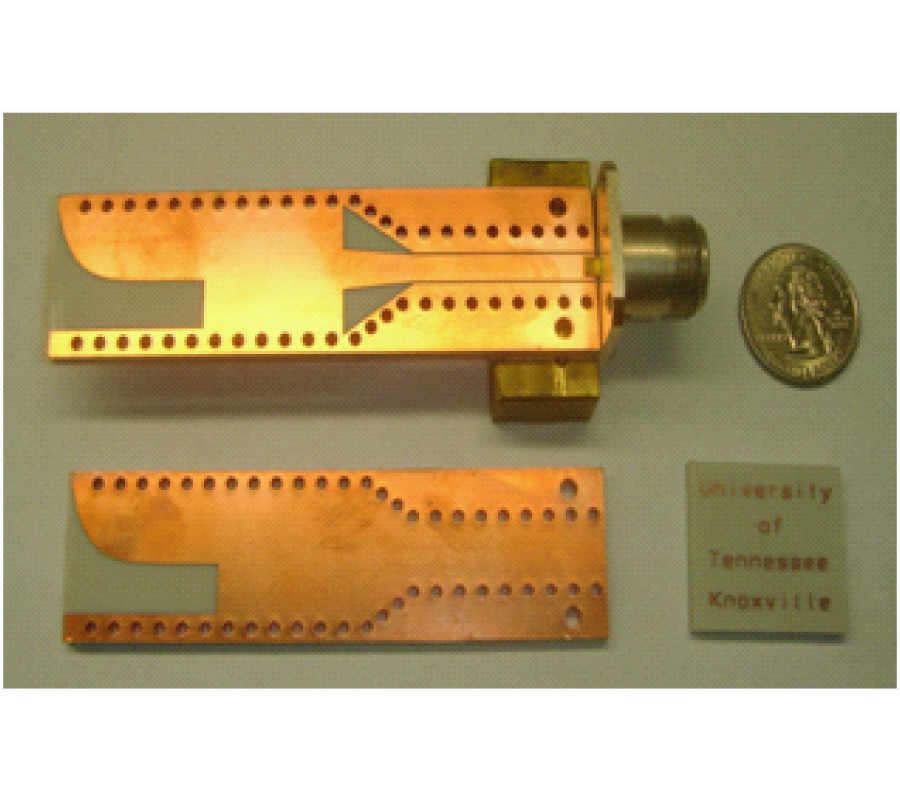
We present here a new pattern with compact size of Ultra Wideband (UWB) microwave filter. The filter is based on quarter-wave length short-circuited stubs model. We introduced here a new schematic model by extracting all parasitic elements such as T-junction and discontinuity in our new pattern of UWB filter. This new filter has minimal number of vias and improved frequency bandwidth, insertion loss and return loss. It is fabricated on RT Duroid 5880 with 0.508mm of substrate thickness. The final dimension is measured as 21mm×14 mm. It is not only compact, but also delivers excellent scattering parameters with magnitude of insertion loss, |S21| lower than 0.85 dB and return loss better than -11.6 dB. The fractional bandwidth is 109% from 3.06 GHz to 10.43 GHz. In the pass band, the measured group delay varies in between 0.47 ns to 0.32 ns, showing stability with minimum variation of only 0.15 ns.
NOVEL COMPACT MICROSTRIP ULTRA-WIDEBAND FILTER UTILIZING SHORT-CIRCUITED STUBS WITH LESS VIAS
2008-11-19
PIER
Vol. 88, 73-89
Performance Analysis of Cellular CDMA in Presence of Beamforming and Soft Handoff
Sanjay Dhar Roy and Sumit Kundu
This paper presents performance analysis of cellular CDMA in presence of beamforming and soft handoff. A stop and wait ARQ scheme has been assumed for data service. Joint effects of beamforming and soft handoff reduce delay, BER and increase throughput significantly. Impact of several parameters of soft handoff and beamforming on data performance has been evaluated. Both the cases of perfect and imperfect beamforming have been investigated. Effects of DOA (Direction of arrival) estimation error have also been indicated on data service.
PERFORMANCE ANALYSIS OF CELLULAR CDMA IN PRESENCE OF BEAMFORMING AND SOFT HANDOFF
2008-11-19
PIER
Vol. 88, 53-71
Telegraphist's Equations for Rectangular Waveguides and Analysis in Nonorthogonal Coordinates
Richard Dusséaux and Claire Faure
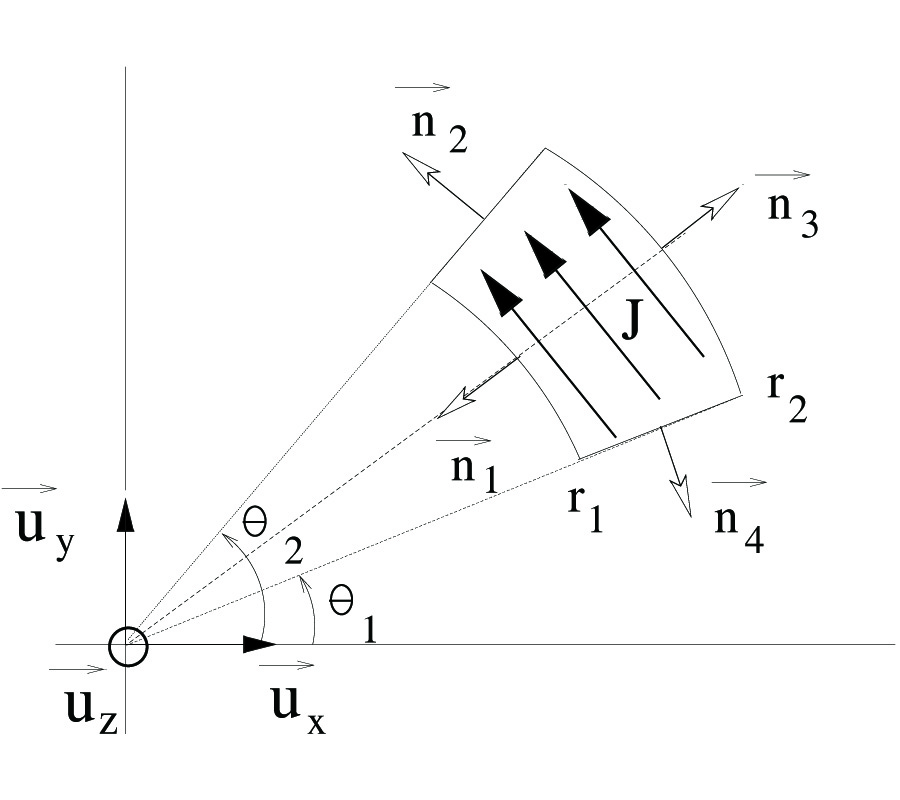
In our previous works, we have presented one differential method for the efficient calculation of the modal scattering matrix of junctions in rectangular waveguides. The formalism proposed relies on the Maxwell's equations under their covariant form written in a nonorthogonal coordinate system fitted to the structure under study. On the basis of a change of variables, we show in this paper that the curvilinear method and the generalized telegraphist's method lead to the same system of coupled differential equations.
TELEGRAPHIST'S EQUATIONS FOR RECTANGULAR WAVEGUIDES AND ANALYSIS IN NONORTHOGONAL COORDINATES
2008-11-19
PIER
Vol. 88, 39-52
New Benchmark Radar Targets for Scattering Analysis and Electromagnetic Software Validation
David Escot-Bocanegra , David Poyatos-Martınez , Raul Fernandez-Recio , Antonio Jurado-Lucena and Ignacio Montiel-Sanchez
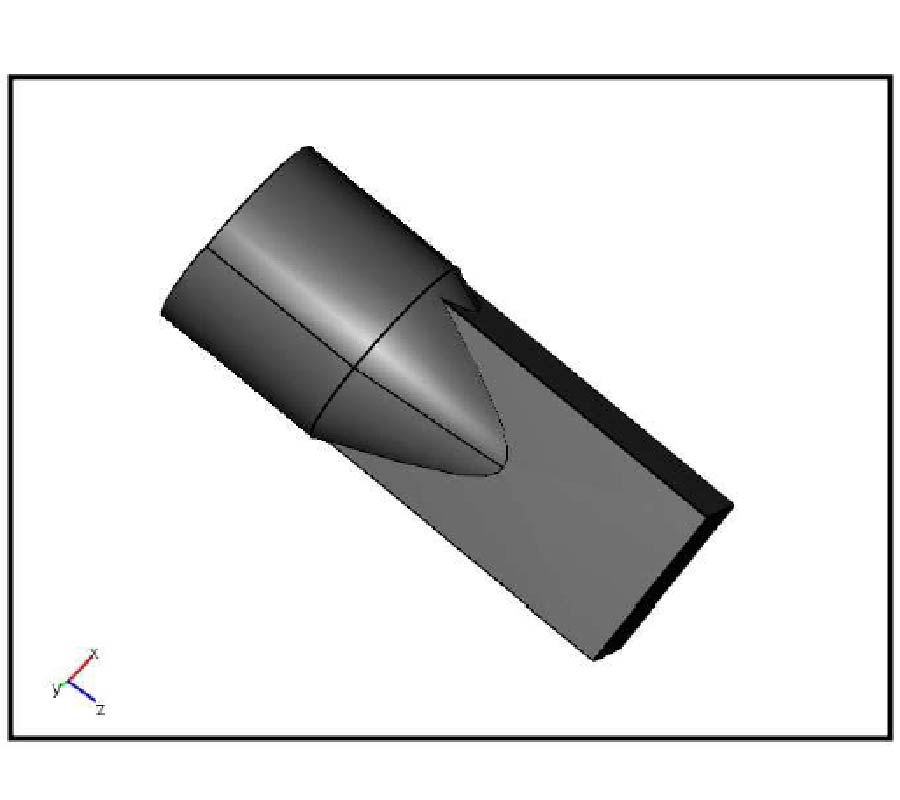
A validation process, in which simulations and measurements are compared, is necessary to have confidence in the results obtained by numerical methods that solve scattering problems. This paper presents Radar Cross Section (RCS) measurements of new targets suitable for electromagnetic software comparison and validation. These measurements can be used as an RCS reference data for testing existing and future codes, as well as for the analysis of the scattering mechanisms.
NEW BENCHMARK RADAR TARGETS FOR SCATTERING ANALYSIS AND ELECTROMAGNETIC SOFTWARE VALIDATION
2008-11-19
PIER
Vol. 88, 1-38
RCS of Large Bent Waveguide Ducts from a Modal Analysis Combined with the Kirchhoff Approximation
Christophe Bourlier , Hongyang He , Janic Chauveau , Régis Hémon and Philippe Pouliguen
In this paper, we present a fast method to predict the monostatic Radar Cross Section (RCS) in high-frequency of a cavity, which can be modeled as a succession of bent waveguides of the same cross section and stuffed by a perfectly-conducting termination. Based on a modal analysis combined with the Kirchhoff Approximation, this method allows us to obtain closed-form expressions of the transmission matrix at each discontinuity. In addition, to improve the efficiency, a selective modal scheme is proposed, which selects only the propagating modes contributing to the scattering. Compared to the Iterated Physical Optics (IPO) method and the Multi-Level Fast Multipole Method (MLFMM, generated from the commercial software FEKO), this approach brings good results for cavities with small tilt angles of the bends, typically smaller than 2 degrees.
RCS OF LARGE BENT WAVEGUIDE DUCTS FROM A MODAL ANALYSIS COMBINED WITH THE KIRCHHOFF APPROXIMATION
2008-11-19
PIER Letters
Vol. 5, 23-34
Reserch on the Coherent Phase Noise of Millimeter-Wave Doppler Radar
Tao Wu , Xiaohong Tang and Fei Xiao
The phase noise is a very important index to wireless system, especially in millimeter-wave continuous wave radar systems. The phase noise of the signal, which is firstly leaked from transmitter and then mixed to intermediate frequency band by the local oscillator (Tx-IF), will worsen the sensitivity of supper heterodyne radar system used for Doppler velocity detection. In this paper, the coherent analysis is applied on the phase noise after nonlinear process, which shows that the phase noise of the Tx-IF is affected by those factors: the magnitude of the phase noise of the transmitter and that of the local oscillator, and the correlationship between each other. In practice, by reducing the phase noise of the transmitter and that of the local oscillator and ameliorating the correlationship of the two phase noises, the phase noise of the Tx-IF can be improved greatly. Such proposition is successfully applied in the design of a millimeter-wave Doppler radar working at 95 GHz. The experimental measurement shows that the sensitivity of this radar is better than -70 dBm.
RESERCH ON THE COHERENT PHASE NOISE OF MILLIMETER-WAVE DOPPLER RADAR
2008-11-18
PIER
Vol. 87, 345-361
On the Size of Left-Handed Material Lens for Near-Field Target Detection by Focus Scanning
Gang Wang , Yu Gong and Hongjin Wang
Two focus-scanning schemes, viz. lens-fixed scanning scheme and lens-combined scheme, are proposed for near-field target detection and imaging. Specific lens size must be determined for future lens building in order to achieve desired imaging resolution and convenient data acquisition. Influence of LHM lens size on the performance of two different focus-scanning schemes are investigated and compared by simulating the detection of a perfect electric conductor target of diameter of 2 mm. Numerical simulations indicate that the lens-combined scanning system using thick LHM lens of thickness of two wavelengths requires at least a length of one wavelength to achieve resolution better than 0.4 wavelengths, while the lens-fixed scanning system requires a lens of lengthof approximately 3 wavelengths. When a thin LHM lens is used, high imaging resolution is not a consequent result for the focus-scanning approaches, although thin lens generally yields high focusing resolution. Some guidelines on the selection of length and thickness of flat LHM lens are reported.
ON THE SIZE OF LEFT-HANDED MATERIAL LENS FOR NEAR-FIELD TARGET DETECTION BY FOCUS SCANNING
2008-11-18
PIER
Vol. 87, 331-344
Spectrum Sharing Studies of IMT-Advanced and FWA Services Under Different Clutter Loss and Channel Bandwidths Effects
Zaid Ahmed Shamsan , Abdulaziz Mohammed Al-Hetar and Tharek Bin Abdul Rahman
Spectrum sharing between wireless systems becomes a critical issue due to emerging new technologies and spectrum shortage. Recently, IMT-Advanced system has been allocated in the same frequency band (3500 MHz) along with fixed services on co-primary basis, which means that harmful interference probability may be transpired. Channel bandwidths (BW) and natural of deployment areas of wireless systems are of the main effective factors in spectrum sharing. Spectrum Emission Mask (SEM) model will be used to study these factors effects beside the interference to noise ratio (I/N) as a fundamental criterion for coexistence and sharing between systems. The frequency and distance separation and antenna high effects are essential to be investigated to achieve spectrum sharing.
SPECTRUM SHARING STUDIES OF IMT-ADVANCED AND FWA SERVICES UNDER DIFFERENT CLUTTER LOSS AND CHANNEL BANDWIDTHS EFFECTS
2008-11-18
PIER
Vol. 87, 313-330
Experimental Study and SPICE Simulation of CMOS Inverters LATCH-Up Effects Due to High Power Microwave Interference
Haiyang Wang , Jiayin Li , Hao Li , Kaiqi Xiao and Hong Chen
Experimental study and SPICE simulation of CMOS digital circuits latch-up effects due to high power microwave interference are reported in this paper. As a traditional inherent destruction phenomenon, latch-up effect may jeopardize the correct function of the circuits, and could be triggered in various ways such as ESD pulse, cosmic ray, heavy ion particles etc. Through the directly injected experimental investigation of CMOS inverters, it is shown that the single short high power RF pulse not only could disturb and upset the inverters output logic voltage, but also might trigger CMOS latch-up effects. It is observed that the RF pulse leading to inverters latch-up effects have energy threshold characteristics, which means that the injected RF pulse power is inversely proportional to the pulse width. SPICE simulations indicated that the inverters maximum static consumption current in latch-up state will increase up to 6600 multiples compared to the normal value when input logic state is high. With the device scaling down, higher integration and higher working frequency, the power consumption problem plays a significant role, which makes CMOS logic circuits more vulnerable due to the latch-up effects under high power microwave threats.
EXPERIMENTAL STUDY AND SPICE SIMULATION OF CMOS INVERTERS LATCH-UP EFFECTS DUE TO HIGH POWER MICROWAVE INTERFERENCE
2008-11-15
PIER M
Vol. 5, 101-109
Radiation Properties Enhancement of Triangular Patch Microstrip Antenna Array Using Hexagonal Defected Ground Structure
Fitri Yuli Zulkifli , Eko Tjipto Rahardjo and Djoko Hartanto
This paper presents a hexagonal shape defected ground structure (DGS) implemented on two element triangular patch microstrip antenna array. The radiation performance of the antenna is characterized by varying the geometry and dimension of the DGS and also by locating the DGS at specific position which are found experimentally. Simulation and experimental results have verified that antenna with DGS had improved the antenna without DGS. Measurement results of the hexagonal DGS have axial ratio bandwidth enhancement of 10 MHz, return loss improvement of 35%, mutual coupling reduction of 3 dB and gain enhancement of 1 dB.
RADIATION PROPERTIES ENHANCEMENT OF TRIANGULAR PATCH MICROSTRIP ANTENNA ARRAY USING HEXAGONAL DEFECTED GROUND STRUCTURE
2008-11-15
PIER Letters
Vol. 5, 13-22
A Novel Circularly Polarized Antenna Based on an Artificial Ground Plane
Mehdi Hosseini and Shahid Bashir
The paper describes a novel low profile circularly polarized antenna. The antenna is a single dipole over a particular wire formed panel with high impedance properties. Although the principles of operation for the antenna are general, in this work they are specifically applied to the design and optimization of a FM broadcasting antenna. The distinguishing feature of the design is that it incorporates the following interesting concepts simultaneously: artificial high impedance surfaces or artificial magnetic conductors, materials showing refractive indexes of less than unity (n < 1), and polarizing structures. Another advantageous aspect of the design is the computational efficiency emerging from this fact that the structure is entirely wire made. This way the relevant numerical analysis and optimization can be efficiently carried out by NEC, a one-dimensional (1D) MoM-based EM analyzer.
A NOVEL CIRCULARLY POLARIZED ANTENNA BASED ON AN ARTIFICIAL GROUND PLANE
2008-11-15
PIER Letters
Vol. 5, 1-12
Coupling Projection Domain Decomposition Method and Meshless Collocation Method Using Radial Basis Functions in Electromagnetics
Yong Duan , Sheng-Jian Lai and Tingzhu Huang
This paper presents an efficient meshless approach for solving electrostatic problems. This novel approach is based on combination of radial basis functions-based meshless unsymmetric collocation method with projection domain decomposition method. Under this new method, we just need to solve a Steklov-Poincare interface equation and the original problem is solved by computing a series of independent sub-problems. An electrostatic problem is used as an example to illustrate the application of the proposed approach. Numerical results that demonstrate the accuracy and efficiency of the method are stated.
COUPLING PROJECTION DOMAIN DECOMPOSITION METHOD AND MESHLESS COLLOCATION METHOD USING RADIAL BASIS FUNCTIONS IN ELECTROMAGNETICS
2008-11-15
PIER Letters
Vol. 4, 191-203
Design, Fabrication and Test of Parabolic Cylinder Reflector and Horn for Increasing the Gain of Vlasov Antenna
Mohammad Fazaelifar and Mohammadreza Fatorehchy
This paper proposes two methods for increasing the Gain of Vlasov Antenna. The first method, using a Parabolic Cylinder Reflector, results in a 7dB increase in the Gain. The second method, constructing a Horn on the aperture, increases the Gain by about 5dB. The results were checked using a prototype antenna and there was a close agreement.
DESIGN, FABRICATION AND TEST OF PARABOLIC CYLINDER REFLECTOR AND HORN FOR INCREASING THE GAIN OF VLASOV ANTENNA
2008-11-15
PIER B
Vol. 11, 79-101
Analysis of Radiation Characteristics of a Probe-Excited Rectangular Ring Antenna by the Dyadic Green's Function Approach
Suthasinee Lamultree , Chuwong Phongcharoenpanich , Sompol Kosulvit and Monai Krairiksh
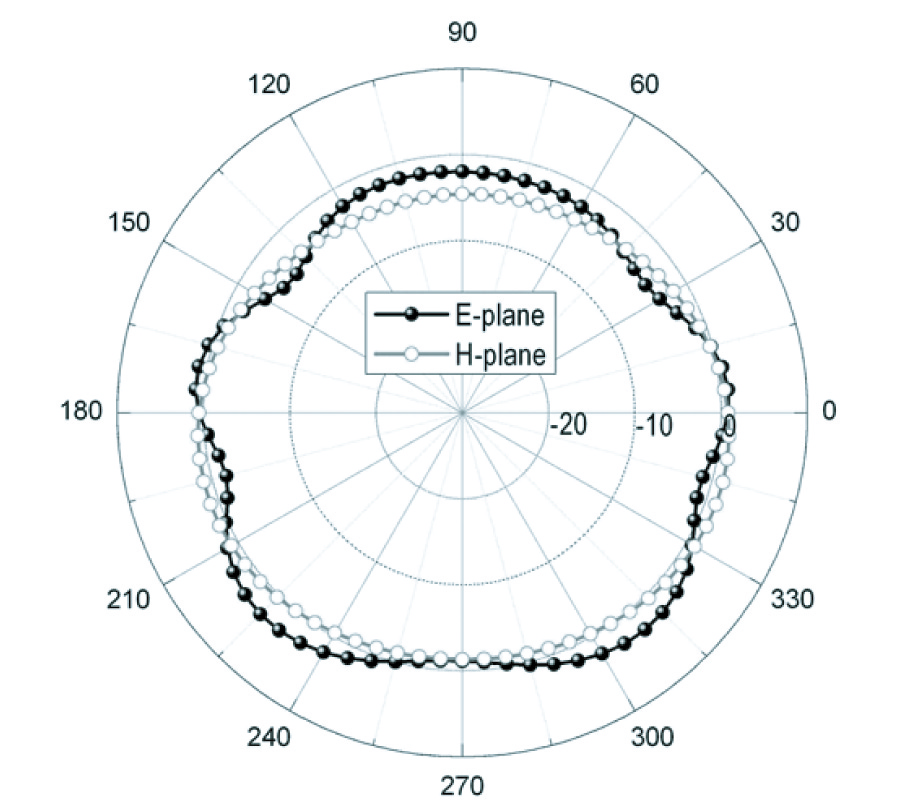
Abstract-Radiation characteristics of a probe-excited rectangular ring antenna are investigated by using the dyadic Green function approach. The radiation characteristics, such as radiation pattern, beam-peak direction, half-power beamwidth and directivity, are analyzed. For the specified operating frequency, the ring width and ring height are selected as the same crosssectional dimension of rectangular waveguide operated at the dominant mode. The effects of the excited probe and rectangular ring to the modal distributions are described. For the desired modal distribution, the directivity primarily depends on the ring lengths. For compact size of the proposed antenna, the ring length of 0.4λ is chosen to provide a bidirectional pattern with the calculated half-power beamwidth in E-plane and H-plane of 100 and 69 degrees respectively, and directivity of 4.43 dBi. Furthermore, the prototype antenna was fabricated and measured. The coincided results between the theory and the experiment are obtained.
ANALYSIS OF RADIATION CHARACTERISTICS OF A PROBE-EXCITED RECTANGULAR RING ANTENNA BY THE DYADIC GREEN'S FUNCTION APPROACH
2008-11-12
PIER
Vol. 87, 297-311
New Anti-Arm Technique by Using Random Phase and Amplitude Active Decoys
Mohammad Emadi , Amir Jafargholi , H. S. Moghadam and F. Marvasti
This paper presents a new method to counter Anti Radiation Missiles (ARM) threats, which is effective against advanced ARM. By using random phase and amplitude active decoys in the specified optimum positions and network implementation we show that the ARM threats will be removed dramatically. Also, iterative methods are presented to cancel the internal interference effects in the proposed structure.
NEW ANTI-ARM TECHNIQUE BY USING RANDOM PHASE AND AMPLITUDE ACTIVE DECOYS
2008-11-12
PIER
Vol. 87, 279-296
Application of TRM in the UWB through Wall Radar
Wenjun Zheng , Zhiqin Zhao and Zai-Ping Nie
Time Reversal Mirror (TRM) technique, in the virtue of its high resolution in the heterogeneous media, has been widely applied in the area of acoustics and electromagnetics. In this paper, the technique is developed to imaging targets in the contest of ultra-wideband (UWB) through wall radar (TWR) through numerical simulation. We firstly consider the technique to image targets behind a single-layered wall and then extend to the multi-layered wall. The simulation results have reported the imaging capability of the algorithm and its powerful use for TWRimaging. For concerning the image stability, we investigate the TRM images for the case in which there is a mismatch between the walls associated with the forward and inverse phases of time reversal. The back projection imaging algorithm is compared here at the same time for a contrast of the imaging quality. Finally, some conclusions are drawn.
APPLICATION OF TRM IN THE UWB THROUGH WALL RADAR
2008-11-12
PIER
Vol. 87, 263-278
Quadrilinear Decomposition-Based Blind Signal Detection for Polarization Sensitive Uniform Square Array
Ying Shi and Xiaofei Zhang
This paper links the polarization-sensitive-array signal detection problem to quadrilinear decomposition model. Exploiting this link, it generates a deterministic blind quadrilinear decomposition-based signal detection algorithm, which doesn't require DOA (direction of arrival) and polarization information and has blind and robust characteristics. The proposed algorithm fully utilizes the polarization, spatial and temporal diversity. The simulation results reveal that the performance of blind quadrilinear decomposition-based signal detection algorithm for polarization sensitive uniform square array is close to nonblind MMSE method, and even works better than trilinear decomposition algorithm.
QUADRILINEAR DECOMPOSITION-BASED BLIND SIGNAL DETECTION FOR POLARIZATION SENSITIVE UNIFORM SQUARE ARRAY
2008-11-12
PIER
Vol. 87, 245-262
On the Comparison of the Spherical Wave Expansion-to-Plane Wave Expansion and the Sources Reconstruction Method for Antenna Diangostics
Yuri Alvarez-Lopez , Cecilia Cappellin , Fernando Las Heras Andres and Olav Breinbjerg
A comparison between two recently developed methods for antenna diagnostics is presented. On one hand, the Spherical Wave Expansion-to-Plane Wave Expansion (SWE-PWE), based on the relationship between spherical and planar wave modes. On the other hand, the Sources Reconstruction Method (SRM), based on the application of the equivalence principle and the integral equations relating fields and sources. In order to compare the results provided by these methods, a reflector antenna has been measured and analyzed.
ON THE COMPARISON OF THE SPHERICAL WAVE EXPANSION-TO-PLANE WAVE EXPANSION AND THE SOURCES RECONSTRUCTION METHOD FOR ANTENNA DIANGOSTICS
2008-11-12
PIER
Vol. 87, 233-244
Modal Solutions for Junction Parameters of Discontinuity Problems in Dielectric Rectangular Waveguides
Jigyasa Sharma and Asok De
In this paper the discontinuity problems of the junction of two different dielectric rectangular waveguides has been studied, both for two dimensional (2D) and three dimensional (3D) cases. The technique used, is to obtain expressions for the z-directed complex power due to all modes (propagating and non propagating) present at the step junction for a normalized incident field. The expressions for junction parameters like admittance and susceptance have been derived for the structures with step junctions in x direction, in y direction and for the 3D case where the step is both x and y directed. The numerical results have then been computed for different step ratios of these three cases.
MODAL SOLUTIONS FOR JUNCTION PARAMETERS OF DISCONTINUITY PROBLEMS IN DIELECTRIC RECTANGULAR WAVEGUIDES
2008-11-10
PIER
Vol. 87, 215-231
Analysis of Cylindrically Conformal Microstrip Structures Using an Iterative Method
Yuanyuan Wang , Yong-Jun Xie and He Feng
An efficient iterative method is presented for the fast analysis of cylindrically conformal microstrip structures. Based on the transmission line modeling (TLM) method and the fast modal transform (FMT) theory, this technique accelerates the process of the calculation by introducing the concept of the transverse electromagnetic waves instead of the transverse fields considered in the traditional algorithm. Within cylindrically stratified media, the transverse electromagnetic waves are represented by the hybrid modal basis functions. Ultimately, the specific form of the modal admittance and the spectral reflection matrix are deduced. Further more?the surface electric fields and electric currents of the cylindrically conformal microstrip antenna fed by means of a microstripline are calculated via the iterative process. On this basis, the input impedance of the antenna can also be obtained. And the results gained by utilizing iterative approach are compared with those from the published references to demonstrate the accuracy or efficiency of this method.
ANALYSIS OF CYLINDRICALLY CONFORMAL MICROSTRIP STRUCTURES USING AN ITERATIVE METHOD