Search Results(13979)

2008-12-17
PIER
Vol. 88, 321-335
Wide-Angle Broadband Plate Polarizer with 1D Photonic Crystal
Suneet Awasthi and Sant Ojha
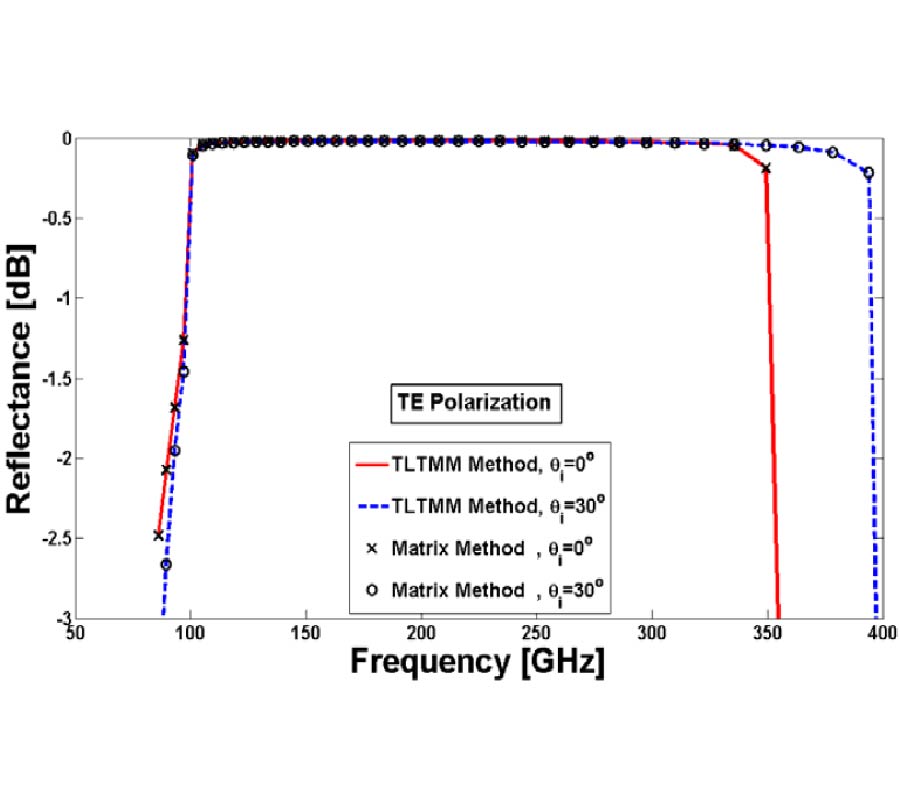
Here a photonic crystal plate polarizer (with periodic air gaps), operating over a broad wavelength range extending from 1000nm to 1770nm and with a wide angular field of 16o measured in air, is suggested. The polarizer has an average degree of polarization equal to 0.9999, and a high extinction ratio (>8.308×10⁴) in transmitted light. Since the plate polarizer does not require optical cements, it is most suitable for use with high power laser systems. It is also smaller in size as compared with multilayered cube polarizers.
WIDE-ANGLE BROADBAND PLATE POLARIZER WITH 1D PHOTONIC CRYSTAL
2008-12-17
PIER Letters
Vol. 5, 167-174
Analysis and Suppression on Simultaneous Switching Noise Coupling Between Multi-Cavities for Multilayer Pcbs
Chin-Sheng Chang , Mau-Phon Houng , Ding-Bing Lin , Kuo-Chiang Hung and Ray-Fong Hong
In this letter, an easy concept to eliminate the simultaneous switching noise (SSN) in multilayer board is proposed. Use of the low impedance element provides a short path to lead noise to ground, called virtual shield. This method could effectively suppress the first mode of the parallel resonance, and the wider-band suppression could be obtained by array short via. It is also proved that the virtual shield concept has to be placed as the excited source at the same layer.
ANALYSIS AND SUPPRESSION ON SIMULTANEOUS SWITCHING NOISE COUPLING BETWEEN MULTI-CAVITIES FOR MULTILAYER PCBs
2008-12-16
PIER
Vol. 88, 307-319
The Three Exact Components of the Magnetic Field Created by a Radially Magnetized Tile Permanent Magnet
Romain Ravaud , Guy Lemarquand , Valerie Lemarquand and Claude Depollier
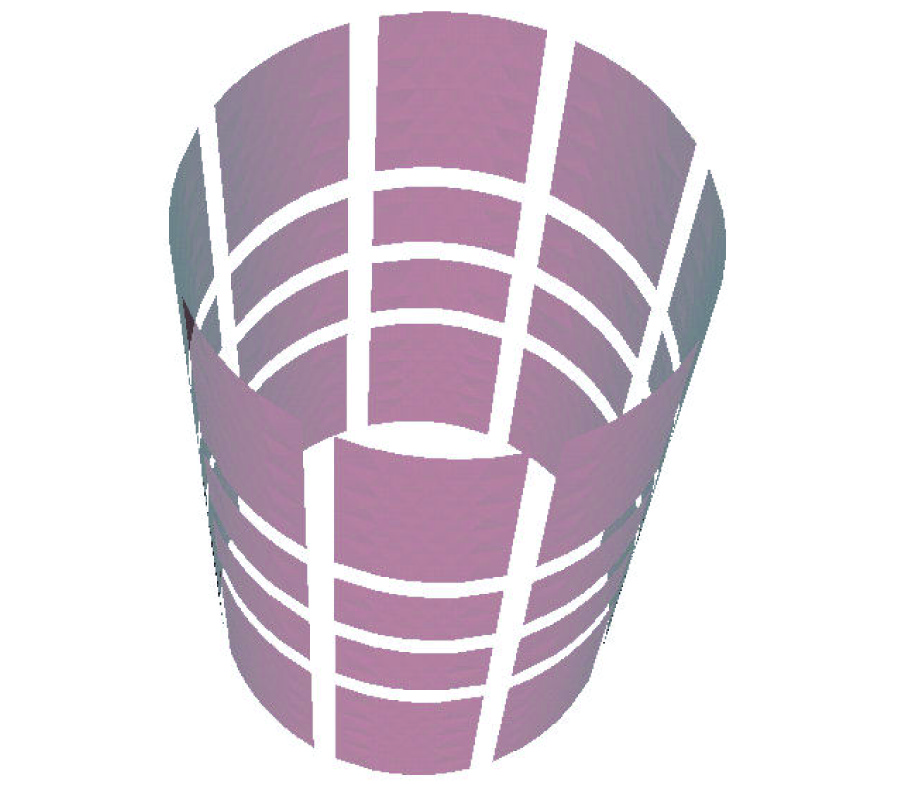
This paper presents the exact analytical formulation of the three components of the magnetic field created by a radially magnetized tile permanent magnet. These expressions take both the magnetic pole surface densities and the magnetic pole volume density into account. So, this means that the tile magnet curvature is completely taken into account. Moreover, the magnetic field can be calculated exactly in any point of the space, should it be outside the tile magnet or inside it. Consequently, we have obtained an accurate 3D magnetic field as no simplifying assumptions have been used for calculating these three magnetic components. Thus, this result is really interesting. Furthermore, the azimuthal component of the field can be determined without any special functions. In consequence, its computational cost is very low which is useful for optimization purposes. Besides, all the other expressions obtained are based on elliptic functions or special functions whose numerical calculation is fast and robust and this allows us to realize parametric studies easily. Eventually, we show the interest of this formulation by applying it to one example: the calculation and the optimization of alternate magnetization magnet devices. Such devices are commonly used in various application fields: sensors, motors, couplings, etc. The point is that the total field is calculated by using the superposition theorem and summing the contribution to the field of each tile magnet in any point of the space. This approach is a good alternative to a finite element method because the calculation of the magnetic field is done without any simplifying assumption.
THE THREE EXACT COMPONENTS OF THE MAGNETIC FIELD CREATED BY A RADIALLY MAGNETIZED TILE PERMANENT MAGNET
2008-12-12
PIER
Vol. 88, 289-305
Compact Printed Slot Antennas for Wireless Dual- and Multi-Band Operations
Yi-Chieh Lee and Jwo-Shiun Sun
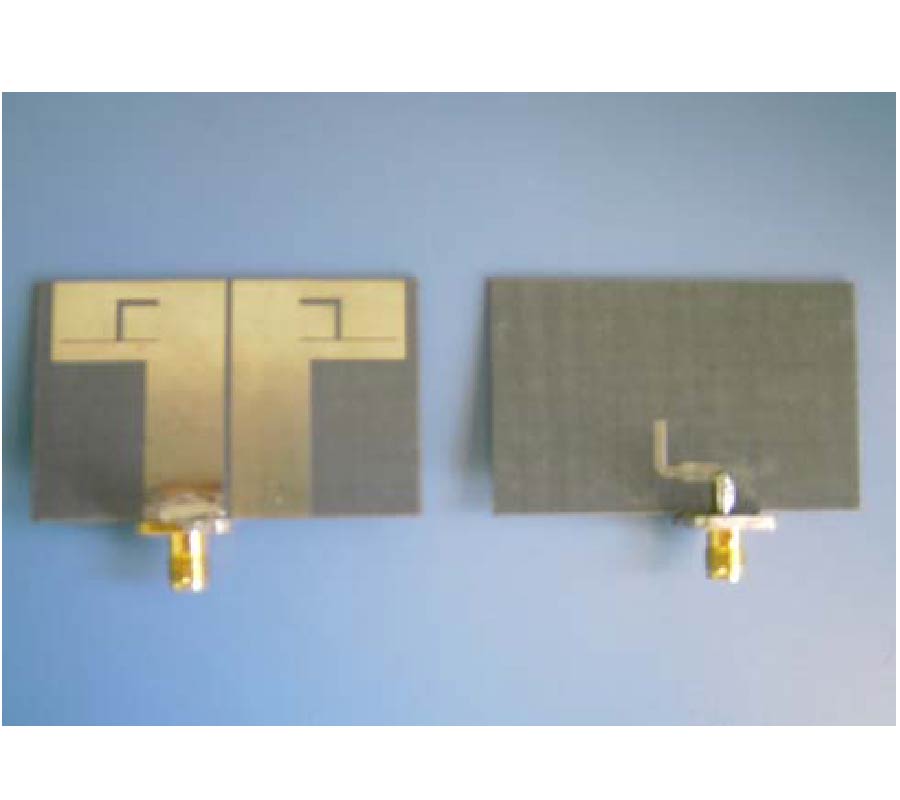
This paper presents a printed slot antenna using the printed structure in order to improve its dual-band and compact size performances. The printed slot structure is used as additional resonators to produce dual-band operation for covering the worldwide interoperability for microwave access (WiMAX) and the 5.2-GHz wireless local area network (WLAN) bands. In order to achieve wideband and multi-band operation, the slot antennas with a slotted structure and an inverted-L slot structure for covering the wireless communication operations are developed. Finally, we propose a novel and compact printed slot antenna with mixing slot structures to obtain and cover for the 2.4-GHz WLAN (2.4--2.484 GHz), the WiMAX (IEEE 802.16e in the Taiwan: 2.5--2.69/3.5--3.65 GHz), and the 5-GHz WLAN (5.15--5.35/5.725--5.825 GHz). Several properties of the proposed antennas for dual- and multi-band characterize radiation performances such as impedance bandwidth and radiation pattern. Measured gain has been confirmed experimentally for the multi-band wireless communication systems.
COMPACT PRINTED SLOT ANTENNAS FOR WIRELESS DUAL- AND MULTI-BAND OPERATIONS
2008-12-12
PIER Letters
Vol. 5, 159-166
Design and Realization of a Flat-Top Shaped-Beam Antenna Array
Hai-Jin Zhou , You-Huo Huang , Bao-Hua Sun and Qi-Zhong Liu
The design and realization of a ten-element shaped-beam antenna array are presented. A flat-top pattern in the main beam which allows a well-proportioned power distribution in desired zone is achieved by optimizing the amplitudes and phases of array elements using genetic algorithm. Being different from the most optimization in reported literatures, the proposed synthesis has taken the actual element patterns but identical and isotropic ones into account, which can reduce the error between computation and realization. Besides, both the optimized amplitudes and phases are set to be realizable. The array operating at 1.71-1.74 GHz is manufactured and measured. The measured radiation patterns of the proposed array show a flat-top main beam of about 40o and a peak side-lobe level of -20 dB, exhibiting a good agreement with the simulated results.
DESIGN AND REALIZATION OF A FLAT-TOP SHAPED-BEAM ANTENNA ARRAY
2008-12-11
PIER
Vol. 88, 275-287
Signal Model Analysis of a 35ghz Alternating Current Direct Detection Receiver
Ming-Hui Yang , Fu-Hong Guan , Jie Xu , Xiang Shi and Xiao-Wei Sun
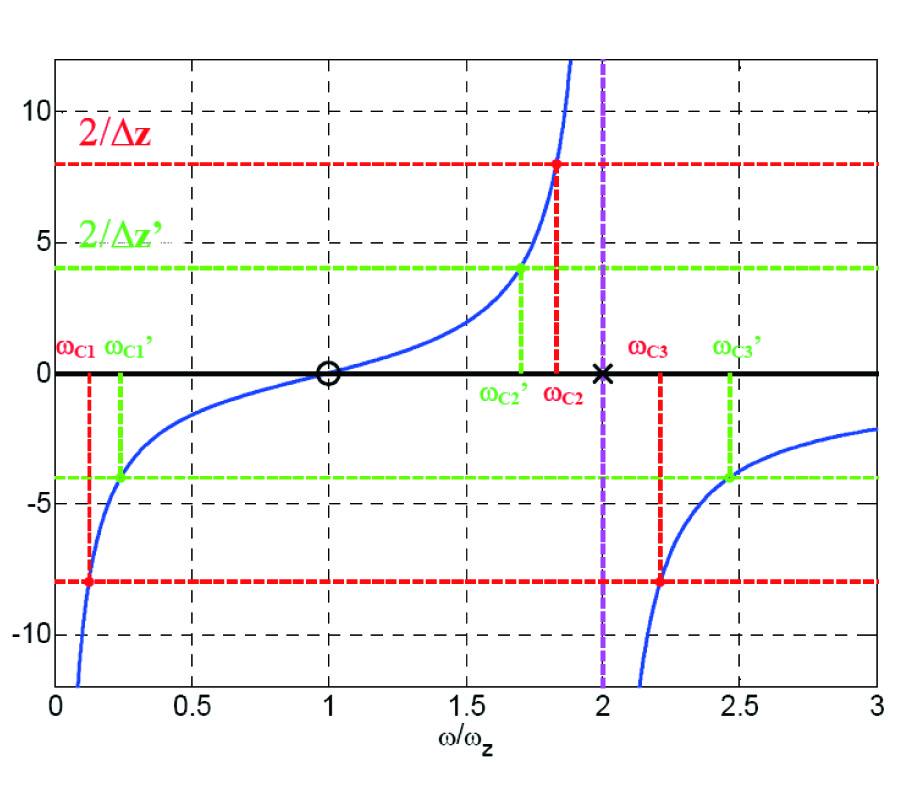
A 35 GHz alternating current (AC) direct detection receiver for passive imaging has been studied and presented. The Monolithic Microwave Integrated Circuits (MMIC) Low Noise Amplifiers (LNAs) with high gain and wide band are cascaded to provide enough gain for high sensitivity in the receiver. On basic of discussing the structure and mechanical chopping modulation, the signal model and compensation mechanism is emphatically analyzed. Finally, the imaging result is given.
SIGNAL MODEL ANALYSIS OF A 35GHZ ALTERNATING CURRENT DIRECT DETECTION RECEIVER
2008-12-11
PIER
Vol. 88, 255-273
An Efficient Sai Preconditioning Technique for Higher Order Hierarchical MLFMM Implementation
Da-Zhi Ding , Ru-Shan Chen and Zhenhong Fan
A new set of higher order hierarchical basis functions based on curvilinear triangular patch is proposed for expansion of the current in electrical field integral equations (EFIE) solved by method of moments (MoM). The multilevel fast multipole method (MLFMM) is used to accelerate matrix-vector product. An improved sparse approximate inverse (SAI) preconditioner in the higher order hierarchical MLFMM context is constructed based on the near-field matrix of the EFIE. The quality of the SAI preconditioner can be greatly improved by use of information from higher order hierarchical MLFMM implementation. Numerical experiments with a few electromagnetic scattering problems for open structures are given to show the validity and efficiency of the proposed SAI preconditioner.
AN EFFICIENT SAI PRECONDITIONING TECHNIQUE FOR HIGHER ORDER HIERARCHICAL MLFMM IMPLEMENTATION
2008-12-11
PIER M
Vol. 5, 153-160
Design and Testing of High-Performance Antenna Array with a Novel Feed Network
Guang Yang , Rong-Hong Jin , Jun-Ping Geng and Sheng Ye
A novel feed network for microstrip antenna array is presented. By using the novel feeding structure, a high-performance Ku-band antenna is designed and fabricated. The 32 elements of the array are arranged in a 2-by-16 configuration. The measured peak gain at centre frequency is 22.93 dBi with an aperture efficiency of 70.5%. The antenna has less than -15 dB return loss and less than -12.3 dB SLL from 11.75 GHz-12.75 GHz.
DESIGN AND TESTING OF HIGH-PERFORMANCE ANTENNA ARRAY WITH A NOVEL FEED NETWORK
2008-12-11
PIER Letters
Vol. 5, 151-157
Design of a Novel Compact Power Divider with Harmonic Suppression
Fangfang Fan , Ze-Hong Yan and Jun-Bo Jiang
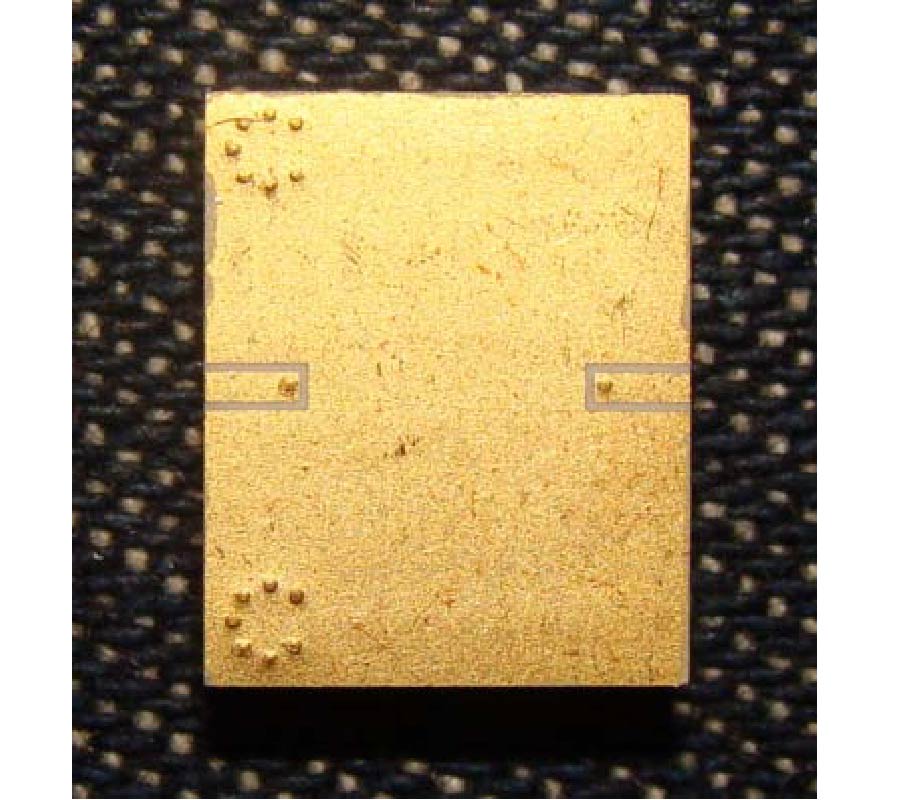
This paper presents a novel compact power divider with third harmonic suppression and also can provide a direct current(dc) path which could simplify the other active circuits in the complicated phased array antenna system. The proposed power divider achieves 20% size reduction compared to the conventional Wilkinson power divider. From the measured results, it can be seen that the simulated results can instruct the practical circuit very well.
DESIGN OF A NOVEL COMPACT POWER DIVIDER WITH HARMONIC SUPPRESSION
2008-12-11
PIER Letters
Vol. 5, 137-149
The Scattering from an Elliptic Cylinder Irradiated by an Electromagnetic Wave with Arbitrary Direction and Polarization
Ying-Le Li , Ming-Jun Wang and Gao-Feng Tang
The analytical expression of scattering field from a conductor elliptic cylinder is presented, as the electromagnetic wave propagating vertical to the axis of an elliptic cylinder with arbitrary incident angle and polarization. The obtained result is in agreement with that in the reference when we use this analytical expression to calculate the scattering field from a cylinder. Simulations show that the vertical size of the elliptic cylinder effects greatly the scattering field when we observing it in the direction perpendicular to the direction of the incident wave. The scattering field is strong as the polarization direction of incident wave parallel to the axis of the elliptic cylinder. The algorithm used in the article is valid to investigate the scattering characteristic of other elliptic cylinders. The obtained result offers a theoretical foundation for the practical applications such as electromagnetic remote sensing of target's size and shape.
THE SCATTERING FROM AN ELLIPTIC CYLINDER IRRADIATED BY AN ELECTROMAGNETIC WAVE WITH ARBITRARY DIRECTION AND POLARIZATION
2008-12-11
PIER Letters
Vol. 5, 131-136
Numerical Analysis of Periodic Planar Structures on Uniaxial Substrates for Miniaturization Purposes
Fabio Urbani
In this paper a numerical analysis of a periodic planar structure using a uniaxial substrate is shown. The paper means to explore the possibility to use non-conventional substrate to reduce the size of planar radiating structure. The encouraging numerical results set the ground for a further experimental analysis. The presented results can be applied easily to the design of planar antennas, arrays and Frequency Selective Surfaces (FSS). Currently the demand for multiband performance devices that can stay in the palm of the hand has become more compelling. In this light, the advance in planar radiating structure design using non-conventional material with the objective of size reduction is carried out. A FSS resonating at 20.75 GHz has been analyzed. Pyrolytic boron nitrite (PBN), which has an anisotropic dielectric with a relative electric permittivity represented by a diagonal tensor, is adopted as the substrate of the designed FSS to achieve the size reduction while maintaining the FSS performance. The design is then compared with the one that uses isotropic substrate (i.e., RO4003). Comparison shows that the introduction of such a non-conventional medium allows the patch size to be reduced approximately by 20% while maintaining almost the same electromagnetic performance. Issues about size reduction and frequency shifting are further presented and discussed in the paper.
NUMERICAL ANALYSIS OF PERIODIC PLANAR STRUCTURES ON UNIAXIAL SUBSTRATES FOR MINIATURIZATION PURPOSES
2008-12-09
PIER
Vol. 88, 241-254
The Electrical Response of an Insulating Circular Disk to Uniform Fields
Richard Bailey
This paper presents a closed form solution for the electrical potential perturbation of a perfectly insulating flat circular disc embedded in a homogeneous half-space in a uniform primary electric field. It is an adaptation of Weber's method for the potential around a charged conducting disk. It yields closed form analytic solutions for the electric and magnetic fields and, by straightforward numerical integration, an easily evaluated numerical solution for the electric potential, and an explicit solution for the electrical resistivity of a composite material consisting of a dilute concentration of such embedded disks in an otherwise uniform conductor.
THE ELECTRICAL RESPONSE OF AN INSULATING CIRCULAR DISK TO UNIFORM FIELDS
2008-12-09
PIER Letters
Vol. 5, 123-130
Millimeter Wave Omnidirectional Quasi-Yagi Array
Dakui Wu , Yong Fan , Minghua Zhao and Yong-Hong Zhang
A novel planar omnidirectional array based on Quasi-Yagi antenna was proposed in this paper. The modeling of this antenna and design method based on equivalent circuits has been developed. An eight-unit planar array has been designed, fabricated and measured. Measured results exhibit good performance of the return loss and radiation pattern in horizontal plane. The gain of the array in horizontal plane was about 0 dBi. The un-roundness of the radiation pattern in horizontal plane was about 5 dB.
MILLIMETER WAVE OMNIDIRECTIONAL QUASI-YAGI ARRAY
2008-12-08
PIER Letters
Vol. 5, 109-121
Combining Pseudospectral Discretization with Method of Lines in Full-Wave Analysis of Cylindrical Microstrip
Zhenhong Fan and Ru-Shan Chen
In this article, method of lines combined with pseudospectral discretization has extended to the analysis of the characteristics of open cylindrical substrate microstrip lines. Numerical results show that the combination benefits from the two methods and has higher efficiency and it is a powerful alternative analytic tool.
COMBINING PSEUDOSPECTRAL DISCRETIZATION WITH METHOD OF LINES IN FULL-WAVE ANALYSIS OF CYLINDRICAL MICROSTRIP
2008-12-05
PIER M
Vol. 5, 137-152
Three-Dimensional Reconstruction from Time-Domain Electromagnetic Waves
Hui Zhou , Dongling Qiu , Jinsong Shen and Guofa Li
An iterative time-domain algorithm for reconstructing three-dimensional (3-D) objects is presented, using normalized microwave data. The incident waveform information is excluded from the cost functional by normalizing the observed and calculated fields in the frequency domain. The exciting pulse used in the reconstruction can be freely selected by considering the bandwidth of the received data. Two numerical examples are shown to demonstrate that the proposed method can rebuild an inhomogeneous object from noisy data where different waveforms in the observation and reconstruction are used. Two normalized data sets from synthetic observed data and calculated data for a known model are illustrated too.
THREE-DIMENSIONAL RECONSTRUCTION FROM TIME-DOMAIN ELECTROMAGNETIC WAVES
2008-12-05
PIER M
Vol. 5, 111-136
A Common Theoretical Basis for Preconditioned Field Integral Equations and the Singularity Expansion Method
Robert J. Fleming
It is demonstrated that there is a common theoretical basis for the Singularity Expansion Method (SEM) and stabilized, preconditioned electric field and magnetic field integral equations (EFIE, MFIE) defining radiation and scattering from a closed perfect electric conductor in a homogeneous medium. An operator relation termed the Calderon preconditioner links the MFIE and EFIE, based on the fundamental Stratton-Chu integral representations for the problem geometry. This preconditioner is known to stabilize the ill-posed first kind EFIE, yielding the Modified EFIE (MEFIE). The same preconditioner has been applied to the weakly singular MFIE kernel, giving a Modified MFIE (MMFIE), the equation then being solved using the Fredholm determinant theory. Since this analytical integral theory is the foundation of the SEM, it follows that the Calderon preconditioner enables stabilized and common SEM representations to be defined for both the MEFIE and MMFIE. For a finite-sized object admitting only pole singularities, the solution of the preconditioned EFIE and MFIE is equivalent to the frequency-domain SEM solution. The common SEM representation differs only in the coupling coefficient terms. Coupling coefficients for the MFIE are known, however, explicit formulations for the EFIE, and the modified coupling coefficients for the MEFIE and MMFIE are new contributions.
2008-12-05
PIER Letters
Vol. 5, 99-107
A Method for Calculating the Effective Permittivity of a Mixture Solution During a Chemical Reaction by Experimental Results
Kama Huang and Xiaoqing Yang
Usually, an effective permittivity can be used to describe the molecular polarization of the mixture in the reaction and consequently be used to calculate the transmission and absorption of microwave in the reactant mixtures. In this paper, we propose a method to calculate the effective permittivity of chemical reaction in solution by means of the experimental results. To verify this method, the acetone iodations reaction is employed. The calculated results of complex effective permittivity of the mixtures are in good agreement with the measured results.
A METHOD FOR CALCULATING THE EFFECTIVE PERMITTIVITY OF A MIXTURE
SOLUTION DURING A CHEMICAL REACTION BY EXPERIMENTAL RESULTS
2008-12-04
PIER B
Vol. 11, 155-172
Mixed Eccentricity Fault Diagnosis in Salient-Pole Synchronous Generator Using Modified Winding Function Method
Jawad Faiz , Bashir Ebrahimi , Mostafa Valavi and Hamid A. Toliyat
In this paper, winding function method (WFM), applied to a faulted synchronous generator, is modified and is used for on-line diagnosis of mixed eccentricity fault. For the first time, the static and mixed eccentricities are modeled in synchronous generators. A modified winding function (MWF) method introduced here is more precise compared with previous methods. This MWF enables to compute the air gap magnetic permeance accurately. Here, two or three terms of the infinity permeance series has not been used, but a closed form equation is employed for permeance evaluation. This leads to a very precise computation of the inductances of the faulted machine. Self inductances of the stator and rotor, mutual inductance of two stator phases and the mutual inductance of rotor and stator are obtained. Meanwhile, it is shown that static, dynamic and mixed eccentricities lead to the increase of the amplitude and occurrence of the distortion in the aforementioned inductances. Since calculation of inductances is the most important step for fault diagnosis of the machine, the proposed method improves the on-line diagnosis of the fault. Meanwhile, the spectrum analysis of stator current, obtained from experimental results, is illustrated.
MIXED ECCENTRICITY FAULT DIAGNOSIS IN SALIENT-POLE SYNCHRONOUS GENERATOR USING MODIFIED WINDING FUNCTION METHOD
2008-12-03
PIER
Vol. 88, 227-240
A Simple Alternative for Beam Reconfiguration of Array Antennas
Francisco Ares-Pena , Giorgio Franceschetti and J. A. Rodriguez
An innovative method for antenna arrays beam configuration is presented. In the proposed method, every element of the array is connected to its feed through a switch, so that it can be active or passive, depending on the switch position. Pattern reconfigurability is achieved by appropriately switching on or off the array elements. The optimal configuration of the switches for each of the radiated patterns, as well the common voltages of the active elements, is calculated by using a genetic algorithm. For each configuration, the currents in the driven and parasitic elements are determined, via their self and mutual impedances, by inversion of the impedance matrix. In the presented examples, the method has been applied to both linear and planar arrays of parallel dipoles that switch the power pattern from a pencil to a flat-topped beam (linear array) or to a footprint pattern (planar array).
A SIMPLE ALTERNATIVE FOR BEAM RECONFIGURATION OF ARRAY ANTENNAS
2008-12-03
PIER C
Vol. 5, 149-168
Wireless Bio-Radar Sensor for Heartbeat and Respiration Detection
Byung-Jun Jang , Sang-Hyuk Wi , Jong-Gwan Yook , Moon-Que Lee and Kyoung-Joung Lee
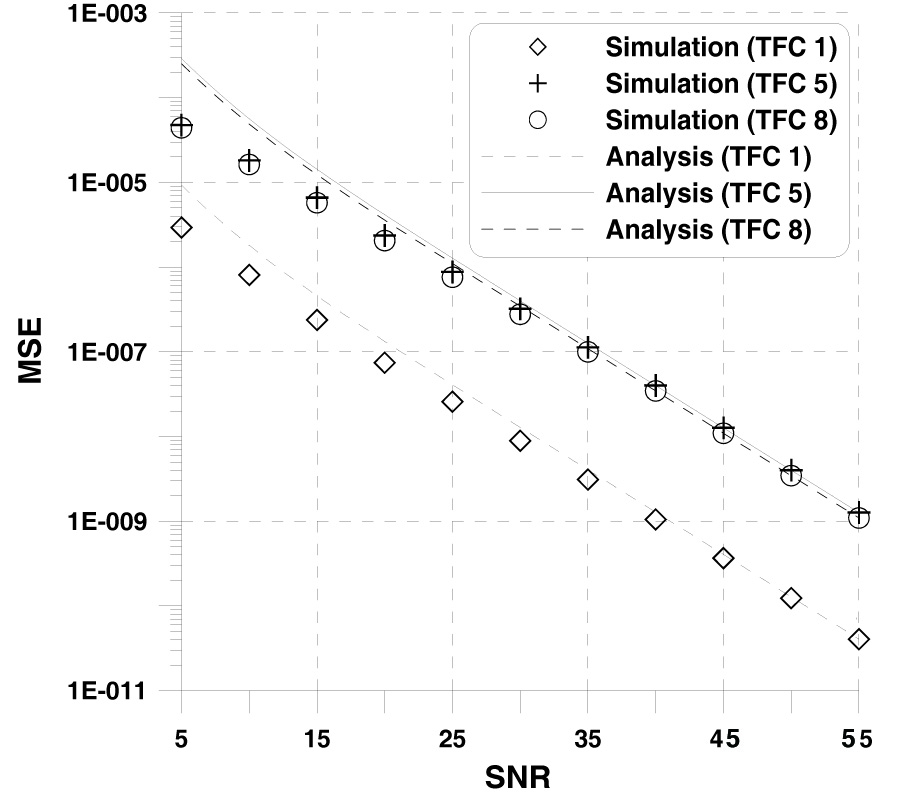
In this study, a wireless bio-radar sensor was designed to detect a human heartbeat and respiration signals without direct skin contact. In order to design a wireless bio-radar sensor quantitatively, the signal-to-noise ratio (SNR) in the baseband output of a sensor should be calculated. Therefore, we analyzed the SNR of the wireless bio-radar sensor, considering the signal power attenuation in a human body and all kinds of noise sources. Especially, we measured a residual phase noise of a typical free-running oscillator and used its value for the SNR analysis. Based on these analysis and the measurement results, a compact, low-cost 2.4 GHz direct conversion bio-radar sensor was designed and implemented in a printed circuit board. The demonstrated sensor consists of two printed antennas, a voltage-controlled oscillator, an I/Q demodulator, and analog circuits. The heartbeat and respiration signals acquired from the I/Q channel of the sensor are applied to the digital signal processing circuit using MATLAB. ECG (electrocardiogram), and reference respiration signals are measured simultaneously to evaluate the performance of the sensor. With an output power of 0dBm and a free running oscillator without a phase locked loop circuits, a detection range of 50 cm was measured. Measurement results show that the heart rate and respiration accuracy was very high. Therefore, we verified that a wireless bio-radar sensor could detect heartbeat and respiration well without contact and our SNR analysis could be an effective tool to design a wireless bio-radar sensor.
WIRELESS BIO-RADAR SENSOR FOR HEARTBEAT AND RESPIRATION DETECTION