Search Results(13902)

2008-10-03
PIER
Vol. 85, 367-380
Tunable TE/TM Wave Splitter Using a Gyrotropic Slab
Hui Huang , Yu Fan , Bae-Ian Wu and Jin Au Kong
A TE/TM wave splitter composed of a gyrotropic slab is proposed. We demonstrate theoretically that, when the working frequency is chosen to be within one of the two ranges, total reflection occurs at the boundary of a slab of gyrotropic medium for either TE or TM component of the incident waves. Tuning can be done by choosing the working frequency band or adjusting the applied magnetic field. Furthermore, within the TE-stop or TM-stop frequency region, if the incident angle is selected appropriately, the other polarized component of the wave is totally transmitted. And we also show that when the slab is thicker, there are more possibilities to satisfy the full-pass condition. Finite-element method simulations verified the theoretical results.
TUNABLE TE/TM WAVE SPLITTER USING A GYROTROPIC SLAB
2008-10-03
PIER C
Vol. 4, 191-204
Fractional Waveguide with Impedance Walls
Akhtar Hussain , Muhammad Faryad and Qaisar Abbas Naqvi
Fractional solutions of a parallel plate waveguide originally with impedance walls have been derived and fractional impedance of the guiding walls have been investigated. Two distinct ranges ofw all impedance have been found in which fractional impedance behaves in opposite ways. For 0 < α < 1, the fractional impedance is inductive in range 1 and is capacitive in range 2, where α is fractional parameter. For 1 < α < 2, the fractional impedance is capacitive in range 1 and is inductive in range 2. At the boundary ofthe two ranges, the fractional impedance is independent of α and is resistive. This behavior is periodic with period α = 2.
FRACTIONAL WAVEGUIDE WITH IMPEDANCE WALLS
2008-09-29
PIER B
Vol. 9, 215-230
Adaptive Genetic Algorithm Based Source Identification with Near-Field Scanning Method
Bing Liu , Lotfi Beghou , Lionel Pichon and Francois Costa
With the global search method of adaptive genetic algorithm (GA), an improved methodology is proposed to identify the equivalent radiating dipoles of real sources on substrates such as printed circuit boards (PCB) and then to regenerate the radiating far field. This methodology is based on a set of elemental electric- and magnetic dipoles which model the real sources. The numbers, positions and orientations as well as the elevations of each dipole are positioned by adaptive GA based on the comparison between the simulated and measured magnetic field. The methodology provides a possible way to identify the radiating source of planar circuits with ground plane.
ADAPTIVE GENETIC ALGORITHM BASED SOURCE IDENTIFICATION WITH NEAR-FIELD SCANNING METHOD
2008-09-29
PIER B
Vol. 9, 199-214
The Enhancement of Millimeter Wave Conduct Speech Based on Perceptual Weighting
Sheng Li , Jian-Qi Wang , Ming Niu , Tian Liu and Xi-Jing Jing
A new non-air conduct speech detecting method is introduced in this paper by means of millimeter wave (MMW) radar. Due to its special attribute, this method may provide some exciting possibility of wide applications. However, the resulting speech is of less intelligible and poor audibility since the present of the combined and colored additive noise. This paper, therefore, investigates the problem of the MMW radar speech enhancement by taking into account the frequency-domain masking properties of the human auditory system and reduces the perceptual effect of the residual noise. Considering the particular characteristics of MMW speech, the perceptual weighting technique is developed and incorporated into the traditional spectral subtraction algorithm to shape the residual noise and make it inaudible. The results from both acoustic and listening evaluation suggest that the background noise can be reduced efficiently while the distortion of MMW radar speech remains acceptable, the enhanced speech also sounds more pleasant to human listeners, suggesting that the proposed algorithm achieved a better performances of noise reduction over other subtractive-type algorithms.
THE ENHANCEMENT OF MILLIMETER WAVE CONDUCT SPEECH BASED ON PERCEPTUAL WEIGHTING
2008-09-29
PIER
Vol. 85, 349-366
Investigations of Isolation Improvement Techniques for Multiple Input Multiple Output (MIMO) WLAN Portable Terminal Applications
Hsi-Tseng Chou , Hao-Chung Cheng , Heng-Tung Hsu and Li-Ruei Kuo
Various isolation improvement techniques for MIMO WLAN card bus applications consisted of three closely spaced loop antennas are presented and investigated both numerically and experimentally in this paper. The proposed techniques are easily implemented and proven effective to achieve high isolation among the antennas which is a must for MIMO terminals to receive uncorrelated signals with good system throughputs.
INVESTIGATIONS OF ISOLATION IMPROVEMENT TECHNIQUES FOR MULTIPLE INPUT MULTIPLE OUTPUT (MIMO) WLAN PORTABLE TERMINAL APPLICATIONS
2008-09-29
PIER
Vol. 85, 303-322
Modal-Expansion Analysis of a Monopole in Vibrating Reverberation Chamber
Huapeng Zhao and Zhongxiang Shen
A modal-expansion method is proposed for the analysis of a monopole antenna in a vibrating reverberation chamber. Inside the chamber, electromagnetic fields are expanded using modal functions. Mode matching process is applied to enforce the boundary conditions at regional interfaces. Boundary conditions on the four side walls of the chamber are imposed by the point matching method. Combining these two matching processes, a set of matrix equations are obtained and the expansion coefficients can then be determined accordingly. The loss from the chamber walls is accounted for through homogeneous material filling. The input impedance and scattering parameter of a monopole in a reverberation chamber are computed and statistical analysis of the scattering parameter is conducted when one of its walls is vibrating.
MODAL-EXPANSION ANALYSIS OF A MONOPOLE IN VIBRATING REVERBERATION CHAMBER
2008-09-29
PIER
Vol. 85, 289-302
Microwave Imaging a Buried Object by the GA and Using the S11 Parameter
Fei Li , Xing Chen and Kama Huang
This paper explores the feasibility of microwave imaging a buried object by the GA and using the S11 parameter of a radiation antenna rather than data of the scattered electromagnetic field. To improve the efficiency of the GA-based algorithm, a technique of limiting the location of the buried object prior to the implement of the GA is proposed, and the GA is parallelized and executed on a PC cluster. A few numerical examples are presented, in which the dimension and location of a 3-D object buried in the earth are recovered. Results validate the proposed GA-based microwave imaging algorithm.
MICROWAVE IMAGING A BURIED OBJECT BY THE GA AND USING THE S11 PARAMETER
2008-09-29
PIER
Vol. 85, 261-288
EM Full-Wave Analysis and Testing of Novel Quasi-Elliptic Microstrip Filters for Ultra Narrowband Filter Design
Zuhair Hejazi , Maximilian C. Scardelletti , Frederick W. Van Keuls , Amjad Omar and Ayman Sulaiman Al-Zayed
A new class of microstrip filter structures are designed, optimized, simulated and measured for ultra-narrowband performance essential to the wireless industry applications. More accurate model of the coupling coefficient is outlined and tested for narrowband filter design. Two sample filters are fabricated and measured to verify the simulations and prove the concept. The idea behind the new designs is based on minimizing the parasitic couplings within the resonators and the inter-resonator coupling of adjacent resonators. A reduction of the overall coupling coefficient is achieved even with less resonator separation which is a major issue for compactness of such filters. The best new designs showed a simulated fractional bandwidth (FBW) of 0.05% and 0.02% with separations of S = 0.63 mm and S = 0.45 mm, respectively. The measured filters tend to have even narrower FBW than the simulated, though its insertion loss deteriorates, possibly due to mismatch at the interface with external circuitry and poor shielding effect of the test platform. The investigated 2-pole filters are accommodated on a compact area of a nearly 0.6 cm2. An improvement of tens of times of order in narrowband performance is achieved compared to reported similar configuration filters and materials. A sharp selectivity and quasi-elliptic response are also demonstrated with good agreement in both simulations and measurements. In all filters, however, the study shows that the narrower the FBW, the larger the insertion loss (IL) and the worse the return loss (RL). This is confirmed by measurements.
EM FULL-WAVE ANALYSIS AND TESTING OF NOVEL QUASI-ELLIPTIC MICROSTRIP FILTERS FOR ULTRA NARROWBAND FILTER DESIGN
2008-09-29
PIER
Vol. 85, 243-260
Design and Simulation of Circular Arrays of Trapezoidal-Tooth Log-Periodic Antennas via Genetic Optimization
Levent Gurel
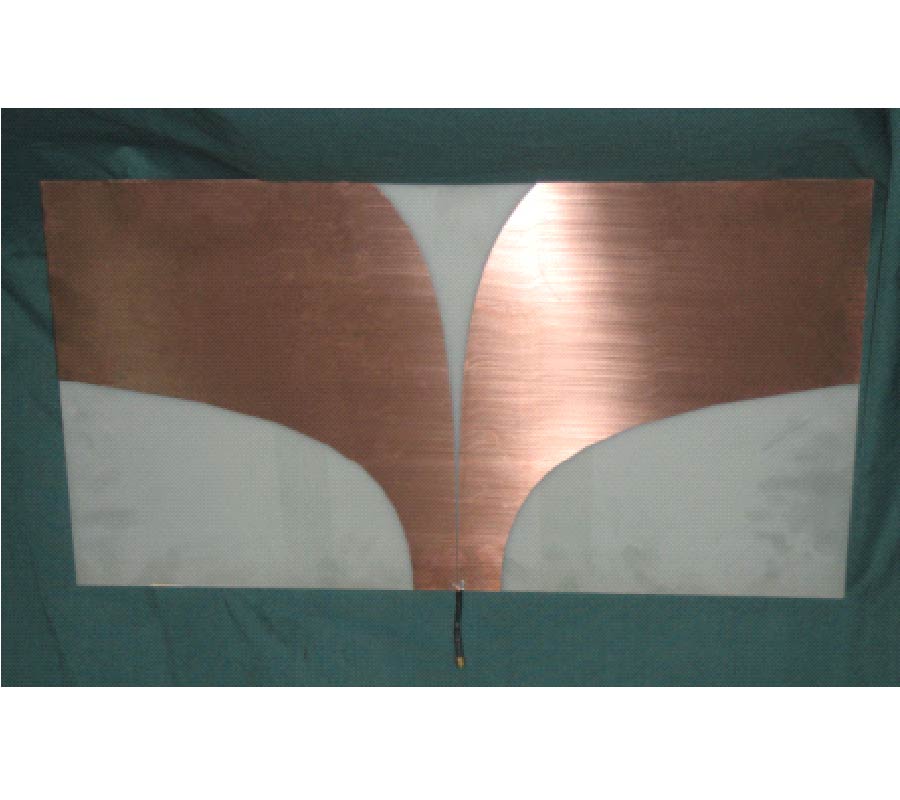
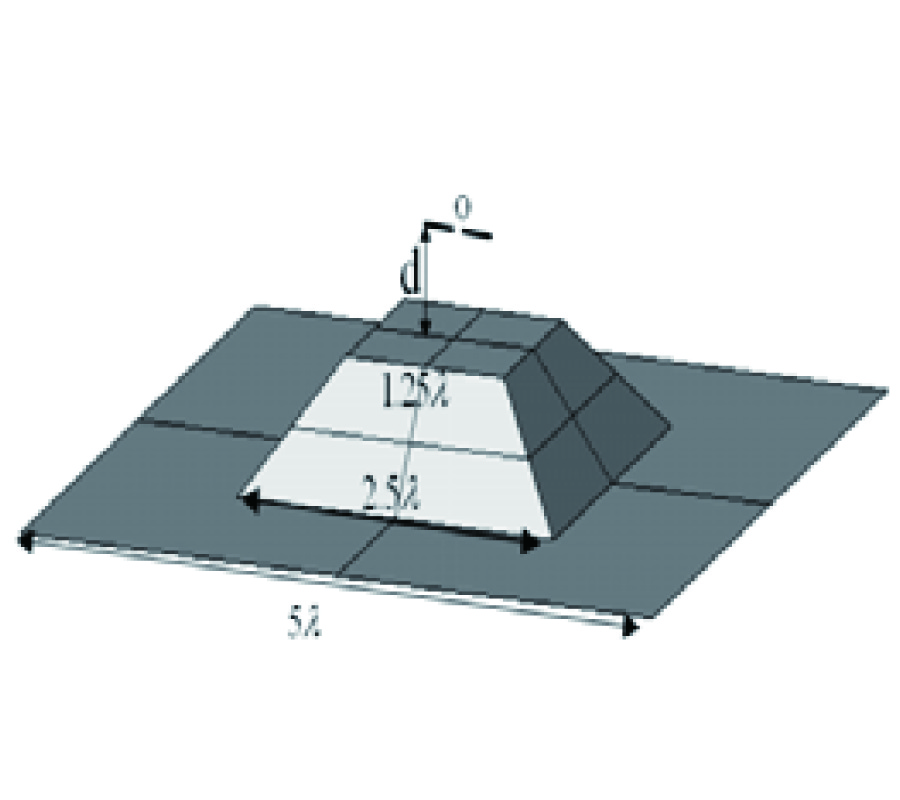
Circular arrays of log-periodic (LP) antennas are designed and their operational properties are investigated in a sophisticated simulation environment that is based on the recent advances in computational electromagnetics. Due to the complicated structures of the trapezoidal-tooth array elements and the overall array configuration, their analytical treatments are prohibitively difficult. Therefore, the simulation results presented in this paper are essential for their analysis and design. We present the design of a threeelement LP array showing broadband characteristics. The directive gain is stabilized in the operation band using optimization by genetic algorithms. We demonstrate that the optimization procedure can also be used to provide beam-steering ability to LP arrays.
DESIGN AND SIMULATION OF CIRCULAR ARRAYS OF TRAPEZOIDAL-TOOTH LOG-PERIODIC ANTENNAS VIA GENETIC OPTIMIZATION
2008-09-29
PIER
Vol. 85, 227-242
Bidirectional Ultra-Wideband Antenna Using Rectangular Ring Fed by Stepped Monopole
Suthasinee Lamultree and Chuwong Phongcharoenpanich
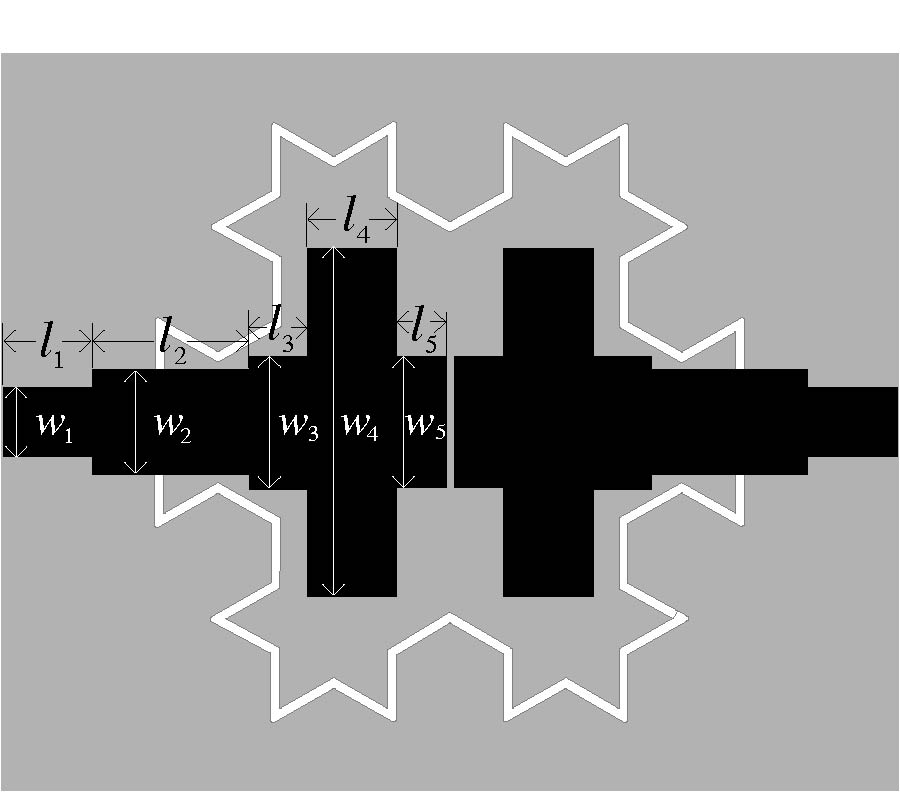
This paper presents an ultra-wideband rectangular ring fed by stepped monopole antenna. The initial parameters of rectangular ring are first considered to obtain the bidirectional pattern with the desired resonant frequency. Subsequently, the parameters of stepped monopole for enhancing impedance bandwidth are investigated. To study the impedance and radiation behaviors, the simulations of the proposed antenna have been carried out. It is found that this antenna offers a bidirectional beam with the impedance bandwidth (return loss lower than -10 dB) covered the frequency range from 3.1 to 10.6 GHz. At the desired direction along this frequency band, the gain of 2.33-5.21 dBi is achieved. Furthermore, the prototype antenna was fabricated and measured to verify the simulated results. Obviously, the simulation and measurement are reasonably in good agreement.
BIDIRECTIONAL ULTRA-WIDEBAND ANTENNA USING RECTANGULAR RING FED BY STEPPED MONOPOLE
2008-09-29
PIER
Vol. 85, 211-226
Analysis and Correction of Borehole Effect on the Responses of Multicomponent Induction Logging Tools
Xiangyang Sun , Zai-Ping Nie , Aiyong Li and Xi Luo
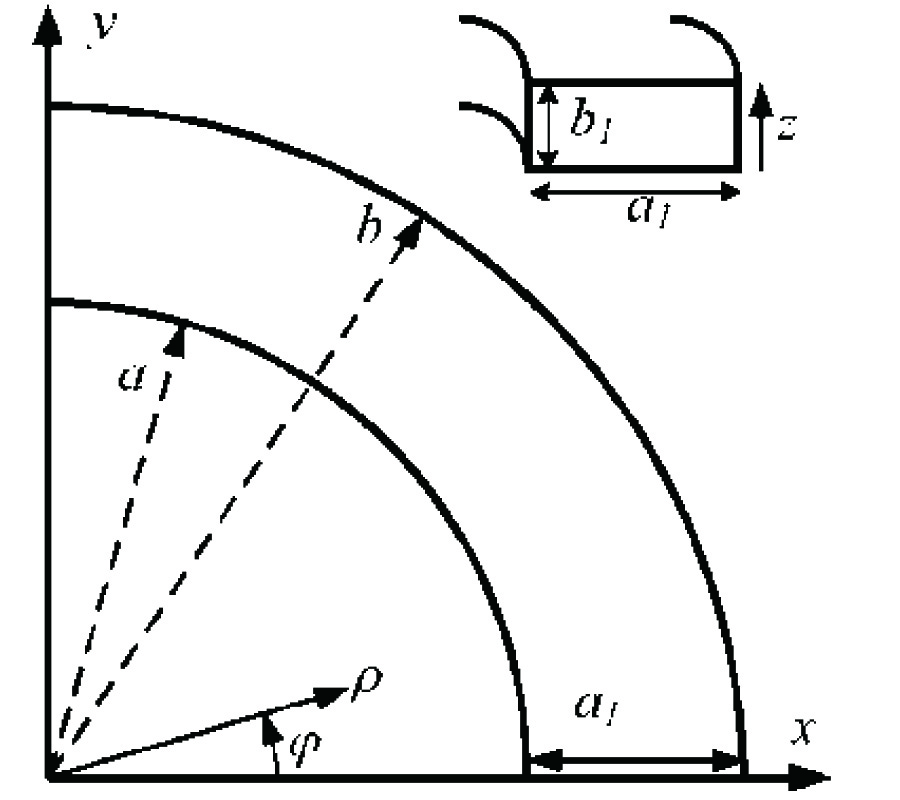
The analytical formulae based on the generalized reflection and transmission coefficient matrices for cylindrically stratified media are used to simulate the borehole effect on multicomponent induction logging responses in various ratios of mud conductivity and formation conductivity and to investigate the tool's eccentricity effect on the responses of coplanar coils and coaxial coils. The simulated data show that the borehole effect and the tool's eccentricity effect on the response of coplanar coils is greater than that on the response of coaxial coils in most cases. Then we give an algorithm for the correction of borehole effect on multicomponent induction logging responses, and the algorithm is based on the above-mentioned formulae to build forward model and regularized Newton method. Finally we correct borehole effect on the apparent conductivity responses of two different models with the algorithm, and the results demonstrate the effectiveness of the algorithm.
ANALYSIS AND CORRECTION OF BOREHOLE EFFECT ON THE RESPONSES OF MULTICOMPONENT INDUCTION LOGGING TOOLS
2008-09-29
PIER C
Vol. 4, 179-190
A Novel Broadband Fractal Sierpinski Shaped, Microstrip Antenna
Mostafa Pilevari Salmasi , Farrokh Hojjat-Kashani and Mohammad Naghi Azarmanesh
As wireless communication applications require more and more bandwidth, the demand for wideband antennas increases as well. One of the most applicable frequency bands is X-band (8-12 GHz). X-band frequencies are used in satellite communications. Radar applications, terrestrial communications and networking, motion detection and etc. Fractal passive Microstrip antennas are simple and novel structures that attract much attraction recently. In this paper, new Microstrip sierpinski modified and fractalized antenna using multilayer structure for achieving wideband behavior in X-band which in 7-10.6 GHz portion overlaps UWB working range. Using fractal defection in patch, multi higher order modes are inspired for coupling a much wider bandwidth. Roggers TMM3 (εr = 3.38) is used in this antenna as substrate. Working range for this antenna is from 7.7 GHz to 16.7 GHz (BW = 9 GHz). This antenna has simple structure, small size and 4 resonance frequencies. This fabricated and tested antenna is designed by Ansoft Designer software.
A NOVEL BROADBAND FRACTAL SIERPINSKI SHAPED, MICROSTRIP ANTENNA
2008-09-29
PIER Letters
Vol. 4, 149-158
Simultaneous Switching Noise Mitigation Capability with Low Parasitic Effect Using Aperiodic High-Impedance Surface Structure
Chin-Sheng Chang , Mau-Phon Houng , Ding-Bing Lin , Kuo-Chiang Hung and I-Tseng Tang
A novel design with low parasitic effect for eliminating the simultaneous switching noise (SSN) in high-speed circuits is proposed by using the aperiodic high-impedance surface (A-HIS) structure. The A-HIS configuration is proposed in this work, revealing suppression of the SSN from 1.1∼1.85 GHz. It is shown that the HIS structure with aperiodic design, the SSN will be effectively suppressed. The undesired resonances of the proposed A-HIS structure are less than that of the conventional structure below 1 GHz. Less undesired peaks will ensure the electromagnetic interference (EMI) and signal integrity (SI). The measured results show very well compared with the conventional periodical HIS structures. The suppression results of the proposed A-HIS structure is checked by both measurement and simulation results. By using this proposed method, the simplicity of the structure is easier to fabricate as well as to route signal lines with a perfect power/ground planes. In addition, the proposed designs provide excellent SSN suppression and good signal integrity (SI) as the conventional structure.
SIMULTANEOUS SWITCHING NOISE MITIGATION CAPABILITY WITH LOW PARASITIC EFFECT USING APERIODIC HIGH-IMPEDANCE SURFACE STRUCTURE
2008-09-19
PIER
Vol. 85, 195-210
Image Reconstruction of the Buried Metallic Cylinder Using FDTD Method and SSGA
Chung-Hsin Huang , Chien-Ching Chiu , Ching-Lieh Li and Yin-Hann Li
This paper presents an image reconstruction approach based on the time-domain and steady state genetic algorithm (SSGA) for a 2-D perfectly conducting cylinder buried in a half-space. The computational method combines the finite difference time domain (FDTD) method and the steady state genetic algorithms (SSGA) to determine the shape and location of the subsurface scatterer with arbitrary cross section. The subgirdding technique is implemented in the FDTD code for modeling the shape of the cylinder more closely. In order to describe an unknown 2-D cylinder with arbitrary cross section more effectively, the shape function is expanded by closed cubic-spline function instead of frequently used trigonometric series. The inverse problem is reformulatedin to an optimization problem and the global searching scheme SSGA with closedcubic-spline is then employed to search the parameter space. Numerical results show that the shadowing effect for the inverse problem in a half space results in poor image reconstruction on the backside of the cylinder. We propose the two-step strategy to overcome the shadowing effect. It is found that goodimaging quality could be attainedbasedon the proposed strategy.
IMAGE RECONSTRUCTION OF THE BURIED METALLIC CYLINDER USING FDTD METHOD AND SSGA
2008-09-19
PIER
Vol. 85, 169-194
A Note on Spherical Electromagnetic Wave Diffraction by a Perfectly Conducting Strip in a Homogeneous BI-Isotropic Medium
Muhammad Ayub , Muhammad Ramzan and Amer Bilal Mann
We have studied the problem of diffraction of an electromagnetic spherical wave by a perfectly conducting finite strip in a homogeneous bi-isotropic medium and obtained some improved results. The problem was solved by using the Wiener-Hopf technique and Fourier transform. The scattered field in the far zone was determined by the method of steepest descent. The significance of the present analysis was that it recovered the results when a strip was widened into a half plane.
A NOTE ON SPHERICAL ELECTROMAGNETIC WAVE DIFFRACTION BY A PERFECTLY CONDUCTING STRIP IN A HOMOGENEOUS BI-ISOTROPIC MEDIUM
2008-09-18
PIER B
Vol. 9, 179-198
Circularly Polarized Arrays of Cavity Backed Slot Antennas for X-Band Satellite Communications
Eman M. Eldesouki , Khalid Fawzy Ahmed Hussein and Adel M. El-Nadi
Circularly-polarized arrays of cavity backed slot (CBS) antennas are proposed for X-band satellite-earth communications. Two configurations of such circularly polarized arrays are investigated: cross-shaped and square-shaped arrays. Both configurations can produce right-hand circular polarization (RHCP) as well as lefthand circular polarization (LHCP) by proper setting of excitation phase for each element in the array. The finite-difference timedomain (FDTD) method is used to analyze the characteristics of the proposed arrays including the input impedance, S-parameters, radiation pattern, gain and axial ratio. The results show that the proposed array configurations seem very promising and useful for geostationary satellite applications.
CIRCULARLY POLARIZED ARRAYS OF CAVITY BACKED SLOT ANTENNAS FOR X-BAND SATELLITE COMMUNICATIONS
2008-09-18
PIER
Vol. 85, 147-167
A Model for Transition Between Outdoor and Indoor Propagation
Juan Blas Prieto , Patricia Fernandez Reguero , Ruben Mateo Lorenzo Toledo , Evaristo Jose Abril , Santiago Mazuelas Franco , Alfonso Bahillo Martinez and David Bullid
We present a novel outdoor-indoor radio wave propagation model. It predicts the electric field envelope Cumulative Distribution Function (CDF) in a room placed near a radio communication emitter. The experimental CDF obtained from the simulation, fits the experimental CDF obtained from a measurement campaign carried out over 19200 sampling points inside the room. The maximum deviation found between these CDFs is less than 1%. Kolmogorov-Smirnov test is employed to analyze the goodness of fit. P-values around 99% are reached. A comparison is made with other classical methods reported in the literature as ray-tracing (RT) and a hybrid method employing finite-difference time-domain (FDTD) together with RT. The proposed model significantly improves the results achieved in those previous investigations. Although we study the problem in three dimensions, the repetitive nature of the algorithm allows us to parallelize the computation process speeding the calculations.
A MODEL FOR TRANSITION BETWEEN OUTDOOR AND INDOOR PROPAGATION
2008-09-18
PIER
Vol. 85, 133-145
X-Band Trisection Substrate-Integrated Waveguide Quasi-Elliptic Filter
Alyani Ismail , Mohammad Shahrazel Razalli , Mohd Adzir Mahdi , Raja Syamsul Azmir Raja Abdullah , Nor Kamariah Noordin and Mohd Fadlee A. Rasid
A narrowband trisection substrate-integrated waveguide elliptic filter with coplanar waveguide (CPW) input and output ports is proposed and demonstrated for X-band applications. The filter is formed by incorporating metallized vias in a substrate (RT/Duroid) to create cross-coupled waveguide resonators. The result is an attenuation pole of finite frequency on the high side of the passband, therefore exhibiting asymmetric frequency response. The fabricated trisection filter with a centre frequency of 10.05 GHz exhibits an insertion loss of 3.16 dB for 3% bandwidth and a return loss of -20 dB. The rejection is larger than 15 dB at 10.37 GHz.
X-BAND TRISECTION SUBSTRATE-INTEGRATED WAVEGUIDE QUASI-ELLIPTIC FILTER
2008-09-18
PIER
Vol. 85, 115-131
Size Based Throughput Optimization of Dly-Ack Over the IEEE 802.15.3 Networks
Rufeng Lin , Yang Du , Lu Rong and Bae-Ian Wu
In this paper we study on the one hand under delayedacknowledgement (Dly-ACK) mechanisms the option of using ACK Request to improve system robustness, and on the other hand the incorporation of effective retransmission schemes such as hybrid automatic repeat request (HARQ) to improve system throughput for an IEEE 802.15.3 compliant system. An expression of throughput is derived in terms of system parameters and channel conditions. A constrained optimization problem for system throughput is formulated. It is then solved numerically due to the high degree of nonlinearity in the payload size. Our results indicate that under poor channel conditions, the optimal throughput under HARQ scheme is significantly higher than that with ARQ, and larger payload size is proposed to further improve the performance.
SIZE BASED THROUGHPUT OPTIMIZATION OF DLY-ACK OVER THE IEEE 802.15.3 NETWORKS
2008-09-18
PIER
Vol. 85, 83-114
On the Basis Functions with Traveling Wave Phase Factor for Efficient Analysis of Scattering from Electrically Large Targets
Zai-Ping Nie , Su Yan , Shiquan He and Jun Hu
A basis function with the traveling wave phase factor, called as the phase extracted (PE) basis functions in this paper, has been applied for efficient solution of scattering from 3 dimensional (3- D) electrically large objects. In this paper, a rigorous derivation is given as a physical insight of this basis function. Defined on large patches and containing propagating wave phase dependence, this kind of bases exhibits very strong directivity, leading to a highly sparsed impedance matrix. Based on such observation, a matrix sparsification technique and an impedance prediction technique have been developed in this paper. The total memory requirement and computational time could be reduced significantly with methods proposed in this paper. The basic requirements of basis functions, i.e., current continuity and absence of charge accumulation are demonstrated, and the excellent behavior of PE basis functions in wideband applications has been summarized briefly. Several numerical examples have been given to show its good accuracy and high efficiency in solving scattering from electrically large complex objects.
ON THE BASIS FUNCTIONS WITH TRAVELING WAVE PHASE FACTOR FOR EFFICIENT ANALYSIS OF SCATTERING FROM ELECTRICALLY LARGE TARGETS