Search Results(13876)

0000-00-00
PIER
Vol. 38, 223-252
A Spectral-Domain Solution for the Scattering Problem of a Circular Cylinder Buried in a Dielectric Half-Space
Fabrizio Frezza , Lara Pajewski and Giuseppe Schettini
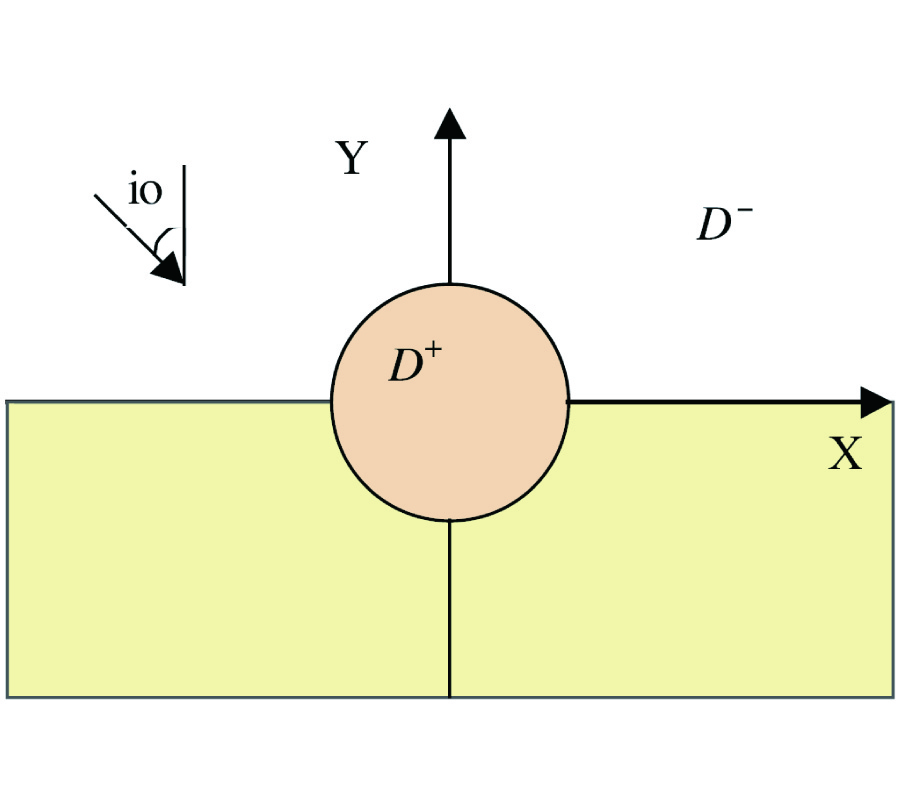
A spectral-domain solution is employed to completely characterize the two-dimensional electromagnetic plane-wave scattering problem by a perfectly conducting circular cylinder buried in a dielectric half-space. Use is made of the plane-wave spectrum to consider the diffraction, reflection and transmission of cylindrical waves. Suitable adaptive integration techniques are employed to numerically solve the spectral integrals. The method is valid for any value of the cylinder radius, and of the distance between the cylinder and the interface. Numerical results are presented for both near- and far-field cases and for both TM and TE polarizations, and a comparison with other results in the literature is discussed.
A SPECTRAL-DOMAIN SOLUTION FOR THE SCATTERING PROBLEM OF A CIRCULAR CYLINDER BURIED IN A DIELECTRIC HALF-SPACE
0000-00-00
PIER
Vol. 38, 199-221
Non-Relativistic Electromagnetic Scattering: ``Reverse Engineering" Using the Lorentz Force Formulas
Dan Censor
For almost a century, velocity dependent scattering problems are solved in the context of Einstein's Special Relativity theory. Most interesting problems involve non-uniform motion, which is heuristically justified by assuming the validity of the "instantaneous velocity" approximation. The present study attempts to provide a consistent postulational foundation by introducing boundary conditions based on the Lorentz force formulas. The methodology used here is dubbed "reverse engineering": Being aware of the relativistic results, we show that they are replicated, (at least) to the first order in β = v/c by the present method. Specific problems are discussed to demonstrate the power of the method, and pave the way to future research in this problem area. Specifically, by realizing that at the boundary we deal with signals, which are derived from waves, only the latter being subject to the wave equations, it is feasible to apply boundary conditions and construct appropriately the scattered waves in space. It is shown that the present approach is also consistent with the Minkowski constitutive relations which are exploited for solving problems where the medium moves parallel with respect to the boundaries.
0000-00-00
PIER
Vol. 38, 167-198
Diffraction of a Transverse Electric (TE) X-Wave by Conducting Objects
Ahmed Mohamed Attiya , Amr Shaarawi and Ioannis Besieris
A study of the diffraction and scattering of a transverse electric X-wave by conducting bodies is presented based on the timedomain, uniform theory of diffraction method and the pulsed plane wave representation of an X-wave. The latter allows the calculation of the diffraction and scattering of each pulsed plane wave component of the incident X-wave at the observation point. The superposition of the individual diffracted and scattered pulsed plane wave components yields the diffracted and scattered field due to an incident X-wave. First, the scattering from a perfectly conducting infinite wedge is studied. Then, the case of a circular conducting disk is considered as an example of a finite scatterer. Numerical results illustrating the effectiveness of the approach, as well as an estimate of the limits of its applicability, are provided.
DIFFRACTION OF A TRANSVERSE ELECTRIC (TE) X-WAVE BY CONDUCTING OBJECTS
0000-00-00
PIER
Vol. 38, 147-166
Comparative Analysis Between Conical and Gaussian Profiled Horn Antennas
Ahmed Kishk
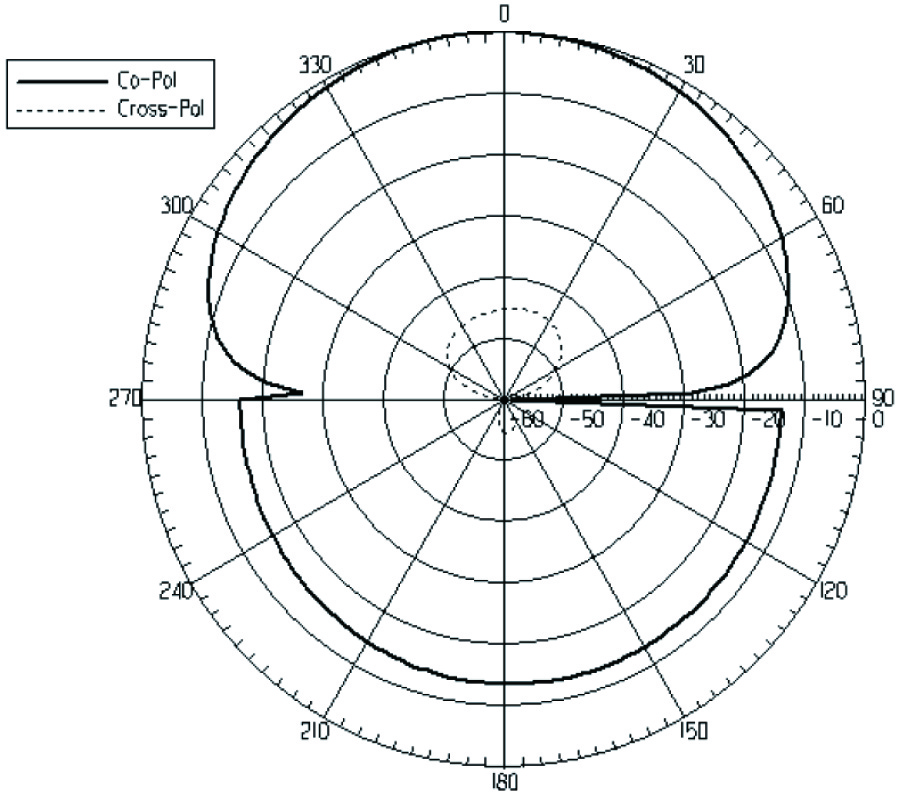
A parametric study is performed to the conical and Gaussian profiled horn antennas. Corrugations are added to these horns to further improve their radiation characteristics. The analyses are performed numerically using a body of revolution code, which uses the method of moments. The obtained numerical results are illustrated graphically to show the performance of the horns in terms of phase center, return loss, efficiency with parabolic reflector, directivity, and cross polarization of the horns. Results obtained conclude that the Gaussian profiled horns perform better than the existing conical horn antenna system. The Gaussian profiled horns provide higher efficiency, lower cross polarization, lower sidelobe levels as well as wider bandwidth. The objective of this article is to provide some understanding to the Gaussian profiled horns that might be of help to the new antenna designers.
COMPARATIVE ANALYSIS BETWEEN CONICAL AND GAUSSIAN PROFILED HORN ANTENNAS
0000-00-00
PIER
Vol. 38, 125-146
Magnetic Potential Green's Dyadics of Multilayered Waveguide for Spatial Power Combining Applications
Milan Lukic and Alexander Yakovlev
Integral equation formulation and magnetic potential Green's dyadics for multilayered rectangular waveguide are presented for modeling interacting printed antenna arrays used in waveguidebased spatial power combiners. Dyadic Green's functions are obtained as a partial eigenfunction expansion in the form of a double series over the complete system of eigenfunctions of transverse Laplacian operator. In this expansion, one-dimensional characteristic Green's functions along a multilayered waveguide are derived in closed form as the solution of a Sturm-Liouville boundary value problem with appropriate boundary and continuity conditions. A method introduced here is based on the transmission matrix approach, wherein the amplitude coefficients of forward and backward traveling waves in the scattered Green's function in different dielectric layers are obtained as a product of transmission matrices of corresponding layers. Convergence of Green's function components in the source region is illustrated for a specific example of a two-layered, terminated rectangular waveguide.
MAGNETIC POTENTIAL GREEN'S DYADICS OF MULTILAYERED WAVEGUIDE FOR SPATIAL POWER COMBINING APPLICATIONS
0000-00-00
PIER
Vol. 38, 111-123
Wave Beam Propagation in Layered Media
Fridrikh G. Bass and L. Resnick
Using rather general assumptions, wave beam propagation is considered in a medium constituted of two half-spaces with smoothly changing properties, these latter changing stepwise at the half-spaces' interface. Expressions for the beam-shape change in the course of propagation are obtained. General results are applied to a Gaussian beam propagating in a series chain, and to fields described by the Helmholtz equation.
0000-00-00
PIER
Vol. 38, 97-110
Analytical Model for Regular Dense Arrays of Planar Dipole Scatterers
Ari Viitanen , Ilari Hanninen and Sergei Tretyakov
An analytical boundary condition for modeling the electromagnetic properties of planar regular dense arrays of dipole particles for oblique incidence of plane waves is developed.The regular array is assumed to be dense which means that the dipole particles are close to each other.The interaction between the dipole particles is taken into account by interaction constant.The expression for the interaction constant is written in analytical form and is used for developing a transmission-line model for arrays of planar dipole scatterers.The regular dense array is modeled as a shunt impedance which is different for TM and TE polarizations.
ANALYTICAL MODEL FOR REGULAR DENSE ARRAYS OF PLANAR DIPOLE SCATTERERS
0000-00-00
PIER
Vol. 38, 47-95
Surface Green's Function of the Helmholtz Equation in Spherical Coordinates
F. Michael Kahnert , Adrian Doicu and Jochen Wauer
The surface Green's function belonging to the non-spherical exterior boundary value problem of Helmholtz's equation in spherical coordinates is derived. This is performed in two ways, first by applying the Separation of Variables method, and, second, by using the Method of Lines as a special Finite-Difference technique. With this Green's function we are able to resolve some contradictions concerning conceptual aspects of the Separation of Variables method, the Finite-Difference methods, and the Boundary Integral Equation methods which have been developed for rigorously solving non-separable boundary value problems. The necessary mathematical background, the relation to Waterman's T matrix, and simplifications due to certain symmetry properties of the boundary surface will be discussed. In this paper we focus on the scalar problem. The extension to the vector case for electromagnetic wave scattering is in preparation and will be published later.
SURFACE GREEN'S FUNCTION OF THE HELMHOLTZ EQUATION IN SPHERICAL COORDINATES
0000-00-00
PIER
Vol. 38, 29-45
Behavior of the Regularized Sampling Inverse Scattering Method at Internal Resonance Frequencies
Karl Warnick
The original proof of the Colton-Kirsch regularized sampling inverse scattering algorithm does not apply at frequencies which are eigenvalues of the interior Helmholtz problem. We explain numerical observations of the behavior of the method and show that useful information about scatterer shape can be obtained at internal resonance frequencies.
BEHAVIOR OF THE REGULARIZED SAMPLING INVERSE SCATTERING METHOD AT INTERNAL RESONANCE FREQUENCIES
0000-00-00
PIER
Vol. 38, 1-27
A Hybrid Fdfd-Bie Approach to Two-Dimensional Scattering from anInhomogeneous Biisotropic Cylinder
Martin Norgren
The scattering problem for an inhomogeneous twodimensional biisotropic cylinder is solved in the frequency-domain by means of a hybrid method, in which finite difference equations in the interior region are combined with a mesh truncation in terms of a boundary integral equation that realizes a global absorbing boundary condition. The influences of the chirality and non-reciprocity parameters on the scattering properties are investigated. Numerical results for the bistatic echo widths are presented and compared with a reference solutions in the circular cases and it is found that the method yields more accurate results than what can be achieved with a local absorbing boundary condition. It is realized that, for a given mesh, the method presented is computationally slower than a method based on a local absorbing boundary condition but in on the other hand the method is much faster than the readily used method of moments. The present method is thus suitable for solving scattering problems involving scatterers of intermediate sizes.
A Hybrid FDFD-BIE Approach to Two-Dimensional Scattering from an
Inhomogeneous Biisotropic Cylinder
0000-00-00
PIER
Vol. 37, 319-343
Model of Electromagnetic Wave Scattering from Sea Surface with and Without Oil Slicks
Alla I. Timchenko and Klaus Schuenemann
The problem of scattering from sea surface covered by oil films is investigated by using a composite random rough surface model. A model is developed which extends the range of validity beyond the small perturbation theory. A general expression for the scattering cross section is obtained taking into account a modulation of the rough surface by long surface waves. A numerical study for the radar scattering cross section is provided in order to investigate the influence of the different ranges of the rough surface spectrum on the backscattering depression. For the case of backscattering, the contrast of radar signals scattered from a slick-free and a slick-covered surface is evaluated. The study is also carried through for two-frequency probing. A possibility to explain the mechanism of the depression of backscattering is discussed. The results of this study demonstrate the importance of the improved model which takes into account the entire spectrum of the sea surface roughness for the description of scattering from an ocean surface with and without oil slicks.
MODEL OF ELECTROMAGNETIC WAVE SCATTERING FROM SEA SURFACE WITH AND WITHOUT OIL SLICKS
0000-00-00
PIER
Vol. 37, 289-317
Scattering of a Plane Wave by 1-Dimensional Dielectric Rough Surfaces Study of the Field in a Nonorthogonal Coordinate System
Richard Dusséaux and C. Baudier
We present a rigorous method giving the field scattered by a dielectric plane surface with a local cylindrical perturbation illuminated by a plane wave. The theory is based on Maxwell's equations written in a nonorthogonal coordinate system. A Method of Moments (PPMoM) with Pulses for basis and weighting functions is applied for solving in the spectral domain. For several deterministic profiles, we study the influence of polarization, incidence angle and perturbation depth and show that the distance defining the far-field approximation depends on the observation angle.
SCATTERING OF A PLANE WAVE BY 1-DIMENSIONAL DIELECTRIC ROUGH SURFACES STUDY OF THE FIELD IN A NONORTHOGONAL COORDINATE SYSTEM
0000-00-00
PIER
Vol. 37, 251-287
Small-Slope Approximation Method: A Further Study of Vector Wave Scattering from Two-Dimensional Surfaces and Comparison with Experimental Data
Gerard Berginc
This paper deals with the calculation of the scattering cross-section of polarized electromagnetic plane waves from 2-D metallic and dielectric randomly rough surfaces. The scattering crosssection of object is calculated by the Local Small Slope Approximation (SSA), the scattering cross-section is then compared with experimental data. In this paper, second order terms of the SSA method have been numerically implemented in order to obtain accurate results for a large range of slope. In this paper, we consider scattered and incident wave vectors in arbitrary directions, metallic and dielectric materials with complexp ermittivity. Surfaces are considered with Gaussian probability density functions for surface heights and Gaussian or non-Gaussian correlation functions. The coherent and incoherent components of the electromagnetic intensity for cross- and co-polarization are calculated in the bistatic case and we give several comparisons of the theory with measured data.
SMALL-SLOPE APPROXIMATION METHOD: A FURTHER STUDY OF VECTOR WAVE SCATTERING FROM TWO-DIMENSIONAL SURFACES AND COMPARISON WITH EXPERIMENTAL DATA
0000-00-00
PIER
Vol. 37, 235-250
Scattering of a Plane Wave by Rough Surfaces: A New Curvilinear Coordinate System Based Approach
Gerard Granet , M. Kofi Edee and Didier Felbacq
We present a curvilinear coordinate based method giving the field scattered by a plane surface with a cylindrical local perturbation illuminated by a plane wave. The boundary-value problem turns on the same scalar eigen equation that is solved in the spectral domain. Numerical results are successfully compared with those obtained by other rigorous methods
SCATTERING OF A PLANE WAVE BY ROUGH SURFACES: A NEW CURVILINEAR COORDINATE SYSTEM BASED APPROACH
0000-00-00
PIER
Vol. 37, 221-234
Study on the Two-Frequency Scattering Cross Section and Pulse Broadening of the One-Dimensional Fractal Sea Surface at Millimeter Wave Frequency
Cheol Kim
Based on the Kirchhoff approximation for the surfaces with small slopes, the pulse beam wave scattering fromthe onedimensional fractal sea surface with the actual spectrum is studied. The influence of the different fractal dimension, incident angle, and the center frequency on the distributions of the two-frequency scattering cross section is analyzed. The numerical result shows that there exists the largest coherence bandwidth for the two-frequency scattering cross section at the specular direction. The coherence bandwidth will increase with the decrease of the fractal dimension and with the increase of the incident angle and the center frequency, as well. It is also found that the scattering power takes a pulse shape, but with a pulse broadening for the incident power being δ function, this pulse broadening is inversely proportional to the coherence bandwidth.
STUDY ON THE TWO-FREQUENCY SCATTERING CROSS SECTION AND PULSE BROADENING OF THE ONE-DIMENSIONAL FRACTAL SEA SURFACE AT MILLIMETER WAVE FREQUENCY
0000-00-00
PIER
Vol. 37, 205-219
Two-Scale Polarimetric Emissivity Model: Efficiency Improvements and Comparisons with Data
David Lyzenga and John F. Vesecky
The two-scale model provides a framework for explaining the polarization and angular dependence of the microwave radiation emitted from the ocean surface. In this model the surface is viewed as a collection of randomly oriented facets. The emissivity of each facet is calculated using the small perturbation method (SPM), and that of the entire surface is obtained by integrating the local emissivity over all possible surface slopes, weighted by the probability of encountering these slopes. Since each SPM calculation involves a double integral, the model requires in principle the evaluation of a fourdimensional integral. This paper explores two methods for reducing the computational time required by the two-scale model. In one version, the azimuthal dependence of the local emissivity is represented by a truncated Fourier series and slope integral is computed numerically. In the second version the slope integral is carried out analytically, after expanding the integrand as a Taylor series in the surface slope. Hydrodynamic modulation effects are included in order to explain the upwind-downwind asymmetry of the emissivity. The calculated emissivities from the two versions of the model are compared with each other and with airborne and spaceborne measurements.
TWO-SCALE POLARIMETRIC EMISSIVITY MODEL: EFFICIENCY IMPROVEMENTS AND COMPARISONS WITH DATA
0000-00-00
PIER
Vol. 37, 191-203
A Semi-Empirical Algorithm of Water Transparency at the Green Wavelength Band of Optical Remote Sensing
Jouni Pulliainen and Martti Hallikainen
This study employed water transparent characteristics from the Gulf and archipelago of Finland and the corresponding data sets of optical sensors at the green wavelength band to estimate Secchi disk depth (SDD). The SDD is one major optical measurement of water transparency in the study area,where the coastal waters are dominated by absorption from both dissolved and particulate organic matter since the Gulf is optically dominated by scattering from suspended sediments. Concurrent in situ measurements,Landsat TM and simulated SeaWiFS data were obtained in August 1997. The results show that the SDD from the narrow green bandwidth (20 nm) data of simulated SeaWiFS is slightly better than the SDD from the broad green bandwidth (80 nm) data of TM using the semi-empirical algorithm developed in the study. The study of water transparent characteristics in the area still needs to be further investigated using SeaWiFS,MODIS and MERIS in the future.
A SEMI-EMPIRICAL ALGORITHM OF WATER TRANSPARENCY AT THE GREEN WAVELENGTH BAND OF OPTICAL REMOTE SENSING
0000-00-00
PIER
Vol. 37, 143-190
A Composite Model for Estimation of Polarimetric Thermal Emission from Foam-Covered Wind-Driven Ocean Surface
Jin Au Kong
This paper presents theoretical studies of polarimetric thermal emission from foam-covered ocean surface based on a composite volume and rough surface scattering model using the radiative transfer theory. The sea foam is modeled as a layer containing randomly distributed thin-film water bubbles. The small perturbation method (SPM) is used for random rough ocean surface, where the bistatic scattering is calculated up to the second order. The radiative transfer equations with a rough interface are solved using an iterative technique. Model predictions are compared with empirical expressions for foam emissivity and with the WINDRAD measurement data.
A COMPOSITE MODEL FOR ESTIMATION OF POLARIMETRIC THERMAL EMISSION FROM FOAM-COVERED WIND-DRIVEN OCEAN SURFACE
0000-00-00
PIER
Vol. 37, 129-141
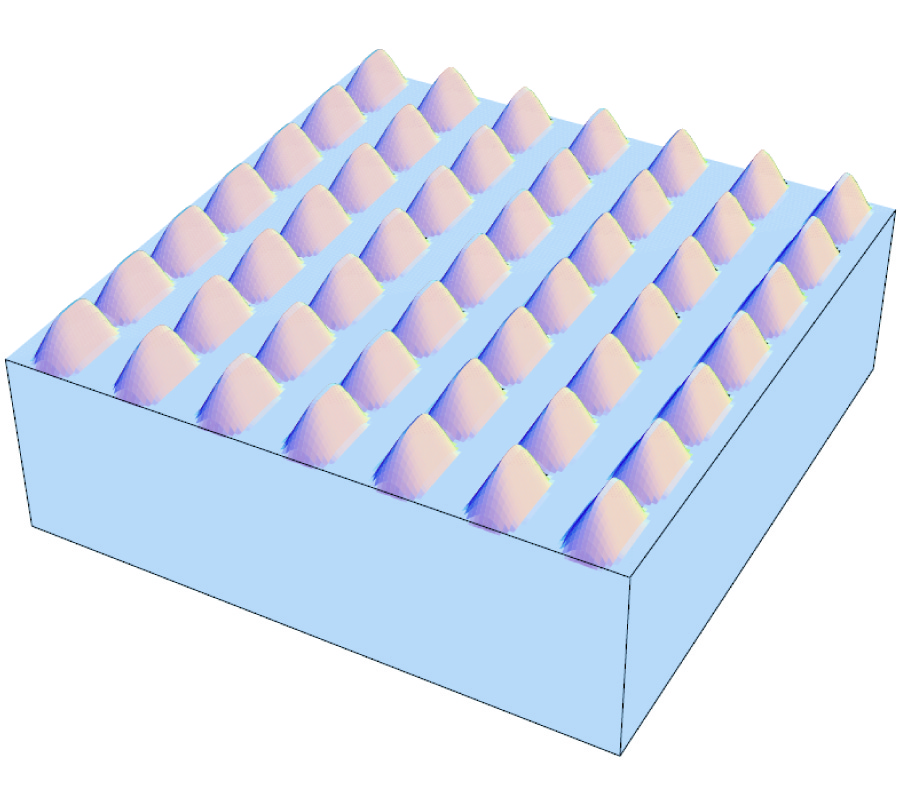
Mathematical Modeling of Electromagnetic Wave Scattering by Wavy Periodic Boundary Between Two Media
Jean Chandezon , Anatoly Poyedinchuk , Yury A. Tuchkin and Nataliya Yashina
The extension of C method, combined with idea of Tikhonov's regularization is proposed. The regularizing algorithm for numerical solution of electromagnetic wave diffraction by the boundary of dielectric media is developed. This algorithm is based on the solution of the system linear algebraic equations of C method as subject of regularizing method of A. N. Tikhonov. The numerical calculations of scattered field in the case of E-polarization are presented. The efficiency and reliability of the method for the solution of the problems of boundary shape reconstruction have been proved and demonstrated numerically for several situations.
MATHEMATICAL MODELING OF ELECTROMAGNETIC WAVE SCATTERING BY WAVY PERIODIC BOUNDARY BETWEEN TWO MEDIA
0000-00-00
PIER
Vol. 37, 101-128
Modelization of the Scattering of Electromagnetic Waves from the Ocean Surface
Gabriel Soriano
In this paper, two models for the solution of the electromagnetic bistatic scattering from sea surface are suggested. A rigorous formalism leading to weakly singular integral equations is presented, as well as the surface impedance approximation for low penetrable media and the beam simulation method to synthesize incident beams with arbitrary size. This rigorous integral method is used to test first order approximations, and it is shown that the Small Slope Approximation is very accurate in predicting the scattering crosssection fromthe high spatial frequencies of the sea surface. This result led us to suggest an improvement of the classical two-scale model, consisting in replacing the small perturbation theory by the small slope approximation. This change allows the cut-off spatial frequency to be shifted so that the use of geometrical Optics is restricted to the large scales.
MODELIZATION OF THE SCATTERING OF ELECTROMAGNETIC WAVES FROM THE OCEAN SURFACE