Search Results(13790)

2018-10-27
PIER C
Vol. 87, 241-253
A New Non-Convex Regularized Sparse Reconstruction Algorithm for Compressed Sensing Magnetic Resonance Image Recovery
Xiangjun Yin , Linyu Wang , Huihui Yue and Jianhong Xiang
Compressed sensing (CS) relies on the sparse priorin posed on the signal to solve the ill-posed recovery problem in an under-determined linear system (ULS). Motivated by the theory, this paper proposes a new algorithm called regularized re-weighted inverse trigonometric smoothed function approximating L0-norm minimization (RRITSL0) algorithm, where the inverse trigonometric (IT) function, iteratively re-weighted scheme and regularization mechanism constitute the core of the proposed RRITSL0 algorithm. Compared with other state-of-the-art functions, our proposed IT function cluster can better approximate the L0-norm, thus improving the reconstruction accuracy. And the new re-weighted scheme we adopted can promote sparsity and speed up convergence. Moreover, the regularization mechanism makes the RRITSL0 algorithm more robust against noise. The performance of the proposed algorithm is verified via numerical experiments with additive noise. Furthermore, the experiments prove the superiority of the RRITSL0 algorithm in magnetic resonance (MR) image recovery.
A NEW NON-CONVEX REGULARIZED SPARSE RECONSTRUCTION ALGORITHM FOR COMPRESSED SENSING MAGNETIC RESONANCE IMAGE RECOVERY
2018-10-27
PIER M
Vol. 75, 49-60
Effect of Quiet Zone Ripples on Antenna Pattern Measurement
Xiaoming Liu and Junsheng Yu
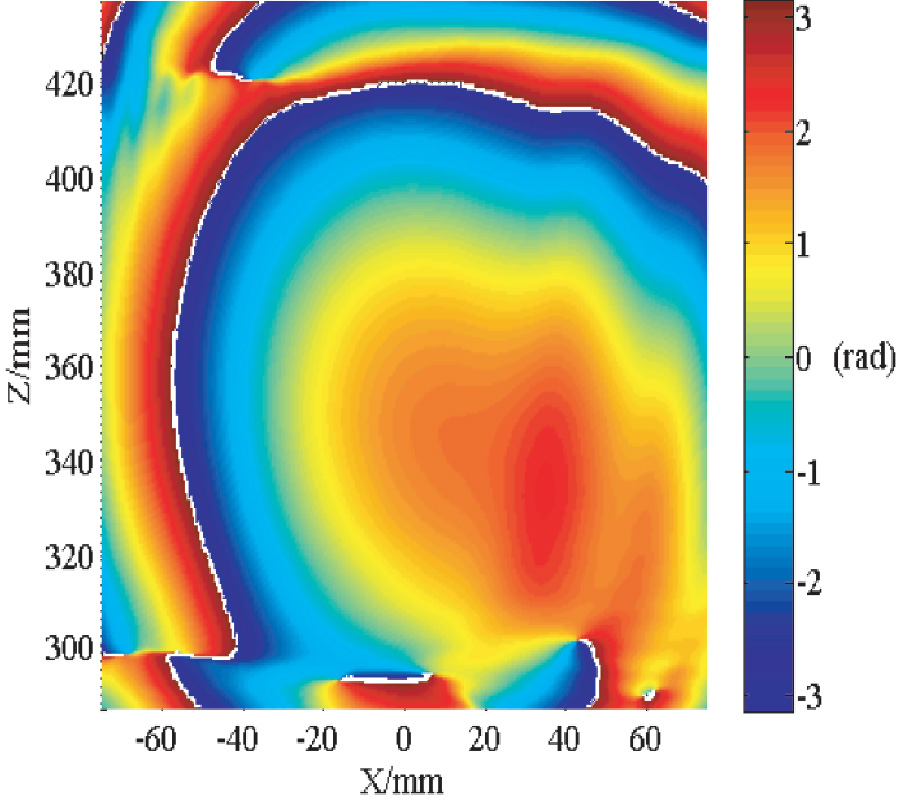
Compact antenna test range (CATR) is one of the most commonly used antenna measurement techniques, particularly in the microwave/millimetre wave range. A conventional industry standard for the quiet zone of a CATR is ±0.5 dB amplitude variation and ±5º phase variation to conduct measurement with acceptable accuracy. Such a high standard, however, has not been rigorously verified in theory. And it is in contrast to 22.5º phase variation condition for the far-field method. Being inspired by many measurements, where the quiet zone is not up to the industry standard while satisfactory results are still obtained, this paper systematically investigates the effect of quiet zone performance on the radiation pattern measurement. It aims at searching for a guideline specifications for the construction of a CATR. Theoretical models have been built to predict the quiet zone performance on the antenna pattern measurement, particularly on the main beam. Many factors have been considered, such as amplitude and phase ripple, amplitude/phase taper, and electrical size. In coupling with experimental study, it is shown that a much more relaxed condition can be followed depending on the required measurement accuracy.
EFFECT OF QUIET ZONE RIPPLES ON ANTENNA PATTERN MEASUREMENT
2018-10-25
PIER C
Vol. 87, 227-240
Clutter Suppression for Cooperative Radar Based on Orthogonal Polarization Character
Maoqiang Jing , Zhuming Chen , Qianli Wang and Qi Jiang
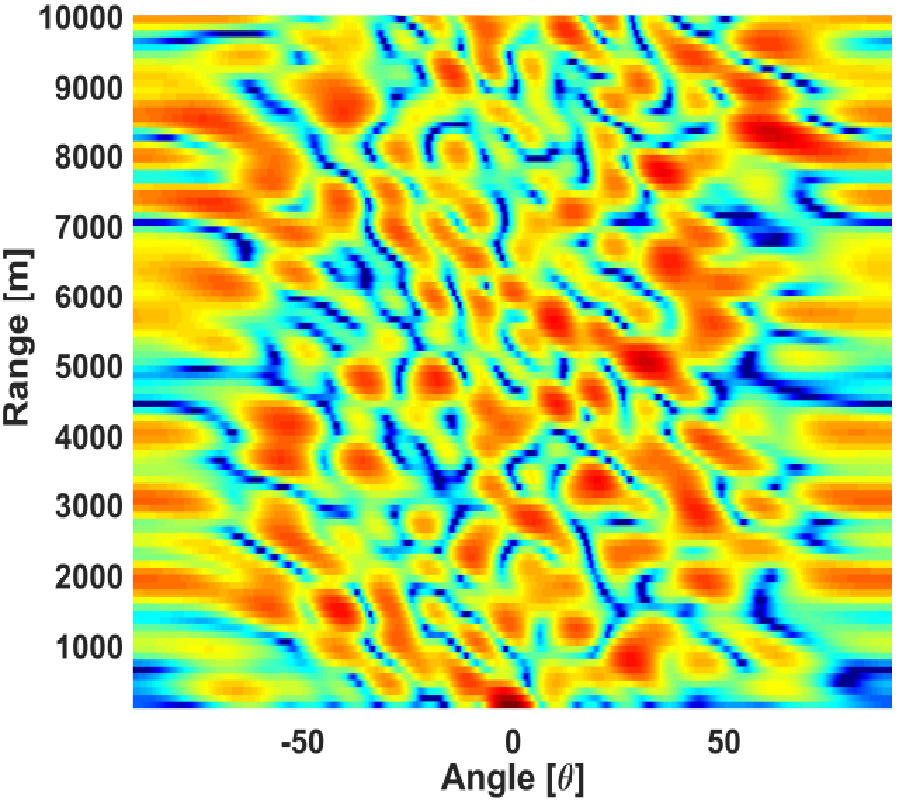
In indoor scenario, radar echoes are interfered by clutter from walls, ceilings, floors, and other indoor objects. Therefore, clutter suppressing is one of the key problems for indoor radar. This paper focuses on the problem of clutter suppressing for a secondary radar system which can be used in indoor localization. A clutter suppressing method based on orthogonal polarization character is presented. The orthogonal polarization character here is achieved by a designed transceiver, which can transpond electromagnetic waves in vertical polarization if and only if the received signal is in horizontal polarization. Thus the newly introduced polarization character can be used to discriminate target from clutter. Clutter is suppressed after calculating scattering similarity parameters via Pauli decomposition. Simulations and an experiment are conducted to demonstrate the proposed method. Compared with previous methods, the proposed method can distinguish stationary target with both static and varying clutters. Therefore, it is more practical for applications.
CLUTTER SUPPRESSION FOR COOPERATIVE RADAR BASED ON ORTHOGONAL POLARIZATION CHARACTER
2018-10-25
PIER B
Vol. 82, 137-164
On a Rigorous Proof of the Existence of Complex Waves in a Dielectric Waveguide of Circular Cross Section
Yury V. Shestopalov and Ekaterina A. Kuzmina
Existence of symmetric complex waves in a dielectric rod (DR) - a dielectric waveguide of circular cross section - is proved by analyzing functional properties of the dispersion equations (DEs) using the theory of functions of several complex variables and validating the existence of complex roots of DE. A closed-form iteration procedure for calculating the roots in the complex domain supplied with efficient choice of initial approximation is proposed. Numerical modeling is performed with the help of a parameter-differentiation method applied to the analytical and numerical solution of DEs.
ON A RIGOROUS PROOF OF THE EXISTENCE OF COMPLEX WAVES IN A DIELECTRIC WAVEGUIDE OF CIRCULAR CROSS SECTION
2018-10-25
PIER M
Vol. 75, 39-48
A Dimensionality Reduction MUSIC Method for Joint DOA and Polarization Estimation in the PRDRF System Using SSSC-EVSA
Pinjiao Zhao , Guobing Hu and Liwei Wang
Traditional long vector-based MUSIC methods require 4D spectral search, which suffers from heavy computational complexity. This paper develops a joint DOA and polarization estimation method named as dimensionality reduction MUSIC (DR-MUSIC) method for a passive radar direction finding (PRDRF) system using spatially separated single-component circular electromagnetic vector sensor array (SSSC-EVSA), where 4D spectral search is transformed into 2D spectral search by exploiting rank deficiency of the signal component of cost function. Polarization parameters are estimated via the generalized eigenvector of matrix pencil, which can be utilized for the recognition of radar and decoy. In addition, the estimation performance of the proposed DR-MUSIC method is also studied considering the phase inconsistency among multi-channels. Simulation results demonstrate the effectiveness of the DR-MUSIC method.
A DIMENSIONALITY REDUCTION MUSIC METHOD FOR JOINT DOA AND POLARIZATION ESTIMATION IN THE PRDRF SYSTEM USING SSSC-EVSA
2018-10-24
PIER M
Vol. 75, 29-37
Study on Silicon-Based Conformal Microstrip Angular Log-Periodic Meander Line Traveling Wave Tube
Tenglong He , Zhan-Liang Wang , Xinyi Li , Hexin Wang , Wei Shao , Hanwen Tian , Ling-Na Yue , Hua-Rong Gong , Zhaoyun Duan , Yan-Yu Wei and Yu-Bin Gong
Angular log-periodic meander line (ALPML) traveling wave tube (TWT) is one kind of low voltage miniature TWT. In order to decrease high frequency loss, avoid charge accumulation and enhance coupling impedance, the conformal microstrip ALPML TWT based on silicon substrate is proposed in this paper, which means that the projections of silicon supporting structure and metallic microstrip meander line are same in the top view. The microfabrication technology DRIE can be used to fabricate this structure. Compared with the conventional microstrip ALPML TWT, the coupling impedance of conformal microstrip ALPML TWT increases 50%. The particle-in-cell (PIC) simulation results reveal that the output power of conformal microstrip ALPML TWT can reach 220 W at 35 GHz, while the efficiency is 20%. The 3-dB bandwidth reaches 14 GHz in the frequency range between 28 GHz and 41 GHz when the operating voltage and radial sheet beam current are 3600 V and 0.3 A, respectively.
STUDY ON SILICON-BASED CONFORMAL MICROSTRIP ANGULAR LOG-PERIODIC MEANDER LINE TRAVELING WAVE TUBE
2018-10-23
PIER Letters
Vol. 79, 103-108
Using Homogeneous Equivalent Parameters in Finite Element Models of Curved Metamaterial Structures
Richard Mattish , Fabio Alves and Dragoslav Grbovic
We report on the experimental verification of the employment of equivalent parameters in a 2D finite element model to describe absorptivity of curve-shaped, large-scale metamaterial structures. Equivalent homogeneous optical parameters were retrieved from experimental measurements of flat metamaterial sheets with square resonators of 8 and 9 mm and used in a 2D FE model to obtain the absorptivity of curved structures with similar metamaterial unit cells. The curved structures were experimentally characterized and showed good agreement with the model. The tremendous simplification made possible by simulating complex structures as homogeneous materials makes the method very attractive for designing large-scale electromagnetic shields and absorbers.
USING HOMOGENEOUS EQUIVALENT PARAMETERS IN FINITE ELEMENT MODELS OF CURVED METAMATERIAL STRUCTURES
2018-10-22
PIER B
Vol. 82, 115-135
Design of a Short Range Continuous Wave Compound Phase Coded Linear Frequency Modulation Radar Sensor
Jason Reneau and Reza Adhami
The design of a low cost, short range radar sensor based upon a novel phase coded linear frequency waveform is discussed in this paper. The radar sensor utilizes a novel waveform that is produced using digital frequency synthesis techniques. Digital frequency synthesis techniques enable the generation of repeatable, highly linear frequency sweeps and provide a means for accurate application of phase codes to linear frequency modulations. The work presented contains analysis of the component linear frequency and phase code modulations that form the compound phase coded linear frequency modulation. The resulting compound phase coded linear frequency modulation is compared with the component modulations to demonstrate the performance improvement that can be achieved by the combining of radar waveform modulations enabled by modern digital frequency synthesis techniques. The compound phase coded linear frequency modulation waveform shows improved range resolution and suppression of range sidelobes over the individual component waveforms. The phase coded linear frequency modulation shows an improvement of 13 dB over the linear frequency modulation and is only 2 dB less than the phase code. It also achieves a 5 and 10 nanosecond narrower mainlobe autocorrelation peak than the phase code and linear frequency modulation, respectively. A notional signal processing architecture of the waveform is simulated to demonstrate the ability to process the compound waveform. Experimental data collected from a direct digital frequency synthesis based arbitrary waveform generator is compared with the simulated waveform. The compound waveform model and the experimental results show good agreement.
DESIGN OF A SHORT RANGE CONTINUOUS WAVE COMPOUND PHASE CODED LINEAR FREQUENCY MODULATION RADAR SENSOR
2018-10-22
PIER Letters
Vol. 79, 95-101
An Array Partitioning Scheme of Airborne Phased-MIMO Radar Based on STAP SINR
Wei Wang , Lin Zou and Xuegang Wang
An airborne phased-multiple-input-multiple-output (Phased-MIMO) radar with collocated antenna array is a tradeoff of phased array radar and MIMO radar. Its transmitting array is divided into multiple subarrays that are allowed to be overlapped. In this letter, we mainly study the array partitioning scheme of the airborne Phased-MIMO radar with equal uniform linear subarrays that are fully overlapped on the basis of space-time adaptive processing (STAP). A mathematical formula is derived to determine the number of subarrays and the elements in each subarray according to the principle of maximum STAP signal-to-interference-plus-noise ratio (SINR). The SINR performances corresponding to different partitioning schemes are simulated and discussed to demonstrate the effectiveness of the proposed mathematical formula for array partitioning in the sense of maximum STAP SINR.
AN ARRAY PARTITIONING SCHEME OF AIRBORNE PHASED-MIMO RADAR BASED ON STAP SINR
2018-10-22
PIER Letters
Vol. 79, 87-93
High Gain Flexible CPW Fed Fractal Antenna for Bluetooth/WLAN/WPAN/WiMAX Applications
Maitri Kantharia , Arpan Desai , Trushit K. Upadhyaya , Riki Patel , Parthesh Mankodi and Mukul Kantharia
A dual-band flexible antenna incorporated with the fractal structure using coplanar waveguide (CPW) is proposed for 2.42 GHz WLAN and 3.78 GHz WiMAX applications. The antenna is printed on a low-cost FR4 substrate having a thickness of 0.5 mm with overall antenna dimension of 97.48x80 mm2. Incorporation of fractal geometry leads to improvement in terms of impedance bandwidth and radiation efficiency. The simulated and measured results of the proposed antenna in terms of return loss (S11), gain, radiation pattern, and VSWR are presented here which show great correlation. The measured impedance bandwidth and gain of the flexible antenna are 17.08% (2.20 GHz-2.61 GHz), 16.30% (3.38 GHz-3.98 GHz), 4.56 dBi and 1.09 dBi, respectively. The proposed dual-band antenna shows omnidirectional and bidirectional radiation patterns in H and E-planes which makes it suitable for its use in low-cost Bluetooth/WLAN/WPAN/WiMAX applications.
HIGH GAIN FLEXIBLE CPW FED FRACTAL ANTENNA FOR BLUETOOTH/WLAN/WPAN/WIMAX APPLICATIONS
2018-10-18
PIER Letters
Vol. 79, 79-86
Stacked Conical-Cylindrical Hybrid Dielectric Resonator Antenna for Improved Ultrawide Bandwidth
Ali A. Al-Azza , Nuhad Malalla , Frances Harackiewicz and Kiyun Han
Conical and cylindrical dielectric resonator elements are vertically stacked and excited by a simple coaxial monopole. Compared to all earlier configurations, the proposed geometry significantly improves the impedance bandwidth. The ultrawideband response is enhanced due to the multiple resonances occurring by the suggested hybrid antenna. The footprint area of the antenna is only 63.6 mm2 or 25.44 x10⁻³λo 2 at the lowest operating frequency. The performance of the antenna is verified experimentally and numerically. Presented results show that the proposed hybrid monopole-DRA has a measured impedance bandwidth up to 148.6% (S11 < -10 dB) along with consistent monopole-like radiation patterns and peak gain of 7.14 dBi. With such properties, the proposed hybrid monopole-DRA can be used in different ultra-wideband wireless applications and as wideband electromagnetic interference (EMI) sensors.
STACKED CONICAL-CYLINDRICAL HYBRID DIELECTRIC RESONATOR ANTENNA FOR IMPROVED ULTRAWIDE BANDWIDTH
2018-10-18
PIER M
Vol. 75, 21-28
FDTD Based Dictionary Matrix for Sparsity-Based through-Wall Radar Imaging
Fang-Fang Wang , Sichao Zhong , Huiying Wu , Tingting Qin and Wei Hong
Compressive sensing for through-wall radar imaging (TWRI) is a promising method to obtain a high-resolution image with limited number of measurements. The capability of the existing method in the framework of CS is limited due to the model error stemmed from the approximated signal model which does not consider multipath returns or only consider first-order interior wall multipath returns. In order to exploit various multipath returns, finite-difference time domain (FDTD) technique is used to obtain the scattered signal for each assumed target position and then to construct the exact forward scattering model. Then, sparse reconstruction is used to solve this linear inverse problem. Numerical results demonstrate that the proposed approach performs better at ghost suppression in the same condition of the signal-to-noise ratio (SNR).
FDTD BASED DICTIONARY MATRIX FOR SPARSITY-BASED THROUGH-WALL RADAR IMAGING
2018-10-18
PIER M
Vol. 75, 13-20
Two-Stage Channel Estimation Assisted by Correlation Exploitation for Amplify and Forward Relay Networks with Multiple Transmit and Receive Antennas
Changwei Lv , Junwei Duan and Zhaocheng Yang
This paper proposes a new two-stage channel estimation (TSCE) method to estimate the cascaded channels in amplify-and-forward (AF) one-way relay network (OWRN) with multiple transmit and receive antennas. Different from the existing estimation methods, the proposed TSCE estimates the cascaded channel matrix by utilizing the special structure of the received signal in the destination and by exploiting the correlations among the cascaded channel matrix entries. The TSCE not only obtains the channel state information (CSI) when receiving training sequences, but also improves the accuracy of CSI when receiving the data sequences. Simulation results demonstrate that the proposed TSCE can improve estimation accuracy compared with traditional channel estimation schemes.
TWO-STAGE CHANNEL ESTIMATION ASSISTED BY CORRELATION EXPLOITATION FOR AMPLIFY AND FORWARD RELAY NETWORKS WITH MULTIPLE TRANSMIT AND RECEIVE ANTENNAS
2018-10-18
PIER M
Vol. 75, 1-12
Multi-Slot Antennas Excited by Novel Dual-Stub Loaded Microstrip Lines for 4G LTE Bands
Kendrick Q. Henderson , Saeed I. Latif , Georgios Y. Lazarou , Satish Kumar Sharma and Azzam Tabbal
A low-profile dual tuning stub loaded microstrip line-fed multi-slot antenna is presented in this paper, which covers most of the significant 4G LTE bands from 850 MHz to 2800 MHz and beyond. The slot antenna consists of three wide slot sections: two orthogonal slots and a circular slot at the junction of those two slots. This multi-slot antenna is excited by a microstrip feed line loaded with dual stubs, which is on the other side of the dielectric substrate. The stubs are terminated across the width of orthogonal slots. Two of these slots along with feed lines are placed on two corners of the ground plane for pattern diversity. Numerical simulation and measurement results on a fabricated prototype demonstrate excellent agreement in scattering parameters. Good port isolation and gains are also obtained. This design is suitable for use in LTE mobile terminals.
MULTI-SLOT ANTENNAS EXCITED BY NOVEL DUAL-STUB LOADED MICROSTRIP LINES FOR 4G LTE BANDS
2018-10-18
PIER M
Vol. 74, 201-209
A New UWB Antenna with Band-Notched Characteristic
Meixia Shi , Lingzhi Cui , Hui Liu , Mingming Lv and Xu-Bao Sun
A new coplanar waveguide (CPW) fed ultra-wideband (UWB) antenna with band notched characteristic is proposed in this paper. In order to achieve sharp and controllable notch-band characteristic, one pair of half-wave-length stubs and slits is introduced inside the tapered slot and circular patch, respectively, on the basis of a UWB antenna. Simulated and measured results show that the antenna has a reflection coefficient (S11) less than -10 dB in the range of 3.0 to 11 GHz, which can meet the requirements of a UWB communication system. It shows a good notch characteristic in 5.0~5.8 GHz, which can covers the operating band of wireless local area network (WLAN) well. The antenna has a stable gain and good radiation characteristics in the pass band. It is simple in structure and easy in fabrication. Moreover, it has broad application prospects.
A NEW UWB ANTENNA WITH BAND-NOTCHED CHARACTERISTIC
2018-10-17
PIER Letters
Vol. 79, 71-77
Ferrofluid Actuation Based Frequency Reconfigurable Patch Antenna
Rocktotpal Baruah and Nidhi S. Bhattacharyya
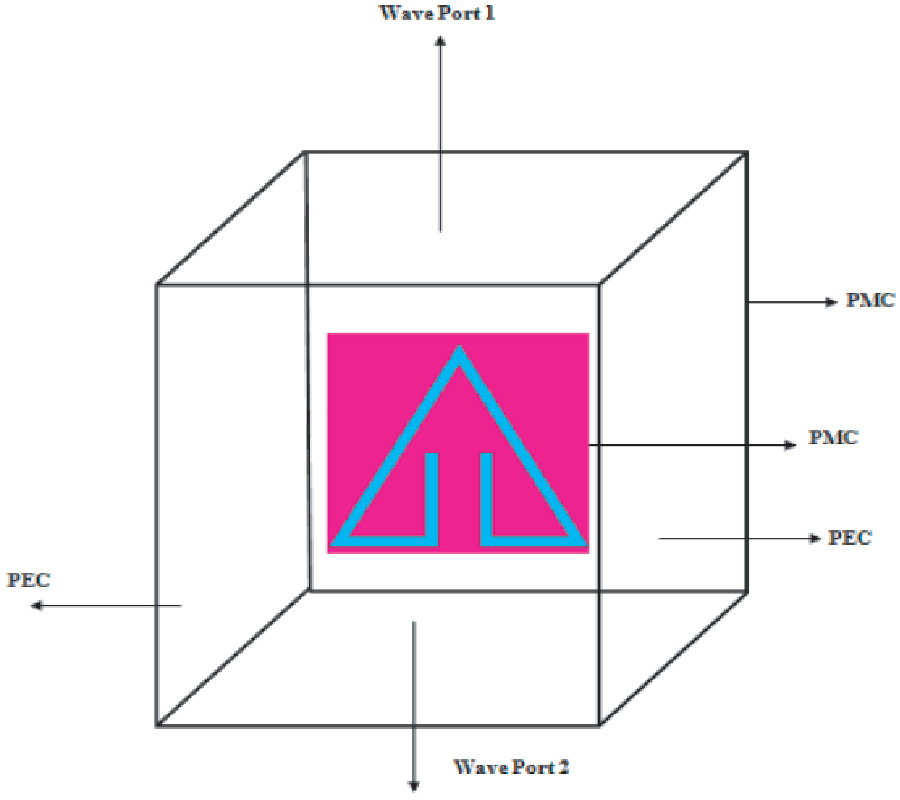
This work describes the fabrication and characterization of a frequency reconfigurable patch antenna using ferrofluid actuation. The reconfiguration is based on a variation of dielectric constant of the substrate. For this, the substrate is modified by placing channels in it filled with ferrofluid and isopropanol-water solution. The relative position of ferrofluid along the channels is controlled by an external magnetic field which results in a relocatable spatial difference in the dielectric constant value. The targeted reconfigurability with stable radiation characteristics at the accessible frequencies is validated through antenna reflection loss and radiation pattern measurements. Additionally, actuation speed of the fluid immerged in the polar mixture is measured by sequential image analysis.
FERROFLUID ACTUATION BASED FREQUENCY RECONFIGURABLE PATCH ANTENNA
2018-10-17
PIER M
Vol. 74, 191-200
Research on the Method of Seed Water Content Measurement Based on Electromagnetic Induction
Yixiong Lai , Guo-Qiang Liu , Zhongqi Li and Yunzhi Lin
There exist some problems that the water content of the test object cannot be reflected in real time. The detection time is too long, and the heating measurement method destroys the seed tissue for the traditional measurement of the water content of the seed. In this paper, a structure of single excitation coil to double receiving coils is proposed to measure the water content of the seed via electromagnetic induction. The relative permittivity of the seed can be obtained by the relationship between the amplitude ratio and the water content of the seed. First of all, according to the electromagnetic field theory, the functional relationship between the amplitude ratio of the electromotive force amplitude signals of the two receiving coils and the water content of the seed is established. Secondly, fifty sets of theoretical values of the mentioned model can be obtained through simulation analysis. Finally, comparative tests are carried out by using soybean seeds. The experimental results preliminarily verify the feasibility of the electromagnetic measurement method of the water content of the seed. The advantage of the proposed method is that the measurement of the water content of the seed is non-contacting.
RESEARCH ON THE METHOD OF SEED WATER CONTENT MEASUREMENT BASED ON ELECTROMAGNETIC INDUCTION
2018-10-16
PIER C
Vol. 87, 213-226
Dual-Band Reconfigurable Graphene-Based Patch Antenna in Terahertz Band: Design, Analysis and Modeling Using WCIP Method
Aymen Hlali , Zied Houaneb and Hassen Zairi
The resonant frequency of an antenna plays a crucial role in the design of a reconfigurable antenna. In this article, we have developed a dual-band reconfigurable terahertz patch antenna by using graphene. The simulation results demonstrate that the designed structure can provide excellent properties in terms of dual wide-band performance, frequency-recon guration by applying different voltages on the graphene. These initial results are particularly promising for various applications in the THz regime. Furthermore, we have investigated the effect of the additional parameter such as temperature and relaxation time. The modeling is done by using a new equation of the Wave Concept Iterative Process (WCIP) method, and the validation is achieved by comparison with CST simulator. Here, we propose to develop a new efficient and flexible numerical tool for graphene modeling.
DUAL-BAND RECONFIGURABLE GRAPHENE-BASED PATCH ANTENNA IN TERAHERTZ BAND: DESIGN, ANALYSIS AND MODELING USING WCIP METHOD
2018-10-16
PIER C
Vol. 87, 199-212
CPW Fed Conformal Folded Dipole with Pattern Diversity for 5G Mobile Terminals
Gulur Sadananda Karthikeya , Mahesh Pandurang Abegaonkar and Shiban Kishen Koul
A coplanar waveguide (CPW) fed folded dipole with a 20% impedance bandwidth and 4-6 dBi endfire gain with stable patterns is proposed. Since the proposed element is electrically large (2.1λ x 2λ) conformal topology of this endfire radiator is designed and characterized. The input impedance is not altered significantly compared to the planar element. The radiation in the H plane indicates an increase in specific absorption rate when integrated with a typical mobile terminal. In order to mitigate this effect, a compact (0.8λ x 0.8λ) wideband reflector with periodic sinusoidal slots is proposed and mounted with the conformal element at an offset of 0.2λ from the radiator. The proposed antenna has an operating bandwidth from 24 to 30 GHz (20%) with an endfire gain of 6-7 dBi across the band. The front to back ratio is more than 12 dB across the band. Pattern diversity of the conformal antenna is also investigated. Simulated and measurement results are presented in detail.
CPW FED CONFORMAL FOLDED DIPOLE WITH PATTERN DIVERSITY FOR 5G MOBILE TERMINALS
2018-10-16
PIER M
Vol. 74, 179-189
Printed Circularly Polarised Asymmetric Ultra-Wideband Antenna
Karavilavadakkethil Chellappan Prakash , Puthiyapurayil Viswanathan Vinesh , Manoj Mani , Sumitha Mathew , Pezholil Mohanan and Kesavath Vasudevan
Printed, circularly polarised, microstrip line fed antenna having asymmetric slotted structure is presented. Two antennas, antenna 1 (A1) and antenna 2 (A2), having the same design but radiating with opposite senses of circular polarisation are fabricated. The geometrical structure consists of uneven combination of elements fixed through parametric variations. The measurements yielded significant impedance bandwidth (IBW) and axial ratio bandwidth (ARBW) for axial ratio (AR) ≤ 3 dB. A1 offered IBW of 9.67 GHz (2.46-12.13 GHz, 132.6%), ARBW of 7 GHz (4-11 GHz, 93.33%) and a peak realised gain of 4.05 dBi. A2 offered IBW of 10.05 GHz (2.55-12.6 GHz, 132.7%), ARBW of 7.3 GHz (3.9-11.2 GHz, 96.7%) and a peak realised gain of 4.1 dBi. This constitutes a wide coverage of over 88% of the ultra-wideband (UWB) spectrum (3.1-10.6 GHz). Omnidirectional radiation patterns and marginal group delays are the other features of these antennas. The proposed design is validated through simulations and experimental investigations.
PRINTED CIRCULARLY POLARISED ASYMMETRIC ULTRA-WIDEBAND ANTENNA