Search Results(13790)

2018-10-16
PIER M
Vol. 74, 169-178
A Wideband Medium-Gain Vertically Polarized Omnidirectional Antenna Array
Long Yang
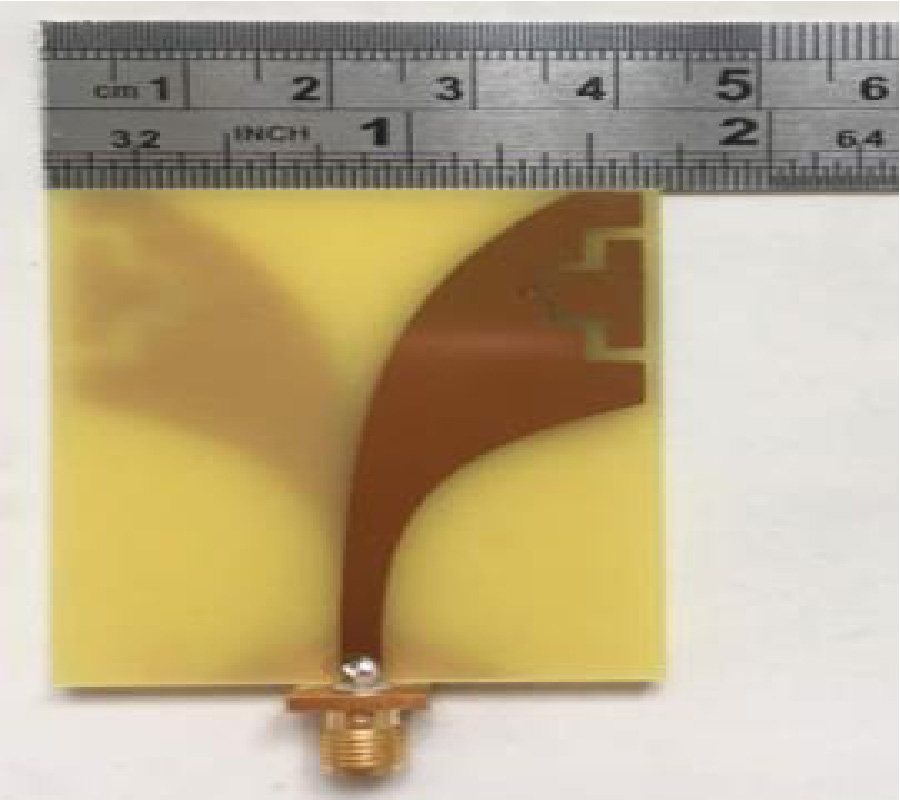
A medium-gain vertically polarized omnidirectional antenna array (VPOA) with wide bandwidth is proposed in this paper. Initially, a conventional printed dipole antenna with integrated balun (IB) is introduced to use as the wideband element. Then, four antenna elements are alternately arranged in the vertical direction to achieve high gain. Moreover, the four elements are excited by a shunt-fed feeding network which is utilized to provide uniform amplitude and phase for the elements. The feeding network has a common ground with the balun, and it can be easily integrated with the IB. Furthermore, two metallic cylinders placed in the normal direction of the substrate are used as two reflectors to improve the gain variation in the horizontal plane. In order to validate the design method, a prototype is fabricated and measured. The measured results indicate that the proposed antenna has an impedance bandwidth of 56% (1.12-2 GHz) for VSWR≤2 and a simple structure with lateral size of 0.45 λ00 is the free-space wavelength at center frequency). In addition, stable omnidirectional radiation patterns are obtained with gains around 6.5 dB and the gain variations in the horizontal plane less than 2 dB across the operating band.
A WIDEBAND MEDIUM-GAIN VERTICALLY POLARIZED OMNIDIRECTIONAL ANTENNA ARRAY
2018-10-15
PIER C
Vol. 87, 187-197
Self-Adaptive Dynamic Differential Evolution Applied to BER Reduction with Beamforming Techniques for Ultra Wideband MU-MIMO Systems
Chien-Ching Chiu , Guan-Da Lai and Yu-Ting Cheng
This paper introduces an Ultra-Wideband (UWB) circle antenna array with beam forming techniques that combine Self-Adaptive Dynamic Differential Evolution (SADDE) which is capable to minimize the Bit Error Rate (BER) for Multi-User Multiple Input Multiple Output (MU-MIMO) in indoor communication system. By using the ray tracing techniques to compute any given indoor wireless environment, the impulse response of the system can be calculated, and the BER can be computed accordingly. Next, we analyze the BER performance of the UWB MU-MIMO system that applies beam forming for spatial division multiple accesses. Numerical results show that the SADDE can control the antenna feed length to reduce the BER and form the radiation beam pattern towards the direction of the desired signals while forming nulls to co-channel interferers for MU-MIMO system.
SELF-ADAPTIVE DYNAMIC DIFFERENTIAL EVOLUTION APPLIED TO BER REDUCTION WITH BEAMFORMING TECHNIQUES FOR ULTRA WIDEBAND MU-MIMO SYSTEMS
2018-10-15
PIER M
Vol. 74, 159-168
Three Dimensional Electromagnetic Scattering of Two-Layer Rough Surfaces Using Physical Optics Approximation Algorithm
Ke Li , Li-Xin Guo and Juan Li
In this study, the physical optics approximation (POA) algorithm is described for predicting the electromagnetic (EM) scattering of three dimensional (3D) two-layer rough surfaces. The POA is initially used to calculate the composite scattering of an object and single layer rough surface for two dimensional (2D) situations. We extend this method to the case of a rough layer with two rough interfaces. The multiple coupling interactions between the upper and lower layer are considered based on an iterative strategy. Because the coupling effect is considered, the 3D model is quite time-consuming. In order to obtain numerical results rapidly, a parallel technique based on the OpenMP is adopted to accelerate the coupling iterative calculation. The model is applicable for moderate to large surface roughness. However, the rough surface should have small to moderate slopes so as to meet the conditions of POA. In numerical results, the normalized radar cross section of two-layer rough surfaces model under different polarizations is calculated, and the model is validated by comparison with a numerical reference method based on the method of moment. In addition, the influence of roughness on the scattering model is analyzed and discussed.
THREE DIMENSIONAL ELECTROMAGNETIC SCATTERING OF TWO-LAYER ROUGH SURFACES USING PHYSICAL OPTICS APPROXIMATION ALGORITHM
2018-10-14
PIER Letters
Vol. 79, 65-70
A Novel Quad-Band Bandstop Filter Based on Coupled-Line and Shorted Stub-Loaded Half-Wavelength Microstrip Resonator
Jun-Mei Yan , Liangzu Cao and Hai-Ying Zhou
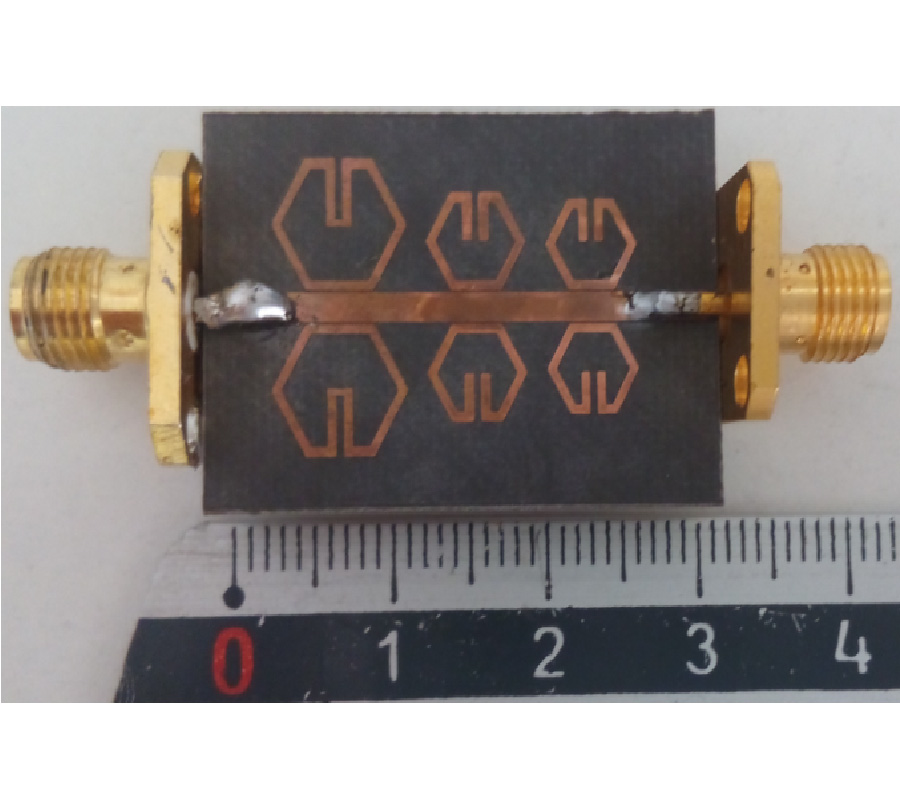
This letter presents a novel quad-band bandstop filter. It is formed by loading a microstrip line with two special resonators. The special resonator can be seen as a coupled-line and shorted stub-loaded half-wavelength microstrip resonator (CSSHMR). The resonator can resonate at four frequencies, which forms the corresponding equivalent shorted points at the microstrip line. Therefore, signals are rejected at these equivalent short-circuited points, which realizes the quad-band bandstop responses. The four resonant frequencies can be separately adjusted in a limited range. The gap coupling between the resonators can be introduced to adjust the performance. A transmission line model is built to analyze the quad-band bandstop filter. A prototype quad-band bandstop filter is designed, fabricated and measured. The measured and simulated results have a good agreement.
A NOVEL QUAD-BAND BANDSTOP FILTER BASED ON COUPLED-LINE AND SHORTED STUB-LOADED HALF-WAVELENGTH MICROSTRIP RESONATOR
2018-10-14
PIER M
Vol. 74, 147-157
The Ionized Field Calculation Under Different Haze Weather Levels Based on Improved Upstream Meshless Method
Bing Gao , Fan Yang , Haizhou Qian , Min Liu , Chunli Li and Chao Liu
The haze-prone areas are usually places with limited transmission line corridors and large power loads. The performance of transmission lines is under threat of haze. The haze particulates around the transmission lines would be charged and affect the electric field near high voltage direct current (HVDC) transmission lines. Accoring to the influence mechanism of haze on ionized field, the electric perfromance of HVDC transmission lines under haze weather is dicussed. In the paper, an improved meshless local Petrov-Galerkin method (MLPG) is proposed to investigate the distribution of ionized electric field, and example of an actual transmission line is studied to verify the validation of the proposed method at first. It is proved that the proposed method agrees well with the measurements. Then the ionized field distribution under different haze weather levels is discussed, as well as the influenced factor. Results indicate that the ionized electric field and ion current density on the ground would increase under haze weather, but with the similar trends to good weather condition. Meanwhile, the haze weather levels have greater influence on the ionized electric field than ion current density, where the increase of corona and space charge are the main reasons.
THE IONIZED FIELD CALCULATION UNDER DIFFERENT HAZE WEATHER LEVELS BASED ON IMPROVED UPSTREAM MESHLESS METHOD
2018-10-14
PIER M
Vol. 74, 137-145
Study of Load Characteristics in Wireless Power Transfer System with Ferrite Core
Meng Wang , Jing Feng , Minghui Shen and Yanyan Shi
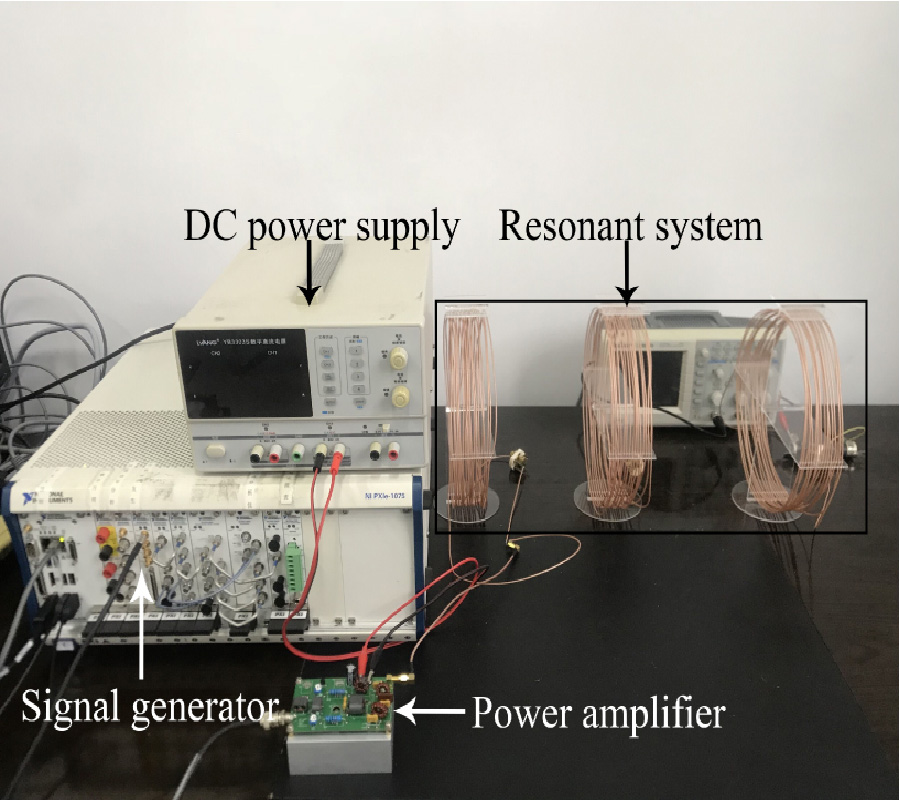
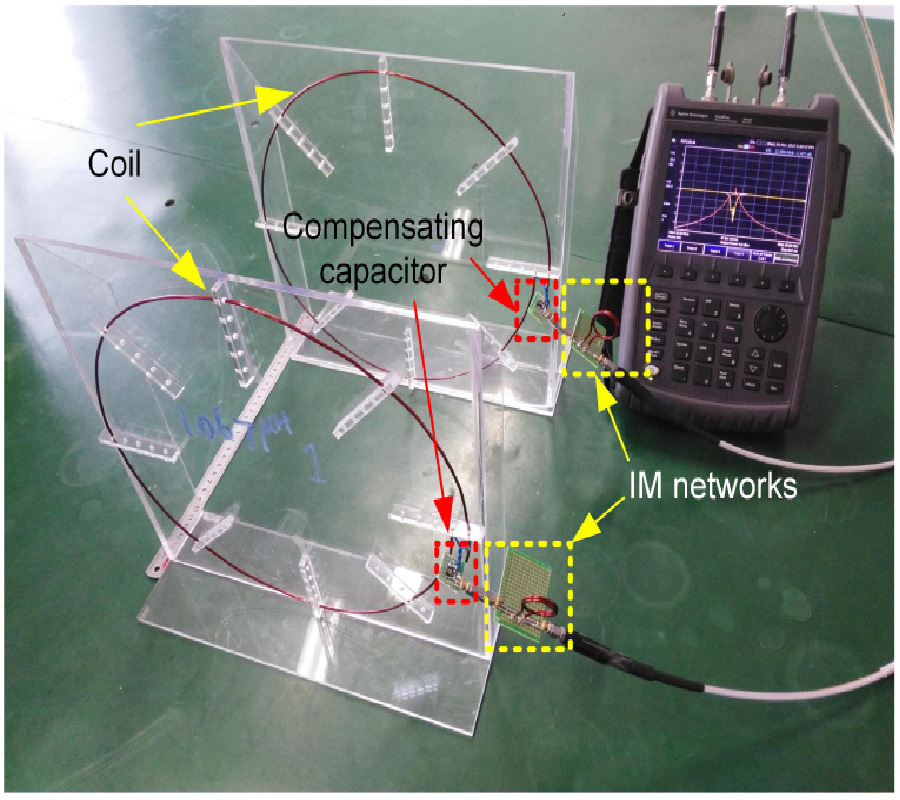
For wireless power transfer via magnetic resonant coupling (MRC-WPT), magnetic coupling between resonant coils can be greatly enhanced when a ferrite core is introduced inside the coils. Based on the equivalent circuit model of wireless power transfer system, transfer characteristics of the MRC-WPT system with air resonant coils and a ferrite core are respectively analyzed in this paper. The influence mechanism of the load on the power transfer efficiency is investigated. Also, the requirement of load for improving transfer efficiency is derived when adding the ferrite core to the system. The numerical simulation and experiment result indicate that the transmission efficiency in the MRC-WPT system with ferrite core is higher than that in the counterpart with air resonant coils in the whole transfer region when the load is larger than the maximal critical load. In addition, for different transfer distances, the system efficiency for the system using the ferrite core tends to become lower than that in the air coil system when the load is smaller than the critical load.
STUDY OF LOAD CHARACTERISTICS IN WIRELESS POWER TRANSFER SYSTEM WITH FERRITE CORE
2018-10-13
PIER C
Vol. 87, 175-186
Theoretical Analysis for Systematic Design of Flexible Broadband Radar Absorbers Using the Least-Square Method
Thtreswar Beeharry , Kamardine Selemani and Habiba Hafdallah Ouslimani
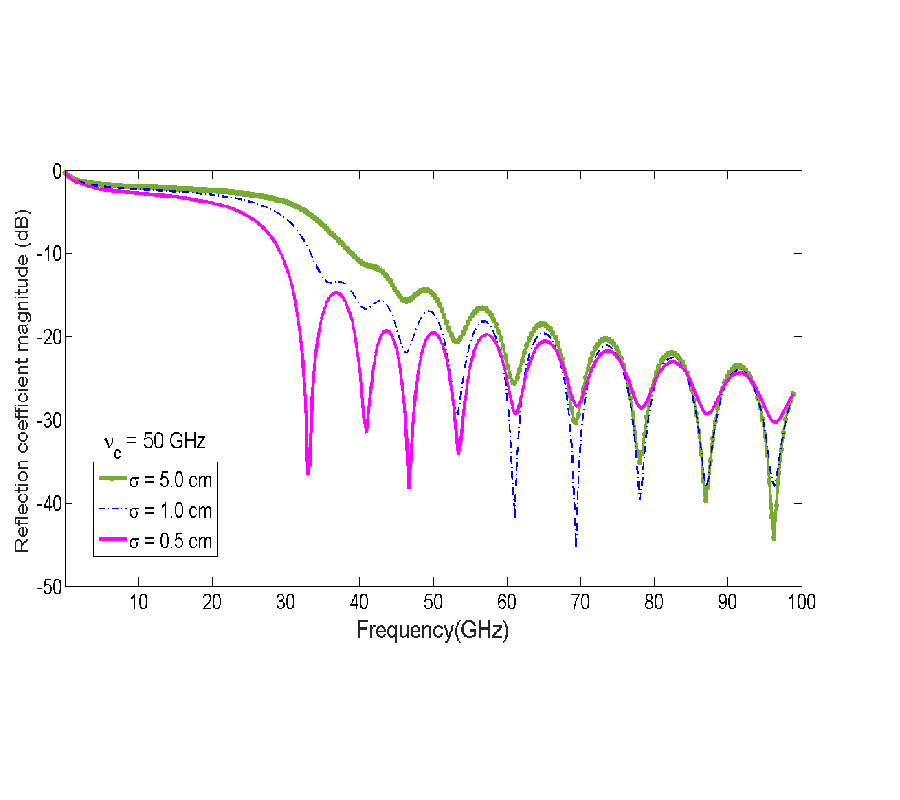
By taking into account the facts that thick dielectrics are required for low frequency absorbers, that thick dielectrics are not always flexible, and that targets are not always planar, an efficient tool for the systematic design of flexible broadband radar absorbers using the least-square method is presented in this paper. Two approaches for designing the physical model of the absorber are presented. The first one consists of resistive square loops deposited on top of a dielectric, and the second one consists of metallic square loops associated with lumped resistors. More than 90% of absorption rate is obtained in the required bandwidth for both transverse electric and transverse magnetic polarizations with the two approaches and achieving a performance of operational bandwidth to thickness ratio of 7.69. Finally, the required dimensions of flexible absorbers in some low frequency bands are given in order to show the versatility of the approach.
THEORETICAL ANALYSIS FOR SYSTEMATIC DESIGN OF FLEXIBLE BROADBAND RADAR ABSORBERS USING THE LEAST-SQUARE METHOD
2018-10-13
PIER M
Vol. 74, 125-135
Phase Quantized Metasurface Supercells for Wave Manipulation and RCS Reduction
Rajanikanta Swain and Rabindra Kishore Mishra
Recently, the introduction of surface phase in Snell's law and Huygens' phenomena leads to ultrathin phased surfaces which can tailor the transmission and scattering of the incident wavefront in many ways. In this article, a remodeled Jerusalem cross used as the meta-element whose geometrical parameters are varied to obtain 360° phase variation, and a 3-bit quantization is presented to design phase coded surfaces to manipulate (focusing and splitting) normally incident beam. Further, two 3-bit phase quantized supercells of approximately 2λ length and width are proposed and simulated (3x3 matrix arrangement) to test and compare the scattering properties with traditional chessboard type supercell. Obtained simulated results show diffused reflections for both the models and reduced intensity of four corner lobes in comparison to chessboard supercells (at θ=30˚ and ϕ=45˚). Experimentally recorded monostatic RCS of model-2 prototype has a close agreement with the simulated results and more than 10 dBsm RCS reduction observed from 9 GHz-11 GHz.
PHASE QUANTIZED METASURFACE SUPERCELLS FOR WAVE MANIPULATION AND RCS REDUCTION
2018-10-12
PIER Letters
Vol. 79, 59-63
Microfluidic Reconfigurable Filter Based on Ring Resonators
Tejinder Kaur Kataria , Leider Osorio , Jose Luis Olvera Cervantes , Jose Roberto Reyes-Ayona and Alonso Corona-Chavez
In this letter a novel microfluidic reconfigurable filter is presented at 1, 1.4 and 1.8 GHz. This triple band filter is based on dual-mode ring resonators where metal-liquid switches are used for interconnection of different resonators and feed lines, therefore, allowing tuning of its center frequency as well as of its external Q. Simulated and experimental results are shown with good agreement.
MICROFLUIDIC RECONFIGURABLE FILTER BASED ON RING RESONATORS
2018-10-11
PIER M
Vol. 74, 115-123
Research on Torque Ripple Optimization of Switched Reluctance Motor Based on Finite Element Method
Libing Jing and Jia Cheng
Torque ripple is the main cause of motor vibration and noise. In order to reduce the torque ripple of the switched reluctance motor(SRM), a new type of rotor tooth profile is studied, namely adding a semi-oval auxiliary core on both sides of the conventional parallel rotor tooth profile. Using a finite element method, a 12/8-pole SRM was modeled, and an optimal modified model was obtained through parameterized simulation. At the same time, in order to further reduce the torque ripple, the turn-on and turn-off angles of the power converter are optimized, and the torque jump caused by the commutation phase is alleviated. The combination of turn-on and turn-off angles is obtained through simulation calculation, and it can not only significantly reduce the torque ripple of the SRM, but also alleviate the local saturation caused by the double salient pole. This method can reduce the local saturation caused by the double salient structure and the large torque jump caused by the commutation phase. This method is of reference for other double salient motors. This method has implications for other double salient pole motors.
RESEARCH ON TORQUE RIPPLE OPTIMIZATION OF SWITCHED RELUCTANCE MOTOR BASED ON FINITE ELEMENT METHOD
2018-10-11
PIER M
Vol. 74, 105-113
Circular Ring Shaped Polarization Reconfigurable Antenna for Wireless Communications
Manavalan Saravanan and Madihally Janardhana Rangachar
A single fed polarization reconfigurable antenna is presented. The antenna comprises of a circular ring-shaped radiating element along with reconfigurable feed network located at its center which eliminates the need for additional space for reconfigurable feed network. A separate biasing network is placed to bias the pin diodes in the feed network for polarization reconfiguration and achieves three polarization states (linear, left-hand and right-hand circularly polarization). The antenna is designed to operate at 2.4 GHz ISM band. The antenna parameters are simulated using Ansoft high-frequency structure simulator and are validated using Agilent network analyzer (N9925A) and antenna test systems. The antenna achieves a good -10 dB impedance bandwidth of 85 MHz (2.40-2.485) GHz in linear state and 85 MHz (2.41-2.495) GHz in the circularly polarization states along with better cross-polarization isolation (≥ 15 dB) in the operating bands and hence more suitable for modern wireless communications.
CIRCULAR RING SHAPED POLARIZATION RECONFIGURABLE ANTENNA FOR WIRELESS COMMUNICATIONS
2018-10-11
PIER M
Vol. 74, 93-103
Engineering Laser-Based Diagnostic in a Hot Wind Tunnel Jet: Measurement of the Temperature Structure Coefficient by Using an Optimization Technique
Maurice Lamara , Elisabeth Ngo Nyobe and Elkana Pemha
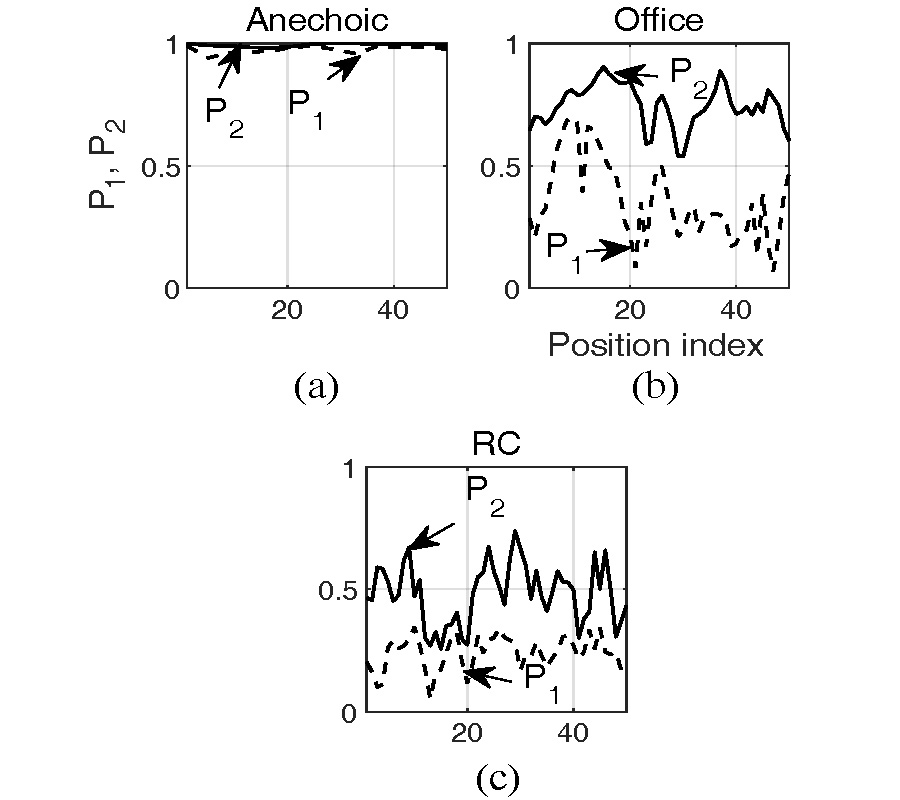
This paper is devoted to an engineering laser-based diagnostic technique which is able to extract the value of the temperature structure coefficient in a hot turbulent wind tunnel jet, by using a thin laser beam which is sent into the jet. Some experimental investigations are carried out to characterize the jet under study and the probabilities of the positions of the laser beam impact on a photocell are measured. The theoretical values of the same probabilities are computed by assuming that the laser beam direction is a Markov random process. By means of an optimization technique with constraints, based on the Golden Section algorithm, the temperature structure coefficient of the jet is determined. The validity of the result obtained is proved by a good agreement which is observed in the comparison between another parameter computed from that result and the previously published data.
ENGINEERING LASER-BASED DIAGNOSTIC IN A HOT WIND TUNNEL JET: MEASUREMENT OF THE TEMPERATURE STRUCTURE COEFFICIENT BY USING AN OPTIMIZATION TECHNIQUE
2018-10-09
PIER C
Vol. 87, 163-174
Analytical Expression of the Magnetic Field Created by a Permanent Magnet with Diametrical Magnetization
Van Tai Nguyen and Tien-Fu Lu
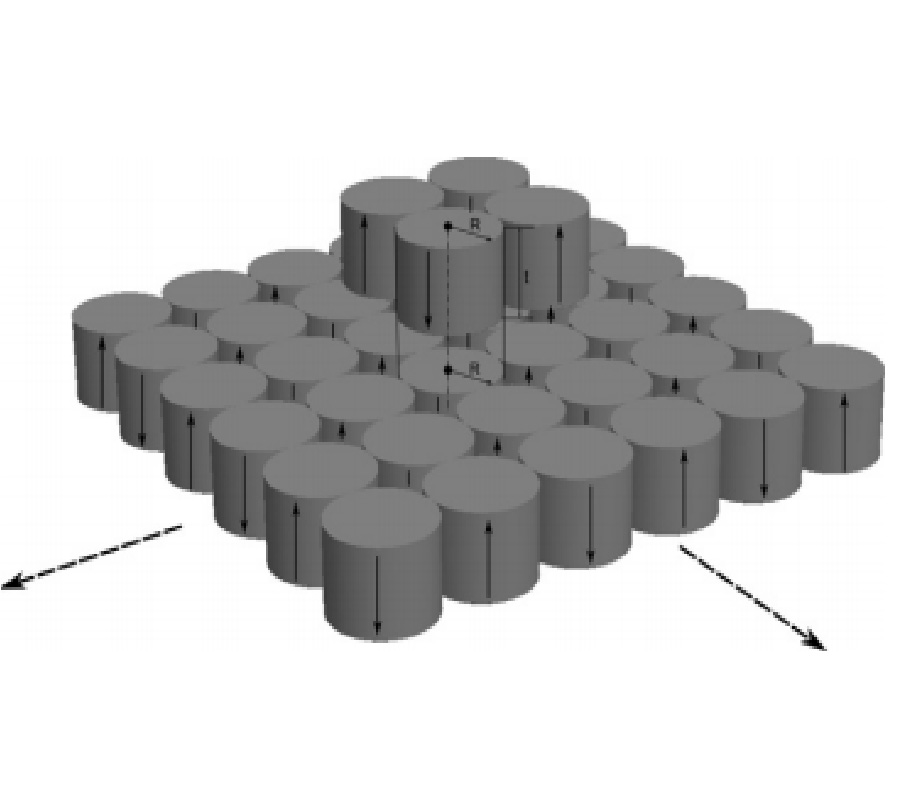
Cylindrical/ring-shaped permanent magnets with diametrical magnetization can be found in many applications, ranging from electrical motors to position sensory systems. In order to correctly calculate the magnetic field generated by a permanent magnet of this kind with low computational cost, several studies have been reported in literature providing analytical expressions. However, these analytical expressions are either limited for an infinite cylinder or for computing the magnetic field only on the central axis of a finite cylinder. The others are derived to calculate the magnetic field at any point in three-dimensional (3D) space but only with low accuracy. This paper presents an exact analytical model of the magnetic field, generated by a diametrically magnetized cylindrical/ring-shaped permanent magnet with a limited length, which can be used to calculate the magnetic field of any point in 3D space fast and with very high accuracy. The expressions were analytically derived, based on geometrical analysis without calculating the magnetic scalar potential. Also, there is no approximation in the derivation steps that yields the exact analytical model. Three components of the magnetic field are analytically represented using complete and incomplete elliptical integrals, which are robust and have low computational cost. The accuracy of the developed analytical model was validated using Finite Element Analysis and compared against existing models.
ANALYTICAL EXPRESSION OF THE MAGNETIC FIELD CREATED BY A PERMANENT MAGNET WITH DIAMETRICAL MAGNETIZATION
2018-10-09
PIER B
Vol. 82, 93-114
Full Polarizability Matrix Extraction Formulas for Electrically Small Particles via Reflection/Transmission Coefficients
Theodosios D. Karamanos and Nikolaos V. Kantartzis
A class of rigorous formulas for the efficient extraction of the full polarizability matrix of electrically small particles is introduced in this paper. After the dipole approximation of the scatterer, under study, the latter is placed on a two-dimensional square array, illuminated by four normally incident plane waves, and eventually its polarizabilities are expressed in terms of induced dipole moments. Then, by applying an equivalent surface model for the array, the induced dipoles are calculated as a function of the reflection/transmission coefficients from the array. Lastly, the combination of the previous formulations leads to the final expressions for the polarizability matrix of the particle. In order to verify the featured methodology, the extracted polarizabilities are involved in radar cross section and total radiated power calculations for various incidences and are compared with their simulated counterparts.
FULL POLARIZABILITY MATRIX EXTRACTION FORMULAS FOR ELECTRICALLY SMALL PARTICLES VIA REFLECTION/TRANSMISSION COEFFICIENTS
2018-10-09
PIER Letters
Vol. 79, 51-57
Design of Multiple Band, Meandered Strips Connected Patch Antenna
Amjad Iqbal , Amal Bouazizi , Omar A. Saraereh , Abdul Basir and Ravi Kumar Gangwar
In this paper, a compact printed monopole antenna for multiband communication application is designed and investigated. The multiband functionality is achieved by the combination of a rectangular radiating element with a pair of symmetrical meandered resonators.The proposed antenna works efficiently (>86%) with an optimally matching (VSWR<2) and adequate gain in the desired frequency bands centered at 4.27 GHz, 4.85 GHz and 6.45 GHz respectively. The prototype of the antenna is fabricated to validate effectiveness of the proposed design. A good agreement between simulated and measured results is observed.
DESIGN OF MULTIPLE BAND, MEANDERED STRIPS CONNECTED PATCH ANTENNA
2018-10-08
PIER M
Vol. 74, 83-92
Design of Wideband Planar Linear-Circular Polarization Converter with Centrosymmetric Dual-Loop Elements
Peng Fei , Wei Hu , Weihua Guo and Xin Wen
A wideband planar linear-circular polarization converter comprised of periodic centrosymmetric dual-loop unit cells with wideband property is presented in this letter. Full wave simulation and parameter study are carried out to demonstrate the basic working principle of the converter. Also, the performances of the device under oblique and deflected incidence situations are considered and discussed. A prototype is manufactured and tested. The measured results show that its working band covers from 19.3 GHz to 31.8 GHz with less than 3 dB axial ratio, which agree well with the simulated ones and thus validate the design concept.
DESIGN OF WIDEBAND PLANAR LINEAR-CIRCULAR POLARIZATION CONVERTER WITH CENTROSYMMETRIC DUAL-LOOP ELEMENTS
2018-10-07
PIER Letters
Vol. 79, 45-50
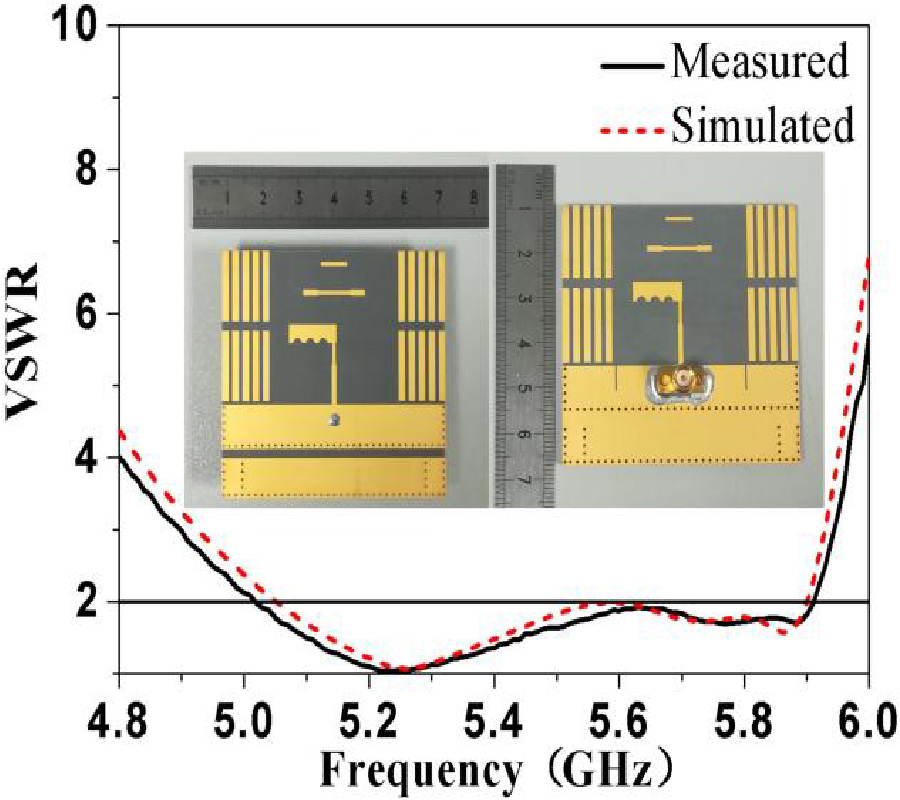
Harmonic Suppressed Compact Stepped Impedance Uniplanar Dipole Antenna for WLAN Applications
Manoj Mani , Remsha Moolat , Kesavath Vasudevan and Pezholil Mohanan
A compact stepped-impedance dipole antenna with harmonic suppression is presented. The antenna occupies an overall size of 40 x 12 x 1.6 mm3 when being printed on a substrate with a relative dielectric constant of 4.4 and loss tangent 0.02. The simulation and experiments are well matched and offer a 2:1 V SWR (S11 < -10 dB) bandwidth of 590 MHz at 2.45 GHz. In comparison with a conventional strip dipole, the stepped impedance based dipole antenna shows complete suppression of the first and second harmonics making it suitable as an efficient EMI emission free antenna for widely used Bluetooth and WLAN applications. It can also be employed for wireless power transfer applications with more efficiency.
HARMONIC SUPPRESSED COMPACT STEPPED IMPEDANCE UNIPLANAR DIPOLE ANTENNA FOR WLAN APPLICATIONS
2018-10-07
PIER Letters
Vol. 79, 39-43
Dual-Mode BPF with Four Transmission Zeros Using S-L Coupling Structure with Quadratic Function Coupling Coefficient
Fei Liu , Tao Xu , Liang Sun , Yi-Fan Xue and Hong-Wei Deng
In this letter, a compact microstrip bandpass filter (BPF) with four transmission zeros (TZs) is designed by using a short-stub centered loaded folded dual-mode resonator and an I/O mutual coupled open-stub loaded feedline structure. The coupling structure can realize source-load (S-L) coupling with quadratic function coupling coefficient, which can generate three TZs in the upper-stopband to improve the selectivity. Owing to the intrinsic characteristics of the dual-mode resonator, one extra TZ can be created near the lower passband edge. Finally, a compact BPF with fractional bandwidth (FBW) of 3.5% located at 2.4 GHz for WLAN application has been designed and fabricated. Good agreement between simulation and measurement verifies the validity of the design.
DUAL-MODE BPF WITH FOUR TRANSMISSION ZEROS USING S-L COUPLING STRUCTURE WITH QUADRATIC FUNCTION COUPLING COEFFICIENT
2018-10-07
PIER M
Vol. 74, 73-82
A Novel Wideband Dual-Band Dual-Polarized Magneto-Electric Dipole Antenna
Fan Li , Yufa Sun , Haoran Zhu , Junnan Yu and Yade Fang
In this paper, a novel wideband dual-band dual-polarized magneto-electric (ME) dipole antenna is proposed. The proposed antenna consists of a folded double-layer magneto-electric dipole, a stair-shaped feeding line with a balun structure and a rectangular box-shaped reflector. The folded double-layer magneto-electric dipole is able to generate two resonant frequencies. The polygon balun structure can better match the antenna impedance. The rectangular box-shaped reflector not only can suppress antenna's back radiation but also can realize high gain over the operating frequencies. Both simulated and measured results show that the antenna can obtain two wide impedance bandwidths of 60% (1.54-2.87 GHz) in lower frequency band and 27% (4.62-6.10 GHz) in higher frequency band with the reflection coefficients lower than 10 dB for both input ports. The isolation between ports is greater than 25 dB in the corresponding frequency band. The gains of the measured antenna were 8.5-9.7 dBi in the low frequency band and 8.5-11.5 dBi in the high frequency band, respectively.
A NOVEL WIDEBAND DUAL-BAND DUAL-POLARIZED MAGNETO-ELECTRIC DIPOLE ANTENNA
2018-10-05
PIER Letters
Vol. 79, 33-38
Planar Differential Filtenna for Communications
Tejinder Kaur Kataria , Marisol Bastida , Jose Roberto Reyes-Ayona , Jose Luis Olvera Cervantes and Alonso Corona-Chavez
This letter presents a novel differential filtenna for microwave systems at 2.4 GHz on planar technology. This filtenna exhibits 5% bandwidth with a 3-pole Chebyshev response. The filtenna uses a square patch as radiating element combined with λ/2 resonators. Experimental and simulated return losses are presented with good agreement. Moreover, the experimental common and differential mode radiation patterns are presented showing an attenuation greater than 15 dB for the common mode.
PLANAR DIFFERENTIAL FILTENNA FOR COMMUNICATIONS