Search Results(13790)

2018-11-19
PIER M
Vol. 76, 19-29
Symmetric Extension of Steering Vectors and Beamforming
Shexiang Ma and Fei Pan
Aiming at problems that interpolated array has large amount of computation and high sensitivity to transformation angle and interpolated step, a new array extension algorithm which is symmetric extension steering vector is proposed. In this paper, two properties of the conjugate of received data and the source covariance matrix being a real diagonal matrix are exploited to extend the dimensions of the covariance matrix. However, the essence of this extension method is the symmetric extension of the steering vector. The high complexity and degradation of the performance of interpolated array beamforming caused by the sensitivity of angle and interpolated step are improved. Numerical simulations confirm the validity of the proposed algorithm. Compared with existing algorithms, the proposed algorithm is not affected by the angle range of transformation and interpolated step. Besides, the complexity of array extension using this proposed algorithm is much lower than the interpolated transformation method.
SYMMETRIC EXTENSION OF STEERING VECTORS AND BEAMFORMING
2018-11-19
PIER M
Vol. 76, 9-17
Improved Matrix Synthesis for Inline Filters with Transmission Zeros Generated by FVC
Yong-Liang Zhang
An improved matrix synthesis approach for inline filter is presented in this paper. Frequency-variant couplings (FVC) can generate and control multiple finite transmission zeros (TZs). As the resultant network only involves resonators cascaded one by one without any auxiliary elements (such as cross-coupled or extracted-pole structures), this paper provides the best optimizatised synthesis solution in configuration simplicity for narrowband filters based on genetic algorithm (GA) and solvopt optimization method. Compared with the conventional synthesis method for inline topology filters, the method presented in this paper has following advantages: First, it is unnecessary to consider both the couplings and capacitances of a traditional low-pass prototype. Second, there is no need to use similar transformation, and the adjacent FVCs can be implemented. Third, the approach presented can implement more TZs than the previous works. The maximum number of TZs can be as many as the filter order. Two examples with different topologies and specifications are synthesized to show the validation of the method presented in this paper.
IMPROVED MATRIX SYNTHESIS FOR INLINE FILTERS WITH TRANSMISSION ZEROS GENERATED BY FVC
2018-11-18
PIER C
Vol. 88, 145-161
Contribution on the Source FiEld Calculation through the Biot-Savart Equation Using Curvilinear Elements and an Adaptive Process
Anderson Nunes , Olivier Chadebec , Patrick Kuo-Peng , Patrick Dular and Bruno Cucco
The analytical solution of the Biot-Savart equation can be complex in some cases, and its numerical integration is commonly more appropriate. In this paper, it is integrated using the Gauss-Legendre method through 1, 2 and 3-D domains, using first and second-order (curvilinear) isoparametric mapping. In order to verify the gain of accuracy with second-order elements, the results obtained are compared with analytical cases and with the Finite Element Method. Then this paper presents an adaptive method which pro ts from the accuracy along those elements with higher energy values, by reducing the number of Gauss points along the elements with lower energy. This approach reduces the total number of Gauss points evaluated during the integration process and provides a possibility to choose an interesting trade-off between simulation time and accuracy.
CONTRIBUTION ON THE SOURCE FIELD CALCULATION THROUGH THE BIOT-SAVART EQUATION USING CURVILINEAR ELEMENTS AND AN ADAPTIVE PROCESS
2018-11-18
PIER Letters
Vol. 80, 31-38
A Hybrid Method for the Coupling Analysis of Multiconductor Transmission Lines Excited by Dipole Antenna
Zhihong Ye , Dan Gou , Jianjian Zhou and Xuesong Meng
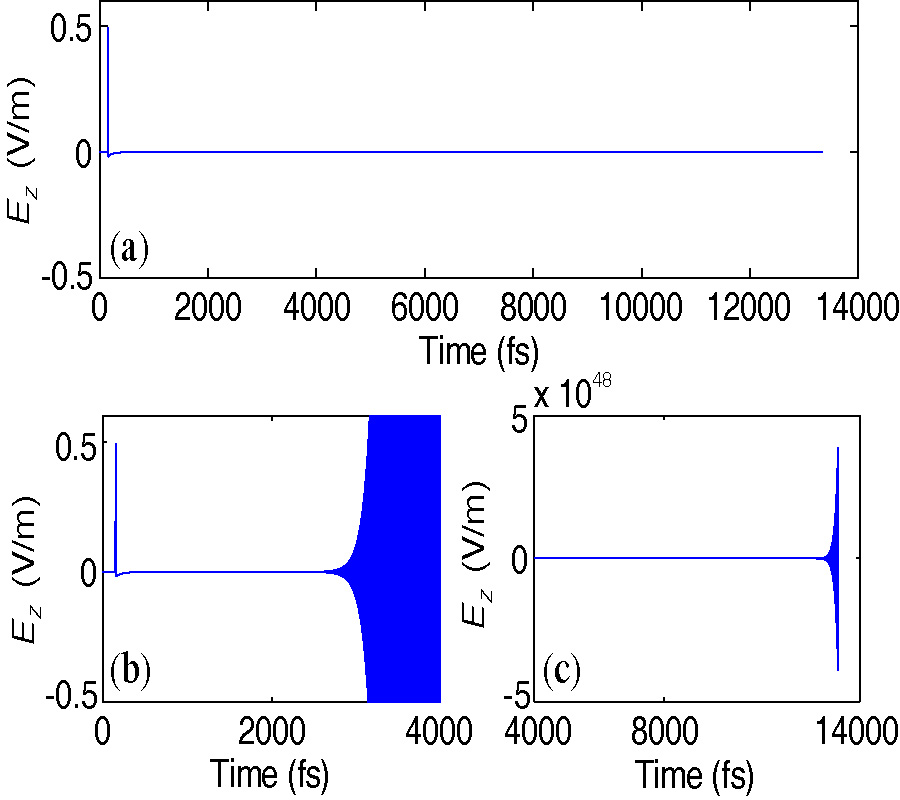
This paper presents a hybrid method consisting of thin wire FDTD method and transmission line (TL) equations to be used for the coupling analysis of multiconductor transmission lines (MTLs) excited by a dipole antenna. In this method, the thin wire FDTD method is used to build the structure of the dipole antenna and obtain the radiation electromagnetic fields surrounding the MTLs, which are introduced into the TL equations as the distribution sources. The TL equations are utilized to model the coupling of the radiation electromagnetic fields to the MTLs, which are discrete by the scheme of the FDTD method to obtain the transient voltage and current responses on the lines and terminal loads. The accuracy and efficiency of this method have been verified by comparing with the commercial simulation software CST via one case. Moreover, the influences of the frequencies and polarization of the dipole antenna and the heights of the MTLs on the coupling of MTLs are analyzed.
A HYBRID METHOD FOR THE COUPLING ANALYSIS OF MULTICONDUCTOR TRANSMISSION LINES EXCITED BY DIPOLE ANTENNA
2018-11-16
PIER C
Vol. 88, 133-143
Numerical Study of a Photonic Jet with Aperiodic Fourier Modal Method and Experimental Validation
Hishem Hyani , Bruno Sauviac , M. Kofi Edee , Gerard Granet and Stephane Robert
This paper proposes to use an Aperiodic Fourier Modal Method (A-FMM) to model an outgoing photonic jet from a dielectric loaded waveguide ended by a tip with a speci c shape. The proposed method has several advantages. First of all, the method is fast, which allows to manage optimization investigations. Secondly, the study excitation (and more particularly the impact of plan wave excitation) can be examined precisely. Using our modelling technique, we show, in comparison with an actual optimized elliptical tip, that an optimized rectangular tip improves energy concentration by 8% and reduces the calculation time by a factor of 10. Furthermore, A-FMM allows to show that plane wave excitation modifies the spatial distribution of the jet, especially in the case of TE polarization. This can explain the differences observed, in previous works, where only fundamental mode excitation was used in the modelling. To validate these general results, prototypes have been realized, and measurements in the microwave regime have been compared favorably with simulation results.
NUMERICAL STUDY OF A PHOTONIC JET WITH APERIODIC FOURIER MODAL METHOD AND EXPERIMENTAL VALIDATION
2018-11-16
PIER M
Vol. 76, 1-8
Magnetic and Electric Coupling Analysis for Angular Misalignment of Spiral Resonators in WPT Systems
Yangjun Zhang and Tatsuya Yoshikawa
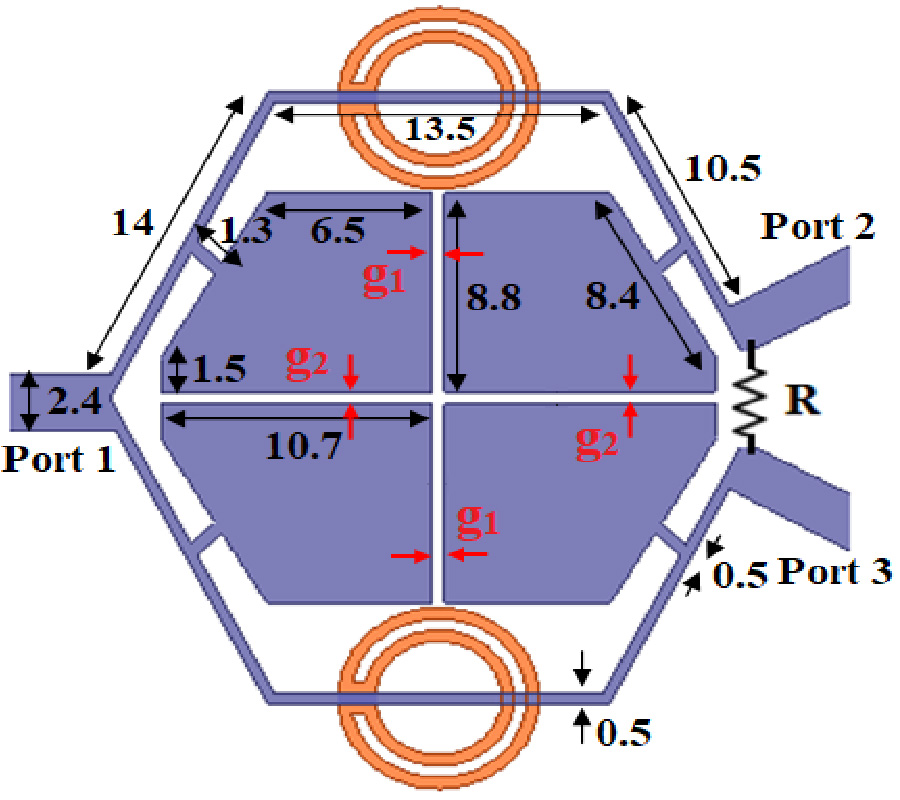
Angular misalignment is an issue for many potential applications of wireless power transfer (WPT). It is necessary to keep coupling coefficient, especially the magnetic coupling to be insensitive to angular misalignment. This paper analyzes the coupling between the spiral resonators when one resonator rotates with respect to the other. The quantitative data of magnetic and electric coupling components as well as the total coupling coefficient in angular misalignments are presented. Furthermore, a 3D spiral resonator which is less sensitive to angular misalignment is proposed. The coupling when the 3D spiral rotates is studied and the results of analysis and experiment both show that the proposed 3D spiral resonator can keep coupling coefficient at a certain level under angular misalignment.
MAGNETIC AND ELECTRIC COUPLING ANALYSIS FOR ANGULAR MISALIGNMENT OF SPIRAL RESONATORS IN WPT SYSTEMS
2018-11-16
PIER M
Vol. 75, 193-203
A Method for Estimating the Low Frequency Coupling Characteristics of a Ferrite-Cored Rod Antenna to a Long Conductor
Jingcheng Li , Jacob L. Carr , Chenming Zhou , Miguel A. Reyes and James D. Noll
Magnetic proximity detection systems (PDSs) used in underground mines occasionally generate false alarms when the miner-wearable component (MWC) is close to nearby conductors such as power cables. This is because the signals from the generators (antennas) of the PDS wirelessly couple to nearby cables, travel along these cables, and then couple back from the cable to a distant MWC to cause a false alarm. In order to manage such a false alarm, it is necessary to understand the basic near-field coupling characteristics from a generator to a long wire. Researchers from the National Institute for Occupational Safety and Health (NIOSH) have developed a method to measure such coupling characteristics for a ferrite-cored antenna to a straight wire. The method is introduced in this paper along with the test results.
A METHOD FOR ESTIMATING THE LOW FREQUENCY COUPLING CHARACTERISTICS OF A FERRITE-CORED ROD ANTENNA TO A LONG CONDUCTOR
2018-11-15
PIER C
Vol. 88, 117-131
A Design of Broadband and Low-Loss Multilayer Antireflection Coating in THz Region
Hsin-Yu Yao , Zih-Yu Chen and Tsun-Hun Chang
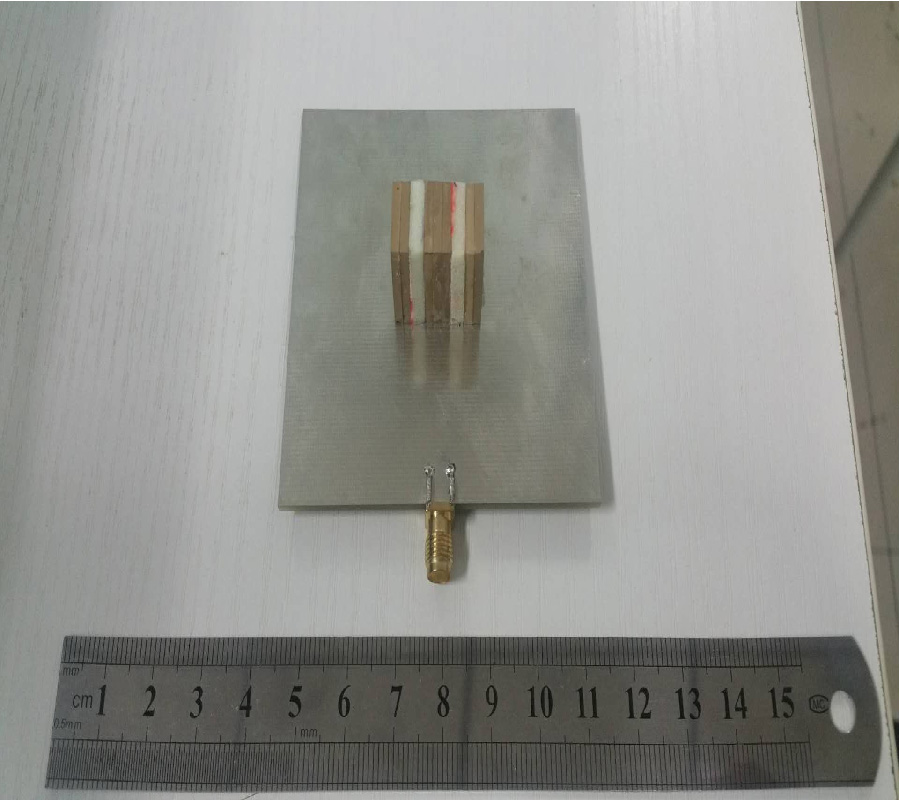
An approach to the design and the realization of a broadband multilayer anti-reflection (AR) coating with high transmission is proposed in this study. A binominal multi-section transformer is employed to efficiently determine the thickness and the refractive index of each matching layer, while those layers can be further realized by doping different fractions of subwavelength-size silicon powders (for relatively-high-index layers) or air pores (for relatively-low-index layers) into the low-loss HDPE polymer host. Based on this scheme, we design a ten-layer AR coating for widely used silicon wafer. The designed AR coatings are double-sided integrated with a 375-μm-thick silicon wafer, which can enhance the overall THz transmission to higher than 95.00% from 0.250 THz to 0.919 THz (114.46% fractional bandwidth) for either TE-polarized or TM-polarized THz beam incident from an arbitrary angle below 50˚.
A DESIGN OF BROADBAND AND LOW-LOSS MULTILAYER ANTIREFLECTION COATING IN THZ REGION
2018-11-15
PIER Letters
Vol. 79, 135-141
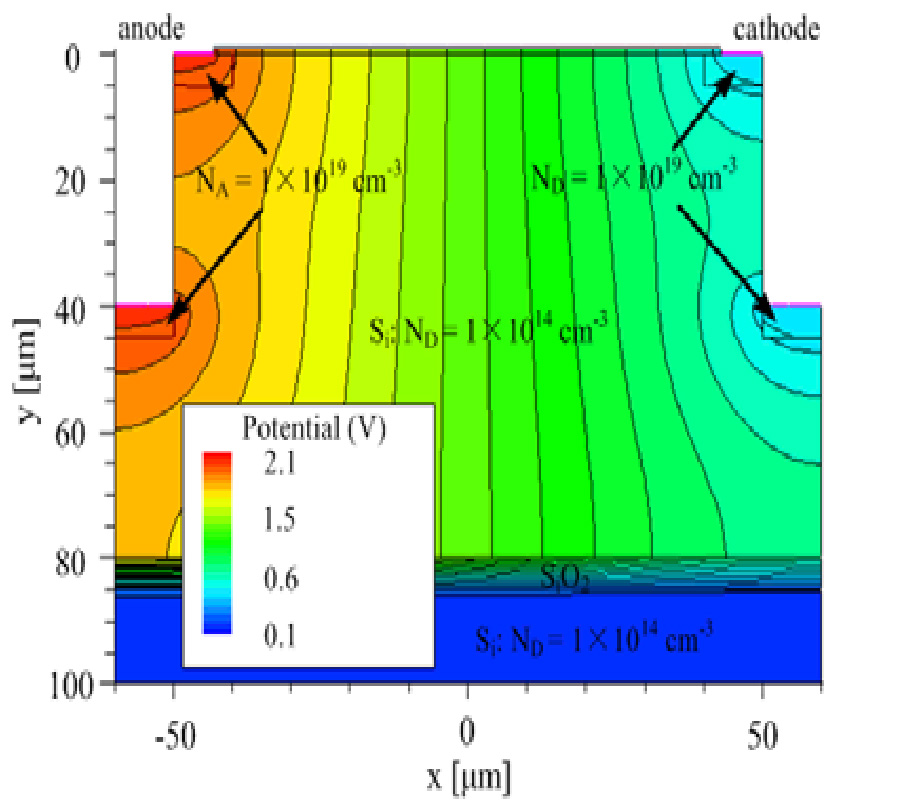
Investigation of a Silicon-Based High Integration Reconfigurable Dipole
Han Su , Huiyong Hu , Heming Zhang and Yuanhao Miao
In this paper, an on-chip high integration reconfigurable dipole with band stop filters was demonstrated. This antenna was fabricated on a high resistivity silicon wafer, and several optimized band stop filters were introduced into antenna system to replace conventional inductors and capacitors. The measured results show that the stopband of this filter can meet the requirements of the designed dipole. This method will greatly improve the integration of antenna system. On the basis of structural optimization, the proposed reconfigurable dipole realized two resonant frequencies at 1.33 GHz and 1.65 GHz, and the radiation patterns also showed satisfactory results.
INVESTIGATION OF A SILICON-BASED HIGH INTEGRATION RECONFIGURABLE DIPOLE
2018-11-14
PIER B
Vol. 82, 165-188
Force and Hidden Momentum for Classical Microscopic Dipoles
Arthur D. Yaghjian
The concept of hidden momentum is reviewed, and the first rigorous derivation from Maxwell's equations is provided for the electromagnetic force on electrically small perfect electric conductors of arbitrary shape in bandlimited but otherwise arbitrarily time-varying fields. It is proven for the Amperian magnetic dipoles of these perfect conductors that a "hidden-momentum" electromagnetic force exists that makes the force on these time varying Amperian magnetic dipoles equal to the force on magnetic-charge magnetic dipoles with the same time varying magnetic dipole moment in the same time varying externally applied fields. The exact Mie solution to the perfectly conducting sphere under plane-wave illumination is used to prove that the expressions for the total and hidden-momentum forces on the arbitrarily shaped electrically small perfect conductors correctly predict the forces on perfectly conducting spheres. Remarkably, it is found that the quadrupolar fields at the surface of the sphere are required to obtain the correct total force on the sphere even though the quadrupolar moments are negligible compared to the dipole moments as the electrical size of the sphere approaches zero.
FORCE AND HIDDEN MOMENTUM FOR CLASSICAL MICROSCOPIC DIPOLES
2018-11-13
PIER C
Vol. 88, 103-115
A Cascaded Multilevel Converter Based on SOC Closed Loop Tracking
Yao He , Zhihao Wan , Xintian Liu , Xinxin Zheng , Guojian Zeng and Jiangfeng Zhang
This paper proposes a cascaded multilevel converter to reduce the number of IGBT switches for the purpose of improving system stability and decreasing switching losses. This converter can eliminate second-order ripple caused by energy exchange between grid and batteries, and thus extend battery life. This cascaded connection between the equivalent buck/boost circuit and the half-bridge inverter is also able to reduce the number of switch tubes. A control strategy based on state of charge (SOC) closed-loop tracking is designed to implement the errorless follow-up control of average SOC values for electric vehicle batteries. The equivalent circuit under different working modes of the topology is analyzed, and the effectiveness of the control strategy is verified. Simulated and experimental results show that this converter can effectively achieve grid connection requirements and balance the battery units to meet practical needs.
A CASCADED MULTILEVEL CONVERTER BASED ON SOC CLOSED LOOP TRACKING
2018-11-13
PIER M
Vol. 75, 179-191
Effects of Defected Waveguide Structure Toward Wideband Monopole Antennas
Shu Jia Chin , Mohamad Zoinol Abidin Abd Aziz , Mohd Riduan Bin Ahmad and Mohd Azlishah Othman
This paper presented the effects of Defected Waveguide Structure (DWS) toward wideband monopole antennas. Ultra-wideband (UWB) technology was introduced to support high data rate and maximum bandwidth utilization. Monopole antenna received great attention owing to its appealing features of planar in the structure and is easy to manufacture in miniaturized sizes. Yet, poor gain and directivity are always the drawbacks of the miniaturized antennas. It was found that there was no research work done on the monopole antenna design with DWS. Two wideband monopole antennas with a microstrip feed line and coplanar waveguide (CPW) feed line were proposed. Two waveguides with full copper and square DWS were designed at all the inner walls. Monopole antennas were then integrated in the waveguides. The antenna parameters studied were return loss, efficiency, gain, directivity and radiation pattern to investigate the effects of DWS toward monopole antennas. Both monopole antennas achieved wide bandwidth from 2.5 GHz to 11 GHz and higher efficiency of more than -2 dB. Monopole antennas with waveguide presented a narrower bandwidth from 6 GHz to 11 GHz but a significant directivity improvement of 5 dBi at a lower frequency of 4.5 GHz. Monopole antenna with square DWS demonstrated high directivity and gain in a wide bandwidth of 8.5 GHz. Higher gain was improved around 4 dB at the frequency of 4.5 GHz, and high efficiency of more than -2 dB was achieved. The DWS design served as a guide for future communication system based on the smart technology system.
EFFECTS OF DEFECTED WAVEGUIDE STRUCTURE TOWARD WIDEBAND MONOPOLE ANTENNAS
2018-11-13
PIER
Vol. 163, 133-142
Simultaneous Estimation of the Refractive Index and Thickness of Marine Oil Slick from the Degree of Linear Polarization of the Sun-Glint Reflection
Sailing He and Hongguang Dong
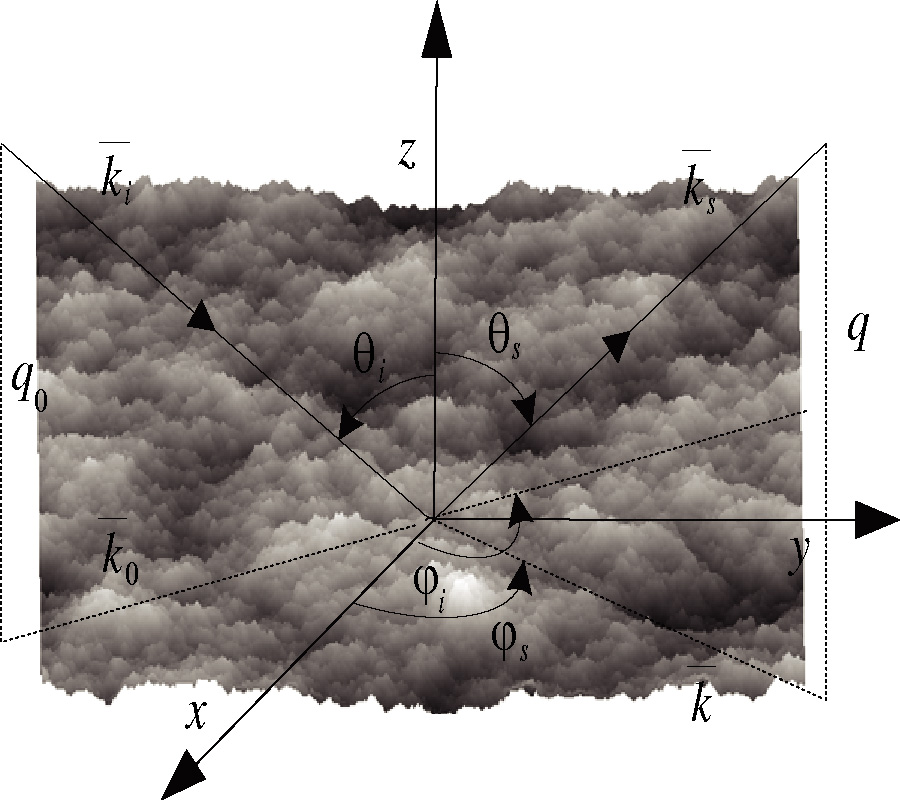
Airborne and spaceborne optical remote sensing is an important means formonitoring oil slicks on ocean surface. However, it is still a major challenge to determine both the category (related to a specific value of reflective index) and thickness of the marine oil slick with existing methods, particularly when the oil slick is too thin to obtain significant fluorescence signal with a laser induced fluorescence method. Sun-glint is usually harmful to optical remote sensing of an ocean target. In this work we utilize the polarized sun-glint reflection to monitor oil slicks on a rough ocean surface.The degree of linear polarization (DOLP) of the sun-glint reflection contains the characteristics information of the oil slick with different physical properties. Combiningthe polarized optical remote sensing and the inversion theory based on a thin-film optical model, weanalyze the variation trend of the DOLP with the parameters of solar zenith angle, sensor zenith angle, relative azimuth angle, refractive index and thickness of the oil slick. Different types and thicknesses of the oil slicksgive different Fresnel's reflection coefficients of polarized sun-glint reflections and consequently different Stokes parameters, which lead to different DOLP. We analyze the DOLP of the sun-glint reflection at the wavelength of 532 nm,and determine simultaneously the refractive index and thickness of marineoil slick from the DOLP values measured by a remote detector at two different zenith angles.
SIMULTANEOUS ESTIMATION OF THE REFRACTIVE INDEX AND THICKNESS OF MARINE OIL SLICK FROM THE DEGREE OF LINEAR POLARIZATION OF THE SUN-GLINT REFLECTION
2018-11-12
PIER Letters
Vol. 80, 15-22
Reflectionless High-Selective Bandpass Filter Based on Acoustic Wave Resonators
Jordi Verdú Tirado , Daniel Ulinic and Pedro de Paco
Reflective filters are characterized by a frequency response with good matching at the band of interest and usually reactive impedance out of those frequencies which may adversely affect the system performance. On the other hand, reflectionless filters are characterized by good matching characteristic not only at the interest frequencies, but in the whole frequency spectrum which improves the overall linearity, efficiency, and reduces instability scenarios at the system level. Although several reflectionless structures can be found in the literature, the concatenation of different reflectionless sections, combined with the use of acoustic resonators has not been exploited yet. The particular electrical behavior of acoustic wave resonators, where two different resonant frequencies are found, allow to obtain a frequency response with high selectivity due to the presence of transmission zeros below and above the passband. A bandpass filter has been designed following the described procedure with a fractional bandwidth FBW = 2%, a pair of transmission zeros below and above the bandpass, and an improved out-of-band rejection with respect conventional topologies.
REFLECTIONLESS HIGH-SELECTIVE BANDPASS FILTER BASED ON ACOUSTIC WAVE RESONATORS
2018-11-12
PIER M
Vol. 75, 167-178
An Advanced Electrical Properties Measurement Approach with a Designed BI-Static Ultra-Wideband Impulse Radar Sensor
Younes Ahajjam , Otman Aghzout , Jose Manuel Cataia-Civera , Felipe Penaranda-Foix and Abdellah Driouach
This paper reports on the development of a compact, low-cost, impulse bi-static UWB radar sensor for its use as non-destructive methods for electrical property measurement in industrial application. This UWB Radar sensor consists of an ultrashort-monocycle-pulse transmitter of 330 ps, an oscilloscope as a UWB sampling receiver with a high wide band of 6 GHz, and two UWB antennas ranging from 0.4 to 6 GHz. A new model of SRD has been introduced in order to decrease the rise time of the impulse. Performance of this UWB radar sensor was veri ed through two kinds of applications: range detection and electrical property measurements. All measurements have been carried out in an anechoic chamber with a distance variation between 80 and 300 cm. The full radar system provides good agreement between the experimental and theoretical results, which demonstrate its application in many fields, especially for electrical Property Measurements.
AN ADVANCED ELECTRICAL PROPERTIES MEASUREMENT APPROACH WITH A DESIGNED BI-STATIC ULTRA-WIDEBAND IMPULSE RADAR SENSOR
2018-11-11
PIER M
Vol. 75, 159-166
Accurate Evaluation of the Conductor Loss in Rectangular Microstrip Patch Reflectarrays
Sembiam Rajagopal Rengarajan and Richard E. Hodges
In the moment method solution of the integral equations for currents of a rectangular microstrip patch reflectarray, the Leontovich boundary condition is employed to determine the conductor loss. If the basis functions contain edge conditions that approach infinity, the moment matrix elements will have diverging integrals in the Galerkin technique. In this paper, we present a criterion to stop the evaluation of these integrals at a distance before the edge, thereby avoiding the divergence problem. The stopping distance derived here is found to work for a range of values of permittivity, loss tangent, and thickness of the substrate, polarization, angles of incidence of the plane wave source, and also for superstrates. Our computed results are in good agreement with measured results and those computed by HFSS.
ACCURATE EVALUATION OF THE CONDUCTOR LOSS IN RECTANGULAR MICROSTRIP PATCH REFLECTARRAYS
2018-11-11
PIER M
Vol. 75, 149-158
Scattering Matrix of 2N-Port Hybrid Directional Couplers
Leonardo Zappelli
The derivation of the scattering matrix of hybrid directional couplers with more than four ports is rather difficult to find in the literature. Some particular cases can be found, but a general form is not yet discussed. The aim of this contribution is to develop a simple procedure to write the 2N×2N S-matrix for hybrid directional couplers with N input and N output ports. This procedure is based on the separation of the phase of the scattering coecients in two terms. The first is related to the presence of transmission lines, or phase shifters, connected to the coupler ports and the second to the intrinsic nature of the coupler that imposes particular phase relationships to the scattering coecients to ensure that the S-matrix is unitary. These relationships are due to the presence of one polyphase systems of order N or to m polyphase subsystems of order N/m, if N is multiple of m. Finally, it will be shown that 2N port hybrid directional couplers with phase shift equal to 0 or π are possible only if N is an integer power of 2.
SCATTERING MATRIX OF 2N-PORT HYBRID DIRECTIONAL COUPLERS
2018-11-10
PIER Letters
Vol. 80, 7-14
Microwave Attenuation and Phase Rotation by Ellipsoidal Dust Particles
Abdulwaheed Musa and Babu S. Paul
Electromagnetic wave propagation suffers attenuation and phase rotation by suspended dust particles especially in arid and semi-arid regions where occurrence of sand and dust storms (SDS) is predominant. The SDS phenomenon has received considerable interest in recent times with emphasis on signal attenuation and phase rotation effects. To this end, mathematical models of dust induced complex scattering are developed and proposed in this paper using Rayleigh method to compute attenuation and phase rotation of electromagnetic waves by considering dust particle shapes and best fit ellipsoids. This work also presents a new expression for the relation between visibility and dust concentration. The expression was included in the proposed models whose simulated results, compared with some published results, show close agreement. Attenuation and phase rotation in dry dust are found to be significant only when visibility becomes severe or at increased microwave bands.
MICROWAVE ATTENUATION AND PHASE ROTATION BY ELLIPSOIDAL DUST PARTICLES
2018-11-09
PIER M
Vol. 75, 141-148
A Novel Low Phase Noise Push-Push Oscillator Employing Dual-Feedback Sub-Oscillators
Elton Nascimento Lima , Takayuki Tanaka and Ichihiko Toyoda
In this paper, a novel X-band push-push oscillator employing dual-feedback sub-oscillators and a half-wavelength microstrip line resonator is presented. The dual-feedback sub-oscillator consists of a series feedback commonly used in conventional oscillators due to its good phase noise performance and a parallel feedback circuit which improves both the output power and stability. The resonator and power combiner form a single circuit allowing compact size. Measured results show that an excellent output power of +13.3 dBm was obtained at the second harmonic frequency of 9.81 GHz. Moreover, superior phase noise of -105.0 dBc/Hz and -123.5 dBc/Hz were achieved at 100-kHz and 1-MHz offset frequencies, respectively. The suppression of undesired harmonic signals, namely fundamental and third harmonic signals, are 27.9 dB and 55.7 dB, respectively. With a simple design structure and compact size the proposed push-push oscillator achieved very good performance.
A NOVEL LOW PHASE NOISE PUSH-PUSH OSCILLATOR EMPLOYING DUAL-FEEDBACK SUB-OSCILLATORS
2018-11-08
PIER Letters
Vol. 80, 1-6
Conformal Wideband Microstrip Patch Antennas on Cylindrical Platforms
Tanzeela Mitha and Maria Pour
A conformal wideband antenna is investigated and compared with its planar counterpart. First, a planar U-slot patch with about 43% fractional impedance bandwidth is designed. Then, it is mounted on a conformal cylindrical structure. It is observed that the fractional impedance bandwidth of the resulting conformal antenna increases to 50%, when it is bent along the H-plane. It is also found that the cross polarization discrimination of the antenna is improved. The effects of the arc angle and radius of the cylinder on the impedance bandwidth and radiation characteristics of the antenna are extensively studied. The conformal antenna was fabricated on a thin film of Kapton and tested. The measured and simulated results closely resembled each other.
CONFORMAL WIDEBAND MICROSTRIP PATCH ANTENNAS ON CYLINDRICAL PLATFORMS