Search Results(13790)

2018-12-25
PIER M
Vol. 77, 93-102
Triple-Band Polarization-Independent Ultrathin Metamaterial Absorber
Hailin Cao , Meng Shan , Tao Chen , Jianmei Lei , Linhua Yang and Xiaoheng Tan
A novel triple-band ultrathin metamaterial absorber (MA) with polarization independence is designed, characterized and realized in this study. The designed absorber consists of three layers. The top metallic patch is patterned in an ultrathin dielectric substrate that is backed with a ground metallic plate. The numerical simulation results show that the presented metamaterial absorber exhibits three distinct absorption peaks of 99.95%, 99.28% and 96.36% under normal incidence at frequencies of 8.115, 11.4 and 15.12 GHz, respectively. Due to its fourfold symmetry, the absorbing properties are independent of the polarization of the incident radiation angle. Moreover, in the cases of TE and TM polarization modes, the proposed absorber displays an outstanding absorption response over a wide range of incident angles. The physical mechanism of the absorption performance is explained by investigating the surface current and field distributions at three distinct absorption peaks. Furthermore, the presented absorber is practically validated by the excellent agreement observed between the experimental and simulated results. The designed absorber has an ultrathin thickness of 1 mm, which is 0.027λ0 with respect to the lowest peak absorption frequency, and can be useful for several potential applications, such as electromagnetic compatibility, stealth technology and super lenses.
TRIPLE-BAND POLARIZATION-INDEPENDENT ULTRATHIN METAMATERIAL ABSORBER
2018-12-21
PIER C
Vol. 89, 75-85
Pixel Shape Ground Inspired Frequency Reconfigurable Antenna
Ajay Yadav , Minakshi Tewari and Rajendra Prasad Yadav
A microstrip antenna with a pixel ground structure for single and multiband frequency reconfigurable applications is presented. The partial ground structure of the primary antenna is converted into pixel shapes which produce single and multiband frequency reconfigurable characteristics by the means of RF switches. The designed antenna operations are switchable over multiband, single frequency band and UWB spectrum with distinct configuration of RF switches. Three cases of RF switch configurations have been demonstrated with their simulated and measured results to verify the reconfigurable characteristics.
PIXEL SHAPE GROUND INSPIRED FREQUENCY RECONFIGURABLE ANTENNA
2018-12-21
PIER Letters
Vol. 81, 1-8
Revisiting Low-Frequency Susceptibility Data in Superconducting Materials
Jacob Szeftel , Michel Abou Ghantous and Nicolas Sandeau
Old susceptibility data, measured in superconducting materials at low-frequency, are shown to be accounted for consistently within the framework of a recently published [1] analysis of the skin effect. Their main merit is to emphasize the significance of the skin-depth measurements, performed just beneath the critical temperature Tc, in order to disprove an assumption, which thwarted any understanding of the skin-depth data, achieved so far by conventional high-frequency methods, so that those data might, from now on, give access to the temperature dependence of the concentration of superconducting electrons.
REVISITING LOW-FREQUENCY SUSCEPTIBILITY DATA IN SUPERCONDUCTING MATERIALS
2018-12-21
PIER M
Vol. 77, 83-92
Optimal Design of Beam-Deflectors Using Extended Unit-Cell Metagratings
Krupali D. Donda and Ravi Hegde
Recent reports on metasurfaces have focused on beam-deflector, a canonical optical element that can be used to compose other functionalities. Most reported designs, however, are limited to small deflection angles; large-angle (≥50 degrees deflection) transmission-mode beam steering designs show poor efficiency. Furthermore, rapid efficiency degradation is also observed for small deviations in the angle of incidence. This paper presents a numerical study of beam-deflectors based on extended unitcell metagratings (unit-cells containing multiple differently sized nanoantenna members). In comparison to previous reports, the designs achieve significant efficiency improvements, wider acceptance angles and better polarization filtering. The versatility of the design technique is demonstrated by designing polarizing beam deflectors polarization insensitive beam deflectors and prismatic beam deflectors.
OPTIMAL DESIGN OF BEAM-DEFLECTORS USING EXTENDED UNIT-CELL METAGRATINGS
2018-12-21
PIER M
Vol. 77, 73-82
The Influence of the Terrain on Height Measurement Using the GNSS Interference Signal
Nan Zhang , Songhua Yan , Wenwei Wang and Jianya Gong
Global Navigation Satellite System (GNSS) reflectometry is a promising technology used to estimate soil moisture, sea surface height, ice properties, etc. Interference signal technique is an important method to estimate these geophysical parameters. The effect of this method is closely related to the terrain and the receiving antenna placement. This study aims to investigate the effects of terrain and antenna placement on height measurement through simulation and field experiments. In this paper, we first simulated the interference signal in different types of terrain by parabolic equation method and analyzed the influence of terrain on the height measurement. Then we conducted three typical field experiments and processed experimental data. The simulated and experimental results indicate that the interference signal is affected by the terrain and the receiving antenna placement. Height measurement result is correct by both horizontal-looking and zenith-looking antenna when the ground is flat. However when the ground is not flat, the soil block near the receiving antenna leads to estimation errors. A more accurate estimation is obtained by using zenith-looking antenna to suppress the influence from the near terrain than horizontal-looking antenna. When a slope is near the receiving antenna, the signal with a high elevation may achieve an obvious interference effect if high elevation minus slope is equivalent to a low elevation. In this situation, the measurement height is the distance between the antenna and slope surface.
THE INFLUENCE OF THE TERRAIN ON HEIGHT MEASUREMENT USING THE GNSS INTERFERENCE SIGNAL
2018-12-20
PIER C
Vol. 89, 61-74
Electroquasistatic Model of Capacitive Hyperthermia Affected by Heat Convection
Chien-Chang Chen and Jean-Fu Kiang
An electroquasistatic (EQS) model of capacitive hyperthermia for treating lung tumors is proposed, based on which the finite element method is applied to compute the electrical potential in a human thorax model. The temperature distribution in the thorax model, which is surrounded by a bolus maintained at a constant temperature, is computed by numerically solving a bioheat equation, which includes metabolic heat generated in the tissues, heat convection mechanism in tissues and bolus, as well as the heat delivered by the microwave field computed with the EQS model and finite element method. Temperature-dependent blood perfusion rates of blood and muscle, respectively, are adopted to account for the physiological reaction of tissues to temperature variation. By simulations, it is observed that adjusting the dielectric properties of adipose tissue via injection, the time evolution of temperature distribution can be controlled to some extent, providing more flexibility to customize a hyperthermia treatment plan for specific patient.
ELECTROQUASISTATIC MODEL OF CAPACITIVE HYPERTHERMIA AFFECTED BY HEAT CONVECTION
2018-12-20
PIER Letters
Vol. 80, 143-148
An Unequal Divider with Different Terminated Impedances and Different Electrical Lengths of Four Uniform Transmission Lines
Youngchul Yoon , Jingeon Kim and Young Kim
This paper proposes an unequal power divider with different terminated impedances and different electrical lengths for four uniform transmission lines. The proposed power divider consists of four transmission lines with different electrical lengths and an isolation resistor. Under different port impedances, the splitting ratio of the proposed divider can be adjusted to desired values by varying the electrical lengths of the divider transmission lines with uniform impedances. To verify the feasibility of the proposed divider, two circuits were designed with dividing ratios of 2:1 and 4:1 at an operating frequency of 2 GHz. The circuits used a uniform impedance of 40 Ω at terminated impedances of 50, 70, and 60 Ω. The performance showed excellent agreement between the simulated and experimental results.
AN UNEQUAL DIVIDER WITH DIFFERENT TERMINATED IMPEDANCES AND DIFFERENT ELECTRICAL LENGTHS OF FOUR UNIFORM TRANSMISSION LINES
2018-12-20
PIER M
Vol. 76, 217-230
Inverse Source of Circumference Geometries: SVD Investigation Based on Fourier Analysis
Giovanni Leone , Maria Antonia Maisto and Rocco Pierri
The role of the source geometry is investigated within the realm of inverse source problems. In order to examine the properties of the far zone radiation operator of some 2D curved sources its Singular Value Decomposition (SVD) is studied, either analytically, when possible, or numerically. This allows to evaluate the number of independent pieces of information, i.e. the number of degrees of freedom (NDF), of the source and to point out the set of far zone fields corresponding to stable solutions of the inverse problem. In particular, upper bounds for the NDF are obtained by exploiting Fourier series representations of the singular functions. Both curved (i.e. circumference and arc of circumference) and rectilinear geometries are considered, pointing out the role of limited angular observation domains. Moreover, in order to obtain some clues about the resolution achievable in the inverse source problem, a point-spread function analysis is performed. The latter reveals a spatially variant resolution for limited angular observation domains. The practical relevance ofthese results is highlighted with numerical examples of array diagnostics.
INVERSE SOURCE OF CIRCUMFERENCE GEOMETRIES: SVD INVESTIGATION BASED ON FOURIER ANALYSIS
2018-12-19
PIER B
Vol. 83, 1-24
Diffraction at Thick Curved Layers with a Nonuniform Dielectric Permittivity
Ilya O. Sukharevsky
In this paper, we obtain an asymptotic solution for the problem of electromagnetic diffraction at a thick curved dielectric layer with a nonuniform dielectric permittivity. We show that, in the case of thick layers, the main asymptotic approximation already comprises the curvature correction, verify the results by comparison with a solution obtained with the integral equation method, and offer to approximate the piecewise constant dielectric permittivity of a stratified layer with a continuous function.
DIFFRACTION AT THICK CURVED LAYERS WITH A NONUNIFORM DIELECTRIC PERMITTIVITY
2018-12-18
PIER C
Vol. 89, 51-59
A Broadband Dual-Polarized Arm-Overlapped Dipole Antenna for Base Station Applications
Jianjun Wu , Wei Yu and Jin Chen
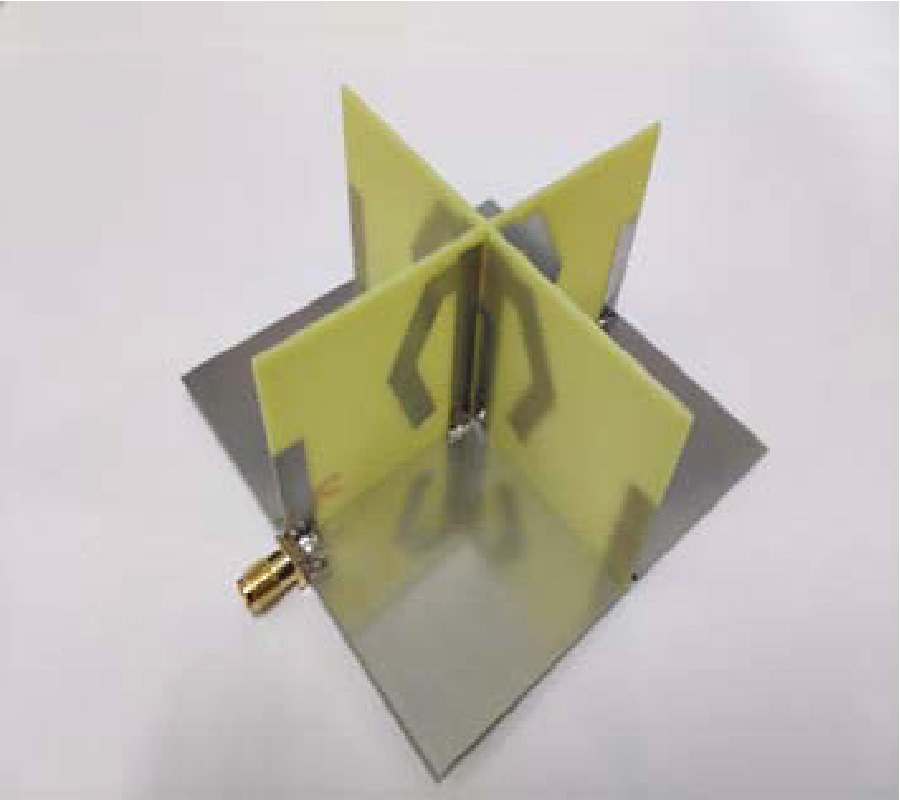
A broadband dual-polarized dipole antenna with overlapped dipole arms is proposed in this paper. To obtain a compact radiator size, the arm-overlapped dipole antenna is constituted by splitting and overlapping the edges of a cross loop dipole. Then four open pins are soldered to the dipole to excite a third resonance at high frequency band. Measured results show that the proposed antenna with a small radiator size of 49×49 mm2 has an impedance bandwidth of 49.5% (1.7-2.82 GHz) for VSWR<1.5, port isolation >28 dB and half-power beamwidth (HPBW) of 65º±5º. A 4-element antenna array with 8º±2º electrical down tilt is shown to further validate the performance of the antenna.
A BROADBAND DUAL-POLARIZED ARM-OVERLAPPED DIPOLE ANTENNA FOR BASE STATION APPLICATIONS
2018-12-18
PIER M
Vol. 77, 61-71
Analytic Method for an FSS-Sandwiched Dual-Band Reflectarray Antenna
Baokun Xi , Qianzhong Xue , Yang Cai , Lan Bi and Yong Wang
This paper presents an analytical method for designing a high-efficiency frequency selective surface FSS-sandwiched dual-band circularly polarized reflectarray antenna. Results are obtained using the Computer Simulation Technology Microwave Studio (CST MWS). The antenna is designed to operate within the receiving (19.6-21.2 GHz) and transmitting (29.4-31 GHz) bands while sharing the same unit and aperture. A double-layer FSS is loaded between the upper and lower antennas to suppress mutual coupling. An analytic approximation method using conformal mapping to determine the effective permittivity (εr, eff) is observed. The transmission and reflection coefficients of the proposed FSS are synthesized using the transmission line approach. The comprehensive analyzed results obtained are compared with results obtained from the simulations performed in the CST MWS. To validate the performance of the proposed FSS-backed element configuration, a 20/30-GHz dual-band circularly polarized reflectarray with a 90-mm aperture is designed. The simulated gains are 23.3 dBi at 20 GHz and 27.7 dBi at 30 GHz with aperture efficiencies exceeding 45.25% and 57.85% in the receiving and transmitting bands, respectively.
ANALYTIC METHOD FOR AN FSS-SANDWICHED DUAL-BAND REFLECTARRAY ANTENNA
2018-12-17
PIER Letters
Vol. 80, 135-141
High Selective and Wide-Stopband Bandpass Filter Using Simple Uniform Impedance Resonators
Kai-Ran Xiang and Fu-Chang Chen
A fifth-order bandpass filter with high selectivity and wide-stopband by using quarter- and half-wavelength uniform impedance resonators (UIRs) is presented in this letter. The use of a terminated coupled line provides controllable transmission zeros that can suppress the parasitic passbands. A pair of transmission zeros is generated on both sides of the passband by introducing cross-coupling. As a result, high selectivity and wide stopband can be achieved simultaneously. The method of controlling transmission zeros using a coupled line and an open/short-circuited stub is analyzed, and the method of improving passband selectivity using cross-coupling is given in detais. The concept is experimentally tested in a microstrip bandpass filter with center frequency 1 GHz. The measured attenuation is better than 24 dB up to 18 GHz.
HIGH SELECTIVE AND WIDE-STOPBAND BANDPASS FILTER USING SIMPLE UNIFORM IMPEDANCE RESONATORS
2018-12-17
PIER M
Vol. 77, 51-60
Indoor Localization Systems for Passive UHF RFID Tag Based on RSSI Radio Map Database
Mugahid Omer , Yachao Ran and Gui Yun Tian
A classification algorithm is applied to UHF radio frequency identification (RFID) system to estimate the indoor position of a passive tag utilizing a received signal strength indicator (RSSI). Passive tag signals are collected by conventional UHF RFID reader antenna located at two different positions. K-NN and curve fitting are used for distance estimation and examined at different frequencies within the range 902-928 MHz to find suitable frequencies which can minimize the average error. In the proposed method, the measured RSSI values are compared with the fingerprint database in different frequencies to find the nearest neighbor. The best accuracy achieved at frequency range 926-928 MHz is 18.3 cm. The monitoring system is composed of a reader and tags under test, which makes the proposed system robust, easy to set up, and with low cost. The limitation of the proposed method is also discussed.
INDOOR LOCALIZATION SYSTEMS FOR PASSIVE UHF RFID TAG BASED ON RSSI RADIO MAP DATABASE
2018-12-14
PIER C
Vol. 89, 39-50
Two Port Integrated Reconfigurable Microstrip Patch Antenna
Sonia Sharma , Chandra Charu Tripathi and Rahul Rishi
A two port, integrated reconfigurable versatile antenna is proposed here. The proposed antenna can reconfigure its frequency, bandwidth, polarization state and radiation pattern and hence is versatile in its characteristics. The antenna is integrated in such a way that the space of one antenna can be used to print two antenna structures to increase the antenna versatility into a small package. PIN diodes are placed in a position so that the electrical switching of the PIN diodes makes every part of the antenna multipurpose. The prototype has been fabricated to authenticate the simulated results. The simulated and measured results are in good agreement. The antenna can be used for Cognitive Radio application.
TWO PORT INTEGRATED RECONFIGURABLE MICROSTRIP PATCH ANTENNA
2018-12-14
PIER Letters
Vol. 80, 127-133
Compact Quad-Channel Diplexer Using Defected Stepped Impedance Resonators
Anfu Zhu , Haidong Zhou , Jianzhong Chen and Jianxing Li
This paper proposes a new compact quad-channel diplexer (2.45/4.2 GHz and 3.5/5.2 GHz) using defected stepped impedance resonators (DSIRs). The proposed quad-channel diplexer is composed of one common input feeding line, sixteen folded DSIRs, and two output feeding lines. Every four DSIRs are designed to determine passband characteristics of one individual channel, and two passbands are filtered out eventually at each output port. The distributed coupling technique featured by small loading effect is introduced to eliminate the necessity of extra impedance matching networks, which consequently results in a reduced circuit size. A diplexer prototype operated at 2.45/4.2 GHz and 3.5/5.2 GHz bands with measured 3-dB fractional bandwidths of 12.5%, 7.2%, 6.4%, and 5.0% has been implemented, showing a high isolation of larger than 33 dB between the two output ports. Experimental results coincide well with the theoretical predictions and simulation results.
COMPACT QUAD-CHANNEL DIPLEXER USING DEFECTED STEPPED IMPEDANCE RESONATORS
2018-12-14
PIER Letters
Vol. 80, 117-126
Design and Analysis of Minkowskized Hybrid Fractal Like Antenna for Multiband Operation
Binod Kumar Soni and Rakesh Singhai
A hybrid Minkowskized fractal-like antenna structure for wireless application is presented in this paper. The Minkowskized radiating structure and feed line have been designed at the top layer of FR-4 substrate (tan(δ) = 0.02, εr = 4.3, h = 1.6). A modified ground plane with a parasitic patch is etched at bottom side of the dielectric substrate. The fabricated antenna exhibits the resonance at frequencies 0.83, 1.05, 1.6, 2.12, 3.25, 3.75 and 5.2 GHz. It covers six bands of frequencies band-1 (0.825-0.835 GHz), band-2 (0.913-1.22 GHz), band-3 (1.33-1.79 GHz) band-4 (2.04-2.18 GHz) band-5 (2.9-3.91 GHz) and band-6 (4.9-5.64 GHz) for |S11| ≤ -10 dB which are suitable for several wireless communication bands (i.e. GSM 900 MHz, 1800 MHz, Wi-MAX, Wi-Fi 802.11y and WLAN 802.11b/g/a). The surface current distribution and radiation pattern have been studied at resonating frequencies.
DESIGN AND ANALYSIS OF MINKOWSKIZED HYBRID FRACTAL LIKE ANTENNA FOR MULTIBAND OPERATION
2018-12-14
PIER M
Vol. 77, 41-50
A Contactless Electromagnetic Coupling Resonance-Based Volume Fraction Detection Technique for Gas-Liquid Flow
Yanyan Shi , Xiaolei Sun , Can Wang , Minghui Shen and Meng Wang
To obtain the volume fraction of a gas-liquid two-phase flow, a contactless electromagnetic coupling resonance based volume fraction detection (CECR-VFD) technique is proposed. By mathematical calculation and numerical simulation, it is found that the CECR-VFD method is a better alternative than the conventional electromagnetic induction based method. The distance between the excitation coil and receiving coil is firstly determined. Then the effect of the pipe length is investigated. Additionally, the relationship between the output voltage across the receiving coil and the volume fraction is studied for stratified flow and annular flow. Experiments have been carried out for validation, and the results indicate that the output voltage can be used to predict the volume fraction of a two-phase flow.
A CONTACTLESS ELECTROMAGNETIC COUPLING RESONANCE-BASED VOLUME FRACTION DETECTION TECHNIQUE FOR GAS-LIQUID FLOW
2018-12-13
PIER C
Vol. 89, 27-38
A Study of Hybrid Wide Slot Antenna with Hybrid Parasitic Element for Wideband Applications
Barun Kumar , Bhupendra Kumar Shukla , Ajay Somkuwar and Deepak Kumar Raghuvanshi
In this communication, a hybrid shaped wide slot antenna with hybrid parasitic element has been investigated which is fabricated on an FR-4 substrate (tanδ =0.02, εr=4.3). The mutual coupling (between the slot and tuning stub), tuning of resonating modes and bandwidth of the antenna are adjusted by changing the dimension of parasitic element and tuning stub. The measured fractional bandwidth of the proposed antenna is 146.82% for S11<-10 dB which covers the frequency span from 0.92 to 6 GHz. This antenna exhibits resonances at 1.094, 1.56, 2.073, 2.67 and 4.02 GHz. Surface current distribution has been investigated, and series of equation are deduced for resonating frequencies. Radiation characteristic exhibits an eight-shaped pattern at fundamental mode frequency whereas at frequencies 2.85 and 3.91 GHz a distorted pattern has been observed. For understanding the behavior of the antenna, structural parameters are varied in specific ranges.
A STUDY OF HYBRID WIDE SLOT ANTENNA WITH HYBRID PARASITIC ELEMENT FOR WIDEBAND APPLICATIONS
2018-12-13
PIER Letters
Vol. 80, 109-116
SRR Based Compact Wideband Metamaterial Inspired Antenna for WiMAX (2.5-2.7)/WLAN (2.4-2.48)/Bluetooth (2.4-2.48)/LTE (2.3-2.4) Applications
Manish Sharma , Naveen Mishra and Raghvendra Kumar Chaudhary
An SRR based compact wideband metamaterial inspired antenna for WiMAX (2.5-2.7)/WLAN (2.4-2.48)/Bluetooth (2.4-2.48)/LTE (2.3-2.4) applications has been fabricated and investigated in this paper. The proposed antenna structure has been designed with the concept of epsilon negative transmission line. It comprises a patch on the top of the substrate and SRR and ground connected through strip on the bottom of the substrate. The proposed antenna offers overall electrical dimensions of 0.29λ0×0.19λ0×0.015λ0 where λ0 represents the free space wavelength at the frequency of 2.88 GHz. Additionally, the designed antenna also provides simulated and measured -10 dB fractional bandwidths of 40.13% and 40.55% around the center frequencies of 2.89 and 2.88 GHz, respectively. The average simulated and measured total gains of the proposed antenna throughout the working band are 1.92 dB and 1.75 dB. Further the average simulated radiation efficiency throughout the entire -10 dB bandwidth of the deigned antenna is 96.2%.
SRR BASED COMPACT WIDEBAND METAMATERIAL INSPIRED ANTENNA FOR WIMAX (2.5-2.7)/WLAN (2.4-2.48)/BLUETOOTH (2.4-2.48)/LTE (2.3-2.4) APPLICATIONS
2018-12-13
PIER M
Vol. 77, 29-40
Dynamics and Stiffness Analysis of a Homopolar Magnetic Bearing
Xiaojun Ren , Jinji Sun and Cunxiao Miao
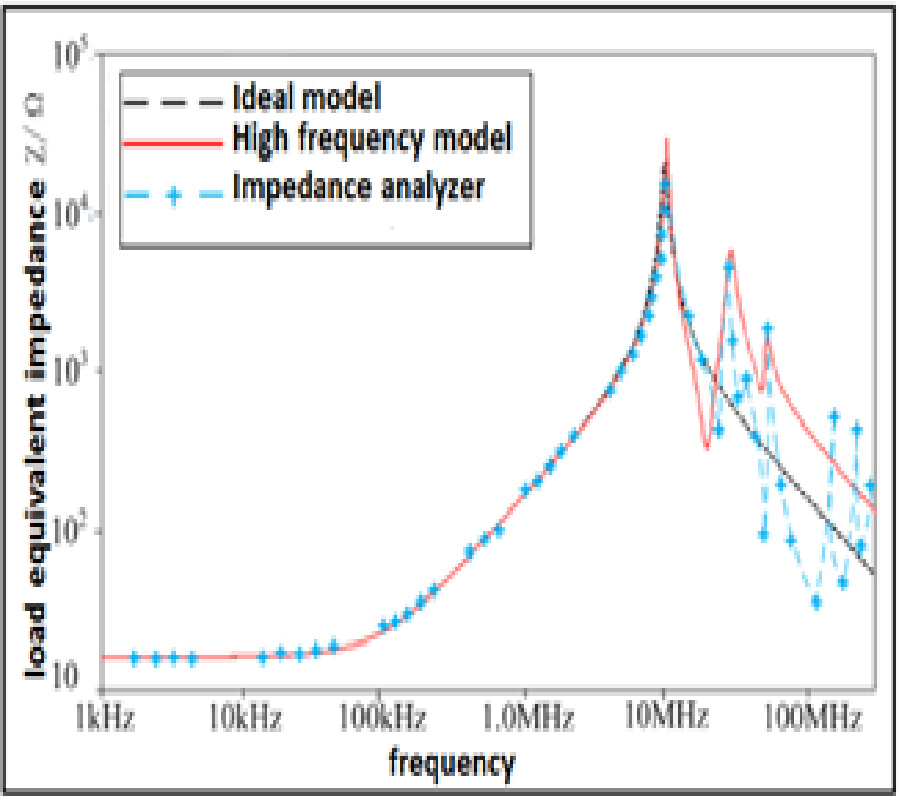
Decreasing eddy current is very important for the realization of stability control of HoMB system. In order to improve the dynamic performance precision of HoMB in the design stage, the dynamics and stiffness analysis of a homopolar magnetic bearing (HoMB) has been studied in this paper. Because the polarities of the magnetic poles were not changed during the rotation of rotor, the effect of eddy-currents was often ignored in the previous researches. However, when the frequencies of vibration caused by external disturbance and control currents are very high, eddy-current effects have significant influence on the performance of HoMB. In order to predict the HoMB performance, guide the HoMB design and control of the HoMB system in high frequency, a dynamics model was built on the equivalent circuit method. Parameters of dynamic Modeling are frequency-dependent. The effect of eddy-currents on the current stiffness was studied. The analysis results show that the eddy current effect on HoMB can be reduced by increasing the air gap, decreasing the laminations thickness and decreasing the laminations conductivity.
DYNAMICS AND STIFFNESS ANALYSIS OF A HOMOPOLAR MAGNETIC BEARING