Search Results(13790)

2019-01-05
PIER C
Vol. 90, 1-13
Double-Port Slotted-Antenna with Multiple Miniaturized Radiators for Wideband Wireless Communication Systems and Portable Devices
Mohammad Alibakhshikenari , Mohsen Khalily , Bal Singh Virdee , Abdul Ali , Panchamkumar Shukla , Chan Hwang See , Raed A. Abd-Alhameed , Francisco J. Falcone and Ernesto Limiti
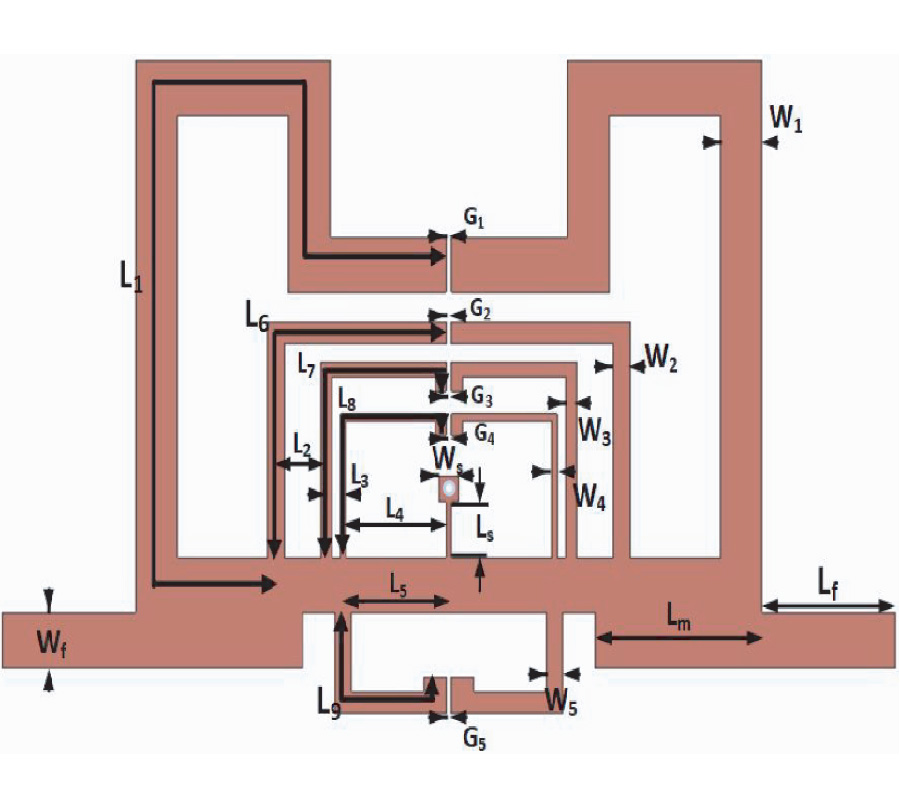
Proof-of-concept is presented of a novel slot antenna structure with two excitation ports. Although this antenna provides a wide impedance bandwidth, its peak gain and optimum radiation efficiency are observed at its mid-band operational frequency. The antenna structure is etched on the top side of a dielectric substrate with a ground plane. The antenna essentially consists of a rectangular patch with two dielectric slots in which multiple coupled patch arms embedded with H-shaped slits are loaded. The two dielectric slots are isolated from each other with a large H-shaped slit. The radiation characteristics of the proposed antenna in terms of impedance bandwidth, gain and efficiency can be significantly improved by simply increasing the number of radiation arms and modifying their dimensions. The antenna's performance was verified by building and testing three prototype antennas. The final optimized antenna exhibits a fractional bandwidth of 171% (0.5-6.4 GHz) with a peak gain and maximum radiation efficiency of 5.3 dBi and 75% at 4.4 GHz, respectively. The antenna has physical dimensions of 27×37×1.6 mm3 corresponding to electrical size of 0.0452λ0×0.0627λ0×0.0026λ0, where λ0 is free-space wavelength at 0.5 GHz. The antenna is compatible for integration in handsets and other broadband wireless systems that operate over L-, S-, and C-bands.
DOUBLE-PORT SLOTTED-ANTENNA WITH MULTIPLE MINIATURIZED RADIATORS FOR WIDEBAND WIRELESS COMMUNICATION SYSTEMS AND PORTABLE DEVICES
2019-01-05
PIER M
Vol. 77, 157-165
A Shape-First, Feed-Next Design Approach for Compact Planar MIMO Antennas
Binbin Yang , Juncheng Zhou and Jacob J. Adams
Employing characteristic mode theory (CMT), a shape-first feed-next design methodology for compact planar antennas is proposed, which facilitates rapid and systematic design of self-matched, multi-port antennas with optimal bandwidth and high isolation. First, the optimal antenna shape with multiple self-resonant modes is synthesized using a binary genetic algorithm. Then, the optimal feed positions that provide good input matching and high isolation between the excitation ports are specified using a virtual probe modeling technique. A two-port microstrip antenna with an electrical size of 0.45λd×0.297λd is designed, fabricated and measured. The measured operating frequency is within 2% of the full wave simulation, and the overall S parameter characteristics and far field patterns agree well with the simulation result, validating our design methodology. Mutual coupling S21 < -30 dB at the center frequency is achieved in this design.
A SHAPE-FIRST, FEED-NEXT DESIGN APPROACH FOR COMPACT PLANAR MIMO ANTENNAS
2019-01-04
PIER C
Vol. 89, 191-205
Optimization and Analysis of 24/16/8 Hybrid Excitation Double Stator Bearingless Switched Reluctance Motor
Qianwen Xiang and Liyun Feng
In order to solve the strong coupling problem of a traditional bearingless switched reluctance motor (BSRM), this paper proposes a new type of hybrid excitation double stator BSRM (HEDSBSRM). The new motor can realize self-decoupling between torque and suspension force. In addition, the two degrees of freedom suspension force can also be decoupled. First, the topology of themotoris proposed, and the generation mechanism of suspension force and torque are expounded.Second, the torque winding structure is optimized.Themulti-objective sensitivity optimization design method is used to screen out the key structural parameters that have the greatest influence on the average suspension force, average torque, and core loss. Then, the optimal structural parameters are obtained by the control variable method. Finally, based on the optimized motor, the finite element method(FEM) is used to analyze the electromagnetic characteristics including the suspension force, torque, and coupling of the motor. The simulation results verify the correctness of the proposed design method and analysis of motor performance.
OPTIMIZATION AND ANALYSIS OF 24/16/8 HYBRID EXCITATION DOUBLE STATOR BEARINGLESS SWITCHED RELUCTANCE MOTOR
2019-01-03
PIER C
Vol. 89, 181-190
Outage Constraint Robust Transmission Design for Secrecy MIMO SWIPT System with Time Switching
Feng Zhou , Rugang Wang , Xiaofang Yang and Jinhong Bian
In this paper, we investigate a robust secrecy transmission design for a multiple-input multiple-output simultaneous wireless information and power transfer system. Specifically, considering time switching at the transmitter, we aim to maximize the outage secrecy rate by jointly designing the information signal, energy signal, and time switching ratio, under the constraints of transmit power and harvested energy. The formulated problem is highly non-convex due to the difference of two log-det functions and probabilistic constraints. To overcome this obstacle, we divide the original problem into three convex subproblems. Then, an alternative optimization method is proposed. Finally, numerical results are presented to verify the performance of the proposed scheme.
OUTAGE CONSTRAINT ROBUST TRANSMISSION DESIGN FOR SECRECY MIMO SWIPT SYSTEM WITH TIME SWITCHING
2019-01-03
PIER C
Vol. 89, 171-180
Surface Wave Suppression in LHCP Microstrip Patch Antenna Embedded on Textured PIN Subsrtate
Manidipa Roy and Ashok Mittal
Propagation of surface waves in dielectric underneath a microstrip patch antenna poses serious hindrance to the radiation mechanism. Several methods are being tried for suppression of surface wave. Metamaterial substrate is presented here with periodic arrangement of metallic cylindrical pins except the area underneath the radiating microstrip patch. The periodic arrangement of metallic cylindrical pins with negative dielectric constant has considerably high reflection coefficient to drive the extraneous surface wave fields towards the fringing fields of the antenna. The textured pin substrate leads to generation of forbidden band gap for the propagation of TM0 surface wave modes and thus enhances radiation characteristics. The proposed structure proves to be highly beneficial for improving radiation efficiency and gain. Parametric analysis has also been presented for the gain enhancement by varying pin diameter, spacing between pins, and air gap between dielectric substrates. A uniform gain of 10 dB has been achieved for a Left Hand Circularly Polarized (LHCP) microstrip patch antenna. The axial ratio achieved in the described band is 200 MHz. The antenna has been designed for WLAN applications.
SURFACE WAVE SUPPRESSION IN LHCP MICROSTRIP PATCH ANTENNA EMBEDDED ON TEXTURED PIN SUBSRTATE
2019-01-03
PIER C
Vol. 89, 161-169
A Compact Dual Band-Notched MIMO Diversity Antenna for UWB Wireless Applications
Yi Zhao , Fu-Shun Zhang , Li-Xin Cao and Deng-Hui Li
In this paper, a compact ultra-wideband (UWB) multiple-input multiple-output (MIMO) spatial diversity antenna with dual band-notches designed on an FR4 substrate (26 × 28 × 0.8 mm3) is proposed and experimentally investigated. The antenna consists of two tapered microstrip feeding lines and two radiating elements. The inverted L-shaped slits are used to introduce notches at WLAN (5.15-5.85 GHz) and IEEE INSAT/Super-Extended C-bands (6.7-7.1 GHz). The isolation more than 15 dB is achieved through the whole working band (2.9-10.8 GHz) by introducing a T-shaped decoupling structure on the ground plane. Furthermore, envelope correlation coefficient (ECC), radiation patterns of the MIMO antenna are also discussed. The simulated and measured results show that the proposed UWB MIMO antenna is a good candidate for UWB diversity applications.
A COMPACT DUAL BAND-NOTCHED MIMO DIVERSITY ANTENNA FOR UWB WIRELESS APPLICATIONS
2019-01-03
PIER C
Vol. 89, 149-159
Near Infrared Supercontinuum Generation in Silica Based Photonic Crystal Fiber
Feroza Begum and Pg Emeroylariffion Abas
This research explores a silica based highly nonlinear photonic crystal fiber of near infrared window; solid silica core photonic crystal fiber is suitable for propagating light towards the near-infrared wavelength region. Full vector finite difference method is used for numerical simulation, by solving the generalized nonlinear Schrödinger equation with the split-step Fourier method to show that the design exhibits high nonlinear coefficient, near zero ultra-flattened dispersion, low dispersion slope and very low confinement losses. It is demonstrated that it is possible to generate high power wide supercontinuum spectrum using 2.5 ps input pulses at 1.06 μm, 1.30 μm and 1.55 μm center wavelengths. It is observed that supercontinuum spectrum is broadened from 960 nm to 1890 nm by considering center wavelengths of 1.06 μm, 1.31 μm, and 1.55 μm into silica based index guiding highly nonlinear photonic crystal fiber. Furthermore, immensely short fiber length of 1 m at center wavelengths of 1.06 μm, 1.31 μm and 1.55 μm is possible using the proposed highly nonlinear photonic crystal fiber. The generated high power wide supercontinuum spectrum is applicable as a laser light source in near infrared band.
NEAR INFRARED SUPERCONTINUUM GENERATION IN SILICA BASED PHOTONIC CRYSTAL FIBER
2019-01-03
PIER Letters
Vol. 81, 15-19
Slotted Cells as Amplitude-Phase Cells for Reflectarray Antennas
Mohammad Khalaj-Amirhosseini
The aim of this paper is to introduce a new kind of reflectarray cell with both amplitude and phase control abilities. A slot is added in the ground of an arbitrary conventional cell for this purpose. A slotted cell having a square patch is investigated to verify the effectiveness of the proposed approach. This cell is used to reduce the side lobe level of a reflectarray antenna.
SLOTTED CELLS AS AMPLITUDE-PHASE CELLS FOR REFLECTARRAY ANTENNAS
2019-01-03
PIER M
Vol. 77, 147-156
Improved Sliding Mode Observer for Position Sensorless Open-Winding Permanent Magnet Brushless Motor Drives
Qing Lu , Li Quan , Xiaoyong Zhu , Yuefei Zuo and Wenye Wu
To enhance the accuracy of estimated rotor position for sensorless controlled permanent magnet synchronous motor, the strategy based on sliding mode observer (SMO) with dual second order generalized integrator (DSOGI) is proposed. The SMO is utilized to estimate the back electromotive force (EMF). Considering the estimated back-EMF harmonics resulting from both flux spatial harmonics and inverter nonlinearities, the DSOGI is applied to eliminate multiple orders harmonics and extract the fundamental wave of the estimated back-EMF for calculating the rotor position. Therefore, the DSOGI can effectively reduce the influence of the estimated back-EMF harmonics and improve the accuracy of rotor position estimation. In addition, the software quadrature phase-locked loop with back-EMF normalization is utilized to calculate the rotor position in order to eliminate the influence of the changed back-EMF magnitude at different speed. Finally, to illustrate the effectiveness of the proposed strategy, the experimental platform of an open-winding permanent magnet brushless motor is built. The comparison results verified that the drive system performance of both steady state and dynamic state is improved.
IMPROVED SLIDING MODE OBSERVER FOR POSITION SENSORLESS OPEN-WINDING PERMANENT MAGNET BRUSHLESS MOTOR DRIVES
2019-01-02
PIER C
Vol. 89, 133-147
Elliptical Slot Circular Patch Antenna Array with Dual Band Behaviour for Future 5G Mobile Communication Networks
Muhammad Irfan Khattak , Amir Sohail , Ubaid Khan , Zaka Barki and Gunawan Witjaksono
This paper presents a dual band circular microstrip patch antenna with an elliptical slot for future 5G mobile communication networks. The antenna has resonating frequencies of 28 GHz and 45 GHz, with bandwidths of 1.3 GHz and 1 GHz, respectively. Efficiency of the antenna is 85.6% at 28 GHz and 95.3% at 45 GHz. The return loss at 28 GHz is -40 dB, with maximum gain of 7.6 dB while at 45 GHz return loss is -14 dB with maximum gain of 7.21 dB. The antenna is designed on a Rogers RT5880 (lossy) substrate with dielectric constant of 2.2 and loss tangent (tanδ) of 0.0013. The antenna has compact size of 6×6×0.578 mm3. Array is used to achieve 12 dB gain, required for mobile communication. The proposed array has resonance frequencies of 28 GHz, 34 GHz and 45 GHz with maximum gain of 13.5 dB and radiation efficiency of 98.75%. Centre series fed technique is used for the excitation of array. SAR value of array antenna obtained at 28 GHz is 1.19 W/kg, at 34 GHz is 1.16 W/kg, and at 44.2 GHz is 1.2 W/kg. CST Microwave Studio, a 3D simulating tool, is used for the antenna design and calculation of the antenna parameters along with the SAR analysis.
ELLIPTICAL SLOT CIRCULAR PATCH ANTENNA ARRAY WITH DUAL BAND BEHAVIOUR FOR FUTURE 5G MOBILE COMMUNICATION NETWORKS
2019-01-02
PIER M
Vol. 77, 135-145
A Circularly Polarized Dual-Axis Wide-Angle Rectenna Employing a Dual-Feed Array Antenna with Inclined Patches
Thet Paing Phyoe , Eisuke Nishiyama and Ichihiko Toyoda
In this paper, a novel circularly polarized rectenna using a dual-feed array antenna with inclined patches is proposed to provide a dual-axis wide-angle reception capability. A new conical and pencil dualbeam circularly polarized array antenna integrating planar magic-Ts is designed and fabricated to overcome the polarization and main-beam misalignment between the transmitting and receiving antennas. To improve the rectenna's output power, open stub matching networks are used to achieve the impedance matching between the antenna and rectifying diodes. Two types of circularly polarized dual-axis rectennas which respectively allow the parallel and series connections of two diodes are experimentally evaluated and compared to confirm the wide-angle reception capabilities in the x-z and y-z planes.
A CIRCULARLY POLARIZED DUAL-AXIS WIDE-ANGLE RECTENNA EMPLOYING A DUAL-FEED ARRAY ANTENNA WITH INCLINED PATCHES
2019-01-02
PIER M
Vol. 77, 125-134
Performance Enhancement of 60 GHz CMOS Band Pass Filter Employing Oxide Height Virtual Increase
Nessim Mahmoud , Adel Barakat , Mohammed Nasr and Ramesh K. Pokharel
A high selectivity compact size coupled open-loop resonator (OLR-) band pass filter (BPF) in 0.18 μm TSMC Complementary Metal Oxide Semiconductor (CMOS) with low insertion (IL) is presented in this manuscript. First, shape optimization and folding are used to guarantee compact size. Then, high performance of the proposed BPF is obtained by virtually increasing the height of the oxide between the OLR's traces and their ground plane. This virtual increase in the oxide height is realized by etching large slot areas below each of the OLRs. Consequently, the traces are characterized by wider width which in return exhibit lower attenuation constant and hence lower IL. The simulated and measured responses have a very good agreement. The fabricated BPF shows an IL of 3.5 dB at 59 GHz with a return loss of 15 dB and a fractional bandwidth of 16.5%. The fabricated chip has an area of 378 × 430 μm2 including the measurements pads.
PERFORMANCE ENHANCEMENT OF 60 GHZ CMOS BAND PASS FILTER EMPLOYING OXIDE HEIGHT VIRTUAL INCREASE
2019-01-02
PIER M
Vol. 77, 115-123
Reaserch on a Water-Immersed Wide Band Horn Antenna with Water-Filled Coaxial Impedance Matching Structure
Yang Yang , Lianghao Guo , Qing Zhou , Zhe Wu , Haibo Jiang , Zhongtuo Wang , Wenfei Bo , Jingchao Tang , Jialu Ma , Zhan-Liang Wang , Bao-Qing Zeng and Yu-Bin Gong
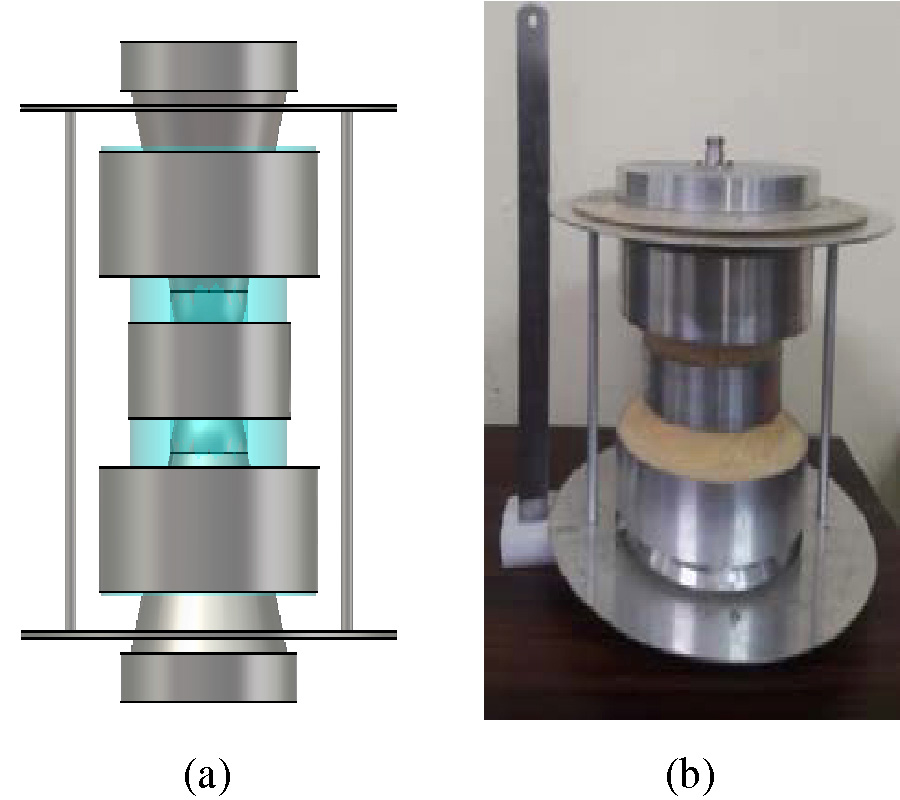
In order to improve the resolution of microwave biomedical imaging, a new method has been proposed in this pa-per, using a water-immersed wide band horn antenna at S-band. Considering the microwave penetration depth and the reflection at the interface between tissues and environment in deionized water, 2.45 GHz is selected as the central frequency of this antenna. Due to the high dielectric constant of water, the design of the impedance matching structure between the coaxial line and rectangular waveguide is most challenging. Therefore, the idea that using water as the medium of the coaxial impedance matching structure is proposed to deal with the problem of processing in our work. Simulated and experimental results show that this antenna has good impedance characteristics (S11 < -10 dB from 2.1 GHz to 3.8 GHz), good reasonable losses (5.1 dB total for two antennas and coaxial line at 3 GHz), and high maximum gain (8.52 dBi at 2.45 GHz).
REASERCH ON A WATER-IMMERSED WIDE BAND HORN ANTENNA WITH WATER-FILLED COAXIAL IMPEDANCE MATCHING STRUCTURE
2018-12-29
PIER C
Vol. 89, 121-132
Effective Modeling of Magnetized Graphene by the Wave Concept Iterative Process Method Using Boundary Conditions
Aymen Hlali , Zied Houaneb and Hassen Zairi
Due to static magnetic field, the conductivity of graphene becomes an anisotropic tensor, which complicates most modeling methodologies. A practical approach to the Wave Concept Iterative Process method (WCIP) modeling of magnetized graphene sheets as an anisotropic conductive surface from the microwave to terahertz frequencies is proposed. We first introduce a brief description of modeling magnetized graphene as an infinitesimally thin conductive sheet. Then, we present a novel manner for the implementation of the anisotropic boundary conditions using the wave concept in the WCIP method. This proposed method is benchmarked with numerical examples to demonstrate its applicability and accuracy. The proposed approach is used to compare the anisotropic model, isotropic model, and the metal for a strip waveguide. We show that the anisotropic model gives more efficient results.
EFFECTIVE  MODELING OF MAGNETIZED GRAPHENE BY THE WAVE CONCEPT ITERATIVE PROCESS METHOD USING BOUNDARY CONDITIONS
2018-12-29
PIER M
Vol. 77, 103-113
Two-Stage Hybrid Precoding Algorithm Based on Switch Network for Millimeter Wave MIMO Systems
Fulai Liu , Xiaodong Kan , Xiaoyu Bai , Ruiyan Du and Yanshuo Zhang
Owing to the hardware cost and power consumption limitation, hybrid precoding has been recently considered as an alternative to the fully digital precoding in millimeter wave (mmWave) largescale multiple-input multiple-output (MIMO) systems. Although the number of radio frequency (RF) chains is reduced to a certain extent in the hybrid precoding structure, a great number of phase shifters are still needed. In this paper, we present a new hybrid precoding architecture based on switch network to decrease the power consumption of hybrid precoder by reducing the number of phase shifters greatly. The new hybrid precoding architecture consists of three parts, a digital precoder, an analog precoder, and a switch network, in which the switch network is used to offer a dynamic connection from phase shifters to antennas. Afterwards, a two-stage algorithm is proposed to determine each part of the hybrid precoding implementation. Speci cally, the product of the analog precoding matrix and digital precoding matrix is viewed as a whole matrix rstly, thereby the original problem is simplified into a two-variable problem which is relatively easy to be solved. Then, the decomposition of the analog precoding matrix and digital precoding matrix is considered in the second stage. Simulation results show that the presented implementation can not only provide a better trade-off between hardware complexity and system performance, but also achieve higher energy eciency with far fewer phase shifters than previous works.
TWO-STAGE HYBRID PRECODING ALGORITHM BASED ON SWITCH NETWORK FOR MILLIMETER WAVE MIMO SYSTEMS
2018-12-28
PIER Letters
Vol. 81, 9-14
A New Miniaturized Microstrip Branch-Line Coupler with Wide Suppression Band
Hai Zhang and Xiaolu Lu
A new miniaturized microstrip branch-line coupler with good harmonic suppression is proposed in this paper. The new structure has two significant advantages, which not only effectively reduces the occupied area to 19.1% of the conventional branch-line coupler at 0.90 GHz, but also has high 7th harmonic suppression performance. The measured results indicate that a fractional bandwidth of more than 15.6% has been achieved while the phase difference between S21 and S31 is within 90° ± 0.8°. The measured fractional bandwidths of |S21| and |S31| within 3 ± 0.3 dB are 16.1% and 16.7%, respectively. Furthermore, the measured insertion loss is comparable to that of a conventional branch-line coupler. The new coupler can be easily implemented by using the standard printed-circuit-board etching processes and is very useful for wireless communication systems.
A NEW MINIATURIZED MICROSTRIP BRANCH-LINE COUPLER WITH WIDE SUPPRESSION BAND
2018-12-28
PIER Letters
Vol. 80, 149-157
A Dual-Polarized Omnidirectional Antenna with Two Kinds of Printed Wideband Low-Profile Radiating Elements
Yuwei Zhang , Shu Lin , Shang Yu , Shoulan Liu , Guanjun Liu and Alexander Denisov
This paper describes a printed wideband low profile omnidirectional dual-polarized antenna, which is a combination of vertical polarization (VP) and horizontal polarization (HP) elements. The VP element printed on a double-layered disk-shaped substrate is a modified monopole with loadings. The introduction of the material of the dielectric substrate can reduce the profile height in the polarized direction to 0.08λL (the wavelength at the lowest frequency). And loading metallic cylindrical block and shorting-posts in the dielectric substrate to improve the bandwidth are realized by using metal-vias. The HP element consists of a printed 8-element circular connected Vivaldi antenna array, and each element contains a director in the slot for the improvement of radiation pattern's out-of-roundness. Both the simulated and measured results indicate that operating bands of 2.2-4.52 GHz for VP and 2.4-3.8 GHz for HP. This proposed antenna has good isolation and omnidirectional patterns with the out-of-roundness less than 2.5 dB in the azimuth plane for both VP and HP, and it can be applied in mobile communication systems.
A DUAL-POLARIZED OMNIDIRECTIONAL ANTENNA WITH TWO KINDS OF PRINTED WIDEBAND LOW-PROFILE RADIATING ELEMENTS
2018-12-27
PIER C
Vol. 89, 111-120
Bandwidth Enhancement of Wideband Dual-Polarized Antenna with Loaded Open Stubs for Wireless Communication
Zhaoyang Tang and Ying-Zeng Yin
In this paper, a wideband ±45° dual-polarized antenna is proposedfor wireless communication. An annular ring patch with four arc-shaped slots is employed to generate a wide operating impedance bandwidth. By introducing four open stubs to the antenna element, the impedance bandwidth is enhanced. The antenna has a broad impedance bandwidth (VSWR<2) of 51.2% (1.63-2.75 GHz) and a high port-to-port isolation of 27 dB over the entire band of operation. In addition, a 1×4 antenna array is developed for the wireless communication. Experimental results illustrate that the antenna array features wide operational bandwidth, high port isolation and superior radiation performance.
BANDWIDTH ENHANCEMENT OF WIDEBAND DUAL-POLARIZED ANTENNA WITH LOADED OPEN STUBS FOR WIRELESS COMMUNICATION
2018-12-27
PIER C
Vol. 89, 101-110
Modelling and Evaluation of Electrical Resonance Eddy Current for Submillimeter Defect Detection
Yew Li Hor , Vinod Kumar Sivaraja , Yu Zhong , Viet Phuong Bui and Christopher Lane
Eddy current (EC) inspection is used extensively in non-destructive testing (NDT) to detect surface-breaking defects of engineering components. However, the sensitivity of conventional eddy current inspection has plateaued in recent years. The ability to detect submillimetre defects before it becomes critical would allow engineering components to remain in-service safely for longer. Typically, it is required that higher frequency EC is employed to achieve a suitable sensitivity for detection of such submillimetre defects. However, that would lead to significant electromagnetic noise affecting the sensitivity of the inspection. To overcome this issue, the electrical-resonance based eddy current method has been proposed, where the electrical enhanced resonance signal increases the contrast between signal and noise, thus improving the sensitivity of the defect detection. This work aims to investigate the electrical-resonance system via simulation technology using combination of fast numerical-based simulation and circuit approach. Leveraging on this model, the detection system can be optimized by performing parameters tuning. Investigation of both experiment and simulation develops a precise calibration model for submillimeter defects detection.
MODELLING AND EVALUATION OF ELECTRICAL RESONANCE EDDY CURRENT FOR SUBMILLIMETER DEFECT DETECTION
2018-12-25
PIER C
Vol. 89, 87-99
Design and Analysis of Ridge Substrate Integrated Waveguide Bandpass Filter with Octagonal Complementary Split Ring Resonator for Suppression of Higher Order Harmonics
Rakesh Kumar and Shiva Nand Singh
In this research paper, a Ridge Substrate Integrated Waveguide (RSIW) multiple band bandpass filter embedded with an octagonal shape Complementary Split Ring Resonator (CSRRs) is proposed. The electrically coupled octagonal shape CSRR is placed interdigitally in RSIW using transverse coupling technique to improve multiple passband bandwidths. The filter exhibits a highly selective multiple electric or magnetic or bianisotropic mode for different frequencies. The analysis for spurious band suppression has been done by direct method. The prototype configuration of quarter wavelength octagonal CSRR resonators introduces band suppression at all odd harmonics. The proposed structure of filter with dimension 1.36λg×0.52λg excluding feed port is fabricated. Full wave structure simulated results are compared with measurement ones. The measured passband frequencies and their calculated respective central frequency (f0), fractional bandwidth (FBW) are in close agreement with the simulated result. The spurious higher order harmonics are observed as suppressed. The filter can be utilized to suppress interference from LAN, WLAN, GSM, WiMAX and variable stopband for ISM interference.
DESIGN AND ANALYSIS OF RIDGE SUBSTRATE INTEGRATED WAVEGUIDE BANDPASS FILTER WITH OCTAGONAL COMPLEMENTARY SPLIT RING RESONATOR FOR SUPPRESSION OF HIGHER ORDER HARMONICS