Search Results(13790)

2019-02-18
PIER Letters
Vol. 81, 127-132
Modeling of the Electromagnetic Field of a Rectangular Waveguide with Side Holes
Islam Jamal Islamov , Elshad Gulam Ismibayli , Yusif Gazi Gaziyev , Simnara Raffaq Ahmadova and Rashid Shaban Abdullayev
In this work, we simulate the electromagnetic field of a rectangular waveguide with side holes. The Helmholtz equations for a given waveguide and dispersion equations are solved. As a result of numerical calculations, the obtained numerical values build the dependence of the modulus of the effective impedance on the wavelength for different types of waves.
MODELING OF THE ELECTROMAGNETIC FIELD OF A RECTANGULAR WAVEGUIDE WITH SIDE HOLES
2019-02-16
PIER M
Vol. 79, 71-80
Body Gesture Recognition Based on Polarimetric Micro-Doppler Signature and Using Deep Convolutional Neural Network
Wenwu Kang , Yunhua Zhang and Xiao Dong
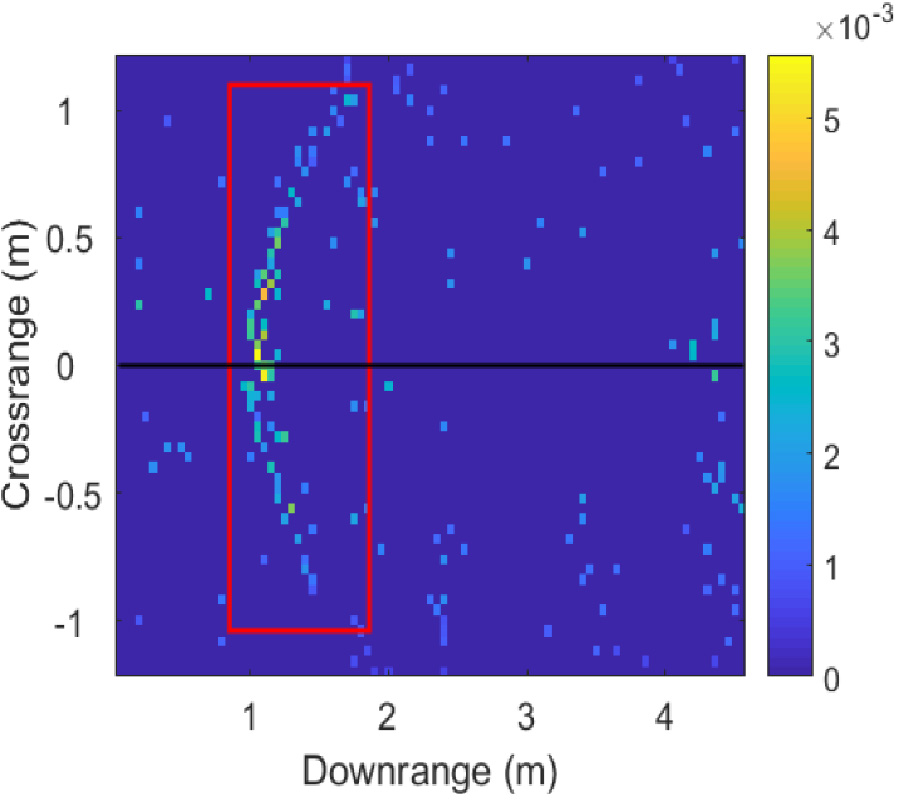
Body gesture recognition can be applied not only to social security but also to rescue operations. In reality, body gesture can produce unique micro-Doppler signatures (MDSs), which can be used for identification. In this paper, we first acquired the echo signals of four body gestures via a Ka-band dual polarization radar system under different angles and distances. The four gestures are respectively swinging arm up and down, swinging arm left and right, nodding, and shaking head. Then, time-frequency spectrograms were obtained by short-time Fourier transform, from which we can see that different body gestures have different polarimetric MDSs. Finally, we propose to classify four body gestures using the deep convolutional neural network (DCNN) method. It is shown that by combining HH and HV polarizations, about 92.7% recognition rate is achieved while only about 77.5% and 89.3% rates are obtained by using single HH polarization and single HV polarization, respectively.
BODY GESTURE RECOGNITION BASED ON POLARIMETRIC MICRO-DOPPLER SIGNATURE AND USING DEEP CONVOLUTIONAL NEURAL NETWORK
2019-02-16
PIER M
Vol. 79, 61-69
Single-Tone Interference Method Based on Frequency Difference for GPS Receivers
Ruiyan Du , Ling Yue , Shuai Yao , Dandan Zhang and Yadong Wang
Global Positioning System (GPS) is an excellent application example of satellite communication technology. And it is widely used in navigation, measurement, and time service. However, GPS receivers are vulnerable to unintentional interference or jamming because they rely on external radio frequency (RF) signals. RF interference signals can result in degraded navigation accuracy or complete loss of receiver tracking. Thus, GPS receivers have anti-jamming ability to relieve the effect of interference or jamming. In order to improve the anti-jamming performance of GPS receiver, it is of great theoretical significance and practical application value to study the influence of interference on GPS receiver. To this end, this paper investigates the performance of integrator in the presence of single-tone interference in GPS receiver, and a single-tone interference method based on frequency difference is proposed. Specifically, the analytical relationship between single-tone interference and integrator output is given. Then, it shows that the output of integrator depends not only on the power of single-tone interference but also on the frequency difference between single-tone interference and GPS signal. Finally, the vulnerability of integrator or GPS receiver to the presence of interference increases if the frequency difference satisfies the specific condition. Simulation results show that the proposed method is able to improve the chip error rate in GPS receiver.
SINGLE-TONE INTERFERENCE METHOD BASED ON FREQUENCY DIFFERENCE FOR GPS RECEIVERS
2019-02-15
PIER M
Vol. 79, 51-60
Target Classification with Low-Resolution Radars Based on Multifractal Features in Fractional Fourier Domain
Huaxia Zhang , Qiusheng Li , Chuicai Rong and Xindi Yuan
Due to the limitations of low-resolution radar system and background clutter, the task of target classification with conventional low-resolution radars is relatively difficult. This paper introduces fractional Fourier transform (FrFT) to process aircraft echoes in order to find the optimal fractional Fourier domain, in which signal to noise ratio can reach the maximum, and then applies multifractal theory to the feature extraction of radar targets. Based on the above, we use SVM to do target classification. Experiments show that the multifractal characteristics of aircraft echoes can be enhanced by FrFT, and the features extracted from the optimal fractional Fourier domain can be used effectively to classify different types of aircraft even in the case of low SNR.
TARGET CLASSIFICATION WITH LOW-RESOLUTION RADARS BASED ON MULTIFRACTAL FEATURES IN FRACTIONAL FOURIER DOMAIN
2019-02-13
PIER M
Vol. 79, 41-49
Polarization-Insensitive Frequency-Selective Rasorber Based on Square-Loop Element
Qiang Chen , Min Guo , Di Sang and Yunqi Fu
This paper presents a polarization-insensitive frequency selective rasorber which has high in-band transmission at high frequency and wideband absorption at low frequency based on square-loop and parallel LC resonance. The rasorber consists of a bandpass FSS and a resistive sheet plus a slot-type metallic four-legged loaded element as the bandpass FSS element. The resistive element is realized by inserting several strip-type parallel LC structures into a resistor-loaded square-loop element, which allows the surface current to be controlled as necessary and the wave at the resonance frequency to be passed with minimum insertion loss. Wideband absorption is realized at low frequency, where the bandpass FSS is nearly totally reflected, and the FSR performs as an absorber. Simulation results show the transmission band at 9.9 GHz with transmissivity higher than 96% and the absorption band with absorptivity higher than 85% from 2.83 GHz to 8.6 GHz for TE-polarized 30˚ incidence and from 3.22 GHz to 8.48 GHz for TM-polarized 30˚ incidence. The absorptive/transmissive performance of the FSR structure is also verified ed by experimental measurements.
POLARIZATION-INSENSITIVE FREQUENCY-SELECTIVE RASORBER BASED ON SQUARE-LOOP ELEMENT
2019-02-12
PIER M
Vol. 79, 33-40
Multiple-Constraint Synthesis of Rotationally Symmetric Sparse Circular Arrays Using a Hybrid Algorithm
Ruiqi Wang and Yong-Chang Jiao
Rotationally symmetric sparse circular arrays are synthesized under multiple constraints. By combining the modified differential evolution algorithm based on the harmony search (in short HSDE) with the vector mapping (VM) method, a hybrid algorithm, called VM-HSDE, is proposed for synthesizing sparse circular arrays with low sidelobe levels. Due to the array's specific geometry, the number of optimization variables is reduced, and the constrained optimization problem is simplified. Moreover, infeasible solutions are avoided, and the problem is effectively solved by the VM-HSDE algorithm. Finally, three pattern optimization results verify the effectiveness and reliability of the VM-HSDE algorithm.
MULTIPLE-CONSTRAINT SYNTHESIS OF ROTATIONALLY SYMMETRIC SPARSE CIRCULAR ARRAYS USING A HYBRID ALGORITHM
2019-02-12
PIER M
Vol. 79, 23-31
Ceramic Waveguide Filters with Wide Spurious-Free Stopband Response
Sharjeel Afridi , Ian Hunter and Yameen Sandhu
This work proposes new filter design techniques to improve the out of band spurious performance of integrated ceramic waveguide filters and ceramic loaded filters. Various resonators of different types like non-uniform width, TEM and half ridge were used. The proposed filter designs offer a considerable miniaturization and significantly improved spurious performance up to 85% without compromising the figure of merits of the filters like Q-factor, return loss, etc. Two sixth order filters with best in-band and out-band performance have been fabricated. Measured results of the fabricated filters are in good agreement with the computer simulations, which confirm the validity and accuracy of designs.
CERAMIC WAVEGUIDE FILTERS WITH WIDE SPURIOUS-FREE STOPBAND RESPONSE
2019-02-12
PIER M
Vol. 79, 11-22
Design and Analysis of Compact µ-Negative Material Loaded Wideband Electrically Compact Antenna for WLAN/WiMAX Applications
Upeshkumar Patel and Trushit K. Upadhyaya
A compact tri-band antenna incorporated with split ring resonator array is proposed for Wireless Local Area Network (WLAN) and Worldwide interoperability for microwave access (WiMAX) applications. The proposed antenna is printed on an FR4 substrate with overall dimensions of 0.25λx0.29λ at the lowest frequency. Impedance bandwidth of the antenna is optimised by introducing slots on the top of the patch. The ground plane is engineered by placement of a split ring resonators array to induce additional resonance due to occurance of magnetic dipole moment.The antenna resonates at the frequencies of 2.4 GHz, 3.5 GHz & 5.5 GHz having bandwidths of 12.5%, 7.42% and 6.36% with gains of 2.25 dBi, 3.72 dBi and 2.71 dBi, respectively which matches well with the fabricated results. The proposed antenna shows omnidirectional radiation pattern which makes it appropriate for WLAN and WiMAX applications.
DESIGN AND ANALYSIS OF COMPACT µ-NEGATIVE MATERIAL LOADED WIDEBAND ELECTRICALLY COMPACT ANTENNA FOR WLAN/WIMAX APPLICATIONS
2019-02-11
PIER C
Vol. 90, 51-63
A New Fast and Accurate Compressive Sensing Technique for Magnetic Resonance Imaging
Huihui Yue and Xiangjun Yin
In this paper, the main problem to be solved is how to achieve magnetic resonance imaging (MRI) accurately and quickly. Previous work has shown that compressive sensing (CS) technology can reconstruct a magnetic resonance (MR) image from only a small number of samples, which significantly reduces MR scanning time. Based on this, an algorithm to improve the accuracy of MRI, called regularized weighting Composite Gaussian smoothed l0-norm minimization (RWCGSL0), is proposed in this paper. Different from previous methods, our algorithm has three influential contributions: (1) a new smoothed Composite Gaussian function (CGF) is proposed to be closer to the l0-norm; (2) a new weighting function is proposed; (3) a new l0 regularized objective function framework is constructed. Furthermore, the optimal solution of this objective function is obtained by penalty decomposition (PD)method. It is experimentally shown that the proposed algorithm outperforms other state-of-the-art CS algorithms in the reconstruction of MR images.
A NEW FAST AND ACCURATE COMPRESSIVE SENSING TECHNIQUE FOR MAGNETIC RESONANCE IMAGING
2019-02-11
PIER M
Vol. 79, 1-10
On Localized Antenna Energy in Electromagnetic Radiation
Said Mikki , Debdeep Sarkar and Yahia M. Antar
We provide a general and rigorous formulation of antenna localized electromagnetic radiation energy in generic antenna systems based on Poynting flow instead of the spectral approach proposed earlier. The main theory is first developed using the principles of energy-momentum conservation and the center-of-energy theorem, culminating in the derivation of a direct localized energy expression. It is rigorously established that this expression satisfies the main features expected of physical energy, mainly positive definiteness and regularity. The obtained formula involves only the radiated fields (no current or charge) source and is easier to compute using specialized direct time-domain EM solvers. The proposed approach is expected to play a role in understanding energy localization in coupled antennas and shed light on gain enhancement methods.
ON LOCALIZED ANTENNA ENERGY IN ELECTROMAGNETIC RADIATION
2019-02-11
PIER M
Vol. 78, 193-201
Compact Wideband Quad-Element MIMO Antenna with Reversed S-Shaped Walls
Fei Wang , Shifeng Li , Qing Zhou and Yu-Bin Gong
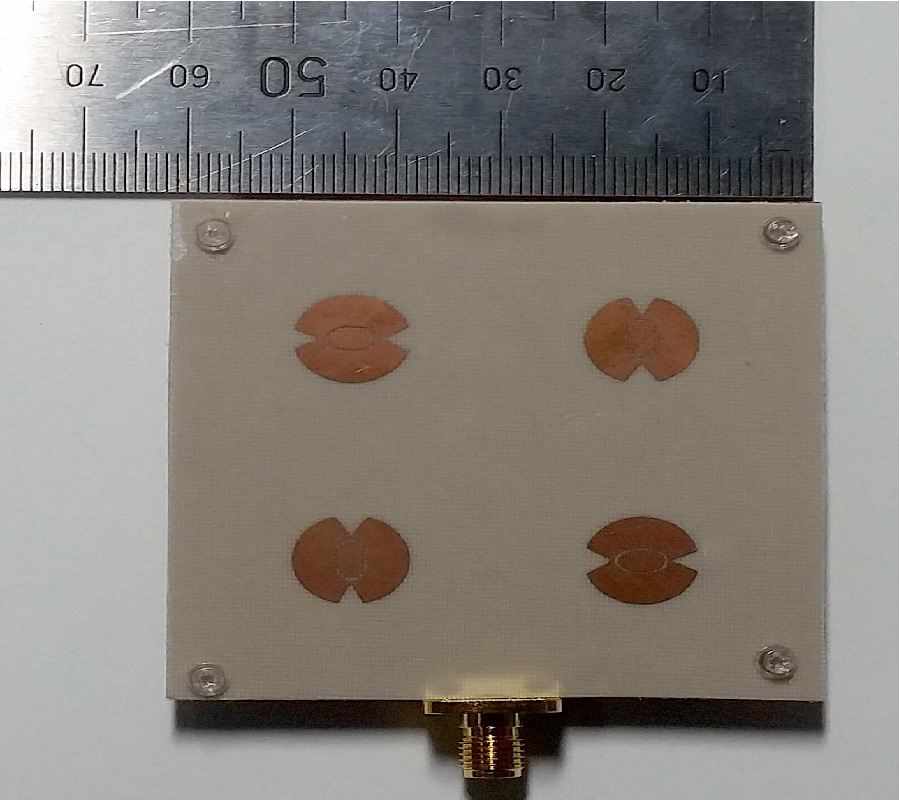
We propose a compact wideband planar quad-element multiple input, multiple output (MIMO) antenna, which can cover a wide bandwidth ranging from 2.2 to 30 GHz. Novel reversed S-shaped walls provide high isolation between antenna elements within an extremely closed space, with the edge-to-edge distance between elements being only 1 mm. The simulated and measured results with respect to S parameters and radiation patterns are in good agreement. The experimental results indicate that the quad-element MIMO antenna can provide wide bandwidth (2.2-30 GHz), high isolation (with the transmission coefficients below -19 dB), and low profile (only ~λ0/40) within a compact structure (32 mm ×32 mm×4.5 mm). This compact wideband quad-element MIMO antenna with high isolation and low profile has important applications in mobile devices or other small-scaled equipment in future 5G communication.
COMPACT WIDEBAND QUAD-ELEMENT MIMO ANTENNA WITH REVERSED S-SHAPED WALLS
2019-02-11
PIER M
Vol. 78, 185-192
Beam Wander of the Multi-Gaussian Schell-Model Beam in Anisotropic Turbulence
Jie Shu , Huafeng Xu , Zheng-Lan Zhou and Jun Qu
Based on the extended Huygens-Fresnel principle, the expressions of degree of coherence, ellipticity, and beam wander of multi-Gaussian Schell-model beam through the anisotropic turbulence are derived. Their statistical properties in anisotropic turbulence are illustrated numerically. The results show that the beam width and beam wander of multi-Gaussian Schell-model beam decrease with the increase of the mode order or the decrease of the turbulence structure parameter and initial coherence and that the degree of coherence of multi-Gaussian Schell-model beam decreases with the increase of the turbulence structure parameter or the decrease of the mode order. Furthermore, the beam wander of multi-Gaussian Schell-model beam is smaller than that of Gaussian Schell-model beam under the same conditions.
BEAM WANDER OF THE MULTI-GAUSSIAN SCHELL-MODEL BEAM IN ANISOTROPIC TURBULENCE
2019-02-11
PIER M
Vol. 78, 175-184
Single Feed Circularly Polarized Antenna Loaded with Complementary Split Ring Resonator (CSRR)
Soumik Dey , Santanu Mondal and Partha Pratim Sarkar
In this paper, complementary split ring resonator (CSRR) based single feed rectangular microstrip antennas are designed for circular polarization. In the first antenna design, two CSRRs are loaded on ground, and for the second design, two CSRRs are loaded on patch with identical orientation of meta-resonators in both cases. CSRRs are used to diminish the resonance frequency of the antenna, and thus the antenna size miniaturization can be achieved. Overall dimensions of the two antennas are (50×50×1.6) mm3, and the impedance bandwidth for S11 < -10 dB exhibits between 2.3 and 2.4 GHz which is useful for wireless communication service. The characteristics of the proposed antennas, i.e., reflection coefficient, axial ratio, gain, and radiation patterns, are observed and compared for the two cases. The proposed two antennas have been designed and simulated using CST Microwave studio 14. Measured reflection coefficient, gain, and radiation pattern are in good agreement with the simulated result.
SINGLE FEED CIRCULARLY POLARIZED ANTENNA LOADED WITH COMPLEMENTARY SPLIT RING RESONATOR (CSRR)
2019-02-10
PIER M
Vol. 78, 165-174
MWF-NW Algorithm for Space-Time Antijamming
Fulai Liu , Miao Zhang , Fan Gao and Ruiyan Du
Space-time antijamming problem has received significant concern recently in global navigation satellite. Space-time null widening technique is an effective technique to suppress interference signals in the case of rapidly moving environments. However, the computational complexity of traditional null widening algorithms is usually so high that it is difficult to apply in engineering problems. In order to solve this problem, a novel null widening algorithm based on multistage wiener filter (named as MWF-NW algorithm) is proposed for reducing the computational complexity of space-time antijamming algorithms. By using the Hadamard product and Khtri-Rao product, the space-time covariance matrix taper problem can be transformed into a space-time data taper problem. Then, the dimension of the tapered data is reduced by multistage wiener filter theory, and the optimal weight vector is also given by multistage wiener filter theory. Thus the algorithm can reduce computational complexity significantly and suppress interference signals effectively when the receiver is shaking. Simulation results are presented to verify the feasibility and effectiveness of the proposed algorithm.
MWF-NW ALGORITHM FOR SPACE-TIME ANTIJAMMING
2019-02-10
PIER M
Vol. 78, 155-163
Compressed Sensing for Fast Electromagnetic Scattering Analysis of Complex Linear Structures
Xuehua Ma , Ming Sheng Chen , Jinhua Hu , Meng Kong , Zhixiang Huang and Xian-Liang Wu
When method of moments (MOM) is applied to calculate electromagnetic scattering problems of the linear structures, traditional basis functions such as RWG functions are unable to satisfy the requirements of numerical discretization, so linear basis functions are constructed to discrete line structures, To avoid direct calculation of dense impedance matrix equation, compressed sensing (CS) in conjugation with appropriate transformation is introduced. Firstly, the impedance matrix equation is operated to obtain an alternative equation in transform domain. Secondly, CS is used to form an undetermined equation to be solved, under the theoretical framework of CS, and the underdetermined equation can be solved by reconstruct algorithm ​but not iterative approach. Finally, numerical simulations of single wound axial mode helical antenna and four element linear antennas array are discussed to demonstrate the efficiency and accuracy of the proposed method.
COMPRESSED SENSING FOR FAST ELECTROMAGNETIC SCATTERING ANALYSIS OF COMPLEX LINEAR STRUCTURES
2019-02-05
PIER M
Vol. 78, 145-154
Spectral Characteristics of Segmented Optical Waveguides Immersed in a Fluid Medium
Jose Rodriguez García and Adrian Fernandez Gavela
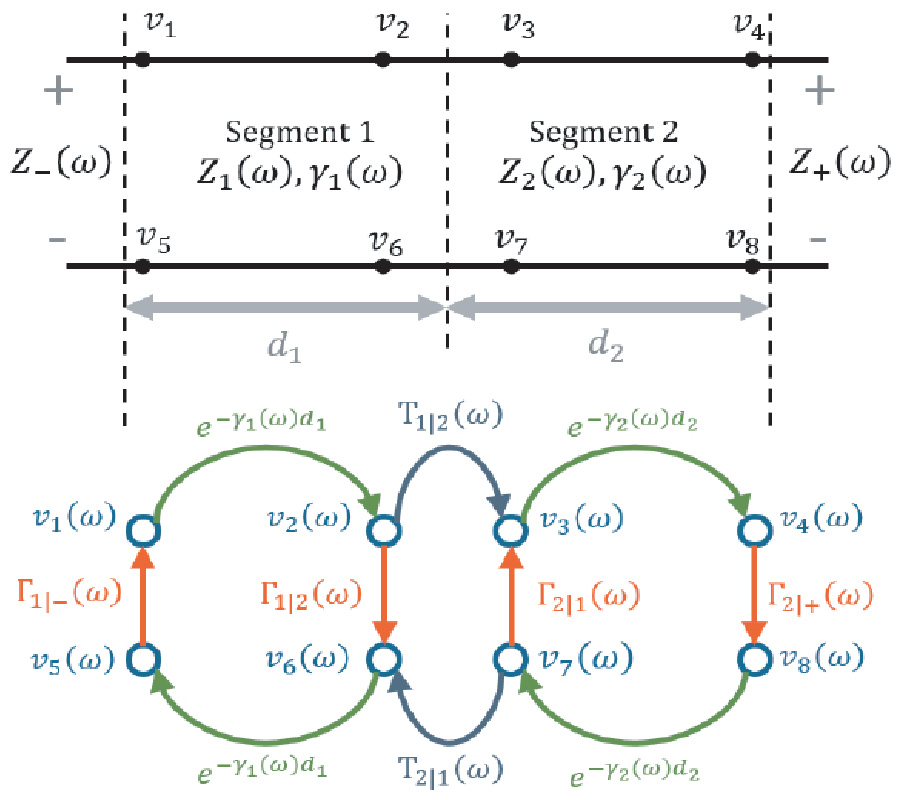
In this paper, the electromagnetic scattering properties due to periodical configurations consisting of planar optical waveguides completely surrounded by a fluid media, in gaseous or liquid phase, are analyzed. In this new design, fluid separates the consecutive optical waveguides and it is also the common cover for all of them, thus significantly increasing the effect of the fluid on the evanescent field. This new configuration is designated as fluidic segmented optical waveguides. The theoretical algorithm was developed and recently updated by the authors, and it is based on the generalized scattering matrix concept, together with the generalized telegraphist equations formulism and modal matching technique. We present the first theoretical results concerning to these periodical structures with a fluidic common cover. To carry out the simulations, with the purpose to manufacture these devices in the future, glass and polymer were chosen as materials for the optical waveguides substrate and for enclosing the fluid as common cover medium, respectively. The spectral results obtained for the module and phase of the reflection and transmission coefficients have shown great sensitivity of the new proposal to the variations of the refractive index of the fluid, making it very attractive for the design of refractive index sensors and optical biosensors.
SPECTRAL CHARACTERISTICS OF SEGMENTED OPTICAL WAVEGUIDES IMMERSED IN A FLUID MEDIUM
2019-02-05
PIER M
Vol. 78, 135-143
A Novel Single PIN Diode Reconfigurable Impedance Matching Network with a Simplified Solution Method
Yuliang Liang , Jun-Ping Geng , Han Zhou , Tingting Fan , Xuan Wang , Rong-Hong Jin , Xianling Liang and Weiren Zhu
In this paper, a reconfigurable impedance matching network (RIMN) based on PIN diode is presented. RIMN is an impedance matching circuit containing only one matching stub embedded with one PIN diode. It can match two different load impedances under different biasing of the PIN diode. The RIMN has a very simple structure, and the parameters in the structure are easy to be calculated with a simplified solution method. During the solving process, the parasitic parameters of PIN diode are taken into account. For verification, a RIMN working at 5.8 GHz is designed and fabricated. The measured insertion losses for different load impedances are less than 0.4 dB with reflection coefficients less than 30 dB at the targeted frequency. Simulation and measurement show that the proposed RIMN has good performance.
A NOVEL SINGLE PIN DIODE RECONFIGURABLE IMPEDANCE MATCHING NETWORK WITH A SIMPLIFIED SOLUTION METHOD
2019-02-04
PIER Letters
Vol. 81, 121-126
High Impedance Transforming Dual-Band Balun with Isolation and Output Ports Matching
Rahul Gupta , Md Hedayatullah Maktoomi , Vikas Vikram Singh and Mohammad S. Hashmi
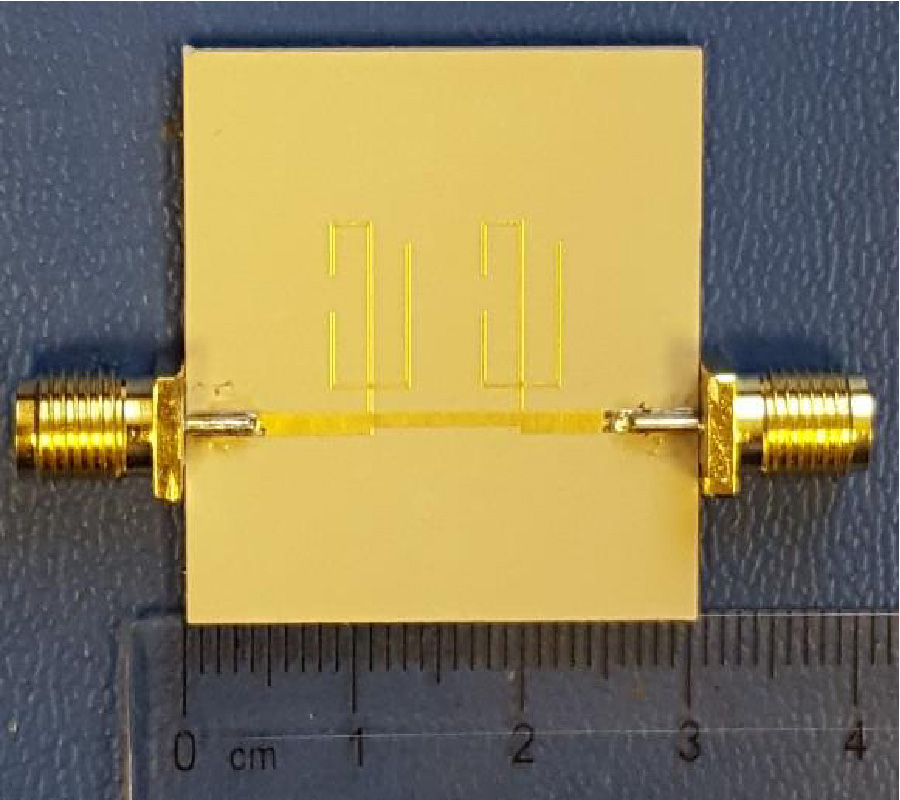
A dual-band balun with inherent impedance transformation is presented in this paper. The inherent impedance transformation ratio from a range of 0.4 to 4.0 makes the balun ideal for the on-chip fabrication. The proposed dual-band balun exhibits excellent input port matching, equal output signal with phase di erence of 180, and extremely good isolation and matching at the output ports. A table is provided with the design parameters at the extreme impedance transformation ratios. The design concept of the proposed balun has been validated through a prototype fabricated on a Rogers RO5880 substrate. The measurement results are in good agreement with the EM simulation measurements.
HIGH IMPEDANCE TRANSFORMING DUAL-BAND BALUN WITH ISOLATION AND OUTPUT PORTS MATCHING
2019-01-31
PIER M
Vol. 78, 125-133
Solution of Wideband Scattering Problems Using Hierarchical Ultra-Wideband Characteristic Basis Functions
Wenyan Nie and Zhonggen Wang
In this paper, a hierarchical ultra-wideband characteristic basis function method (HUCBFM) is presented for high-precision analysis of wideband scattering problems. Unlike existing improved ultra-wideband characteristics basis function method (IUCBFM), HUCBFM reduces the number of characteristic basis functions (CBFs) necessary to express a current distribution. This reduction is achieved by combining primary CBFs (PCBFs) with the secondary level CBFs (SCBFs) to form a single hierarchical ultra-wideband characteristic basis function (HUCBF). As HUCBF incorporates the effects of PCBFs and SCBFs, the accuracy does not change significantly compared to that obtained by IUCBFM. Furthermore, the efficiencies of constructing the CBFs and filling the reduced matrix are improved. Numerical examples verify and demonstrate that the proposed method is credible both in terms of accuracy and efficiency.
SOLUTION OF WIDEBAND SCATTERING PROBLEMS USING HIERARCHICAL ULTRA-WIDEBAND CHARACTERISTIC BASIS FUNCTIONS
2019-01-30
PIER C
Vol. 90, 41-49
Design of Compact, Wideband Dual-Polarized Multi-Dipole Antenna for 2G/3G/LTE Base Station Applications
Zhaoyang Tang , Yapeng Li , Zhipeng Zhao and Ying-Zeng Yin
In this paper, awideband dual-polarized multi-dipole antennawith a compact radiator size is developedfor 2G/3G/LTE base station applications. The original antenna is composed of a pair of crossed square loop dipoles (SLDs) and two big Y-shaped feeding lines. Thanks to the adopted capacitive coupling, a wide impedance bandwidth is obtained with dual resonant modesin the low and middle frequency bands. Owing to the circular chamfersin thecrossed SLDs, the dual resonant modes are away from each other. Thus, a compact radiator size is implemented, and it is about 0.382λ0×0.382λ00 is the wavelength at center frequency of operation). To further widen the operating bandwidth of the antenna, a pair of crossed rectangular loop dipoles (RLDs) and four small Y-shaped feeding lines are introduced to generate a new resonant mode at high frequency. As a result, the impedance bandwidth of the proposed antenna is enhanced.Based on the optimized dimensions of the simulated antenna model, a prototype is developed, fabricated and tested. Measured results show that the proposed antenna has a relative impedance bandwidth of 53.9% from 1.68 to 2.92 GHz at two ports for VSWR<1.5. Within the operating impedance bandwidth, the measured port-to-port isolation is better than 30 dB. In addition, a stable gain of 8.2±0.5 dBi and a stable radiation pattern with 66°±4° half-power beamwidth (HPBW) in the horizontal plane are achieved across the whole bandwidth of operationfor dual polarizations. Finally, the proposed antenna is suitable for base station applications.
DESIGN OF COMPACT, WIDEBAND DUAL-POLARIZED MULTI-DIPOLE ANTENNA FOR 2G/3G/LTE BASE STATION APPLICATIONS