Search Results(13798)

2013-03-08
PIER Letters
Vol. 38, 89-100
All-Optical Delay Module Using Cascaded Polymer All-Pass-Filter Ring Resonators
Jaeseong Kim , Yoonyoung Ko , Hyosuk Kim , Hwa-Sung Kim and Youngchul Chung
An APF (All-Pass Filter) delay module in which eight single-ring resonators are serially cascaded is designed and fabricated. The polymer waveguide used for the realization of the APF delay module is a buried structure whose core width and height are 1.5μm. The core and cladding index are 1.51 and 1.378, respectively, which corresponds to the relative index difference of 8%. In order to use a thermo-optic effect of polymer materials, electrodes are evaporated above the ring resonator to provide heating currents. The time delay is measured to be about 50 ps when 2 rings are in resonance, and about 105 ps and 150 ps, respectively, when 4 and 6 rings of APF are in resonance, respectively. When all of 8 rings are in resonance, the delay is measured to be about 200 ps.
ALL-OPTICAL DELAY MODULE USING CASCADED POLYMER ALL-PASS-FILTER RING RESONATORS
2013-03-08
PIER Letters
Vol. 38, 79-88
A Novel Broadband Asymmetric Coplanar Waveguide (Acpw)-Fed Zeroth-Order Resonator Antenna Based on Epsilon Negative Transmission Line
Bingjian Niu and Quanyuan Feng
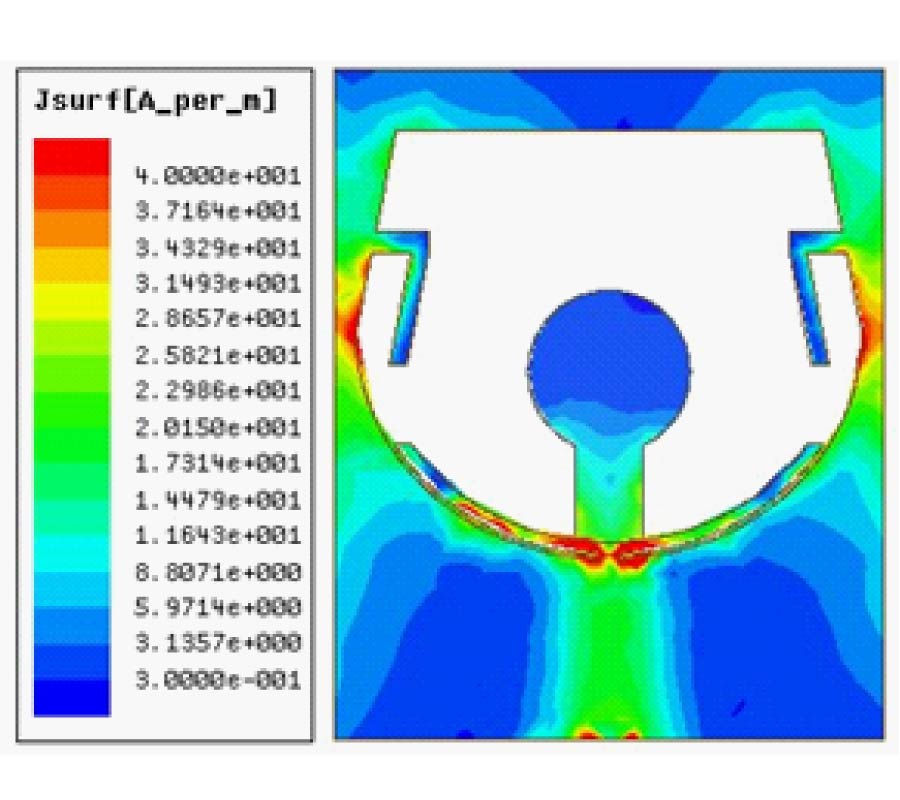
A broadband zeroth-order resonant (ZOR) antenna based on asymmetric coplanar waveguide (ACPW) is presented. By adopting the epsilon negative transmission line (ENG-TL), a zeroth-order resonance mode can be achieved. We propose an asymmetric coplanar waveguide structure which offers the design freedom to realize the broadband ZOR antenna, where the antenna's bandwidth is characterized by an equivalent circuit parameters. The antenna has the compact unit cell dimensions of 5×13.8 mm2. The measured results show that the operating bandwidth is about 1050 MHz (1.90-2.95 GHz), and the peak gain and radiation efficiency are 2.46 dBi and 91% at 2.3 GHz. Owing to the characteristics of broad bandwidth, high efficiency, omnidirectional radiation, and easy manufacturing, the proposed ACPW ZOR antenna is very suitable for modern wireless communication systems (UMTS, WLAN, WIMAX, LTE).
A NOVEL BROADBAND ASYMMETRIC COPLANAR WAVEGUIDE (ACPW)-FED ZEROTH-ORDER RESONATOR ANTENNA BASED ON EPSILON NEGATIVE TRANSMISSION LINE
2013-03-08
PIER M
Vol. 29, 223-236
Effect of Particle Size of BaFe12O19 on the Microwave Absorption Characteristics in X-Band
Abhishek Kumar , Vijaya Agarwala and Dharmendra Singh
Present work deals with the microwave absorption characteristics of BaFe12O19 of interest as radar absorbing material (RAM). There are very few reported works available where particle size has been critically analyzed for absorbing characteristics at microwave frequencies, therefore, in this paper microwave absorption properties of the BaFe12O19 with different particle sizes were investigated. The results showed that the particle size had significant influence on the dielectric and absorption properties of the composites in the 8.2-12.4 GHz frequency range. BaFe12O19 powder of different particle sizes were synthesized by varying the annealing time and it was observed that the real part of permittivity of the composite increases from 5.18 (average value) to 7.50 (average value) and imaginary part increases from an average value of 0.20 to an average value of 2.33, whereas the real part of permeability increases from 0.95 (average value) to 1.11 (average value) and imaginary part of permeability was measured in the range of 0.02 to 0.07. These changes in permittivity and permeability affects microwave absorption application. It is observed that the maximum bandwidth for average particle size of 240 nm is 3.02 GHz and with the increase in average particle size, microwave absorption properties increased.
EFFECT OF PARTICLE SIZE OF BaFe<sub>12</sub>O<sub>19</sub> ON THE MICROWAVE ABSORPTION CHARACTERISTICS IN X-BAND
2013-03-08
PIER
Vol. 137, 669-685
Modeling SAR Images Based on a Generalized Gamma Distribution for Texture Component
Gui Gao , Xianxiang Qin and Shilin Zhou
In the applications of synthetic aperture radar (SAR) data, a crucial problem is to develop precise models for the statistics of the pixel amplitudes or intensities. In this paper, a new statistical model, called simply here GΓΓ, is proposed based on the product model by assuming the radar cross section (RCS) components (texture components) of the return obey a recently empirical generalized Gamma distribution. Meanwhile, we demonstrate theoretically that the proposed GΓΓ model has the well-known K and g0 distributions as special cases. We also derived analytically the estimators of the presented GΓΓ model by applying the "method-of-log-cumulants" (MoLC). Finally, the performance of the proposed model is tested by using some measured SAR images.
MODELING SAR IMAGES BASED ON A GENERALIZED GAMMA DISTRIBUTION FOR TEXTURE COMPONENT
2013-03-08
PIER
Vol. 137, 653-667
A Broadband Out-of-Phase Power Divider for High Power Applications Using through Ground via (Tgv)
Yun Long Lu , Gao-Le Dai , Xingchang Wei and Erping Li
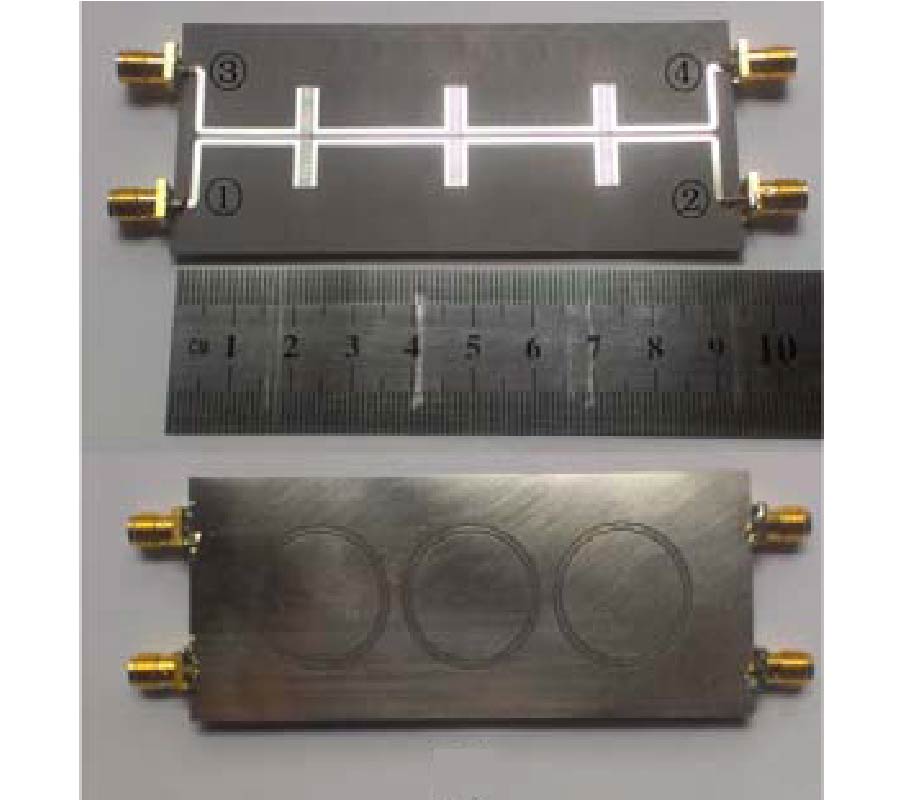
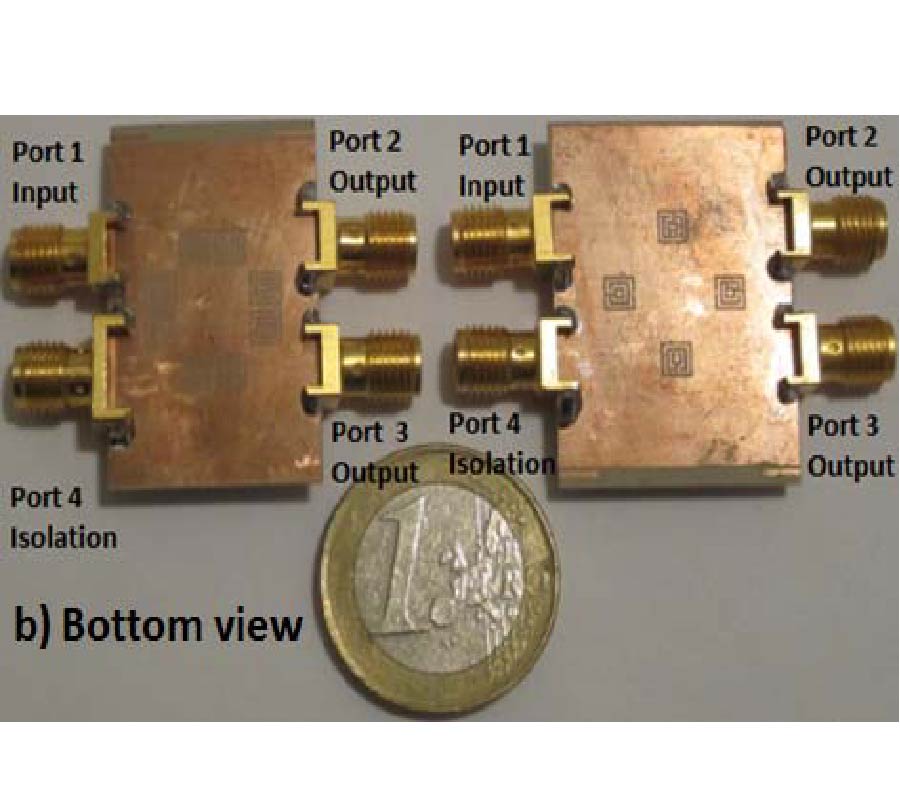
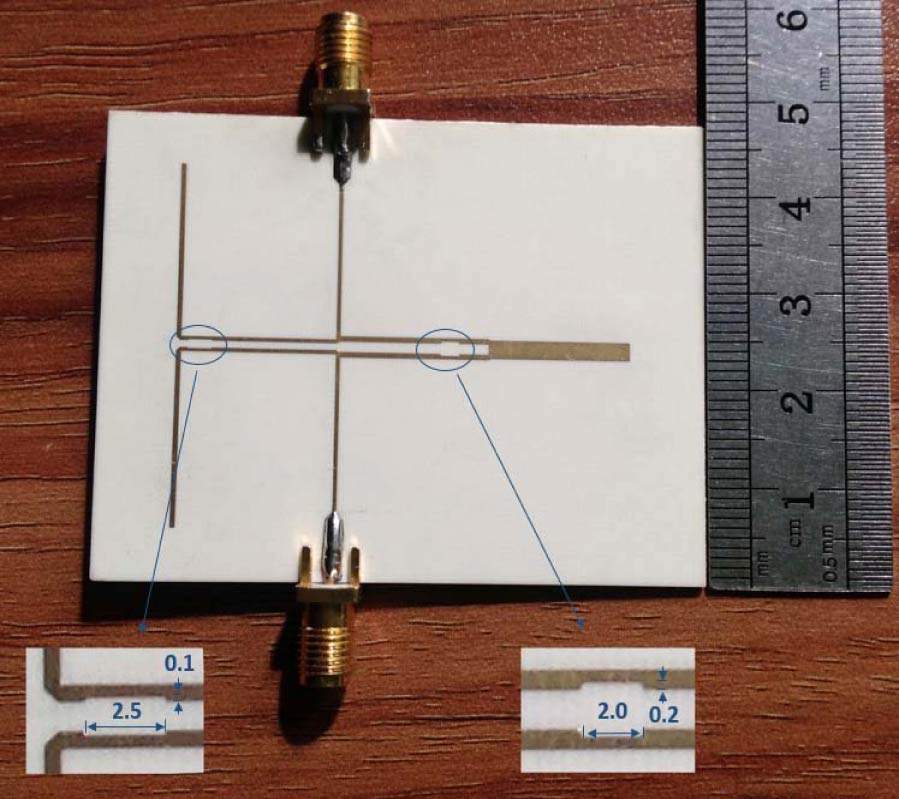
In this paper, we present a broadband out-of-phase power divider with high power-handling capability. The proposed device consists of several sections of double-sided parallel-strip lines (DSPSLs), a mid-inserted conductor plane, and two external isolation resistors, which are directly grounded for heat sinking. A through ground via (TGV), connecting the top and bottom sides of DSPSLs, is employed. The special metal via is realized to short the isolation resistors at full-frequency band when the odd-mode is excited. Meanwhile, it can be ignored as the excitation is even-mode. This property is efficiently utilized to improve the bandwidth. To examine the proposed power divider in detail, a set of closed-form equations are derived. Meanwhile, the power operation analysis illustrates that the proposed power divider is a good candidate for high power applications. The design charts show that the proposed device can support a wide frequency ratio range (1-1.7). Furthermore, broadband responses can be obtained when proper frequency ratios are adopted. For verification, an experimental power divider operating at 1.25/1.75 GHz is implemented. The measured results exhibit a bandwidth of 44.3% with better than 15 dB return loss and 18 dB port isolation is achieved.
A BROADBAND OUT-OF-PHASE POWER DIVIDER FOR HIGH POWER APPLICATIONS USING THROUGH GROUND VIA (TGV)
2013-03-07
PIER B
Vol. 49, 389-409
An Improved Analytical Model for Salient Pole Synchronous Machines Under General Eccentricity Fault
Hamidreza Akbari
This paper develops a more precise analytical model for calculating salient pole synchronous machine (SPSM) inductances in case of general eccentricity including static, dynamic and mixed eccentricities. The developed method is based on the modified winding function approach (MWFA) which accurately considers variable air gap function and leads to pure analytical expressions of inductances. Available analytical techniques, based on MWFA, approximate the air gap function and simplify the geometrical model of SPSM, whereas, in this study, the influence of the openings between the rotor salient poles has been taken into account by using an effective form of rotor pole shoes. Using this technique, flux fringing effect is considered. By taking into account machine geometry, type of windings connection and flux fringing effect, this method is able to model most of the important features of an eccentric SPSM. The developed analytical expressions can calculate time varying inductances of SPSMs with any eccentricity type and degree in the frame of a single program. Simulation results for static eccentricity are compared with experimental tests on a laboratory generator to verify accuracy of the proposed model.
AN IMPROVED ANALYTICAL MODEL FOR SALIENT POLE SYNCHRONOUS MACHINES UNDER GENERAL ECCENTRICITY FAULT
2013-03-07
PIER B
Vol. 49, 363-387
A Unit Cell Approach to Model and Characterize the Metal Powders and Metal-Dielectric Composites at Microwave Frequencies
Tannu Gupta , Mohammad Jaleel Akhtar and Animesh Biswas
A unit cell based numerical approach to model the metal powders and metal-dielectric composites at microwave frequencies is proposed. The unit cell based numerical modeling helps to compute the equivalent reflection and transmission coefficients of these materials, which are commonly used measured parameters at RF and microwave frequencies. The computation of the reflection and transmission coefficients of these artificial dielectric samples also facilitates the determination of their effective constitutive properties, defined in terms of the effective permittivity and permeability, using the reflection transmission approach. The applicability of the proposed unit cell method is first verified for some mixed dielectrics using the classical mixing formulas, and the standard waveguide approach. Once the validity of the proposed approach is ascertained, the effective constitutive properties of copper powder is determined. A detailed parametric analysis is also carried out in order to study the effect of various parameters such as the packing fraction, the grain size and the gap between adjacent spherical shaped metal particles, on the effective constitutive properties of the copper powder compact. This detailed analysis is quite helpful in order to optimize various parameters of the microwave sintering of metal powders and metal-dielectric composites before the actual start of the sintering process using microwaves.
A UNIT CELL APPROACH TO MODEL AND CHARACTERIZE THE METAL POWDERS AND METAL-DIELECTRIC COMPOSITES AT MICROWAVE FREQUENCIES
2013-03-07
PIER Letters
Vol. 38, 75-78
Comments and Corrections to "FDTD Modeling and Simulation of Microwave Heating of in-Shell Eggs"
Mehmet Burak Ozakin , Emrullah Bicak and Serkan Aksoy
In the above paper [1], there are two classes of several errors. The first one is related to mistakes/misprints in equations and irrelevant references. The second one is assertions about innovations, which were claimed as ``for the first time" in the literature. In addition to them, the commentators want to attract attentions of the readers with an additional part of comments in order to make more useful and better understanding of the work in [1]. All details about these issues are discussed at following parts:
2013-03-07
PIER Letters
Vol. 38, 65-73
A Low Power Low Phase Noise LC Voltage-Controlled Oscillator
Hai Feng Zhou , Kam-Man Shum , Ray C. C. Cheung , Quan Xue and Chi Hou Chan
A low phase noise CMOS complementary cross-coupled LC-tank voltage-controlled oscillator (VCO), implemented with TSMC 0.18 μm 1P6M CMOS technology, is presented. Double pair pseudo-resistance transistors biased by the tapped center of the inductor are utilized to reduce the DC bias current. The circuit consumes 1.55 mA from a 1.5 V supply voltage which saves up to 52.4% power, compared with the conventional one. Furthermore, an adaptive body biasing technique (ABB) is used to overcome the effect of PVT variations. The VCO is tunable from 2.58 to 3.07 GHz and has a phase noise -122.7 dBc/Hz at 1 MHz offset from the 3 GHz carrier. The Figure of Merit (FOM) of the proposed VCO is -188.8 dBc, and the figure of merit including the tuning range (FOMT ) is -193.5 dBc.
A LOW POWER LOW PHASE NOISE LC VOLTAGE-CONTROLLED OSCILLATOR
2013-03-07
PIER M
Vol. 29, 207-222
Electromagnetic Wave Scattering from Cylindrical Structure with Mixed-Impedance Boundary Conditions
Mostafa Mashhadi , Ali Abdolali and Nader Komjani
Recently, a new boundary condition is introduced in which surface shows different impedances for TE and TM electromagnetic fields. This new boundary condition is called mixed-impedance (MI) boundary condition and can be expressed in terms of normal components of electromagnetic fields. In this paper, the cylindrical structures with MI boundary condition were investigated and the scattering of such structures was obtained for both normal and oblique incidence and both TEZ and TMZ polarizations. The interesting feature of MI boundary condition was that the boundary conditions of PEC, PMC, DB, D'B', and isotropic impedance boundaries were special cases of the MI boundary. Therefore, by calculating the electromagnetic scattering from a MI boundary, scattering from various boundary conditions could be easily obtained. It was also demonstrated that, by proper choice of boundary conditions the forward or backward RCS (radar cross section) could be significantly increased or decreased.
ELECTROMAGNETIC WAVE SCATTERING FROM CYLINDRICAL STRUCTURE WITH MIXED-IMPEDANCE BOUNDARY CONDITIONS
2013-03-07
PIER
Vol. 137, 643-652
A Synchronous Wideband Frequency-Domain Method for Long-Distance Channel Measurement
Chu-Feng Hu , Zhou Zhou and Shu Xia Guo
This paper proposes a novel synchronous wideband frequency domain method for measuring time domain response of long-distance channel. Its core consists of: (1) baseband signal generators at the transmission terminal and the reception terminal respectively are used to generate the wideband signal of the same frequency; (2) the two GPS clock frequency reference sources locked on the same satellite are used to yield the high-stability 10MHz signal as the external reference source of the baseband signal generator so that the initial phases of the wideband signals are basically the same; (3) the pulse per second (PPS) signal generated by the GPS clock frequency reference source is used as trigger signal to ensure that the baseband signal generator and the vector network analyzer (VNA) can transmit and receive signals synchronously; (4) the time domain response of the channel is indirectly obtained through the inverse Fourier transform of amplitude and phase of the frequency domain response. To verify the measurement method, experiments were performed, in which the sea surface evaporation waveguide which is tens of kilometers apart from each other was selected as the channel. The experimental results, given in Figs. 4 and 5, and their analysis show that the measurement method can obtain amplitude and phase of the signal whose band is hundreds of MHz and whose equivalent pulse width reaches 5ns. The measurement method is used to obtain the time domain response of the long-distance channel, verifying that the measurement method is effective.
A SYNCHRONOUS WIDEBAND FREQUENCY-DOMAIN METHOD FOR LONG-DISTANCE CHANNEL MEASUREMENT
2013-03-07
PIER
Vol. 137, 621-642
A Novel Three-Step Image Formation Scheme for Unified Focusing on Spaceborne SAR Data
Wei Yang , Jie Chen , Hongceng Zeng , Jian Zhou , Pengbo Wang and Chun-Sheng Li
Current advanced spaceborne synthetic aperture radar (SAR) systems may operate at multiple imaging modes, including conventional modes as stripmap, ScanSAR and spotlight, as well as the state-of-the-art SAR modes, e.g., sliding spotlight, TOPS (Terrain Observation by Progressive Scans) and inverse TOPS, etc. A novel image formation scheme for unified processing spaceborne SAR data was proposed, which significantly simplified complexity of SAR processor sub-system. The unified-model-coefficient (UMC) was defined for modeling all SAR modes by means of analyzing both imaging geometry and time-frequency diagram corresponding to each imaging mode, respectively. The unified mathematical formula for modeling all SAR modes echo signal was derived as a function of UMC. Consequently, a unified image formation scheme for accurately focusing spaceborne SAR data in an arbitrary mode was proposed, which integrates all of SAR image formation procedures into a standard three-step processing framework, namely, de-rotation, data focusing and re-sampling, which evidently improve efficiency and robustness of data processing sub-system. Computer simulation experiment results verify the effectiveness of the proposed scheme.
A NOVEL THREE-STEP IMAGE FORMATION SCHEME FOR UNIFIED FOCUSING ON SPACEBORNE SAR DATA
2013-03-07
PIER
Vol. 137, 599-619
Broadband Modified Rectangular Microstrip Patch Antenna Using Stepped Cut at Four Corners Method
Alireza Moradi and Tharek Bin Abdul Rahman
In this paper, a new method that called the ``Stepped Cut at Four Corners'' is introduced to design a multi-mode/broadband modified rectangular microstrip patch antennas (MRMPAs). In order to become acquainted with the new method, the design process of a monopole broadband MRMPA suitable for multifunctional wireless communication bands is explained. The methodology of the proposed broadband MRMPA design is presented in six stages. The first stage is designing a single-mode RMPA. Subsequently, by creating a step at the corners using the proposed method a dual-mode antenna is obtained at the second stage, while the triple-mode and multi-mode antennas are designed, at the third and fourth stages respectively. Two types of broadband antennas are obtained, the stepped line and straight line antennas. By increasing the number of steps, the antenna's operating bandwidth (BW), with return loss less than −10 dB, covers the frequency range from 900 MHz to 2.6 GHZ, which is suitable for GSM (900 MHz and 1.5 GHz), WiFi (2.4 GHz) and LTE (2.6 GHz) applications. In addition, the antenna prototype has been fabricated and measured in the all stages, in order to validate the simulation results, and there is a close agreement between the simulated and measured results.
BROADBAND MODIFIED RECTANGULAR MICROSTRIP PATCH ANTENNA USING STEPPED CUT AT FOUR CORNERS METHOD
2013-03-06
PIER B
Vol. 51, 347-365
Design of Reconfigurable Miniaturized UWB-BPF with Tuned Notched Band
Hesham Abd Elhady Mohamed , Heba B. El-Shaarawy , Esmat A. F. Abdallah and Hadia El-Hennawy
A new miniaturized ultra-wideband bandpass filter with embedded reconfigurable multiband frequency notch function was designed and implemented by embedding all the passive components into a printed circuit board with a high dielectric constant. The proposed filter consists of compact 2U-shaped DGS resonators shunt connected to parallel coupled lines to achieved frequency notch. To tune the notched band, suitable capacitor elements within the inner/outer U-DGS and RF PIN diode within the outer U-DGS are integrated. A curve fitting formula is derived to show the effect of the capacitor value on the center frequency of the notched band, which is decreased by 56.7%. These capacitors improved the quality factor and have the effect of reducing the filter size by 72% as compared to other filters. The RF PIN diode in the outer U-DGS acts as a switch to exhibit a band notch covering the bandwidth of the WLAN for IEEE 802.11 a/h at 5.5 GHz and RFID ISO 18000 series pars5 in microwave (MW) which is set at 5.8 GHz, 6.1 GHz and 6.8 GHz, and the other bands. RF PIN diodes control the notched band and raises it from 5.25 GHz to 6.85 GHz (27%) or remove the band notched according to its positions. In order to validate the feasibility of the proposed structure, UWB BPF with center frequency of 6.85 GHz is designed, fabricated, and measured. The filter has passband from 3.2 GHz to 10.7 GHz and notched band designed to generate stop band from 5.25 to 6.85 GHz, and the two transmission zeros are observable at 2 GHz and 12.5 GHz, respectively by measurement. This paper shows the miniaturized filter with size 6.7 mm x 65 mm occupying a circuit area of about 0.41λg by 0.39λg. The measured results for the proposed filter are in good agreement with simulations and verifies the excellent performance of the designed filter and the validity of the proposed approach.
DESIGN OF RECONFIGURABLE MINIATURIZED UWB-BPF WITH TUNED NOTCHED BAND
2013-03-06
PIER B
Vol. 51, 329-346
Wireless Communications in a Tree Canopy
Pobsook Sooksumrarn , Chainarong Kittiyanpunya , Paiboon Yoiyod and Monai Krairiksh
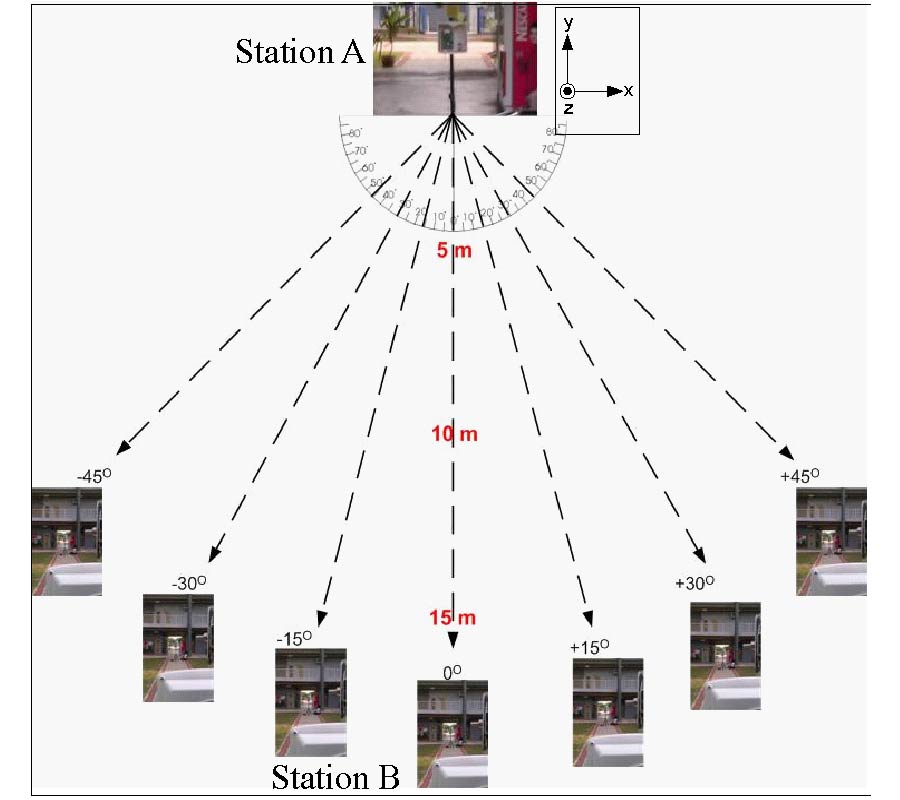
The wireless communications in a tree canopy is essential for pre-harvesting control of fruit productions. To efficiently communicate between a sensor node and a sink node, channel characteristics in a tree canopy must be well-established. In this paper, propagation channel characteristics at the frequencies of 2.45 and 5.2 GHz have been estimated for designing a wireless communication system in a tree canopy. The proposed solution is based on measured path loss, time-varying signal strength and Angle of Arrival (AoA) for various paths in a tree canopy to estimate the channel. Since the waves reflect, refract, diffract and scatter from the foliage, it is complicated to find the true travelling path between a transmitter and a receiver at the nodes. The AoA estimator is used for physical interpretation of the channel. The experimental results demonstrate the channels in a tree canopy are mostly matched with the General Extreme Value model. The measured path gains illustrate that the appropriate antenna patterns must be selected to enhance the reliability of the system.
WIRELESS COMMUNICATIONS IN A TREE CANOPY
2013-03-06
PIER Letters
Vol. 38, 55-64
A Novel via Less Resonant Type Antenna Based on Composite Right/Left-Handed Transmission Line (CRLH-TL) Unit Cell with Defected Ground Structure
Xue Li , Quanyuan Feng and Qian-Yin Xiang
In this paper, a novel via-less balanced composite right/left handed transmission line (CRLH-TL) unit cell using defected ground structure (DGS) is presented, and a resonant type antenna based on the proposed CRLH-TL unit cell is designed. Equivalent circuit model is developed to analyze the CRLH-TL unit cell antenna. The resonant frequency is studied, and the resonant frequency tuned by adjusting the dimension of the antenna patch is simulated. The antenna simulated and measured results are presented. The measured central frequency of the proposed antenna is 5.55 GHz. A peak gain of 6.7 dBi with an efficiency of 75.6% is obtained at the central frequency.
A NOVEL VIA LESS RESONANT TYPE ANTENNA BASED ON COMPOSITE RIGHT/LEFT-HANDED TRANSMISSION LINE (CRLH-TL) UNIT CELL WITH DEFECTED GROUND STRUCTURE
2013-03-06
PIER Letters
Vol. 38, 45-53
Novel Planar Antenna with a Broadside Radiation
Giuseppina Monti , Fabrizio Congedo and Luciano Tarricone
This paper presents a novel low-profile antenna with a broadside radiation. The proposed design strategy consists in modifying the layout of a classical Vivaldi antenna, thus resulting in compact dimensions and a broadside radiation pattern. Two different ways of implementing the proposed design approach are presented and discussed. More specifically, experimental data referring to two prototypes on a FR4 substrate with an operating frequency of 2.45 GHz are reported. The first layout has approximately the same dimensions of a Vivaldi antenna and a directivity of about 7 dBi, the second one has more compact dimensions (the dimensions are smaller than the ones of a standard patch antenna) and a directivity of about 5 dBi.
NOVEL PLANAR ANTENNA WITH A BROADSIDE RADIATION
2013-03-06
PIER C
Vol. 38, 27-42
A Novel Microstrip Antenna Array with Metamaterial-Based Electronic Beam Steering at 2.4 GHz
Athanasia Symeonidou and Katherine Siakavara
A metamaterial based electronically controlled microstrip structure, performing as leaky wave (LW) antenna with beam steering capability was synthesized. The structure has the configuration of metamaterial transmission line(TL) composed of cascade composite right- /left-handed(CRLH) unit cells. The direction of maximum radiation is tuned via the variation of varactros' capacities incorporated to the structure. Theoretical analysis and synthesis, based on the metamaterial TL theory, was made and novel methods to realize some of the elements of the units cells are proposed. Results, received via simulation, demonstrate that the LW antenna has steering capability of the direction of maximum radiation in a range of 40°, gain changing a little, 6 dB to 7 dB, during the scanning, whereas small number of cells is enough to obtain this performance.
A NOVEL MICROSTRIP ANTENNA ARRAY WITH METAMATERIAL-BASED ELECTRONIC BEAM STEERING AT 2.4 GHZ
2013-03-06
PIER C
Vol. 38, 15-26
Design of a Printed Log-Periodic Dipole Array for Ultra-Wideband Applications
Giovanni Andrea Casula , Paolo Maxia , Giuseppe Mazzarella and Giorgio Montisci
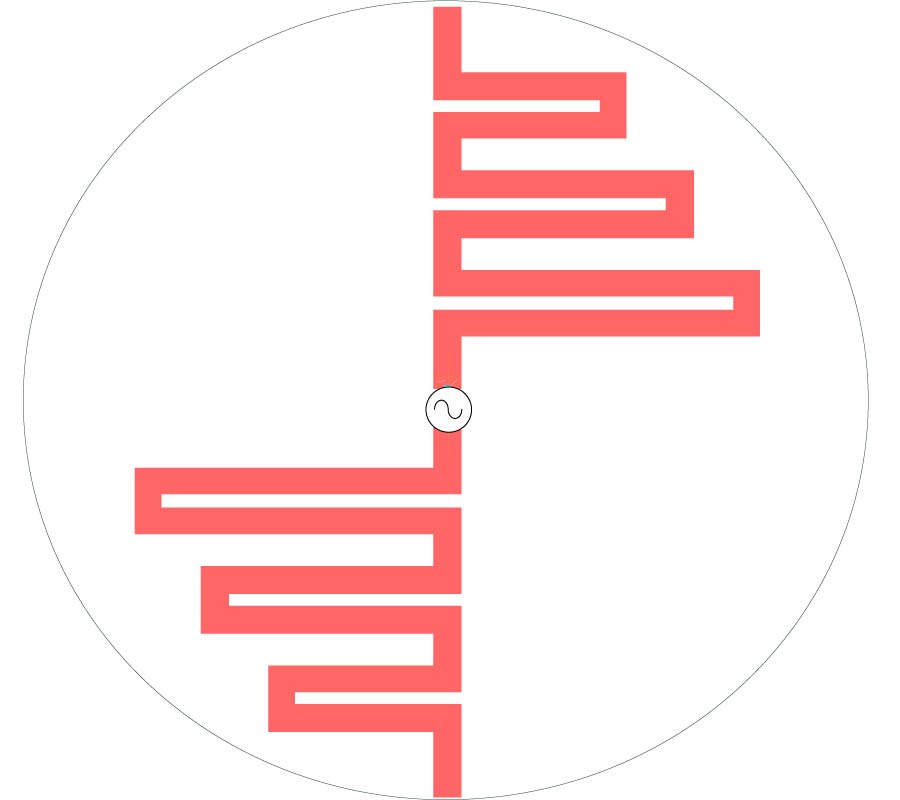
A printed Log-periodic dipole array (LPDA) is presented, operating over the C, X and Ku bands. The antenna feeding structure consists of two coaxial cables, in order to realize an infinite balun which provides the required broadband input matching. The second coaxial cable mirrors the first one, connected to the antenna input, and is capable of both stabilizing the antenna phase center and improving the radiation pattern. The antenna has been designed using CST Microwave Studio, with an useful frequency range of 4-18 GHz. Moreover, both simulated and measured results show that the proposed LPDA can be successfully used as an Ultra Wideband Antenna in the range 4.25-13.25 GHz, in which its phase center remains stable.
DESIGN OF A PRINTED LOG-PERIODIC DIPOLE ARRAY FOR ULTRA-WIDEBAND APPLICATIONS
2013-03-06
PIER M
Vol. 29, 193-205
Closed Form Calibration of 1bit/2level Correlator Used for Synthetic Aperture Interferometric Radiometer
Cheng Zheng , Xianxun Yao , Anyong Hu and Jungang Miao
A Ka-band two-dimensional synthetic aperture interferometric radiometer called BHU-2D has been developed by Electromagnetic Engineering Laboratory of Beihang University. The radiometer obtains images in real-time benefiting from the adoption of a 1bit/2level FPGA-based correlator unit. The design and implementation of the correlator unit in BHU-2D are presented in this paper. The calibration procedures of the correlation coefficients are also presented. For the purpose of simplifying the calibration procedure, a closed form approximation is introduced and applied to BHU-2D, which is used to correct the errors caused by threshold offset of the quantizer. Error analysis of this approximation shows that the method is applicable in SAIRs. In order to verify the design and calibration method, a series of validation experiments have been conducted. Measurement results have proved that the performance of the correlation unit could meet the requirements of BHU-2D.
CLOSED FORM CALIBRATION OF 1BIT/2LEVEL CORRELATOR USED FOR SYNTHETIC APERTURE INTERFEROMETRIC RADIOMETER