Search Results(13786)

2024-08-14
PIER C
Vol. 146, 119-126
A Single-Fed Broadband Circularly Polarized Antenna Based on Rotating Metasurface
Xin Qu , Rongxian Bai , Peng Wang , Minquan Li , Zufeng Zhang , Shuang Xiao , Chen Li and Guocui Zhu
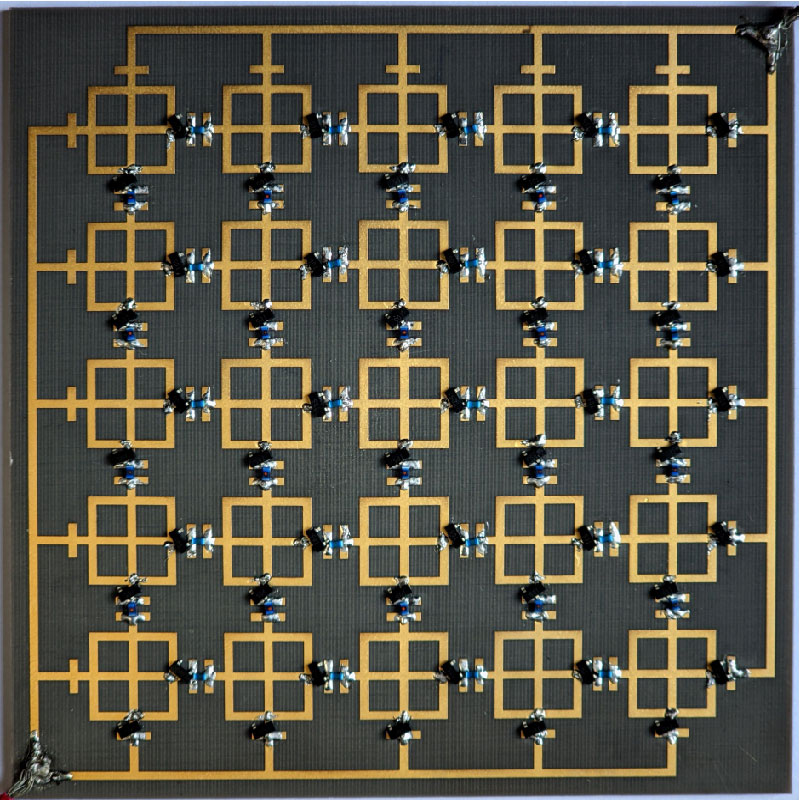
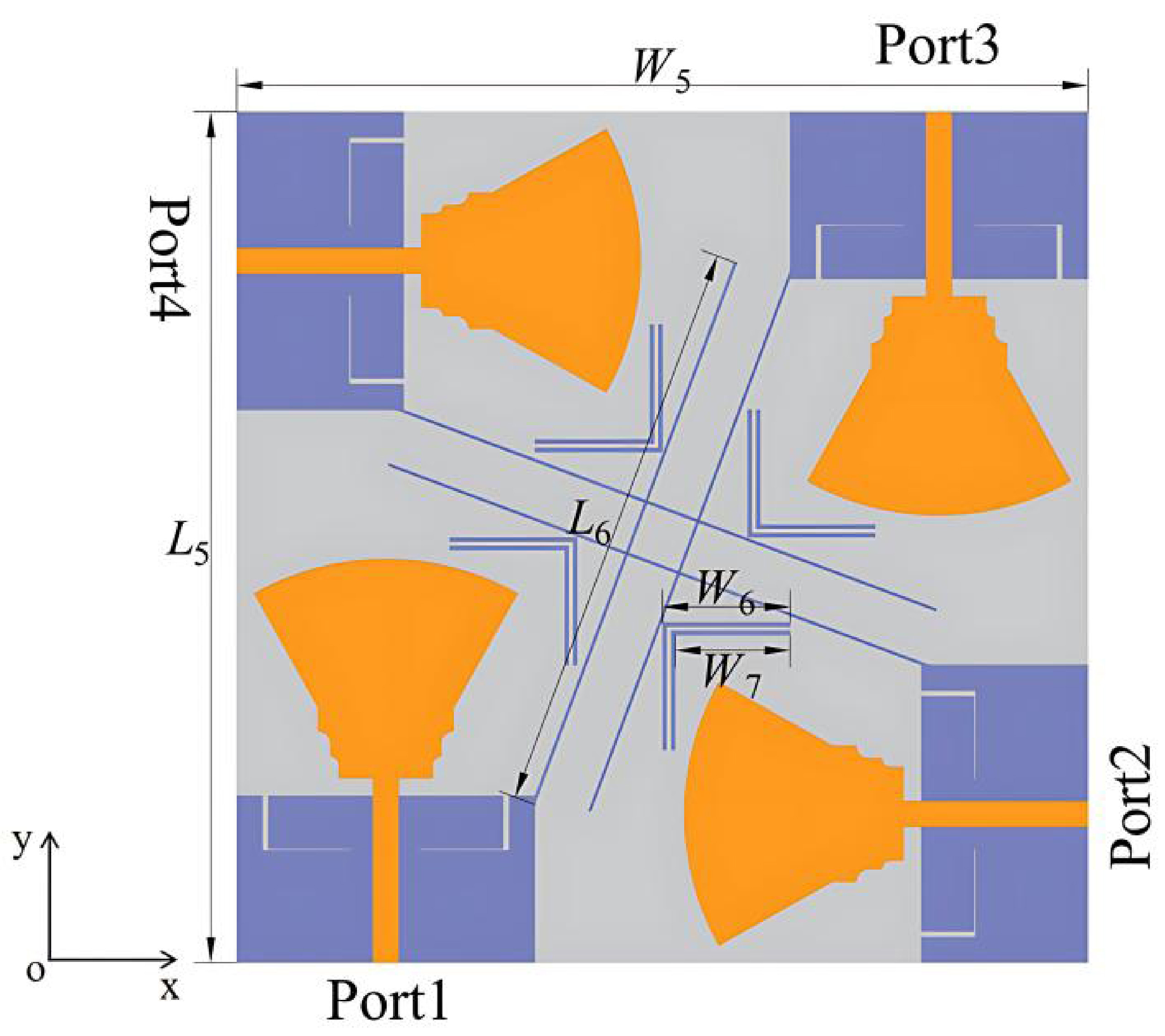
In this paper, a proposed design features a single-fed broadband circularly polarized antenna based on a rotating metasurface. The antenna is positioned between a rotating 4 × 4 periodic patch and the ground plane. The antenna comprises a driving patch and a parasitic patch. It utilizes the two modes of the driving patch, which exhibit different polarizations along the two directions. When the metasurface is placed on it, the truncation angle of the metasurface cells causes the excitation of the two modes with left-rotating circular polarization (CP) and right-rotating CP, respectively. To weaken the right-handed CP relative to the left-handed CP, effectively enhancing the latter, another angle is truncated on the metasurface cell, and the metasurface is rotated by an angle. The final antenna was fabricated and tested with an overall size of 32 × 32 × 3 mm3. Measurements indicate that the |S11| < -10 dB bandwidth ranges from 4.72 to 7.67 GHz (47.9%), and the 3 dB axial ratio (AR) bandwidth ranges from 4.97 to 6.48 GHz (26.3%). Additionally, it achieves a peak gain of 7.75 dBi.
A Single-fed Broadband Circularly Polarized Antenna Based on Rotating Metasurface
2024-08-14
PIER C
Vol. 146, 111-117
High Sensitivity Biosensor Photonic Crystal Focused on Detecting the Concentration of the Biological Analytes
Mohamed Aboutaleb Ghezal , Hamza Lidjici , Abdelhalim Zoukel , Asma Benchiheb and Abdesselam Hocini
The performance and response characteristics of simulated optical biosensor have been greatly enhanced in this work. The results were obtained by evaluating three different structures, each varying in the number of holes surrounding the cavity. The guide-cavity coupling's structural and dimensional characteristics were varied for an effective comparative study. The high sensitivity quality of this optical biosensor was achieved using large transmission rate. The results showed sensitivity around 800 nm/RIU in the first version, 800 nm/RIU in the second version and 700 nm/RIU in the last version. Furthermore, the design parameters were optimized by finite difference time domain (FDTD) method.
High Sensitivity Biosensor Photonic Crystal Focused on Detecting the Concentration of the Biological Analytes
2024-08-14
PIER M
Vol. 128, 71-82
Millimeter-Wave Quasi-Elliptic Filters in Groove Gap Waveguide Technology Using Overmoded Cavity with Spurious Coupling Suppression for Next-Generation SATCOM Applications
Rajni Kant , Deepak Ghodgaonkar , Abhishek Jindal , Parthasarathi Samanta , Hitesh Modi and Praveen Kumar Ambati
This paper addresses the issue of sidelobe imbalance due to spurious coupling in quasi-elliptic filters designed in groove gap waveguide (GGW) technology using TE102 overmoded cavity based resonator to realize the cross coupling in the cascaded quadruplet topology. The filter is designed at 38 GHz with 750 MHz bandwidth (1.97% fractional bandwidth) to demonstrate its potential as a narrow-band, high-power output filter at mm-wave frequencies in next-generation high throughput satellites. The filter is designed for production yield avoiding any complex structures to realize the negative cross coupling and using an all-capacitive iris structure. Systematic studies have been performed to identify and mitigate the sidelobe imbalance issue, and a final design has been proposed with a very low (<1 dB) sidelobe imbalance. The measured results of the realized hardware closely match simulated ones. The proposed design configuration is an ideal filter option for next generation SATCOM applications as it provides benefits of narrowband symmetrical frequency response with low insertion loss, sharp near band rejection, and high-power handling capability along with the benefits of gap waveguide technology in terms of ease of fabrication, low passive intermodulation (PIM) level, and low sensitivity towards surface imperfections and misalignment issues.
Millimeter-wave Quasi-elliptic Filters in Groove Gap Waveguide Technology Using Overmoded Cavity with Spurious Coupling Suppression for Next-generation SATCOM Applications
2024-08-14
PIER M
Vol. 128, 61-69
Designing Magnetic Coupler of Static Wireless Power Transfer System for Thermal Reduction by Using Silicon-Cobalt Wafer
Umar Farooq , Jiropast Suakaew , Poramed Wongjom , Latif Jan , Maryam and Wanchai Pijitrojana
Wireless power transfer (WPT) for electric vehicles (EV) is a promising technology that can help with e-mobility because of its convenience and ability to reduce range anxiety issues. The safety concerns of such systems have received a lot of attention recently. Magnetic coupler is the most important component of WPT systems in terms of thermal safety as its temperature rises because of power outages during the charging process, which could cause damage to the surroundings and other components associated with the system. This article proposes a new thermal and magnetic coupler design by utilizing a Silicon-Cobalt wafer using the Spin Seebeck effect (SSE) phenomenon fabricated through the sputtering technique which can enhance the efficiency of the transmission coil as well as act as a heat exchanger to remove the heat from the coil as well as reduce temperature with the design model.
Designing Magnetic Coupler of Static Wireless Power Transfer System for Thermal Reduction by Using Silicon-Cobalt Wafer
2024-08-14
PIER Letters
Vol. 122, 37-44
A Miniaturized Tag Antenna Based on Meandered Line Technique for UHF Radio Frequency Identification Applications
El Mustapha Louragli , Younes El Hachimi , Sudipta Das , Tanvir Islam , Boddapati Taraka Phani Madhav and Abdelmajid Farchi
The current paper describes a compact, long-reading-range tag antenna for radio frequency identification (RFID) applications in the UHF (ultra-high frequency) band, operating at 915 MHz. The antenna's miniaturized design is achieved through the utilization of the meandering line technique. A T-matching structure matches the chip impedance to that of the antenna. Polytetrafluoroethylene, or PTFE, is used as the substrate for fabrication. The UHF tag's physical dimensions are 44.4 × 14.4 × 0.8 mm3. This antenna was first designed, simulated and then optimized by software CST-MWS (Computer Simulation Technology-Microwave Studio) before being fabri-cated. The Measured reflection coefficient at 915.5 MHz is approximately -24 dB, exhibiting a bandwidth of 7,9 MHz (911.5 MHz-919.4 MHz). The proposed tag is shown to have gain of 1.56 dB and radiation efficiency of 90% at the resonant frequency of 915 MHz. Its long-reading-range at 915 MHz is roughly 18.41 m, for an EIRP of 4 W. The measured results closely align with the simulated ones.
A Miniaturized Tag Antenna Based on Meandered Line Technique for UHF Radio Frequency Identification Applications
2024-08-12
PIER C
Vol. 146, 103-109
DOA Estimation Based on Distributed Array Optimization in Impulsive Noise
Xiang Sha , Guolong Cui and Yanan Du
Aiming at the current distributed array subarray optimization design and DOA estimation problem, a robust and effective distributed array subarray optimization method is proposed, and a discrete quantum electromagnetic field optimization algorithm is designed to quickly solve the resulting objective function to obtain the optimal subarray structure. Then, based on this array structure, the infinite-norm exponential kernel maximum likelihood method is utilized for direction of arrival (DOA) estimation. The simulation results show that the proposed method can still be effective in the case of impulsive noise, small snapshots and low signal-to-noise ratio, which further verifies that the proposed method can obtain a better subarray layout and superior DOA estimates.
DOA Estimation Based on Distributed Array Optimization in Impulsive Noise
2024-08-12
PIER B
Vol. 107, 125-137
An Eight-Element MIMO Antenna System Supporting Dual Bands for 5G Mobile, FSS, and DBS Communication
Raj Kumar Mistri , Ajit Kumar Singh , Santosh Kumar Mahto , Rashmi Sinha , Ahmed Jamal Abdullah Al-Gburi , Mohd Muzafar Ismail and Khaled Alhassoon
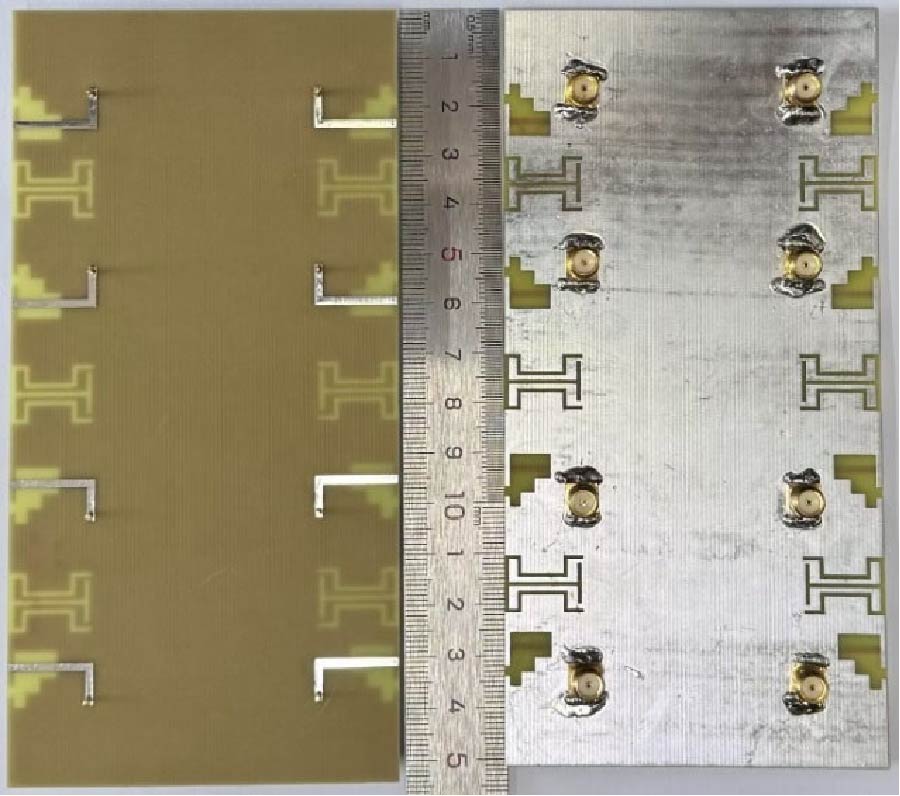
This article presents an 8 × 8 Multiple-Input Multiple-Output (MIMO) antenna system that operates in two frequency bands: 3.4-3.8 GHz and 10.5-14.0 GHz. The core element of this antenna system is a rectangular patch with a line slot. To assess the diversity performance of this MIMO antenna, various parameters like S-Parameters, Envelope Correlation Coefficient (ECC), Mean Effective Gain (MEG), Channel Capacity Loss (CCL), Total Active Reflection Coefficient (TARC), and Channel Capacity (CC) were used. The study demonstrates a strong alignment between measurement and simulation results. The article thoroughly analyzes the simulated and measured performances of the lower band (LB) (3.4-3.8 GHz) and upper band (UB) (10.5-14.0 GHz). In the LB, the measured values for parameters such as reflection coefficient, mutual coupling coefficient, TARC, total efficiency, ECC, MEGi-MEGj, CCL, and CC all surpass or equal specific benchmarks. Specifically, these values are better than -6 dB, 10 dB, -11 dB, 56%, 0.15, 0.83 dB, 0.275 bps/Hz, and 38 bps/Hz, respectively. For the UB, the values are also quite favorable, exceeding or closely matching key criteria: -6 dB, 10 dB, -5 dB, 40%, 0.2, 1.6 dB, 0.55 bps/Hz, and 33.6 bps/Hz. These findings suggest that the intended MIMO antenna meets the necessary conditions for both the LB and UB regions. As a result, it appears to be a promising choice for applications in 5G mobile networks and satellite communications, including Direct Broadcast Satellite (DBS) and Fixed Satellite Services (FSS).
An Eight-element MIMO Antenna System Supporting Dual Bands for 5G Mobile, FSS, and DBS Communication
2024-08-11
PIER C
Vol. 146, 93-101
Multi-Objective Optimization Design of Low-Torque Ripple Ferrite-Assisted Synchronous Reluctance Motor
Chaozhi Huang , Haiwen Li , Siying Li and Yanwen Sun
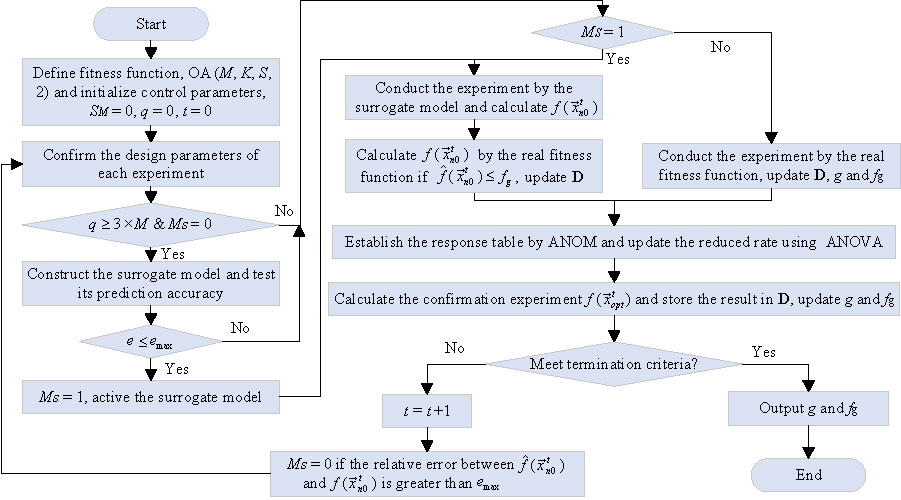
In order to achieve the optimization objectives of low torque ripple, high torque and high efficiency, this paper proposes a multi-objective optimization strategy based on genetic algorithms optimization BP neural network (GA-BP) combined with non-dominated sorting genetic algorithm (NSGA-II) and applies it to the multi-objective optimization design of an external rotor ferrite-assisted synchronous reluctance motor (ERFa-SynRM). Firstly, the preliminary design and selection of ERFa-SynRM structure are carried out. Secondly, a comprehensive sensitivity analysis is presented on the extent to which the design variables affect the optimization objectives. Following this, a high-precision prediction model is constructed by GA-BP neural network, and NSGA-II is applied to global optimization of the prediction model. Finally, the electromagnetic performances of the motor before and after the optimization are compared by the finite element analysis (FEA) software. Compared with the initial motor, the average torque and efficiency of the optimized motor are improved, and the torque ripple is reduced by 54.9%, which verifies the effectiveness of the multi-objective optimization design method.
Multi-objective Optimization Design of Low-torque Ripple Ferrite-assisted Synchronous Reluctance Motor
2024-08-11
PIER C
Vol. 146, 85-91
Reinforcement Machine Learning for Sparse Array Antenna Optimization with PPO
Sajad Mohammad-Ali-Nezhad and Mohammad Hassan Kassem
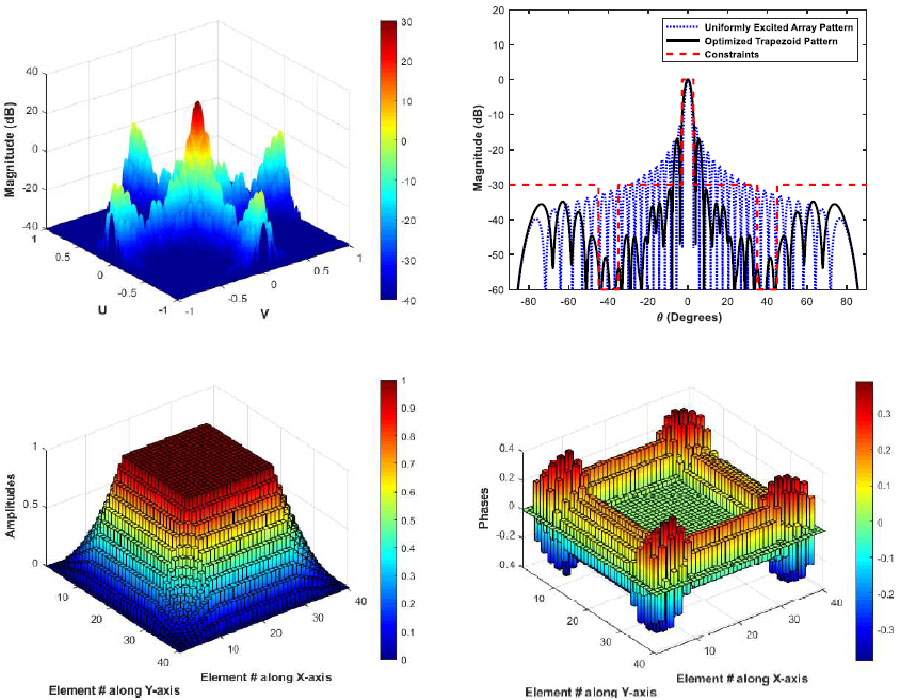
This paper focuses on optimizing the radiation pattern of sparse array antennas using reinforcement learning, with many algorithms. The paper aims to leverage Proximal Policy Optimization's (PPO's) advantages in optimization and its effectiveness in handling stochastic transitions and rewards to achieve a reduced number of elements while maintaining desired signal performance and minimizing unnecessary side lobe signals. By removing a few of the antennas using reinforcement learning and PPO optimization, the same results as a complete array have been obtained. The anticipated outcomes of this research hold the promise of significantly enhancing the effectiveness and utility of sparse array antennas in communication systems.
Reinforcement Machine Learning for Sparse Array Antenna Optimization with PPO
2024-08-09
PIER M
Vol. 128, 51-59
High-Isolation Compact MIMO Antenna with Distributed Metamaterial Loading
Zhi Song , Shucheng Zhao , Siqi Li , Jiayi Chen and Yanbing Xue
This paper details the design and realization of a high-isolation multiple-input-multiple-output (MIMO) antenna tailored for fifth-generation (5G) wireless applications. The antenna consists of a 2-element array, with each unit being a patch antenna loaded with six uniformly sized complementary split-ring resonators (CSRRs). These CSRRs are strategically etched to minimize the antenna's overall size. In addition, the fragment-type split ring resonators (SRRs) are horizontally positioned between the antenna units to further improve isolation. The placement and structure of these fragment-type SRRs are optimized through a combined use of High-Frequency Structure Simulator (HFSS) and genetic algorithm (GA) techniques, which enables significant isolation levels exceeding -40 dB between antenna units. The proposed MIMO antenna operates within the 5G C-band with a -10 dB bandwidth ranging from 4.84 to 5.00 GHz, while the isolation at 4.9 GHz improves from 14.73 dB to 42.88 dB. Moreover, the maximum Envelope Correlation Coefficient is 0.002, and the antenna dimensions are 50 mm × 44 mm × 1.6 mm. Antenna samples are fabricated using wet etching on an FR4 substrate. The measured and simulated values are found to be in good agreement. Compared to the traditional antenna design method, which relies on parameters sweeping, the algorithmic approach used in this paper significantly enhances both the design's effectiveness and efficiency.
High-isolation Compact MIMO Antenna with Distributed Metamaterial Loading
2024-08-08
PIER C
Vol. 146, 77-84
Design of CPW-Fed Flexible Fractal Shape Circular Ring Patch Antenna for Biomedical Applications at ISM Band
Pasumarthi Amala Vijaya Sri and Ketavath Kumar Naik
A CPW-fed flexible fractal shape circular ring patch (FSCRP) antenna is presented in this paper and operates at ISM band for biomedical applications. The proposed antenna operates at 2.46 GHz both in free space and on a human hand. This antenna functions within a 10 dB impedance bandwidth of 390 MHz (2.38 GHz to 2.77 GHz) in free space and 800 MHz (2.04 GHz to 2.84 GHz) on human hand structure with a reflection coefficient of -33.9 dB and -36.97 dB respectively. The circular shape fractal structure operates the antenna with circular polarization, and a 3 dB axial ratio of 170 MHz (2.4 GHz to 2.57 GHz) has been observed. The proposed antenna can be used in Implantable Medical Devices (IMDs) for biotelemetry applications. The simulated and measured results for the proposed FSCRP antenna are also presented in this paper.
Design of CPW-fed Flexible Fractal Shape Circular Ring Patch Antenna for Biomedical Applications at ISM Band
2024-08-08
PIER M
Vol. 128, 41-49
Design of a Compact Dual Port 2 × 1 Ultra-Wideband MIMO Antenna for Radio Frequency Energy Harvesting Based on Four ``a" Shaped Slots
Amira Ali Khedr , Basem Elhady Elnaghi and Ahmed Magdy Mohamed
Radio frequency energy harvesting (RF-EH), which uses an ultra-wideband (UWB) antenna, is the best substitute for traditional batteries for continuously powering sensor networks. The UWB antenna helps to receive the ambient radio frequency energy that radiates from communication applications for harvesting purposes to power devices or recharge batteries. A novel aspect of this design is the use of dual antenna ports with four ``A" shaped in radiating patches and ground plane, which permits the harvester to completely utilize all accessible frequency bands. The design analysis of a compact dual-port (2 × 1) ultra-wideband multiple-input multiple-output (UWB-MIMO) antenna based on four ``A" shaped and shared ground plane for RF energy harvesting in the band of 2.3-21.7 GHz is presented. The proposed antenna has been implemented on a Rogers RT 5880 substrate with a size of 39 mm × 30 mm, a thickness of 0.8 mm, and a dielectric constant of 2.2. It achieves S11 ≤ -10 dB at (2.3-21.7) GHz and a maximum peak gain of 10.29 dB at 20.53 GHz. The proposed antenna is designed and simulated with ANSYS HFSS and fabricated. The results of simulation and measurement of the proposed antenna are in good agreement, and the antenna achieves bandwidth of 2.3–20 GHz that supports radio frequency energy harvesting in addition to UWB applications across satellite, Wi-Fi, Wi-Max, and mobile applications.
Design of a Compact Dual Port 2 × 1 Ultra-Wideband MIMO Antenna for Radio Frequency Energy Harvesting Based on Four ``A
2024-08-07
PIER C
Vol. 146, 65-76
Robust Model Predictive Torque Control with Online Parameter Identification Based on Improved Differential Evolution Extended Kalman Filter for PMSM
Yang Zhang , Chenhui Liu , Sicheng Li , Kun Cao , Yiping Yang and Zhun Cheng
In order to solve the issues of large computation and control performance affected by motor parameters in the conventional model predictive torque control (MPTC) of permanent magnet synchronous motors (PMSMs), a robust model predictive torque control strategy with online parameter identification based on an improved differential evolution extended Kalman filter (IDEEKF-RMPTC) is proposed To begin with, and a steady-state voltage vector at the next time is obtained through a low-pass filter and used as the reference voltage vector to select the alternative voltage vector. The parameter robustness of the PMSM system is enhanced, and the computational effort is reduced. In addition, an improved differential evacuation algorithm for the extended Kalman filter (EKF) is designed, and the system noise matrix Q and the measurement noise matrix R of the EKF are optimized. The estimation error is reduced; the stability of the system is enhanced; and the accuracy of the identification of the motor parameters is improved. Finally, the computational effort of the system is effectively reduced by the proposed IDEEKF-RMPTC strategy, and the parameter robustness of the PMSM drive system under parameter mismatch conditions is enhanced which are proved by the experimental results.
Robust Model Predictive Torque Control with Online Parameter Identification Based on Improved Differential Evolution Extended Kalman Filter for PMSM
2024-08-07
PIER Letters
Vol. 122, 29-35
Conformal Angularly Stable Quadband Frequency Selective Surface for EMI Shielding
Naveena Meka and Krishnan Shambavi
This article presents a miniaturized dual layer angularly stable quadband frequency selective surface (FSS) for shielding applications. The shield consists of four metallic square rings on a thin FR4 substrate of relative permittivity 4.4 and thickness 0.5 mm with two rings on top layer and other two rings in the bottom layer. The dimension of the shielding unit cell is 0.2λ × 0.2λ, for the lowest frequency. These shields have been analyzed in both planar and conformal configurations. The equivalent circuit models as well as analytical model are determined. The shield exhibits quad band band stop characteristics with transmission zeros at 5 GHz (4.3-5.8 GHz), 6.6 GHz (6.3-6.8 GHz), 8.3 GHz (7-8.8 GHz) and 15 GHz (11-17 GHz). These bands find their application in shielding upper WLAN band, sub 6 GHz 5G band C/Ku band for satellite communication. The proposed FSS prototype is fabricated and tested for shield effectiveness in an anechoic chamber. The proposed FSS design offers stable angular response up to 60˚ for planar and geometry. Simulated and measured transmission coefficients are in good agreement and hence well suited for shielding applications. As the structure is fourfold symmetric, it exhibits polarization insensitive and angular stability in all four bands.
Conformal Angularly Stable Quadband Frequency Selective Surface for EMI Shielding
2024-08-05
PIER Letters
Vol. 121, 101-105
Development and Measurement of a 3D Printable Radar Absorber
Tobias Plüss , Axel Murk , Diana Vorst , Denis Nötel , Martin Schürch and Peter Wellig
In this paper, we present our measurements about 3D printable microwave absorber materials. First, we determined the electromagnetic parameters of the material using different measurement techniques, whose some examples we present. Knowing the material parameters, a geometry for a 3D printable absorber was selected, and simulations were performed to optimise the geometry from X-band (8.2 GHz to 12.4 GHz) to Ka-band (26.5 GHz to 40 GHz). Pieces of absorbers were 3D printed using the optimised dimensions and were mounted to a metallic corner reflector as test subject. The corner reflector camouflaged in this way was then measured in an anechoic chamber, and measurements with and without the 3D printed absorbers are compared. We found good agreement between the measurements and simulations and found the structure and the material we used as usable candidates for the reduction of the radar cross section of an object.
Development and Measurement of a 3D Printable Radar Absorber
2024-08-04
PIER C
Vol. 146, 55-64
An AMC-Backed Dual-Band Gain-Enhanced Wearable Antenna with Low SAR for WLAN/WBAN Applications
Regalla Narendra Reddy , Nalam Venkata Koteswara Rao and Dasari Rama Krishna
The advancement of wireless communication technology demands antennas that can achieve significant gain while functioning across diverse frequency ranges. Numerous studies have aimed to enhance the gain and radiation properties of such antennas. However, when these antennas operate near the human body, their performance regarding return loss, gain, radiation pattern, and specific absorption rate (SAR) are influenced by the interaction and absorption of human tissue. To enhance overall antenna performance, artificial magnetic conductor (AMC) surfaces have been introduced. Numerous studies have been conducted to improve antenna performance through the use of AMC surfaces. This paper proposes a coplanar waveguide (CPW)-fed wearable antenna integrated with an AMC array. The integrated antenna is expected to operate at both 2.45 GHz and 5.5 GHz, making it suitable for applications in wireless local area networks (WLAN) and wireless body area networks (WBAN). The study focuses on the benefits of the integrated antenna, highlighting advantages such as improved gain and lowered SAR in comparison to the antenna alone. These improvements are validated through both simulated and measured outcomes. This antenna, featuring a simple feed structure, low cost, and ease of fabrication, is a promising option for wearable medical applications.
An AMC-backed Dual-band Gain-enhanced Wearable Antenna with Low SAR for WLAN/WBAN Applications
2024-08-03
PIER Letters
Vol. 122, 21-28
Pattern Compensation of a Planar Phased Array with Centre Elements Phase Malfunctioning Using a Genetic Algorithm
Raja Aasim Bin Saleem , Arslan Ali Shah , Hina Munsif , Ali Imram Najam , Shahid Khattak and Irfanullah
A phase-only and amplitude-phase genetic algorithm (GA) has been investigated to restore the array pattern of a 4 × 2 planar array in the presence of centre-elements phase malfunctioning. A single and double adjacent antenna elements are considered for phase malfunctioning. The new array weights for functioning antenna elements are computed with GA to restore the value of array peak gain and sidelobe level (SLL). The simulation results, which are verified with measurements, indicated that complete recovery of array pattern without SLL constraint in the presence of malfunctioning elements was possible with the phase-only GA weights. It is shown that the uncorrected pattern can also be compensated for main beam scanning with phase-only GA weights. However, pattern compensation with SLL constraint is not possible using the phase-only GA weights. Therefore, amplitude-phase GA weights are estimated to restore the peak gain and the desired SLL simultaneously at the cost of widening the main beam. A prototype of X-band 4 × 2 microstrip patch array controlled through X-band phaser evaluation boards was used in the in-house anechoic chamber measurements facility to validate the full-wave HFSS simulation results.
Pattern Compensation of a Planar Phased Array with Centre Elements Phase Malfunctioning Using a Genetic Algorithm
2024-08-02
PIER C
Vol. 146, 45-53
Adaptive Cross Approximation Accelerates Compressive Sensing-Based Method of Moments for Solving Electromagnetic Scattering Problems
Dai Dong , Zhonggen Wang , Wenyan Nie , Fei Guo , Yufa Sun , Pan Wang and Chenlu Li
In this paper, a novel measurement matrix construction method based on adaptive cross-approximation (ACA) is proposed to improve the performance of the compressive sensing-based method of moments (CS-MoM) for analyzing electromagnetic scattering problems. ACA is based on a weight scheme and is able to recognize the rows and columns that contribute significantly to the matrix. Thus, the object is divided into multiple blocks, and the impedance matrix is partitioned into near-field and far-field groups to establish the condition for applying ACA. Then, the row indexes are extracted from the group with the highest number of ACA recognized rows in the far-field groups of each block. Finally, by combining all row indexes to extract the impedance matrix, a lower-dimensional and deterministic measurement matrix is constructed, thereby improving computational efficiency. Numerical simulation results validate the accuracy and effectiveness of the proposed method.
Adaptive Cross Approximation Accelerates Compressive Sensing-based Method of Moments for Solving Electromagnetic Scattering Problems
2024-08-01
PIER C
Vol. 146, 33-43
An Adjustable Sensorless Strategy for Start-Up and Low-to-Medium Speed with Six-Phase SRM
Jianfei Sun , Zebin Yang and Xiaodong Sun
To address challenges such as low starting torque and inaccurate position estimation in traditional sensorless control methods for switched reluctance motors (SRMs), this paper proposes a sensorless control strategy suitable for the startup and low-to-medium speed operation of multiphase SRMs. Firstly, an improved inductance calculation model for the pulse injection region is proposed based on the electromagnetic characteristics of SRM. Secondly, leveraging the results of the inductance model calculation, a three-phase commutation rule is designed to enhance the starting capability. Lastly, an adaptive angle tuning (AAT) module is devised to improve the phase commutation width, and the pulse injection region is optimized through a dynamic inductance threshold method. The efficacy of the proposed method was validated through simulations conducted on a prototype six-phase 12/10 SRM.
An Adjustable Sensorless Strategy for Start-up and Low-to-Medium Speed with Six-phase SRM
2024-08-01
PIER B
Vol. 107, 105-124
Iron Loss in Electrical Machine - Influencing Factors, Model, and Measurement
Jiawei Yi , Qinyuan Dong , Jianhua Sun , Lixia Sun , Xiang Li , Hui Hwang Goh , Haisen Zhao , Thomas Wu and Dongdong Zhang
Improving the efficiency of electrical machine is an important way to reduce carbon emissions. Accurate calculation and measurement of iron loss is an important part of improving efficiency of electrical machine. Therefore, how to accurately calculate and optimize the device structure to reduce iron loss has become a research focus. In this study, the influence of power supply, motor structure, ferromagnetic material, manufacturing processes and multiphysics on the motor iron loss is discussed and summarized. Then, the classification and summary of the existing iron loss models are discussed, and shortcomings and the future research direction are suggested. In addition, several induction motor efficiency measurement standards are described, and the defects and improvement direction of efficiency measurement of converter-fed motor are discussed. The contents discussed and summarized in this study can be helpful to engineers engaged in high efficiency motor design and motor driving algorithm development.
Iron Loss in Electrical Machine - Influencing Factors, Model, and Measurement