Search Results(13786)

2024-08-24
PIER C
Vol. 147, 55-63
Compact Wideband Wide-Beam Circularly Polarized Loop Antenna Using Sequential Rotation Feeding Technology
Sihan Liu , Hongmei Liu , Youjie Zeng , Yanjie Pei and Zhongbao Wang
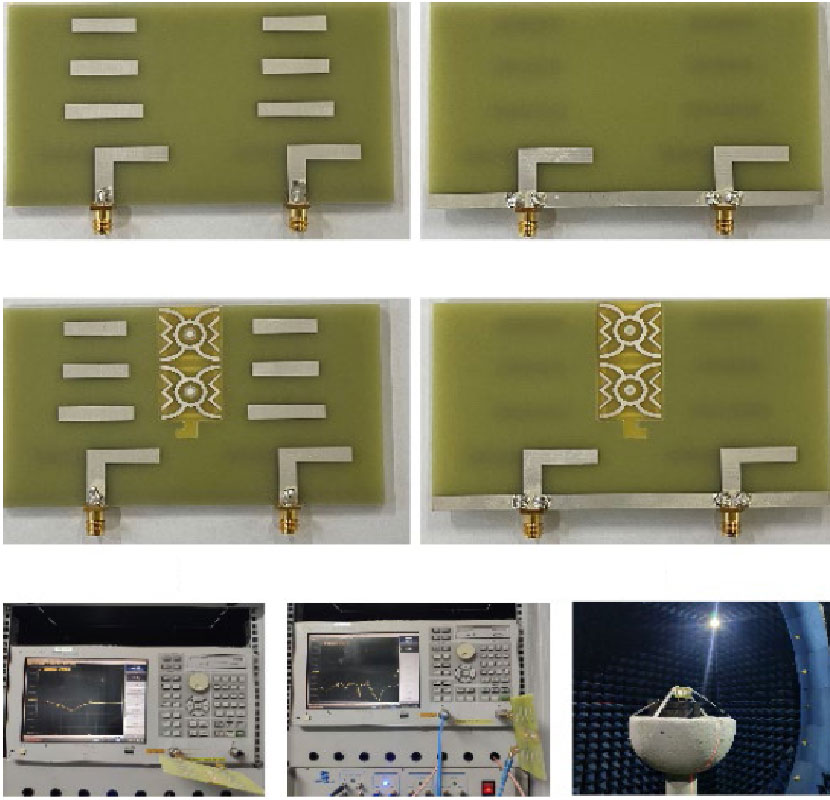
In this paper, a wideband wide-beam circularly polarized (CP) antenna excited by sequential rotation feeding technology is proposed. The antenna is primarily constituted of a loop radiating element and a reactive impedance structure (RIS) cavity. The loop radiator is stimulated by a curved feeding line through six slots etched on the ground, thereby enabling the antenna to achieve broadband performance. In order to achieve a wide 3-dB axial-ratio beamwidth (ARBW), as well as exhibit less effect on the half-power beamwidth (HPBW), a RIS cavity is introduced beneath the loop radiator. To validate the proposed structure, a prototype was constructed and subjected to a series of tests. The results indicate that the bandwidth of the antenna is 187.5% (0.11~3.41 GHz) under a 10-dB return loss. In the frequency band spanning from 1.07 GHz to 2.1 GHz, the AR is less than 3 dB, yielding a bandwidth of 64.98%. Furthermore, at the frequencies of 1.2 GHz, 1.5 GHz, and 1.8 GHz, the proposed antenna demonstrates wide beam characteristics, with the HPBW exceeding 90°, and the 3-dB ARBW within 162°- 224°. In addition, since no extra feeding network is utilized, the antenna is compact in size.
Compact Wideband Wide-beam Circularly Polarized Loop Antenna Using Sequential Rotation Feeding Technology
2024-08-24
PIER M
Vol. 128, 83-88
A Lightweight Deep Learning Model for Full-Wave Nonlinear Inverse Scattering Problems
Yixin Xia and Siyuan He
Nowadays, deep learning schemes (DLSs) have gradually become one of the most important tools for solving inverse scattering problems (ISPs). Among DLSs, the dominant current scheme (DCS), which extracts physical features from the dominant components of the induced currents, has shown its successes by simplifying the learning process in solving ISPs. It has shown excellent performance in terms of efficiency and accuracy, but the increasing number of channels in DCS often requires higher computational costs and memory usage. In this paper, a lightweight deep learning model for DCS is proposed to reduce the burden of memories in the training and testing processes of network structure. And extensive tests of the model are conducted, where comparisons with results from the U-Net structure are provided. The comparison results validate its potential application in utilizing DCS under limited resource conditions.
A Lightweight Deep Learning Model for Full-wave Nonlinear Inverse Scattering Problems
2024-08-23
PIER C
Vol. 147, 45-53
Design and Electromagnetic Performance Investigation of a Compact Pneumatic Drive Linear Generator Used in Wave Energy Conversion
Yusheng Hu , Chouwei Guo , Mengyuan Niu and Lijin He
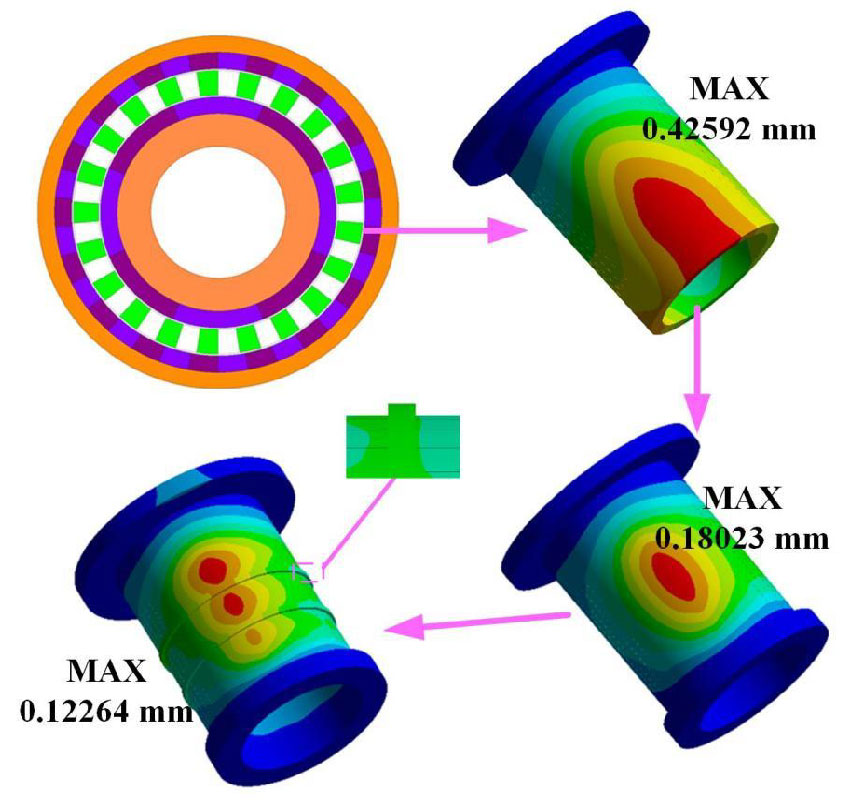
Ocean wave energy is an inexhaustible clean new energy resource, and wave direct-drive linear generator is an energy converter receiving wide attention, but it suffers from the deficiencies of difficult energy harvesting, slow movement speed, large size, and small power generation, etc., so there is an urgent requirement to develop high-efficiency small-scale energy conversion devices. In this paper, a pneumatic drive linear generator (PDLG) is provided as a high efficient compact wave energy converter (WEC). The structure design and automatic reciprocating control system for the PDLG are implemented. The field distribution characteristics and parameters effects are analyzed using the finite-element method based on scalar magnetic potential. Finally, a prototype was fabricated to verify the performance of the PDLG. The experimental results are in good agreement with that of the theoretical prediction. The results of the study show that the provided pneumatic drive linear generator can meet the requirements of high efficient wave energy harvesting, compact structure, and larger power generation.
Design and Electromagnetic Performance Investigation of a Compact Pneumatic Drive Linear Generator Used in Wave Energy Conversion
2024-08-23
PIER C
Vol. 147, 39-44
Wideband Unequal Four-Way Filtering Power Divider with Absorptive Feature
Shuyi Chen , Hongmei Liu , Teng Ma and Zhongbao Wang
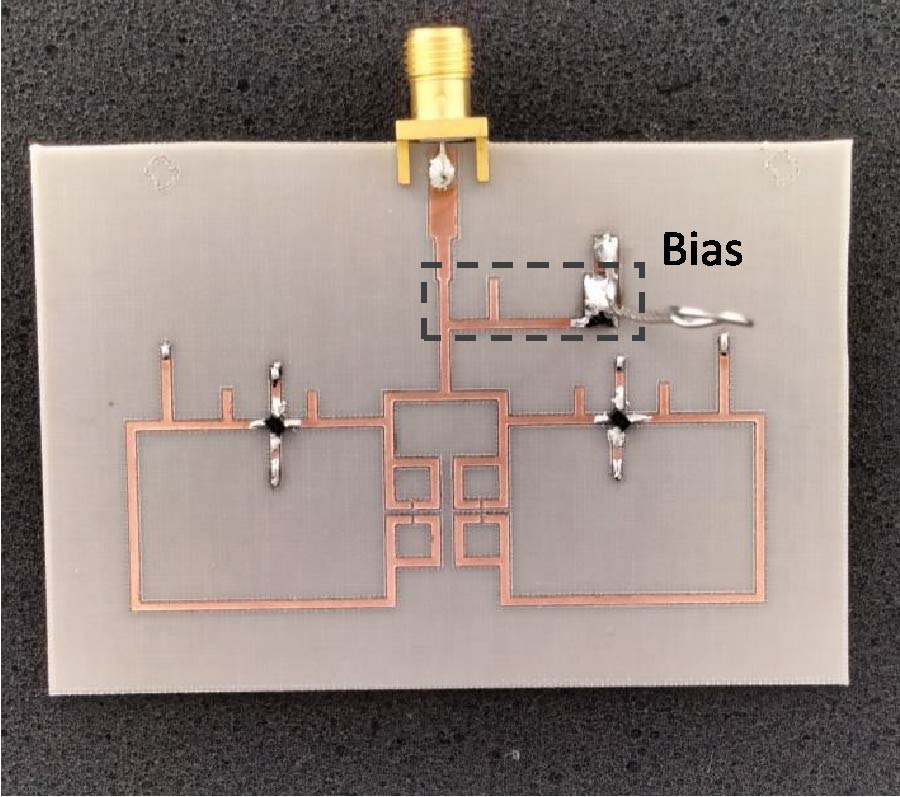
In the paper, a wideband four-way filtering power divider with arbitrary power division ratio and input absorptive feature is proposed. Two sets of coupled lines (CLs) are used to achieve the wideband performance. To obtain absorptive properties, a set of T-type absorption structure consisting of two isolation resistors and a λ/4 short-circuit stub is connected between the two CLs. Meanwhile, high frequency selectivity and good out-of-band rejection are realized by introducing two stepped-impedance resonators. Besides, output impedance matching, isolation and unequal power distribution are achieved by the power division section in the second stage. In the analysis, the equations are derived by using the method of even-odd mode decomposition and voltage-current method. For demonstration, a prototype is designed, fabricated, and measured with the power distribution ratio of 2:1:1:2. Measurements show that an all-frequency band absorption of 200% is obtained with the 3-dB passband bandwidth of 78.1% and the out-of-band rejection of 14 dB. Besides, it also shows 15-dB isolations within more than 60% FBW, and has the feature of small size.
Wideband Unequal Four-way Filtering Power Divider with Absorptive Feature
2024-08-22
PIER C
Vol. 147, 27-37
Nonlinear Testing-Based EMI Characterization of Wireless Communication Transmitter with Microwave Power Amplifier
Hongyu Du , Fayu Wan , Vladimir Mordachev , Eugene Sinkevich , Xiaohe Chen , Glauco Fontgalland , Dinh-Thuan Do , Samuel Ngoho and Blaise Ravelo
An effective empirical method of EMI analysis for transceiver (Tx-Rx) system implemented with nonlinear (NL) microwave power amplifier (MPA) dedicated to wireless communication is developed. The nonlinearity is experimentally quantified by the MPA gain, P1dB and third order intermodulation component via spectral response around 2.4 GHz 802.11b IEEE frequency band. The proof-of-concept represents the Tx-Rx system environment for wireless communication. The considered test signal emulates synchronization and physical broadcast different channels of downlink communication signals under QPSK modulation. The error vector magnitude (EVM) and signal-to-noise-ratio (SNR) due to the microwave Tx-Rx transmission undesirable EMI effect are assessed. Without MPA, the EVM and SNR of various channels fluctuate within a small range. Because of MPA nonlinearity, EMI becomes awfully significant due to the intermodulation generating SNR 20-dB decrease.
Nonlinear Testing-based EMI Characterization of Wireless Communication Transmitter with Microwave Power Amplifier
2024-08-22
PIER C
Vol. 147, 15-25
Sickle-Shaped Tri-Band MIMO Antenna for 5G and X-Band Applications
Yiwei Tao , Han Lin , Ming Yang , Wenyan Nie , Chenlu Li and Mingqing Wang
This paper presents a compact, highly isolated tri-band MIMO antenna for 5G and X-band communication applications. The overall dimensions of the antenna are 43 mm × 30 mm × 1.6 mm. It consists of two monopole radiating units and a metal base with branches and slit slots. The antenna achieves tri-band characteristics by improving the shape of the radiating patch. The isolation of the antenna is enhanced by slotting the floor and loading I- and T-shaped branches to absorb coupling currents. S12 > 15 dB is achieved in the frequency ranges of 3.3 GHz-4.06 GHz, 4.62 GHz-5.28 GHz, and 8.14 GHz-9.28 GHz. Measurement results show that the measured S-parameters do not change significantly compared with the simulation. It also has a low envelope correlation coefficient and good radiation performance.
Sickle-shaped Tri-band MIMO Antenna for 5G and X-band Applications
2024-08-22
PIER C
Vol. 147, 9-13
Dual Higher-Order Orbital Angular Momentum Antenna Based on Rectangular Waveguide
Na Li , Lingling Jiao , Guirong Feng , Ping Li and Xiao-Wei Shi
This paper proposes an antenna based on a rectangular waveguide to generate dual higher-order orbital angular momentum (OAM) beams. The OAM beams with modes l = -6 and l = -7 are produced by radiating the higher order TE_mn transmitted in the rectangular waveguide through a slot. The measurement results indicate that the impedance bandwidth of less than -10 dB is approximately 37.8% in the range of 15-22 GHz, and the mode purity of the antenna is above 55%. The proposed antenna feed structure is simple and does not require a complex phase-shifting network to generate multi-mode and higher-order OAM beams. Such an OAM-based antenna with dual higher-order OAM beams can be utilized in MIMO-OAM communication systems, radar imaging systems, and rotational speed measurement systems.
Dual Higher-order Orbital Angular Momentum Antenna Based on Rectangular Waveguide
2024-08-22
PIER B
Vol. 108, 17-30
A Microwave Subsystem (MS) Capable of Realizing Functional Change with the Aid of 2D-Shaped Liquid Metal (LM)
Xiaochuan Fang , Shaker Alkaraki and James Robert Kelly
This paper presents the first microwave subsystem (MS) capable of changing its function, in this case between resonator and antenna, using liquid metal (LM). This is achieved by filling/emptying fluidic channels with Gallium-based LM and forming LM into different 2D shapes. The manufactured prototype of the proposed MS performs as a slot antenna, when the fluidic channels are empty of LM. On the other hand, it operates in resonator mode, when the fluidic channels are filled with LM. We also connected two MSs along with a microstrip resonator to realize functional change between complex functions i.e., antenna and filter. The proposed connection of MSs can act as a filter when the fluidic channels are filled with LM or as an antenna when LM is withdrawn from the fluidic channels. When operating in the antenna mode the proposed connection of MSs provides a measured peak realized gain of 7.23 dBi and a simulated total efficiency of 84%. When operating in the filter mode the connection of MSs provides a band pass response and exhibits a minimum insertion loss of 1.9 dB, within the passband. The filters 10 dB return loss bandwidth, of 340 MHz, ranges from 2.28 GHz to 2.62 GHz.
A Microwave Subsystem (MS) Capable of Realizing Functional Change with the Aid of 2D-shaped Liquid Metal (LM)
2024-08-21
PIER C
Vol. 146, 195-199
A Planar Sharp-Attenuation Ultra-Wideband Bandstop Filter with a Three Section Coupled-Line Stub
Mengxin He , Xiaoying Zuo , Hang Mei and Yajian Li
A novel design of a sharp-attenuation ultra-wideband bandstop filter is presented in this paper, which is composed of two transmission lines (TLs) and four pairs of coupled-lines. The five transmission zeros in the stopband can improve the bandwidth and roll-off factor of the filter. To verify the design, the filter is manufactured on printed circuit board (PCB), and its performance is measured. The 10-dB stopband insertion loss bandwidth of the filter is 0.45-3.76 GHz (relative bandwidth 157%), with good frequency selectivity. The 20-dB attenuation rate on the lower side of the stopband is about 154.5 dB/GHz.
A Planar Sharp-attenuation Ultra-wideband Bandstop Filter with a Three Section Coupled-line Stub
2024-08-21
PIER Letters
Vol. 122, 59-65
Multi-Band 3D Printed Frequency Selective Surface for RF Shielding Applications
Deepika Singh , Rana Pratap Yadav and Hemdutt Joshi
This paper presents the design and development of 3D printed multi-band frequency selective surface (FSS) for RF shielding applications. The developed FSS significantly rejects the frequency at Wi-Fi, Wi-Max and ISM/WiMax bands. The FSS has been fabricated using a 3D printed ABS substrate and metalized with a copper paint as per design. Its unit cell consists of three independent sub-geometries in which two are mostly like a concentric square loop that encircles the third one, i.e., modified Jerusalem structure. All of these sub-geometries are individually designed for the different rejection bands where their combination is optimized as a unit cell of FSS. The designed unit cell rejects the Wi-Fi, Wi-Max and ISM/WiMax centered at 2.45 GHz, 3.5 GHz and 5.8 GHz with attenuation level more than 35dB. The developed FSS is a prototype of RF shielding structure to be utilized for the fabrication of an interference-free test chamber which isolates the Wi-Fi, Wi-Max and ISM/WiMax interference. The design of FSS is very simple and can be printed in large scale for the development of shielding applications.
Multi-band 3D Printed Frequency Selective Surface for RF Shielding Applications
2024-08-20
PIER C
Vol. 147, 1-8
A Novel Interference Suppression Algorithm Based on Analog Circuits Preprocessing
Xiaolei Sun , Chunteng Li , Guangming Li and Juan Chu
Aiming at two problems of the low radiation efficiency of the transmitted antennas and facing strong interference in extremely-low-frequency (ELF) communication, a new structure of a receiving array is proposed, and the signal preprocessing scheme in the receiver front-end is designed, which can suppress 50Hz interference and its harmonic components effectively, thereby enhancing the detective ability on the weak desired signal. In order to suppress the interference within signal bandwidth, a novel improved generalized sidelobe cancellation algorithm (IGSCA) is proposed. By combining with the proposed receiving array structure, the problem on the desired signal radiated into the reference antennas has been addressed effectively. In order to test the proposed algorithm's performance, an experimental platform is set up under the laboratory environment, mainly adopting a data acquisition unit named NI 9184. The results show that the proposed algorithm can improve the better signal-to-noise-plus-interference ratio (SINR) to a great extent, and the more the number of reference antennas is, the higher the improved performance is.
A Novel Interference Suppression Algorithm Based on Analog Circuits Preprocessing
2024-08-20
PIER C
Vol. 146, 187-193
DMS, CSRR, and DGS Loaded HMSIW Dual-Band Filter with Closely Set Apart Passbands
Soundarya Gopalakrishnan , Sam Suresh Jayabalan , Chinnaswamy Sivamani , Doraiswamy Vedha Vinodha , Maheleeswaran Pushpavalli , Ganesan Vijayakumari and Athappan Senthilkumar
A Dual-band Half Mode Substrate Integrated Waveguide (HMSIW) filter at 4.88 and 6.42 GHz are shown. Defective Microstrip Structure converts the HMSIW's high-pass response to bandpass. Circular Complementary Split Ring Resonator splits the wide passband to give the filter dual characteristics. The out-of-band properties are improved by using a DS-OCSRR-shaped Defected Ground Structure (DGS). PCB technology is used to build and test the filter using an RT Duroid 5880 substrate with 1.6 mm thickness. The measured and simulated values match. Good skirt selectivity, insertion loss of 1.5/1.42 dB, fractional bandwidths of 9.42% and 6.7%, and return loss profile of 21 dB in both passbands characterise the thin dual-band filter. The filter is small, measuring 0.86λg × 0.37λg at 4.88 GHz.
DMS, CSRR, and DGS Loaded HMSIW Dual-band Filter with Closely Set Apart Passbands
2024-08-19
PIER Letters
Vol. 122, 53-58
A Wideband High-Isolated Dual-Polarized Magnetoelectric Dipole Antenna for 4G/5G Communications
Yanhong Xu , Minling Wang , Xiaochao Yang , Can Cui , Xuhui Fan , Tingting Bai and Jianqiang Hou
A highly-isolated dual-polarized magnetoelectric (ME) dipole antenna is proposed in this letter, where a modified cross-shaped differentially-feeding structure is designed to realize dual-linear polarizations (LPs). To broaden the bandwidth of the differentially-driven ME dipole antenna, a pair of L-shaped branches are loaded on the positions where a triangle is cut out of each patch to introduce a new resonant frequency at the upper frequency region. Meanwhile, a two-stepped structure is added to each of the four ports of the cross-shaped differentially-feeding structure to improve the impedance matching characteristic of the antenna. In this way, the 10 dB bandwidth is improved from 64.9% (1.54-3.02 GHz) to 83.5% (1.52-3.70 GHz), i.e., 28.7% bandwidth enhancement is achieved. A prototype is fabricated and measured. The results show that the proposed antenna can achieve a high differential port-to-port isolation of better than 38 dB, cross-polarization level (CRPL) lower than -25 dB, and peak gain up to 10.5 dBi.
A Wideband High-isolated Dual-polarized Magnetoelectric Dipole Antenna for 4G/5G Communications
2024-08-18
PIER C
Vol. 146, 177-185
Microstrip Antenna with Two Elements and Defected Ground Structure for 5G Mobile Applications at 28/38 GHz
Ekta Thakur , Anupma Gupta , Muhannad Kaml Abdulhameed , Aymen Dheyaa Khaleel and Ahmed Jamal Abdullah Al-Gburi
A new type of compact line-fed MIMO antenna for 5G wireless communication is presented in this paper. A rectangular microstrip patch antenna with an inset feed is designed for the 28 GHz and 38 GHz bands. The T-shaped patch contains inverted I-shaped slots, providing a dual-band response at 28 GHz and 38 GHz. By integrating two T-shaped patches, the MIMO (Multiple Input Multiple Output) antenna significantly improves signal diversity and data throughput, making it highly suitable for modern wireless applications such as 5G networks. Slot-formed defected ground structures (DGSs) are inserted into a partial rectangular ground plane. To fit into handset devices for the upcoming 5G mobile revolution, the antennas are modestly configured on a substrate measuring 14×28 mm2, occupying minimal area and reducing mutual coupling. The ECC, MEG, TARC, and radiation efficiency values obtained from the antenna systems are suitable for 5G mobile applications, with excellent reflection coefficient characteristics.
Microstrip Antenna with Two Elements and Defected Ground Structure for 5G Mobile Applications at 28/38 GHz
2024-08-18
PIER C
Vol. 146, 163-175
Strip-Radiator and Reflector Based Multi-Layered CPW-Fed Antenna for Tracking Application
Trupti N. Pawase , Anurag Mahajan and Akshay Malhotra
This communication presents the design analysis and development of a compact, dual-band, circularly polarized, multilayer antenna for global positioning system (GPS), wireless local area network (WLAN), and Industrial Scientific, and Medical (ISM) applications. The antenna comprises two etched strip radiator and reflector layers on two Kapton substrates situated at a vertical distance of 18.47 mm. The inverted U-strip results in WLAN/ISM band from 2.30-2.62 GHz whereas the semi-circular arc-strip is responsible for generating the lower band from 1.46 to 1.73 GHz. The bottom surface reflector plane is applied below the main antenna radiator which results in a unidirectional radiation pattern with improved front-to-back ratio (FBR), antenna gain, radiation efficiency, and specific absorption rate (SAR). The reflector contains an inner square ring with a circular center ring. The reflection coefficient below -10 dB fractional bandwidth (FBW) is suitable for GPS/ISM/WLAN/Wi-Fi/Bluetooth etc. operations. The maximum gain of 5.82 dBi is obtained at a frequency of 2.80 GHz. The antenna is designed on a flexible Kapton substrate of a size 28 × 31 mm2. The SAR values below 0.01 W/kg and 0.02 W/kg are obtained at two resonance frequencies 1.60 GHz and 2.41 GHz, respectively. Therefore, the designed antenna is most suitable for indoor/outdoor wearable tracking purposes and also for medical applications.
Strip-radiator and Reflector Based Multi-layered CPW-fed Antenna for Tracking Application
2024-08-18
PIER Letters
Vol. 122, 45-51
A Compact Low-Loss Single-Layer Vialess Diplexer Based on Complementary Microstrip Spiral Resonators for Satellite Communications
Giacomo Giannetti , Stefano Maddio and Stefano Selleri
The design of a compact low-loss diplexer based on complementary microstrip spiral resonators is described. The resonant elements are two: one is low-pass (channel A) and the other is passband (channel B). The low-pass element is composed of spirals departing from a circle, whereas the passband element is composed of spirals etched on a circle. The former element is novel and has been extensively analyzed here. These elements are connected using a star nonresonant Y-junction to form a single-layer vialess diplexer. As an example, a diplexer working at 0.87 and 2.0 GHz for satellite communications is manufactured and tested. The measured data show an insertion loss equal to 0.58 dB (0.66 dB) for channel A (B). The return loss exceeds 15 dB for both channels, and the dimensions are 0.129λ × 0.265λ ≈ 0.0343λ2.
A Compact Low-loss Single-layer Vialess Diplexer Based on Complementary Microstrip Spiral Resonators for Satellite Communications
2024-08-17
PIER C
Vol. 146, 151-162
New Non-Singular Fast Terminal Sliding Mode Control of Permanent Magnet Synchronous Motor Based on Super-Twisting Sliding Mode Observer
Jiaoyang Wang , Renjun Zhou and Junqin Liu
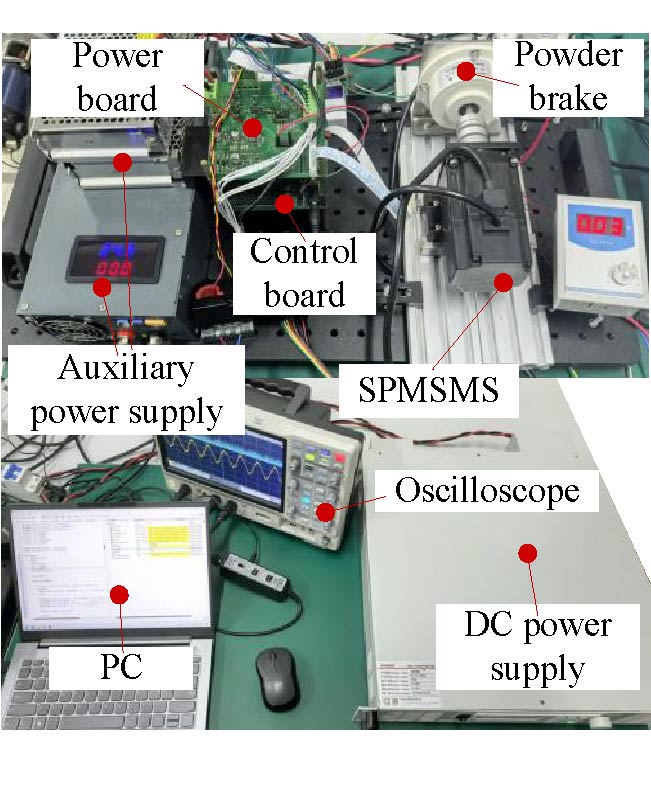
To address the problem of traditional speed loop controllers being unable to achieve rapid system convergence in the face of complex external operating conditions, this paper designs a new nonsingular fast terminal sliding mode control algorithm (NNFTSMC) for PMSM with a super twisting sliding mode perturbation observer (STSMO). Firstly, the mathematical models of PMSM for ideal case and parametric composite uptake are established. Secondly, a new non-singular fast terminal sliding mode control surface (NNFTSM) is proposed to design the PMSM speed-loop controller, which is also paired with the STSMO to observe the total system perturbation in real time and compensate the perturbation to the speed-loop NNFTSMC controller to form a new composite controller of NNFTSMC+STSMO. Finally, the proposed composite control algorithm of NNFTSMC+STSMO is verified to be effective in improving the control of the PMSM drive system during the parameters and load mutation by comparing simulation and RT-Lab semi-physical experiments.
New Non-singular Fast Terminal Sliding Mode Control of Permanent Magnet Synchronous Motor Based on Super-twisting Sliding Mode Observer
2024-08-15
PIER C
Vol. 146, 141-150
Performance Analysis of Stator Structure in Divided Teeth Outer Rotor Embedded Permanent Magnet Synchronous Motor: Salient Pole Stator Vs Segmented Stator
Hairul Faizi Hairulnizam , Norhisam Misron , Nur Amira Ibrahim , Ezwan Muhammad and Chockalingam Aravind Vaithilingam
To improve torque characteristics, this study proposes an upgrade over the standard salient pole stator in a Permanent Magnet Synchronous Motor (PMSM) using a segmented stator. The rotor is externally oriented and has a permanent magnet (PM) incorporated in it. The structure is studied theoretically through flux linkage analysis, torque production, and magnetic circuit model (MCM) analysis. Next, the finite element technique (FEM) is used to model the suggested motor and the salient pole stator, both of which have the same size. Next, a comparison is made between the simulation findings and the static torque, PM demagnetization, flux linkage, magnetic flux density distribution, and average and maximum torque. The proposed design results in a 79.97% increase in average torque, a 90.89% increase in maximum torque, and a 3.02% decrease in cogging torque.
Performance Analysis of Stator Structure in Divided Teeth Outer Rotor Embedded Permanent Magnet Synchronous Motor: Salient Pole Stator vs Segmented Stator
2024-08-15
PIER C
Vol. 146, 127-139
Reactively Loaded CPW Fed Dual Notched Pentagonal Ultrawide Band Antenna
Srijita Chakraborty , Narendra Nath Pathak and Mrinmoy Chakraborty
This research proposal includes the design of a unique coplanar waveguide (CPW) fed ultra-wideband (UWB) antenna prototype with dual notch band characteristics. The microstrip line fed antenna features a configuration of geometric slots, including a rectangle, a semi-circle slots, and a pentagonal stub, along with a microstrip feedline. The antenna measures 35.4 mm × 28.82 mm. Two notches are introduced at 5 to 5.8 GHz (14.8% bandwidth) and 7.2 to 7.8 GHz (8% bandwidth) by incorporating split ring resonators (SRRs) on the bottom surface. Aside from the dual stop bands for the WLAN band (5 to 5.8 GHz) and the SHF satellite communication band (7.2 to 7.8 GHz), the designed antenna operates over an impedance bandwidth from 3 to 11.2 GHz with a voltage standing wave ratio (VSWR) below 2. The proposed antennas have been developed, prototyped, and successfully verified. Simulation data and measurement results are thoroughly examined and analyzed. To confirm the suitability of the designed antenna for pulsed communication systems, the correlation between the input signal of the transmission antenna and the output signal of the reception antenna in the time domain is estimated. This confirms that the antenna prototype is well suited for wireless communication applications in military radar systems, medical imaging, consumer electronics, and more.
Reactively Loaded CPW Fed Dual Notched Pentagonal Ultrawide Band Antenna
2024-08-15
PIER B
Vol. 108, 1-16
A Structured Basis to Determine Equivalent Dielectric Properties of Homogeneous Phantom Liquid Representing Multilayer Biological Tissues for SAR Measurement
Ardhendu Kundu , Kaushik Patra , Bhaskar Gupta and Amirul Islam Mallick
In today's era of wireless communication, interaction of electromagnetic energy and living biological systems is unavoidable - both in far field and in near field of the radiating antenna. Consequent basic safety limits on radiation levels are enforced through Specific Absorption Rate (SAR) limits. Practical measurement and validation of these SAR values require the deployment of phantom models containing tissue equivalent dielectric liquids - these liquids are conventionally single layer and homogeneous in nature. However, structured basis to formulate these custom made homogeneous phantom liquids representing arbitrary combinations of stacked tissue layers has not been properly reported in literature. To address the issue, this paper develops and illustrates a novel structured technique to define equivalent permittivity and loss tangent of homogeneous phantom liquid representing arbitrary combinations of stacked tissue layers - both in far field and in near field exposure scenarios. Electric field distribution and later on point SAR distribution inside different tissue layers have been attempted to replicate as closely as possible using equivalent homogeneous phantom liquid with properly tuned permittivity and loss tangent values. The fitting procedure involves minimization of the absolute/normalized maximum difference (of electric field and point SAR) between the original multilayer tissue and the modelled single layer homogeneous equivalent. This generalized technique is applied to two distinct multilayer (four layers are considered) biological models at 2.45 GHz where one is composed of four layers of equal thicknesses while the other one has four layers with unequal thicknesses. Moreover, the proposed technique has been tested and validated in the two abovementioned multilayer biological models for both far field (plane wave irradiation) and near field (in close proximity to antenna) exposure scenarios. This technique is quite successful in achieving equivalent dielectric liquids in which original point SAR data and its overall distribution across different layers can be realistically replicated while attempting point wise matching at several spatial points. In some cases, the original electric field/point SAR values are achieved with reduced precision near layer interfaces with significant dielectric contrast. Thus, the proposed technique can significantly contribute to accurately measure, validate and reflect the true spatial SAR distributions in original multilayer biological models using the derived homogeneous tissue equivalent phantom liquids.
A Structured Basis to Determine Equivalent Dielectric Properties of Homogeneous Phantom Liquid Representing Multilayer Biological Tissues for SAR Measurement