Search Results(13786)

2024-09-19
PIER C
Vol. 148, 61-70
Investigation of Stator/Rotor Pole Number Combinations and PM Numbers on Variable Flux Leakage PM Machine
Xiping Liu , Ruipan Lu , Yuxin Liu and Wenrui Wang
This paper proposes a variable flux leakage permanent magnet (PM) machine and investigates the impact of slot and pole number combinations on the electromagnetic performance of a variable flux leakage permanent magnet machine (VFL-PMM). The stator armature winding dq-axis magnetic circuit is designed to couple with the PM leakage magnetic circuit by the deliberate establishment of a leakage-guided magnetic barrier and a poly-magnetic barrier on the rotor side. The VFL-PMM with 12s10p-DL (double layers) fractional slot centralized winding (FSCW) serves as an illustrative example of global parametric modelling of the machine. The objective is to optimize the split ratio, average torque, torque ripple, and PM utilization of the machine to obtain the optimum amount of the machine. The relationship between the no-load, on-load characteristics, and variable flux leakage characteristics of 12s8p, 12s10p, 12s14p with double-layer FSCW and 12s10p with single-layer FSCW are studied comparatively. The machines are analyzed and optimized using 2D finite element analysis.
Investigation of Stator/Rotor Pole Number Combinations and PM Numbers on Variable Flux Leakage PM Machine
2024-09-19
PIER C
Vol. 148, 55-60
A High Isolation Dual-Polarized Base Station Antenna with Wideband Differential Feed
Hua Chen , Quan Wang , Mankang Xue , Xinhui Yang , Ning Huang and Qing Fang
In this paper, a novel stacked wideband differentially feed antenna with dual polarizations is designed for base station. The circular parasitic patch deepens the resonance depth by slotting. Two linear dipoles are placed at ±45° under the circular parasitic patch to reduce the overall size of the antenna. The antenna introduces a cross-shaped differential feed to achieve high port isolation. Finally, the designed antenna is fabricated and tested. The test results show that the differential reflection coefficient |Sdd11| is more than 15 dB. The antenna achieves a differential impedance bandwidth of 53.1% (1.63 GHz-2.8 GHz). The isolation is greater than 42 dB over the entire operating bandwidth. The antenna also has a stable gain of 8.2±0.4 dBi and a half-power beamwidth of 65°±4°.
A High Isolation Dual-polarized Base Station Antenna with Wideband Differential Feed
2024-09-19
PIER C
Vol. 148, 43-54
Double and Triple-Vector Hybrid Modulation Model Predictive Control Based on Virtual Synchronous Generator
Yang Zhang , Yuwei Meng , Xiuhai Yang , Kun Cao , Sai Zhang and Zhun Cheng
To address the issues of high current harmonic and power ripple in the traditional Finite Control Set Model Predictive Control (FCS-MPC) strategy for virtual synchronous generator system with quasi-Z-source inverter (qZSI-VSG), a double and triple-vector hybrid modulation model predictive control strategy is proposed. This strategy utilizes the inductor current sub-cost function to select the shoot-through state (ST state) or the non-shoot-through state (NST state). When NST state is selected, the voltage vector combinations in the double-vector and the triple-vector are initially established. Then, the voltage vector combinations are reduced from 18 groups to 6 groups by using the vector combination quick selection table. Subsequently, the duty cycle of each voltage vector is then determined based on the value of its cost function, and the voltage vector is re-synthesized. Finally, the predicted values of all control variables are calculated and substituted into the cost function for optimization. Experimental results show that the proposed strategy reduces 48.62% of current harmonic, 50% of active power ripple and 25.53% of capacitor voltage ripple compared to the traditional strategy, which effectively improves the system control performance.
Double and Triple-vector Hybrid Modulation Model Predictive Control Based on Virtual Synchronous Generator
2024-09-19
PIER Letters
Vol. 122, 93-99
Miniaturized Filter Unit Based on Serpentine Microstrip Resonator and Half-Mode Substrate Integrated Waveguide and Its Application
Lianxin Li , Xiaohei Yan , Fupeng Wei , Guiqing Liao , Weijun Yv and Keyou He
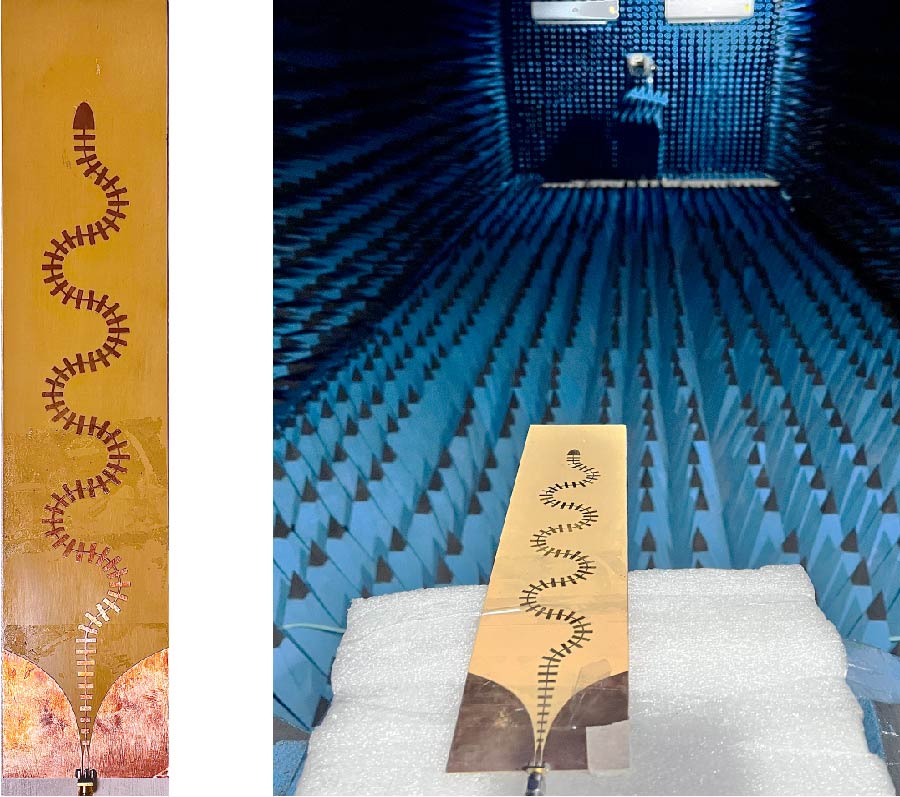
In order to effectively reduce the loss of the filter, decrease its size, and improve its frequency selectivity, a miniature filter unit has been proposed. This unit offers enhanced frequency selectivity and facilitates adjustment of the center frequency. The filter unit is constructed by embedding a serpentine microstrip resonator in the upper metallic surface of a half-mode substrate-integrated waveguide (HMSIW). The center frequency of the filter unit is considerably lower than the cutoff frequency of the HMSIW, which contributes to the miniaturization of the filter. The center frequency of the filter unit can be adjusted solely by modifying the dimensions of the microstrip resonator, while the dimensions of the remaining components can be maintained at a constant value. A transmission zero has been incorporated into the upper resistance band with the objective of enhancing its frequency selectivity. A second-order filter with a center frequency of 3 GHz is accurately designed using this filter unit. The results demonstrate that a miniaturized filter with the desired center frequency and excellent performance can be rapidly achieved using this filter unit, which has potential applications in the 5G (sub-6G) band.
Miniaturized Filter Unit Based on Serpentine Microstrip Resonator and Half-mode Substrate Integrated Waveguide and Its Application
2024-09-18
PIER
Vol. 180, 25-53
Alternative Plasmonic Materials for Biochemical Sensing: A Review (Invited Review)
Leonid Yu. Beliaev , Andrei V. Lavrinenko and Osamu Takayama
Optical materials whose permittivity becomes negative for certain wavelength ranges, so-called plasmonic materials, have been widely used for biochemical sensing applications to detect a wide variety of analytes from chemical agents to protein biomarkers. Since many analytes are or contain nanoscale objects, they interact very weakly with light. Thus, light confinement is a key to improving sensitivity. Using metal or plasmonic nanostructures is a natural solution to confine light and boost light-matter interactions. As there are several different optical sensing schemes, such as refractometric sensing, fluorescence-labeled sensing, and vibrational spectroscopy, whose operating wavelength spans from ultraviolet to mid-infrared wavelength regions, some plasmonic materials are superior to others for certain wavelength regions. In this article, we review current progress on alternative plasmonic materials, other than gold, silver, and aluminum, used in biochemical sensing applications. We cover a wide variety of plasmonic material platforms, such as transparent conductive oxides, nitrides, doped semiconductors, polar materials, two-dimensional, van der Waals materials, transition metal dichalcogenides, and plasmonic materials for ultraviolet wavelengths.
Alternative Plasmonic Materials for Biochemical Sensing: A Review (Invited Review)
2024-09-17
PIER C
Vol. 148, 31-42
A Dual-Band MIMO Antenna Based on Multimode for 5G Smartphone Applications
Han Lin , Wenjie Sun , Zhonggen Wang and Wenyan Nie
In order to meet the current demand for 5G smartphone antennas, this paper introduces a six-port dual-band multiple-input multiple-output (MIMO) antenna designed for 5G smartphones. Based on multimode, the antenna achieves multiple band coverage in a limited space, making it of significant practical value in 5G cell phone antenna applications. The antenna features a structure comprising a modified L-shaped patch antenna, a gun-shaped slot in the ground plane, and two small stubs extending from the metal ground. This configuration creates a multimode antenna that is excited by two coupled feed loop modes and two slot modes. The feeder strips, which have been enhanced with L-shaped slots, form tuned branches, enabling the co-excitation of multiple modes. The MIMO system can operate within the frequency range of 3.3-3.8 GHz and 4.4-7.5 GHz (S11 < -6 dB), covering the 5G communication bands including n78 (3.3-3.8 GHz)/n79 (4.4-5.0 GHz) and the LTE Band 46 (5.15-5.925 GHz). Additionally, the antenna exhibits an envelope correlation coefficient of less than 0.18, antenna efficiency ranging from 60% to 93%, and isolation between adjacent antenna elements better than 12.9 dB.
A Dual-band MIMO Antenna Based on Multimode for 5G Smartphone Applications
2024-09-17
PIER B
Vol. 108, 61-73
A Symmetric Shifted Coprime Array for Localization of Mixed Near Field and Far Field Sources: Reduced Mutual Coupling Effect
Yiming Guo , Tao Zang , Fengtong Mei , Qian Liu and Linzi Li
Sparse arrays have the technical advantages of large equivalent aperture, high degrees of freedom (DOFs), and low mutual coupling leakage. In this article, a novel symmetric sparse array, termed as symmetric shifted coprime array (SSCA), is proposed for the localization of both the far field and near-field of sources. It can be generated in two steps. Firstly, the second subarray of the traditional coprime array is shifted by a appropriate distance, and secondly, the entire array is flipped. By translating, the proposed array provides increased DOFs and enhanced ability to resist heavy levels of mutual coupling. Meanwhile, the symmetric structure of the array can be ensured by flipping to solve the parameter estimation of mixed fields. We provide an analytical expression for the proposed array and also derive its DOFs and weight functions. The first three weight functions of SSCA are equal to 2, indicating that the SSCA improves the ability to resist mutual coupling. Numerical results show that the proposed array is superior to existing sparse arrays for both direction of arrival (DOA) and range estimations.
A Symmetric Shifted Coprime Array for Localization of Mixed Near Field and Far Field Sources: Reduced Mutual Coupling Effect
2024-09-13
PIER M
Vol. 129, 11-22
A Dual Transmission Zero Bandpass Filter Employing Novel Hairpin-Coupled Resonators for Improved Stopband Characteristics Application the Vital Signs Detection Radar
Mingming Gao , Yunshu Yang , Jingchang Nan , Handong Wu , Xiaolin Wang and Xuanye Cui
Conventional hairpin band-pass filters (BPFs) typically have poor stopband performances. Therefore, this paper proposes a BPF with a center frequency of 24 GHz that employs a novel hairpin-coupled structure. An enhanced hairpin-coupled resonator topology is also introduced to improve the stopband suppression characteristics. Specifically, the proposed resonator and filter are configured through a hairpin structure and source-third resonator coupling, which afford a miniaturized size and coupling of the transmission zeros. Then, an equivalent circuit model is simulated to conduct loss analysis of the millimeter-wave (mm-wave) BPF, and the corresponding analytical parameters and result data are extracted. Furthermore, fast synthesis is achieved for the high stopband suppression mm-wave filter. The compact BPF developed is fabricated using the quart glass process, with the corresponding measurements revealing that the insertion Loss (IL) is less than 4.5 dB, and the return loss (RL) exceeds 9 dB within the passband. Meanwhile, the stopband suppression at 20.6 GHz and 28.6 GHz can reach 43 dB and 35 dB, respectively. Those advanced performances demonstrate the promising prospect of the proposed filter for its application in biological radar life feature monitoring.
A Dual Transmission Zero Bandpass Filter Employing Novel Hairpin-coupled Resonators for Improved Stopband Characteristics Application the Vital Signs Detection Radar
2024-09-13
PIER M
Vol. 128, 145-153
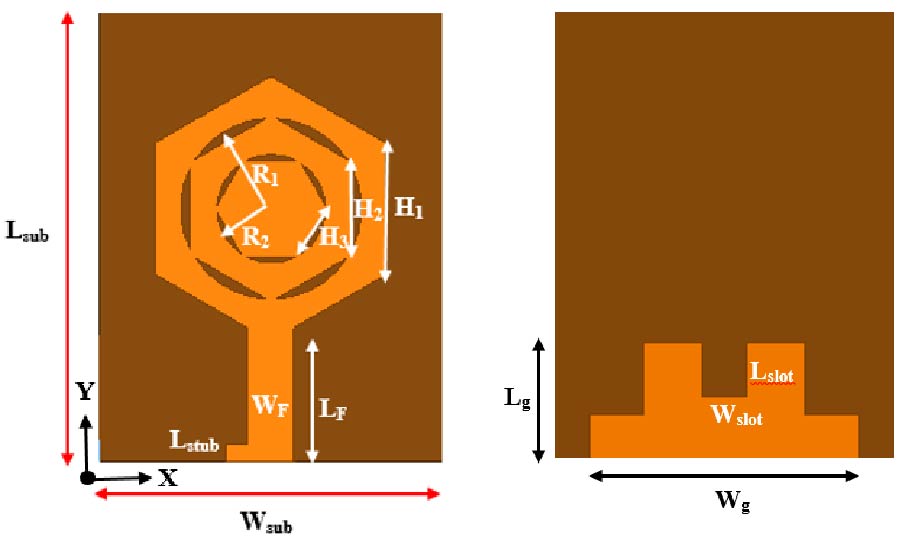
Two-Port Hexagon-Shaped MIMO Antenna for UWB Applications Integrated with Four Frequently-Used Stopbands for Medical Domains
Liangliang Zhao , Aidong Li , Yongmao Wang , Dengyang Song , Mingxuan Zheng , Chenlu Liu , Chuwei Li , Yongtao Liang , Huiling Zhao and Chufeng Hu
A compact ultra-wideband (UWB) multiple-input multiple-output (MIMO) antenna with four stopbands is designed and experimentally investigated. By the method of coating, various T-shaped structures and split-ring resonators (SRRs) are used for suppressing the mutual coupling and introducing the band-notched characteristics, respectively. The actual design has an overall size of 46 × 37 × 1.57 mm3 across the whole UWB spectrum from 2 to 22 GHz except stopbands from 3.47 to 3.83 GHz, 5.2 to 5.85 GHz, 7.19 to 7.84 GHz, and 8.15 to 8.6 GHz, which prevent the interference of Microwave Access (WiMax), wireless local area network (WLAN), satellite downlink and satellite communications band (ITU 8 GHz) bands, respectively. Besides, the isolation of the most operating frequencies is higher than 20 dB, and the antenna obtains a fairly stable radiation pattern and gain, as well as a lower envelope correlation coefficient (ECC < 0.005). Additionally, using the antenna inserted in name badge of the doctor, the chance of infection will be greatly reduced. Ultimately, the proposed MIMO monopole antenna has a potential application in the medical domain.
Two-port Hexagon-shaped MIMO Antenna for UWB Applications Integrated with Four Frequently-used Stopbands for Medical Domains
2024-09-12
PIER C
Vol. 148, 19-30
A Terahertz Signal Transmission in Plasma Sheath with Different Vehicle Size
Zhikang Chu , Mingyang Mao , Jiawei Xiong , Ziyang Zhao , Rongxin Tang and Kai Yuan
Communication blackout is a serious threat to aerospace engineering. Over the past decade, the terahertz (THz) technology has been considered an effective solution to the blackout problem. However, it is currently unclear that how the size of the vehicle affects the conditions of the THz communication channel within the plasma sheath. In this study, a numerical hypersonic hydradynamical model is introduced to investigate the relationship between THz signal attenuation in the plasma sheaths and the size of the vehicle. The analysis shows that the size of the vehicle significantly influences the structure of the plasma sheath. The thickness of the plasma sheath increases linearly with the size of the vehicle. The maximum electron density in smaller vehicles shows unstable fluctuations, attributed to variations in size causing changes in the flow velocity and mass density, resulting in the variation of pressure distribution. Additionally, with the increase of plasma sheath thickness, the attenuation coefficient of THz signals increases linearly. Therefore, for the vehicles of large sizes, the designs that minimize the thickness of the plasma sheath, such as shaped configurations, are helpful to mitigate the communication blackout.
A Terahertz Signal Transmission in Plasma Sheath with Different Vehicle Size
2024-09-12
PIER M
Vol. 129, 1-10
A Compact High-Isolation Tri-Band MIMO Antenna Based on Characteristic Mode Analysis
Jinrong Su , Shiqi Di , Chunhui Yao and Xinwei Chen
This paper presents a compact 3-port multiple-input multiple-output (MIMO) antenna for 5G wireless communication, covering the 2.6 GHz, 3.5 GHz, and 4.8 GHz bands. Three orthogonal modes (TMsub>10, TMsub>01, and TMsub>20 modes) are excited to realize tri-band operation and high isolation simultaneously. Using characteristic mode analysis (CMA), dual-slot structures and I-shaped patches are introduced to block coupling path, and the isolation is improved. Simulated and measured results show that the proposed antenna operates in the frequency bands of 2.57 to 2.64 GHz, 3.4 to 3.5 GHz, and 4.8 to 4.9 GHz with isolation better than 20.6 dB. In addition, it can be calculated that Envelope Correlation Coefficient (ECC) (<0.06), Diversity Gain (DG) (>9.99 dB), Total Active Reflection Coefficient (TARC) (<-10 dB), and Channel Capacity Loss (CCL) (<0.45 bits/Hz/sec) are in acceptable level, implying excellent diversity performance and data transmission quality. It is worth noting that the evolution of the antenna is entirely based on the CMA, which greatly simplifies the design process. The antenna has the advantages of high isolation, compact structure, easy processing, and low cost, positioning it as a compelling candidate for integration into 5G wireless communication systems.
A Compact High-isolation Tri-band MIMO Antenna Based on Characteristic Mode Analysis
2024-09-11
PIER C
Vol. 148, 9-18
Transmission Characterization of Four-Layer PCB Differential Lines Based on Modified Kron's Methodology
Weibing Xiao , Kuangang Fan , Fazhu Zhou , Jizan Zhu and Shuliang Li
This paper addresses the high-frequency signal transmission problem of high-speed differential lines on four-layer printed circuit boards (PCBs). It establishes a mathematical model of high-speed differential lines in conjunction with modified Kron's methodology (MKM), a nontraditional circuit modeling method. The article builds the model through diakoptics of differential lines, then generates the corresponding topology maps, and finally creates the model through tensorial analysis of the network (TAN). The differential line model is simulated and optimized by HFSS. This paper mainly analyzes the influence of differential line spacing and grounding vias on the signal transmission of differential lines. Secondly, it analyzes the problem of multi-group differential line arrangement based on the above work. Finally, the experimental results obtained are consistent with the simulation ones.
Transmission Characterization of Four-Layer PCB Differential Lines Based on Modified Kron's Methodology
2024-09-11
PIER C
Vol. 148, 1-7
SRA-DGS-NL Based Decoupling Scheme for MIMO Antenna
Revati C. Godi and Rajendra R. Patil
In this paper, a novel decoupling strategy for a MIMO antenna is proposed. This MIMO antenna system consists of two symmetric inverted L shaped antenna elements. To improve the isolation between radiating antenna elements, split ring arrays, neutralisation line and ground slots are employed. The MIMO antenna operates at 6.27 GHz. Neautralization line aids in cancelling the coupling by introducing reverse coupling. Ground slots introduce band-stop characteristic to nullify the coupling effect, and split ring array blocks the electromagnetic coupling reaching the other antenna element. The isolation parameters |S12| and S21 obtained are less than -21 dB. The diversity parameters envelope correlation coefficient and diversity gain are investigated. Envelope correlation coefficient is within acceptable limit. These diversity parameters indicate that good diversity performance is achieved by the proposed MIMO antenna. Measured results are in good agreement with simulated ones. The suggested antenna is appropriate for many wireless applications, including IEEE 802.11 and 802.16 standards, as we deal with the sensitive environment.
SRA-DGS-NL Based Decoupling Scheme for MIMO Antenna
2024-09-11
PIER Letters
Vol. 122, 87-92
Bio-Electromagnetic Safety Assessment of Wireless Charging Environment for Electric Vehicles
Haoran Zheng and Xiaohe Zhao
Wireless power charging technology has been developed rapidly and is extensively utilized for electric vehicle wireless charging due to its numerous over plug-in charging. The electromagnetic bio-safety of the human body in charging environment has become a significant public concern. To address this issue, this paper employes the finite element analysis method to assess the electromagnetic safety of crucial organs in a typical charging environment. Firstly, human-vehicle models in various typical postures were constructed in COMSOL, and the spatial distribution of electromagnetic fields in the critical organs was calculated in a 7.7 kW, 85 kHz charging environment. Subsequently, the electromagnetic radiation dose of each organ was calculated and compared with the ICNIRP standards. The results indicated that the electromagnetic radiation dose received by different organs is influenced by both the electromagnetic parameters and position of the organs. When the human body is positioned flat in the car, the electromagnetic radiation exposure to various organs is at its highest. Additionally, the maximum radiation dose for each organ is significantly below ICNIRP standard in a low-power wireless charging environment, supporting the commercial adoption of wireless charging technology for electric vehicles.
Bio-electromagnetic Safety Assessment of Wireless Charging Environment for Electric Vehicles
2024-09-09
PIER Letters
Vol. 122, 81-86
Multi-Band Band-Pass Filter with Independently Controlled Asymmetric Dual-Band Response Based on Metacell
Shobha Hugar , Jambunath S. Baligar , Veerendra Dakulagi and Kashipura Manjanaik Vanitha
The key challenges in the design of multi-band filters are realizing highly independent, controlled asymmetric-wide and narrow dual-band response. To address these challenges, this paper proposes the design and development of a dual-band band-pass filter (BPF) with highly independent, controlled wide and narrow band responses. The proposed filter is constructed using only two resonator structures, asymmetric step impedance resonator (A-SIR) and metacell. The wide and narrow band responses are independent and are controlled independently by impedance ratio (R) and the number of cells (N) in metacell structure, respectively. Additionally quasistatic circuit model of the metacell is used to analyze independently controlled narrow passband response. The prototype of the filter is fabricated, and the simulation results are validated through experimental measurements.
Multi-Band Band-Pass Filter with Independently Controlled Asymmetric Dual-band Response Based on Metacell
2024-09-08
PIER C
Vol. 147, 161-166
A Planar Five-Section Short-Length Coupled-Line Band-Stop Filter with Two Reconfigured States
Mengxin He , Xiaoying Zuo , Hang Mei and Yajian Li
A novel circuit structure is proposed to design a small size band-stop filter. The structure consists of five pairs of short coupled-lines. The bandwidth, roll off and center frequency of the filter can be flexibly controlled by changing the data of different pairs of coupled-lines. By disconnecting the left-most pair of coupled-lines, the band-stop filter can be transformed into a full resistance filter. The center frequency of the band-stop filter is 2.40 GHz. The measured 20-dB stopband insertion loss bandwidth is 29.2% (2.05-2.75 GHz, the highest measured rejection is 44.21 dB). The simulation results agree well with the measured ones, which verifies the effectiveness of the proposed structure. The use of coupled-lines makes the structure more compact. The circuit size is 0.35λg × 0.27λg (25.63 mm × 19.70 mm).
A Planar Five-section Short-length Coupled-line Band-stop Filter with Two Reconfigured States
2024-09-08
PIER C
Vol. 147, 153-159
Reconfigurable SIW-Based Bandpass Filter Using Open Ring Resonators for Ku/k-Band Application
Ruchi Paliwal , Shweta Srivastava and Reema Budhiraja
This manuscript introduces an advanced architecture for a reconfigurable band-pass filter, utilizing substrate-integrated waveguide (SIW) technology. To induce a transmission zero in the passband response of the filter, the design involves coupling two identical open-loop ring resonators in a back-to-back configuration on top of the SIW cavity. The work includes a comprehensive investigation of the variation in notch frequency with respect to the ring diameter. Further incorporating PIN diodes into the structure enabled the realization of a reconfigurable filter that can be switched between a broad passband and two narrow passbands with a notch. Also, a planar DC biasing network has been specifically designed to bias the diodes. Additionally, a prototype has been developed to validate the concept and the performance in terms of reflection and transmission coefficients. The miniaturized reconfigurable filter design presented is well suited for the use in both Ku- and K-band applications due to its specific performance characteristics.
Reconfigurable SIW-based Bandpass Filter Using Open Ring Resonators for Ku/K-band Application
2024-09-08
PIER B
Vol. 108, 47-59
Nonlinear Microwave Device LabVIEW Automatic Test Bench: Double-Frequency IMD3 Characterization
Xin Cheng , Fayu Wan , Vladimir Mordachev , Eugene Sinkevich , Xiaohe Chen and Blaise Ravelo
The active component nonlinear (NL) effect causes undesirable RF and microwave system electromagnetic interference (EMI) problems which penalizes the communication system performance by signal distortion. Therefore, a relevant NL component measurement method is needed to predict the transceiver system EMI effect. However, the NL measurement characterization of RF and microwave active devices remains a fastidious and time cost task. An innovative NL test bench automatized by LabVIEW® control interface is featured in this research work. The design technique of the NL test methodology is described. The developed automatic test bench is tested with a microwave power amplifier (PA) operating at 2.4 GHz based on double-frequency (DF) method. The experimental test setup including the LabVIEW® test control parametrization and data acquisition is described. The test bench effectiveness was assessed by the third-order intermodulation (IMD3) PA measurement with DF method. The theoretically calculated and measured IMD3 amplitudes based on DF input signal are in very good correlation. Thanks to its advantages in terms of simplicity, flexibility, and time cost, the innovative NL automatic test bench is very useful for transceiver system EMI analyses.
Nonlinear Microwave Device LabVIEW Automatic Test Bench: Double-frequency IMD3 Characterization
2024-09-07
PIER M
Vol. 128, 135-144
Artificial Magnetic Conductor Based Improved Radiation Properties of Fractal MIMO Antenna for UWB Applications
Deshpande Ramesh , Usha Devi Yalavarthi and Boddapati Taraka Phani Madhav
A novel artificial magnetic conductor (AMC) structure as a reflector is presented to enhance the gain of a fractal ultra-wideband (UWB) multi-input multi-output (MIMO) antenna. Unit cell of proposed AMC structure is achieved through 4 iterations to obtain better characteristics as reflector. An in-phase reflection from 2-16 GHz is achieved by the unit cell. The proposed AMC structure 6 × 6 array and 6 × 12 array are examined with single element and 2 element fractal MIMO antennas respectively. The fractal MIMO antenna backed with an AMC structure achieved an operating band from 2.2 to 15.8 GHz, and the isolation between the elements is greater than 23 dB. The proposed AMC is structure is fabricated, and experimental results are analysed in comparison with simulation ones. An average gain improvement of 6.1 dB is observed by the proposed AMC structure in the operating band. Surface current distributions, EM fields, and radiation patterns are investigated at various frequencies. MIMO performance parameters such as diversity gain, total active reflection coefficient, envelope correlation coefficient, and channel capacity loss characteristics are analyzed in this paper. The fractal MIMO antenna backed with an AMC structure exhibits good diversity performance characteristics with improved radiation properties for UWB applications.
Artificial Magnetic Conductor Based Improved Radiation Properties of Fractal MIMO Antenna for UWB Applications
2024-09-06
PIER C
Vol. 147, 145-152
Calculation and Analysis of Eddy Current Loss in High Temperature Permanent Magnet Canned Motor
Quanfeng Li , Ziwei Wang and Xiang Li
As an important part of the primary circuit system of a nuclear power plant, the safe and stable operation of the canned motor of a nuclear main pump is crucial. The existence of stator can and rotor can in the air gap of a canned motor will generate additional eddy current loss during the operation of the motor, which will be detrimental to the long-term stable operation of the motor. Therefore, in this paper, in order to analyze and weaken the eddy current loss generated on the shielding can, using the empirical formula method, the eddy current loss generated by the shielding can before optimization is calculated, and the relationship among the eddy current loss, can thickness, and motor speed is derived. Subsequently, two shielding can structure optimization schemes were proposed, and the reduction of eddy current loss after optimization was calculated using finite element simulation software. The effects of different optimization schemes were compared. Finally, peak torque and current experiments are conducted on the original motor to verify the accuracy of the finite element calculation results. The results show that both optimization schemes proposed in this paper can reduce the eddy current loss, and the axial segmentation scheme has a better reduction effect on the shielding can.
Calculation and Analysis of Eddy Current Loss in High Temperature Permanent Magnet Canned Motor