Search Results(13786)

2024-10-21
PIER M
Vol. 130, 1-10
A Multi-Channel Error Compensation Method for Space-Borne RDBF-SAR
Lu Bai , Wei Xu , Pingping Huang , Weixian Tan and Yaolong Qi
The time-varying amplitude error and phase error in the multi-channel will affect the system performance of Range Digital Beam Forming-Synthetic Aperture Radar (RDBF-SAR), which will lead to the elevation of the side lobes amplitude of the echo signal, thus affecting the quality of space-borne synthetic aperture radar (SAR) images. A multi-channel error compensation method for space-borne RDBF-SAR is proposed in this paper. The echo signals of each channel are aligned in the frequency domain. For the amplitude error, the amplitude error compensation factor is obtained by comparing the amplitude of each channel signal with the amplitude of the reference channel signal. For the phase error, the phase error compensation factor is obtained by conjugate multiplication of the phase of each channel signal and the phase of the reference channel signal. Reduce the amount of calculation by averaging. This method can well compensate the amplitude error and phase error, suppress the elevation of the echo side lobe, and make the synthetic aperture radar image more focused and accurate. Finally, the effectiveness of the method is verified by simulation experiments. Under the simulation conditions in this paper, the amplitude compensation reduces the side lobes pulse compression amplitude by 2~10 dB, and the phase compensation reduces it by -1~9 dB.
A Multi-channel Error Compensation Method for Space-borne RDBF-SAR
2024-10-21
PIER Letters
Vol. 123, 29-35
Nonlinear Modelling of k-Band GaN Power Amplifier
Zhanglei Song , Xin Cheng , Fayu Wan , Xiaohe Chen , Eugene Sinkevich , Vladimir Mordachev and Blaise Ravelo
An innovative nonlinear (NL) modelling of K-band power amplifier (KPA) designed and fabricated in Gallium Nitride (GaN) technology operating at frequency f0=24 GHz is investigated in this paper. Two KPA prototypes are characterized by single- and double-frequency tests (SFT and DFT). Then, fitting memory NL model from SFT established for input-output power (Pin-Pout) characteristic @ f0 enables to the confirmation of KPA performance. Accordingly, the KPA presents 27.8 dB gain when Pin increases from -5 dBm to 20 dBm, 40.8 dBm saturation output power, and 38.6% saturation power added efficiency (PAE). Moreover, the DFT with f1=23.995 GHz and f2=24.005 GHz enables the assess to the third-order intermodulation distortion (IMD3) which is assessed from 10.4 dBc to 35 dBc. The KPA critical IMD3 is identified with the Pout variation range from 16.35 dBm to 36.35 dBm. The developed NL model is useful in the future for the electromagnetic interference prediction of multi-carried front-end transceiver communication system due to NL distortion signal.
Nonlinear Modelling of K-Band GaN Power Amplifier
2024-10-21
PIER B
Vol. 108, 89-104
Comparative Analysis of Direct Torque Control with Space Vector Modulation (DTC-SVM) and Finite Control Set-Model Predictive Control (FCS-MPC) of Five-Phase Induction Motors
Abdelfattah Hoggui , Ali Benachour , Mohamed Chafaa Madaoui and Mohand Oulhadj Mahmoudi
This study presents a comparative analysis of Direct Torque Control with Space Vector Modulation (DTC-SVM) and Finite Control Set Model Predictive Control (FCS-MPC) applied to five-phase induction motors. Five-phase induction motors offer enhanced performance, reliability, and efficiency over traditional three-phase motors, making them suitable for high-reliability applications. The performance of DTC-SVM and FCS-MPC is evaluated through experimental implementation on a 3.5 kW five-phase induction motor, focusing on both dynamic response during speed reference changes and load variations, and static response, under steady-state conditions, as well as energy quality, specifically stator voltage and current. Experimental results show that FCS-MPC provides superior dynamic response, effectively managing speed changes and load variations, while DTC-SVM, owing to its fixed switching frequency, excels at reducing torque ripple and minimizing stator current harmonics. The choice between DTC-SVM and FCS-MPC depends on the application's needs, weighing dynamic performance, torque stability, and harmonic content. This study provides valuable insights for optimizing five-phase induction motor control and encourages future research to refine these methods or develop hybrid approaches that combine their strengths.
Comparative Analysis of Direct Torque Control with Space Vector Modulation (DTC-SVM) and Finite Control Set-Model Predictive Control (FCS-MPC) of Five-phase Induction Motors
2024-10-20
PIER C
Vol. 149, 15-23
Speed Control of Synchronous Reluctance Motor with Composite Controller Based on Super-Twisting Sliding Mode
Yinhang Ning , Zhihao Huang , Benqing Lv , Longlong Fu and Zhaozhuo Li
Synchronous reluctance motor (SynRM) has been a hot research topic in recent years. In this paper, a composite speed controller based on the concept of super-twisting sliding mode (STSM) control is designed and innovatively applied to SynRM. For current control, the maximum torque per ampere (MTPA) strategy is used. For torque control, a design method based on an STSM controller is given. In order to solve the chattering phenomenon existing in STSM, a simple structure disturbance observer (DOB) is further introduced as a feed-forward compensation to offset the disturbances. A novel composite sliding mode speed controller is formed based on DOB and STSM. By using Matlab/Simulink, a composite sliding mode speed control system was built. The characteristics of the motor such as current, speed, and torque were researched. Compared to the STSM controller, the speed overshoot of the new controller is reduced by up to 50% (for no-load start). The speed drop is reduced by up to 75% (for sudden load), and the recovery time is shortened by up to 50%. The results show that the designed composite speed control system has better dynamic performance.
Speed Control of Synchronous Reluctance Motor with Composite Controller Based on Super-twisting Sliding Mode
2024-10-19
PIER C
Vol. 149, 9-14
A Novel Knowledge-Based Neural Network Approach to the Small-Signal Modeling of Packaged Diodes
Wenyuan Liu , Ningning Yang , Shuxia Yan and Yanlin Xu
This paper proposes a novel knowledge-based neural network approach that, in the absence of specific device SPICE models, can utilize the measured data of actual diode devices to map the existing diode coarse model to a more accurate package model through neural network mapping techniques, thereby achieving precise and efficient modeling of the small-signal characteristics of diode devices. A knowledge-based neural network model for packaged diodes is proposed, which enhances modeling accuracy by learning the discrepancies between the diode coarse model and the actual device data. A training method for rapid parameter adjustment is suggested, where the neural networks within the input and output packaging modules automatically learn and adjust, continuously optimizing their internal parameters to enhance modeling efficiency. Modeling experiments conducted on the measurement data of the MA4AGFCP910 diode show that the proposed packaged diode model can effectively and accurately match the small-signal characteristic data of the diode device.
A Novel Knowledge-based Neural Network Approach to the Small-signal Modeling of Packaged Diodes
2024-10-18
PIER C
Vol. 149, 1-8
Bandwidth Enhancement of SIW-Fed Dielectric Rod Antennas via Tapered Grating
Shreya Sudhakaran Menon , Khagindra K. Sood , Nalesh Sivanandan and Supriya M. Hariharan
This study presents a technique to enhance the bandwidth of substrate-integrated dielectric rod antennas. The technique involves adding a tapered grating at the antenna input, which improves impedance matching. The tapered grating converts some of the guided mode fields into leaky mode fields, leading to improved matching and broader bandwidth. The effectiveness of this approach is demonstrated through simulations and measurements, showing significant bandwidth enhancement in both X-band and Ku-band designs. The design parameters and optimization process are detailed, and the scalability of the technique is confirmed by its successful application to different frequency bands. A design for X-band demonstrates the effectiveness of this technique, yielding a bandwidth of 40%. Additionally, the technique is applied to a previously reported Ku-band design, resulting in an improved bandwidth of 52%, up from 36%. The paper concludes that the proposed tapered grating is an effective approach to enhance the bandwidth of substrate-integrated dielectric rod antennas, particularly for medium or high-gain applications.
Bandwidth Enhancement of SIW-Fed Dielectric Rod Antennas via Tapered Grating
2024-10-17
PIER C
Vol. 148, 205-217
Three-Phase Duty Cycle Modulation-Based Model Predictive Control Strategy for QZSI-PMSM System Without Cost Function
Yang Zhang , Kun Cao , Wenjing Yi , Yuwei Meng and Zhun Cheng
The finite set model predictive control (FCS-MPC) method for quasi-Z-source inverter-permanent magnet synchronous motor (QZSI-PMSM) system suffers from the problems of unclear linkage between control objectives, complex control system, and poor control performance. A three-phase duty cycle modulation-based model predictive control (TDCM-MPC) strategy without cost function is proposed. In this strategy, the control objectives are converted firstly to make a connection between the control variables of inverter-side and motor-side, and based on it construct a system of nonhomogeneous linear equations to calculate the three-phase duty cycle. In addition, the three-phase duty cycles may have a secondary correction according to the size of the capacitor voltage error to realize the overall control of the four control variables. Finally, the driving pulse is generated based on space vector modulation (SVM) to obtain smaller steady-state ripples. The experimental results show that, compared with the conventional FCS-MPC, the proposed TDCM-MPC strategy reduces the computation of the control system and can obtain better control performance.
Three-phase Duty Cycle Modulation-based Model Predictive Control Strategy for QZSI-PMSM System without Cost Function
2024-10-17
PIER C
Vol. 148, 189-203
Robust Deadbeat Fault-Tolerant Predictive Current Control for IPMSM Considering Demagnetization Fault Based on Cascade Flux Linkage Observer
Dingdou Wen , Xiaorui Wei , Xincheng Zhu , Chuandong Shi , Wenting Zhang and Zhun Cheng
To address the issues of decreased electromagnetic torque, poor robustness, and failure of demagnetization fault detection caused by permanent magnet demagnetization and inductance mismatch in interior permanent magnet synchronous motor (IPMSM), a robust deadbeat fault-tolerant predictive current control (RDFTPCC) strategy based on cascade flux linkage observer (CFO) is proposed. The proposed CFO is constructed by combining a discrete model reference adaptive system (MRAS) with an improved non-singular fast terminal sliding mode observer (INFTSMO). MRAS and INFTSMO perform d-q axis inductance estimation and demagnetization fault detection, respectively. A better current prediction can be obtained via the parameter state information from CFO. Moreover, the RDFTPCC is constructed by the state information obtained from CFO, which can compensate for the torque deficit due to permanent magnet demagnetization and the control performance degradation due to parameter mismatch, hence realizing fault-tolerant control. The experimental results indicate that the proposed method exhibits stronger fault-tolerance and robustness than the conventional method when the IPMSM suffers from demagnetization fault and inductance mismatch.
Robust Deadbeat Fault-tolerant Predictive Current Control for IPMSM Considering Demagnetization Fault Based on Cascade Flux Linkage Observer
2024-10-17
PIER M
Vol. 129, 131-139
A Novel Subarray Partitioning Algorithm for Small Sparse Transmitting Arrays in Microwave Power Transmission
Yuecheng Cui and Jianxiong Li
To enhance the performance of microwave power transmission (MPT) systems' transmitting arrays, it is essential to comprehensively consider key factors such as beam collection efficiency (BCE), the level of sidelobes outside the reception area (CSL), and expense. Current transmitting array models commonly suffer from issues like low BCE, a large number of array elements, and complex feeding systems. Addressing these issues, this paper proposes a novel transmitting array design referred to as Large Spacing Nonuniform-Excitation Sparse Planar Array (LSNSPA) and introduces a new subarray partitioning algorithm named Multi-Parameter Dynamic Weight Particle Swarm Optimization for Rectangular Subarrays (MP-DWPSO-RS). The algorithm is capable of optimizing the subarray structure, as well as the element positions and excitations, during each iteration. This paper achieves a relatively higher BCE metric than other arrays by utilizing only a small number of sub-arrays, through the combination of a large-spacing distribution strategy and a sub-array partitioning strategy. Simulations have verified that the proposed MP-DWPSO-RS algorithm can achieve a BCE of nearly 94% when optimizing the LSNSPA with an aperture of 4.5λ × 4.5λ consisting of 8 × 8 elements.
A Novel Subarray Partitioning Algorithm for Small Sparse Transmitting Arrays in Microwave Power Transmission
2024-10-17
PIER M
Vol. 129, 119-129
A Compact Super-Wideband MIMO Antenna for Wireless Communication Systems
Rania R. Elsharkawy
This paper presents a super-wideband antenna for operation in X, Ku, K, Ka, V, and W band applications. A monopole antenna with a semi-circular shape, fed through a transmission line and a Co-Planar Waveguide (CPW), is presented. It has a bandwidth ranging from 11.5 GHz to more than 100 GHz. A Multiple-Input Multiple-Output (MIMO) system with quad elements is constructed from the proposed antenna. The MIMO elements are arranged in an orthogonal ar-rangement to decrease the coupling between them. The MIMO system performance is investigated. The antenna is fabricated and measured, and it has a maximum gain of 8.37 dBi. The maximum radiation efficiency of the proposed antenna reaches 95% over most of the band. For the MIMO system, the maximum Envelope Correlation Coefficient (ECC) is 0.06, and the Diversity Gain (DG) is 9.7 dB.
A Compact Super-wideband MIMO Antenna for Wireless Communication Systems
2024-10-15
PIER C
Vol. 148, 181-188
Disturbance-Resistant Control Method for PWM Rectifiers with Proportional-Integral Compensator
Lixin Kuang , Xiaodong Xu , Weiping Zhu , Jinsong Jia , Guofeng Liu and Yingjiao Zhang
Subjected to external interference, the input current of a voltage source pulse width modulation (PWM) rectifier distorts, leading to fluctuation in the dc bus voltage. In order to suppress current distortion and DC voltage fluctuation caused by disturbance, a disturbance-resistant control strategy for the PWM rectifiers is proposed. The mathematical model of the conventional double closed-loop control system is built, and the disturbance compensation mechanism is investigated. In addition, the design procedure of the proportional-integral compensator (PIC) is provided. To validate the proposed method, simulation and experiment are considered. The results show that low input current distortion and high bus voltage stability can be realized using the proposed method under the condition of disturbance. The control method is simple and easy to implement in the practical application.
Disturbance-resistant Control Method for PWM Rectifiers with Proportional-integral Compensator
2024-10-14
PIER C
Vol. 148, 171-179
Design of Multimode Hybrid Power Amplifier Based on Interdigital Bandpass Filter
Shiwei Zhao , Linsong Li , Sijia Li , Zuqiang Zhang , Longfei Zhou and Fei Zhao
This paper introduces a multimode hybrid continuous class power amplifier utilizing a band-pass filter. It integrates resistive response amplifiers operating in three modes: class F, class J, and class F-1. Instead of the traditional quarter-wavelength line for harmonic control, an interdigital band-pass filter is utilized to manage harmonic impedance, enabling broadband operation, high efficiency, reduced circuit size, and improved out-of-band rejection. To demonstrate the approach, a multimode hybrid broadband high-efficiency power amplifier designed for 2 to 3.8 GHz range, achieving drain efficiency from 56.3% to 75.5%, saturated output power ranging from 39.1 to 41.2 dBm, and gain between 11.1 and 13.2 dB, is detailed and fabricated in this paper.
Design of Multimode Hybrid Power Amplifier Based on Interdigital Bandpass Filter
2024-10-14
PIER M
Vol. 129, 111-117
Combining of Phase Cancellation and Absorption for Broadband High RCS Reduction Metasurface Design
Honggang Hao , Yi Shen , Wen Huang , Siyao Li and Zonggui Li
To enhance the reduction of radar cross section (RCS) and improve stealth performance, a phase cancellation and absorbing metasurface(PCAM)is designed in this paper. The PCAM is composed of a chessboard layout of circular units and square units, and it not only converts absorbed incident electromagnetic waves into heat to reduce the intensity of reflected electromagnetic waves, but also simultaneously controls the phase of the reflected electromagnetic waves, achieving phase cancellation. This enables the metasurface to be exhibited with ultralow backscatter. After simulation verification, the metasurface can achieve RCS reduction of over 15 dB in the 4.3-11 GHz range for vertical incidence, with a fractional bandwidth of approximately 87.6%, and over 15 dB in the 5.4-11.2 GHz range for a 30° oblique incidence, demonstrating good stability for oblique angles. The metasurface has increased the reduction level from over 10 dB to over 15 dB, significantly enhancing the RCS reduction. Additionally, in the co-planar state with a central curvature of 90°, it can also achieve RCS reduction of over 10 dB in the 3.2-9.9 GHz range, showing significant potential for practical applications.
Combining of Phase Cancellation and Absorption for Broadband High RCS Reduction Metasurface Design
2024-10-14
PIER Letters
Vol. 123, 21-27
Magnetic Resonance Eddy Current Detection for Rebar Corrosion in Concrete
Xiaoming She , Haitao Chen , Zhengxuan Zhang , Jinming Zhang and Leng Liao
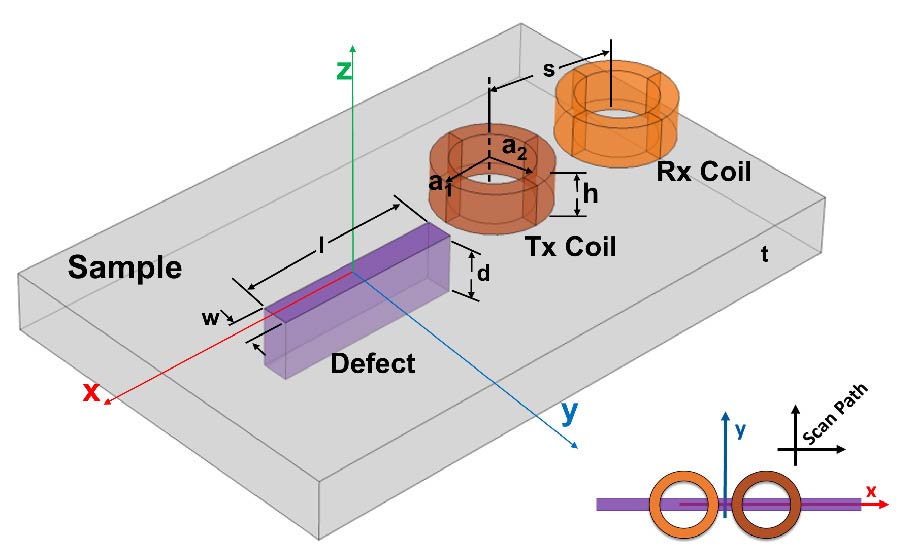
Rebar corrosion is a common hidden danger in concrete structures, posing a serious threat to structural safety. Due to its concealed nature, detecting rebar corrosion remains a significant challenge. Recently, a new detecting principle for internal rebar corrosion: Magnetic Resonance Eddy Current Penetration Imaging (MREPI) is proposed. This method significantly enhances the detection depth of eddy currents through resonance amplification. In this work, the theoretical and numerical analysis of MREPI has been done. The results demonstrate the higher sensitivity than the traditional eddy current testing (ECT). Furthermore, we built an MREPI sensor by using nanocrystalline soft magnetic metal as magnetic core to detect the rebar corrosion. Experimental results show that the proposed sensor can effectively test rebar within concrete, with the imaging patterns of corroded rebar being distinguishable.
Magnetic Resonance Eddy Current Detection for Rebar Corrosion in Concrete
2024-10-13
PIER M
Vol. 129, 105-110
A Miniaturized Antipodal Vivaldi Antenna for High-Power Design in X-Band
Liangliang Zhao , Aidong Li , Chuwei Li , Yongmao Wang , Mingxuan Zheng , Dengyang Song , Chenlu Liu , Yongtao Liang , Huiling Zhao , Chufeng Hu and Tao Ma
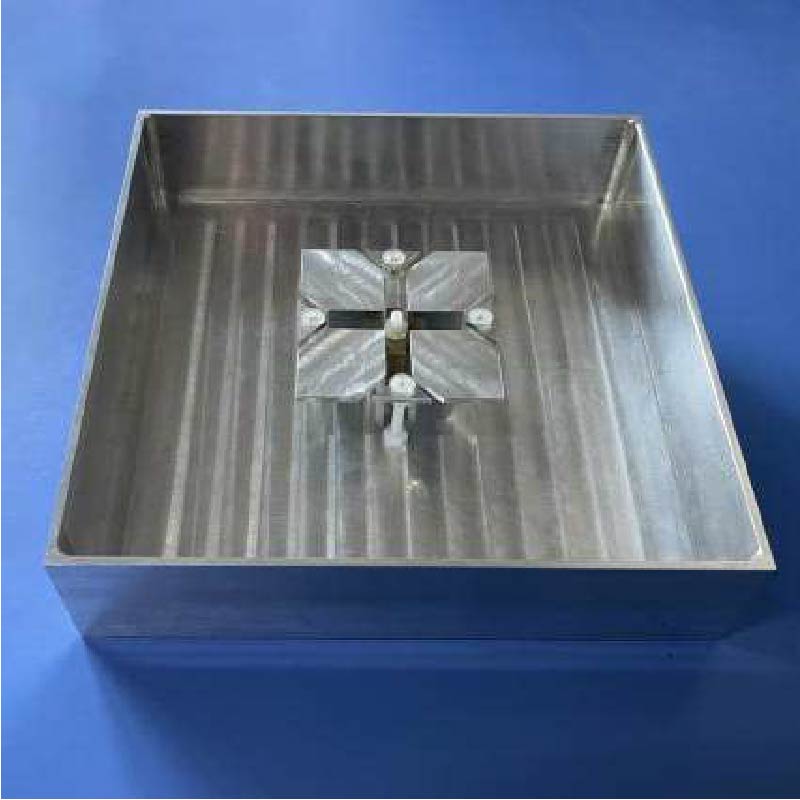
A compact antipodal Vivaldi antenna (AVA) integrated with circularly shaped loads and some elliptic slits etched in tapered slots is proposed in this paper. First, the elliptic slits etched in two tapered slots are employed for wideband application in X-band. Then, the value of max power capacity increasing from 0.47 MW to 0.82 MW is mainly due to two circularly shaped loads. Moreover, the size of the antenna is decreased to 0.44λmiddle × 0.42λmiddle. The configuration is measured to confirm the simulated results. Based on these, a novel antipodal Vivaldi antenna with compact size is successfully designed and applied in high-power field at X-band.
A Miniaturized Antipodal Vivaldi Antenna for High-power Design in X-band
2024-10-13
PIER M
Vol. 129, 99-104
Adaptive Block-Based Krylov Subspace Basis Functions for Solving Bistatic Scattering Problems
Haoran Yuan , Zhonggen Wang , Yufa Sun and Wenyan Nie
This study aims to improve the efficiency of constructing basis functions for solving the electromagnetic scattering problem of objects using the method of moments combined with compressive sensing and Krylov subspace. To this end, a region decomposition method based on a clustering algorithm is proposed to accelerate the construction process of Krylov subspace basis functions. First, the midpoints of the common edges of triangular pairs are used to form a clustered dataset. Then, the initial clustering center is set, and the processes of clustering center updating and regional decomposition of the constructed dataset are completed iteratively. Finally, each subdomain is expanded according to the average distance from data points to the clustering center to ensure the continuity of currents. The numerical computation results show that the proposed method can achieve significant time efficiency.
Adaptive Block-based Krylov Subspace Basis Functions for Solving Bistatic Scattering Problems
2024-10-12
PIER M
Vol. 129, 91-97
Convergence Determination Method for Uncertainty Analysis Surrogate Models Based on MEAM
Bing Hu , Yujia Song , Pengxiang Wang , Shining Lin and Jinjun Bai
In recent years, uncertainty analysis has become a hot topic in the field of Electromagnetic Compatibility (EMC), and non-intrusive uncertainty analysis methods have been widely applied due to their advantage of obtaining results without modifying the original solver. Among them, the Surrogate Model Method has attracted widespread attention from researchers in the field of EMC due to its high computational efficiency and resistance to the curse of dimensionality. However, the issue of determining the convergence of the surrogate models seriously affects the computational efficiency and convenience of this method in practical applications. To address this issue, a convergence determination method for uncertainty analysis surrogate models based on Mean Equivalent Area Method (MEAM) is proposed in this paper. The complete convergence time of the Surrogate Model Method can be accurately determined through iterative calculation by this method, and the effectiveness of the proposed method is verified by calculating parallel cable crosstalk prediction examples from published literature. Finally, based on the proposed convergence determination method, the real-time convergence determination problem of the Surrogate Model Method is also preliminarily discussed in this paper, and by establishing a polynomial relationship, the real-time convergence of the Surrogate Model Method can be roughly determined.
Convergence Determination Method for Uncertainty Analysis Surrogate Models Based on MEAM
2024-10-12
PIER M
Vol. 129, 83-90
Array Pattern Synthesis Using a New Adaptive Trapezoid Window Function for Sidelobe Suppression and Nulls Control
Jafar Ramadhan Mohammed
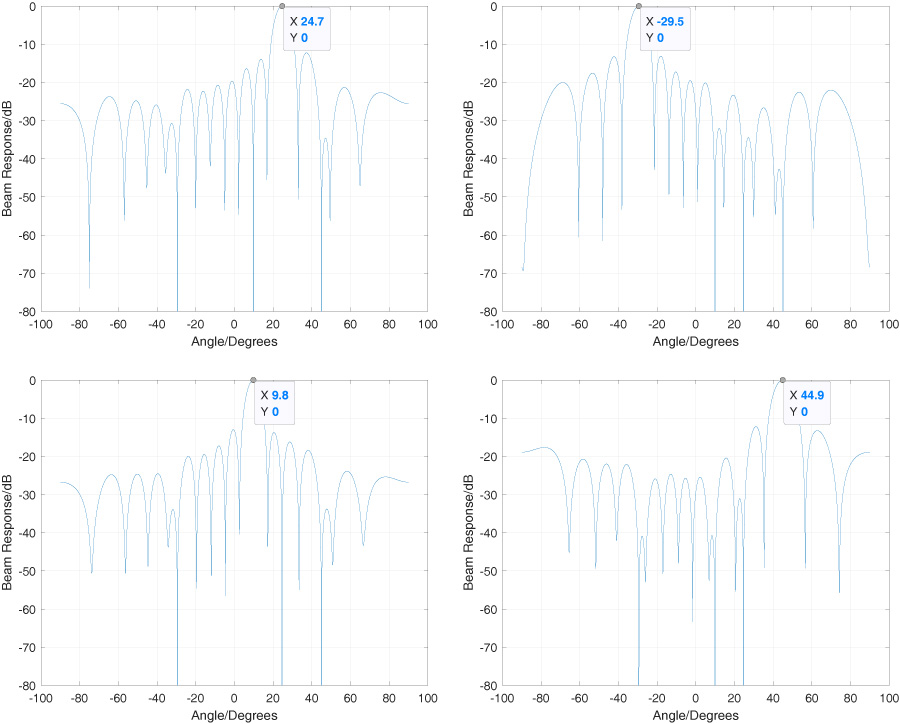
Conventional sidelobe reduction methods such as analytical or parametric approaches and complex numerical optimization approaches were accomplished via specific tapering windows. Among all of the tapering windows, a rectangular window gives simplest array feeding network, narrower beam width, and highest directivity. The only drawback is its highest sidelobe level due to sharp edges at the array ends. In this paper, a simple trapezoid taper window, which is something between typical rectangular and triangular windows, is first suggested as a best compromise between uniform and non-uniform amplitude window functions. Then, it is further developed by making it adaptive or adjustable by including a number of controllable-amplitude elements in the linear edges of the trapezoid window. Thus, the proposed taper window becomes very flexible to accommodate different user-defined constraints. To find the optimal values of those controllable-amplitude elements, a genetic optimization algorithm is used to design and optimize the trapezoid window such that a desired sidelobe peaks and controlled nulls can be met while maximizing the complexity reduction as much as possible. The linear and planar antenna arrays are simulated to validate the superiority of the proposed taper window.
Array Pattern Synthesis Using a New Adaptive Trapezoid Window Function for Sidelobe Suppression and Nulls Control
2024-10-10
PIER C
Vol. 148, 157-169
A Novel Single-Layered Dual-Wideband Circularly Polarized Asymmetric Slot Antenna for Wireless Applications
Pradeep Hattihalli Shankaraiah , Neelawar Shekar Vittal Shet and Krishnamoorthy Kandasamy
This work focuses on the design and implementation of a dual-wideband asymmetric square-shaped slot radiator with coplanar waveguide (CPW) feed for circular polarization (CP) characteristics. The proposed radiator has inward ground plane extensions in the form of square and rectangular strips on the diagonal corners of the slot. By optimizing the size of strips, a dual-band antenna with CP behaviour is obtained. The inverted L-shaped grounded strip improves axial ratio bandwidth (ARBW). The extended signal line terminated in a wide tuning stub significantly improves impedance bandwidth (IBW) and ARBW. The designed asymmetric slot radiator is fabricated using an FR-4 substrate material of dimensions 50 × 50 × 1.6 mm3. This antenna design gives flexibility to alter polarization sense at the dual frequency bands. Further, edge effects are analyzed through electric field distribution, and their impact on impedance and AR characteristics are studied. It is designed, fabricated, and tested, and shows right-hand circular polarization (RHCP) response at 3 GHz and 7.5 GHz in the +Z direction. The experimentally verified results show -10-dB impedance bandwidth (IBW) of 40.12% (range from 2.61 GHz to 3.92 GHz) and 40.21% (range from 6 GHz to 9.02 GHz), and 3-dB ARBW are 20% (range from 2.70 GHz to 3.30 GHz) and 40.21% (range from 6 GHz to 9.02 GHz) at the resonance bands. The experimentally measured and simulated performance parameters of the prototype are in close agreement. The proposed perturbed slot radiator is well suited for Wi-Fi 6E communication and remote sensing applications.
A Novel Single-layered Dual-wideband Circularly Polarized Asymmetric Slot Antenna for Wireless Applications
2024-10-09
PIER M
Vol. 129, 75-82
A Spaceborne Inverse Sliding Spotlight SAR for Nonuniform Scanned Scene
Yangyang Chen , Wei Xu , Pingping Huang , Weixian Tan and Yaolong Qi
Inverse sliding spotlight synthetic aperture radar (SAR) is not as high as sliding spotlight SAR in azimuth resolution. Its azimuth resolution is constant, and it cannot meet the needs of multiple different azimuth resolutions. In order to solve this problem, a spaceborne inverse sliding spotlight SAR for nonuniform scanned scene is proposed. The design of the proposed inverse sliding spotlight SAR includes two parts: the design of the adaptive azimuth beam steering law and the design of the imaging algorithm. In the first part, the design of the adaptive azimuth beam steering law is based on multiple specific azimuth resolution requirements and the parameters of scanned scene. In the second part, the design of the imaging algorithm for the proposed inverse sliding spotlight SAR consists of three steps: filtering processing, phase compensation and upsampling processing, and image formation. Compared with the conventional inverse sliding spotlight SAR, the proposed inverse sliding spotlight SAR can achieve different azimuth resolution requirements for scanning targets at different positions in the scanned scene. Finally, the correctness of the proposed inverse sliding spotlight SAR is verified by simulation experiment and UAV SAR experiment.
A Spaceborne Inverse Sliding Spotlight SAR for Nonuniform Scanned Scene