Search Results(13786)

2024-11-12
PIER C
Vol. 150, 69-80
A Current Sensorless Interval Torque Ripple Suppression Method for Permanent Magnet Assisted-Switched Reluctance Motor
Chengyi Gong , Junxin Xu , Renquan Xiao , Chaozhi Huang , Xiaobo Liu and Yong Xiao
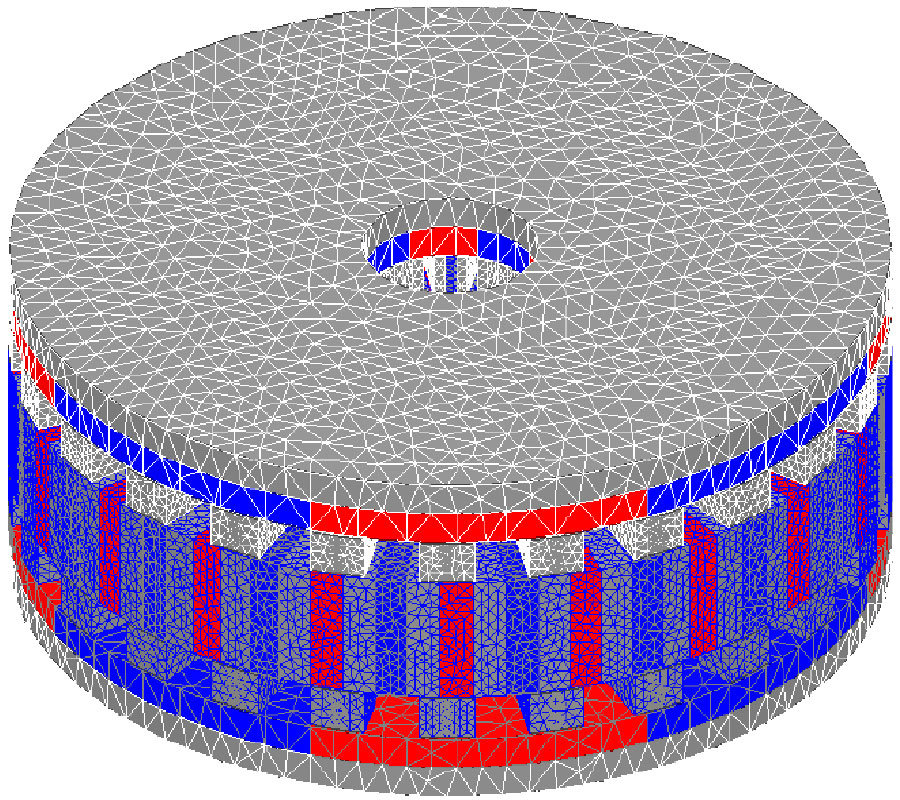
The conventional DITC strategy for switched reluctance motor relies on current for control, while the use of current sensors increases the complexity of the system, and the torque ripple in the two-phase exchange region of the conventional DITC strategy is too large. To solve the above problems, a current sensorless interval torque control (CSITC) method is proposed. Initially, the equivalence between torque and acceleration control is established, replacing the torque loop with an acceleration loop. This forms a dual closed-loop system with the speed control loop, enhancing system stability. Subsequently, the variation of the output torque capacity of phase winding of the motor in each conduction region is analyzed, and combined with the inductive characteristics of the motor windings, the two-phase exchange region is divided into two subregions. Different acceleration hysteresis loop control strategies are adopted for the phase windings in each region, so as to realize the stable output of the motor torque. Finally, a three-phase 6/20 permanent magnet assisted-switched reluctance motor (PMa-SRM) is used for simulation and physical verification. The results show that the method can still achieve the steady state of the motor when only the position sensor is used and effectively reduces the torque ripple in the exchange region.
A Current Sensorless Interval Torque Ripple Suppression Method for Permanent Magnet assisted-Switched Reluctance Motor
2024-11-12
PIER C
Vol. 150, 57-68
Refinement of Chipless RFID Tags Across Multiple Positions for Improved Recognition Reliability through Machine Learning Techniques
Athul Thomas , Midhun Muraleedharan Sylaja and James Kurian
Chipless RFID technology offers a cost-effective and durable alternative to chipped tags for identification and tracking applications. By eliminating the need for an integrated circuit, chipless tags are cheaper and can withstand harsher environments. This opens doors to not only track items throughout a supply chain or monitor valuable assets, but also integrate basic sensors for functionalities like environmental monitoring or smart agriculture. However, limitations in data capacity, read range, and decoding complexity currently hinder their full potential. This paper explores the application of machine learning techniques to improve the interrogation process and enhance the reliability of chipless Radio Frequency Identification systems. The effectiveness of machine learning in optimising chipless RFID systems hinges on the richness and variety of training data. A robust dataset encompassing diverse tag characteristics, environmental factors, and reader configurations is paramount. Nevertheless, gathering real-world RFID data can be difficult. To address this, a data collection procedure has been specifically designed to gather backscattered information from the chipless tags at multiple orientations and distances. Four binary combinations of a 5-bit RFID tag based on frequency-selective surfaces operating in the 2–8GHz range are considered for generating the database. The dataset is then used to train and validate various classification models, including support vector machine (SVM), k-nearest neighbour (k-NN), Decision Tree (DT), Naive Bayes classifier, and Logistic Regression (LR). The proposed Support Vector Machine model is able to identify the tag at a distance of up to 70 cm from the interrogator, with multiple rotational degrees of freedom.
Refinement of Chipless RFID Tags across Multiple Positions for Improved Recognition Reliability through Machine Learning Techniques
2024-11-12
PIER M
Vol. 130, 49-61
An Intelligent Algorithm Based on the Improved CNN-LSTM for the Detection of Concrete Reinforcement Information
Xuefeng Bai , Ronghua Zhang , Jinxun Le , Boyang Li , Wenying Fu , Shuqing Jia and Wuliang Yin
Reinforced concrete plays a vital role in the construction industry. Therefore, it is necessary to evaluate the parameters such as the number, diameter and protective layer thickness of rebar in concrete during and after the construction process. In this paper, we take the pulsed eddy current detection method as the principle, build the relevant experimental system, collect the data samples about the parameter information of the rebar, and propose an intelligent algorithm based on Convolutional Neural Network with Long Short-Term Memory (CNN-LSTM) based on Convolutional Block Attention Module (CBAM), which is capable of automatically extracting the relevant features of information-rich PECT signals, and the CBAM is introduced into CNN to enhance its feature extraction capability, which improves the accuracy and interpretability of CBAM-CNN-LSTM in predicting rebar information. In order to verify the performance of the method, traditional CNN, LSTM, and CNN-LSTM algorithms were used for comparison, and the prediction results were evaluated by decision coefficient (R2), Explained Variance Score (EVS), Root Mean Square (RMSE), and Mean Absolute Error (MAE). The experimental results show that the method is able to accurately predict the specimen information with good prediction accuracy and stability as the average error of the prediction of the number is reduced by 50% and the average error of diameter and thickness prediction reduced by 20% and 3% after adding the CBAM.
An Intelligent Algorithm Based on the Improved CNN-LSTM for the Detection of Concrete Reinforcement Information
2024-11-11
PIER B
Vol. 109, 17-28
A Low-Profile Single-Layered Wideband Combinational Reconfigurable Antenna for 4G and 5G Applications
Sweta Agarwal , Akanksha Singh and Manoj Kumar Meshram
A single-layered monopole wideband combinational reconfigurable antenna for 4G and 5G applications is presented in this paper. Coplanar waveguide (CPW) feeding method is utilized to get single-layered structure. The three characteristics of this antenna are reconfigurable: frequency, polalization, and radiation pattern. This antenna consists of a parasitic element attached to a rectangular ring antenna. An RF-PIN diode is used to connect this parasitic element to the loop antenna. Additionally, two parasitic elements are connected to the ground plane of the proposed antenna via a pair of RF-PIN diodes. The suggested antenna functions in seven distinct states with the use of these three RF-PIN diodes. The suggested antenna operates at frequencies of 3.24-3.52 GHz, 2.78-2.94 GHz, and 2.54-2.9 GHz with an omnidirectional radiation pattern in states 1, 2, and 5. In states 3 and 4, it has an end-fire radiation pattern in the left and right directions of the proposed antenna, covering a wide frequency band of 2.47-3.57 GHz. Lastly, the suggested antenna operates in dual bands at frequencies of 2.49–2.9 GHz and 3.6-3.76 GHz in states 6 and 7. It offers reconfigurability of polarization at the higher band. The suggested antenna is made of glass epoxy FR-4. For verification of the suggested antenna, the prototype is designed and tested. The simulated and experimental results agree quite well.
A Low-profile Single-layered Wideband Combinational Reconfigurable Antenna for 4G and 5G Applications
2024-11-10
PIER C
Vol. 150, 47-55
Flexible Ring Slot Antenna for Optimized 5G Performance in N77 and N78 Frequency Bands for Wearable Applications
Gaurav Kumar Soni , Dinesh Yadav , Ashok Kumar , Chanchal Sharma and Manish Varun Yadav
The growth of 5G communications has created a demand for advanced wearable and flexible antennas due to supporting the high speeds, low latency, and capability of mechanical deformation conditions such as bending and conformability. In this paper, the design and analysis of a defected ground structure (DGS)-based ring slot antenna for N77 (3.3-4.2 GHz) and N78 (3.3-3.8 GHz) frequency bands is demonstrated. The antenna is made of an RT/Duroid 5880 substrate and has a loss tangent (tanδ) of 0.0009 and dielectric constant (εr) of 2.2. A DGS-based ring slot microstrip antenna is simulated, tested and experimentally characterized on different body locations (leg, chest, and hand) along with bending, and their results are presented accordingly. The magnitude of S11 (|S11|) of the proposed antenna is -26.81 dB at resonant frequency of 3.45 GHz, with the impedance bandwidth of 22 MHz (3.486 GHz to 3.508 GHz), peak gain of 6.27 dBi, and radiation efficiency of 85.02%. The simulated specific absorption rate (SAR) for 1 g and 10 g human body tissues is 0.263 W/Kg and 0.076 W/Kg, respectively. The total volume of the antenna is 0.58λ0 × 0.58λ0 × 0.00595λ0 (at 3.5 GHz). The proposed antenna is suitable for 5G wearable devices.
Flexible Ring Slot Antenna for Optimized 5G Performance in N77 and N78 Frequency Bands for Wearable Applications
2024-11-10
PIER Letters
Vol. 123, 61-67
Adaptive Dual-Band Antenna for 5G and Its Applications with Monopole-to-Broadside Radiation Characteristics
Chinnathambi Murugan and Thandapani Kavitha
This study presents an aperture-coupled slot-fed antenna specifically designed to operate in two frequency bands. It functions seamlessly within the 5.2-5.3 GHz and 5.9-6.1 GHz ranges, featuring unique characteristics: emitting monopole radiation at lower frequencies and transitioning to a broadside pattern at higher frequencies. The 5.2-5.3 GHz band is primarily used for high-speed Wi-Fi (IEEE 802.11 standards) and small cells in 5G networks, as well as radar systems. The 5.9-6.1 GHz band supports Intelligent Transportation Systems (ITS), vehicle-to-everything (V2X) communication, and C-band satellite uplink services. With a peak gain of 6.025 dBi, this compact antenna measures 25 mm × 25 mm × 1.6 mm (0.492λ × 0.492λ × 0.0315λ, where λ is the wavelength calculated at 5.9 GHz) and is precisely printed on two FR4 substrates, ensuring both performance and practicality. Thorough measurements of the constructed prototype show a remarkable alignment between simulated and measured results, confirming the antenna's reliability and precision. Its distinctiveness lies in its engineered adaptability, perfectly suited for applications requiring diverse patterns within dual-band scenarios. This adaptability allows for flexible signal reception, making it an ideal choice for situations demanding robust performance across multiple frequency ranges. Given its ability to offer varied pattern configurations, this antenna shows significant promise for applications where flexible and reliable signal reception is crucial.
Adaptive Dual-band Antenna for 5G and ITS Applications with Monopole-to-broadside Radiation Characteristics
2024-11-08
PIER C
Vol. 149, 187-197
Compact Dual-Band CPW-Fed Circularly Polarized Slot Antenna for GNSS Applications
Ahmed Gamal Salama , Osama Mohammad Dardeer , Angie R. Eldamak and Hadia M. El-Henawy
This paper introduces a compact dual-band circularly polarized (CP) slot antenna utilized for L-band Global Navigation Satellite Systems (GNSS) applications. The designed antenna structure is a printed L-shaped slot antenna (PLSA) fed by coplanar waveguide (CPW) with a squared ground plane. An L-shaped feeding line is protruded into an L-shaped slot to achieve a circular polarization operation. A reversed T-stub is adopted near the right center of the radiating patch in order to achieve a dual-band operation. The achieved fractional impedance bandwidths (FIBWs) are 5.6% (1.21-1.28 GHz) and 12.2% (1.46-1.65 GHz). The fractional axial ratio bandwidths (FARBWs) are 8.0% (1.21-1.31 GHz) and 18.0% (1.42-1.70 GHz) for the lower and upper GNSS ranges, respectively. The suggested antenna provides right-hand circular polarization (RHCP) radiation. The gain of the suggested antenna ranges between 3.0 dBic and 3.2 dBic for the lower and upper GNSS bands, respectively. The designed antenna exhibits a dual-band behavior that covers both the lower and upper GNSS bands. It has a low profile of 55 × 55 × 1.524 [mm]3 (0.22λ0 × 0.22λ0 × 0.006λ0), which makes it suitable for incorporating within any portable devices receiving GNSS signals. The antenna is lightweight, small in size, simple structure, inexpensive, high FARBW, high FIBW, and demonstrates CP dual-band behavior with a single input. The antenna is simulated, fabricated, and measured. The measurements verify the numerical results successfully. The suggested antenna is suitable for GNSS applications due to its enhanced performance.
Compact Dual-band CPW-fed Circularly Polarized Slot Antenna for GNSS Applications
2024-11-08
PIER B
Vol. 108, 139-149
Stochastic Investigation of the Input Impedance of Vertical, Horizontal, and Arbitrarily Oriented Elementary Dipoles in Proximity to a Perfectly Conducting or Dielectric Ground
Aikaterini Mangou , George P. Veropoulos , Constantinos Vlachos and Panagiotis Papakanellos
Antennas operating in the close vicinity of obstacles or scatterers behave much different from isolated antennas radiating in free space. To assess such interactions in which a large number of parameters are involved (pertaining to the geometry, possible movement effects, and materials), stochastic models are often conceived and adopted so as to cope with innate uncertainties and to overcome the need for time-consuming parametric investigations. In this paper, an analytical stochastic approach is presented for the archetypical problems of the vertical, horizontal, and arbitrarily oriented dipole above a semi-infinite ground (either perfectly conducting or dielectric). The analysis focuses on how the input impedance of the dipole is affected by the existence of the ground plane when the distance or the angle between them varies in accordance with some certain probability distributions. Approximate closed-form expressions are obtained for the probability distributions of the input resistance and reactance separately, which can directly yield the respective moments and variances (and potentially other quantitative measures) and are useful for characterizing the probabilistic behavior of the dipole and its interaction with the ground. Representative numerical results are presented aiming at the validation of the proposed model and the investigation of the probabilistic behavior of the impedance change. Finally, a few concluding remarks are outlined, and possible extensions to real-world problems are discussed.
Stochastic Investigation of the Input Impedance of Vertical, Horizontal, and Arbitrarily Oriented Elementary Dipoles in Proximity to a Perfectly Conducting or Dielectric Ground
2024-11-06
PIER C
Vol. 150, 37-46
The Dual-Modality Fusion Imaging Method for EMT and UTT Based on DSCTFusion-ECA
Jinxun Le , Ronghua Zhang , Wenying Fu , Shuqing Jia , Xuefeng Bai and Boyang Li
Dual-modality tomography integrates two different imaging technologies, allowing for the acquisition of more comprehensive sensing data. By combining information from both modalities, the accuracy of final imaging results is enhanced. However, due to the use of different physical sensitive field backgrounds by different measurement modalities, integrating information from different modalities with differing dimensions presents a challenge. To address this issue, a supervised DSCTFusion-ECA deep learning method is proposed. This method consists of four modules: initial imaging, feature extraction, feature fusion, and image reconstruction. In the feature extraction module, dense connections are utilized first to extract shallow cross-modal features, then two dual-branch feature extraction networks are utilized to separately capture modality-specific low-frequency global features and high-frequency local features for both modalities. The performance and robustness of multi-modality tomography can be effectively improved through the extraction of more comprehensive features. In the feature fusion module, Efficient Channel Attention is employed to capture channel dependencies and generate attention weights. The modal complementarity and the representation ability of key features have been enhanced, while avoiding information redundancy, thereby improving the discriminative power of the features. Simulation results show that the proposed network can fully extract and fuse features from EMT and UTT modalities, demonstrating strong robustness and generalization. Compared to the widely used U-Net network in tomography, DSCTFusion-ECA yields better reconstruction results.
The Dual-modality Fusion Imaging Method for EMT and UTT Based on DSCTFusion-ECA
2024-11-06
PIER C
Vol. 150, 27-36
Design of Frequency Reconfigurable Quadruple Band Notched Ultra-Wideband Antenna
Sunitha Mandava , Silpa Mandava , Bathula Santhi Kiran , Gowrisankar Kalakoti , Manasa Bandlamudi and Chandana Kotha
A miniaturized ultra-wideband (UWB) antenna with quadruple reconfigurable characteristics is proposed in this paper. The first step involves the development of an elementary circular patch antenna of size 28.5 × 28.5 mm2, which is subsequently modified to demonstrate UWB properties. To incorporate quad-band notch features, the radiating surface of the patch antenna is etched with four inverted U-shaped slots. The antenna has an impedance bandwidth ranges from 3.1 GHz to 12 GHz, with four specific notches located at 3.62 GHz (3.46-3.69 GHz), 3.94 GHz (3.81 GHz-3.94 GHz), 4.3 GHz (4.19 GHz-4.39 GHz), and 4.84 GHz (4.61 GHz-5.05 GHz). By incorporating four PIN diodes, the antenna is capable of attaining a range of sixteen reconfigurable states across the UWB spectrum. The design of this system successfully addresses the issue of interference caused by WiMAX, satellite communication uplink C-band, Indian national satellite system, and WLAN. The prototype was constructed and evaluated, with the results from simulation and measurement correlating well.
Design of Frequency Reconfigurable Quadruple Band Notched Ultra-Wideband Antenna
2024-11-06
PIER M
Vol. 130, 37-48
Design of Multiband Metasurface Radome for Leading Wing Edge of Aircraft
Kanathil Meethal Arya , Akshay Manish Aserkar , Shailesh Ashok Patil , Raveendranath Nair and Shiv Narayan
A novel metamaterial-element based frequency selective surface (FSS) is proposed in this paper for multiband radome for airborne application, which exhibits angular stability and polarization independence up to incidence angle, 60˚. The proposed metasurface radome consists of a combination of different patch-type elements in two cascaded layers, forming an electrically thin design suitable for aerospace applications. It operates in the frequency bands, S- (3.3 GHz), C- (4.8 GHz) and X- (9.1 GHz) with high transmission efficiency and good isolation between bands (< -20 dB). An equivalent circuit model of the proposed design is derived and validated with the simulated (based on HFSS) and measured results. Further, a multilayered radome wall configuration is designed using proposed metamaterial-element based FSS that exhibits transmission bandwidths, 220 MHz, 1 GHz, and 1.3 GHz corresponding to S-, C-, and X-bands, respectively w.r.t. -1 dB insertion loss. The structural analysis of multilayered radome wall configuration confirms its suitability for shared aperture antenna integrated to leading wing structure of aircraft.
Design of Multiband Metasurface Radome for Leading Wing Edge of Aircraft
2024-11-06
PIER M
Vol. 130, 29-36
A 2-Port High Isolation Millimeter Wave Dual-Band Antenna Based on SIW Back-Cavity Slot
Mingming Gao , Chang Ge , Jingchang Nan , Chunli Liu , Hongliang Niu and Hang Yuan
To enhance the transmission rate and bandwidth utilization of Multiple-Input Multiple-Output (MIMO) communication systems, a dual-band MIMO antenna for millimeter waves is proposed, which is based on a substrate-integrated waveguide (SIW) and fed by a 50 Ω microstrip line. To achieve the dual-band performance, it employs a modified dual P-shaped slot instead of the conventional single P-shaped slot. The modified slot antenna generates dual-frequency radiation by exciting the primary and mixed modes in the circular resonant cavity. To improve the channel capacity of the system, the antenna is formed into a 2-element antenna, and the isolation of the antenna is improved by pattern diversity and defected ground structure (DGS). The antenna's dimension is 20 x 18.9 x 0.508 mm3. Measured results show that the impedance bandwidth of the antenna is about 26.7 GHz-27.9 GHz and 37.95 GHz-40.92 GHz with peak gain of 5.63 dBi and 6.35 dBi, respectively. In addition, the isolation degree is greater than 30 dB, the envelope correlation coefficient (ECC) less than 0.0002, and the diversity gain (DG) greater than 9.995. The antenna shows the advantages of low profile, dual-frequency radiation, and high isolation characteristics, which are well suited for millimeter-wave wireless communication systems.
A 2-port High Isolation Millimeter Wave Dual-band Antenna Based on SIW Back-cavity Slot
2024-11-05
PIER C
Vol. 150, 17-26
Controllable Multimode Four-Passband Filter Based on Substrate-Integrated Waveguide
Mingming Gao , Congying Wang , Jingchang Nan , Xinyu Wang and Ya He
A metalized through-hole perturbation structure is proposed to effectively control multiple modes of substrate-integrated waveguide (SIW) filters. The method manipulates six modes (TE101, TE201, TE102, TE202, TE301, and TE401) result in the formation of three passbands. Subsequently, two symmetrical parallel complementary split ring resonators (CSRRs) are introduced without altering the filter's size. These rings generate resonances primarily excited by TE201 and TE102, allowing the filter to produce a fourth passband. Additionally, extra transmission zeros (TZs) are added, creating a perturbing effect on other modes. This further aids in controlling the resonances of these modes. The filter exhibits flexibility and controllability in terms of center frequency, bandwidth, and transmission zeros. The center frequencies of the four passbands are measured at 7.47 GHz, 9.84 GHz, 11.02 GHz, and 12.65 GHz, with return losses exceeding 18 dB. Additionally, there are six TZs, with the highest frequency point reaching -56.58 dB, indicating good in-band and out-of-band rejection. The measured and simulated results demonstrate satisfactory performance and applicability to multi-channel transmission in radar and satellite communication systems.
Controllable Multimode Four-Passband Filter Based on Substrate-integrated Waveguide
2024-11-05
PIER C
Vol. 150, 9-16
Differential Filtering Quad-Band Antenna Based on Enhanced Folded-Dipole
Sui Teng Zhang , Hao Ran Zhang and Wen-Tao Li
In this paper, a high-selectivity differential filtering quad-frequency antenna is proposed, consisting of two pairs of parallel enhanced folded dipoles and a diplexer. The diplexer employs unbalanced-to-balanced feeding, enabling the desired frequencies and transmission zero points by adjusting the lengths and distances between the stepped impedance resonators. Moreover, enhanced folded dipoles are arranged on either side of the substrate, which can feature a more compact structure and achieve multi-band radiation performance. For verification, a prototype of the proposed differential filtered quad-band antenna is fabricated and measured, having a size of 80 mm × 94.2 mm × 1 mm (1.10×1.29×0.0137λg at 2.53 GHz). Measured results show that the relative impedance bandwidths with |S11| < -10 dB at the center frequencies of 2.53, 2.89, 3.30, and 3.68 GHz are 1.97%, 1.00%, 2.25%, and 2.04%, and the corresponding gains are 4.56, 2.82, 3.93, and 3.43 dBi, respectively, revealing its stable radiation performance and excellent anti-interference ability.
Differential Filtering Quad-band Antenna Based on Enhanced Folded-dipole
2024-11-05
PIER C
Vol. 150, 1-8
Monopole Antenna Loading Parasitic Metal Pillar Element with Suppression of Beam Upwarping to Improve Omnidirectional Radiation in Broadband
Jiemin Jing , Wen-Quan Cao , Hong Xue , Chuang Wang , Yangkun Zhu , Yixin Tong and Huangshu Zhou
Due to the presence of finite ground, the radiation pattern of a monopole antenna will upwarp, thereby affecting the communication quality in the horizontal direction. Loading parasitic metal pillar elements near monopole antenna is a common beam control method. In this paper, an inverted monopole antenna is used as the source antenna to analyze the effect and band of beam upwarping suppression in wide band. The working principle and parameter analysis of elements are also discussed. This antenna can achieve 1-24°of suppression from 360 to 570 MHz. At the same time, keeping the un-roundness almost unchanged, the horizontal plane gain is increased by 0.53-1.74dB. The omnidirectional pattern is improved, which provides a valuable candidate for vehicle communication.
Monopole Antenna Loading Parasitic Metal Pillar Element with Suppression of Beam Upwarping to Improve Omnidirectional Radiation in Broadband
2024-11-04
PIER C
Vol. 149, 177-186
Leakage Optimization of Active Magnetically Shielded Isotropic Coils for Electric Vehicle Wireless Charging Systems
Yonghong Long , Hui Li , Zhongqi Li , Bin Li and Ziyue Gan
In the field of wireless power transmission (WPT) for electric vehicles, the challenge of magnetic shielding technology is particularly prominent. Achieving effective magnetic shielding often comes at the cost of transmission efficiency, creating a significant technical bottleneck. As a result, research into improving transmission efficiency while minimizing magnetic leakage has become a primary focus in the industry. This is seen as critical for driving the sustainable development of the electric vehicle sector. In response to this challenge, this paper presents the construction of an active magnetic shield using an isotropic coil configuration, which not only optimizes system efficiency but also significantly reduces magnetic leakage in WPT systems. The paper begins by introducing the concept of an active magnetically shielded isotropic coil structure for wireless power transmission. Next, it details the design methodology and operational principles of the structure, followed by the derivation of the mathematical model and equivalent circuit. The effectiveness of the magnetic shielding mechanism is examined from a theoretical standpoint, and the influence of coil parameters on both shielding performance and transmission efficiency is analyzed. Finally, based on the optimized coil parameters, the design of the wireless charging system incorporating the magnetic shielding structure is completed. This includes relevant theoretical calculations, simulation analyses, and experimental validation to confirm the feasibility of the design. The results demonstrate that the active magnetically shielded isotropic coil significantly reduces magnetic leakage, lowering it by approximately 95.68% compared to traditional coils, while achieving a transmission efficiency of 95.68% in experiments.
Leakage Optimization of Active Magnetically Shielded Isotropic Coils for Electric Vehicle Wireless Charging Systems
2024-11-03
PIER C
Vol. 149, 165-176
Compact Dual-Band Monopole Antennas with Fractal-Based Half- and Quarter-Circular Folded Loops for WiMAX and WLAN Applications
Dhirgham Kamal Naji
In this paper, two new types of dual-band antennas are presented: a coplanar waveguide (CPW)-fed fractal monopole antenna (FMA) and an asymmetric coplanar strip (ACS)-fed fractal half-monopole antenna (FHMA). These antennas are designed to operate in two distinct bands suitable for 3.5/5.5 GHz WiMAX and 5.2/5.8 GHz WLAN applications. Both antennas possess the property of self-similarity by employing half- and quarter-circular folded loops, respectively, which represent the antennas' radiating elements. A design procedure based on a conventional circular patch antenna (CPA) is performed, with evolution steps leading to the achievement of the proposed two antennas with the above-mentioned features. To validate the design concept, two simulator programs (CST MWS and HFSS) were used to extract the simulated results regarding reflection coefficient S11, gain, efficiency, and radiation patterns. According to the agreement between the CST and HFSS simulated results, prototypes of the FMA and FHMA are fabricated on an FR4 substrate with a dielectric constant of 4.4, a height of 0.8 mm, and overall sizes of only 26×20 mm2 and 12×19 mm2, representing nearly 73% and 40% reduction in size, respectively, compared with the size of 26×33 mm2 for the CPA. The simulated and measured S11 results are in good agreement, illustrating the two antennas operating over the desired bands (S11 ≤ -10 dB): 3.5-/5.5-GHz (3.40-3.69 and 5.25-5.85 GHz) WiMAX and 5.2-/5.8-GHz (5.15-5.35 and 5.72-5.85 GHz) WLAN. Furthermore, the peak realized gain values are greater than 2 dBi, efficiency exceeding 90%, and nearly omnidirectional radiation at both bands. Based on the achieved results and antennas' compactness, they can be highly recommended for the use in WLAN and WiMAX applications.
Compact Dual-band Monopole Antennas with Fractal-based Half- and Quarter-circular Folded Loops for WiMAX and WLAN Applications
2024-11-02
PIER C
Vol. 149, 155-163
Design a Dual-Band with CSRR Cascaded Patch Antenna Array for Wireless Communications
Maloth Chandrasekhar and Ketavath Kumar Naik
This paper presents a dual-band cascaded rectangular microstrip patch antenna array with a complementary split ring resonator (CSRR) for narrow-band wireless communication applications. The antenna array is fed with a microstrip feed line for proper impedance matching, and CSRR is loaded to generate dual-band characteristics. The CSRR-based proposed antenna radiators operate over two frequency bands, i.e. 100 MHz (3.06-3.16 GHz) and 110 MHz (4.36-4.47 GHz) with reflection coefficients (S11 < -10 dB) of -23 dB and -32 dB. The gain of the proposed antenna array with CSRR is 5.03 dBi and 6.34 dBi at 3.1 GHz and 4.4 GHz respectively. In addition, S-parameters, radiation patterns, 3D gain characteristics, and surface current distribution at resonating frequencies are observed. The proposed antenna array is miniaturized in size and suitable for wireless communication applications.
Design a Dual-band with CSRR Cascaded Patch Antenna Array for Wireless Communications
2024-11-02
PIER C
Vol. 149, 143-154
Modeling the Compression of Modulated Electromagnetic Pulses in a Straight Waveguiding Defect of Two-Dimensional Photonic Crystal
Vadym Pazynin , Kostyantyn Sirenko , Maksym Maiboroda , Miramgul Tokasheva , Akbota Tolegenova and Wilhelm Keusgen
The paper presents the results of numerical modeling of the compression of a frequency-modulated electromagnetic pulse in a straight waveguiding defect of a finite two-dimensional photonic crystal. For the first time, the time reversal method was used to accurately compute the temporal profile of a current pulse that excites an electromagnetic wave that is being compressed in such a structure, given that its temporal profile (electric field intensity) has a specified shape at a given point in space. The photonic crystal consists of an array of sapphire bars with a square cross-section of 1 mm × 1 mm, arranged in free space at a distance of 1 mm from each other. In this model, the boundaries of the frequency range containing the crystal's band gap (from 35.6 to 46.5 GHz), the optimal width of the waveguiding defect (4 mm), and the shape of the excitation current pulse for the waveguiding defect with a length of 0.5 m were found. The obtained pulsed power amplification coefficient is approximately 7.48. A photonic-crystal analog of an H-plane horn antenna was used to radiate the compressed pulse into free space.
Modeling the Compression of Modulated Electromagnetic Pulses in a Straight Waveguiding Defect of Two-dimensional Photonic Crystal
2024-11-02
PIER Letters
Vol. 123, 55-60
Advanced Compact High-Power InGaAs HEMT Self-Oscillator Active Integrated Antenna for IoT Applications
Hanaa El Moudden , Tajeddin Elhamadi , Moustapha El Bakkali and Naima Amar Touhami
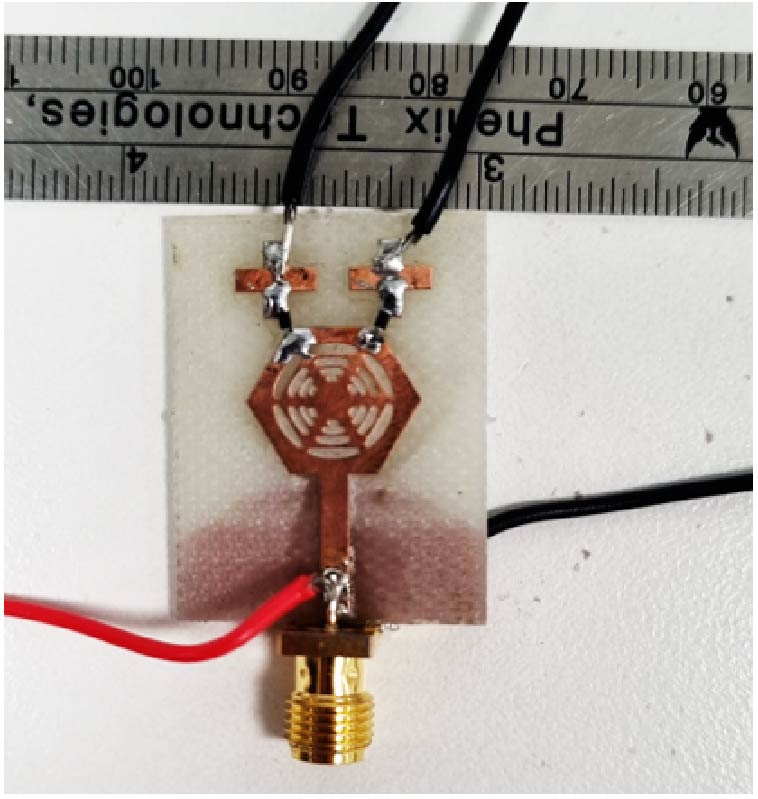
This work presents a new negative resistance self-oscillator based on an integrated active antenna and InGaAs HEMT technology, specifically designed for Internet of Things (IoT) applications. A key aspect of this design lies in the series integration of the active circuit and the antenna patch. The fabrication and testing were carried out on an FR4 substrate with a thickness of 0.8 mm. The Harmonic Balance numerical method, implemented in the Advanced Design System tool, was used for the optimization and co-simulation of the system. After simulation and measurement, the proposed self-oscillator, with a compact size of 3.4 x 3 cm², produced very significant results. The simulated output power reached 12.87 dBm at a frequency of 3.07 GHz, while the measured output power was 12.85 dBm at 3.04 GHz, with a recorded phase noise of -78 dBc/Hz at 10 MHz. The qualitative and quantitative performance of the proposed self-oscillating antenna makes it particularly suitable for applications such as satellite mobile communications, GPS, telemetry, and telemedicine.
Advanced Compact High-Power InGaAs HEMT Self-Oscillator Active Integrated Antenna for IoT Applications