Search Results(13786)

2024-12-27
PIER
Vol. 181, 89-98
An Indoor Localization Technique Utilizing Passive Tags and 3-D Microwave Passive Radar Imaging
Quanfeng Wang , Alexander H. Paulus , Mei Song Tong and Thomas F. Eibert
A privacy-compliant indoor localization approach utilizing a 3-D near-field (NF) passive radar imaging technique is presented. This technique leverages ubiquitously radiated electromagnetic fields for imaging, with passive tags introduced to enhance the strength of scattering fields, thereby enabling precise localization at the imaging level. The method also supports localization in non-ideal imaging scenarios, such as for limited bandwidth or in highly-reflective environments. Based on their geometrical properties the simple and low-cost passive tags enable intuitive differentiation between individuals or objects. Associated privacy protection mechanisms are discussed, where the frequency-varying properties of the passive tags provide additional flexibility and potential applications under privacy and ethical considerations. Several forms of passive tags are presented, where both simulation and experimental results validate the effectiveness of the proposed passive tag designs.
An Indoor Localization Technique Utilizing Passive Tags and 3-D Microwave Passive Radar Imaging
2024-12-27
PIER C
Vol. 151, 131-138
Wideband RF GaN Power Amplifiers
Fusheng Zhao , Xin Cheng , Zhanglei Song , Fayu Wan , Zhenhua Chen and Xing Zhao
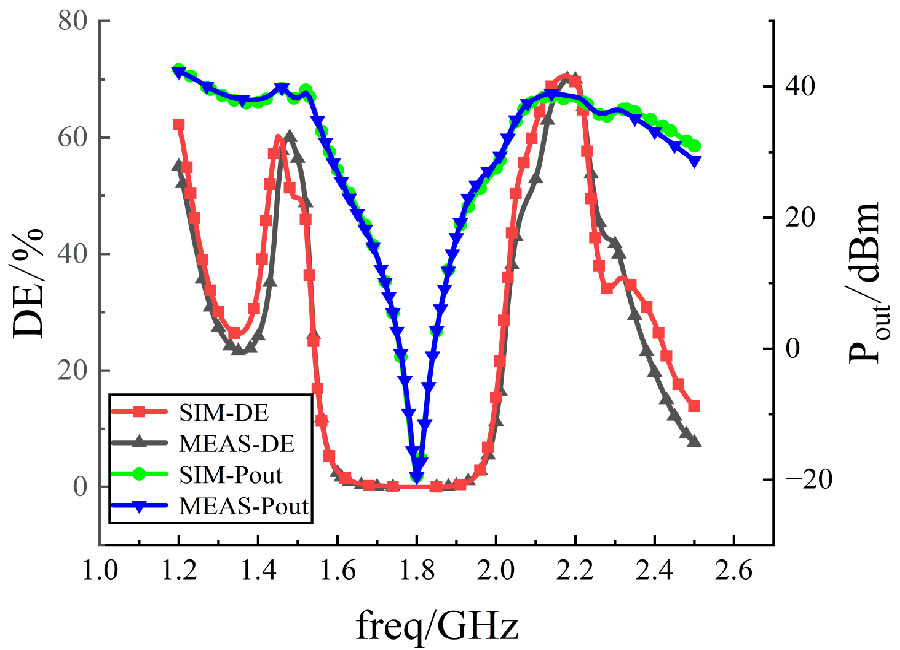
In this paper, 5G communication system requires high broadband, high efficiency, low distortion and good heat dissipation for RF power amplifier. A GaN RF power amplifier working in broadband is designed. The input and output matching is processed on the Al2O3 ceramic substrate with bond wire, and the tube shell is packaged with CuMoCu copper alloy shell. Because the power loss of the power amplifier will produce a lot of heat, the heat dissipation problem becomes a factor that can not be ignored in the design. Using the finite element thermal simulation analysis method, the maximum temperature of the power amplifier chip under long time operation is 85℃, which meets the heat dissipation demand. Under the continuous wave test conditions, the drain voltage is 30 V; the operating frequency band is 2~6 GHz; the saturation output power is 42 dBm; the power gain is more than 45 dB; and the power added efficiency is 40%. The test results meet the actual demand.
Wideband RF GaN Power Amplifiers
2024-12-27
PIER M
Vol. 130, 103-110
Implications of Model Complexity in Numerical Studies of Microwave Skin Spectroscopy
Shangyang Shang and Milica Popović
Early detection is critical for effective skin cancer treatment. Micro-/millimeter-wave spectroscopy has emerged as a promising non-invasive and cost-effective detection technique. Tissue models are essential in early numerical studies, which typically represent the first step in detector's feasibility assessment. This paper focuses on quantifying implications of numerical model complexity on computational studies of skin spectroscopy. In our comparative numerical studies, we constructed one finger model that follows anatomical structures, as well as its three simplified versions, subjected to simulated measurements with a slim dielectric probe in the 0.5-50 GHz range. Using the finite-element method (FEM) for simulation, we analyzed mesh count to estimate computational cost and return loss variation to assess model reliability. As a result, we reach recommendations for models that optimize computational resources and can yield meaningful information from the standpoint of skin cancer screening. Simplified models are adequate for lower microwave frequencies (< 10 GHz), but at higher frequencies, models with at least three tissue layers (skin, fat, and ligament) are necessary. Modeling smaller tumors requires greater tissue complexity than larger tumors to achieve comparable reliability. Additionally, squamous cell carcinoma (SCC) scenarios demand higher model complexity than basal cell carcinoma (BCC) and melanoma to achieve similar reliability.
Implications of Model Complexity in Numerical Studies of Microwave Skin Spectroscopy
2024-12-27
PIER M
Vol. 130, 95-102
Performance Analysis of Complementary Split Ring Resonator with Improved Four Element Antenna for X Band Wireless Applications
Janani Sasikumar and Koushick Venkatesh
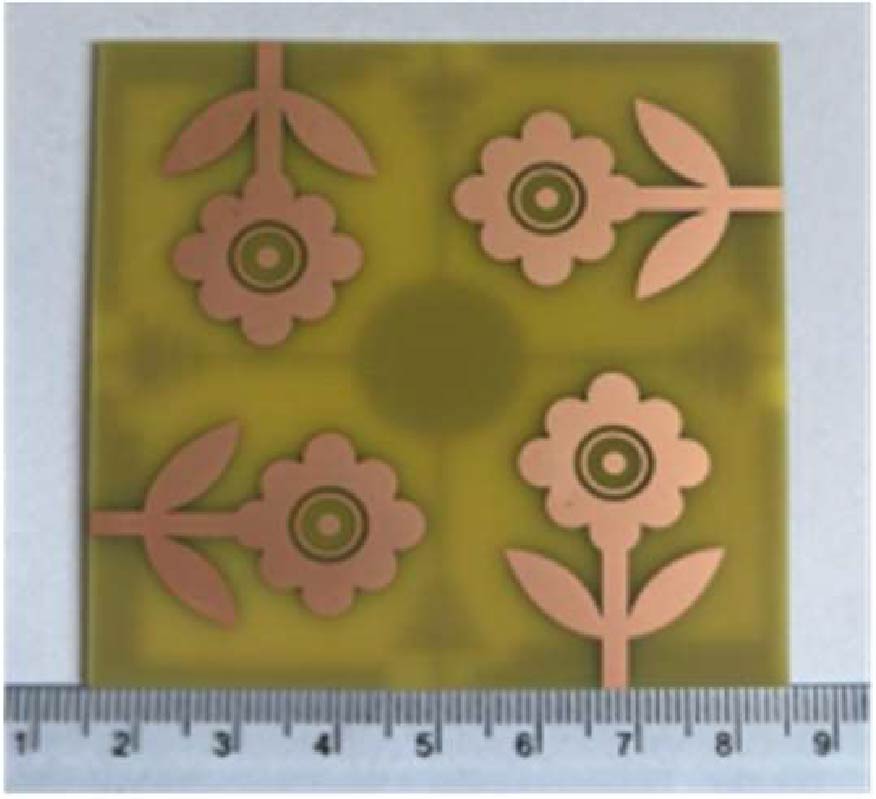
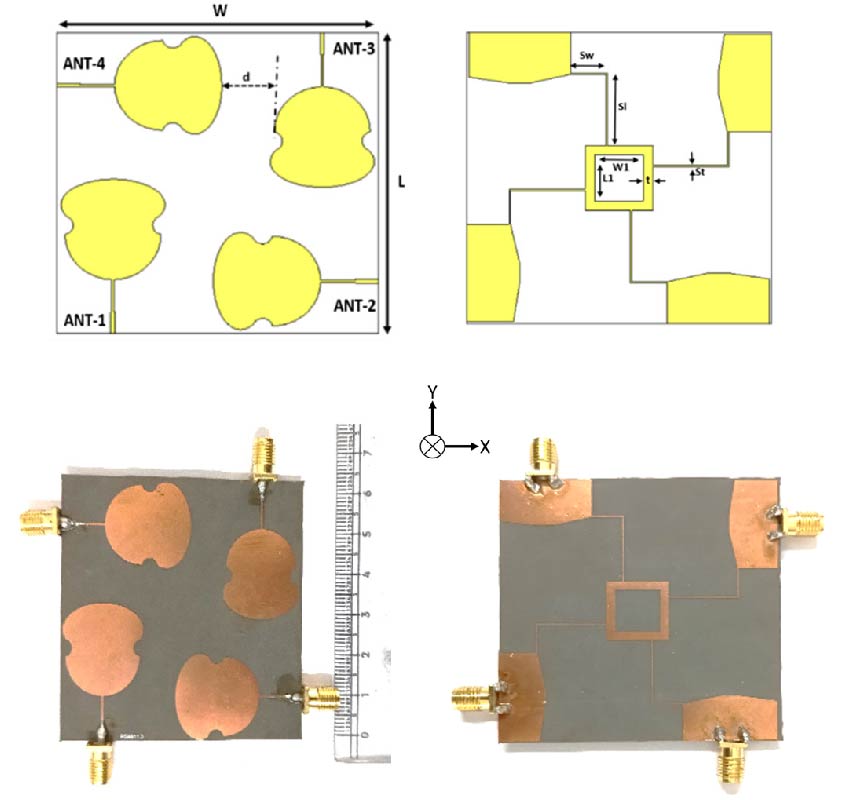
A very compact MIMO antenna for broad-band applications which covers the complete spectrum of X-band applications is represented here. The proposed element in the represented antenna covers a total volume of around 320 mm3. The isolation among radiating elements is improved by placing individual elements orthogonally thereby improving isolation better than 20 dB. This enhanced isolation helps to provide substantial MIMO parameters including ECC, TARC, channel capacity loss, and multiplexing efficiency. The devised antenna is compact (0.066λ × 0.066λ × 0.0024λ mm3) printed over an FR4 substrate which is widely available concerning 6.2 GHz to 11.2 GHz wireless applications. Fabrication of the above-mentioned proposed antenna is done and all the desired calculations are made desirably. Furthermore, the practically measured results conclude that the antenna-measured patterns well correspond to the simulated results.
Performance Analysis of Complementary Split Ring Resonator with Improved Four Element Antenna for X Band Wireless Applications
2024-12-26
PIER C
Vol. 151, 123-130
A Defective Ground Structure Design for Reducing Coupling Between Microstrip Antenna Arrays
Junhao Xu , Yafei Wang , Xiaozhe Wang and Zhensong Li
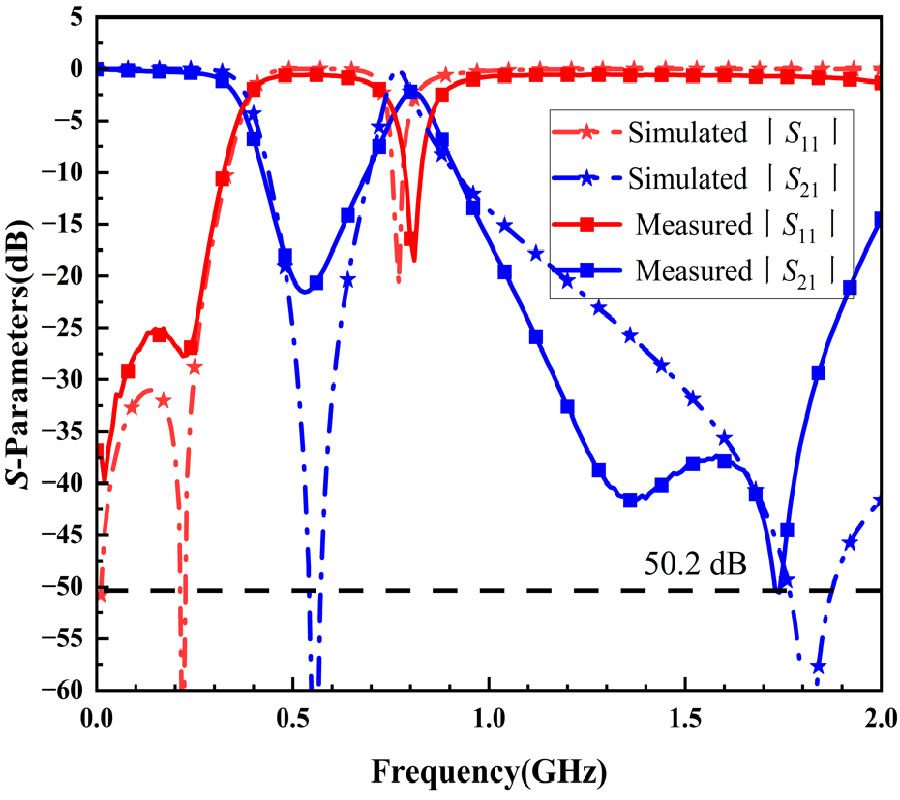
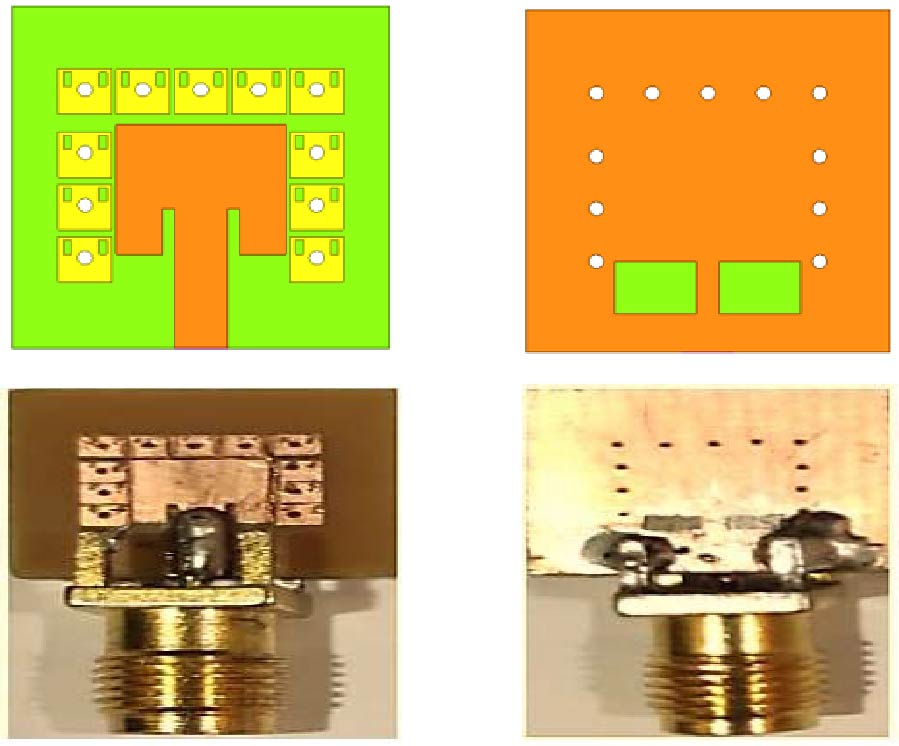
In order to reduce the coupling between dense antenna arrays in multiple input multiple output (MIMO) systems, this paper proposes a method to reduce the coupling between microstrip antenna arrays by utilizing a defected ground structure (DGS), which consists of ``W''-shaped slits etched in the ground plane. Simulation results show that the structure can achieve -46.6 dB isolation between antenna arrays. To verify the effectiveness of the structure, the microstrip antenna arrays loaded with this DGS are fabricated and measured, and the measured results are consistent with the simulated ones, which verifies the effectiveness of the structure.
A Defective Ground Structure Design for Reducing Coupling between Microstrip Antenna Arrays
2024-12-25
PIER
Vol. 181, 81-87
Dual-Color Self-Synchronized Cross-Phase-Modulation Mode-Locked Fiber Laser for Coherent Anti-Stokes Raman Scattering Detection
Pu Sun , Haolin Yang , Xiaer Zou , Ke Feng , Ruili Zhang and Sailing He
We present a self-synchronized dual-color cross-phase-modulation mode-locked (XPM ML) fiber laser with excellent wavelength tunability and signal-to-noise ratio for coherent anti-Stokes Raman scattering (CARS) detection. Cross-phase-modulation gives rise to self-synchronization between the two-color lasers, which enables rapid wavelengths scanning as time delay of the master laser cavity is electrically adjusted. The synchronized cavity without any mode-locking elements helps to improve the mode-locking stability and resistance to environmental interference. The pump (780 nm, 18.5 ps) and Stokes (881.1-899.4 nm, 1.5 ps) pulses obtained by second harmonic generation (SHG) are then sent to a focusing lens for CARS detection for scanning Raman shift of 1470-1701 cm-1). As an example of analyte, rhodium-bisphosphine complex catalyst samples are detected. This highly stable and fast-tunable two-color XPM synchronized mode-locked laser architecture has the potential for arbitrary waveband extension would greatly improve the possibility of coherent Raman scattering imaging technology from the laboratory to practical applications in e.g. biomedical detection.
Dual-color Self-synchronized Cross-phase-modulation Mode-locked Fiber Laser for Coherent Anti-stokes Raman Scattering Detection
2024-12-25
PIER C
Vol. 151, 113-121
A Compact, Conformal DRA with Integrated Feed for Low-Profile Applications
Pramod Kumar Gupta , Garima Tiwari , Manshree Mishra and Biswajeet Mukherjee
A novel compact low-profile Conformal Dielectric Resonator Antenna (CDRA) for wideband applications is proposed. By employing a specially designed dielectric resonator in conjunction with an inverted-trapezoidal patch for feeding, an extensive Impedance Bandwidth (IB) of around 51.5% is realized. The resonant frequencies of 6GHz and 7.5GHz correspond to the observation of the TE21δ mode and the second higher-order TE23δ mode, respectively. Moreover, a realized peak gain of 7.2dBi is attained at 7.4GHz. The proposed DRA offers a wide IB with more than 90% radiation efficiency throughout the bandwidth. Additionally, a good alignment is observed between the measured and simulated results. The proposed DRA is compact and low-profile of 0.1λg, where λg represents the wavelength at the lower cut-off frequency. A CDRA with a conformal feed is an innovative design tailored for wireless communication systems operating within the frequency range from 5.2GHz to 8.8GHz. This antenna configuration is specifically engineered to exhibit conformal properties, enabling it for applications such as the exteriors of vehicles, aircraft, or other non-planar structures.
A Compact, Conformal DRA with Integrated Feed for Low-profile Applications
2024-12-25
PIER C
Vol. 151, 101-112
A Frog-Shaped UWB MIMO Antenna Design for 5G
Shanhua Yao , Tianchu Yang , Xiaorong Qiu and Xiang Li
In this paper, a frog-shaped ultra-wideband (UWB) multiple-input multiple-output (MIMO) antenna is proposed for 5G applications in the n77, n78, n79, and 6 GHz bands with a compact antenna structure of 31×55×1.5 mm3. The designed antenna consists of two frog-shaped monopole antennas and a floor from which part has been removed, and the operating bandwidths range from 3.05 to 13.38 GHz, which meets the design criteria for UWB. The T-shaped floor with two T-shaped slots impedes the flow of coupling currents and improves the isolation of the antenna. This results in an isolation of less than -17 dB over the entire operating bandwidth and less than -20 dB in the 5G band. In addition, the envelope correlation coefficient (ECC) is less than 0.007, the diversity gain (DG) more than 9.96, the total active reflection coefficient (TARC) less than -30 dB, and the channel capacity loss (CCL) less than 0.34 bit/s/Hz. The measured and simulated results agree with each other, demonstrating their potential application in 5G communication systems.
A Frog-shaped UWB MIMO Antenna Design for 5G
2024-12-23
PIER
Vol. 181, 73-80
Dual-Modal Fluorescent Hyperspectral Micro-CT for Precise Bioimaging Detection
Jing Luo , He Zhu , Raheel Ahmed Janjua , Wenbin Ji , Ruili Zhang , Junbo Liang and Sailing He
In this study, we introduce a dual-modal fluorescence hyperspectral micro-CT system developed for e.g. bioimaging applications. The system integrates an X-ray computed tomography (CT) module with a custom-designed hyperspectral fluorescence imaging module, achieving high-resolution structural imaging with detailed molecular-level insights. With a spectral resolution of 10 nm across the wavelength range of 450–750 nm, the hyperspectral fluorescence imaging module enables a fine compositional analysis. Using surface-modified nanoparticles, we demonstrate the system's capability to capture fluorescence under both X-ray and UV excitation. Imaging experiments on a mouse model further highlight the system's ability to generate comprehensive Four-dimensional (4D) datasets that integrate spatial, spectral, and structural information. To the best of our knowledge, no such a dual-modal system or the like has even been reported before. This dual-modal approach enhances the visualization and analysis of biological tissues, offering promising applications in e.g. disease diagnosis, surgical guidance, and preclinical research.
Dual-modal Fluorescent Hyperspectral Micro-CT for Precise Bioimaging Detection
2024-12-23
PIER
Vol. 181, 61-72
An Efficient Hybrid Numerical T-Matrix Approach for 3D Multiple Scattering Analysis
Haifeng Zheng , Xuyang Bai , Shurun Tan and Leung Tsang
In the past decades, with the increasing complexity of topological crystals, artificial electromagnetic (EM) materials, and EM environments, understanding their precise scattering behaviors and characteristis is turning more challenging. Traditional methods for modeling these properties often rely on full-wave simulations or analytical algorithms which are only applicable for regular shapes with plane wave incidences. These methods are inefficient for the design and broadband multiple scattering analysis of general 3D EM structures, as new simulations are required for each different scattering scenario and frequency, while solving a substantial number of unknown variables in each analysis. In this paper, a novel hybrid numerical scattering T-matrix extraction method applicable to scatterers of arbitrary shape and composition is developed in the context of the Foldy-Lax multiple scattering theory (F-L MST). Generalization is also made such that the F-L MST can be applied to multiple scattering problems with arbitrary incident fields. Once the T-matrix elements of individual scatterers are obtained through combining spherical wave expansion with full-wave numerical simulations of surface fields as proposed in the paper, it can be stored and reused, significantly reducing the overall computational complexity. Compared to conventional methods, this approach merely requires matrix inversions of moderate orders in a multiple scattering problem, offering notable efficiency advantages for about an order of magnitude. Meanwhile, the smooth frequency dependence of the T-matrix elements and incident field coefficients suggests the feasibility of interpolating these coefficients for broadband simulations. This proves particularly helpful in the swiftly evolving near-field techniques, and scenarios requiring extensive analysis such as broadband and Monte Carlo analysis. Numerical cases, involving multiple scatterer shapes and arrangements, are explored and compared with COMSOL full-wave simulations. The results validate the accuracy and efficiency of the proposed method, with potential to become a powerful tool for EM simulations and optimization of various wave-functional materials and in many other multiple scattering applications.
An Efficient Hybrid Numerical T-matrix Approach for 3D Multiple Scattering Analysis
2024-12-23
PIER M
Vol. 130, 83-94
Toward Reconfigurable Two-Bit Microwave Chiral Rasorbers
Yubo Wang , Xinyu Jiang , Pankaj K. Choudhury and Yungui Ma
Reconfigurability is a crucial capability for electromagnetic devices to achieve high flexibility in accommodating various scenarios. In this study, we present a reconfigurable microwave rasorber with dynamically tunable helicity polarization for the passband wave using a compound unit cell composed of two-bit chiral meta-atoms. Our specific samples demonstrate low reflectivity (< –10 dB) across the entire C-band, while also offering four distinct states (two-bit) for the passband (reflection/transmission) wave in a narrow window around 6.25 GHz, including circular polarization control or complete blockage. We experimentally demonstrated the switching capability for both chirality and intensity of the passing band wave. These results are significant in expanding the application scenarios of rasorbers with more versatile polarization controllability.
Toward Reconfigurable Two-bit Microwave Chiral Rasorbers
2024-12-22
PIER
Vol. 181, 43-59
(3+1)-Dimensional Nonparaxial Spatiotemporally Localized Waves in Transparent Dispersive Media
Ioannis Besieris
Most of the analytical work on general transparent dispersive media to date has been confined to second-order dispersion within the framework of the paraxial approximation. It is the aim in this article to lift this restriction. Specifically, a detailed discussion is provided of modulated (3+1)-dimensional nonparaxial spatiotemporally localized waves in second-order transparent dispersive media. Novel infinite-energy invariant wavepackets and finite-energy almost undistorted solutions are discussed in detail. Illustrative numerical examples of the latter are given for normal dispersion in fused silica and for anomalous dispersion in a Lorentz plasma.
(3+1)-Dimensional Nonparaxial Spatiotemporally Localized Waves in Transparent Dispersive Media
2024-12-22
PIER C
Vol. 151, 91-100
Gap-Coupled Design of Elliptical Shape Microstrip Antennas for Wideband Circular Polarized Response
Amit A. Deshmukh , Heet Mistry and Venkata A. P. Chavali
A gap-coupled design of elliptical shape microstrip antennas for wideband circularly polarized response is proposed. The wideband nature of the response is attributed to the gap-coupling between the orthogonal resonant modes on the fed and parasitic elliptical shape patches. With the total substrate thickness of 0.11λcAR, the gap-coupled antenna offers the reflection coefficient bandwidth of 784 MHz (55.68%) that includes circularly polarized bandwidth for axial ratio ≤3 dB of 542 MHz (35.82%). The antenna offers a broadside radiation pattern across the bandwidth, with a peak gain larger than 10 dBi. A design methodology to realize a similar gap-coupled antenna in a different frequency range is presented that yields similar wideband results. With the obtained antenna characteristics, proposed designs will find applications in GPS L and GSM 900 frequency bands. An experimental verification for the obtained simulated results is carried out, which provides a close agreement.
Gap-coupled Design of Elliptical Shape Microstrip Antennas for Wideband Circular Polarized Response
2024-12-21
PIER
Vol. 181, 35-41
Observation of Polarization-Maintaining Near-Field Directionality
Tong Cai , Yuhan Zhong , Dan Liu , Hailin Huang , Dengpan Wang , Yi Yang , Hongsheng Chen and Xiao Lin
Directional and highly-efficient excitation of guided waves is closely related to the on-chip information processing and is of fundamental importance to plasmonics, nanophotonics, and chiral quantum optics. However, during the directional coupling between propagating waves and guided waves, there is a loss of information about the incident polarization state. It remains elusive and challenging to preserve the incident polarization information in the near-field directionality. Here we experimentally demonstrate polarization-maintaining and polarization-dependent near-field directionality at a microwave frequency of 9.5 GHz by exploiting a reflection-free, anisotropic, and gradient metasurface. The s- and p-polarized guided waves are excited only by the s- and p-polarized components of incident waves, respectively, and they propagate predominantly to opposite designated directions. Remarkably, the measured coupling efficiency between propagating waves and guided waves exceeds 85% for arbitrary incident polarization states. Our work thus reveals a promising route to directly and efficiently convert the polarization-encoded photon qubits to polarization-encoded guided waves, a process that is highly sought after in the context of optical network and plasmonic circuitry.
Observation of Polarization-maintaining Near-field Directionality
2024-12-21
PIER
Vol. 181, 21-33
Dual Non-Diffractive Beam Generation via Spin-and-Frequency Multiplexed All-Dielectric Metasurfaces
Chunyu Liu , Yanfeng Li , Fan Huang , Guanghong Xu , Quan Li , Shuang Wang , Quan Xu , Jianqiang Gu and Jiaguang Han
Metasurfaces offer remarkable capabilities for manipulating electromagnetic waves and by incorporating multiplexing techniques can significantly increase the versatility of design possibilities. Here, we designed and experimentally demonstrated a series of dual non-diffractive beam generators for terahertz radiation based on all-dielectric metasurfaces. These generators could produce switchable Bessel beams and abruptly autofocusing beams depending on the spin and frequency of the incident terahertz waves. In addition, by further applying appropriate phase gradients in the design, these non-diffractive beams could be deflected in specified directions. It is also possible to simultaneously generate multiple non-diffractive beams with different properties. The generated non-diffractive beams were measured with near-field scanning terahertz microscopy, and the results agreed well with simulations. We believe that these metasurface-based beam generators hold tremendous potential in terahertz imaging, communications, non-destructive evaluation, and many other applications.
Dual Non-diffractive Beam Generation via Spin-and-frequency Multiplexed All-dielectric Metasurfaces
2024-12-21
PIER
Vol. 181, 9-19
Smartphone-Integrated YOLOv4-CNN Approach for Rapid and Accurate Point-of-Care Colorimetric Antioxidant Testing in Saliva
Youssef Amin , Paola Cecere , Tania Pomili and Pier Paolo Pompa
This study introduces a machine learning (ML)-based method for point-of-care (POC) colorimetric testing of total antioxidant concentration (TAC) in saliva, an important biomarker for health monitoring. The approach leverages ML to accurately classify color intensity in the POC test. Saliva samples were collected and imaged at specific intervals during the colorimetric reaction, generating a dataset representative of various antioxidant levels. Four classifiers (Convolutional Neural Network, Support Vector Machine, K-Nearest Neighbors, and Single-layer Feed-Forward Neural Network) were evaluated on distinct datasets, with Convolutional Neural Network (CNN) consistently achieving superior performance. To enhance classification accuracy, stacking-based ensemble learning was applied, combining CNN predictions with a Support Vector Machine (SVM) meta-classifier, achieving up to 92% accuracy. Additionally, YOLOv4-tiny was utilized for object detection to isolate regions of interest in the images, creating a refined dataset that a CNN model is then classified with ca. 98% accuracy. This YOLOv4-CNN approach not only improved accuracy but also simplified the model architecture. The integrated object detection and CNN models were deployed on an Android application, enabling real-time TAC analysis on a smartphone with 98% accuracy and a fast readout time of 2 minutes. This method offers a robust, efficient, and accessible solution for POC antioxidant testing.
Smartphone-integrated YOLOv4-CNN Approach for Rapid and Accurate Point-of-Care Colorimetric Antioxidant Testing in Saliva
2024-12-21
PIER C
Vol. 151, 81-89
Fracture Detection in Bone Tissue Models Using h-Slot Shaped Transceiver Resonators
Wongani Moyo , Ahmed Allam , Asano Tanemasa and Adel Bedair Abdel-Rahman
In this paper, a novel H-slot resonator of size 30 mm x 20 mm x 1.56 mm for fracture detection, backed with a perfect electric conductor (PEC), designed at 2.54 GHz is presented, and its performance is evaluated. Concurrently, an equivalent circuit model of the resonator is developed, and its performance coherently agrees with the CST model. The design is tested using a hybrid tissue phantom based on a second-order Debye dielectric tissue model. The detection of fractures of several thicknesses with a minimum width of 2 mm and a maximum of 10 mm was compared. Overall, the proposed design improves the detection of fractured regions in a bone with a 2 mm crack width as the smallest detectable crack size.
Fracture Detection in Bone Tissue Models Using H-slot Shaped Transceiver Resonators
2024-12-20
PIER
Vol. 181, 1-8
Reflectionless Refraction via One-Dimensional Ghost Polaritons in Planar Junctions of Hyperbolic Metasurfaces
Zhiwei He , Huaping Wang , Zhenyang Cui , Sihao Xia , Xingyu Tang , Bin Zheng , Xiao Lin , Lian Shen , Hongsheng Chen and Yingjie Wu
Polaritons, part-light−part-matter waves, enable the control of light at the subwavelength scale. Interfacial behaviors play a critical role in polariton manipulation, with negative refraction showing promise for high-resolution focusing. However, reflections pose a substantial challenge, especially in applications where backscattering is unwanted. To address this issue, we propose a structure composed of planar junctions of metasurfaces, each supporting in-plane hyperbolic polaritons with misaligned optical axes. We demonstrate that when the asymptote of the incident hyperbolic isofrequency contours (IFCs) aligns with the interface normal, the reflected waves transform into highly lossy one-dimensional ghost polaritons (HL-1DGPs), channeling energy near the interface. The refracted waves also convert into HL-1DGPs when the outgoing IFC asymptote aligns with the interface normal. Leveraging these phenomena, we design polaritonic lenses and absorbers with greatly reduced reflection. These insights into the interfacial behaviors of hyperbolic polaritons under symmetry breaking have implications for creating polaritonic elements beyond the diffraction limit.
Reflectionless Refraction via One-dimensional Ghost Polaritons in Planar Junctions of Hyperbolic Metasurfaces
2024-12-19
PIER
Vol. 180, 127-137
Large Dynamic Range Slope-Assisted BOTDA Based on Unbalanced Frequency-Shifted Double Sidebands Detection
Zijian Xiong , Shengnan Wu and Sailing He
To increase the detection dynamic range of slope-assisted Brillouin optical time-domain analysis (SA-BOTDA) system, we propose a configuration using unbalanced frequency-shifted stokes and anti-stokes sidebands as continuous probe light simultaneously to expand the region of effective stimulated Brillouin scattering (SBS) spectrum existed in frequency domain. The proposed scheme fully utilizes unbalanced double sidebands' gain, loss and corresponding phase spectra, constructing linear regions by specific data processing methods and has pump power-independence characteristic. Besides, scheme of dual-frequency agile change is employed to broaden the linear region at the cost of detection speed. The dynamic detection range of the proposed system can be increased to over 180 MHz, with a spatial resolution of 3.5 m and 500 MHz sampling rate for vibration detection.
Large Dynamic Range Slope-assisted BOTDA Based on Unbalanced Frequency-shifted Double Sidebands Detection
2024-12-19
PIER
Vol. 180, 115-126
Confocal Microscopy with Optimized Excitation and Emission Wavelength for Ultradeep and Multi-Channel Bioimaging
Tianxiang Wu , Weihang Geng , Yuhuang Zhang , Qiming Xia , Mingxi Zhang , Jin Li , Menglu Chen , Wang Xi , Shiyi Peng , Zhe Feng and Jun Qian
The second near-infrared region (NIR-II, 900-1880 nm) spectral window has garnered significant attention in bioimaging due to its moderate light absorption, diminished photon scattering and reduced autofluorescence. Exploiting NIR-II fluorescence, confocal microscopy has achieved deep in vivo imaging. In this study, we have identified that the fluorescence with wavelength beyond 1400 nm offers superior imaging quality for NIR-II confocal microscopy, irrespective of the laser excitation source being continuous-wave or pulsed. Furthermore, leveraging the multiphoton excitation capabilities of femtosecond laser, we have successfully integrated multiphoton excited visible fluorescence channels into the NIR-II fluorescence confocal microscopic system. We have successfully employed this novel system to acquire up to six distinct fluorescence microscopic imaging channels with negligible cross-channel interference, as well as multi-channel and large-depth in vivo observation of mouse brain and kidney.
Confocal Microscopy with Optimized Excitation and Emission Wavelength for Ultradeep and Multi-channel Bioimaging