Search Results(13786)

2025-01-11
PIER M
Vol. 131, 1-7
Broadband High-Gain Magneto-Electric Dipole Antenna Loaded with T-Slot
Yan Yan Wang , Yu Wang and Wu-Sheng Ji
This paper proposes a magneto-electric dipole antenna with broadband, good directivity, and high gain. By changing the shape of the radiating patch and loading the T-slot to improve the impedance matching ability of the antenna, the bandwidth is effectively expanded. Low cross-polarization and high gain are achieved by using a square metal reflective cavity and a hollow metal cylinder loaded on top of the antenna. Test results show a relative impedance bandwidth (|S11|<-10 dB) of 94.40% (1.32 GHz-3.68 GHz) with a maximum gain of 10.7 dBi. The antenna has excellent performance and has applications in wireless communication systems.
Broadband High-gain Magneto-electric Dipole Antenna Loaded with T-slot
2025-01-11
PIER Letters
Vol. 124, 31-36
A High-Performance, Thin, Circularly Polarized Microstrip Antenna for Compact Radar Systems
Palaniselvan Sundaravadivel , Sathiyapriya Thangavel , Gold Beulah Patturose Jegajothi , Rethinasamy Meenakshi , Dhanushkodi Siva Sundhara Raja and Rajeshkumar Dhandapani
This paper presents a novel, thin, circularly polarized microstrip antenna optimized for radar applications, designed to operate within the 7.5-7.7 GHz frequency band. The antenna is compact, with overall dimensions of 1.97λ x 1.08λ x 0.0025λ (where λ is wavelength calculated at 7.5 GHz) printed on a flexible polyimide substrate, offering advantages in terms of mechanical flexibility and integration into conformal systems. Circular polarization is achieved with an axial ratio of less than 3 dB across the operating bandwidth, while a peak gain of 6.25 dBi ensures adequate signal strength for radar detection and communication. Performance improvements are realized by introducing inverted C-shaped slots in the radiating element, effectively manipulating the surface current distribution and enhancing polarization purity and radiation efficiency. A prototype of the antenna was fabricated and tested, with experimental results closely matching simulation data, confirming the reliability of the design methodology. The results demonstrate that the proposed antenna is highly suitable for compact radar systems, offering an optimal balance among size, performance, and fabrication simplicity.
A High-performance, Thin, Circularly Polarized Microstrip Antenna for Compact Radar Systems
2025-01-10
PIER Letters
Vol. 124, 23-29
A Dual-Band Rectangular Spiral Antenna for S-Band Applications
Chilakala Lokanath Reddy , Kallakunta Ravi Kumar , Nalluri Venkateswarlu , Kota Mahesh Babu , Tottempudi Venkata Rama Krishna , Ambati Navya and Kantamaneni Srilatha
A compact size, dual band rectangular spiral antenna with an inset feed is simulated and tested for S-band applications. Feeding of an antenna is given through a 50 Ω microstrip transmission line. The proposed design consists of a rectangular spiral radiating patch in the top plane and a Z-shaped structure in the bottom plane. Ansoft HFSSv13 has been utilised to design the rectangular spiral antenna, and parametric analysis has been done to verify the characteristics of an antenna. The rectangular spiral antenna is fabricated by utilising chemical etching, and it is tested by utilising MS2037C Anritsu combinational analyzer. Reflection coefficients of -16.5 dB and -16.2 dB, and fractional bandwidths of 8% (2.35-2.55 GHz) and 6.7% (3.22-3.44 GHz) are obtained at 2.4 GHz and 3.3 GHz respectively. Maximum gains of 3.1 dBi and 3.34 dBi are obtained at the two resonating frequencies. Omnidirectional and dipole type radiation patterns are obtained for different values of θ and Φ. The rectangular spiral antenna occupies an area of 16 × 16 × 1.6 mm3, and it is fabricated by using FR4 material. Simulated results are in good agreement with the measured ones. These results make the antenna suitable for many Zigbee/IEEE 802.15.4-based wireless data networks that operate in the 2.4-2.4835 GHz band, and it is also suitable for a wide range of applications including FWA systems.
A Dual-band Rectangular Spiral Antenna for S-band Applications
2025-01-09
PIER
Vol. 182, 13-25
Wideband High Gain Lens Antenna Based on Deep Learning Assisted Near-Zero Refractive Index Metamaterial
Huanran Qiu , Liang Fang , Rui Xi , Yajie Mu , Dexiao Xia , Yuanhao Zhang , Shiyun Ma , Jiaqi Han , Qiang Feng , Ying Li , Hong Xu , Bin Zheng and Long Li
Deep learning neural network (DLNN) has enormous potential in solving electromagnetic inverse design problem, and thus meet the growing demand for rapid high gain antenna design in current industrial applications and other complex questions. Here, we propose a wideband near-zero refractive index high gain antenna based on dual band near zero refractive index frequency selective surface (DB-NZRI FSS) with the aid of Fourier transform neural network (FTNN). FTNN employs a Fourier transform-based data simplification algorithm to address the prevalent issue of long training time in neural network for antenna design. We verify the universal adaptive and effectiveness of FTNN by rapid designing near-zero refractive index metamaterial working in adjacent bands. The proposed DB-NZRI FSS unit has transmission zeros at the magnetic resonance point and electric resonance point, and a stopband with high reflectivity exists between the two points. By integrating the initial highly directional radiation effect of zero refractive index metamaterial with the planar parallel cavity principle, the proposed lens antenna obtains the maximum gain of 12.64 dBi at 8.2 GHz. The FTNN has high accuracy and low loss of 0.0407. The designed DB-NZRI FSS has relatively low profile of 3 mm (8% wavelength at the central frequency of 8.2 GHz). Besides, the designed antenna has the characteristics of dual polarizations and wideband with the relative 3 dB gain bandwidth of 19.35% (7.56-9.18 GHz).
Wideband High Gain Lens Antenna Based on Deep Learning Assisted Near-zero Refractive Index Metamaterial
2025-01-09
PIER B
Vol. 110, 1-14
Minimization of Latency in D2D-Assisted MEC Collaborative Offloading Based on Intelligent Reflecting Surface
Jun Zhou , Chenwei Feng , Yawei Sun and Jiaxing Guo
With the rapid development of various intelligent scenarios, the demand for low latency, efficient processing, and energy optimization is increasing. In smart communities, intelligent transportation, industrial environments, and other scenarios, a large amount of data is generated that needs to be processed in a short time. Traditional cloud computing models are difficult to meet the requirements for real-time and computing efficiency due to the long data transmission distance and high latency. Therefore, this paper introduces Intelligent Reflecting Surfaces (IRS) into the optimization model of Device-to-Device (D2D) communication and Mobile Edge Computing (MEC) collaborative offloading to enhance system performance and minimize total latency. This paper proposes a latency minimization problem for joint offloading mode selection, computing resource allocation, and IRS phase beamforming. The original problem is decoupled into three subproblems using the Block Coordinate Descent (BCD) algorithm. Through precise potential game theory, the Nash equilibrium (NE) is achieved, and multi-objective optimization is realized using the Lagrangian multiplier method and KKT conditions. Finally, a phase shift optimization problem is solved using the gradient descent algorithm. Simulation results show that the proposed algorithm outperforms other benchmark schemes in terms of performance.
Minimization of Latency in D2D-Assisted MEC Collaborative Offloading Based on Intelligent Reflecting Surface
2025-01-08
PIER C
Vol. 152, 1-12
Design of a Low-Cost Printed Slotted SIW Antenna Array with Omnidirectional Azimuth Pattern and Beam-Shaped Elevation Pattern
Tadeu Pasetto and Hugo Enrique Hernandez-Figueroa
This paper presents the design, discussions, and characterization of a low-cost printed slotted substrate integrated waveguide traveling wave antenna. The antenna exhibits an omnidirectional pattern in the azimuth plane and a cosecant squared pattern in the elevation plane. This synthesized pattern enables application in 5G mm-wave systems by providing a defined signal equipotential region, thereby increasing coverage areas in locations such as stadiums, exhibition centers, arenas, and parks. Additionally, the proposed design method facilitates the easy implementation of new designs tailored to specific installation sites.
Design of a Low-cost Printed Slotted SIW Antenna Array with Omnidirectional Azimuth Pattern and Beam-shaped Elevation Pattern
2025-01-08
PIER C
Vol. 151, 185-191
Petal-Shaped Array Antenna with Slots for Improving Surface Current Distribution
Jia-Feng Zhou and Jiu-Sheng Li
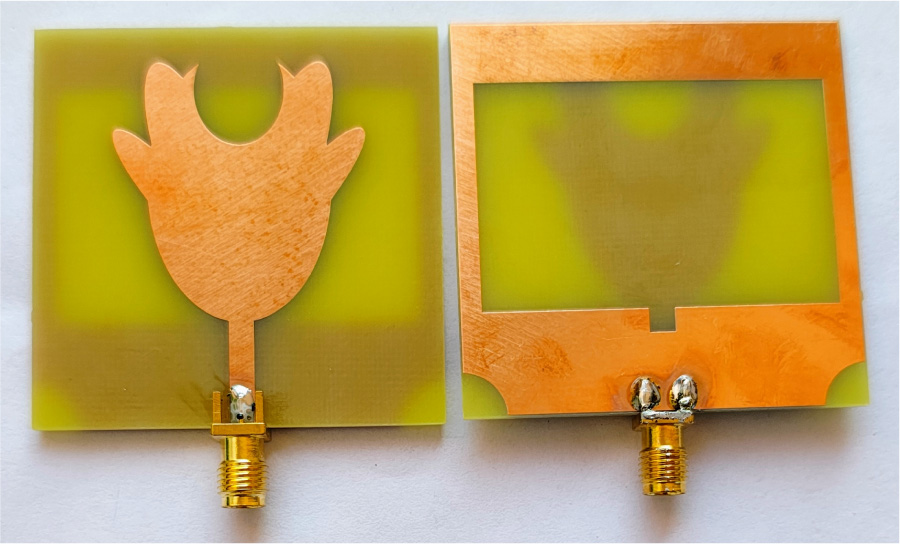
To improve surface current distribution and give dual polarizations, a petal-shaped array antenna with slots was presented. We analyze the surface current of petal-shaped array antenna, study the working modes of each part, and use defect structures to remove surface reverse currents to reduce sidelobes and achieve high gain characteristics. By changing the radiation length of the antenna, the designed antenna operates in the target frequency band. Then, strip defects are introduced to improve surface current and enhance isolation. Finally, antenna prototype was fabricated and measured to demonstrate our ideas. The measured results show that the proposed antenna has a 10 dB impedance bandwidth from 5.74 to 5.82 GHz with a relative bandwidth of 1.4%, and achieves a peak gain of 11.3 dBi at 5.8 GHz. The isolation of the two ports is more than 26.4 dB in the passband. The overall size of the proposed antenna is only 1.47λ0×1.47λ0×0.015λ0.
Petal-shaped Array Antenna with Slots for Improving Surface Current Distribution
2025-01-06
PIER C
Vol. 151, 177-184
Three-Vector Model Predictive Current Control of Permanent Magnet Assisted Synchronous Reluctance Motor Based on Step-by-Step Parameter Identification
Aide Xu , Ruijie Liu and Yubang Yu
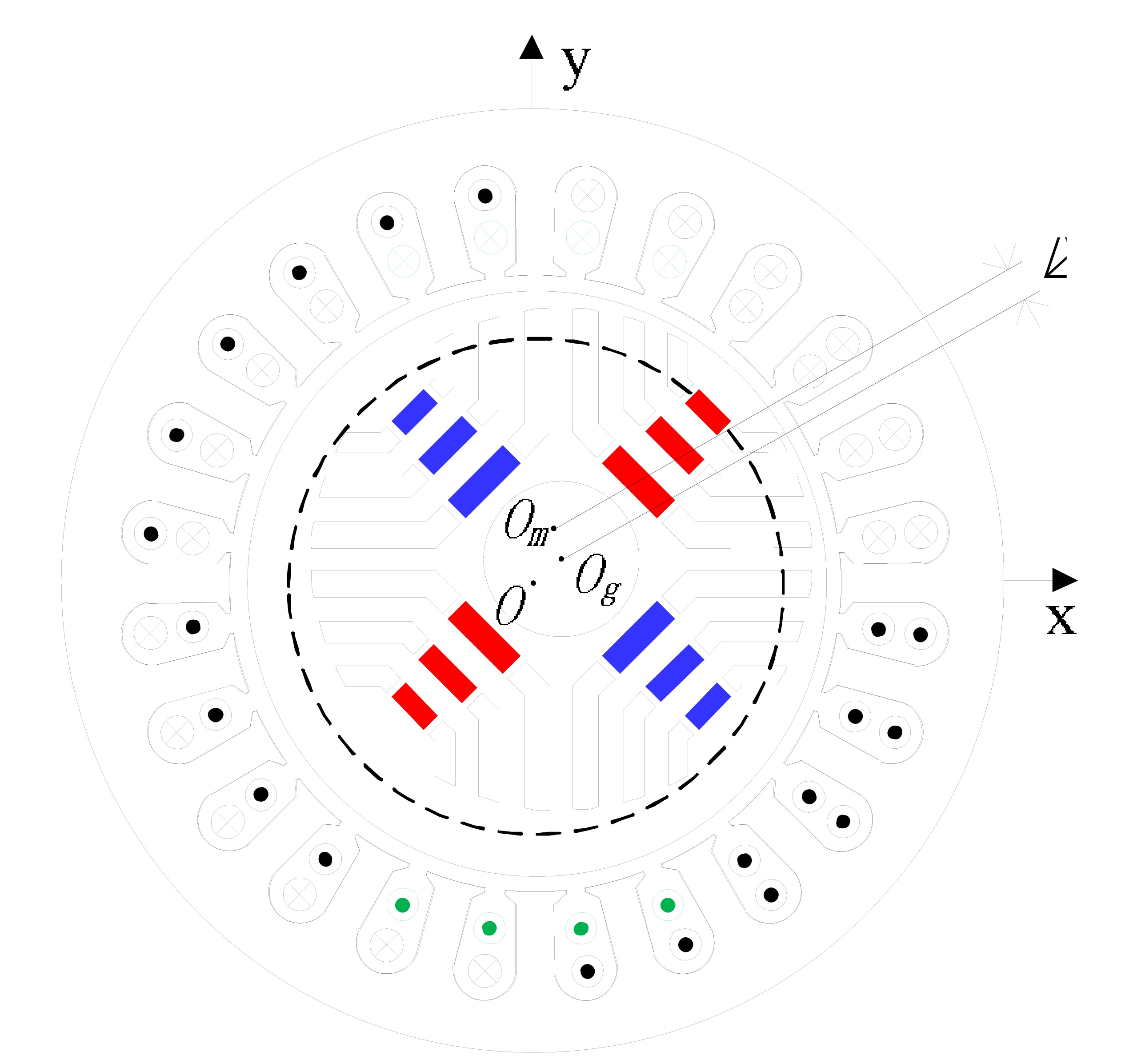
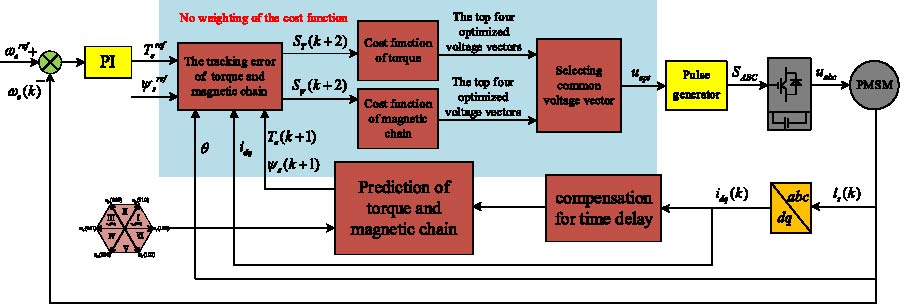
This paper addresses the susceptibility of motor parameters to external disturbances during the operation of three-vector model predictive current control (TV-MPCC) for permanent magnet-assisted synchronous reluctance motors (PMA-SynRMs), which leads to increased current fluctuations and reduced tracking precision. To enhance the control system's stability, a step-by-step parameter identification approach is proposed. First, the proposed method devises six switching configurations, considers eight potential current prediction points generated by voltage vectors, and reformulates the value function. Next, a model reference adaptive system (MRAS) is employed to incrementally identify the motor's d and q axis inductances, resistance, and flux linkage. These identified parameters are used to update the model in real time. In this study, a 3kW PMA-SynRM serves as the control object for simulation verification. Results indicate that the TV-MPCC based on step-by-step parameter identification has obvious improvement in current tracking static error and peak value of current fluctuation.
Three-vector Model Predictive Current Control of Permanent Magnet Assisted Synchronous Reluctance Motor Based on Step-by-Step Parameter Identification
2025-01-05
PIER
Vol. 182, 1 - 12
Performance Analysis of Plasmonic Sensor Modified with Chitosan-Graphene Quantum Dots Based Bilayer Thin Film Structure for Real-Time Detection of Dopamine
Faten Bashar Kamal Eddin , Yap Wing Fen , Ke Cui , Josephine Ying Chyi Liew , Hong Ngee Lim , Nurul Illya Muhamad Fauzi , Wan Mohd Ebtisyam Mustaqim Mohd Daniyal and Saimei Hou
The performance of surface plasmon resonance (SPR) sensor modified with chitosan-graphene quantum dots (CS-GQDs)/Au bilayer thin film for dopamine (DA) detection was evaluated in this work. The sensor's selectivity to DA was evaluated in the presence of various interfering substances. The sensor's stability was examined over three weeks. Additionally, the repeatability of this sensor was assessed through nine successive measurements, and its reproducibility was evaluated using six different sensor films. The sensor demonstrated excellent selectivity to DA when 1 pM of DA was introduced to a 100 pM mixture of epinephrine, ascorbic acid, and uric acid. Furthermore, the storage stability of the sensor was found to be excellent. The sensor showed good repeatability as well as reproducibility with relative standard deviation (RSD) values of 0.343% and 0.229%, respectively, while detecting 1 fM of DA. The real-time DA detection showed that obtained response signals were stable after roughly 10 minutes of injection of all concentrations. By fitting the experimental data to Pseudo-first-order (PFO) kinetic model, the equilibrium SPR angular shift was 0.318° with adsorption rate constant of 0.240 min-1 for 1 fM DA contacting the sensor surface. AFM images revealed that DA influenced the surface morphology of the sensor film, changing its average roughness by 0.710 nm, and FTIR spectra showed changes in the spectral bands and peaks intensities. These findings showed that CS-GQDs/Au based SPR sensor is an advantageous option for rapidly and economically diagnosing DA deficiency with high selectivity and sensitivity.
Performance Analysis of Plasmonic Sensor Modified with Chitosan-Graphene Quantum Dots Based Bilayer Thin Film Structure for Real-Time Detection of Dopamine
2025-01-05
PIER C
Vol. 151, 167-175
Two Compact Hybrid Band-Pass Filters Using Eighth-Mode Substrate-Integrated Waveguide and Microstrip Resonators
Luyao Tang , Wei Han , Hao Wei and Yanbin Li
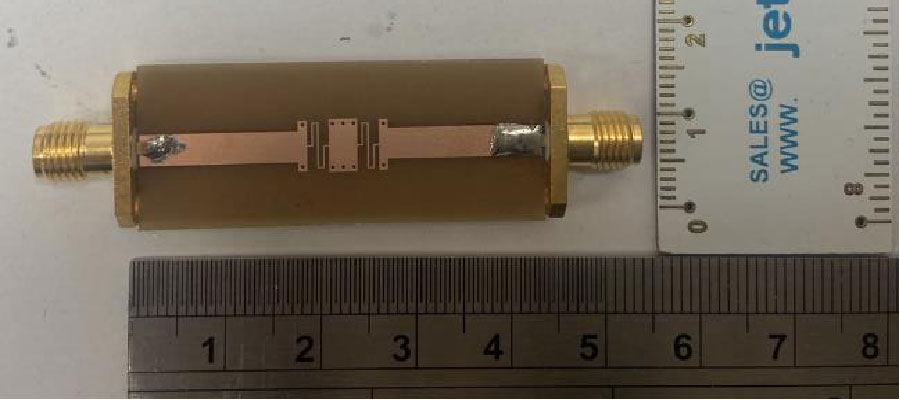
Two compact substrate-integrated waveguide (SIW) filters with hybrid coupling of eighth-mode substrate integrated waveguide (EMSIW) resonators and microstrip are proposed in this paper. Hybrid coupled filters were achieved by etching two half-wavelength microstrip resonators (BPF I) or two quarter-wavelength microstrip resonators (BPF II) on top of traditional second-order EMSIW filters. The topology of the two filters was analyzed. Due to the cross coupling between resonator 1 and resonator 4, two transmission zeros were achieved outside the band of BPF I, which increased the selectivity of the filter. Due to the mixed electromagnetic coupling between resonator 2 and resonator 3, a transmission zero is realized in the stopband of BPF II. To confirm the validity of the two filter models, two filters were designed, produced and measured. Based on the findings of the measurements, the central frequency of BPF I is recorded at 7.7 GHz, with a fractional bandwidth (FBW) of 18.2%. The insertion loss (IL) within the passband is minimal at 0.8 dB, and the size of the filter is only 8 mm * 4 mm (0.53λg * 0.26λg). The filter exhibits enhanced out-of-band suppression due to the presence of two transmission zeros located at frequencies of 6.4GHz and 10GHz. The center frequency of BPF II is 19.5 GHz; the FBW is 20.5%; the IL within the passband is only 0.49 dB; and the size of the filter is only 2 mm * 2 mm (0.34λg * 0.34λg). As a result of the mixed electromagnetic coupling effects, a transmission zero occurs at a frequency of 26.7 GHz. The simulation outcomes are consistent with the experimental findings. Compared with other reported SIW filters, the two filters introduced in this study exhibit favorable characteristics such as reduced insertion loss and compact dimensions.
Two Compact Hybrid Band-pass Filters Using Eighth-mode Substrate-integrated Waveguide and Microstrip Resonators
2025-01-04
PIER C
Vol. 151, 157-165
A Novel Large Platform Virtualization Method for Antenna Electromagnetic Environment Effects Test
Ceyi Ma , Yingjie Wang , Ze Yu and Heng Zhang
The electromagnetic environment effect test of UAV airborne equipment is commonly completed in anechoic chambers. Due to the influence of platform on antenna radiation characteristics, it is necessary to move the large platform with a antenna to anechoic chambers. However, testing costs even make this case impossible. To evaluate the electromagnetic effect of platform-free antenna ports, this study proposes an antenna platform virtualization technique. The FIT (Finite Integration Technique) is employed to calculate the antenna gain corresponding to different frequencies with and without an antenna platform. Subsequently, the difference in antenna gain under these two cases is obtained. By compensating for this variation at the interference source, the frequency domain response of the interference signal at the antenna port can be predicted, disregarding the platform. To validate the effectiveness of the proposed technique, a UAV's airborne antenna is employed for simulation analysis. The root-mean-square error of the proposed technique is less than 0.5 dB. Moreover, in terms of time domain transient interference, the effect of the platform on the transient interference signal at the antenna port is equivalent to a transfer function. The root-mean-square error for the transient response prediction method is less than 0.1%. The results demonstrate that the proposed antenna platform virtualization technique makes it possible to test the electromagnetic effect of antenna in anechoic chambers without a platform.
A Novel Large Platform Virtualization Method for Antenna Electromagnetic Environment Effects Test
2025-01-03
PIER Letters
Vol. 124, 17-21
A Miniaturization Dual-Passband Microwave Filter Based on Load-Coupled Open Stub Lines
Xinying Sun , Chuicai Rong , Huajie Gao and Menglu Zhang
In this Letter, a miniaturized U-shaped microstrip filter based on a load-coupled open line is proposed. It is composed of a step impedance resonator and parallel coupled open stub line. Interfinger feed is used to enhance coupling. This configuration and coupled open stub lines form four transmission zeros between two passbands as part of open coupled stub lines to increased out-of-band rejection. The analysis of formation reason of transmission zero is conducted using lossless transmission line theory and even-odd mode analysis techniques. A filter operating at 2.53 GHz and 5.53 GHz is simulated and fabricated. The insertion loss of first passband is 1.30 dB, and return loss is -18.60 dB. The insertion loss of the second passband is 0.70 dB, and return loss is 22.89 dB. The out-of-band rejection is maintained below -20.00 dB. The final model size is 0.20λg x 0.23λg. The final physical measurement results confirm theoretical results.
A Miniaturization Dual-passband Microwave Filter Based on Load-coupled Open Stub Lines
2024-12-31
PIER C
Vol. 151, 149-156
Pattern-Reconfigurable Printed Dipole Antenna for Wireless Communication Systems
Saber Dakhli , Jean Marie Floc'h , Ameni Mersani and Hatem Rmili
In this paper, a compact and reconfigurable radiation pattern dipole antenna based on the Yagi-Uda antenna principle and operating at 2.5 GHz is designed. Controlling the switching states of three loaded switches allows for pattern reconfigurability. Three modes can be chosen based on the results of the simulations and measurements. In the first mode M1, a high directive- beam can be achieved by turning ON all the RF switches, and a measured peak gain of 6.7dBi is obtained with a corresponding half-power beamwidth (HPBW) of 44°. In the second mode, only the director is required to enable a less directive beam. This allows for a larger HPBW of 62° and a lower peak gain of 5.47 dBi. Finally, by disabling the reflector and director in the third mode, M3, we get an omnidirectional radiation pattern around the y-axis with a maximum measured gain of 3.8 dBi. The comparison with other prior art antennas shows that the proposed reconfigurable antenna has compact size, high gain, and simple design, making the structure a good candidate for new wireless applications.
Pattern-reconfigurable Printed Dipole Antenna for Wireless Communication Systems
2024-12-31
PIER M
Vol. 130, 139-153
Modeling and Analysis of Delay Doppler Maps for Spaceborne GNSS-R Signal Scattered from Sea Surface
Min Chen , Peng-Ju Yang and Rui Wu
The Global Navigation Satellite System Reflected (GNSS-R) Signal adopts a heterogeneous observation mode and utilizes the globally shared GNSS constellation as a multisource microwave signal transmission source, providing the opportunity signals for radar measurements. As a basis for GNSS-R bistatic remote sensing simulations, this paper analyzes wave spectrum model of sea surfaces, GNSS signal scattering model, and GNSS signal scattering power model. The modified Zavorotny and Voronovich (Z-V) model combined with two-scale method (TSM) for sea surface scattering is utilized to simulate delay Doppler map (DDM), with emphasis on the analysis of the effects of wave polarizations, delay Doppler interval, and sea states on DDM of GNSS signal scattered from sea surfaces. The correlated power model of GNSS scattering signal is validated by comparison with measured Cyclone Global Navigation Satellite System (CYGNSS) DDM data in L1 level 2.1 version. The DDM waveforms obtained from Z-V model combined with TSM are basically consistent with the CYGNSS actual data, in which strong scattering spots can be observed clearly from both simulated and measured DDMs. The modeling and analysis of DDM for spaceborne GNSS-R signal from sea surface is of great value in ocean remote sensing applications, particularly for the interpolation and utilization of various spaceborne GNSS measured data.
Modeling and Analysis of Delay Doppler Maps for Spaceborne GNSS-R Signal Scattered from Sea Surface
2024-12-31
PIER M
Vol. 130, 129-137
A Design Approach for High-Efficiency Hybrid Continuous Extended Inverse Class-F Broadband Power Amplifier Using Band-Pass Network Topology
Jingchang Nan , Jiadong Yu and Heyang Sun
A hybrid continuous extended-mode inverse class-F power amplifier is designed with band-pass filtered matching networks to match transistor inputs. This design methodology increases the impedance space by incorporating free factors into the current equation of the traditional inverse class-F power amplifier (PA). The suggested matching network in this article is a reliable alternative to the commonly used low-pass structured matching network, and this synthesis method simplifies the deployment of the distributed network compared to the LC low-pass network. High efficiency is guaranteed by the constructed output band-pass matching network. To verify the validity and superiority of this design method, a broadband power amplifier operating at 2.6-4.0 GHz was designed and fabricated. Largesignal measurement results indicate that the drain efficiency (DE) ranges from 60% to 81%, 40-42.3 dBm output power, and 10.5-11.5 dB power gain across this frequency range.
A Design Approach for High-efficiency Hybrid Continuous Extended Inverse Class-F Broadband Power Amplifier Using Band-pass Network Topology
2024-12-31
PIER M
Vol. 130, 121-128
Development of Fractal 5G MIMO Antenna for Sub 6 GHz Wireless Automotive Applications
Ashish Kumar , Gurmeet Singh , Muhannad Kaml Abdulhameed , Sarah Rafil Hashim and Ahmed Jamal Abdullah Al-Gburi
Multi-input multi-output (MIMO) antennas have garnered significant attention for addressing the demands of high channel capacity, reliable and uninterrupted signal transmission, and high data rates, especially with recent advancements in 5G low Earth orbit (LEO) satellite communications. In addition to these features, automotive applications require antennas with minimal mutual coupling, high gain, multiple resonant frequencies, and compact size for user equipment. To meet these requirements, a 1×2 defected ground structure (DGS)-based fractal MIMO antenna array is proposed, covering various frequencies in the sub-6 GHz bands, including 0.7 GHz, 2.6 GHz, 3.1 GHz, and 3.5 GHz. The proposed antenna provides sufficient channel bandwidths and achieves a gain of 12.9 dBi in the n78 frequency band. The design has been fabricated, and the measured results show good agreement with the simulated ones. Moreover, the proposed antenna design can be integrated into the plastic parts of a car body, offering various automotive applications. It achieves a realistic data rate of approximately 10-12 Mbit/s, as verified through link budget calculations that consider the key parameters of LEO satellite systems.
Development of Fractal 5G MIMO Antenna for Sub 6 GHz Wireless Automotive Applications
2024-12-31
PIER B
Vol. 109, 127-139
A Novel Miniature Inverted `V' Slot Reconfigurable Patch Antenna for X-Band Applications
Bathula Ashok Kumar , Vijaya Chandra Kavuri , Gudla Ramalakshmi and Moturi Satyanarayana
A reconfigurable patch antenna for X-band applications offers frequency agility and adaptability for systems operating within the 8-12 GHz range. This design allows dynamic tuning of the antenna's operating frequency, making it ideal for radar, satellite communications, and military applications. By incorporating reconfigurable elements, such as switches or tunable materials, the antenna can adjust to varying operational requirements, improving performance and flexibility in compact systems where space and efficiency are crucial. A reconfigurable patch antenna for X-band applications faces several challenges. Incorporating reconfigurable elements, such as switches or tunable materials, can increase the design's complexity and reduce reliability, especially in high-frequency X-band operations. Miniaturization may result in performance trade-offs, potentially affecting the antenna's gain, bandwidth, and radiation efficiency. Additionally, ensuring stable and interference-free operation across the reconfigured frequencies can be difficult. The antenna's power-handling capability may also be limited, which is critical for radar and military applications. Finally, thermal stability and environmental resilience are key concerns, as performance can degrade under varying conditions. Hence, this paper proposes a novel miniature inverted V-slot reconfigurable patch antenna. extended antenna design features a compact radiating patch (10.5 mm x 14 mm) with an inverted `V' slot and corner modifications (chamfering) to enhance performance. Frequency and polarization reconfiguration are achieved through the enable/disable functionality of PIN diodes placed within the inverted `V' slot, allowing dynamic adjustments. The defected ground structure, featuring two vertical slots, further aids in enhancing the antenna's operational capabilities. The antenna operates across multiple frequency bands, specifically 9.84-10.46 GHz, 10.66-11.59 GHz, 11.08-11.98 GHz, and 11.61-12.11 GHz, making it suitable for X-band applications. Additionally, the proposed antenna supports right-hand circular polarization (RHCP), left-hand circular polarization (LHCP), and linear polarization (LP), offering versatile propagation modes. Both practical and simulated results demonstrate good impedance matching across different polarization states. This design is highly suitable for satellite communication and other X-band applications due to its reconfigurable and flexible performance.
A Novel Miniature Inverted `V' Slot Reconfigurable Patch Antenna for X-band Applications
2024-12-30
PIER C
Vol. 151, 139-148
A Compact Dual Band Wearable Slot Antenna with Partial Ground for WLAN and X Band Applications
Nageswara Rao Regulagadda and Uppalapati Venkata Ratna Kumari
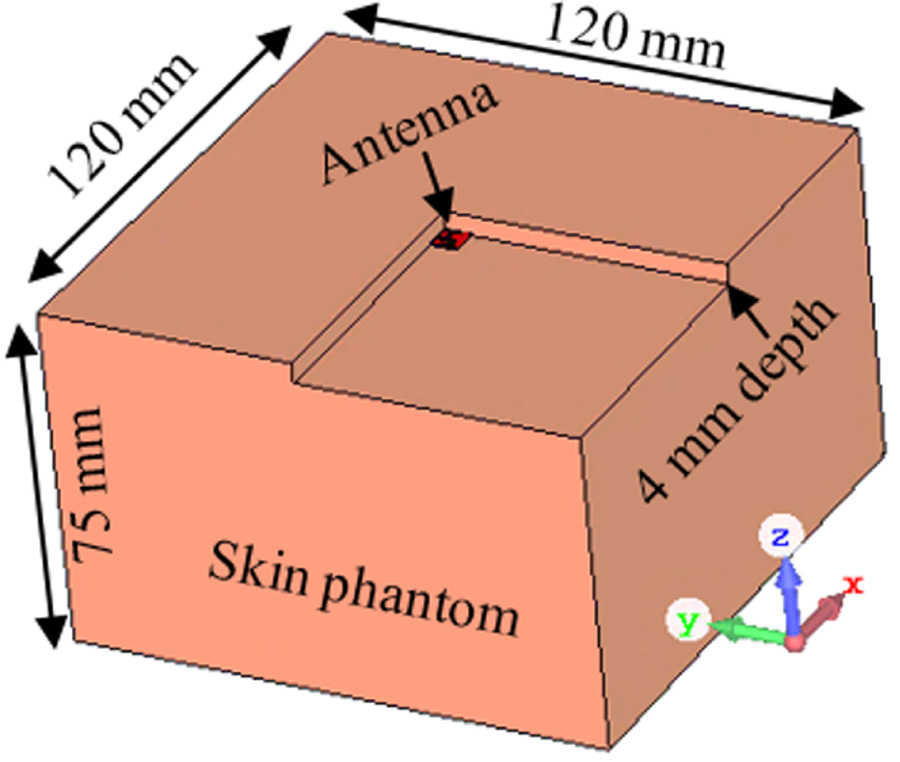
This study introduces a compact, dual-band wearable slot antenna with inverted L-shaped partial ground (PG) for Wireless Local Area Networks (WLANs) and X-Band Applications. The proposed antenna design uses a flexible polyamide material of 21×21 mm2 dimensions as a dielectric substrate between two metal surfaces. The prime radiator is a rectangular slot antenna patch with several slots etched out, and the ground plane is an inverted L-shaped stub that forms the PG. The insertion of slots in the patch disturbs the surface current path and increases the electrical length to offer miniaturizations. It effectively minimizes the antenna dimensions to resonate at lower frequencies. The dimensions of the PG and its placement on the ground plane attain the dual-band resonance with a good amount of return loss. Different slots are etched on the patch to get the desired frequency bands of operation. The designed antenna has achieved wide impedance bandwidths of 0.55 GHz and 1.04 GHz and peak gains of 6.45 dBi and 6.04 dBi at the 5.15 GHz and 8.13 GHz operating frequencies, respectively. The detuning behavior of the suggested antenna in bending conditions is analyzed. The effect of radiation on the human tissue is calculated in terms of Specific Absorption Rate (SAR), and it is within the standards. The antenna model is fabricated and tested, and a satisfactory agreement between the computed and measured data is achieved. The compactness, flexibility, and radiation pattern make this antenna model suitable for ON/OFF-Body communication in wearable applications.
A Compact Dual Band Wearable Slot Antenna with Partial Ground for WLAN and X Band Applications
2024-12-29
PIER M
Vol. 130, 111-120
Magneto-Acousto-Electrical Tomography Method for Conductivity Reconstruction of Complex Structural Models
Di Fan , Xingchen Zhang , Yuanyuan Li , Huiling Liu , Jing Liu and Guo-Qiang Liu
Magneto-Acousto-Electrical Tomography (MAET), as one of the electrical characterization imaging methods, is used to image the electrical conductivity of biological tissues, which can be used for noninvasive, radiation-free imaging of biological tissues. Currently, most of the studies on MAET are simulations and experimental validations of simple structural models, and there is no sufficient validation of models with complex structures, and most of the results cannot comprehensively invert complex structural models with multi-gradient conductivity distributions. To address this problem, this paper proposes a MAET method for conductivity reconstruction of complex structural models which is applicable to 2D problems and may be extendable to 3D problems. Based on this method, the conductivity distribution of normal and diseased tissues in the simulation model of complex structures was reconstructed, and the consistency between experimental and simulated signals was verified. The results show that the MAET method for conductivity reconstruction of complex structural models proposed in this paper is conducive to improving the image resolution as well as the structural similarity, enhancing the conductivity distribution information of complex structural targets with inhomogeneous shapes and multi-gradient conductivity distributions.
Magneto-Acousto-Electrical Tomography Method for Conductivity Reconstruction of Complex Structural Models
2024-12-27
PIER
Vol. 181, 99-112
Three-Dimensional Topological Photonic Crystals (Invited Review)
Jian-Wei Liu , Gui-Geng Liu and Baile Zhang
Photonic crystals, often referred to as the ``semiconductors of light,'' have entered a new phase enabling exotic properties once exclusive to topological quantum matter such as topological insulators. While the development of the first three-dimensional (3D) photonic crystal marked the establishment of photonic crystals as an independent field, initial studies in topological photonic crystals focused mainly on one and two dimensions. Though a true photonic crystal counterpart of a 3D strong topological insulator remains elusive, significant progress has been made toward achieving 3D topological photonic crystals. Compared with their lower-dimensional counterparts, 3D topological photonic crystals reveal a richer variety of topological phases and surface manifestation, which enables more degrees of freedom for light manipulation. In this review, concentrating on the novel boundary states unique in 3D systems, we provide a brief survey of the 3D topological photonic crystals and recent advances in this field. We categorize and discuss various topological phases and associated phenomena observed in 3D photonic crystals, including both gapped and gapless phases. Additionally, we delve into some recent developments in this rapidly evolving area, including the realization of 3D topological phases through synthetic dimensions.
Three-dimensional Topological Photonic Crystals (Invited Review)