Search Results(13785)

2025-01-20
PIER M
Vol. 131, 37-44
Design of a Compact SRR Loaded Polarization-Independent Wideband Meta-Material Rasorber with a Narrow Transmission Window
Abhinav Kumar , Gobinda Sen and Jayanta Ghosh
This work presents a new compact split-ring resonator (SRR)-loaded rasorber to achieve narrow in-band transmission while maintaining broad absorption over a wide frequency range. The unit cell on the top layer is made up of four 150-ohm lumped resistors and four modified split ring resonators that are capable of absorbing a wide range of frequencies. The bottom FSS layer comprises a multilayer cascaded structure where top and bottom most metal layers are inductive grids, and the middle-sandwiched layer is a folded square ring structure. This design serves as a band-pass filter, allowing in-band transmission frequencies to pass through and also serving as a ground plane for out-of-band frequencies. The proposed rasorber exhibits an absorption bandwidth of 124% for frequency band starting from 2.5 GHz to 9.5 GHz, which covers mostly ISM and Satellite communication bands. The rasorber also acts as a transparent structure with insertion loss of 1.3 dB at the IOT band of 4.8 GHz. The novelty of the rasorber lies in achieving a very narrow transmission bandwidth with sharp roll off and is well suitable for radome applications having high selectivity. The innovation in this design comes from its combination of wide out-of-band absorption, narrow in-band transmission, high angular stability up to 50° for oblique incidence, and a dual-polarized response. The study looked at polarization behavior, surface current distribution, and other important parameters to figure out how well the rasorber worked. The equivalent circuit response of the proposed rasorber is compared with simulated one to get more circuit level understanding. Our results indicate that the electrical equivalent circuit design closely aligns with the simulated data. The proposed rasorber is suitable for secure communication in defense, as a super-stratum on an antenna, with reduced RCS and stealth characteristics.
Design of a Compact SRR Loaded Polarization-independent Wideband Meta-material Rasorber with a Narrow Transmission Window
2025-01-20
PIER Letters
Vol. 124, 63-68
Multilayer Slotted LTCC Antenna for S-Band Applications
Abdelrahman Elkhidir , Abdulrahman Daher and Mahmoud Al Ahmad
This paper presents the design and implementation of a novel S-band antenna utilizing low-temperature co-fired ceramic (LTCC) technology. LTCC enables low losses, efficient radiation performance, and robust packaging. The antenna operates at 2.4 GHz with a size of 40 mm x 26 mm and offers a gain of 5 dB. It features a −10 dB impedance bandwidth of 20 MHz within the frequency range of 2.39 GHz to 2.41 GHz with efficiency of 94%. This design highlights the adaptability of LTCC technology in producing antennas that excel in several application while maintaining a desirable balance of size and efficiency.
Multilayer Slotted LTCC Antenna for S-band Applications
2025-01-20
PIER Letters
Vol. 124, 55-61
Credibility Assessment of EMC Uncertainty Analysis Based on Failure Rate
Shenghang Huo , Zhengyu Xue , Yuhan Zhou , Jinming Yao and Jinjun Bai
Uncertainty analysis has been widely used in electromagnetic compatibility (EMC) simulation. However, a comprehensive credibility assessment system for it has yet to be established. In this article, the concepts of failure domain and failure rate are introduced from the perspective of the practical application of uncertainty analysis methods. The study aims to assess the reliability of uncertainty analysis method from the perspective of system failure, providing a theoretical basis for guiding practical electromagnetic compatibility design through uncertainty analysis.
Credibility Assessment of EMC Uncertainty Analysis Based on Failure Rate
2025-01-19
PIER B
Vol. 110, 57-71
Design and Performance Evaluation of a High-Isolation MIMO Antenna Array for 5G N77/N78/n79 and WLAN Implementations
Juhui Zhang , Wei Luo , Qiangjuan Li , Yuexiao Pan and Gui Liu
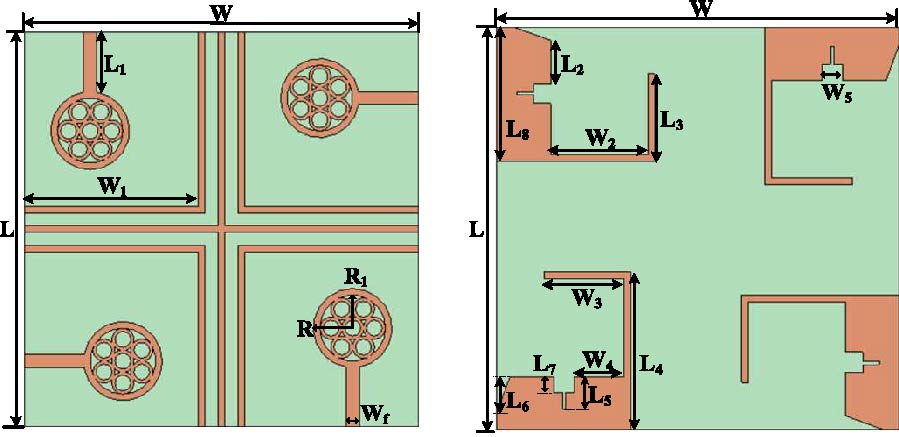
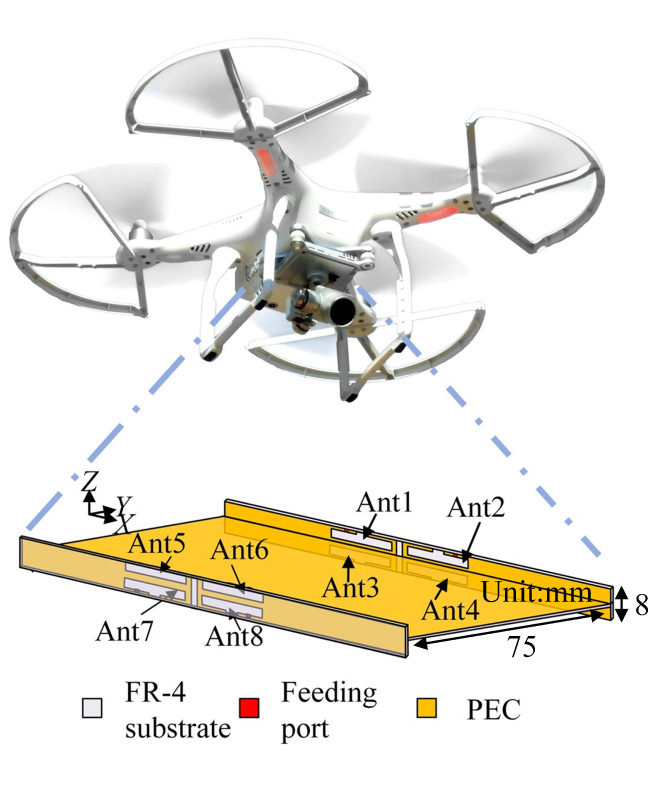
This paper proposes a broadband multi-input multi-output (MIMO) antenna array operating in the 3.3-6 GHz frequency range. The antenna array consists of eight identical Z-shaped radiation elements, and the coupling between the antenna elements is minimized through the use of an optimized defected ground structure. Each antenna element is composed of a modified Z-shaped radiation strip, an opposing L-shaped strip, and a rectangular strip. Based on simulation and measurement results, it can be concluded that the antenna array meets the -10 dB bandwidth requirement within the desired frequency band, with the transmission coefficient of less than -15 dB, and an envelope correlation coefficient (ECC) below 0.006. Additionally, the proposed antenna achieves a maximum gain ranging from 2.6-8 dBi, with an efficiency exceeding 76%. The overall size of the phone antenna is 150 × 75 × 7 mm3, while each antenna element measured only 7.8 mm × 7 mm × 0.8 mm (0.091λ × 0.082λ × 0.009λ, where λ represents the wavelength at 3.5 GHz). The high-isolation broadband MIMO antenna proposed in this study emerges as a promising candidate for fifth-generation (5G) New Radio (NR) and WLAN applications.
Design and Performance Evaluation of a High-isolation MIMO Antenna Array for 5G N77/N78/N79 and WLAN Implementations
2025-01-18
PIER C
Vol. 152, 67-72
Structural Optimization and Performance Evaluation of Liquid Cooled Super Fast Charging Cable Based on Multi-Physics Coupling Calculation
Yanrong Ni , Shupeng Zhao , Xiaohe Zhao and Kaituo Zhang
Super fast charging is a key solution to addressing the issue of electric vehicles. In response to the demand for increased current-carrying capacity and lightweight cables in super-fast charging system, optimization design and verification were conducted in this study employing a multi-physics field analysis method. A single-core cable was selected as the research subject, and both the Ohmic loss and temperature distribution were analyzed under the excitation of electric vehicle cold charging current. The influence of different cable core shapes, coolant flow rates, cooling channel structural parameters, and other factors on the maximum temperature rise of the charging cable were compared and analyzed. The calculation results indicated that, under the identical cable core cross-sectional and operating conditions, rectangular cross-section cables exhibited superior heat dissipation performance compared to circular cross-section cables. It was found that the flatter the cable core is, the better the heat dissipation performance is. Under specific operating conditions, the cross-sectional area of the flat linear shape could be reduced appropriately, as increasing the size of the liquid cooling channel would help reduce the overall mass of the cable. These findings provide valuable insights for enhancing the heat dissipation performance and lightweight design of liquid-cooled charging cables in supercharging applications.
Structural Optimization and Performance Evaluation of Liquid Cooled Super Fast Charging Cable Based on Multi-physics Coupling Calculation
2025-01-18
PIER C
Vol. 152, 55-66
A Broadband Half-Mode Substrate Integrated Waveguide Cavity Antenna with Triple-Resonances
Dian Widi Astuti , Huda Bin Abdul Majid , Syah Alam and Andri Setyawan
A simple, low-profile, and broadband antenna is presented in this paper for bandwidth enhancement. The compact antenna is achieved through a 50% miniaturization of a full-mode substrate integrated waveguide (FMSIW) antenna, known as the half-mode substrate integrated waveguide (HMSIW). The low-profile design is the result of the thin substrate thickness. However, the miniaturized and low-profile antenna suffers from narrow impedance bandwidth, which limits its application in antenna implementations. To address this issue, this paper proposes a broadband antenna in a single HMSIW cavity, offering a simple solution. The broadband performance is achieved by the merging of triple resonances. These triple resonances are generated by the combination of TE101, TE102, and TE202 modes, which are induced by a semi-rectangular ring slot on the top layer of the cavity. Good agreement is observed between the simulation and measurement results. The simulated fractional bandwidth (FBW) is 29.53% (9.67-13.02 GHz), while the measured FBW is 32.05% (9.51-13.14 GHz). Two identical antennas with different polarization directions are obtained by mirroring one of them with respect to the other.
A Broadband Half-mode Substrate Integrated Waveguide Cavity Antenna with Triple-resonances
2025-01-18
PIER C
Vol. 152, 43-53
A Miniaturized Quad Port Highly Isolated Triple Band Notched UWB-MIMO Diversity Antenna
Thotakura Sushma , Rajesh Gogineni , Nallagonda Vijaya Ratnam , Sadineni Ramesh Babu , Sunitha Mandava and Paruchuri Venkata Krishna Kanth
In this study, a quad-port ultra-wideband (UWB) multiple input multiple output (MIMO) antenna with triple band-rejection characteristics is demonstrated. The suggested diversity MIMO antenna comprises four similar rectangular radiators positioned in orthogonal manner by utilizing polarization diversity. For superior interelement isolation, a fan-shaped decoupler is lithographed on the back of the substrate. The MIMO antenna exhibits an operational bandwidth of 9 GHz (3-12 GHz) for each port, with |S11| ≤ -10 dB. This version is more concise and properly formatted. The MIMO aerial exhibits an impedance bandwidth 3-12 GHz) for each port (|S11| ≤ -10 dB) along with an interelement isolation exceeding 20 dB. Additionally, to exclude the 3.5-4.1 GHz (downlink C-band), 4.43-4.79 GHz (INSAT), and 5.25-5.71 GHz (Wireless LAN) bands that coexist in UWB spectrum, the antenna elements are equipped with three U-shaped slots. The MIMO diversity metrics, including isolation, envelope correlation coefficient, diversity gain, TARC, CCL, multiplexing efficiency and group delay, were computed and reported. The reported aerial prototype has been constructed, and the measured results have been validated against the simulated findings.
A Miniaturized Quad Port Highly Isolated Triple Band Notched UWB-MIMO Diversity Antenna
2025-01-18
PIER M
Vol. 131, 27-35
Design of a Compact Wideband Filtering Antenna with High Frequency Selectivity
Hao Gui , Zhonggen Wang , Wenyan Nie , Ming Yang and Mingqing Wang
A low-profile monolayer filtering antenna with compact size is presented in this paper. The antenna features a simple structure, comprising a substrate, a stepped defective ground structure, an asymmetric Y-shaped branch, and a microstrip feedline with an L-shaped branch. The asymmetric Y-shaped branch and L-shaped branch feedline collaborate to introduce two additional resonant frequency points, thereby broadening the impedance bandwidth. Furthermore, two radiation nulls are introduced on either side of the passband, which enhances the frequency selectivity of the band edges and optimizes the antenna's radiating and filtering performances. To verify the proposed design, a prototype of the compact filtering antenna was fabricated and measured. The measured and simulated results show good agreement. The design achieves a wide impedance bandwidth of 44.6% (4.88~7.68 GHz) at a center frequency of 6.22 GHz, a peak realized gain of 5.7 dBi, and a compact size of 35 mm × 29 mm × 0.8 mm. Two radiation nulls on either side of the passband result in an excellent bandpass response, with out-of-band rejection reaching 18.2 dB. Finally, the antenna's excellent radiation performance and filtering characteristics make it suitable for wireless communication applications in the 5G Sub-6 GHz and WiFi-6E bands.
Design of a Compact Wideband Filtering Antenna with High Frequency Selectivity
2025-01-18
PIER Letters
Vol. 124, 47-53
Enhanced MIMO-OFDM Radar Waveform Designs for Exact Antenna Parameter
Alphonse Mary Joy Kinol , Devaerakkam Marshiana , Narasu Raghavan Krishnamoorthy and Ramanathan Pandian
This work is focused on predicting the return loss and gain characteristics, where a new MIMO-OFDM radar waveform design is proposed and then simulated for a line impedance antenna system. A suggested radar waveform is implemented on an FR4 substrate normally used in microwave applications. It is obtained that, after extensive modeling, the return loss for the MIMO-OFDM radar waveform is -31.7265 dB at a frequency of 6.86 GHz, thereby showing minimum reflection and good impedance matching. At this frequency, the gain for the system comes out to be 7.1276 dB, which refers to the fact that this waveform would help in enhancing the performance of radar systems. These results demonstrate how the MIMO-OFDM radar waveform can be used for advanced radar applications because it gives better return loss and gain, some of the critical specifications required for high-performance radar systems.
Enhanced MIMO-OFDM Radar Waveform Designs for Exact Antenna Parameter
2025-01-17
PIER B
Vol. 110, 43-56
Compact Monopole Antenna with Cross Shaped Slot for Microwave Brain Tumor Detection Applications
Athul O. Asok , Mohanan Sowmya , Valiyaveetil Ummer Faisa , Fahima Kulathingal Fathima , A. I. Harikrishnan , Mohan Sumi and Sukomal Dey
The early detection of brain tumors presents significant challenges due to the complexity of the brain as well as the need for noninvasive diagnostic tools. This study introduces a novel antenna design optimized for noninvasive brain tumor detection. In this work, a cross slotted circular patch with a rectangular slot in the ground plane is designed in the simulator for brain tumor detection. The designed antenna operates from 1.76 GHz to 13.6 GHz with an impedance matching of greater than -10 dB. The antenna attains a peak gain of 5.8 dBi at 8 GHz. The antenna has been fabricated using the Monolithic Microwave Integrated Circuit (MMIC) technology and then tested in an anechoic chamber environment. The simulated and measured antenna performance parameters are found in agreement. The developed antenna has been used to image a target containing liquid inside a bottle covered by foam material. The liquid inside the bottle mimics the tumor material as its dielectric constant is comparable to a realistic tumor material. The target has been successfully reconstructed using the Delay and Sum (DAS) approach.
Compact Monopole Antenna with Cross Shaped Slot for Microwave Brain Tumor Detection Applications
2025-01-17
PIER B
Vol. 110, 29-42
Compact 3D Printed Double-Ridged Conical Horn Antenna for Breast Tumour Detections Utilizing Microwave Imaging Over Ultra-Wideband Regime
Athul O. Asok and Sukomal Dey
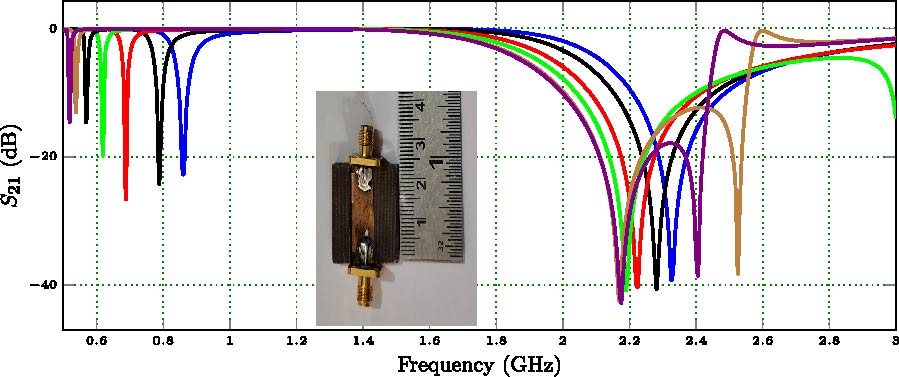
This paper presents a new 3D-printed, compact Double-Ridged Conical Horn (DRCH) antenna designed for Ultra-Wideband (UWB) Microwave Imaging (MI). The performance of the proposed antenna is analyzed using an electromagnetic (EM) solver, which demonstrates favorable return loss, gain, and radiation characteristics, indicating its structural and performance robustness. To validate the final design, a prototype is fabricated and tested experimentally. The proposed model features reduced dimensions compared to traditional and commercially available Dual Ridge Horn (DRH) antennas, while still maintaining a broad operational bandwidth (|S11| > -10 over the 0.69 GHz-12 GHz range). Within the variety of potential applications, this frequency band is particularly suitable for biomedical devices, particularly in MI, where compact size is crucial for seamless integration into these systems. Additionally, a safety evaluation of the designed antenna has shown that its Specific Absorption Rate (SAR) is well below regulatory limits, ensuring that it can be safely operated near human users.
Compact 3D Printed Double-ridged Conical Horn Antenna for Breast Tumour Detections Utilizing Microwave Imaging over Ultra-wideband Regime
2025-01-16
PIER Letters
Vol. 124, 37-45
Wideband MIMO Antenna System with High Inter-Elements Isolation for mm-Wave Communications and the Internet of Things (IoT)
Ijaz Ahmad , Yuhuai Liu , Fang Wang , Muhammad K. Khan and Mian Muhammad Kamal
A four-port, extremely wideband MIMO array antenna is designed for 5G applications. A single element antenna composed of a two-ring-shaped patch with a partial ground plane is designed. It is then converted into a 1 x 2 array, four arrays of such are placed orthogonally to each other in a MIMO system to get good isolation among them. A Roger substrate with permittivity of 2.2, loss tangent of 0.0009, and thickness of 0.254 mm is used. The antenna arrays of the MIMO system are operate in the range from 24 GHz to 51 GHz with good isolation of more than 22 dB. The peak gain of the MIMO system is 7.4 dB with a bi-directional radiation pattern and efficiency of more than 96%. Also, the overall size of MIMO antennas is compact, with dimensions 18 x 18 x 0.254 mm3. For further verification, the measurements of the fabricated prototype were carried out as well, and a very reasonable agreement with simulated results was achieved which guaranteed the prototype’s strong MIMO performance. The proposed array MIMO system, owing to its various properties, is a potential candidate for mm-wave 5G applications, mm-wave vehicular communication, and the Internet of Things (IoT).
Wideband MIMO Antenna System with High Inter-elements Isolation for mm-Wave Communications and the Internet of Things (IoT)
2025-01-15
PIER C
Vol. 152, 33-41
Research on Constant Current Output Control of Wireless Power Transmission System Based on Parameter Identification
Zhongjiu Zheng , Yanpeng Ma , Zhilong Wu , Xingfeng Cao , Qiangqiang Zhao and Jinjun Bai
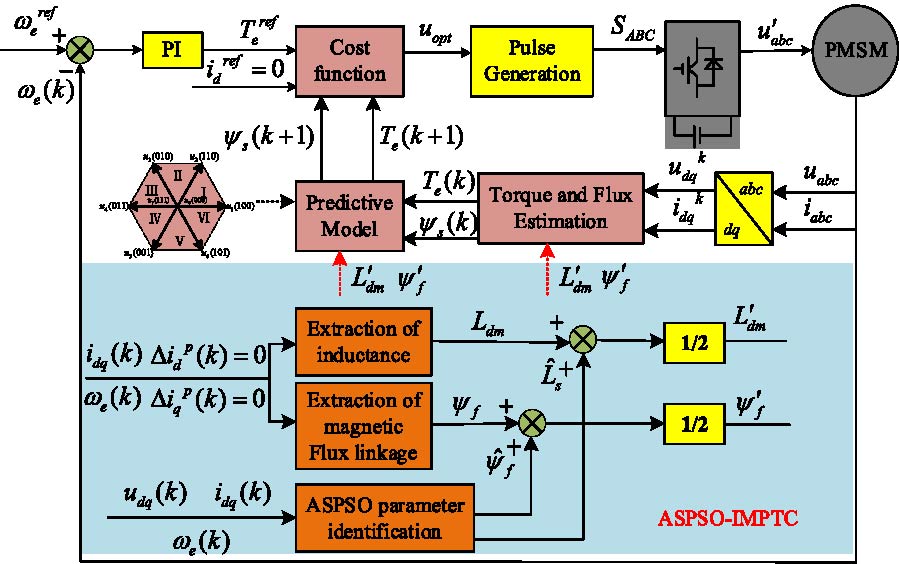
In the complex marine environment, the receiver is susceptible to the influence of water flow, which will cause the mutual inductance to fluctuate, thus affecting the stability of the output current. Therefore, aiming at the problem that the coil is prone to offset, this paper proposes a constant current charging output control method for wireless power transmission system based on parameter identification. Firstly, a method of mutual inductance parameter identification is introduced in detail. Only by measuring the effective value of the current at the transmitting end, the equivalent equation of mutual inductance and current can be established. Aiming at solving complex mathematical equations, the results of mutual inductance identification are obtained from high-order equations by combining with particle swarm optimization algorithm. Secondly, on this basis, a constant current control method for fast calculation of the conduction angle based on the above identification method is proposed. The calculation process of the conduction angle is derived, and the working principle of the constant current charging control is introduced in detail. Finally, this paper completed the construction of the experimental platform and carried out relevant experimental verification. The results show that the error of the parameter identification method proposed in this paper is within 3%, and the constant current output control of the system can be realized in the case of mutual inductance disturbance.
Research on Constant Current Output Control of Wireless Power Transmission System Based on Parameter Identification
2025-01-15
PIER M
Vol. 131, 19-26
Transmission-Reflection-Integrated Full-Space Metasurface for OAM Beam Generation
Honggang Hao , Siyao Li , Wen Huang , Yi Shen , Zonggui Li and Ting Zhang
In this paper, a spatial-multiplexing-based transmission-reflection-integrated full-space metasurface (FS-MS) is proposed, which is applied to the generation of orbital angular momentum (OAM) beam. Using the principles of anisotropy and spatial multiplexing, the metasurface element is designed. The element consists of three dielectric substrates and four metal layers, which are of conventional cross-shaped and slotted cross-shaped construction. The designed element has the ability to independently modulate transmitted and reflected electromagnetic (EM) waves at 15 GHz. When EM waves with different polarizations are incident, the metasurface is capable of transmission at the incident x-polarized waves and reflection at the incident y-polarized waves. Using the designed element, the FS-MS was designed by combining the theories of OAM beam generation and phase superposition. The results show that the metasurface can generate the OAM beam with the topological charge of +2 in the transmission mode and +3 in the reflection mode at 15 GHz. The purity of the generated OAM beam is 78.88% in transmission mode, and 72.87% in reflection mode. The metasurface proposed in this paper is characterized by the integration of transmission and reflection, which is valuable for applications in wireless communications, sensing, and imaging.
Transmission-reflection-integrated Full-space Metasurface for OAM Beam Generation
2025-01-14
PIER B
Vol. 110, 15-28
Compact Wideband Antenna Array with DGS-Based Metamaterial for Efficient Smartphone Communication and SAR Reduction
Amany A. Megahed , Amr H. Hussein , Ahmed Jamal Abdullah Al-Gburi and Rania Hamdy Elabd
This study investigates a high-gain, miniaturized antenna array featuring metamaterial-based semicircular Defected Ground Structures (DGSs) based metamaterial designed for wideband smartphone applications. The antenna array, measuring 49 × 25 mm², is constructed on an FR4 substrate with a dielectric constant of 4.3 and a thickness of 1.6 mm. The design incorporates two orthogonal antennas, each with a U-shaped radiating patch and a semicircular DGS to control bandwidth and reduce size. A T-shaped stub is positioned at the center of the U-shaped radiating area, with a star-shaped element attached to the leg of the T-shaped stub to enable wideband operation. The antenna demonstrates strong S11 performance, achieving approximately -38 dB at 5.8 GHz and -42 dB at 8.1 GHz, making it ideal for Sub-6 GHz and C-band applications. The proposed antenna array operates across a frequency range from 4 GHz to beyond 10 GHz, reaching a peak gain of 11 dBi and an efficiency of 95%. A time-domain analysis was conducted to verify radiation efficiency, and the specific absorption rate (SAR) is approximately 0.0475 for 1g of tissue and 0.0101 for 10g of tissue at 4.5 GHz, confirming the array's suitability for wideband smartphone devices within the target frequency band. The simulated and experimental results of the proposed antenna array show excellent agreement.
Compact Wideband Antenna Array with DGS-based Metamaterial for Efficient Smartphone Communication and SAR Reduction
2025-01-12
PIER C
Vol. 152, 25-32
Broadband Circularly Polarized Crossed Dipole Antenna Loaded with Magneto-Electric Dipole
Zhuopeng Wang , Xin Zhang , Haoyu Fang , Ao Ni and Yanhui Cheng
A right-hand circularly polarized (RHCP) crossed dipole antenna with wide impedance and axial ratio bandwidth is developed. The antenna is composed of a pair of crossed dipoles, four parasitic patches, a metal reflecting cavity and 12 metal support posts. The four parasitic patches and 12 metal support posts together constitute two pairs of magneto-electric dipoles. By using a quarter wavelength phase delay ring on the crossed dipole, the 90° phase difference between the upper and lower arms is obtained, thereby realizing circularly polarized radiation. By adding slotted parasitic patches, grounded metal posts, and modifying the cavity structure, the circular polarization performance of the antenna is improved. The measurement results show that the antenna with a compact size, low cost obtains 64.5% of impedance bandwidth (1.85-3.61 GHz) and 59.6% of axial ratio bandwidth (1.92-3.55 GHz), and has stable pattern and gain in the operating bandwidth, highlighting significant potential for future applications in sub-6 GHz 5G applications.
Broadband Circularly Polarized Crossed Dipole Antenna Loaded with Magneto-electric Dipole
2025-01-12
PIER M
Vol. 131, 9-17
Highly Isolated and Miniaturized SIW Based Self-Quadplexing Antenna with Modified CSRR-Inspired Slots for S-Band Wireless Applications
Matta Venkata Pullarao , Singam Aruna and Kethavathu Srinivasa Naik
This paper presents a highly miniaturized self-quadplexing antenna based on a quarter-mode substrate integrated waveguide. The miniaturization of the antenna is achieved by utilizing a pair of complementary split-ring resonator-inspired slots. The quadplexing characteristics of the antenna are achieved by varying the width of the inner CSRR-shaped slot. The antenna is designed to resonate at four distinct frequencies: 2.09 GHz, 2.18 GHz, 2.26 GHz, and 2.36 GHz. It demonstrates a minimum port isolation exceeding 32.6 dB between the ports. Additionally, this self-quadplexing antenna offers frequency tunability and maintains a unidirectional radiation pattern across the designated operating frequencies. The antenna's simulated and measured gains are 5.32 dBi (5.44 dBi), 5.58 dBi (5.42 dBi), 5.41 dBi (5.15 dBi), and 5.18 dBi (5.26 dBi). The design supports independent frequency tunability through the activation of four ports, with a compact size of 0.037 λ02, where λ0 is determined at lowest resonant frequency. These features indicate the antenna's suitability for S-band applications.
Highly Isolated and Miniaturized SIW Based Self-quadplexing Antenna with Modified CSRR-inspired Slots for S-band Wireless Applications
2025-01-11
PIER C
Vol. 152, 19-24
An Interleaved Dual-Band Outline Elliptical Dipole Antenna
Jonathan Marquardt , Maria Pour and Curtis Hill
A new dual-band antenna is presented for use in space-based passive energy harvesting. This antenna is based on elliptical dipole antennas, whose inner metallization is removed, leaving an outline antenna and room for a second set of antenna arms. This will in turn result in an interleaved structure to tune each set of dipole arms to two different frequencies. Due to the close proximity of the dipole arms there exists strong mutual coupling, which is lessened by adding decoupling elements to the design. The proposed antenna is supported by a partial ground plane to improve the front-to-back ratio of the radiation patterns. The ground plane is extended with an exponential taper, and additional parasitic elements are added to improve antenna performance. The dual-band elliptical outline design was fabricated and measured, and the results are found in good agreement with simulation. This antenna design provides 14 dB return loss, 3.4 dBi peak gain, and 12 dB front-to-back ratio for both the 0.915 GHz and 2.45 GHz bands, making it a useful antenna for applications such as passive energy harvesting that require lightweight dual-band designs.
An Interleaved Dual-band Outline Elliptical Dipole Antenna
2025-01-11
PIER C
Vol. 152, 13-18
A Low-Cost Four Circularly Polarized Antenna Loaded with a Complementary Split Ring Resonator for Beam Steering Applications
Oumaima Nayat-Ali , Fatima Zohra Khoutar , Mariem Aznabet , Otman El Mrabet and Mohsine Khalladi
In this work, a novel circularly polarized antenna with four ports and loaded with complementary split ring resonator (CSRR) for beam steering applications without phase shifters or PIN diodes is presented. The single antenna loaded with CSRR is arranged in a rotational manner forming a 4-port structure. The separation distance among the four antennas is optimized for achieving a steering angle of 29° with an isolation level greater than 25 dB over the whole bandwidth. When one of the four antennas is excited, the others either open-circuited or terminated to a 50-Ω impedance, the antenna has a resonant frequency of 5.8 GHz and produces a left-hand circularly polarized (LHCP) tilted beam in the elevation plane. The introduction of the CSRR leads to achieving a small design and also to get circular polarization characteristics. The proposed structure has a radiation efficiency of 90 % and a gain of 6 dBi over the whole bandwidth. This characteristic can be tuned which makes the proposed design suitable for many modern communication systems.
A Low-cost Four Circularly Polarized Antenna Loaded with a Complementary Split Ring Resonator for Beam Steering Applications
2025-01-11
PIER M
Vol. 131, 1-7
Broadband High-Gain Magneto-Electric Dipole Antenna Loaded with T-Slot
Yan Yan Wang , Yu Wang and Wu-Sheng Ji
This paper proposes a magneto-electric dipole antenna with broadband, good directivity, and high gain. By changing the shape of the radiating patch and loading the T-slot to improve the impedance matching ability of the antenna, the bandwidth is effectively expanded. Low cross-polarization and high gain are achieved by using a square metal reflective cavity and a hollow metal cylinder loaded on top of the antenna. Test results show a relative impedance bandwidth (|S11|<-10 dB) of 94.40% (1.32 GHz-3.68 GHz) with a maximum gain of 10.7 dBi. The antenna has excellent performance and has applications in wireless communication systems.
Broadband High-gain Magneto-electric Dipole Antenna Loaded with T-slot