Search Results(13785)

2025-02-16
PIER C
Vol. 152, 221-231
Impact of Quantum Conductivity on a Reconfigurable Single Wall Carbon Nanotube Dipole Performance at Optical Frequency Bands
Muhanad Musa Jameel and Jawad A. K. Hasan
The proposed antenna system integrates advanced materials electromagnetic properties tuning to allow real-time steering to the antenna main beam direction. We explore a tuning mechanism based on changing the chemical potential differences (μc), through including a chiral single wall carbon nanotube (SWCNT) structure with a plasmonic resonance effect at the optical regime. Such change in the value of μc realizes a manipulation in the angular emission pattern change to enhance the beamforming capabilities to the desired requirements. This steerability provides substantial benefits for applications such as optical communication systems. The obtained results validate that the proposed nano-dipole antenna shows significant improvements over other traditional antennas in terms of size reduction with acceptable radiation efficiency, directivity, and tunability. The integration of the proposed design within next optoelectronic generations can floor the way to the compact, high-performance systems with enhanced capabilities for optical communication systems and photonic circuitry. This study presents a steerable plasmonic nano-dipole antenna with dynamic electromagnetic radiation control, designed for modern communication. The antenna operates across a wide frequency range, with a primary focus on the visible spectra 300 THz to 700 THz. By utilizing resonant plasmonic effects, the antenna achieves a radiation efficiency of 57% and a directivity of 4.5 dBi. We introduce a beam-steering mechanism that enables angular radiation steering up to ±25° from the central axis. Control mechanisms include electrical tuning via applied μc voltage from 0 V up to 1 V and optical tuning using laser excitation around 600 THz. Simulations confirm that beamwidth narrows from 30° to 10° at resonance, enhancing spatial precision. The validated results show a tunability of 200 THz in the operational wavelength, with a response S11 below -10 dB. These features demonstrate that the antenna operation has a potential for integration into next-generation optoelectronic devices, offering compact and efficient solutions for wireless communication, remote sensing, and optical imaging systems. This is achieved by leveraging the resonant interaction between surface plasmon polaritons and nano-dipole geometry, and we demonstrate the ability to achieve highly directional and tunable radiation across a wide range of frequencies, including visible and near-infrared spectra.
Impact of Quantum Conductivity on a Reconfigurable Single Wall Carbon Nanotube Dipole  Performance at Optical Frequency Bands
2025-02-16
PIER Letters
Vol. 125, 33-36
Lensing by a Single Interface: Perfect Focus Point Rather Than a Drain Point
Leonid A. Pazynin , Kostyantyn Sirenko and Vadym Pazynin
An exact analytical solution is obtained for the problem of finding the field of a linear electric current located near the interface between half-spaces filled with ordinary and perfectly matched double-negative media. To achieve this, a novel approach is introduced that, for the first time, enabled the correct analytic continuation of the function describing the field into the entire half-space filled with a double-negative medium. The analysis of this solution shows that the current source field, upon reaching the point of perfect focusing, passes through it and then moves off to infinity, rather than disappearing at that point, as claimed in earlier works.
Lensing by a Single Interface: Perfect Focus Point Rather Than a Drain Point
2025-02-15
PIER C
Vol. 152, 209-219
Broadband Eight-Element MIMO Antenna with High Isolation for 5G Smartphone Applications
Zhonggen Wang , Shunqi Liu , Wenyan Nie , Ming Yang and Chenlu Li
To satisfy the demand for 5G communication to smartphone terminal antennas in element quantity and isolation, an eight-element broadband MIMO antenna system with high isolation is proposed in this paper. The antenna element consists of an L-shaped feed line and a rectangular slot with an open slot. Meanwhile, a stepped impedance tuning structure was integrated within the rectangular slot to optimize broadband impedance matching and expand the operational bandwidth. In addition, a Chinese character ``工''-shaped defective ground structure has been innovatively designed to reduce surface wave coupling on the ground plane, achieving an isolation level of over -15 dB. Furthermore, eight antenna elements and six defective ground structures are symmetrically distributed along the long edges of the substrate, with coupling feeding performed through the L-shaped feed lines. The proposed antenna system ultimately achieves an operating bandwidth of 3.4-6.5 GHz below -10 dB, with a total efficiency greater than 90% and an envelope correlation coefficient of less than 0.016. The stability of the system in overlay screen mode, as well as in single-handed and dual-handed smartphone operation modes, is also demonstrated to showcase its practical applications.
Broadband Eight-element MIMO Antenna with High Isolation for 5G Smartphone Applications
2025-02-14
PIER C
Vol. 152, 197-208
Design and Analysis of a Delta-Shaped Segmented Variable Leakage Flux Reverse-Salient Permanent Magnet Synchronous Machine for Electric Vehicles
Xiping Liu , Jiao Guo , Ruipan Lu , Zhangqi Liu and Baoyu Sun
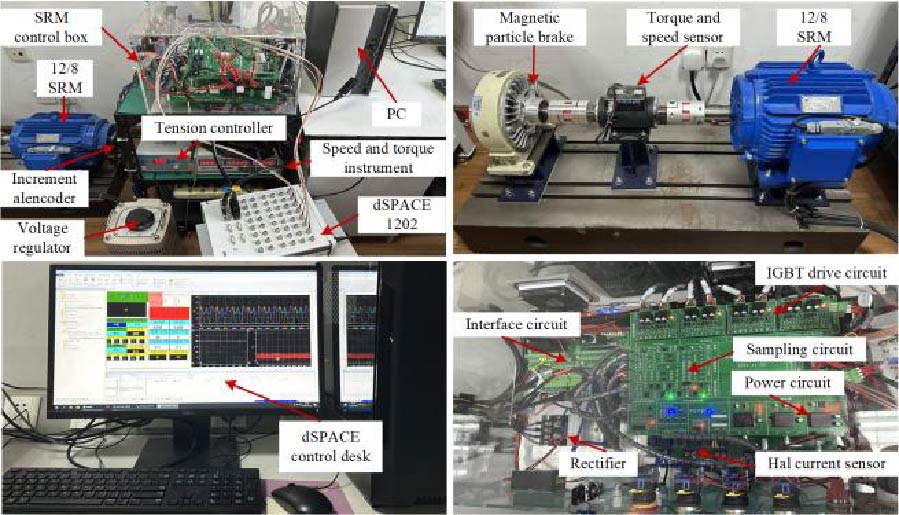
Since the traditional Delta-shaped motor is difficult to achieve the wide speed range while increasing the output torque, it cannot fully meet the complex working conditions of electric vehicles. This paper, from the driving conditions and the principle of variable leakage magnetism, based on the traditional Delta-shaped interior motor, designs a variable leakage flux permanent magnet synchronous motor with a segmented Delta-shaped rotor permanent magnet structure (VLF-DSPM). The permanent magnet is segmented into a magnetic bridge by a ferromagnetic material so that some magnetic lines do not pass through the permanent magnet but directly through the magnetic bridge to increase the d-axis inductance. A magnetic barrier is designed in the q-axis to achieve magnetic leakage in the high-speed region, thereby achieving a wide speed control range. In addition, since the utilization rate of the permanent magnet is reduced due to segmentation, the output torque is reduced. Therefore, transverse bar-shaped permanent magnets are added to increase the reluctance torque of the motor to achieve a higher resultant torque. The key parameters of this structure were then optimized, and finally the electromagnetic characteristics of the VLF-DSPM were studied using finite element analysis in comparison with a conventional Delta-shape interior permanent magnet (DS-IPM) synchronous motor. The results show that the VLF-DSPM has better flux control capabilities, higher output torque, a wider speed range, and higher efficiency and power factor.
Design and Analysis of a Delta-shaped Segmented Variable Leakage Flux Reverse-salient Permanent Magnet Synchronous Machine for Electric Vehicles
2025-02-11
PIER C
Vol. 152, 187-195
Multi-Motor Synchronous Control Strategy Based on Fuzzy Internal Model PID and Virtual Spindle Synchronous Control
Wei Yan and Shasha Li
To achieve high-precision synchronous control of multiple motors, this study utilizes a permanent magnet synchronous motor as a case study. It adopts a fuzzy internal model proportional-integral-derivative algorithm with integral separation for single-motor control. On this basis, the virtual spindle synchronization strategy of multi-motor synchronous control and the fuzzy control algorithm are further introduced to adjust the feedback torque compensation coefficient dynamically, optimizing the virtual spindle synchronization strategy. The results showed that in single-motor control, the dual closed-loop fuzzy proportional-integral control algorithm achieved a torque fluctuation error of 4 N.m when the load torque changed significantly. The fuzzy internal model proportional-integral-derivative control algorithm with integral separation had a relatively smooth adjustment process, and the maximum torque fluctuation did not exceed 1 N.m. In multi-motor synchronous control, the improved virtual spindle synchronous control strategy had a synchronization error of only 14.2 r/min between motor 1 and motor 2, as well as between motor 1 and motor 3. The single-motor and multi-motor synchronous control strategies used in the study have high control accuracy and response efficiency, which is conducive to improving the synchronization accuracy and coordination between motors. The improved strategy provides a reliable control scheme for industrial automation systems.
Multi-motor Synchronous Control Strategy Based on Fuzzy Internal Model PID and Virtual Spindle Synchronous Control
2025-02-10
PIER B
Vol. 110, 149-161
SAR Ship Detection Based on Multi-Scale Feature Cross Fusion
Xiao-Zhen Ren , Peiyuan Zhou and Gang Liu
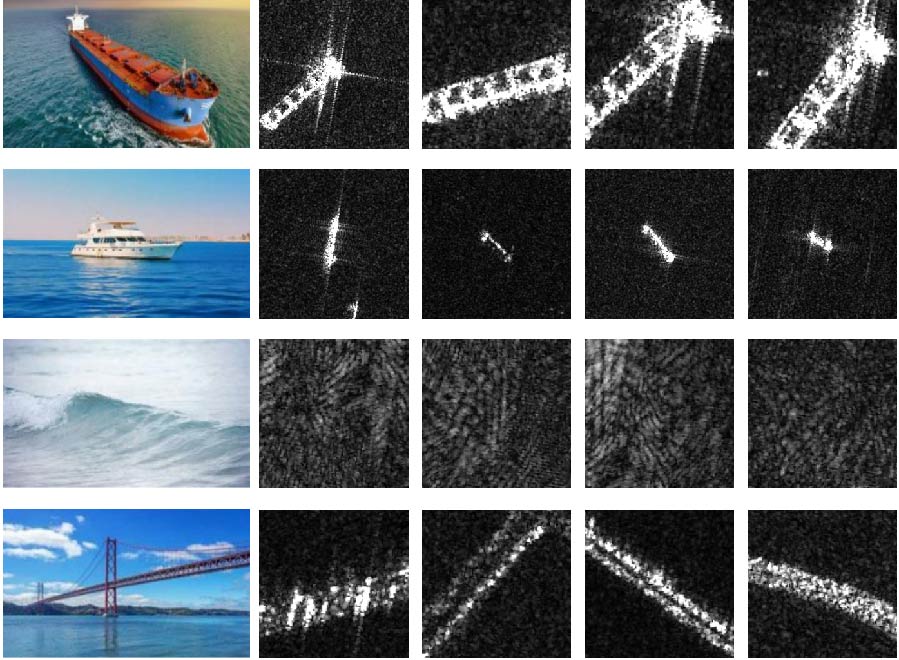
Synthetic aperture radar (SAR) ship detection plays a significant role in ocean monitoring. However, the current SAR ship detection methods face limitations in detecting small and dense ships. To address these issues, a novel SAR ship detection method based on multi-scale feature cross-fusion (MFCNet) is proposed in this paper. In the proposed model, a feature extraction network with a spatial fusion attention mechanism (FESNet) is designed to improve the capability of the backbone network in feature extraction. A multi-intersection spatial pyramid pooling (MISPP) module is proposed to expand the receptive field and enhance the semantic information. Furthermore, a feature cross-fusion network (FCFNet) is designed to comprehensively integrate features of different scales for enhancing SAR ship detection performance. Experimental results demonstrate that the proposed model achieves high detection performance on the SSDD and HRSID datasets, providing more reliable technical support for ship detection in maritime environments.
SAR Ship Detection Based on Multi-scale Feature Cross Fusion
2025-02-09
PIER C
Vol. 152, 177-186
A Frequency and Polarization Reconfigurable Transparent Water Antenna
Lei Li , Jing Gao and Jingchang Nan
A novel frequency and polarization reconfigurable water patch antenna is proposed for radio communication in the UHF band. Based on theoretical analysis and simulation results, water is an ideal material for designing transparent liquid ground. Water enhances outstanding transparency, excellent aesthetics, and high optical stealth performance for a wider range of application scenarios. The entire structure is made with polyvinyl chloride material and distilled water, except for the feed structure. By filling different cavities with liquid water, six different operating states are obtained in 1.924-2.5 GHz (26.1 %), 1.67-2.33 GHz (33 %), 0.644-2.288 GHz (112.1 %), 1.975-2.54 GHz (25 %), 1.748-2.108 GHz (18.7 %), and 1.988-2.348 GHz (16.6 %), achieving frequency reconfigurability. The antenna can be flexibly switched between linear polarization (LP) and two right-handed circular polarization (RHCP) states. The results show that the 3 dB axial ratio (AR) bandwidth covers 1.93-2.08 GHz (7.5 %) and 2.06-2.132 GHz (3.5 %). The antenna achieves high optical transparency of 100 % and a peak gain of 7.97 dBi.
A Frequency and Polarization Reconfigurable Transparent Water Antenna
2025-02-08
PIER M
Vol. 132, 39-48
Conception and Realization of a Wideband Directional Dual-Beam Phased MIMO Array Antenna with Hybrid Coupler for ISM Band Utilizations
Abdelaaziz El Ansari , Shobhit Kisan Khandare , Najiba El Amrani El Idrissi , Abdelhak Bendali , Sudipta Das , Fatima Younis , Hala Kamal Abduljaleel and Ahmed Jamal Abdullah Al-Gburi
This work addresses a wideband dual-beam 1x4 phased MIMO array antenna with a hybrid coupler for Industrial, Scientific and Medical (ISM) bands applications at 2.4-2.5 GHz. We engineered, refined, and reduced the fundamental component utilizing the novel concept of an advanced curved quarter-wave impedance adapter, achieving a 50% reduction in size relative to comparable designs documented in the literature. The fundamental component operates at 2.45 GHz, including a narrow bandwidth of 26 MHz and a maximum gain of 7.21 dB. Subsequently, a lossless magic-T power splitter is employed to feed two identical miniaturized elements resulting in a compact 1 × 2 array antenna with miniaturized size and enhanced performance. The results obtained show that the miniaturized 1 × 2 array antenna resonate at 2.45 GHz with a narrow impedance bandwidth of 52 MHz, peak gain of 9.41 dB and a peak directivity of 9.48 dB at 2.45 GHz. To broaden the narrow bandwidth and to enhance gain, directivity and radiation coverage area, a 3 dB hybrid coupler is used to feed two identical miniaturized 1 × 2 array antennas resulting a wideband directional dual-beam MIMO phased 1 × 4 array antenna. The proposed dual-beam array antenna prototype has been designed and fabricated on a substrate Rogers RT/duroid 5880 with the following parameters: relative permittivity εr = 2.2, dielectric loss tangent of 0.0009, and total size of 240 × 136 × 1.56 mm3. The simulation results are corroborated by experiments that verified the proposed dual-beam MIMO array antenna which exhibits a high gain of 11.2 dB, effective adaptation, an expanded bandwidth of 1.22 GHz, in addition to its MIMO capability and the dual beams oriented at ±30˚, achieved through switching between the two input feed ports of the hybrid coupler.
Conception and Realization of a Wideband Directional Dual-beam Phased MIMO Array Antenna with Hybrid Coupler for ISM Band Utilizations
2025-02-07
PIER
Vol. 182, 63-75
Emergence of Diffractive Phenomena in Finite Arrays of Subwavelength Scatterers (Invited Paper)
Ilya Igorevich Karavaev , Ravshanjon Nazarov , Yicheng Li , Andrey A. Bogdanov and Denis G. Baranov
Periodic optical structures, such as diffraction gratings and numerous photonic crystals, are one of the staples of modern nanophotonics for the manipulation of electromagnetic radiation. The array of subwavelength dielectric rods is one of the simplest platforms, which, despite its simplicity exhibits extraordinary wave phenomena, such as diffraction anomalies and narrow reflective resonances. Despite the well-documented properties of infinite periodic systems, the behavior of these diffractive effects in systems incorporating a finite number of elements is studied to a far lesser extent. Here, we theoretically and numerically study the evolution of collective spectral features in finite arrays of dielectric rods. We develop an analytical model of light scattering by a finite array of circular rods based on the coupled dipoles approximation and analyze the spectral features of finite arrays within the developed model. Finally, we validate the results of the analytical model using full-wave numerical simulations.
Emergence of Diffractive Phenomena in Finite Arrays of Subwavelength Scatterers (Invited Paper)
2025-02-07
PIER
Vol. 182, 55-61
Lymph Node Diagnosis for Colorectal Cancer by Utilizing a Hyperspectral Laparoscope and Machine Learning
Changwei Jiao , Miaoliang Chen , Zehai Li , Jinbo Chen , Jiaqi Liao , Ruili Zhang and Sailing He
We have developed a hyperspectral laparoscope capable of hyperspectral imaging during surgery. Using this hyperspectral laparoscope, we acquired hyperspectral images of fresh lymph nodes during colorectal cancer surgery. By integrating an improved U-Net algorithm specifically tailored for hyperspectral imaging, we achieved a recognition accuracy of 94%. Our results demonstrate that the multimodal hyperspectral imaging system has a great advantage and potential in label-free intraoperative diagnosis of lymph node metastasis in colorectal cancer.
Lymph Node Diagnosis for Colorectal Cancer by Utilizing a Hyperspectral Laparoscope and Machine Learning
2025-02-06
PIER Letters
Vol. 125, 25-31
A Dual-Polarized Microstrip Patch Antenna with High Port Isolation Based on AMC Surface
Dalong Xu , Wenbo Li , Yan Wang , Hao Wang and Jianyin Cao
A high port isolation dual-polarized microstrip patch antenna based on artificial magnetic conductor (AMC) surface is proposed in this paper. The antenna is composed of two stacked patches and H-shaped coupled slots with improved impedance matching bandwidth. The feed network is composed of two orthogonal microstrip feed lines for dual polarizations, and metallic vias are arranged around them to improve the port isolation. The AMC surface is designed and loaded below the feed lines. The electric field coupling between the feeding slots on the ground are reduced, and the port isolation is greatly improved. The simulated results show that the proposed antenna has a port isolation better than 48 dB and a cross-polarization level of -26 dB over the frequency of 9.3-9.5 GHz. Moreover, based on zero-reflection phase characteristic of the AMC, the profile of the antenna is reduced to 7.3 mm (0.23λ0,λ0 is the wavelength at 9.4 GHz). A prototype is fabricated to verify the analysis of proposed antenna. The measured results indicate that a high port isolation better than 44 dB and a cross-polarization level lower than -22 dB are achieved. The maximum gain is higher than 6.98 dBi and 6.5 dBi for the vertical and horizontal polarizations, respectively. With the advantages of high port isolation and low profile, this antenna offers a good candidate for weather radar applications.
A Dual-polarized Microstrip Patch Antenna with High Port Isolation Based on AMC Surface
2025-02-06
PIER B
Vol. 111, 1-14
The Problem of Determining the Characteristics of Optical Semiconductors in Plasma Antennas Design and Its Solutions
Mikhail S. Shishkin , Pavel A. Titovets and Mikhail O. Fedyuk
The article focuses on the problem of determining optical semiconductor cell characteristics that can be used for plasma antenna development. The problem outlined is associated with the insufficient characteristics (for example, electrical conductivity) in datasheets for semiconductors on the market, which are for the simulation of antennas. An optical semiconductor conductivity calculation method, when representing it as a segment of a microstrip transmission line (a coplanar waveguide) with a known transmission coefficient (S21) as a radio frequency signal passes through it, is suggested. The article presents a simple and easy-to-use experimental setup for the trial of the suggested method. The essence of the method lies in using a PCB with a microstrip line with a gap in the middle. SMA ports for connection with a vector network analyzer are on the edges. A studied optical semi-conductor cell is placed at the transmission line gap, and the transmission coefficient between the two ports can be measured. In addition to that, the conductivity of the cell under illumination can be calculated based on the proposed formulas. The article presents the results of measuring some optical semiconductor cells (resistors, diodes, transistors) and their conductivity calcula-tions under illumination. The results obtained on the conductivity of photocells can be used for simulating antennas that involve optical semiconductor cells.
The Problem of Determining the Characteristics of Optical Semiconductors in Plasma Antennas Design and Its Solutions
2025-02-05
PIER B
Vol. 110, 131-148
Multi-Objective Optimization Design of a Bilayer Segmented Asymmetric Interior Permanent Magnet Synchronous Motor
Luyao Wang , Hui Zhu , Yunpeng Song , Wenjing Hu , Huihui Geng , Xueyi Zhang , Qi Yu , Xin Zhou and Xingxu Jin
This paper proposes a bilayer segmented asymmetric V-type magnetic structure of interior permanent magnet motor to address the problems of large air-gap magnetic density zero region, high air-gap magnetic density distortion rate, and large output torque ripple in the traditional V-type permanent magnet synchronous motor. Firstly, the superiority of the bilayer segmented asymmetric V-type structure is verified using finite element simulation compared with the bilayer conventional V-type and bilayer segmented symmetric V-type structures. Secondly the analytical model of the air-gap magnetic density, output torque, and torque ripple is established. Then, with the optimization objectives of reducing the air-gap magnetic density distortion rate, increasing the output torque, and reducing the torque ripple, and with pole-span angles of the bilayer segmented asymmetric V-type structure as the optimization variables, each optimization variable is subjected to weighted sensitivity stratification. The response surface optimization is applied to the low and medium-level sensitivity optimization variables, while a Pareto frontier distribution is used to obtain the set of the effective values of the high-level sensitivity optimization variables. The optional combination of the pole-span angles of the segmented asymmetric V-type structure is objectively selected by applying the TOPSIS method. Finally, the effectiveness of the optimized design is verified by finite element simulation and prototype tests. The results show that the bilayer segmented asymmetric V-type structure can reduce the percentage of the zero region of the air-gap from 4.82% to 3.91%, which is reduced by 18.8% and lower the air-gap magnetic density distortion rate from 0.263 to 0.226, which is reduced by 14.1% while ensuring good output characteristics with improving the average output torque from 14.842 N.m to 16.418 N.m, which is increased by 10.6%, and reducing the torque ripple from 0.169 to 0.156, which is reduced by 7.7%.
Multi-objective Optimization Design of a Bilayer Segmented Asymmetric Interior Permanent Magnet Synchronous Motor
2025-02-04
PIER C
Vol. 152, 171-176
Adaptive Hybrid Precoding for Reliable Multi-User mmWave MIMO Systems
Pillala Venkata Muralikrishna and Teppala Venkata Ramana
Wireless communication has revolutionized modern connectivity, with millimeter-wave (mm-Wave) technology emerging as a key component of next-generation networks due to its ability to deliver fast data rates and large capacity. Hybrid precoding is an important approach in mm-Wave MIMO systems for optimizing spectral efficiency, and it relies largely on accurate channel state information (CSI). The sparse characteristic of mm-Wave channels allows compressive sensing (CS) methods to be used for efficient channel estimation, considerably lowering pilot overhead and computational complexity. This study describes a novel hybrid precoding technique designed for reliable multi-user situations. The proposed two-stage framework uses SVD-based equal-gain transmission (EGT) for analog precoding and a Kalman filter for baseband precoding to effectively reduce inter-user interference. Numerical assessments show that the EGT-Kalman precoding method is comparable with standard strategies like zero-forcing (ZF) and MMSE precoding in terms of spectral efficiency. Furthermore, the pilot overhead is calculated, indicating the efficiency of the suggested technique in reducing training requirements while maintaining performance. This study highlights the promise of adaptive precoding techniques in developing mm-Wave communication systems by providing resilient performance in stable multi-user scenarios while tackling the challenges of sparse channel estimation.
Adaptive Hybrid Precoding for Reliable Multi-user mmWave MIMO Systems
2025-02-04
PIER C
Vol. 152, 163-170
Low-Profile Wide Axial-Ratio Beamwidth Circularly Polarized Antenna with Simple Feed
Wenying Lu , Xiao Ding and Wei Shao
To effectively receive circularly polarized (CP) waves at large angles, it is necessary for antennas to have large axial ratio beamwidth (ARBW). For instance, geostationary satellite receiver antennas employed in regions with high latitudes necessitate a broad ARBW. In this paper, the mechanism to broaden ARBW is analyzed, and a CP antenna with low profile is designed and fabricated. With L-shaped branches and vertical extension segments (VESs), ARBW of the proposed antenna has been effectively broadened. Moreover, compared with recently reported wide ARBW artworks, it features a simple structure and feeding mechanism. The proposed antenna within the working bandwidth (from 4.79 to 4.95 GHz, 3.3%) achieves a 3 dB ARBW of 243° in the φ= 0° plane while the 3 dB ARBW reaches 199° in the φ= 90° plane. The measured results agree well with the simulated ones.
Low-profile Wide Axial-ratio BeamWidth Circularly Polarized Antenna with Simple Feed
2025-02-03
PIER C
Vol. 152, 151-161
Efficient Technique for HTS Coupled Resonator Filters Design Using an Enhanced FDTD Algorithm
Mohamed Karim Laoufi , Slimane Mekaoui , Mohamed Lamine Tounsi and Mustapha Yagoub
In this paper, an enhanced FDTD algorithm is proposed for efficient characterization of HTS (high temperature superconductors) microwave planar filters. The developed algorithm, which can be generalized to any microwave planar circuit, is based on the two-fluid phenomenological model. Further, an irregular mesh discretization allowed improving the CPU time. Also, the thermal effects and the normal conductivity have been rigorously taken into account for better performance. The impact of the operating temperature as well as the choice of the superconductor thickness was investigated. Computed results are in good agreement with simulated data using commercial software.
Efficient Technique for HTS Coupled Resonator Filters Design Using an Enhanced FDTD Algorithm
2025-02-03
PIER C
Vol. 152, 143-149
Comparison and Analysis of Dual-Stator Magnetic Field Modulation Motors with Different Permanent Magnet Arrangements
Libing Jing , Tao Wang , Zeyu Min and Weizhao Tang
The Double Stator Magnetic Field Modulation Motor (DSMFMM) realizes the magnetic field modulation effect and optimizes the torque ripple effect by accurately optimizing the flux line. In order to further explore the influence of permanent magnets (PMs) magnetization model on the performance of DSMFMM, this paper conducts a comparative study on the performance of three motors with radial magnetization, Halbach magnetization, and Spoke magnetization. Firstly, three motor models are designed based on the same outer radius and axial length, and the flux lines of the three motors are analyzed in detail. Secondly, the static and dynamic performances of the three models are compared by finite element analysis (FEA) method. Compared with the conventional radial magnetization structure, the DSMFMM structure with Halbach magnetization and Spoke magnetization improves the output torque and torque density of the motor.
Comparison and Analysis of Dual-stator Magnetic Field Modulation Motors with Different Permanent Magnet Arrangements
2025-02-03
PIER C
Vol. 152, 131-141
Multifunctional Dual-Band Microwave Sensor for the Detection of Liquid Permittivity and Solid Displacement
Habib Nurseha Anggradinata and Muhamad Asvial
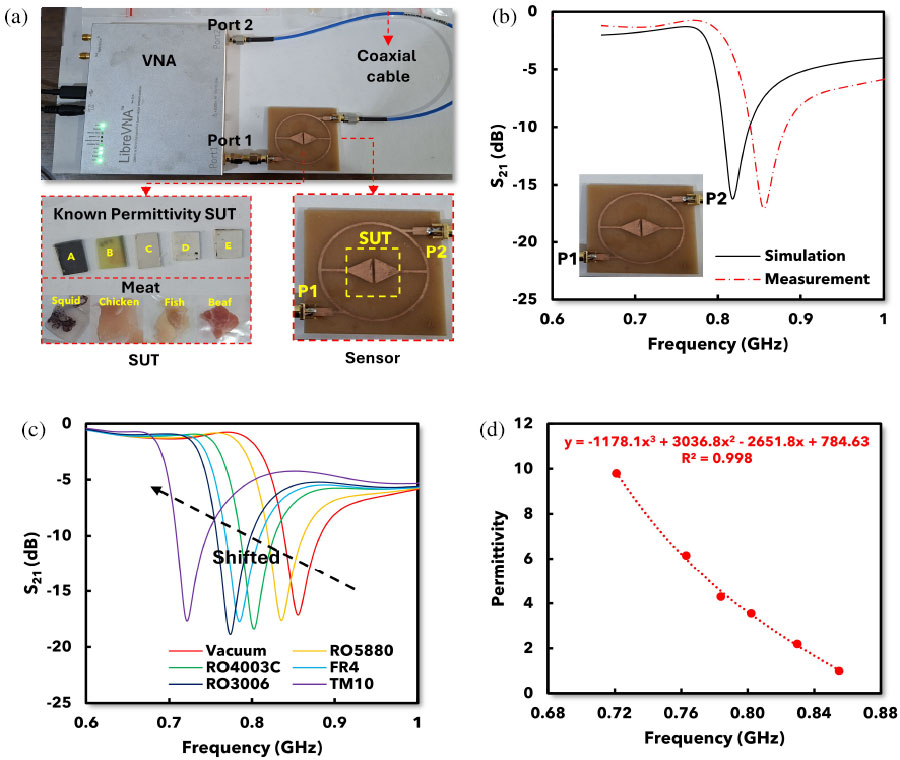
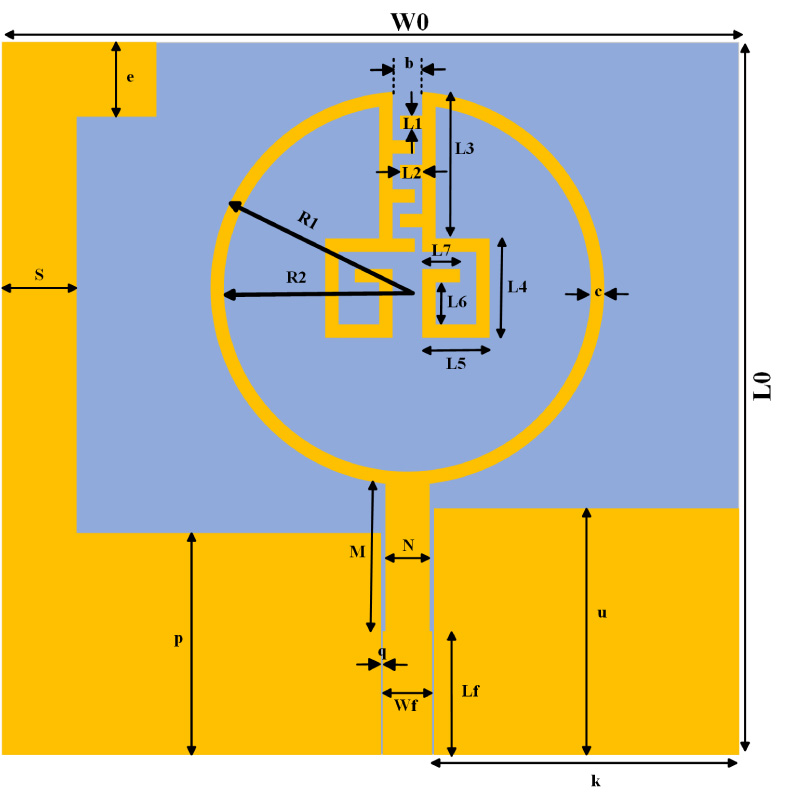
This study proposes a dual-band microwave sensor based on a split-ring resonator (SRR) coupled with a pair of L-shaped structures. The proposed sensor has dual functionalities, including the detection of liquid permittivity and solid displacement. An ethanol-water mixture is selected as a sample to measure the permittivity of the liquid. Moreover, FR4 is chosen as the test sample to measure the displacement of the solid. As a result, the maximum frequency detection resolution (FDR) is 1.64, and the average FDR is 1.40. The maximum and average normalized sensitivity (NS) values are 0.073% and 0.06%, respectively. The maximum displacement sensitivity is 10.0 MHz/mm for fDS2 and 10.5 MHz/mm for fDS1, while the average displacement sensitivity values are 4.98 MHz/mm and 8.02 MHz/mm for fDS2 and fDS1, respectively. These values confirm the sensor's reliable performance and sensitivity across different measurements. In general, the proposed sensor offers several advantages: 1) it operates independently by isolating the electric fields generated by each sensor; 2) it demonstrates dual functionalities, including the detection of liquid permittivity and solid displacement; and 3) it is capable of handling both liquid and solid samples.
Multifunctional Dual-band Microwave Sensor for the Detection of Liquid Permittivity and Solid Displacement
2025-02-02
PIER C
Vol. 152, 121-129
Innovative Design for Mutual Coupling Reduction in Dual-Element Array Antennas for ISM Applications Using Whale Optimization Algorithm
Elham Atashpanjeh and Pejman Rezaei
This paper introduces a decoupled dual-element array antenna designed to address the challenges of mutual coupling between elements. To tackle this issue, a neutralization line is strategically incorporated to suppress leaky surface currents, while ensuring the antenna's central frequency and radiation pattern remain intact. The dimensions of the neutralization line are carefully optimized using the Whale Optimization Algorithm (WOA) to achieve the best possible performance, focusing on minimizing mutual coupling and enhancing gain. By placing the neutralization line nearby between the two elements, surface currents are efficiently redirected back to the radiating element, preventing leakage to neighboring elements. This approach also results in a more compact structure. The proposed antenna, with overall dimensions of 50 mm x 30 mm x 1.6 mm, is simulated using analytic software. It achieves an impressive 27 dB reduction in mutual coupling and delivers an ultra-wide bandwidth of 1.2 GHz within the ISM band at an operating frequency of 2.4 GHz, with a measured maximum gain of -5 dB. The structure was fabricated, and experimental results closely matched the simulations, confirming the design's effectiveness. By leveraging the WOA optimization method, the geometry of the neutralization line was fine-tuned to maximize performance, significantly improving inter-element decoupling. This design approach is simple yet effective and can be readily extended to other antenna array configurations, demonstrating strong potential for compact and efficient Industrial Scientific and Medical (ISM) band applications.
Innovative Design for Mutual Coupling Reduction in Dual-element Array Antennas for ISM Applications Using Whale Optimization Algorithm
2025-02-02
PIER M
Vol. 132, 31-38
General Array Imaging Network for Near-Field Synthetic Aperture Interferometric Radiometer
Chenggong Zhang , Jianfei Chen , Jiahao Yu , Yujie Ruan , Sheng Zhang , Shujin Zhu and Leilei Liu
Millimeter wave synthetic aperture interferometric radiometer (SAIR) can achieve high-resolution imaging without a large physical aperture antenna and has strong application advantages in the fields of earth remote sensing, astronomical observation, and meteorological monitoring. In order to adapt to various payload platforms and detection needs, the existing SAIR array structures are diverse, but the existing imaging methods are difficult to effectively deal with various arrays and achieve stable high-precision imaging inversion. Thus, this paper proposes a general multi-channel fusion imaging network to achieve SAIR imaging inversion of any array structure. First, with the help of the sensor matrix deduction subnet, a high-precision imaging sensor matrix is deduced according to the position of each array element of the SAIR system, and then high-precision image reconstruction is achieved with the help of the multi-channel fusion imaging subnet. The simulation results show that the network has good adaptability and can achieve high-precision imaging inversion of different SAIR array structures.
General Array Imaging Network for Near-field Synthetic Aperture Interferometric Radiometer