Search Results(13784)

2025-03-20
PIER C
Vol. 154, 21-29
Close Quarters Permittivity Detection Based on Tagging Antenna Sensor for Solid Material Characterization
Syah Alam , Indra Surjati , Raden Deiny Mardian , Lydia Sari , Ghathfan Daffin , Iznih , Zahriladha Zakaria , Leni Devera Asrar and Teguh Firmansyah
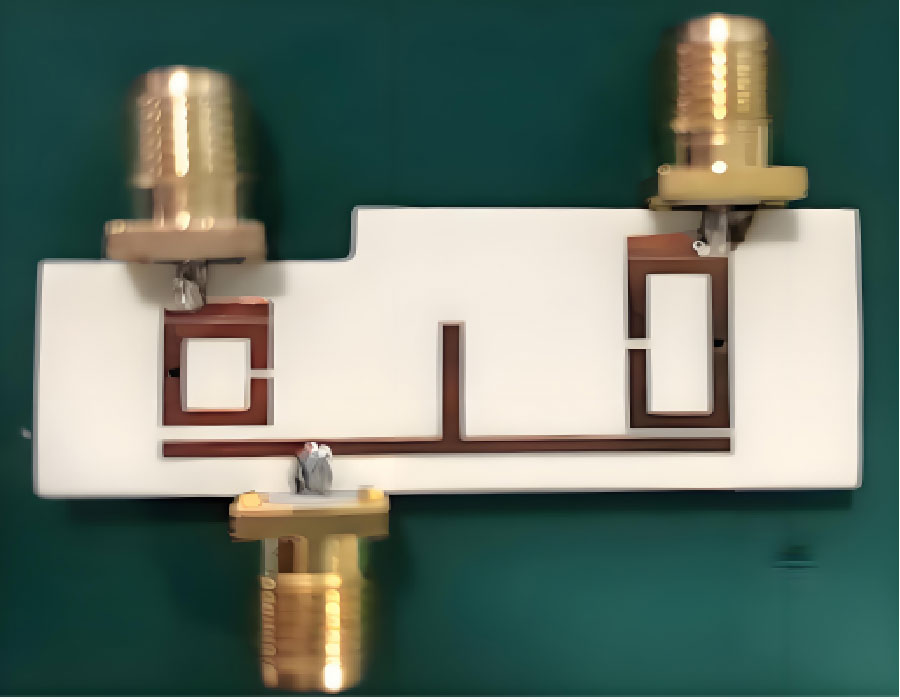
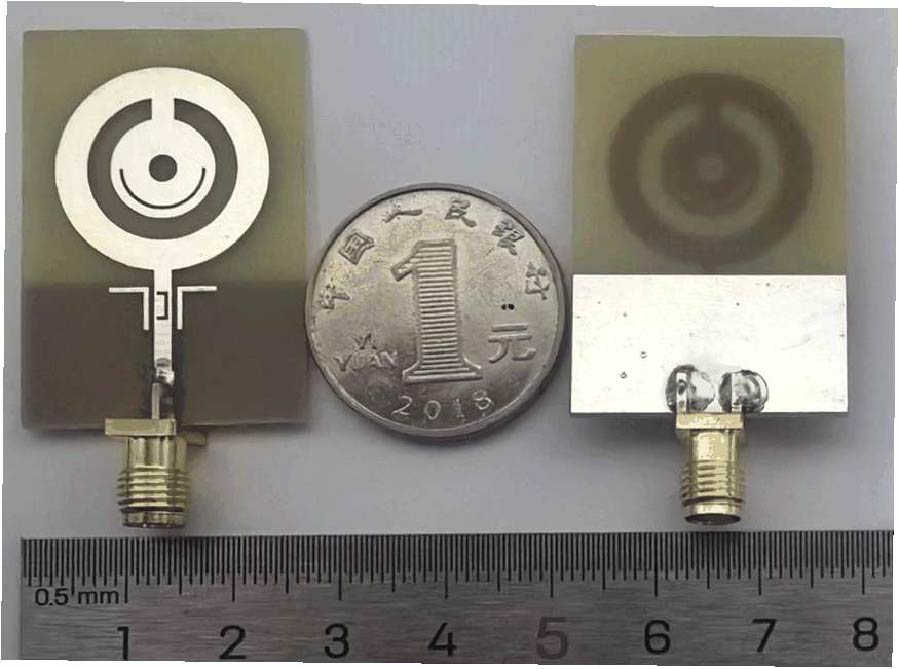
This research proposes a tagging antenna sensor for permittivity detection of solid materials based on a close quarter approach. The sensor is proposed to operate at a frequency of 2.53 GHz using a single port resonator with a reflection coefficient (S11) ≤ -10 dB. The sample is placed directly in the sensing area of the antenna sensor based on the concentration of the electric field. Permittivity detection is proposed based on the resonant frequency shift of the transmission coefficient (S21) using interrogator antennas separated by a distance of (d) = 100 mm determined using the Fresnel region. Based on the measurement results, the antenna sensor has a high accuracy of 96% while the sensitivity and ΔF are 0.39% and 0.012 GHz respectively. Moreover, the sensitivity of the proposed sensor is still low due the low concentration of the electric field. Therefore, increasing the sensitivity of the antenna sensor can be recommended as further work such as combining the structure of single port resonator with another structure such as interdigital capacitor and artificial magnetic conductor (AMC). Finally, this research makes a significant contribution to the permittivity detection of solid materials with a close quarter approach to support real time and flexible measurements and can be recommended for several applications for the biomedical, pharmaceutical, and material quality control industries.
Close Quarters Permittivity Detection Based on Tagging Antenna Sensor for Solid Material Characterization
2025-03-20
PIER C
Vol. 154, 11-19
A Circularly Polarized Magnetoelectric Dipole Antenna with Microstrip-Line Aperture-Coupled Feeding
Wu-Sheng Ji , Yun Gao , Xing-Yong Jiang , Xinyi Li and Wenhan Wan
This paper presents a high-gain right-hand circularly polarized (RHCP) magnetoelectric (ME) dipole antenna (MEDA) with microstrip-line aperture-coupled feeding. By extending one pair of diagonal horizontal metallic plates in the traditional linearly polarized MEDA in opposite directions, the electric dipole current becomes parallel to the magnetic dipole current, achieving circular polarization performance. The antenna is excited using a microstrip-line aperture-coupled feeding structure, and its electrical performance is further enhanced by integrating a box-shaped reflector. The measured results of the antenna prototype show that the impedance bandwidth (|S₁₁| ≤ -10 dB) is 46.8% (2.90-4.67 GHz); the 3 dB axial ratio bandwidth is 26.4% (3.58-4.67 GHz); and the maximum in-band gain reaches 12.9 dBic. A cross-polarization level below -18 dB and a front-to-back ratio exceeding 20 dB highlight the superior performance of the proposed antenna.
A Circularly Polarized Magnetoelectric Dipole Antenna with Microstrip-line Aperture-Coupled Feeding
2025-03-20
PIER M
Vol. 133, 11-19
Optimizing Radar Stealth by Near-Field Diagnostics of Aircraft Engine Absorbent Material Coating
Yulang Li , Hongwei Deng , Linyuan Dou and Zeyong Wei
This study introduces an approach for applying radar-absorbent material (RAM) coatings on aircraft engines to reduce the monostatic radar cross-section (mono RCS), leveraging near-field diagnostic analysis to guide the process. The primary goal is to improve the mono RCS stealth performance within the engine's intricate cavity structure. The finite-difference time-domain (FDTD) method is employed to accurately compute near-field distributions within the cavity, accounting for the complex interactions of electromagnetic wave propagation and scattering. This analysis method identifies critical hotspots within the engine cavity that significantly impact the RCS. An RAM coating scheme is then designed to target these ``hot spots'', resulting in substantial RCS reduction of the engine. The findings highlight the accuracy and effectiveness of this methodology, offering valuable contributions to the advancement of stealth technologies for next-generation aircraft engines.
Optimizing Radar Stealth by Near-field Diagnostics of Aircraft Engine Absorbent Material Coating
2025-03-19
PIER C
Vol. 154, 1-9
Design and Analysis of a Novel Segmented Secondary Modular Double-Sided Flux-Switching Linear Motor
Yuxiao Zhu , Yongkuan Li , Yujian Chang , Jiaming Li and Jin Chen
In this paper, a novel double-sided flux-switching linear motor is proposed. The motor adopts the structure of primary modularization and secondary segment. It has the advantages of high safety, high thrust density, and low thrust fluctuation. In this paper, the detent force characteristics of the proposed motor are analyzed, and the influence of the end effect on the magnetic congregate effect is discussed, which has reference value for the study of the permanent magnet linear motor with transverse magnetization. Moreover, according to the above analysis, suitable and effective structural optimization and parameter optimization methods are designed for the motor. After the optimization, the proposed motor achieves higher thrust output and significantly lower fluctuation. Finally, a prototype is constructed for validation.
Design and Analysis of a Novel Segmented Secondary Modular Double-sided Flux-switching Linear Motor
2025-03-19
PIER C
Vol. 153, 271-279
Design of Mode-Reconfigurable Doherty Power Amplifier
Shiwei Zhao , Longfei Zhou , Linsong Li and Fei Zhao
This paper proposes a mode-reconfigurable Doherty power amplifier (DPA). By merely exchanging the transistors' gate bias without altering the corresponding circuits, this power amplifier can achieve two different frequency-band DPA modes, enabling wide bandwidth implementation in DPAs Utilizing a single load modulation network. Simultaneously, PIN switches are utilized to improve the amplifier's bandwidth and drain efficiency during mode switching. To validate this approach, a mode-reconfigurable DPA was designed and fabricated using commercial GaN transistors. A reconfigurable Doherty power amplifier with mode 1 operating in the frequency bands of 2.5-2.9 GHz and 3.3-3.7 GHz, mode 2 operating in the frequency band of 2.8-3.4 GHz, with a drain efficiency ranging from 60.2% to 70.2%, a 6 dB output power reduction resulting in a drain efficiency of 43.5% to 53.7%, a gain between 9.4 and 11.3 dB and a saturated output power between 39.4 and 41.3 dBm. This straightforward architecture offers a promising approach for implementing Doherty power amplifiers in 5G frequency bands.
Design of Mode-reconfigurable Doherty Power Amplifier
2025-03-19
PIER Letters
Vol. 126, 1-7
An Original Approach to Determine the Minimum Operating Frequency of Mode-Stirred Reverberation Chambers
Lionel Michard , Guillaume Andrieu , Philippe Leveque and Delia Arnaud-Cormos
The minimum operating frequency (MOF) of mode-stirred reverberation chambers is often assessed through statistical analysis using goodness-of-fit (GoF) statistical hypothesis tests such as Anderson-Darling or Kolmogorov-Smirnov. However, in the context of MOF determination, hypothesis tests are typically used with the aim of proving the null hypothesis made on the probability distribution of the electric field in the cavity, as opposed to the initial intent of the tests. A new approach avoiding hypothesis testing is proposed in this work by introducing a criterion based on normalized statistical distances. By normalizing the distances, it has been made possible to limit the influence of the sample size on the assessed minimum frequency, thereby improving the consistency of the results.
An Original Approach to Determine the Minimum Operating Frequency of Mode-stirred Reverberation Chambers
2025-03-18
PIER
Vol. 183, 1-8
All-Dielectric Cylindrical Metasurfaces for Enhanced Directional Scattering
Rasmus E. Jacobsen and Samel Arslanagic
We present a detailed analytical and numerical study of cylindrical metasurfaces for enhanced scattering applications. Analytical expressions are derived for the surface impedances of single and double metasurface configurations, respectively, which are required to maximize scattering in the forward direction. A surface impedance model is developed for 1-D arrays of dielectric cylinders that is subsequently used to realize and implement numerically the required surface impedances. Our analytical and full-wave numerical results reveal that cylindrical all-dielectric metasurfaces may exhibit superior forward scattering and balanced higher-order mode excitation in comparison to traditional solid dielectric resonators. Two examples, both with silicon dielectric cylinder, have been chosen to showcase our results, and they were found to exhibit extraordinary directional scattering properties with the respective forward scattering efficiencies being 9 and 19 times that of a single mode resonator. The choice of silicon for the cylinder dielectrics highlights the potential of the proposed configuration in optical communications, although the presented theory applies across the other parts of the electromagnetic spectrum.
All-dielectric Cylindrical Metasurfaces for Enhanced Directional Scattering
2025-03-18
PIER C
Vol. 153, 265-270
The Influence of Armature Conductivity on the Propulsion Effect of Synchronous Electromagnetic Coils
Mingjie Zhong , Junsheng Cheng , Heyang Wang and Jian Sun
In the study of synchronous electromagnetic coil launchers, the influence of armature material on system performance is critical. Existing research lacks combined simulation-experimental investigations on the electrical conductivity of armature materials and in-depth exploration of its impact mechanism on propulsion performance. To analyze the influence of armature material conductivity on propulsion characteristics, a mathematical model of the synchronous electromagnetic coil launcher was established, with theoretical derivations clarifying the mechanical properties and motion equations of the armature during acceleration. Through systematic simulations conducted on the Ansys platform, the effects of different armature material conductivities (6061 aluminum alloy, 7075 aluminum alloy, brass) on propulsion effectiveness were quantified. An experimental platform was subsequently constructed to validate simulation reliability using these three engineering-grade materials. Results demonstrate that increased armature conductivity significantly reduces peak reverse force and enhances exit velocity, while revealing a saturation effect: when conductivity exceeds 6 × 10⁷ S/m, further improvements have diminishing returns on propulsion performance.
The Influence of Armature Conductivity on the Propulsion Effect of Synchronous Electromagnetic Coils
2025-03-17
PIER C
Vol. 153, 257-264
Design of a High-Gain Circularly Polarized Dielectric Resonator Antenna with Dual Annular Grooves
Wenhan Wan , Wu-Sheng Ji , Jinfeng Gan , Xing-Yong Jiang and Yun Gao
This paper proposes a single-fed wideband circularly polarized high-gain dielectric resonator antenna (DRA) for millimeter waves. By cutting out a ring slot in the upper and lower parts of the cylindrical dielectric resonator antenna, higher-order modes are excited, effectively broadening the bandwidth and enhancing the gain. To achieve circular polarization, the DRA is fed by a microstrip line through an asymmetric Z-shaped slot coupling. Measurement results show that the antenna's impedance matching S11 < -10 dB bandwidth is 25.6% (35-45.31 GHz). The usable circular polarization (CP) bandwidth is found to be 8.9% (36.2-39.6 GHz), where the -10 dB input impedance bandwidth and the 3-dB axial ratio bandwidth fall within the same passband, with a maximum in-band gain of 10.67 dBi. The proposed antenna employs a single-fed technique, features a simple fabrication process, exhibits excellent performance, and is suitable for FR2 band applications.
Design of a High-gain Circularly Polarized Dielectric Resonator Antenna with Dual Annular Grooves
2025-03-17
PIER C
Vol. 153, 247-255
Synthesis of Antenna Array Based on Hybrid Improved Sparrow Search Algorithm and Convex Programming
Qi Tang , Bin Wang and Xue Tian
This paper presents a hybrid method that combines the improved sparrow search algorithm (ISSA) and convex programming (CP) to synthesize sparse arrays under multiple design constraints. The proposed method initiates with introducing ISSA, which establishes a sparse array layout while effectively reducing peak sidelobe levels (PSLLs) through optimizing nonuniform element positions. Subsequently, when the position is fixed, the subproblem of minimizing PSLL is transformed into a convex problem with beamwidth constraint, employing CP to determine optimal excitation amplitudes. The PSLL serves as the fitness function in ISSA to simultaneously optimize both element position and excitation amplitude, to achieve PSLL reduction of sparse array. Afterward, some examples of linear and rectangular planar arrays with low sidelobe are simulated and discussed in detail. Numerical experiments show the effectiveness and reliability of ISSA-CP, which can further reduce PSLL while saving array elements. Ultimately, utilizing the numerical simulation results as a foundation, a full-wave simulation is undertaken to verify the practicality of the novel hybrid method.
Synthesis of Antenna Array Based on Hybrid Improved Sparrow Search Algorithm and Convex Programming
2025-03-17
PIER C
Vol. 153, 241-246
Pattern Nulling for Advanced Linear Antenna Systems in 6G by Amplitude-Only Control via Deep Learning
Tong Van Luyen and Huy Hoang Nguyen
This paper presents amplitude-only control beamforming approaches within advanced linear antenna systems (ALASs) for sixth generation (6G) technology. The principle of these approaches is training the radiation pattern alongside the weight set derived from two types of the linearly constrained minimum variance (LCMV) optimization problem, which are the single null (SN-LCMV) and broad null (BN-LCMV), using deep learning (DL). Thus, they called SN-DL and BN-DL, respectively. The BN-DL effectively establishes broad null, with the median magnitude at null being −37.44 dB. The computation time is notably reduced, attaining a speed that is 8.26 times faster than the BN-LCMV, 6.95 times faster than the SN-LCMV, and 1.11 times faster than the SN-DL. Over 1000 simulations, the BN-DL demonstrates the highest stability, achieving a peak density value of 10.17%, in comparison to the 3.09% recorded in SN-LCMV, 6.74% in BN-LCMV, and 6.94% in SN-DL, respectively.
Pattern Nulling for Advanced Linear Antenna Systems in 6G by Amplitude-only Control via Deep Learning
2025-03-17
PIER C
Vol. 153, 233-239
Novel Construction of Characteristic Basis Functions Accelerated Multilevel Characteristic Basis Function Method for Fast Solution of Electrically Large Scattering Problems
Mingrui Ou , Yufa Sun , Ling Yao and Pan Wang
In this paper, a novel construction approach of characteristic basis functions (CBFs) is proposed to accelerate the traditional multilevel characteristic basis function method (MLCBFM) for the analysis of electrically large scattering problems. The solution of CBFs in the traditional MLCBFM is extremely complicated and time-consuming due to numerous reduced matrix calculation procedures. Nevertheless, in the proposed method, the CBFs can be solved directly in one step using the new construction approach, which leads to a significant reduction in computation time. Numerical simulation results have demonstrated the effectiveness of the proposed method, which achieves higher computational efficiency without any loss of accuracy than the traditional MLCBFM.
Novel Construction of Characteristic Basis Functions Accelerated Multilevel Characteristic Basis Function Method for Fast Solution of Electrically Large Scattering Problems
2025-03-17
PIER M
Vol. 133, 1-9
A Frequency Selective Rasorber with Ultra-Wideband Switchable Transmission/Reflection and Two-Sided Absorption
Liangzhen Lin , Jianqiong Zhang , Liangzhu Li , Xiang-Qiang Li and Qingfeng Wang
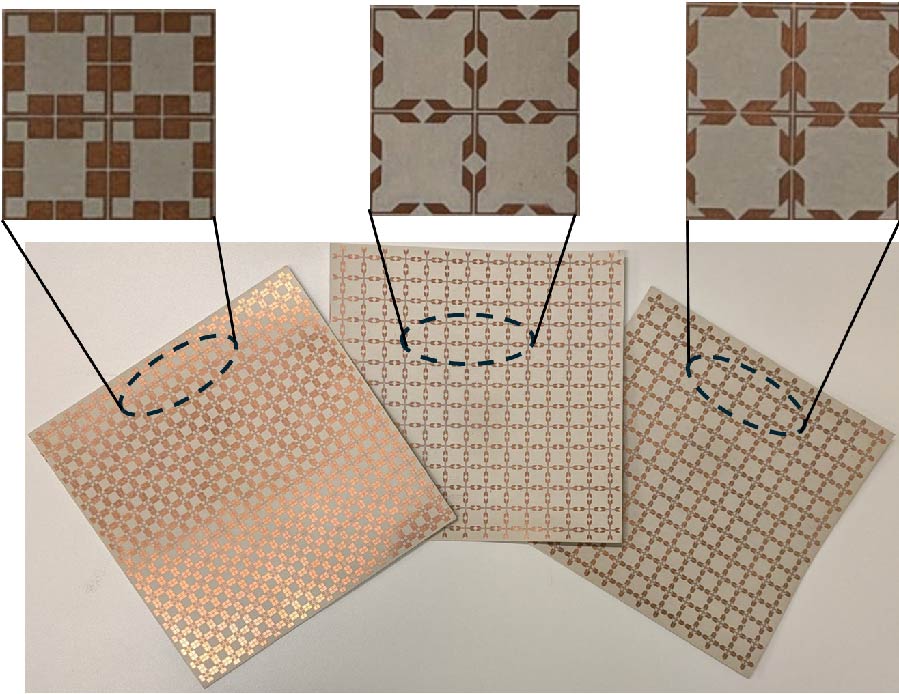
A novel switchable frequency selective rasorber (FSR), featuring dual wideband absorption bands and an ultra-wide passband that can be switched to a reflective band, is proposed in this work. This design incorporates a lossy layer and a three-layer reconfigurable frequency selective surface (FSS). An ultra-wideband transmission can be achieved through the lossy layer by means of circular spiral resonators. The switchable function is utilized by a reconfigurable FSS with PIN diodes. Simulation results confirm the FSR's broad absorption from 1.44 to 2.39 GHz (49.6%) and from 5.45 to 6.64 GHz (19.7%). It also achieves an extensive passband with a 1-dB bandwidth of 47.78% (3.17~5.16 GHz) in the absorption-transmission-absorption (A-T-A) mode, which is the widest transmission band in existing designs. The passband is converted into a reflection band in the absorption-reflection-absorption (A-R-A) mode, showcasing the FSR's switchable characteristics. To validate these simulation outcomes, a prototype measuring 300 x 300 mm is constructed and measured.
A Frequency Selective Rasorber with Ultra-wideband Switchable Transmission/Reflection and Two-sided Absorption
2025-03-16
PIER Letters
Vol. 125, 67-73
Machine Learning Assisted Intelligent Antenna Parameters Estimation Using EOLRKC and SFIS Algorithms
Rajendran Ramasamy , Maria Anto Bennet and Abbas Ali Farithkhan
In this research, the optimization of antenna parameters for the Vivaldi antenna, Inverted F antenna, and Probe Feed Microstrip Patch antenna was carried out using EOLRKC and the Sugeno Fuzzy Inference System (SFIS) machine learning techniques. The research explores numerical and conventional antenna design methods to understand the necessary concepts comprehensively. After a thorough analysis, an intelligent model for antenna selection recommends the best antenna based on various performance metrics evaluated with the Enhanced Logistic Regression Kernel Classifier. Additionally, the geometric properties of the antenna are discussed, and the SFIS is developed by integrating five primary learners to maximize the potential of each learner type. The EOLRK Classifier classifies antennas into three groups: Vivaldi, Inverted F, and Probe Feed Microstrip Patch, while SFIS determines the optimal parameters for antenna size. The accuracy of the EOLRK Classifier is assessed, while the performance of the Sugeno FIS is evaluated using MSE and MAPE. The proposed methodology achieves a MAPE below 4% and an accuracy exceeding 99%, demonstrating exceptional performance in parameter prediction and antenna classification. Implementing these methods has the potential to enhance innovative antenna design practices significantly.
Machine Learning Assisted Intelligent Antenna Parameters Estimation Using EOLRKC and SFIS Algorithms
2025-03-15
PIER C
Vol. 153, 225-232
A Compact Ultra-Wideband Microstrip Antenna for Spectrum Monitoring
Yu Liu , Shuo Yu and Xiaoming Liu
A compact ultra-wideband antenna fed by coplanar waveguide is reported in this paper. The designed antenna consists of a trumpet-shaped planar radiation patch and a symmetrical ground patch. Two Mickey-Mouse shaped perturbative slots and two quarter-elliptical grooves are etched on the ground to obtain better impedance matching. By prolonging the radiation patch, a very wide −10 dB bandwidth of covering 300 MHz-18 GHz with bandwidth ratio up to 60:1 and omnidirectional coverage are achieved. Furthermore, the proposed antenna is able to cover P(0.3-1G), L(1-2G), S(2-4G), C(4-8G), X(8-12G), and Ku (12-18G) bands, which is much preferred for wideband spectrum monitoring.
A Compact Ultra-Wideband Microstrip Antenna for Spectrum Monitoring
2025-03-14
PIER C
Vol. 153, 219-224
Efficient Electro-Thermal Analysis of Periodic Artificial Magnetic Conductors (AMC)
Zhonghui Li , Minquan Li , Xian-Liang Wu , Shuangqing Cao and Rongxian Bai
This paper proposes a method to calculate temperature distribution by analyzing periodic units, enabling efficient simulation of electromagnetic-thermal problems in periodic structures. Compared with traditional methods that require high memory and long computation times to process the entire large-scale model, this approach significantly reduces computational complexity by focusing on a single periodic unit and incorporating periodic thermal boundary conditions. In the study, electromagnetic losses are considered as the heat source, and the formula for periodic thermal boundary conditions is derived in conjunction with the heat conduction equation, achieving the integration of periodic electromagnetic-thermal boundary conditions. Numerical validation and comparison with global model results demonstrate that the proposed method maintains accuracy while achieving high efficiency. Furthermore, the method is applied to an artificial magnetic conductor (AMC) model, with calculation results closely matching those of large-scale unit arrays, further verifying the correctness and applicability of the algorithm.
Efficient Electro-thermal Analysis of Periodic Artificial Magnetic Conductors (AMC)
2025-03-14
PIER C
Vol. 153, 213-218
A Novel Method for Multi-Function Radar Work Mode Boundary Detection
Yuxin Fu , Jiantao Wang , Jie Huang , Tongxin Dang and Yiming Li
Work mode boundary detection can provide basic information units for the recognition of consecutive work modes in the intercepted multi-function radar (MFR) pulse sequence. The existing boundary detection methods tend to detect false boundaries when the pulse parameters vary drastically within the work mode, such as when the pulse repetition interval (PRI) modulation type is stagger or agile. To address the issue of over-detection of the work mode transition boundary, a new work mode boundary detection method is proposed based on the arc crossings (AC). It utilizes the AC to quantify and annotate the similarities within MFR work modes. Without relying on prior knowledge, it can accurately capture the structural characteristics of the boundary transition and effectively adapt to different pulse parameter modulation types. The experimental results show that it reduces the segmentation probabilistic error by 8.7% and the false alarm rate by 19.85% compared to the baseline algorithm.
A Novel Method for Multi-function Radar Work Mode Boundary Detection
2025-03-13
PIER C
Vol. 153, 201-211
Advanced Helical Antenna Design for X-Band Applications Using AI
Mohammed Yousif Zeain , Maisarah Abu , Apriana Toding , Zahriladha Zakaria , Hussein Alsariera , Ihsan Ullah , Ali Abdulateef Abdulbari , Hamizan Yon , Bilal Salman Taha and Muhammad Inam Abbasi
This paper presents the design, fabrication, and characterization of a novel 3D-printed helical antenna operating within the 9.4-10.8 GHz frequency band. The antenna, employing a lightweight paper substrate and a strip-based helical structure, exhibits robust circular polarization characteristics and wideband operation. Rigorous simulations predict a peak CP gain of 11.7 dBi at 9.8 GHz and a high simulated radiation efficiency of 95%. Experimental measurements validate these predictions, achieving a peak CP gain of 11.6 dBi at 9.8 GHz. This research demonstrates the potential of 3D-printed helical antennas for diverse applications in modern wireless communication systems, including 5G, satellite communication, and radar. Furthermore, this study leverages the power of Artificial Intelligence (AI) by employing the Grey Wolf Optimizer (GWO), a sophisticated metaheuristic algorithm, to optimize the antenna's design. The GWO algorithm is utilized to efficiently search the design space and identify optimal values for key parameters, such as the number of turns, helix pitch, and helix diameter, with the objective of maximizing antenna gain to achieve a target of 15 dBi. This research highlights the potential of AI-driven optimization techniques in advancing the design of high-performance antennas for emerging wireless communication systems.
2025-03-13
PIER C
Vol. 153, 189-200
Virtual Vector Modulation-Based Model Predictive Control Strategy with Drive Signal Optimization for Quasi-Z-Source Inverter-Fed Permanent Magnet Synchronous Motor System
Yang Zhang , Kun Cao , Yang Gao , Ping Yang , Xingwang Chen and Zhun Cheng
Aiming at the issues of drive signal errors and high computational complexity in conventional model predictive control, a virtual vector modulation-based model predictive control (DSO-VVMMPC) strategy with drive signal optimization for quasi-Z-source inverter-fed permanent magnet synchronous motor (QZSI-PMSM) system is proposed in this paper. In the proposed strategy, the drive pulses are generated by the combined effect of straight-through voltage vectors (ST VVs) and non-straight-through (NST) VVs over one control period to reduce the ripples of inductor current and stator current. Firstly, the accurate drive signals can be obtained by applying deadbeat algorithm to calculate and correct. The judgment of which sector the reference voltage vector is in and the construction of a cost function for finding the optimal objective are not required. Thus, the computational burden of control system is reduced significantly. In addition, the drive signals are optimized to output to reduce the effect of minimum pulse width on the accuracy of deadbeat algorithm. The steady-state performance of proposed strategy is further improved. Finally, the feasibility and effectiveness of proposed strategy are confirmed by conducting comparative experiments on the RT-LAB experimental platform.
Virtual Vector Modulation-based Model Predictive Control Strategy with Drive Signal Optimization for Quasi-Z-Source Inverter-fed Permanent Magnet Synchronous Motor System
2025-03-12
PIER C
Vol. 153, 179-188
Meta-Surfaces Based High Gain Wide-Band Stacked Antenna with Low Cross-Polarization and Side Lobe Level for 5G Applications
Anjali Rochkari , Vijaypal Yadav , Mahadu Trimukhe , Nayana Chaskar , Meenakshi Awasthi and Rajiv Kumar Gupta
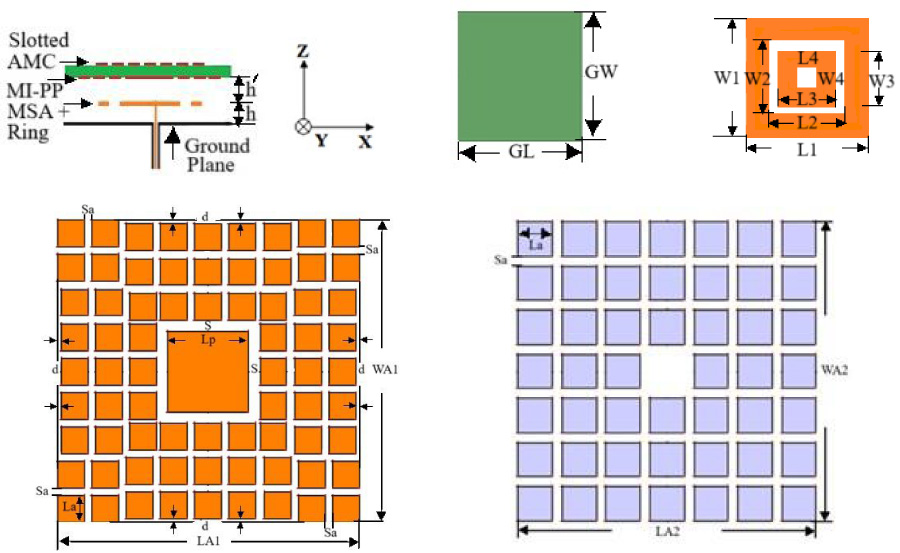
This paper proposes a high gain wide band stacked antenna using multiple meta-surfaces that offers stable radiation patterns with low cross-polarization level (CPL) and side-lobe level (SLL) for 5G applications. The suspended microstrip antenna (SMSA) offers high gain and wide bandwidth but the radiations from probe feed cause high CPL. SMSA design with meta-surfaces increases the inductive impedance of SMSA, therefore, the substrate height is decreased to increase the capacitance to compensate this inductive impedance. It decreases the cross-polar radiation due to decrease in probe feed length. Meta-surfaces electromagnetically couple with SMSA and enhance the bandwidth of antenna. SMSA with meta-surfaces is placed in a half-wavelength Fabry Perot Cavity (FPC) to enhance the gain of antenna. The proposed antenna offers S11 < -10 dB, peak gain of 16.4 dBi, SLL < -23 dB and CPL < -23 dB and front to back lobe ratio (FBR) > 22 dB over 3.3-3.9 GHz. The structure is fabricated and tested. The measured results are close to the simulation ones. The proposed structure based on its radiation characteristics is a suitable candidate for 5G applications.
Meta-surfaces Based High Gain Wide-band Stacked Antenna with Low Cross-polarization and Side Lobe Level for 5G Applications