Search Results(13784)

2025-04-05
PIER C
Vol. 154, 131-137
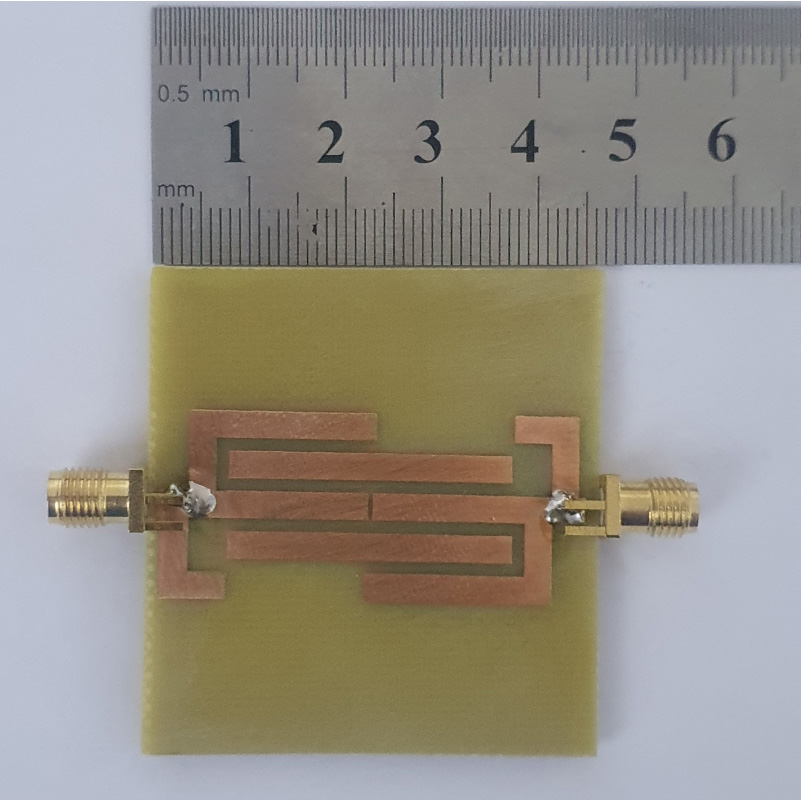
Low-Loss, High-Rejection UWB Filter with Dual Sharp Notch Characteristics for Wireless Communications
Mingming Gao , Hanci Jiang , Yunshu Yang , Xinyue Zhang and Ya He
To improve the requirements of stopband rejection in ultra-wideband (UWB) filters, a modified T-shaped resonator is proposed and optimized based on multimode resonator theory. The conventional resonator is enhanced by loading open-circuit branches and introducing circular slots to create transmission zeros, while asymmetric coupling lines and a ``ram's horn'' structure are employed to realize dual trapping at 6.3 GHz and 6.8 GHz. Additionally, a defective ground structure is incorporated to further improve the filter's performance. The proposed filter exhibits a passband range of 4.1 GHz to 10.7 GHz, with a minimum insertion loss of -0.2 dB and a return loss greater than 10 dB. The filter demonstrates excellent out-of-band rejection, with trap depths of -28.4 dB and -50 dB at the trapped frequencies of 6.3 GHz and 6.8 GHz, respectively.
Low-loss, High-rejection UWB Filter with Dual Sharp Notch Characteristics for Wireless Communications
2025-04-04
PIER B
Vol. 111, 59-70
Temperature Dependent Design of Streamlined Ablatable Radomes for Hypersonic Applications
Rudra Narayan Barik , Aparna Parameswaran and Hrishikesh Sonalikar
This paper presents the temperature-dependent design of streamlined constant and variable thickness ablatable radomes for hypersonic applications. An optimized three-layer radome wall configuration is proposed, consisting of a radome shell sandwiched between an outer ablative layer and an inner matching layer. The outer ablative layer offers protection against temperatures up to 1600˚F, while the inner matching layer effectively prevents total internal reflections. The radome shell is designed using the inhomogeneous planar layer model to account for the temperature gradient existing across its thickness. The numerical analysis of the radome wall is done using the 3D ray tracing method with aperture integration. Power transmission and boresight error characteristics of the radomes remain stable over a thermal operating range of 250˚F to 1600˚F. The performance of the radomes in dynamic flight conditions is analyzed using the time step analysis. Post ablation, the power transmission of constant thickness and variable thickness radomes remains well above -0.6 dB and -0.5 dB, respectively. The broadband performance of both radomes is analyzed over the X-band. Except for the boresight direction, the power transmission over the X-band remains above -1 dB for all incidence angles. The maximum boresight error is observed to be less than 4.29 mrad over the X-band.
Temperature Dependent Design of Streamlined Ablatable Radomes for Hypersonic Applications
2025-04-03
PIER
Vol. 183, 21-32
Design of Absorption-Scattering Integrated Multi-Layer Metasurfaces for Large-Angle Anomalous Reflection
Jie Zhang , Wangchang Li , Yue Kang , Ting Zou , Xiao Han , Yao Ying , Jing Yu , Jingwu Zheng , Liang Qiao , Juan Li , Faxiang Qin and Shenglei Che
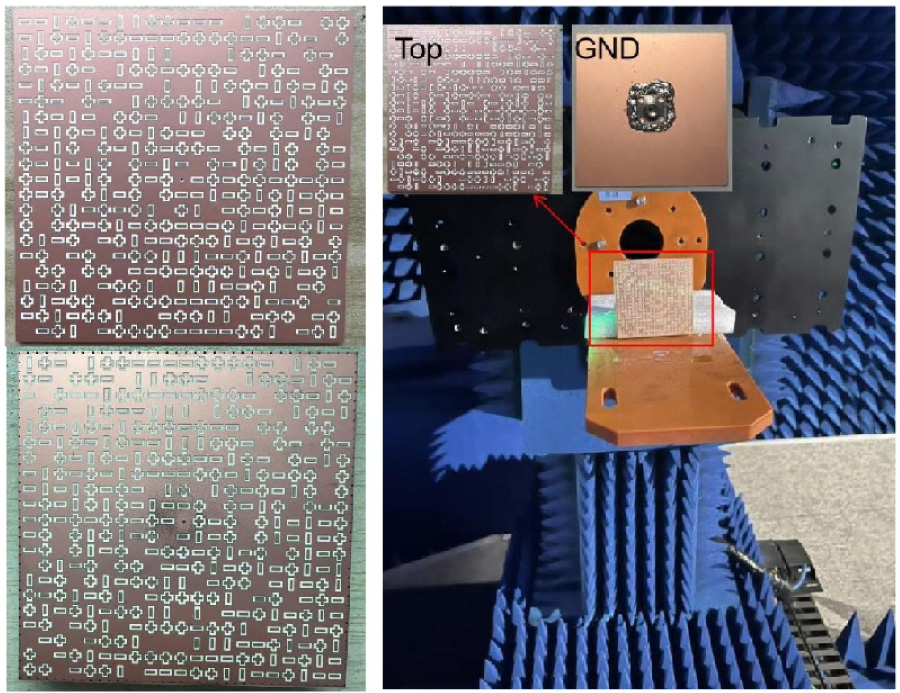
This paper presents a novel absorption-scattering integrated multi-layer metasurface (ASIMMS) designed to effectively control the propagation and absorption of electromagnetic waves. Special attention is paid to the efficient suppression of abnormal reflection and parasitic reflection under oblique incidence conditions. The research achieved high efficient beam coupling in the desired direction by precise impedance modulation and excitation of an appropriate set of evanescent wave patterns. The high conductivity of multi-walled carbon nanotube films (MWCNTFs) is used to enhance the localization of electromagnetic field inside the metasurface, thereby improving the absorption efficiency. The experimental results show that the designed ASIMMS achieves 86.8% electromagnetic wave absorption, 11.1% expected directional reflection efficiency, and 97.9% absorption-scattering efficiency at the operating frequency of 10 GHz under 15° oblique incidence. This method proficiently controls both direction and magnitude of scattering while effectively utilizing any diffraction order, paving the way for innovative applications in beam manipulation, stealth technology, and electromagnetic shielding.
Design of Absorption-scattering Integrated Multi-layer Metasurfaces for Large-angle Anomalous Reflection
2025-04-03
PIER C
Vol. 154, 119-129
Design of Variable Boundary Layer Sliding Mode Observer for Permanent Magnet Synchronous Motor Based on Fuzzy Control
Yu Nan , Lei Wang , Meng Qi and Zhi Li
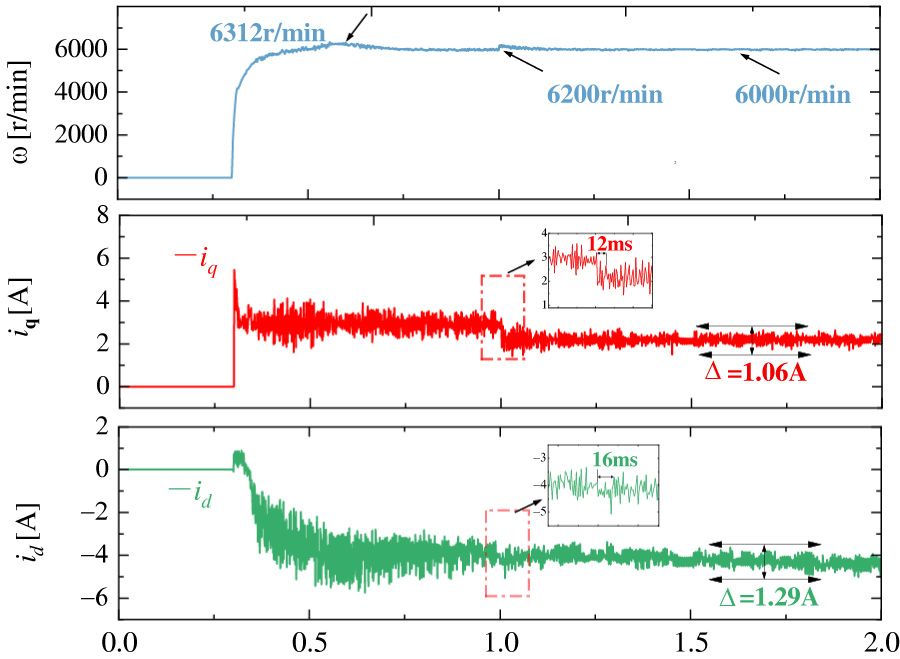
A novel position-free control strategy for permanent magnet synchronous motors (PMSMs) based on an improved fuzzy sliding mode observer (FSMO) is proposed to enhance the accuracy of rotor position estimation across different speeds. Traditional sliding mode observers (SMOs) employ a single sliding mode control rate, limiting their precision under varying speed conditions. To address this, the proposed FSMO adaptively adjusts the boundary layer thickness based on system stability and speed, effectively suppressing sliding mode chattering under diverse operating conditions. Additionally, a complex coefficient filter is integrated to mitigate the adverse effects of abrupt boundary layer changes on system stability by filtering the back electromotive force (EMF). Furthermore, a phase-locked loop (PLL) is employed to precisely extract and estimate rotor position and speed. Experimental results demonstrate that the proposed FSMO outperforms conventional SMOs and fixed-boundary-layer SMOs, achieving more accurate rotor position and speed estimation across different operating speeds.
Design of Variable Boundary Layer Sliding Mode Observer for Permanent Magnet Synchronous Motor Based on Fuzzy Control
2025-04-01
PIER B
Vol. 111, 45-58
Rain Attenuation Modelling Based on Symbolic Regression and Differential Evolution for 5G mmWave Wireless Communication Networks
Sandra Bazebo Matondo and Pius Adewale Owolawi
The microphysical structure of rain has a significant impact on the quality of radio signal transmission in the upcoming deployment of 5G millimetre-wave wireless communications in South Africa. To address this, mitigation techniques that integrate rain attenuation prediction models into network management systems are essential. This study uses a machine learning technique, symbolic regression coupled with differential evolution, to predict the rain attenuation in urban and rural 5G scenarios. Symbolic regression derives the mathematical models characterizing the attenuation, while differential evolution optimizes the model coefficients. The models' accuracies are validated through predictive performance metrics, including Mean Absolute Error (MAE) and Mean Squared Error (MSE). The urban model showed excellent accuracy, and the rural model improved significantly after optimization. The interpretability of the models provides valuable insights into rain-induced attenuation and supports better design and optimization of 5G mmWave communication systems.
Rain Attenuation Modelling Based on Symbolic Regression and Differential Evolution for 5G mmWave Wireless Communication Networks
2025-03-31
PIER C
Vol. 154, 111-117
Temperature Field Simulation of Submarine Cable Under Different Laying Environments Based on COMSOL
Guozhu Wang , Yajun Zhang and Zhichao Qiao
With the increasing maturity of marine energy development technology, the application ratio of submarine cable in marine engineering is climbing. The connection of submarine cable between offshore wind farms and mainland power grids is of great significance, and temperature is an important indicator for evaluating the safe operation status, which affects the stability and reliability of the cable directly. When the cable load exceeds the rated range, it will lead to a sharp rise in temperature, which will not only shorten its service life, but also may trigger an electrical fault. At lower loads, the cable fails to make full use of its transmission capacity under the rated load, thus affecting the economy of power supply. Therefore, the control of temperature rise of transmission lines during long-term operation is particularly critical, which is related to the stable operation of the power grid and the safety of power supply directly. This study conducted a detailed calculation of the current carrying capacity of submarine cable in accordance with the IEC60287 standard, and simulated the temperature field distribution of HYJQF41-F-26/35 kV 3 × 70 mm2 three core AC submarine cable in different laying environments using COMSOL simulation software, providing a scientific basis for the structural design and material selection of three core submarine cable.
Temperature Field Simulation of Submarine Cable under Different Laying Environments Based on COMSOL
2025-03-31
PIER C
Vol. 154, 105-109
A Broadband Vertical Transition from Waveguide to Microstrip Based on Narrow-Wall Excitation
Jun Dong , Bingqing Zhong , Jing Zheng , Feng Yao , Jinxin Yin and Hao Peng
In this paper, a broadband vertical rectangular waveguide (RWG)-to-microstrip line (MSL) transition structure for millimeter-wave solid-state circuits is proposed. The planar circuit in this transition is composed of a V-shaped probe and tapered fin-line ground, and the probe is inserted into the waveguide through a slot on the narrow side of the RWG. To facilitate energy coupling from RWG to MSL, a back-short with a length of a quarter-wavelength is designed on the bottom side of the probe to achieve effective electric coupling. A back-to-back prototype module has been designed to verify the performance of the transition. The measurement results show that the return loss of the back-to-back transition structure is better than 13 dB across the entire Ka-band, with the insertion loss (IL) of a single transition better than 0.55 dB. The measurement results agree well with simulation ones, validating the feasibility of the proposed transition circuit. A tolerance analysis is performed through simulations to verify the reliability of this transition design.
A Broadband Vertical Transition from Waveguide to Microstrip Based on Narrow-wall Excitation
2025-03-31
PIER M
Vol. 133, 33-42
Design of an Efficient SRR Loaded Polarization-Independent Wideband Metamaterial Notched Absorber with Wide Reflecting Band for Low Insertion Loss
Abhinav Kumar and Jayanta Ghosh
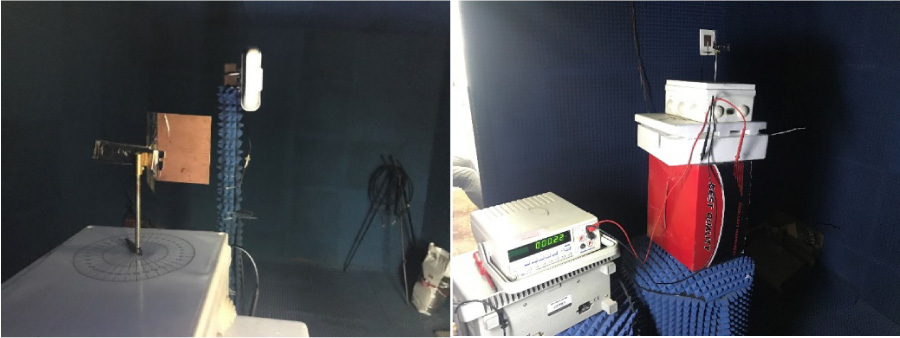
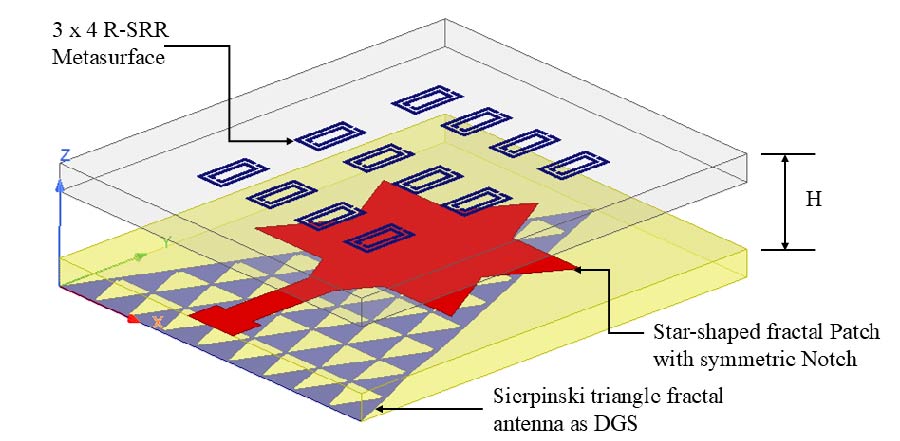
This research introduces a new, compact, absorptive frequency-selective reflector, or notched absorber (AFSR), which is low-profile and polarization-insensitive. The objective of the proposed study is to create a miniaturized FSS-based notched absorber that exhibits a high level of angular stability and a robust operational bandwidth of 110% (4.1 to 14.1 GHz). It consists of a reflecting band situated between two absorption bands. The absorption bands are 4.1 to 5.7 GHz and 9.0 to 14.1 GHz, respectively. A low insertion loss of 0.40 dB is achieved at approximately 6.8 GHz, and a wide reflection window with a -3 dB band is extended from 5.8 GHz to 8.0 GHz. The proposed notched absorber comprises three layers with a metal sheet at the bottom. The intermediate layer serves as a bandpass filter, which passes the in-band signal while working as a ground plane for out-of-band absorption. In contrast, the top layer is responsible for broad out-of-band absorption. The total thickness of the band notch absorber is 0.36λ (where λ stands for the wavelength associated with the lowest operating frequency). The equivalent circuit model of the proposed structure has been developed to understand better how band-notch absorbers work at their most basic level. In addition, we examined the distribution of surface current. The notched absorber that was designed is fabricated, and measurements have been done in a semi-anechoic chamber. The measured results are in excellent agreement with the simulated ones. The proposed notched absorber can be employed in radomes, to reduce electromagnetic interference and protect sensitive equipment from unwanted electromagnetic radiation, superstratum on an antenna, RCS reduction and stealth characteristics.
Design of an Efficient SRR Loaded Polarization-independent Wideband Metamaterial Notched Absorber with Wide Reflecting Band for Low Insertion Loss
2025-03-28
PIER C
Vol. 154, 97-103
A Novel Asymmetric Spoof Surface Plasmon Polariton Transmission Line for High Gain Endfire Radiation Using Phase Reversal Condition
Dhruba Charan Panda , Bikash K. Santi , Biku Raut , Deepak Kumar Naik and Rajanikanta Swain
This paper introduces a novel asymmetric design for spoof surface plasmon polariton (SSPP) transmission line-based endfire antenna. It utilizes the phase reversal condition in an asymmetric SSPP transmission line to achieve high gain endfire radiation. The antenna design uses mono-planar fabrication using the CPW concept. Achieving asymmetry in the SSPP transmission line involves simply bending a straight SSPP transmission line containing H-shaped unit cells. Successive upward and downward bending of the transmission line introduces the phase reversal condition and increases the antenna's gain. Notably, there are no limitations on the length over which bending occurs to achieve the phase reversal condition. Simple design principles, a single-layer configuration, and high gain are the advantages of the antenna. Results from the fabricated prototype closely match simulation results. Within the 7.7-8.3 GHz operating band, the antenna exhibits a 7.5% bandwidth and a peak gain of 13.6 dBi. It can find applications in various wireless communication systems requiring high gain and endfire radiations.
A Novel Asymmetric Spoof Surface Plasmon Polariton Transmission Line for High Gain Endfire Radiation using Phase Reversal Condition
2025-03-27
PIER C
Vol. 154, 85-96
Umbrella-Shaped Strip Line Patch Antenna with Partial Ground Plane for GPR Applications
Shekhara Kavitha , Ashish Singh , Adeeshwari Surendra Naik , Chandrika Hanumanth Naik , Rajaram Durga , Monica Ganapathi Naik and Durga Prasad
Ground Penetrating Radar (GPR) systems work with the help of highly efficient antennas that work in the desired frequency ranges for effective subsurface imaging. For applications that require ultra-wideband operation, a robust antenna design is crucial to achieving both deep penetration and high-resolution imaging, but the main challenge is to design an antenna that works in the desired range while also maintaining optimum performance, like gain, directivity, etc. The objective of this work is to develop a microstrip patch antenna capable of operating efficiently in the frequency span of 1.5 GHz to 4 GHz for GPR applications in the CST Microwave Studio platform. Further, the design is optimized to ensure that the antenna structure will exhibit desired characteristics. Once the desired performance has been simulated, the antenna is fabricated using chemical etching technique. Chemical etching is quite precise as it provides the very precise dimensions that are required by a microstrip patch antenna, and it is easy to prototype within a laboratory-controlled environment. The practical test results are compared with simulated design results, to validate the antenna design for GPR applications. It was observed that the fabricated antenna performs successfully as expected since the simulated and practical results are close.
Umbrella-shaped Strip Line Patch Antenna with Partial Ground Plane for GPR Applications
2025-03-27
PIER C
Vol. 154, 77-83
Unsupervised Deep Learning-Based Source Synthesis Method for Fast Power Pattern Shaping
Lu Zhuang and Jun Ou Yang
This paper introduces a deep neural network (DNN) training framework to tackle the general power pattern synthesis problem. Compared to the iterative solving method, the DNN-based approach offers a shorter response time, which is significant in adaptive scenarios. In contrast to the widely adopted supervised learning framework, the encoder-decoder network structure utilized in this paper does not necessitate the pre-synthesized results as the training label. The issue of difficult convergence in training caused by the non-uniqueness of the solution is well solved in our method.
Unsupervised Deep Learning-based Source Synthesis Method for Fast Power Pattern Shaping
2025-03-27
PIER B
Vol. 111, 31-43
On the Performance of Metasurface Vivaldi Antenna in Breast Cancer Detection Using Artificial Neural Networks for Bio-Signal Analysis
Raya Adel Kamil , Noof T. Mahmood , Zainab Salam , Marwah Haleem Jwair , Noor Mohammed Noori and Taha Ahmed Elwi
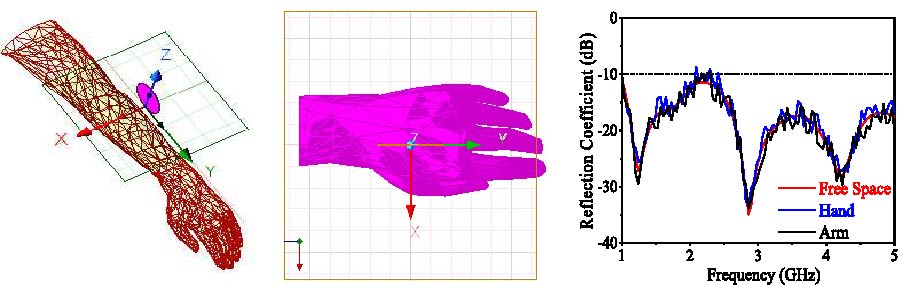
This paper presents a novel technique to detect tumors in human breasts using a single high-gain antenna and metasurface (MTS) layer. This design is realized to educate artificial neural networks (ANNs) and deliver productive output. We employ an ANN algorithm to classify detected tumors as healthy, benign, or malignant, based on the permittivity of the detected tissues. The method for finding and sorting things uses the fact of normal and abnormal biological tissues having different dielectric properties, which are based on the tissue's actual permittivity. The study focuses on demonstrating the effectiveness of the proposed technique for the detection and localization of malignant tumors within human breasts. The proposed Vivaldi antenna is made to work over 5 GHz to 9 GHz with a gain of 17.7 dBi at 6.5 GHz and a half-power beamwidth of 10°. The electromagnetic analysis is done using voxel datasets from human models. For this, we located the breast tissue with tumor inside phantom between the antenna structure and the MTS layer. The obtained numerical results from CST MWS are validated experimentally to be used to realize the training of the considered ANNs for tumor detection. The obtained results from the considered ANNs show minimal average errors and high-performance indices for fat thickness, tumor size, and tumor type. The achieved results are found to realize minimum error percentage rate below 2%. The adopted method is found to be very suitable for tumor detection and localization.
On the Performance of Metasurface Vivaldi Antenna in Breast Cancer Detection Using Artificial Neural Networks for Bio-signal Analysis
2025-03-26
PIER
Vol. 183, 9-20
Efficient Design of a Novel Multibeam Antenna Using Scalar Metasurfaces
Mounia Djoudi , Mohamed Lamine Tounsi , Julien Sarrazin and Massimiliano Casaletti
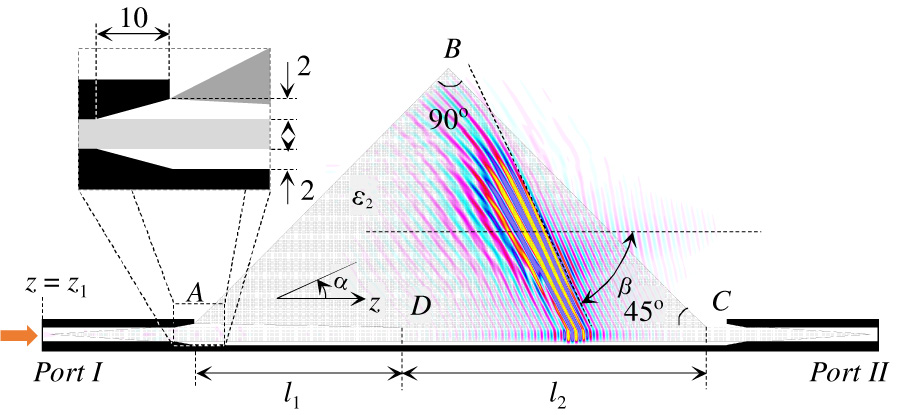
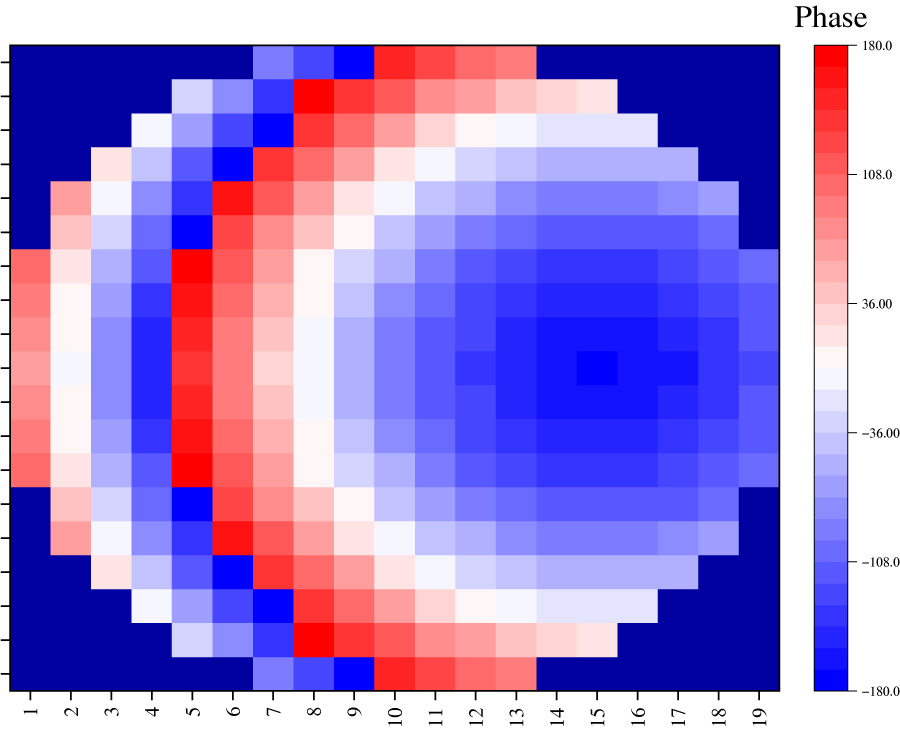
This paper presents a simple and innovative approach to the design of multibeam scalar metasurface antennas. The proposed method, based on the equivalent currents on the antenna aperture, allows beams to be radiated in arbitrary directions with the desired polarization. Unlike other solutions available in the literature, this approach uses scalar metasurfaces, which are much simpler to implement than tensor ones, and also do not require optimizations through ad hoc developed numerical analysis tools. Analytical design equations based on the physics are introduced, and a block diagram for the designs of such antennas is presented. Two antenna designs are presented, and the corresponding numerical results demonstrate the flexibility of the presented method. A prototype of a two-beam antenna with orthogonal circular polarizations, operating at 20 GHz, was fabricated and measured. These results confirm the effectiveness of scalar metasurfaces in creating multibeam patterns, paving the way for various applications in advanced communication systems.
Efficient Design of a Novel Multibeam Antenna Using Scalar Metasurfaces
2025-03-25
PIER
Vol. 182, 121-139
Contactless Electromagnetic Human Sensing for Biomedical and Healthcare Applications (Invited Review)
Xinyu Li , Long Chen , Zi Xuan Cai , Ke Zhan Zhao , Qian Ma , Jianwei You and Tie-Jun Cui
Contactless electromagnetic (EM) sensing has revolutionized biomedical and healthcare applications, enabling non-invasive, real-time monitoring and diagnosis of physiological conditions. Unlike traditional wearable or invasive sensing solutions leading to patient discomfort, contactless EM sensing provides a seamless and unobtrusive solution for continuous health monitoring. This review categorizes EM sensing into imaging-based and signal-based approaches, emphasizing recent technological advancements. Imagingbased sensing techniques provide high-resolution imaging of human anatomy for analysis and diagnosis, while signal-based methods infer physiological conditions through the variations in EM signals caused by human movements. Particularly, metamaterials have significantly enhanced contactless EM human sensing due to their superior ability to precisely manipulate EM waves. Metamaterialbased imaging, such as Magnetic Resonance Imaging (MRI), improves diagnostic accuracy by enhancing imaging contrast and reducing noise. Meanwhile, metamaterial-based sensing, exemplified by metasurface-enabled multi-person vital-sign detection, offers increased spatial resolution and signal-to-noise ratio, enabling reliable and efficient human health monitoring. Furthermore, the integration of metamaterials with artificial intelligence (AI) has transformed EM human sensing, enhancing its accuracy and adaptability across various environments. By highlighting recent progress and discussing future challenges, this review underscores the importance of further research to unlock the full potential of EM sensing in advancing biomedical and healthcare technologies.
Contactless Electromagnetic Human Sensing for Biomedical and Healthcare Applications (Invited Review)
2025-03-25
PIER C
Vol. 154, 67-75
A Fractal Approach to Investigate SAR of HMSA UWB Antenna for Medical Applications
Prasad A. Pathak , Sanjay Laxmikant Nalbalwar , Abhay E. Wagh and Jaswantsing L. Rajput
This paper introduces a hexagon-shaped microstrip fractal antenna over ultra-wideband frequencies for medical purposes when it is positioned in close proximity to the human body. A foam substrate of 2 mm thickness is used with copper as conducting material to investigate the on body performance. The proposed antenna of size 50×38×2 mm3 demonstrated broad frequency coverage from 2.05 to 14.75 GHz and achieved a peak gain of 7.07 dB at 2.5 GHz with maximum return loss of -28.06 dB. The addition of stub has resulted in good impedance matching and is ideal for real-time health tracking, body-centric communication. Its compact size, flexibility, and low-profile nature make it well suited for continuous use in medical environments. A detailed SAR evaluation is performed over a three-layer (Skin, fat, and muscle) phantom equivalent to human tissue for 1 and 10 grams. The on-body, 1 mm and 2 mm away context has been carried out and compared to validate SAR less than the safety threshold as prescribed by IEEE.
A Fractal Approach to Investigate SAR of HMSA UWB Antenna for Medical Applications
2025-03-25
PIER M
Vol. 133, 21-31
Dual-Circularly Polarized Miniaturized Metasurface-Loaded Rhombic Loop Broadband Antenna for Sub-6 GHz 5G RFEH Applications
Sanjay Kumar Sharma , Taimoor Khan and Hitendra Singh
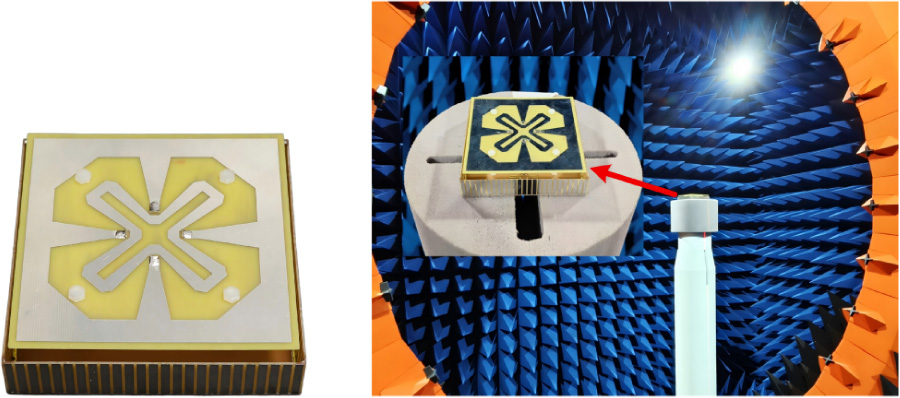
In this paper, a dual-circularly polarized (DCP), metasurface-loaded broadband antenna is designed to operate across frequencies covering the Sub-6 GHz 5G band for RF energy harvesting (RFEH) applications. The DCP antenna can collect RF energy both left-hand circularly polarized (LHCP) and right-hand circularly polarized (RHCP) waves by the same antenna. In this view, the antenna structure features two crossed metallic strips enclosed within symmetrically loaded metallic rhombic loops. Unequal strip widths in the rhombic loops enhance gain and improve impedance matching. A partial ground plane on the bottom layer fine-tunes the operating frequency, while the metasurface boosts antenna gain. A prototype with optimized dimensions was fabricated, and the results, both experimental and simulated, demonstrated excellent agreement.
Dual-circularly Polarized Miniaturized Metasurface-loaded Rhombic Loop Broadband Antenna for Sub-6 GHz 5G RFEH Applications
2025-03-24
PIER C
Vol. 154, 61-66
Evaluation Method of BTM Antenna Radiation Emission Environmental Effect Based on Similarity Theory
Rui Wang , Xiaolin Zhao , Jia Liu and Yongjian Zhou
In the pursuit of comprehensively assessing the radiation emission characteristics of the balise transmission module (BTM) antenna within diverse train environments, this paper puts forward a novel approach grounded in similarity theory. Herein, the ideal radiation emission field distribution of a single BTM antenna serves as the reference two-dimensional dataset. The radiation emission field distribution specific to a given train environment is adopted as the input data. By calculating the similarity coefficients, the extent of influence exerted by different train settings on the radiation emission traits of BTM antennas can be accurately gauged. In addition, 13 representative train environments have been meticulously measured and evaluated. The results reveal that the mean square error (MSE) of this evaluation method is less than 0.011. This compellingly demonstrates the effectiveness of the method's predictive capabilities. In light of the above-mentioned theoretical postulations and practical exigencies, the proposed method empowers us to effectively evaluate the impact of a particular environment on the radiation characteristics of the BTM antenna even prior to the installation of BTM equipment.
Evaluation Method of BTM Antenna Radiation Emission Environmental Effect Based on Similarity Theory
2025-03-24
PIER C
Vol. 154, 47-59
Biomedical Antenna Design Optimization Using Multi-Objective Inverse Neural Networks
Rania Ibtissam Ben Melouka , Yamina Tighilt , Chemseddine Zebiri , Kamil Karaçuha , Abdelhak Ferhat Hamida , Arwa Mashat and Nail Alaoui
A new approach based on an Inverse Artificial Neural Network (IANN) for Multi-Objective Antenna Design is presented in this paper. The network sets the geometrical variables as the output and uses three antenna performances as inputs. The proposed ANN model is structured into two distinct parts: In the first part, three autonomous branches establish the correlation among S-parameters, gain, specific absorption rate (SAR), and antenna geometric variables. The outputs of these branches are used as inputs in the second part to derive a distinctive solution for these geometric variables. The proposed antenna dimensions are 20x24x1.58 mm3, an ultra- wide-band of 4.1 GHz to 8.7 GHz is achieved in free space and on human tissue which coincides with the 5.8 GHz ISM band. Body temperature and specific absorption rate are simulated using the suggested rectangular patch antenna, The resulting optimized antenna holds promising potential for biomedical applications.
Biomedical Antenna Design Optimization Using Multi-objective Inverse Neural Networks
2025-03-24
PIER C
Vol. 154, 39-46
Two Methods for Convergence Determination of EMC Uncertainty Analysis Based on Variance and Failure Rate
Jinjun Bai , Shenghang Huo , Huiyan Hou , Xingfeng Cao and Yilai Ren
The uncertainty analysis method based on surrogate models is a current research topic in electromagnetic compatibility (EMC) simulation. However, research on its convergence determination remains underdeveloped. Based on the multi-surrogate model integration technique, this paper proposes two convergence determination methods: one based on variance and the other on failure rate. Researchers can select the appropriate convergence determination method based on specific application requirements, ultimately identifying the optimal number of sample points to ensure the accuracy and efficiency in EMC uncertainty analysis.
Two Methods for Convergence Determination of EMC Uncertainty Analysis Based on Variance and Failure Rate
2025-03-20
PIER C
Vol. 154, 31-38
Inverse S-Shaped Meander Line Antenna Loaded with Slotted Parasitic Patch and Defected Ground for Internet of Things (IoT) Applications
Sadman Sakib Prottoy , Md. Masud Rana , Md. Ariful Islam , Md. Arifuzzaman and Najmul Alam
This paper introduces a microstrip patch antenna operating at the 2.4 GHz ISM (Industrial, Scientific, and Medical) band, specifically suitable for Internet of Things (IoT) applications. The proposed antenna comprises a compact 40×10×1.6 mm3 design using an inverse S-shaped meander line, defected ground, and slotted parasitic patch to achieve enhanced bandwidth and very low return loss, contributing significantly to antenna design for IoT applications. FR-4 material is used as substrate for this antenna. The proposed antenna achieves a measured return loss of -24.67 dB at 2.4 GHz, with a bandwidth of 8.75%. Moreover, it provides a gain of 1.14 dB with an efficiency of 73.35%. Also, the designed antenna is integrated into a home automation system to verify its performance in IoT application, and the results are highly satisfactory.
Inverse S-shaped Meander Line Antenna  Loaded with Slotted Parasitic Patch and Defected Ground  for Internet of Things (IoT) Applications