Search Results(13784)

2025-04-22
PIER C
Vol. 154, 257-266
Human Action Recognition in Small-Sample Scenarios Based on Improved DCGAN and CNN Models
Cheng Luo , Qiusheng Li and Yingjie Zhong
Aiming at the prevalent issue of limited dataset scale in radar target micro-Doppler effect-based human action recognition, this study constructs an improved Deep Convolutional Generative Adversarial Network (DCGAN) for radar sample data augmentation and integrates it with a Convolutional Neural Network (CNN) for human action classification. First, a millimeter-wave radar data acquisition system was established to collect human action echo signals. The raw data were preprocessed to extract micro-Doppler features, forming a 2D micro-Doppler time-frequency spectrogram dataset. Second, modifications were made to the original DCGAN by replacing the optimizer of the discriminator network and introducing an L2 regularization term to enhance the quality of micro-Doppler time-frequency spectrogram generation. Finally, a CNN architecture was implemented to classify the augmented human action samples. Experimental results demonstrate that the enhanced DCGAN-CNN framework achieves robust human action classification performance, achieving an accuracy rate of up to 97.5%. This validates the superior capability of generative adversarial networks in few-shot scenarios for radar-based human action recognition.
Human Action Recognition in Small-sample Scenarios Based on Improved DCGAN and CNN Models
2025-04-22
PIER C
Vol. 154, 249-255
Measurement Matrix Optimization for Compressive Sensing-Based Method of Moments Based on Dynamic Extraction
Zhonggen Wang , Yang Liu and Wenyan Nie
To address the challenges in constructing the measurement matrix within the compressive sensing-based method of moments (CS-MoM) framework, this paper presents a novel dynamic extraction method based on row norm significance for impedance matrix compression. The proposed method first sorts the impedance matrix rows in descending order according to their row norm importance, followed by a dynamic extraction process that adapts the extraction density based on row significance. This strategy ensures dense extraction of high-importance rows to maintain matrix representativeness, while sparse extraction of low-importance rows preserves global structural coverage. Finally, through the validation of numerical results from three different computational models, it is demonstrated that the proposed method improves computational accuracy while ensuring computational efficiency compared to the uniform extraction-based novel CS-MoM method.
Measurement Matrix Optimization for Compressive Sensing-based Method of Moments Based on Dynamic Extraction
2025-04-21
PIER B
Vol. 111, 125-133
Optimizing Wireless Power Transfer Efficiency at 13.56 MHz Using Double Negative Metamaterials
Muhammad Sukriyllah Yusri , Mohamad Harris Misran , Maizatul Alice Meor Said , Mohd Azlishah Othman , Azahari Salleh , Ridza Azri Ramlee , Sharul Kamal Abdul Rahim and Mohd Zahid Idris
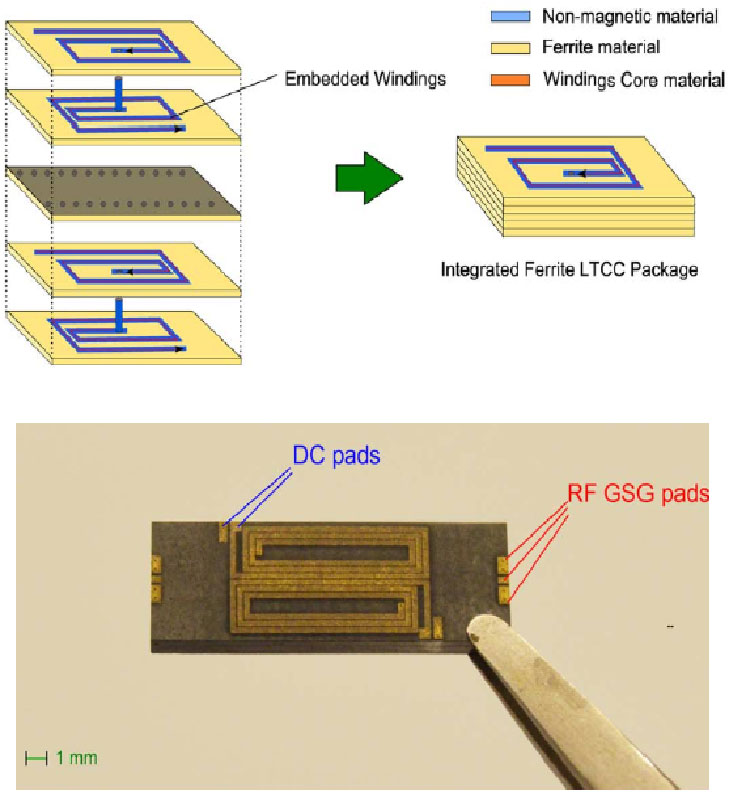
Recent advancements and innovations in wireless power transfer (WPT) technology have led to an increased demand for systems with high power transfer efficiency (PTE) and extended transmission distances to meet the needs of end users. However, many existing WPT systems suffer from limited PTE and restricted transmission ranges due to their reliance on inductive coupling. A significant drawback of inductive coupling is the sharp decline in PTE as the distance between the transmitter and receiver coils increases. To address these limitations, this study proposes the design of an inductive WPT system enhanced by the integration of metamaterials (MTMs) to improve PTE through magnetic field manipulation. By strategically positioning MTMs between the transmitter (Tx) and receiver (Rx) coils, the efficiency and range of WPT systems can be significantly enhanced. MTMs exhibit unique properties, such as negative refraction and evanescent wave amplification, which are particularly promising for improving PTE in WPT systems. At a separation distance of 70 mm, the implementation of negative permittivity MTMs and double-negative MTMs yields a remarkable improvement in PTE, achieving an increase of 180% compared to a conventional WPT system without MTM integration. Systems with MTM maintain better PTE at increasing lateral and angular misalignments, but at 90° misalignment, power transfer is almost impossible, even with MTM, due to complete misalignment of the fields.This study aims to provide a comprehensive analysis of the development and performance of negative permittivity and double-negative MTM-based WPT systems, offering critical insights into their potential for enhancing WPT efficiency and range.
Optimizing Wireless Power Transfer Efficiency at 13.56 MHz Using Double Negative Metamaterials
2025-04-19
PIER C
Vol. 154, 239-248
Multi-Objective Optimization Design of Surface-Mounted and Interior Hybrid Permanent Magnet Synchronous Motor
Aikang Xu , Chaozhi Huang , Bo Yi , Fangrong Wang and Zhifeng Liu
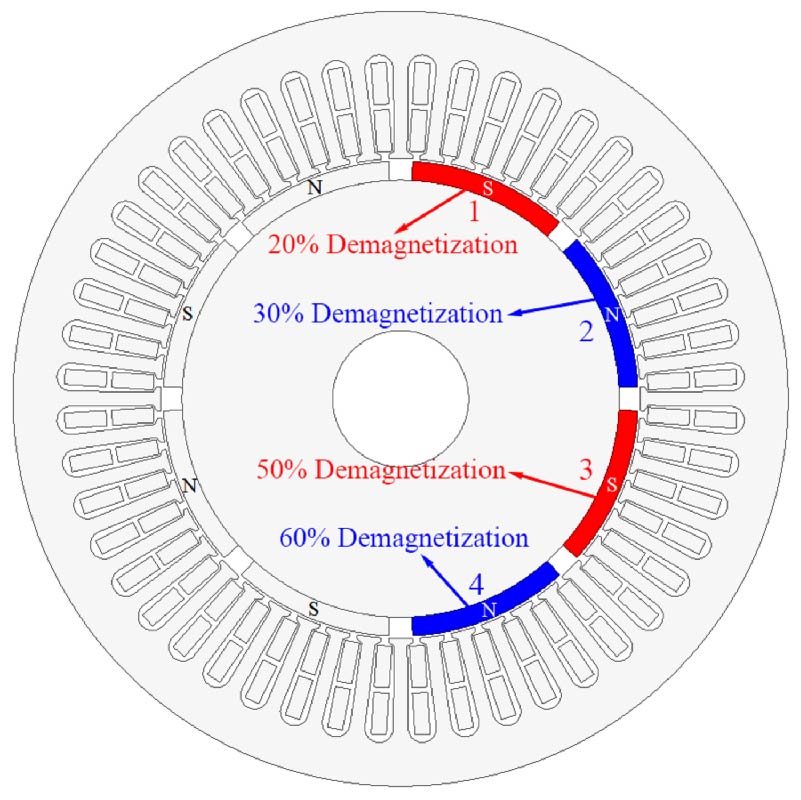
Aiming at the problems of low ability of speed control by means of magnetic field weakening of surface-mounted permanent magnet synchronous motor and large torque pulsation and more magnetic leakage of interior permanent magnet synchronous motor, a new structure of surface-mounted and interior hybrid permanent magnet synchronous motor is proposed. By establishing a finite element model of the motor and simulating it, and comparing the electromagnetic characteristic curves of the motor after simulation with those of the surface-mounted permanent magnet synchronous motor and interior permanent magnet synchronous motor, the results show that the motor proposed in this paper has the advantages of both good weak magnetic performance and higher torque output. In the optimization of surface-mounted and interior hybrid permanent magnet synchronous motor, with the goal of achieving high torque value, low torque ripple, and low cogging torque, a multi-objective optimization strategy combining genetic algorithm (GA) optimized back-propagation (BP) network and non-dominated sorting genetic algorithm (NSGA-II) is adopted. Firstly, a comprehensive sensitivity analysis of the degree of influence of the design variables on the optimization objective is carried out, based on which the parameter variables are stratified, and then an accurate prediction model of the parameter variables and optimization objective is established by using GA-BP. Finally, the multi-objective optimization is carried out by NSGA-II, and the optimal design is selected from the generated Pareto frontiers. After comparing the electromagnetic performances of the motor before and after optimization, the effectiveness as well as the superiority of the multi-objective optimization design method is verified.
Multi-objective Optimization Design of Surface-mounted and Interior Hybrid Permanent Magnet Synchronous Motor
2025-04-17
PIER C
Vol. 154, 229-238
Impact of Different Integration Times on Distributions of Rain Rates for Predictions of Rain Attenuation
Mohammad Rofiqul Hassan , Islam Md. Rafiqul , Mohamed Hadi Habaebi , Ahmad Zabidi Suriza , Khairayu Badron , Asma Ali Budalal and Md. Mahmudul Hasan Mahfuz
All wireless communication systems are moving towards higher and higher frequencies day by day which are severely attenuated by rains in outdoor environment. To design a reliable RF system, an accurate prediction method of rain attenuation is established and used globally based on local rain intensity measurement. Required rain intensity used for attenuation prediction is generally measured at a point with 1-min integration time or converted from higher integration time to 1-min. Recent measurements of rain intensity with a 10-second integration time indicate that intensity is not uniform over a 1-minute duration. Consequently, the statistics of rain intensity distribution and attenuation predictions are influenced by measurements with integration times shorter than 1 minute. It has been established that an integration time of 0.01% provides the optimal fit for actual rain rate data. This paper presents the rain intensity distributions from data measured with 2-min, 1-min, 30-sec, 20-sec, and 10-sec integration times, and it has impact on rain rate distributions as well as rain attenuation predictions.
Impact of Different Integration Times on Distributions of Rain Rates for Predictions of Rain Attenuation
2025-04-16
PIER C
Vol. 154, 221-228
A Dual-Port Millimeter-Wave Frequency Reconfigurable Array Antenna
Mingming Gao , Hang Yuan , Jingchang Nan , Hongliang Niu and Chang Ge
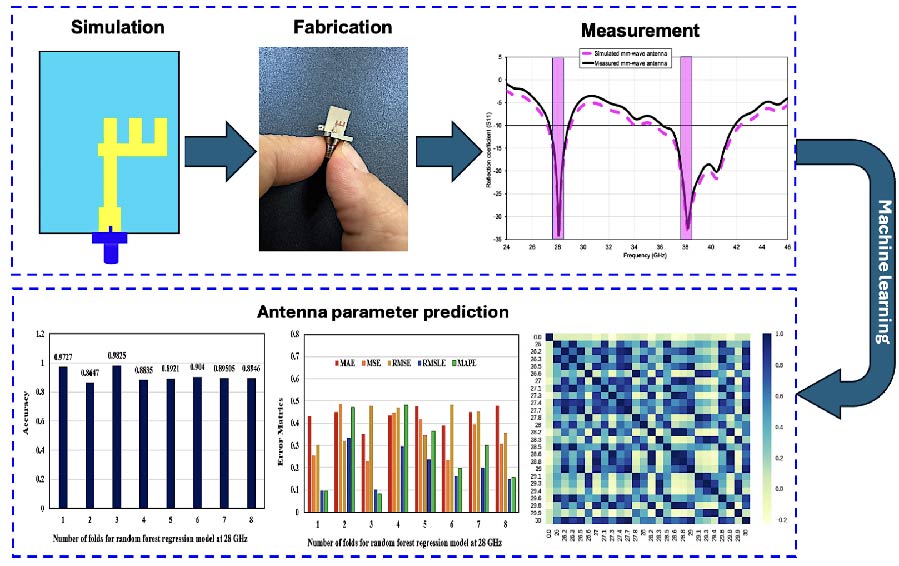
With the advancement of millimeter wave communication technology, reconfigurable antennas have garnered significant attention due to their adaptability. However, their radiation gain and sidelobe suppression performance are often constrained by factors such as diode package size and array scale. To address these challenges, this paper proposes a three-state frequency reconfigurable array antenna with high gain and low sidelobe characteristics, specifically designed to meet the demands of millimeter-wave communication. By optimizing the feed network and radiating element design, the proposed antenna achieves enhanced gain and improved sidelobe suppression. The design employs a dual-port feeding architecture that integrates a Taylor non-uniform amplitude distribution with a series-parallel hybrid feed network. This configuration ensures phase consistency while minimizing the number of diodes to just four, significantly reducing insertion loss and structural complexity. The antenna prototype is fabricated using standard printed circuit board (PCB) technology, with overall dimensions of 60.4 × 63 × 0.508 mm3. Measurement results indicate that the antenna exhibits an impedance bandwidth spanning from 27.5 GHz to 28.5 GHz and from 34.5 GHz to 35.5 GHz. The corresponding peak gains are 19.69 dBi and 19.51 dBi, with the sidelobe levels of are 18.93 dB and 18.03 dB respectively. The proposed antenna demonstrates excellent radiation characteristics and significantly enhanced radiation efficiency. With its simple structure, dual-band radiation capability, high gain, and low sidelobe levels, this antenna is highly suitable for millimeter-wave wireless communication systems. It offers a high-performance solution for multi-band communication in 5G/6G networks.
A Dual-port Millimeter-wave Frequency Reconfigurable Array Antenna
2025-04-16
PIER B
Vol. 111, 111-124
Implications of Secondary Electron Yield of the Material States Related to Spacecraft Life Span on Absolute Charging of Pyramidal Horn Antenna
Ashish Pandya , Nikhil Kothari , Rizwan Habibbhai Alad , Suryakant Gupta and Keyurkumar Patel
Accurately estimating spacecraft charging requires consideration of an appropriate secondary electron yield (SEY) of spacecraft materials. SEY is influenced by factors such as surface roughness, oxidation, and contamination. Using SEY values for materials not representative of actual spacecraft conditions can lead to significantly inaccurate spacecraft charging predictions. Against the use of default values for smooth and clean elemental Al, this work examines the impact of SEY of aluminum (Al) in its relevant states over a spacecraft's lifespan in favour of the reliable estimation of absolute charging. It specifically focuses on the Impact of SEY on the absolute charging of a pyramidal horn antenna, one of the essential spacecraft modules. For modeling of charging, the antennas are assumed to be in appropriate states of Al, i.e. oxidized Al for the beginning of life and Al with thin Carbon(C) - rich contamination for the end-of-life of a spacecraft. The observed deviation in absolute charging will determine a more realistic approach to protect a spacecraft against Electrostatic Discharge (ESD).
Implications of Secondary Electron Yield of the Material States Related to Spacecraft Life Span on Absolute Charging of Pyramidal Horn Antenna
2025-04-15
PIER C
Vol. 154, 213-219
An Ultra-Wideband All-Metal 45° Slant-Polarized 3D Vivaldi Antenna Array
Xuebo Xu , Qiulin Huang , Shunfeng Cao , Lina Yang and Guidong Li
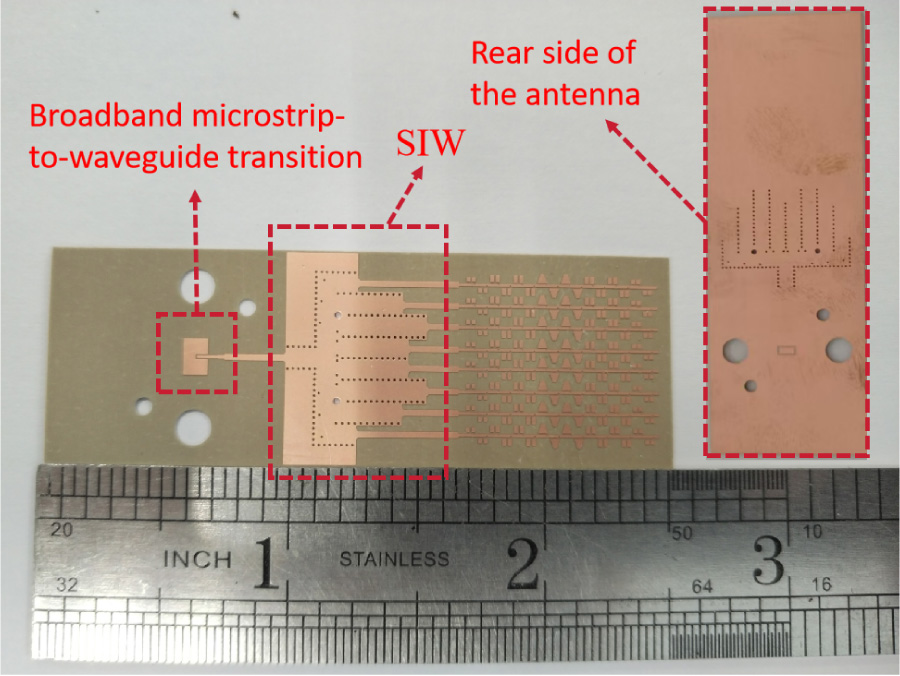
Conventionally designed Vivaldi antennas are predominantly fabricated using PCB technology, which limits their long-term applicability in high-power systems. This paper proposes a three-dimensional all-metal slant 45°-polarized Vivaldi antenna suitable for high-power applications. The design incorporates a resonant cavity and optimized slot-line parameters to broaden the operational bandwidth. A 16 × 16 array configuration was developed, with parasitic elements integrated to suppress edge effects. The optimal prototype was fabricated and experimentally validated. Simulation and measurement results demonstrate that the proposed all-metal Vivaldi antenna achieves a voltage standing wave ratio (VSWR) below 2.5 across a frequency bandwidth of 6-18 GHz, along with a maximum beam scanning angle of 48°. This paper demonstrates a practical solution for balancing wideband performance (6-18 GHz) with high-power handling capabilities in phased array applications.
An Ultra-wideband All-metal 45° Slant-polarized 3D Vivaldi Antenna Array
2025-04-15
PIER B
Vol. 111, 99-110
Precision Measurement of Thin Dielectric Coatings on CFRP Composites Using Microwave-Based CSRR Sensors for Aerospace Applications
Arunachalam Ambika , Chandrapragasam Tharini , Paransree Chakraborty , Fateh Lal Lohar , S. Sadhish Prabhu , Kanakam Kumaran Arjun and Kader Meera John Mohamed Muzzammil
This project proposal addresses the critical need for precise measurement of thin dielectric coatings, which are essential in industries such as aviation, aerospace, and automotive for enhancing structural integrity and protecting against environmental factors. Manual application of these coatings often results in uneven thickness, necessitating a streamlined measurement method. Leveraging advancements in microwave technology, particularly the use of complementary split ring resonators (CSRR), this project introduces a novel measurement approach for coatings on Carbon Fiber Reinforced Polymer (CFRP) composites. By employing electric field coupling of a leaky wave antenna between a cylindrical dielectricloaded sensor and the coatings on CFRP through a double circular ring slot, the method identifies a correlation between resonance frequency and coating thickness. The cavity is integrated with a Vector Network Analyzer (VNA) to detect S11 peaks at the resonance frequency, enabling precise measurement. Initial design comparisons using CST software resulted in a sensor antenna with optimal impedance matching and sensitivity, which was subsequently fabricated and tested in a microwave lab. Remaining objectives include developing a 4th-order regression model to predict coating thickness ranging from 0 to 2 mm for Polyethylene Terephthalate (PET) on CFRP composites and validating the method for industrial applications in aero-engine parts, gas turbines, and automotive structures. Future enhancements will focus on refining the technique for very thin coatings and exploring drone-based inspection methods for comprehensive aircraft analysis. This innovative approach promises a reliable solution for measuring coating thickness, which is crucial for maintaining the performance and safety of advanced composite materials.
Precision Measurement of Thin Dielectric Coatings on CFRP Composites Using Microwave-based CSRR Sensors for Aerospace Applications
2025-04-14
PIER C
Vol. 154, 203-211
Graphene as a Phase Shifter Element for Reflectarray Beam-Steering at THz Frequencies
Suhail Asghar Qureshi , Muhammad Ramlee Kamarudin , Yoshihide Yamada , Muhammad Inam Abbasi , Muhammad Hashim Dahri , Zuhairiah Zainal Abidin and Nordin Ramli
In Terahertz (THz) frequencies, using traditional phase delay components is extremely difficult and graphene has the potential to be used in THz. Graphene is typically used at less than λ/16 dimensions. However, it has the potential to change the properties of a unit cell in reflectarray and act as an electronic phase-shifting element at λ/2 dimensions. Therefore, this paper proposes the design and application of graphene in unit cells to develop reflectarray beam steering. A metal-graphene hybrid structure is proposed in this work for designing the reconfigurable reflectarray antenna (RRA). The unit cell operating at 1.025 THz frequency, consists of a thin graphene sheet as a phase-shifting element inside a golden ring, where graphene is used as the phase delay component. The variation in the chemical potential of graphene leads to changes in the reflection coefficient phase for each unit cell. A circular aperture array comprising a maximum of 489 elements shows a total of 80° beam-steering with side-lobe levels of less than -10 dB and a maximum gain of over 20 dBi. The -1 dB bandwidth of 12% was obtained at the centre frequency of 1025 GHz between 950 GHz and 1075 GHz. The aperture efficiency of the designed RRA is found to be 11%. This type of antenna could be an advent for the development of terahertz Reflecting Intelligent Surface (RIS).
Graphene as a Phase Shifter Element for Reflectarray Beam-steering at THz Frequencies
2025-04-14
PIER B
Vol. 111, 83-98
Multi-Layer Square Coil-Based Wireless Power Transfer for Biomedical Implants
Hala Kamal Abduljaleel , Sadik Kamel Gharghan and Ahmed Jamal Abdullah Al-Gburi
Biomedical devices (BDs) monitor vital signs and diagnose illnesses to improve patients' lives. These BDs rely on battery power, which is often short-lasting. To address this limitation, wireless power transfer (WPT) has been proposed in research as a solution for wirelessly recharging BD batteries. This paper aims to enhance WPT in a nonradiative near-field system for implanted BDs by designing and fabricating a triple-layer receiver coil operating in the 13.56 MHz ISM band. First, three square coil models --- single-layer, double-layer, and triple-layer—were developed and simulated using HFSS ANSYS software. The coil models were tested at air gaps ranging from 2 to 40 mm between the transmitter and receiver coils. The single-layer and double-layer coils, each with a receiver coil size of 10×10×0.5 mm, achieved transfer efficiencies of 76.19% and 80.03%, respectively, at an air gap of 10 mm. In contrast, the triple-layer coil, designed with a receiver coil size of 10×10×1.5 mm, attained a transfer efficiency of 87.83% at the same air gap. Additionally, the study analyzed the specific absorption rate (SAR), which was measured at 0.1823 W/kg for 1 g of tissue. Second, the triple-layer square coil was validated through fabrication and experimental testing in different environments, including air, acrylic, and biological tissue (beef). The results demonstrated transfer efficiencies of 80%, 77%, and 63% in air, acrylic, and tissue, respectively. Moreover, the experimental results closely matched the simulation ones, confirming that the triple-layer square coil model accurately represents real-world performance.
Multi-layer Square Coil-based Wireless Power Transfer for Biomedical Implants
2025-04-13
PIER C
Vol. 154, 191-201
Photovoltaic Power Prediction Based on k-Means++-BiLSTM-Transformer
Jianwei Liang , Liying Yin , Sichao Li , Xiubin Zhu , Zhangsheng Liu and Yanli Xin
The inherent volatility and uncertainty associated with photovoltaic (PV) power generation present significant challenges to maintaining grid stability. As the level of PV integration into the grid continues to rise, the importance of accurately predicting its power output becomes increasingly critical. This study presents a new PV power prediction model utilizing the K-means++-BiLSTM-Transformer framework. Initially, the Pearson correlation coefficient is computed to determine the key factors influencing the prediction of PV power significantly. Following this, the K-means++ clustering algorithm is applied to analyze historical power data, categorizing it into three distinct groups corresponding to different weather conditions. Finally, the BiLSTM-Transformer architecture is employed to develop a power output prediction model tailored for the three weather scenarios. The prediction model is subsequently optimized using Bayesian methods to determine the optimal model configuration for each specific weather condition. Experimental findings demonstrate that the proposed K-means++-BiLSTM-Transformer similar day PV power prediction model exhibits superior accuracy, enhanced generalization, and increased robustness compared to alternative prediction models.
Photovoltaic Power Prediction Based on K-means++-BiLSTM-Transformer
2025-04-12
PIER C
Vol. 154, 183-190
SAF-SFT-SRAF-Based Signal Coherent Integration Method for High-Speed Target Detecting in Airborne Radar
Wenwen Xu , Yuhang Wang , Jidan Huang , Hao Wang and Jianyin Cao
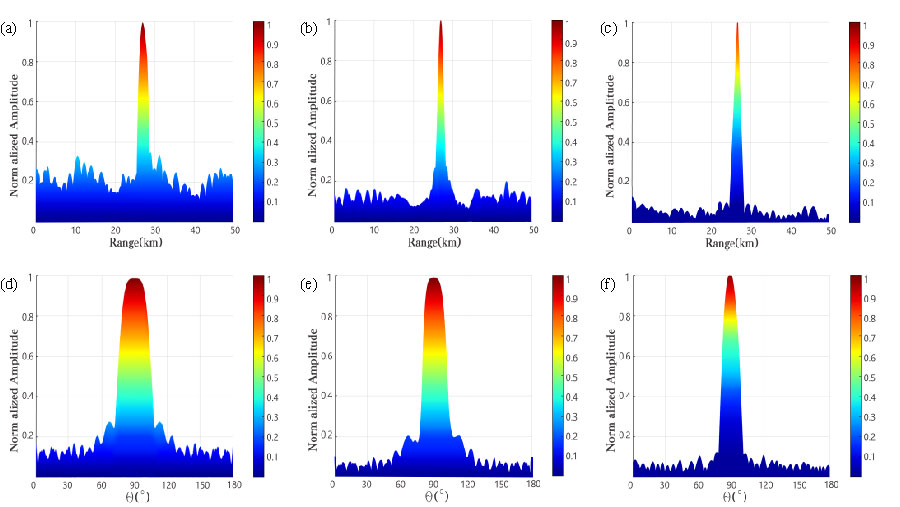
In radar target detection, long-term coherent integration (LTCI) is widely employed to improve the signal-to-noise ratio (SNR) and enhance the detection capability for weak and small targets. Meanwhile, the airborne radar, with advantages of wide-area surveillance, high sensitivity, and strong maneuver ability, demonstrates significant superiority in detecting high-speed targets. However, during the flight of the airborne radar platform, motion errors and the relative motion of high-speed targets can cause significant range migration (RM) and Doppler frequency migration (DFM), degrading coherent integration performance. To this end, this paper proposes a coherent integration method for high-speed target in airborne radar based on the symmetric autocorrelation function, scaled Fourier transform, and sequence reversing autocorrelation function (SAF-SFT-SRAF). Detailed comparisons between SAF-SFT-SRAF and several typical methods demonstrate that the proposed method effectively balances computational complexity and detection performance.
SAF-SFT-SRAF-Based Signal Coherent Integration Method for High-speed Target Detecting in Airborne Radar
2025-04-12
PIER M
Vol. 133, 43-50
Towards Biosensing and Bioimaging Applications of Gradient Surface Electromagnetic Waves
Igor I. Smolyaninov and Quirino Balzano
Recently it was demonstrated that a new type of radio frequency surface electromagnetic wave appears on the surface of a lossy conductive medium in the presence of dielectric permittivity gradients. We present theoretical and experimental study of gradient surface electromagnetic wave (GSEW) excitation and propagation on such conductive surfaces as various metals, water, and human skin. The geometry of our experiments is designed to emulate various potential biosensing and bioimaging applications of GSEW. We demonstrate the capability of GSEW-based techniques to detect the presence of metallic and dielectric objects underwater in close proximity to the water surface. Since the dielectric properties of the human body are similar to those of water, we anticipate that the developed GSEW technique may supplement x-ray and ultrasound-based biosensing and bioimaging.
Towards Biosensing and Bioimaging Applications of Gradient Surface Electromagnetic Waves
2025-04-09
PIER C
Vol. 154, 175-182
Robust Mode Matching of Waveguide Discontinuities by Minimizing Mean-Squared Error
James R. Nagel and Karl Warnick
The Mode-Matching Method (MMM) is a numerical technique that can be used to calculate electromagnetic wave propagation through a stepped waveguide junction. We present a generalized approach to mode-matching that works by minimizing the mean-squared error (MSE) of electromagnetic boundary conditions. The process begins by expressing each component of the electromagnetic field profile as a finite summation of modes within each waveguide region. Given some arbitrary pair of mode profiles, we next calculate the squared-error of each boundary condition along the entire span of the junction. The squared error is then averaged across the junction, resulting in a single matrix-vector equation for MSE. That equation is finally differentiated with respect to the mode amplitudes, and the result is then set to zero. The solution is thus a field profile in each waveguide region that minimizes the MSE of electromagnetic boundary conditions.
Robust Mode Matching of Waveguide Discontinuities by Minimizing Mean-squared Error
2025-04-09
PIER C
Vol. 154, 169-174
A Wideband Quasi-Isotropic Biconical Antenna with Plano-Concave Lens for IoT Based Smart Applications
Rinkee Chopra
A wideband quasi-isotropic planar biconical antenna with plano-concave lens is designed for IoT applications. The antenna is realized using a broadband planar biconical dipole and a pair of plano-concave lenses. The cones of biconical dipole are placed at 70˚ angular separation for least gain deviation (GD) across the radiating sphere. A pair of plano-concave lenses suppress GD in elevation plane and improve the impedance matching bandwidth (IBW). Different design parameters are analyzed for wide IBW and 7 dB gain deviation bandwidth (GBW). The designed antenna dimensions are 0.25λo × 0.3λo × 0.004λo at 2.35 GHz. The proposed antenna provides 71.6% (1.51-3.2 GHz) IBW and 73.6% (1.5-3.25 GHz) 7 dB GBW. Experimental results are in good agreement with the simulated ones. The proposed antenna is suitable for IoT based smart applications, energy harvesting and 5G cellular communication.
A Wideband Quasi-isotropic Biconical Antenna with Plano-concave Lens for IoT Based Smart Applications
2025-04-09
PIER C
Vol. 154, 159-167
Design of a Triple-Band Metamaterial Bandpass Filter Utilizing Modified-Minkowski Fractal Geometry
Hayder S. Ahmed and Aqiel N. Almamori
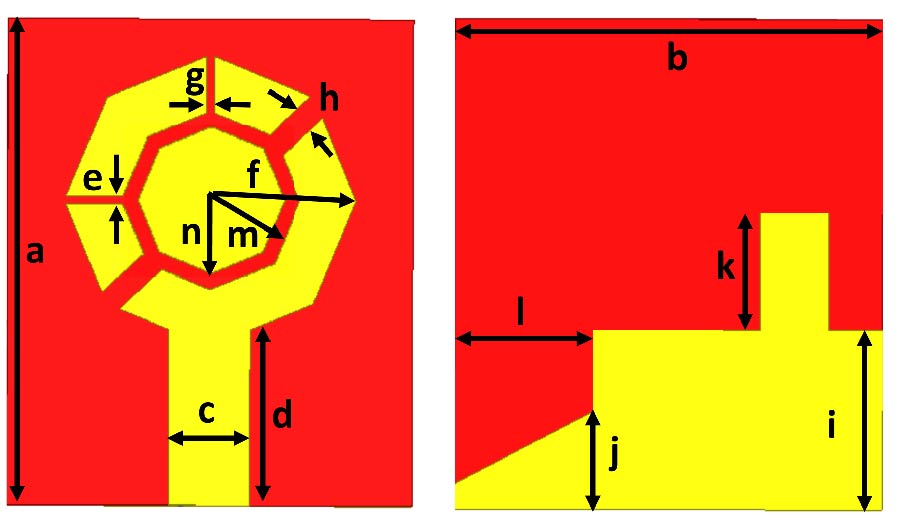
In this paper, a triple-band bandpass filter based on metamaterials and fractal geometry is proposed. The proposed filter is designed based on three concepts. First, Transmission Lines (TLs) function both as feed lines and as resonators at high frequencies. Second, metamaterials open loop 0th iteration Modified-Minkowski resonators are employed for the middle-frequency band. Third, at a lower frequency, in the 1st iteration, Modified-Minkowski resonators are introduced in the space between TLs to optimize space utilization. The proposed filter has been designed at center frequencies 11 GHz, 6 GHz, and 5 GHz by using Rogers RO 4003 substrate with a thickness of 1.5 mm and dielectric constant of 3.5 resulting in an overall size of 32.2 mm × 20.6 mm. The design simulation is performed using CST microwave studio. To validate the results, the proposed filter has been fabricated. A strong correlation between the measured and simulated results confirms the effectiveness of the design. The proposed filter has three bands at 5 GHz, 6 GHz, and 11 GHz with corresponding S21 values of -0.39 dB, -1 dB, and -0.26 dB and a size reduction of 31% compared with conventional Dual-Band Bandpass Filter for wireless applications.
Design of a Triple-band Metamaterial Bandpass Filter Utilizing Modified-Minkowski Fractal Geometry
2025-04-07
PIER C
Vol. 154, 147-158
Eight-Element Dual-Band MIMO Antenna for 5G Smartphone
Yingjian Hou , Zhonggen Wang , Ming Yang and Jinzhi Zhou
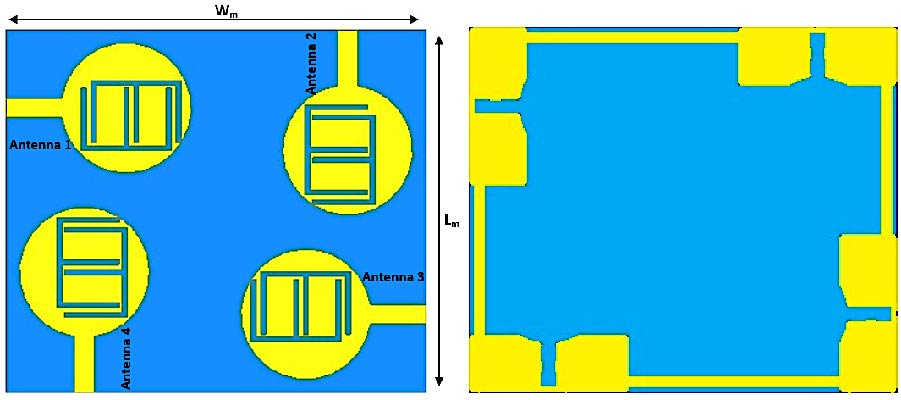
This study proposes a dual-band MIMO antenna with high element isolation for 5G smartphones. The antenna unit consists of stacked F-shaped radiators, perpendicular to the motherboard, printed on the outer side frames. The antenna feeder is shaped like the Chinese character ``正'' and is printed on the inner surface of the side substrate. Based on this design, eight F-shaped antenna units are placed at the ends of two long side panels, forming an 8-element MIMO antenna system. High isolation in the operating bands is achieved using ground stubs and defective ground structures (DGSs). All radiating elements are etched on a low-cost FR4 substrate with a total size of 150×75×6.8 mm3. The antenna system is modeled and measured to operate in the N78 (3.3-3.8 GHz), N79 (4.4-5.0 GHz), and WLAN 5 GHz bands (5.15-5.85 GHz). The isolation between neighboring antenna units is greater than 15 dB, with total efficiencies ranging from 62% to 79%, and a measured envelope correlation coefficient (ECC) of less than 0.01. Additionally, the antenna performance in one-handed and two-handed holding scenarios has been evaluated, showing favorable results. These findings demonstrate that the proposed antenna system is well suited for MIMO applications in 5G smartphones.
Eight-Element Dual-band MIMO Antenna for 5G Smartphone
2025-04-07
PIER B
Vol. 111, 71-81
Compact Physical and Electrical Patch Antenna Engineered for 5G Mobile Devices and Multiband Systems
Nazrin Haziq Jemaludin , Ahmed Jamal Abdullah Al-Gburi , Muhannad Kaml Abdulhameed , Sarah Rafil Hashim , Dunya Zeki Mohammed , Tale Saeidi , Anupma Gupta , Zahriladha Zakaria , Nurhayati Nurhayati and Rania Hamdy Elabd
This article presents a compact multi-band microstrip patch antenna designed for 5G, Ku, and K-band applications. The antenna operates at 3.5 GHz and 15.6 GHz, supporting 5G communications (3.3-3.6 GHz) and satellite applications (15.6-20 GHz). Fabricated on an FR4 substrate (εr = 4.3, tanδ = 0.025) with dimensions of 13 × 10 × 1.6 mm3 (0.15λo × 0.12λo × 0.02λo), where λo represents the wavelength at the lower frequency of 3.5 GHz, the antenna achieves return losses of -19 dB and -39 dB at the respective frequencies, with peak gains of -2.8 dBi and 3.7 dBi. The design's consistency is validated through a comparative analysis with recent studies. The antenna was placed near the ear and mouth area of a human head phantom model to perform a comprehensive SAR analysis. SAR analysis confirms compliance with safety standards, maintaining SAR levels below 2 W/kg. The proposed design demonstrates promising performance for modern communication systems.
Compact Physical and Electrical Patch Antenna Engineered for 5G Mobile Devices and Multiband Systems
2025-04-06
PIER C
Vol. 154, 139-145
Investigation of Electromagnetic Interference Shielding Properties in PVDF-PVP Composite Films Reinforced with VGCNF
Harsh Mishra , Nikhil Negi , Vikas Rathi , Brijesh Prasad and Varun Mishra
This paper presents a comparative study of electromagnetic interference (EMI) shielding properties of PVDF-PVP composite film with VGCNF as a conducting filler. The films were fabricated using solvent casting and further tested for their mechanical and thermal properties. The process was followed by a comparative analysis of shielding effectiveness calculated via dielectric parameters against the shielding measured through scattering parameters with the help of a network analyzer. Scanning Electron Microscopy was also done to better understand the morphological structure of the films. The film, with a thickness of around 0.18 mm, showcased shielding effectiveness within 25 dB-34 dB across a frequency band of 12 GHz to 18 GHz while being flexible and mechanically durable.
Investigation of Electromagnetic Interference Shielding Properties in PVDF-PVP Composite Films Reinforced with VGCNF