Search Results(13784)

2025-05-03
PIER M
Vol. 133, 83-90
SIW-Based Compact Four-Port MIMO Antenna with Enhanced Isolation for Wireless Communications
Vudattu Jaya Prakash , Vutukuri Leela Satyanarayana , Neelaveni Ammal Murugan , Inakoti Ramesh Raja , Krishna Dharavathu and Shaik Mahaboob Subani
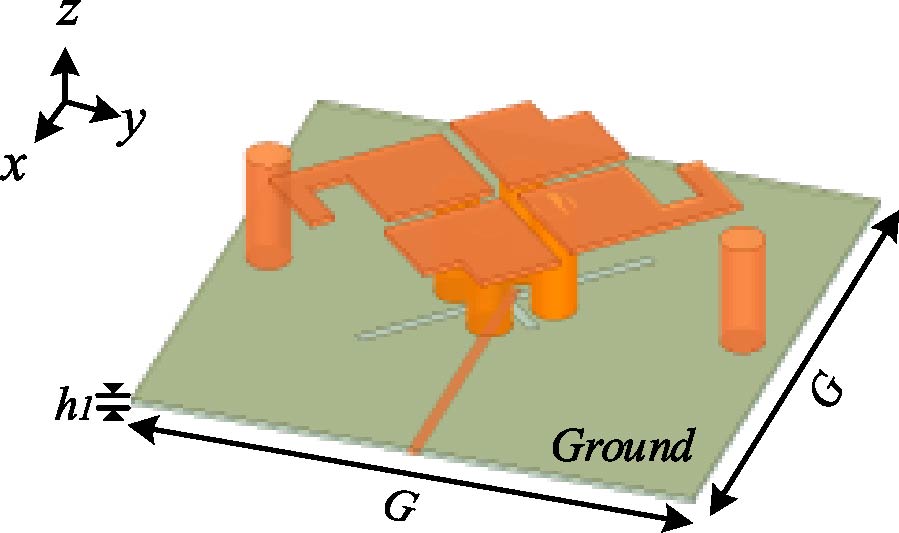
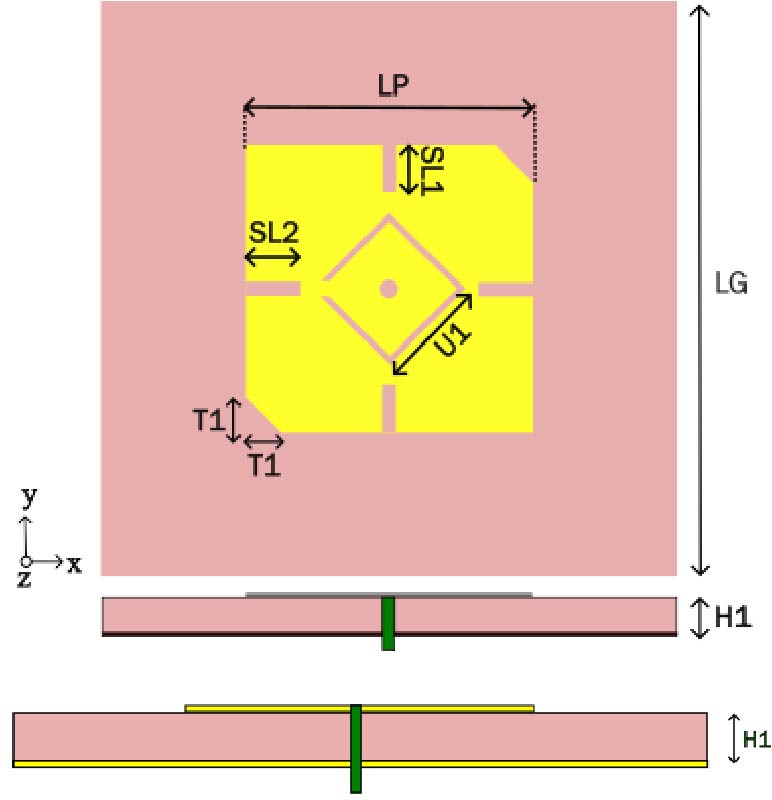
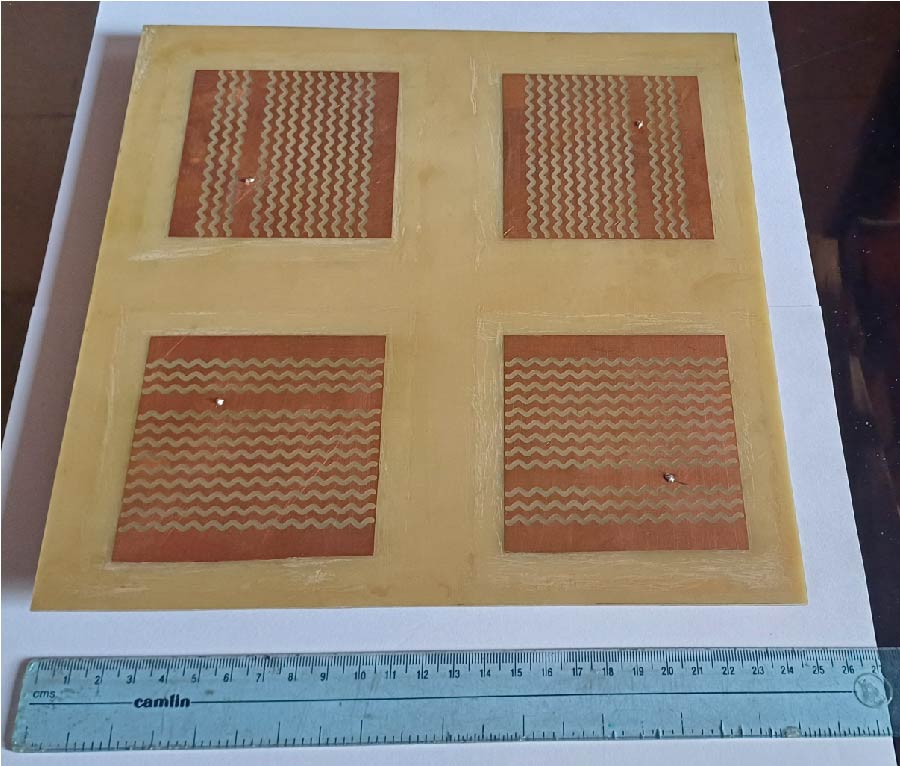
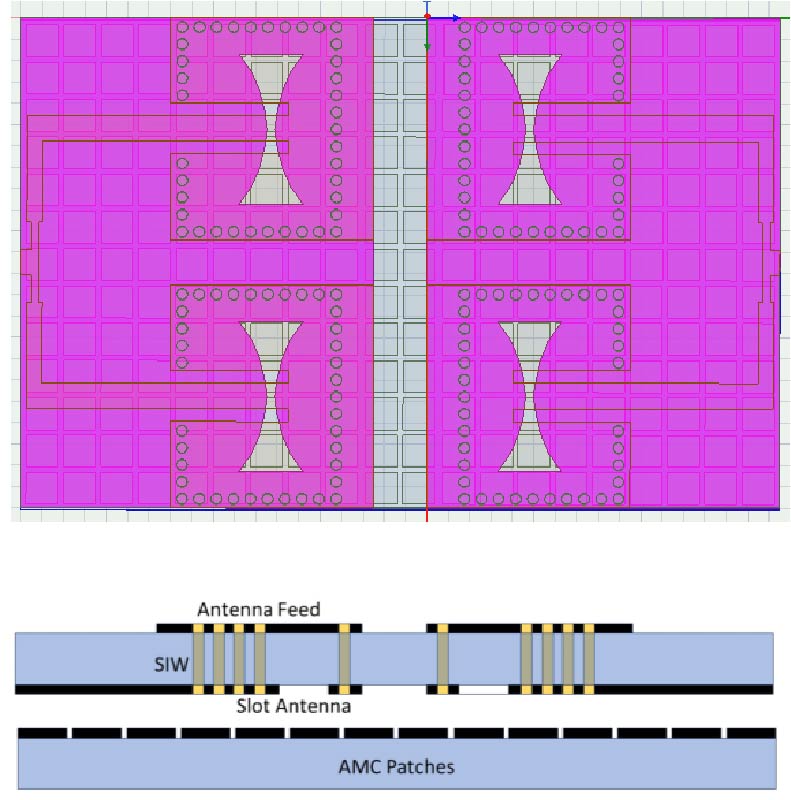
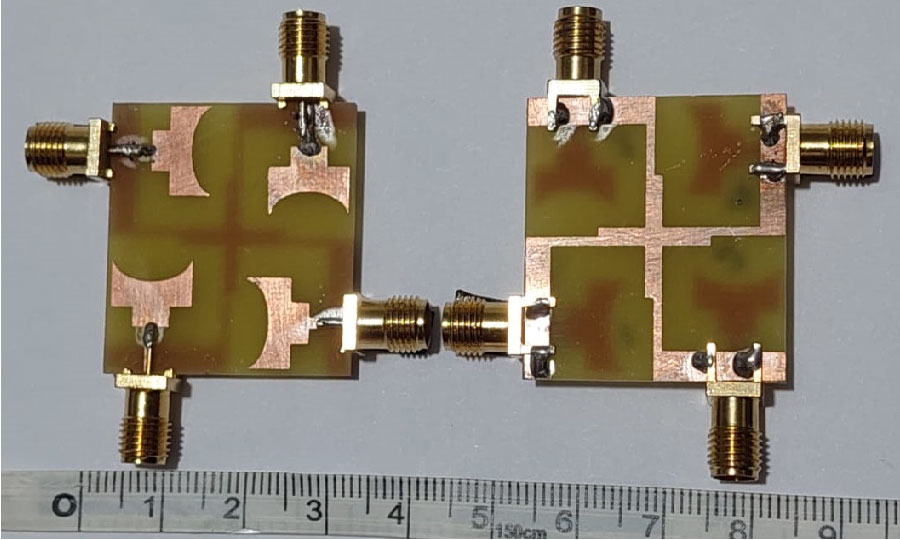
This paper presents a four-port quarter-mode substrate integrated waveguide (QMSIW) MIMO antenna designed for 2.1 GHz wireless applications. The antenna employs orthogonally positioned complementary square-split ring resonator slots to achieve substantial miniaturization. Additionally, mutual coupling between the antenna elements is effectively minimized by incorporating cross-shaped slots between them, enhancing overall performance. The proposed four-port MIMO antenna achieves high isolation of 40 dB and features a compact electrical size of 0.19λ0 × 0.19λ0. The antenna demonstrates outstanding MIMO performance, with simulated and measured gains of 5.32 dBi and 5.44 dBi, respectively. Its efficiency is further supported by key performance metrics, including a low envelope correlation coefficient (ECC) of 0.0841 and a high diversity gain (DG) of 9.22 dB, ensuring enhanced signal reliability and reduced interference. With its compact structure, excellent isolation, and strong diversity performance, the proposed antenna serves as a highly suitable candidate for directional Wi-Fi applications.
SIW-based Compact Four-port MIMO Antenna with Enhanced Isolation for Wireless Communications
2025-05-02
PIER C
Vol. 155, 103-110
A Compact Quintuple-Mode Wideband Bandpass Filter Using Disk-Loaded Feeding Lines in a Single Cylindrical Cavity
Maha H. Elfeshawy , Hany Fathy Hammad and Yasmine Abdalla Zaghloul
This work presents a quintuple-mode wideband bandpass filter utilizing a cylinder cavity loaded with a metallic perturbation on each base and a gap between them. The cylindrical cavity is fed with two inline disk-loaded feeding lines placed in the middle of the cavity wall. Two inline shorting pins are placed orthogonally in the same feeding lines plane. The five resonant modes are: TM011, TE111, the degenerate modes of TE211 and quasi-TE311 excited by the pair of disk-loaded feeding lines and shorting pins. This combination allows the generation of two transmission zeros (TZs) out of the passband. The mode analysis and geometric configuration are well studied and presented in this work. The results of the quintuple-mode filter demonstrated a fractional bandwidth of 66.87% at a central frequency of 3.69 GHz with insertion loss 0.18 dB and return loss higher than 19.4 dB. The coupling matrix of the proposed filter is synthesized as a five-pole Chebyshev filter showing close alignment with the simulated results. Finally, the proposed bandpass filter is fabricated and measured for comparison. Close agreement is achieved between the simulated and measured results.
A Compact Quintuple-mode Wideband Bandpass Filter Using Disk-loaded Feeding Lines in a Single Cylindrical Cavity
2025-04-29
PIER C
Vol. 155, 95-102
Reducing the Effect of Crosstalk in WDM-VLC Systems
Huda Faris Younus and Safwan Hafeedh Younu
Due to the rapid development of the internet and mobile communication needs, visible light communication (VLC) has become an attractive technique for indoor wireless communication. This research investigates how data rates in VLC systems are affected by the wavelength division multiplexing (WDM) technology. The WDM technique allows different data streams to be transmitted simultaneously over different wavelengths in the same optical channel. In WDM-VLC systems, the interference between channels known as crosstalk is a significant problem that may reduce the quality of communication. By optimizing the field of view (FOV) of the optical receiver and changing system parameters to reduce interference, this research resolves the crosstalk issue. With attention to the signal-to-interference-plus-noise ratio (SINR) and channel bandwidth, we use a simulated indoor environment to examine how line of sight (LOS) and non-line of sight (NLOS) elements affect the system performance. The results show that reducing the FOV leads to reducing the crosstalk and significantly enhancing data speeds and reliability in the system. Additionally, a review of practical challenges related to the implementation of different FOV lenses is presented, along with a comparative assessment of complexity, scalability, and cost in relation to present solutions. The results offer important updated knowledge on WDM's capabilities in VLC systems, enabling rapid transfer of data and efficient lighting for smart interior spaces.
Reducing the Effect of Crosstalk in WDM-VLC Systems
2025-04-29
PIER C
Vol. 155, 85-93
Optimization Design of Axial Flux Permanent Magnet Synchronous Motor Based on Multi-Objective Genetic Algorithm
Huijun Liu
As a new type of motor, axial flux permanent magnet synchronous motor has the advantages of compact structure and high power density. It shows good application prospects in new energy vehicles, unmanned aerial vehicles, and other fields. However, axial flux permanent magnet synchronous motor needs to consider the balance of multiple objectives during the design process, which makes its optimal design a complex multi-objective optimization problem. Therefore, the study proposes a motor optimization method based on multi-objective genetic algorithm. The method optimizes the rotor and stator parameters of the motor by establishing an analytical model of the motor's magnetic field and combining it with a multi-objective genetic algorithm. The experimental results indicated that the optimized motor with multi-objective genetic algorithm reached 92% in terms of efficiency, 25% in terms of power density; energy consumption was reduced to 2.5 kWh; failure rate was reduced to 1.5%; and noise level was reduced to 65 dB. In addition, the multi-objective genetic algorithm significantly improved the control stability index, which increased to 98%, indicating a more stable motor response under varying loads. The disturbance rejection capability was enhanced to 99%, demonstrating strong resistance to external noise and parameter fluctuations. Furthermore, the system response frequency reached 100 Hz, reflecting a faster dynamic response to input variations. It is indicated that the optimization method based on multi-objective genetic algorithm can effectively enhance the comprehensive performance of axial flux permanent magnet synchronous motor and significantly improve its competitiveness in high power density and high efficiency applications.
Optimization Design of Axial Flux Permanent Magnet Synchronous Motor Based on Multi-objective Genetic Algorithm
2025-04-29
PIER C
Vol. 155, 75-83
Investigation of Step-Skew Rotor on Electromagnetic Force and Vibration in Intergral-Slot IPMSM Driven with SVPWM Technique
Zhi Xu , Shunqing Xu , Dandan Liu and Zhishu Yao
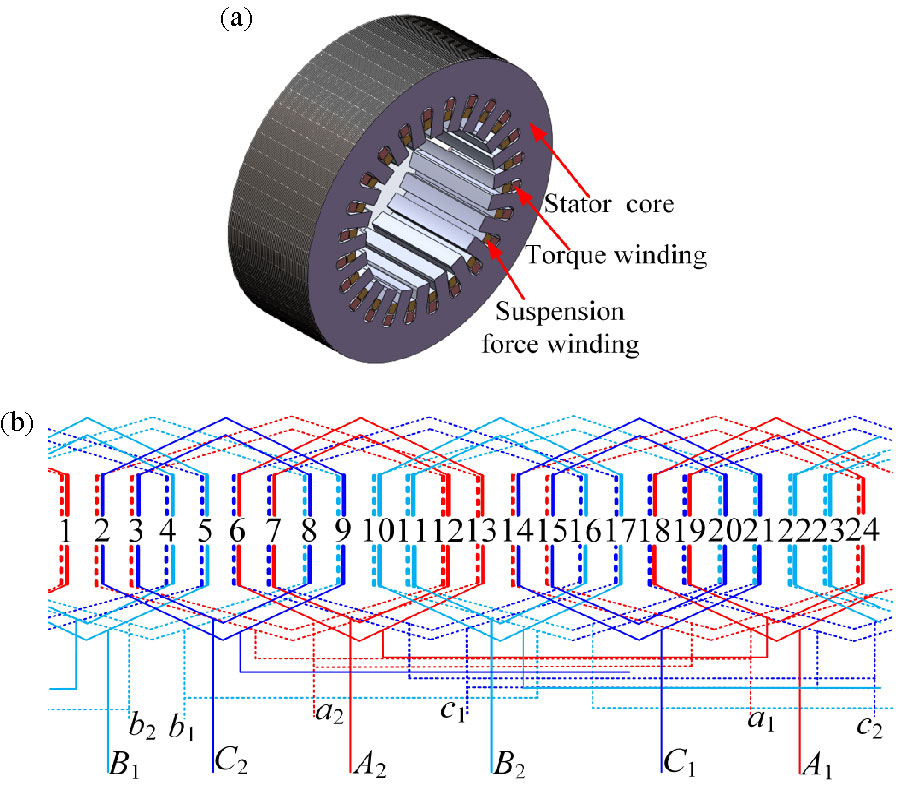
This paper investigates the effects of the step-skew rotor on electromagnetic vibration performance of a 72-slot/12-pole interior permanent magnet synchronous machine (IPMSM) considering the carrier sideband current harmonics. Firstly, the effect of the step-skew rotor on carrier sideband current harmonics generated by the space vector pulse-width modulation technique is investigated. Second, the interaction electromagnetic field near the first carrier frequency of the 72-slot/12-pole IPMSM is analytically investigated. The effects of the step-skew rotor on the electromagnetic force at low-medium and carrier frequency domain are discussed. The force modulation effect is also considered to investigate the effects of the step-skew rotor on the 72nd-order force and the zeroth mode vibration. Finally, the vibration responses of two IPMSMs with and without the step-skew rotor are simulated to validate the suppression effect of this structure on the 72nd-order force. The simulation results demonstrate that the step-skew rotor design effectively reduces vibration acceleration by 75.7% at 12 times of the fundamental frequency and 30.4% at carrier sideband frequency.
Investigation of Step-skew Rotor on Electromagnetic Force and Vibration in Intergral-slot IPMSM Driven with SVPWM Technique
2025-04-29
PIER M
Vol. 133, 73-82
Automatic Identification of Aspiration Pneumonia Based on Bronchoscope Images and Deep Learning
Dawei Gong , Ke Cui , Weidong Wang , Xiaobo Chen , Chao Zhang , Haifei Xiang , Shaohua Zhang and Sailing He
Aspiration pneumonia is a type of lung infection caused by the accidental inhalation of foreign substances into the respiratory tract. It is commonly seen in the elderly, young children, and individuals who are unconscious or have difficulty swallowing. Early detection and diagnosis of aspiration pneumonia are beneficial for improving patient outcomes and reducing the medical burden. In this study, we collected bronchoscopic video data from 25 patients in two hospitals. After image preprocessing and expert annotation, we obtained 2830 images from some patients for training and 1215 images from the other patients for validation. We selected three deep learning methods for training. The experimental test results for the identification of aspiration pneumonia showed that ResNet-50, which is based on convolutional operations, gave the best performance in the automatic identification of aspiration pneumonia, with a precision of 97.82%, a recall of 91.82%, an F1 score of 94.73%, and an overall accuracy of 95.88%. The experiments demonstrated that deep learning methods can be used for the automatic identification and diagnosis of aspiration pneumonia from bronchoscope images and deep learning is reported here for the first time for diagnosing aspiration pneumonia from bronchoscope images.
Automatic Identification of Aspiration Pneumonia Based on Bronchoscope Images and Deep Learning
2025-04-29
PIER M
Vol. 133, 61-71
Comparative Assessment of Two Numerical Methods for Eddy Current Nondestructive Evaluation: Insights from Benchmark Studies
Rebeka Sultana , Mingyang Lu , Yuan Ji , John C. Aldrin and Jiming Song
Numerical modeling of eddy current (EC) phenomena is pivotal in nondestructive evaluation (NDE). It has become invaluable in NDE industries, contributing to probe design, inspection procedures, defect characterization, model training, and results interpretation. This study comprehensively explores two numerical methods - Volume Integral Method (VIM) and Finite Element Method (FEM) to assess their suitability for EC NDE. Four test cases involving varying geometries, defect types, and probe configurations were modeled to compare computational compatibility. Numerical results are evaluated for their accuracy, efficiency, and practical implications. Results indicate a reasonable correlation between the two methods, with VIM excelling at computational efficiency for simpler geometries, and FEM demonstrating robustness for complex configurations. The findings highlight the strengths and limitations of each method, aiding users in selecting appropriate techniques for defect characterization and optimizing inspection conditions.
Comparative Assessment of Two Numerical Methods for Eddy Current Nondestructive Evaluation: Insights from Benchmark Studies
2025-04-29
PIER Letters
Vol. 126, 17-22
Compound Dielectric Resonator Antenna
Alexander P. Volkov , Andrey Kobyakov and David R. Peters
A dielectric resonator antenna (DRA) with the resonator body formed, or compounded, by multiple building blocks is proposed. The approach gives flexibility in adjusting the resonator's shape to control input impedance and resonance frequency of the antenna. A simplified method of attaching the resonator's building blocks to the grounded dielectric substrate allowed for reduced fabrication complexity and manual reconfigurability of this compound DRA (cDRA). Several cDRAs with variable resonator sizes were studied theoretically and experimentally.
Compound Dielectric Resonator Antenna
2025-04-28
PIER C
Vol. 155, 67-74
Design of Polarization-Insensitive Wideband Metamaterial Radar Absorber with Enhanced Bandwidth
Muhammad Abuzar Baqir , Abdul Qadeer , Olcay Altintas , Muhammad Umer Draz , Muharrem Karaaslan and Jahariah Binti Sampe
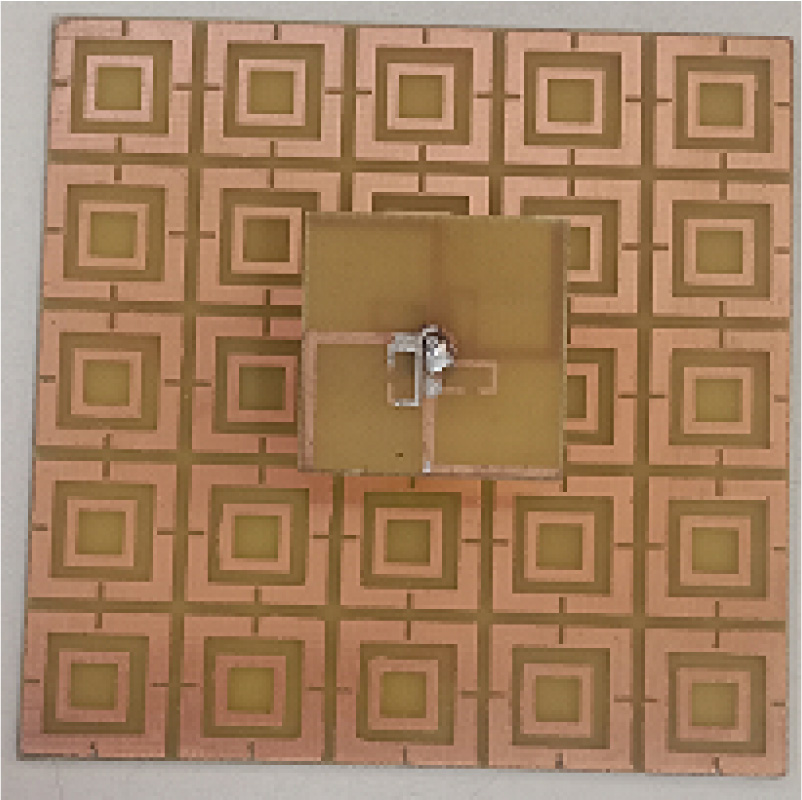
Metamaterial-based absorbers offering perfect and broadband absorption are greatly desirable in radar and stealth technology systems. Further, the polarization insensitive feature makes the absorber useful for industrial applications. This study examines the design of a wideband metamaterial-based radar absorber functioning throughout the frequency range of 8 to 16 GHz. The metasurface design comprises two concentric metallic rings and a fan-shaped circular metallic disc at the middle. The rings and the central disc are interconnected with surface-mounted chip resistors to enhance the absorption bandwidth. It is depicted that more than 90% absorptivity was attained from 8 to 16 GHz. A wideband absorber with angular stability and polarization insensitivity is an excellent choice for wireless communications, particularly in radar applications. Further, the measured results of the prototype corresponded well with the simulated outcomes.
Design of Polarization-insensitive Wideband Metamaterial Radar Absorber with Enhanced Bandwidth
2025-04-28
PIER C
Vol. 155, 61-66
A New Method for Determining Antenna Gain via Transmission Line Based Near Field Measurements in a Waveguide
Daniel Richardson , James Dee , Jonathan Yaeger , Jeramy Marsh and Ryan S. Westafer
Antenna gain is an important metric for most modern communication systems. The most common method for determining antenna gain is to produce an incident plane wave using a reference antenna and measure the received power at the antenna of interest. By measuring the received power several wavelengths away in an isolated environment, such as an anechoic chamber, the gain of an electrically small antenna, dimension less than one wavelength, can be determined. This and other similar methods work well for frequencies above 2 GHz, but lower frequency measurements can be logistically challenging and expensive due to the large facilities required and the lack of readily available broadband absorber materials. This work presents a new method for determining antenna gain using a transmission-line-based near-field S-parameter measurement in a waveguide. To provide evidence for the proposed method, two monopole antennas are modeled over an infinite ground plane using full-wave electromagnetics, and both are experimentally measured within a waveguide. Good agreement was found between the model and measurement, providing evidence of the validity of the method.
A New Method for Determining Antenna Gain via Transmission Line Based Near Field Measurements in a Waveguide
2025-04-28
PIER C
Vol. 155, 53-60
A Dual-Polarized Broadband Magneto-Electric Dipole Antenna Incorporating Parasitic Elements
Xinyi Li , Wu-Sheng Ji , Haibo Li and Jingbo Shi
This paper proposes a broadband dual-polarized (DP) magneto-electric dipole antenna (MEDA) loaded with parasitic elements. The antenna structure comprises a rectangular reflecting cavity, four corner-truncated and optimized horizontal electric dipoles, eight vertically arranged magnetic dipoles, and four triangular parasitic elements embedded in the truncated corners of the electric dipoles. An orthogonal Γ-shaped feeding network is employed to excite dual-polarized modes, ensuring stable bandwidth and gain performance. Experimental measurements demonstrate an overlapping impedance bandwidth (|S11| and |S22| ≤ -10 dB) of 84.7% (1.92-4.74 GHz) for both ports, with an in-band peak gain of 11.69 dBi and port isolation exceeding 27 dB. This design provides a compact high-isolation dual-polarized antenna solution for 5G multi-band communication systems.
A Dual-polarized Broadband Magneto-electric Dipole Antenna Incorporating Parasitic Elements
2025-04-26
PIER C
Vol. 155, 43-52
Research on Lightning-Induced Transient Characteristics of Photovoltaic Power Generation Systems Based on CDEGS
Wen Cao , Xiaojun Tang , Yicheng Fan , Wei Shen , Bobo Chen and Jiarui Zhang
To address the quantification challenges of transient responses in direct lightning strike protection design for photovoltaic (PV) power generation systems, this study establishes an integrated coupled model using CDEGS simulation software, incorporating horizontally layered soil, PV mounting structures, and grounding systems. A comprehensive consideration of key factors, including lightning current waveforms, soil resistivity, and the number of down conductors and vertical grounding electrodes, enables quantitative analysis of transient overvoltage and transient ground potential rise (TGPR) distribution characteristics under varying operating conditions. The results demonstrate that both soil resistivity and lightning current waveforms are critical factors influencing the transient lightning-induced characteristics of PV systems. In typical low-resistivity (ρ = 200 Ω.m) and high-resistivity (ρ = 2000 Ω.m) soil environments, increasing the number of grounding down conductors and vertical grounding electrodes can both reduce induced overvoltage and transient ground potential rise. However, beyond a certain threshold, shielding effects between adjacent grounding bodies limit current dissipation efficiency, leading to diminishing returns. Therefore, PV system lightning protection design must holistically account for soil properties, lightning current parameters, and optimized layout strategies to mitigate transient amplitudes, achieving an optimal balance between lightning protection effectiveness and economic efficiency.
Research on Lightning-induced Transient Characteristics of Photovoltaic Power Generation Systems Based on CDEGS
2025-04-26
PIER C
Vol. 155, 37-42
Revealing the Spatial Distribution of Radiation Emitted by Simple Objects
Edmund K. Miller
This article summarizes the author's work over the years having the goal of developing computational tools for deter-mining the quantitative distribution of where radiation is emitted from objects of interest.
Revealing the Spatial Distribution of Radiation Emitted by Simple Objects
2025-04-26
PIER Letters
Vol. 126, 9-15
3D Printed Waveguide Antenna at X-Band Frequency Band Using MSLA Printing Technology
Huda Bin Abdul Majid , Fahmiruddin Esa , Herdawatie Abdul Kadir , Azka Rehman , Hilman Harun , Muzammil Jusoh , Najib Al-Fadhali , Dian Widi Astuti and Noor Azwan Shairi
Rapid advancements in 3D printing technology have revolutionized antenna fabrication, allowing for the creation of intricate, lightweight, and high-performance structures with exceptional precision. This paper presents the design, fabrication, and experimental evaluation of a 3D-printed waveguide antenna operating in the X-band frequency range (8-11 GHz). The antenna was manufactured using Masked Stereolithography Apparatus (MSLA) technology with Magma X 12 K Dura ABS resin, which was selected for its excellent mechanical strength and dielectric properties. A 0.2 mm thick silver conductive coating was applied to enhance the electrical conductivity and minimize the surface resistance. The proposed antenna is based on a WR-90 rectangular waveguide configuration with an optimized aperture, which ensures minimal reflection loss and high radiation efficiency. Experimental results indicate an impedance bandwidth of 1.34 GHz, spanning from 8.56 GHz to 9.9 GHz, with an optimal resonant frequency at 9.45 GHz. The measured and simulated S11 parameters exhibited strong agreement, validating effective impedance matching and minimal energy dissipation. Furthermore, radiation pattern analysis revealed a directional gain of 6.85 dBi and an overall radiation efficiency of 98.35%. The measured 3 dB beamwidths were 60.5˚ in the E-plane and 105.8˚ in the H-plane, confirming the suitability of the antenna for applications in satellite communication, radar, and wireless sensing. The results demonstrate the viability of MSLA-based additive manufacturing for high-frequency waveguide antennas, offering a cost-effective, lightweight, and high-performance alternative to the traditional fabrication techniques. This study highlights the potential of 3D printing as an innovative approach for the development of next-generation microwave and millimeter-wave communication systems.
3D Printed Waveguide Antenna at X-band Frequency Band Using MSLA Printing Technology
2025-04-25
PIER C
Vol. 155, 29-35
Efficient High-Precision Classification Algorithm for Radar Deceptive Jamming via Array Detection
Wenjie Liu , Wenfang Qin , Mingwei Shen and Guodong Han
In complex electromagnetic scenarios where multiple deceptive jamming signals are simultaneously aliased in the timefrequency domain, conventional single-channel electronic detection systems struggle to effectively separate and classify overlapping jamming sources. To address this limitation, this paper investigates an array detection-based classification scheme for multi-source jamming. First, due to the spatial degrees of freedom offered by array systems, the Direction-of-Arrival (DOA) of each jamming source is precisely estimated using the MUSIC algorithm. Then, the adaptive digital beamforming (ADBF) filters are designed based on the estimated DOA parameters, enabling spatial-domain extraction of individual jamming signals. Finally, the DOA information is integrated into the Pulse Description Word (PDW) of each separated jamming measurement, which can facilitate adaptive K-Means clustering with enhanced class separability. Simulation results demonstrate that the proposed method achieves a 22.4% improvement in classification accuracy compared to existing single-channel detection approaches, while maintaining computational efficiency.
Efficient High-precision Classification Algorithm for Radar Deceptive Jamming via Array Detection
2025-04-24
PIER C
Vol. 155, 19-28
Minimum-Current-Stress Strategy for Modular Multilevel Type DC-DC Converter Based on Long Short-Term Memory Optimization
Dazhuan Yu , Xin Zhou , Zefeng Lin and Xiaobing Niu
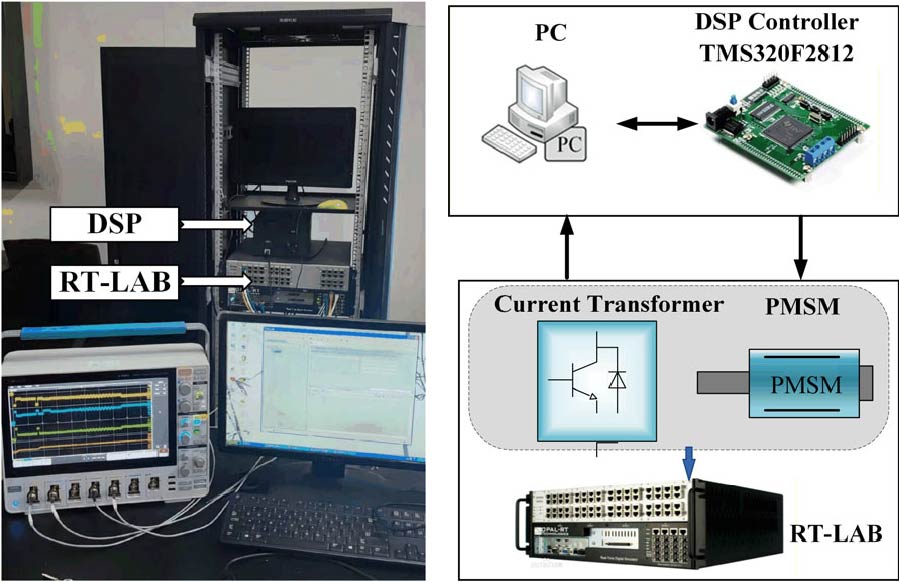
Current stress has a significant impact on the operation of power electronic devices, and the reduction of current stress can improve the safety and reliability of the system. First, this paper proposes a novel asymmetric duty cycle modulation strategy for the primary side of a modular multilevel type (MMC) dual active bridge converter (DAB) to increase the control freedom of the primary side. Secondly, a novel optimization strategy based on a long-short-term memory network (LSTM) classification is proposed in this paper to optimize the current stress. The output power of the system is classified by LSTM,and minimum current stresses at different powers are optimized by a novel meta-heuristic iterative optimization based on generalized quadratic interpolation (GQI). Finally, the feasibility of the scheme is verified by hardware-in-the-loop experiments.
Minimum-current-stress Strategy for Modular Multilevel Type DC-DC Converter Based on Long Short-term Memory Optimization
2025-04-23
PIER C
Vol. 155, 11-18
Integrated Generator Design for Double Stator Hybrid Excitation Flux Switching Machine
Nur Afiqah Mostaman , Erwan Bin Sulaiman , Mahyuzie Jenal and Irfan Ali Soomro
Double Stator Hybrid Excitation Flux Switching Generator (DS-HEFSG) has attracted significant interest in power-generating research owing to its potential for improved performance and sustainability. This research examines the utilization of hybrid excitation to enhance the efficiency of a three-phase DS-HEFSG specifically engineered for low-speed power applications such as renewable energy systems like wind and tidal turbines. The innovative method presents a double stator hybrid configuration for a traditional double stator generator, with performance evaluation performed via 2D finite element simulations. The findings indicate that the DS-HEFSG surpasses traditional topologies, rendering it an optimal selection for this generator configuration. The proposed design significantly increases the 18.76% cogging torque value while the electromotive force increases by approximately 21.62%. The proposed design also decreases permanent magnet eddy-current losses by 24.33%. Enhanced performance is noted in electromagnetic torque, torque ripple, output power, and overall efficiency. These advancements contribute to energy savings and lower maintenance costs, reducing reliance on fossil fuels and supporting the transition to greener energy solutions. The proposed DS-HEFSG with hybrid excitation is a viable alternative for efficient low-speed power production.
Integrated Generator Design for Double Stator Hybrid Excitation Flux Switching Machine
2025-04-23
PIER M
Vol. 133, 51-60
Genetic Algorithm Optimization of a Wideband Rectangular Patch Antenna with an Asymmetric U-Slot and Partial Ground for Ku-Band Satellite Communication
Fatim-Zahra Bennioui , Asma Khabba , Karima Ait Bouslam , Layla Wakrim , Saïda Ibnyaich , Abdelouhab Zeroual , Zahriladha Zakaria and Ahmed Jamal Abdullah Al-Gburi
This paper presents an innovative microstrip patch antenna (MPA) designed and optimized for Ku-band satellite communications. The proposed design incorporates an asymmetric U-shaped slot and a partial ground plane, constructed using an FR4 substrate with dimensions of 18 × 16 × 1.6 mm3 (0.416λ × 0.37λ × 0.03λ, where λ is the wavelength at 6.94 GHz). A genetic algorithm is employed to optimize the U-shaped slot and the ground plane dimensions, enhancing the antenna's wideband performance while preserving its compact form factor. Simulation results indicate that the optimized design achieves two operational frequency bands with reflection coefficients (S11) less than -10 dB: a narrowband from 6.83 GHz to 7 GHz, with a resonant frequency of 6.94 GHz, and a wideband from 10.26 GHz to 17.19 GHz, with a resonant frequency of 14.94 GHz. This extensive frequency range enables the antenna to effectively support direct broadcast services (DBSs) and fixed satellite services (FSS). The design's effectiveness was confirmed through prototype fabrication and testing, demonstrating strong agreement with simulated results and proving the antenna's compactness and exceptional wideband performance.
Genetic Algorithm Optimization of a Wideband Rectangular Patch Antenna with an Asymmetric U-slot and Partial Ground for Ku-band Satellite Communication
2025-04-22
PIER C
Vol. 155, 1-9
Ternary B2O3-TeO2-BaO Glass as a Shielding Case
Samar M. Ibrahim , Yara Abdelghany , Maged M. Kassab , Mostafa M. Radwan and Ahmed Abdel-Latif M
This study investigates the properties of a ternary B2O3-TeO2-BaO glass system, prepared through the melt-quenched technique. The chemical formula used is (50 - x/2)B2O3 + (50 - x/2)TeO2 + xBaO, with x varying from 15 to 35 mol.%. The research explores how the gamma and neutron radiation shielding capabilities were analyzed. It finds that higher BaO content enhances gamma-ray shielding but does not significantly affect neutron shielding. The glass sample BTB35 emerged as the optimized candidate among the developed samples for gamma radiation shielding applications. Also, the obtained results for the MFP was compared to commercial shielding glasses, and other measurements on glasses show the superiority of BTB35 as commercial transparent radiation shielding glass.
Ternary B2O3-TeO2-BaO Glass as a Shielding Case
2025-04-22
PIER C
Vol. 154, 267-275
Theoretical Analysis of Detection of Flying Vehicles Based on the Passive Radiometric Detection of Microwave-Millimeter-Terahertz Wavelength Electromagnetic Emissions from Exhaust Plasma Gases
Thomas N. Chatziathanasiou and Nikolaos Uzunoglu
The feasibility of using passive radiometric detection of chaotic electromagnetic signals emanating from low density plasma plumes of the jet exhaust gases to detect low radar cross section aircrafts is analyzed for the frequency band 3.108-3.1012 Hz. The aircraft exhaust plume gas formation is modelled with a number of discrete different dimensions ellipsoids, with each having different electron densities and temperatures. Electromagnetic radiation analysis of emitting signals is computed applying fluctuation-dissipation theorem and geometric considerations. The detection range of characteristic military jet aircraft is computed numerically for the whole frequency band, from UHF to 3 THz. It is shown that high range detection can be achieved at upper microwave frequencies.
Theoretical Analysis of Detection of Flying Vehicles Based on the Passive Radiometric Detection of Microwave-Millimeter-Terahertz Wavelength Electromagnetic Emissions from Exhaust Plasma Gases