Search Results(13784)

2025-05-19
PIER C
Vol. 155, 245-254
On-Body FSS-Backed High Gain Microwave System for Brain Tumor Diagnosis
Sanjeev Sharma , Daljeet Singh , Mariella Särestöniemi , Teemu Myllylä and Rajeev Kumar
The paper presents a microwave system operating at 4-5 GHz for brain tumor diagnosis. The proposed work presents a novel method to detect the presence of tumors by capitalizing on the variations in antenna response. To achieve highly precise and fast diagnosis, a high-gain antenna is placed on the surface of the skull. The gain and directivity of the antenna are enhanced by using a Frequency selective surface (FSS) array structure placed behind the antenna which directs the energy towards the human tissues for tumor detection purposes. By using the FSS array surface, there is a 4.3 dB increase in gain and a 4.2 dB increase in directivity. Simulations are carried out using a multi-layer skull model comprising Skin, Skull, and Brain. Our proposed work demonstrates that there is a variation of about 8 dB in S-parameters when a tumor of size 6 mm × 6 mm is placed in the brain area. Further, we have investigated the S-parameter characteristics using different shapes and sizes of tumors in the brain. The results show that variation in S-parameter characteristics can potentially be used to detect the presence of tumors in the human brain.
On-body FSS-backed High Gain Microwave System for Brain Tumor Diagnosis
2025-05-18
PIER C
Vol. 155, 235-244
Calculation and Analysis of RCS of Metamaterial Coated Composite Structure
Osman M. Alsemaid , Elased Sulieman Saad and Ahmed Awad Babiker
The RCS of a composite target composed of two geometries, namely elliptical cylinder plus elliptical cone, is calculated and analyzed in this paper. To get the RCS for the target shape, the RCSs of both the elliptical cylinder and elliptical cone are calculated and analyzed before and after coating them with a designed metamaterial. Matlab and CST Simulator are used to evaluate the performance and prove the effectiveness of the metamaterial coating in reducing the RCS of the composite structure, using specially created metamaterials. This search lowered RCS across a wide frequency range of 2 to 400 GHz, which is done through specially designed metamaterials.
Calculation and Analysis of RCS of Metamaterial Coated Composite Structure
2025-05-18
PIER C
Vol. 155, 225-234
Design and Optimization of Fault Tolerant Dual-Permanent Magnet Excited Vernier Rim Driven Machine
Haibo Liao , Jingwei Zhu , Yaqian Cai , Shukuan Zhang and Kun Zang
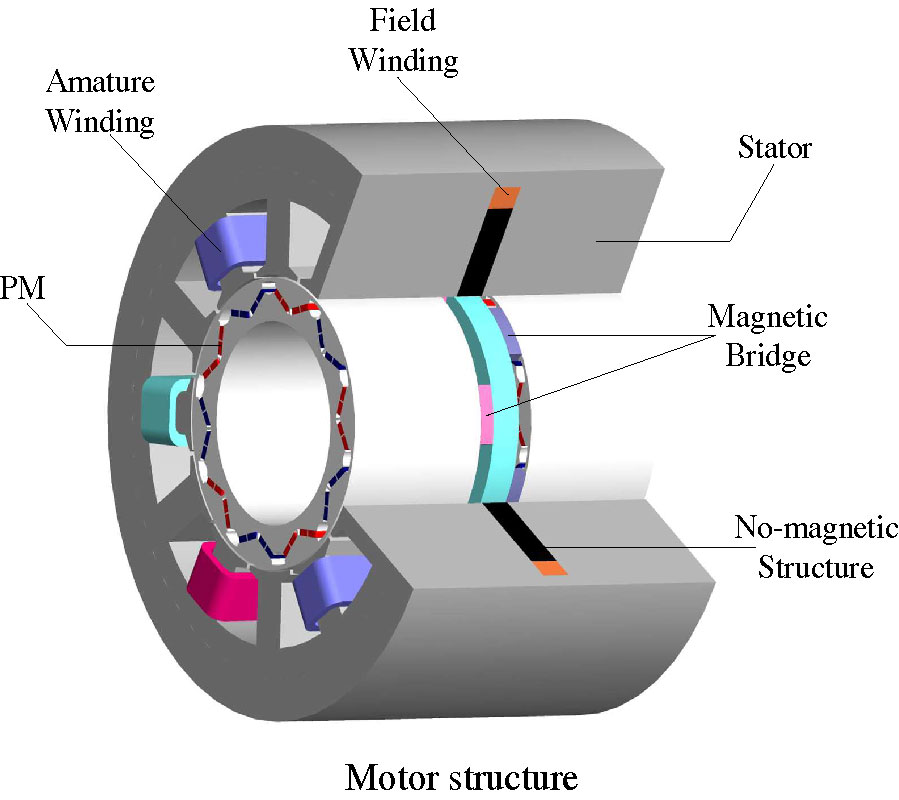
In order to improve the power density and torque density of the fault tolerant permanent magnet vernier rim driven machine, a new type of fault tolerant dual-permanent magnet excited vernier rim driven machine is proposed. Permanent magnets are placed on the stator and rotor of the machine, and more working harmonics are modulated by the dual-modulation effect of the air gap permeability by the teeth of the stator and rotor, thus improving the output performance of the machine. Aiming at the problem of more optimization parameters, a new optimization design method combining multi-objective genetic algorithm with single parameter scanning algorithm is proposed to optimize the design of machine. Compared with the traditional fault tolerant permanent magnet vernier rim driven machine, it shows that the machine has better output performance.
Design and Optimization of Fault Tolerant Dual-permanent Magnet Excited Vernier Rim Driven Machine
2025-05-16
PIER B
Vol. 112, 1-14
Circular Microstrip Antenna with Electromagnetic Band Gap on Polyester Mylar Film Substrate for Metal Detection Applications in River Prawns
Watcharaphon Naktong , Natchayathorn Wattikornsirikul , Suwat Sakulchat , Sommart Promput and Montree Kumngern
This paper presents the design of a circular-shape microstrip patch antenna structure with nine circular Electromagnetic Band Gaps (EBGs), which have been arranged in a flower shape to increase the antenna gain and be more effective in detecting metals in river prawns. Test results show that the frequency of 1.50 GHz has the greatest effect on metal detection in river prawns. The circular microstrip antenna with the EBG structure is fabricated with a copper sheet and a thickness of 0.03 cm. The radiator patch has a radius of 1.615 cm, and the EBGs, with a radius of 0.8 cm, are arranged around a circular patch antenna structure. The substrate uses a mylar polyester film sheet that has a thickness of 0.05 cm; the dielectric value is 3.2; and the impedance bandwidth of the operating frequency range is 5.26% (1.48-1.56 GHz). This proposed antenna can increase the gain up to 43.76%, with a value of 5.19 dBi. In the application for detecting metal in river prawns, the distance for placing the Tx and Rx antennas to detect metal in river prawns is 6 cm. This circular microstrip antenna can detect metals ranging from 0.5 to 3 cm and above, with an average power value ranging from -12.38 to -18.84 dBm.
Circular Microstrip Antenna with Electromagnetic Band Gap on Polyester Mylar Film Substrate for Metal Detection Applications in River Prawns
2025-05-14
PIER C
Vol. 155, 213-224
Design and Optimization of Ultra-Wideband Dual-Notch Antenna Based on the BOLGB-DE Algorithm
Huawei Zhuang , Jianzhao Liu , Fangzhen Sun , Gaoqi Li and Fanmin Kong
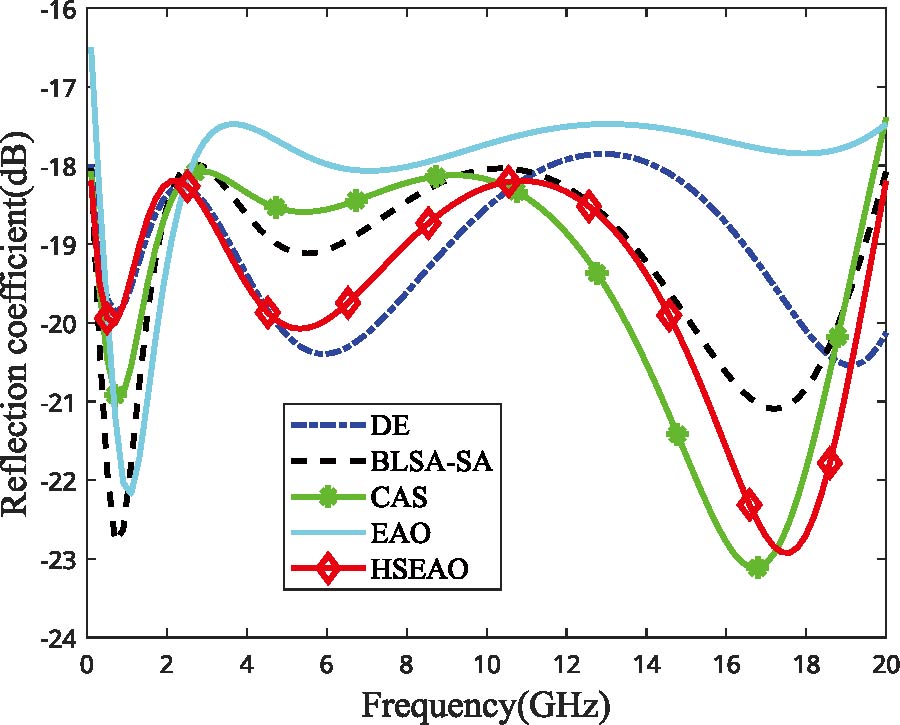
With the rapid development of modern communication technologies, the use of ultra-wideband (UWB) notch antennas in various communication systems has increased significantly. However, designing UWB notch antennas with traditional methods often involves high complexity and low efficiency. To address the challenge, a novel optimization method, named BOLGB-DE (Bayesian optimization-Light Gradient Boosting Machine-Differential Evolution), is proposed. First, the BOLGB model is selected as the surrogate model to establish the relationship between antenna design parameters and performance. Then, the DE algorithm is used to invoke the BOLGB surrogate model to achieve the antenna optimization objectives. Compared to the traditional method, BOLGB-DE method enables the reduction of electromagnetic simulations by 62% (from 1176 to 440 runs) and optimization time by 62% (from 22.8 hours to 8.6 hours). Finally, a UWB dual-notch antenna is designed using the BOLGB-DE method, featuring a dual-notch structure within the 1.9 GHz-10.1 GHz range. It achieves two notch bands (3.58 GHz-4.17 GHz for C-band downlink shielding and 5.12 GHz-5.38 GHz for 5G Wi-Fi interference suppression) while maintaining the target S11 values greater than -7 dB. The design requirements are successfully met by the antenna, as confirmed by the measurement results.
Design and Optimization of Ultra-wideband Dual-notch Antenna Based on the BOLGB-DE Algorithm
2025-05-13
PIER C
Vol. 155, 203-211
Design of a Miniaturized Circular Flower-Shaped Fractal Antenna with a Defected Ground Structure for Multiband Applications
Sanae Attioui , Asma Khabba , Saïda Ibnyaich , Abdelouhab Zeroual , Zahriladha Zakaria and Ahmed Jamal Abdullah Al-Gburi
The increasing demand for compact, cost-effective, and versatile antennas in modern wireless communication systems has inspired research into innovative multiband antenna designs. However, numerous existing solutions are insufficient in terms of size, bandwidth, or manufacturing complexity, particularly when they aim to incorporate multiple wireless standards within a compact device. To address this gap, this study proposes a miniaturized fractal antenna design measuring 15 × 11 × 1.6 mm3, fabricated on a low-cost FR-4 substrate. The proposed antenna is inspired by nature, featuring a flower-shaped patch and a defected ground (DGS) with a spiral pattern. It exhibits multiband behavior, resonating at six distinct frequencies: 1.79 GHz, 3.84 GHz, 7.34 GHz, 9.08 GHz, 11.44 GHz, and 14.6 GHz, making it suitable for various wireless applications, including GSM/UMTS (1.7-2.1 GHz), 4G/5G and radar (3.3-4.2 GHz), military radar and satellite communications (7-8 GHz), aviation and maritime radar (8.5-10 GHz), satellite communication in the Ku-band (10.7-12.7 GHz), and advanced radar and satellite uplinks (12-14 GHz). The fabricated antenna was tested, and the experimental results demonstrated a strong correlation with the simulated outcomes, confirming its practical applicability and effectiveness in multiband communication systems. The proposed fractal antenna stands out due to its compact size, multiband capability, and excellent performance, making it well suited for modern wireless applications.
Design of a Miniaturized Circular Flower-shaped Fractal Antenna with a Defected Ground Structure for Multiband Applications
2025-05-12
PIER C
Vol. 155, 195-201
Online Targets Tracking and People Counting Using Multiple Distributed mmWave Radar Sensors
Uday Kumar Singh and Thipparaju Rama Rao
With the growing use of radar sensors, particularly in surveillance applications, there is an increasing need for real-time target tracking, especially in areas such as counting people. This paper offers a detailed description of the hardware setup, which is paired with a proposed fusion algorithm and the multiple-target tracking (MTT) algorithm for online target tracking. The fusion techniques introduced in this work combine data from spatially distributed Texas Instruments mmWave radar sensors by utilizing the likelihood of radar measurements. These sensors measure the positions of the reflectors, which are then visualized through the Robot Operating System (ROS). To support real-time target tracking and people counting, a connection is established between the ROS network and MATLAB. Finally, the measurements are processed in MATLAB using the proposed fusion technique alongside the existing MTT algorithm to generate accurate target tracks, which also enable people counting.
Online Targets Tracking and People Counting Using Multiple Distributed mmWave Radar Sensors
2025-05-11
PIER C
Vol. 155, 189-194
Modified IPD Expression for Radomes with Large Curvature
Pei Jia , Yong-Jun Xie , Chunyu Li , Ke Pang , Zhiping Li , Jiahui Zhao and Peiyu Wu
Primary insertion phase delay (IPD) expression is obtained using the flat plate model with plane wave incidence, and it only considers the longitudinal phase shift in the free space. This causes errors in large curvature radome applications since the longitudinal distance that wave travels in flat plate cannot represent the actual distance. Therefore, the IPD expression for radomes with large curvature should be defined. Based on the ray tracing in the radome medium, a modified IPD expression with more accurate transmission distance for large curvature radomes is proposed. The proposed expression can be applied to radomes with arbitrary curvature. The correctness of our proposed expression is verified via a simplified fast radome analytical model. The results from the proposed expression show errors within 1.0° for the parabolic radome system. The proposed expression can be applied to optimize the performance of radome systems with large curvature. A reflector antenna radome system is employed for verification. Results show that using the modified IPD expression to optimize the reflector antenna can increase the system gain by 1.8 dB, reduce the side lobe by 7.6 dB, and narrow the beamwidth by 0.9°.
Modified IPD Expression for Radomes with Large Curvature
2025-05-11
PIER M
Vol. 134, 1-12
Compact Quadband NGD Microstrip Circuit for 2-6 GHz ISM Bands
Nathan B. Gurgel , Glauco Fontgalland , Idalmir S. Queiroz Jr. , Samanta M. Holanda , Benoit Agnus , Jerome Rossignol and Blaise Ravelo
With the increasing interest in negative group delay (NGD) function for RF and microwave circuits, and sensing applications, techniques to fit multiple NGD bands in a single and compact structure can open new possibilities. In this work, a simple and innovative compact quadband NGD microstrip circuit is presented for all ISM bands between 2 GHz and 6 GHz. The circuit is composed of a base line (BL) coupled to the transmission line, which sets the lowest NGD band, and each additional NGD band is created by inserting stubs into the BL. The impact of each stub on the overall circuit is analyzed using parametric simulation. The design and tuning method of the coupled line used to achieve the NGD multiband function is described in detail. Through the insertion loss and group delay results, a well-fitted correlation is observed between the simulated and measured results, where the simulated transmission coefficient and group delay show NGD quadband response with center frequencies at 2.46, 3.49, 4.96, and 5.69 GHz with respective NGD bandwidth of 0.89%, 0.83%, 0.66%, and 0.97%, respectively, whereas the measured results present center frequency NGD deviation of less than 1%. In addition, the NGD quadband circuit prototype has a compact size 40.2 × 30.2 × 1.57 mm3. The measured NGD results are in good agreement with simulated ones.
Compact Quadband NGD Microstrip Circuit for 2-6 GHz ISM Bands
2025-05-10
PIER C
Vol. 155, 177-187
Design and Analysis of a Triple-Band Stacked T-Polyimide Antenna for WBAN Applications
Kodali Rani Rudrama , Vallabhuni Tulasi Naga Kalyan , Bachalakuri Shini and Marampudi Vamsi
A low-profile, flexible and wearable microstrip patch antenna is presented for Wireless Body Area Networks (WBANs) applications. Wearability is one of the latest developments in electronic devices leading to real-time monitoring of human vital signs like blood pressure, body temperature, and pulse rates using WBAN technology. A monopole antenna with a planar rectangular and six stacked T-shaped elements is positioned on the top side of the radiating patch. A partial ground structure is incorporated at the bottom of the patch to generate triple band characteristics. The antenna is maintained with compact dimensions which are 65 × 65 × 0.1 mm3. The antenna operates at tri-band frequencies, such as 2.7 GHz, 2.5 GHz, and 3.5 GHz, to support 5G applications. At 2.45 GHz, the directivity is 1.56; the VSWR is 1.13; the gain is 15.38; and the reflection coefficient (S11) of −26.91 dB. The SAR value of 0.160 W/kg satisfies IEEE safety requirements for biomedical applications and is much below the allowed maximum of 1.6 W/kg for 1 gram of tissue. This guarantees safe and effective operation in wearable and medical applications. The antenna has a thickness of 0.1 mm, a relative permittivity of 3.5 and provides flexibility and durability. The presentation includes the comparative analysis and the step-by-step design of the triple-band flexible antenna. Testing on a three-layer human phantom model made up of skin (2 mm), fat (8 mm), and muscle (23 mm) demonstrated the antenna's performance in terms of gain, radiation patterns, VSWR, reflection coefficient (S11), and specific absorption rate (SAR). The parametric analysis, performance evaluation, simulation results, and iterative process of the antenna design are all presented in detail. Along with conclusions, comparisons to other designs, and useful estimations, the results and finalized antenna are presented. The accurate difference between measured and simulated performances indicates the antenna's reliability and efficiency, and its compact size increases flexibility in wide range of environments. The antenna was simulated using HFSS software, fabricated, and validated in an anechoic chamber and using a network analyzer.
Design and Analysis of a Triple-band Stacked T-polyimide Antenna for WBAN Applications
2025-05-08
PIER C
Vol. 155, 165-175
Design of a Compact Sub-6 GHz Wideband Filtering Patch Antenna Without Extra Structure
Noor Kareem Mohsin and Dhirgham Kamal Naji
This paper presents a new compact filtering patch antenna (FPA) design that achieves a wideband impedance bandwidth (IBW) without extra structure. It addresses the limitations of traditional FPAs, which often rely on extra elements to enhance bandwidth and filtering performance. The proposed FPA consists of a radiating patch with an inscribed circular slot, excited by a feedline integrated with a quarter-wavelength matching stripline, all located on the top side of an FR4 substrate. A partial ground plane with a T-shaped symmetrical branch strip is printed on the bottom side of the substrate. The combination of the T-shaped strips and the matching stripline creates the first radiation-null fn1 near the lower edge of the passband antenna's gain response. Furthermore, the introduction of a circular slot into the radiating patch creates a second radiation-null fn2 in the upper edge of the passband region. This not only enhances the IBW but also contributes to the antenna's efficient filtering characteristics. Simulation tools CST Microwave Studio (MWS) and High-Frequency Structure Simulator (HFSS) are used to evaluate key performance parameters, including reflection coefficient (S11), realized gain, and radiation patterns. A fabricated prototype validates these simulations, demonstrating a -10 dB fractional IBW of 47.36% (2.9-4.7 GHz). Based on CST and HFSS simulation results, the design exhibits high selectivity with suppression levels of over 22 dB and 23.7 dB at the lower and upper stopband edges, respectively, while maintaining a flat gain across the passband. The antenna also provides omnidirectional radiation patterns and has a compact size of 29 x 35 x 0.8 mm3, making it more promising for 5G sub-6 GHz applications.
Design of a Compact Sub-6 GHz Wideband Filtering Patch Antenna without Extra Structure
2025-05-08
PIER C
Vol. 155, 159-164
Compact Wideband Reflective Phase Shifter with Wide Phase Shift Range and Simple Control
Teng Ma , Hongmei Liu , Yuyang Jiang and Zhongbao Wang
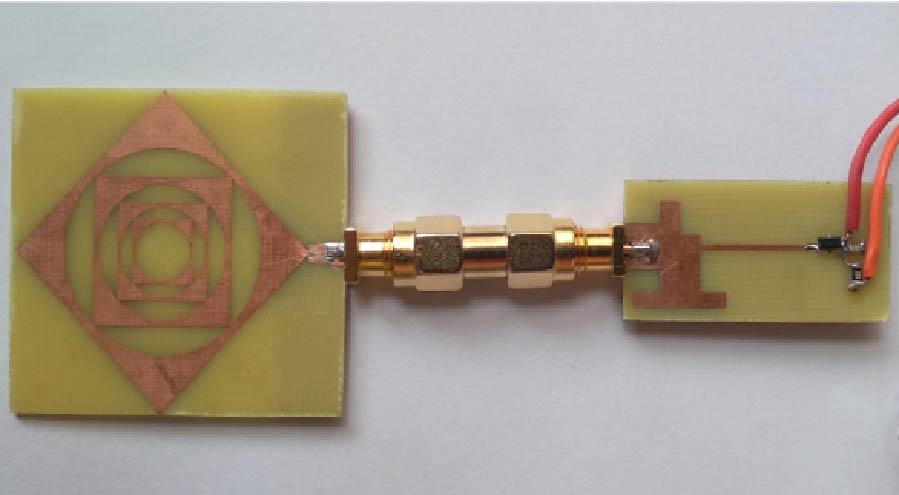
In the paper, a planar wideband reflective phase shifter (RTPS) with wide phase shift range and simple control is proposed. It consists of a coupled-line based wideband 3-dB coupler and two multi-resonance reflective loads. By combining a series resonant circuit with a shunt resonant circuit to form multi-resonances, the phase shift range can be expanded with realizable capacitance values of the varactor diodes. The design equations are derived, and parametric analysis is provided. To verify the feasibility of the design methodology, an RTPS operating at the center frequency of 2 GHz is designed and fabricated. Measured results show that it exhibits a better than 10 dB input return loss bandwidth of 33.9% and a phase shift range of 320°. Besides, the size of the RTPS is only 0.41λg × 0.13λg, and can be controlled by simply one voltage.
Compact Wideband Reflective Phase Shifter with Wide Phase Shift Range and Simple Control
2025-05-07
PIER C
Vol. 155, 147-157
Design of Sparse Wideband Frequency-Invariant Beamforming Based on Hybrid Grey Wolf-L∞-Norm Algorithm
Guihan Xie , Bin Wang and Kui Tao
A novel hybrid algorithm is proposed for frequency-invariant (FI) beam pattern synthesis of wideband nonuniformly spaced array (NUSA), which combines intelligent optimization algorithm with convex optimization algorithm. The improved grey wolf optimization (IGWO) algorithm is employed to optimize the positions of the array elements, while l-norm is introduced to describe spatial response variation (SRV) for optimizing the finite impulse response (FIR) filter weights of the array. Considering multiple constraints, such as array aperture and minimum spacing between elements, an optimal trade-off among constant beamwidth, FI characteristics, and peak sidelobe level (PSL) is achieved. The effectiveness and advantages of this method are evidenced by synthesis examples of FI beam patterns for wideband NUSA in different application scenarios. These experimental results hold important theoretical significance, and provide valuable references for solving the optimization problem of wideband FI array under multiple constraints.
Design of Sparse Wideband Frequency-invariant Beamforming Based on Hybrid Grey Wolf-<I>l</I><sub>∞</sub>-norm Algorithm
2025-05-06
PIER
Vol. 183, 45-57
Acceleration of Solving Volume Integral Equations through a Physics Driven Neural Network and Its Applications to Random Media Scattering
Jiayi Du , Yuanhao Cao , Chunzeng Luo , Gaoang Wang and Shurun Tan
In this paper, a novel framework is proposed which combines physical scattering models with artificial neural networks (ANN) to solve electromagnetic scattering problems of random media through a volume integral equation formulation. The framework is applied to a snow scattering problem where snow is represented by a bicontinuous random medium. A neural network is constructed linking the random media structure to the induced dipole moments on the media. The volume integral equation (VIE) serves as a natural physical constraint on the network input-out relations and is used to guide the training of the network. A discrete dipole approximation (DDA) strategy is adopted to convert the VIE into matrix equations which also defines the loss function of the surrogate neural network. For addressing deterministic scattering problems, this represents a viable alternative to traditional iterative algorithms, providing comparable accuracy at the expense of reduced efficiency. In solving statistical scattering problems, neural networks with physics-informed loss function achieve accuracy comparable to that of data-driven models while significantly reducing the dependency on extensive precomputed training datasets. The physics-based loss function also allows the network to self-diagnose the prediction accuracy in real operations. This work demonstrates a novel strategy to effectively merge physical equations with artificial neural networks, and the idea can be inspiring to many relevant fields, especially when randomness effects are exhibited through a complicated nonlinear system.
Acceleration of Solving Volume Integral Equations through a Physics Driven Neural Network and Its Applications to Random Media Scattering
2025-05-06
PIER C
Vol. 155, 137-146
Arbitrary Shape Transmitting Coils Optimization for One-to-Many Free-Positioning Wireless Power Transfer Systems
Pavel Smirnov , Aleksandr Miroshnikov and Polina V. Kapitanova
Nowadays, misalignment tolerant wireless power transfer systems providing simultaneous power supply to several devices are the subject of intensive research in the field of wireless charging of electronic devices. A critical parameter in such systems is the uniformity of magnetic field generated by a transmitting coil. In this paper, we examine the characteristics of the magnetic field distribution of arbitrary shape planar transmitting coils and propose a genetic algorithm for optimizing their design with the objective of increasing the field uniformity. This study stands out from existing literature by introducing an optimization approach that not only encompasses traditional circular and square coils but also extends to convex polygonal coils. The results of the algorithm are validated experimentally on coils of three various geometries including circular, square, and hexagonal coils. The coefficient of variation of the magnetic field, which serves as a quantitative measure of its uniformity, is found to be 3.6% for circular coil, 5.2% for square one, and 5.1% for hexagonal one in a region of interest encompassing half of the total area of transmitting coil.
Arbitrary Shape Transmitting Coils Optimization for One-to-Many Free-positioning Wireless Power Transfer Systems
2025-05-06
PIER C
Vol. 155, 127-135
High Isolation mm-Wave 8-Element MIMO Antenna for 5G Applications
Nayera Nahvi and Khalid Muzaffar
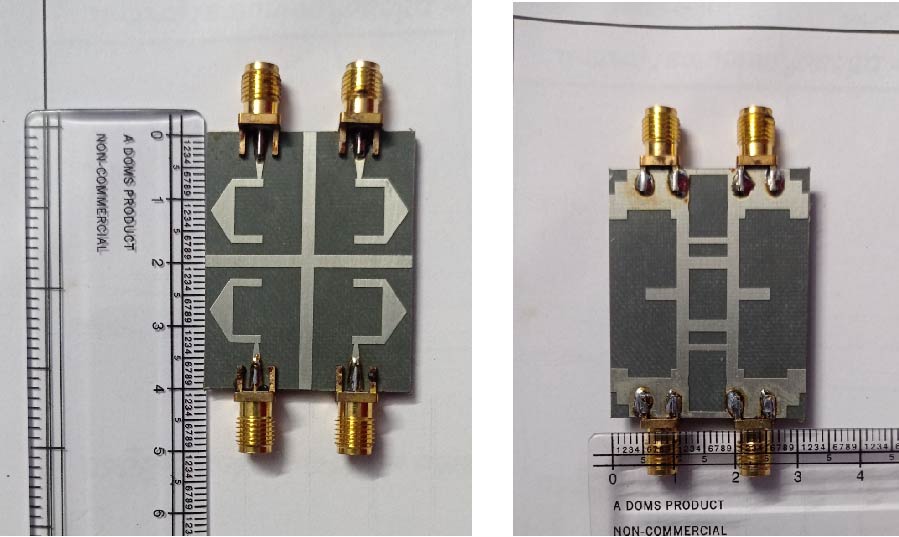
The present study describes the architecture of a defected ground structure (DGS)-based eight-element multiple-input multiple-output (MIMO) antenna. It functions in the millimeter-wave spectrum n258 (24.25–27.5 GHz) and is mainly intendedd for fifth-generation (5G) applications. Each antenna element has an elliptical slot at the ground plane and a hook-shaped antenna integrated into it to reduce the mutual coupling among the adjacent antenna elements. With a wide bandwidth of 5 GHz and an isolation level greater than 37 dB, the proposed antenna effectively covers the frequency range of 22.5 to 27.5 GHz. At the designated resonant frequency, it generates a directed radiation pattern and gain of 6.31 dBi. The proposed antenna's diversity system performance characteristics are assessed using metrics like channel capacity loss (CCL), diversity gain (DG), mean effective gain (MEG), and envelope correlation coefficient (ECC). The 8-port proposed MIMO antenna prototype, exhibiting overall dimensions of 62.7 × 31 × 0.787 mm3, has been constructed utilizing an economical FR4 substrate, demonstrating a substantial association between the computed and measured outcomes, thereby establishing its viability as a potential candidate for 5G communications.
High Isolation Mm-Wave 8-Element MIMO Antenna for 5G Applications
2025-05-05
PIER C
Vol. 155, 121-126
Physics-Based 2D Direction Finding of an Amplitude Modulated Signal Using a Uniform Triangular Array
Kai Ren
A uniform triangular array (UTA) is proposed for physics-based 2D direction-of-arrival (DOA) estimations of unknown incoming signals. Three capacitively loaded top-hat antennas are used as array elements. Unlike conventional array-based direction finding (DF) systems, complex antenna radiation patterns are used in array manifold calculations and DOA predictions, where coupling among array elements is naturally resolved. Both continuous wave (CW) signals and single tone signals with amplitude modulation (AM) are considered in DF simulations. Cramer-Rao bound (CRB) values are calculated to provide theoretical lower bounds of DF accuracies. Multiple signal classification (MUSIC) algorithm is used to further demonstrate the DF performance of the triangular antenna array without any angle ambiguities within the field of view from 0˚ to 360˚ in the azimuth direction and from 1.25˚ to 178.75˚ in the elevation direction.
Physics-based 2D Direction Finding of an Amplitude Modulated Signal Using a Uniform Triangular Array
2025-05-05
PIER Letters
Vol. 126, 23-29
Design and Performance Analysis of a Miniaturized Four-Port MIMO Antenna Module for 5G NR and WLAN Bands
Jiaping Lu , Lefei He , Qiangjuan Li and Gui Liu
This paper presents the design and in-depth performance analysis of a miniaturized four-port multiple-input multiple-output (MIMO) antenna module intended for integration on the rear cover of mobile devices. The four antenna elements are configured in a sequential rotation layout and fabricated on a low-profile circular substrate. Each antenna element features an E-shaped patch on the upper side of the substrate, coupled with a rectangular defected ground structure (DGS) on the lower side. A needle-like decoupling mechanism has been incorporated to improve the isolation between the antenna elements. The measured -10 dB impedance bandwidth ranges from 3.5 to 5.45 GHz, successfully meeting the demands of the 5G NR bands N77 (3.3-4.2 GHz), N78 (3.3-3.8 GHz), N79 (4.4-5 GHz), as well as the wireless local area network (WLAN) band (5.15-5.35 GHz). The isolation levels between the antenna elements exceed 17 dB. The average total efficiency is over 40.76%, and the envelope correlation coefficients (ECCs) are maintained below 0.01. The measurement outcomes indicate that the proposed MIMO antenna not only fulfills the requirements for the 5G and WLAN frequency bands but also successfully achieves miniaturization and superior wireless communication performance.
Design and Performance Analysis of a Miniaturized Four-port MIMO Antenna Module for 5G NR and WLAN Bands
2025-05-04
PIER C
Vol. 155, 111-119
Design of a Compact Dual-Band Metamaterial Bandpass Filter Using Multi-Type Fractal Geometries
Hayder S. Ahmed and Aqiel N. Almamori
In this paper, a compact Dual-Band Bandpass Filter (BPF) has been proposed and designed based on two concepts. Firstly, transmission lines (TLs) feed the center resonators (CRs), which resonate at 11 GHz, while the metamaterial-based Center Resonators (CRs) resonate at 6 GHz for RF/Microwave applications. To miniaturize the planer structure, two different types of fractal geometry have been applied. First iteration modified-Minkowski fractal geometry has been applied on the CRs while the meander line with second order has been applied on the TLs. The proposed structure has been designed by using a Rogers RO4003 substrate with a thickness of 1.5 mm and a dielectric constant of 3.5. The simulation is implemented using CST microwave studio. To validate the proposed structure, the compact dual-band BPF is fabricated, and the measurements show high agreement with the simulation. Finally, the proposed structure achieves a 26 % reduction compared to the previous work.
Design of a Compact Dual-band Metamaterial Bandpass Filter Using Multi-type Fractal Geometries
2025-05-03
PIER
Vol. 183, 33-44
Finite Element Boundary Integral Approach for Inhomogeneous-Background Magnetic Resonance Electrical Properties Tomography (Invited)
Yuyue Zhang , Hariharan Mohanabala Krishnan , Tiantian Yin and Xudong Chen
This paper introduces a novel finite element boundary integral approach for magnetic resonance electrical properties tomography (MR-EPT) with an inhomogeneous background which improves imaging quality by utilizing inhomogeneous background inversion and allows for a flexible selection of areas for fine reconstruction, thereby saving resources and quickly obtaining the most important information. In the proposed approach, a fictitious inhomogeneous background is initialized, followed by a preliminary reconstruction conducted across the entire field of view (FOV) through a few iterations. This fictitious inhomogeneous background aims to enhance the quality of reconstruction, surpassing that achieved through inversion in a homogeneous background. The proposed method is significantly suitable to the prevailing refinement mechanism, where the refinement area identified from the preliminary reconstruction image is embedded in an inhomogeneous background. This method combines the advantages of the computational efficiency of local methods and the noise robustness of global methods. Numerical examples have validated that the inversion with a fictitious inhomogeneous background yields a superior reconstruction quality. The subsequent narrowing of the inversion area results in a more focused inversion process, significantly reducing reconstruction time.
Finite Element Boundary Integral Approach for Inhomogeneous-background Magnetic Resonance Electrical Properties Tomography (Invited)