Search Results(13784)

2025-06-21
PIER C
Vol. 156, 227-232
Design and Analysis of a Half-Mode SSPP Transmission Line for Size Miniaturization
Wang Xu and Lin Li
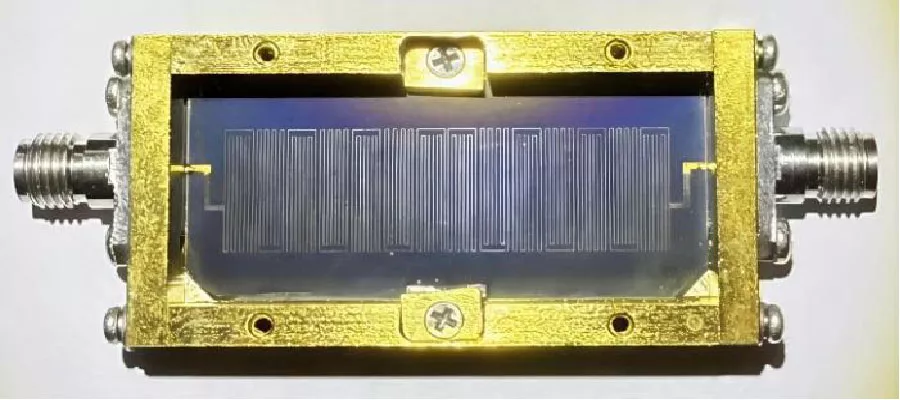
By utilizing the symmetry of the field distribution of a coplanar waveguide (CPW) SSPP transmission line (TL), a half-mode SSPP (HMSSPP) transmission line (TL) is presented. Through electromagnetic simulations, it is demonstrated that the proposed HMSSPP TL has a lower asymptotic frequency than the CPW SSPP TL, while occupying only half of the size. Through equivalent circuit analysis, the miniaturization mechanism of the half-mode structure is revealed, and the method to further reduce the asymptotic frequency has been developed. The fabricated and measured HMSSPP TLs confirm the effectiveness and benefits of the half-mode transmission line, achieving significant size reduction and maintaining low insertion loss. Such compact transmission lines are particularly advantageous in space-constrained applications such as portable communication devices, radar systems, and compact RF modules for wireless sensing.
Design and Analysis of a Half-mode SSPP Transmission Line for Size Miniaturization
2025-06-21
PIER Letters
Vol. 126, 77-85
Compact Dual-Band Wearable Antenna for Millimeter-Wave Applications: Designed for Medical and IoT Device Integration
Abubakar Salisu , Umar Musa , Umar U. Sabo , Mustapha M. Abubakar , Abubakar Sadiq Hussaini , Mobayode O. Akinsolu , Chan Hwang See and Raed A. Abd-Alhameed
This paper introduces a compact dual-band wearable antenna designed for mmWave applications. The antenna is fabricated on a Rogers 3003 semi flexible substrate with dimensions of 15 × 15 × 1.52 mm3 and features a circular radiating patch with a full ground plane. Initially designed to resonate at 28 GHz, the antenna incorporates a square split-ring resonator in the ground plane to achieve an additional resonance at 38 GHz. To improve bandwidth and gain, a round necktie configuration is applied by adding two diagonal rectangular patches to the periphery of the radiating patch. The measured impedance bandwidths are 21.4% at 28 GHz and 23.7% at 38 GHz. The antenna achieves gains of 5.91 dBi and 4.57 dBi, with efficiencies of 90% and 78% at the respective operating bands. Simulated SAR values are 0.57 W/kg and 0.31 W/kg for 1 g and 10 g of human tissue at 28 GHz, and 0.18 W/kg and 0.16 W/kg at 38 GHz. These SAR values comply with FCC and ICNIRP safety standards. Additionally, bending tests illustrate that the antenna's performance was stable under deformation. As a result, the proposed antenna is ideal for fast connectivity 5G and biomedical applications since it efficiently spans fundamental mmWave frequency ranges.
Compact Dual-band Wearable Antenna for Millimeter-wave Applications: Designed for Medical and IoT Device Integration
2025-06-17
PIER C
Vol. 156, 217-225
A New Design of Tunable Dual Band-Notched UWB Flower-Shaped Antenna Verified by CMA
Azadeh Shahpari and Mohsen Shafeghati
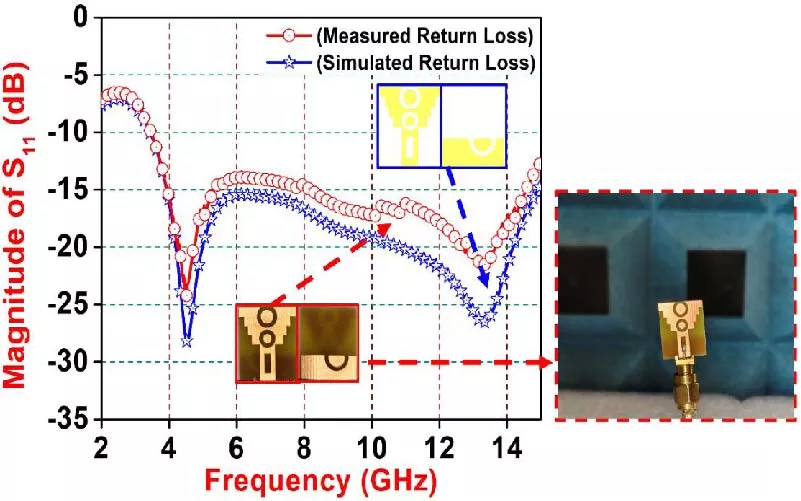
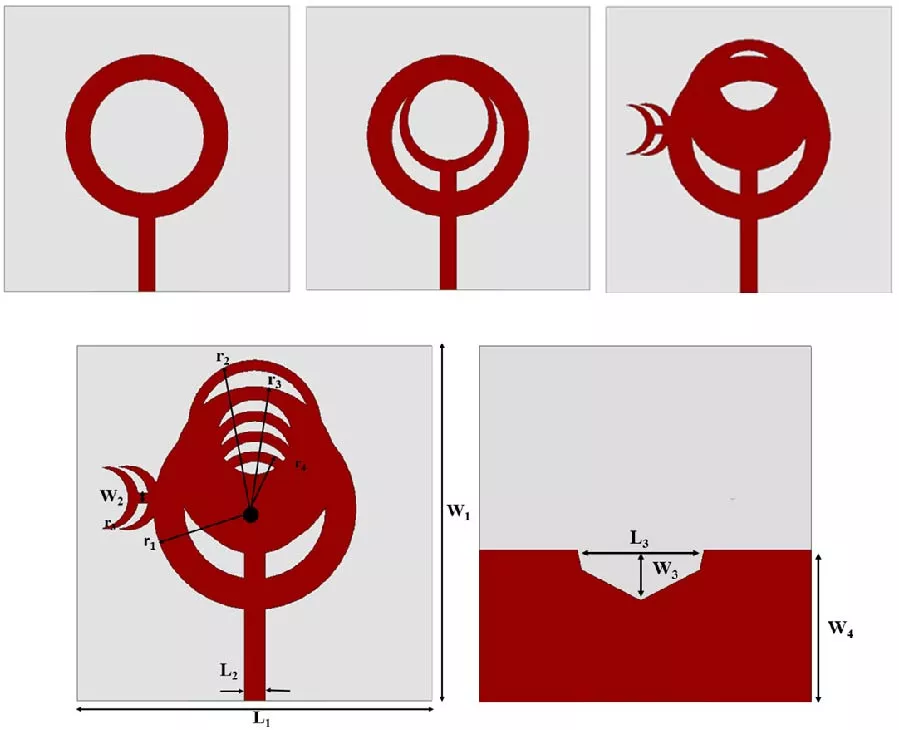
In this paper, a tunable ultra-wideband antenna based on slot structures is presented and verified using Characteristic Mode Analysis. The antenna is backed with a partial ground plane and covers the 2.8-13.2 GHz frequency band. In this wide frequency range, satisfactory VSWR and gain are achieved. To avoid interference with wireless local area network WLAN (5.2 to 5.8 GHz) and X-Band satellite links (7.9 to 8.4 GHz), two notches are created using U-shaped and elliptical slots. An important feature of this paper is the use of varactor diode in the elliptical slot to achieve tunable frequencies for the second notched band. By applying different bias voltages, the center frequency of the second notched band is continuously tuned. The antenna performance is verified using modal parameters including modal significance and characteristic angle within the working region of the proposed antenna using the theory of characteristic modes analysis. This antenna is implemented on top of a cost-effective FR4 substrate with a 1 mm thickness. The proposed flower-shaped antenna is compact in size and provides ultra-wide bandwidth. The dimension of the optimized design is 25 × 35 × 1 mm3.
A New Design of Tunable Dual Band-notched UWB Flower-shaped Antenna Verified by CMA
2025-06-17
PIER M
Vol. 134, 21-30
Improved Terminal Sliding Mode Control of PMSM Dual-Inertia System with Acceleration Feedback Based on Finite-Time ESO
Yingshen He , Kaihui Zhao , Zhixuan Yi and Yishan Huang
When permanent magnet synchronous motors (PMSMs) drive flexible loads, unknown disturbances (such as sudden load torque changes, parameter uncertainties, and unmodeled dynamics), can degrade the control performance of the system and may even cause irreversible physical damage. To deal with this problem, this paper presents an improved non-singular terminal sliding mode control (INTSMC) scheme based on a finite-time extended state observer. First, the acceleration feedback is introduced into the speed loop to establish the dual-inertia model of the PMSM flexible load system. Secondly, the conventional exponential reaching law is improved to obtain a novel reaching law with adaptive adjustment of the convergence speed, and a novel INTSMC controller is designed accordingly to enhance the system response speed. Then, a finite-time extended state observer (FTESO) is designed to estimate the disturbances of the system, and the estimated disturbances are compensated for the INTSMC controller to achieve convergence in finite time and improve the robustness of the system. The finite-time stability theory is used to prove the stability of the designed controller and observer. Finally, the simulations and experiments demonstrate the effectiveness of the proposed control scheme in improving the system’s anti-disturbance capability.
Improved Terminal Sliding Mode Control of PMSM Dual-inertia System with Acceleration Feedback Based on Finite-time ESO
2025-06-16
PIER C
Vol. 156, 207-216
Compact Size of Multiband Planar Monopole Antenna for Portable Device Applications
Bharati B. Sayankar , Sarita B. Dhoble , Pravin Tajane , Kanchan D. Ganvir , Nitin K. Choudhari and Jyotsna S. Gawai
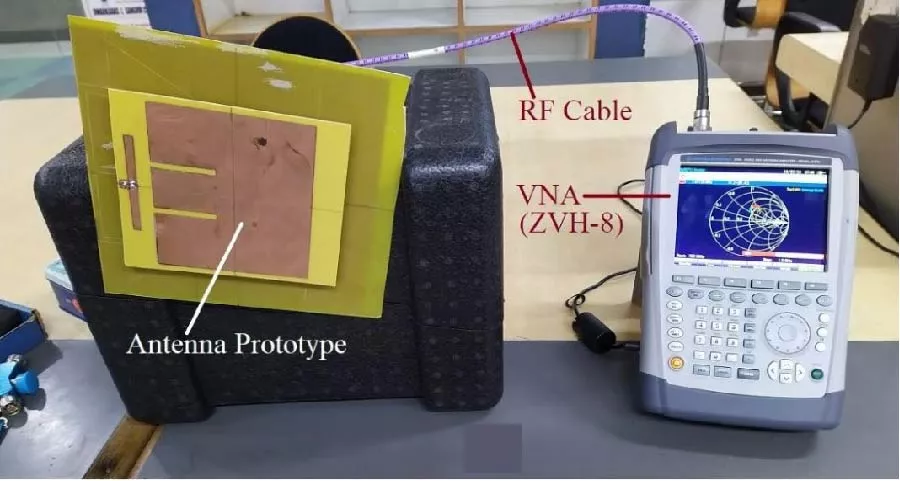
The proposed planar antenna features F and U shaped strips on the patch, along with U shaped slits on the ground plane, catering to WLAN/Bluetooth/WiMAX/HYPERLAN applications. Initially designed for a resonance frequency of 2.4GHz using standard formulae, the rectangular patch antenna boasts dimensions of 38.60 x 46.70 mm², totaling 1803 mm². However, employing the covering electrical length technique, the proposed antenna effectively reduces size for multiband applications. The lengths of the strips determine the resonance frequencies, while the U shaped slits facilitate adjustment of resonance frequencies as required. Following parametric optimization, the rectangular patch antenna becomes suitable for multiband operation, shrinking in size by up to 71.47% compared to its original form. The proposed antenna achieves resonance at 2.45 GHz, 3.55 GHz, and 5.37 GHz, effectively covering WLAN, Bluetooth, Zigbee, WiMAX, and HYPERLAN frequencies. Despite size reduction, the antenna maintains acceptable gain, ensuring its viability for multiband operations. The compact dimensions of the proposed planar antenna measure 39.5 x 13 mm², making it ideal for integration into small portable devices such as mobile handsets, laptop computers, and USB dongles. Following fabrication, various parameters of the antenna are measured using a Vector Network Analyzer (VNA), including reflection coefficient, Voltage Standing Wave Ratio (VSWR), and impedance.
Compact Size of Multiband Planar Monopole Antenna for Portable Device Applications
2025-06-16
PIER C
Vol. 156, 201-205
Flat-Plate Dipole Antenna for Wi-Fi 8 and 6G Operation
Saou-Wen Su , Tung-Chan Yu and Ju-Cheng Huang
A planar, short-circuited dipole design, constructed from cutting a flat metallic plate, capable of operating in the 2.4/5/6 GHz Wi-Fi 8 bands and also the 6G upper mid-band in the 7125-8400 MHz range is presented. The antenna comprises two folded dipole arms, each of which has a cut-out portion, with one short-circuiting portion connecting them. The plate dipole can operate at its 0.5-, 1.5-, and 2.5-λ resonant modes with two higher-order resonances forming a very wide 10-dB impedance bandwidth of about 5.0-9.4 GHz, easily covering the 5150-8400 MHz band for the 5/6 GHz Wi-Fi bands and the 6G upper mid-band. The design is simple in structure, has a compact size of 10 mm × 30 mm (0.08-λ × 0.24-λ at 2.4 GHz), and also shows good radiation performance. The design concept is elucidated and discussed in this paper with the numerical and experimental results.
Flat-plate Dipole Antenna for Wi-Fi 8 and 6G Operation
2025-06-16
PIER Letters
Vol. 126, 69-75
Spin Decoupling-Scalar Holographic Impedance Hybrid Metasurface for Bidirectional Multibeams
Hui-Fen Huang and Fuhua Liu
This paper proposes a spin decoupling phase gradient (SDPG)-scalar holographic impedance (SHI) bidirectional hybrid metasurface (MTS). The integrated SDPG MTS modulates the space wave (SPW) and is excited by the horn, whereas the SHI-integrated MTS modulates the surface wave (SFW) and is excited by a surface-mounted monopole. As example, (1) Dual orbital angular momentum (OAM) beams are generated at 18.3 GHz by the integrated SDPG MTS at 18.3 GHz: left hand circular polarization (LHCP) (OAM mode l1 = 1, θ1 = 30˚, φ1 = 0˚), right hand circular polarization (RHCP) (l2 = -1, θ2 = -30˚, φ2 = 0˚). (2) Linear polarization (LP) pencil beam is generated at 7.8 GHz by the integrated SHI MTS: (l3 = 0, θ3 = 150˚, φ3 = 0˚). The peak gain is 19.9 dBi, and the OAM purity is above 84.7%. The novelty of the manuscript is as follows: (1) To the authors' knowledge, a full-space SDPG-SHI hybrid metasurface has been developed for the first time, which greatly expands the bidirectional multifunctional design freedom. (2) Much higher aperture efficiency (AE) than published results. (3) The proposed SDPG-SHI hybrid MTS simultaneously possesses the following advantages: small size (π × 7.19λ × 7.19λ at 18.3 GHz, and π × 3.06λ × 3.06λ at 7.8 GHz), full space, multibeams, multipolarization, reconfigurability and simultaneous modulation of SPW and SFW. The developed MTS has promising applications in high-capacity bidirectional communication scenarios.
Spin Decoupling-scalar Holographic Impedance Hybrid Metasurface for Bidirectional Multibeams
2025-06-16
PIER B
Vol. 112, 61-73
Study of Complex Shapes Reflective Structures for UWB Antenna Based on Dielectric Materials with Various Conductive Coatings
Mikhail S. Shishkin
The paper summarizes the principles of various reflectors for microstrip antennas with a particular focus on volumetric reflectors (cavities) that are more challenging to manufacture than flat structures made from printed circuit boards or sheet metal. It is demonstrated in this study that volumetric reflectors can significantly enhance the directional properties of an antenna without typically increasing the antenna's radiating area or overall volume. To reduce the manufacturing costs associated with antenna's volumetric parts, the article proposes the use of 3D printing with commonly available dielectric materials, such as plastics. This technique is relatively straightforward and cost-effective compared to the manufacture of volumetric metal parts. Moreover, the article suggests applying a conductive layer to the parts of the antenna that contribute to radiation formation. The option of covering the reflector (cavity) on the inside with ordinary aluminum foil and the option with conductive enamel are considered. The results of simulation in antenna designs with different reflector conductivities and the results of experimental studies of antennas are presented. The results obtained show that the method is feasible to be used with virtually no compromise on the antenna characteristics and substantially reduces the production cost.
Study of Complex Shapes Reflective Structures for UWB Antenna Based on Dielectric Materials with Various Conductive Coatings
2025-06-13
PIER C
Vol. 156, 195-200
Hierarchical Matching Maximum Likelihood Estimation for Digital-Array Monopulse Tracking Radar
Haibo Wang , Wenhua Huang , Tao Ba , Yuchuan Zhang and Haichuan Zhang
Direction of arrival (DOA) estimation is an important issue for radar and communication applications. Monopulse is widely used to obtain the DOA result by the complex ratio from the sigma and delta beams of the antenna. In the case of digital array systems, various methods based on the covariance matrix of the received signal have been proposed to obtain the DOA result. However, it is impractical for tracking radar scenarios, as the covariance matrix is not easy to obtain. Nevertheless, there is merely one target echo in the vicinity of the range cell as forecasted. Thus, the Maximum Likelihood Estimation (MLE) is a relatively good estimator for tracking radar, which has high accuracy and robustness. However, MLE is often very computationally resource-intensive, as it needs to search the whole steering vector set. In this paper, in order to utilize MLE effectively, we propose an algorithm to quickly search the steering vector set by the binary tree hierarchical matching method, which can significantly reduce the computational cost. Furthermore, the computational complexity and accuracy performance have been studied from both theoretical analysis and simulation perspectives.
Hierarchical Matching Maximum Likelihood Estimation for Digital-array Monopulse Tracking Radar
2025-06-09
PIER C
Vol. 156, 183-193
Quasi-Z-Source Inverter Model Predictive Control Strategy with Improved Switching Sequence
Yang Zhang , Yuwei Meng , Xiuhai Yang , Dingai Zhong and Zhun Cheng
To address the issue of large inductor current ripple in the existing finite switching sequence model predictive control (FSS-MPC) strategy for quasi-Z-source inverters (qZSI), an improved switching sequence model predictive control strategy is proposed. First, the switching sequences and inductor current ripple characteristics of the existing strategy are analyzed. Then, the voltage vectors are rearranged, and eight switching sequences with shoot-through vectors are designed within one sector. Next, the duty cycles of the voltage vectors are calculated based on the inverse relationship between the duty cycle and the cost function value. Additionally, a weighting coefficient for switching times is introduced into the cost function. Finally, simulations and experiments are conducted to compare the proposed method with the conventional FSS-MPC strategy. The results verify the feasibility and effectiveness of the proposed control strategy.
Quasi-Z-Source Inverter Model Predictive Control Strategy with Improved Switching Sequence
2025-06-09
PIER C
Vol. 156, 175-182
Innovative Optically Transparent Planar Antenna for WiMAX Communication Systems
Soukaina Sekkal , Moustapha El Bakkali , Jamal Abounasr , Zainab L'Gzouli , Naima Amar Touhami , Bousselham Samoudi , Adel Asselman and Othmane Bendaou
This paper presents a study of a novel optically transparent planar antenna operating at a resonant frequency of 8.5 GHz, specifically designed for WiMAX wireless communication systems. The antenna is fed by a 50 Ω microstrip line and exhibits a wide operational bandwidth. Measuring 30 × 30 mm2 and achieving an optical transparency exceeding 70% of glass, the proposed antenna delivers outstanding performance while minimizing its visual impact. It is fabricated using an innovative rectangular meshed pure copper grid layer, deposited on a 0.7-mm-thick borosilicate flat glass substrate, optimizing both transparency and conductivity. Experimental evaluations of key performance parameters, including the reflection coefficient, radiation pattern, and gain, were conducted to assess the antenna's effectiveness at the target frequency of 8.5 GHz. The measured results confirm that the antenna exhibits excellent impedance matching at 8.5 GHz, achieving a peak realized gain of 5.2 dBi. These findings demonstrate the feasibility of transparent antennas that offer performance on par with non-transparent alternatives, while providing distinct aesthetic advantages. As a result, the proposed antenna presents a viable solution for applications requiring both functionality and visual integration, such as smart devices and architectural installations.
Innovative Optically Transparent Planar Antenna for WiMAX Communication Systems
2025-06-08
PIER C
Vol. 156, 169-174
A Compact Hybrid Multi-Notched UWB BPF Using Defected Microstrip Structure (DMS) and Short-Circuited Stub
Raaed Thaaban Hammed and Hassan Saad Abdullah
In this letter, a compact passband filter with dual desirable attenuation narrow bands is developed for ultra wideband application. Indeed, a grounded stepped impedance resonator in defected microstrip structure (GSIR-DMS) is realized with a specified high pass cutoff frequency of (f GSIR ). Next, two cells of the designed GSIR-DMSs are cascaded to perform the proposed ultra wide passband filter. In addition, four λg/4 open-circuited stubs are inserted beside the GSIR-DMSs to create two transmission zeros and improve the filter rejection performance. In order to suppress interference with some expected network channels, two desirable λg/4 short-circuited microstrip stubs are implemented and coupled to the body of the UWB filter. Finally, the filter is constructed, simulated, and measured using a Rogers-ceramic RO4360 substrate with a permittivity of εr = 6.15 and a thickness of h = 1.016 mm. The filter responses from measurement and simulation are compared and discussed. The produced filter is very small covering circuit area of about (0.433λg × 0.244λg) excluding the feeding ports.
A Compact Hybrid Multi-notched UWB BPF Using Defected Microstrip Structure (DMS) and Short-circuited Stub
2025-06-07
PIER C
Vol. 156, 161-168
Wideband Elliptical Patch Antenna Integrating a Circular Notch and Defected Ground Structure
Bharat D. Prajapati , Bhavesh Jaiswal and Pravin J. Dalvadi
A circular-slot embedded elliptical patch antenna with DGS ground is introduced for Wi-Fi, Bluetooth, Sub 6 GHz 5G, IRNSS, Wi-Max, and WLAN wireless network applications. The design consists of an elliptical radiating patch featuring a circular cutout positioned on the uppermost layer of the substrate, while the under layer incorporates a DGS structure with two symmetrical slots. The antenna is implemented on an FR4 substrate having a thickness of 1.6 mm and is excited using a microstrip line feed. The structural layout of the antenna corresponds to dimensions of 0.87λ × 0.81λ × 0.02λ. The developed antenna achieved a bandwidth of 86.74%, encompassing a BW extending from 1.73 to 4.38 GHz maintaining a reflection coefficient (S11) lower than -10 dB, exhibiting 5.1 dB of peak gain. The radiation characteristics and surface current density distribution are examined at specific frequencies of 2.4 GHz, 2.78 GHz, 3.5 GHz, and 3.95 GHz. Additionally, the antenna's evolution and parameter effects were examined to better understand its performance characteristics.
Wideband Elliptical Patch Antenna Integrating a Circular Notch and Defected Ground Structure
2025-06-06
PIER C
Vol. 156, 147-159
Simplified Duty Cycle Modulation Model Predictive Current Control of PMSM Without Cost Function
Dingdou Wen , Chaoyi Liu , Yanqin Zhang and Zhun Cheng
To reduce the prediction times and algorithm complexity of model predictive current control (MPCC) for permanent magnet synchronous motor (PMSM), a simplified duty cycle modulation model predictive current control without cost function (SDCM-MPCC) method is proposed. The proposed method uses two fixed voltage vectors to generate the three-phase duty cycles for any sector, which is directly applied to the inverter after correction, without using a cost function to traverse the combination and modulation of voltage vectors in different sectors with only 1 prediction. Deadbeat control on the d-q axis current is performed simultaneously to obtain the duty cycle for two fixed voltage vectors. The output voltage vectors can cover any amplitude and direction, effectively reducing current ripple and phase current harmonics. Simulations and experiments confirm the method's effectiveness and feasibility.
Simplified Duty Cycle Modulation Model Predictive Current Control of PMSM without Cost Function
2025-06-06
PIER Letters
Vol. 126, 57-67
Intra- and Peritumoral Radiomics-Based Models for Preoperative Prediction of Lymphatic Vascular Invasion in Invasive Breast Cancer
Lingxia Wang , Weixing Pan , Yitian Wu , Huangqi Zhang , Aie Liu , Enhui Xin , Jiadong Zhang , Lei Chen , Hongjie Hu and Wenbin Ji
In this study, we evaluated the feasibility of intra- and peritumoral artificial intelligence (AI)-based radiomics from Dynamic contrast-enhanced magnetic resonance imaging (DCE-MRI) for preoperative prediction of lymphatic vascular invasion (LVI) in invasive breast cancer (IBC). Our results demonstrated that a radiomic model (area under the receiver operating characteristic curve AUC = 0.951) outperformed a clinical model (AUC = 0.644) in 193 patients. Optimal tumor segmentation using 3D RU-Net (Dice score > 0.75) and 3 mm to 4 mm isotropic 3D peritumoral expansion yielded the strongest predictive performance.
Intra- and Peritumoral Radiomics-based Models for Preoperative Prediction of Lymphatic Vascular Invasion in Invasive Breast Cancer
2025-06-05
PIER Letters
Vol. 126, 49-55
Isosceles Triangle MIMO Antenna for Simultaneous 5G Communications
Mutte Bajibabu , Jetti Babu and Uppalapati Venkata Ratna Kumari
A four-element compact planar MIMO antenna is developed for the 3.5 GHz 5G sub-6 GHz band, ensuring reliable radiation performance and enabling simultaneous downlink and uplink communication. The proposed MIMO system incorporates four isosceles triangular elements, where two are allocated for uplink and the other two for downlink. Its compact structure facilitates simultaneous communication with separate provisions for uplink and downlink operations. The FR4 substrate has four antennas printed orthogonally to minimize mutual interaction between the elements. Triangles are more isolated and efficient when their corners are trimmed. Cutting the semi-circle yields the desired resonance frequencies. The proposed MIMO system measures 90 × 90 × 1.6 mm3. The performance of the proposed system was evaluated using multiple metrics, including far-field radiation patterns, S-parameters, channel capacity loss, envelope correlation coefficient, peak gain, diversity gain, and radiation efficiency. The simulated results closely aligned with the measured data, demonstrating strong agreement.
Isosceles Triangle MIMO Antenna for Simultaneous 5G Communications
2025-06-04
PIER C
Vol. 156, 141-146
A Miniaturized Ultra-Wideband Ground Penetrating Radar Antenna Based on the Vivaldi Structure
Zhiyao Qin , Shunfeng Cao , Weiheng Li and Qiulin Huang
To meet the demands for a broader bandwidth, lower frequency, and enhanced gain, this article presents an innovative ultra-wideband miniaturized ground penetrating radar antenna based on traditional Vivaldi designs. The proposed antenna achieves an operational bandwidth spanning from 100 MHz to 2000 MHz (20:1 bandwidth ratio), with a peak gain reaching up to 9 dBi. Furthermore, it exhibits remarkable miniaturization. The antenna introduces novel dual-slotline configurations, side elliptical slots, metallic loading, and top-mounted lumped resistors, which collectively optimize its bandwidth and voltage standing wave ratio. These improvements make it particularly suitable for ground penetrating radar systems.
A Miniaturized Ultra-wideband Ground Penetrating Radar Antenna Based on the Vivaldi Structure
2025-06-03
PIER C
Vol. 156, 131-140
A Fast Electromagnetic Coupling Model Analysis Method for Modular Multi-High Frequency Switching Circuits
Rui Zhang , Yanfeng Gao , Jixuan Wang and Han Meng
In this paper, a fast electromagnetic coupling model analysis method is proposed to solve the challenging problems such as complex switching state, difficult electromagnetic modeling and long parameter optimization process of multi-switch modular circuits with wide application prospects. In this method, a multi-loop circuit connected by multiple series-parallel high-speed switching devices is used as the research object, and each single loop can be regarded as a modular switching circuit for spatial electromagnetic coupling analysis. Considering the six complex states of the switching device, the speed and time change law dI/dt of the multi-loop electromagnetic coupling and the multi-switch switching state are simulated by using the circuit current change rate, and the circuit voltage fluctuation value dV is simplified to calculate the fast electromagnetic coupling model of the modular high-frequency switching circuit. By comparing with the electromagnetic coupling relationship calculated by the traditional Maxwell equations, the validity and rapidity of the fast electromagnetic coupling model are verified for the spatial electromagnetic field calculation of multi-switch modular circuit topology. By using the model analysis method, the optimal switching path with minimum power loss and maximum output efficiency can be predicted.
A Fast Electromagnetic Coupling Model Analysis Method for Modular Multi-high Frequency Switching Circuits
2025-06-03
PIER C
Vol. 156, 121-130
Bernoulli Filter for Low-Grazing Angle Track-Before-Detect with Monopulse Radar
Fei Cai
Target tracking in a low-grazing angle scenario is a challenging problem in radar because of the multipath phenomenon. When the signal-to-noise ratio (SNR) is low, this problem becomes more difficult. This paper applies a Bernoulli filter for low-grazing angle track-before-detect with monopulse radar. A measurement model is established using the Swerling II radar target model. The filter is implemented approximately as a particle filter. Simulation results show that the proposed filter is effective at detection and tracking in a multipath scenario and under low SNR.
Bernoulli Filter for Low-grazing Angle Track-before-detect with Monopulse Radar
2025-06-03
PIER M
Vol. 134, 13-20
Compact Slow-Wave Folded Substrate Integrated Waveguide with Broadband and Low-Loss Performance
Liang Li , Yangping Zhao , Shunli Hong and Minjin Zhang
This paper presents a novel compact, broadband, and low-loss slow-wave folded substrate integrated waveguide (SW-FSIW) structure, achieved by integrating grounded patches into a conventional FSIW configuration. The slow-wave effect is generated through enhanced capacitive coupling between the grounded patches and the signal trace grid patterned on the FSIW's middle metal layer. Compared to a conventional SIW with the same cutoff frequency, the SW-FSIW achieves a 66% reduction in lateral dimension and a 37% reduction in longitudinal dimension, resulting in a total area reduction of 78.6%. The design exhibits superior performance to state-of-the-art slow-wave SIWs in lateral size reduction, fractional bandwidth (92%), and attenuation constant. Experimental validation shows excellent agreement between measurements and simulations for a fabricated prototype operating across the 4.07-11 GHz frequency range, confirming the structure's strong potential for applications in compact microwave systems, 5G/6G front-ends, and satellite communications.
Compact Slow-wave Folded Substrate Integrated Waveguide with Broadband and Low-loss Performance