Search Results(13786)

2024-12-19
PIER C
Vol. 151, 73-79
Tumor Detection and Imaging through Body Scanning Using TMSA Operating in MBAN Band
Satheesh Rao
In this article, body scanning and imaging using a triangular microstrip antenna (MSA) with microstrip line feeding is presented. The resonant frequency of this antenna is 2.383 GHz having 20 dB bandwidth 3 MHz. The results comply with the 2.36 to 2.39 GHz band that the Federal Communication Commission (FCC) has designated for medical related applications. This antenna is used in scanning the human body model to detect the presence of tumor. The scan results are used to generate a 2-D color contour plot, which shows the location of tumor. Parametric analysis is carried out to fix the slot dimension to get optimum antenna performance. After successful simulation, the antenna structure is fabricated, and testing is carried out using Power Network Analyzer.
Tumor Detection and Imaging through Body Scanning Using TMSA Operating in MBAN Band
2024-12-17
PIER
Vol. 180, 103-113
Separation of a Toroidal Mode in Clusters of Dielectric Particles
Tong Wu , Andrey B. EvIyukhin and Vladimir Tuz
Constructing and utilizing toroidal modes in clusters of dielectric particles opens pathways to creating more efficient, compact, and functional devices across various fields, from sensing and telecommunications to energy and defense applications. Toroidal modes contribute to unusual material properties related to artificial magnetism, which is essential for designing innovative metamaterials. In this paper, we establish a relationship between eigenoscillations (modes) and scattering characteristics of a toroidal dielectric particle (torus) and clusters of particles composed of different numbers of dielectric disks arranged in a circular configuration (rings) in terms of the manifestation of their toroidal response. In particular, we examine the multipole contributions to the scattering cross-sections obtained in the exact form and long-wavelength approximation. A toroidal mode is introduced as a mode of the system for which the second-order term related to the exact electric dipole in the multipole decomposition is much greater than the first-order term. We show that the individual modes of the torus and hybrid modes of the ring consisting of an electromagnetically coupled ensemble of particles can be uniquely related, including the lowest-frequency toroidal dipole mode. Unlike the torus, the toroidal dipole mode in the ring can be separated in frequency from other multipole contributions, allowing excitation of the pure toroidal dipole resonance when providing corresponding irradiation conditions for external electromagnetic waves. This study provides an opportunity to better understand the physics of toroidal resonances in structures containing ensembles of dielectric particles and the peculiarities of their application in advanced microwave and photonic systems.
Separation of a Toroidal Mode in Clusters of Dielectric Particles
2024-12-17
PIER
Vol. 180, 89-101
Optimization Design of Photonic-Crystal Surface-Emitting Lasers: Toward Large Bandwidth and Single-Lane 200 g Optical Transmission
Xing-Chen Ai , Shao-Chi Pan , Yu-Hao Wang and Si-Cong Tian
By using the time-dependent three-dimensional coupled-wave theory (3D-CWT), the transient analysis of photonic-crystal surface-emitting lasers (PCSELs) with double-lattice photonic crystals is performed. By optimizing the size of the PCSELs and the shape of the double-lattice photonic crystals, the resonance frequency is increased, and the damping (photon lifetime) is decreased, which enables over 40 GHz intrinsic 3 dB modulation bandwidth of the PCSELs. 100 Gb/s open eye under non-return-to-zero (NRZ) modulation is demonstrated by using such PCSELs. The large bandwidth enables single-lane 200 G optical transmission under four-level pulse-amplitude modulation (PAM-4). This study shows the design principles of large-bandwidth PCSELs and promises PCSELs to be an ideal candidate for the application of high-speed, high-power, free-space optical communication.
Optimization Design of Photonic-crystal Surface-emitting Lasers: Toward Large Bandwidth and Single-lane 200 G Optical Transmission
2024-12-15
PIER B
Vol. 109, 113-125
A Slot Array Cavity Backed SIW Metamaterial Antenna for Satellite Applications
Astha Sharma and Reema Budhiraja
This research paper presents a novel dual-band slot array cavity-backed metamaterial antenna designed using advanced substrate integrated waveguide (SIW) technology. The antenna is specifically optimized for operation in the Ka-band frequencies. The incorporation of slots in the proposed design yields substantial advantages, such as enhanced impedance matching, exceptional directivity, and the capability for dual-band operation. Furthermore, the designed antenna showcases a gain of 6.40 dBi at 27.42 GHz and 4.77 dBi at 28.70 GHz, which is a result of the innovative incorporation of metamaterials within the SIW cavity. This demonstrates the antenna's ability to provide efficient signal reception and transmission, particularly in the specified frequency bands. The antenna's capability to operate in dual bands and its exceptional performance have been confirmed through rigorous simulation and experimental validation. These results substantiate its reliability and suitability for demanding millimeter-wave applications. The compact design and exceptional performance metrics of the proposed antenna underscore its potential for seamless integration into contemporary wireless communication systems, thereby laying the groundwork for continued progress in SIW and metamaterial-based antenna technology.
A Slot Array Cavity Backed SIW Metamaterial Antenna for Satellite Applications
2024-12-14
PIER C
Vol. 151, 65-71
A Compact Monopole Slotted Patch-Antenna for UWB Applications
Yousif Mohsin Hasan
This paper presents a compact single-feed, rectangular slotted-patched antenna (SPA) for UWB applications. The proposed design adds a triangular part of the tail of the rectangular patch, cuts the edge of the patch, etches a rectangular slot in the ground plane, and then tunes the basic parameters of the design to achieve the UWB passband. The proposed antenna including slots on the patch for compact functionality is readily identifiable. The bandwidth and realized gain of the UWB antenna can be extremely improved to show the ability of a slot loading technique. The new conception of the rectangular patch antenna is considered. A feed mechanism using an inset patch feedline is implemented and analyzed. The parameters of the antenna are demonstrated, and the antenna is fabricated with an inexpensive FR4 substrate and validated experimentally. The antenna occupies frequency band (2.56-12) GHz. Making slots in the modified patch results in a significant gain improvement of 4.8 dBi as well as extending the UWB passband. The measured values of the reflection coefficient, VSWR, realized gain, and power pattern are in good agreement with the simulated results.
A Compact Monopole Slotted Patch-antenna for UWB Applications
2024-12-13
PIER C
Vol. 151, 57-64
A Bandpass Filter Using Substrate Integrated Waveguide Cavity for Nonlinear Junction Detection Applications
Boyan Zhang , Minquan Li , Guocui Zhu , Yongkang Yuan , Chen Li , Shuang Xiao and Xin Qu
A band-pass filter utilizing a dual-mode Substrate Integrated Waveguide (SIW) cavity, enhanced by a novel Defected Ground Structure (DGS) is proposed in this paper. The SIW cavity operates in TE110 and TE120 modes, and the electric field of TE110 is modified by introducing a series of metallized disturbance holes at the center of SIW cavity to increase the resonant frequency of TE110 mode to that of TE120 mode, thereby forming a passband with two transmission poles. A DGS that combines a dumbbell structure with a Complementary Split Ring Resonator (CSRR) is employed on the ground plane of the filter to improve the stopband rejection and suppress the parasitic passband. EM simulation and measurement results suggest that the center frequency of the filter is 4.8 GHz. It achieves a 3 dB-bandwidth of 300 MHz, with its insertion loss in the passband up to 0.5 dB and return loss greater than 20 dB. The designed DGS introduces a transmission zero near 7.2 GHz to suppress the parasitic passband and enhance the selectivity of the filter, while maintaining the original insertion loss and return loss within the passband. Its overall layout is simple and innovative. The designed filter is specifically engineered for application in the receiver of Nonlinear Junction Detection (NLJD) systems, aiming to suppress interference signals and allow only the second harmonic to pass through, which holds certain practical significance in RF engineering.
A Bandpass Filter Using Substrate Integrated Waveguide Cavity for Nonlinear Junction Detection Applications
2024-12-13
PIER Letters
Vol. 124, 9-16
Performance Enhancement of Substrate Integrated Waveguide Antenna for Wi-Fi Applications
Srisudharshan Manikandan , Anbazhagan Vidya Linkkesh , Shankaragouda M. Patil and Venkatesan Rajeshkumar
A single-band, linearly polarized Substrate Integrated Waveguide (SIW) antenna is designed specifically for WLAN 802.11a applications. The SIW design consists of four rectangular slots adjacent to each other through the SIW wall, with appropriate rectangular patch elements inserted in the two vertical slots for bandwidth enhancement. The structure is optimized to radiate at a frequency of 5.22 GHz, resulting in linear polarization caused by the excitation of the TE110 mode. The simulated design offers a gain of 7.275 dBi and a bandwidth of 47 MHz. The radiation pattern of the proposed fabricated antenna is measured in test environments where it is found to be unidirectional. The proposed design is compact and minimal in complexity, offering a higher gain.
Performance Enhancement of Substrate Integrated Waveguide Antenna for Wi-Fi Applications
2024-12-12
PIER C
Vol. 151, 45-56
Design and Experimental Study of Dual-Band Left-Handed Filters for Sub-6G Applications
Zhonghui Li , Chen Li and Minquan Li
This paper presents a dual-band microstrip filter with left-handed characteristics, featuring high selectivity and miniaturization. The design achieves negative permittivity and permeability by integrating H-shaped complementary split-ring resonators (CSRRs) within a substrate integrated waveguide (SIW). To enhance out-of-band rejection performance, a defected ground structure (DGS) is introduced. By applying the Half Mode SIW (HMSIW) principle, the equivalent magnetic walls of the SIW are cut, resulting in a 50% size reduction. Dual-frequency characteristics are realized using a symmetrical H-shaped CSRR, with the filter operating in the Sub-6G frequency band. Experimental results demonstrate that the filter exhibits good selectivity and low insertion loss at 3.5 GHz and 4.8 GHz. Tuning of the second frequency band is achieved by adjusting the coupling distance between the CSRR and metal via. This work has significant application potential in the fields of wireless communication and RF technology. The study provides theoretical support and technical insights for the design of future compact multi-band filters.
Design and Experimental Study of Dual-band Left-handed Filters for Sub-6G Applications
2024-12-11
PIER C
Vol. 151, 33-43
Design and Analysis of Linear Primary Permanent Magnet Vernier Machines with Different Winding Configurations
Zhijian Ling , Qi Zhang and Meimei Xu
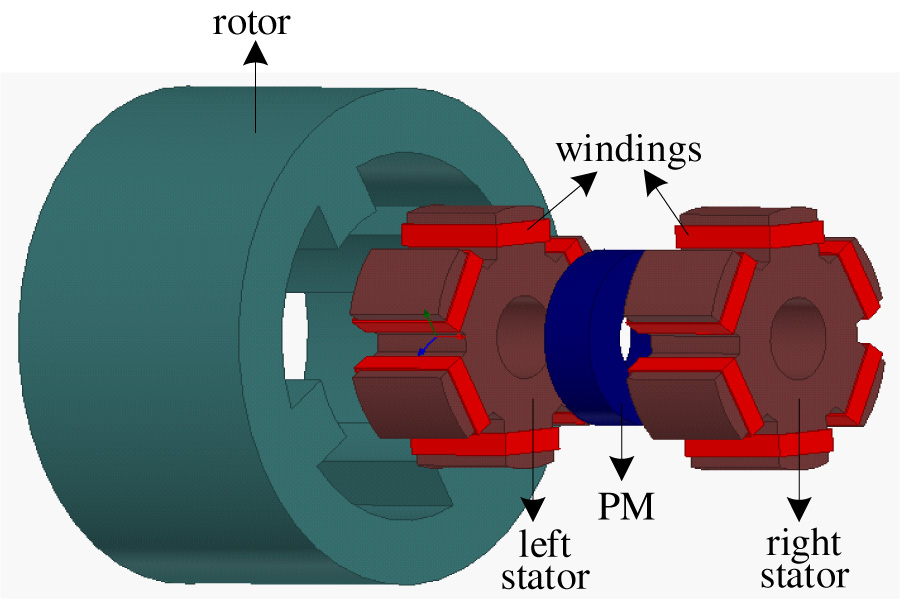
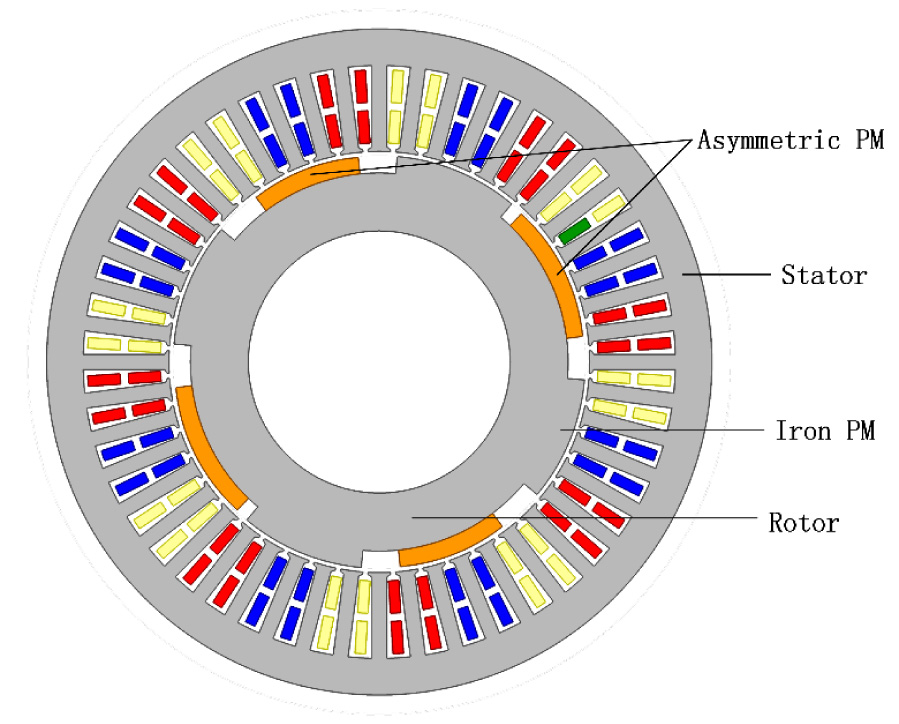
This paper investigates the effects of winding configurations on force density and fault tolerance in linear primary permanent magnet vernier (LPPMV) machines. Firstly, the LPPMV machines with integral slot distributed windings (ISDWs) and fractional slot concentrated windings (FSCWs) are discussed. Due to the high modulation ratio of ISDW machine, it has the potential to achieve higher thrust force capabilities. Then, the operation principle of the LPPMV machines is analyzed from the perspective of air-gap magnetic modulation. Furthermore, it should be noted that the winding configurations of ISDW machine has larger spans, resulting in insufficient fault-tolerance. To solve this limitation, a new modular ISDW LPPMV machine was proposed and optimized. In the modular ISDW LPPMV machine, a 3×3-phase winding configuration is employed. It is demonstrated that modular ISDW LPPMV machines exhibit superior characteristics in both thrust density and fault tolerance. Finally, the experiments are carried out in a linear test bench, verifying the theoretical analysis.
Design and Analysis of Linear Primary Permanent Magnet Vernier Machines with Different Winding Configurations
2024-12-11
PIER C
Vol. 151, 25-31
A Novel Proof-of-Concept AI-Driven Approach for Advanced Electromagnetic Imaging
Ali Ghaffarpour , Tahereh Vasei , Mahindra Ganesh , Reza K. Amineh and Maryam Ravan
This paper introduces an artificial intelligence (AI) methodology designed to enhance the output of two-dimensional (2D) electromagnetic imaging systems, specifically tailored for the imaging of conductive objects utilizing inductive sensors. The core of our imaging system comprises a commercial data acquisition board, alongside custom-made multilayer planar coils developed by conventional printed circuit board technology. By leveraging recent advances in AI and machine learning, our approach significantly improves the resolution and clarity of electromagnetic images. The paper uses a multi-layer perceptron (MLP) classifier to process the raw electromagnetic data captured by the imaging system. These algorithms are trained to recognize patterns and anomalies in electromagnetic field data, which are often indicative of conductive objects. The enhanced imaging capability is demonstrated through a series of experiments that compare the AI-enhanced outputs with the ground truth.
A Novel Proof-of-Concept AI-Driven Approach for Advanced Electromagnetic Imaging
2024-12-11
PIER C
Vol. 151, 13-24
Application of Attention Mechanism-Enhanced BiLSTM-CNN in Power Amplifier Behavioral Modeling and Predistortion
Jingchang Nan , Shize Liu and Jiadong Yu
Power amplifiers in wireless communication systems can introduce nonlinear distortion, degrade signal transmission quality, and increase power consumption. The paper presents a BiLSTM-CNN-based model for modelling power amplifier behaviour to address this issue. The model uses BiLSTM layers to capture temporal information from the signal data and incorporates a multi-head attention mechanism to focus on different temporal features. Additionally, convolutional layers process global features and reduce model parameters through weight sharing. Using this model, a digital pre-distortion (DPD) model is proposed to linearise the power amplifier through an indirect learning approach. The results show that the BiLSTM-CNN model achieves a normalised mean square error (NMSE) of -40.3dB, and the DPD model enhances the adjacent channel power ratio (ACPR) of the communication system by 18dB, demonstrating the model's feasibility. Comparative analysis with other network models indicates that BiLSTM-CNN outperforms traditional methods of fitting performance and convergence speed, showcasing its superiority.
Application of Attention Mechanism-enhanced BiLSTM-CNN in Power Amplifier Behavioral Modeling and Predistortion
2024-12-11
PIER B
Vol. 109, 95-112
Free Space Transmission Lines in Receiving Antenna Operation
Reuven Ianconescu and Vladimir Vulfin
This work derives exact expressions for the voltage and current induced into a two conductors non-isolated transmission line by an incident plane wave. The methodology is to use the transmission line radiating properties to derive scattering matrices and make use of reciprocity to derive the response to the incident wave. This methodology to derive receiving characteristics from the radiation properties via a scattering matrix is novel, and we already started to implement it to additional cases. An immediate advantage we obtained from this method is the derivation of a very simple analytic expression for the voltage and current for a matched transmission line. The analysis is in the frequency domain, and it considers transmission lines of any small electric cross section, incident by a plane wave from any direction and polarization. The analytic results are validated by successful comparison with ANSYS commercial software simulation results, and compatible with other published results.
Free Space Transmission Lines in Receiving Antenna Operation
2024-12-08
PIER C
Vol. 151, 1-12
AI-Tuned Metantenna Antenna for Fifth Generation & Beyond Communication Applications
Bikash Ranjan Behera and Harikkrishna Paik
For the purpose of fifth-generation and beyond communication applications, broadband circularly polarized (CP) & high gain AI-tuned metantenna operating in the 5 GHz band is presented in this article. So, an linearly polarized (LP) printed monopole antenna is being taken into consideration in the initial stage. To initiate CP from LP, a metallic strip that functions as a dynamic switching mechanism is utilized to short one of the parasitic conducting strips (PCS) with partial ground plane. The objective is to enhance the impedance (IBW) and axial bandwidths (ARBWs) as well as the antenna gain in order to make it a suitable candidate for ambient RF energy harvesting/wireless energy harvesting application. To achieve this, AI-tuned metasurface is placed below the monopole radiator at a height of 0.33λo. With a measured 49.84% IBW, 22.36% ARBW, CP gain > 8 dBic, antenna efficiency > 70%, fabricated on an FR-4 substrate with 1.3λo x 0.9λo x 0.02λo, it is suitable for the technological deployments in a current wireless technology, assuring resilience in networks. To meet the ever-increasing requirements of the current scenario, wireless communication landscape is on a paradigm shift. This transformation is brought by the utilization of metasurfaces offering customized, effective, and typical control of electromagnetic waves keeping with the desired frequency conditions.
AI-tuned Metantenna Antenna for Fifth Generation & Beyond Communication Applications
2024-12-06
PIER Letters
Vol. 124, 1-7
Application of Machine Learning in Urban Base Station Placement for 5G Communications and Beyond
Irfan Farhan Mohamad Rafie , Soo Yong Lim and Michael Jenn Hwan Chung
Optimal placement of wireless base stations in urban areas allows for maximum coverage and performance whilst maintaining minimal cost. In this paper, we propose a novel machine learning approach to place base stations rapidly in an urban environment for 5G communications and beyond. This is a noteworthy approach as 5G, especially those that involve millimeter wave frequencies tend to require significantly higher number of base stations for any particular area, unlike their counterpart low frequencies where a small number of base station is sufficient to cover a good geographical area. Our machine learning empowered path loss model is developed to tackle this change in gameplay head-on, and it bridges the gap between empirical and ray tracing methods where we achieve accuracy closer to ray tracing yet at a significantly lower computation cost. Promising preliminary results are obtained, with a minimum coverage area of 80% with potential for future improvements.
Application of Machine Learning in Urban Base Station Placement for 5G Communications and Beyond
2024-12-05
PIER C
Vol. 150, 187-193
A Miniaturized Tri-Band CP Antenna
Gaurav Kumar , Pratik Mevada , Ramesh Chandra Gupta , Vijay Kumar Singh , Sanjeev Kulshrestha and Milind Mahajan
This paper presents a coaxially fed, miniaturized tri-band circularly polarized (CP) antenna with a single layer patch configuration. Broadside radiation is achieved in the L5 band (1.176 GHz), L1 band (1.575 GHz), and S band (2.49 GHz), through the strategic excitation of higher-order modes (TM20 and TM30). The antenna design integrates slots and capacitors to reduce the operating frequency, efficiently excite all three modes, and achieve circular polarization within the designated bands. Each frequency band can be independently tuned with minimal effect on the performance of other bands. Moreover, it also facilitates the tuning of polarization sense (from RHCP to LHCP and vice versa) across all three bands. The proposed antenna radiates RHCP at L5, L1, and S bands, with a gain of 1.3 dBi, 1.5 dBi, and 2.7 dBi, respectively. A prototype with dimensions of (0.15λL5 × 0.15λL5) has been developed and fabricated to validate the antenna's performance.
A Miniaturized Tri-Band CP Antenna
2024-12-05
PIER C
Vol. 150, 179-185
Asymmetrical Dual-Dipole Based Optically Transparent Wideband Antenna for Wearable off-Body Communications
Yanjie Pei , Hongmei Liu , Jingguo Zhang and Zhongbao Wang
In the paper, an optically transparent wideband antenna is proposed for wearable off-body communications. It consists of two identical asymmetric dipoles connected by parallel metal plates, and is directly fed through the feeding cable. The dual-dipole system allows for the realization of high front-to-back ratio (FBR) without the need of the ground as a reflecting surface, and size reduction can be obtained. The asymmetric dipole can generate two resonant frequencies, thereby expanding the operated bandwidth. In addition, optical transparency is achieved by slotting the dipole and embedding it in the silicone dielectric. For validation, a prototype is fabricated, which exhibits a size of 0.41λ0 x 0.14λ0 x 0.13λ0. The results show that the prototype has a 10-dB fractional bandwidth (FBW) of 34%, an FBR of more than 14.1 dB, and a cross-polarization ratio of more than 20.8 dB. Within the bandwidth, the gain is larger than 2.79 dBi with the average efficiency of over 60 %.
Asymmetrical Dual-dipole Based Optically Transparent Wideband Antenna for Wearable Off-body Communications
2024-12-05
PIER B
Vol. 109, 81-93
Design of a Crescent Moon-Shaped Reconfigurable Patch Antenna Using a PIN Diode for 5G Sub-6 GHz and Multistandard Wireless Applications
Salah Eddine El Aoud , Hind Abbaoui , Omaima Benkhadda , Sanae Attioui , Nasima El Assri , Saïda Ibnyaich , Abdelouhab Zeroual , Mohd Muzafar Ismail and Ahmed Jamal Abdullah Al-Gburi
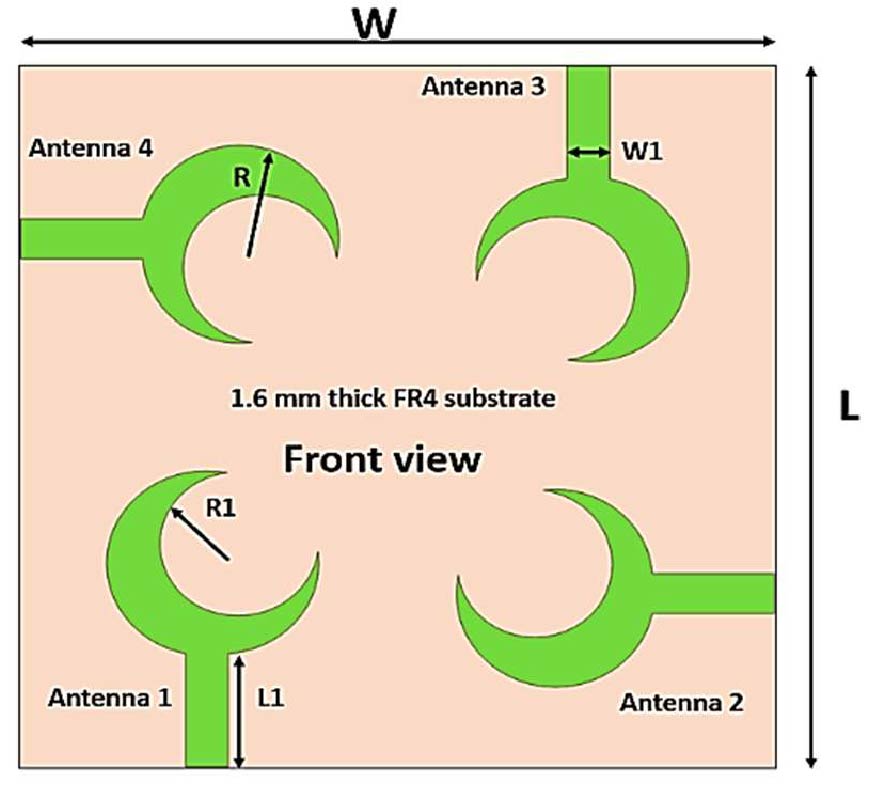
This research explores the versatility of a miniature reconfigurable antenna designed for a variety of wireless applications: 5G (IEEE 802.15.3), WLAN (IEEE 802.11), V2X (IEEE 802.11 p), WiMAX (IEEE 802.166), Wi-Fi 6E (IEEE 802.11 ax), Wi-Fi 7 (IEEE 802.11 be), C-band (from 4 GHz to 8 GHz), and X-band (from 8 GHz to 12 GHz). The antenna utilizes an FR4-Epoxy substrate with a thickness of 1.6 mm and a relative permittivity of 4.3. To enable frequency reconfigurability, the patch is equipped with two PIN diodes, which can be positioned at different locations to adjust the antenna's operational frequency range. This reconfigurability allows the antenna to maintain its size while changing its frequency range according to the state of the PIN diodes. The strength of our work lies in achieving exceptional electrical performance while maintaining a small size, cost-effective, and compact design. The antenna demonstrates an almost omnidirectional radiation pattern across all frequency ranges. Additionally, the simulated reflection coefficient remains within the ideal range for every frequency band. The antenna's overall dimension is 22 × 18 × 1.6 mm3o/4 × λo/5 × λo/56) (with λo being the free space wavelength at the lowest resonating frequency and for the proposed antenna its value equal to 91.18 mm) with a miniaturization rate equal to 75.25%. This compact antenna is designed to operate across multiple frequencies, making it suitable for various applications, particularly in wireless communication systems. Its versatility also makes it a promising candidate for future portable devices, sensor networks, and telecommunication applications. The performance metrics, including return loss and radiation pattern, are presented, demonstrating strong performance across these parameters. The analyses were conducted using the CST Studio Suite, which provided detailed insights into the antenna's functionality and effectiveness.
Design of a Crescent Moon-shaped Reconfigurable Patch Antenna Using a PIN Diode for 5G Sub-6 GHz and Multistandard Wireless Applications
2024-12-03
PIER Letters
Vol. 123, 95-103
Optimize the Performance of Reconfigurable Antenna Based on Laser Treatment for Sub-6 GHz Applications
Qasim Hadi Kareem , Laith Wajeeh Abdullah , Rana Ahmed Shihab , Firas Ali Jawad Al-Hasani and Suhail Najm Abdullah
The development of adaptable and efficient antenna designs has been required due to the growing demand for high-performance wireless communication systems driven by the increasing availability of online video streaming and multimedia devices. The design and implementation of a compact, reconfigurable C-shaped patch antenna that is specifically designed for 5G applications in the sub-6 GHz spectrum is presented in this paper. The antenna, which measures 20 × 30 mm2, can operate at five resonance frequencies within the 4 to 6 GHz range. Laser treatment is applied to optimize bandwidth and gain. Following the treatment, the antenna attained a bandwidth of 1100 MHz and an improved gain of 5.2 dBi at 5 GHz, as opposed to its initial gain of 4.3 dBi. The system functioned effectively since the reflection coefficient was less than -10 dB over the desired frequency ranges. The design's stable performance, compact integration, and varactor diode frequency adjustment make it desirable for wireless applications. Results exhibited a considerable match between simulated and measured data, demonstrating the promise of this reconfigurable antenna for next-generation wireless communication systems.
Optimize the Performance of Reconfigurable Antenna Based on Laser Treatment for Sub-6 GHz Applications
2024-12-02
PIER C
Vol. 150, 169-177
Millimeter-Wave Channel Measurements for 5G Networks Using a Low Cost Experimental Setup
Javier Enrique Arévalo Peña , Juan Sebastián Chávez Martinez and Javier Leonardo Araque Quijano
This contribution presents the design and validation of a portable and low-cost experimental setup of a sounder for channel characterization at the millimeter wave band for 5G systems (Frequency Range 2 - FR2). Unlike the high cost application-specific equipment employed by many research groups, universities and telecommunication companies, which also requires adequate mounting and transport to and within the measurement sites, our channel sounder integrates several hardware and software components that result in a lightweight and convenient device for manual operation. Our device enables measurements at 26 GHz, a band earmarked for the upcoming deployment of 5G systems in the millimeter wave band in Colombia. We present channel measurements to validate the performance of the experimental setup and to assess the adherence to the predictions of the 3GPP (3rd Generation Partnership Project) TR (Technical Report) 38.901 standard propagation model, achieving favorable results.
Millimeter-Wave Channel Measurements for 5G Networks Using a Low Cost Experimental Setup
2024-12-02
PIER C
Vol. 150, 157-168
Time Series Modelling of Powerline Communication Impulsive Noise: Queuing Theory Approach
Florence Chelangat and Thomas Joachim Odhiambo Afullo
The rate at which powerline communication (PLC) impulsive noise arrives and lasts in the channel determines the severity of signal degradation, with impulsive noise bursts capable of causing complete signal loss. Consequently, the PLC impulsive noise requires an appropriate description to enhance the reliability and effective utilisation of the PLC channel. This paper employs the queuing theory approach to analyse and model the PLC impulsive noise inter-arrival and service time distribution, where the impulsive noise is categorised into single-impulse noise events and burst-impulse noise events. The Erlang-k distribution is proposed for modelling both the inter-arrival and service time distributions for the PLC impulsive noise with the process viewed as an infinite queue with a single server. The impulse noise events are assumed to traverse k stages before entering the PLC network and also pass through k stages before leaving the PLC network, with each of the stages following an exponential distribution. The proposed models are then validated through measurements from different indoor environments and compared to the exponential distribution model, commonly employed in modelling inter-arrival and duration of PLC impulsive noise. The Ek/Ek/1 queue model is determined to adequately model the burst-impulse noise events. In regards to the single-impulse noise events, the exponential distribution is observed to provide a suitable fit for the inter-arrival time distribution. The occurrence of PLC impulsive noise events is also found to achieve a state of equilibrium for all the measurement data under study.
Time Series Modelling of Powerline Communication Impulsive Noise: Queuing Theory Approach