Search Results(13786)

2024-11-29
PIER C
Vol. 150, 145-155
Complementary Folded Line Metamaterial Loaded MIMO Antenna for S-Band Applications
Yugender Mood and Ramasamy Pandeeswari
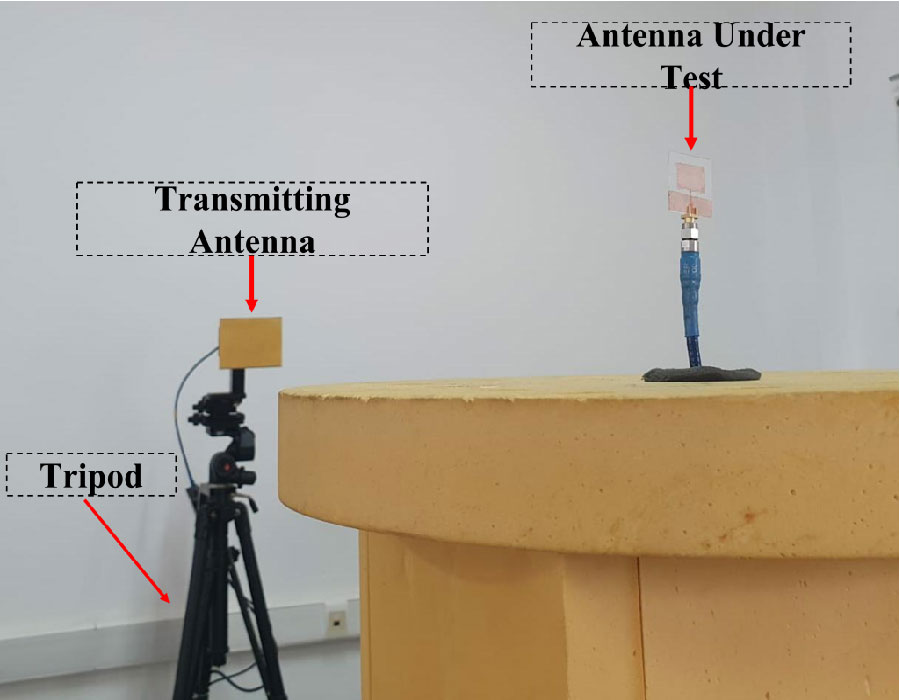
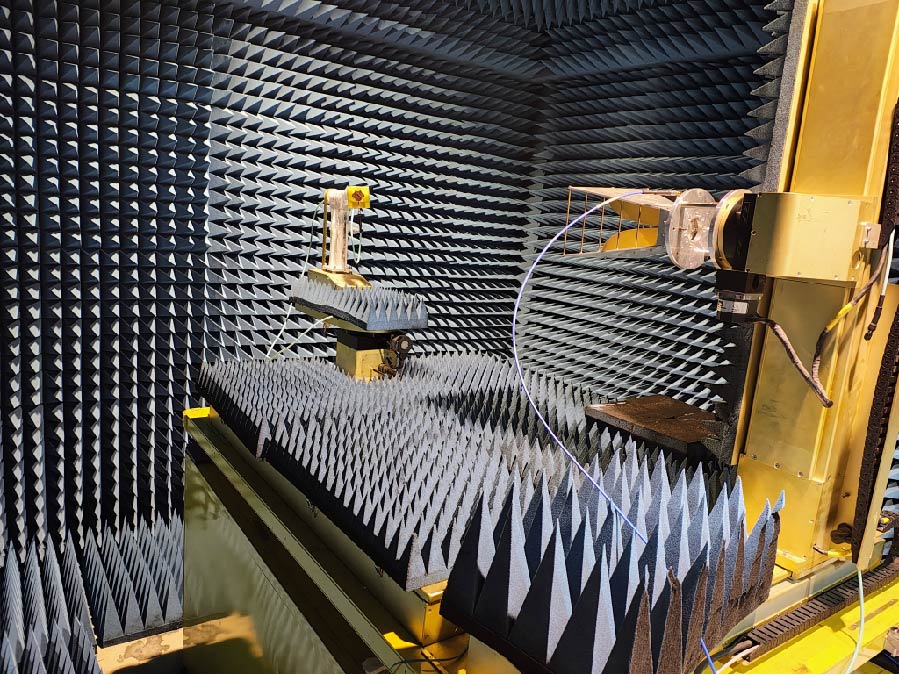
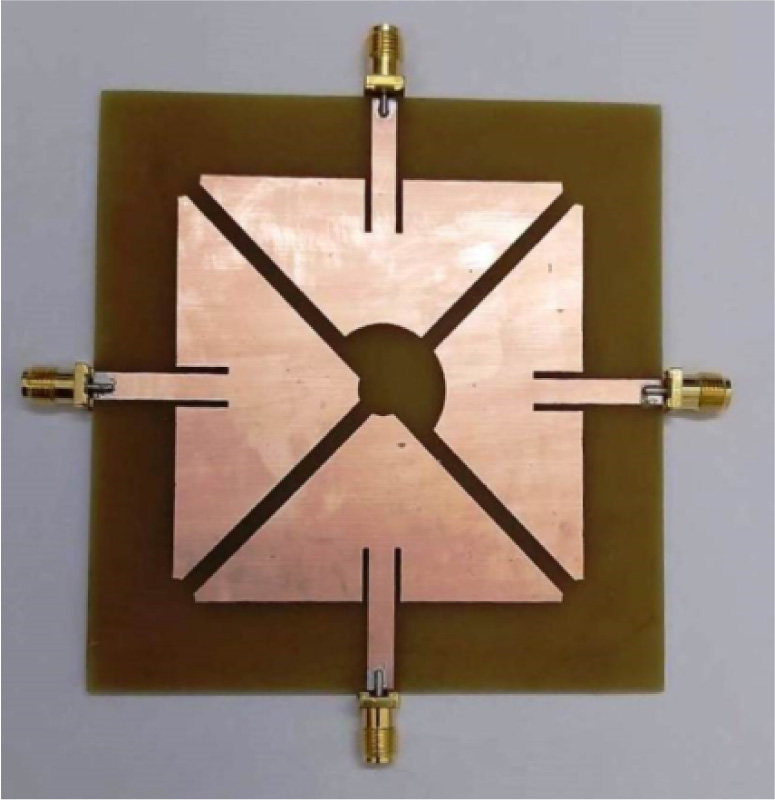
This paper introduces a MIMO antenna featuring a complementary folded-line metamaterial (CFL-MTM) design, it wants to reduce mutual interaction among very close microstrip patch antenna components. The antenna elements have an edge-to-edge spacing of roughly 0.0933λ0 (7 mm). By integrating CFL-MTM elements into the antenna structure, the antenna achieves negative permittivity and permeability characteristics, resulting in a compact size of 37 × 44 × 1.6 mm3. The antenna is suitable for S band applications, covering a bandwidth of approximately 3.121-4.277 GHz (1156 MHz). The incorporation of CFL-MTM results in a negative refractive index area, which effectively controls and reduces mutual coupling between the antenna parts. The antenna's dimension is optimized by keeping the CFL-MTM smaller than the resonant wavelength. Furthermore, the characteristics of the suggested MIMO antenna, such as ECC, CCL, and TARC, are assessed to show that it is suitable for S band applications.
Complementary Folded Line Metamaterial Loaded MIMO Antenna for S-band Applications
2024-11-28
PIER C
Vol. 150, 135-144
Optimizing Connectivity: DVB-RCS2 Uplink to GEO Satellites via Optical Wireless Communication
Meryem Romaissa Djellouli , Sid Ahmed Chouakri , Abdelkrim Ghaz and Taleb Ahmed Abdelmalik
This research focuses on the integration of an opto-satellite system based on Free Space Optical Communication (OWC) within DVB-RCS2 chains, implementing 16-QAM modulation techniques and Optical Time Division Wavelength Multiplexing (OTDMWDM). A co-simulation framework combining the MATLAB and OptiSystem environments is adopted to evaluate the system's performance. Key performance indicators, such as Bit Error Rate (BER) and Q factor, are meticulously analyzed to quantify the effectiveness of the proposed approach. The results obtained demonstrate notable improvements in transmission reliability and signal quality, highlighting the potential of OWC to optimize DVB-RCS2 standards. This study contributes significantly to the development of innovative solutions in the field of satellite communications, paving the way for more efficient and resilient systems.
Optimizing Connectivity: DVB-RCS2 Uplink to GEO Satellites via Optical Wireless Communication
2024-11-28
PIER M
Vol. 130, 71-82
Compact Model for EMC Analysis at Equipment Level in Automotive Context
Paul Clérico , Lionel Pichon , Jeffrey Lambert , Naraindranath Doorgah and Laurent Daniel
In this paper, a reconstruction methodology for the field emitted by an electronic equipment in a CISPR 25 standard environment is developed. It is based on an inverse method to determine equivalent dipoles representative of the electromagnetic sources. Positions and dipolar moments of equivalent dipoles are obtained via a hybrid optimization method, using a Genetic Algorithm (GA) followed by a Pattern Search (PS) method. First, the validity of the approach is verified with a numerical 3D model of a microstrip line. Then, an experimental protocol, corresponding to the setup of the CISPR 25 standard, is proposed and validated with a monopole antenna as a radiating source. As expected, the measurements obtained with the rod antenna yield some numerical errors related to the equivalent dipoles. However, such a compact model predicts the radiated field with sufficient accuracy to be useful for analyzing several EMC constraints in an automotive context.
Compact Model for EMC Analysis at Equipment Level in Automotive Context
2024-11-28
PIER B
Vol. 109, 69-80
A Technique for Alternating Generation of Single and Multi-Beams from Circularly Polarized Antenna Arrays
David Pouhè
A simple technique for generating single and multiple beams from antenna arrays is presented. The approach is based on the multistage sequential rotation technique. A new feature in using multistage sequential rotation is provided. It is demonstrated that by applying a controlled second sequential rotation, circularly polarized antenna arrays operating alternately in a single-beam mode M1 and multi-beam mode M2 in the same frequency band can be designed. Proof-of-concept is provided mathematically and through numerical simulations in light of case studies. The approach can not only be applied to large antenna arrays following a modular principle adapted to the array size and needed applications without loss of generality, but it also paves the way for the manufacture of circularly polarized antennas operating alternately or simultaneously in both modes in the same frequency band. In addition, antennas designed using the proposed approach may have a wide range of applications ranging from monopulse radar to antennas for compensation of interference and blockage in dynamic communication environments.
A Technique for Alternating Generation of Single and Multi-Beams from Circularly Polarized Antenna Arrays
2024-11-27
PIER M
Vol. 130, 63-70
The 6G Reconfigurable Reflectarray Antenna Using a Gold-VO_2 Bilayer Structure
Suhail Asghar Qureshi , Muhammad Ramlee Kamarudin , Muhammad Inam Abbasi , Yoshihide Yamada , Muhammad Hashim Dahri , Zuhairiah Zainal Abidin and Nordin Ramli
A reconfigurable reflectarray antenna (RRA) is proposed with beam steering capability at 1.1 THz. The element of reflectarray is composed of vanadium dioxide (VO-2) and a gold bilayer model designed on a unit cell of 0.45λ, in which temperature variations produce different reflection phases due to the dependence of VO-2 on ambient conditions. The proposed reflectarray antenna has an aperture of 3100 μm and when particular cells of the array are exposed to temperature over 340K, it causes the phase in those unit cells to alter, eventually acting as 1-bit RRA. The radiation pattern shows a maximum gain of 24.3 dBi and a sidelobe level of -14.4 dB with an aperture efficiency of 21.7%. The maximum gain in case of offset is over 21 dBi with side lobe levels less than -10 dB up to 80-degree beam steering range. The proposed reconfigurable reflectarray antenna shows a beam steering capability of up to 100 degrees, which is sufficient for indoor communications. The designed antenna with its performance is optimum for the development of 6G RIS-based communication systems.
The 6G Reconfigurable Reflectarray Antenna Using a Gold-VO_2 Bilayer Structure
2024-11-25
PIER Letters
Vol. 123, 89-94
Microwave Theremin Piano: SRR-Based Touchpad
Vladyslav Tkach , Mykola Khobzei , Serhii Haliuk , Ihor Safronov , Andrii Samila , Vjaceslavs Bobrovs and Dmytro Vovchuk
Traditional touchscreens, popular for their adaptability and ease of maintenance, typically use capacitive technology where finger contact alters an electrostatic field. Here we demonstrate a touch keyboard configuration, based on a resonant-based system encompassing split-ring resonators (SRRs). These resonators, operating at the GHz spectral range, detect a finger's proximity, changing resonance frequency, but remain unaffected by distant objects - thus allowing for a parallel and independent readout of multiple keys. Specifically, 14 independent keys have been demonstrated, and the frequency-sharing protocol for parallel acquisition of sequences has been successfully implemented. The readout is performed in parallel by monitoring the transmission through a microstrip line, which is equipped with a series of distinct SRRs that resonate at different frequencies. The system has been implemented on an extremely low-cost platform, which can be transformative for similar tasks.
Microwave Theremin Piano: SRR-based Touchpad
2024-11-23
PIER Letters
Vol. 123, 83-88
A 3.1 GHz Defected Ground Transmission Line Microwave Sensor for Blood Glucose Estimation
Raghupatruni Ram Krishna
In the work presented in this paper, a microwave sensor is investigated for estimating the glucose level in the blood of a diabetic patient. The microwave sensor consists of a planar microstrip transmission line printed on one side of the substrate while four Circular Complementary Split Ring Resonators (CCSRR) arranged in compact beehive arrangement are etched out from the ground plane on the other side, thus forming a Defected Ground Transmission Line (DG-TL). It is well known that the dielectric properties of blood to a large extent depend on the intrinsic glucose concentration. Placing the fingertip on the CCSRR cells is expected to disturb the electric field in the vicinity by changing the inductance-capacitance of the configuration and thus mirroring a change in the S-parameters of the transmission line. The changes, a shift in the resonance frequency and a change in the amplitude, is proportional to the dielectric strength of the adjacent medium which in turn is proportional to the blood glucose level. To mimic a human finger, a tiny glass container containing aqueous glucose solution is placed on the CCSRR configuration and by varying the glucose concentration; the changes in the S-parameters were observed. The sensor has planar dimensions of 60 mm x 20 mm and offers a resolution of 0.75 MHz per mg/dL of glucose concentration. Simulations and measurements indicate the applicability of the design for identifying glucose levels in the blood.
A 3.1 GHz Defected Ground Transmission Line Microwave Sensor for Blood Glucose Estimation
2024-11-21
PIER C
Vol. 150, 125-133
Analysis of Inscribed Hexagonal Slot Loaded Antenna for Short Range RFID Reader Applications
Rupanita Das , Tanmay Kumar Das , Ajay Kumar Yadav , Harish Chandra Mohanta , Abdul Kayum Muhammad Zakir Hossain and Ahmed Jamal Abdullah Al-Gburi
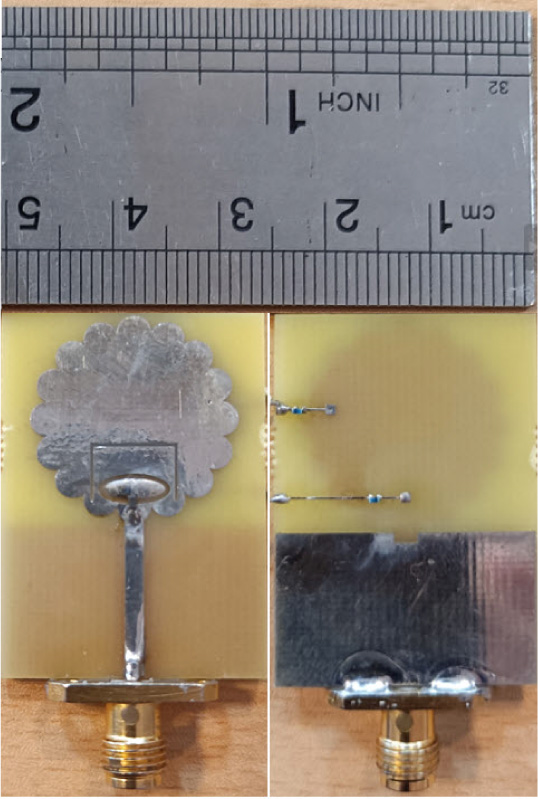
This article introduces an inscribed hexagonal-slot square patch antenna developed in the field of RFID technology for reader applications. The proposed structure is energized with one feeding element. This study proposes a high-gain microstrip antenna for ISM band applications at 5.8 GHz. FR4 material is utilized in design and fabrication of the antenna. The resulting design achieves a −10 dB impedance bandwidth of around 3.6% in the ISM band. The proposed design is determined to be compact in comparison to several contemporary designs and has dimensions of 0.43 λ x 0.43 λ x 0.03 λ (λ = wavelength at 5.8 GHz). The measurement reveals that the antenna can operate across the frequency band 5.67 GHz−5.88 GHz having a maximum gain value 4.58 dBi at 5.77 GHz. The satisfaction of the propagation test in different environments and the reading distance value of 2.81 cm at the ISM band supports the application of the structure as a short-range RFID reader.
Analysis of Inscribed Hexagonal Slot Loaded Antenna for Short Range RFID Reader Applications
2024-11-21
PIER B
Vol. 109, 57-67
Analysis of Eddy Current Losses and Stresses in High-Speed Permanent Magnet Synchronous Motors with Frameless Torque
Xiping Liu , Haiao Sun , Zhangqi Liu and Canwei Zhang
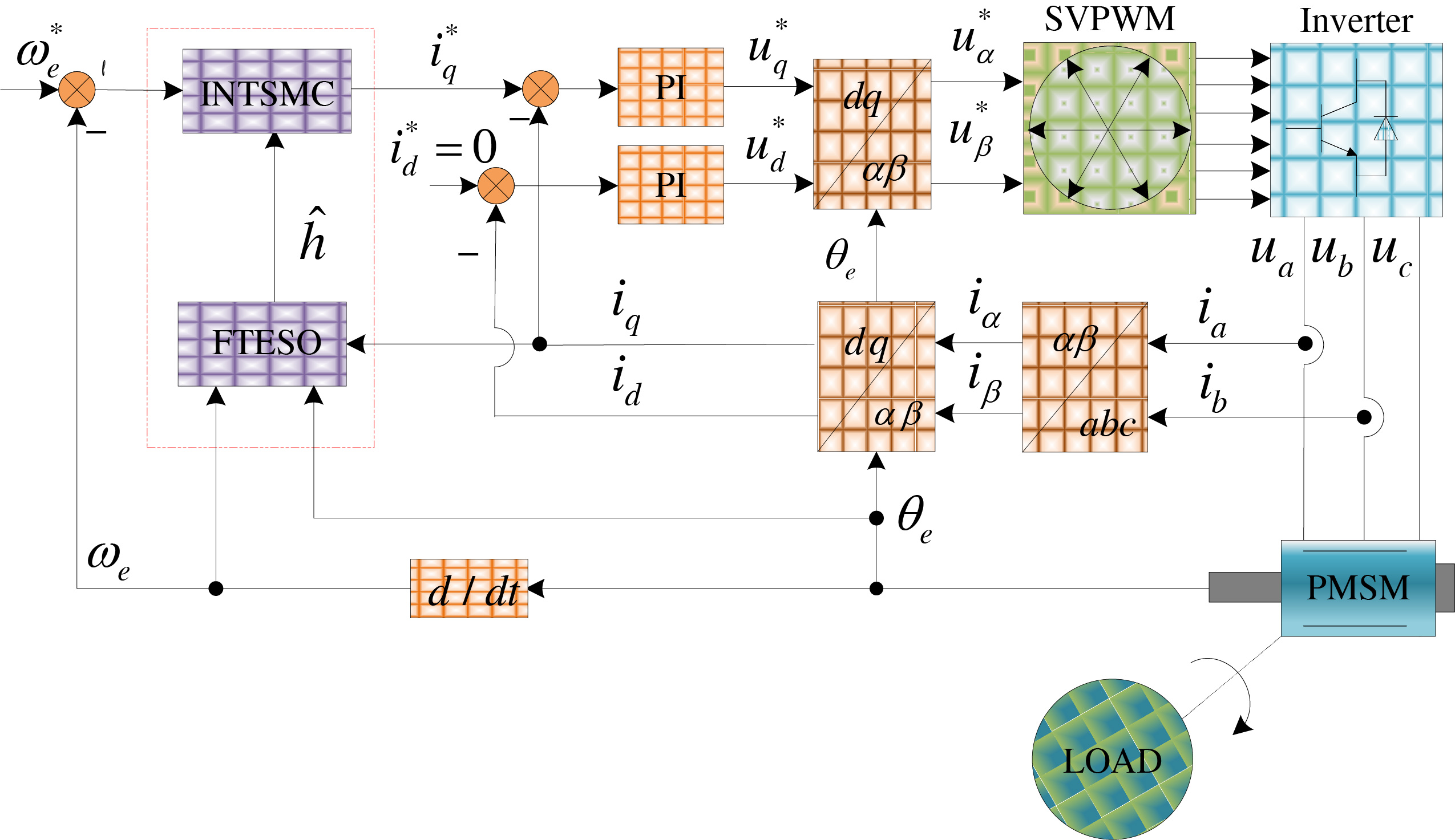
In this paper, a high-speed frameless torque permanent magnet synchronous motor is designed to determine the optimal structure of the rotor by comparing the air gap magnetism, cogging torque and output torque of the motor through finite element analysis. The effects of different material rotor sheaths on eddy current loss are compared and analyzed, and the copper shield is used to optimize the rotor eddy current loss of the high-speed frameless torque motor. Through the analytical method, based on the theory of thick-walled cylinder, the stress calculation is carried out on the multilayer rotor structure of the high-speed permanent magnet synchronous motor with copper shielding layer, and a comparative analysis is carried out with the simulation results to verify the validity of the analytical calculations and the reasonableness of the optimization of the rotor eddy current loss.
Analysis of Eddy Current Losses and Stresses in High-speed Permanent Magnet Synchronous Motors with Frameless Torque
2024-11-20
PIER Letters
Vol. 123, 77-82
Miniaturized Coplanar Waveguide to Rectangular Waveguide Transition Using Integrated Resonators and Variable Housing
Ting-Tzu Cho and Chun-Long Wang
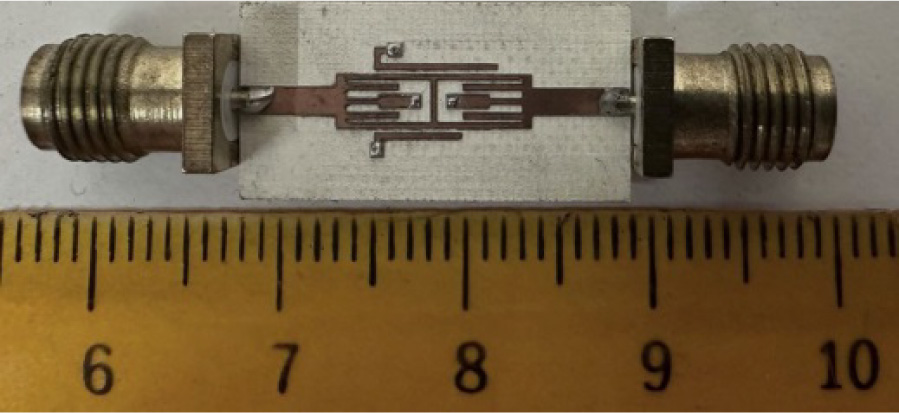
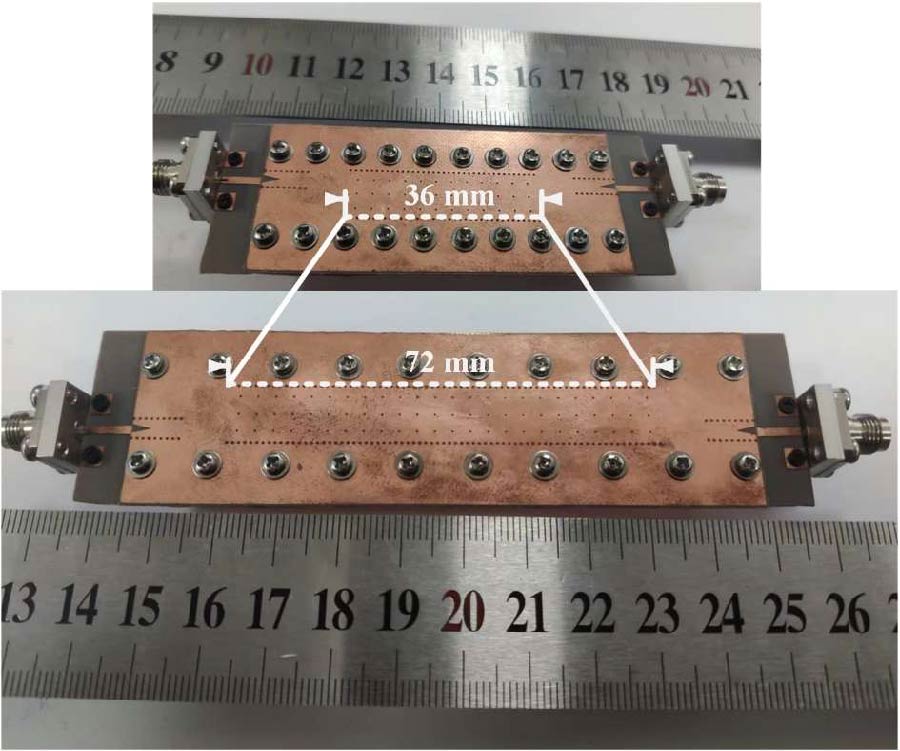
In this paper, a miniaturized coplanar waveguide (CPW) to rectangular waveguide (RGW) transition using integrated resonators and variable housing is proposed. By properly designing the dimensions of the integrated resonators and variable housing, a compact and broadband transition can be accomplished. The -15-dB fractional bandwidth of the transition is as broad as 45.2%, which ranges from 8.21 GHz to 13 GHz, covering the whole X-band (8.2-12.4 GHz). Besides, the transition size is as small as 3.94 mm. To reduce the mechanical complexity, the housing height is from 24.5 mm to 22.86 mm, which is equal to the height of the rectangular waveguide. The -15-dB fractional bandwidth of the transition is as broad as 45.5%, which ranges from 8.18 GHz to 13 GHz, encompassing the whole X-band. Besides, the transition size is still as small as 3.94 mm. To verify the simulations, a back-to-back CPW-to-RWG transition is fabricated and measured. The simulation and measurement results are in good agreement.
Miniaturized Coplanar Waveguide to Rectangular Waveguide Transition Using Integrated Resonators and Variable Housing
2024-11-19
PIER Letters
Vol. 123, 69-76
A Large-Frequency-Ratio Filtering Crossover Based on Ridged SIW Resonators
Tianle Zhou , Yuchen Yin , Wei Shen , Zixuan Yi and Tao Zhao
A novel filtering crossover featuring flexibly allocated center frequencies based on ridged substrate integrated waveguide (RSIW) is proposed. Two TE101-mode SIW cavities, two loading single ridge SIW (SRSIW) cavities and a loading triple ridge SIW (TRSIW) cavity are used to realize the filtering crossover. Good transmission and isolation responses can be achieved based on orthogonal degenerate TE102 and TE201 modes in the centered TRSIW cavity. The frequency ratio of the TE102 and TE201 modes can be significantly improved by adjusting the aspect ratio and the dimensions of ridges in the centered TRSIW cavity. A prototype operating at 4.98 GHz/10.1 GHz is fabricated and measured. The measured results demonstrate excellent agreement with the simulated one.
A Large-frequency-ratio Filtering Crossover Based on Ridged SIW Resonators
2024-11-19
PIER B
Vol. 109, 41-56
Design of F-Shaped Parasitic MIMO Antenna with DGS for Vehicle-to-Everything Communication
Maruti R. Jadhav and Uttam L. Bombale
Multiple-Input Multiple-Output (MIMO) antennas are essential for transmitting and receiving information in Vehicle to Everything (V2X) communication. However, the MIMO antenna designs at V2X are complex because of the mutual coupling problem. Several approaches have been designed to improve antenna isolation. However, these approaches have drawbacks like gain, bandwidth, and radiation efficiency reductions. This work introduces a compact four-port MIMO antenna that operates at a 5.85 GHz to 5.9 GHz frequency range for V2X communication. Here, the slotted circular microstrip patch MIMO antenna is considered. The antenna's length, width, and patch are optimized by metaheuristic optimization called Aquila Optimization (AO). A substrate Rogers RT5880, which has a defected ground structure (DGS) and a parasitic patch, is used to design the antenna. F-shaped parasitic elements are placed near each antenna element to improve isolation. The DGS with a U-shaped parasitic element minimizes the mutual coupling among the adjacent antenna elements. The considered overall dimension has a compact size, and it achieves better envelope correlation coefficient (ECC < 0.5), total active reflection coefficient (TARC < -10 dB), diversity gain (DG > 9.9 dB), channel capacity loss (CCL < 0.4), and mean effective gain (MEG < 3 dB) at 5.88 GHz. Hence, it is proposed that the developed design is useful for applying V2X communications.
Design of F-shaped Parasitic MIMO Antenna with DGS for Vehicle-to-everything Communication
2024-11-18
PIER
Vol. 180, 79-87
Some Selected Unsolved Problems in Classical and Quantum Electromagnetics
Weng Cho Chew , Boyuan Zhang and Jie Zhu
In this paper, we propose some suggestions for unsolved problems in classical and quantum electromagnetics. We aim to explain these problems in the simplest way possible. Some issues like the quantum computer may need a lot more work. The subject matter is interdisciplinary needing international collaboration in many different areas such as physics, math, engineering, and material science.
Some Selected Unsolved Problems in Classical and Quantum Electromagnetics
2024-11-18
PIER C
Vol. 150, 113-124
Slot Antenna in Cylindrical Coupling Brick for Microwave Brain Imaging
Antonio Cuccaro , Angela Dell'Aversano , Bruno Basile and Raffaele Solimene
In this contribution, two antennas for microwave imaging are described and validated. The first solution is a slot antenna designed when it works a direct contact with human head. However, the air-gap issues and hair layer degrade the antenna performances. These limitations are overcome with the cylindrical brick antenna containing coupling liquid medium. Basically, this antenna consists of a ground plane hosting a wide slot and a microstrip feed line with a fork-like tuning stub inserted within the circular container. Numerical examples show that the proposed antenna exhibits S11 below -10 dB over the selected frequency band from 1 to 2 GHz, in agreement with microwave brain imaging systems. Moreover, the antenna is assessed in terms of transmission coefficients and field penetration. In particular, it is shown that such a feature holds true when the antenna is placed in different positions over the head, when it is located on both the skin and the hair. Experiments on a few real humans confirm the numerical results. The transmission coefficient, which is the only one used in imaging systems to streamline the hardware complexity, is of comparable level of other similar antennas already present in literature. However, the proposed antenna is lighter and smaller in size.
Slot Antenna in Cylindrical Coupling Brick for Microwave Brain Imaging
2024-11-17
PIER C
Vol. 150, 105-112
Systematic Synthesis of Fully-Planar Antennas Based on Metamaterial-Enhanced SIWs for 5G Communications
Vasileios Salonikios , Stamatios A. Amanatiadis and Michalis Nitas
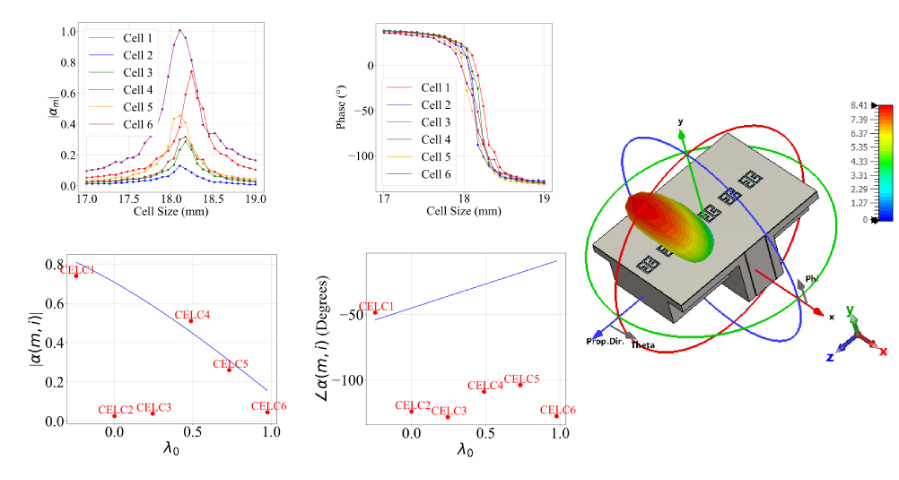
A fully numerical process for the systematic design of fully-planar antennas for 5G communications frequencies is presented, utilizing a metamaterial-enhanced SIW as the basis platform. A combined modal analysis and wave propagation Finite Element modeling is proposed for the accurate design of the waveguiding structure towards its leakage loss minimization. Based on this robust numerical schemes, two different types of fully-planar antennas are designed. A leaky-wave fully-planar two-slot antenna and an H-plane end-fire sectoral horn antenna. Both structures are viable candidates for integration in 5G communications platforms, exhibiting attractive characteristics such as optimized gain and bandwidth, low cost, compactness, and ease of fabrication.
Systematic Synthesis of Fully-planar Antennas Based on Metamaterial-enhanced SIWs for 5G Communications
2024-11-16
PIER B
Vol. 109, 29-40
Design and Optimization of Series-Connected Hybrid Excitation Permanent Magnet Synchronous Motor
Jianwei Liang , Tian Song , Peiyao Guo , Xiubin Zhu , Zhangsheng Liu and Yuqian Zhao
To address the problems that the traditional permanent magnet synchronous motor air-gap flux is difficult to adjust and that the weak magnetic speed expansion ability is poor, a new series-connected hybrid excitation permanent magnet synchronous motor is proposed. A DC excitation winding is added to the rotor, allowing the excitation field generated by this winding to form a series connection with the magnetic field of the permanent magnets. The structure of this paper includes an overview of the novel rotor structure and principle of operation. For the complex rotor structure, a multi-objective genetic algorithm is used for optimisation, followed by finite element analysis to compare the performance of the initial motor, the optimised motor and the conventional motor in terms of no-load air-gap magnetism, reverse electromotive force as well as output torque and efficiency. The magnetic load of the motor in the demagnetized state is increased from 0.2 to 0.266 compared to the unexcited state, and the magnetization capacity is improved by 33%. The output torque of the optimized motor is 252 N.m at low speed; the output torque of the conventional motor is 220 N.m; and the starting torque of the motor is improved by 14.5%. The maximum speed is increased from 10,000 rpm to 11,500 rpm, and the speed expansion capacity is improved by 15%. The effectiveness and feasibility of the series-connected hybrid excitation permanent magnet synchronous motor are verified.
Design and Optimization of Series-connected Hybrid Excitation Permanent Magnet Synchronous Motor
2024-11-15
PIER
Vol. 180, 61-78
New Bounds on Spherical Antenna Bandwidth and Directivity: Updates to the Chu-Harrington Limits
Carl Pfeiffer and Bae-Ian Wu
The Chu circuit model provides the basis for analyzing the minimum radiation quality factor, Q, of a given spherical mode. However, examples of electrically large spherical radiators readily demonstrate that this Q limit has limitations in predicting bandwidth. Spherical mode radiation is reexamined, and an equivalent 1D transmission line model is derived that exactly models the fields. This model leads to a precise cutoff frequency of the spherical waveguide, which provides a clear boundary between propagating and evanescent fields. A new delineation of `stored' and `radiated' electromagnetic energy is postulated, which leads to a new definition of spherical mode Q. Next, attention is turned to the Harrington bound on the directivity-bandwidth tradeoff of an antenna with an arbitrary size. Harrington derived the maximum directivity for a specified number of spherical harmonics such that the Q is not `large'. Here, the method of Lagrange multipliers is used to quantify the maximum directivity for a given bandwidth. It is shown that optimally exciting all spherical harmonics (including n>ka) enables both larger directivity and bandwidth than Harrington's previous limit. While Chu and Harrington's analyses are generally good approximations for most situations, the new self-consistent theory that defines fundamental antenna limits leads to updated results.
New Bounds on Spherical Antenna Bandwidth and Directivity: Updates to the Chu-Harrington Limits
2024-11-15
PIER C
Vol. 150, 97-104
Hybrid Method for Electromagnetic Vibration Calculation of Flatted Single-Layer Interior Permanent Magnet Synchronous Machines for Flywheel Application
Xinjian Jiang , Lei Zhang , Fuwang Li and Sai Zhang
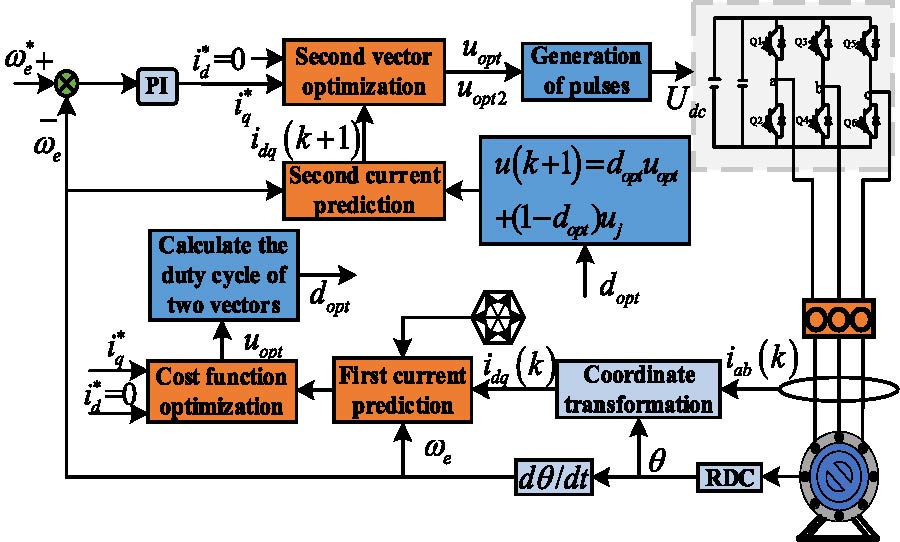
In this paper, a hybrid method is proposed for electromagnetic vibration prediction of flatted single-layer interior permanent magnet synchronous machines (IPMSMs) for flywheel application. The proposed hybrid model combines the mesh-based equivalent magnetic network (EMN) model and vibration transfer function method. A small size 4-pole/6-slot flatted single-layer IPMSM for demonstration purposes is manufactured to illustrate the proposed hybrid method. Firstly, the modeling method of the proposed mesh-based EMN model is introduced, and the electromagnetic forces are calculated. Second, the vibration transfer function construction method is introduced. Thirdly, the modal superposition method is applied to compute the electromagnetic vibration acceleration of the 4-pole/6-slot IPMSM. Finally, the simulation and experimental test at rated rotational speed condition are used to verify the effectiveness of the proposed hybrid method, and the vibration acceleration at twice the fundamental frequency from proposed method has the acceptable agreement with tested and simulation. The proposed method can be applied to predict the electromagnetic vibration for flatted single-layer IPMSM with concentrated winding at different operating conditions.
Hybrid Method for Electromagnetic Vibration Calculation of Flatted Single-layer Interior Permanent Magnet Synchronous Machines for Flywheel Application
2024-11-14
PIER C
Vol. 150, 89-95
Grating Lobe Performance Improvement of an Arbitrarily Spaced Array of through-the-Wall Imaging Radars Using Time Reversal Techniques
Paramananda Jena and Kedar Nath Sahu
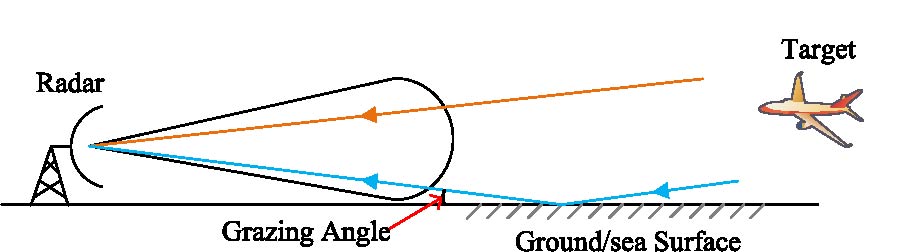
This paper presents a Time Reversal (TR) application to mitigate the grating lobes of an arbitrarily spaced array for a through-the-wall imaging radar (TWIR). Analytical modeling and simulation of array of arbitrarily located elements with (i) conventional and (ii) time reversal beamforming have been carried out. The results are analysed and compared. The array is used to image a target using the multipaths in a typical TWIR environment. The Time Reversal technique as spatial correlator improves the performance of the arbitrarily located array which is akin to the array thinning of conventional array processing. It is demonstrated that the TR beamforming can mitigate the grating lobes of large sparse array with a fewer elements. The performance metrics are captured in terms of Side Lobe Levels (SLLs) and image radius. The SLL performance and image radius are benchmarked for different configurations of array. It is shown that a fewer-element sparse array with Time Reversal is feasible for practical TWIRs.
Grating Lobe Performance Improvement of an Arbitrarily Spaced Array of Through-the-wall Imaging Radars Using Time Reversal Techniques
2024-11-14
PIER C
Vol. 150, 81-88
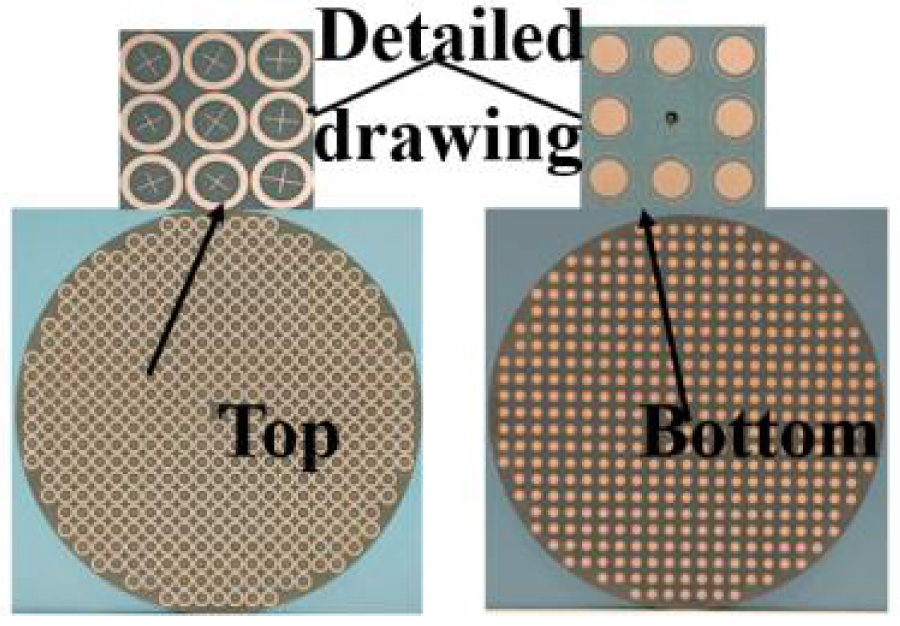
4 × 4 RHCP Array Antenna Base on LTCC and Quartz Interposer
Hao Wei , Hao Wei and Naibo Zhang
This paper designs, simulates, fabricates, and measures a right hand circular polarization (RHCP) array antenna, which is based on a low temperature co-fired ceramic (LTCC) and quartz interposer. The proposed array antenna consists of $4\times 4$ antenna cells, and axis ratio of the antenna element in array antenna can be optimized after array expansion. This RHCP antenna's wide frequency band and good axial ratio band are obtained by the stacked patches. The thickness of the proposed antenna without fixed structure is about 1.7 mm, and it is realized by a LTCC substrate with 14 layers and a quartz interposer with the thickness of 0.254 mm. The measured results demonstrate that, for the operated frequency band of 17.5 GHz~21.5 GHz, the VSWR of the proposed antenna is better than 1.7, the RHCP gain more than 15.5 dB, the axial ratio less than 3 dB, and the size of the proposed antenna without connectors is 29.6 mm × 29.6 mm × 1.7 mm.
4 × 4 RHCP Array Antenna Base on LTCC and Quartz Interposer