Search Results(13786)

2024-07-31
PIER C
Vol. 146, 21-32
Wearable Antenna System for Osteoporosis Detection and Monitoring Using Machine Learning
Eman Gamal Ouf , Anwer S. Abd El-Hameed , Asmaa G. Seliem and Shaza M. Elnady
This article presents a groundbreaking approach to osteoporosis detection and monitoring by integrating a new wearable monopole antenna design with advanced machine learning algorithm (neural network). Inspired by the intricate pattern of a Christmas snowflake, the system utilizes UWB electromagnetic waves and bone attenuation analysis for compact, noninvasive, and highly accurate bone health assessment. Fabricated entirely from textile materials, the antenna features remarkable performance metrics, including an impedance bandwidth of 4.9 to 12.6 GHz and a reflection coefficient consistently below -10 dB, within a compact form factor of 41.9 mm × 29.2 mm. Experimental validation and comparative studies demonstrate the effectiveness of this approach in precisely classifying osteoporosis levels, achieving an outstanding accuracy rate of 87%. This study signifies a significant advancement in osteoporosis detection and diagnosis, combining state-of-the-art antenna technology with advanced machine learning techniques. The developed system holds promise for early detection and personalized monitoring of osteoporosis, contributing to improved healthcare outcomes and enhanced quality of life for individuals at risk of bone-related diseases.
Wearable Antenna System for Osteoporosis Detection and Monitoring Using Machine Learning
2024-07-30
PIER C
Vol. 146, 13-20
Quasi-Monomode Resonator for Ka-Band Applications
Vadym Pazynin , Asel Begimova , Nursaule Burambayeva , Kostyantyn Sirenko , Nataliya Yashina and Wilhelm Keusgen
The paper presents a model of an open resonator exhibiting a single high-Q eigen oscillation within a one-octave frequency band. The resonator is synthesized by integrating a diffraction radiation antenna, which comprises a segment of a dielectric waveguide above a metal substrate with a diffraction grating, into a system of flat reflectors aligned parallel to the wave fronts of surface and bulk waves generated by the antenna. A pulse response with an amplitude-frequency characteristic featuring one pronounced resonant maximum, which corresponds to an eigen oscillation with Q factor exceeding 104, has been achieved in the proposed system. The optical length of the resonator exceeds the wavelength of the working oscillation by over 50 times. The feasibility of tuning the resonator via moving both the mirrors and the diffraction grating is demonstrated. The proposed model holds promise for applications in the development of solid-state and quantum radiation sources operating in the microwave and higher frequency ranges.
Quasi-monomode Resonator for Ka-band Applications
2024-07-30
PIER C
Vol. 146, 1-12
Enhanced Prediction of Metamaterial Antenna Parameters Using Advanced Machine Learning Regression Models
Prince Jain , Prabodh Kumar Sahoo , Aymen Dheyaa Khaleel and Ahmed Jamal Abdullah Al-Gburi
The integration of machine learning (ML) regression models in predicting the parameters of metamaterial antennas significantly reduces the design time required for optimizing antenna performance compared to traditional simulation tools. Metamaterial antennas, known for overcoming the bandwidth constraints of small antennas, benefit greatly from these advanced predictive models. This study applies and evaluates four ML regression models - Extra Trees, Random Forest, XGBoost, and CatBoost - to predict key antenna parameters such as S11, gain, and bandwidth. Each model's performance is assessed using metrics like Mean Absolute Error (MAE), Mean Squared Error (MSE), R-squared (R2), Mean Absolute Percentage Error (MAPE), and Root Mean Squared Error (RMSE) across different training and testing set configurations (30%, 50%, and 70%). The Extra Trees model achieves the best performance for predicting gain, with an R2 of 0.9990, MAE of 0.0069, MSE of 0.0002, RMSE of 0.0145, and MAPE of 0.3106. Feature importance analysis reveals that specific features, such as pr and p0 for gain and Ya and Xa for bandwidth, are critical in the predictive models. These findings highlight the potential of ML methods to improve the efficiency and accuracy of metamaterial antenna design.
Enhanced Prediction of Metamaterial Antenna Parameters Using Advanced Machine Learning Regression Models
2024-07-29
PIER C
Vol. 145, 181-187
Modified Adaptive RFT with Sample Covariance Matrix Inversion Recursive Estimation
Haibo Wang , Wenhua Huang , Haichuan Zhang , Tao Ba and Zhiqiang Yang
Radon-Fourier transform (RFT) is able to effectively overcome the coupling between the range cell migration (RCM) effect and Doppler modulation by searching along range and velocity dimensions jointly for the moving target, which depends on envelope alignment and Doppler phase compensation. However, without effective clutter suppression, clutter would also be intergraded via RFT. Thus, the adaptive RFT (ARFT) has been proposed to clutter suppression by introducing an optimal filter weight, which is determined from the clutter's covariance matrix as well as the steering vector for the moving target with the consideration of RCM effect. Nevertheless, the ARFT needs to address the difficulty for real implementation, i.e., computational complexity is too high to a large number of pulse samples. It is known that to obtain the inversion the sample covariance matrix (Rcn-1) is order M3, i.e., O(M3), in which $M$ is the order of the matrix. It is the most complexity consumed step in ARFT. In this paper, we propose a modified adaptive RFT (MARFT) method to obtain Rcn-1 with recursive computation, which takes the complexity order M2, i.e., O(M2). Simulations show that the proposed method has the same clutter suppression results as the conventional ARFT method, where the computational complexity is much lower.
Modified Adaptive RFT with Sample Covariance Matrix Inversion Recursive Estimation
2024-07-28
PIER C
Vol. 145, 173-179
A Novel Miniaturized Dual-Passband Half-Mode Substrate Integrated Waveguide Filter Loaded with Back-to-Back CSRR
Min Li , Kejun Chang and Dongya Song
In order to solve the requirements of multi-channel communication applications, this paper proposes a miniaturized dual-passband substrate integrated waveguide filter with asymmetric passband response. The design uses a half-mode substrate integrated waveguide (HMSIW) cavity, which is loaded with a back-to-back complementary open resonant ring (CSRR) according to the vanishing mode propagation theory to generate a passband response lower than the HMSIW basic mode TE101, further reducing the cavity size. In addition, the band-resistive characteristics of the single-ring structure of the CSRR resonator are analyzed, and a C-slot is added at the feeder to improve the out-of-band characteristics of the second passband. Through simulation optimization and testing, the center frequency of the dual-passband filter is 4.05 GHz/8.64 GHz; the relative bandwidth is 16%/44%, the insertion loss of both passbands is better than 0.8 dB; the physical test results are consistent with the simulation ones; and the size of the filter is only 0.42λg × 0.14λg. It shows that the proposed filter has the characteristics of small size and low loss, and can be widely used in multi-channel RF front-end systems in the field of wireless communication.
A Novel Miniaturized Dual-passband Half-mode Substrate Integrated Waveguide Filter Loaded with Back-to-back CSRR
2024-07-27
PIER C
Vol. 145, 167-172
Design of Broadband Microstrip Grid Array Antenna Based on Dielectric Filling
Yuxuan Fang and Xinhua Wang
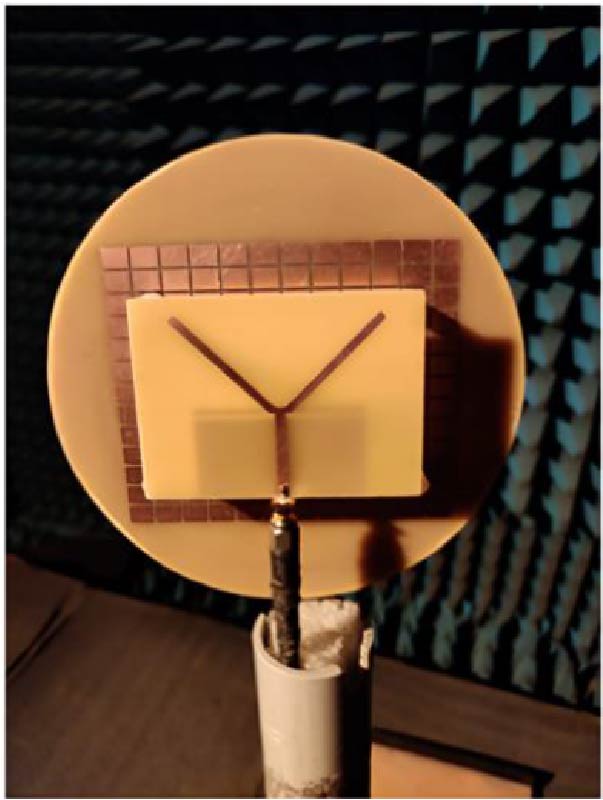
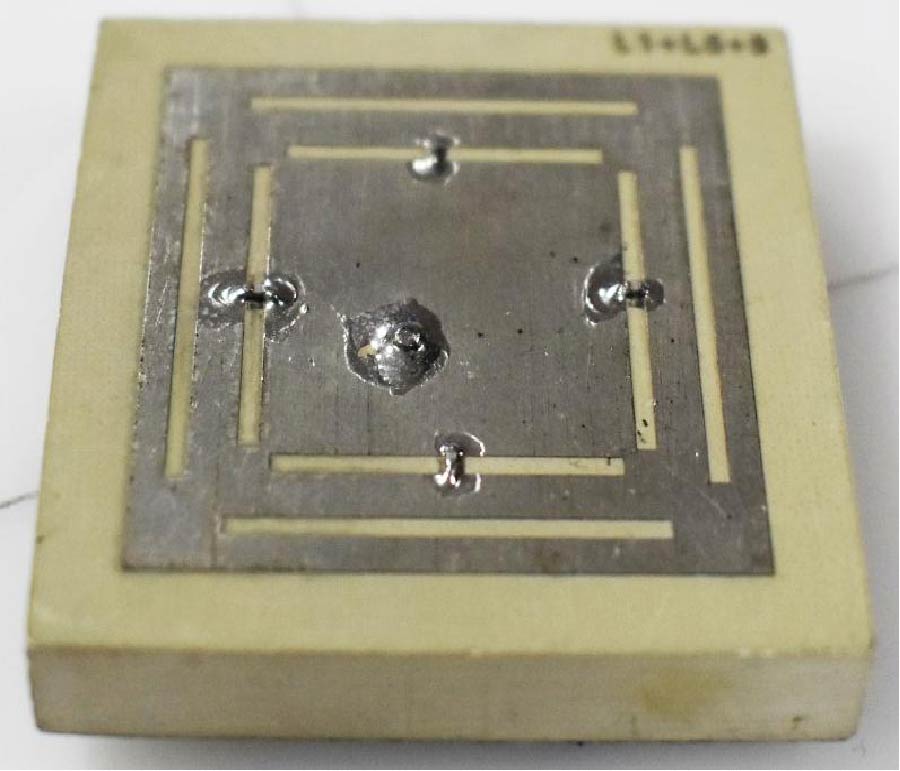
Based on dielectric filling, a microstrip grid antenna with six grids is designed in this paper. The broadband characteristics are achieved by increasing the thickness of substrate. An N-type penetrating coaxial port is adopted to feed the antenna for realizing high power capacity. Firstly, the influence of the grid parameters variation on the reflection coefficient was analyzed through the simulation model. Then the structure of the antenna was optimized. Secondly, a prototype of the antenna was fabricated according to the optimized results. The measured results of the fabricated antenna show that the impedance bandwidth of the designed microstrip grid antenna can reach (taking |S11| < -10 dB as the reference) 24.3% ranging from 2.22 GHz to 2.83 GHz. The power capacity of the antenna in the 2.5 GHz can reach 229 Watts according to the measured result of power capacity. Therefore, the designed antenna can be effectively applied in the field of high power irradiation test and high power interference performance test of electronic equipment.
Design of Broadband Microstrip Grid Array Antenna Based on Dielectric Filling
2024-07-27
PIER Letters
Vol. 122, 15-20
Low Profile UHF-RFID Reader Antenna with High Front-to-Back Ratio
Safia Chenaoui , Lila Mouffok and Sami Hebib
In this paper, a low profile UHF-RFID reader antenna with high front-to-back ratio is presented. The antenna consists of a probe-fed U-slot rectangular patch antenna loaded with a slotted AMC reflector, formed of 2 × 2 unit cells. By incorporating the AMC reflector, a compact profile height of 0.049λ (λ is the wavelength at 910 MHz) is achieved with high gain and front-to-back ratio. The proposed reader antenna is fabricated and measured. The experimental results are similar to those predicted by electromagnetic simulation and validate the proper operation of the antenna across the entire UHF-RFID band (860-960 MHz). Moreover, the realized prototype exhibits a measured realized gain and a front-to-back ratio (F/B) greater than 5 dBi and 24 dB, respectively. The proposed design offers the advantages of low profile, high gain and F/B ratio, rendering it suitable for compact RFID readers.
Low Profile UHF-RFID Reader Antenna with High Front-to-back Ratio
2024-07-25
PIER C
Vol. 145, 153-165
A Proximity-Fed Multi-Band Printed Antenna for Wireless Communication Applications
Ali Jabbar Salim , Jabbar K. Mohammed , Hussam Al-Saedi and Jawad K. Ali
This paper introduces a new triple-band antenna driven indirectly by a feed line for multiple wireless applications. The structure of this antenna is based on the creation of a set of slots and slits on the ground plane mounted on a substrate with relative permittivity of 4.4 and thickness of 1.6 mm. On the other hand, a 50-ohm microstrip feed line has been fixed. It is found that the proposed antenna offers a triple-band fashion with -10 dB impedance bandwidths suitable for most recent wireless applications. The first band extends from 1.6 GHz to 2.8 GHz, which covers LTE bands (1, 2, 3, 4, 9, 10, 23, 24, 25, 33, 34, 35, 36, 37, 39 and 40), 2.4 GHz-Bluetooth, and 2.45 GHz ISM. The second band extends from 3.38 GHz to 3.6 GHz, which covers most WiMAX applications, while the third band reconciles 5.8 GHz-ITS and 2.4/5.8 GHz-WLAN. A prototype of the proposed antenna has been successfully simulated, fabricated, and measured.
A Proximity-fed Multi-band Printed Antenna for Wireless Communication Applications
2024-07-25
PIER M
Vol. 128, 31-39
Filter Design Based on Multilayer Wide Side Coupling Structure
Wu-Sheng Ji , Hanglin Du , Ying-Yun Tong , Xiaochun Ji and Liying Feng
In this paper, three kinds of filters are designed, all of which are based on the basic multi-layer structure of microstrip-slot wire-microstrip wide edge coupling. The ultra-wideband filter is realized by three-class connection. The intermediate coupling layer of coplanar waveguide and multimode resonator is designed to realize the double broadband filter. The ultra-wideband filter is realized by using a curved T SIR structure and changing the middle coupling slot structure. The purpose of this paper is to construct a stable and easy to generalize multilayer filter design method, which can achieve broadband and high selectivity, and can realize dual passbands.
Filter Design Based on Multilayer Wide Side Coupling Structure
2024-07-24
PIER C
Vol. 145, 141-152
A 12-Unit Asymmetric Mirror-Coupled Loop Antenna for 5G Smartphones
Wanying Ren , Zhonggen Wang , Wenyan Nie , Weidong Mu , Chenlu Li , Mingqing Wang and Wenshi You
This paper introduces a 12-element asymmetric mirror-coupled loop antenna for integration into 5G smartphones. The proposed antenna includes six identical asymmetrically mirrored (AM)-coupled building blocks, each consisting of two gap-coupled loop antennas, with each building block dimensioning a mere 12×7 mm2. The unique architecture of the proposed antenna yields an isolation performance exceeding 14 dB without the necessity for ancillary decoupling elements and effectively covers the dual-band 5G mobile frequency bands of 3.3-3.6 GHz and 4.8-5.0 GHz. The antenna was optimized using simulation software HFSS, and the results indicate an antenna's envelope correlation coefficient of less than 0.016 and an efficiency range of 72%-81%. Finally, the performance of single-hand and double-hand handset smartphone modes is discussed, which still exhibit good radiation and MIMO performance under both modes, demonstrating their stability in practical applications. Simulation and measurement results indicate that the proposed 12-element MIMO antenna holds great promise for 5G smartphone applications.
A 12-unit Asymmetric Mirror-coupled Loop Antenna for 5G Smartphones
2024-07-24
PIER C
Vol. 145, 129-140
Optimal Service Area Partitioning for Wireless Communication Systems and a Multibeam Antenna with Contoured Beams for the Equipotential Coverage of This Area
Alexander V. Shishlov , Yury V. Krivosheev , Vladimir V. Denisenko and Boris A. Levitan
In a number of wireless communication systems with multibeam antennas, the distance from the antenna to subscribers in different parts of the service area varies significantly. Such systems include high-altitude platform station communication systems, communication systems based on low Earth orbit and medium Earth orbit satellites, and several others. If such a system uses an antenna with identical beams, the throughputs of communication lines in different cells can differ by more than an order of magnitude due to the variation in distance. To equalize throughputs across all cells within the service area, an antenna with different beams can be employed. The gain of these beams should be proportional to the squared slant ranges to the centers of the served cells. The gain of a beam can be modified by altering its size and shape. This paper proposes a method for service area partitioning in communication systems that accounts for the slant range to subscribers. It determines the shapes and profiles of the ideal contoured beams and presents optimized contoured beams for a real antenna.
Optimal Service Area Partitioning for Wireless Communication Systems and a Multibeam Antenna with Contoured Beams for the Equipotential Coverage of This Area
2024-07-23
PIER M
Vol. 128, 21-30
Convex Optimization-Based Linear and Planar Array Pattern Nulling
Tong Van Luyen , Nguyen Van Cuong and Phan Dang Hung
In the landscape of wireless communication, smart antennas, or adaptive array antennas, have emerged as vital components, offering heightened gains and spectral efficiency in advanced communication systems such as 5G and beyond. However, augmenting network coverage, capacity, and quality of service remains a pressing concern amid advancing communication technologies and escalating user demands. Array antennas with reduced sidelobe levels, high directivity, and increased beam steering capabilities are sought after to address these challenges. This paper explores convex optimization as a potent tool for array synthesis problems, offering robust performance and solution efficiency. By formulating optimization problems as convex programming, sidelobe reduction challenges can be efficiently addressed. The paper presents a comprehensive investigation into convex optimization-based approaches for array pattern nulling, assessing their performance and computational efficiency in various scenarios. Numerical examples demonstrate the efficacy of the proposed methods in maintaining the main lobe, controlling sidelobe levels, and placing nulls at interfering directions, thereby advancing the state-of-the-art in smart antenna technology.
Convex Optimization-based Linear and Planar Array Pattern Nulling
2024-07-22
PIER
Vol. 179, 101-111
Miniaturized Dual-Polarized, High-Gain, and Wideband Dielectric Resonator Antenna for Low Band Massive MIMO Applications
Ahmed El Yousfi , Kerlos Atia Abdalmalak , Abdenasser Lamkaddem , Alejandro Murrillo Barrera , Bruno Biscontini and Daniel Segovia-Vargas
A new dual-polarized compact crossed-notched dielectric resonator antenna (DRA) array with high-gain and wideband performance is proposed for low-band massive multiple-input multiple-output (MIMO) applications at the 700 MHz band of 5G new radio (5G NR) technology. The DRA element consists of three dielectric layers with relatively high relative permittivity constants (εr1 = 15 for the bottom and top layers and εr2 = 23 for the middle one) for a compact antenna. Characteristic mode analysis (CMA) of a rectangular DRA reveals that two pairs of degenerate modes, namely M2/M3 and M4/M5, resonating at 0.4 and 0.6 GHz respectively can be used to achieve dual polarizations with a proper feeding strategy. By jointly reshaping the conventional DRA along with adding a notch into the middle dielectric layer the two pairs of degenerate modes are merged to produce a broad bandwidth with a compact size of 0.2λmax × 0.2λmaxmax being the wavelength at low-frequency point). The measured results show an impedance bandwidth of 13.15% (710 MHz-810 MHz) and an isolation of less than -17 dB. Furthermore, the antenna exhibits a good radiation pattern over the working band with a high gain of 7 dB. Finally, the proposed element is tested in a massive MIMO system of 3×4. The results exhibit a wideband of 17.7% and high isolation of more than 12 dB along with a stable gain of 5 dBi within the operating band.
Miniaturized Dual-polarized, High-gain, and Wideband Dielectric Resonator Antenna for Low Band Massive MIMO Applications
2024-07-22
PIER C
Vol. 145, 119-127
A Diamond-Type Broadband Microstrip Patch Antenna with a Folded Floor
Han Lin and Yiwei Tao
In this paper, a diamond-shaped broadband high-gain microstrip patch antenna based on a folded floor structure is proposed. The overall dimensions of the antenna are 108 mm × 100 mm × 25 mm. Additionally, it contains a radiating microstrip patch, a folded ground plane, and a capacitive feed strip. The broadening of the antenna's operating band is achieved by enhancing the microstrip radiating patch and the capacitive feed band. The original rectangular structure was transformed into a rhombic structure, enabling the radiating patch to absorb the current more effectively and achieve a better impedance match for the antenna operating around 5 GHz. The radiation performance of the antenna is maximized by utilizing the folded floor structure. Measured results show that the impedance bandwidth of the antenna is about 61.5% (2.84 GHz-5.36 GHz), covering 5G dual bands. Meanwhile, the peak gain reaches 12.6 dBi, and the average gain reaches 10.7 dBi.
A Diamond-type Broadband Microstrip Patch Antenna with a Folded Floor
2024-07-21
PIER C
Vol. 145, 107-117
Gap-Coupled Designs of Hexagonal Microstrip Antennas on Thinner Substrate Using Cavity-Backed Structure
Amit A. Deshmukh , Kushal Katira , Aarti G. Ambekar , Venkata A. P. Chavali , Hari Vasudevan and Tushar V. Sawant
Multi-resonator gap-coupled design of coaxially fed half-hexagonal microstrip antennas is proposed in 900 MHz frequency range. It yields an impedance bandwidth of 32 MHz (3.28 %) on a thinner FR4 substrate (~0.01λg). Reduction in patch area in the gap-coupled design is achieved by employing the ground plane slots. Slots reduce the fundamental mode resonance frequency on each patch, thereby realizing wideband response in a lower frequency region. With impedance bandwidth of 26 MHz (3.4%), slot cut ground plane design provides patch area reduction by 38.13% and frequency reduction by 21.8%. Enhancement in the broadside gain on a thinner lossy substrate in the gap-coupled designs is achieved by integrating a cavity-back structure, which provides gain increment by nearly 2.5-3 dBi. Thus, the proposed work outlines a technique that enhances the bandwidth and reduces the patch size with an increment in the gain, on a thinner lossy substrate. An experimental verification for the obtained results is carried out that shows a close agreement.
Gap-coupled Designs of Hexagonal Microstrip Antennas on Thinner Substrate Using Cavity-backed Structure
2024-07-21
PIER Letters
Vol. 122, 9-14
Mode Control of Slotline Resonator and Its Application to the Design of Balanced BPF with Ultra-Wide Stopband
Jia-Qi Wang and Feng Wei
In this paper, a mode control technology of a slotline resonator is proposed and utilized to guide the design of the slotline resonator. With this method, characteristic modes generated by the slotline resonator are more controllable. With characteristic mode analysis, which is the core of this technology, the desired and unwanted modes of the slotline resonator are easy to be analyzed, controlled, and further used to expand the stopband bandwidth. By applying this technology, a multi-mode slotline resonator with a T-shaped coupling structure (MMSR-T) is proposed by modifying a multi-mode slotline resonator (MMSR), and its unwanted modes out of the passband are more controllable without influencing the expected modes in the passband. Based on the proposed MMSR-T, a balanced bandpass filter (BPF) is proposed, which consists of a U-shaped microstrip/slotline transition as the input/output structure, a T-shaped slotline feeding structure as a feeding terminal, and MMSR-T as the filtering unit. Through the mode analysis and design of MMSR-T, ultra-wide differential-mode (DM) stopband, high common-mode (CM) suppression, and high DM selectivity are obtained in this design. The measured results agree well with the theoretical predictions and simulated results. The effects of mode control technology on stopband extension are proven.
Mode Control of Slotline Resonator and Its Application to the Design of Balanced BPF with Ultra-wide Stopband
2024-07-20
PIER C
Vol. 145, 101-105
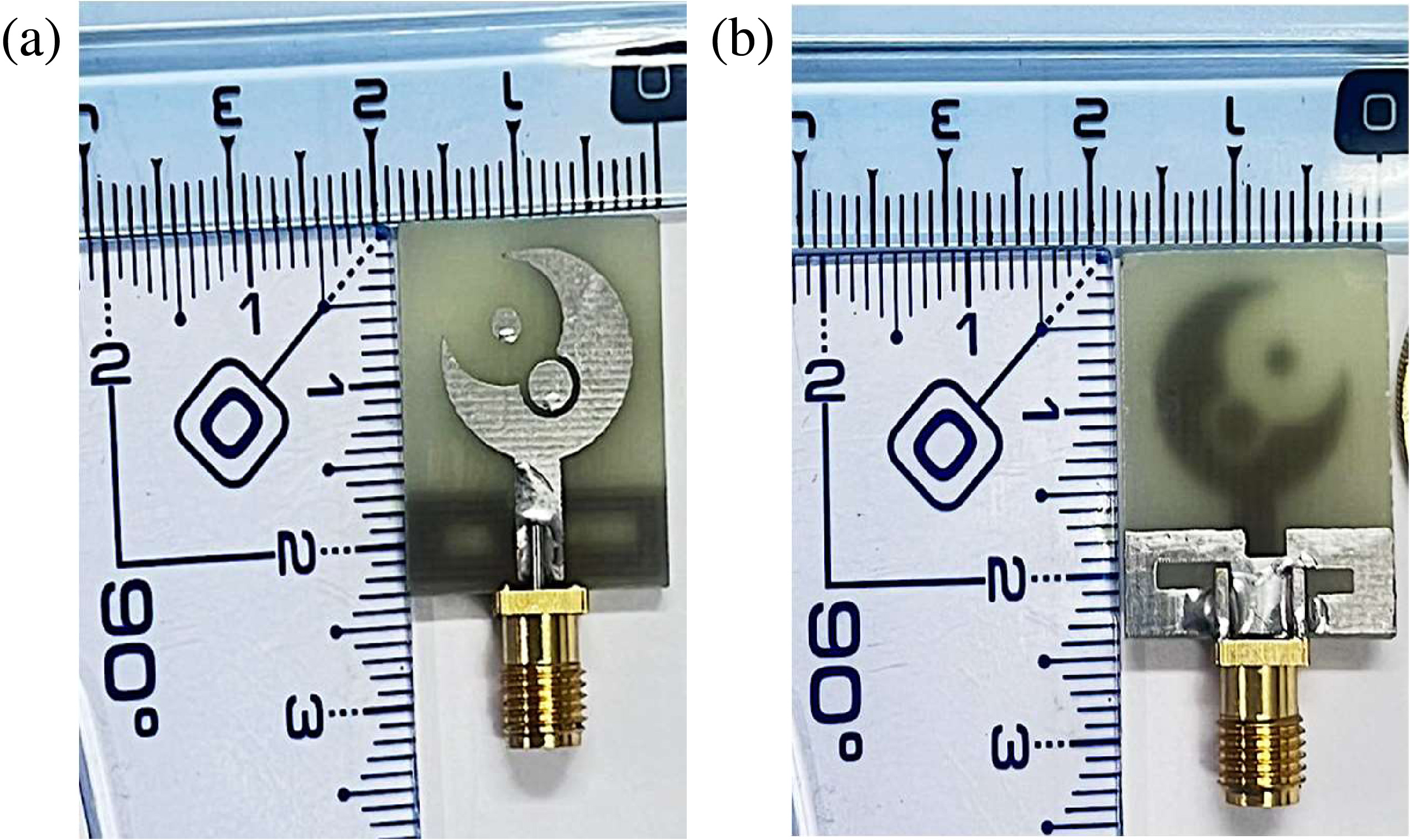
A Dual-Notched Ultra-Wideband Monopole Antenna Based on Frequency Selective Surface Technology
Yingjie Du and Mingxin Liu
To solve the problem of antenna miniaturization and mutual interference between the communication band of the UWB system and other wireless communication system bands, this paper proposes a UWB monopole antenna which has frequency notch characteristics. By applying two pairs of Split Ring Resonator (SRR) structures on a CPW transmission line, a coupling resonance is generated in a specific frequency band, and the antenna has a dual frequency notch and a wide band notch function. The measured results show that the antenna has good band-notch characteristics in the frequency ranges of 3.3 GHz to 4 GHz and 5.1 GHz to 6.2 GHz, suppressing ultra-wideband interference between WiMAX (3.3 GHz~3.8 GHz) and WLAN (5.15 GHz~5.35 GHz and 5.725 GHz~5.825 GHz) in a wireless communication system. The volume of the antenna is 40 mm × 36 mm × 1 mm, and the measured results are compared with the simulated model results. Besides, the measured and simulated results have a good consistency.
A Dual-notched Ultra-wideband Monopole Antenna Based on Frequency Selective Surface Technology
2024-07-20
PIER M
Vol. 128, 11-20
Compact Dual-Band Antenna Based on Dual-Cap Metasurface
Xue Chen and Haipeng Dou
A novel compact dual-band antenna based on dual-cap metasurface (MS) is proposed. By etching circumferential circular ring slots on one side of the substrate and large cruciform slot on the other side, the dual-cap MS operates in two frequency bands. In addition, by placing the dual-cap MS at the back of a circular ring planar antenna which serves as a reflector, the impedance characteristic of the antenna in lower band and gain both in two bands are improved. The results show that this dual-cap MS antenna operates in the Wireless Local Area Network (WLAN) bands of 2.43-2.6 GHz and 5.48-6.05 GHz. Moreover, the maximum gains in lower and upper bands can reach 6.9 and 5.8 dBi, respectively.
Compact Dual-band Antenna Based on Dual-cap Metasurface
2024-07-20
PIER Letters
Vol. 122, 1-7
Square-Coupled Topological Filter with an Ideal Rectangular Coefficient Facilitated by Dual-Cavity Single-Mode and Single-Cavity Dual-Mode SIW Resonators
Xiaohei Yan and Wenjing Mu
In order to achieve miniaturization and high performance in microwave filters, this paper proposes two double-layer bandpass filters with different structures, both equivalent to square-coupled topologies. These filters employ dual-cavity single-mode and single-cavity dual-mode substrate-integrated waveguide resonators. In this configuration, the upper layer comprises two single-mode resonators connected to the input and output feed lines, while the lower layer contains dual-mode resonators coupled to the upper layer's single-mode resonators through two slots on the middle metal layer. A comprehensive analysis is conducted on the impact of primary parameters on filter characteristics and transmission zero positions. The second filter is fabricated and tested, yielding results consistent with simulation outcomes. The center frequency of the filter is 4.77 GHz, with a 3 dB bandwidth of 0.16 GHz (relative bandwidth: 3.35%). Additionally, its rectangularity coefficient at 10 dB approximately equals one, an ideal value for practical applications.
Square-coupled Topological Filter with an Ideal Rectangular Coefficient Facilitated by Dual-cavity Single-mode and Single-cavity Dual-mode SIW Resonators
2024-07-19
PIER C
Vol. 145, 91-100
Reconfigurable Compact Wide-Band Quad-Port Antennas Based on a Varactor Diode for Sub-6 GHz 5G Communications
Qasim Hadi Kareem
The rapid expansion of wireless communication systems has spurred a growing demand for adaptable multiple-input multiple-output (MIMO) antennas capable of accommodating diverse frequency bands and operational environments. This paper presents a compact quad-port wide-band tuning-reconfigurable MIMO antenna tailored specifically for 5G applications operating within the sub-6 GHz spectrum. The proposed design enhances isolation levels (>18 dB) and augments pattern diversity by utilizing four orthogonal radiating elements. Integrating a C-shaped monopole element with a matching stub facilitates frequency tuning via a varactor diode, ensuring a consistent radiation pattern. The lower and upper resonant bands could be fine-tuned by adjusting the varactor diode's reverse-biased voltage within the allowed range of 0.5 to 10 V. These bands are 4 to 5.18 GHz and 5.45 to 6.65 GHz, respectively. The proposed antenna system's four C-shaped elements are placed on a 40 × 40 mm2 ground plane and mounted on a Rogers RT5880 substrate that is 0.8 mm thick with a relative permittivity of 2.2. This design is well suited for various wireless applications and cognitive radio networks due to its compatibility with sub-6 GHz frequency bands and wide-band tuning capabilities.
Reconfigurable Compact Wide-band Quad-port Antennas Based on a Varactor Diode for Sub-6 GHz 5G Communications