Search Results(13786)

2024-06-20
PIER C
Vol. 144, 117-126
Bandwidth and Gain Improvement of Low-Profile MIMO Printed Arrays by Utilizing AMC Surface for Wireless Communications
Hossein Malekpoor
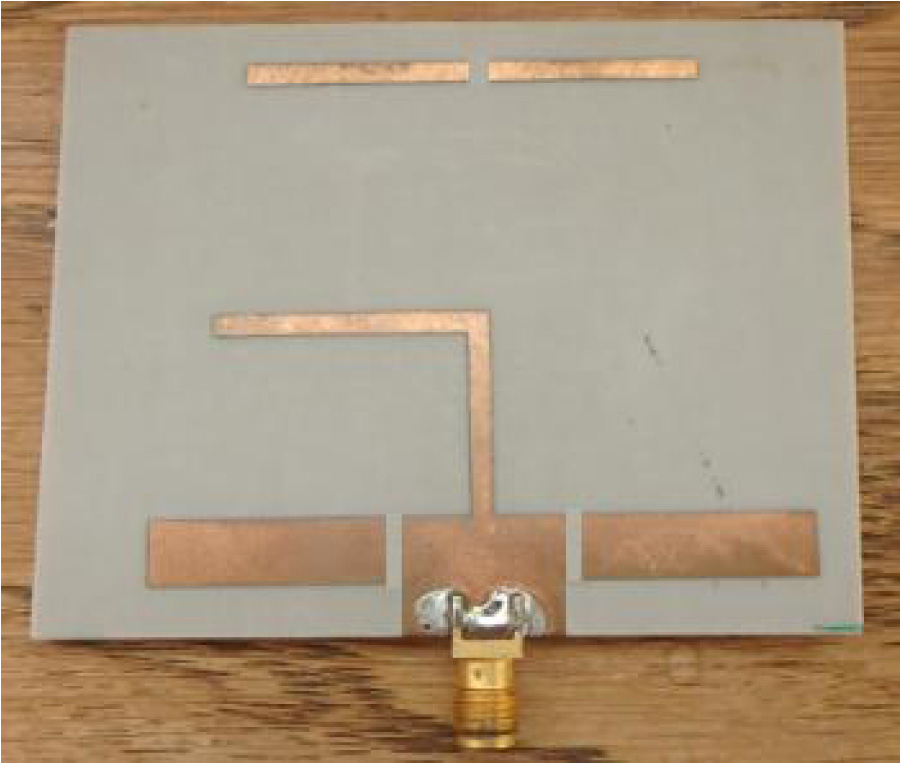
A compact dual-element microstrip antenna, employing a parasitic artificial magnetic conductor (AMC), is proposed for facilitating 4G and 5G wireless communications. The antenna design entails microstrip dipoles fed by a T-shaped feedline. Notably, the antenna achieves a measured bandwidth of 5.35-6.7 GHz (with S11 ≤ -10 dB). To enhance performance, a proposed parasitic AMC reflector is integrated into the antenna structure. Incorporating a 3 × 3 AMC array, the antenna extends its -10 dB measured bandwidth from 4.57 to 6.80 GHz, catering to both 4G and 5G communication standards. Comparative analysis with an antenna lacking AMC reveals a reduced size of 34%, alongside a notable gain of 8 dBi and unidirectional radiation patterns. Additionally, a low-profile wideband two-element array, coupled with a 3 × 4 AMC reflector, demonstrates a broad bandwidth spanning from 4.55 to 6.8 GHz within the C-band. This configuration results in increased gains for the two antenna elements and ensures acceptable isolation exceeding 30 dB, crucial for multiple-input multiple-output (MIMO) systems. The efficiency and gain of all elements are obtained almost 90% and 8 dBi, respectively. Moreover, an AMC unit cell, well founded on a parasitic patch, resonates at 6.12 GHz with a bandwidth extending from 5.25 to 7.15 GHz. Furthermore, the offered equivalent transmission line model of the antenna with the AMC is demonstrated, yielding desirable results. This model accurately predicts the input impedance of the 1 × 2 array with AMC across a broad frequency band ranging from 4.63 to 6.73 GHz. This comprehensive coverage demonstrates the effectiveness and versatility of the offered model in characterizing the electrical behavior of the antenna system across a wide frequency band, thus facilitating its design and optimization for various applications.
Bandwidth and Gain Improvement of Low-profile MIMO Printed Arrays by Utilizing AMC Surface for Wireless Communications
2024-06-20
PIER C
Vol. 144, 107-115
A Miniaturized Lens Unit Based on Current Path Extension as a Wireless Power Transfer Medium at 2.45 GHz
Xingyue Liu , Zhiwei Liu , Cheng Qiu , Zehua Luo and Yuxin Deng
A novel miniaturized lens unit at 2.45 GHz is presented in this manuscript. This unit is formed by a modified Malta cross and an ordinary cross, with a unit period of 0.2λ0, where λ0 denotes the unit wavelength. The ordinary cross unit creates a pathway for current between two units. Accordingly, it increases the current path and reduces the unit volume to a quarter of its original size. By adjusting the length of the Malta cross arm, it is possible to achieve the transmission phase at 2.45 GHz within a range of 0-360˚. Moreover, an improved PSO algorithm is used to optimize the phase of array elements. The optimization process is able to achieve a phase-shifting of ±18˚ within the range of 3.28λ0. Simulation and measurement results show that the miniaturized lens unit can be used in the wireless energy transmission system.
A Miniaturized Lens Unit Based on Current Path Extension as a Wireless Power Transfer Medium at 2.45 GHz
2024-06-20
PIER M
Vol. 127, 131-139
Interconnected Ground Plane Structure Based High Isolation, Dual Band Quad-Element MIMO Antenna for C-Band, and X-Band Applications
Brahman Singh Bhalavi , Ashok Kumar and Anurag Shrivastava
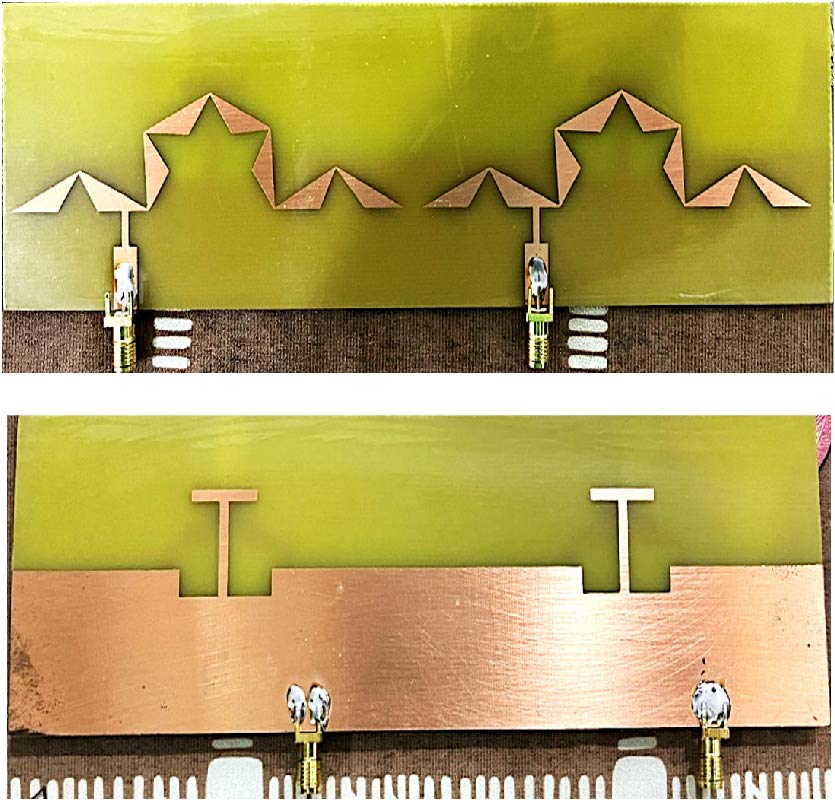
This paper presents a dual band orthogonal quad-element multiple input multiple output (MIMO) antenna for C-band and X-band applications. Each antenna element of the proposed MIMO antenna contains a deformed rectangle-shaped radiating patch etched with two circular slots of different radii on the top surface and partial ground plane in the bottom surface. The modified partial ground structure is used in the bottom to enhance the bandwidth of the antenna. The orthogonal arrangement of the proposed quad-element MIMO antenna is designed and fabricated with a distinct gap of d>λ/2 between individual antenna elements. The interconnected ground plane was introduced in the bottom of the proposed quad-element MIMO antenna for high isolation. The proposed MIMO antenna has an overall size of 1.69λ × 1.69λ × 0.022λ (at 4.23 GHz) and exhibits the measured double operating bands (S11<-10) covering 4.23-4.55 GHz and 6.30-10.22 GHz with high isolation of >27 dB and >32 dB respectively. Both the operating bands have simulated peak gain of 5.73 dBi and peak efficiency of 72% over the entire operating range. Furthermore, the presented antenna has good diversity performance with envelope correlation coefficient (ECC) < 0.001, diversity gain (DG) of 9.996 dB, and total active reflection coefficient (TARC) < -10 dB. The simulated and measured results of proposed MIMO antenna are in good agreement.
Interconnected Ground Plane Structure Based High Isolation, Dual Band Quad-element MIMO Antenna for C-band, and X-band Applications
2024-06-19
PIER C
Vol. 144, 99-105
Improved Target Imaging Method for Arc Array Bistatic SAR with a Small Satellite Transmitter
Peigeng Lu , Zhennan Qin , Wei Xu , Pingping Huang , Weixian Tan and Yaolong Qi
Modern small satellite development represents a new trend, a new design idea, and it can be used as a transmitter to assist helicopter monitoring. The imaging model of the arc array bistatic SAR with a small satellite transmitter is studied. Due to the long resident time of small satellite platform and the wide-area observation capability of arc antenna, it has a wide application prospect in the field of earth detection and remote sensing. However, the motion state of the small satellite and the special scanning mode of the arc antenna have some effects on the SAR imaging results. Therefore, the imaging geometry of the arc array bistatic SAR with a small satellite transmitter is established, and an improved Chirp Scaling imaging algorithm is proposed. Firstly, the motion compensation function is used to compensate the migration caused by the high-speed motion of the small satellite. Then, the two-dimensional spectrum is derived by using standing phase principle and scaling function. Next, the coupling between range and azimuth is compensated by consistent range migration correction and secondary range compression, and residual phase is compensated in azimuth frequency domain. Finally, simulation results verify the effectiveness of the proposed method.
Improved Target Imaging Method for Arc Array Bistatic SAR with a Small Satellite Transmitter
2024-06-18
PIER C
Vol. 144, 85-97
Active Disturbance Rejection Control Strategy for a Novel Wide-Rotor Bearingless Switched Reluctance Motor
Yonghong Huang , Meng Sun , Ye Yuan , Fan Yang and Xinyue He
A novel three-unit 8/4 wide-rotor bearingless switched reluctance motor has been designed to address the challenges of strong coupling and control difficulties between torque and suspension force in traditional bearingless switched reluctance motors. This motor features independent torque flux paths and suspension flux paths, allowing for separate control of torque and suspension force similar to traditional switched reluctance motors and active magnetic bearings. To tackle issues such as torque ripple, suspension force ripple, and reduced system robustness caused by external disturbances during operation, a torque sharing function and a suspension current PWM control strategy based on active disturbance rejection technology have been proposed. Firstly, mathematical models for the torque and suspension force of the three-unit 8/4 wide-rotor bearingless switched reluctance motor were established using Ansys simulation data and the Maxwell stress method. Subsequently, a torque sharing function and a suspension current PWM control system were developed based on these mathematical models. The endpoint of the commutation overlap zone was set at the maximum value of the phase inductance to eliminate the weak coupling effect of torque current on suspension force. Finally, active disturbance rejection control technology was introduced to compare its performance with that of traditional PID controllers in suppressing interference. Simulation results demonstrate that the proposed method ensures decoupling switching between each phase's motor torque and its associated suspension while enhancing anti-interference performance.
Active Disturbance Rejection Control Strategy for a Novel Wide-rotor Bearingless Switched Reluctance Motor
2024-06-18
PIER Letters
Vol. 121, 27-32
Controlling the Polarization Conversion and Asymmetric Transmission Properties of a Metasurface by Controlling the Chirality of Its Unit Cell
Sayan Sarkar and Bhaskar Gupta
Chirality (mirror asymmetry) of the unit cell ensures the phenomenon of polarization conversion in a metamaterial/metasurface. In this communication, we control the polarization conversion and asymmetric transmission properties of a metasurface by controlling the chirality of its unit cells. Radio Frequency PIN diode switches are used to control the chirality. When the switches are turned OFF, the unit cells become chiral, and the metasurface successfully exhibits polarization conversion as well as asymmetric transmission for linearly polarized incident waves. When the switches are turned ON, the unit cells become achiral and lose both the above properties. The polarization conversion switching phenomenon is also observed for circularly polarized incident waves. A simple ultrathin metasurface is designed and fabricated to demonstrate these properties.
Controlling the Polarization Conversion and Asymmetric Transmission Properties of a Metasurface by Controlling the Chirality of Its Unit Cell
2024-06-17
PIER M
Vol. 127, 121-129
A Broadband Circularly Polarized Crossed-Dipole Antenna with Wide Axial-Ratio and Gain Beamwidths
Wen Huang , Rui Deng and Zhongjie Zhan
A broadband circularly polarized (CP) antenna with both a wide half-power beamwidth (HPBW) and a wide axial ratio beamwidth (ARBW) is proposed. The proposed antenna is composed of a pair of crossed dipoles and a U-shaped metal reflecting cavity. The fan-shaped patches of the dipoles can effectively increase the operating bandwidth of cross dipoles, and the U-shaped metal reflecting cavity can further increase the impedance bandwidth (IBW) and axial ratio (AR) bandwidth of the antenna while enhancing HPBW and ARBW. To validate the feasibility of the design, the proposed antenna is fabricated and measured. The measured results show that the bandwidths of the antenna are 89.2% for -10 dB impedance and 82.7% for 3 dB AR. In addition, both HPBW and ARBW greater than 120˚ are achieved within a relative bandwidth of 63.1%.
A Broadband Circularly Polarized Crossed-dipole Antenna with Wide Axial-ratio and Gain Beamwidths
2024-06-16
PIER C
Vol. 144, 75-83
Optimized Design of High Power Factor Fault-Tolerant Permanent Magnet Vernier Rim-Driven Machine
Kun Zang , Yaqian Cai , Jingwei Zhu , Haibo Liao , Mingxuan Li and Qing Liu
Fault Tolerant Permanent Magnet Vernier Rim-Driven Machines (FTPMV-RDM) have attracted much attention due to the advantages of high torque density and good fault tolerant capability. However, the traditional FTPMV-RDMs have a lower power factor which limits their broad application in marine electric propulsion system. This paper proposes a high power factor FTPMV-RDM topology in which the flux-concentrating Halbach array magnets are mounted on a rotor, and isolation slots are arranged on the stator teeth. A preliminary design of the FTPMV-RDM is presented. To tackle the problems of large computational burden and poor accuracy in traditional multi-objective genetic optimization algorithms, a novel optimization design method combining sensitivity-based optimization with sensitivity analysis is proposed. The performance of the machine is analyzed using Finite Element Analysis (FEA), and the results show that the proposed machine topology features a high power factor, high torque density, and strong fault-tolerant capability.
Optimized Design of High Power Factor Fault-Tolerant Permanent Magnet Vernier Rim-Driven Machine
2024-06-16
PIER M
Vol. 127, 113-120
Four Port MIMO Antenna on Quarter Mode Substrate Integrated Waveguide for Ku Band Applications
Rakhi Kumari and Shweta Srivastava
In this paper, a miniaturized 4-port (4 × 4) multiple-input multiple-output (MIMO) antenna is presented in the Ku band with operating frequency range of 16.9 GHz to 17.9 GHz. The presented antenna incorporates Substrate Integrated Waveguide (SIW) Technology with each element of MIMO in Quarter Mode Substrate Integrated Waveguide (QMSIW). The radiating features of the antenna are incorporated by inserting periodic slots in the patches as well as defective ground plane (DGS) technology in lower ground. For achieving good impedance matching and isolation, DGS and SIW technologies are incorporated in the design. An isolation greater than 30 dB is achieved in the complete operating range (16.9 GHz-17.9 GHz). The MIMO antenna is realized physically in Rogers 5880 with dimensions of 36 × 36 mm2. The MIMO antenna properties like Envelope Correlation Coefficient (ECC), Channel Capacity Loss (CCL), Total Effective Reflection Coefficient (TARC), Mean Effective Gain (MEG) and Diversity Gain (DG) are analysed to validate good agreement with the standard values.
Four Port MIMO Antenna on Quarter Mode Substrate Integrated Waveguide for Ku Band Applications
2024-06-16
PIER Letters
Vol. 121, 19-25
Common-Mode Voltage Analyses for Space Vector PWM Based on Double Fourier Series
Jian Zheng , Cunxing Peng , Liangshuai Lin and Kaihui Zhao
Space vector pulse width modulation (SVPWM) is widely used in three-phase inverters. As the performance requirements of inverters increase, there is a demand to suppress common-mode voltages (CMVs) generated by SVPWM. In order to suppress the CMVs, it is necessary to mathematically analyze the CMVs. By using a mathematical analysis method based on double Fourier series, general expressions of CMV harmonic amplitudes and spectra are obtained for seven-segment SVPWM and five-segment SVPWM. Comparative analyses on the CMV general expressions are performed for the two SVPWMs, and the CMV harmonics characteristics for the two SVPWMs are summarized. Simulations are carried out in an inverter-driven permanent magnet motor system, and simulation results are in good agreement with calculation ones, which verifies the correctness and validity of the mathematical analysis. Based on these analyses, a more in-depth research can be conducted on the CMV suppression.
Common-mode Voltage Analyses for Space Vector PWM Based on Double Fourier Series
2024-06-15
PIER C
Vol. 144, 65-74
Dual-Wideband MIMO Antenna with Eight Elements for 5G and WLAN Communication
Lingrong Shen , Jianlin Huang , Qiangjuan Li , Tian Hong Loh and Gui Liu
This paper presents a compact 8 × 8 multiple-input-multiple-output (MIMO) antenna system designed to operate across two wide frequency bands suitable for fifth-generation (5G) mobile network and wireless local area network (WLAN) applications. Each antenna element comprises a radiator, a feeding line, and a defected ground plane. Each radiator consists of a first L-shaped radiator (FLR), a second L-shaped radiator (SLR), and an extra radiator (ER). To enhance the isolation, a defected ground structure (DGS) is employed between the antenna elements. The presented antenna operates across three frequency bands, namely, 3.5 GHz (3.3 GHz-3.8 GHz) and 4.9 GHz (4.8 GHz-5 GHz) 5G frequency bands, and 5.7 GHz (5.15 GHz-5.85 GHz) WLAN frequency band, exhibiting excellent isolation, surpassing 15 dB in both lower and higher frequency bands. The overall efficiency exceeds 58%, with an envelope correlation coefficient (ECC) value below 0.125.The simulation and measurement results are in good agreement.
Dual-wideband MIMO Antenna with Eight Elements for 5G and WLAN Communication
2024-06-15
PIER Letters
Vol. 121, 13-18
Analysis and Optimization on Weight Accuracy of the Adaptive Interference Cancellation
Yunshuo Zhang , Songhu Ge , Huanding Qin , Hongbo Liu , Zhongpu Cui and Jin Meng
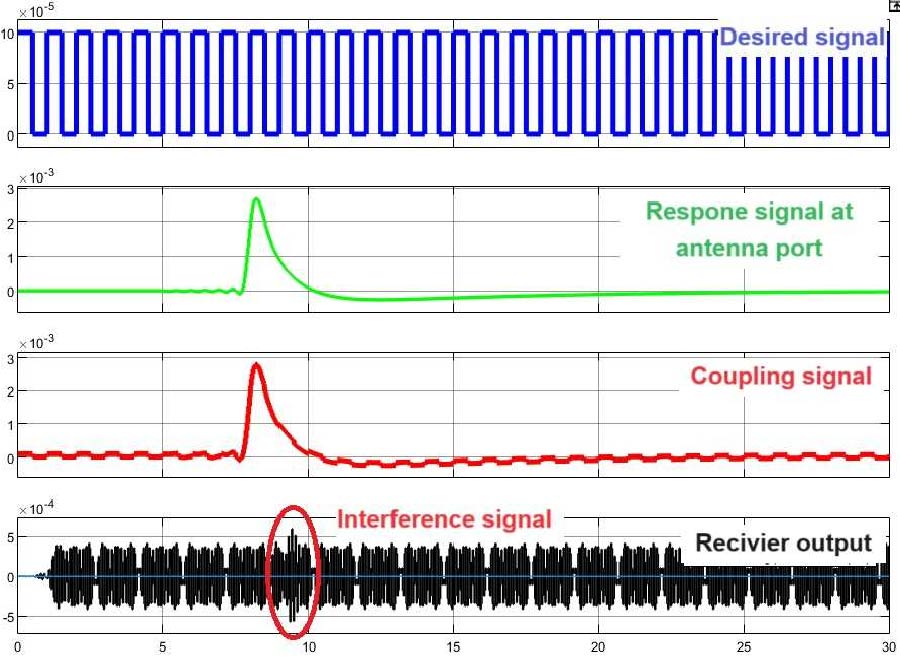
Weight and reference signal are utilized in adaptive interference cancellation (AIC) for vector weighting to generate the signal with equal amplitude and opposite phase to the interference signal. Weight accuracy becomes the core factor to determine the performance of the AIC. In this letter, we analyze the influence of the weight accuracy on interference suppression performance, propose the quantitative characterization method of the weight accuracy with weight noise as an indicator, study the performance and influencing factors of the weight accuracy, and propose the optimization design method. The characteristics of weight accuracy in interference cancellation are verified by theoretical simulation analysis. This work fills in the blank of weight accuracy analysis and has solid theoretical value for exploring the capability boundary of the AIC.
Analysis and Optimization on Weight Accuracy of the Adaptive Interference Cancellation
2024-06-15
PIER Letters
Vol. 121, 7-12
Uncertainty Analysis Method for EMC Simulation Based on the Complex Number Method of Moments
Jinjun Bai , Bing Hu , Haichuan Cao and Jianshu Zhou
The Method of Moments (MoM) is a non-embedded uncertainty analysis method that has been widely used in Electromagnetic Compatibility (EMC) simulations in recent years due to its two major advantages of high computational efficiency and immunity from dimensional disaster. A random variable sensitivity calculation method based on the Complex Number Method of Moments (CN-MoM) is proposed in this paper to improve the accuracy of the MoM in standard deviation prediction and thereby enhance the credibility of EMC simulation uncertainty analysis results. In the parallel cable crosstalk prediction example in the literature, the result of the Monte Carlo Method (MCM) is used as the standard, and the accuracy of the new method proposed in this paper is quantitatively verified using the Feature Selective Validation (FSV) method. Compared with the MoM, the proposed method can significantly improve the calculation accuracy of the standard deviation results without sacrificing simulation efficiency.
Uncertainty Analysis Method for EMC Simulation Based on the Complex Number Method of Moments
2024-06-14
PIER C
Vol. 144, 55-64
A Low Profile Wideband Circularly Polarized Patch Antenna Using Metasurface
Yongkang Yuan , Minquan Li , Guocui Zhu , Xin Qu and Zhonghui Li
A low profile, wideband circularly polarized (CP) antenna using metasurface (MS) is proposed. The proposed antenna is composed of a square loop feeding structure and four driven patches positioned between the ground plane and the MS. Frist, The loop with truncated corners functions as a sequential phase feeder for the four driven patches. These patches are then capacitively coupled by the feeding loop to create a CP mode. Then a defective ground structure (DGS) is adopted to improve the impedance matching. Finally, using MS to generate extra CP minimum AR points to broaden the AR bandwidth. The MS is composed of a 4 × 4 truncated square patch array which enhances the impedance bandwidth and gain of the proposed antenna. The total dimensions of the proposed antenna are 50 mm × 50 mm × 3.124 mm (λ0 × λ0 × 0.062λ0). The MS antenna in circular polarizations achieves a wide -10 dB impedance bandwidth of 37.5% (4.85-7.09 GHz) and a 3 dB axial ratio bandwidth (ARBW) of 20% (5.66-6.92 GHz). In addition, the maximum gain of 10.28 dB is achieved at 6.1 GHz, and the proposed MS antenna also has a flat gain across a broad frequency range from 4.5 GHz to 6.75 GHz.
A Low Profile Wideband Circularly Polarized Patch Antenna Using Metasurface
2024-06-14
PIER Letters
Vol. 121, 1-6
Design and Implementation of a Millimeter Wave Active Antenna for UAV Communications
Ning Liu , Guanfeng Cui , Guotao Shang , Ruiliang Song and Bo Zhang
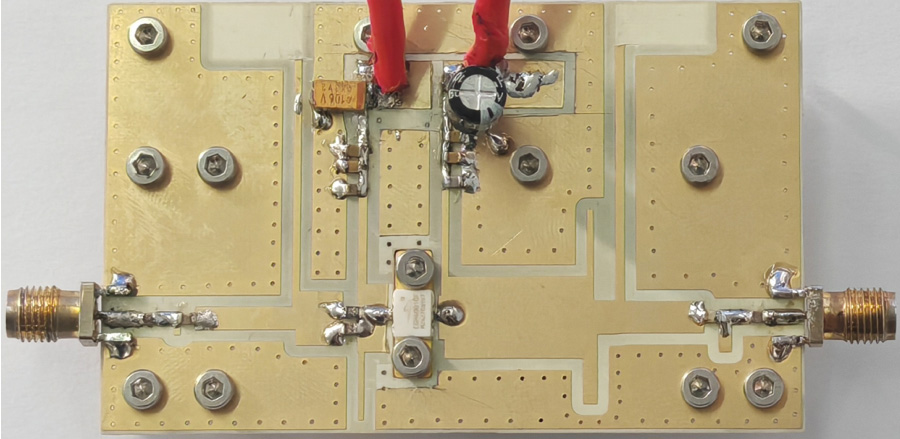
The millimeter wave communication technology used for drones could combine the advantages of drones and millimeter waves, providing high-speed data transmission and wide area network coverage capabilities, and has broad application prospects in military and civilian communication systems. Millimeter wave active antennas have the advantages of miniaturization, high frequency band, and flexible shaping, which is of great significance for ensuring the high-speed dynamic communication ability of drone platforms. In this paper, a millimeter wave active antenna suitable for unmanned aerial vehicles (UAVs) is designed and verified, operating in 24.75-27.5 GHz and adopting Antenna in Package (AiP) design. Frequency band test and communication performance test is conducted. To open and close the RF channels, the antenna's operating frequency range can be shown in the vector network analyzer which meets the design frequency band 24.75-27.5 GHz requirements. By loading 5G millimeter wave standard signals, the antenna can achieve real-time demodulation of 100 MHz, 256 QAM signals. The test shows that the system can meet the requirements of beam tracking and real-time information transmission during high-speed dynamic flight of UAVs. It has broad application prospects in UAV communication systems.
Design and Implementation of a Millimeter Wave Active Antenna for UAV Communications
2024-06-13
PIER C
Vol. 144, 43-53
A Metasurface-Based Low-Profile Circularly Polarized Antenna with Double-Wide Beam for Global Navigation Satellite System
Ao Ni , Wen Wang , Jincheng Xue , Zhuopeng Wang and Lili Zhang
This study introduces a metasurface-based low-profile circularly polarized (CP) antenna with double-wide beam for global navigation satellite systems (GNSSs), which covers primarily BDS-2 B1 band and BDS-3 B1 band. At first, a T-slot structure achieving a compact design is presented to effectively miniaturize the antenna. Except that, a gear-type parasitic ring and eight parasitic microstrip lines are proposed to broaden both the half power beamwidth (HPBW) and axial ratio beamwidth (ARBW) of the antenna. Furthermore, a metasurface unit featuring double ``WIFI'' logo structure is introduced. This unit is expanded into a 7*7 metasurface loaded under the antenna, significantly improving its radiation characteristics. After experimentation, the proposed antenna achieves notable results: 121˚ HPBW and 214˚ 3 dB-ARBW at 1.561 GHz and 121˚ HPBW and 236˚ 3 dB-ARBW at 1.575 GHz. Additionally, it demonstrates more than 3.52 dBic gain across the whole frequency band, whose simulation and test results are in agreement. These results show that the antenna can be used for various satellite communication systems necessitating CP antennas with wide ARBW and HPBW.
A Metasurface-based Low-profile Circularly Polarized Antenna with Double-wide Beam for Global Navigation Satellite System
2024-06-13
PIER M
Vol. 127, 103-111
Closely Spaced Miniaturized MIMO Antenna for X and Ku Band Applications Using Metamaterial
Jyothsna Undrakonda and Ratna Kumari Upadhyayula
The design of a low profile rectangular patch multi-input multi-output (MIMO) antenna is proposed. The antenna incorporates a novel metamaterial-based structure and utilizes a three single split ring resonators based tank circuit to achieve high isolation. A novel metastructure covers C, X, and Ku bands. The antenna structure is made up three single split ring resonators (SRRs) embedded on the bottom of the antenna, situated between the radiating patches. The dimensions of the fabricated antenna are 10×15×1.6 mm3 on an FR4 epoxy substrate. The antenna operates within the frequency range of 10.97 to 18.85 GHz with minimum spacing between antenna elements as 2 mm, covering the X and Ku bands. It is utilized in radar and satellite applications. The metastructure on the back of the antenna enhances isolation by more than 16 dB in the operating band, with a maximum of -31.28 dB at 17.88 GHz. The antenna's radiation efficiency and gain are increased by 80% and 5.54 dB at a frequency of 16.37 GHz respectively. The antenna exhibits good diversity performance parameters, such as an ECC below 0.1 and a DG of 9.98 dB, in addition to desirable radiation characteristics. The proposed antenna exhibits the features that make it highly suitable for advanced technologies.
Closely Spaced Miniaturized MIMO Antenna for X and Ku Band Applications Using Metamaterial
2024-06-13
PIER M
Vol. 127, 93-101
A Miniaturized Reconfigurable Antenna for Modern Wireless Applications with Broadband and Multi-Band Capabilities
Omaima Benkhadda , Mohamed Saih , Abdelati Reha , Sarosh Ahmad , Kebir Chaji , Harbinder Singh and Ahmed Jamal Abdullah Al-Gburi
A miniaturized frequency reconfigurable antenna, designed with a simple geometric layout on an FR-4 substrate measuring 15 × 21 mm2, offers versatility for various wireless applications is proposed in this paper. By adjusting biasing conditions of integrated PIN diodes, the antenna can operate in three distinct modes: wideband, dual band, and triband configurations. The antenna demonstrates satisfactory gain and presents an omnidirectional radiation pattern. Verification of the antenna's functionality involved building a prototype and subjecting it to testing. The confirmed compatibility of the antenna with modern wireless requirements, including the need for small antennas capable of operating across multiple bands and modes, is substantiated by the close agreement between simulated and measured results.
A Miniaturized Reconfigurable Antenna for Modern Wireless Applications with Broadband and Multi-band Capabilities
2024-06-13
PIER Letters
Vol. 120, 103-107
DOA Estimation Based on Extended Array Using Cyclic Spectral Components
Zhangsheng Wang , Shuiwei Liu and Lei Tang
The paper addresses how to improve the degree of freedom of array for DOA (direction of arrival) estimation. According to the DOA estimation model for cyclostationary signal, a method of constructing virtual extended array based on two cyclic spectral components using a single uniform linear array and a method of estimating DOA based on the virtual array are proposed. Firstly, two array receiving data matrices of uniform linear arrays are constructed by using cyclic autocorrelation function of two different cyclic frequencies. Then, the array receiving data matrix of the virtual nested array is constructed by the Kronecker product of the two linear array receiving data matrices. Through virtual expansion, an M2-dimensional array receiving data matrix is obtained based on a uniform linear array of M-array elements, so that the direction of arrival of M2-1 sources can be estimated. It breaks the limitation of array degrees of freedom. Finally, the direction finding model for the virtual nested array is formulated, and the compressed sensing algorithm is used to estimate the DOAs of sources. Through computational simulation experiments, the performance of the algorithm is verified.
DOA Estimation Based on Extended Array Using Cyclic Spectral Components
2024-06-13
PIER Letters
Vol. 120, 95-101
A Compact Two-Port Vivaldi-Based MIMO Antenna with High Isolation for C and X Bands Applications
Rong Li , Haoyu Zhang , Yanhong Xu and Jianqiang Hou
This paper presents a broadband high-isolated MIMO antenna operating in the C and X bands simultaneously. The antenna is expected to be applied in wireless systems such as satellites and radar. A modified Vivaldi element is firstly designed by etching a rectangular structure out of the top metal, and then arranged symmetrically to form a 2-element broadband MIMO antenna with element spacing of 0.28λ (λ is the wavelength at 9 GHz). The operating frequency the MIMO antenna in terms of S11 ≤ -9.0 dB is from 4.0 GHz to 13.5 GHz. However, the mutual coupling between the two elements is quite strong, which can be as high as 8.0 dB, indicating a severe mutual coupling effect between the elements. To improve the isolation level, a defect-ground structure (DGS) is designed and loaded on the ground plane. The decoupling structure of the DGS achieves decoupling in the C and X bands, with a particular emphasis on decoupling in the C band by blocking the current flow between antenna elements. The simulated result shows that the S21 can be lowered to less than -23.4 dB across the whole operating frequency region, i.e., an isolation improvement of 15 dB is achieved. A prototype is fabricated and measured. The measured results are in good agreement with the simulated ones, indicating that the designed broadband MIMO antenna is a good candidate for reliable communication in the C and X bands.
A Compact Two-port Vivaldi-based MIMO Antenna with High Isolation for C and X Bands Applications