Search Results(13786)

2024-06-03
PIER C
Vol. 143, 189-198
Displacement Self-Sensing Control of Permanent Magnet Assisted Bearingless Synchronous Reluctance Motor Based on BP Neural Network Optimized by Improved PSO
Jing Wang , Gai Liu and Huangqiu Zhu
In order to solve the problems of low reliability, low integration, and high cost brought by mechanical sensors in the control system of permanent magnet-assisted bearingless synchronous reluctance motor (PMa-BSynRM), a displacement self-sensing method of the Bback propagation (BP) neural network left-inverse system under the optimization of an improved particle swarm algorithm is proposed. Firstly, the working principle of PMa-BSynRM is introduced, and the mathematical model of PMa-BSynRM is derived. Secondly, the suspension force model is established to prove the left reversibility of the PMa-BSynRM displacement subsystem on the basis of the observation principle of the left reversible system. Thirdly, the weights of BP neural network are optimized by using the improved particle swarm algorithm to avoid local optimum, and the final weights are obtained to complete the construction of the displacement self-detection control system. On this basis, velocity change and anti-interference simulations are conducted to prove the tracking performance of the displacement system. Finally, static suspension, velocity change, and anti-interference experiments are executed which verify the accuracy and feasibility of the proposed displacement self-detection system.
Displacement Self-sensing Control of Permanent Magnet Assisted Bearingless Synchronous Reluctance Motor Based on BP Neural Network Optimized by Improved PSO
2024-06-03
PIER C
Vol. 143, 181-187
Control Signals for NOMA-VLC Systems
Safwan Hafeedh Younu and Mohamad A. Ahmed
In wireless communication systems, a control signal (CS) plays a vital role in managing the connection between transmitters (Txs) and the user equipment (UEs). This work presents CSs for non-orthogonal multiple access (NOMA)-based on visible light communication (VLC) systems. Moreover, pairing schemes, successive interference cancellation (SIC), and load balancing are considered with the NOMA-VLC technique for enhancing the entire performance. The CSs, which are single tones or can be described as unmodulated signals, are exploited to estimate the channel between Txs and UEs, and to evaluate the amount of interference at each UE. Thus, a controller, which is employed to manage the connections between Txs and UEs, can balance the load between Txs based on the level of interference at each UE. Each Tx is allocated a unique CS, i.e. a single-tone frequency. A power measurement unit (PMU) is utilized at each UE for measuring the power of each CS. Therefore, the controller divides the UEs into small groups based on the feedback signals from the PMU, then each group is connected to one Tx. Besides, CSs are used to find the optimum number of UEs that can be served by each Tx with a particular data rate of 50 Mbps and with an acceptable error probability of 10-6, by utilizing on-off keying (OOK) modulation scheme.
Control Signals for NOMA-VLC Systems
2024-06-01
PIER C
Vol. 143, 169-180
Recent Trends in Compact Planar Antennas at 5G Sub-6 GHz and mmWave Frequency Bands for Automotive Wireless Applications: A Review
Ashish Kumar , Mohammad Aljaidi , Manpreet Singh , Mohammed Sanad Alshammari , Amjad A. Alsuwaylimi and Sami M. Alenezi
5G wireless communication offers higher channel capacity, high data rate, sufficient bandwidth, enhanced coverage, and reliable link as compared to the previous generation mobile networks. Also, 5G becomes more relevant with the recent launches of low earth orbit satellites by various ventures like starlink, amazon, one web, etc. As these satellites have heights up to the range from 300 km to 1000 km, the free space path loss decreases drastically which in turn improves the signal reliability and efficient communication at dead spots. With these advancements, antenna researchers have the freedom to design compact, easy to manufacture, with adequate gain user equipment terminal antennas which can be easily integrated in the modern passenger car body. This paper will focus on the recent development in the design considerations of the compact antenna design at sub-6 GHz (n78 frequency band) and mm wave (n278 frequency band) according to 3gpp standards. This manuscript also discusses the various design specifications like selection of material for antennas, design complexity, feeding methods, fabrication and measurement challenges and performance parameters which include reflection coefficient, gain, polarization, axial ratio, cross polarization discrimination, radiation efficiency, radiation pattern shape, etc. The proposed antenna design considerations will facilitate the possible integration into the various parts of the car body according to the recent vehicular applications to uninterrupted communication.
Recent Trends in Compact Planar Antennas at 5G Sub-6 GHz and mmWave Frequency Bands for Automotive Wireless Applications: A Review
2024-06-01
PIER C
Vol. 143, 161-168
Fault Diagnosis Output of Motor Bearings Based on Relieff Feature Selection
Ming Tang , Aiyuan Wang and Zhentian Zhu
The problem of unstable vibration signal and accurate fault feature extraction of motor bearing fault causes the low accuracy of motor bearing fault diagnosis. In order to improve the accuracy of motor bearing fault diagnosis, the variational mode decomposition (VMD) is used to decompose the vibration signal and combine with the convolutional neural network (CNN).The bearing faults are categorized into inner ring wear, outer ring wear and cage fracture; then each category of faults is further subdivided into the degree of loading, which is categorized into 0, 25% and 50%, with a total of 9 cases. In order to select sensitive fault features, the vibration signals of motor bearings in three dimensions are collected, decomposed into multiple endowment modal function (IMF) components by VMD. The energy entropy of each IMF in each dimension is extracted, and the sensitive fault features are selected by feature selection (ReliefF), and then input into CNN for fault diagnosis. At the same time, the fault diagnosis of transverse vibration signal and three-dimensional vibration signal is also carried out respectively. The experimental results show that the accuracy of the method is greatly improved, and the fault diagnosis can be realized.
Fault Diagnosis Output of Motor Bearings Based on ReliefF Feature Selection
2024-05-31
PIER Letters
Vol. 120, 39-45
A Topology Reconstruction Based WPT System with CC and CV Outputs Function
Xuebin Zhou , Yonghong Tan , Linhui Wang and Lin Yang
Constant current (CC) charging and constant voltage (CV) charging are the two main charging stages of lithium-ion batteries in wireless charging systems. The traditional LCC-LCC topology has a high degree of design freedom. The conversion from CC to CV output is usually achieved through composite topology or frequency switching, which results in high control complexity and increases system cost. This paper proposes a wireless power transfer (WPT) system with CC and CV output characteristics based on topology reconstruction. Based on the LCC-LCC topology, by introducing one MOSFET in the rectifier and one AC switch which consists of two MOSFETs connected in reverse series to reconfigure the topology, the conversion from CC to CV mode can be achieved without complicated control methods and additional components. In addition, the proposed system works at a fixed operating frequency point, which can effectively avoid frequency bifurcation phenomenon. Therefore, the proposed system features a simple structure, easy control, low cost, and high robustness. In addition, ZPA operation can be realized in both CC and CV modes, ensuring high transmission efficiency. An experimental prototype with a rated power of 480W is built, and a maximum efficiency can reach 93.5%, which verifies the feasibility of the system.
A Topology Reconstruction Based WPT System with CC and CV Outputs Function
2024-05-29
PIER Letters
Vol. 120, 31-37
Analysis of Slot Antenna Performance for on-Body to in-Body Channel Characterization
Thandullu Naganathan Suresh Babu , Packirisamy Thirumaraiselvan , Anumuthu Priya and Pethaperumal Muthukannan
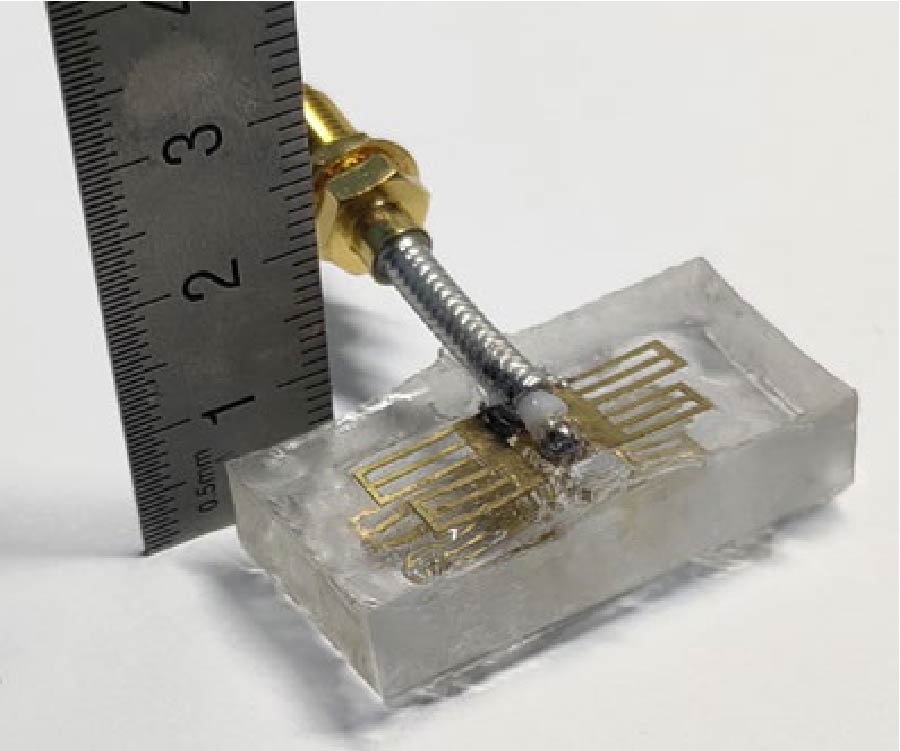
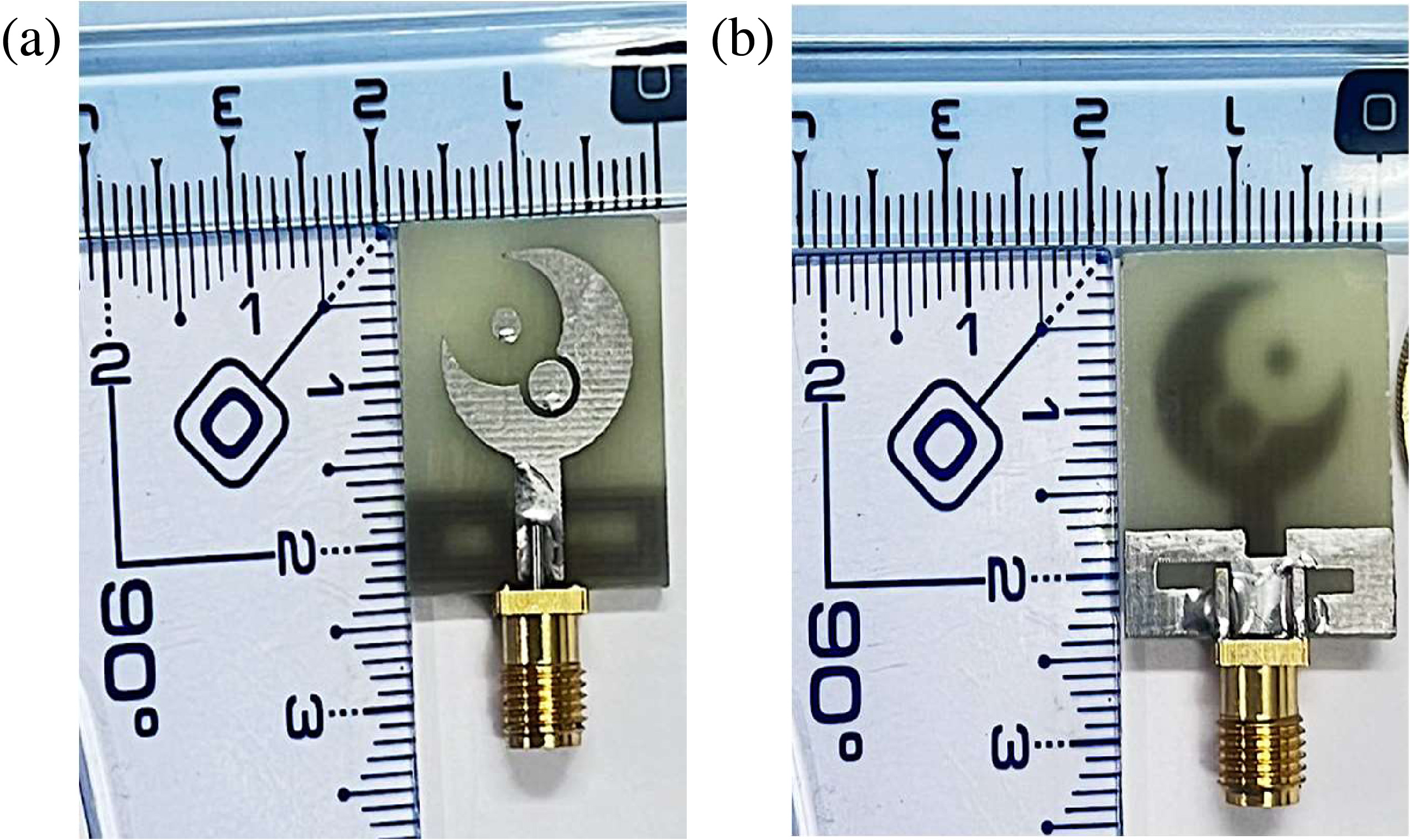
The propagation study of electromagnetic (EM) waves within a human body is becoming essential due to the growing demand for the design and development of implantable sensing nodes in a body area network (BAN). Many researchers are interested in contributing to the development of propagation models in the ultra-wideband (UWB), i.e. 3.1 to 10.6 GHz, for biomedical applications, as well as the license-free Industrial, Scientific, and Medical (ISM) band. This kind of propagation model is essential in order to design and develop UWB transceivers for in-body, on-body, and off-body communications. This paper looks at the possibility of using a stepped slot patch antenna with a copper ground plane as either an off-body or on-body antenna by comparing measurements taken on a liquid human phantom. In addition, we use the empirical data to propose a statistical model.
Analysis of Slot Antenna Performance for On-body to In-body Channel Characterization
2024-05-28
PIER C
Vol. 143, 151-160
Design of a CSRR Dual-Port Patch Antenna with Elliptical Slots on Ground Plane for Wireless Communication
Manjula Sanugomula and Ketavath Kumar Naik
This paper introduces a complementary split ring resonator (CSRR) patch antenna with elliptical slots on the ground plane for wireless communication, significantly amplified by placing two conducting elements over the substrate. The dimensions of the designed CSRR dual element multiple-input-multiple-output (MIMO) antenna are 16 x 32 mm2 (0.66λ x 1.33λ). In this paper, the CSRR dual element MIMO antenna with an elliptical DGS resonates at 11.523 GHz, 12.305 GHz, and 15.178 GHz with reflection coefficients of -22.67 dB, -26.25 dB, and -47.65 dB respectively. It presents an impressive wide impedance bandwidth of 1.462 GHz covering 11.523 GHz and 12.305 GHz resonating frequencies and 1.446 GHz at 15.178 GHz resonance. The proposed design gives a gain of 5.29 dBi, 6.12 dBi, and 5.97 dBi for the resonating frequencies respectively. The results show a minimum envelope correlation coefficient (<0.025) and a significant diversity gain (>9.85) across the entire bandwidth. The measured results are close to the simulated ones, confirming the efficiency of the triple resonating frequencies with wideband, high-gain antenna design used for wireless communications for faster data transmission rates.
Design of a CSRR Dual-port Patch Antenna with Elliptical Slots on Ground Plane for Wireless Communication
2024-05-28
PIER B
Vol. 106, 73-84
Decoupling Control of Six-Pole Axial-Radial Active Magnetic Bearing Based on Improved Linear Active Disturbance Rejection Optimized by Least Square Support Vector Machine
Zhen Wang , Gai Liu , Jintao Ju and Huangqiu Zhu
To improve the coupling problem between radial degrees of freedom in six-pole axial-radial active magnetic (AR-AMB), a decoupling control method based on an improved linear active disturbance rejection decoupling control strategy optimized by the least square support vector machine (LSSVM-ILADRC) is proposed. Firstly, the structure and working principle of the six-pole AR-AMB are introduced, and the mathematical model of suspension force is derived. Secondly, cascaded linear extended state observers (LESOs) are used to estimate the disturbance in degrees of freedom step by step, with LESO1 providing an initial estimate of the total disturbance, and LESO2 estimating and compensating for the difference between the initial estimate and the actual disturbance. The regression prediction function of LSSVM is employed to enhance the response speed and estimation accuracy of the LESO to the disturbance. Finally, the simulation and experimental research show that the proposed LSSVM-ILADRC decoupling control method has better decoupling performance and anti-interference performance than the ILADRC decoupling control method.
Decoupling Control of Six-pole Axial-radial Active Magnetic Bearing Based on Improved Linear Active Disturbance Rejection Optimized by Least Square Support Vector Machine
2024-05-26
PIER M
Vol. 127, 65-73
A New Method for Ship Detection in SAR Image Based on Finsler Information Geometry
Ke Wang , Meng Yang and Feng Cheng
This article introduces a novel ship detection method for Synthetic Aperture Radar (SAR) images that leverages the principles of Finsler information geometry. It employs the curvature features of a statistical manifold as a discriminative mechanism to diminish the impact of sea clutter and augment the contrast between a target and its background. The ambiguity of the local microstructure and statistical characteristics is partially resolved by using information theory to select metric definitions and curvature representation of non-European space. This method models sea clutter using the Gamma Distribution Function (GDF), transforming the detection challenge into an anomaly detection framework within the GDF space. This approach establishes a theoretical detection framework rooted in Finsler information geometry by integrating statistical modeling with Finsler geometry. It harnesses the Finsler characteristics of GDF space to extract the curvature feature representations for each GDF. Detection is achieved by applying one-class support vector machines (SVMs) to a matrix of curvature values derived from these representations. The detection algorithm unfolds in two primary phases. Initially, it utilizes a family of probability distributions to capture geometrical information. Subsequently, curved features are employed for target detection. Through rigorous experimentation with real datasets, the method demonstrates enhanced resilience to sea clutter and outperforms existing techniques for analyzing distribution families, validating its effectiveness and robustness.
A New Method for Ship Detection in SAR Image Based on Finsler Information Geometry
2024-05-26
PIER B
Vol. 106, 57-72
Wideband Circularly Polarized Exponential Slot Antenna with Rectangular Island for X-Band Satellite Applications
Mostafa Mahmoud Rabie , Mohamed S. El-Gendy , Angie Reda El Damak , Fawzy Ibrahim and Hadia El-Hennawy
This paper introduces a compact, circularly polarized exponential slot antenna with a rectangular island. The concept of the proposed antenna is similar to that of fractal antennas as it is based on designing an asymmetric slot shape with an increased electrical length within a small area, thanks to the exponential path. The obtained results are as follows. The reflection-coefficient |S11| of the proposed antenna covers the band from 5.5 GHz to 9 GHz. The proposed antenna is circularly polarized with an axial-ratio (AR) bandwidth that extends from 6.87 GHz to 8.9 GHz. It offers simultaneous dual circular polarizations (RHCP and LHCP). The gain of the proposed antenna varies between 4.2 dBic and 5.4 dBic. The efficiency reaches 94%. The size of the antenna is compact making it suitable for CubeSats with limited surface area. The proposed antenna intended application is X-band Earth-Space satellite communication. The proposed antenna can be employed for both the X-band satellite downlink (from 7.25 GHz to 7.75 GHz) and uplink (from 7.9 GHz to 8.4 GHz) frequency bands. Additionally, the antenna can be utilized in military applications, and RFID tag tracking-equipment. A prototype of the proposed antenna has been fabricated and then measured using Vector-Network-Analyzer (VNA) and inside an anechoic chamber. The measurement results of the proposed antenna are in excellent match with the simulated ones.
Wideband Circularly Polarized Exponential Slot Antenna with Rectangular Island for X-band Satellite Applications
2024-05-24
PIER C
Vol. 143, 141-150
Reduction of Specific Absorption Rate Using a-Shaped Electromagnetic Band Gap for Quad Port MIMO Antenna
Govindarao Tamminaina and Ramesh Manikonda
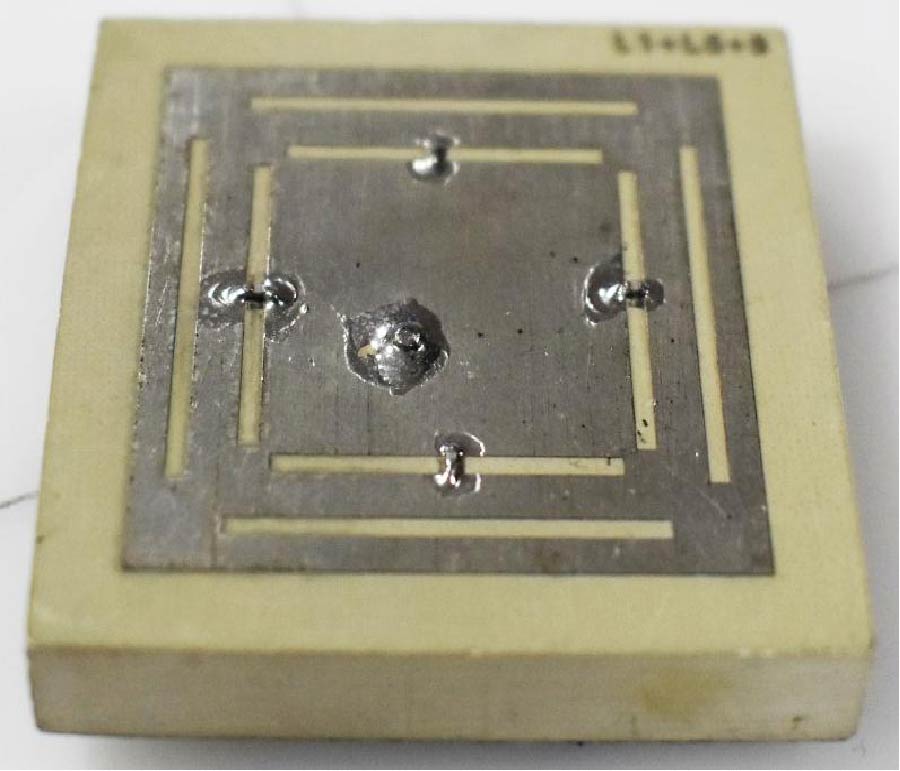
This work designs an electromagnetic band gap structure-based quad port rectangular MIMO antenna to operate in the 5G new radio (NR) sub-6 GHz n79 band, with a frequency range of 4.3-5.0 GHz. To achieve optimal radiating element isolation with the least complexity, MIMO antennas' four radiating elements are oriented orthogonally using an A-shaped electromagnetic band gap (EBG) structure. The EBG structure is located between the human phantom model and the MIMO antenna. The MIMO antenna's measurements are 40 × 40 × 1.6 mm3, and it is implemented on an FR-4 substrate with whole ground. Due to EBG structure, the mutual coupling is improved to -26.0 dB. The ECC, DG, and CCL were also calculated. In addition, the SAR (specific absorption rate) value is reduced to 0.22 w/kg. The MIMO antenna is simulated using HFSS software. The vector network analyzer (VNA), model Anritsu MS 2037C is used to measure the various MIMO antenna parameters.
Reduction of Specific Absorption Rate Using A-shaped Electromagnetic Band Gap for Quad Port MIMO Antenna
2024-05-22
PIER C
Vol. 143, 131-139
A Miniaturized Double Sided Vivaldi Antenna with Enhanced Radiation Traits for EW Applications
Mayank Vishwakarma , Puthalpattu Nagaraja Rao and Satyanarayana Vuta
This paper presents a compact double sided Ultra-Wideband (UWB) vivaldi antenna with corrugated structure. The proposed antenna is designed to operate from 5 GHz to 20 GHz frequency band. A comprehensive analysis of the antenna is carried out for its design, optimization, and performance especially for enhanced bandwidth and improved radiation characteristics. The antenna structure consists of vivaldi section which is printed on top and bottom layers of multi-layer printed circuit board (PCB) and fed with microstrip to strip lines transition. The antenna is fabricated and measured its return loss and radiation characteristics. The measured peak gain is 10.25 dBi at 17 GHz and return loss is better than -10 dB over the band 5 GHz to 20 GHz. Symmetrical radiation properties are observed over the band with excellent radiation characteristics especially in lower frequency bands as a result of comprised corrugated structure. Also, the far-field radiation pattern is symmetrical and directive throughout the operating band. The proposed design finds a suitable application in the field of an electronic warfare, precision ranging, microwave imaging.
A Miniaturized Double Sided Vivaldi Antenna with Enhanced Radiation Traits for EW Applications
2024-05-22
PIER Letters
Vol. 120, 15-21
Optically Transparent Broadband Microwave Absorber with Tunable Absorptivity Based on Graphene-ITO Structure
Shuomin Zhong , Enbang Yu , Yu Zhang , Xianjia Chen , Zi-Wei Zheng , Qiping Lin and Sailing He
In this study, we present a novel broadband microwave absorber that is both optically transparent and capable of dynamically adjusting its absorptivity. The absorber is composed of a graphene sandwich structure (GSS), a polyvinyl chloride (PVC) layer, an indium tin oxide (ITO) layer, another PVC layer, and an ITO ground plane, arranged in a top-to-bottom configuration. This unique design allows for a working bandwidth of 6.8 GHz to 14.0 GHz, with absorption levels ranging from 95% to 60%, achieved by varying the impedance of the GSS from 1000 Ω/sq to 200 Ω/sq through tuning the bias voltage. By utilizing materials with high optical transmittance, this nonpatterned device maintains exceptional optical transparency. Furthermore, by incorporating additional ITO layers with different impedances at equal intervals, this multilayer design can be extended to create an ultra-broadband absorber covering a range of 5.28-39.52 GHz. This is made possible due to the dispersionless resistance of nonpatterned graphene and ITO sheets in the microwave spectrum. This transparent wideband microwave absorber, with tunable absorptivity, holds great potential for a wide range of applications in broadband and intelligent stealth technology.
Optically Transparent Broadband Microwave Absorber with Tunable Absorptivity Based on Graphene-ITO Structure
2024-05-22
PIER B
Vol. 106, 39-55
Study on Electromagnetic Performance of Permanent Magnet Rotor and Dual Stator Starter Generator for Electric Vehicle Range Extender
Mingling Gao , Zhenhai Yu , Wenjie Jiao , Wenjing Hu , Huihui Geng , Yixin Liu , Shiqiang Liu and Yishuo Liu
The flywheel-type dual-stator permanent magnet starter generator combines engine flywheel and starter generator rotor into a single unit, which has the advantages of high efficiency, high power density, and compact structure. This paper proposes a new type of dual-stator permanent magnet starter generator topology in which the two stators are concentric and share the same permanent magnet rotor. Equivalent magnetic circuit modeling of the inner stator's magnetic field, outer stator's magnetic field, and synthetic magnetic field using the equivalent magnetic circuit method list the system of flux equations and solve the main magnetic flux, leakage flux, and leakage coefficient, and the results show that the equivalent magnetic circuit method has smaller error and higher accuracy than the finite element method. The harmonic electric potential of the starter generator is modeled and analyzed. The permanent magnet rotor and inner and outer stator structures are optimized to obtain the optimal parameters, and the prototype is manufactured and tested. The optimized starter generator no-load induced electromotive force fundamental amplitude is improved. The induced electromotive force harmonic distortion rate is reduced, and the output performance of the whole generator is significantly improved.
Study on Electromagnetic Performance of Permanent Magnet Rotor and Dual Stator Starter Generator for Electric Vehicle Range Extender
2024-05-22
PIER B
Vol. 106, 17-38
Negative Group Delay Prototype Filter Based on the Reciprocal Transfer Function of a Low-Pass Butterworth Filter Capped at Finite Out-of-Band Gain
Miodrag Kandic and Greg E. Bridges
A Negative Group Delay (NGD) prototype filter design based on the reciprocal transfer function of a low-pass Butterworth filter of a given order, is presented. The out-of-band gain of the prototype transfer function is capped at a finite constant value via multiplication by a transfer function of a low-pass Butterworth filter with 3 dB bandwidth that is wider than the reciprocal function bandwidth. Such synthesized transfer function exhibits maximal magnitude characteristic flatness within the 3 dB bandwidth (Butterworth-like property), while it also exhibits NGD and satisfies Kramers-Kronig relations (causal transfer function). The prototype design achieves an NGD-bandwidth product that in the upper asymptotic limit as the design order increases, is a linear function of out-of-band gain in decibels. This is an improvement compared with previously reported cascaded first-order and second-order designs, which have NGD-bandwidth functional dependency of out-of-band gain in decibels to the power of 1/2 and 3/4, respectively. It is shown that the transfer function of the corresponding design transformed to a non-zero center frequency can be exactly implemented with a Sallen-Key topology employing parallel resonators, or approximately implemented with an all-passive ladder topology. An in-band magnitude/phase distortion metric is applied to the prototype designs, evaluated for Gaussian and sinc pulse input waveforms, and compared with values obtained for a well-known commonly used medium. It is also shown that when the specified bandwidth corresponds to the entire bandwidth over which the group delay characteristic is negative, the magnitude characteristic variation approximately equals half the out-of-band gain value in decibels. Therefore, for any NGD design with large out-of-band gain (typically higher than 6 dB), using the entire bandwidth where group delay is negative can result in strong levels of distortion and should be checked for applied waveforms.
Negative Group Delay Prototype Filter Based on the Reciprocal Transfer Function of a Low-pass Butterworth Filter Capped at Finite Out-of-band Gain
2024-05-21
PIER Letters
Vol. 120, 7-13
Importance of Functional Parameters on the Effective Operation of Resonant Multi-Receiver Wireless Power Transfer System
Pragyan P. Mohanty , Suraj Kumar Panigrahi , Sushree Sangita Biswal , Sivnarayan Bhuyan , Durga Prasanna Kar , Renu Sharma and Satyanarayan Bhuyan
The magnetic resonance coupling based wireless power transfer (WPT) technology has been of great interest due to its usefulness and persistent characteristics in powering multiple devices simultaneously. However, it is the foremost challenge to make possible easy access and manage the effective power transmission to the multiple gadgets through the WPT technology. In order for the multi-receiver system to run at its most favourable operational area, a prompt access is necessary at this point to identify the appropriate selection of functional parameters. Thus, a circuit model analysis has been put forward, and the influences of functioning parameters such as electric load at the receivers, mutual coupling between the coils, frequency of operation on the system's performance indicators like input power, power at the receiver's load, power transfer efficiency at individual receiver, and moreover the input impedance of the system have been investigated. The perception has been validated through a bench-top experimental setup. The observed experimental result closely matches the theoretical data derived from the circuit model. The outcomes are crucial which may provide the important selection criteria for the effective operation and creation of successful electromagnetic coupling based multi-receiver WPT system.
Importance of Functional Parameters on the Effective Operation of Resonant Multi-receiver Wireless Power Transfer System
2024-05-21
PIER Letters
Vol. 120, 1-6
Metamaterial-Based Compact UWB Bandpass Filter Using Substrate Integrated Waveguide
Senathipathi Udhayanan and Krishnan Shambavi
A compact ultra-wideband (UWB) bandpass filter is realized with the combination of dual-split square complementary split ring resonator (DSS-CSRR) and substrate integrated waveguide and is investigated in this paper. Three DSS-CSRRs are carved on the top and bottom layers of SIW to achieve the required passband and enhance the selectivity of the filter. Slots are etched in the ground to improve the return loss characteristics and to lower the insertion loss. The proposed filter offers a fractional bandwidth of 107% (3.1-10.3 GHz) and an insertion loss range of 0.6-1.6 dB in the entire passband. The prototype was fabricated on an FR-4 substrate, with dimensions of 0.3λgL × 1.06λgW. The group delay variation is almost flat over the entire passband. The prototype was fabricated and validated the measured results.
Metamaterial-based Compact UWB Bandpass Filter Using Substrate Integrated Waveguide
2024-05-16
PIER C
Vol. 143, 121-129
Machine Learning-Based Optimization of Hexagon-Shaped Fractal Antenna for Ultra-Wideband Communications
Sai Sampreeth Indharapu , Anthony N. Caruso , Travis D. Fields and Kalyan C. Durbhakula
In the wireless communication industry, achieving gigabit-per-second data rates with low-profile, ultra-wideband (UWB) microstrip patch antennae poses a significant challenge. Conventional optimization algorithms, though effective, are often computationally expensive, particularly for complex antenna geometries with high degrees of freedom. There is an imperative need for new methodologies to address this challenge and revolutionize the antenna optimization process. Successful and timely development of antennas relies on the efficiency and computational speed of optimization algorithms, full-wave electromagnetic (EM) solvers, and the intuition of radio frequency engineers. To mitigate the dependence on complex and time-consuming processes, we propose an efficient machine learning (ML)-based antenna optimization methodology that minimizes optimization time by more than 90%. This paper aims to apply and study the performance of two specific ML models, the radial basis function (RBF) and the least squared regression (LSR) models, in the bandwidth optimization without increasing the aperture area of a hexagon-shaped fractal antenna. The hexagon-shaped fractal antenna was chosen for its UWB characteristics, low profile, and high degrees of freedom (10 adjustable parameters). The reflection coefficient response of a hexagon-shaped fractal antenna is predicted by the trained RBF and LSR models and further optimized by the genetic algorithm (GA). The proposed approach stands out among other notable works in this research domain, especially for ultrawideband (UWB) applications, by prioritizing the optimization of the mean of |S11| across the entire frequency range instead of solely targeting individual frequency points. The GA-based optimization using trained ML models has increased the bandwidth by 30.20% and reduced the computational time by 90% compared to conventional optimization without increasing the physical or electrical size of the antenna. Simulation and measurement results concurred with a maximum difference of 5%, demonstrating the efficacy of the ML approach for antenna optimization.
Machine Learning-based Optimization of Hexagon-shaped Fractal Antenna for Ultra-wideband Communications
2024-05-14
PIER Letters
Vol. 119, 99-105
Analysis of Fractal AMC Backed Gain Enhancement for Circular Spike Monopole Antenna
Rajesh Katragadda and Palasetti Appala Nageswara Rao
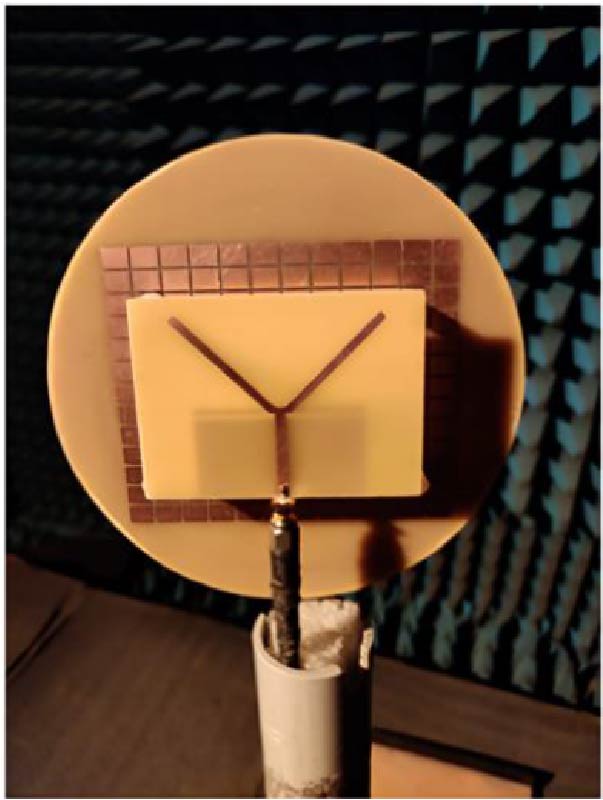
This work provides the design, analysis, and performance optimization of an artificial magnetic conductor (AMC)-based wideband printed monopole antenna. The proposed antenna structure is constituted with CPW feeding, and an AMC layer has been added beneath the proposed antenna configuration to decrease back lobe radiation. By employing an AMC reflector, composed of periodic copper metallic Minkovski square fractal patches on a circular serrated antenna with an air gap separation of 8\,mm, the proposed antenna has obtained a peak gain of 12.9 dBi, and wideband is also achieved by the antenna for wearable applications. The prototyped model of cotton fabric substrate material based measurement results with antenna measurement setup match the CST-tool simulation results, enabling the applicability in real time communication systems.
Analysis of Fractal AMC Backed Gain Enhancement for Circular Spike Monopole Antenna
2024-05-12
PIER Letters
Vol. 119, 91-98
Cross Polar Reduction of a High Gain Wide-Band Stacked Microstrip Antenna Using Metasurfaces
Anjali Rochkari , Shubhangi Mangesh Verulkar , Nayana Chaskar , Mahadu Trimukhe and Rajiv Kumar Gupta
In this article, a low-profile high gain stack microstrip antenna (MSA) with low Cross Polarization Level (CPL) using multiple metasurfaces is proposed. MSA on a thick substrate having low dielectric constant enhances the gain and bandwidth (BW). However, as substrate thickness increases, the CPL increases due to increase in coaxial probe length used for feeding MSA. The CPL is reduced by using metasurfaces formed by an array of square metallic patches of dimensions and periodicity < 0.1λ0. A suspended MSA (SMSA) is designed on a reactive impedance surface (RIS) backed substrate, to reduce the interaction between substrate and ground plane, surface waves and to increase impedance BW and polarization purity. A parasitic patch is fabricated on a superstrate and placed above the SMSA and metallic patches forming the metasurfaces are fabricated around the MSA, PP and on the other side of superstrate. These metasurfaces increase the inductance of the antenna, and to compensate the inductance, the height of SMSA and the spacing between MSA and PP are decreased which results in the decrease in probe feed length and CPL. This novel low-profile high gain wide band stack MSA offers CPL < -20 dB, Side Lobe Level (SLL) < -20 dB, Front to Back lobe ratio (F/B) > 20 dB and S11 ≤ -10 dB over 3.3-3.6 GHz to cover 5G applications. The 0.935λ0 × 0.99λ0 × 0.046λ0 prototype antenna offers peak gain of 8.3 dBi, antenna efficiency >90%, and λ0 being the free-space wavelength at 3.3 GHz.
Cross Polar Reduction of a High Gain Wide-band Stacked Microstrip Antenna using Metasurfaces