Search Results(13801)

2011-12-08
PIER
Vol. 122, 467-496
Axial-Flux Permanent-Magnet Motor Design for Electric Vehicle Direct Drive Using Sizing Equation and Finite Element Analysis
Amin Mahmoudi , Nasrudin Abd Rahim and Hew Wooi Ping
The design process of a double-sided slotted TORUS axial-flux permanent-magnet (AFPM) motor suitable for direct drive of electric vehicle (EV) is presented. It used sizing equation and Finite Element Analysis (FEA). AFPM motor is a high-torque-density motor easily mounted compactly onto a vehicle wheel, fitting the wheel rim perfectly. A preliminary design is a double-sided slotted AFPM motor with 6 rotor poles for high torque-density and stable rotation. In determining the design requirements, a simple vehicle-dynamics model that evaluates vehicle performance through the typical cruising trip of an automobile was considered. To obtain, with the highest possible torque, the initial design parameters of the motor, AFPM's fundamental theory and sizing equation were applied. Vector Field Opera-3D 14.0 commercial software ran the FEA of the motor design, evaluating and enhancing accuracy of the design parameters. Results of the FEA simulation were compared with those obtained from the sizing equation; at no-load condition, the flux density at every part of the motor agreed. The motor's design meets all the requirements and limits of EV, and fits the shape and size of a classical-vehicle wheel rim. The design process is comprehensive and can be used for an arbitrary EV with an arbitrary cruising scenario.
AXIAL-FLUX PERMANENT-MAGNET MOTOR DESIGN FOR ELECTRIC VEHICLE DIRECT DRIVE USING SIZING EQUATION AND FINITE ELEMENT ANALYSIS
2011-12-07
PIER B
Vol. 37, 59-80
Accurate and Efficient Analysis of Planar Electromagnetic Band-Gap Structures for Power Bus Noise Mitigation in the GHz Band
Francesco De Paulis and Antonio Orlandi
Noise reduction in PCB is a major concern in the present digital electronic systems with data rate beyond 10 Gbps. The noise, due to simultaneous switching noise, radiation from signal vias crossing the planes, etc. can propagate within parallel plane cavity at its resonant frequencies, thus allowing coupling between integrated circuits (ICs) far from each other. Electromagnetic band-gap (EBG) structures are largely employed as noise reduction technique. This paper presents a quick and efficient analytical approach for evaluating the EBG noise reduction performances in terms of band-gap limits. The study is based on the physics behavior of the planar EBG structures, focusing on its resonant properties. The resonant modes of the EBG cavity are affected by the additional inductance of the patterned plane respect to the case of the ideal solid plane cavity. The formulas provided, based on the quantification of such inductance, can be easily implemented and employed for a quick layout design of power planes in multilayer PCBs, as shown in a practical example of a partial EBG plane.
ACCURATE AND EFFICIENT ANALYSIS OF PLANAR ELECTROMAGNETIC BAND-GAP STRUCTURES FOR POWER BUS NOISE MITIGATION IN THE GHZ BAND
2011-12-07
PIER Letters
Vol. 28, 101-109
Analytical Calculation of Band Gap of a 1D Planar Ternary Photonic Crystal by Simulating with a Symmetric Lossless Transmission Line
Abdolrasoul Gharaati and Alireza Serajfard
We simulate a 1D ternary photonic crystal (TPC) employed as a clad of a photonic crystal waveguide (PCW) which consists three different lossless dielectric layers as a unit-cell. Calculating input impedance at each layer interface and using a lossless reciprocal transmission line as a model, we can predict angle intervals in which reflection occurs due to photonic crystal effect. Comparing this method with transfer matrix method and bang structure shows perfect agreement.
ANALYTICAL CALCULATION OF BAND GAP OF A 1D PLANAR TERNARY PHOTONIC CRYSTAL BY SIMULATING WITH A SYMMETRIC LOSSLESS TRANSMISSION LINE
2011-12-06
PIER Letters
Vol. 28, 91-99
A Semi-Elliptical Wideband Phase Shifter
Yew-Chiong Lo and Boon-Kuan Chung
A new microstrip structure for realization of wideband phase shifter has been designed and fabricated. The proposed design uses edge-coupled semi-elliptical structure and an elliptical defected ground plane to increase the coupling coefficient and operating bandwidth. Simulation performed using CST Microwave Studio and measured results confirm the good performance of the proposed design. The phase deviation is better than ±4º, insertion loss less than 0.6dB and return loss better than 10dB over a wide frequency range. The achievable bandwidth is more than 2.3 : 1.
A SEMI-ELLIPTICAL WIDEBAND PHASE SHIFTER
2011-12-06
PIER Letters
Vol. 28, 83-90
A Novel Compact Printed Antenna with Circularly Polarized Characteristic
Wei-Mei Li , Yong-Chang Jiao and Jie Huang
A new design of a circularly polarized single-layer antenna which has a compact structure of 10mm×20mm×1mm is presented. The proposed antenna only consists of a feedline and a rectangular ground plane both printed on the same metallic layer. To compact the antenna size and overcome the high impedance problem, the circular polarization (CP) operation can be attained by locating the feedline at the left of the ground plane. Parameters such as substrate length and patch length are investigated and design results from parametric simulations are presented.
A NOVEL COMPACT PRINTED ANTENNA WITH CIRCULARLY POLARIZED CHARACTERISTIC
2011-12-06
PIER C
Vol. 26, 29-42
Matching Network Using One Control Element for Widely Tunable Antennas
Chieh-Sen Lee and Chin-Lung Yang
A tunable impedance matching network is applied to achieve very widely tunable antennas, whose geometries are independent and unchanged to simplify the design. The attached matching network as the antenna feeding network enables any unspecified UWB antenna to tune the operation frequency continuously with high selectivity by merely one single control. This is quite different from filter-based concept which is complicated to co-design and implement a tiny narrow band tunable filter over wide frequency ranges and very difficult to control with one element. And also the design, adjustment, and optimization of the matching network are much simpler, quicker, and lower cost than geometry-modified antenna design. The analysis of precise high frequency circuit models is used predict the performance in simulation. Fabricated prototype antennas are measured by using horn antennas to validate the antenna performance. The tunable frequency ranges from 1.8 GHz to 2.8 GHz (155%) and 2.19 GHz to 3.86 GHz (176%). Moreover, compared to other matching network-based solutions, non-ideal effects in undesired bands other than the operation frequency band are suppressed, so the performance is improved. One wide-tuning antenna using one single element to control can be carried out by tunable matching networks without complicated designs.
MATCHING NETWORK USING ONE CONTROL ELEMENT FOR WIDELY TUNABLE ANTENNAS
2011-12-06
PIER C
Vol. 26, 13-27
A Compact Ultrawideband Monopole Antenna with 5.5 GHz Notched Band
Pichet Moeikham , Chatree Mahatthanajatuphat and Prayoot Akkaraekthalin
This paper proposes a compact ultrawideband monopole antenna fed by CPW with a 5.5 GHz notched band of WLAN/WiMAX systems. The antenna input section is designed by using a gradual curvature central line and ground planes for ultrawideband achievement. In order to reject the unwanted frequency of the existing WLAN/WiMAX band, the C-shaped slit with perimeter length of a half wavelength at center frequency of 5.5 GHz has been embedded into the monopole patch. The designed antenna is completely implemented and measured for impedance bandwidth covering UWB range and stably performs omnidirectional pattern in $xz$ plane from 3.1 to 10 GHz. The proposed antenna could potentially minimize frequency interference in the WLAN/WiMAX bands.
A COMPACT ULTRAWIDEBAND MONOPOLE ANTENNA WITH 5.5 GHZ NOTCHED BAND
2011-12-06
PIER
Vol. 122, 453-465
A Compact Multilayer Dual-Mode Substrate Integrated Circular Cavity (SICC) Filter for X-Band Application
Zhi Gang Zhang , Yong Fan , Yu Jian Cheng and Yong-Hong Zhang
A high-performance multilayer dual-mode filter is developed based on the substrate integrated waveguide circular cavity (SICC) in this paper. The filter is constructed with two circular cavities and each cavity supports two degeneration modes, which can be generated and controlled by the coupling aperture and slot located between layers. Detailed design process is introduced to synthesize an X-band dual-mode dual-layer filter. It not only has the good performances, but also reduces the circuit size much more. Moreover, it can be found that the upper side response of the filter is very steep. Good agreement is obtained between the simulated and measured results of the proposed structure.
A COMPACT MULTILAYER DUAL-MODE SUBSTRATE INTEGRATED CIRCULAR CAVITY (SICC) FILTER FOR X-BAND APPLICATION
2011-12-06
PIER
Vol. 122, 437-452
Electromagnetic Optimal Design for Dual-Band Radome Wall with Alternating Layers of Staggered Composite and Kagome Lattice Structure
Yongmao Pei , Anmin Zeng , Licheng Zhou , Rubing Zhang and Kuixue Xu
In this paper, electromagnetic optimal design is carried out for dual-band radome wall with alternating layers of staggered composite and Kagome lattice structure. The novel wall structure provides broadband transmission capability, along with excellent thermal-elastic properties and mechanical performances for high temperature applications. By optimizing the layer number (n) and the thickness of the whole wall (d), the power transmission efficiency of the novel structure in the frequency range of 1-100 GHz is calculated via boundary value method (BVM) based on electromagnetic theory. The calculation results suggest that if the wall thickness is dimensioned to be 6 mm and the wall structure is designed as 5 layers, the novel structure demonstrates excellent transmission performance. The optimal design results show that the power transmission efficiency is higher than 80% from 1 to 31 GHz in the centimeter wave range and from 59 to 100 GHz in the millimeter wave range, and the average transmission efficiency over the pass band reaches as high as 91%.
ELECTROMAGNETIC OPTIMAL DESIGN FOR DUAL-BAND RADOME WALL WITH ALTERNATING LAYERS OF STAGGERED COMPOSITE AND KAGOME LATTICE STRUCTURE
2011-12-05
PIER Letters
Vol. 28, 73-81
Miniaturized Dual-Mode Composite-Right/Left-Handed Line Resonator Filter with Wide Harmonic Suppression
Wei Kang , Guo Yang , Hui Wang , Chen Miao and Wen Wu
This letter presents a miniaturized dual-mode composite-right/left-handed line resonator with wide harmonic suppression. The pure right-handed microstrip transmission line adopt 36° electrical length instead of 90°, thus the size of the dual-mode filter can be reduced significantly meanwhile the spurious response suppression are improved effectively. A prototype filter is designed and implemented at 730 MHz, which not only has a size reduction of 92% against a conventional dual-mode filter, but also exhibits harmonic suppression characteristics over a decade bandwidth.
MINIATURIZED DUAL-MODE COMPOSITE-RIGHT/LEFT-HANDED LINE RESONATOR FILTER WITH WIDE HARMONIC SUPPRESSION
2011-12-05
PIER C
Vol. 26, 1-12
250 MHz to 30 GHz, Unilateral Circuitmodel for Ingap/GaAs Hbt
Than Tun Thein , Choi Look Law and Kai Fu
A unilateral circuit model, which precisely predicts small signal response over a wide range of frequencies and bias points, is quantitatively analyzed and presented. The shortfall of current unilateral assumption and transformation technique is presented. A complete and explicit analysis is provided to develop a compact unilateral circuit model. The model is intended to predict input reflection, forward transmission and output reflection coefficients over wide range of frequencies. The technique is validated by transforming bilateral a small signal model of 3 x 3 μm x 40 μm, InGaP/GaAs HBT into its unilateral equivalent over the frequency range of 250 MHz to 30 GHz. The accuracy of the technique is corroborated at various bias conditions; collector current from 3 mA to 150 mA and collector-emitter voltage from 1 V to 5 V. Simulated results show very good agreement between small signal responses of transformed unilateral and bilateral circuit models.
250 MHz TO 30 GHz, UNILATERAL CIRCUITMODEL FOR INGAP/GAAS HBT
2011-12-05
PIER
Vol. 122, 413-435
Target Detection in Pulse-Train MIMO Radars Applying Ica Algorithms
Majid Hatam , Abbas Sheikhi and Mohammad Ali Masnadi-Shirazi
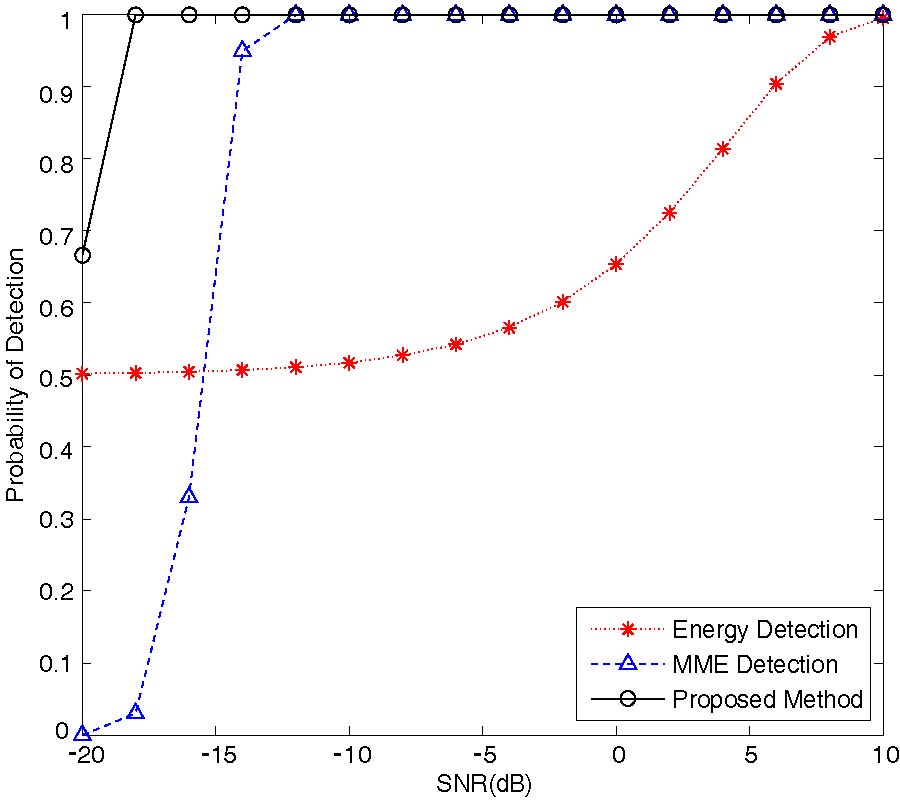
In this paper, the problem of target detection in co-located ``multi-input multi-output" (MIMO) radars is considered. A pulse-train signaling is assumed to be used in this system. As the doppler effect should be considered for the pulse-train signaling, we are confronted by a compound hypothesis testing problem, so in this paper a Generalized Likelihood Ratio (GLR) detector is derived. The high complexity of this detector makes us derive a new detector based on the theory of Independent Component Analysis (ICA). It is shown that the computational load of the ICA-based detector is much less than the GLR detector. It is also shown that the sensitivity of the ICA-based detector to the doppler effect is very low. According to this approach, an appropriate signal design method is presented, based on the separation performance of the ICA algorithms. It is shown that independent random sequences are proper signals in the sense of detection performance.
TARGET DETECTION IN PULSE-TRAIN MIMO RADARS APPLYING ICA ALGORITHMS
2011-12-05
PIER
Vol. 122, 389-411
Optimized Local Superposition in Wireless Sensor Networks with T-Average-Mutual-Coherence
Di Guo , Xiaobo Qu , Lianfen Huang and Yan Yao
Compressed sensing (CS) is a new technology for recovering sparse data from undersampled measurements. It shows great potential to reduce energy for sensor networks. First, a basic global superposition model is proposed to obtain the measurements of sensor data, where a sampling matrix is modeled as the channel impulse response (CIR) matrix while the sparsifying matrix is expressed as the distributed wavelet transform (DWT). However, both the sampling and sparsifying matrixes depend on the location of sensors, so this model is highly coherent. This violates the assumption of CS and easily produces high data recovery error. In this paper, in order to reduce the coherence, we propose to control the transmit power of some nodes with the help of t-average-mutual-coherence, and recovery quality are greatly improved. Finally, to make the approach more realistic and energy-efficient, the CIR superposition is restricted in local clusters. Two key parameters, the radius of power control region and the radius of local clusters, are optimized based on the coherence and resource consideration in sensor networks. Simulation results demonstrate that the proposed scheme provides a high recovery quality for networked data and verify that t-average-mutual-coherence is a good criterion for optimizing the performance of CS in our scenario.
OPTIMIZED LOCAL SUPERPOSITION IN WIRELESS SENSOR NETWORKS WITH T-AVERAGE-MUTUAL-COHERENCE
2011-12-04
PIER B
Vol. 37, 43-58
Far-Field Reconstruction from a Minimum Number of Spherical Spiral Data Using Effective Antenna Modelings
Francesco D'Agostino , Flaminio Ferrara , Claudio Gennarelli , Rocco Guerriero and Massimo Migliozzi
Two probe-compensated near-field-far-field transformations with spherical spiral scanning tailored for antennas having two of their dimensions very different from the third one are developed by properly applying the unified theory of spiral scans for nonspherical antennas. One is suitable for electrically long antennas, which are considered as enclosed in a cylinder ended in two half-spheres. The other adopts a surface formed by two circular ``bowls'' with the same aperture diameter but different lateral bends to shape a quasi-planar antenna. These flexible modelings fit very well many actual antennas by properly setting their geometric parameters. Great reduction of the number of data to be acquired is achieved, thus significantly reducing the required measurement time. Numerical tests validating the accuracy of the proposed techniques and their stability with respect to random errors affecting the data are shown.
FAR-FIELD RECONSTRUCTION FROM A MINIMUM NUMBER OF SPHERICAL SPIRAL DATA USING EFFECTIVE ANTENNA MODELINGS
2011-12-04
PIER Letters
Vol. 28, 63-72
Ultrafast Autonomous Detection and Scanning System Based on Optoelectronic Pulse Switching
Laurent Desrumaux , Vincent Couderc , Michele Lalande , Joel Andrieu , Valerie Bertrand and Bernard Jecko
A novel method allowing the ultrafast scanning of an area thanks to an Ultra Wide Band (UWB) antenna array is proposed in this paper. This method is based on the use of asynchronous optical pulses trains with different repetition rates obtained in amplified regenerative cavities. By means of optoelectronic switching, providing short powerful electrical pulses trains to an UWB antenna array, it is possible to spatially scan a large area in less than 1 ms. The paper presents the principle of the transient beam steering and its potentialities to realize an ultrafast detection system.
ULTRAFAST AUTONOMOUS DETECTION AND SCANNING SYSTEM BASED ON OPTOELECTRONIC PULSE SWITCHING
2011-12-04
PIER C
Vol. 25, 271-285
Design of Modified 6-18 GHz Balanced Antipodal Vivaldi Antenna
Ping Wang , Haobin Zhang , Guangjun Wen and Yuanhua Sun
In this paper, a modified planar balanced Vivaldi antenna with endfire characteristics near the metal surface is proposed for 6-18 GHz applications. The proposed antenna structure consists of three copper layers, among which two external layers locate on the two outsides of two dielectric substrates, and the central layer is sandwiched by these two dielectric substrates. To further enhance the end-fire radiation characteristic, a number of novel techniques are proposed, including elongation and shaping of the supporting substrate of a conventional balanced antipodal Vivaldi antenna beyond its aperture, using an I-shaped slot loaded radiation patch and cutting a triangle on the edge of three copper layers. Measured and simulated results show that the proposed antenna not only exhibits good impedance bandwidth, but also improves the end-fire performance in the operational frequency of 6-10 GHz and achieves high gain in the end-fire direction, low cross-polarization and high front-to-back (F-to-B) ratio.
DESIGN OF MODIFIED 6-18 GHz BALANCED ANTIPODAL VIVALDI ANTENNA
2011-12-02
PIER M
Vol. 22, 109-121
The Elliptic Gaussian Beam Scattering on Phased Antenna Array with Rectangular Waveguides
A. V. Gribovsky and Oleg A. Yeliseyev
The diffraction problem of a three-dimensional elliptic Gaussian beam on a aperture array of rectangular holes is solved. The both normal and oblique incidences of the beam are considered and the results are presented in the form of the three-dimensional patterns. The pattern lobe distortion and conditions at which the side lobes appear are studied. The conditions under which the shift of the reflected and transmitted field patterns appears are studied. The existence of higher spatial Floquet harmonics in the case of oblique beam incidence is observed.
THE ELLIPTIC GAUSSIAN BEAM SCATTERING ON PHASED ANTENNA ARRAY WITH RECTANGULAR WAVEGUIDES
2011-12-02
PIER M
Vol. 22, 91-107
Double Directional Channel Measurements in an Arched Tunnel and Interpretation Using Ray Tracing in a Rectangular Tunnel
Concepcion Garcia-Pardo , José-Maria Molina-García-Pardo , Martine Lienard , Davy P. Gaillot and Pierre Degauque
The objective of this paper is to study the wideband characteristics of the radio channel in a tunnel environment, not only the delay spread, but also the angle of departure/arrival of the rays, their relative weights and their delays, which are important values for Multiple-Input Multiple-Output applications. In order to achieve this goal, a measurement campaign has been carried out in a straight arched tunnel over a frequency band extending from 2.8 to 5.0 GHz and distance varying from 50 m up to 500 m. First, the variations of the channel impulse response and of the delay spread versus the distance between the transmitter and the receiver are analyzed. Then, the bidirectional channel characteristics have been extracted from the measured channel matrices using a high resolution estimation algorithm. The main contribution of this paper is to clearly show the quantitative variation of the delay spread and the angle of departure/arrival of the rays along a real tunnel and to investigate the possibility of using the ray theory in a rectangular tunnel to interpret experimental results obtained in an arched tunnel.
DOUBLE DIRECTIONAL CHANNEL MEASUREMENTS IN AN ARCHED TUNNEL AND INTERPRETATION USING RAY TRACING IN A RECTANGULAR TUNNEL
2011-12-02
PIER M
Vol. 22, 73-89
Image Compressed Sensing Based on Data-Driven Adaptive Redundant Dictionaries
Zi Wei Ni , Meixiang Zhang , Jing Li and Qicong Wang
Finding sparsifying transforms is an important prerequisite of compressed sensing (CS) theory. It is directly related to the reconstruction accuracy. In this work, we propose a new dictionary learning (DL) algorithm to improve the accuracy of CS reconstruction. In the proposed algorithm, Least Angle Regression (LARS) algorithm and an approximate SVD method (ASVD) are respectively used in the two stages. In addition, adaptive sparsity constraint is used in the sparse representation stage, to obtain sparser representation coefficient, which further improves the dictionary update stage. With these data-driven adaptive dictionaries as sparsifying transforms for image compressed sensing, results of experiments demonstrate noteworthy outperformance in peak signal-to-noisy ratio (PSNR), compared to CS based on dictionaries learned by K-SVD, in the sampling rate of 0.2-0.5. Besides, visual appearance of reconstruction detail at low sampling rate improves, for reducing of `block' effect.
IMAGE COMPRESSED SENSING BASED ON DATA-DRIVEN ADAPTIVE REDUNDANT DICTIONARIES
2011-12-01
PIER B
Vol. 37, 21-42
An Interaction Study Between PIFAs Handset Antenna and a Human Hand-Head in Personal Communications
Ahmed Mohamed Montaser , Korany Ragab Mahmoud and Hamdy A. Elmikati
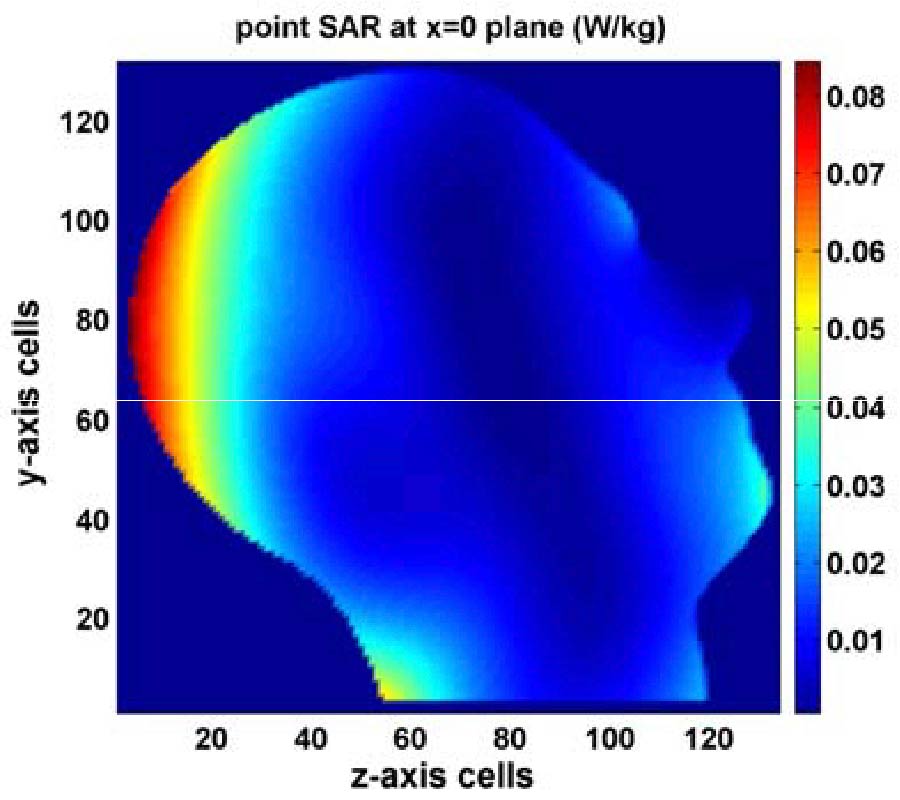
In this paper, the interaction of a planar inverted-F antennas array, mounted on a mobile handset, with a human hand-head phantom is investigated in the 1.9 GHz band. The hybrid approach involving the particle swarm optimization (PSO) and Nelder-Mead (NM) algorithm is considered to optimize the complex excitations of the adaptive array elements in a mutual coupling environment for different beamforming synthesis. Firstly, the effect of the human hand-head on the handset radiation characteristics is studied. Then, the spatial-peak specific absorption rate (SAR) values of 2- and 4-element PIFA arrays for mobile handset in the vicinity of a human hand-head are evaluated numerically for different scenarios. The antenna is analyzed completely using finite difference time domain (FDTD) method while the interaction is performed using the CST Microwave Studio software.
AN INTERACTION STUDY BETWEEN PIFAS HANDSET ANTENNA AND A HUMAN HAND-HEAD IN PERSONAL COMMUNICATIONS