Search Results(13801)

2011-11-30
PIER B
Vol. 37, 1-19
Exponential Decay of High-Order Spurious Prolate Spheroidal Modes Induced by a Local Approximate Dtn Exterior Boundary Condition
Helene Barucq , Rabia Djellouli and Anne-Gaelle Saint-Guirons
We investigate analytically the asymptotic behavior of high-order spurious prolate spheroidal modes induced by a second-order local approximate DtN absorbing boundary condition (DtN2) when employed for solving high-frequency acoustic scattering problems. We prove that these reflected modes decay exponentially in the high frequency regime. This theoretical result demonstrates the great potential of the considered absorbing boundary condition for solving efficiently exterior high-frequency Helmholtz problems. In addition, this exponential decay proves the superiority of DtN2 over the widely used Bayliss-Gunsburger-Turkel absorbing boundary condition.
EXPONENTIAL DECAY OF HIGH-ORDER SPURIOUS PROLATE SPHEROIDAL MODES INDUCED BY A LOCAL APPROXIMATE DTN EXTERIOR BOUNDARY CONDITION
2011-11-30
PIER Letters
Vol. 28, 53-62
A Novel EM Analysis of Double-Layered Thick FSS Based on mm-GSM Technique for Radome Applications
Shiv Narayan , Kurapati Prasad , Raveendranath Nair and Rakesh Mohan Jha
The EM analysis of double-layered thick FSS structure with low-loss dielectric medium between the FSS layers has been carried out using MM-GSM technique. In this analysis, both evanescent and propagating modes are included that enhances the accuracy of the computation. This method provides less computational complexity in the formulation of FSS structures as compared to other numerical techniques. The cascaded FSS structure shows bandpass response (>95% transmission) over a frequency range from 8.84 GHz to 10.74 GHz. It is found that this FSS structure shows very good in-band transmission characteristics and excellent roll-off characteristics outside the band. Further, the dependence of transmission characteristics on the spacing between the FSS layers is also investigated. The optimum bandpass response is achieved for 0.3λ spacing between the layers. This FSS structure offers superior bandpass response and structural rigidity required for airborne radome applications.
A NOVEL EM ANALYSIS OF DOUBLE-LAYERED THICK FSS BASED ON MM-GSM TECHNIQUE FOR RADOME APPLICATIONS
2011-11-30
PIER Letters
Vol. 28, 45-51
Dual-Band Bandpass Filter with Controllable Characteristics Using Stub-Loaded Resonators
Fu-Chang Chen and Jie Ming Qiu
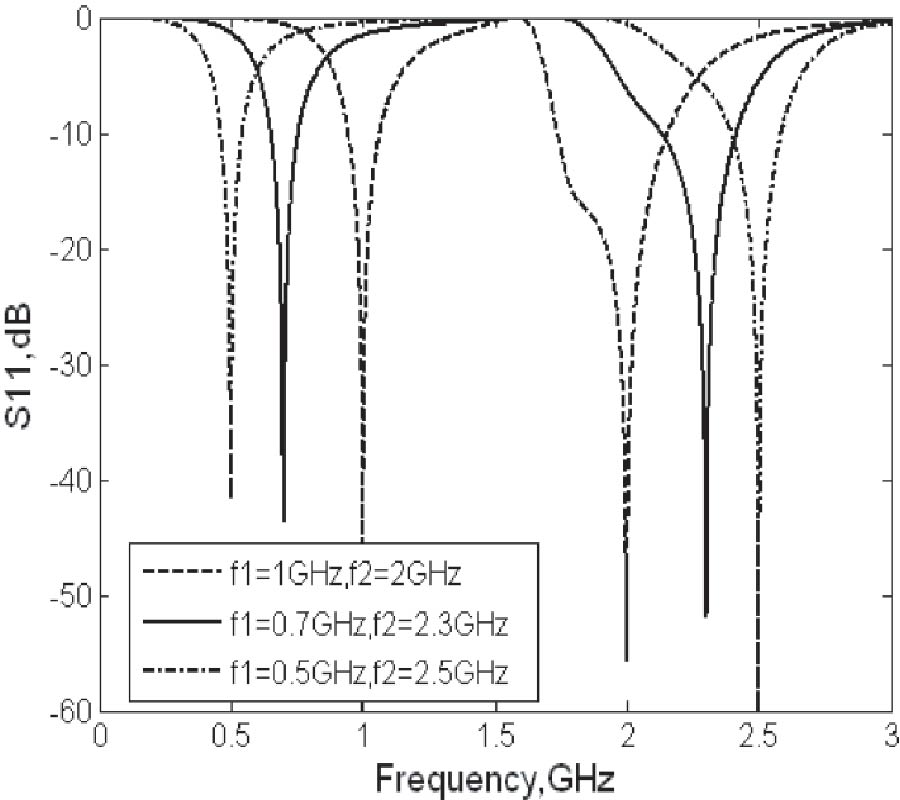
A compact microstrip-line dual-band bandpass filter with controllable characteristics is presented using a stub-loaded resonator. The resonator is formed by loading one open circuit terminated stub in shunt to a simple uniform impedance line. The passband frequencies of the dual-band filter can be conveniently controlled by tuning the lengths of stub-loaded resonators. The bandwidth of the first passband can be controlled by tuning the parameters of center stub-loaded resonator, and the bandwidth of the second passband is determined by the coupling between the sideward stub-loaded resonators. To illustrate the concept, a second-order dual-band filter is designed, fabricated and measured. Simulated and measured results are found in good agreement with each other.
DUAL-BAND BANDPASS FILTER WITH CONTROLLABLE CHARACTERISTICS USING STUB-LOADED RESONATORS
2011-11-30
PIER Letters
Vol. 28, 37-44
Bandwidth Enhancement of a Class of Cloaks Incorporating Metamaterials
Mohamad Danaeifar , Manouchehr Kamyab , Amir Jafargholi and Mehdi Veysi
A new method for increasing the bandwidth (BW) of a class of cloaks is presented. Simulation results reveal that the bandwidth of this class of cloaks is increased by embedding the two-dimensional transmission networks in a medium whose refractive index is smaller than unity. The low refractive index medium is realized by embedding several thin wires in a host medium. The overall bandwidth of the proposed cloak for reflectance less than -25 dB is revealed to be increased by more than 17% compared to its conventional counterpart.
BANDWIDTH ENHANCEMENT OF A CLASS OF CLOAKS INCORPORATING METAMATERIALS
2011-11-30
PIER M
Vol. 22, 57-72
Propagation of Electromagnetic Fields in Near and Far Zones: Actualized Approach with Non-Zero Trace Electro-Magnetic Energy-Momentum Tensor
Alexander L. Kholmetskii , Oleg V. Missevitch , R. Smirnov-Rueda and Tolga Yarman
The present work is motivated by our recent experimental results [2-4] that indicate on anomalously small retardation of bound (or velocity-dependent) electromagnetic (EM) fields in the near zone of an emitter, whereas in the far zone the retardation tends to the standard value determined by the velocity of light c. Such anomaly is specific only for bound field component, while EM radiation has the constant propagation velocity c in the entire space. One possible explanation of these experimental results can be linked to our earlier finding [6, 8] that conventional EM energy-momentum (EMEM) tensor describes bound and radiative EM fields only in spatial regions free of charges and currents. In this work we show that an additional term has to be included into the standard EMEM tensor in order to make viable the description of the whole system of ``charges plus fields". Such approach to the EMEM tensor actually admits anomalously small retardation of bound EM fields in regions very close to a field source, providing the standard propagation in the far zone. Some special implications are also discussed.
2011-11-29
PIER Letters
Vol. 28, 23-36
A New Practical Receiver for a Decode-and-Forward Cooperative CDMA Systems Based on a Blind λ-Combiner
Noha O. El-Ganainy and Said El-Khamy
This paper develops a practical receiver suggested for cooperative systems using decode-and-forward transmission and compares it to the theoretical sub-optimum λ-MRC receiver model. The proposed receiver model adopts a channel blind λ-combiner and employs a practical estimation of the combiner's weight λ that changes adaptively for each received bit. The λ estimation process relies on a dynamic-blind calculation performed on the incoming bit stream using an approximate formula. The accuracy of the estimated values of λ against the numerical (optimum) values is verified by comparing their effects on the performance curves. Next, the performance of the proposed receiver is evaluated against the sub-optimum receiver using the closed-form performance equations then verified using an actual implementation of the decode-and-forward cooperative algorithm. The use of the proposed receiver is shown to have reliable performance under different channel assignments and provides adaptivity to channel variations without complexity or exaggerated signal processing.
A  NEW PRACTICAL RECEIVER FOR A DECODE-AND-FORWARD COOPERATIVE CDMA SYSTEMS BASED ON A BLIND λ-COMBINER
2011-11-29
PIER Letters
Vol. 28, 9-21
Three-Dimensional FDTD Analysis of the Dual-Band Implantable Antenna for Continuous Glucose Monitoring
Zahra Noroozi and Farrokh Hojjat-Kashani
The finite difference time domain (FDTD) method is widely used as a computational tool to simulate the electromagnetic wave propagation in biological tissues. When expressed in terms of Debye parameters, dispersive biological tissues dielectric properties can be efficiently incorporated into FDTD codes. In this paper, FDTD formulation with nonuniform grid is presented to simulate a dual medical implant communications service (MICS) (402-405 MHz) and industrial, scientific, and medical (ISM) (2.4--2.48\,GHz) band implantable antenna for continuous glucose-monitoring applications. In addition, we present computationally simpler two-pole Debye models that retain the high accuracy of the Cole-Cole Model for dry skin in MICS and ISM bands. The reflection coefficient simulation result with Debye dispersion is presented and compared with the published results. FDTD was also applied to analyze antenna's far-field.
THREE-DIMENSIONAL FDTD ANALYSIS OF THE DUAL-BAND IMPLANTABLE ANTENNA FOR CONTINUOUS GLUCOSE MONITORING
2011-11-29
PIER
Vol. 122, 361-387
A Mixing Vector Based an Affine Combination of Two Adaptive Filters for Sensor Array Beamforming
Songtao Lu , Jinping Sun , Guohua Wang and Yi-Long Lu
In this paper, a novel beamformer for adaptive combination of two adaptive filters is proposed for interference mitigation of sensor array. The proposed approach adaptively combines two individual filters by coefficient weights vector instead of one scale parameter and takes the constraint of affine combination into consideration rather than previous studies. Due to the more degrees of freedom offered by the mixing vector, the proposed beamformer significantly improves the convergence and tracking performances of the combined filter under both stationary and non-stationary environments, respectively. Based on the generalized sidelobe canceller (GSC) structure, the optimal mixing vector is derived by Lagrange method, and then several new effective iterative algorithms are developed for its updating in practical implementation. Furthermore, theoretical discussions of the convergent performances and complexities of the proposed iterative algorithms are also investigated to verify the feasibility of the proposed beamformer. Moreover, the proposed methods in application of beamforming for interference mitigation of antenna array are simulated based space-time processing technique. When compared to existing methods, the proposed approach exhibits faster convergence rate and higher output signal to interference plus noise ratio (SINR). Its good behavior is illustrated through simulation results.
A MIXING VECTOR BASED AN AFFINE COMBINATION OF TWO ADAPTIVE FILTERS FOR SENSOR ARRAY BEAMFORMING
2011-11-28
PIER B
Vol. 36, 399-419
Novel Information Leakage Threat for Input Operations on Touch Screen Monitors Caused by Electromagnetic Noise and Its Countermeasure Method
Hidenori Sekiguchi
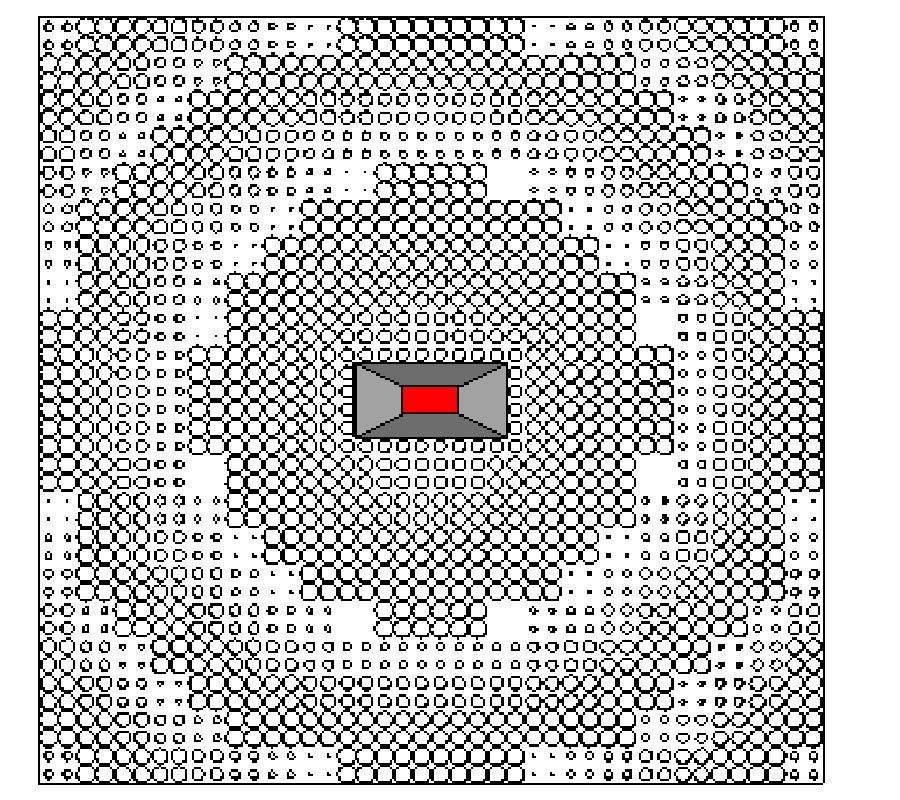
Information leakage of general input operations using button images in graphical user interface on touch screen monitors was experimentally investigated from images reconstructed by receiving the electromagnetic noise. In the experimental investigations for input operations of a personal identification number, it was confirmed that when a button image was touched, the touched button image can be identified from the reconstructed button images. This kind of information leakage has originated the fact that the touched button image has changed the color for informing the operator which button image was touched. From the elucidation of the image reconstruction mechanism, it was found that the information leakage has been caused by the magnitude of the emitted signal that results from the analog voltage differences of the RGB signals between neighboring pixels on the monitor. Therefore, a countermeasure method was proposed from the viewpoint of the combination of the colors of the button images and of the background or of the numerals in the button images. The countermeasure method was then applied to the previous input operations of a personal identification number. From the experimental results for the countermeasure method, it was confirmed that the touched button image cannot be identified from the reconstructed button image. As a result, the proposal countermeasure method can prevent effectively the information leakage of input operations on touch screen monitors due to the electromagnetic noise.
NOVEL INFORMATION LEAKAGE THREAT FOR INPUT OPERATIONS ON TOUCH SCREEN MONITORS CAUSED BY ELECTROMAGNETIC NOISE AND ITS COUNTERMEASURE METHOD
2011-11-28
PIER Letters
Vol. 28, 1-8
Parallel FDTD Simulation Using Numa Acceleration Technique
Xiao-Mei Guo , Qing-Xin Guo , Wei Zhao and Wenhua Yu
In this paper, we introduce a new non-uniform memory access (NUMA) acceleration algorithm for parallel finite-difference time-domain (FDTD) method on NUMA architecture workstation. We compare the performance of parallel FDTD method with and without the NUMA acceleration technique. An ideal test case and an engineering example show that the NUMA acceleration technique can efficiently improve the computing performance of FDTD parallel applications.
PARALLEL FDTD SIMULATION USING NUMA ACCELERATION TECHNIQUE
2011-11-28
PIER C
Vol. 25, 249-269
A Decision-Making Model for Selecting the GSM Mobile Phone Antenna in the Design Phase to Increase Over All Performance
Faris M. Al-Oqla and Amjad Omar
The wireless link between a mobile phone and its surrounding crucially depends on the quality and properties of the mobile phone antenna. The process of antenna selection is a multi-criteria decision-making problem with conflicting and diverse objectives. In this work, a model was built to select the best GSM mobile phone antenna in the design phase to increase the overall performance in the band. The model includes building an analytic hierarchy structure with a tree of hierarchical criteria and alternatives to ease the decision-making. The antenna options considered were limited to retractable whip antenna, loop chip antenna, monopole antenna, planar inverted F-antenna (PIFA), microstrip patch antenna, and printed slot antenna. An Analytical Hierarchy Process (AHP) was used to assist in building the model and help draw decisions. As a result of the decision making process, the monopole antenna was found to be the best choice for the GSM mobile phone antenna. Expert Choice™ software was used to conduct the experimental assessments. The judgments were found to be consistent, precise and justifiable with narrow marginal inconsistency values. The paper also presents a thorough sensitivity analysis to demonstrate the confidence in the drawn conclusions.
A DECISION-MAKING MODEL FOR SELECTING THE GSM MOBILE PHONE ANTENNA IN THE DESIGN PHASE TO INCREASE OVER ALL PERFORMANCE
2011-11-26
PIER B
Vol. 36, 373-398
Broadband Transmission Characteristics of Overhead High-Voltage Power Line Communication Channels
Athanasios G. Lazaropoulos
This paper considers broadband signal transmission via high-voltage/broadband over power lines (HV/BPL) channels associated with overhead power transmission. To determine the end-to-end channel characteristics of various overhead HV/BPL multiconductor transmission line (MTL) configurations, the chain scattering matrix or T-Matrix (TM) method is adopted. The overhead HV/BPL transmission channel is investigated with regard to its spectral behavior, its {end-to-end} signal attenuation, and phase response. It is found that the above features depend critically on the frequency, the coupling scheme applied, the physical properties of the cables used, the MTL configuration, and the type of branches existing along the {end-to-end} BPL signal propagation. Unlike the older models that underestimate the broadband transmission potential of overhead HV lines significantly, the results demonstrate that the overhead HV grid is a potentially excellent communications medium, offering low loss characteristics over a 100 km repeater span well beyond 100 MHz and guarantees the imminent coexistence of low-voltage (LV), medium-voltage (MV), and HV BPL systems towards a unified transmission/distribution smart grid (SG) power grid.
BROADBAND TRANSMISSION CHARACTERISTICS OF OVERHEAD HIGH-VOLTAGE POWER LINE COMMUNICATION CHANNELS
2011-11-26
PIER C
Vol. 25, 233-247
A High Resolution DOA Estimating Method Without Estimating the Number of Sources
Qing-Chen Zhou , Huotao Gao and Fan Wang
The performance of high resolution subspace-based algorithms are particularly sensitive to the prior information of the source number, the Signal-to-Noise Ratio (SNR) and the snapshot. Although the existing direction-of-arrival (DOA) estimation methods without estimating the source number could eliminate the awful impact brought by incorrect source number estimation, yet its performance would get deteriorated by small snapshots and low SNR. Methods which exploit noise and signal subspaces information simultaneously, such as SSMUSIC, could provide a high resolution performance in such nonideal circumstances. However, its performance would degrade severely when the prior information of the source number is incorrect. To provide a DOA estimation method without estimating the number of source, which has a high resolution performance in small sample and low SNR scenario, using all information spreads in eigenvalues and eigenvectors, this paper reconstructs a new spatial spectrum which is very similar to the SSMUSIC algorithm. In order to enhance the robustness of the new method, we provide an empirical method to modify the eigenvalues to prohibit the spreading of noise eigenvalues caused by snapshot deficient and low SNR. To verify the validity of the new method, comparisons with other algorithms are made in computer simulations and the measured data test.
A HIGH RESOLUTION DOA ESTIMATING METHOD WITHOUT ESTIMATING THE NUMBER OF SOURCES
2011-11-24
PIER B
Vol. 36, 357-371
A MIMO Antenna Design Challenges for UWB Application
Muzammil Jusoh , Mohd Faizal Bin Jamlos , Muhammad Ramlee Kamarudin and Mohd Fareq Bin Abd Malek
This paper proposes a compact printed ultra-wideband (UWB) multiple-input-multiple-output (MIMO) antenna with a dimension of 38 x 91 mm2. The presented UWB-MIMO antenna is comprised of two identical patch elements with D separation distance on the same substrate. The basic single antenna structure has a novel design comprising seven circles surrounding a center circle with partial ground plane implementation. Furthermore, the experimental antenna has peak gain of 5.3 dBi between an operating frequency of 2.8 GHz and 8.0 GHz under a minimum reflection coefficient of less than -10 dB (S11<-10 dB). Moreover, the antenna successfully achieved mutual coupling minimization of < -17 dB, eventually resulting in enhancement of radiation efficiency. Besides, the UWB-MIMO's correlation coefficient was effectively reduced to less than -22 dB, which reflected an improvement in the antenna's diversity. In this paper, the proposed antenna is examined both numerically and experimentally.
A MIMO ANTENNA DESIGN CHALLENGES FOR UWB APPLICATION
2011-11-24
PIER C
Vol. 25, 223-232
The Measurement and Analysis of WiMAX Base Station Signal Coverage
Yang-Han Lee , Hsien-Wei Tseng , Wei-Chan Lee , Jheng-Yao Lin , Yih-Guang Jan and Hen-Wai Tsao
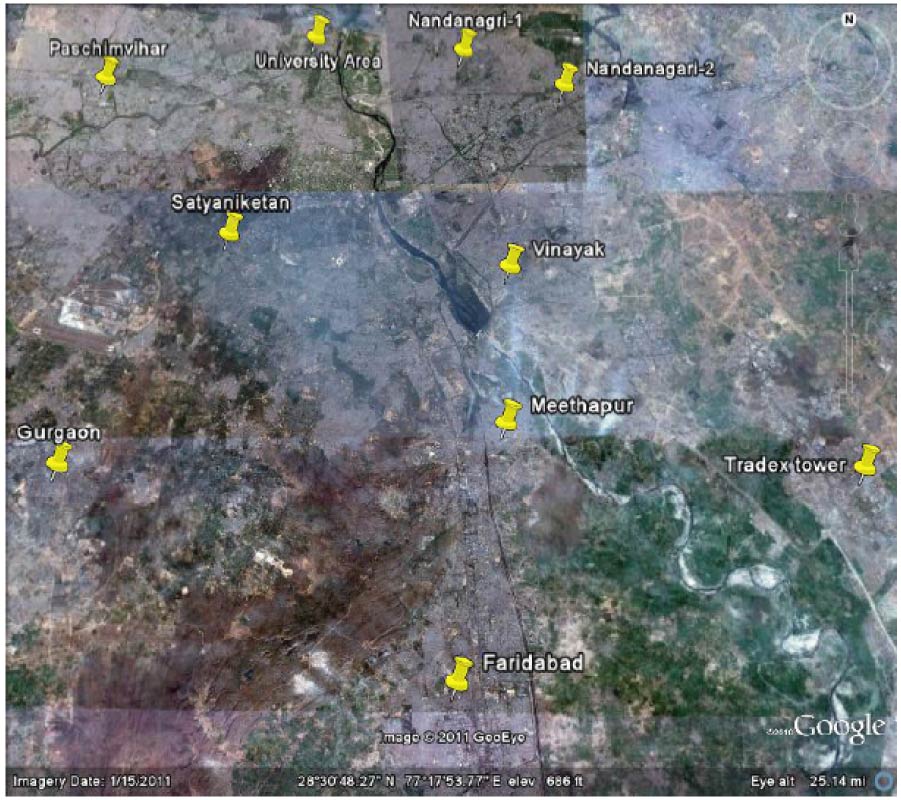
This paper presents the field trial measurement data of WiMAX base station; it includes the system coverage, signal strength and available transmission rate. Data consisting of real time images, VoIP internet telephone are transmitted through Skype software by using WiMAX, HSDPA (3.5G) and EDGE (2G) transmission techniques, and these data are connected to centrally equipped wireless monitoring servers to perform data monitoring and analysis. Finally, we make comparisons, analysis and discussions of these three transmission techniques from the measured and characterized data.
THE MEASUREMENT AND ANALYSIS OF WIMAX BASE STATION SIGNAL COVERAGE
2011-11-24
PIER C
Vol. 25, 209-221
A Reconfigurable Cedar-Shaped Microstrip Antenna for Wireless Applications
Mervat A. Madi , Mohammed Al-Husseini , Ali H. Ramadan , Karim Youssef Kabalan and Ali El-Hajj
This paper presents a frequency reconfigurable cedar-shaped fractal antenna. The special shape of the patch makes it simpler to integrate RF switches to connect consecutive branches. The proper activation/deactivation of the switches alters the current flow and changes the resonance frequency. Simulated and measured results show the characteristics of the presented design.
A RECONFIGURABLE CEDAR-SHAPED MICROSTRIP ANTENNA FOR WIRELESS APPLICATIONS
2011-11-24
PIER
Vol. 122, 341-360
A 3D Target Imaging Algorithm Based on Two-Pass Circular SAR Observations
Lingjuan Yu and Yunhua Zhang
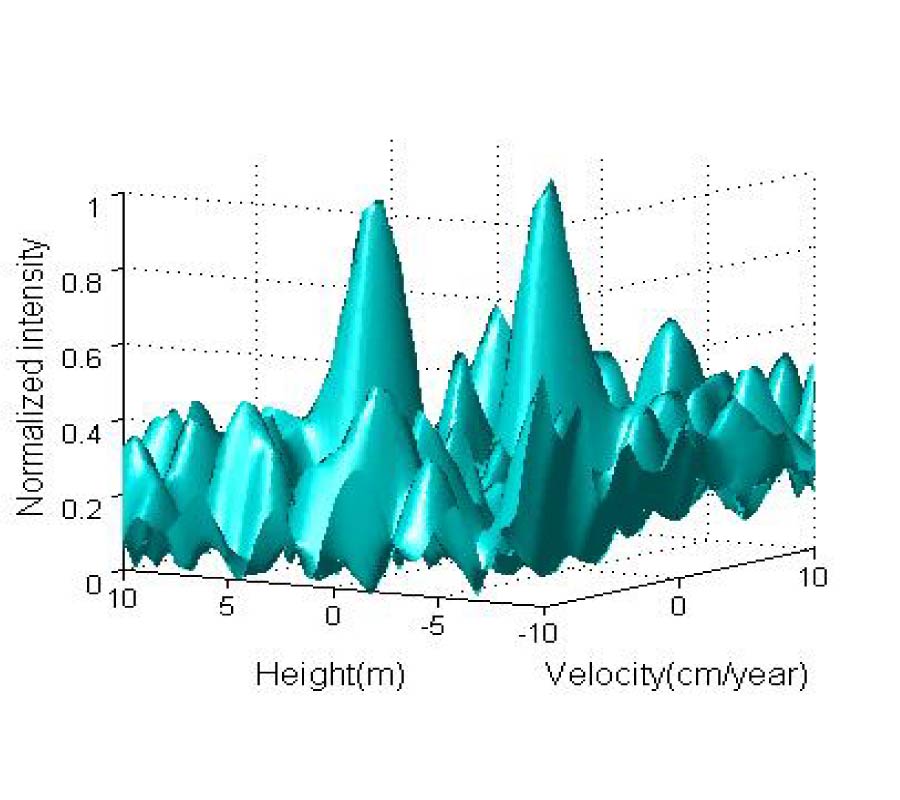
In circular synthetic aperture radar (CSAR), the radar collects data over a circular not a linear trajectory. The two-dimensional (2D) CSAR image also contains three-dimensional (3D) information about the target. In this paper, we propose an imaging algorithm for 3D target reconstruction with two-pass CSAR observations so as to overcome the problem of limited azimuthal persistence for real anisotropic targets, and avoid the assumption that target falls into the same resolution cell for each elevation pass when multi-pass observations are used. In the algorithm, the first step is to divide both of the two full-aperture CSAR data into subapertures in the same way; the second step is to obtain, for each subaperture, the height of target according to the established relationship between the pixel displacements in the image pair of two observations on the same focal plane and the pixel displacements in the image pair of one observation on two different focal planes; the third step is to obtain the 3D target coordinates based on the retrieved height information and the 2D image coordinates; the last step is to get the final 3D image by combining the obtained 3D images of all subapertures. The results of point target simulation indicate that the 3D information (both amplitudes and positions) are well reconstructed. At the same time, the processing results of backhoe data simulated by the Xpatch software show that the outline of the 3D structure is also well reconstructed although the available data corresponding to the depressing angles are not as good as expected.
A 3D TARGET IMAGING ALGORITHM BASED ON TWO-PASS CIRCULAR SAR OBSERVATIONS
2011-11-22
PIER B
Vol. 36, 337-355
Comparison of Propagation Along a Lift Shaft in Two Complex Environments
Xiao Hong Mao and Yee Hui Lee
Signal variation caused by motions along the lift shaft in a campus environment and on board a ship is compared. The guiding effect is common for both lift shafts, and the variation in amplitude of the guided signals is more significant for the lift shaft with larger dimensions. Unlike the lift shaft within the campus, the ship with its lift shaft forms a `waveguide within waveguide' structure. Therefore, the reflected signals within the ship enclosure outside the lift shaft are significantly affected by the motion along the lift shaft. Due to the difference in the degree of the signal variations in these two environments, the rms delay spread is found to be closely related to the lift door status and the lift car position in the campus environment, whereas it is not significantly affected by the motions along the lift shaft in the ship environment. From the statistical study and comparison of the signal variations in the two environments, the Weibull probability density function is found to be the most suitable model to describe analogous waveguide channels such as the lift shaft and the ship enclosure.
COMPARISON OF PROPAGATION ALONG A LIFT SHAFT IN TWO COMPLEX ENVIRONMENTS
2011-11-22
PIER Letters
Vol. 27, 179-187
Terrestrial Mode Quadrifilar Helix Antenna
Muhammad Amin , Jawad Yousaf and Mirza Khalid Amin
In this paper we present a modification to the QHA whereby a gap is introduced at the current minima points at the centre of the helical sections of the QHA. The linear and rotational movement between the two halves of the QHA against each other is optimised to get current distribution, so that when tilted 90°, it generates omnidirectional radiation pattern required for land communications in addition to hemispherical radiation pattern for space mode which is obtainable in conventional configuration. This makes it possible to use the single antenna for both terrestrial and satellite communications. The simulated results are validated by experimental measurements.
TERRESTRIAL MODE QUADRIFILAR HELIX ANTENNA
2011-11-22
PIER C
Vol. 25, 193-208
Improved Artificial Bee Colony for Design of a Reconfigurable Antenna Array with Discrete Phase Shifters
Xiangtao Li , Xiaowei Zhao , J. N. Wang and Minghao Yin
Multi-beam antenna arrays have important applications in the field of communications and radar. The reconfigurable design problem is to find the element in a sector pattern main beam with side lobes. The same excitation amplitudes applied to the array with zero-phase should be in a high directivity, low side lobe pencil shaped main beam. This paper presents a new method of designing a reconfigurable antenna with quantized phase excitations using an improved artificial bee colony, called IABC. Compared with subsequent quantization, experimental results indicate that the performance of the discrete realization of the phase-excitation value can be improved.
IMPROVED ARTIFICIAL BEE COLONY FOR DESIGN OF A RECONFIGURABLE ANTENNA ARRAY WITH DISCRETE PHASE SHIFTERS