Search Results(13801)

2011-11-22
PIER C
Vol. 25, 179-191
New U-Shaped DGS Bandstop Filters
Jian-Kang Xiao and Yu-Feng Zhu
In this paper, new microstrip bandstop filters with single band, dual-band and tri-band by using U-shaped defected ground structures are presented without the assistance of coupled lines or certain resonators, and the application of DGS is developed. The proposed bandstop filters have good performances of low loss, multi-band operation, transmission zeros which improve the filter frequency selectivity, and miniaturization because of the cascade of DGS and minimum defected patterns which reduce the circuit size. The new designs are demonstrated by measurement.
NEW U-SHAPED DGS BANDSTOP FILTERS
2011-11-22
PIER
Vol. 122, 327-339
Design and Optimization of Low RCS Patch Antennas Based on a Genetic Algorithm
Xinyue Zhu , Wei Shao , Jia-Lin Li and Yu-Liang Dong
In this article, a genetic algorithm (GA) is employed to the design of low radar cross section (RCS) patch antennas. Combined with the high frequency simulation software (HFSS) for antenna simulations, the GA performs the optimization of geometric parameters. In order to reduce the RCS while holding the satisfying radiation performance of antennas, the radiation model and scattering model are respectively calculated. The combination of proportionate selection and elitist model for the selection strategy is used to speed up the convergence of the GA. Two-point crossover is adopted to accelerate the converging speed and results in more fit individuals. Moreover, the whole design procedure is auto-controlled by programming the VBScript in the HFSS. Two examples of low RCS slot antennas are provided to verify the accuracy and efficiency of the proposed method.
DESIGN AND OPTIMIZATION OF LOW RCS PATCH ANTENNAS BASED ON A GENETIC ALGORITHM
2011-11-22
PIER
Vol. 122, 311-325
Analysis of Topological Derivative Function for a Fast Electromagnetic Imaging of Perfectly Conducing Cracks
Y.-K. Ma , Pok-Son Kin and Won-Kwang Park
We consider a topological derivative based imaging technique for non-iterative imaging of small and extended perfectly conducting cracks with Dirichlet boundary condition. For this purpose, we introduce topological derivative imaging function based on the asymptotic formula in the existence of narrow crack. We then mathematically analyze its structure in order to investigate why it yields the shape of crack(s). Analyzed structure gives us an optimal condition to get a better image of them. Various numerical experiments support our analysis.
ANALYSIS OF TOPOLOGICAL DERIVATIVE FUNCTION FOR A FAST ELECTROMAGNETIC IMAGING OF PERFECTLY CONDUCING CRACKS
2011-11-21
PIER Letters
Vol. 27, 171-178
Experimental Investigations on a Surface Micromachined Tunable Low Pass Filter
Vittal Janardhana , Naga Sayanu Pamidighantam , Neela Chattoraj , Jibendu Sekhar Roy , Srinivasa Kuppireddi and Raghavendra Govindra Kulkarni
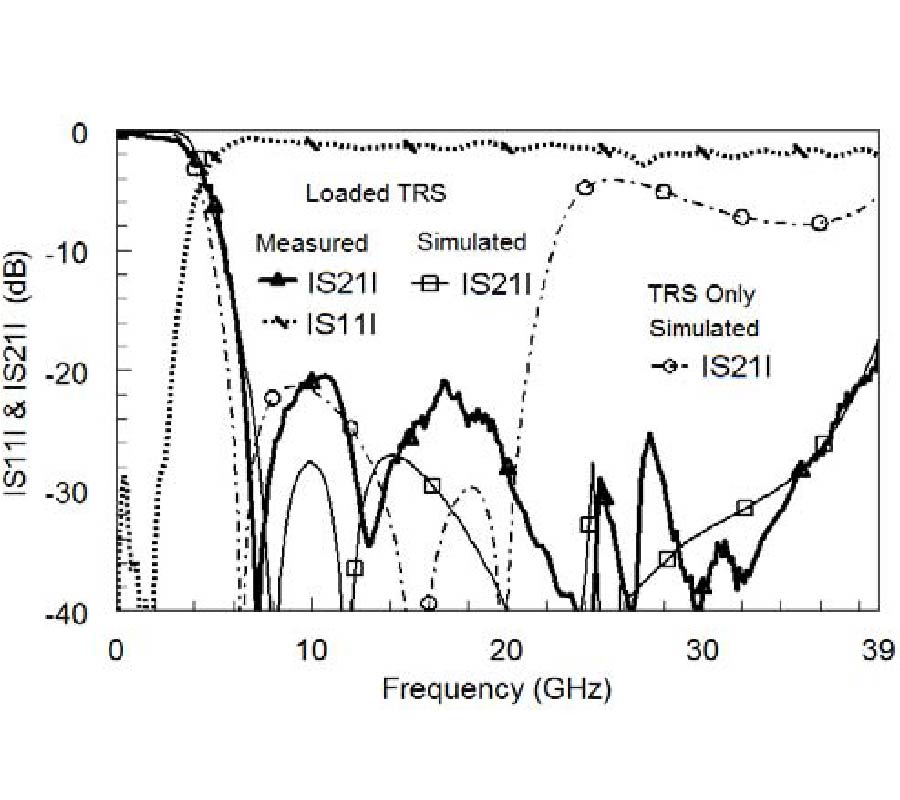
In this paper, a surface micromachined microwave tunable low pass filter, consisting of tunable shunt capacitors and series inductors, has been realized. The filter exhibits insertion loss of less than 1 dB (up to 10 GHz), stop band attenuation of 20 dB at 20 GHz, and cut-off frequency is changed to 8 GHz with the application of DC actuation voltage in the structure. The filter has an overall dimension of 5.5 mm x 2 mm. The characteristics of tunable filter are investigated with and without packaging.
EXPERIMENTAL INVESTIGATIONS ON A SURFACE MICROMACHINED TUNABLE LOW PASS FILTER
2011-11-21
PIER C
Vol. 25, 159-178
5ghz LTCC-Based Aperture Coupled Wireless Transmitter for System-on-Package Applications
Atif Shamim , Muhammad Arsalan , Nasrin Hojjat and Langis Roy
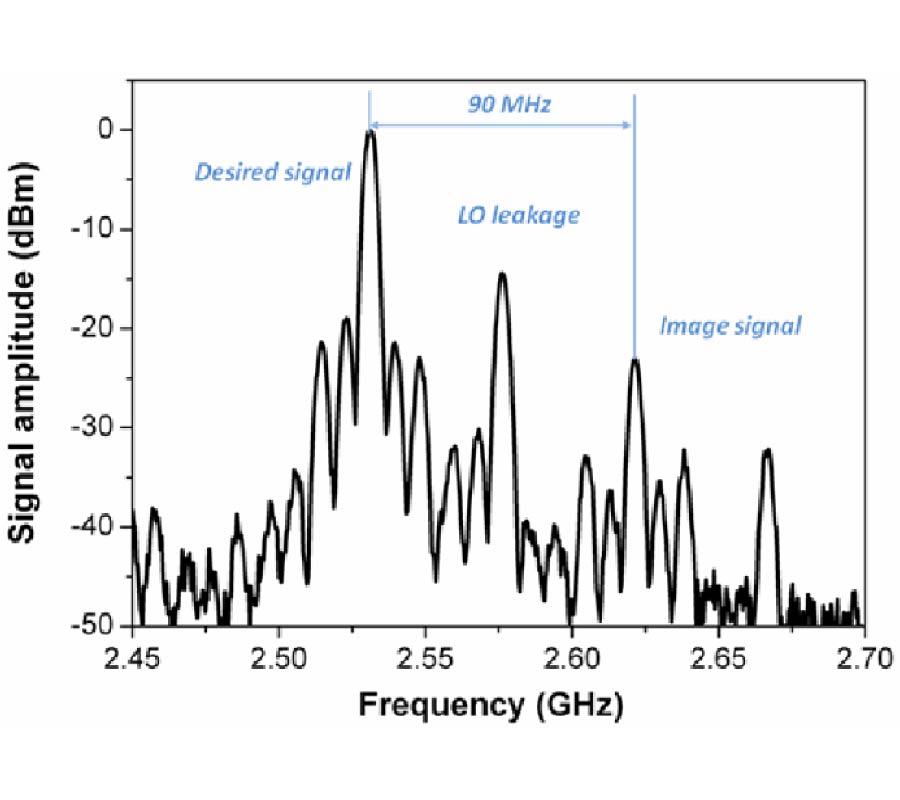
A novel System-on-Package (SoP) implementation is presented for a transmitter (TX) module which makes use of electromagnetic coupling between the TX chip and the package antenna. The TX chip is realized in 0.13 μm CMOS process and comprises an on-chip antenna, which serves as the oscillator's inductor as well. The TX chip is housed in a Low Temperature Co-fired Ceramic (LTCC) package with a patch antenna. The on-chip antenna feeds the LTCC patch antenna through aperture coupling, thus negating the need for RF buffer amplifiers, matching elements, baluns, bond wires and package transmission lines. This is the first ever demonstration of wireless-interconnect between on-chip and package antennas which increases the gain and range of the TX module manyfold with respect to the on-chip antenna alone. Though the range of the TX SoP increases considerably, power consumption remains the same as that of the TX chip only. A simple analytical model for the new wireless-interconnect has been developed which helps determine the optimum position of the chip with respect to the aperture in the ground plane.
5GHZ LTCC-BASED APERTURE COUPLED WIRELESS TRANSMITTER FOR SYSTEM-ON-PACKAGE APPLICATIONS
2011-11-21
PIER
Vol. 122, 293-309
Electrically Tunable Fabry-Perot Resonator Based on Microstructured Si Containing Liquid Crystal
Vladimir A. Tolmachev , Vasily A. Melnikov , Аnna V. Baldycheva , Kevin Berwick and Tatiana S. Perova
We have built Fabry-Pérot resonators based on microstructured silicon and a liquid crystal. The devices exhibit tuning of the resonance peaks over a wide range, with relative spectral shifts of up to Δλ/λ = 10%. In order to achieve this substantial spectral shift, cavity peaks of high order were used. Under applied voltages of up to 15 V, a variation in the refractive index of the nematic liquid crystal E7 from ΔnLC = 0.12 to ΔnLC = 0.17 was observed. These results may have practical applications in the near-, mid and far-infrared range.
ELECTRICALLY TUNABLE FABRY-PEROT RESONATOR BASED ON MICROSTRUCTURED SI CONTAINING LIQUID CRYSTAL
2011-11-19
PIER B
Vol. 36, 323-336
Radar Image of One Dimension Rough Surface with Buried Object
Wei-Jie Ji and Chuang-Ming Tong
In order to detect a buried object quickly and accurately, a fast radar imaging method is presented in this paper. At first, complex backscatter data are computed by using propagation-inside-layer expansion combining the forward and backward method (PILE + FB). Then, a conventional synthetic aperture radar (SAR) imaging procedure called back projection method is used to generate 2-D image. The random rough surface with Gauss spectrum is used to simulate the ground. Tapered incident wave is chosen to reduce truncation error. Because backscatter data are computed by fast numerical method, this method is proper for rough surface with any parameters with a buried complex object, which is very useful for realistic object detection.
RADAR IMAGE OF ONE DIMENSION ROUGH SURFACE WITH BURIED OBJECT
2011-11-19
PIER
Vol. 122, 269-292
A Circular Synthetic Aperture Radar for on-the-Ground Object Detection
Mojtaba Mohammadpoor , Raja Syamsul Azmir Raja Abdullah , Alyani Ismail and Ahmad Fauzi Abas
Detecting an on-the-ground object is a subject of interest for use in some applications. Foreign Object Detection (FOD), which is an important issue in aviation safety, is a possible application. In this way, radar imaging, has several inherent advantages over other on-the-ground object detection techniques. This paper will introduce a ground-based Circular Synthetic Aperture Radar, which detects and localizes various objects, based on their reflection properties of microwaves. Here, wideband Linear Frequency Modulated (LFM) chirp pulses are employed for the transmission and reception of reflection pulses, both to and from the object under test. Once the pulses are received by the radar, a processing algorithm (proposed later in this paper) is executed to confirm detection. In order to verify the validity of the model, a prototype was developed and a series of field experiments was carried out. The results show that the proposed system has the ability to detect and localize on-the-ground objects with dimensions as small as 2 cm high and 1 cm diameter, located several metres away. Furthermore, the resolution of the system was analysed and results indicate that the system is capable of distinguishing multiple objects in close proximity to each other, which therefore, makes it suitable for FOD applications by some small modifications.
A CIRCULAR SYNTHETIC APERTURE RADAR FOR ON-THE-GROUND OBJECT DETECTION
2011-11-18
PIER Letters
Vol. 27, 161-169
Range Doppler Algorithm for Bistatic SAR Processing Based on the Improved Loffeld's Bistatic Formula
Xin Wang and Dai-Yin Zhu
This paper presents a new range Doppler algorithm (RDA) for bistatic synthetic aperture radar (SAR) processing in a general configuration based on a bistatic point target reference spectrum: the improved extended Loffeld's bistatic formula (ILBF). The ILBF spectrum is proved to be comparably accurate with the spectrum derived using the method of series reversion (MSR). Based on the expansion of the ILBF spectrum, a new bistatic RDA is developed to process the azimuth invariant and variant bistatic SAR data. Compared with existing bistatic RDA, the new algorithm has a simpler formulation and is able to cope with moderate or high squint bistatic SAR data. The simulated data in the azimuth invariant and variant bistatic configurations are used to validate the new algorithm.
RANGE DOPPLER ALGORITHM FOR BISTATIC SAR PROCESSING BASED ON THE IMPROVED LOFFELD'S BISTATIC FORMULA
2011-11-18
PIER M
Vol. 22, 41-55
RCS Prediction from Planar Near-Field Measurements
Afif Bouzidi and Taoufik Aguili
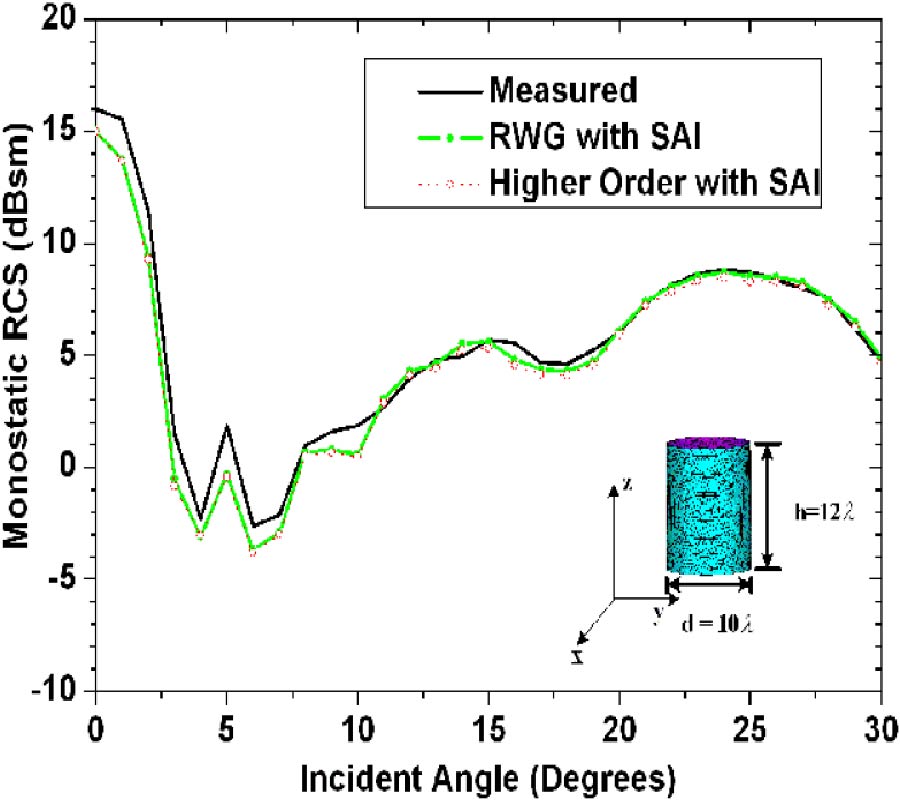
It is well-known that, at low frequency, far-field RCS can be measured using a suitable implementation such as outdoor range or large anechoic chamber. The aim of this paper is to propose a new algorithm to predict RCS from near-field measurements. The comparison between RCS values obtained from the proposed method and those obtained from direct far-field values shows a good agreement between the two results.
RCS PREDICTION FROM PLANAR NEAR-FIELD MEASUREMENTS
2011-11-18
PIER
Vol. 122, 245-268
A New Unmanned Aerial Vehicle Synthetic Aperture Radar for Environmental Monitoring
Voon Koo , Yee Kit Chan , Gobi Vetharatnam , Chua Ming Yam , Chot Hun Lim , Chee Siong Lim , C. C. Thum , Tien Sze Lim , Zahid bin Ahmad , Khairul Annuar Mahmood , Mohd Hamadi Bin Shahid , Chin Yang Ang , Wei Qiang Tan , Poi Ngee Tan , Kuo Shen Yee , W. G. Cheaw , Huey Shen Boey , A. L. Choo and Bee Cheng Sew
A new Unmanned Aerial Vehicle (UAV) Synthetic Aperture Radar (SAR) has been developed at Multimedia University, in collaboration with Agency of Remote Sensing Malaysia. The SAR operates at C-band, single $VV$-polarization, with 5 m x 5 m spatial resolution. Its unique features include compact in size, light weight, low power and capable of performing real-time imaging. A series of field measurements and flight tests has been conducted and good quality SAR images have been obtained. The system will be used for monitoring and management of earth resources such as paddy fields, oil palm plantation and soil surface. This paper reports the system design and development, as well as some preliminary results of the UAVSAR.
A NEW UNMANNED AERIAL VEHICLE SYNTHETIC APERTURE RADAR FOR ENVIRONMENTAL MONITORING
2011-11-17
PIER
Vol. 122, 223-244
Numerical and Experimental Analysis of EMI-Induced Noise in RC Phase Shift Oscillator
Han-Chang Tsai
Electromagnetic interference (EMI) has an adverse effect on the performance of electronic circuit communication systems. This study derives a series of equations to analyze the effects of the EMI induced in a conducting wire on the noise spectrum of a RC Phase Shift Oscillator (RCPSO). It is shown that the extent to which EMI affects the RCPSO depends on the interference power, interference frequency, induced power, output resistance of the oscillator circuit, and parasitic capacitance. Specifically, higher EMI frequencies and amplitudes have a greater effect on the RCPSO output. The results presented in this study are in good agreement with those predicted from general EMI theory.
NUMERICAL AND EXPERIMENTAL ANALYSIS OF EMI-INDUCED NOISE IN RC PHASE SHIFT OSCILLATOR
2011-11-17
PIER
Vol. 122, 197-221
Extraction of Internal Spatial Features of Inhomogeneous Dielectric Objects Using Near-Field Reflection Data
Douglas J. Kurrant and Elise C. Fear
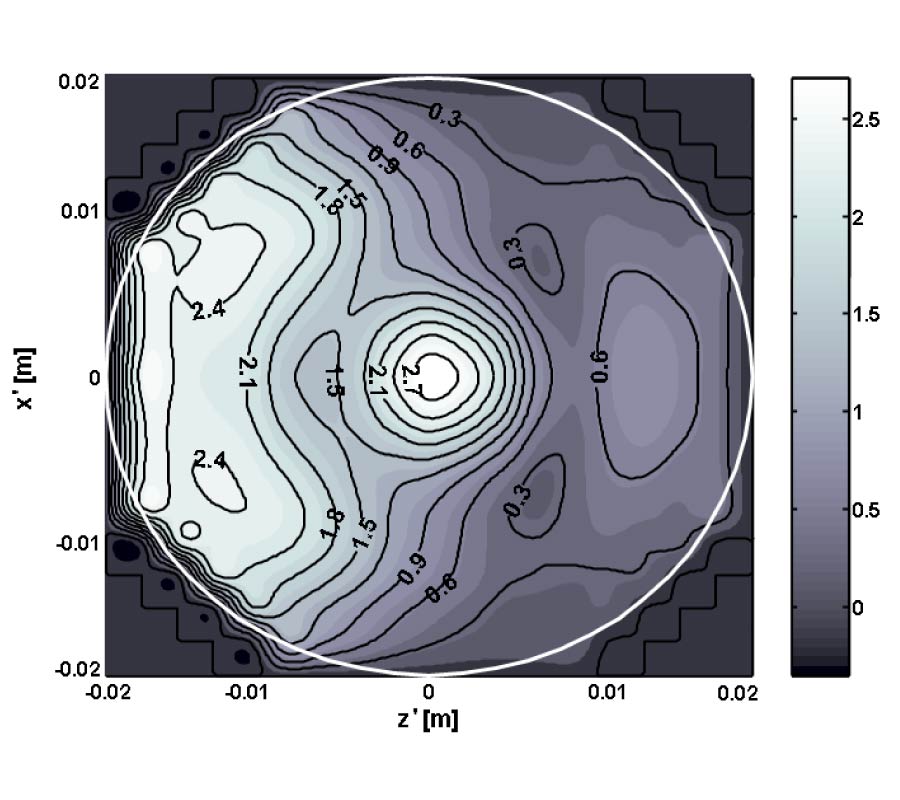
Ultra-wideband (UWB) microwave radar imaging techniques provide a non-invasive means to extract information related to an object's internal structure. For these applications, a short-duration electromagnetic wave is transmitted into an object of interest and the backscattered fields that arise due to dielectric contrasts at interfaces are measured. In this paper, we present a method that may be used to estimate the time-of-arrival (TOA) parameter associated with each reflection that arises due to a dielectric property discontinuity (or dielectric interface). A second method uses this information to identify the locations of points on these interfaces. When data are collected at a number of sensor locations surrounding the object, the collection of points may be used to estimate the shape of contours that segregate and enclose dissimilar regions within the object. The algorithm is tested with data generated when a cylindrical wave is applied to a number of numerical 2D models of increasing complexity. Moreover, the algorithm's feasibility is evaluated using data generated from breast models constructed from magnetic resonance (MR) breast scans. Results show that this is a promising approach to identifying regions and the internal structure within the breast.
EXTRACTION OF INTERNAL SPATIAL FEATURES OF INHOMOGENEOUS DIELECTRIC OBJECTS USING NEAR-FIELD REFLECTION DATA
2011-11-17
PIER
Vol. 122, 175-196
Reduction of Numerical Dispersion of the Six-Stages Split-Step Unconditionally-Stable FDTD Method with Controlling Parameters
Yong-Dan Kong and Qing-Xin Chu
A new approach to reduce the numerical dispersion of the six-stages split-step unconditionally-stable finite-difference time-domain (FDTD) method is presented, which is based on the split-step scheme and Crank-Nicolson scheme. Firstly, based on the matrix elements related to spatial derivatives along the x, y, and z coordinate directions, the matrix derived from the classical Maxwell's equations is split into six sub-matrices. Simultaneously, three controlling parameters are introduced to decrease the numerical dispersion error. Accordingly, the time step is divided into six sub-steps. Secondly, the analysis shows that the proposed method is unconditionally stable. Moreover, the dispersion relation of the proposed method is carried out. Thirdly, the processes of determination of the controlling parameters are shown. Furthermore, the dispersion characteristics of the proposed method are also investigated, and the maximum dispersion error of the proposed method can be decreased significantly. Finally, numerical experiments are presented to substantiate the efficiency of the proposed method.
REDUCTION OF NUMERICAL DISPERSION OF THE SIX-STAGES SPLIT-STEP UNCONDITIONALLY-STABLE FDTD METHOD WITH CONTROLLING PARAMETERS
2011-11-17
PIER
Vol. 122, 155-173
A Novel Non-Interpolation Polar Format Algorithm Using Non-Lineal Flight Trajectories and Auto-Adaptive Prf Technique
Yan Wang , Jingwen Li , Jie Chen , Huaping Xu and Bing Sun
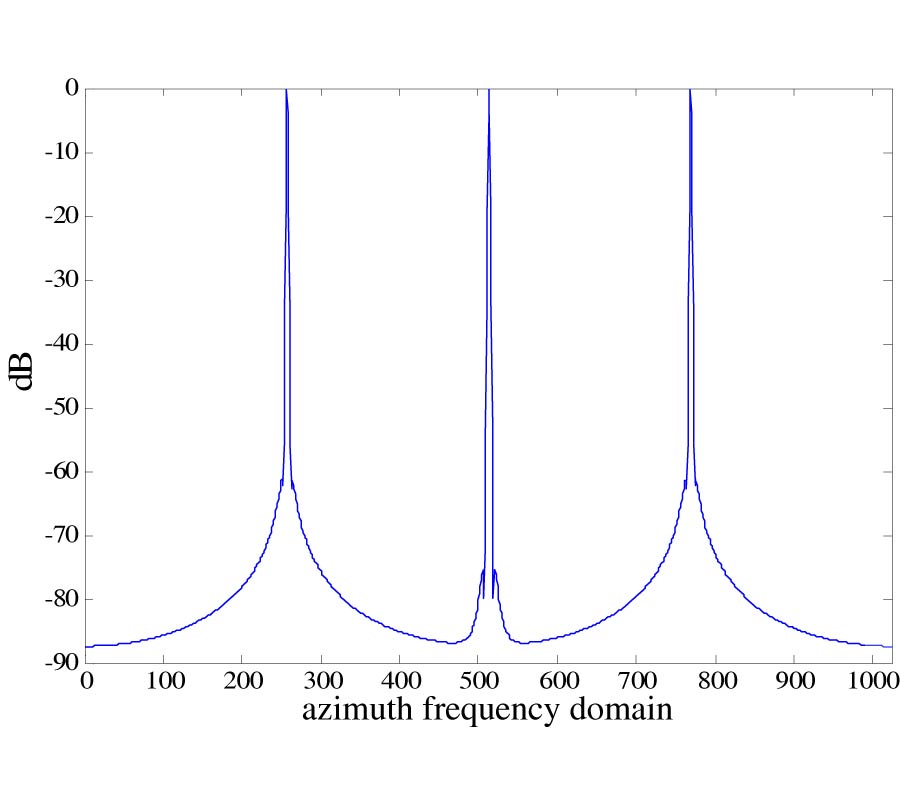
The classical interpolation-based Polar Format Algorithm (PFA) for spotlight synthetic aperture radar (SAR) results in numerous computation load, which, reduces processing speed and increase system complexity. To decrease computation load, this paper proposes a novel non-interpolation PFA algorithm for sensor flying along non-lineal flight trajectories, which are specially designed curves in conical surface. Then an innovative auto-adaptive Pulse Repetition Frequency (PRF) technique is put forward to uniformly sample signal in azimuth direction. The computation load of the new PFA is merely left to azimuth chirp z-transforms (CZTs) and range fast Fourier transforms (FFTs) after dechirp processing and residual video phase (RVP) compensation. Two flight modes (ellipse trajectory mode and hyperbola trajectory mode) are analyzed. A lineal approximation method is proposed to simplify non-lineal sensor trajectory analysis. Computer simulation results for multiple point targets validate the presented approach. Comparison of computation load between this PFA and traditional PFA is represented in Appendix B.
A NOVEL NON-INTERPOLATION POLAR FORMAT ALGORITHM USING NON-LINEAL FLIGHT TRAJECTORIES AND AUTO-ADAPTIVE PRF TECHNIQUE
2011-11-16
PIER B
Vol. 36, 303-321
Assessment of L-Band SAR Data at Different Polarization Combinations for Crop and Other Landuse Classification
Dipanwita Haldar , Anup Das , Shiv Mohan , Om Pal , Ramesh S. Hooda and Manab Chakraborty
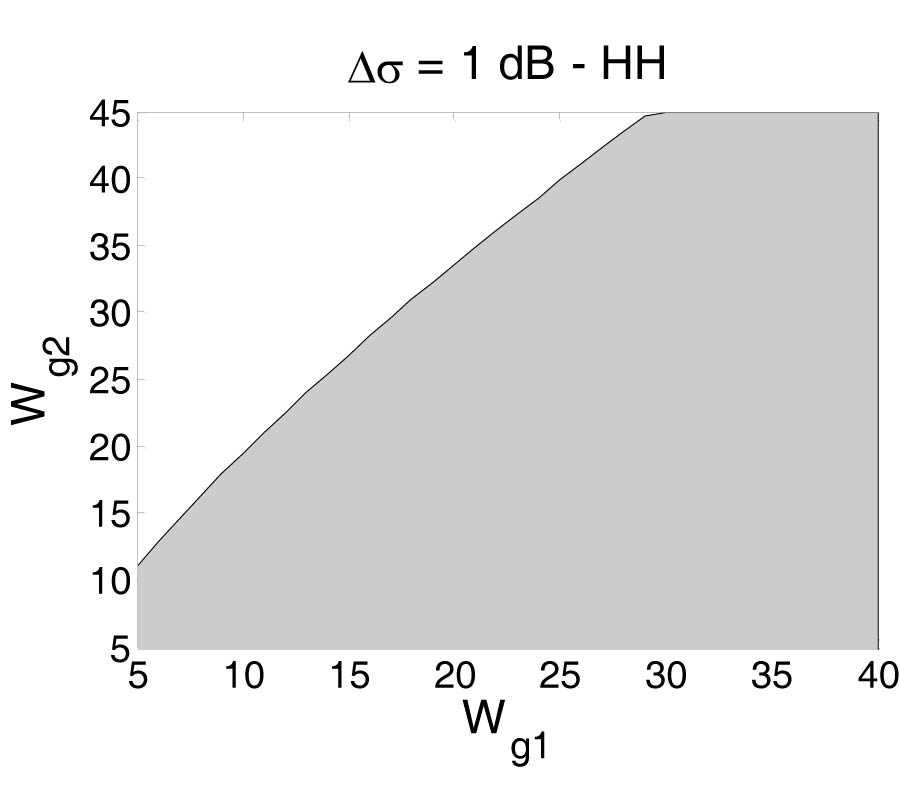
In the present study, evaluation of L-band SAR data at different polarization combinations in linear, circular as well as hybrid polarimetric imaging modes for crop and other landuse classifications has been carried out. Full-polarimetric radar data contains all the scattering information for any arbitrary polarization state, hence data of any combination of transmit and receive polarizations can be synthesized, mathematically from full-polarimetric data. Circular and various modes of hybrid polarimetric data, (where the transmitter polarization is either circular or orientated at 45°, called π/4 and the receivers are at horizontal and vertical polarizations with respect to the radar line of sight) were synthesized (simulated) from ALOS-PALSAR full-polarimetric data of 14th December 2008 over central state farm central latitude and longitude 29°15'N/75°43'E and bounds for northwest corner is 29°24'N/75°37'E and southeast corner is 29°07'N/75°48'E in Hisar, Haryana (India). Supervised classification was conducted for crops and few other landuse classes based on ground truth measurements using maximum-likelihood distance measures derived from the complex Wishart distribution of SAR data at various polarization combinations. It has been observed that linear full-polarimetric data showed maximum classification accuracy (92%) followed by circular-full (89%) and circular-dual polarimetric data (87%), which was followed by hybrid polarimetric data (73-75%) and then linear dual polarimetric data (63-71%). Among the linear dual polarimetric data, co-polarization complex data showed better classification accuracy than the cross-polarization data. Also multi-date single polarization SAR data over central state farm during rabi (winter) season was analyzed and it was observed that single date full-polarimetric SAR data produced equally good classification result as the multi-date single polarization SAR data.
ASSESSMENT OF L-BAND SAR DATA AT DIFFERENT POLARIZATION COMBINATIONS FOR CROP AND OTHER LANDUSE CLASSIFICATION
2011-11-16
PIER
Vol. 122, 137-154
Mapping the Sbr and Tw-Ildcs to Heterogeneous Cpu-GPU Architecture for Fast Computation of Electromagnetic Scattering
Peng Cheng Gao , Yu Bo Tao , Zhi Hui Bai and Hai Lin
In this paper, the shooting and bouncing ray (SBR) method in combination with the truncated wedge incremental length diffraction coefficients (TW-ILDCs) is implemented on the heterogeneous CPU-GPU architecture to effectively solve the electromagnetic scattering problems. The SBR is mapped to the GPU because numerous independent ray tubes can make full use of the massively parallel resources on the GPU, while the TW-ILDCs are implemented on the CPU since they require complex and high-precision numerical calculation to get the accurate result. As the computation times of neighboring aspect angles are similar, a dynamic load adjustment method is presented to achieve reasonable load balancing between the CPU and GPU. Applications, including the radar cross section (RCS) prediction and inverse synthetic aperture radar (ISAR) imaging, demonstrate that the proposed method can greatly improve the computational efficiency by fully utilizing all available resources of the heterogeneous system.
MAPPING THE SBR AND TW-ILDCS TO HETEROGENEOUS CPU-GPU ARCHITECTURE FOR FAST COMPUTATION OF ELECTROMAGNETIC SCATTERING
2011-11-16
PIER
Vol. 122, 119-136
A Fast Inverse Polynomial Reconstruction Method Based on Conformal Fourier Transformation
Zhe Liu , Qing Huo Liu , Chun-Hui Zhu and Jianyu Yang
A fast Inverse Polynomial Reconstruction Method (IPRM) is proposed to efficiently eliminate the Gibbs phenomenon in Fourier reconstruction of discontinuous functions. The framework of the fast IPRM is modified by reconstructing the function in discretized elements, then the Conformal Fourier Transform (CFT) and the Chirp Z-Transform (CZT) algorithms are applied to accelerate the evaluation of reconstruction coefficients. The memory cost of the fast IPRM is also significantly reduced, owing to the transformation matrix being discretized in the modified framework. The computation complexity and memory cost of the fast IPRM are O(MN log 2L) and O(MN), respectively, where L is the number of the discretized elements, M is the degree of polynomials for the reconstruction of each element, and N is the number of the Fourier series. Numerical results demonstrate that the fast IPRM method not only inherits the robustness of the Generalized IPRM (G-IPRM) method, but also significantly reduces the computation time and the memory cost. Therefore, the fast IPRM method is useful for the pseudospectral time domain methods and for the volume integral equation of the discontinuous material distributions.
A FAST INVERSE POLYNOMIAL RECONSTRUCTION METHOD BASED ON CONFORMAL FOURIER TRANSFORMATION
2011-11-16
PIER
Vol. 122, 105-118
A Hybrid Method Based on Differential Evolution and Continuous Ant Colony Optimization and Its Application on Wideband Antenna Design
Lei Chang , Cheng Liao , Wenbin Lin , Ling-Lu Chen and Xuan Zheng
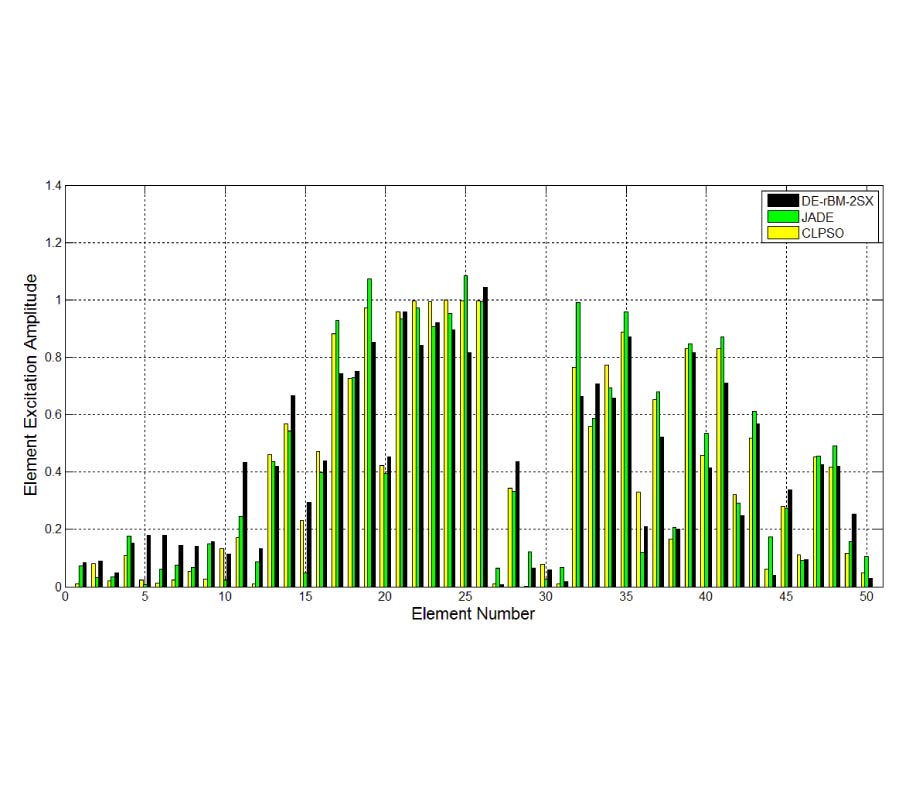
An evolutionary learning algorithm based on differential evolution strategy (DES) and continuous ant colony optimization (CACO) for wideband antenna design is proposed. The advantages of this hybrid method are demonstrated with several mathematical functions and a linear array pattern synthesis. This method is applied to design an E-shaped wideband patch antenna, which achieves the impedance bandwidth 4.8 ~ 6.53 GHz. We compare the hybrid method with the traditional DES and CACO optimization algorithms, and the advantage of this hybrid method over the DES and the CACO is also demonstrated.
A HYBRID METHOD BASED ON DIFFERENTIAL EVOLUTION AND CONTINUOUS ANT COLONY OPTIMIZATION AND ITS APPLICATION ON WIDEBAND ANTENNA DESIGN
2011-11-15
PIER B
Vol. 36, 283-301
Vegetation Attenuation Measurements and Modeling in Plantations for Wireless Sensor Network Planning
David Lorater Ndzi , Latifah M. Kamarudin , Abdul Aziz Muhammad Ezanuddin , Ammar Zakaria , Raad Badlishah Ahmad , Mohd Fareq Bin Abd Malek , Ali Yeon Md. Shakaff and M. N. Jafaar
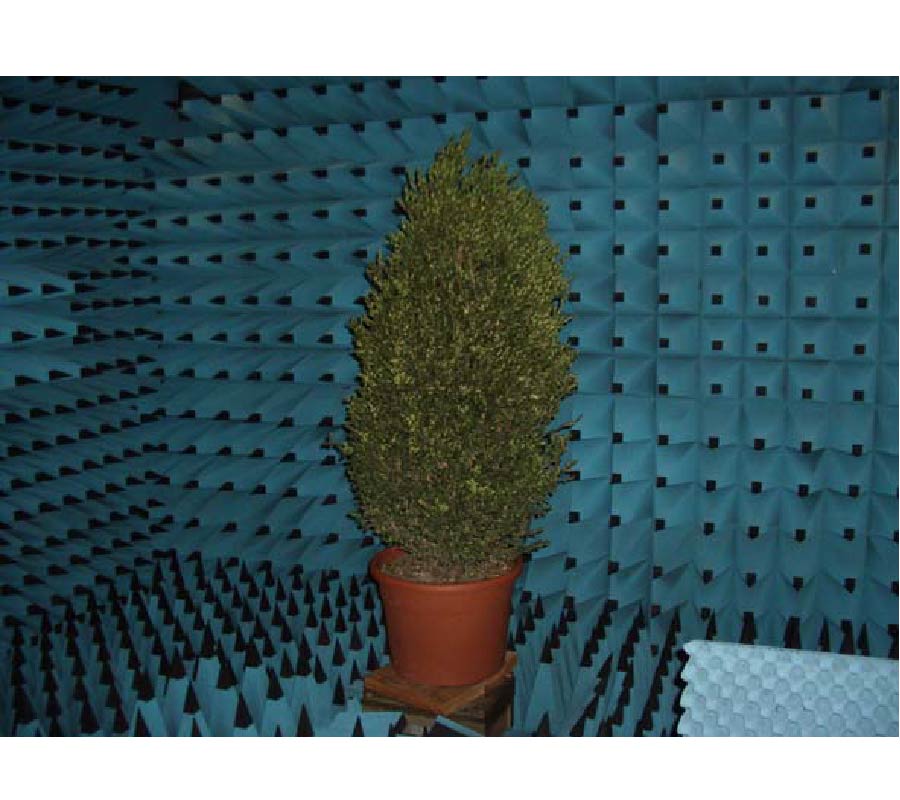
As wireless communication moves from long to short ranges with considerably lower antenna heights, the need to understand and be able to predict the impact of vegetation on coverage and quality of wireless services has become very important. This paper focuses on vegetation attenuation measurements for frequencies in the range 0.4-7.2 GHz in mango and oil palm plantations to evaluate vegetation attenuation models for application in wireless sensor network planning and deployment in precision agriculture. Although a number of models have been proposed and evaluated for specific frequencies, results show that these models do not perform well when applied to different vegetation types or at different frequencies. A global assessment of the models using a broad range of frequencies shows that the COST 235 model gives more consistent results when there is vegetation in the propagation path. For grid-like plantation, the study shows that the RET model provides the best prediction of path loss for measurements between two rows of trees. However, taking into account the limited number of parameter values available for the RET model and the potential inaccuracy that may results from the use of a wrong parameter value, a sub-optimal model which combines the ITUR model with ground reflection does offer a more consistent prediction. The differences in the average values of RMS error between RET, ITUR and free space loss models when combined with ground reflection is less than 1.6 dB.
VEGETATION ATTENUATION MEASUREMENTS AND MODELING IN PLANTATIONS FOR WIRELESS SENSOR NETWORK PLANNING