Search Results(13801)

2011-11-04
PIER
Vol. 121, 485-504
Time Domain Analytical Modeling of a Straight Thin Wire Buried in a Lossy Medium
Silvestar Sesnic , Dragan Poljak and Sergey V. Tkachenko
This paper deals with an analytical solution of the time domain Pocklington equation for a straight thin wire of finite length, buried in a lossy half-space and excited via the electromagnetic pulse (EMP) excitation. Presence of the earth-air interface is taken into account via the simplified reflection coefficient arising from the Modified Image Theory (MIT). The analytical solution is carried out using the Laplace transform and the Cauchy residue theorem. The EMP excitation is treated via numerical convolution. The obtained analytical results are compared to those calculated using the numerical solution of the frequency domain Pocklington equation combined with the Inverse Fast Fourier Transform (IFFT).
TIME DOMAIN ANALYTICAL MODELING OF A STRAIGHT THIN WIRE BURIED IN A LOSSY MEDIUM
2011-11-04
PIER
Vol. 121, 469-484
Concentration of the Specific Absorption Rate Around Deep Brain Stimulation Electrodes During MRI
Syed Mohsin
During Magnetic Resonance Imaging (MRI), the presence of an implant such as a Deep Brain Stimulation (DBS) lead in a patient's body can pose a significant risk. This is due to the fact that the MR radiofrequency (RF) field can achieve a very high strength around the DBS electrodes. Thus the specific absorption rate (SAR), which is proportional to the square of the magnitude of the RF electric field, can have a very high concentration in the near-field region of the electrodes. The resulting tissue heating can reach dangerous levels. The degree of heating depends on the level of SAR concentration. The effects can be severe, leading to tissue ablation and brain damage, and significant safety concerns arise whenever a patient with an implanted DBS lead is exposed to MR scanning. In this paper, SAR, electric field, and temperature rise distributions have been found around actual DBS electrodes. The magnitude and spatial distribution of the induced temperature rises are found to be a function of the length and structure of the lead device, tissue properties and the MR stimulation parameters.
CONCENTRATION OF THE SPECIFIC ABSORPTION RATE AROUND DEEP BRAIN STIMULATION ELECTRODES DURING MRI
2011-11-04
PIER
Vol. 121, 453-468
Polarization Characteristics of a Partially Coherent Gaussian Schell-Model Beam in Slant Atmospheric Turbulence
Ya Qing Li , Zhen-Sen Wu and Li Guo Wang
On the basis of the extended Huygens-Fresnel principle, the cross-spectral density matrix (CSDM) of partially coherent Gaussian Schell-model (GSM) beams in the slant atmospheric turbulence is derived. Given that the light emitted from a transmitter is elliptically polarized light, the degree of polarization (DoP) of the partially coherent GSM beams is represented by Stokes parameters expressed by the elements of the CSDM. The expressions of the orientation angle, polarized light intensity in the major axis are derived and the numerical results are presented. Depolarization theory is studied using a Mueller matrix and the depolarization index (DI) is obtained to describe the depolarized state of the partially coherent GSM beams propagating in the slant atmospheric turbulence. Results show that the DOP and DI of the beam tend to their initial value in the long-range propagation.
POLARIZATION CHARACTERISTICS OF A PARTIALLY COHERENT GAUSSIAN SCHELL-MODEL BEAM IN SLANT ATMOSPHERIC TURBULENCE
2011-11-03
PIER B
Vol. 36, 69-87
Microwave Effect of 0.9 GHz and 1.8 GHz CW Frequencies Exposed to Unrestrained Swiss Albino Mice
A D Usman , Wan Fatinhamamah Wan Ahmad , Mohd Zainal Abidin Ab Kadir , Makhfudzah Mokhtar and R. Ariffin
Long term radio frequency electromagnetic field (RF EMF) exposures due to Global System for Mobile communication (GSM) frequencies were investigated in this study. 158 Swiss Albino mice in unrestrained conditions were used as surrogate and divided into four groups. The average peak field strength generated and measured inside the cages placed at a far field from the antennas is 0.6x10⁻³ mW/cm2, and the specific absorption rate at 0.9 GHz and 1.8 GHz is 2.33x10⁻³ W/kg and 1.97x10⁻⁴ W/kg, respectively. Three samples of the mice chosen at random each from sham and exposed groups in week 4 and subsequently biweekly basis were taken for haematology and histopathology tests. The complete blood count result shows that haematological parameters of both the sham exposed and exposed mice were within the normal range of mice in the control group. A statistical analysis was conducted to determine whether differences observed between the experimental groups were significant. The histopathology examination on some internal organs shows that spleen and bone marrow of the mice were normal for all the three experimental groups, while a sign of tissue degeneration and inflammations were observed after 8 weeks of exposure on the brain, liver and lungs of the mice in the exposed groups. These signs increase in severity with prolonged exposure.
MICROWAVE EFFECT OF 0.9 GHz AND 1.8 GHz CW FREQUENCIES EXPOSED TO UNRESTRAINED SWISS ALBINO MICE
2011-11-03
PIER B
Vol. 36, 53-67
Performance Analysis with Coordination Among Base Stations for Next Generation Communication System
Hsien-Wei Tseng , Yang-Han Lee , Jheng-Yao Lin , Chih-Yuan Lo and Yih-Guang Jan
Next generation communication system, such as Long Term Evolution Advanced (LTE-A), has the advantages of high transmission rate, wide bandwidth and better bandwidth utilization in high mobility environments. However, in such a kind of system when users are distributed sparsely in the base station coverage range the spectrum efficiency becomes worse. The emergence of new technologies such as the coordination among based stations makes the utilization of system bandwidth more efficient. The technology of coordination among base stations has other merits such as reducing noise interference, increasing receiving diversity, improving the system receiving gain, etc. In this paper, the system spectrum utilization and its associated efficiency will be investigated when the scheme of coordination among base stations is implemented.
PERFORMANCE ANALYSIS WITH COORDINATION AMONG BASE STATIONS FOR NEXT GENERATION COMMUNICATION SYSTEM
2011-11-03
PIER B
Vol. 36, 35-52
A Novel Wavelet-Galerkin Method for Modeling Radio Wave Propagation in Tropospheric Ducts
Asif Iqbal and Varun Jeoti
In this paper, a novel Wavelet-Galerkin Method (WGM) is presented to model the radio-wave propagation in tropospheric ducts. Galerkin method, with Daubechies scaling functions, is used to discretize the height operator. Later, a marching algorithm is developed using Crank-Nicolson (CN) method. A new ``fictitious domain method'' is also developed for parabolic wave equation to incorporate the impedance boundary conditions in WGM. In the end, results are compared with those from Advance Refractive Effects Prediction System (AREPS). Results show that the wavelet based methods are indeed feasible to model the radio wave propagation in troposphere as accurately as AREPS and proposed method can be a good alternative to other conventional methods.
A NOVEL WAVELET-GALERKIN METHOD FOR MODELING RADIO WAVE PROPAGATION IN TROPOSPHERIC DUCTS
2011-11-03
PIER Letters
Vol. 27, 93-99
Design of Dual-Band Bandstop Coplanar Waveguide Filter Using Uniplanar Series-Connected Resonators
Ousama Abu Safia , Amjad Omar and Maximilian C. Scardelletti
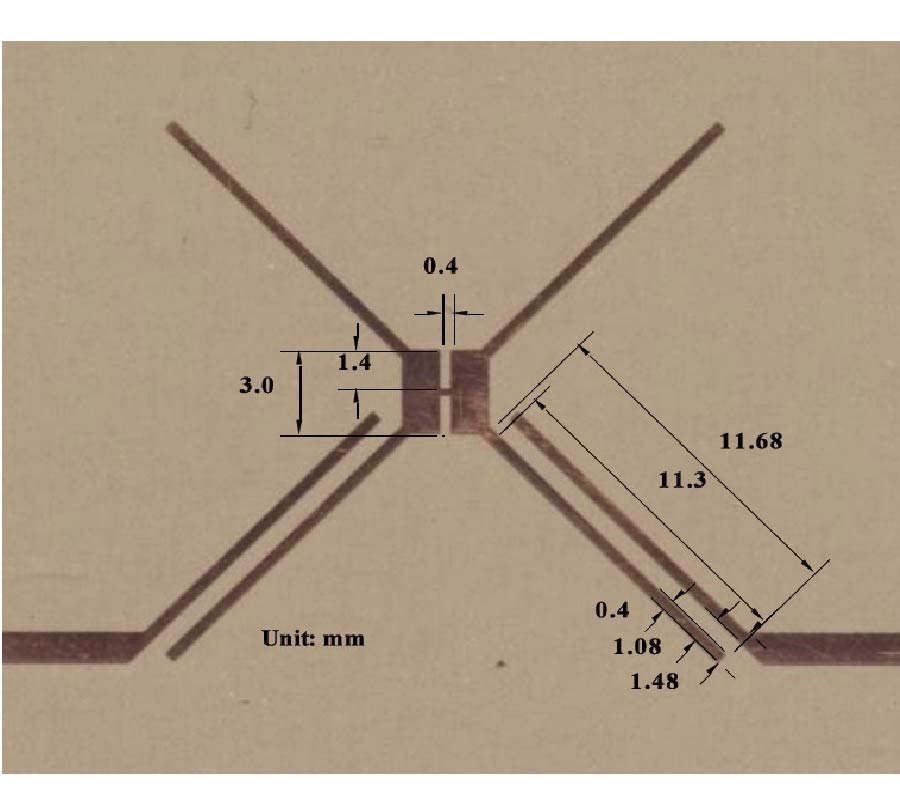
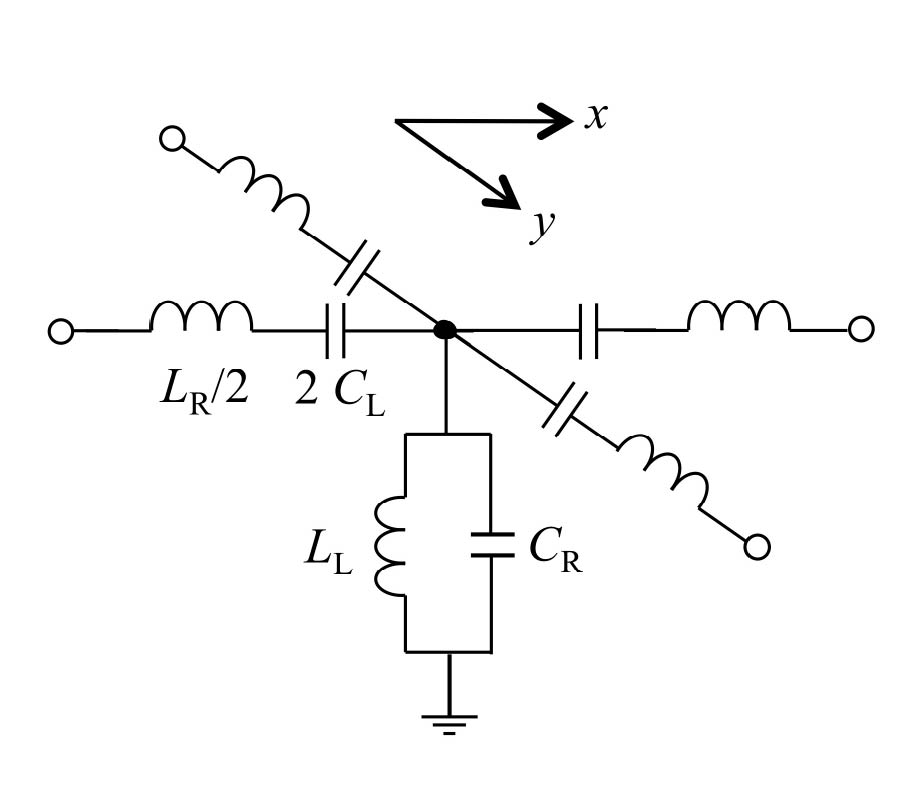
This paper proposes a new design of coplanar waveguide dual-band bandstop filter (DBBSF) with center frequencies at 1.8 GHz and 2.8 GHz. A lumped element model of four series-connected parallel LC resonators are derived, then implemented using compact CPW resonators patterned in the center conductor. The measured and simulated responses are in good agreement which validates the design.
DESIGN OF DUAL-BAND BANDSTOP COPLANAR WAVEGUIDE FILTER USING UNIPLANAR SERIES-CONNECTED RESONATORS
2011-11-03
PIER M
Vol. 21, 211-222
Effect of Inhomogeneous Plasma Density on the Reflectivity in One Dimensional Plasma Photonic Crystal
Surendra Prasad , Vivek Singh and Abhay Kumar Singh
The dependence of reflectivity on inhomogeneous plasma density for one dimensional plasma photonic crystal is presented. The exponential varying and linear varying plasma density profiles have been chosen in such a way that the volume average permittivity remains constant. The transfer matrix method is used to derive the dispersion relation and reflectivity of the proposed structures by employing the continuity conditions of electric fields and its derivatives on the interface. The exponential varying plasma density profile gives high reflectivity than the linear varying plasma density profile in all considered cases. Also the exponential varying plasma density profile shows perfect reflection in considered volume average permittivity. This profile may be used in sensor applications or in plasma functional devices.
EFFECT OF INHOMOGENEOUS PLASMA DENSITY ON THE REFLECTIVITY IN ONE DIMENSIONAL PLASMA PHOTONIC CRYSTAL
2011-11-03
PIER M
Vol. 21, 189-209
Experimental Investigation on the Power Electronic Transistor Parameters Influence to the Near-Field Radiation for the EMC Applications
Y. T. Manjombe , Y. Azzouz , David Baudry , Blaise Ravelo and M. E. H. Benbouzid
With the increases of the module integration density and complexity in electrical and power electronic systems, serious problems related to electromagnetic interference (EMI) and electromagnetic compatibility (EMC) can occur. For the safety, these disturbing effects must be considered during the electronic equipment design process. One of the concerns on EMC problems is induced by unintentional near-field (NF) radiations. The modeling and measurement of EM NF radiations is one of the bottlenecks which must be overcome by electronic engineers. To predict the unwanted different misbehaviors caused by the EM radiation, NF test benches for the reconstitution of scanning maps at some millimeters of electrical/electronic circuits under test were developed at the IRSEEM laboratory. Due to the difficulty of the design with commercial simulators, the prediction of EM NF emitted by active electronic systems which are usually based on the use of transistors necessitates more relevant and reliable analysis techniques. For this reason, the main focus of this article is on the experimental analysis of EM NF radiated by an MOSFET transistor with changing electrical parameters. Descriptions of the experimental test bench for the EM map scan of transistors radiation are provided. This experimental setup allows not only to detect the EM NF emission but also to analyze the influence of the excitation signal parameters as the cyclic ratio. It is found that the magnetic radiation is maximal when the cyclic ratio is close to 50%. In the future, In the future, the technique introduced in this article can be used to evaluate the EM radiation of embedded electronic/electrical devices in order to improve the safety and security of electronic systems.
EXPERIMENTAL INVESTIGATION ON THE POWER ELECTRONIC TRANSISTOR PARAMETERS INFLUENCE TO THE NEAR-FIELD RADIATION FOR THE EMC APPLICATIONS
2011-11-03
PIER
Vol. 121, 433-452
Optical Response of a Perfect Conductor Waveguide That Behaves as a Photonic Crystal
Alberto Mendoza-Suarez , Hector Perez-Aguilar and Francisco Villa-Villa
In this work, we consider a waveguide composed of two periodic, perfectly conducting, one-dimensional rough surfaces. This periodic system has a band structure similar in some aspects to a one-dimensional photonic crystal. However, our system has some additional interesting features. We calculate the band structure and the reflectivity of a corresponding finite waveguide. We found that the variation of the roughness amplitude and the relative phases allow to control at a certain degree the band structure of the system. Particularly, wide gaps can be obtained. It is even possible to obtain discrete modes for some frequency range and then the periodic waveguide acts as an unimodal filter. The system considered constitutes itself a photonic crystal whose band structure corresponds in many ways to a conventional photonic crystal but using just a single material. The key properties of this system are that it really constitutes a waveguide whose optical response is similar to that of a one-dimensional photonic crystal.
OPTICAL RESPONSE OF A PERFECT CONDUCTOR WAVEGUIDE THAT BEHAVES AS A PHOTONIC CRYSTAL
2011-11-02
PIER B
Vol. 36, 1-33
Effective Material Property Extraction of a Metamaterial by Taking Boundary Effects into Account at TE/TM Polarized Incidence
Sung Kim , Edward F. Kuester , Christopher L. Holloway , Aaron D. Scher and James R. Baker-Jarvis
In this paper, we present the extraction for effective material parameters for a metamaterial from TE or TM waveguide measurements with generalized sheet transition conditions (GSTCs) used to provide electric and magnetic surface susceptibilities that approximate boundary effects between the metamaterial and air. The retrieval algorithm determines the effective material properties via scattering data obtained from the metamaterial in a waveguide. The effective refractive index is expressed as a function of S-parameters for two samples of different length. The effective wave impedance is given in terms of $S$-parameters and the refractive index, assuming that GSTCs account for the boundary effects. The effective permittivity and permeability can then be determined through the refractive index and wave impedance. By use of S-parameters generated by commercial three-dimensional (3-D) full-wave simulation software our present equations are tested for two cases of metamaterials: magneto-dielectric (εrr) and dielectric (TiO2) particles. We also conduct S-parameter measurements on dielectric cubes with an S-band (WR-284) waveguide to compute the effective material properties. Furthermore, our results are compared to those derived from another retrieval method used in the literature, which does not account for boundary effects.
EFFECTIVE MATERIAL PROPERTY EXTRACTION OF A METAMATERIAL BY TAKING BOUNDARY EFFECTS INTO ACCOUNT AT TE/TM POLARIZED INCIDENCE
2011-11-02
PIER B
Vol. 35, 389-405
A Compact UWB Antenna with Dual Band Rejection
Pramendra Tilanthe , Pramod Chandra Sharma and T. K. Bandopadhyay
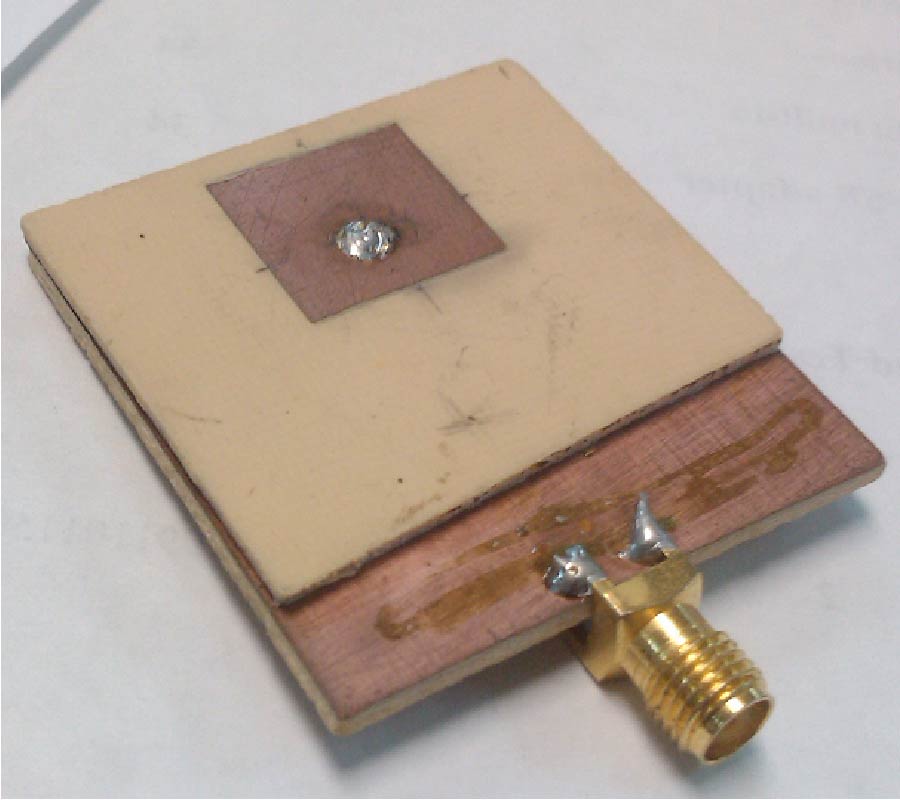
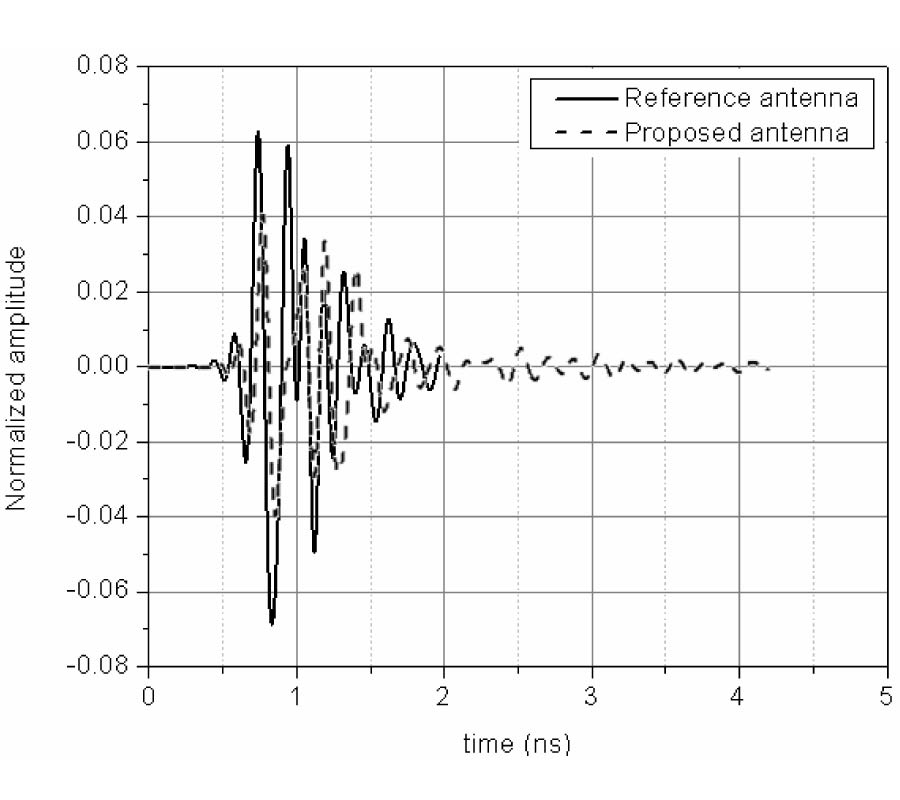
In this communication, a new compact UWB monopole antenna with dual band rejection is presented. The antenna is designed using FR4 substrate with dielectric constant 4.4, loss tangent 0.02 and a height of 1.59 mm. Initially the UWB antenna is designed to obtain a 153% fractional bandwidth from 2.4 GHz-21.7 GHz. The ground plane beneath the patch is etched out and a rectangular slot is introduced to obtain a broadband matching over the operating frequency range. Later the antenna is modified to get a frequency notch in the IEEE802.11a and HIPERLAN/2 WLAN operating band (5.15 GHz-5.825 GHz) to avoid potential interference. A U shaped slot is optimally introduced in the patch to get the desired performance. Finally an L shaped slot is cut from the radiating patch to filter the frequency band 3.3 GHz-3.6 GHz, which is WiMAX service band. The antenna parameters are optimized and the effects of parametric variation on antennas performance are studied and the summary is presented. The antenna is fabricated and measured results are presented. The measured results are in well agreement with the simulated results.
A COMPACT UWB ANTENNA WITH DUAL BAND REJECTION
2011-11-02
PIER B
Vol. 35, 369-387
Design Optimization of Two Synchronous Reluctance Machine Structures with Maximized Torque and Power Factor
Slimane Tahi , Rachid Ibtiouen and Mhamed Bounekhla
The subject of this article is to optimize the design of synchronous reluctance machines with massive rotor and multi-flux barrier rotor. The optimization procedure, which aims to improve simultaneously the machines' torque and the power factor, uses the cyclic coordinate method coupled with the magnetostatic finite-element (FE) field solutions. The optimization results regarding these two types of machines, which provide the optimized rotor geometrical dimensions and the influence of the current angle, are discussed.
DESIGN OPTIMIZATION OF TWO SYNCHRONOUS RELUCTANCE MACHINE STRUCTURES WITH MAXIMIZED TORQUE AND POWER FACTOR
2011-11-02
PIER B
Vol. 35, 349-367
Time-Domain Integral Equation Solver for Radiation from Dipole Antenna Loaded with General BI-Isotropic Objects
Hui Zhu , Ze-Hai Wu , Xiu Zhang and Bin-Jie Hu
Electromagnetic radiation by dipole antenna loaded with general bi-isotropic objects is investigated using time-domain integral equations. By introducing pairs of equivalent electric and magnetic sources, electromagnetic fields inside a homogeneous bi-isotropic region can be represented by these sources over its boundary. A series of coupled surface integral equations are obtained after imposing boundary conditions. These equations are solved numerically by the Galerkin's method that involves separate spatial and temporal testing procedures. The scaled Laguerre functions are used as the temporal basis and testing functions. The use of the Laguerre functions completely removes the time variable from computation, and the results are stable even at late times. Numerical results are presented and compared with analytical results, and similarities and differences are observed.
TIME-DOMAIN INTEGRAL EQUATION SOLVER FOR RADIATION FROM DIPOLE ANTENNA LOADED WITH GENERAL BI-ISOTROPIC OBJECTS
2011-11-02
PIER B
Vol. 35, 329-348
A Novel Ultra-Fast Ultra-Simple Adaptive Blind Beamforming Algorithm for Smart Antenna Arrays
Ahmed Najah Jabbar
This research proposes a new blind tracking algorithm for smart antenna arrays by switching the main beam iteratively using the cost calculated from the received and predicted symbol. This algorithm will be called Cost Steering Algorithm Using Demodulation-Remodulation Technique COSTAUS/DRT. It is completely independent of the Least Mean Squares (LMS) or any derived version from it, and it does not need to investigate the cyclostationary properties of the incoming signal. A complete derivation and analytical model with simulation using Simulink is given in this research. The algorithm was tested under three different target motions which are a triangular motion (linear), sinusoidal motion (circular) and saw tooth motion which is an adverse case when the linear motion changes its path suddenly. The transmitter uses 16-level PSK signal with no Forward Error Correction code (FEC) in order to test the algorithm under the worst situation. The algorithm is tested under different noise power levels. The antenna array is a linear array with 16-elements.
A NOVEL ULTRA-FAST ULTRA-SIMPLE ADAPTIVE BLIND BEAMFORMING ALGORITHM FOR SMART ANTENNA ARRAYS
2011-11-02
PIER
Vol. 121, 409-431
3D Bistatic Omega-k Imaging Algorithm for Near Range Microwave Imaging Systems with Bistatic Planar Scanning Geometry
Yaolong Qi , Weixian Tan , Yanping Wang , Wen Hong and Yirong Wu
By introducing bistatic geometry to near range microwave imaging systems, this paper proposes a near range three dimensional (3D) bistatic imaging geometry based on planar scanning aperture and establishes corresponding echo model. Then, the paper deduces the 3D bistatic Omega-K imaging algorithm based on implicit spectral decomposition, in which the impacts of residual phase, including position displacement, range, azimuth and elevation defocusing, are analyzed and compensated. Finally, the 3D bistatic imaging geometry and algorithm are investigated and verified via numerical simulations and experiments using a near range imaging system.
3D BISTATIC OMEGA-K IMAGING ALGORITHM FOR NEAR RANGE MICROWAVE IMAGING SYSTEMS WITH BISTATIC PLANAR SCANNING GEOMETRY
2011-11-02
PIER
Vol. 121, 391-408
Time-Domain Iterative Physical Optics Method for Analysis of EM Scattering from the Target Half Buried in Rough Surface: PEC Case
Jie Li , Bing Wei , Qiong He , Li-Xin Guo and De-Biao Ge
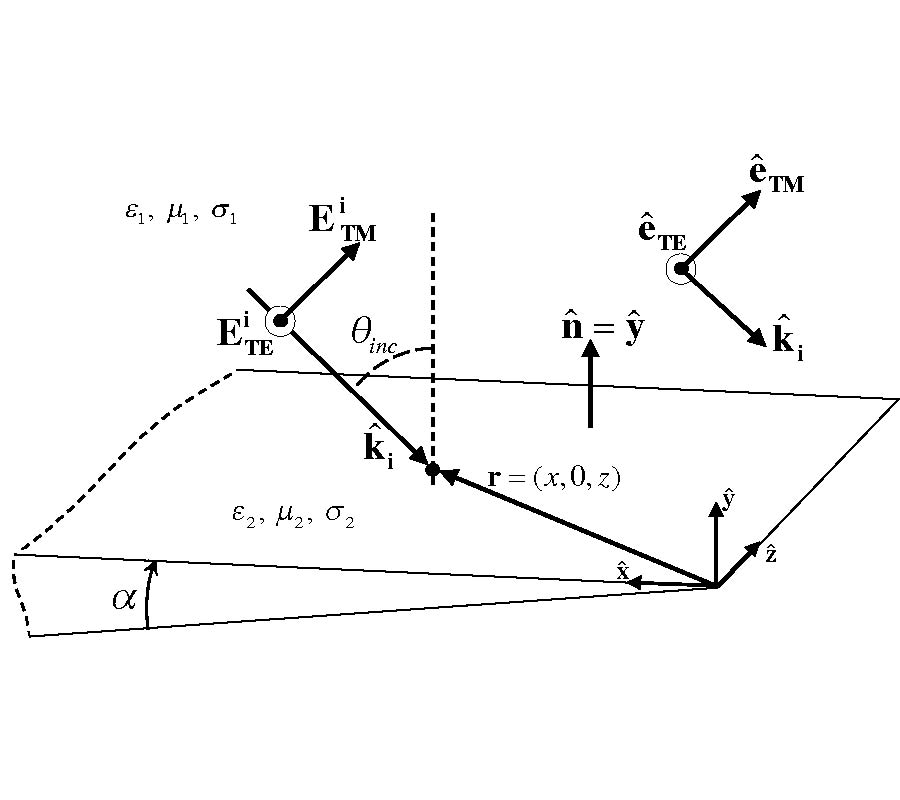
In this paper, time-domain physical optics (TDPO) method is extended to its iterative version (TDIPO) to consider the coupling effects between two regions, and the latter is employed to investigate electromagnetic scattering from three dimensional target half-buried by a two dimensional rough surface. By using iterative scheme, more accurate transient response reflected from combinative target with multi-scattering effects would be obtained than that by using TDPO alone. The TDIPO could also be enhanced by time-domain equivalent edge current (TDEEC) to further determine the far-field characteristics of the combinative target with rough surface. An accurate composite geometry model technique which combines 2D perfectly electrically conducting (PEC) rough surface and half-buried 3D PEC target is introduced and employed to assist the meshing work. The validity of the presented method is verified by comparing the scattering results for dihedral targets with those obtained through TDPO and finite difference in time domain (FDTD), as well as multi-level fast multiple algorithm (MLFMA). Then simulations of EM scattering from the target embedded in rough surface for different incidence directions are carried out to test the availability of TDIPO/EEC. Discussions on the effects of incidence direction and the presence of the target on the backscattering in far-zone are also given.
TIME-DOMAIN ITERATIVE PHYSICAL OPTICS METHOD FOR ANALYSIS OF EM SCATTERING FROM THE TARGET HALF BURIED IN ROUGH SURFACE: PEC CASE
2011-11-01
PIER B
Vol. 35, 307-328
Robust Antenna Array Beamforming Under Cycle Frequency Mismatch
Ju-Hong Lee
Many algorithms exploiting the signal cyclostationarity have been shown to be effective in performing antenna array beamforming. However, these algorithms can not provide a unique weight vector for simultaneously extracting multiple signals of interest (SOIs) with distinct cycle frequencies (DCFs). They also suffer from severe performance degradation in the presence of a cycle frequency error (CFE). To simultaneously accommodate multiple SOIs with DCFs and alleviate the effects of cycle leakage due to finite data samples, we propose a cyclic sample matrix inversion (C-SMI) beamformer. To make the C-SMI beamformer robust against CFE, we present a novel objective function which is optimized by using a steepest-descent based algorithm to find the appropriate estimates of the true DCFs. The simulation results show the effectiveness of the robust C-SMI beamformer.
ROBUST ANTENNA ARRAY BEAMFORMING UNDER CYCLE FREQUENCY MISMATCH
2011-11-01
PIER B
Vol. 35, 287-306
Aerial Degrees of Freedom of Parasitic Arrays for Single RF Front-End MIMO Transceivers
Vlasis Barousis and Athanasios G. Kanatas
The beamspace domain of parasitic antenna arrays is explored in this paper, providing the aerial degrees of freedom available for use in Multiple Input-Multiple Output (MIMO) systems. The beamspace representation allows for the design of an alternative MIMO architecture based on single radio-frequency (RF) chains, and facilitates the inclusion of MIMO transceivers in devices with strict size limitations. A three dimensional orthogonal expansion is performed on the beamspace domain providing the basis patterns used for mapping of the transmitted symbols and for sampling at the receiver. The expansion is based on the Gram-Schmidt orthonormalization procedure and can be generalized for any parasitic antenna array. The multiplexing capability of ESPAR antennas is presented as a means for supporting future performance demanding communication systems. Performance evaluation results are illustrated in detail.
AERIAL DEGREES OF FREEDOM OF PARASITIC ARRAYS FOR SINGLE RF FRONT-END MIMO TRANSCEIVERS
2011-11-01
PIER B
Vol. 35, 263-285
Rain Cell Size Mapping for Microwave Link Design Systems in South Africa
Peter O. Akuon and Thomas Joachim Odhiambo Afullo
Rain cell size is an input requirement for rain-induced attenuation studies. It is useful in estimating the extent of a given radio link path that will traverse the rain medium in a given rain event. The ``Synthetic Storm'' approach, which requires 1-minute integration time data, is used to derive the proposed rain cell sizes for various climatic zones within South Africa. The conversion of the readily available 1-hour integration time rain rate data to the desired 1-minute rain rate is carried out first for some locations and then validated by the existing measurement data and proposed global conversion factors. By the use of rain-induced attenuation prediction equation for terrestrial links that requires rain cell size as input, contour plots of specific attenuation for two high bandwidth frequencies used in terrestrial link implementations is presented. Site diversity separation distance map is proposed as well from the link budget analysis for each location to achieve an all time link availability of 99.99% of time.
RAIN CELL SIZE MAPPING FOR MICROWAVE LINK DESIGN SYSTEMS IN SOUTH AFRICA