Search Results(13802)

2011-10-24
PIER B
Vol. 35, 167-185
Analysis and Efficient Estimation of Random Wire Bundles Excited by Plane-Wave Fields
Haiyan Xie , Jianguo Wang , Shuang Li , Hailiang Qiao and Yong Li
The random wire bundle is an important factor resulting in the randomness of the interferences. This paper studies the effect of random wire positions due to the bundle rotation on the coupling with external fields and presents an efficient method to estimate the averages and standard deviations of the voltages and powers induced on the loads. Three configurations of a four-wire bundle under external fields are investigated by using the Baum-Liu-Tesche equation in the frequency domain and together with the inverse Fourier transform in the time domain, and the results show that the induced voltages and powers change as sine functions when the bundle rotates. The proposed method can estimate the averages and standard deviations of the induced voltages and powers quickly, just by three times repeated analysis, and the results agree well with those obtained statistically.
ANALYSIS AND EFFICIENT ESTIMATION OF RANDOM WIRE BUNDLES EXCITED BY PLANE-WAVE FIELDS
2011-10-24
PIER C
Vol. 25, 27-40
Experimental Results on Hiperlan/2 Antennas for Wearable Applications
S. Sankaralingam and Bhaskar Gupta
This paper addresses the design and development of HiperLAN antennas meeting the IEEE 802.11a standards for wearable applications. Five such antennas are investigated for their performance characteristics, out of which three are conventional copper based antennas and the remaining two are fully fabric antennas. The results reveal that all the proposed antennas are suitable for HiperLAN applications yielding antenna gain in the order of 7-11 dBi. This study demonstrates that fully fabric antennas outperform the copper based antennas.
EXPERIMENTAL RESULTS ON HIPERLAN/2 ANTENNAS FOR WEARABLE APPLICATIONS
2011-10-24
PIER
Vol. 121, 181-213
Investigation of the Characteristics of Barium Strontium Titanate (BST) Dielectric Resonator Ceramic Loaded on Array Antennas
Fwen Hoon Wee , Mohd Fareq Bin Abd Malek , Srimala Sreekantan , Azlan Umar Al-Amani , Farid Ghani and You Kok Yeow
We investigated a dielectric resonator ceramic microstrip patch antenna. The antenna was formed using barium strontium titanate (BST), which has a dielectric constant of 15. A new approach, i.e., the use of a high temperature dielectric probe kit, was used to determine the dielectric constant of BST. A computer simulation technology (CST) microwave studio was used to simulate the BST array antennas, taking into consideration the dielectric constant. We also measured the gain of the antennas loaded with two-, four-, and six-element arrays of the BST antenna and found that the gain of a six-element BST array antenna was enhanced by a gain of about 1.6 dB over the four-element BST array antenna at 2.3 GHz. The impedance bandwidths of these BST array antennas for voltage standing wave ratio (VSWR) < 2 were in the application ranges, i.e., 2.30 to 2.50 GHz, established for Worldwide Interoperability for Microwave Access (WiMAX) and Wireless Local Area Network (WLAN). Compared with the conventional array antenna with the same aperture size, the performance of the antenna obviously was improved, and the design is suitable for array applications, including base stations, for example.
INVESTIGATION OF THE CHARACTERISTICS OF BARIUM STRONTIUM TITANATE (BST) DIELECTRIC RESONATOR CERAMIC LOADED ON ARRAY ANTENNAS
2011-10-21
PIER Letters
Vol. 27, 53-62
A Novel Trapezoidal Slot Patch Antenna with a Beveled Ground Plane for WLAN/WiMAX Applications
Jiao-Jiao Xie , Ying-Zeng Yin , Cai Wen Zhang and Biao Li
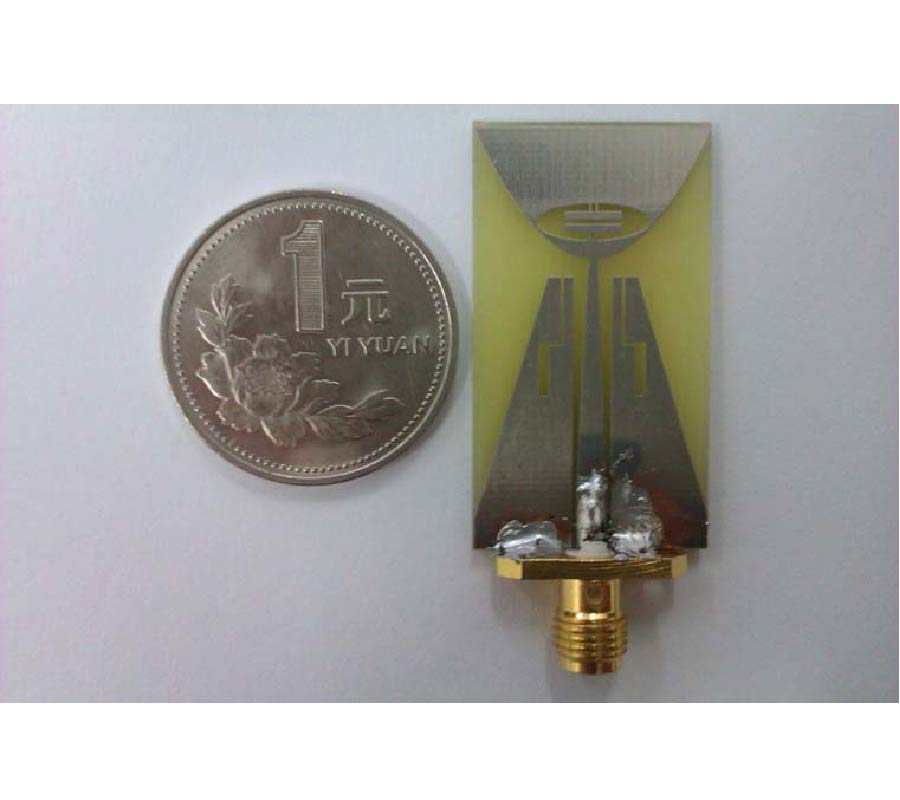
A novel trapezoidal slot patch antenna with an embedded trapezoidal strip is proposed for satisfying wireless local area network (WLAN) and worldwide interpretability for microwave access (WiMAX) applications simultaneously. The proposed antenna consists of a rectangular radiation patch with an etched trapezoidal slot and an embedded trapezoidal strip on the top and a beveled ground on the bottom side. By carefully selecting the width of the radiation patch and length of the beveled ground, the proposed antenna can generate two separate bands. The measured results show that the 10 dB return loss bandwidths of the proposed antenna are 430 MHz (2.30-2.73 GHz) and 3460 MHz (3.21-6.67 GHz), which can cover both the WLAN bands (2.4-2.484 GHz, 5.15-5.35 GHz, and 5.725-5.825 GHz) and the WiMAX bands (2.4-2.6 GHz, 3.4-3.6 GHz, and 5.25-5.85 GHz). Furthermore, good omnidirectional radiation patterns with appreciable gain are obtained over the operating bands.
A NOVEL TRAPEZOIDAL SLOT PATCH ANTENNA WITH A BEVELED GROUND PLANE FOR WLAN/WIMAX APPLICATIONS
2011-10-21
PIER C
Vol. 24, 251-263
Compressive Estimation of Cluster-Sparse Channels
Guan Gui , Na Zheng , Nina Wang , Abolfazl Mehbodniya and Fumiyuki Adachi
Cluster-sparse multipath channels, i.e., non-zero taps occurring in clusters, exist frequently in many communication systems, e.g., underwater acoustic (UWA), ultra-wide band (UWB), and multiple-antenna communication systems. Conventional sparse channel estimation methods often ignore the additional structure in the problem formulation. In this paper, we propose an improved compressive channel estimation (CCE) method using block orthogonal matching pursuit algorithm (BOMP) based on the cluster-sparse channel model. Making explicit use of the concept of cluster-sparsity can yield better estimation performance than the conventional sparse channel estimation methods. Compressive sensing utilizes cluster-sparse information to improve the estimation performance by further mitigating the coherence in training signal matrix. Finally, we present the simulation results to confirm the performance of the proposed method based on cluster-sparse.
COMPRESSIVE ESTIMATION OF CLUSTER-SPARSE CHANNELS
2011-10-21
PIER M
Vol. 21, 163-175
Microwave Head Imaging for Stroke Detection
David Ireland and Marek Bialkowski
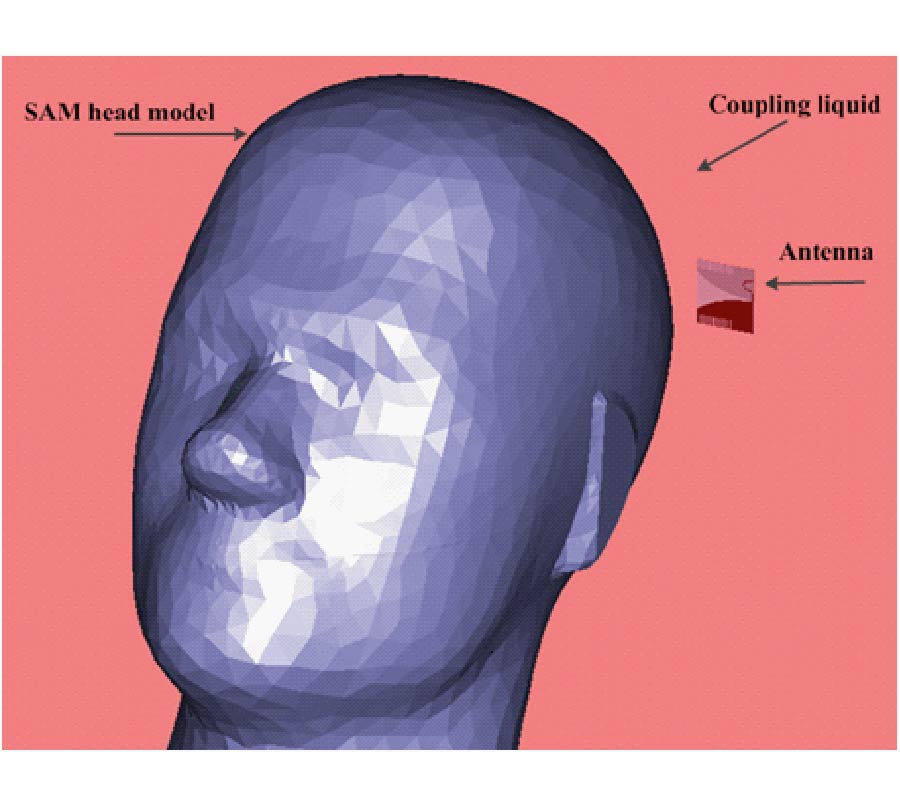
This paper proposes an algorithm for wide-band microwave imaging for the detection of a hemorrhagic stroke. A realistic head phantom and finite-difference time-domain program are used to estimate back-scattered signals which are subsequently used in the image reconstruction process. The proposed imaging approach can lead to a portable and cost effective system; particularly suitable for rural medical clinics that lack the necessary resources in effective stroke diagnosing.
MICROWAVE HEAD IMAGING FOR STROKE DETECTION
2011-10-20
PIER
Vol. 121, 159-179
Molecular EM Fields and Dynamical Responses in Solids with Magnetic Charges
Joan Costa-Quintana and Fernando Lopez-Aguilar
The monopoles are theoretically defined as charges which produce fields whose divergence is, obviously, different from zero. However, the entities which have been experimentally detected in the spin-ices, with mimetic behavior to that of the magnetic monopoles, generate magnetic fields which seem to be compatible with ∇·B = 0. This apparent contradiction can create confusion and therefore it requires explanation. In this paper we have carried out an analysis of the different electromagnetic fields in the spin-ices materials. We clarify the differences between the average fields of standard Maxwell equations with zero divergence even in spin-ices and the non macroscopic fields when there are magnetic monopoles in these materials. We give the molecular or local fields which allow us to determine the molecular polarizability. We combine the extended Clausius-Mossotti equations with the Lorentz-Drude model for obtaining the extended susceptibility and the optical conductivity which can be used for explaining the action of the electromagnetic fields in spin-ices.
2011-10-19
PIER Letters
Vol. 27, 43-51
Tunable Multi-Channel Filtering Using 1-d Photonic Quantum Well Structures
Bhuvneshwer Suthar and Anami Bhargava
In the present study, we show that it is possible to achieve multi-channel filters in one-dimensional photonic crystals using photonic quantum well structures. The photonic quantum well structure consists of different 1-D photonic structures. We use (AB)8/Cn/(BA)8 structure, where A, B and C are different materials. The number of defect layers (C) can be utilized to tune the multi-channel filtering. The filter range can be tuned for desired wavelength with the change in angle of incidence for multi-channel filtering.
TUNABLE MULTI-CHANNEL FILTERING USING 1-D PHOTONIC QUANTUM WELL STRUCTURES
2011-10-19
PIER C
Vol. 25, 15-26
CRLH ZOR Antenna of a Circular Microstrip Patch Capacitively Coupled to a Circular Shorted Ring
Seongryong Yoo and Sungtek Kahng
In this paper, a novel Metamaterial (MTM) CRLH Zeroth Order Resonance (ZOR) Circular microstrip patch antenna is proposed to have a monopole antenna pattern due to the completely closed loop of a magnetic current around the structure, and reduced profile and size due to the left-handedness. Different from other ZOR antennas of 1D periodic arrays with shorted patches, we suggest 1 circular patch capacitively coupled to 1 circular shorted ring to have ZOR and -1st resonance modes. The antenna is designed and modeled with equivalent circuits for the coaxial-fed central patch and the circular shorted ring and verified by the comparison with 3D EM simulation of the physical structure. The no-phase variation at the ZOR (2.4 GHz) and the -1st resonance mode (2 GHz) as the metamaterial properties are proven with electric field distributions and far-field patterns. The measurement shows there exist the ZOR and the -1 resonance modes despite the frequency shift from the simulation, which is proven by the monopolar radiation pattern and broadside radiation pattern, respectively. So the advantages of the proposed antenna will be addressed with the low-profile monopole at the ZOR and the size reduction effect at the -1st resonance.
CRLH ZOR ANTENNA OF A CIRCULAR MICROSTRIP PATCH CAPACITIVELY COUPLED TO A CIRCULAR SHORTED RING
2011-10-19
PIER C
Vol. 25, 1-14
Packaged CMOS Transmission Line Based Active Bandpass Filter with High Stopband Suppression
Meng-Lin Lee , Hsien-Shun Wu and Ching-Kuang Tzuang
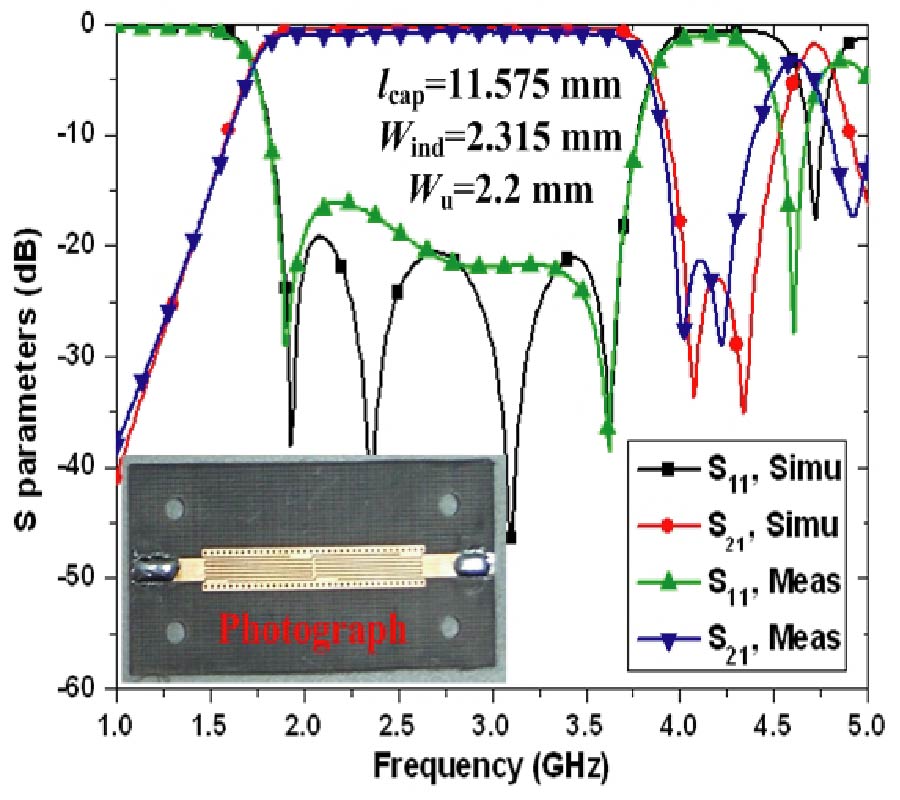
This paper presents a packaged third-order transmission line based (TL-based) active bandpass filter (BPF), which is fabricated using Silterra's standard 0.18-μm CMOS 1P6M technology, with high stopband suppression. The active compensating circuit, which produces differential negative conductance, improves the quality factor (Q factor) of TL-based resonator and suppresses the spurious resonances at even-harmonic frequencies. The spurious responses are also shifted towards higher frequencies by applying a capacitively loaded TL resonator method to the filter design. Additionally, an inductive parasitic effect introduced by the package is investigated and reduced to achieve the minimum impact on the stopband suppression. Measurement results indicate that the prototype has an insertion loss of 0.95 dB at a central frequency (f0) of 1.53 GHz with a 3-dB bandwidth of 3.1%, while a current of 8 mA is consumed from 3.0 V. The stopband suppressions at 2f0 and 3f0 are 44.57 dB and 52.78 dB, respectively. Furthermore, the suppression exceeds 35 dB from 1.08f0 to 10.05f0.
PACKAGED CMOS TRANSMISSION LINE BASED ACTIVE BANDPASS FILTER WITH HIGH STOPBAND SUPPRESSION
2011-10-19
PIER M
Vol. 21, 149-161
Uncertainty Propagation and Sensitivity Analysis in Ray-Tracing Simulations
Antoine Haarscher , Philippe De Doncker and David Lautru
Up to now, ray-tracing simulations are commonly used with a deterministic approach. Given the input parameters, the ray-tracing algorithm computes a value for the electric field. In this paper, we present a method that aims at computing the mean and standard deviation of the electric field. More precisely, we aim to obtain the probabilistic content of the electric field value and direction. We assume that this uncertainty results from input random variables which we consider uniformly distributed. Since ray-tracing computations have a high computational cost, we use spectral methods in order to optimize the number of simulations. We consider 2D electromagnetic propagation for the multi-path components, which can interact with the environment through four processes: transmission, single reflection, double reflection and diffraction. These are modelled using adequate coefficients. In order to calculate the polynomial chaos expansion coefficients, we use the projection method and Gauss-Legendre quadratures. These coefficients can then be used to determine the Sobol indices of input parameters. This is done in order to neglect variables in practical computation of the uncertainties.
UNCERTAINTY PROPAGATION AND SENSITIVITY ANALYSIS IN RAY-TRACING SIMULATIONS
2011-10-19
PIER
Vol. 121, 141-157
A Coplanar-Strip Dipole Antenna for Broadband Circular Polarization Operation
Ching-Long Tsai
A coplanar-strip dipole antenna with two enhanced features is presented for broadband circular polarization (CP) operation. The first feature of the proposed antenna is the replacement of a conventional thin dipole by a wide strip, resulting in two degenerated orthogonal modes to make CP operation possible. The second one is the use of two coplanar strips instead of two non-coplanar ones, thereby giving rise to the advantages of easy implement, good impedance matching, and wide axial ratio (AR) bandwidth. Two examples are given, one for the lower band around 1.8 GHz and the other for the ultra-wideband (UWB). For the lower band, the measured -10 dB return loss (RL) bandwidth is 119% (0.74 to 2.93 GHz), and the measured 3 dB AR bandwidth is 50% (1.45 to 2.41 GHz). As for UWB, the measured RL is below -10 dB between 2.1 to 10.1 GHz, and the measured AR is below 5 dB between 4.1 to 7.75 GHz.
A COPLANAR-STRIP DIPOLE ANTENNA FOR BROADBAND CIRCULAR POLARIZATION OPERATION
2011-10-19
PIER
Vol. 121, 121-139
Low-Profile Directional Ultra-Wideband Antenna for See-through-Wall Imaging Applications
Fuguo Zhu , Steven Gao , Anthony Tung Shuen Ho , Tim W. C. Brown , Jianzhou Li and Jia-Dong Xu
A compact-size planar antenna with ultra-wideband (UWB) bandwidth and directional patterns is presented. The antenna can be fabricated on a printed circuit board (PCB). On one side of the PCB, it has a circular patch, and on the other side it has a slot-embedded ground plane with a fork-shaped feeding stub in the slot. Directional radiation is achieved by using a reflector below the antenna. To reduce the thickness of the antenna, a new low-profile antenna configuration is proposed. Three types of directional UWB antennas are analyzed. The distance between the antenna and the reflector is 12 mm (0.16 λ0, λ0 is the free space wavelength at the lowest frequency). In order to validate the design, a prototype is also fabricated and measured. Measured results agree well with the simulated ones. The measured results confirm that the proposed antenna features a reflection coefficient below -10 dB over the UWB range from 4.2 GHz to 8.5 GHz, a maximum gain around 9 dBi, a front-to-back ratio over 17 dB and pulse fidelity higher than 90% in the time domain. Thus it is promising for see-through-wall imaging applications.
LOW-PROFILE DIRECTIONAL ULTRA-WIDEBAND ANTENNA FOR SEE-THROUGH-WALL IMAGING APPLICATIONS
2011-10-18
PIER Letters
Vol. 27, 33-42
Realization of Millimeter-Wave Dual-Mode Filters Using Square High-Order Mode Cavities
Yuan Dan Dong , Wei Hong and Hong Jun Tang
Some interesting results are presented in this paper by investigating the characteristics of square high-order mode cavities. Based on the standard printed circuit board (PCB) process and the substrate integrated waveguide (SIW) technology, two different square cavities which exhibit dual-mode filtering response are studied and implemented. Their bandwidths can be controlled by adjusting the eigen-frequencies of the resonating modes and the coupling apertures. The proposed configurations also allow implementing transmission zeros to improve the selectivity in an easy way. A Q-band quasi-elliptic filter using such two cavities in a folded configuration is designed, fabricated and measured. High selectivity and small insertion loss are achieved which are in good agreement with the simulated results.
REALIZATION OF MILLIMETER-WAVE DUAL-MODE FILTERS USING SQUARE HIGH-ORDER MODE CAVITIES
2011-10-18
PIER
Vol. 121, 103-120
Bandwidth Enhancement of Microstrip Patch Antenna Using Jerusalem Cross-Shaped Frequency Selective Surfaces by Invasive Weed Optimization Approach
Fatemeh Mohamadi Monavar and Nader Komjani
In this paper, we present a novel approach for improving the bandwidth of a microstrip patch antenna using Jerusalem cross-shaped frequency selective surfaces (JC-FSSs) as an artificial magnetic ground plane. The invasive weed optimization (IWO) algorithm is employed to derive optimal dimensions of the patch antenna and JC-FSS element in order for the whole structure to work at 5.8 GHz with consideration of gain. For the most efficient design, the antenna and FSS ground plane are optimized together, rather than as separate components. Simulation results demonstrate that this optimum configuration (the microstrip patch antenna over the artificial magnetic ground plane) have a broad bandwidth of about 10.44%. This wide bandwidth is obtained while the thickness of the whole structure is limited to 0.1λ. Further more desirable radiation characteristics have been successfully realized for this structure. The radiation efficiency of the AMC antenna configuration was found to be greater than 85% over the entire bandwidth. In general by introducing this novel Jerusalem cross artificial magnetic conductor (JC-AMC) in lieu of the conventional perfect electric conductor (PEC) ground plane, the bandwidth enhancement of about 67% and a thinner and lighter weight design has been obtained. Sample antenna and EBG layer are also fabricated and tested, to verify the designs. It is shown that the simulation data in general agree with the measurement results for the patch antennas implemented with FSS ground plane.
BANDWIDTH ENHANCEMENT OF MICROSTRIP PATCH ANTENNA USING JERUSALEM CROSS-SHAPED FREQUENCY SELECTIVE SURFACES BY INVASIVE WEED OPTIMIZATION APPROACH
2011-10-16
PIER B
Vol. 35, 151-166
Numerical and Experimental Study of the Hydrodynamic Phenomena in Heterogeneous Sea Surface, EM Bistatic Scattering
Slahedine Ben Khadra , Ali Khenchaf and Kais Khadhra
In this paper, we will study the influence of nonlinear waves (breaking waves) on the EM signature of a sea surface in bistatic case (forward propagation). Indeed, we will start the temporal numerical analysis of the scattering coefficient σHH of breaking waves in bi-static configurations. Then, we will show the first experimental validation of the numerical results using well calibrated measurements of precise breaking wave profiles. These experimental measurements have been carried out in X-band in our anechoic chamber(E³I²-EA3876-ENSTA BRETAGNE). In this work, we will consider the sea surface as a perfect conductor.
NUMERICAL AND EXPERIMENTAL STUDY OF THE HYDRODYNAMIC PHENOMENA IN HETEROGENEOUS SEA SURFACE, EM BISTATIC SCATTERING
2011-10-16
PIER B
Vol. 35, 133-149
Photonic Modes in Dispersive and Lossy Superlattices Containing Negative-Index Materials
Hector Kinto-Ramírez , Martha Alicia Palomino-Ovando and Felipe Ramos-Mendieta
We have calculated the photonic bands of a dispersive and lossy periodic array of left-handed metamaterial layers in air. Depending on the behavior of the fields inside the metamaterial component, two categories of modes for oblique propagation are identified: the oscillatory and the tunneling modes. In order to characterize these two types of solutions, we calculate the complex photonic bands; a criterion of penetration-limit is introduced to quantify the absorption effects. Our results show that oscillatory TE and TM waves can be excited by light incident from air at low frequencies (within the metamaterial regime). In the region of high frequencies only TE tunneling modes are available. To complement the description of the absorption effects, we present transmission spectra and field profiles for TE waves in finite layered systems the two types of modes here studied.
PHOTONIC MODES IN DISPERSIVE AND LOSSY SUPERLATTICES CONTAINING NEGATIVE-INDEX MATERIALS
2011-10-16
PIER Letters
Vol. 27, 25-31
A Miniaturized Wilkinson Power Divider Using DGS and Fractal Structure for GSM Application
Nisha Gupta , Pallabi Ghosh and Megha Toppo
This paper proposes a miniaturization method for conventional Wilkinson Power Divider(WPD) by replacing the quarter wave sections with the help of fractals. The performance degradation is compensated by using Defected Ground Structure (DGS). The resultant device occupies 56% of the area in comparison to the conventional WPD. The simulation results show a reflection coefficient of -66.98 dB and isolation of 24.1021 dB at the centre frequency of 1.8 GHz. Finally a prototype model is developed on a low cost FR4 Glass Epoxy substrate and tested. The experimental results show a good agreement with the simulation results.
A MINIATURIZED WILKINSON POWER DIVIDER USING DGS AND FRACTAL STRUCTURE FOR GSM APPLICATION
2011-10-15
PIER B
Vol. 35, 111-131
Development of Novel Tunable Dual-Band Negative Index Metamaterial Using Open Stub-Loaded Stepped-Impedance Resonator
Adam Reda Hasan Alhawari , Alyani Ismail , Mohd Adzir Mahdi and Raja Syamsul Azmir Raja Abdullah
This study reports on tunable planar metamaterial design that is capable to achieve dual-band negative index of refraction responses operating in microwave regime. Its distinctive characteristic is the usage of tuning open stub-loaded stepped-impedance resonators. Parameters retrieval algorithm, and full-wave simulation of prism-shaped structure were carried out to validate the negative refraction characteristics of metamaterial structure. The results predict its prospect as a very promising alternative to the conventional ones, which is compatibly applicable on various potential microwave devices especially when dual-band function is required. In addition to that, its design flexibility offers a various frequency bands at any possible choice, which is alterable together with any design parameters changes.
DEVELOPMENT OF NOVEL TUNABLE DUAL-BAND NEGATIVE INDEX METAMATERIAL USING OPEN STUB-LOADED STEPPED-IMPEDANCE RESONATOR
2011-10-15
PIER C
Vol. 24, 235-249
Tri-Band Four-Element MIMO Antenna with High Isolation
Jian-Feng Li , Qing-Xin Chu and Xing-Xin Guo
A tri-band four-element MIMO (multiple-input-multiple-output) antenna with high isolation is presented. The MIMO antenna consists of four symmetrical antenna elements. To relieve the degradation of the operation bandwidth caused by the strong mutual coupling among the four antenna elements, four symmetrical rectangles are removed from the four corners of the ground plane, respectively. The effect of the cutting of the four rectangles on the isolation is slight. Two kinds of isolation structure are applied to reduce the mutual coupling among the elements. The first kind of isolation consists of two slits and a protruded ground branch, and the second kind of isolation structure consists of four symmetrical slits etched into the ground plane. The mutual coupling caused by surface currents is reduced by slits, the mutual coupling resulted from near-field is suppressed by the ground branches, and thus high isolation for the MIMO antenna is achieved. Moreover, the effects of the slits and the ground branches on the operation bandwidth are slight, thus the operation bandwidth and the mutual coupling can be controlled independently, to some degree. A tri-band operation bandwidth (2.34-2.95 GHz, 3.38-3.75 GHz, and 4.4-6.7 GHz) with VSWR ≤ 2 and isolation ≥ 20 dB, is achieved. The results, including S-parameters, radiation patterns, mean effective gain (MEG), radiation efficiency and signal correlations, indicate that the proposed MIMO antenna can provide spatial or pattern diversity to increase data capacity of wireless communication systems.
TRI-BAND FOUR-ELEMENT MIMO ANTENNA WITH HIGH ISOLATION