Search Results(13801)

2011-11-09
PIER B
Vol. 36, 151-171
Accurate Representation of Excitation and Loading for Arbitrarily Shaped Antennas Composed of Conducting Surfaces in the Method of Moments
Khalid Fawzy Ahmed Hussein
In this work, a new method is introduced to model the excitation and loading for antennas composed of arbitrarily shaped conducting surfaces treated by the elctric field integral equation method described by Raw-Wilton-Glisson (RWG). Instead of using a single non-boundary edge to represent a zero-width exciting gap according to the conventional method, the proposed method uses either single or multiple pairs of facing boundary edges to form a real gap of arbitrary shape and width. The new method has many advantages over the conventional (zero-width) source/load representation considering the flexibility in shaping the gap to fit the antenna surface and the accuracy of the obtained results especially for the antenna input impedance and the input current distribution. The new method is described mathematically in detail. Modified basis functions are described for the gap source/load. Numerical results are obtained to investigate the dependence of the antenna input impedance and the current distribution along the gap length on the gap width, the geometrical shape of the gap and the surface segmentation resolution along the gap length.
ACCURATE REPRESENTATION OF EXCITATION AND LOADING FOR ARBITRARILY SHAPED ANTENNAS COMPOSED OF CONDUCTING SURFACES IN THE METHOD OF MOMENTS
2011-11-09
PIER B
Vol. 36, 133-149
A Spectral Volume Integral Equation Method for Arbitrary BI-Periodic Gratings with Explicit Fourier Factorization
Martijn Constant van Beurden
For dielectric periodic gratings, we propose the combination of a spectral-domain volume integral equation and Fourier factorization rules to address the Gibbs phenomenon caused by jumps in both the fields and the permittivity. From a theoretical point of view we discuss two ways to overcome the computational complexity caused by the inverse rule by changing the fundamental unknowns of the underlying electromagnetic problem. The resulting numerical system is solved iteratively and the corresponding matrix-vector product has an O(NMlogM) complexity, where M is the number of Fourier modes and N is the number of sample points in the longitudinal direction.
A SPECTRAL VOLUME INTEGRAL EQUATION METHOD FOR ARBITRARY BI-PERIODIC GRATINGS WITH EXPLICIT FOURIER FACTORIZATION
2011-11-09
PIER B
Vol. 36, 113-131
Design of a Fully Digital Controlled Reconfigurable Switched Beam Concentric Ring Array Antenna Using Firefly and Particle Swarm Optimization Algorithm
Anirban Chatterjee , Gautam Mahanti and Arindam Chatterjee
Reconfigurable antenna arrays are often capable of radiating multiple patterns by modifying the excitation phases of the elements. In this paper a method based on Firefly Algorithm (FA) has been proposed to obtain dual radiation pattern from a concentric ring array of isotropic elements, by finding out two different combinations of states for the switches, which are assumed to be connected with the rings of the array, along with optimum set of 4-bit radial amplitude and 5-bit radial phase distributions of the array elements for the specific switch combinations. The optimum excitations of the array elements in terms of discrete amplitudes and discrete phase, and the different switch combinations for the specific excitations are computed using Firefly Algorithm. To illustrate the effectiveness of Firefly Algorithm, the two beam pairs have been computed by the same procedure from the same array, using Particle Swarm Optimization (PSO) algorithm, without changing their design criteria. Results clearly show the superiority of the Firefly Algorithm over Particle Swarm Optimization to handle the proposed problem.
DESIGN OF A FULLY DIGITAL CONTROLLED RECONFIGURABLE SWITCHED BEAM CONCENTRIC RING ARRAY ANTENNA USING FIREFLY AND PARTICLE SWARM OPTIMIZATION ALGORITHM
2011-11-09
PIER Letters
Vol. 27, 141-150
Crossed Oval-Ring Slot Antenna with Triple-Band Operation for WLAN/WiMAX Applications
De Shui Cai , Zhen-Ya Lei , Han Chen , Gao-Li Ning and Rong Bing Wang
This paper presents the design of a crossed oval-ring microstrip slot antenna to achieve triple-frequency operation for WLAN/WiMAX applications. The proposed antenna is composed of a rectangular microstrip feed line and a ground plane on which three crossed oval-ring slots are etched. The three crossed slot loops finally excite three resonant modes and the resonant frequencies of the proposed antenna are mainly controlled by the dimensions and locations of the slot loops. The antenna prototype is fabricated and the characteristics are experimentally verified. The measured impedance bandwidths for triple operating bands can reach 840/670/940 MHz with return losses larger than 10 dB, which is enough for WLAN/WiMAX communication. In addition, good radiation characteristics with moderate peak gains are obtained and the measured and simulated results show a good agreement.
CROSSED OVAL-RING SLOT ANTENNA WITH TRIPLE-BAND OPERATION FOR WLAN/WIMAX APPLICATIONS
2011-11-09
PIER C
Vol. 25, 93-105
Compact Split Ring SIR Bandpass Filters with Dual and Tri-Band
Jian-Kang Xiao and Wen-Jun Zhu
Multi-band microwave filters are important for multifunctional and miniaturization requirement of portable communication equipment. In this paper, tri-section split ring stepped-impedance resonator is analyzed, and new compact dual-band and tri-band bandpass filters are proposed by using split ring stepped-impedance resonators, and the designs are demonstrated by measurement. The new dual-band filters operate at about 2.4 and 5.5 GHz which meet IEEE 802.11 application requirements, and the new tri-band filters operate at about 2.4-2.6, 3.3-3.6 and 5.2-5.6 GHz, and filter sizes are greatly reduced compared with relative reports. The designed filters have advantages of compact and miniature structures, low passband insertion losses and good frequency selectivity, all these have prospect to be applied in wireless communication systems.
COMPACT SPLIT RING SIR BANDPASS FILTERS WITH DUAL AND TRI-BAND
2011-11-09
PIER M
Vol. 21, 237-251
Specteral Domain Analysis of Resonant Characteristics and Radiation Patterns of a Circular Disk and Annular Ring Microstrip Antenna on Uniaxial Substrate
Alireza Motevasselian
A full-wave analysis for determining the resonant frequency, quality factor and far-zone radiation patterns of a circular disk and annular ring microstrip patches, printed on a uniaxial anisotropic substrate is presented. Green's functions of the structure are determined in Hankel transform domain (HTD) using Hertz potential vectors. Galerkin's method, together with parsval's relation in Hankel transform domain is then applied to compute the resonant frequency and quality factor. The far-zone radiation patterns are expressed in terms of Hankel transforms of the tangential fields on the substrate. Wave equation is solved in cylindrical coordinates for the structure to estimate the basis function. The numerical results show that there are substantial deviations in calculated resonant frequency and quality factor when substrate dielectric anisotropy is considered. Furthermore, significant variations are seen in the radiation patterns of the structures due to substrate anisotropy. The variations of resonant frequency, quality factor and radiation patterns of the structure, with respect to anisotropy ratio of the substrate, for several values of substrate thickness and patch radius are presented.
SPECTERAL DOMAIN ANALYSIS OF RESONANT CHARACTERISTICS AND RADIATION PATTERNS OF A CIRCULAR DISK AND ANNULAR RING MICROSTRIP ANTENNA ON UNIAXIAL SUBSTRATE
2011-11-08
PIER B
Vol. 36, 89-111
Cartesian Multipole Expansions and Tensorial Identities
E. Radescu, Jr. and Georgeta Vaman
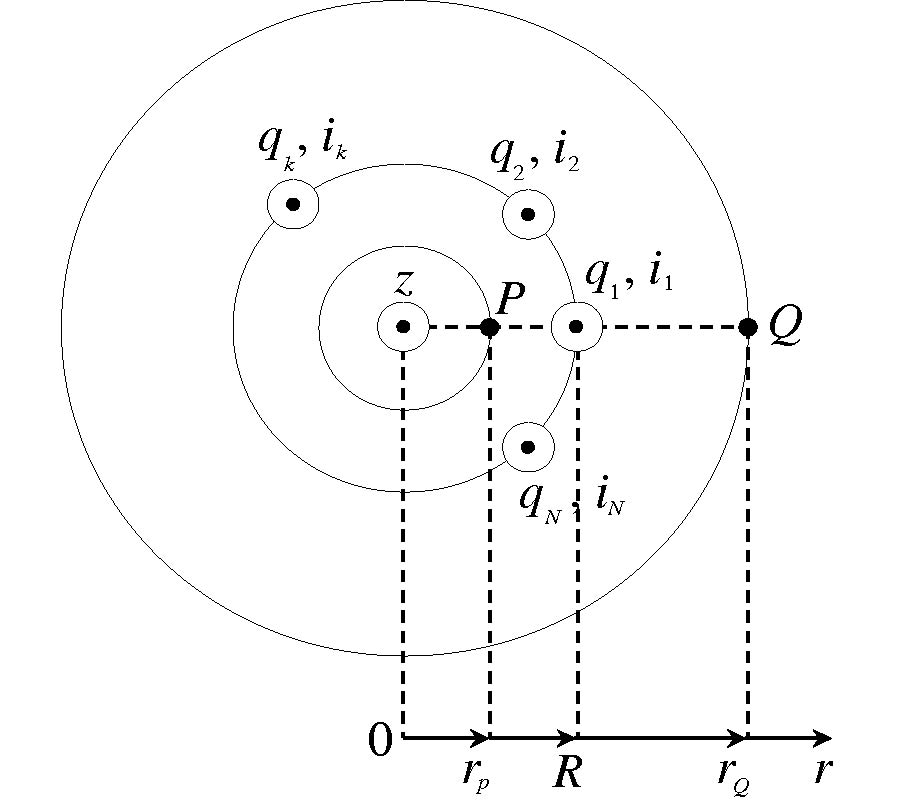
We establish the exact formulas of multipole expansion in Cartesian coordinates for the most general distribution of charges and currents (including toroidal sources).
2011-11-08
PIER Letters
Vol. 27, 133-140
A Wavelet Operator on the Interval in Solving Maxwell's Equations
Guido Ala , Elisa Francomano and Fabio Viola
In this paper, a differential wavelet-based operator defined on an interval is presented and used in evaluating the electromagnetic field described by Maxwell's curl equations, in time domain. The wavelet operator has been generated by using Daubechies wavelets with boundary functions. A spatial differential scheme has been performed and it has been applied in studying electromagnetic phenomena in a lossless medium. The proposed approach has been successfully tested on a bounded axial-symmetric cylindrical domain.
A WAVELET OPERATOR ON THE INTERVAL IN SOLVING MAXWELL'S EQUATIONS
2011-11-08
PIER
Vol. 122, 29-45
Three-Dimensional Magnetic Induction Tomography Imaging Using a Matrix Free Krylov Subspace Inversion Algorithm
Hsin-Yu Wei and Manuchehr Soleimani
Magnetic induction tomography (MIT) attempts to image the passive electromagnetic properties (PEP) of an object by measuring the mutual inductances between pairs of coils placed around its periphery. In recent years, there has been an increase in applications of non-contact magnetic induction tomography. When finite element-based reconstruction methods are used, that rely on the inversion of a derivative operator, the large size of the Jacobian matrix poses a challenge since the explicit formulation and storage of the Jacobian matrix could be in general not feasible. This problem is aggravated further in applications for example when the number of coils is increased and in three-dimension. Krylov subspace methods such as conjugate gradient (CG) methods are suitable for such large scale inverse problems. However, these methods require use of the Jacobian matrix, which can be large scale. This paper presents a matrix-free reconstruction method, that addresses the problems of large scale inversion and reduces the computational cost and memory requirements for the reconstruction. The idea behind the matrix-free method is that information about the Jacobian matrix could be available through matrix times vector products so that the creation and storage of big matrices can be avoided. Furthermore the matrix vector multiplications were performed in multiple core fashion so that the computational time can decrease even further. The method was tested for the simulated and experimental data from lab experiments, and substantial benefits in computational times and memory requirements have been observed.
THREE-DIMENSIONAL MAGNETIC INDUCTION TOMOGRAPHY IMAGING USING A MATRIX FREE KRYLOV SUBSPACE INVERSION ALGORITHM
2011-11-07
PIER Letters
Vol. 27, 125-132
Optimal Electric Wave Propagation Parameters on a Transmission Line --- Schottky Diode System
Tristan Dubois , Jeremy Raoult , Sylvie Jarrix , Amable Blain and Adrien Doridant
This paper explores the optimal conditions for wave propagation on a microstrip line loaded by a Schottky diode. Investigations are undertaken by studying the transmitted power versus frequency, power and place of injection of a continuous sine high frequency aggression signal. The aggression is injected in a near-field mode. Coupling conditions between the aggression signal in the 500 MHz-3 GHz frequency band and the system is thus determined.
OPTIMAL ELECTRIC WAVE PROPAGATION PARAMETERS ON A TRANSMISSION LINE --- SCHOTTKY DIODE SYSTEM
2011-11-07
PIER
Vol. 122, 15-27
A PCB Noise Analysis Regarding EMP Penetration Using an Electromagnetic Topology Method
Seung Moon Han , Jeong-Ju Bang , Chang-Su Huh and Jin-Su Choi
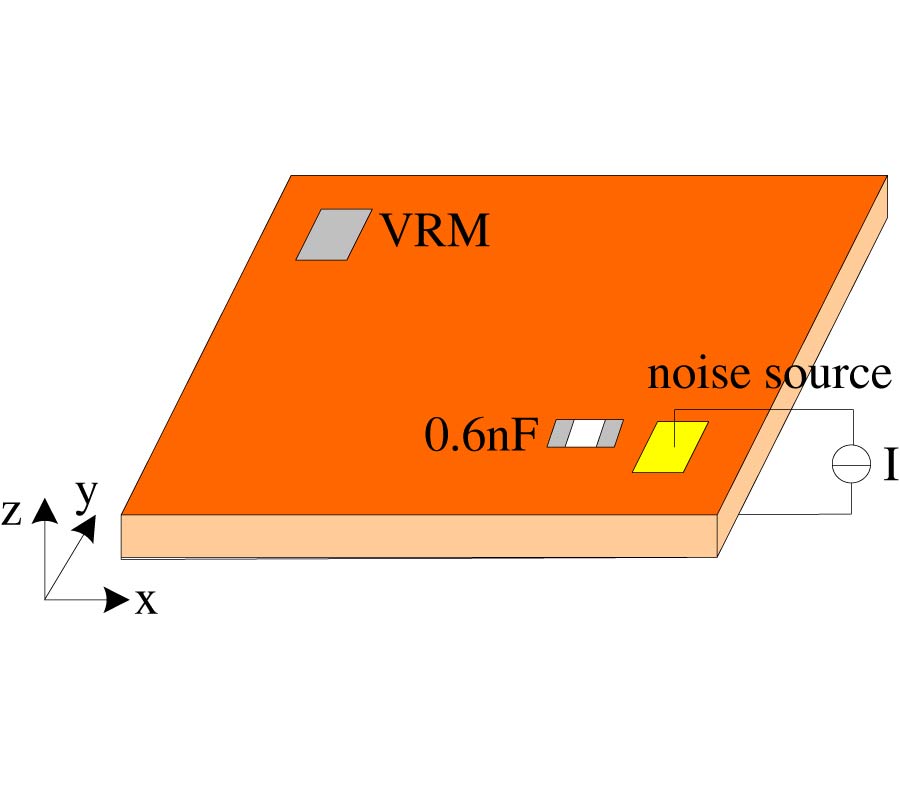
The usability of the EMT (Electromagnetic Topology) method is discussed and verified in this paper. The EMT results are compared to the results from a 3D fullwave electromagnetic solver. The electromagnetic wave shows a very fast rise time in the EMP (Electromagnetic Pulse) signal; the SUT (System Under Test) is a simple PCB strip line model. The resistances of the loads attached to each side of the strip line were 1 MΩ and 50 Ω. We then obtained the noise voltages occurring in each load when being penetrated by an EMP. We also discuss the frequency sweeps used to obtain the resonant frequencies of the model. The results agree well with those from the CST Microwave Studio. The EMT method would be more accurate if the dielectric tangent loss and copper loss are considered.
A PCB NOISE ANALYSIS REGARDING EMP PENETRATION USING AN ELECTROMAGNETIC TOPOLOGY METHOD
2011-11-05
PIER Letters
Vol. 27, 117-123
Super-Wideband Printed Asymmetrical Dipole Antenna
Xiu-Hua Jin , Xiao-Dong Huang , Chong-Hu Cheng and Lei Zhu
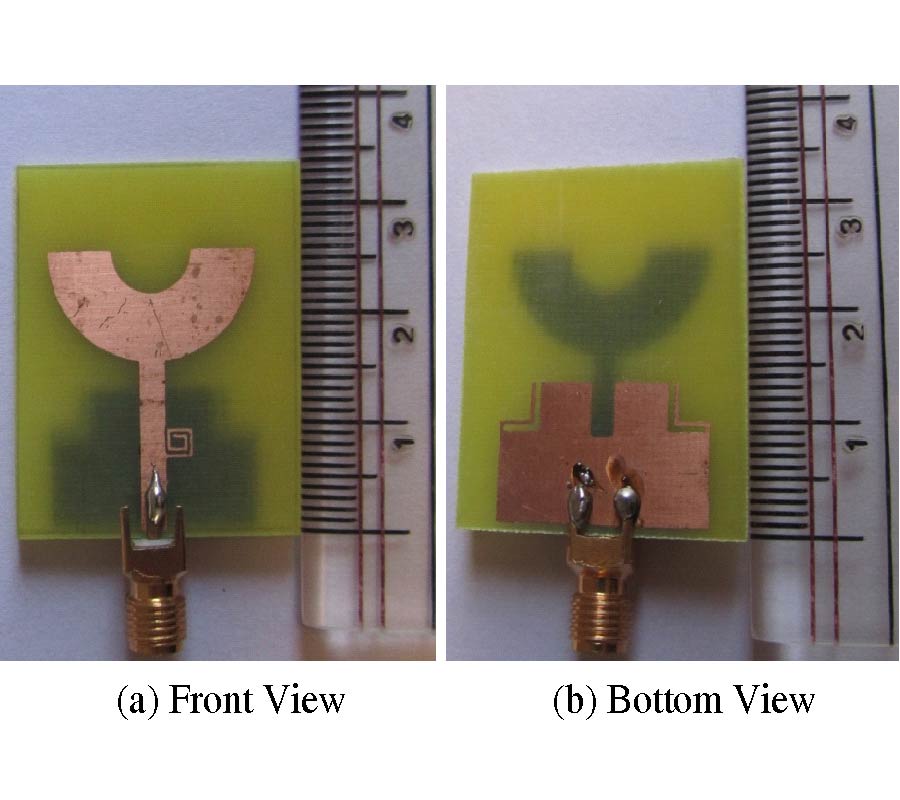
The proposed dipole antenna consists of two printed strips with unequal lengths and is fed by a coplanar strip (CPS) line. As the antenna parameters and port impedance are properly selected, a super wide operating band (|S11|<-10 dB) of 3.5 to 20.0 GHz is realized. Antenna samples were fabricated using standard PCB process. The area of the constructed dipole antenna is 40.0x5.0 mm2. The S-parameter measurement was performed via a transition (CPS to double-sided parallel strip line) and transformer (190 to 50 Ohm). The measured fractional bandwidth achieved 139.3% (from 3.4 to 19.0 GHz) as predicted, over which the antenna peak gain is better than 0 dBi.
SUPER-WIDEBAND PRINTED ASYMMETRICAL DIPOLE ANTENNA
2011-11-05
PIER Letters
Vol. 27, 101-115
Applications of a Three-Dimensional FDTD Method with Weakly Conditional Stability to the Analysis of Microstrip Filters with Fine Scale Structures
Jing Lan , Yang Yang and Jing Yi Dai
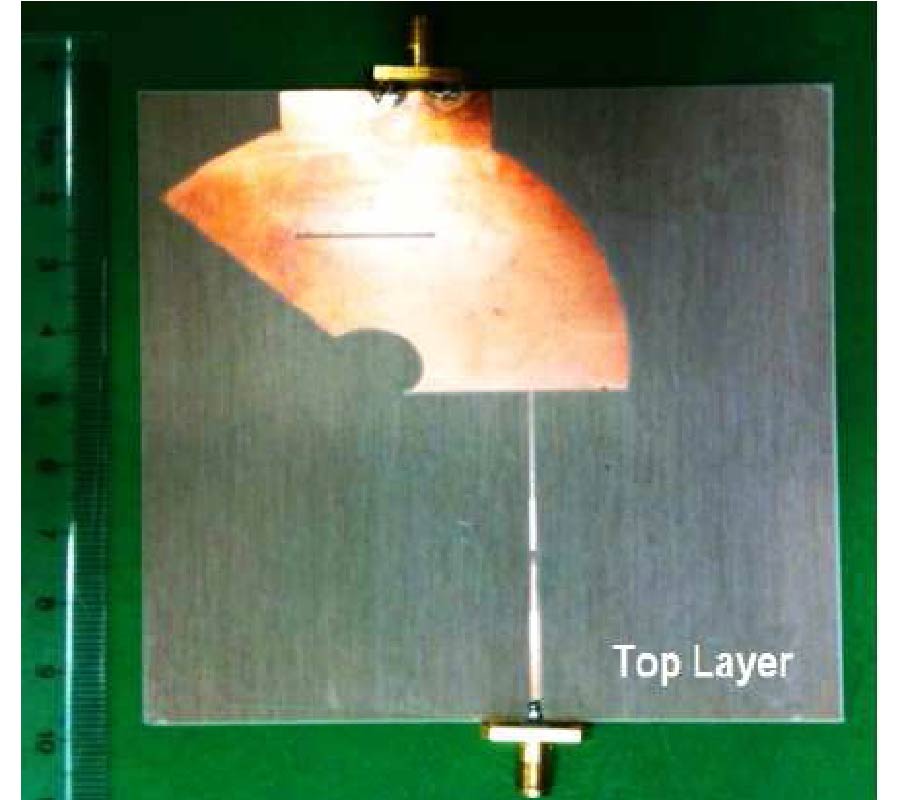
In three-dimensional space, the hybrid implicit-explicit finite-difference time-domain (HIE-FDTD) method is weakly conditionally stable, only determined by two space-discretizations, which is very useful for problems with fine structures in one direction. Its numerical dispersion errors with nonuniform cells are discussed and compared in this paper. To enlarge the applicable field of the HIE-FDTD method to open space, the absorbing boundary conditions (ABCs) for this method are also introduced and applied. Two microstrip filters with fine scale structures in one direction are solved by the HIE-FDTD method. Conventional FDTD method and alternating-direction implicit FDTD (ADI-FDTD) method are also used for comparing. Results analyzed by the HIE-FDTD method agree well with those from conventional FDTD, and the required central process unit (CPU) time is much less than that of the ADI-FDTD method.
APPLICATIONS OF A THREE-DIMENSIONAL FDTD METHOD WITH WEAKLY CONDITIONAL STABILITY TO THE ANALYSIS OF MICROSTRIP FILTERS WITH FINE SCALE STRUCTURES
2011-11-05
PIER
Vol. 122, 1-13
Experimental and Theoretical Studies of a Broadband Superluminality in Fabry-Perot Interferometer
Hsin-Yu Yao and Tsun-Hun Chang
This study experimentally demonstrates a broadband (20%) superluminality in a Fabry-Pérot-like interferometer implemented on a waveguide system. A narrow wave packet propagating with an efective group velocity of 5.29 +4.28 -1.70 c without distortion was observed. The underlying mechanism is attributed to the multiple-reflection interference and the modal effect, which provide an approach for controlling the wave characteristics through manipulating the geometry of the system. Besides, the criteria of the renowned generalized Hartman effect are explicitly clarified.
EXPERIMENTAL AND THEORETICAL STUDIES OF A BROADBAND SUPERLUMINALITY IN FABRY-PEROT INTERFEROMETER
2011-11-05
PIER
Vol. 121, 535-555
Automated SAR Reference Image Preparation for Navigation
Sanhai Ren , Wenge Chang , Tian Jin and Zibin Wang
The preparation of good navigational synthetic aperture radar (SAR) reference image is critical to the SAR scene matching aided navigation system, especially for complex terrain. However, few papers discuss the problem, and almost none of the methods proposed by them are fully automatic. Based on the practical requirements, a fully automated method of SAR reference image preparation is introduced. Firstly, a number of distinctive control points (CP) in the simulated SAR image is detected based on a method of image segmentation and clustering. Then, the corresponding tie-points in the real SAR image are searched based on local similarity by means of template matching. To improve the accuracy of CP, a method for segmentation threshold calculation, outlier screening and sub-pixel location computation is presented. Finally, the real SAR image is warped to the simulated one, and then projected to the frame of digital elevation model (DEM) by the polynomial mapping function. Experimental results on real data sets demonstrate the accuracy and efficiency of the proposed method.
AUTOMATED SAR REFERENCE IMAGE PREPARATION FOR NAVIGATION
2011-11-05
PIER
Vol. 121, 521-534
Implicit Boundary Conditions in Transformation-Optics Cloaking for Electromagneticwaves
Xudong Chen
The paper studies boundary conditions in transformation-optics cloaking for two and three dimensional electromagnetic waves. Implicit boundary conditions for these two cases are derived, no matter if the source is placed in the interior or exterior of the cloak layer. More importantly, the two implicit boundary conditions are derived without solving Mie scattering problems, and these conditions are characteristics of the clock-air interface. In particular, the implicit boundary condition for two-dimensional electromagnetic wave case is reported for the first time. In addition, a sensor can be cloaked in two-dimensional electromagnetic waves, i.e., waves can penetrate into the interior of the cloak layer without exterior scattering.
2011-11-04
PIER C
Vol. 25, 81-91
A Compact Size Low Power and Wide Tuning Range VCO Using Dual-Tuning LC Tanks
Shouxian Mou , Kaixue Ma , Kiat Seng Yeo , Nagarajan Mahalingam and Bharatha Kumar Thangarasu
A novel 12 GHz VCO designed and fabricated in a 0.18 μm SiGe BiCMOS technology is presented. Strongly magnetic coupled dual LC tanks with fixed and tunable capacitive elements are introduced to extend tuning range and improve phase noise. By hybrid using of varactor tuning, loaded transformer tuning and switched capacitor tuning, the proposed VCO achieves a wide tuning range of 4.3 GHz (36%) and output power of -9 dBm with only 4.5 mW power consumption and only 0.17 mm2 chip area.
A COMPACT SIZE LOW POWER AND WIDE TUNING RANGE VCO USING DUAL-TUNING LC TANKS
2011-11-04
PIER C
Vol. 25, 67-79
Ultra-Wideband Antenna Array Design for Target Detection
Baskaran Kasi and Chandan Kumar Chakrabarty
In this paper, a four-element microstrip antenna array is presented. The array is composed of Wilkinson power dividers which act as feed network along with Dolph-Chebyshev distribution and four-identical patch antenna elements. The array elements are properly designed to have a compact size and constant gain against frequency. The simulated results show good agreement with the measured results for the fabricated antenna array. Measurement shows that the array has a peak gain of more than 12 dBi with side-lobe level of -15 dB at 6 GHz. These characteristics make the antenna array suitable for UWB directional uses.
ULTRA-WIDEBAND ANTENNA ARRAY DESIGN FOR TARGET DETECTION
2011-11-04
PIER M
Vol. 21, 223-236
Wireless Networks Interference and Security Protection by Means of Vegetation Barriers
Jose E. Acuna , Inigo Cuinas and Paula Gómez
The success of wireless technologies could paradoxically leads to a collapse in their performance: the interference between adjacent networks and the attacks done by users from outside the expected coverage limits are two important enemies to the well function of the networks. The proposal of this paper is simple but efficient: the use of vegetation barriers to create shadowing areas with excess attenuations in the edge of the service area, in order to reduce the coverage distance of each wireless node, reducing the possible interference to other networks as well as improving security aspects by minimizing the signal strength outside the service area.
WIRELESS NETWORKS INTERFERENCE AND SECURITY PROTECTION BY MEANS OF VEGETATION BARRIERS
2011-11-04
PIER
Vol. 121, 505-520
Parallel Implementation of MLFMA for Homogeneous Objects with Various Material Properties
Ozgur Ergul
We present a parallel implementation of the multilevel fast multipole algorithm (MLFMA) for fast and accurate solutions of electromagnetics problems involving homogeneous objects with diverse material properties. Problems are formulated rigorously with the electric and magnetic current combined-field integral equation~(JMCFIE) and solved iteratively using MLFMA parallelized with the hierarchical partitioning strategy. Accuracy and efficiency of the resulting implementation are demonstrated on canonical problems involving perfectly conducting, lossless dielectric, lossy dielectric, and double-negative spheres.
PARALLEL IMPLEMENTATION OF MLFMA FOR HOMOGENEOUS OBJECTS WITH VARIOUS MATERIAL PROPERTIES